ambition
and
action
in
nutrition
“
It is unprecedented that
nutrition is so high in the
political agenda of Member
States and the Decade
of Action on Nutrition is
a unique opportunity to
drastically change our food
environment, to eradicate
hunger and prevent
malnutrition worldwide
”
Dr. Margaret Chan, WHO Director-General
Ambition and Action in Nutrition 2016–2025
ISBN 978-92-4-151243-5
© World Health Organization 2017
Some rights reserved. This work is available under the Creative Commons Attribution-NonCommercial-ShareAlike 3.0 IGO licence (CC BY-NC-SA 3.0 IGO; https://creativecommons.org/licenses/by-nc-sa/3.0/igo).
Under the terms of this licence, you may copy, redistribute and adapt the work for non-commercial purposes, provided the work is appropriately cited, as indicated below. In any use of this work, there should be no suggestion that WHO en-dorses any speciic organization, products or services. The use of the WHO logo is not permitted. If you adapt the work, then you must license your work under the same or equivalent Creative Commons licence. If you create a translation of this work, you should add the following disclaimer along with the suggested citation: “This translation was not created by the World Health Organization (WHO). WHO is not responsible for the content or accuracy of this translation. The original English edition shall be the binding and authentic edition”.
Any mediation relating to disputes arising under the licence shall be conducted in accordance with the mediation rules of the World Intellectual Property Organization.
Suggested citation. Ambition and Action in Nutrition 2016–2025. Geneva: World Health Organization; 2017.Licence:
CCBY-NC-SA3.0IGO.
Cataloguing-in-Publication (CIP) data. CIP data are available at http://apps.who.int/iris.
Sales, rights and licensing. To purchase WHO publications, see http://apps.who.int/bookorders. To submit requests for
commercial use and queries on rights and licensing, see http://www.who.int/about/licensing.
Third-party materials. If you wish to reuse material from this work that is attributed to a third party, such as tables,
igures or images, it is your responsibility to determine whether permission is needed for that reuse and to obtain per-mission from the copyright holder. The risk of claims resulting from infringement of any third-party-owned component in the work rests solely with the user.
General disclaimers. The designations employed and the presentation of the material in this publication do not imply
the expression of any opinion whatsoever on the part of WHO concerning the legal status of any country, territory, city or area or of its authorities, or concerning the delimitation of its frontiers or boundaries. Dotted and dashed lines on maps represent approximate border lines for which there may not yet be full agreement.
The mention of speciic companies or of certain manufacturers’ products does not imply that they are endorsed or rec-ommended by WHO in preference to others of a similar nature that are not mentioned. Errors and omissions excepted, the names of proprietary products are distinguished by initial capital letters.
All reasonable precautions have been taken by WHO to verify the information contained in this publication. However, the published material is being distributed without warranty of any kind, either expressed or implied. The responsibility for the interpretation and use of the material lies with the reader. In no event shall WHO be liable for damages arising from its use.
Technical editing by Cathy Wolfheim
Design by Alberto March
CONTENTS
FOREWORD
VII
ACKNOWLEDGEMENTS
X
LIST OF ACRONYMS
XI
EXECUTIVE SUMMARY
1
1. CONTEXT
4
1.1 Why this strategy
4
1.1.1 Previous nutrition targets and commitments
5
1.1.2 A new impetus for nutrition
8
1.1.3 The WHO reform process calls for fresh and cohesive
approaches to delivering on the Organization’s mandate
10
1.2 Focus, coherence and impact are at the core of
WHO’sAmbition and Action in Nutrition 2016-2025
11
2. THE WHO NUTRITION RESULTS CHAIN
13
2.1 Situation analysis
13
2.1.1 External situation: progress and complexity
13
2.1.2 Internal situation: nutrition is aiming to be on the top priority list of WHO
16
2.2 The WHO nutrition results chain
19
3.
WHO’S AMBITION FOR NUTRITION
22
3.1 Vision
22
3.2 Mission
22
4.
APPROACHES FOR WHO’S WORK IN NUTRITION
23
VI
WHO
I
ambition and action in nutrition 2016–2025
5.
PRIORITIES AND ACTIONS FOR WHO’S WORK IN NUTRITION
27
5.1 Leadership priorities
28
5.2 Guidance priorities
31
5.3 Monitoring priorities
34
5.4 Delivery model for nutrition actions
34
6. IMPLEMENTING WHO’S AMBITION AND ACTION IN NUTRITION 2016-2025
37
7. STRENGTHENING CAPACITY IN WHO FOR NUTRITION ACTION
38
8. WHO’S AMBITION AND ACTION IN NUTRITION 2016-2025 REVIEW CYCLE
40
ANNEX 1
Overview of the nutrition landscape
41
ANNEX 2
The Nutrition Working Group of the UN Interagency Task Force on NCDs
42
ANNEX 3
Mapping of interdependencies between nutrition targets
43
ANNEX 4
Strengthening capacity in WHO for nutrition action
46
Communications and advocacy
46
Networking and knowledge management
46
Resource mobilization
47
Breadth and depth of skills
47
Management support
48
Organizational coherence
48
ANNEX 5
Summary of strengths, weaknesses, opportunities and challenges for
WHO’s work in nutrition
49
FOREWORD
Dr Oleg Chestnov
Assistant Director-General Noncommunicable Diseases and Mental Health World Health Organization
As a global nutrition community, we have collectively been successful in positioning nutrition highly on the world’s health and development agenda. Nutrition is irmly embedded in the 2030 Agenda for Sustainable Development through Sustainable Development Goal 2 (End hunger, achieve food security and improved nutrition and promote sustainable agriculture) and its targets 2.1 and 2.2.1 There is also a clear recognition that nutrition contributes to nearly all of the other SDGs, in particular SDG3 (Ensure healthy lives and promote well-being for all at all ages) target 3.4.2
In addition, United Nations Member States have created a once-in-a-lifetime opportunity for increased investment and action in nutrition by declaring 2016-2025 to be the UN Decade of Action on Nutrition. Through UN General Assembly Resolution A/RES/259, the World Health Organization is mandated to lead the implementation of the Nutrition Decade, jointly with our sister UN Agency the Food and Agriculture Organization of the United Nations and in collaboration with the World Food Programme, the International Fund for Agricultural Development, and UNICEF. Actions under the Nutrition Decade will accelerate the implementation of commitments made at the Second International Conference of Nutrition (ICN2), lead to achieving the six Global Nutrition Targets and the diet-related noncommunicable diseases targets by 2025 and contribute to attaining the SDGs by 2030.
With the momentum of this promising era, WHO has developed an inclusive, multi-level, it-for-purpose nutrition strategy, WHO’s Ambition and Action in Nutrition 2016-2025. This has been the irst-ever strategic exercise on nutrition undertaken by WHO, and the intensive work of many staf has resulted in the description of the Organization’s strategic advantage, the deinition of a vision and mission for nutrition for the next ten years and an agreed set of priorities including the delivery model. The strategy was also developed in the context of the internal WHO reform.
WHO’s Ambition and Action in Nutrition 2016-2025 provides the clarity and framework needed to ensure the support, buy-in and alignment on nutrition within WHO and with partners. It will encourage us to focus on what we do
1 Target 2.1. By 2030, end hunger and ensure access by all people, in particular the poor and
people in vulnerable situations, including infants, to safe, nutritious and suicient food all year round. Target 2.2: By 2030, end all forms of malnutrition, including achieving, by 2025, the internationally agreed targets on stunting and wasting in children under 5 years of age, and address the nutritional needs of adolescent girls, pregnant and lactating women and older persons.
2 Target 3.4. By 2030, reduce by one third premature mortality from noncommunicable diseases
VIII
WHO
I
ambition and action in nutrition 2016–2025
“
WHO has developed
an inclusive, multi-level,
it-for-purpose nutrition
strategy, Ambition and
Action in Nutrition
2016-2025
best and to engage in strategic collaboration where appropriate. It will also steer us to use human rights-based approaches and prevent conlicts of interest.
The Noncommunicable Diseases and Mental Health (NMH) team that I lead in WHO includes experts working on nutrition, physical
activity, prevention and control of noncommunicable diseases,
food safety and mental health. WHO’s Ambition and Action
in Nutrition 2016-2025 will improve the collaboration among these various areas of expertise, fortify common approaches, avoid duplication and increase our impact.
Through our demonstrated ambition and action in nutrition, we hope to increase trust among our donors, expand our donor base and indeed attract more needed
investments. We want our Member States and partners to hold us to account for our nutrition ambitions; they
will and should require us to show results in the given timeframe.
Finally, to speak in culinary terms, our Ambition and Action in Nutrition 2016-2025 provides
all the ingredients (the priorities) for healthy meals (nutrition policies and
programmes) all over the world. It is now left to the global, regional and country
chefs (WHO staf) to design the menu and cook the healthy, sustainable
X
WHO
I
ambition and action in nutrition 2016–2025
WHO’s Ambition and Action in Nutrition 2016-2025 was prepared under the
leadership of Francesco Branca, Director of the Department of Nutrition for Health and Development (NHD). The work was supported by a team of consultants from Price, Waterhouse and Cooper who have solid knowledge of WHO and experience in managing transitions.
This strategic document is the fruit of an 18-month collaborative efort among 150 WHO staf from headquarters, regional and country oices. The development process was inclusive and transparent, with face-to-face meetings, webinars, an electronic survey, interviews and telephone conversations that included programme directors, coordinators, regional advisors, national professional oicers, Heads of WHO Oices and key partners. The contributions and suggestions of every individual, who are too many to name, have been important in shaping this strategy, and the encouragement and patience shown along the way are very much appreciated.
ACKNOWLEDGEMENTS
LIST OF ACRONYMS
CFS Committee on World Food Security
FAO Food and Agriculture Organization of the United Nations
FENSA Framework of Engagement with non-State Actors
GPW Global Programme of Work
HIV/AIDS Human Immunodeiciency Virus / Acquired Immunodeiciency Syndrome
ICN2 Second International Conference on Nutrition
IFAD International Fund for Agricultural Development
ILO International Labour Oice
MDGs Millennium Development Goals
NCDs Noncommunicable Diseases
NHD Nutrition for Health and Development
SDGs Sustainable Development Goals
SUN Scaling Up Nutrition
TB Tuberculosis
UN United Nations
WFP World Food Programme
WHA World Health Assembly
WHO World Health Organization
UHC Universal Health Coverage
UNDAF United Nations Development Assistance Framework
UNGNA United Nations Global Nutrition Agenda
UNIATF UN Interagency Task Force on the Prevention and Control of NCDs
UNICEF United Nations Children’s Fund
XII
WHO
I
ambition and action in nutrition 2016–2025
WHO’s Ambition and Action in Nutrition
2016-2025 is the result of direct insights and
experiences from headquarters, regional
and country staf to address Member States’
needs and challenges
C
o
u
rt
es
y o
f F
AO / O
li
vi
e
r A
ss
el
EXECUTIVE SUMMARY
•
The 2030 Agenda for Sustainable Developmentand the United Nations (UN) Decade of Action on Nutrition 2016-2025 have revitalized momentum for improving nutrition and have airmed a clear leadership role for WHO. Nutrition is a contributor to the 17 Sustainable Development Goals (SDGs) adopted in 2015. It contributes directly to achieving SDG2 (End hunger, achieve food security and improved nutrition, and promote sustainable agriculture) and is a decisive enabler of SDG 3 (Ensure healthy lives and promote well-being for all at all ages). The UN General Assembly Resolution 70/259 proclaims 2016-2025 to be the UN Decade of Action on Nutrition and speciically calls upon the World Health Organization (WHO) and the Food and Agriculture Organization of the United Nations (FAO) to lead its implementation.
•
As momentum on nutrition increases, so doesthe complexity of the global nutrition landscape, with a skyrocketing number of organizations, partnerships and institutions active in nutrition over the recent years. This could lead to overlap, incoherence and duplication of work if agendas do not align. In this crowded arena, it also increases the risk of conlict of interest, and mechanisms need to be in place to safeguard public health at all levels.
•
The scope of nutrition itself has evolveddramatically in recent years, thanks in part to the Second International Conference on
Nutrition (ICN2). The ICN2 highlighted the importance of malnutrition in all its forms, including the rise of overweight, obesity and diet-related
noncommunicable diseases (NCDs). Member States also recognized the importance of sustainable food systems for healthy diets.
•
There is an increasing global acknowledgementthat agriculture and food systems are linked to climate change, both as a cause and solution.
•
A number of initiatives and publications havecontributed to improving alignment of the still-fragmented nutrition community, and to a common vision and narrative on nutrition. These include the Scaling Up Nutrition Movement, Nutrition for Growth, EAT, the Zero Hunger Challenge and the Global Nutrition report.
•
Firmly positioned within the WHO Constitution,nutrition is aiming to be on the top priority list of WHO. The ubiquitous nature of nutrition in the work of the Organization creates a risk of strategic and operational dilution: nutrition is both a programme area within the noncommunicable diseases programmatic category and an implicit contributor to other programme areas. Operationally, nutrition topics are spread over several WHO departments, reducing efectiveness and hampering coordination.
•
In the context of the comprehensive internal2
WHO
I
ambition and action in nutrition 2016–2025
•
WHO’s Ambition and Action in Nutrition 2016-2025 is rooted in the six global targets for improving maternal, infant and young child nutrition set in 2012 as well as the global diet-related NCD targets established in 2013.•
WHO’s Ambition and Action in Nutrition 2016-2025is based on a clear results chain articulating how the unique strengths and core activities of the Organization contribute to the reduction of malnutrition and to the prevention and the treatment of noncommunicable diseases, all requisites for the achievement of the SDGs. The key functions that form the core of WHO’s work in nutrition are leadership, guidance and monitoring.•
WHO is setting a solid ambition for the comingten years, with the vision of “A world free of all forms of malnutrition where all people achieve health and well-being”. The nutrition mission is to: “Work with Member States and partners to ensure universal access to efective nutrition actions and to healthy and sustainable diets. To do this WHO: uses its convening power to help set, align and advocate priorities to move nutrition forward; develops evidence-informed guidance based on robust scientiic and ethical
frameworks; supports the adoption of guidance and implementation of efective actions; monitors and evaluates policy and programme implementation and nutrition outcomes”.
•
Five guiding principles form the foundationof the Organization’s approach to its work in nutrition and provide a framework for prioritizing actions and ensuring coherence:
1. Anchor WHO’s Ambition and Action in
Nutrition 2016-2025 in the SDGs and the UN
Decade of Action on Nutrition;
2. Ensure a strategic focus for the Organization’s work in nutrition;
3. Develop an integrated approach;
4. Promote collaboration and partnering
within and outside of WHO;
5. Recognize the role of key nutrition actions.
•
A clear allocation of roles is proposed betweenWHO headquarters, regional and country levels to deliver the core functions of leadership, guidance and monitoring in an integrated way, ensure coherence and focus on key priorities to maximize impact.
Six priorities for the work of WHO in nutrition
Leadership
•
Shape the narrative of the global nutrition agenda•
Leverage changes in relevant non-health sectors to improve and mainstream nutrition•
Leverage the implementation of efective nutrition policies and programmes in all settings, includingin situations of emergencies and crisis
Guidance
•
Deine healthy sustainable diets and guide the identiication and use of efective nutrition actions•
Improve the availability of nutrition actions in health systemsMonitoring
•
In addition, WHO’s Ambition and Action inNutrition 2016-2025recognizes the need for
WHO to strengthen its nutrition capacities across the Organization in a number of domains: communications and advocacy, networking and knowledge management, resource mobilization, breadth and depth of nutrition skills and
management support. Speciic actions related to skills, processes, organizational structure and technology are proposed to reinforce these capacities.
•
This new ambition for the Organization’s work innutrition will imply a review of internal resources, resulting in a better distribution of staf between the three levels of WHO.
•
WHO’s Ambition and Action in Nutrition 2016-2025includes a number of review mechanisms taking into account the Organization’s review cycle of its General Programme of Work and Programme Budget.
•
WHO’s Ambition and Action in Nutrition2016-2025 also builds on the overarching Framework
of Engagement with non-State Actors (FENSA), which applies to engagements with non-State actors at all levels of the Organization.
WHO is seeking “A world free
of all forms of malnutrition
where all people achieve
health and well-being”
h
um
an
o
sp
h
e
re
.o
rg
/
F
e
rn
an
d
o
L
lan
4
WHO
I
ambition and action in nutrition 2016–2025
1. CONTEXT
SUMMARY
•
The 2030 Agenda for Sustainable Development and the UN Decade of Action on Nutrition2016-2025 have revitalized momentum for improving nutrition and have airmed a clear leadership role for WHO. Nutrition contributes directly to achieving SDG2 (End hunger, achieve food security and improved nutrition, and promote sustainable agriculture) and is a decisive enabler of SDG3 (Ensure healthy lives and promote well-being for all at all ages). The UN General Assembly Resolution 70/259 proclaims 2016-2025 to be the UN Decade of Action on Nutrition and speciically calls upon WHO and FAO to lead its implementation.
•
WHO’s Ambition and Action in Nutrition 2016-2025 is rooted in the six global targets for improving maternal, infant and young child nutrition set in 2012 as well as the global diet-related NCD targets established in 2013.•
Nutrition is aiming to be on the top priority list of WHO. The ubiquitous nature of nutrition in the work of the Organization creates a risk of strategic and operational dilution: nutrition is both a programme area within the noncommunicable disease category, and an implicit contributor to other programme areas. Operationally, nutrition topics are spread over several WHO departments, reducing efectiveness.1.1 WHY THIS STRATEGY
The revitalized momentum for nutrition is coupled with a clear expectation that WHO play a leadership role.
In 2012, Member States endorsed six global targets for improving maternal, infant and young child nutrition. These targets, set for 2025, are vital for identifying priority areas for action and catalyzing global change. In addition, the Global Action Plan for the Prevention and Control of Noncommunicable Diseases 2013-2020 lays out
diet-related NCD targets. WHO’s Ambition and
Action in Nutrition 2016-2025 sets the scene for the accelerated action needed to achieve these complementary sets of targets.
WHO’s Ambition and Action in Nutrition
2016-2025also builds on a solid platform of WHO
commitments and guiding documents in nutrition.
The process of WHO reform calls for fresh and
cohesive cost-efective approachesto meet rising
1.1.1 Previous nutrition targets and commitments
Since 2000, the focus of the Health Assembly nutrition debate has shifted towards the prevention of NCDs and a more comprehensive understanding of nutrition, considering all forms of malnutrition and a life course approach. In 2002, the Health Assembly approved the WHO and UNICEF Global Strategy for Infant and Young Child Feeding (resolution WHA 54.2), and the Global Strategy on Diet, Physical Activity and Health (resolution WHA 57.17). In May 2010, WHO Member States endorsed a set of recommendations on the marketing of foods and non-alcoholic beverages to children (resolution WHA 63.14).
More recently, the endorsement of the
Comprehensive Implementation Plan on Maternal, Infant and Young Child Nutrition (resolution WHA 65/6) in 2012 and of the WHO Global Action Plan for the Prevention and Control of Noncommunicable diseases (resolution WHA 66.10) in 2013 ensured a more deined and ambitious role for nutrition. Furthermore, resolution WHA 65.6 calls on Member States to “establish a dialogue with relevant national and international parties and form alliances and partnerships to expand nutrition actions with the establishment of adequate mechanisms to safeguard against potential conlicts of interest”.
There is a long history of nutrition-related
commitments by WHO and its governing body, the World Health Assembly. As early as 1949, the Health Assembly called for the establishment of national nutrition committees, in collaboration with FAO (resolution WHA 2.13).
In 1974, the Health Assembly discussed the
outcomes of the World Food Conference (resolution WHA 28.42), which focused on eradicating
malnutrition and declared that every man, woman and child had the right to be free from hunger. In 1993, the Health Assembly endorsed the outcomes of the irst International Conference on Nutrition (resolution WHA 46.7) and committed to eliminating famine and famine-related deaths, as well as iodine and vitamin A deiciencies. It committed to reducing undernutrition, especially among children, women and the elderly, iron deiciency anaemia, foodborne diseases and social and other impediments to optimal breastfeeding.
The Health Assembly also passed resolutions on:
•
the International Code of Breast-milkSubstitutes (resolution WHA 27.43);
•
the prevention and control of vitamin Adeiciency and xerophthalmia (resolution WHA 37.18);
•
the management of micronutrient malnutrition(resolution WHA 37.18);
•
the elimination of iodine deiciency disorders(resolution WHA 60.21);
6
WHO
I
ambition and action in nutrition 2016–2025
Figure 1. Overview of key nutrition and diet-related targetsGlobal targets 2015 to improve maternal, infant and young child nutrition
Nutrition as an enabler for NCD targets and objectives
Diet-related Global NCD targets
The Comprehensive Implementation Plan on Maternal, Infant and Young Child Nutrition recognizes that accelerated global action is needed to address the pervasive problem of the double burden of malnutrition.3 A set of six global nutrition targets were developed that aim, by 2025, to:
•
achieve a 40% reduction in the number of children under 5 years of age who are stunted;•
achieve a 50% reduction of anaemia in women of reproductive age;•
achieve a 30% reduction in low birth weight;•
ensure that there is no increase in childhood overweight;•
increase the rate of exclusive breastfeeding in the irst 6 months of life up to at least 50%;3 The double burden of malnutrition is characterized by the coexistence of undernutrition along with overweight and obesity, or
•
reduce and maintain childhood wasting to less than 5%.The WHO Global Action Plan for the Prevention and Control of Noncommunicable Diseases (resolution WHA 66.10) calls for nutrition to play a key enabler role to a set of NCD targets:
•
a 30% relative reduction in mean population intake of salt/sodium;•
a 25% relative reduction in the prevalence of raised blood pressure or contain the prevalence of raised blood pressure, according to national circumstances;•
halt the rise of diabetes and obesity.Nutrition also contributes to other health targets such as for AIDS and other communicable diseases. Deining these targets was an important step towards placing nutrition on the forefront of the health agenda. The targets now need to be integrated into a common framework for delivery, including ensuring coherence in how WHO organizes its contribution to addressing nutrition challenges and commitments.
C
ou
rt
es
y o
f cs
is
.or
g
1.1.2
A new impetus for nutrition
8
WHO
I
ambition and a
ction in nutrition 2016–2025
Release of WHO Technical Report Series #916 on Diet, nutrition and
the prevention of chronic diseases
2004 2003
Adoption of the Global Strategy
on Diet, Physical Activity and Health
2006 Launch of the new WHO Child Growth
Standards
2007
WHO Growth Reference
data for 5-19 years of age
The first Lancet series on maternal and child
nutrition
2008
2010: G8 Summit in Muskoka, Canada; Muskoka Declaration: Recovery and new beginnings
2010
Scaling Up Nutrition: A Framework for Action
2010 and A Road Map for Scaling-Up Nutrition
WHA Resolution 65/6: Comprehensive Implementation Plan on Maternal, Infant and Young Child Nutrition
2012
Rio+20 Conference Launch of the Zero Hunger Challlenge
WHA Resolution 66.10: WHO Global Action Plan on the Prevention
and Control of Noncommunicable Diseases 2013-2020
2013
The second Lancet series on maternal and
child nutrition Global Nutrition for Growth (N4G)
Summit
Second International Conference
for Nutrition (ICN2) Rome Declaration’s call for A Decade of Action
on Nutrition.
2014
Committee on World Food Security 42nd Annual Session has a focus on nutrition
2015
UN General Assembly SDG summit adopts the 2030 Agenda for Sustainable Development
COP 21 Paris Agreement recognizes importance
of impact of health, and health as co-benefit
for mitigation WHA endorsement of ICN2 outcomes
UN General Assembly proclaims the UN Decade of Action on Nutrition 2016-2025
End all forms
of malnutrition (2.2) Women (3.1) and children (3.2) NCDs (3.4) Communicable
diseases (3.3)
Emergencies (3.d)
SDG Vision: A world free of poverty, hunger, disease and want, where all life can thrive […] with equitable and universal access to quality education at all levels, to health care and social protection, where physical, mental and
social well-being are assured […] where food is sufficient, safe, affordable, healthy and nutritious and produced without harm to the planet.
Existing Global Nutrition Targets have been made more prominent by:
•
the inclusion of nutrition in the SDGs (Figure 3), providing a unique and unprecedented momentumto improving health and saving lives. Nutrition contributes directly to achieving SDG2 and is a decisive enabler of SDG 3;
•
the endorsement of the ICN2 conclusions, including the proclamation of the Decade of Action onNutrition by the UN General Assembly. The Decade is a collective efort to set, track and achieve policy commitments to eradicate hunger and end all forms of malnutrition, and to ensure universal access to healthier and more sustainable diets. WHO and FAO were called upon to lead the implementation of the Decade of Action on Nutrition.
Nutrition as a direct goal Nutrition as an enabler for health related goals
Nutrition as an enabler for other goals
Figure 3. Nutrition as a requisite for achieving the SDGs
However, in a context of multiple nutrition actors and frequent inancial and operational constraints in Member States, there is an acute need to ensure that nutrition remains a global priority, to demonstrate the efectiveness of nutrition actions and to ensure increased investment. This calls for renewed leadership, guidance, and monitoring from WHO, coordinated and aligned with Member States and WHO’s partners.
10
WHO
I
ambition and action in nutrition 2016–2025
1.1.3 The WHO reform process calls for fresh and cohesive approaches to delivering on the
Organization’s mandate
In 2011 WHO embarked on a comprehensive process of organizational reform. At its core, this process aims to maximize the impact of WHO by:
Aligning ambition and resources across the three levels of the Organization, by reinforcing coherence, accountability and providing sustainable and strategically aligned funding;
Focusing WHO on areas of greatest impact through a strategic approach to priority setting and efective coordination across the global health landscape;
Strengthening WHO’s support to Member States and maximizing the value of cooperation with other actors, engaging in a dialogue with non-State actors in order to promote the
implementation of WHO’s policies, norms and standards.41
1.2 FOCUS, COHERENCE AND IMPACT ARE AT THE CORE OF WHO’S AMBITION
AND ACTION IN NUTRITION 2016-2025
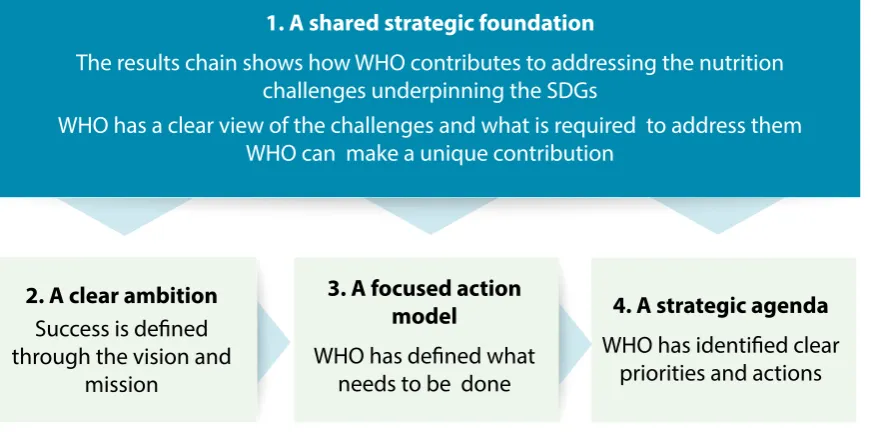
WHO’s Ambition and Action in Nutrition 2016-2025 is based on four building blocks (Figure 4).
Figure 4. Building blocks for WHO’s Ambition and Action in Nutrition 2016-2025
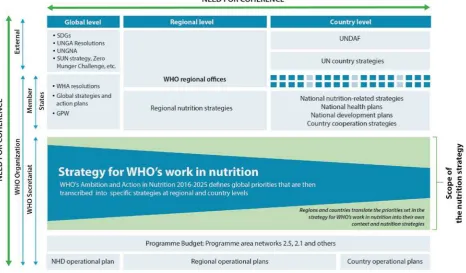
As shown in Figure 5, the strategy aims to bring about coherence by:
•
fostering internal and external alignment between> partner and UN-wide strategies (for example, that of the UN Global Nutrition Agenda,
of the Scaling Up Nutrition Movement and of the UN System Standing Committee on Nutrition);
> World Health Assembly resolutions and strategies;
> the WHO Secretariat Programme Budget and operational plans; and
•
progressively strengthening the focus and integrated delivery of the Organization’s work innutrition to address global, regional and country priorities and activities.
1. A shared strategic foundation
The results chain shows how WHO contributes to addressing the nutrition
challenges underpinning the SDGs
WHO has a clear view of the challenges and what is required to address them
WHO can make a unique contribution
2. A clear ambition
Success is de
fined
through the vision and
mission
3. A focused action
model
WHO has defined what
needs to be done
4. A strategic agenda
12
WHO
I
ambition and action in nutrition 2016–2025
Figure 5. Scope of WHO’s Ambition and Action in Nutrition 2016-2025
In that sense, the strategy is a management tool to ensure that WHO continuously aligns its internal and external work for maximum impact, while maintaining its independence and neutrality. The process undertaken to deine WHO’s Ambition and Action in Nutrition 2016-2025, and to promote and monitor its implementation, is in itself a change management process, and constitutes an approach for delivery that cuts across organizational boundaries in line with the spirit of the WHO reform process.
2.1 SITUATION ANALYSIS
2.1.1
External situation: progress and complexity
Malnutrition in all its forms remains a key cause of mortality and poor health
Despite signiicant progress in reducing hunger, the nutrition-related targets of the Millennium Development Goals (MDGs) were not fully achieved. Much remains to be done: nearly 800 million people remain chronically undernourished. In 2015, over 156 million children under 5 years of age were stunted and 51 million were wasted. A solid nutritional start has an impact for life on the child’s physical, cognitive and social development.
2. THE WHO NUTRITION RESULTS CHAIN
SUMMARY
•
As momentum in nutrition increases, so does the complexity of the global nutrition landscape, with the number of organizations, partnerships and institutes active in nutrition skyrocketing over the recent years. This could lead to overlap, incoherence and duplication of work if agendas do not align. In this crowded arena, it also increases the risk of conlict of interest and mechanisms need to be in place to safeguard public health at all levels.•
The scope of nutrition itself has evolved dramatically in recent years, with the close relationship with NCDs and the importance of healthy diets. There are also increasingly strong linkages between nutrition, climate change and food systems.•
A number of initiatives including the SUN Movement have been launched to tackle the challenge of potential fragmentation of the nutrition community.•
WHO’s Ambition and Action in Nutrition 2016-2025 is based on a results chain that articulates how the unique strengths and core functions of WHO contribute to the reduction of malnutrition, the prevention of noncommunicable diseases and the treatment of communicable diseases. Three key functions form the core of the Organization’s work in nutrition: leadership, guidance and monitoring.Also in 2015:
•
Undernutrition was an underlying cause in 45% of deaths of children under 5 years;•
The global under-5 mortality rate was 43 per 1000 live births, which means almost 6 million deaths in just one year;•
Nearly all countries were of course towards reaching the anaemia reduction target;•
Obesity afected 42 million children under 5 years of age, of whom 31 million live in developing countries;14
WHO
I
ambition and action in nutrition 2016–2025
Funding for nutrition actions has increased but remains inadequate
In 2014, the World Bank estimated the annual spending on nutrition-sensitive actions in priority countries to be US$ 3.9 billion. It highlighted the impact of insuicient levels of foreign investment and domestic inancing of nutrition actions, and forecast that US$2.6 billion in additional investments by donors would be needed each year for the next ten years to meet the costs of the nutrition-speciic actions covering four of the six Global Nutrition Targets (stunting, wasting, anaemia and breastfeeding).
Although funding has increased by four-fold for nutrition-speciic actions over the past ten
years, there is still only one third of the estimated inancing that is required to achieve the global targets by 2025. This puts increased emphasis on the deinition of evidence-based eicient nutrition actions and on sustaining Member States’ domestic and development assistancefunding for nutrition.
As momentum on nutrition increases, so does the complexity of the global nutrition landscape
With the increased momentum and related inancial lows, the number of organizations active in nutrition has skyrocketed. Figure 6 and Annex 1 show the crowded nature of the nutrition landscape.
Figure 6. Overview of the global nutrition landscape
•USAID • DANIDA
• JICA • GIZ • BMEL
• DfID • SIDA • NORAD
• Australian Department of Foreign Affairs and Trade
Switzerland • Finland
• Italy • Spain
MENT AGENCIES
•IFAD • FAO • REACH
• The European Commision
• African Development Bank
• Inter-American Development Bank
HEALTH INSTITUTE S
•Johns Hopkins University
• ICDDR,B • Harvest Plus
• LSHTM • CGIAR
• IFPRI • UNU
• Cornell University
A
RCH INSTITUTIONS •CARE • HKI • ACF
• IBFAN • WABA
• WorldVision • BRAC
• GAIN • MSF
• Save the Children
• NCDA
TAL ORGANIZATIONS
PR
•The Power of Nutrition
•Every Women Every Child
• Scaling Up Nutrition Movement
• Zero Hunger Challenge
P
• World Cancer Research Fund International
• Aga Khan Foundation
• Bloomberg Philanthropies
• Clinton Foundation FO
UN
DATIO
The involvement of multiple actors provides signiicant leverage for achieving common goalsand allowing WHO to focus on its unique contribution. It also creates a risk of policy incoherence if agendas do not align, and of conlict of interest.
The scope of nutrition itself has dramatically changed in the last few years.
In the early 2000s maternal and child undernutrition was the main cause of death worldwide.5 Consequently, the focus of the
MDGs was the reduction of poverty and of child underweight. The reduction of underweight has primarily been tackled through policies addressing food insecurity, including improvements in
agricultural production, the delivery of food aid and the management of acute malnutrition. In health programmes, priority has been given to improving maternal, infant and young child nutrition.
The epidemic of noncommunicable diseases rapidly changed the picture, and unhealthy diet rose to the top of the list of risk factors for the Global Burden of Disease. The broadening of scope has meant an involvement in nutrition of the health community dealing with the reduction of noncommunicable diseases.
In 2014, ICN2 called to address all forms of
malnutrition, including undernutrition, overweight and diet-related noncommunicable diseases. This approach was subsequently taken up by the SDGs. The ICN2 emphasized the need to ix a broken and unsustainable food system and address malnutrition in all its forms through all related sectors, including health, agriculture, trade and industry, the environment, labour and social protection and education. These changes have inluenced the numbers and types of current and potential partners.
The planetary impact of food systems has created an important new link between nutrition and the
climate change movements. Food security needs to be maintained in the face of increased needs, due both to population growth and to decreased productivity because of climate challenges. In addition, food production and consumption patterns need to be modiied to reduce
greenhouse gas emissions, biodiversity loss, water consumption and land degradation, and to tackle antimicrobial resistance.
The nutrition community was described by the Lancet Nutrition Series (2008) as fragmented and dysfunctional. A number of initiatives have been taken to respond to this challenge:
•
The Scaling Up Nutrition (SUN) Movement was established with the aim of improving political commitment to nutrition, strengthening country level multisectoral policies and aligning diferent actors, including civil society, donors, UN agencies and the private sector around a common results framework led by governments.•
The Zero Hunger Challenge, launched by United Nations Secretary-General Ban Ki-moon in 2012, relects ive elements from the SDGs which, taken together, can end hunger, eliminate all forms of malnutrition, and build inclusive and sustainable food systems.•
Movements and initiatives in other areas, such as Every Woman Every Child, the Partnership for Maternal, Newborn and Child Health (supporting the Global Strategy for Women’s, Children’s and Adolescents’ Health) consider nutrition among their priorities.•
The Nutrition for Growth initiative, initially led by the United Kingdom, stimulated policy and inancial commitments among a large group of actors including governments, donors, civil society, the UN and the private sector.•
New and important actors are appearing, such as the EAT initiative, aimed at generating5 Forouzanfar, Mohammad H et al. Global, regional, and national comparative risk assessment of 79 behavioural, environmental
16
WHO
I
ambition and action in nutrition 2016–2025
action to improve the food system in termsof environmental sustainability and health value, and the C40 initiative, bringing together 90 municipalities with the aim of addressing climate change, with a C40 network focussing on urban food systems.
•
The policy discussion on nutrition has been taken up more prominently by the World Health Assembly, attended primarily by ministers of health and other health actors, and by the Committee of World Food Security (CFS) that concerns mostly ministers of agriculture and other food security actors, including the food industry. Nutrition has also been addressed at the United Nations General Assembly, attended by ministers of foreign afairs and top country leaders.2.1.2 Internal situation: nutrition is aiming to be on
the top priority list of WHO
WHO has been a quiet, efective achiever in nutrition
Through its Member States, WHO contributes directly to a series of vital commitments to
improving nutrition, and to strengthening national capacity to act on those commitments:
•
The International Code of Marketing of Breast-milk Substitutes and subsequent resolutions;•
The recommendations on the marketing of foods and non-alcoholic beverages to children (resolution WHA 63.14);•
The Comprehensive Implementation Plan on Maternal, Infant and Young Child Nutrition (2012) and its subsequent indicators and progress reports;•
The ICN2 Rome Declaration and Framework for Action (2014);•
The SDGs and the 2030 Agenda for Sustainable Development;•
The Nutrition for Growth commitments;•
The Global Action Plan for the Prevention and Control of Noncommunicable Diseases (2013);•
The endorsement of the UN Decade of Action on Nutrition, as co-lead with the FAO.In this context, WHO has been successful at all levels in framing nutrition as a common goal. Examples of contributions include:
•
Technical assistance to more than 90 countries to develop national nutrition policies, establish regulations, taxation schemes, and national actions to improve nutrition;•
More than 130 countries having now adopted the WHO growth standards from which annual joint estimates of malnutrition are developed;•
The Global database on the Implementation of Nutrition Action (GINA) launched in 2012, which is growing steadily and provides an interactive platform and mapping tool on nutrition policies and action;•
The e-Library of Evidence of Nutrition Actions (eLENA), a web-portal on efective nutrition actions, that was accessed by over 1.5 million visitors between 2013 and 2016;•
In the same time period, the strengthened capacity of more than 3400 health workers and government oicials in 11 African countries to conduct nutrition surveillance and•
Preventing death, illness and disability arising from emergencies.This dichotomy means that nutrition topics are addressed to varying degrees in numerous WHO departments in headquarters:
•
The Department of Nutrition for Health and Development;•
The Departments of Prevention ofNoncommunicable Diseases, Management of Noncommunicable Diseases, Food Safety and Zoonoses, Global Coordination Mechanism, (Noncommunicable Diseases and Mental Health cluster);
•
The Departments of Maternal, Newborn, Child and Adolescent Health, Reproductive Health and Research, Public Health, Environmental and Social Determinants of Health (Family, Women’s and Children’s Health cluster);•
Some departments dealing with communicable diseases (malaria, TB, HIV, Neglected Tropical Diseases);•
The WHO Health Emergencies Programme.•
The Global Nutrition Targets Tracking Tool, developed by WHO, in collaboration with UNICEF and the European Commission to help countries set their national targets and monitor progress. This tool allows users to explore scenarios taking into account diferent rates of progress for the six targets and the time left to 2025.The ubiquitous nature of nutrition in the work of WHO creates a risk of strategic and operational dilution
There is a dual nature to the Organization’s work on nutrition in the Twelfth General Programme of Work (2014-2019).
Nutrition is a speciic programme area within the noncommunicable disease category. There is a clearly identiied outcome labelled “Reduced Nutritional Risk Factors” and there are two indicators: 1) number of stunted children below 5 years of age and 2) proportion of women of reproductive age (15-49 years) with anaemia.
At the same time, nutrition is an implicit contributor to achieving the following:
•
Reducing under-ive mortality•
Reducing maternal mortality18
WHO
I
ambition and action in nutrition 2016–2025
At regional and country levels, nutritionresponsibilities are also spread across multiple areas, not always following the same structure as headquarters.
Overall, while in principle the dual approach could result in mainstreaming the nutrition agenda within WHO, in practice it has resulted in a dilution of the priority and resources allocated to nutrition. This dilution would be ampliied if WHO chose to focus solely on achieving SDG 3.
While strong capabilities exist, they are not suicient, most notably at regional and country levels.
In October 2016, the nutrition capacity survey identiied 108 staf members active on nutrition across WHO, excluding the 22 full-time NHD staf at headquarters. The 108 personnel devote various
proportions of time to nutrition activities, especially at country level, with a global average of 34%. This situation is further compounded by the fact that 56% of the nutrition practitioners identiied at regional and country levels actually spend less than one quarter of their time on nutrition. In addition, limited funding has resulted in uneven geographic coverage, gaps in speciic skill sets and diiculties in allocating priority to nutrition at country level.
WHO’s Ambition and Action in Nutrition 2016-2025 aims to increase the impact of WHO’s contribution to health through nutrition by leveraging the strengths and opportunities and mitigating the weaknesses and threats identiied in the analysis of the internal and external environments.
A summary of challenges, opportunities, strengths and weaknesses is provided in Annex 5.
2.2 THE WHO NUTRITION RESULTS CHAIN
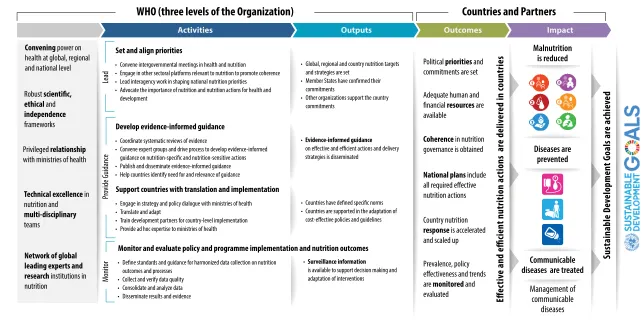
The WHO nutrition results chain and the overview of its application (Figures 7 and 8) deine the
19
WHO
I
ambition and a
ction in nutrition 2016–2025
|
Convening power on
health at global, regional and national level
Robust scientific,
ethical and
independence
frameworks
Privileged relationship
with ministries of health
Technical excellence in
nutrition and
multi-disciplinary
teams
Network of global leading experts and
research institutions in
nutrition
Set and align priorities
• Convene intergovernmental meetings in health and nutrition
• Engage in other sectoral platforms relevant to nutrition to promote coherence • Lead interagency work in shaping national nutrition priorities • Advocate the importance of nutrition and nutrition actions for health and development
• Global, regional and country nutrition targets and strategies are set
• Member States have confirmed their commitments
• Other organizations support the country commitments
Develop evidence-informed guidance
• Coordinate systematic reviews of evidence
• Convene expert groups and drive process to develop evidence-informed guidance on nutrition-specific and nutrition-sensitive actions • Publish and disseminate evidence-informed guidance • Help countries identify need for and relevance of guidance
• Evidence-informed guidance on effective and efficient actions and delivery strategies is disseminated
Monitor and evaluate policy and programme implementation and nutrition outcomes
• Define standards and guidance for harmonized data collection on nutrition outcomes and processes
• Collect and verify data quality • Consolidate and analyze data • Disseminate results and evidence
• Surveillance information is available to support decision making and adaptation of interventions
Support countries with translation and implementation
• Engage in strategy and policy dialogue with ministries of health • Translate and adapt
• Train development partners for country-level implementation • Provide ad hoc expertise to ministries of health
• Countries have defined specific norms • Countries are supported in the adaptation of cost-effective policies and guidelines
WHO (three levels of the Organization)
Countries and Partners
Political priorities and commitments are set
Adequate human and financial resources are available
Coherence in nutrition
governance is obtained
National plans include
all required effective nutrition actions
Country nutrition
response is accelerated
and scaled up
Prevalence, policy effectiveness and trends
are monitored and
evaluated
Eff
ec
tiv
e and efficient nutrition ac
tions ar
e deliv
er
ed in countries
Malnutrition is reduced
Diseases are prevented
Communicable diseases are treated
Management of
Activities Outputs Outcomes Impact
Inputs
20
WHO
I
ambition and action in nutrition 2016–2025
Under these functions, and in collaboration with partners, WHO will•
set priorities for nutrition actions;•
promote coherence among sectors involved in nutrition actions;•
advocate for the importance of nutrition for health;•
support the development of evidence-informed guidance;•
ensure access to this guidance through publication and dissemination;As the global guardian of public health, WHO is uniquely placed to convene Member States and partners, to generate independent scientiic evidence, and to develop and sustain networks of high-quality expertise.
The three functions represent the core of WHO’s work in nutrition:
Leadership
Commitments on strategies and targets are essential for mobilizing and securing adequate human and inancial resources and for efectively aligning the actions of Member States and partners.
Guidance
Successful scaling upof nutrition actions requires that national planscover a speciied set of efective nutrition actions in the most eicient way. Some Member States need initial support to identify how to best tailor a set of coherent nutrition policies (support to adoption and adaptation) and how to efectively engage with partners while avoiding and managing conlicts of interest.
Monitoring
Tracking progress and trends holds governments and partners accountable for their actions to improve nutrition, and informs future priority setting.
•
support countries to translate this guidance into action;•
monitor and evaluate this implementation by deining standards, developing tools, collecting and analyzing data.F
igur
e 8. O
v
er
vie
w of
WHO
’s w
or
22
WHO
I
ambition and action in nutrition 2016–2025
3. WHO’S AMBITION FOR NUTRITION
3.1 VISION
A world free from all forms of
malnutrition where all people achieve
health and well-being
The key strategic elements relected in this vision statement are:
•
A world: WHO strives for impact in all countries.•
All forms of malnutrition: there is a need to address the double burden of malnutrition as well as diet-related noncommunicable diseases afecting individuals, households and populations.•
All people: a life-course approach is essential, including all population groups i.e. infants, children, adolescents, mothers, adults, the elderly, male and female.•
Health and well-being: WHO’s work in nutrition is placed within the wider deinition of health in the WHO Constitution, “a state of complete physical, mental and social well-being and not merely the absence of disease or inirmity”.This vision is aligned with:
WHO’s mandate and the principles set forth in its Constitution; the SDGs, in particular SDG2 and SDG3. the necessity to place WHO’s work in nutrition within the wider context of the WHO’s
SUMMARY
•
Building on the results chain, WHO is setting a clear ambition for its work in nutrition over the ten-year period 2016-2025. This ambition is expressed in its vision and mission.3.2 MISSION
To work with Member States and partners
to ensure universal access to efective
nutrition actions and to healthy and
sustainable diets. To do this WHO:
•
Uses its convening power to help set, align andadvocate for priority actions to improve nutrition;
•
Develops evidence-informed guidance based onrobust scientiic and ethical frameworks;
•
Supports the adoption of guidance andimplementation of efective actions;
•
Monitors and evaluates policy and programmeimplementation and nutrition outcomes.
The key elements of this mission statement are:
•
Working with Member States and partners: WHO will use and strengthen its convening power to help set, align and advocate priorities to move nutrition forward across the four key activities outlined in the nutrition results chain.•
Efective nutrition actions: evidence-informed guidance developed though robust scientiic and ethical frameworks free from conlict of interest, must underlie the development of efective and eicient nutrition-speciic and nutrition-sensitive solutions.4. APPROACHES FOR WHO’S
SUMMARY
•
Five guiding principles form the foundation of WHO’s approach to its work in nutrition and provide a framework for prioritizing actions and ensuring coherence:• Anchor WHO’s Ambition and Action in Nutrition 2016-2025 in the SDGs and the UN Decade of Action on Nutrition
• Ensure a strategic focus for the Organization’s work on nutrition
• Develop an integrated approach
• Promote collaboration and partnership within and outside of WHO
• Recognize the role of key nutrition actions.
A clear allocation of roles is proposed between headquarters, regional and country levels to deliver the core functions of leadership, guidance and monitoring in an integrated way, ensure coherence and focus on key priorities to maximize impact.
4.1 PRINCIPLES UNDERPINNING WHO’S APPROACH TO NUTRITION
WORK IN NUTRITION
Five guiding principles underpin WHO’s approach to nutrition.
1. Anchor WHO’s Ambition and Action in
Nutrition 2016-2025 in the SDGs and the
UN Decade of Action on Nutrition
The SDGs and the UN Decade of Action on Nutrition are key drivers of alignment of Member States, partners and the global community.
WHO will:
•
Direct eforts and resources to address and contribute to the nutrition-related targets contained in SDGs 2 and 3 and to theimplementation of the ICN2 recommendations;
•
Give a lower priority to other actions and take on additional targets only when speciically mandated by the World Health Assembly.2. Ensure a strategic focus for the
Organization’s work on nutrition
In a context of strained inancial resources and the concurrent multisectoral and collaborative spirit of the 2030 Agenda for Sustainable Development, focus is critical to avoid dilution of capacity and impact.
WHO will:
•
Support selected high-burden countries that demonstrate a readiness to commit to taking action;•
Intervene in areas where it will have the greatest impact in addressing all forms of malnutrition;24
WHO
I
ambition and action in nutrition 2016–2025
3. Develop an integrated approach
Capacity constraints and increasing demands for support to nutrition programming call for a more efective and eicient use of nutrition resources and approaches. The results chain shows that policies can only be efective if actors set out to deliver end-to-end activities and foster integration between actions, in how WHO approaches targets, between sectors, across the three levels of WHO, and within WHO headquarters.
•
Between actions: WHO’s nutrition action model will be based on the most eicient continuum of activities;•
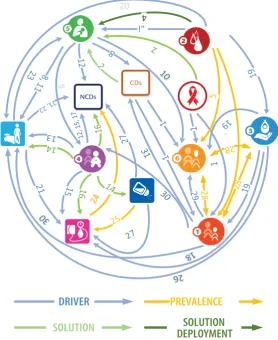
In how WHO approaches targets: WHO will acknowledge the interdependencies and commonalities between nutrition targets and progressively shift the vertical delivery approach taken to date to a horizontal perception of nutrition (Figure 10);•
Between sectors: recognizing that the WHO role and mandate rest irmly on health, WHO will interact with other sectors to deliver on the health agenda;•
Across the three levels of WHO: the Organization will build the continuum between the various levels from headquarters to country oices and across departments.4. Promote collaboration and partnership within and outside of WHO
The complexity of the nutrition landscape and the speciicities of country environments call for efective coordination between nutrition actors both inside and outside of WHO.
By promoting collaboration, WHO acknowledges that partners and other actors can be more eicient and efective at certain times and in certain
domains of action. In these cases, WHO will lean towards a steering and catalyzing role.
WHO will:
•
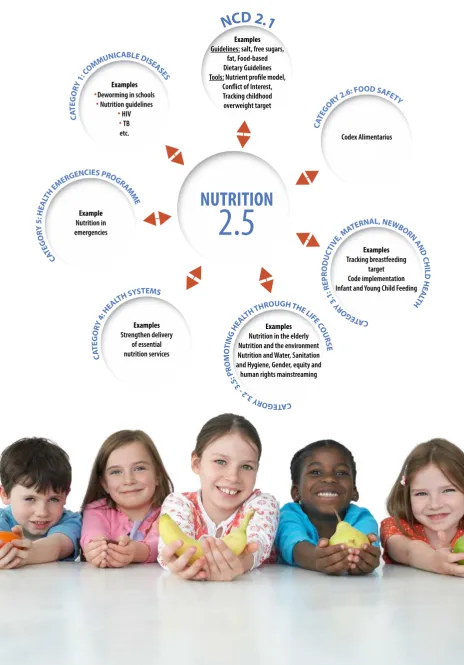
Clarify and formalize the interactions and respective roles of clusters and departments, especially with the programme area networks 2.1, 2.6, 3.1 and 3.56 to improve eiciency (Figure 11);•
Adapt its role in accordance with the context in which it operates;•
Identify and foster a partnership strategy including the prevention and efective management of conlicts of interest;•
Develop a set of indicators to monitor and evaluate its contribution to achieving the Global Nutrition Targets through WHO’s Ambition and Action in Nutrition 2016-2025.5. Recognize the interdependencies between nutrition targets and the role of evidence-informed nutrition actions to address them simultaneously
Nutrition targets are dependent on one another, and some nutrition actions afect multiple targets simultaneously (Figure 10 and Annex 3). WHO uses solid scientiic evidence, independently analyzed, to identify key efective actions.
Passive
• No proactive action towards existing nutrition initiatives of nutrition initiatives and advocates for greater harmonization
• Limited normative work in nutrition throughout the three levels
Contributor
• Seats in nutrition platforms focusing primarily in a technical advisory capacity
• Extensive normative work primarily from headquarters and Regional offices
• Selectively gets involved upon explicit request from
• Active coordination with related technical areas within the Organization to mainstream the nutrition agenda political leadership
• Proactive participation to further shape and coordinate the global agenda
• Extensive normative work in nutrition
• Proactively gets involved in intensifying country-level work on policies and programmes
Least engaged Most engaged
Figure 9. Focus: positioning WHO as a shaper and a do-er in nutrition
Figure 10. Integration: mapping of dependencies between nutrition targets
26
WHO
I
ambition and action in nutrition 2016–2025
Examples
● Deworming in schools
● Nutrition guidelines
● HIV Guidelines: salt, free sugars,
fat, Food-based Dietary Guidelines
Tools: Nutrient profile model,
Conflict of Interest, Infant and Young Child Feeding
CA
ATERNAL, NEWBOR N
Nutrition in the elderly Nutrition and the environment Nutrition and Water, Sanitation and Hygiene, Gender, equity and
human rights mainstreaming
ERGENCIES PROGR AM
M E
The analysis of challenges provides clear messages:
•
WHO excels in providing guidance on efective nutrition actions by developing evidence-informed guidelines and indicators for monitoring implementation and evaluating impact.•
WHO needs to strengthen its capacity for advocacy and coordination, given the increasing range of actors involved in nutrition, while simultaneously providing support that better meets the needs of countries.Based on this, and in accordance with the approaches described in the previous section, six priorities were identiied across the three core functions of leadership, guidance and monitoring.
5. PRIORITIES AND ACTIONS FOR
WHO’S WORK IN NUTRITION
SUMMARY
Leadership
■ Shape the narrative of the global nutrition agenda
■ Leverage changes in relevant non-health sectors to improve and mainstream nutrition
■ Leverage the implementation of efective nutrition policies and programmes in all settings,
including in situations of emergencies and crisis
Guidance
■ Deine healthy sustainable diets and guide the identiication and use of efective nutrition actions
■ Improve the availability of nutrition actions in health systems
Monitoring
■ Support the establishment of targets and monitoring systems for nutrition
28
WHO
I
ambition and action in nutrition 2016–2025
5.1 LEADERSHIP PRIORITIES
Priority 1. Shape the narrative of the global nutrition agenda
WHO’s nutrition narrative is based on the following ten key messages:
1. All forms of malnutrition need to be addressed to achieve the SDGs. The six Global Nutrition
Targets and the diet-related Noncommunicable Disease Targets represent the main nutrition challenges.
2. All countries are afected by one or more forms of malnutrition.
3. Poor nutrition afects the economy, and investment in good nutrition has potentially important
economic returns.
4. Nutrition needs to be addressed at every stage of life and access to a healthy diet7 is a human
right.
5. Good nutrition in early life is critical for child health and development and for adult functional
capacity.
6. The basic underlying causes of malnutrition are food systems that are not conducive to healthy
diets, weak health systems and environmental challenges.
7. Improving nutrition requires action in multiple sectors and with multiple partners
simultaneously, including food safety, water and sanitation, and physical activity, as described in the ICN2 Framework for Action.
8. Providing healthy diets to all is crucial to ensuring optimal health for people and the planet.
9. Solid evidence exists for efective programmes and policies, and action should be carried out
urgently and at scale, leveraging the UN Decade of Action on Nutrition.
10. Improving nutrition is a responsibility for all actors of society, but government leadership is
essential to ensure that all actions are conducted in the public interest.S
Advocacy messages should be consistently given by the three levels of the Organization. The speciic role of WHO in nutrition should be made clear and agreed by all WHO management, to maximize the impact of WHO’s advocacy at all levels.
7 It is emphasized that exclusive breastfeeding from birth to 6 months and continued breastfeeding up to 2 years and beyond is