SUSTAINABLE FISHERIES
MANAGEMENT PROJECT (SFMP)
The Formation and Inauguration Of
Community Child Protection
Committees (CCPCS) at Elmina and
at Moree in the Central Region.
This publication is available electronically on the Coastal Resources Center’s website at
http://www.crc.uri.edu/projects_page/ghanasfmp/
For more information on the Ghana Sustainable Fisheries Management Project, contact:
USAID/Ghana Sustainable Fisheries Management Project Coastal Resources Center
Graduate School of Oceanography University of Rhode Island
220 South Ferry Rd.
Narragansett, RI 02882 USA
Tel: 401-874-6224 Fax: 401-874-6920 Email: [email protected]
Citation: Smith N., Hannah, A. and Takyi, M. (2016). The Formation And Inauguration Of Community Child Protection Committees (CCPCS) at Elmina and at Moree in the Central Region. The USAID/Ghana Sustainable Fisheries Management Project (SFMP). Narragansett, RI: Coastal Resources Center, Graduate School of Oceanography, University of Rhode Island and Central and Western Fishmongers Improvement Association GH2014_POL066_CEW. 12 pp.
Authority/Disclaimer:
Prepared for USAID/Ghana under Cooperative Agreement (AID-641-A-15-00001), awarded on October 22, 2014 to the University of Rhode Island, and entitled the USAID/Ghana Sustainable Fisheries Management Project (SFMP).
This document is made possible by the support of the American People through the United States Agency for International Development (USAID). The views expressed and opinions contained in this report are those of the SFMP team and are not intended as statements of policy of either USAID or the cooperating organizations. As such, the contents of this report are the sole responsibility of the SFMP team and do not necessarily reflect the views of USAID or the United States Government.
Detailed Partner Contact Information:
USAID/Ghana Sustainable Fisheries Management Project (SFMP) 10 Obodai St., Mempeasem, East Legon, Accra, Ghana
Telephone: +233 0302 542497 Fax: +233 0302 542498
Maurice Knight Chief of Party [email protected]
Kofi Agbogah Senior Fisheries Advisor [email protected] Nii Odenkey Abbey Communications Officer [email protected]
Bakari Nyari Monitoring and Evaluation Specialist [email protected] Brian Crawford Project Manager, CRC [email protected]
Justice Odoi USAID Administrative Officer Representative [email protected]
Kofi.Agbogah
SNV Netherlands Development Organisation #161, 10 Maseru Road,
E. Legon, Accra, Ghana 233 30 701 2440
Donkris Mevuta Kyei Yamoah
[email protected] Friends of the Nation Parks and Gardens Adiembra-Sekondi, Ghana 233 312 046 180
Peter Owusu Donkor Spatial Solutions
[email protected] #3 Third Nautical Close,
Nungua, Accra, Ghana
Darkuman Junction, Kaneshie Odokor Highway
Accra, Ghana 233 302 315894
Gifty Asmah
[email protected] Daasgift Quality Foundation
Headmaster residence, Sekondi College Sekondi, Western Region, Ghana 233 243 326 178
For additional information on partner activities: CRC/URI: http://www.crc.uri.edu
CEWEFIA: http://cewefia.weebly.com/
DAA: http://womenthrive.org/development-action-association-daa Daasgift:
https://www.facebook.com/pages/Daasgift-Quality-Foundation-FNGO/135372649846101 Friends of the Nation: http://www.fonghana.org Hen Mpoano: http://www.henmpoano.org
SNV: http://www.snvworld.org/en/countries/ghana SSG Advisors: http://ssg-advisors.com/
TABLE OF CONTENTS
TABLE OF CONTENTS ... iii
LIST OF FIGURES ... iii
ACRONYMS ... iii
INTRODUCTION ... 1
IDENTIFICATION, SELECTION, AND FORMATION OF THE COMMUNITY CHILD PROTECTION COMMITTEE (CCPC) ... 1
The Elected Executive Members ... 2
OUTCOME OF THE INAUGURATION OF THE COMMUNITY CHILD PROTECTION COMMITTEES... 2
WELCOME ADDRESS ... 2
DOCUMENTARY ON CLAT ... 3
KEYNOTE ADDRESS ... 4
Statement by Friends of the Nation: ... 4
Sharing Of Interest Stories and Successes: ... 4
Inauguration Of CCPCS ... 4
CHALLENGES ... 4
RECOMMENDATIONS ... 4
APPENDIX 1: PICTURES OF THE INAUGURATION EVENT ... 6
APPENDIX 2: CRITERIA FOR THE SELECTION OF COMMUNITY CHAMPIONS ON CLAT ... 8
LIST OF FIGURES
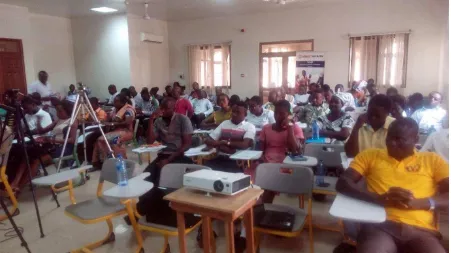
Figure 1 The Deputy Regional Director Of The Department Of Social Welfare Inaugurating The Selected Community Child Protection Committee ... 6Figure 2 A cross section of participants at the inauguration ... 6
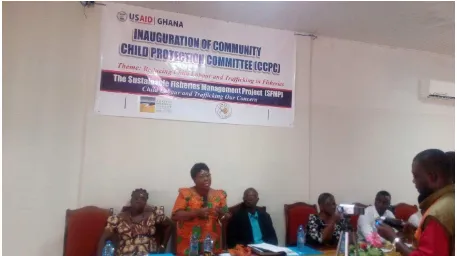
Figure 3 The regional deputy director of the department of social welfare, giving her inaugural address ... 7
ACRONYMS
CCPC Community Child Protection Committees CHRAJ Commission on Human Rights and Justice CLaT Child Labor and Trafficking
DOVSU Domestic Violence & Victim Support Unit
KEEA Komenda/Edina/Eguafo/Abirem Municipal District NCCE National Commission for Civic Education
INTRODUCTION
In our coastal areas, parents and the communities find it very difficult to care for and protect their children, who are the most vulnerable members of the society. Most especially, during the lean season of the fish business, which is their main occupation, children are compelled to find themselves in risky situations. These risks are compounded where social welfare systems
lack the reach to deliver services in areas of greatest need. In order to sustain children’s
protection from Child Labour, Worst Forms of Child Labour including Child Trafficking in fisheries, humanitarian actors, such as local NGOs have promoted the establishment of Community Child Protection Committees.
The committees normally serve as a forum where community members meet, discuss child protection problems and research solutions. It is an informal structure representing all sectors in the community who have a role to play in protecting children. Children themselves are included since they serve as platforms for holding Duty- Bearers accountable for promoting Child Rights and protecting children from Child Labour and Worst Forms Child Labour including Child Trafficking. There is thus the need to establish such committees in communities where child labour and abuse go on.
CEWEFIA has organized a series of activities in support of the Sustainable Fisheries Management Project to reducing Child Labour and Trafficking.
Illegal Child Labour in fishing is a problem in Central Region of Ghana especially the towns and villages along the coast where fishing is the main source of livelihood. The Year 1 Work Plan included activities that would reduce or prevent Child Labour and Trafficking in
fisheries. The anti-Child Labour activities were implemented by CEWEFIA in two targeted communities in the Central Region of Ghana namely; Elmina and Moree.
IDENTIFICATION, SELECTION, AND FORMATION OF THE
COMMUNITY CHILD PROTECTION COMMITTEE (CCPC)
In order to reduce Child Labour and trafficking in fisheries two Community Child Protection Committees were formed to work with the anti CLaT advocate in the communities.
Modalities and the criteria for identification and selection were also discussed and
drawn.(See Appendix 2). The identification and selection of members was done by consulting people at the Assemblies, Education Directorate, Health Directorate, some branches of the Christian Council of Ghana in both the Municipal and the District Assemblies, Islamic Bodies, Opinion leaders, Traditional Authorities, Youth Groups, Women Groups,
Assemblymen and. An election was conducted by the committee members to chose their Executives. Four members formed the Executives for each committee, made up of the Chairman, the Vice Chairman, the Secretary and the Organizing Secretary.
Each committee is composed of seventeen members (17)
The Composition of the Community Child Protection Committee:
1 Representative from the Traditional Council
1 Queen mother
1 Chief fisherman
1 Religious Leader
1 Islamic Leader
1 Assembly person
1 Unit Committee member
1 Representative from PTA/ SMC
2 Opinion Leaders
1 Watchdog Committee member
1 Youth Group Leader
1 Market Queen
1 Media House personnel
1 Representative from Trade Associations
1 Children’s Representative
The Elected Executive Members
MOREE :
Chairman; Nana Mensa- Bonsu
Vice Chairman; Madam Rebecca Eshun Secretary; Madam Emelia Halm
Organizing Secretary; Hon. Mathew Kakra Boison ELMINA:
Chairman: Madam Cecilia Arthur Vice Chairman: Nana Kwesi Duncan I Secretary: Hon. Ebenezer Dadzie
Organizing Secretary: Mr Alexander Blavo
OUTCOME OF THE INAUGURATION OF THE COMMUNITY CHILD
PROTECTION COMMITTEES
The Inauguration of the Formed Community Child Protection Committees for both Moree and Elmina took off on Thursday, 11th February, 2016 at the Oguaa Teachers Credit Union Conference Hall, Cape Coast.
Theme for the Inauguration: REDUCING CHILD LABOUR IN FISHERIES
A total of 67 persons attended the ceremony, made up of 20 females and 57 males. The CCPC members alone were 34 while the rest were Government Officials, Opinion Leaders, Traditional Authorities, SFMP Official, an Official from Challenging Heights, 2 Staff from Friends of the Nation, 6 Staff from CEWEFIA, 10 Media personnel, 2 Community
Facilitators and 4 anti-CLaT Advocates. The Inaugural Ceremony was chaired by The KEEA Municipal Director of CHRAJ. The Acting Regional Director of Department for Gender gave the Keynote Address while the Regional Director of Department for Social Development inaugurated the Community Child Protection Committees.
WELCOME ADDRESS
serious in the Central Region which needed to be addressed and tackled through participatory approach which had a focus on a broad base sensitization and behavioral change
communication campaign to make such practices socially unacceptable and to ensure the protection of the rights of children.
Furthermore, she confidently believed that with the Community Child Protection Committees (CCPCs) and the anti- CLaT advocates, holistically, they would work together with
CEWEFIA to achieve SFMP’s objective of reducing child labour and trafficking in Fisheries
in the Central Region.
DOCUMENTARY ON CLAT
A documentary film was shown to the participants by Challenging Heights on Child labour and Worst Forms of Child Labour including Child Trafficking in Fisheries and its effects. All participants after watching it indicated that there should be a holistic approach to prevent or eliminate Child Labour and Trafficking from our society.
The Representative from Challenging Heights explained vividly some aspects in the film while the participants were watching it. Furthermore, participants became alarmed when they started watching the effects of Child Labour and Trafficking. Some of the effects were as follows; Severe beatings some of the children were receiving from their masters, one child becoming hunch back as a result of the fishing work he was engaged in on the high seas, some children dying during deep sea fishing due to bad weather deep sea diving or any other particular work they were engaged in, the fingernails of some children being destroyed as a result of the fishing work they were forced to do. Most of the children went into slavery where their masters subjected them to severe beatings and to all forms of atrocities. Some were denied of food if they failed to go on fishing expedition. Some were eating once or twice a day. Although some children were doing fish business, they were served with scanty fish.
The documentary taught the participants so many lessons. The participants learnt that;
Parents who were shirking their responsibilities put their children into such risky situation.
Some children were engaged in Child Labour at the age of 5 years.
Due to financial crisis, some parents sent their children away to other places to work for a living.
Some children were sent away to other places to be enslaved by their masters between the ages of six and thirteen.
Some men or most of the men are not there when the agents go to negotiate with the women. A lot of women were single parents. The men impregnate them and leave them to fend for themselves.
Some of the health implications the child victims encounter are Bilharzia, skin rashes, Hepatitis B and other diseases.
KEYNOTE ADDRESS
A Keynote address was read by the Acting Regional Director of Department for Gender. She started her address by first making reference to the documentary film shown by Challenging Heights. She further urged participants to abhorr slavery of any kind.
The Director continued her speech by briefing the participants on the various Conventions, Protocols and programmes that Ghana had signed in a bid to protect the rights of children. The Constitution of Ghana has fundamental human Rights and children were entitled to them.it was up to all and sundry to make sure that they followed them for they were laws that protected children.
Last but not least, the Acting Director read the 2014 Ghana Living Standard Survey to the General House including the statistics on Worst Forms of Child Labour (WFCL). She commented that it was most gratifying that CEWEFIA and SFMP had made it possible for the formation of the CCPCs to work to prevent child labour and trafficking in Moree and Elmina. She concluded by commending the CCPs and advising them to work hard for a brighter future.
Statement by Friends of the Nation:
The representative from FoN started his presentation detailed their activities in the SFMP and other activities they are involved in coastal communities. He listed the various stakeholders they are working with to arrive at good policies to protect the fisheries sector.
Sharing Of Interest Stories and Successes:
The Fact sheet containing some success stories prepared by SFMP was read by Ms Hannah Antwi and copies distributed to all the participants. An opportunity was given to the
fishmonger turned advocate to tell her own story. Inauguration Of CCPCS
The inauguration of the CCPCs was done by the Deputy Regional Director of Department of Social Development who deputized for the Regional Director. Before inaugurating the CCPCs, the Director advised to the members that they should not compromise with parents who sold their children with the excuse that they were confronted with financial difficulties. The CCPC members were reminded that the work was arduous and voluntary. They should stand firm to protect the rights of the children. They should ask questions in their
communities. They should be bold to approach the children’s parents to encouraged them to
send their children to school. The Director first inaugurated Moree CCPC and then did that of Elmina. The CCPCs for both Moree and Elmina were duly inaugurated on Thursday, 11th February, 2016.
CHALLENGES
One major challenge mentioned was opposition from the communities.
Selecting days of meetings with the community members. Every fishing community wanted Tuesday to be used as its meeting day.,
RECOMMENDATIONS
CEWEFIA should not leave the work to the CCPCs alone to do it. It should move into
the communities to educate the parents on Children’ rights and the need to protect them. The Staff from Friends of the Nation also suggested that the Government should
APPENDIX 1: PICTURES OF THE INAUGURATION EVENT
Figure 1 The Deputy Regional Director Of The Department Of Social Welfare Inaugurating The Selected Community Child Protection Committee
APPENDIX 2: CRITERIA FOR THE SELECTION OF COMMUNITY
CHAMPIONS ON CLAT
Central and Western Fishmongers Improvement Association (Cewefia)
Sustainable Fisheries Management Project
IR1.7: Reducing Child Labour and Trafficking In Fisheries
Criteria for the Selection of Community Champions on CLaT
• A Community Champion should be between the ages of 18 – 60 years
• They must reside in the community
• They must be literate in English language
• They must be able to speak and understand the local language
• They must be sociable
• They should be ready to do voluntary work
• They must be honest and open minded
• They must be prepared to participate in project activities
• They should possess confidentiality qualities