Correlates and Experiences of HIV Stigma in
Prisoners Living with HIV in Indonesia: A
Mixed Method Analysis
Article in The Journal of the Association of Nurses in AIDS Care: JANAC · July 2015
Impact Factor: 1.27 · DOI: 10.1016/j.jana.2015.07.006 · Source: PubMed
CITATIONS
2
READS
106
6 authors, including:
Valerie A Earnshaw
Harvard Medical School
54PUBLICATIONS 607CITATIONS
SEE PROFILE
Martin P Wegman
University of Florida
13PUBLICATIONS 8CITATIONS
SEE PROFILE
Agung Waluyo
University of Indonesia
4PUBLICATIONS 7CITATIONS
SEE PROFILE
Frederick Altice
Yale University
269PUBLICATIONS 5,261CITATIONS
SEE PROFILE
All in-text references underlined in blue are linked to publications on ResearchGate, letting you access and read them immediately.
Feature
Correlates and Experiences of HIV Stigma
in Prisoners Living With HIV in Indonesia:
A Mixed-Method Analysis
Gabriel J. Culbert, PhD, RN*
Valerie A. Earnshaw, PhD
Ni Made Swasti Wulanyani, SPsi, MErg, DPsi Martin P. Wegman, BS
Agung Waluyo, SKp, MSc, PhD Frederick L. Altice, MD, MA
In Indonesia, the syndemic nature of HIV, drug use, and incarceration may influence experiences of stigma for HIV-infected prisoners. This mixed-method study explores HIV stigma in prisoners living with HIV in Indonesia. Randomly selected male HIV-infected prisoners (n5102) from two large prisons in Jakarta completed in-depth interviews and a struc-tured HIV stigma survey. Quantitative results found four groups of HIV-infected prisoners with signifi-cantly higher HIV stigma levels, including those: (a) with drug-related offenses, (b) seeking help to decrease drug use, (c) diagnosed with HIV before the current incarceration, and (d) who had not dis-closed their HIV status to family members or friends. Qualitative results highlighted the prominent role of HIV stigma in decisions to disclose HIV status to fam-ily members, partners, and other prisoners. Interven-tions should address HIV stigma in HIV-infected prisoners in Indonesia to achieve HIV treatment as prevention goals.
(Journal of the Association of Nurses in AIDS Care, -, 1-15) Copyright Ó 2015 Association of Nurses in AIDS Care
Key words:antiretroviral therapy, drug use, HIV, Indonesia, prisoners, stigma
I
ndonesia’s rapidly expanding HIV epidemic, thethird largest in Asia, is transitioning from an
Gabriel J. Culbert, PhD, RN, was a Postdoctoral Fellow at Yale School of Medicine and Public Health, Section of In-fectious Disease, AIDS Program and Division of Microbi-ology of Infectious Diseases, New Haven, Connecticut, USA, and a Visiting Research Fellow at the University of Malaya, Centre of Excellence on Research in AIDS (CE-RiA), Kuala Lumpur, Malaysia; he is now an Assistant Pro-fessor, University of Illinois at Chicago, College of Nursing, Chicago, IL, USA. (*Correspondence to: [email protected]). Valerie A. Earnshaw, PhD, is an Instructor in Pediatrics at Harvard Medical School, Boston, Massachusetts, USA, and an Associate Scientific Researcher at Boston Children’s Hospital, Boston, Massa-chusetts, USA. Ni Made Swasti Wulanyani, SPsi, MErg, DPsi, is a Psychologist and Lecturer at Universitas Udayana, Psikologi Fakultas Kedokteran, Denpasar, Indonesia. Martin P. Wegman, BS, is a Postgraduate Fellow at Yale University School of Medicine, New Haven, Con-necticut, USA, and a Visiting Research Fellow at the Uni-versity of Malaya, Centre of Excellence on Research in AIDS (CERiA), Kuala Lumpur, Malaysia. Agung Waluyo, SKp, MSc, PhD, is an Associate Professor of Medical-Surgical Nursing and Head of the Center for HIV/AIDS Nursing Research at Universitas Indonesia, Fakultas Ilmu Keperawatan, Depok, Indonesia. Frederick L. Altice, MD, MA, is a Professor of Medicine, Epidemiology and Public Health, and Director of Clinical Community Research at Yale School of Medicine and Public Health, Section of Infectious Disease, AIDS Program and Division of Microbiology of Infectious Diseases, New Haven, Con-necticut, USA, and Icon Professor of Medicine at the Uni-versity of Malaya, Centre of Excellence on Research in AIDS (CERiA), Kuala Lumpur, Malaysia.
JOURNAL OF THE ASSOCIATION OF NURSES IN AIDS CARE, Vol.-, No.-,-/-2015, 1-15
http://dx.doi.org/10.1016/j.jana.2015.07.006
epidemic concentrated in people who inject drugs
(PWID) to a generalized epidemic (Joint United
Nations Programme on HIV/AIDS [UNAIDS],
2013). While other Asian countries have recently
sta-bilized or decreased new HIV infections, HIV inci-dence in Indonesia, the world’s fourth most populous nation, rose 48% between 2008 and 2013. Meanwhile, a mere 8% (range 5%-13%) of Indone-sia’s approximately 610,000 people living with HIV
(PLWH) have accessed antiretroviral therapy
(ART), and HIV-related deaths increased a staggering
427% between 2005 and 2013 (UNAIDS, 2014).
A national strategy aims to improve detection and treatment of HIV in Indonesia’s approximately 160,000 prisoners, of whom, conservatively, 8% to 13% are PWID and 1.1% to 6.5% are PLWH (Directorate of Corrections, 2010; 2012), suggesting HIV prevalence several-fold higher than in commu-nities. Criminalization of drug use has concentrated PWID in prisons where unsafe drug injection, needle sharing, and limited access to harm-reduction ser-vices may contribute to ongoing HIV transmission (Culbert et al., 2015). Prison overcrowding and poor sanitation increase exposure to tuberculosis
and other opportunistic infections (Al-Darraji,
Kamarulzaman, & Altice, 2014). Sociocultural bar-riers to ART utilization, especially HIV stigma and
fear of discrimination (Wasti et al., 2012), may be
intensified in prison settings, thereby restricting ART expansion and contributing to high mortality in incarcerated PLWH.
Stigma is social devaluation and discrediting
associ-ated with a mark, characteristic, or attribute (Link &
Phelan, 2001; Mahajan et al., 2008). In Indonesia, as in many countries, HIV stigma is both a cause and consequence of limited access to HIV prevention and
treatment (Castro & Farmer, 2005). Numerous factors
contribute to HIV stigma and undermine engagement
along the continuum of care (Earnshaw, Bogart,
Dovidio, & Williams, 2013). For example, religion plays an important role in shaping normative social
values in Indonesia (Grim, 2010) and has been
impli-cated in stigmatizing attitudes toward PLWH by health
care providers (Waluyo, Culbert, Levy, & Norr, 2014).
Political-economic upheaval that slowed an initial response to the HIV epidemic, and inadequate training
of health care personnel (Harapan et al., 2013) also
contribute to discrimination against PLWH in health
care settings (Merati, Supriyadi, & Yuliana, 2005).
Incarcerated PLWH, many of whom are PWID, survive under a triple veil of HIV-, drug use-, and incarceration-related stigmas that compound other stressors of incarceration, and magnify the perceived challenges
of community re-entry (Choi et al., 2010; Haley et al.,
2014). Understanding how incarcerated PLWH
experience stigma and how it affects their
engagement in care is essential for improving health outcomes. Few studies, however, have assessed stigma in Indonesian PLWH and none have yet examined stigma in incarcerated PLWH - a key
population for redressing Indonesia’s immense
treatment gap (UNAIDS, 2014). Our study aimed to
address these gaps in the literature by examining corre-lates and experiences of HIV stigma in incarcerated PLWH.
Theoretical Framework
Prisons represent a unique and important setting for the study of HIV stigma because incarceration concen-trates members of stigmatized populations (i.e., PLWH/ PWID) and catalyzes additional processes of social exclusion based on the status as prisoner that produces
enduring negative health effects (Schnittker & John,
2007). Within the prison setting, moreover, those
perceived not to fit into the prison subculture because of personal characteristics (e.g., gender identity or HIV status) often experience bullying or violent
victim-ization (Wolff, Shi, & Siegel, 2009) that can amplify the
way they experience HIV stigma.
Our work is guided by the HIV Stigma Framework (Earnshaw & Chaudoir, 2009) that suggests that so-cial stigma associated with HIV is experienced by
PLWH as stigma mechanisms. Enacted stigma
in-cludes previous experiences of discrimination or
un-fair treatment from others in the past. Anticipated
stigma includes expectations of discrimination from
others in the future. Internalized stigma involves
endorsing negative beliefs and feelings about HIV and applying them to the self. Other theoretical
work emphasizes that individuals perceive public
stigma, or are aware of social devaluation and dis-crediting associated with characteristics with which
they themselves live (Bos, Pryor, Reeder, &
experiences of enacted, anticipated, and internalized stigma. Research has suggested that these stigma mechanisms are associated with critical psychoso-cial, physical, and behavioral health outcomes for
PLWH (Earnshaw, Bogart, et al., 2013), including
de-cisions about HIV disclosure that have implications for HIV treatment-related outcomes (e.g., ART acceptance and adherence) and secondary prevention
efforts (e.g., sexual risk behaviors;Chaudoir, Fisher,
& Simoni, 2011).
We further drew on literature suggesting that stigma mechanisms are context-dependent, meaning that they may vary in both content and magnitude, de-pending on the social context in which they occur. For example, patients receiving methadone mainte-nance therapy in the United States experience different forms of enacted stigma from family/ friends, coworkers/employers, and health service
providers (Earnshaw, Smith, & Copenhaver, 2013).
HIV-infected PWID in Vietnam describe experiences of layered stigma within the community but not
within the family (Rudolph et al., 2012). Incarcerated
Indonesian PLWH may experience stigma through interactions with prison and clinic staff, other pris-oners, and visiting family members, all of whom may devalue and judge them as criminals. Delinea-tion within this unique context is needed to fully un-derstand experiences of HIV stigma in incarcerated PLWH and how stigma mechanisms may influence critical health outcomes. Given the importance of HIV disclosure for HIV treatment and secondary
pre-vention (Chaudoir et al., 2011), we focus on the
rela-tionships between stigma and disclosure within prison-specific contexts experienced by incarcerated Indonesian PLWH.
Methods
Ethics Statement
Our study was conducted in accordance with inter-national guidelines for research with prisoners (Lazzarini & Altice, 2000). Institutional review boards at Yale University and the University of Indonesia approved the research. Indonesia’s Minis-try of Research and Technology and Directorate Gen-eral of Corrections also approved the study. Prison
staff members were never present during screening, consent, or interviews. For their time, participants received a snack and small toiletry kit.
Study Design
We conducted a mixed-method study to assess in-dividual and institutional factors associated with HIV stigma in incarcerated PLWH. Recognizing that ex-periences of HIV stigma are influenced by social context, we also explored interpersonal and socioen-vironmental factors that influenced individual experi-ences of HIV stigma, and the intersection of other potentially stigmatizing attributes pertaining to par-ticipants’ status as PWID and prisoners. We therefore chose a convergent mixed-method study design (Cresswell & Clark, 2011) in which concurrently collected quantitative and qualitative data were inte-grated during data analysis and interpretation to pro-duce a nuanced and holistic account of HIV stigma in this unique context.
Study Setting
Participants were recruited from two large prisons in Jakarta, including one specialized narcotics prison that housed prisoners charged with drug-related crimes (including drug possession). Both prisons were extremely overcrowded (300%-400% over ca-pacity) and HIV prevalence rates were much higher
(11.2%-13.9%) than in Jakarta (1%). Most cases
were undiagnosed, but confirmed cases represented 4.7% of the total inmate population. Most prisoners
with confirmed HIV (74.8%) had undergone CD41
T cell testing. About half of those tested (56.8%) were eligible for ART, according to national
treat-ment guidelines (CD41 T cell count , 350 cells/
mL), yet only about two - thirds (65%) of those meeting ART eligibility were prescribed ART. Although not systematically available, psychosocial support was gradually being introduced for prisoners with HIV, PWID, and those identifying as gay, bisexual, or transgender.
Recruitment
From November 2013 to May 2014, we recruited 102 incarcerated PLWH using proportional random
sampling. Eligible prisoners were male, 18 years of age or older, HIV-infected, fluent in Bahasa Indonesia, willing to participate in a voice-recorded interview, and able to give informed consent. A com-plete list of all prisoners meeting eligibility, stratified by most recent CD4 count and ART treatment status, was compiled by a prison physician using medical re-cords. From this list, individuals were assigned a unique identifier that was used to randomly select 60 prisoners from each site who were invited for enrollment screening. Participant understanding of informed consent was assessed using a structured questionnaire.
HIV Stigma Measure
HIV stigma was measured using a modified
version of the HIV Stigma Scale (Sayles et al.,
2008), consisting of 28 Likert-type items divided
into four subscales:stereotypes, disclosure concerns,
self-acceptance, and social relationships. Partici-pants indicated the frequency with which they expe-rience stigma on a 5-point categorical response scale (never to always). Developed with PLWH in the United States, the HIV Stigma Scale captures
multi-ple stigma mechanisms (Bos et al., 2013; Earnshaw
& Chaudoir, 2009) and has been used to assess relationships between stigma and ART access and
adherence (Sayles, Wong, Kinsler, Martins, &
Cunningham, 2009). The scale has good external val-idity, with subscales positively correlated with shame and negatively correlated with measures of social
support, and mental and physical health (Sayles
et al., 2008). A researcher administered the stigma scale by reading individual survey items and response choices aloud to participants and recording their re-sponses. We adapted the stigma scale to the Indone-sian prison context by modifying three items to capture drug injection-related stigma, and enacted stigma in prison, which we theorized would be salient facets of stigma in this setting. Specific scale
modifi-cations (marked with an ‘‘a’’ inTable 2) included two
items dealing with parenting stereotypes that were modified to address drug injection stereotypes, and one item in which ‘‘prisoners’’ was substituted for ‘‘co-workers.’’ An expert panel of bilingual re-searchers (native English and Bahasa Indonesia speakers) then translated the HIV stigma scale using
a direct forward translation approach. We piloted the modified scale with 15 participants to ensure under-standing and made minor changes before final administration.
In-Depth Interviews
After administering the stigma scale, researchers fluent in Bahasa Indonesia conducted in-depth
quali-tative interviews with participants (Yeo et al., 2014)
using an interview guide consisting of 23 open-ended questions and guided probes. The interview guide was based on a literature review and edited extensively by a survey design expert. To avoid social desirability bias, open-ended interview questions focused on participants’ psychological responses to HIV diagnosis and disclosure, treatment experiences, and anticipated re-entry challenges, without specif-ically mentioning HIV stigma. For example, we
asked, Tell me what it is like taking HIV medicine
in prison, and Who have you talked to about your HIV status? Interviews were conducted in a private room in the medical clinic and lasted about 1 hour.
Analytical Plan
Validation of the HIV stigma scale. Using SPSS Statistical Package Version 19.0 (IBM, Armonk, NY, USA), we conducted an exploratory factor anal-ysis on the 28-item scale to examine its underlying factor structure and compare it to the original scale. We assessed the measure of sampling adequacy to ensure that items would contribute usefully to factor analysis. The Kaiser-Meyer-Olkin statistic overall
was high ($0.8), but the measure of sampling
ade-quacy for one item,My family is comfortable talking
about my HIV,was,0.5, and therefore not included in subsequent analyses.
We conducted principal components analysis of the 27 remaining items and identified a four-factor structure based on examination of scree plots and Ei-genvalues. Using generalized least-squares factoring, we extracted four factors and examined standardized regression coefficients of items in a series of nested factor solutions. Using chi-squared testing to assess goodness-of-fit, we stepwise removed five additional
items with low factor loadings (,0.3), including one
social relationshipssubscale, and two from the self-acceptancesubscale. We transformed scores linearly to a 0-100 range, and calculated subscale scores by summing individual item scores and dividing by the number of items in that factor. Overall scores were calculated by adding subscale scores and dividing by 4 so that factors were weighted equally. Higher overall scores indicated higher levels of HIV stigma, with a score of 50.0 indicating endorsement of
per-ceptions or experiences of stigmasometimes.
Multivariate analyses. We examined associa-tions between HIV stigma scales and demographic, drug use, and clinical characteristics, using multivar-iate analysis of variance (because scale factors were nonorthogonal) followed by a robust test for equality of means (Welch’s analysis of variance). Given our limited sample size, we adopted a rule-based approach to variable selection to build a parsimo-nious model with few parameters. Variables with an
initial bivariate association of p,.05 were entered
simultaneously into logistic regression. We then pro-ceeded with manual stepwise elimination of variables that were conceptually redundant and strongly
collinear (e.g., daily drug use before incarceration
and symptoms of opioid withdrawal after arrest), while maintaining those of known conceptual impor-tance to HIV stigma. We compared candidate models, based on goodness-of-fit using Akaike information criteria. Variance inflation factor values were low
(#1.5), indicating that independent variables in the
final regression model were not highly correlated. To maintain consistency with previous analyses (Sayles et al., 2009), we selected the highest tertile
(mean score . 50) as our dependent variable, high
HIV stigma. We also compared goodness-of-fit
criteria using the upper quartile of stigma scores (.
56) and found the results to be nearly identical.
Qualitative analysis. To enhance interpretive val-idity, interviewers underwent a structured debriefing immediately after each interview. Voice-recorded in-terviews were transcribed, translated, and entered into NVivo Qualitative Software (Version 10, 2012; QSR International Pty Ltd., Doncaster, Victoria,
Australia) for coding. Using content analysis
(Lofland, Snow, Anderson, & Lofland, 2005), three
investigators reviewed transcripts in Bahasa
Indonesia to analyze language used by participants to indicate perceptions or experiences of HIV stigma, and delineate differences in meaning according to context; for example, ‘‘malu,’’ which could mean shame, embarrassment, or dilemma depending on context. From these, a set of preliminary descriptive codes was developed and applied to transcripts in a constant comparative process. Researchers used ana-lytic memos and a codebook to refine codes and ensure coding consistency. We examined relation-ships between codes and grouped them into emergent stigma themes. To support overarching themes, we selected quotations that captured stigma mechanisms experienced in different contexts, and used implicit quantification to indicate the relative strength of participant perspectives.
Synthesis of qualitative and quantitative findings. During data analysis we compared emergent HIV stigma themes to factors extracted from the HIV Stigma Scale to identify areas of convergence and to cross-validate qualitative and quantitative findings. During interpretation, we drew on qualitative data to help explain associations observed between individ-ual and institutional factors and HIV stigma.
Results
Participant Characteristics
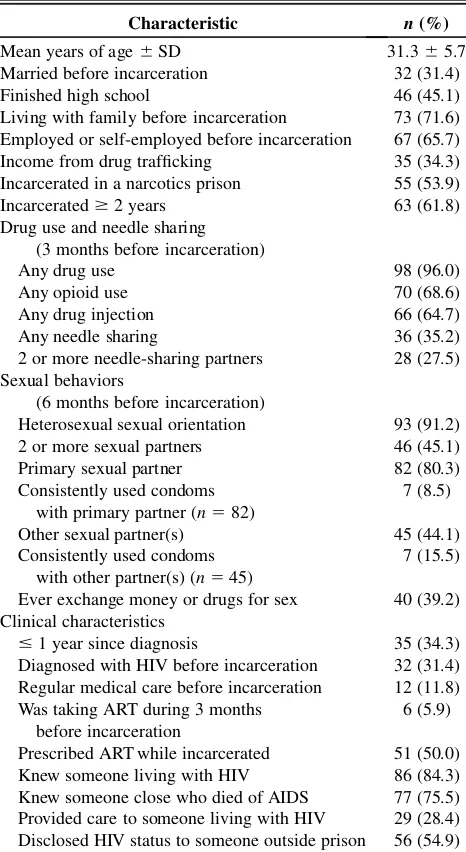
Characteristics of study participants are shown in Table 1. Age ranged from 21 to 51 years; most partic-ipants were unmarried and had not completed high school. In general, most participants used and in-jected drugs immediately before incarceration, but only a third shared needles. Most not only had a pri-mary sexual partner but also secondary partners, and used condoms infrequently. Two - thirds were diag-nosed with HIV during this incarceration and half had been prescribed ART in prison. Most participants had known someone with HIV, and many had lost a friend, relative, spouse, or partner to HIV. About a quarter said that they had provided care to another PLWH before or while incarcerated. Those who had been diagnosed before the current incarceration were more likely to have disclosed their HIV status
to someone outside of prison (c2513.92,p,.001).
HIV Stigma Scale Validation
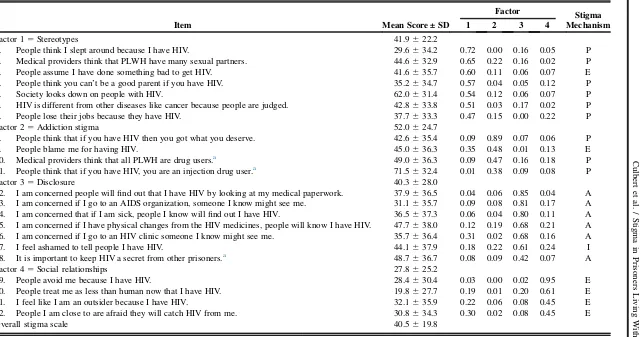
Standardized regression coefficients for the final
22-item stigma scale are shown inTable 2. A
nonsig-nificant chi-squared test (c25153.9, p5.37)
indi-cated good overall fit. Seven items from the original stereotypes scale loaded onto a stereotypes factor
(Cronbach’s alpha50.80), and four items (including
two items modified to address addiction stereotypes)
loaded onto a new factor, addiction stigma
(a 5 0.65). Disclosure-related items from the
orig-inal disclosure concerns and self-acceptance
sub-scales clustered together on a single disclosure
concernsfactor (a50.87). Four items from the orig-inalsocial relationshipsscale loaded onto a new so-cial relationships factor (a 5 0.78). Reliability of
the overall scale was high (a 5 0.90). Scale
inter-correlations ranging from 0.38 to 0.64 were all
signif-icant (p,.01).
HIV Stigma in the Prison Setting
The mean overall stigma score was 40.5 619.8
(range 2.6-95.0), indicating that, on average, partici-pants endorsed items describing perceptions or expe-riences of HIV stigma slightly less often than sometimes (mean score of 50). Mean scores for stigma items, subscales, and the overall scale are
pre-sented inTable 2. A third of participants (33.3%) had
overall stigma scores higher than 50.0, reflecting
per-ceptions and experiences of stigma between
some-timesandalways.The highest mean subscale scores were seen on the addiction stigma subscale
(52.0 6 24.7) and on individual items measuring
perceived public stigma including item 12, People
think that if you have HIV, you must be an injecting drug user(71.5 632.4), and item 14,Society looks down on people who have HIV(62.0631.4). Similar
mean scores were observed on the stereotypes
(41.9622.2) anddisclosure(40.3628.0) subscales.
Disclosure concernsemphasized the need to maintain privacy around other prisoners and concern that phys-ical changes caused by ART or becoming sick could lead to unwanted disclosure. The lowest mean scores
were observed on the social relationships scale
(27.8 6 25.2), which included two items indicating
comparatively low levels of enacted stigma: People
treat me as less than human now that I have HIV
(19.8 627.7) and People avoid me because I have
HIV (28.4 6 30.4). Two items measuring enacted
stigma by medical providers, although not included in the final scale, had the lowest mean scores. More than half (58.0% and 65.7%) of participants
re-sponded never to the statements, Medical providers
treat people who have HIV as if they are contagious and Medical providers dislike caring for patients with HIV.
Table 1. Characteristics of HIV-Infected Prisoners
(N5102)
Characteristic n(%)
Mean years of age6SD 31.365.7
Married before incarceration 32 (31.4)
Finished high school 46 (45.1)
Living with family before incarceration 73 (71.6)
Employed or self-employed before incarceration 67 (65.7)
Income from drug trafficking 35 (34.3)
Incarcerated in a narcotics prison 55 (53.9)
Incarcerated$2 years 63 (61.8)
Drug use and needle sharing (3 months before incarceration)
Any drug use 98 (96.0)
Any opioid use 70 (68.6)
Any drug injection 66 (64.7)
Any needle sharing 36 (35.2)
2 or more needle-sharing partners 28 (27.5)
Sexual behaviors
(6 months before incarceration)
Heterosexual sexual orientation 93 (91.2)
2 or more sexual partners 46 (45.1)
Primary sexual partner 82 (80.3)
Consistently used condoms with primary partner (n582)
7 (8.5)
Other sexual partner(s) 45 (44.1)
Consistently used condoms with other partner(s) (n545)
7 (15.5)
Ever exchange money or drugs for sex 40 (39.2)
Clinical characteristics
#1 year since diagnosis 35 (34.3)
Diagnosed with HIV before incarceration 32 (31.4) Regular medical care before incarceration 12 (11.8) Was taking ART during 3 months
before incarceration
6 (5.9)
Prescribed ART while incarcerated 51 (50.0)
Knew someone living with HIV 86 (84.3)
Knew someone close who died of AIDS 77 (75.5)
Provided care to someone living with HIV 29 (28.4) Disclosed HIV status to someone outside prison 56 (54.9)
Table 2. Four-Factor Pattern Matrix (Standardized Regression Coefficients) for 22 Final Stigma Scale Items
Item Mean Score ± SD
Factor Stigma
Mechanism
1 2 3 4
Factor 15Stereotypes 41.9622.2
1. People think I slept around because I have HIV. 29.6634.2 0.72 0.00 0.16 0.05 P
2. Medical providers think that PLWH have many sexual partners. 44.6632.9 0.65 0.22 0.16 0.02 P
3. People assume I have done something bad to get HIV. 41.6635.7 0.60 0.11 0.06 0.07 E
4. People think you can’t be a good parent if you have HIV. 35.2634.7 0.57 0.04 0.05 0.12 P
5. Society looks down on people with HIV. 62.0631.4 0.54 0.12 0.06 0.07 P
6. HIV is different from other diseases like cancer because people are judged. 42.8633.8 0.51 0.03 0.17 0.02 P
7. People lose their jobs because they have HIV. 37.7633.3 0.47 0.15 0.00 0.22 P
Factor 25Addiction stigma 52.0624.7
8. People think that if you have HIV then you got what you deserve. 42.6635.4 0.09 0.89 0.07 0.06 P
9. People blame me for having HIV. 45.0636.3 0.35 0.48 0.01 0.13 E
10. Medical providers think that all PLWH are drug users.a 49.0636.3 0.09 0.47 0.16 0.18 P
11. People think that if you have HIV, you are an injection drug user.a 71.5632.4 0.01 0.38 0.09 0.08 P
Factor 35Disclosure 40.3628.0
12. I am concerned people will find out that I have HIV by looking at my medical paperwork. 37.9636.5 0.04 0.06 0.85 0.04 A
13. I am concerned if I go to an AIDS organization, someone I know might see me. 31.1635.7 0.09 0.08 0.81 0.17 A
14. I am concerned that if I am sick, people I know will find out I have HIV. 36.5637.3 0.06 0.04 0.80 0.11 A
15. I am concerned if I have physical changes from the HIV medicines, people will know I have HIV. 47.7638.0 0.12 0.19 0.68 0.21 A
16. I am concerned if I go to an HIV clinic someone I know might see me. 35.7636.4 0.31 0.02 0.68 0.16 A
17. I feel ashamed to tell people I have HIV. 44.1637.9 0.18 0.22 0.61 0.24 I
18. It is important to keep HIV a secret from other prisoners.a 48.7636.7 0.08 0.09 0.42 0.07 A
Factor 45Social relationships 27.8625.2
19. People avoid me because I have HIV. 28.4630.4 0.03 0.00 0.02 0.95 E
20. People treat me as less than human now that I have HIV. 19.8627.7 0.19 0.01 0.20 0.61 E
21. I feel like I am an outsider because I have HIV. 32.1635.9 0.22 0.06 0.08 0.45 E
22. People I am close to are afraid they will catch HIV from me. 30.8634.3 0.30 0.02 0.08 0.45 E
Overall stigma scale 40.5619.8
Note.A5anticipated stigma; E5enacted stigma; I5internalized stigma; P5public stigma; SD5standard deviation; PLWH5people living with HIV infection.
a. Modified.
Culbert
et
al.
/
Stigma
in
Prisoners
Li
ving
W
ith
HIV
in
Indonesia
Bivariate and Multivariate Associations With HIV Stigma
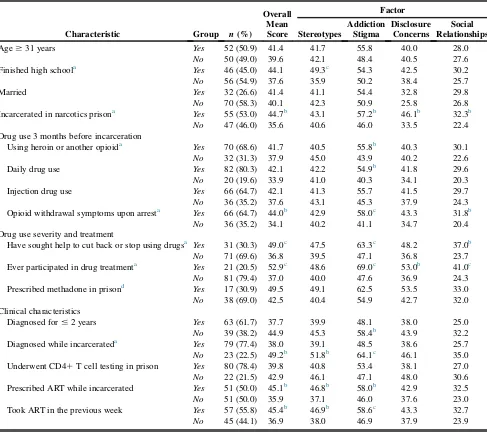
Table 3 shows significant bivariate associations (multivariate analysis of variance) between HIV stigma mean scores and participant characteristics. Higher mean stigma scores were found for
partici-pants incarcerated in a prison for drug offenders
(44.7 vs. 35.6, p 5.018), those who previously had
sought help to cut back or stop using drugs (49.0
vs. 36.8, p 5.006) or who had participated in drug
treatment (52.9 vs. 37.0,p5.002), and those
report-ing opioid withdrawal upon incarceration (44.0 vs.
34.1, p 5 .02). Higher overall mean stigma scores
Table 3. HIV Stigma Mean Scores by Select Participant Characteristics (N5102)
Characteristic Group n(%)
Overall Mean Score
Factor
Stereotypes
Addiction Stigma
Disclosure Concerns
Social Relationships
Age$31 years Yes 52 (50.9) 41.4 41.7 55.8 40.0 28.0
No 50 (49.0) 39.6 42.1 48.4 40.5 27.6
Finished high schoola Yes 46 (45.0) 44.1 49.3c 54.3 42.5 30.2
No 56 (54.9) 37.6 35.9 50.2 38.4 25.7
Married Yes 32 (26.6) 41.4 41.1 54.4 32.8 29.8
No 70 (58.3) 40.1 42.3 50.9 25.8 26.8
Incarcerated in narcotics prisona Yes 55 (53.0) 44.7b 43.1 57.2b 46.1b 32.3b
No 47 (46.0) 35.6 40.6 46.0 33.5 22.4
Drug use 3 months before incarceration
Using heroin or another opioida Yes 70 (68.6) 41.7 40.5 55.8b 40.3 30.1
No 32 (31.3) 37.9 45.0 43.9 40.2 22.6
Daily drug use Yes 82 (80.3) 42.1 42.2 54.9b 41.8 29.6
No 20 (19.6) 33.9 41.0 40.3 34.1 20.3
Injection drug use Yes 66 (64.7) 42.1 41.3 55.7 41.5 29.7
No 36 (35.2) 37.6 43.1 45.3 37.9 24.3
Opioid withdrawal symptoms upon arresta Yes 66 (64.7) 44.0b 42.9 58.0c 43.3 31.8b
No 36 (35.2) 34.1 40.2 41.1 34.7 20.4
Drug use severity and treatment
Have sought help to cut back or stop using drugsa Yes 31 (30.3) 49.0c 47.5 63.3c 48.2 37.0b
No 71 (69.6) 36.8 39.5 47.1 36.8 23.7
Ever participated in drug treatmenta Yes 21 (20.5) 52.9c 48.6 69.0c 53.0b 41.0c
No 81 (79.4) 37.0 40.0 47.6 36.9 24.3
Prescribed methadone in prisond Yes 17 (30.9) 49.5 49.1 62.5 53.5 33.0
No 38 (69.0) 42.5 40.4 54.9 42.7 32.0
Clinical characteristics
Diagnosed for#2 years Yes 63 (61.7) 37.7 39.9 48.1 38.0 25.0
No 39 (38.2) 44.9 45.3 58.4b 43.9 32.2
Diagnosed while incarcerateda Yes 79 (77.4) 38.0 39.1 48.5 38.6 25.7
No 23 (22.5) 49.2b 51.8b 64.1c 46.1 35.0
Underwent CD41T cell testing in prison Yes 80 (78.4) 39.8 40.8 53.4 38.1 27.0
No 22 (21.5) 42.9 46.1 47.1 48.0 30.6
Prescribed ART while incarcerated Yes 51 (50.0) 45.1b 46.8b 58.0b 42.9 32.5
No 51 (50.0) 35.9 37.1 46.0 37.6 23.0
Took ART in the previous week Yes 57 (55.8) 45.4b 46.9b 58.6c 43.3 32.7
No 45 (44.1) 36.9 38.0 46.9 37.9 23.9
Note.ART5antiretroviral therapy.
a. Multivariate analysis of variance significant atp,.05. b. Welch’s analysis of variance significant atp,.05. c.p,.01.
were also present for participants diagnosed in the
community (49.2 vs. 38.0, p 5 .014), those
pre-scribed ART (45.1 vs. 35.9, p 5 .019), and those
adhering to ART (45.4 vs. 36.9,p 5.018) in prison.
Additionally, significant differences (p#.05) in
sub-scale scores were observed for other characteristics, including education, opioid use, daily drug use before incarceration, and years after diagnosis, although these differences were not consistently reflected in
the overall stigma scale means. Theaddiction stigma
subscale registered the highest number of significant
mean differences, followed by the stereotypes
sub-scale. Surprisingly, the disclosure subscale, which
contained items assessing disclosure concerns related to accessing HIV care, was not associated with ART use during incarceration.
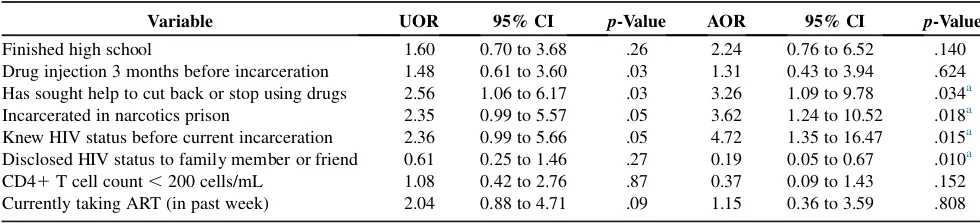
Table 4shows independent and multivariate
corre-lates of high HIV stigma (mean score . 50). High
HIV stigma was positively associated with being incarcerated in a prison for drug offenders (adjusted odds ratio [AOR] 3.62, 95% CI 1.24 to 10.52,
p 5.018), seeking help to decrease drug use (AOR
3.26, 95% CI 1.09 to 9.78,p5.034), and diagnosis
before the current prison term (AOR 4.72, 95% CI
1.35 to 16.47,p5.015); it was negatively associated
with disclosure of HIV status to a family member or
friend (AOR 0.19, 95% CI 0.05 to 0.67,p5.010).
HIV Disclosure in the Prison Context
Participant decisions to disclose their HIV status while incarcerated highlight variations in stigma mechanisms across different social contexts in prison, including interactions with prison officers, clinic staff, and family members. For nearly all
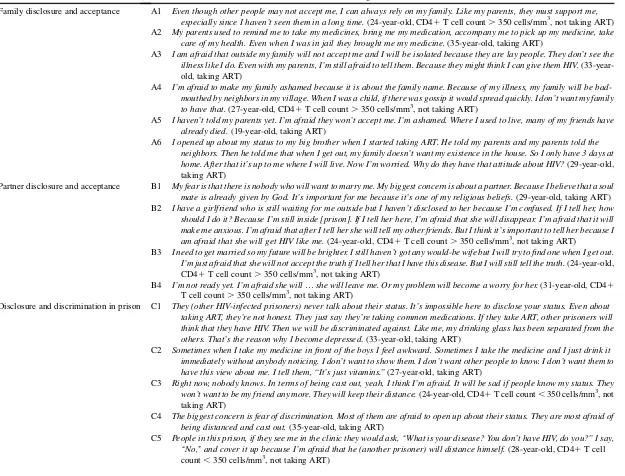
participants, HIV stigma influenced expectations and decisions about disclosing HIV status to family members, partners, and other prisoners. About half (45%) of participants had not yet disclosed their HIV status to someone outside of prison, and more than two - thirds (68.6%) were diagnosed dur-ing the current incarceration, meandur-ing that many did not yet know how family members would react and lacked experiences of HIV stigma outside of prison.
Participants cited a widely shared cultural expecta-tion that parents have a duty to support ill children as a reason for disclosing their HIV status in order to gain support during and after incarceration, as
described in Table 5, quotations A1 and A2. Others,
however, expected family members to endorse nega-tive HIV stereotypes or worried that disclosure could bring shame or psychological distress to family mem-bers (quotations A3-A6). Attitudes toward partner notification consistently reflected a perception that disclosure would likely lead to rejection and loss of privacy, and threaten a social commitment to mar-riage (quotations B1-B4).
Managing their identity as PLWH and maintaining privacy while incarcerated emerged as central con-cerns for many participants. Fear of becoming a so-cial outcast in prison caused many participants to conceal their HIV status and HIV medications from other prisoners, as shown in quotations C1-C5. Others, however, reported disclosing their HIV status and bonding with other PLWH, as indicated in quota-tion C6. Finally, HIV stigma undermined patient– provider relationships and ART acceptance, including
in some with low CD41 T cell counts (quotations
D1-D3).
Table 4. Bivariate and Multivariate Correlates of High HIV Stigma (Mean Score.50) in HIV-Infected Prisoners (N5102)
Variable UOR 95% CI p-Value AOR 95% CI p-Value
Finished high school 1.60 0.70 to 3.68 .26 2.24 0.76 to 6.52 .140
Drug injection 3 months before incarceration 1.48 0.61 to 3.60 .03 1.31 0.43 to 3.94 .624
Has sought help to cut back or stop using drugs 2.56 1.06 to 6.17 .03 3.26 1.09 to 9.78 .034a
Incarcerated in narcotics prison 2.35 0.99 to 5.57 .05 3.62 1.24 to 10.52 .018a
Knew HIV status before current incarceration 2.36 0.99 to 5.66 .05 4.72 1.35 to 16.47 .015a
Disclosed HIV status to family member or friend 0.61 0.25 to 1.46 .27 0.19 0.05 to 0.67 .010a
CD41T cell count,200 cells/mL 1.08 0.42 to 2.76 .87 0.37 0.09 to 1.43 .152
Currently taking ART (in past week) 2.04 0.88 to 4.71 .09 1.15 0.36 to 3.59 .808
Note.ART5antiretroviral therapy; UOR5unadjusted odds ratio; AOR5adjusted odds ratio; CI5confidence interval.
a.p-Values significant atp,.05.
Theme Quotation
Family disclosure and acceptance A1 Even though other people may not accept me, I can always rely on my family. Like my parents, they must support me,
especially since I haven’t seen them in a long time.(24-year-old, CD41T cell count.350 cells/mm3, not taking ART)
A2 My parents used to remind me to take my medicines, bring me my medication, accompany me to pick up my medicine, take
care of my health. Even when I was in jail they brought me my medicine.(35-year-old, taking ART)
A3 I am afraid that outside my family will not accept me and I will be isolated because they are lay people. They don’t see the
illness like I do. Even with my parents, I’m still afraid to tell them. Because they might think I can give them HIV.
(33-year-old, taking ART)
A4 I’m afraid to make my family ashamed because it is about the family name. Because of my illness, my family will be
bad-mouthed by neighbors in my village. When I was a child, if there was gossip it would spread quickly. I don’t want my family
to have that.(27-year-old, CD41T cell count.350 cells/mm3, not taking ART)
A5 I haven’t told my parents yet. I’m afraid they won’t accept me. I’m ashamed. Where I used to live, many of my friends have
already died.(19-year-old, taking ART)
A6 I opened up about my status to my big brother when I started taking ART. He told my parents and my parents told the
neighbors. Then he told me that when I get out, my family doesn’t want my existence in the house. So I only have 3 days at
home. After that it’s up to me where I will live. Now I’m worried. Why do they have that attitude about HIV?(29-year-old,
taking ART)
Partner disclosure and acceptance B1 My fear is that there is nobody who will want to marry me. My biggest concern is about a partner. Because I believe that a soul
mate is already given by God. It’s important for me because it’s one of my religious beliefs.(29-year-old, taking ART)
B2 I have a girlfriend who is still waiting for me outside but I haven’t disclosed to her because I’m confused. If I tell her, how
should I do it? Because I’m still inside [prison]. If I tell her here, I’m afraid that she will disappear. I’m afraid that it will make me anxious. I’m afraid that after I tell her she will tell my other friends. But I think it’s important to tell her because I
am afraid that she will get HIV like me.(24-year-old, CD41T cell count.350 cells/mm3, not taking ART)
B3 I need to get married so my future will be brighter. I still haven’t got any would-be wife but I will try to find one when I get out.
I’m just afraid that she will not accept the truth if I tell her that I have this disease. But I will still tell the truth.(24-year-old,
CD41T cell count.350 cells/mm3, not taking ART)
B4 I’m not ready yet. I’m afraid she will.she will leave me. Or my problem will become a worry for her.(31-year-old, CD41
T cell count.350 cells/mm3, not taking ART)
Disclosure and discrimination in prison C1 They (other HIV-infected prisoners) never talk about their status. It’s impossible here to disclose your status. Even about taking ART, they’re not honest. They just say they’re taking common medications. If they take ART, other prisoners will think that they have HIV. Then we will be discriminated against. Like me, my drinking glass has been separated from the
others. That’s the reason why I become depressed. (33-year-old, taking ART)
C2 Sometimes when I take my medicine in front of the boys I feel awkward. Sometimes I take the medicine and I just drink it
immediately without anybody noticing. I don’t want to show them. I don’t want other people to know. I don’t want them to
have this view about me. I tell them, ‘‘It’s just vitamins.’’(27-year-old, taking ART)
C3 Right now, nobody knows. In terms of being cast out, yeah, I think I’m afraid. It will be sad if people know my status. They
won’t want to be my friend any more. They will keep their distance.(24-year-old, CD41T cell count,350 cells/mm3, not
taking ART)
C4 The biggest concern is fear of discrimination. Most of them are afraid to open up about their status. They are most afraid of
being distanced and cast out.(35-year-old, taking ART)
C5 People in this prison, if they see me in the clinic they would ask, ‘‘What is your disease? You don’t have HIV, do you?’’ I say,
‘‘No,’’ and cover it up because I’m afraid that he (another prisoner) will distance himself.(28-year-old, CD41T cell
count,350 cells/mm3, not taking ART)
10
JA
NA
C
V
ol.
-,
No.
-,
-/
Discussion
This mixed-method analysis, the first to examine HIV stigma in incarcerated PLWH in Indonesia, con-tributes to the conceptualization and contextualiza-tion of HIV stigma in prisoners, a globally marginalized population with neglected health needs (UNAIDS, 2014). Among these PLWH, who primar-ily had substance use disorders and extremely low utilization of drug treatment or HIV care prior to incarceration, we found perceptions and experiences
of stigma (40.5 6 19.8) similar to those found in
economically disadvantaged and medically
under-served PLWH in the United States (41619;Sayles
et al., 2009); and high levels of stigma (mean
score.50) in 33.3% of participants, in part
reflect-ing the lived experience of a group with high HIV mortality and limited access to effective HIV
treat-ments (Castro & Farmer, 2005). Many participants
had lost someone close to HIV, including cellmates, friends, siblings, and spouses; 28.4% had given end-of-life care to another PLWH, including assis-tance to bathe, feed, and ambulate, providing inconti-nence care, and, in one case, washing the body of another prisoner in preparation for burial.
These prisons represented distinct psychosocial environments endowed with particular social rules that could intensify individual experiences of HIV stigma. In our study, contextual factors common to many prison settings, including limited contact with family members, anticipated loss of social support, loss of privacy, and co-stigma of being labeled a drug offender or drug user, heightened individual per-ceptions and experiences of HIV stigma. In prison, HIV stigma becomes another means to enforce social stratification within an ultra-competitive subculture in which the performance of a ‘‘worthy’’ social
iden-tity becomes a crucial aspect of survival
(Andrinopoulos, Figueroa, Kerrigan, & Ellen,
2011). HIV stigma in the prison setting influences
pa-tient decisions to seek treatment during incarceration
vis-a-vis their assessment of the potential risks of
disclosure, which can include violent victimization, loss of companionship, personal safety, material
sup-port, and protection (Culbert, 2014).
In our study, stereotypes about PLWH often centered on injection drug use, which had been the
C6
dominant mode of transmission in Indonesia. These stereotypes undermine wider acceptance for HIV
testing (Earnshaw, Smith, Chaudoir, Lee, &
Copenhaver, 2012) and are especially counterproduc-tive in prisons where HIV testing is initiated by pris-oners or based on drug-use risk assessments. Higher mean HIV stigma scores in those incarcerated in a nar-cotics prison, those with opioid disorders, and those seeking help to cut back or stop using drugs (e.g., drug treatment) suggested that previous experiences with addiction stigma, which were associated with
participation in addiction treatment (Luoma et al.,
2007), may alter the experience of HIV stigma.
Crim-inalization of drug use in Indonesia has fueled negative addiction stereotypes, isolated PWID, and prevented them from reaching health and harm-reduction
ser-vices (Mesquita et al., 2007). Addiction stereotypes,
moreover, thwart methadone maintenance therapy
expansion efforts (Bachireddy et al., 2011), which
are urgently needed both to avert new HIV infections in Indonesia and to change community perceptions to-ward addiction as a treatable illness and thereby reduce stigma toward people with addiction problems. During in-depth interviews, HIV stigma typically manifested as concerns about HIV status disclosure to family members, partners, other prisoners, and health care providers, with implications for social support, partner notification, and HIV treatment (Derlega, Winstead, Gamble, Kelkar, & Khuanghlawn, 2010). Family members were seen as the primary source of material and emotional sup-port during and after incarceration, a finding consis-tent with other culturally grounded work on HIV
stigma with PWID in the Asia-Pacific region (Li,
Wang, He, Fennie, & Williams, 2012; Rudolph et al., 2012). An HIV diagnosis caused additional psychological distress because it was perceived to threaten participants’ responsibilities to family members, and many worried that disclosure could undermine support or bring shame to families. Lower levels of HIV stigma in participants who had disclosed and higher HIV stigma in those initiating ART in prison suggested the importance of clinical interventions that facilitate disclosure and alleviate HIV stigma within the patient’s immediate social context to improve ART adherence.
Given high rates of preincarceration sexual and drug risk behaviors in Indonesian PWID and their
inextricable links to partner risk behaviors, struc-tural changes are required to facilitate HIV
disclo-sure to partners of PLWH diagnosed while
incarcerated. Voluntary and confidential partner notification services are effective when notifying partners of recent HIV exposure and are generally
acceptable to PLWH (Passin et al., 2006), yet
indi-vidual and structural barriers to partner notification are amplified by incarceration. Few PLWH have opportunities to disclose to partners while incarcer-ated and may not want to disclose their HIV status because of HIV stigma, loss of privacy, and fear of rejection or loss of social support. Integration of voluntary and confidential partner notification and referral services into prison-based HIV prevention programs represents an actionable opportunity to overcome stigma associated with disclosure and to extend HIV testing and treatment to exposed women, men who have sex with men, and PWID in the community.
Finally, although our study suggests that fear of unwanted disclosure may not itself be a barrier to ac-cessing ART during incarceration, concerns about unwanted disclosure may evolve after ART initiation as prisoners taking ART become increasingly scruti-nized under the microscope of prison subculture. Moreover, HIV stigma may magnify the perceived challenges of accessing HIV care and utilizing ART
after release from prison (Choi et al., 2010; Haley
et al., 2014). Higher stigma scores in those taking ART while incarcerated may also reflect higher ART use in those who were diagnosed before incarceration and therefore had greater exposure to stigmatizing public attitudes before incarceration. Encouraging within our findings was that most
participants categorically rejected statements
indicating anticipated or enacted stigma by health care providers, although internalized stigma and a desire to save face sometimes interfered with patient-provider relationships.
Although our sample size was too small to allow robust analysis of HIV stigma scale structural validity in this population (using structural equation modeling), reliability estimates were comparable to those obtained
for the original scale (Sayles et al., 2008). Given the
sexual or ethnic minority status as potentially important types of intersecting stigma.
Conclusion
Individual experiences of HIV stigma by Indone-sian prisoners vary across social contexts and encom-pass multiple domains, including HIV stereotypes, disclosure concerns, social relationships, and percep-tions about addiction and HIV treatment in the wider society. Co-occurring stigma of drug use or addiction may alter the experience of HIV stigma for prisoners who have been labeled as drug users. While stigma may not limit ART initiation in prison, discrimination by prisoners, clinic staff, or family members could potentially impact ART adherence. Perceptions of public stigma by PLWH diagnosed in prison may deter disclosure of HIV status to family members or needle-sharing and sexual partners, which has impli-cations for social support and secondary prevention. Collectively, our findings point to the need for inter-ventions that mitigate the impact of HIV and drug-related stigma on incarcerated PLWH.
Key Considerations
Contextual factors common to many prison
set-tings may amplify individual perceptions and experiences of HIV stigma.
Interventions to reduce HIV stigma in
Indone-sian prisons should also address the co-occurring stigma of addiction and incarceration.
Nursing interventions that facilitate disclosure
and alleviate stigma within the patient’s imme-diate social context are required to achieve HIV treatment as prevention goals in Indonesia.
Disclosures
The authors report no real or perceived vested in-terests that relate to this article that could be construed as a conflict of interest.
Acknowledgments
The research was supported through a Fulbright Senior Scholar Award in Global Health from the J. William Fulbright Commission, U.S. State Depart-ment; NIH Fogarty International Center, Global Health Fellows and Scholars Research Training Grant R25 TW009338; and the National Institutes
on Drug Abuse (R01 DA 25943 and K24
DA017072). Additional funding was provided by the Chicago Developmental Center for AIDS Research, a National Institutes of Health (NIH)-funded program (P30 AI 082151) that is supported by the following NIH Institutes and Centers: National Institute of Allergy and Infectious Diseases, National Cancer Institute, National Institute of Mental Health, National Institute on Drug Abuse, National Institute of Child Health and Human Development, National Heart, Lung, and Blood Institute, and National Center for Complementary and Alternative Medicine. We thank study participants for generously sharing their time and experiences. We thank Mariska Iriyanti, Azalia Muchransyah, Budhi Mulyadi, and Herlia Yu-liantini for research assistance. We gratefully acknowledge operational support from the Direc-torate General of Corrections, Republic of Indonesia, especially Akbar Hadi Prabowo, Finnahari, Astia Murni, and Hetty Widiastuti. We also thank Nurlan Silitonga, Cindy Hidayati, Alia Hartanti, David Shen-man, Suzanne Blogg (HIV Cooperation Programme for Indonesia); Judith Levy, Kathleen Norr, and Colleen Corte (University of Illinois at Chicago); Elly Nurachmah, Dewi Irawaty, and Junaiti Sahar (Universitas Indonesia).
References
Al-Darraji, H. A., Kamarulzaman, A., & Altice, F. L. (2014). Latent tuberculosis infection in a Malaysian prison: Implica-tions for a comprehensive integrated control program in prisons.BMC Public Health,14, 22.
Andrinopoulos, K., Figueroa, J. P., Kerrigan, D., & Ellen, J. M. (2011). Homophobia, stigma and HIV in Jamaican prisons. Culture, Health, and Sexuality,13(2), 187-200.
Bachireddy, C., Bazazi, A. R., Kavasery, R., Govindasamy, S., Kamarulzaman, A., & Altice, F. L. (2011). Attitudes toward opioid substitution therapy and pre-incarceration HIV trans-mission behaviors among HIV-infected prisoners in
Malaysia: Implications for secondary prevention.Drug and Alcohol Dependence,116(1-3), 151-157.
Bos, A. E. R., Pryor, J. B., Reeder, G. D., & Stutterheim, S. E. (2013). Stigma: Advances in theory and research.Basic and Applied Social Psychology,35(1), 1-9.
Castro, A., & Farmer, P. (2005). Understanding and addressing AIDS-related stigma: From anthropological theory to clinical practice in Haiti.American Journal of Public Health,95(1), 53-59.
Chaudoir, S. R., Fisher, J. D., & Simoni, J. M. (2011). Under-standing HIV disclosure: A review and application of the Disclosure Processes Model.Social Science and Medicine, 72(10), 1618-1629.
Choi, P., Kavasery, R., Desai, M. M., Govindasamy, S., Kamarulzaman, A., & Altice, F. L. (2010). Prevalence and correlates of community re-entry challenges faced by HIV-infected male prisoners in Malaysia. International Journal of STD & AIDS,21(6), 416-423.
Cresswell, J. W., & Clark, V. L. P. (2011).Designing and con-ducting mixed methods research (2nded.). Thousand Oaks, CA: Sage.
Culbert, G. J. (2014). Violence and the perceived risks of taking antiretroviral therapy in US jails and prisons.International Journal of Prisoner Health,10(1), 1-17.
Culbert, G. J., Waluyo, A., Iriyanti, M., Muchransyah, A. P., Kamarulzaman, A., & Altice, F. L. (2015). Within-prison drug injection among HIV-infected male prisoners in Indonesia: A highly constrained choice. Drug and Alcohol Dependence,149, 71-79.
Derlega, V. J., Winstead, B. A., Gamble, K. A., Kelkar, K., & Khuanghlawn, P. (2010). Inmates with HIV, stigma, and disclosure decision-making. Journal of Health Psychology, 15(2), 258-268.
Directorate of Corrections. (2010).HIV and syphilis prevalence and risk behavior study among prisoners and detention
cen-tres in Indonesia. Retrieved from https://www.unodc.org/
documents/hiv-aids/HSPBS_2010_final-English.pdf
Directorate of Corrections. (2012).HIV and HCV prevalence and
risk behavior study in Indonesian narcotics prisons.Jakarta:
Directorate of Corrections, Ministry of Law and Human Rights, Republic of Indonesia.
Earnshaw, V. A., & Chaudoir, S. R. (2009). From conceptual-izing to measuring HIV stigma: A review of HIV stigma mechanism measures.AIDS & Behavior,13(6), 1160-1177.
Earnshaw, V. A., Bogart, L. M., Dovidio, J. F., & Williams, D. R. (2013). Stigma and racial/ethnic HIV dispar-ities: Moving toward resilience. American Psychologist, 68(4), 225-236.
Earnshaw, V. A., Smith, L., & Copenhaver, M. (2013). Drug addiction stigma in the context of methadone maintenance therapy: An investigation into understudied sources of stigma. International Journal of Mental Health and Addic-tion,11(1), 110-122.
Earnshaw, V. A., Smith, L. R., Chaudoir, S. R., Lee, I. C., & Copenhaver, M. M. (2012). Stereotypes about people living with HIV: Implications for perceptions of HIV risk and
testing frequency among at-risk populations.AIDS Education and Prevention,24(6), 574-581.
Grim, B. J. (2010). Indonesia’s place along the spectrum of
global religious restriction. [Press release]. Retrieved from
http://www.pewforum.org/2010/11/04/indonesias-place-alon g-the-spectrum-of-global-religious-restriction/#1
Haley, D. F., Golin, C. E., Farel, C. E., Wohl, D. A., Scheyett, A. M., Garrett, J. J., & Parker, S. D. (2014). Multi-level challenges to engagement in HIV care after prison release: A theory-informed qualitative study comparing pris-oners’ perspectives before and after community reentry.BMC Public Health,14, 1253.
Harapan, H., Feramuhawan, S., Kurniawan, H., Anwar, S., Andalas, M., & Hossain, M. B. (2013). HIV-related stigma and discrimination: A study of health care workers in Banda Aceh, Indonesia.Medical Journal of Indonesia,22(1), 23-29. Joint United Nations Programme on HIV/AIDS. (2013).HIV in
Asia and the Pacific: UNAIDS report, 2013.Retrieved from
http://www.unaids.org/sites/default/files/media_asset/2013_ HIV-Asia-Pacific_en_0.pdf
Joint United Nations Programme on HIV/AIDS. (2014). The
Gap Report. Retrieved from http://www.unaids.org/en/
resources/documents/2014/20140716_UNAIDS_gap_report Lazzarini, Z., & Altice, F. L. (2000). A review of the legal and
ethical issues for the conduct of HIV-related research in prisons.AIDS & Public Policy Journal,15(3-4), 105-135.
Li, X., Wang, H., He, G., Fennie, K., & Williams, A. B. (2012). Shadow on my heart: A culturally grounded concept of HIV stigma among Chinese injection drug users.Journal of the Association of Nurses in AIDS Care,23(1), 52-62.
Link, B. G., & Phelan, J. C. (2001). Conceptualizing stigma. Annual Review of Sociology,27(1), 363-385.
Lofland, J., Snow, D. A., Anderson, L., & Lofland, L. H. (2005). Analyzing social settings: A guide to qualitative observation and analysis(4thed.). Florence, KY: Wadsworth Publishing.
Luoma, J. B., Twohig, M. P., Waltz, T., Hayes, S. C., Roget, N., Padilla, M., & Fisher, G. (2007). An investigation of stigma in individuals receiving treatment for substance abuse. Addic-tive Behaviors,32(7), 1331-1346.
Mahajan, A. P., Sayles, J. N., Patel, V. A., Remien, R. H., Sawires, S. R., Ortiz, D. J., & Coates, T. J. (2008). Stigma in the HIV/AIDS epidemic: A review of the literature and recommendations for the way forward.AIDS, 22(Suppl. 2), S67-S79.
Merati, T., Supriyadi, & Yuliana, F. (2005). The disjunction be-tween policy and practice: HIV discrimination in health care and employment in Indonesia.AIDS Care,17(Suppl. 2), 175-179.
Mesquita, F., Winarso, I., Atmosukarto, I. I., Eka, B., Nevendorff, L., Rahmah, A., & Angela, R. (2007). Public health the leading force of the Indonesian response to the HIV/AIDS crisis among people who inject drugs. Harm Reduction Journal,4, 9.
provider attitudes, preferences, practices, and experiences. Sexually Transmitted Diseases,33(5), 320-328.
Rudolph, A. E., Davis, W. W., Quan, V. M., Ha, T. V., Minh, N. L., Gregowski, A., & Go, V. (2012). Perceptions of community and family level IDU and HIV related stigma, disclosure decisions and experiences with layered stigma among HIV positive injection drug users in Vietnam.AIDS Care,24(2), 239-244.
Sayles, J. N., Hays, R. D., Sarkisian, C. A., Mahajan, A. P., Spritzer, K. L., & Cunningham, W. E. (2008). Development and psychometric assessment of a multidimensional measure of internalized HIV stigma in a sample of HIV-positive adults.AIDS & Behavior,12(5), 748-758.
Sayles, J. N., Wong, M. D., Kinsler, J. J., Martins, D., & Cunningham, W. E. (2009). The association of stigma with self-reported access to medical care and antiretroviral therapy adherence in persons living with HIV/AIDS.Journal of Gen-eral Internal Medicine,24(10), 1101-1108.
Schnittker, J., & John, A. (2007). Enduring stigma: The long-term effects of incarceration on health. Journal of Health and Social Behavior,48(2), 115-130.
Waluyo, A., Culbert, G. J., Levy, J., & Norr, K. F. (2014). Under-standing HIV-related stigma among Indonesian nurses. Jour-nal of the Association of Nurses in AIDS Care,26(1), 69-80.
Wasti, S. P., van Teijlingen, E., Simkhada, P., Randall, J., Baxter, S., Kirkpatrick, P., & Gc, V. S. (2012). Factors influ-encing adherence to antiretroviral treatment in Asian devel-oping countries: A systematic review. Tropical Medicine and International Health,17(1), 71-81.
Wolff, N., Shi, J., & Siegel, J. (2009). Understanding physical victimization inside prisons: Factors that predict risk.Justice Quarterly,26(3), 445-475.
Yeo, A., Legard, R., Keegan, J., Ward, K., Nicholls, C. M., & Lewis, J. (2014). In-depth interviews. In J. Ritchie, J. Lewis, C. M. Nicholls, & R. Ormston (Eds.),Qualitative research practice: A guide for social science students and
re-searchers(2nded.) (pp. 177-208). Thousand Oaks, CA: Sage.