Sekolah Tinggi Teknologi
Adisutjipto Yogyakarta
Materi Kuliah : Sistem Operasi / OS Semester Genap
1
E.N. Tamatjita
http://www.tamatjita.com
-Pendahuluan
INTI :
Mahasiswa memahami konsep dan cara kerja dari Sistem Operasi.
Mahasiswa mampu menjelaskan secara rinci Sistem Operasi dan mampu menganalisa Sistem Operasi yang ada saat ini.
SASARAN :
Mampu mengembangkan dan membuat Sistem Operasi yang sederhana.
Mampu membuat dan membangun Sistem Operasi berbasis mobile yang sederhana.
sederhana.
Mampu menilai kelebihan dan kelemahan dari Sistem Operasi yang ada saat ini.
Mampu membuat perencanaan Sistem Operasi yang tepat untuk dikembangkan dikemudian hari.
Mampu menentukan bahasa pemrograman yang cocok dalam pembuatan Sistem Operasi.
Mampu menjelaskan cara kerja Sistem Operasi. DAFTAR PUSTAKA :
1. Silberschatz, Abraham et all, 2013, ”Operating System Concepts”, Ninth 1. Silberschatz, Abraham et all, 2013, ”Operating System Concepts”, Ninth
Edition, John Wiley & Sons, Inc., Virginia, New Jersey.
2. Stallings, William, 2014, ”Operating Systems. Internals and
Design Principles”, Eighth Edition, Prentice Hall, Upper Saddle River, New Jersey.
3. Tanenbaum, Andrew S., 2014, ”Modern Operating Systems”, Fourth Edition, Prentice Hall, Upper Saddle River, New Jersey.
Komponen Nilai
Penilaian individu, meliputi :
Ujian Tengah Semester 20 % Ujian Akhir Semester 30 %
Kehadiran 20 %
Penilaian Tugas Mandiri dan Tugas Kelompok, meliputi :
Tugas Mandiri 10 %
Tugas Kelompok 20 %
Tugas Mandiri dan Kelompok yang harus Tugas Mandiri dan Kelompok yang harus dikumpulkan sesuai waktu yang ditentukan. Apabila terlambat, tidak mendapatkan Nilai.
3 0S STTATF E.N. Tamatjita
-Pertemuan Ke-1
Sistem Operasi :
1. Sejarah Sistem Operasi
2. Organisasi Sistem Komputer 3. Arsitektur Sistem Komputer 3. Arsitektur Sistem Komputer 4. Struktur Sistem Operasi
5. Manajemen Proses 6. Manajemen Memori
7. Manajemen Penyimpanan 8. Keamanan dan Proteksi 9. Struktur Data Kernel
9. Struktur Data Kernel
10.Lingkungan Komputasi
Sejarah Sistem Operasi
Introduction :
1. What Operating System Do
2. Computer-System Organization
2. Computer-System Organization
3. Computer-System Architecture
4. Operating-System Structure
5. Operating-System Operations
5 0S STTATF E.N. Tamatjita-What is an O/S ?
A program thar acts as an intermediary
between a user of a computer and the
computer h/w.
computer h/w.
O/S goals :
Execute user programs and make
solving user problems easier.
Make the computer system convenient
Make the computer system convenient
to use.
Use the computer h/w in an efficient
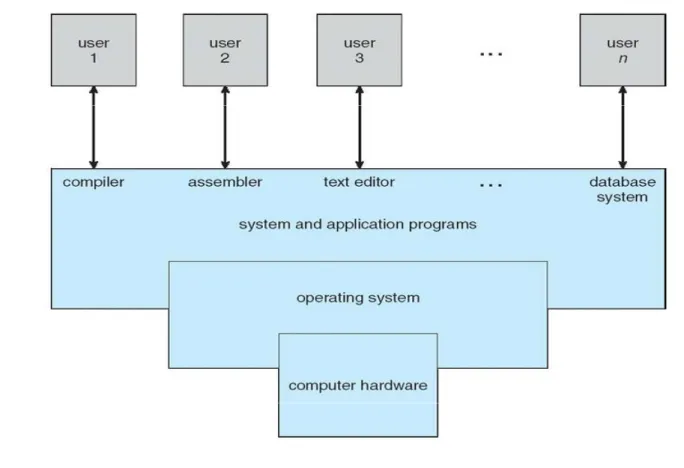
Computer System Structure
Computer system can be divided into four components :
H/w – Provides basic computing
resources CPU, memory, i/o device H/w – Provides basic computing
resources CPU, memory, i/o device O/S Controls and coordinates use of
h/w among various applications and users.
Application programs – define the ways in which the system resources are used to solve the computing problems of the to solve the computing problems of the user Word processor, compilers, web browsers, database systems, video
games.
Users People, machines, other
4 Komponen didalam Sistem Komputer
Gambar ini diambil dari Buku Operating System Concepts, Abraham Silberschatz, Peter Baer Galvin and Greg Gagne, Chapter 1, hal. 4, John Wiley and Sons, Inc., Virginia, New Jersey, 2013
0/S Definition
O/S is a resource allocator :
Manager all resources.
Decides between conflicting requests for Decides between conflicting requests for
efficient and fair resource use.
O/S is a control program :
Controls execution of programs to
prevent errors and improper use of the computer.
9 0S STTATF E.N. Tamatjita
-0/S Definition (Lanjutan…)
“The one program running all times on the
computer” is the kernel. Everyting else is either a system program (ships with the operating system) or an application program :
Pusat O/S Cor/inti/pusat dari O/S berjalan terus (program utama), tiap saat.
Membaca i/o h/w, contohnya CD-Room.
Computer Startup
Bootstrap program is loaded at power-up or reboot :
Typically stored in ROM or PROM, generally known as firmware.
known as firmware.
Initializes all aspects of system.
Loads o/s kernel and start execution.
(Tempat menyimpat Basic Input Output System) di dalam Programable ROM.
11 0S STTATF E.N. Tamatjita
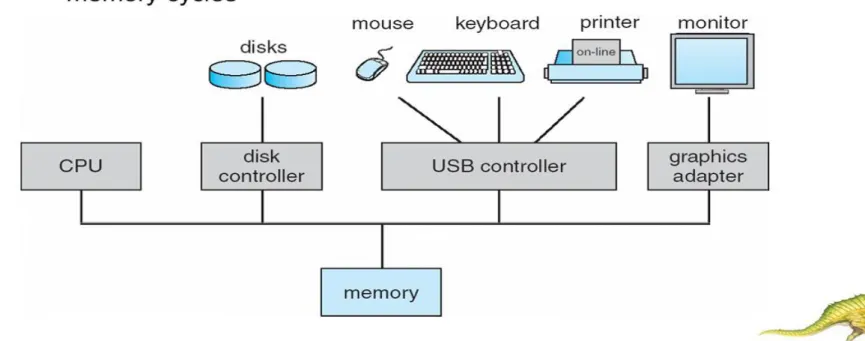
-Organisasi Sistem Komputer
Gambar ini diambil dari Buku Operating System Concepts, Abraham Silberschatz, Peter Baer Galvin and Greg Gagne, Chapter 1, hal. 7, John Wiley and Sons, Inc., Virginia, New Jersey, 2013
Interruppts
Interruppt architecture must save the addreress of the intteruppted intruction.
A trap or exception is a s/w-generated A trap or exception is a s/w-generated
interruppt caused either by an error or a user request.
Mengirim sinyal dari periperal /
melaporkan status, jika terjadi sesuatu, Laporan berupa interruppts.
13 0S STTATF E.N. Tamatjita
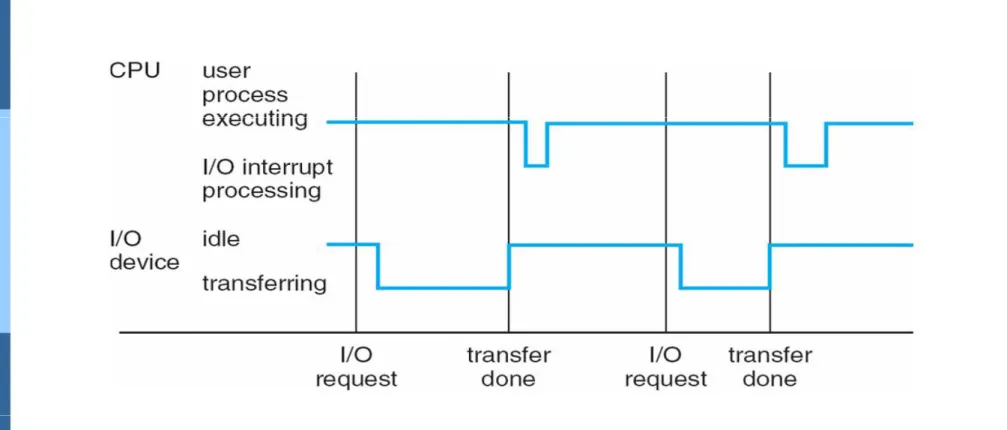
-Timeline
Interruppts
Gambar ini diambil dari Buku Operating System Concepts, Abraham Silberschatz, Peter Baer Galvin and Greg Gagne, Chapter 1, hal. 8, John Wiley and Sons, Inc., Virginia, New Jersey, 2013
I/O Structure
System call – request to the o/s to allow user to wait for i/o completion :
Program buatan user memanggil o/s
Open file dialog ke o/s (pinjam dialog box milik o/s).
Pinjam komunikasi http socket LAN, port, proxy.
Status h/w USB berapakah yang digunakan ?
15 0S STTATF E.N. Tamatjita
-Direct Memory Access Structure
Memungkinkan periperal mengakses langsung memori tanpa melalui prosesor :
Hdd.
CD Drive Transfer ke memori langsung Hdd.
CD Drive Transfer ke memori langsung sebagai data mentah (suara digital),
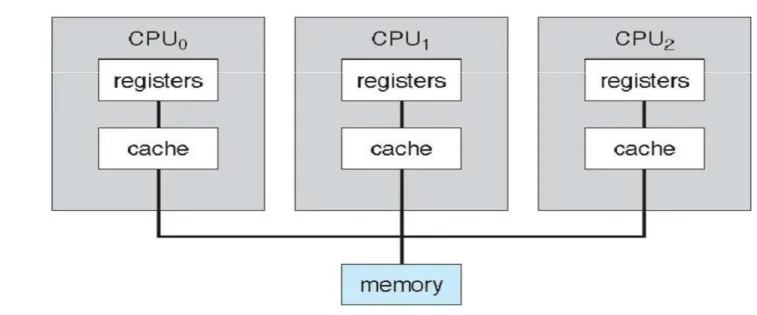
Arsitektur Multi-Prosesor
17 0S STTATF E.N. Tamatjita
-Gambar ini diambil dari Buku Operating System Concepts, Abraham Silberschatz, Peter Baer Galvin and Greg Gagne, Chapter 1, hal. 15, John Wiley and Sons, Inc., Virginia, New Jersey, 2013
Desain Dual-Cor Prosesor
Gambar ini diambil dari Buku Operating System Concepts, Abraham Silberschatz, Peter Baer Galvin and Greg Gagne, Chapter 1, hal. 16, John Wiley and Sons, Inc., Virginia, New Jersey, 2013
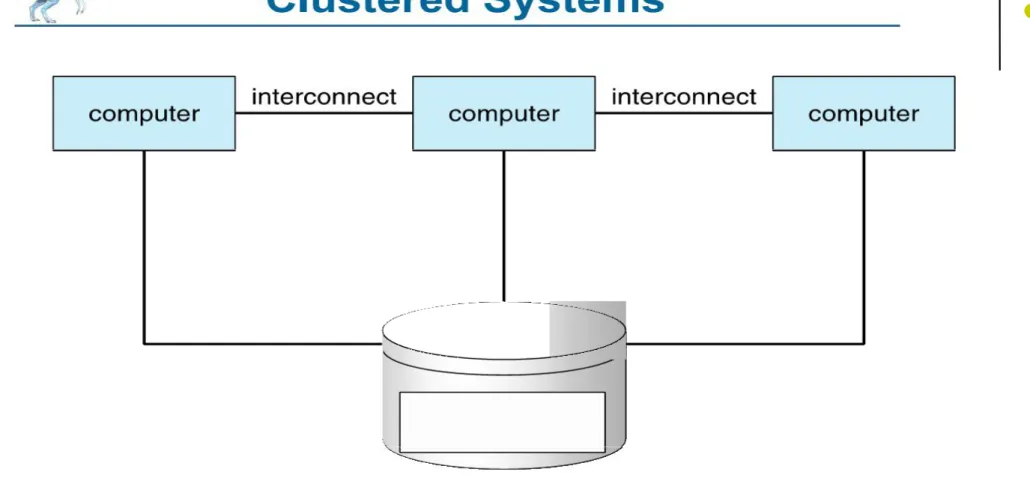
Sistem Kluster
19 0S STTATF E.N. Tamatjita
-Gambar ini diambil dari Buku Operating System Concepts, Abraham Silberschatz, Peter Baer Galvin and Greg Gagne, Chapter 1, hal. 18, John Wiley and Sons, Inc., Virginia, New Jersey, 2013
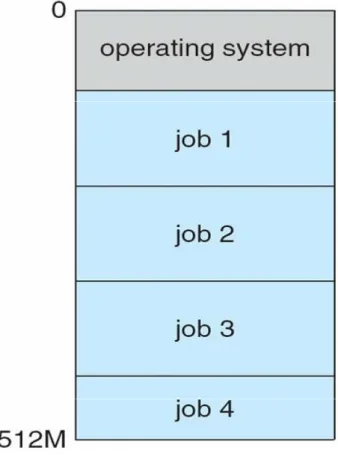
Memori
Sistem Multi Program
Gambar ini diambil dari Buku Operating System Concepts, Abraham Silberschatz, Peter Baer Galvin and Greg Gagne, Chapter 1, hal. 19, John Wiley and Sons, Inc., Virginia, New Jersey, 2013
Open-Source O/S
Started by free Software Foundation (FSF), which has “copyleft” GNU Public License (GPL) Hal-hal yang berhubungan dengan open source (yang
mengatur).
Opposite EULA (End User License Opposite EULA (End User License
Agreement).
Examples include GNU/Linux and BSD Unix (including core of Mac OS X), and many
more.
Can use VM like VMware player (free on
Windows), Virtualbox (open source and free Windows), Virtualbox (open source and free on many platforms –
http://www.virtualbox.com)
Use to run guest operating systems for exploration.
21 0S STTATF E.N. Tamatjita