222
COFFEE AND ITS FLAVOR
Baiq Rien Handayani1
1
Department of Food Science and Technology, Faculty of Food and Agroindustrial Technology, University of Mataram
E-mail: [email protected]
Diterima: 1 April 2016 Disetujui: 10 April 2016
ABSTRACT
Coffee is one of the most widely served beverage. Flavor mainly the aroma is the most important attribute to specialty coffee. Coffee flavor consisted of volatile and non volatile compounds. The compounds were influenced by several factors i.e. growth environment, physiology, harvesting, post-harvest, roasting process and preparation.
Keywords: coffee, flavor
INTRODUCTION
Coffee trees are plants belonging to the Rubiaceae family which consist of 66 species of the genus coffee. There are two species commercially planted for international trade i.e Arabica coffee which accounts for two thirds of the world production, and coffee canefora, often called Robusta coffee, with one third of the global output. The Arabica species of coffee beans possess superior flavor and aroma compared to beans of Robusta coffee species (Illy, 2002). It might be because of Robusta coffee contains higher levels of both caffeine and cholorogenic acid which are responsible for bitterness and astringency in coffee.
Coffee is one of the most widely consumed beverages in the world. Coffee represents 71% of all the United States caffeine consumption followed by soft drinks and tea. In 2003, coffee was the world’s sixth largest agricultural export in terms of value, behind wheat, maize, soybeans, palm oil and sugar (Kalorama, 2004). FAO (2003) reported that consumption and production of coffee increase significantly. Moreover, world coffee production is projected to grow by 0.5 percent annually from 1998-2000 to 2010, compared to 1.9 percent of the previous decade. Global output was expected to reach 7.0 million tons (117 million bags) by
2010 compared to 6.7 million tons (111 million bags) in 1998-2000. After oil, coffee is the second largest import of the United States. US consumers are drinking one fifth of the world’s coffee, making them the largest consumers of coffee in the world. The National Coffee Association in 2001 studied that 52% of adults (older than 18 years) in the US drink coffee everyday, representing 107 million daily drinkers. They consume on average 9 ounce of coffee a day. As a result, the US coffee industry is extremely competitive on all fronts-with retail and coffee house segments just a part of the total market. In fact, coffee is the most widely served beverage.
Coffee drink is available practically everywhere, including airplanes, office buildings, train terminals, cafetaria lines, hospital, in-room meal service, hotel rooms, and cappuccino carts, etc. Consumers of coffee are not only old people but also young adults. It is believed that coffee has been a healthy drink alternative to alcoholic beverages in social gatherings. Thus, coffee has been stereotyped as an adults’ beverage (Illy, 2002; Hsu and Ching-Hung, 2005). For these reasons, coffee has very important values in the beverages consumption, production and distribution in international trade.
223
weight loss by inducing physical activity, enhance satiety, long term consumption of coffee may help persons lose weight, reduce diabetes mellitus type 2 and improve indicators of normal glucose metabolism (Greenberg, et al., 2006), coffee has been drinking for many centuries due to the addiction to the flavor. In addition to the physiological effects (Bernard et al., 2005), coffee beverage is appreciated for their aroma and taste characteristics. Furthermore, Rovira (2006) mentioned that the greatest gift from coffee is the flavor which can amaze, intrigue and satisfy its consumers. However, in the trade market the components quality of coffee has been considered by many companies in the United States including flavor, aroma, acidity, body and aftertaste (Nur and Mamela, 2003). For that reason, the better flavor in the coffee, the better value does it have.
VOLATILE AND NON VOLATILE IN COFFEE FLAVOR
Flavor is one of the quality components required by the consumer (Leroy, et al. 2006). Coffee flavor is defined by the combination of body, acidity and aroma. Body is the sensation of heft or viscosity, something like oil, on the palate. So there is a trade-off between body and acidity. Acidity is very valued for Arabica coffee. Acidity is not sourness because sourness is considered as a defect. Furthermore, acidity is not bitterness. Bitterness comes from skimping on grounds when brewing for too long, and brewing in a pot or machine with residual grounds left from hours, days or weeks ago (Lloyd, 2005). Some chemical compounds contribute to bitterness of coffee taste such as quinic acid, chlorogenic acid and caffeine which contribute to 10% of bitter taste.
Some compounds involve in the formation of coffee flavor. These compounds are volatile and non-volatile compounds that are contained both in the liquid matrix and the headspace aroma. Nonvolatile compounds consist of carbohydrates (sugar), proteins, peptides and free amino acids, polyamines and tryptamines, lipids, phenolic acids, trigoneline and various nonvolatile acids (Flament, 2002). Oil content in coffee plays a role in defining a coffee characteristic such as grassy, herby or peanutty characteristics (Rovira, 2006).
Nonvolatile compounds have more influence in the taste including the bitterness and acidity.
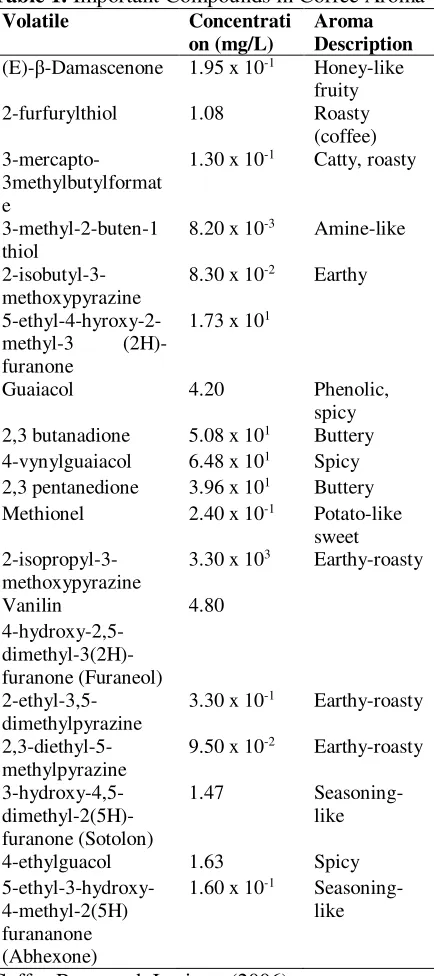
Table 1. Important Compounds in Coffee Aroma Volatile Concentrati 2-furfurylthiol 1.08 Roasty
(coffee)
Guaiacol 4.20 Phenolic,
spicy 2,3 butanadione 5.08 x 101 Buttery
4-vynylguaiacol 6.48 x 101 Spicy
2,3 pentanedione 3.96 x 101 Buttery
Methionel 2.40 x 10⁻¹ Potato-like
sweet
2-isopropyl-3-methoxypyrazine
3.30 x 10³ Earthy-roasty
Vanilin 4.80
3.30 x 10⁻¹ Earthy-roasty
2,3-diethyl-5-methylpyrazine
9.50 x 10⁻² Earthy-roasty
3-hydroxy-4,5- dimethyl-2(5H)-furanone (Sotolon)
1.47
Seasoning-like
4-ethylguacol 1.63 Spicy
224 specific aroma. For instance, Kenyan coffees
have a unique floral profile, while Colombian coffees exhibit wine-like flavor and Sulawesi coffees produce berry-like overtones (Rovira, 2006). Grosch (2001) mentioned that 841 specific aroma are shown in Table 1.
FACTORS INFLUENCING THE COFFEE FLAVOR
Many factors influence the coffee flavor such as growth environment, harvesting and post-harvest including processing mainly roasting and preparation. Roasting has the greatest impact on the flavor of coffee which can trigger production of more than 600 new volatile components.
A. Growth Environment Effect on Flavor The different flavor profiles are created by the growth environment such as soil, climate, altitude and shade that play an important role through temperature, availability of light and water during the ripening. Elevation influences the cholorogenic acid and fat content in Arabica coffee and in general, the most acidic coffee is grown on rich volcanic soil (Leroy, et al. 2006). High altitude give significant contribution to the
quality of coffee. At higher altitude, the coffee Colombia, Indonesia, Vietnam, and west coast Africa, Kenya, Guatemala, Puerto Rico, Mexico and Hawaii produce high quality of coffee. Nur and Mamela (2003) state that the produce high quality coffee beans, a temperature average of 16-20ºC, RH 75-95%, an annual precipitation of 2000-3000 mm and rich nutrient in volcanic soil, are needed.
B. Physiology effect on flavor
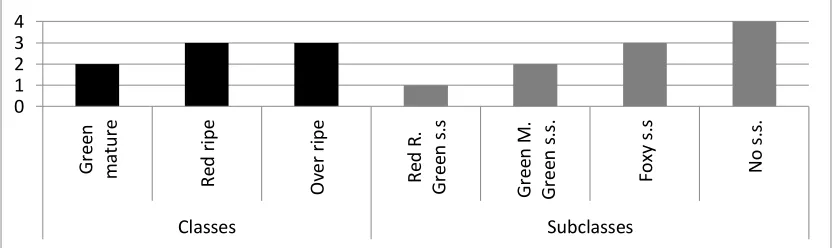
Physiological changes occur during growth and development of coffee beans. Green beans have lower grade than red ripe and over ripe beans. Maturation which is indicated by the color development from green to ripe has strong influence on the coffee quality (Leroy, et al., 2006). Figure 1 shows the quality of coffee beans from green to over ripe. The flavor compounds of Robusta green coffee samples (C. canephora Pierre ex A. Froehner, Rubiaceae) obtained from The Philippines increase during maturity (Montavon, et al. 2003). The same quality development during maturity presents in Arabica coffee in Costa Rica when early picking red cherries give the best coffee compare to green coffee (Leroy, et al., 2006).
225
Figure 1. indicates that the quality improves during maturation and the highest quality is contributed as silver skin disappears from cell walls. Furthermore, green beans contain some compound which responsible to unpleasant aroma such as ethylbutanoate and ethylglycolate. Also, green beans lack of the important aromatic precursor proteins that develop in the last stage of ripening (Illy, 2002).
C. Harvesting Effect on Flavor
Harvesting operation in the coffee plantation can be traditional hand picking or mechanical harvesting. Traditional hand picking and husbandry labor produce the best quality of green coffee by decreasing the percentage of defects in coffee batches (Leroy, et al., 2006). During has-harvesting, only ripe coffee should be picked. Immature, overripe, and raisin (dried-on-the-tree) cherries are considered to be inferior quality and should be separate. Sorting and grading for coffee beans should be done in the field. On the other hand, mechanical harvesting has been applied in some plantation such as in Hawaii. The yield depends on the harvester rod, harvester speed, and frequency of rod vibration. In general, mechanically harvested cherry has percentages of the various maturity stages in the order raisin > overripe > red > green. Thus, it has impact on the next processing steps, so, green bean and raisin should be considered to be separate. Ethephon®, a natural hormone for plant has been applied to cherries before harvesting to unify to maturity of cherries and to make it easier to harvest. Mechanical harvesting can harvest faster. However, traditional hand picking is still better method to provide best coffee for processing.
D. Post Harvest Effect on Flavor
Some processes such as sorting and grading after harvesting continue to be done. Then un-pulp bean can be produce by dry methods and wet methods. Usually dry methods are applied for Robusta coffee and wet method for Arabica coffee. Wet method will enhance the acidity which interact to the body and beneficial for enrichment of
Arabica coffee’s flavor. Although, some countries such as Brazil have applied dry method for Arabica coffee and make a sweet, complex and heavy bodied coffee (Coffee Research Institute, 2006). All the process is important, however once the beans have been harvested and prepared, the quality has mostly influenced by the roasting process.
Roasting Process
The most interesting development of flavors occurs during roasting process. Roasting influence not only its aroma but also the taste of coffee including the bitterness and acidity. During roasting, at least 600 new volatile components that influence the aroma will be produced. Flament (2002) state that the roasted coffee contains 850 compounds.
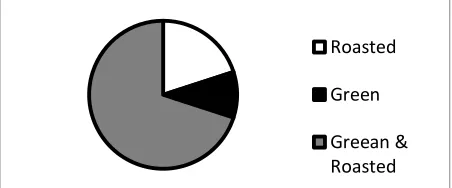
Figure 2. Distribution of volatile compounds in green and roasted beans
Figure 2, shows the composition of volatile compounds in green, roasted and green-roasted coffee and Table 1. presents important compounds in coffee aroma is published by Coffee Research Institute (2006).
Table 2. The Seventh Largest Compounds Influence to Bitterness of Coffee Taste Compounds Concentration in
Roasted Coffee (mg/L)
Quinic 3,200-8,700
Trigonelline 3,000-10,000
Citric acid 1,800-8,700
Malic acid 1,900-3,900
Pyruvic acid 400-1700
Acetic acid 900-4,000
Caffeine 10,000-20,000
During the roasting process, bitterness of coffee (Coffee Research Institute, 2006) which will influence the taste accumulates in large number (Table 2).
Roasted
Green
226 Development of flavor in roasted
coffee trough the following steps: at the beginning of roasting (low temperature = < 100ºC) flavor start to change the flavor even minimal. As the temperature heats up, the bean will expand and trap the gas evaporated then cause first crack. Caramelization occur when the temperature increase and flavor fall into category brown characters (caramel like) which release flavor volatile such as alcohols, furans and enols that contributes to the overall caramel like profile, other components in green coffee bean begin to volatilized. This is the reason, why the roasted coffee has higher volatile than green bean (Rovira, 2006).
At the temperature rises further, the coffee’s flavor really starts to get interesting and continue by Maillard Reaction (250ºF) which responsible for the best flavor. This occurs by the reaction of sugar and amino acids. Up to this point increasing the temperature will burn the woody cellulose materials and lead to the second crack and produce phenol as the primary class of aroma chemical. The aroma is described by smoky, woody or asphalt-like (Rovira, 2006). So, temperature at this point should be controlled. When the coffee bean offers roasted, it will release quinic acid which responsible to unfavorable sourness. Longer roasting yields more body. But that also decreases acidity. It is important to use only the same size of beans. When un-appropriate size bean is roasted, the smallest tend to burn compare to the largest which tend to under roasted. This condition will affect not only the appearance of roasted beans but also influence their flavor.
E. Preparation
Some preparation influences the flavor content in coffee drink (liquor). Since the flavor compounds are volatile, they are easier to be lost during the preparation. Grinding is one of the causes of loss of flavor. Studies by International Coffee Organization found that concentration of acid compounds with contributes to the coffee taste was influence by grind size. Coffee begins to lose its flavor and aroma within one
hour after being ground, in addition, brewing temperature and different brewing time might cause loss of coffee flavor too. Generally, the higher grind size (particles size) will produce higher amount of acid compounds. Optimum amount of acid was found during brewing at 94ºC then decrease at 100ºC. Low temperature which is below 200ºF will cause weak taste. On the other hand, too high temperature produces bitter flavor characteristics. Furthermore, brewing times for more than 5 minutes will reduce some of acid compounds but increase the quinic acid content which is responsible for unpleasant flavor. The quality of water could influence the flavor. Beside these, holding coffee longer than 20-30 minutes will develop a sour or bitter taste with smoky overtones.
CONCLUSION
Maintaining the flavor of coffee is very difficult since many factors influence and contributes to the presence of all volatile and nonvolatile compounds. The amount of the chemical compounds is started from the plantation area to the preparation by the consumer. The flavor is the most valuable quality which is considered by the consumer. The flavor compounds are triggered in large number during roasting process. However, after roasting desirable flavor is easily lost and undesirable flavor increase. For the reason, some strategies should be applied to reduce loss of the flavor compounds. Since humidity accelerate non enzymatic degradation of aromatic, as soon as the roasting process is done, roasted coffee should be cooled and kept in dry conditions. Using moisture resistant packaging is a good way to avoid free moisture from the environment. Moreover, managing temperature, humidity and avoiding extremes of temperature during storage are the best way to keep the freshness of roasted coffee.
REFFERENCES
Bernard C.M., Kraehenbuehl, Rytz, A., Roberts D.D. 2005. Interaction between volatile and non volatile coffee components: 1. Screening of non volatile components. J Agric Food Chem. 53 (11): 4417-25.
227
FAO. 2003. Medium-term prospect for agricultural Commodities Projections the Year 2010. FAO Corporate
Document Repository
http://www.fao.oorg/docrep/006y5143e /y55143e00.HTM.
Greenberg, J.A., Boozer, C.N and Geliebter, A. 2006. Coffee, diabetes and weight control American Journal Clinical Nutrition. 84: 682-693.
Grosch, W. 2001. Chemistry III: Volatile compound in Coffee Recent Development edited by Clarke, R.J and Vitzthum, O.G. Blackwell Science.
Hsu, J.L and Ching Hung, W. 2005. Packed coffee drink consumption and product attribute preferences of young adults in Tiwan. Food Quality and Preferences. 16 (4): 361-367.
Coffee Research Institute. 2006. Flavor characteristics due to coffee processing.
www.coffeeresearch.org/agriculture/fla vor.htm.
Illy, Ernesto. 2002. The complexity of coffee. Scientific American. 286 (6):86-91.
Kalorama. 2004. Market Looks: The US market for ready to drink packaged coffee beverages.
http://www.pharma-i.com/reports/overview.asp?is=6&ref=4478
Leroy, T., Ribeyre, F., Bertrand, B., Charmetant, P., Dufour, M., Montagnon, C., Marraccini, P and Pot, D. 2006. Genetics of coffee quality. Braz. J. Plant physiology. 18 (1): 229-242.
Lloyd, R. 2005. The Chemistry of great coffee. Foxnews.com.
Montavon, P., Mouron, A.F., Duruz, E. 2003. Changes in green coffee protein profile during roasting. J Agric Food Chem. 51 (8): 2335-43.
Nur, W.W., Mamela, Y. 2003. Organic/specialty coffee-the Indonesian Experience. http://www.fao.org/documents/show_cdr.asp? url_fille=c/DOCREP/003/X6938E/X6938E00. HTM