J.Food Pharm.Sci. 5 (2017) 1 – 7
Avalaible online at www. jfoodpharmsci.com
Review Article
Physico-chemical Properties, biological activities and authentication of
cod liver oil
Abdul Rohman
1,2*1Department of Pharmaceutical chemistry, Faculty of Pharmacy, Universitas Gadjah Mada, Yogyakarta 55281,
Indonesia
2Research Center of Halal Products, Universitas Gadjah Mada, Yogyakarta 55281, Indonesia
ARTICLE INFO ABSTRACT
Received 14/11/2016
Received in revised form 17/12/2016 Accepted 22/01/2017
Available online 27/01/2017
1. Introduction
In the few last decades, cod liver oil (CLO) has received a fast interest in the industry of fats and oils because of its nutritional supplements and has made its renaissance (Olsen et al., 2005). It is estimated that the production of CLO is nearly 10,000 ton per year and is originally marketed as potential sources of vitamin A and vitamin D, either in pharmaceutical or food supplement products. CLO is also the rich sources of omega fatty acids, namely eicosapentanoic acid (EPA) and docosahexanoic acid (DHA) (Gunston, 2004). In pharmaceutical fields, CLO is persistently being sold as medicines or functional food oils, either in capsule or suspension formulations. Functional food oils are
defined as oils which have potential positive effects on human health (Stark and Mahar, 2002).
There are two types of cod, namely Pacific cod (Gadus macrocephalus Tilesius) and Atlantic cod (Gadus morhua L.). The oil production from all body cod is not common because of the low fat contained in cod, which is less than 1% for both cod species. However, the byproducts of codfish processing like liver are commonly extracted for their oils to produce CLO (Shahidi and Miraliakbari, 2006). Fish oil products based on natural fish oil or their derivatives are persistently being introduced on the market as functional foods (capsules) or medicines. Microencapsulated fish oil has been introduced for the enrichment of foodstuff, including Cod liver oil (CLO), currently, has attracted public awareness and researchers as functional food oils. It is predicted that CLO will experience a great market in the fats and oils industry. CLO has been known to have several biological activities and its price is much higher (10–15 times) than common edible oils, thus CLO is subjected to adulteration with lower priced oils, therefore its authentication is highlighted in this review. This article highlighted some of the reported activities of CLO like the prevention of coronary heart disease. In addition, physico-chemical properties of CLO were also described in this review. Some analytical methods, especially spectroscopy and chromatographic based techniques along with its variation have been used for authentication of CLO from oil adulterants. FTIR spectroscopy along with multivariate calibrations have been reported to be used for authentication of CLO from animal fats and vegetable oils fruitfully. Because of its capability to separate specific components in CLO, chromatographic techniques are suitable for such authentication using specific markers.
Keywords: cod liver oil, physico-chemical properties, biological activity, authentication.
bread, infant formulas, baby food, soups, and prepared food such as pizza (Aursand et al., 2007).
The aroma and flavor of CLO vary from a soft sardine-like flavor to an intense odor of fish, depending on its quality. High quality of CLO is a pale-yellow, thin, oily liquid, having a little fishy and bland taste. For this reason, some flavoring agents such as citrus or mint essence were added to CLO in order to make it more palatable (Gunston, 2004).
Several factors contributed to the nutritional and price values of CLO in the markets, namely the quality of raw material, species used, and processing history from extraction until storage. According to new EC regulations (Commission Regulation 1662/2006) as cited from Standal et al. raw material used for the preparation of fish oil for human consumption must derive from fishery products deemed fit for human consumption, be prepared in an approved establishment or vessel, and transported and stored in a hygienic condition .
2. Physico-chemical properties of Cod liver oil
Physico-chemical properties of edible fats and oils are important for characterization of fats and oils. Different physical and chemical parameters of edible fats
and oils can be exploited for the monitoring the quality of oils (Ceriani et al., 2008). These physicochemical parameters include iodine value, saponification value, viscosity, density, and peroxide value, anisidine value, oxidation products, and volatile compounds (Mousavi et al., 2012). In addition, these physical values are also used for identification of fats and oils from adulteration practices.
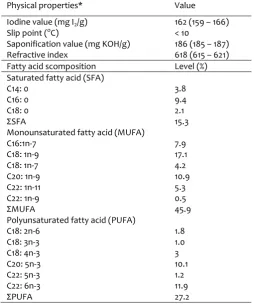
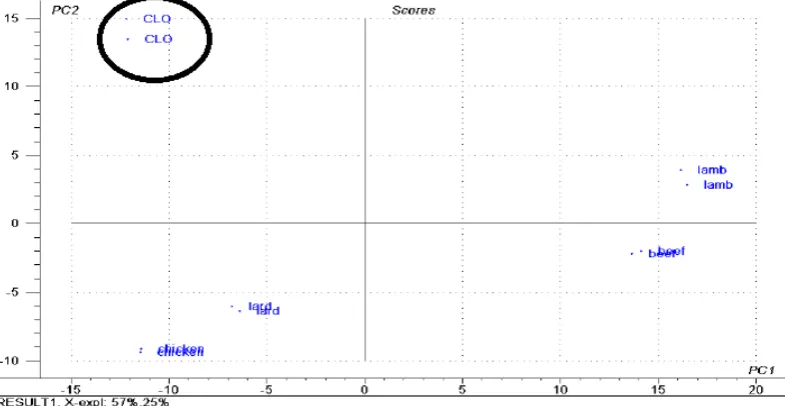
The fatty acid (FA) composition of CLO along with physical and chemical properties is compiled in Table 1. CLO contained high levels of long-chain n-3 FAs of cis-5, 8, 11, 14, 17-eicosapentaenoic acid (EPA) and cis-4, 7, 10, 13, 16, 19-docosahexaenoic acid (DHA). Zeng et al. (2010) have used liquid chromatography electrospray tandem mass spectrometry (LC–ESI-MS/MS) for the structural subjected to principal component analysis and the results showed that it is possible to discriminate CLO and adulterated CLO with soybean oil and seal oil (Figure 1).
Table 1. Physical and chemical properties of cod liver oil CLO †
Physical properties* Value Fatty acid scomposition Level (%) Saturated fatty acid (SFA)
Table 2. Triacylglycerol (TAG) composition of cod liver oil (Rohman et al., 2012a). stearic. Each value in the table represents the means of triplicate analysis; SD is given after ±
Figure 1.The score plot of principle component analysis (PCA) model using triacylglycerolcompositions of cod liver oil (CLO) and animal fats.
3. The biological activities of CLO
Today, the considerable interest to consume several foods having the biological activities to treat and/ or to prevent certain diseases has appeared. Numerous studies have been explored to correlate the certain foods with its beneficial effects to human health, currently, known as functional food (Rohman and Che Man, 2012). CLO can be considered as functional food oils due to its ability to treat, promote, and prevent human health. It contained high levels of EPA and DHA which are believed to play an important role for the prevention of cardiovascular disease and for the alleviation of other health problems. In addition, the lack of these fatty acids (EPA and DHA) can result in the function impairment of numerous biological systems, including cardiovascular, nervous, immune, and skin (Moghadasian, 2008).
3.1. CLO and coronary heart disease
For many years, fish oils including CLO is associated with good health effects. The American Heart Association recommend to patients with coronary heart disease, the consumption of 1 g of fish oil per day, preferably by eating fish. The epidemiological studies also revealed that there is an inverse relationship between high fish oil consumption and the low mortality following coronary heart disease, possibly through the changes in prostaglandin metabolism (Weiner et al., 1986; Jude et al., 2006).
The consumption of CLO has the protective effect of coronary heart disease in a cohort of Norway men and women. The users of CLO had lower triglycerides (p < or = .05) than un-users. However, omega-3 fatty acid supplementation, provided no significant benefits to coronary heart disease, as practiced in this cohort study (Egeland et al., 2001). The supplementation of CLO was also effective for preventing the cardiovascular disorders in streptozotocin (STZ)-diabetic rats. Besides, CLO also prevented the abnormalities of plasma lipid (Ceylan-Isik et al., 2007).
The supplementation of CLO in human patient reduced the daily intake of non-steroid anti-inflammatory drugs in order to attenuate the risks of gastrointestinal and cardiovascular adverse events associated with NSAIDS. CLO supplementation contatining n-3 fatty acids can be used as NSAIDs sparing agents in rheumatoid arthritis patiens (Galarraga et al., 2008).
3.2. CLO and anticancer
Daily use of CLO was associated with reduced risk of death in patients with solid tumors (Skeie et al., 2009). The supplementation of CLO daily for at least a year in patients with solid tumors such as breast, colon, lung, but not blood cancers had a death risk of 33% less than those who used CLO less frequently, while patients with lung cancer, the mortality reduction was 44%. Vitamin D and omega-3 fatty acids in CLO contributed to lung cancer survival.
3.3. Antidiabetic activity of CLO
CLO was also reported to be correlated with the lower risk of diabetes mellitus insulin-dependent (Type I). These protective effects were caused by vitamin D or theomega-3 fatty acids of EPA and DHA present in CLO (Stene et al., 2000). Terkelsen et al. (2000) reported that CLO with dose 25% (wt/wt) in ointment preparation can significantly accelerate both the epithelial and the vascular component of healing compared with saline. This effect was contributed by the high vitamin A in CLO. Animals fed cod liver oil also demonstrated the reduced body weights (Karmazyn et al., 1987). However, vitamin A can accumulate in the body fat, and can reach harmful levels which are sufficient to cause hypervitaminosis of vitamin A and vitamin D. Overdoses of vitamin A and D is not desirable and must be avoided.
significantly, while rats treated with CLO did not reveal abnormalities in cholesterol and triacylglycerol. Diabetic rats given with CLO also revealed better weight gain. The treatment of CLO also caused significant improvements in catalase activities in every tissue of diabetic rats. This study suggested that the treatment of CLO in diabetic rats provided better controlling in the metabolism of glucose and lipid. Because of the beneficial compounds contained, CLO provided important advantages to be used for the management of complications induced by diabetes.
3.4. Hepatoprotective and neuroprotective activities of CLO
CLO was reported to reveal hepatoprotective effects in Sprague Dawely rats (Salama et al., 2013). CLO reduced significantly hydrogen peroxide (H2O2), hepatic malondialdehyde, and superoxide anion. CLO restored hepatic cytochrome c oxidase activity after 38% reduction by sodium nitrite. In addition, CLO reduced hepatic MCP-1 (79.8 pg/mg) compared with sodium nitrite (168.7 pg/mg) and reduced DNA fragmentation (13.8%) compared with sodium nitrite (41.3%), significantly. CLO ameliorated sodium nitrite induced hepatic impairment through several mechanisms including attenuation of oxidative stress, blocking MCP-1, reactivation of mitochondrial function and reduction of DNA fragmentation. The dietary of CLO also revealed the protective effects toward inflammation on sodium nitrite-induced inflammation in rats.
CLO reduced some tumor necrosis factor (TNF)- , C-reactive protein (CRP), interleukin-1 beta (IL)- , transforming growth factor (TGF)- , and caspase-3 compared to rats treated with sodium nitrite (Sherif and Al-Gayyar, 2014).
CLO also revealed neuroprotective in male rat treated with neurotoxic agent of tartrazine. Rats given CLO at dose 0.4 mL/kg body weight exhibited the increased levels of different brain neurotransmitters, namely gamma amino butyric acid (GABA), dopamine (DA) and serotonin (5HT). These concentrations are reduced in rats treated with tartrazine. CLO also increased the concentrations of antioxidant biomarkers of catalase, super oxide dismutase, and the reduced glutathione. These results concluded that CLO offered the sufficient neuroprotective effects on rat pups brain tissue function and structure (Mohamed et al., 2015).
3.5. CLO and obesity
Recently, CLO which contain high amount of docosahexaenoic acid (DHA) is reported to be correlated with the activity reduction of stearoyl-CoA desaturase (SCD), enzyme which plays a crucial role in the development of obesity and insulin resistance in mice. It is hypothesized that dietary DHA contained in CLO may suppress SCD, and subsequently protect against the development of obesity and hypertriglyceridemia (Fujita et al., 2015). CLO was also reported to block the effects of sodium nitrite on glycogenesis and glycogenosis without affecting gluconeogenesis. Sodium nitrite can
inhibit liver glycogenesis and enhance liver glycogenolysis and gluconeogenesis, which is accompanied by hyperglycaemia and insulin resistance through the activation of cAMP/PKA and the inhibition of phosphodiesterase (Al-Gayyar et al., 2015).
3.6. Antiulcer activity
Poly-unstaurated fatty acids in CLO was reported to inhibit the development of gastric ulcers induced by indomethacin in rats (Manjari and Das, 2000). When rats treated with CLO, there was a decrease in the incidence of gastric ulcers which were associated with the changes of phospholipid fatty acid profile. Khare et al. (2008) also reported that CLO increased the healing process of gastric ulcers and prevented the development of duodenal ulcers in rats. This activity was dose-dependent in which high dose of CLO (1 g/kg, peroral) was more active than low dose (0.5 g/kg). However, in the stress condition, CLO is reported to inhibit arachidonic acid formation, and consequently decreased the production of cytoprotective prostaglandins which lead to the development of gastric ulcers (Bernhard et al., 1996). polybrominated diphenyl ethers, polychlorinated biphenyls, hexachlorobenzene, hexachlorocyclohexane isomers ( , , ), and chlorinated pesticides (Storelli et al., 2004), or heavy metals, such as cadmium, lead and mercury (Guallar et al., 2002). Recently, using headspace analysis followed by gas chromatography-mass spectrometry, Guillen et al. (2009) has reported the presence of the toxic compounds of 4-hydroxy-(E)-2-hexenal, 4-oxo-(E)-2-4-hydroxy-(E)-2-hexenal, and 4,5-epoxy-2-heptenal in CLO. Recent studies also reported that CLO contained arsenolipid compounds, neamely dimethylarsinicacid, methyl arsonicacid (MA), dimethyl arsenopropanoic acid (DMAP) and dimethylarsenobutanoicacid (DMAB). These compounds have been used as markers in human exposure to arseno compounds (Amayo et al., 2014).
4. Authenticaton and discrimination of CLO
CLO has high price value in the industry of fats and oils. As a consequence, some researchers have developed analytical methods for detection and quantification of adulterants in CLO. The most reported methods are spectroscopy and chromatography along with its variation. Due to its property as fingerprint technique, Fourier transform infrared (FTIR) spectroscopy is widely used for the authentication of CLO, especially in combination with multivariate calibration (Chemometrics) (Rohman, 2012). For authentication purposes, the multivariate analysis used is multivariate calibration for quantitative purposes and pattern recognition for classification (Rohman and Che Man, 2012).
LO has the close similarity with lard. The presence of lard in any fats and oils is not allowed for muslim community, therefore the presence of lard in CLO must be detected for halal related issues. Rohman and Che Man (2009) have authenticated lard from CLO using FTIR spectroscopy combined with chemometrics of partial least square for quantification and discriminant analysis for classification. FTIR spectra at selected wavenumbers of 1035–1030 cm−1 is successfully optimized for developing the correlation between actual value of lard (x-axis) and the FTIR-predicted value with coefficient determination (R2) value of 0.996 and root mean square error of cross validation (RMSECV) of 1.04% (v/v). While, the wavenumbers region of 1500–1030 cm−1, is successfully used for discriminating pure CLO and CLO mixed with lard.
FTIR spectroscopy combined with chemometrics has been exploited to differentiate CLO from chicken fat (CF). Some frequency regions are optimized to analyse CF in CLO. Finally the wavenumbers region of 1500–900 cm−1 was selected for this analysis. The root mean square error of calibration (RMSEC) value obtained was 0.346%. Using seven principle components, the RMSECV value obtained is 1.512%. The root mean square error of performed by FTIR spectroscopy combined by fatty acid composition as determined by gas chromatography using flame ionization detector. FTIR spectroscopy combined with PLS at wavenumbers regions of 1200– 1000 cm-1 was used for the quantification of BF in CLO. The RMSEC and RMSEP values obtained are 0.55% and 0.82% v/v, respectively. The decreased level of some fatty acids, especially eicosapentaenoic acid (EPA) and docosahexaenoic acid (DHA), could be used as a means for detecting adulteration of CLO from beef fat (Rohman and Che Man, 2011). Mutton fat (MF) in CLO is analysed in the combined spectral regions of 3010–2995 and 1500–900 cm−1. These regions provide the highest R2 value (0.992) and the lowest RMSEC value (1.31%) compared with other spectral regions studied (Rohman et al., 2012).
The presence of selected vegetable oils (canola, corn, soybean, and walnut) as adulterant oils in CLO has been analyzed using FTIR spectroscopy and multivariate calibration of PLS and discriminant analysis. PLS with FTIR normal spectra was selected for quantification of these vegetable oils with an R2 higher than 0.99 and RMSEC in the range 0.04–0.82% (v/v). Disriminant analysis is successfully used for making classification of CLO and CLO mixed with these oil adulterants (Rohman and Che Man, 2011).
Due to its capability as separation tools, chromatographic technique is used for identification of CLO by determining specific markers present in CLO (Chin et al., 2009). Two dimensional gas chromatography coupled to time of flight mass
spectrometry (GC x GC-TOF MS) is capable of identifying specific fatty acids which are absent in lard, beef fat, mutton fat and chicken fat. Such fatty acids are Methyl 7,10,13-hexadecatrienoate (C16:3n-3), Methyl 9,12-hexadecadienoate (C16:2n-4), Methyl 7-methylhexadece-6-noate (7 m-16:1), Methyl 6,9,12,15-octadecatetraenoate (C18:4n-3), Methyl 6,9,12,15,18-heneicosapentaenoate (C21:5n-3), and Methyl 15-tetracosenoate (0.34 ± 0.15).
5. Conclusion
Cod liver oil has been recognized as functional food oils due to its beneficial effects to human health especially in prevention of coronary heart diseases, therefore CLO has high price value in the fats and oils industry. This attracted some unethical players to adulterate CLO with low price-oils. FTIR spectroscopy coupled with multivariate calibration as well as chromatographic techniques is successfully developed for identification of adulteration practices in CLO.
Acknowledgement
The authors thank to the Ministry of Research, Technology, and Higher Education for financial assistance during preparation of this manuscript.
Reference
Al-Gayyar, M.M.H., Alyoussef, A., Hamdan, A.M., Abbas, A., Darwiesh, M.M. and El-Hawwary, A.A. 2015. Cod liver oil ameliorates sodium nitrite-induced insulin resistance and degradation of rat hepatic glycogen through inhibition of cAMP/PKA pathway. Life Sciences 120: 13–21.
Amayo, K.O., Raab, A., Krupp, E. and Feldmann, J. 2014. Identification ofarsenolipids and their degradation products in cod-liver oil. Talanta118: 217–223.
Aursand, M., Standal, I.B. and Axelson, D.E. 2007. High-Resolution 13C nuclear magnetic resonance spectroscopy pattern recognition of fish oil capsules. Journal of Agricultural and Food Chemistry 55: 38 – 47.
Bernhard, W., Postle, A.D., Linck, M. and Sewing, K.F. 1996. Rat gastric hydrophobic barrier: Modulation of phosphatidylcholine molecular species by dietary lipids. Lipids 31: 507-511.
Brox, J., Olaussen, K., Østerud, B., Elvevoll, E.O., Bjørnstad, E., Brenn, T., Brattebø, G. and Iversen, H. 2001. A long-term seal- and cod-liver-oil supplementation in hypercholesterolemic subjects. Lipids 36: 7 – 13.
Ceriani, R., Paiva, F.R., Alves, C.B.G., Batista, E.A.C. and Meirelles, A.J.A. 2008. Densities and viscosities of vegetable oils of nutritional value. Journal of Chemical and Engenering Data 53(8): 1846–1853.
Ceylan-)sık, A., (ünkar, T., Aşan, T., Kaymaz, F., Arı, N., Söylemezoǧlu, T., Renda, N., Soncul, H., Bali, M. and Karasu, C. 2007. Cod liver oil supplementation improves cardiovascular and metabolic abnormalities in streptozotocin diabetic rats. Journal of Pharmacy and Pharmacology 59: 1629–1641.
Chin, S-T., Che Man, Y.B., Tan, C.P. and Hashim, D.M. 2009. Rapid Profiling of Animal-derived fatty acids using fast GCxGC coupled to time-of-flight mass spectrometry. Journal of the American Oil Chemists Society 6: 4 – 958.
and Uses, p. 433 – 434. London: The Avi publishing company Inc.
Egeland, G.M.,Meyer, H.E.,Selmer, R.,Tverdal, A. andVollset, S.E. 2001. Cod liver oil consumption, smoking, and coronary heart disease mortality: three counties, Norway. International journal of circumpolar health 60(2):143-149.
Fujita, Y., Okada, T., Abe, Y., Kazama, M., Saito, E. and Kuromori, Y. 2015. Effect of cod liver oil supplementation on the stearoyl-CoA desaturase index in obese children: A pilot study. Obesity Research and Clinical Practice 9: 31-34.
Galarraga, B., Ho, M., Youssef, H. M., Hill, A., McMahon, H., Hall, C., Ogston, S., Nuki, G. and Belch, J. J. F. 2008. Cod liver oil (n-3 fatty acids) as an non-steroidal anti-inflammatory drug sparing agent in rheumatoid arthritis. Rheumatology (Oxford) 47(5): 665-669.
Guallar, E., Sanz-Gallardo, M.)., Van t Veer, P., Bode, P., Aro, A., Gomez-Aracena, J., Kark, J.D., Riemersma, R.A., Martin-Moreno J.M. and Kok, F.J. 2002. Mercury, fish oils, and the risk of myocardial infarction. New England Journal of Medicine 347: 1747 – 1754.
Guillén, M.D., Carton, I., Salmeron, J. and Casas, C. 2009. Headspace composition of cod liver oil and its evolution in storage after opening. First evidence of the presence of toxic aldehydes. Food Chemistry 114: 1291 – 1300. Gunston, F.D. 2004. The Chemistry of Oils and Fats: Sources,
Composition, Properties and Uses. 1st ed. London: Blackwell Publishing Ltd.
Hünkar, T., Aktan, F., Ceylan, A. and Karasu, C. 2002. Effects of cod liver oil on tissue antioxidant pathways in normal and streptozotocin-diabetic rats. Cell Biochemistry and Function 20: 297–302.
Jude´, S., Roger, S., Martel, E., Besson, P., Richard, P., Bougnoux, P., Champeroux, P. and Le Guenne, J.Y. 2006. Dietary long-chain omega-3 fatty acids of marine origin: A comparison of their protective effects on coronary heart disease and breast cancers. Progress Biophysis and Molecular Biology 90: 299 – 325.
Khare, S., Asad, M., Dhamanigi, S.S. and Prasad, V.S. 2008. Antiulcer activity of cod liver oil in rats. Indian Journal of Pharmacology 40: 209-214.
Karmazyn, M., Horackova, M. and Murphy, M.G. 1987. Effects of dietary cod liver oil on fatty-acid composition and calcium transport in isolated adult rat ventricular myocytes and on the response of isolated hearts to ischemia and reperfusion. Canadian Journal of Physiological Pharmacology 65: 201 - 209.
Manjari, V. and Das, U.N. 2000. Effect of polyunsaturated fatty acids on dexamethasone-induced gastric mucosal damage. Prostaglandines, Leukotrienes and Essent Fatty Acids 62: 85-96.
Moghadasian, M.H. 2008. Advances in dietary enrichment with
n-3 fatty acids. Critical Reviews in Food Science and Nutrition 48: 402 – 10.
Mohamed, A.A.,Galal, A.A. andElewa, Y.H. 2015. Comparative protective effects of royal jelly and cod liver oil against neurotoxic impact of tartrazine on male rat pups brain. Acta Histochemica 117: 649–658.
Mousavi, K., Shoeibi, S. and Ameri, M., 2012. Effects of storage conditions and PET packaging on quality of edible oils in Iran. Advances in Environmental Biology 6(2): 694–701. Olsen, E., Vogt, G., Saarem, K., Greibrokk, T. and Nilsson, A.
2005. Autoxidation of cod liver oil with tocopherol and ascorbyl palmitate. Journal of the American Oil Chemists Society 82: 97 – 103.
Rohman, A. and Che Man, Y.B. 2009. Analysis of cod-liver oil adulteration using Fourier transform infrared (FTIR) spectroscopy. Journal of the American Oil Chemists Society 86: 1149–1153.
Rohman, A. and Che Man, Y.B. 2011. Analysis of chicken fat as adulterant in cod-liver oil using FTIR spectroscopy and chemometrics. CyTA Journal of Food 9(3): 187–191. Rohman, A. and Che Man, Y.B. 2011. Authentication analysis of
cod liver oil from beef fat using fatty acid composition and FTIR spectra. Food Additives and Contaminants 28(11): 1469–1474.
Rohman, A. and Che Man, Y.B. 2011. Application of Fourier transform infrared (FT-IR) spectroscopy combined with chemometrics for authentication of cod-liver oil. Vibrational Spectroscopy 55: 141–145.
Rohman, A. 2012. Application of FTIR spectroscopy for quality control in pharmaceutical products: a review. Indonesian Journal of Pharmacy 23(1): 1 -8.
Rohman, A. and Che Man, Y.B. 2012. Application of Fourier transform infrared spectroscopy for authentication of functional food oils. Applied Spectroscopy Reviews 47(1): 1-13.
Rohman, A.,Triyana, K., Sismindari, S. and Erwanto, Y. 2012. Differentiation of lard and other animal fats based on triacylglycerols composition and principal component analysis. International Food Research Journal 19(2): 475-479.
Rohman, A., Sunarminingsih, R. and Che Man, Y.B. 2012. The Employment of FTIR Spectroscopy and Chemometrics for Classification and Quantification of Mutton Fat in Cod Liver Oil. American Journal Food Technology 7(3): 151 - 159.
Salama, M.F., Abbas, A., Darweish, M.M., El-Hawwary, A.A. and Al-Gayyar, M.M.H. 2013. Hepatoprotective effects of cod liver oil against sodium nitrite toxicity in rats, Pharmaceutical Biology 51: 1435-1443.
Shahidi, F. and Miraliakbari, H. 2006. Marine oils: compositional characteristics and health effects. In Shahidi, F. (ed). Nutraceutical and Specialty Lipids and Their Co-Products, p. 227 – 250. Boca Raton: Taylor and Francis Group. Sherif, I.O and Al-Gayyar, M..M. 2014. Cod liver oil in sodium
nitrite induced hepatic injury: Does it have a potential protective effect? Communication in Free Radical Research 20: 11-16.
Skeie, G, Braaten, T., Hjartaker, A., Brustad, M. and Lund, E. 2009. Cod liver oil, other dietary supplements and survival among cancer patients with solid tumours.
International Journal of Cancer 125: 1155-1160.
Standal, I.B., Prae, A., McEvoy, L., Axelson, D.E. and Aursand, M. 2008. Discrimination of cod liver oil according to wild/farmed and geographical origins by GC and 13C NMR. Journal of the American Oil Chemists Society85: 105 – 112.
Stark, R.D. and Madar, Z. 2002. Olive Oil as a Functional Food: Epidemiology and Nutritional Approaches. Nutrition Reviews 60(6): 170 –176.
Stene, C., Ulriksen, J., Magnus, P. and Joner G. 2000. Use of cod liver oil during pregnancy associated with lower risk of Type I diabetes in the offspring. Diabetologia 43: 1093 – 1098.
Storelli, M.M. Storelli A. and Marcotrigiano, G.O. 2004. Polychlorinated biphenyls, hexachlorobenzene, hexachlorocyclohexane isomers, and pesticide organochlorine residues in cod-liver oil dietary supplements. Journal of Food Protection 67: 1787 – 1791. Terkelsen, L.H., Eskild-Jensen, A., Kjeldsen, H., Barker, J.H. and
ointment accelerates wound healing: an experimental study in wounds in the ears of hairless mice. Scandinavian Journal of Plastic and Reconstructive Surgery and Hand Surgery 34: 15 - 20.
Weiner, B.H., Ockene, I.S., Levine, P.H., Cuenoud, H.F., Fisher, M., Johnson, B.F., Daoud, A.S., Jarmolych, J., Hosmer, D. and Johnson, M.H. 1986. Inhibition of atherosclerosis by
cod-liver oil in a hyperlipidemic swine model. The New England Journal of Medicine 315: 841 - 846.