PAPER • OPEN ACCESS
Fabrication of Magnetite Nanoparticles Dispersed
in Olive Oil and Their Structural and Magnetic
Investigations
To cite this article: A Taufiq et al 2017 IOP Conf. Ser.: Mater. Sci. Eng. 202 012008
View the article online for updates and enhancements.
Related content
Synthesis of a stable magnetite (magnetic fluid) colloid solution
S I Evdokimov and V S Evdokimov
-Stability and magnetorheological behaviour of magnetic fluids based on ionic liquids
Laura Rodríguez-Arco, Modesto T López-López, Juan D G Durán et al.
-Surfactant double layer stabilized magnetic nanofluids for biomedical application
E Tombácz, D Bica, A Hajdú et al.
Fabrication of Magnetite Nanoparticles Dispersed in Olive
Oil and Their Structural and Magnetic Investigations
A Taufiq1,2, R E Saputro1, Sunaryono1,2, N Hidayat1,2, A Hidayat1,2, N Mufti1,2, M Diantoro1,2, A Patriati3, Mujamilah4, E G R Putra3,5 and H Nur6
1Department of Physics, Faculty of Mathematics and Natural Sciences, Universitas
Negeri Malang (State University of Malang), Jl. Semarang 5, Malang 65145, Indonesia
2Center for Minerals and Advanced Materials, Faculty of Mathematics and
Natural Sciences, Universitas Negeri Malang (State University of Malang), Jl. Semarang 5, Malang 65145, Indonesia
3
Centre for Science and Technology of Advanced Materials, National Nuclear Energy Agency of Indonesia, Kawasan Puspiptek Serpong, Tangerang 15314, Indonesia
4
Centre for Technology of Nuclear Industry Materials, National Nuclear Energy Agency of Indonesia, Kawasan Puspiptek Serpong, Tangerang 15314, Indonesia 5Sekolah Tinggi Teknologi Nuklir, National Nuclear Energy Agency of
Indonesia, Yogyakarta 55281, Indonesia
6Centre for Sustainable Nanomaterials, Ibnu Sina Institute for Scientific and
Industrial Research Universiti Teknologi Malaysia, 81310 UTM Skudai, Johor, Malaysia
Email: [email protected]
Abstract: In this work, the iron sand taken from Wedi Ireng Beach in Banyuwangi, Indonesia, was employed as the main precursor in fabricating magnetite nanoparticles. The magnetite nanoparticles were then functionalized in preparing magnetic fluids coated by oleic acid as a surfactant and dispersed in olive oil as a liquid carrier. The phase purity, crystallite size and crystal structure of the dried magnetic fluids were characterized by using X-Ray Diffractometer. Meanwhile, the functional groups of the magnetic fluids were investigated by means of Fourier Transform Infra-Red (FTIR) spectroscopy. The particle size and morphology of the magnetite particles were also investigated by using Transmission Electron Microscopy (TEM). The magnetic behaviors of the magnetic fluids were determined by using Vibrating Sample Magnetometer (VSM). Based on the XRD data analysis, the magnetite particles crystallized in the spinel structure without the presence of any other phases. The FTIR spectra showed that the functional groups of the magnetic fluids were referring to the magnetite, oleic acid, and olive oil. The TEM image presented that the magnetite particle was formed in a nanometric size. Finally, the saturation magnetization of the magnetic fluids varied in the mass composition and particle size of the magnetite nanoparticles.
2
1. Introduction
Magnetic fluids or ferrofluids, colloidal suspensions containing magnetic nanoparticles in a single domain and dispersed in appropriate media, become a group of smart magnetic materials that play an essential role in many advanced applications. Due to their unique properties, the magnetic fluids can be applied in several fields, such as for rotating seal and rotating damper [1], as contrast agent in magnetic resonance imaging [2], for magnetic sensing [3], and so forth.
In 2016, Borin and co-workers successfully prepared magnetite-based magnetic fluids by employing alkenyl succinic anhydride, stearic acid, and oleic acid as combined surfactants [4]. In 2015, El-Boubbou and co-workers successfully synthesized the magnetite nanocolloids by using fatty acid as a stabilizer [5]. Furthermore, Lobato et al. successfully prepared magnetic fluids by employing oleic acid as appropriate surfactant and produced the magnetic with average particle size of about 10 nm [6]. Therefore, it can be pointed out that oleic acid becomes one of the best choices to be used as an essential surfactant in surfacing the magnetite particles in magnetic fluids
It was reported that the magnetic fluids surfaced by oleic acid as a surfactant were prepared using several methods to produce them in various sizes and morphologies. In general, the preparation of magnetic fluids was started by preparing the magnetic nanoparticles using several methods such as coprecipitation [7,8], sonochemistry [9], hydrothermal [10], one-pot synthesis [11], and so on. Moreover, the magnetic fluids were also prepared by dispersing the magnetic nanoparticles in various liquid carriers such as water [7], dialkyldiphenyl and polyethylsiloxane [4], transformer oil [12], and others. However, several problems of the utilization of the mentioned liquid carriers still appeared and needed to be overcome by suitable strategies. The strategies can be conducted such as by lowering the particle size of the magnetic and reducing the agglomeration using appropriate liquid carrier and surfactant.
In this work, we develop synthesis method of the magnetic fluids by introducing a combination of oleic acid and olive oil as a stabilizer and as a dispersing media of the magnetic nanoparticles, respectively. The oleic acid and olive oil were selected because they have good performances related to their similar physical properties. Therefore, we believed that olive oil could play an essential role as a suitable liquid carrier to produce the magnetic fluids with a homogeneous magnetic particle size. So far, based on our knowledge, there is no a report of the utilization of oleic acid as a surfactant and olive oil as a liquid carrier in preparing the magnetic fluids from iron sand becomes a novelty of this work. In order to cut off the preparation cost, we propose the use of an inexpensive raw material in preparing the magnetic fluids by exploring the natural iron sand from Indonesia. Furthermore, this paper also presents the structural and magnetic behaviors of the magnetic fluids.
2. Experimental Method
The materials used were iron sand taken from Wedi Ireng Beach in Banyuwangi, Indonesia, HCl, NH4OH, distilled water, oleic acid, and olive oil. The iron sand was washed by using distilled water for several times and followed by natural drying process under sunlight. The iron sand was then extracted by using a magnetic separator to obtain the magnetite powder [13]. The powder was reacted with HCl as a dissolving mediator by using the method proposed in our previous work [14]. The product of the previous process was then reacted with NH4OH using a magnetic stirrer to achieve a black precipitate sample [15]. The process was continued by washing the precipitate sample for several times to get magnetite particles. The prepared magnetite particles were then coated with oleic acid as a surfactant and dispersed in olive oil as a liquid carrier. The three samples were prepared by varying the mass compositions of the magnetite particles in the magnetic fluids to 0.32, 0.38, and 0.41 g. The samples were coded by MF1, MF2, and MF3 for the magnetite particles’ compositions of 0.32, 0.32, and 0.41, respectively.
of the magnetite particles. Finally, Vibrating Sample Magnetometer (VSM) was employed to study the magnetic behaviors of the magnetic fluids.
3. Results and Discussion
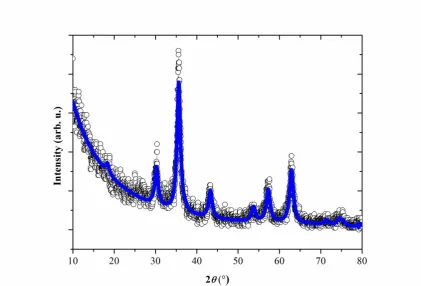
The X-ray diffraction pattern of the dried magnetic fluid prepared from iron sand taken from Wedi Ireng Beach in Banyuwangi, Indonesia, is presented in Figure 1. In the figure, the circle and solid line represent the diffraction data and refinement model, respectively.
Figure 1. X-ray diffraction pattern of the dried magnetic fluid using Cu-Kα radiation 1.5406 Å.
4
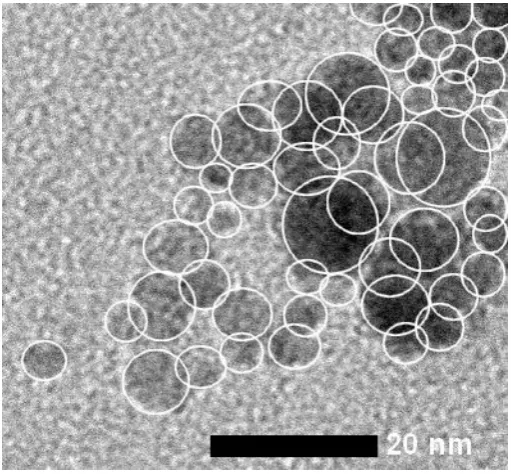
Figure 2. TEM image of the dried magnetic fluid.
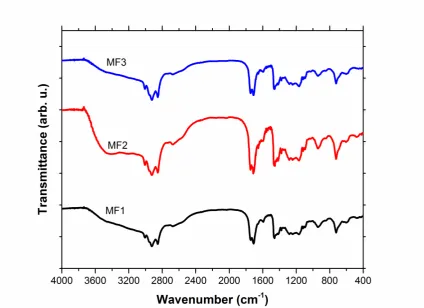
Figure 3. FTIR spectra of the magnetic fluids.
6
Figure 4. Magnetization curves of the magnetic fluids.
Figure 4 shows the magnetization curve of the magnetic fluids prepared from the iron sand. From the figure, MF1 and MF2 had similar saturation magnetization values, while MF3 had the highest one. The particle size obtained from the quantitative data analysis for magnetization curve and saturation magnetization of the magnetic fluids are presented in Table 1.
Table 1. Saturation magnetization (Ms), and particle size of the magnetic fluids
Visually, all samples exhibited a superparamagnetic character at room temperature because they had an S shape and their coercive field and remanent magnetization were almost negligible. From Table 1, all of the samples had the particle size of less than 10 nm which indicated a single domain character of the magnetic fluids and exhibited a superparamagnetic character. In a single domain state, the magnetic particles are uniformly magnetized and alignment of all the spins are in the same direction [22]. It can be seen from Figure 4 and Table 1 that the MF1 and MF2 samples have a similar saturation magnetization value of around 9.8 emu/g, while MF3 sample has the highest one of around 14.8 emu/g. Quantitatively, the saturation magnetization (Ms) values of all samples were smaller than
that of bulk magnetite [23]. The decreasing saturation magnetization was originated from the decreasing particle size of the sample. In more detail, the saturation magnetization values of MF1 and MF2 were quite similar. Theoretically, the saturation magnetization of MF2 should increase because its magnetite particle size was bigger than that of MF1. This phenomenon was originated from the increasing magnetite content in the magnetic fluid. Furthermore, MF3 has the highest saturation magnetization value than those of other samples originating from its increasing mass composition and
Sample Ms (emu/g) Particle size (nm)
MF1 9.81 8.0
MF2 9.76 7.3
particle size of the magnetite simultaneously. These results are in good agreement with the results characterizations. The functional groups obtained by FTIR characterization showed the presence of the magnetite, oleic acid, and olive oil in the magnetic fluids. Moreover, the saturation magnetization of the magnetic fluids had a function of the mass composition and particle size of magnetite nanoparticles.
5. References
[1] Marinică O, Susan-Resiga D, Bălănean F, Vizman D, Socoliuc V and Vékás L 2016 Nano-micro composite magnetic fluids: Magnetic and magnetorheological evaluation for rotating seal and vibration damper applications J. Magn. Magn. Mater. 406 134–43
[2] Casula M F, Corrias A, Arosio P, Lascialfari A, Sen T, Floris P and Bruce I J 2011 Design of water-based ferrofluids as contrast agents for magnetic resonance imaging J. Colloid Interface Sci. 357 50–5
[3] Homa D and Pickrell G 2014 Magnetic Sensing with Ferrofluid and Fiber Optic Connectors Sensors 14 3891–6
[4] Borin D Y, Korolev V V, Ramazanova A G, Odenbach S, Balmasova O V, Yashkova V I and Korolev D V 2016 Magnetoviscous effect in ferrofluids with different dispersion media J. Magn. Magn. Mater. 416 110–6
[5] El-Boubbou K, Al-Kaysi R O, Al-Muhanna M K, Bahhari H M, Al-Romaeh A I, Darwish N, Al-Saad K O and Al-Suwaidan S D 2015 Ultra-Small Fatty Acid-Stabilized Magnetite Nanocolloids Synthesized by In Situ Hydrolytic Precipitation J. Nanomater. 2015 1–11
[6] Lobato N C C, Ferreira  de M and Mansur M B 2016 Evaluation of magnetic nanoparticles coated by oleic acid applied to solvent extraction processes Sep. Purif. Technol. 168 93–100 [7] Taufiq A, Sunaryono, Rachman Putra E G, Pratapa S and Darminto 2015 Nano-Structural
Studies on Fe3O4 Particles Dispersing in a Magnetic Fluid Using X-Ray Diffractometry and Small-Angle Neutron Scattering Mater. Sci. Forum 827 213–8
[8] Sunaryono, Taufiq A, Putra E G R, Okazawa A, Watanabe I, Kojima N, Rugmai S, Soontaranon S, Zainuri M, Triwikantoro, Pratapa S and Darminto 2015 Small-Angle X-Ray Scattering Study
on PVA/Fe3O4 Magnetic Hydrogels Nano 11 1650027
[9] Wang Y, Nkurikiyimfura I and Pan Z 2015 Sonochemical Synthesis of Magnetic Nanoparticles Chem. Eng. Commun. 202 616–21
[10] Rizzuti A, Dassisti M, Mastrorilli P, Sportelli M C, Cioffi N, Picca R A, Agostinelli E, Varvaro G and Caliandro R 2015 Shape-control by microwave-assisted hydrothermal method for the synthesis of magnetite nanoparticles using organic additives J. Nanoparticle Res. 17 1–16 [11] Chen X, Organ M G and Pietro W J 2016 One-pot Synthesis of Size Controllable
Amine-Functionalized Core-Shell Magnetic Nanoparticles for Use in Microfluidic Flow Separators J Nanosci Adv Tech 1 25–31
[12] Rajnak M, Timko M, Kopcansky P, Paulovicova K, Tothova J, Kurimsky J, Dolnik B, Cimbala R, Avdeev M V, Petrenko V I and Feoktystov A 2017 Structure and viscosity of a transformer oil-based ferrofluid under an external electric field J. Magn. Magn. Mater. 431 99–102
8
[14] Sunaryono, Taufiq A, Mashuri, Pratapa S, Zainuri M, Triwikantoro and Darminto 2015 Various Magnetic Properties of Magnetite Nanoparticles Synthesized from Iron-Sands by Coprecipitation Method at Room Temperature Mater. Sci. Forum 827 229–34
[15] Sunaryono, Taufiq A, Munaji, Indarto B, Triwikantoro, Zainuri M and Darminto 2013 Magneto-elasticity in hydrogels containing Fe3O4 nanoparticles and their potential applications AIP Conf. Proc. 1555 53–6
[16] Song L N, Gu N and Zhang Y 2017 A moderate method for preparation DMSA coated Fe3O4 nanoparticles IOP Conference Series: Materials Science and Engineering vol 164(IOP Publishing)p 12026
[17] Liu Y, Cui T, Wu T, Li Y and Tong G 2016 Excellent microwave-absorbing properties of elliptical Fe3O4 nanorings made by a rapid microwave-assisted hydrothermal approach Nanotechnology 27 165707
[18] Dhumal J, Bandgar S, Zipare K and Shahane G 2015 Fe 3 O 4 ferrofluid nanoparticles: synthesis and rheological behavior Int J Mater Chem Phys 1 141–5
[19] Silva V A J, Andrade P L, Silva M P C, Bustamante D. A, De Los Santos Valladares L and Albino Aguiar J 2013 Synthesis and characterization of Fe3O4 nanoparticles coated with fucan polysaccharides J. Magn. Magn. Mater. 343 138–43
[20] Darwish M S 2017 Effect of carriers on heating efficiency of oleic acid-stabilized magnetite nanoparticles J. Mol. Liq. 231 80–5
[21] Laachari F, Maâtaoui H, El Bergadi F, Boukir A and Ibnsouda S K 2015 Improvement of a lipolytic activity assay protocol to increase the efficiency of the lipases activity measurement and validation by infrared spectroscopy Afr. J. Biotechnol. 14
[22] Issa B, Obaidat I, Albiss B and Haik Y 2013 Magnetic Nanoparticles: Surface Effects and Properties Related to Biomedicine Applications Int. J. Mol. Sci. 14 21266–305
[23] Cao S-W, Zhu Y-J and Chang J 2008 Fe3O4 polyhedral nanoparticles with a high magnetization synthesized in mixed solvent ethylene glycol–water system New J. Chem. 32 1526
[24] Andrade  L, Valente M A, Ferreira J M F and Fabris J D 2012 Preparation of size-controlled nanoparticles of magnetite J. Magn. Magn. Mater. 324 1753–7
Acknowledgements
The authors would like to thank DRPM, Kemenristekdikti, Republic of Indonesia, for supporting a