the Chaos of Bipolar Disorder
Ellen Frank, Holly A. Swartz, and David J. Kupfer
Interpersonal and social rhythm therapy is an individual psychotherapy designed specifically for the treatment for bipolar disorder. Interpersonal and social rhythm therapy grew from a chronobiological model of bipolar disorder postulating that individuals with bipolar disorder have a genetic predisposition to circadian rhythm and sleep– wake cycle abnormalities that may be responsible, in part, for the symptomatic manifestations of the illness. In our model, life events (both negative and positive) may cause disruptions in patients’ social rhythms that, in turn, perturb circadian rhythms and sleep–wake cycles and lead to the development of bipolar symptoms. Administered in concert with medications, interpersonal and social rhythm therapy combines the basic principles of interpersonal psychotherapy with behavioral techniques to help patients regularize their daily routines, diminish interpersonal problems, and adhere to medication regimens. It modu-lates both biological and psychosocial factors to mitigate patients’ circadian and sleep–wake cycle vulnerabilities, improve overall functioning, and better manage the po-tential chaos of bipolar disorder symptomatology. Biol
Psychiatry 2000;48:593– 604 © 2000 Society of
Biologi-cal Psychiatry
Key Words: Psychotherapy, bipolar disorder, mood dis-orders, circadian rhythms, life events, interpersonal psychotherapy
Introduction
D
uring the second half of the 20th century, new treatments for bipolar disorder focused primarily on somatic therapies. The discovery of lithium carbonate as a treatment for “psychotic excitement” by Cade in 1949 (Cade 1949) and advances in research supporting the heritability of bipolar disorder led investigators to concep-tualize bipolar disorder as a purely biological process amenable to pharmacotherapy alone. Furthermore, clinical lore mistakenly led practitioners to believe that mostpatients with bipolar disorder recover fully from mania or depression, remain asymptomatic between episodes, and experience no decline in functional status over time. Psychotherapy for bipolar disorder was considered super-fluous and was largely neglected as a treatment strategy for many years (Benson 1975). Beginning in the 1980s, however, reports appeared in the literature suggesting that outcomes with lithium alone were suboptimal. Cumulative data suggest that pharmacotherapy alone fails to prevent recurrence in 50 to 70% of patients over a 2- to 3-year period (Markar and Mander 1989; Prien et al 1984) and that overall functioning of bipolar patients remains low even after the resolution of fully syndromal episodes (Coryell et al 1993; Goldberg et al 1995). Researchers and clinicians became increasingly cognizant that the chronic course of bipolar disorder may, in the absence of appro-priate interventions, lead to unremitting symptoms and a downward psychosocial spiral.
A Disorderly Disorder
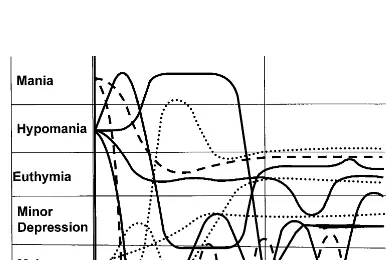
As depicted in Figure 1, the course of recurrent unipolar disorder, although often debilitating, is unidirectional and relatively easy to describe: patients become depressed, recover, have a period of remission, and then may or may not become depressed again at some point in the future (Kupfer 1991). Although a small percentage of the popu-lation experiences refractory depression, most patients, in the absence of significant comorbidity, eventually respond to treatment and achieve a euthymic state. By contrast, the course of bipolar disorder is typically hectic and variable. A “roller coaster” for both patients and clinicians, extreme highs and lows intermingle with mixed states and subsyn-dromal symptom flurries to create hybrid symptom states that defy easy labels. As depicted in Figure 2, hypomania can surge into a fully syndromal mania and then plummet into a debilitating major depression. A fall from mania can lead to endless months of major depression, with brief excursions into minor depression providing only relative relief from unrelenting dysphoria, anergia, and hypersom-nia. Treatments for those intolerable depressions may send a patient’s mood back into the manic range, only to plunge back down into depression. Although we distinguish between the treatment of acute symptomatology (labeled
From the Department of Psychiatry, University of Pittsburgh, Western Psychiatric Institute and Clinic, Pittsburgh, Pennsylvania.
Address reprint request to Ellen Frank, Ph.D., University of Pittsburgh Medical Center, Western Psychiatric Institute and Clinic, 3811 O’Hara Street, Pitts-burgh PA 15213-2593.
Received March 3, 2000; revised June 14, 2000; accepted June 22, 2000.
Preliminary Phase in Figure 2) and prophylactic treatment
following remission (labeled Preventative Phase), we recognize that these distinctions are often arbitrary and inaccurate. In fact, patients in a nonacute phase of treat-ment often experience on-going symptom fluctuations. Depressive symptoms, in particular, seem especially dif-ficult to eradicate completely (Hlastala et al 1997). Thus, the holy grail of sustained euthymia in bipolar disorder may remain an elusive goal in the absence of sophisticated treatments that address both the biological and psycholog-ical aspects of this disorder.
Pathways to Recurrence
Goodwin and Jamison’s definitive textbook on bipolar disorder (Goodwin and Jamison 1990) acknowledges the important interplay between biological and psychosocial factors in determining the course of bipolar disorder. Recognizing the primacy of biology, they hypothesized that “the genetic defect in manic depressive illness in-volves the circadian pacemaker or systems that modulate it” (Goodwin and Jamison 1990, 589) but then further postulated that psychosocial factors will interact with
biology to create three probable pathways to recurrence of bipolar illness: 1) stressful life events; 2) disruptions in social rhythms; and 3) medication nonadherence. As envisioned by Goodwin and Jamison, these routes to illness are interconnected. Their model suggests that individuals with bipolar disorder are fundamentally vul-nerable to disruptions in circadian rhythms. Psychosocial stressors then interact with this biological vulnerability to cause symptoms. For instance, stressful life events disrupt social rhythms, which causes disturbances in circadian integrity, which, in turn, may lead to recurrence. Alter-nately, problematic interpersonal relationships or disor-dered schedules contribute to a patient’s difficulty adher-ing to a medication regimen which, again, may lead to recurrence. As a direct consequence of this model, one would assume that helping patients learn to take their medication regularly, lead more orderly lives, and resolve interpersonal problems more effectively would promote circadian integrity and minimize risk of recurrence.
Treating Bipolar Disorder
As depicted in Figure 2, bipolar illness is a disorderly disorder. Characterized by erratic sleep–wake cycles and dramatic symptom fluctuations, the clinical course is unpredictable and rarely static. Needless to say, treating this “moving target” creates many interesting—and some-times problematic— challenges. For instance, lithium monotherapy is still considered the “gold standard” of pharmacotherapy for bipolar disorder. As patients move through the various phases of the disorder, however, most psychiatrists find themselves treating patients with a range of mood stabilizers in combination with neuroleptics, sedative-hypnotics, and antidepressants (Sachs et al 2000). Efforts to simplify regimens are often thwarted by unsat-isfactory treatment response, resulting in years of complex polypharmacy. Vacillating symptomatology, impaired psychosocial functioning, and problematic medication side effects converge to create unique clinical challenges for both patients and health care professionals. Considering the complexities of this illness, it is not surprising that pharmacotherapy alone does not address the multiple needs of patients with bipolar disorder. Although there are many excellent review papers discussing extant psychos-ocial approaches to bipolar disorder (Colom et al 1998; Johnson et al 2000; Miklowitz and Frank 1999), there are surprisingly few data supporting their efficacy (Craighead et al 1998; Swartz and Frank, in press). The absence of well-designed, empirically tested psychotherapies in the literature led us to develop and test a model of individual psychotherapy that would be used in conjunction with medication to enhance functioning and diminish recur-rences in patients with bipolar I disorder.
Figure 1. Response, remission recovery, relapse, and recurrence: phases of treatment in unipolar disorder. (Reproduced with permission from Kupfer 1991.)
Theoretical Context for Interpersonal and
Social Rhythm Therapy
Interpersonal and social rhythm therapy (IPSRT) is a treatment that is specifically designed for patients with bipolar disorder. As elaborated below, the genesis of IPSRT rests in a psycho-chronobiological theory of affec-tive illness that we articulated in a series of papers in the 1980s and early 1990s (Ehlers et al 1988, 1993; Monk et al 1991, 1990). Its design was also strongly influenced by the instability model of bipolar disorder proposed by Goodwin and Jamison (1990) and our evolving under-standing of the relationship between stressful life events and bipolar episodes.
Circadian Rhythms, Sleep–Wake Cycles, and Mood Disorders
Researchers have identified reciprocal relationships among circadian rhythms, sleep–wake cycles and mood. Wehr and colleagues have demonstrated that sleep reduc-tion can lead to mania in bipolar subjects (Leibenluft et al 1996; Wehr et al 1987). Sleep deprivation has significant (if transient) antidepressant effects in both unipolar and bipolar depressed subjects (Barbini et al 1998; Leibenluft et al 1993; Leibenluft and Wehr 1992), and PET studies have demonstrated localized effects of sleep deprivation in the medial prefrontal cortex (Wu et al 1999). The purpose of IPSRT is to regulate both circadian rhythms and sleep–wake cycles. It must be noted, however, that the relationship between bipolar disorder and circadian rhythms is less well characterized than its relationship to sleep–wake disturbances. By targeting social factors that modulate these rhythms, IPSRT is presumed to alter the underlying neuronal circuitry involved in the pathogenesis of bipolar symptomatology.
The theoretical underpinnings of IPSRT began with our efforts to better understand the psycho-chronobiological determinants of unipolar disorder. In 1988, we proposed an etiologic model of major depression that focused on the role of disrupted social rhythms in the emergence of a depressive episode in biologically vulnerable individuals (Ehlers et al 1988). Noting that the established biological correlates of affective disorder include disrupted sleep electroencephalogram recordings (Kupfer et al 1991) and phasic changes in the circadian secretions of pituitary hormones (Carroll et al 1980), we hypothesized that disruptions in the social cues that entrain these cycles may act as triggers for mood episodes. We argued that social
Zeitgebers, that is, personal relationships, social demands,
or tasks that entrain biological rhythms, may serve as the link between the biological and psychosocial processes that place an individual at risk for developing mood symptoms. We hypothesized that losing a social Zeitgeber
could trigger an episode by causing the dysregulation of biological rhythms. For instance, the loss of a spouse through death or divorce results in the loss of a social Zeitgeber that may have previously determined sleep– wake times, rest periods, and meal times. In an individual with the genetic predisposition to depression, the physio-logic and chronobiophysio-logical disturbances produced by los-ing the social cues for sleep and meal times could be as important in the genesis of an episode as the psychologic distress generated by the event.
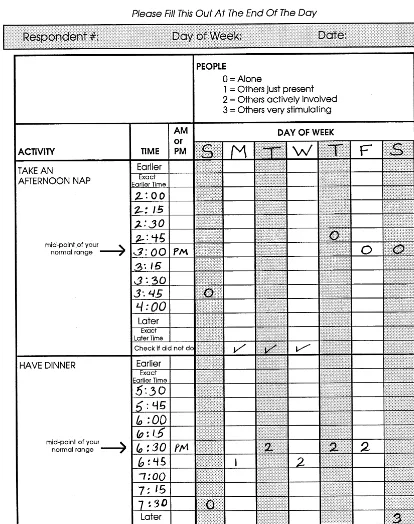
We subsequently extended this model of mood disor-ders to include the concept of Zeitsto¨rers (time disturbers; Ehlers et al 1993). As defined above, social Zeitgebers are persons, social demands, or tasks that set the biological clock. By contrast, Zeitsto¨rers are physical, chemical, or psychosocial events that disturb the biological clock. For instance, travel across time zones represents a prototypical Zeitsto¨rer. The abrupt change in the timing of light exposure, meal times, and sleep times can produce a range of symptoms from mild “jet lag” to a full-blown affective episode in predisposed individuals. Other examples of potential Zeitsto¨rers include newborn babies, marital sep-arations, work deadlines (e.g., a college student who stays up all night to complete a term paper), and rotating shift work. Each of these disruptions has the potential to significantly alter an individual’s circadian and sleep– wake rhythms that we argue, in turn, could result in an affective episode. In the context of our exploration of social Zeitgebers and Zeitsto¨rers, our group developed an instrument to quantify an individual’s social rhythms (Monk et al 1990). The Social Rhythm Metric (SRM) was designed as both a means of categorizing interindividual differences in social rhythm regularity and as a therapeutic tool to track decline into and recovery from an affective episode. We hypothesized that a psychotherapy that helps regulate social rhythms could help a vulnerable individual reduce the risk of developing mood symptoms.
Stressful Life Events and Mood
In our research program, each life event of any severity identified by LEDS criteria was subject to an additional rating devised by our group to reflect the degree to which any given event is likely to have an acute effect on social routines, particularly those that might disrupt the sleep– wake cycle. The Social Rhythm Disruption (SRD) ratings, like the LEDS rating, were contextually determined by consensus panel and guided by clearly delineated criteria and a dictionary of examples. In an initial report based on 39 subjects with bipolar I disorder who were assessed with the LEDS/SRD protocol, we found evidence that life events (regardless of severity of threat) characterized by a high degree of social disruption were associated with the onset of manic but not depressive episodes (Malkoff-Schwartz et al 1998). Severely stressful life events (re-gardless of SRD rating) were related to the onset of both manic and depressive bipolar episodes. In a follow-up study, we interviewed bipolar subjects with purely manic (n521), purely depressed (n521), and mixed or cycling (n524) episodes and compared this bipolar sample with 44 patients with recurrent unipolar depression (Malkoff-Schwartz et al 2000). We again found that life events associated with a high degree of social disruption occur-ring in the 8 weeks before the onset of an episode were more frequently associated with the onset of manic epi-sodes relative to bipolar cycling, bipolar depressed, or unipolar depressive episodes. Severely life-threatening events were more frequently associated with the onset of manic episodes relative to bipolar cycling episodes. We conclude that SRD and severe events are associated with manic episode onsets in a manner distinct from the association between SRD and severe events in bipolar depressed, bipolar cycling, and unipolar depressed onsets.
Origins of Interpersonal and Social Rhythm
Therapy
Interpersonal Psychotherapy of Depression
Interpersonal psychotherapy (IPT) is a time-limited, fo-cused psychotherapy developed in the 1970s by Klerman, Weissman, and colleagues for the treatment of unipolar depression (Klerman et al 1984). Unlike many other psychotherapies, IPT is designed to treat a specific disor-der (depression) and has been systematically evaluated in several randomized, controlled research trials. IPT was envisioned as an acute (12–16 weeks) treatment for depression but has also been tested in an 8-month contin-uation study (Klerman et al 1974) and as a long-term maintenance strategy for patients with recurrent depres-sion (Frank et al 1990). The basis of IPT is the premise that depression occurs in a psychosocial and interpersonal context. Akin to the social Zeitgeber hypothesis, the philosophy of IPT posits that in biologically vulnerable
individuals, stressful interpersonal events may contribute to the onset of depression. It also argues that depressive symptoms can interfere with an individual’s capacity to successfully negotiate interpersonal conflict or find con-structive solutions to interpersonal dilemmas. Interper-sonal psychotherapy is a “here and now” treatment that focuses on the relationship between the patient’s current interpersonal milieu and his or her depressive symptoms. Treatment focuses on one of four IPT problem areas: grief, role disputes, role transitions, or interpersonal deficits.
Integrating the Behavioral, Interpersonal, and Psychoeducational Models
In the context of adapting IPT for the maintenance treatment of recurrent unipolar depression, we saw the potential utility of this treatment for another highly recurrent affective illness, bipolar disorder. We established that patients with recurrent unipolar disorder could recover from depression with an acute course of IPT and then decrease the risk of having another episode by receiving monthly sessions of mainte-nance IPT (Frank et al 1990). We began to conceptualize a similar kind of maintenance treatment for bipolar I disorder; however, given extant theories about the relationship be-tween circadian rhythms and bipolar episodes and subsequent data linking SRD events to mania (Malkoff-Schwartz et al 1998, 2000), we decided to augment IPT with behavioral strategies designed to stabilize daily routines. We borrowed traditional cognitive-behavioral techniques such as self-mon-itoring, realistic goal-setting, and graded task assignment to help patients follow more consistent patterns of eating, sleeping, and social stimulation.
We expected IPT to contribute a specific antidepressant effect and hypothesized that helping patients stabilize their social rhythms would decrease the risk of new affective (especially manic) episodes. Nonetheless, we were aware that there is tremendous overlap between interpersonal stress and social rhythm disruption: a disturbance in the social milieu (such as a new job or conflict with a spouse) often acts as a Zeitsto¨rer which, in turn, can lead to changes in daily routines. We therefore envisioned IPSRT as a truly integrated therapy that would allow these strategies to function synergistically. Thus, we expected that the IPT-induced resolution of interpersonal conflict would also contribute to more stable rhythms and more stable daily routines would promote more stable life circumstances (jobs, relationships, etc.).
effects, discontinuation risks, and relapse warning signs. Psychoeducation helps patients understand bipolar disor-der and their medications, thereby decreasing denial and improving adherence to pharmacotherapeutic regimens. Indirect routes to medication adherence in IPSRT include regulating social routines (e.g., routinizing times of day when medications are administered) and addressing inter-personal problems (e.g., helping a patient find time for treatment in the setting of a demanding new job). Thus, IPSRT integrates behavioral, interpersonal, and psycho-educational approaches to prevent the onset of new epi-sodes of bipolar disorder.
Interpersonal and Social Rhythm Therapy:
Treatment Description
Interpersonal and social rhythm therapy is a manual-based psychotherapy (E. Frank et al, unpublished data, 1999) focusing on 1) the link between mood and life events, 2) the importance of maintaining regular daily rhythms as elucidated by the SRM, 3) the identification and manage-ment of potential precipitants of rhythm dysregulation with special attention to interpersonal triggers, 4) the facilitation of mourning the lost healthy self, and 5) the identification and management of affective symptoms. The therapy process is divided into four phases: initial phase, intermediate phase, preventative phase, and termi-nation. We describe each phase of treatment below.
Initial Phase
In the initial phase, the clinician 1) obtains a history of the illness, 2) conducts an interpersonal inventory, 3) identi-fies an interpersonal problem area, 4) educates the patient about the disorder, and 5) initiates the SRM. Treatment may be initiated while the patient is fully symptomatic, subsyndromal, or euthymic. Because the medical manage-ment of a patient’s acute symptoms may slow the initiation of the key features of IPRST, the duration of the initial phase may vary from several weeks to several months, depending on the severity of the patient’s current symp-toms. During this period, the patient and therapist meet weekly for 45-minute sessions.
The therapist begins by conducting a thorough psychi-atric and medical history. In addition to the traditional psychiatric amanuensis, the therapist attempts to elicit in great detail the events leading up to current and previous episodes, searching for evidence of alterations or disrup-tions in the patient’s daily routines and interpersonal interactions that preceded the development of symptoms. From Malkoff-Schwartz et al (1998), we know that manic episodes in particular are likely to be preceded by a social rhythm disrupting event. These historic details will help
the therapist understand the patient’s patterns of illness and aid in the identification of potential episode triggers. As the therapist elicits this information, he or she begins to clarify for the patient the relationship between the disrupt-ing event and the onset of symptoms.
In accordance with the principles of IPT, the therapist also conducts an assay of the important individuals in the patient’s life, known as the interpersonal inventory. A more interpersonally focused search for an episode pre-cipitant, the interpersonal inventory consists of a review of all important past and present relationships as they relate to the current episode. The therapist asks about the patient’s life circumstances and requests a description of the important people in his or her life. In addition to outlining the “cast of characters” in the patient’s life, the therapist probes the quality of those relationships, asking the patient to describe satisfying and unsatisfying aspects of relationships, unmet expectations of others, and aspects of relationships that the patient would like to change. The therapist listens closely for omissions, such as the unem-ployed young adult who lives at home but does not mention his parents, or the “happily” married housewife who labels her marriage to an absent, high-powered executive as “fine,” but does not volunteer details. The therapist listens for perturbations in relationships that may correspond temporally to the onset or maintenance of mood symptoms. Understanding the relationship between interpersonal difficulties and the onset of affective symp-toms will help the therapist identify an appropriate treat-ment focus for the intermediate phase of treattreat-ment. In IPT, there are four possible treatment foci or interpersonal problem areas that are discussed in detail in the section entitled “Interpersonal Strategies.”
reviewing the week’s SRM at each session. Working with the SRM, the patient begins to see the dynamic interplay among instabilities in daily routines, patterns of social stimulation, sleep–wake times, and mood fluctuations. In
the initial phase of IPSRT, however, no effort is made to regulate these daily rhythms.
Many individuals with bipolar disorder have suffered with their illness for many years before entering treatment
(Goodwin and Jamison 1990). The toll it takes on one’s psyche cannot be underestimated. Importantly, the initial phase of treatment allows the therapist to establish the so-called “nonspecific” factors of therapy (Frank 1971). The therapist offers the patient hope and a human connec-tion in the midst of an affective storm. Interpersonal and social rhythm therapy provides an affectively meaningful forum in which to begin an exploration of the effects of the illness on the patient’s life trajectory, interpersonal rela-tionships, and self-esteem.
Intermediate Phase
The intermediate phase of treatment is conducted weekly over several months. During this period, the therapist helps the patient develop strategies to manage affective symptoms, stabilize daily rhythms, and resolve the se-lected interpersonal problem area. The therapist also provides a forum for the patient to mourn lost “highs,” struggle with denial, and find a balance between sponta-neity and stability.
Social Rhythm Strategies
During the intermediate phase of treatment, IPSRT uses a behavioral approach to help the patient alter those activi-ties that promote rhythm irregulariactivi-ties. The patient and therapist review the first 3 or 4 weeks of “free-running” SRMs to find those rhythms that seem to be particularly unstable. For example, is the patient going to bed at 10PM
one night, 2 AM the next night, and midnight the third
night? Is there evidence of regularity during the week but extreme deviation on the weekend? Every effort is made to determine whether the patient’s social rhythm instability results from untreated/prodromal bipolar symptoms or from a self-imposed lifestyle choice. In either case, the therapist will encourage the patient to work toward stabi-lization. If the rhythm instability is related to symptoms, the therapist helps the patient understand that stabilizing his or her rhythms can help diminish these symptoms. The therapist also encourages the patient to address the issue with his or her psychiatrist in the event that a medication change might help reduce the symptoms. If the therapist determines that the rhythm instability is a lifestyle choice, the therapist explains that disrupting circadian integrity may prevent a complete recovery. Therapist and patient discuss general strategies for regulating rhythms (e.g., minimizing overstimulation, monitoring the frequency and intensity of social interactions) and identify specific SRM goals. Goals are graded and include short term (i.e., adhering to a 7AMwake-up time for 7 consecutive days),
intermediate (i.e., sustaining a regular sleep–wake cycle for a month), and long-term (i.e., finding regular
employ-ment) objectives. The therapist of course allows for modifications of goals as the therapy proceeds.
Following from our Zeitsto¨rer hypothesis, the therapist attends not only to the patient’s daily rhythms but also to the larger environmental stressors that might result in a circadian rhythm derailment. The search for triggers of rhythm disruption leads the IPSRT therapist to comb the patient’s history in search of external sources of rhythm disruption (Zeitsto¨rers); IPSRT then encourages the pa-tient to make relatively significant life changes in order to protect the integrity of his or her circadian rhythms and sleep–wake cycle. For instance, a factory worker who alternated between a night shift and a day shift became manic and needed to be hospitalized following the insom-nia-inducing transition from day shift to night shift. The patient and therapist evaluated the risks of rotating shift work and determined that the frequent shifts in sleep schedule would be incompatible with reasonably stable social rhythms. Ultimately, the patient decided to change to a slightly less lucrative— but more regular— day job.
At some point in the recovery process, most patients with bipolar disorder question the need for protecting the integrity of their social rhythms. To someone with a long history of fluctuating mood states and erratic social rhythms, a very regular lifestyle can seem “boring” and unappealing. The therapist addresses this crucial issue on several levels. First, the therapist can help the patient find a healthy balance between stability and spontaneity. This process requires a spirit of careful experimentation on the parts of both therapist and patient to determine how much sleep, stimulation, and regularity are associated with an optimal mood state for each individual. Extreme inactiv-ity, on one hand, can contribute to isolation and depressive symptoms; excess stimulation, on the other hand, may precipitate a mania. It is helpful to pursue this aspect of treatment over many months because seasonal variation in mood and energy often occurs in bipolar patients (Good-win and Jamison 1990). Some patients, for instance, may find they benefit from a busier schedule during the winter months when they would typically tend toward depression but must learn to curtail these same activities during the summer months when they are at increased risk for a mania.
both therapist and patient viewed this change as positive, they both recognized that his departure would create great upheaval in the patient’s routines. She relied on her boyfriend to wake her up in the mornings and scheduled mealtimes around his evening routines. Because of his jealous nature, she had greatly limited her social contacts during their relationship. In preparation for his departure, the patient began using an alarm clock to determine her own waking time. She planned social outings during the day that would not involve her boyfriend (e.g., meeting an old friend at the mall) and “practiced” these interactions as part of planning for the move. Helping the patient to gradually entrain her rhythms to a new schedule mitigated against the disruptive effects of the lost social Zeitgeber. Unanticipated changes, however, may require consider-able effort from the therapist to address both the unex-pected alterations in social Zeitgebers and the psycholog-ical meaning of the event.
Interpersonal Strategies
The interpersonal techniques employed in IPSRT are similar to those described in Klerman and colleagues’ definitive description of IPT for unipolar depression (Kler-man et al 1984). As described previously, the therapist identifies an interpersonal problem area during the initial phase of treatment that will serve as the interpersonal treatment focus. Each problem area is associated with a set of IPT techniques that are fully described in the Klerman et al (1984) text. In the section that follows, we will briefly describe each problem area and focus on the ways in which IPRST employs traditional IPT strategies to meet the specific needs of patients with bipolar disorder.
1. Grief. Grief or complicated bereavement refers to symptoms that result from incomplete mourning or unresolved feelings about the death of an important person in the patient’s life. Symptoms must exceed in duration and intensity those characteristic of the normal mourning process. In IPT, the problem area of grief is not typically invoked when the patient experiences symbolic losses such as the loss of a job or loss of function from physical illness. In most cases, these issues would be handled as role transi-tions. Patients with bipolar disorder, however, fre-quently grieve for the person they were before the illness or the person they could have become if they did not suffer from bipolar disorder. In IPSRT, we call this grieving for the lost healthy self and utilize the IPT techniques associated with grief to help the patient mourn this loss. The therapist encourages the patient to express painful feelings about lost hopes, ruined relationships, interrupted careers, and passed opportunities. As the patient mourns the passing of
a “former self,” the therapist encourages the patient to develop new relationships, establish new, more realistic goals, and focus on future opportunities. 2. Interpersonal role disputes. An interpersonal
dis-pute refers to any close relationship in which there are nonreciprocal expectations. Examples include a college student who wants to live in the dorms but whose parents want her to live at home, and a construction worker who became symptomatic in the context of pressure from his girlfriend of 7 years to propose marriage. Individuals with bipolar disor-der are frequently involved in interpersonal disputes. Bipolar symptoms may contribute to interpersonal disputes or interpersonal disputes may overstimulate patients, which may, in turn, precipitate episodes or exacerbate mood symptoms. The former scenario is illustrated by a treatment-nonadherent man with bipolar disorder who became hypomanic, spent excessive sums of money on unnecessary computer equipment, and engaged in promiscuous extramari-tal behaviors. Even though the behaviors subsided with reinitiation of medication, his angry spouse moved into her mother’s house and threatened to leave the marriage. The therapist helped the patient understand the role of medication nonadherence in the evolution of these behaviors and encouraged the patient to accept more responsibility for his treat-ment. With the help of his therapist, the patient was able to express his contrition to his partner and admit to her his ambivalence about taking medica-tion. The couple was able to reconcile with the understanding that the patient would accept and adhere to treatment as part of the terms of the marriage.
discon-tinuing medications or manipulating social rhythms to produce insomnia. The therapist must help the patient relinquish this aspect of the “former self” to maintain overall stability. It is important to remind the patient of the negative consequences of hypo-mania and to encourage the patient to identify rewarding life goals (i.e., an enduring and stable marriage) that may constitute a suitable alternative to the seductive and dangerous pleasures of hypomania.
4. Interpersonal deficits. Patients with interpersonal deficits suffer from a long-standing history of im-poverished or contentious social relationships and are unable to identify a single acute interpersonal stressor associated with the onset of their episode. Most bipolar patients’ problems will fall into one of the three categories previously discussed; however, a minority of individuals will benefit from an interpersonal deficits focus. These patients may include individuals whose illness-dependent grandi-osity, social withdrawal, or extreme mood fluctua-tions contribute to multiple failed relafluctua-tionships, recurrent patterns of conflict with coworkers, or constricted social networks.
In addition to focusing on the interpersonal meaning of each problem area, the therapist attends to the role of these kinds of problems in promoting or disrupting social rhythm regularity. For instance, the death of a loved one may result in complicated bereavement but will also result in the loss of an important Zeitgeber. The on-going interpersonal disputes of a husband and wife may lead to prebedtime fighting and subsequent decrease in sleep. The requirements of a new job may involve changing wake times or interfere with previously regular exercise rou-tines. In IPSRT, the therapist generally encourages social rhythm regularity first and then explores the interpersonal meaning of an event.
Preventative Phase
Because IPSRT is designed, above all, to prevent future mood episodes and enhance functioning during relatively euthymic periods, the preventative phase is a crucial component of this treatment. In our conceptualization of a preventative therapy, treatment frequency decreases to monthly and lasts 2 or more years. The patient is provided with an opportunity to consolidate treatment gains and increase confidence in his or her capacity to apply IPSRT techniques outside of sessions. For instance, before enter-ing treatment, an academic scholar developed an episode of mania during a professional conference in another time zone. She became very stimulated, did not sleep well, and soon required hospitalization for a psychotic mania. The acute phase of treatment focused on recovery from the
episode and making lifestyle changes to balance her personal and professional lives. During the preventative phase of treatment, the patient wanted to pursue career goals more intensively. She worked with her therapist to monitor her career choices to preserve her sleep and maintain regular social rhythms. For instance, the patient learned that she could tolerate demanding individual projects (e.g., writing papers) but became overly stimu-lated in group settings (e.g., committee meetings in her department). A year after the beginning of treatment, the patient wished to return to the conference that led to her first hospitalization. Both patient and therapist were con-cerned about the conference’s potential for provoking a recurrence. The therapist helped the patient develop a strategy for diminishing stimulation at the conference (e.g., attending only selected meetings, avoiding the late-night social events) that permitted her to participate in the event, but in a controlled manner. Thus, in the preventative phase, the therapist continues to encourage the patient to maintain regular social rhythms and addresses problems as they arise. The patient works on his or her interpersonal problem area(s), although the specific interpersonal focus may differ from that of the acute phase. The preventative phase of treatment may require occasional additional crisis sessions to address either a symptom exacerbation or an interpersonal dilemma.
Termination
The final phase of treatment facilitates termination of the psychotherapy. The therapist reviews treatment successes, as well as the patient’s potential vulnerabilities, helping the patient identify strategies for future management of interpersonal difficulties and symptom flares. Termination is handled gradually, occurring over four to six monthly sessions. Because bipolar disorder is a chronic condition, patients often approach termination with some trepidation. It is important to remind them about available resources for treatment should symptoms flare in the future while offering encouragement about their ability to exercise their new skills independently. At the end of treatment, patients can usually be congratulated on the tremendous strides they have made in both relationships and social rhythm stability during the course of IPSRT. In some cases, treatment may continue for an indefinite period at a reduced frequency, given the chronic nature of the disor-der and the likelihood that a patient will be maintained on medications indefinitely.
Empirical Data Supporting the Efficacy of
IPSRT
efficacy of IPSRT as an adjunctive maintenance treatment for bipolar I disorder (Maintenance Therapies in Bipolar Disorder; MH29618, E. Frank, PI). After giving written, informed consent, acutely ill bipolar patients are treated with medication and randomly assigned to either IPSRT or intensive clinical management (CM). Once stabilized, patients are reassigned to either IPSRT or CM (in con-junction with a stable medication regimen) for 2 years of monthly preventative treatment. Although the study is not yet complete, we have published several reports of pre-liminary findings from this trial.
As further evidence of the complexities of treating bipolar disorder, we have discovered that departures from our protocol pharmacotherapy are the norm rather than the exception. In theory, we attempt to treat all patients with lithium plus specified neuroleptics or antidepressants ad-ministered transiently in the acute phase according to a specified protocol. Our study design specified a goal of lithium monotherapy in the preventative phase. But, among the first 91 subjects to enter the preventative phase, only 23% entered on lithium alone. Also of interest, only 63% of subjects presenting with mania, and 22% of subjects presenting with depression were able to follow the specified pharmacotherapy algorithm to achieve stabi-lization. The demands of the disorder routinely resulted in substantial deviation from our carefully planned model. By contrast, the psychotherapy condition has remained quite “pure,” with raters who are unaware of treatment assignment distinguishing reliably between audio tapes of IPSRT and CM sessions.
Our first published report from the Maintenance Ther-apies in Bipolar Disorder (MTBD) protocol demonstrated that patients in IPSRT can be taught to maintain stability in their daily routines over the course of acute treatment (Frank et al 1997). Over time (up to 52 weeks), subjects
receiving IPSRT (n 5 18) and CM (n 5 20) had
comparable changes in symptomatology, but the IPSRT group showed significantly greater stability of daily rou-tines with increasing time in treatment (p5 .047). The mean number of weeks of data included in these analyses were 24.8 6 13.8 and 26.7 6 15.0 for IPSRT and CM subjects, respectively.
We next reported on 42 subjects treated acutely with either IPSRT or CM, demonstrating that manic subjects achieved clinical remission significantly more quickly than did depressed subjects (Hlastala et al 1997). Although we found no statistically significant effects of treatment assignment, among the 22 depressed subjects, median time to remission was 21 weeks with IPSRT versus 40 weeks with CM. This statistically nonsignificant but clinically interesting finding suggests that IPSRT may hasten recov-ery from a depression more effectively than a nonspecific “medication clinic” intervention.
We have most recently reported on the first 82 subjects to enter the preventative phase of treatment in this protocol (Frank et al 1999). We found that groups of subjects who received the same treatment for both acute and preventa-tive phases (either CM followed by CM or IPSRT fol-lowed by IPSRT) had lower rates of recurrence (,20% vs.
.40%) and levels of symptomatology over the subsequent 52 weeks than those reassigned to the alternate modality (either IPSRT followed by CM or CM followed by IPSRT). The polarity of the episode for which a subject was treated before entering the preventative phase did not affect the relative risk of recurrence in the groups receiv-ing altered versus stable treatments. Subsequent analyses, however, have suggested that the loss (as opposed to gain) of IPSRT put subjects at particular risk for a depressive recurrence. We concluded that even relatively minor disruptions in the psychosocial treatment plan contribute to worse outcomes in bipolar disorder. These analyses provide additional data to support the hypothesis that instability contributes to morbidity in bipolar disorder.
As described previously, our research has demonstrated a correlation between life events associated with a high degree of social rhythm disruption and the onset of manic— but not depressive— episodes (Malkoff-Schwartz et al 1998). One might predict that a psychotherapy promoting regular social rhythms would have a selectively prophylactic effect on mania. Although we are still in the process of collecting data, our impression is that the opposite may be true: patients assigned to IPSRT in the preventative phase seem to suffer fewer depressive symp-toms than those assigned to CM but have the same rate of manic recurrences (Frank 1999). These paradoxical find-ings may reflect the multiple sites of action of IPSRT and the as yet unclear effects of this multifaceted treatment on a complex disorder.
Conclusion
disorder? Until that time, we work with the smaller pieces of the puzzle thus far unearthed.
To date, we have established that IPSRT helps patients achieve more stable social rhythms (Frank et al 1997). We also have demonstrated a clear link between life events associated with social rhythm disruption and the onset of manic episodes (Malkoff-Schwartz et al 1998). In an ironic twist, the cross-over design of our study has provided additional data to support Goodwin and Jami-son’s instability model of bipolar disorder (Frank et al 1999). Given these converging reports that continue to implicate circadian instability as an important precipitant of bipolar episodes and our preliminary data demonstrat-ing that IPRST can help stabilize social rhythms, we have reason to believe that a psychosocial intervention that promotes rhythm integrity and aids in the resolution and prevention of interpersonal distress is likely to enhance course and outcome in bipolar disorder.
Before the identification of lithium as a treatment for bipolar disorder, pharmacologic options were limited and largely inadequate. By default, psychotherapy was the mainstay of treatment. In the absence of effective medi-cations, psychotherapies of the day (mostly insight-ori-ented therapies) were also unsuccessful (Fromm-Reich-mann 1949). A discouraging era of psychotherapy treatments was followed by a disappointing “biological era” in which scientists, abandoning psychotherapy, strug-gled with medications alone to optimize outcomes. The challenge facing contemporary investigators of bipolar disorder is to develop treatments that address both the biological and psychologic aspects of the illness. The strength of IPSRT lies in its ability to utilize psychosocial strategies to address the underlying biology of bipolar disorder. Deployed in combination with thoughtful phar-macotherapy, IPSRT appears to successfully integrate biological and psychosocial models of bipolar disorder and, we hope, ultimately to lessen the impact of this devastating illness on patients’ lives.
Supported in part by National Institute of Mental Health Grants Nos. MH-30915 (DJK), MH-29618 (EF), and MH-60473 (HAS).
Aspects of this work were presented at the conference “Bipolar Disorder: From Preclinical to Clinical, Facing the New Millennium,” January 19 –21, 2000, Scottsdale, Arizona. The conference was spon-sored by the Society of Biological Psychiatry through an unrestricted educational grant provided by Eli Lilly and Company.
References
Barbini B, Colombo C, Benedetti F, Campori E, Bellodi L, Smeraldi E (1998): The unipolar-bipolar dichotomy and the response to sleep deprivation. Psychiatry Res 79:43–50. Benson R (1975): The forgotten treatment modality in bipolar
illness: Psychotherapy. Dis Nerv Syst 36:634 – 638.
Cade J (1949): Lithium salt in the treatment of psychotic excitement. Med J Aust 2:349 –352.
Carroll BJ, Greden JF, Feinberg M (1980): Neuroendocrine disturbances and the diagnosis and aetiology of endogenous depression. Lancet 1:321–322.
Colom F, Vieta E, Martinez A, Jorquera A, Gasto C (1998): What is the role of psychotherapy in the treatment of bipolar disorder? Psychother Psychosom 67:3–9.
Coryell W, Scheftner W, Keller M, Endicott J, Maser J, Klerman GL (1993): The enduring psychosocial consequences of mania and depression. Am J Psychiatry 150:720 –727. Craighead WE, Miklowitz DJ, Vajk FC, Frank E (1998):
Psychosocial treatments for bipolar disorder. In: Nathan PE, Gorman JM, editors. A Guide to Treatments That Work. New York: Oxford University Press, 240 –248.
Ehlers CL, Frank E, Kupfer DJ (1988): Social zeitgebers and biological rhythms. Arch Gen Psychiatry 45:948 –952. Ehlers CL, Kupfer DJ, Frank E, Monk TH (1993): Biological
rhythms and depression: The role of zeitgebers and zeitstor-ers. Depression 1:285–293.
Ellicott A, Hammen C, Gitlin M, Brown G, Jamison K (1990): Life events and the course of bipolar disorder. Am J
Psychi-atry 147:1194 –1198.
Frank E (1999): Interpersonal and social rhythm therapy prevents depressive symptomatology in bipolar 1 patients. Bipolar
Disord 1:13.
Frank E, Hlastala S, Ritenour A, Houck P, Tu XM, Monk TH, et al (1997): Inducing lifestyle regularity in recovering bipolar disorder patients: Results from the maintenance therapies in bipolar disorder protocol. Biol Psychiatry 41:1165–1173. Frank E, Kupfer DJ, Ehlers CL, Monk TH, Cornes C, Carter S,
Frankel D (1994): Interpersonal and social rhythm therapy for bipolar disorder: Integrating interpersonal and behavioral approaches. Behav Therapist 17:143–149.
Frank E, Kupfer DJ, Perel JM, Cornes C, Jarrett DB, Mallinger AG, et al (1990): Three-year outcomes for maintenance therapies in recurrent depression. Arch Gen Psychiatry 47: 1093–1099.
Frank E, Swartz HA, Mallinger AG, Thase ME, Weaver EV, Kupfer DJ (1999): Adjunctive psychotherapy for bipolar disorder: effects of changing treatment modality. J Abnorm
Psychol 108:579 –587.
Frank J (1971): Therapeutic factors in psychotherapy. Am J
Psychother 25:350 –361.
Fromm-Reichmann F (1949): Intensive psychotherapy of manic-depressives. Confinia Neurol 9:158 –165.
Goldberg JF, Harrow M, Grossman LS (1995): Course and outcome in bipolar affective disorder: A longitudinal fol-low-up study. Am J Psychiatry 152:379 –384.
Goodwin F, Jamison K (1990): Manic-Depressive Illness. New York: Oxford University Press.
Hlastala SA, Frank E, Mallinger AG, Thase ME, Ritenour AM, Kupfer DJ (1997): Bipolar depression: An underestimated treatment challenge. Depression Anxiety 5:73– 83.
Johnson SL, Greenhouse W, Bauer M (2000): Psychosocial approaches to the treatment of bipolar disorder. Curr Opin
Psychiatry 13:69 –72.
(1974): Treatment of depression by drugs and psychotherapy.
Am J Psychiatry 131:186 –191.
Klerman GL, Weissman MM, Rounsaville BJ, Chevron ES (1984): Interpersonal Psychotherapy of Depression. New York: Basic Books.
Kupfer DJ (1991): Long-term treatment of depression. J Clin
Psychiatry 52:28 –34.
Kupfer DJ, Ehlers CL, Frank E, Grochocinski VJ, McEachran AB (1991): EEG sleep profiles and recurrent depression. Biol
Pyschiatry 30:641– 655.
Leibenluft E, Albert PS, Rosenthal NE, Wehr TA (1996): Relationship between sleep and mood in patients with rapid-cycling bipolar disorder. Psychiatry Res 63:161–168. Leibenluft E, Moul DE, Schwartz PJ, Madden PA, Wehr TA
(1993): A clinical trial of sleep deprivation in combination with antidepressant medication. Psychiatry Res 46:213–227. Leibenluft E, Wehr TA (1992): Is sleep deprivation useful in the
treatment of depression? Am J Psychiatry 149:159 –168. Malkoff-Schwartz S, Frank E, Anderson B, Sherrill JT, Siegel L,
Patterson D, Kupfer DJ (1998): Stressful life events and social rhythm disruption in the onset of manic and depressive bipolar episodes. Arch Gen Psychiatry 55:702–707. Malkoff-Schwartz S, Frank E, Anderson BP, Hlastala SA, Luther
JF, Sherrill JT, et al (2000): Social rhythm disruption and stressful life events in the onset of bipolar and unipolar episodes. Psychol Med 30:1005–1016.
Markar H, Mander A (1989): Efficacy of lithium prophylaxis in clinical practice. Br J Psychiatry 155:496 –500.
Miklowitz DJ, Frank E (1999): New psychotherapies for bipolar disorder. In: Goldberg JF, Harrow M, editors. Bipolar
Disor-ders: Clinical Course and Outcome. Washington, DC:
Amer-ican Psychiatric Press, 57– 84.
Monk TH, Kupfer DJ, Frank E, Ritenour AM (1991): The Social Rhythm Metric (SRM): Measuring daily social rhythms over 12 weeks. Psychiatry Res 36:195–207.
Monk TK, Flaherty JF, Frank E, Hoskinson K, Kupfer DJ (1990): The Social Rhythm Metric: An instrument to quantify the daily rhythms of life. J Nerv Ment Dis 178:120 –126. Prien RF, Kupfer DJ, Mansky PA, Small JG, Tuason VB, Voss
CB, Johnson WE (1984): Drug therapy in the prevention of recurrences in unipolar and bipolar affective disorders: Re-port of the NIMH Collaborative Study Group comparing lithium carbonate, imipramine, and a lithium carbonate-imipramine combination. Arch Gen Psychiatry 41:1096 – 1104.
Reynolds CF III, Frank E, Perel JM, Imber SD, Cornes C, Miller MD, et al (1999): Nortriptyline and interpersonal psychother-apy as maintenance therapies for recurrent major depression: A randomized controlled trial in patients older than 59 years.
JAMA 281:39 – 45.
Sachs GS, Printz DJ, Kahn DA, Carpenter D, Docherty JP (2000): The expert concensus guidline series: Medication treatment of bipolar disorder 2000. Postgrad Med April:1– 104.
Swartz HA, Frank E (in press): Psychotherapy for bipolar depression: A phase-specific strategy? Bipolar Disord. Wehr TA, Sack DA, Rosenthal NE (1987): Sleep reduction as a
final common pathway in the genesis of mania. Am J
Psychiatry 144:201–204.