ACKNOWLEDGEMENTS
This publication was made possible by RECOFTC – The Center for People and Forests’ projects
Livelihood Improvement through Generation and Ownership of Forest Information by Local People in Product and Services Markets (ForInfo) and Bamboo Fuel Chip Production for Renewable Energy, under the EEP-Environment and Energy Partnership (Mekong Region). Both projects are generously supported by the Ministry for Foreign Affairs of Finland.
FOREWORD
In the context of community and smallholder forestry, forest harvesting has been a grossly neglected field, particularly in Asia and the Pacific, where discouraging regulatory frameworks and limited market access for timber and bamboo become evident when harvesting activities increase beyond the subsistence level. The lack of appropriate harvesting and transport technologies available to local people prevents the realization of their greater share in the primary stages of timber- and bamboo-based value chains.
Poor access to transport facilities in remote forest areas can aggravate the problem and result in the under-utilization of forests, which also translates to missed opportunities in terms of poverty alleviation. Forest harvesting must be seen as the key income-enhancing element of sustainable forest management since it provides the only long-term, financially viable backbone for the large-scale maintenance of productive, multifunctional forest cover.
The Mekong Region has seen a considerable shift from labor surpluses to shortages in rural areas over the past two decades, where various forms of off-farm employment opportunities are offering local people a viable alternative. On the local level, lack of innovation and investment in the forestry sector has led to forest work being unable to compete with plantation agriculture, with the latter being driven by industrial-scale investments that have inherent improvements in labor efficiency. In addition, the inefficient extraction and transport of traditional forest products like fuelwood, when traded in scales beyond subsistence level, cannot in most cases compete even with imported forms of energy, such as liquefied petroleum gas (LPG). Development of appropriate technology and labor productivity for the forest sector is essential for improved sustainable forest management.
DISCLAIMER
ACRONYMS
ACIAR Australian Centre for International Agricultural Research
ASEAN Association of Southeast Asian Nations
AUSTROFOMA Austrian Forest Machinery Trade Fair
BEST Biomass energy strategy
CATIE Tropical Agricultural Research and Higher Education Center
CCP Community-company partnership
CFE Community forest enterprise
CL Conventional logging
EEP Energy and Environment Program Mekong Region FAO Food and Agriculture Organisation of the United Nations FINNIDA Finnish International Development Agency
FSC Forest Stewardship Council
FOB Free on Board
GERES Groupe Energies Renouvelables, Environnement et Solidarités
GDP Gross Domestic Product
GMS Greater Mekong Sub-Region
GIZ German Agency for International Cooperation
ILO International Labor Organization
ITTO International Tropical Timber Trade Organization
KWF Kuratorium fuer Waldarbeit und Forsten (Organization for Forest Work and Forests)
LPG Liquid petroleum gas
NORAD Norwegian Agency for Development Cooperation
NTFP Non-timber forest product
PPP Public Private Partnership
REDD Reduced (Carbon) Emissions from Deforestation and Forest Degradation
RIL Reduced-impact logging
SIDA Swedish International Development Cooperation
SME Small and Medium Enterprise
TFT Tropical Forest Trust
VALTIP Value Adding to Plantation Timber Products (ACIAR funded project)
VC Value chain
WWF World Wide Fund for Nature
GLOSSARY
Bucking Crosscutting of stems into logs and removal of top wastes.
Cut-to-length method Logging method through which felled trees are processed into wood assortments in the stump area, which are then transported to roadside.
Delimbing Removal of branches.
First landing Location where trees are delimbed and bucked into shorter lengths and possibly stacked (can be identical with second landing).
Forwarding Moving logs suspended from the ground to the (second) landing.
Full-tree method Logging method through which the entire tree biomass above the felling cut (above the stump) is extracted to roadside intact.
Reduced-impact logging The intensively planned and carefully controlled implementation of timber harvesting operations to minimize the environmental impact on forest stands and soils.
Second landing Location from where the material is transported to processing site, which is the roadside in most cases, or riverbanks if rafting is applied. Trees are normally cut into logs according to grades, sorted into merchantable volumes and stacked for further transport.
Skidding Moving logs to (first) landing by dragging on the ground.
Tree-length method Logging method through which delimbed and topped stems are extracted intact, to at least the roadside.
TABLE OF CONTENTS
1.2Harvesting – key cost factor in forest operations 1.3Definition and scope of small-scale forest harvesting
1.4Small-scale harvesting in the context of reduced impact logging
1 1 2 3 5
2. Small-scale forest harvesting in the community forestry context
2.1 Case: Fuelwood extraction – from subsistence to commercial operations in Nepal and Cambodia
2.2 Case: Community forest user group sawmills in central Nepal 2.3 Case: Smallholder teak harvesting and processing in Lao PDR 2.4 Case: Pacific islands and Indonesia
2.5 Case: Community forestry enterprises in Mexico
2.6 Case: Community forest management operations versus negotiated partnerships with private logging companies
2.7 Case: Comparative study of commercial community forestry initiatives in the Brazilian Amazon
2.8 Case: Small-scale timber extraction on formal and non-formal operations in the Amazon region
2.9 Summary findings of case studies
7
3. Overview of small-scale technologies 26
4. Assessing and selecting appropriate small-scale technologies 4.1 Legal environment
4.2 Product selection and product combinations 4.3 Assessment of terrain and transport infrastructure 4.4 Choice of technologies
4.5 Workers safety and labor aspects 4.6 Organizational aspects
4.7 Silviculture and ecology
4.8 Cost analysis in forest harvesting 4.9 Summary system analysis
5. Time and motion studies
5.1 Analysis of cycle time elements
5.2 Assessing work load and ergonomic issues 5.3 Assessing safety issues
5.4 Drudgery work of women and children
58 58 62 63 64
7. References 66 8. Annex
Annex 1: Example of a Forest Operation Planning Map from FAO 1999
Annex 2. Factsheets
1. Manual operations and hand tools 1.1Hand tools
1.2Log chutes 1.3 Sulkies 1.4 River rafting 2. Animal traction
2.1 Horse-mule-donkey 2.2 Buffalo-oxen
2.3 Elephant
3. Mechanized harvesting and transport 3.1 Chainsaws
3.2 Hand-held winches
3.3 Self-powered/propelled winches 3.4 Tractors and attachments 3.6 Small cable logging system 3.10 Rubber-tracked mini crawlers 4. Mobile Processing
15.1 Chainsaw mills 15.2 Mobile sawmills
1. Introduction
1.1 Outline of the guidebook
The guidebook consists of six main parts.
Part 1 provides a definition of ‘small-scale technologies’ and introduces criteria for the term’s
appropriateness. Part 1 describes the concept within an international developmental context, specifically in view of the current debate on reduced-impact logging (RIL), which, since 1970, has been directed towards maintaining forest carbon stocks and other environmental services of forests.
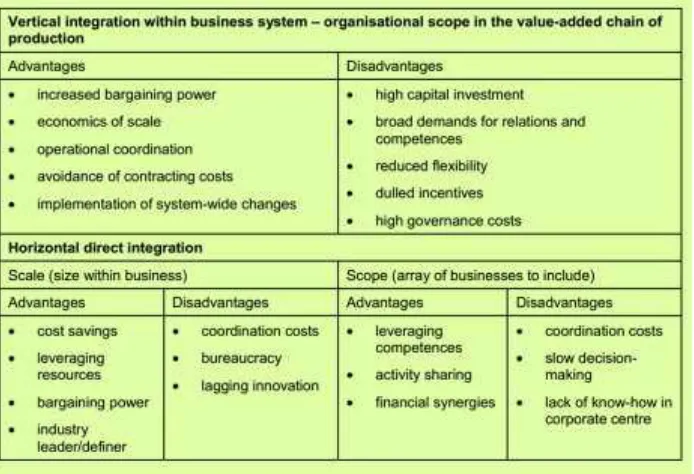
Part 2 extracts information on the role of small-scale forest harvesting technologies from eight case studies on commercial community forestry. Part 2 also describes the application and possible contribution of small-scale forest harvesting technologies to income generation and poverty alleviation through the horizontal and vertical integration of communities into the wood-based value chain. The case studies’ findings are summarized with reference to the regional perspective of Southeast Asia.
Part 3 provides a comparative summary of various types of appropriate harvesting technologies. The section provides detailed descriptions of such technologies, which are presented in the Annex as a series of fact sheets. These fact sheets include an overview of the technology, review of literature and case studies on their application in situations comparable to the context of community forestry.
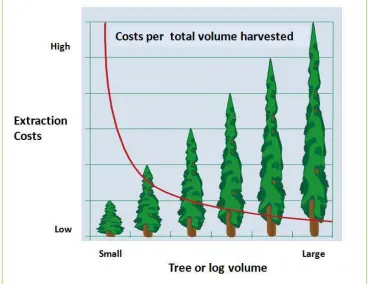
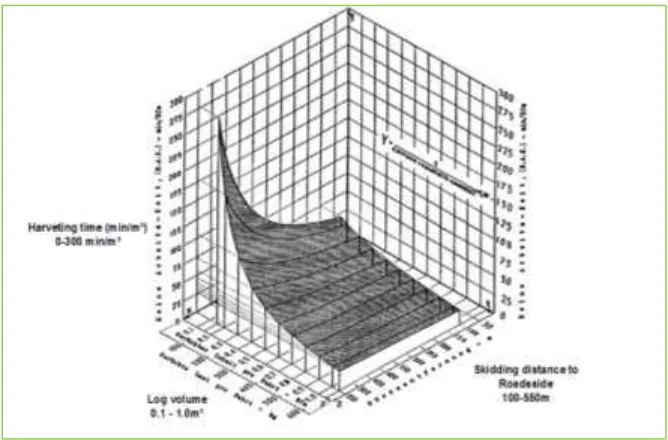
Part 4 presents key criteria that users can apply and adapt to their situation – i.e. site-specific conditions and socioeconomic contexts – when assessing various small-scale harvesting systems. These criteria cover technical feasibility, including legal constraints, assessments on terrain and transport infrastructure, as well as the criteria’s relationship to the anticipated product types (e.g. fuelwood, other forms of biomass energy, poles, timber, bamboo products, etc.) The section also introduces the important link of product selection to the fundamental principle of piece-volume ratio and its effect on operational efficiency in forest harvesting. Product combinations consisting of main waste and by-products are also highlighted. In addition, part 4 also covers:
Safety, ergonomic and labor aspects, particularly competition posed by off-farm labor and seasonality according to agricultural production cycles. The section also covers organizational aspects, which focus on the issues faced by providers of support services for training and maintenance and the need to form cooperative systems to scale-up operations with the goal of increasing harvest volumes and value by making sure that recommended technologies are, in the first place, financially viable.
Feasibility assessments, including time and motion studies, machine cost calculations and the analysis of harvest systems that combine various technologies.
Carbon footprinting of harvesting technologies and provides some primary arguments on the current debate on climate change for labor-intensive, non-mechanized systems (e.g. animal based extraction).
Part 5 presents the tools of time and motion studies and explains the breakdown of harvesting systems in cycle time elements, assessment of workload and ergonomics, safety aspects and the issue of drudgery work for women and children in fuelwood harvesting.
Part 6 provides a brief outlook on the future of small-scale appropriate harvesting technologies in Southeast Asian context and provides some guidelines on aspects of learning in this field.
1.2 Harvesting – the key cost factor in forest operations
The total wood production process in the context of this guidebook covers the stage from tree seedling either by planting or natural regeneration through various silvicultural treatments like fertilizing, weeding, thinning, pruning, etc. until the final harvesting, which covers in most cases the process from felling trees and forwarding them to road or riverside landings where grading and sorting takes place. These landings are in most cases also the handing over point between forest owner and trader/sawmillers. From there onwards transport takes place to primary processing sites in most cases sawmilling.
If the forest owner carries out the wood production process described above, harvesting costs typically cover 50 to 75 % of all operational costs of forest enterprises as shown in Figure 1a. This percentage shares are different in plantations with – in most cases – existing road infrastructure and high costs for planting and stand maintenance and replanting. On the other hand natural forest type management with high rate of natural regeneration hardly requires any other operational (silvicultural) expenditure. Only administration and other costs directly related to the primary production process are considered in this comparison. They are typically in the range of 20 to 40 % of overall costs of the forest enterprise. The high share of costs related to harvesting in both illustrations show the importance of addressing efficiency issues and choice of technologies if forest enterprises are to be kept competitive.
Figure 1a: Percentage Cost Share in Forest Operation and Plantations
The natural forest type example form British Colombia, Canada shows that harvesting (extraction, sorting and loading) makes up 32 % of total or 55 % of operational costs which are 58 % of total costs with royalties (28%) and management (14 %) covering the rest. Costs for roads are kept separate in this assumption, but could also be added to harvesting costs as well and would thereby increase its share to 75 %.
Examples from smallholder teak plantations in Lao PDR and Indonesia indicate shares of harvesting costs of about 40 to 60 % assuming the production cycle from plantation establishment to timber sale at roadside landings (Kurniawan 2009, Mohns 2009). It becomes obvious that there is enormous potential for possibly doubling incomes to forest owners in both natural and plantation forestry operations if they can achieve a vertical integration of the timber production stages to roadside landings.
It has also to be realized that costs for harvesting operations need to decrease in situations where either log prices are dropping or labor costs are increasing or as shown in the following Figure 1b where both trends are occurring simultaneously. The graph shows the situation in Austria for harvesting small and medium sized logs and pulp/chip wood. For both categories prices have dramatically dropped over the last 30 years – if adjusted to inflation – while labor costs have gradually increased. Forest industry had to adjust to this situation by a marked decrease in harvesting costs in order to allow financially viable operations. Unfortunately such analyses are not available for any developing country – however as shown later examples on fuel wood harvesting costs in relation to LPG as similar trends in labor wages are emerging with similar consequences on the extraction of wood products.
Figure 1b: Development Labor and Harvesting Costs in Relation to Timber Prices from 1976 to 2013
Values adjusted to inflation (source: VPI Austria Statistics and personal communication - AUSTROFOMA 2015 Exhibition catalogue, personal communication. Nikolaus Nemestóthy Bundesforschungszentrum für WaldFAST Ort - Fachbereich Forsttechnik)
Legend:
Green diamond: Log prices ( Euro/ m3) for Spruce 25 to 30 cm top diameter B-Quality Green square: Prices for coniferous industrial wood (Euro / m3)
Red: Labor costs (Euro/m3) inflation free Blue: Harvesting costs (Euro/m3) inflation free
1.3 Definition and scope of small-scale forest harvesting
The interchangeable terms ‘small-scale forestry’ or ‘small-scale forest harvesting’ have been used mainly in European and North American forestry circles. In general, they refer to forestry (harvesting) operations carried out by individual or collective owners of smaller-sized woodlots in contrast to larger scale government or industrial operations. Harvesting technologies in this context are within the financial reach and operational/managerial capacity of individual forest owners or cooperative producer groups. These technologies are also, in more cases, linked with farm machinery. Logging winches, grapple tongues and loading cranes mounted to agricultural tractors are the standard equipment of most farm-forestry operations in developed countries.
Forest research and extension, as well as training institutions and universities, still conduct extensive research on the economic and ergonomic performance of a wide range of small-scale forest harvesting systems. First-hand information on the respective equipment can be obtained in the following trade fairs. For the special conditions presented by small-scale harvesting in mountainous areas, the AUSTROFOMA exhibition held by Austrian manufacturers of forest-harvesting equipment, held only every four years, is an excellent source of information. The exhibition features actual demonstrations of equipment under real forest conditions and is documented in a well-prepared catalogue. A similar event takes place in Sweden with the Elmia Wood and the KWF Demonstration Week in Germany. In recent years, a clear focus on harvesting of energy biomass has emerged in Europe and North America within the context of small-scale operations, especially on whole-tree harvesting options and on-site wood chipping. On the high-end timber value chains, mobile sawmilling has dominated the interest of the industry for the past 15 to 20 years. Most information on these sources is very applicable to the rural development framework of Southeast Asia. Similar events with field demonstrations are unfortunately, however, not carried out in the region. Industrial trade fairs for the plantation industry (rubber oil palm) and the forestry sector do take place – in Malaysia and China, for example – but are less focused on small-scale forestry operations.
Figure 2. Implication of modern technology in the development country context (FAO 1982)
According to a recent FAO (2013) review, mechanization seems to have become, to a certain extent, neglected in agricultural and rural development contexts. As an essential input, mechanization can transform farm family economies by facilitating increased output and reducing the drudgery of hand-powered production. Agricultural mechanization, when carefully selected and proven to be appropriate to the task, is also capable of protecting natural capital and the environment while boosting food production. However, mechanization has been frequently neglected in recent years as a vital input.
Agricultural and forest engineering departments in the CGIAR international research centers have been wound-down or closed and world class undergraduate training in this field is also in serious decline. Why this should be the case is not understandable when careful studies have made it abundantly clear just how crucial an input mechanization is in the pursuit of sustainable global agriculture or forestry production to meet the challenges posed by global food security, declining wood supplies and the need to improve rural livelihoods. Within FAO itself, the resources invested in the selection of appropriate mechanization options have been declining, although the vital role of rural mechanization is recognized in the agricultural sector as a vehicle for raising rural incomes through high quality service provision on farms, for road transport and forestry and in the development of entrepreneurship in the primary stages of rural product value chains.
1.4 Small-scale harvesting in the context of reduced-impact logging
Since around 1995, the subject of forest harvesting in the tropical regions has been dominated by the term reduced-impact logging (RIL), which has gained prominence specifically within the context of the REDD+ debate. RIL refers to forest harvesting with improved methods of pre-harvest tree inventories, directional felling and extraction methods aimed at reducing the damage to the mainly natural residual forest stands. However, an FAO review on the subject in 2004, which studied forest operations under RIL, apparently considered equipment, mainly in large-scale industrial forest operations, more or less a given and did not even consider any equipment parameters as a possible criteria.
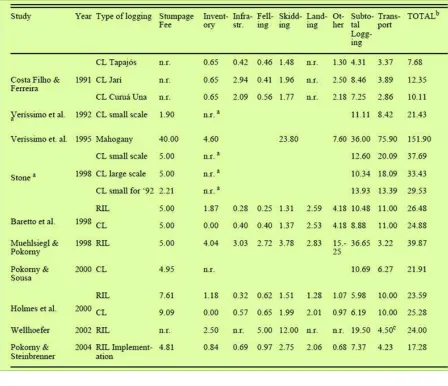
There is ample evidence from Central and South America, however, on the potentially positive role of small-scale technology (animal logging and agricultural tractors) in the RIL context (Rockwell 2006), though some studies have pointed out that RIL has apparently led to increases in production costs (Figure 3). In Southeast Asia, local communities or small-sized forest operators were completely left out of the RIL approach because these actors play a minor role in commercial-scale operations in wood extraction. Thus, information on the application of technologies appropriate for forest harvesting for levels below state-owned or concession forest enterprises basically do not exist for the region.
Other studies, as shown in Table 1, found a reduction of costs in RIL operations where mainly improved planning appears to have impacted efficiency of skidding and landing operations, where stumpage costs could considerably offset higher preparatory planning costs.
2. Small-scale forest harvesting in the community forestry context
Forest harvesting is almost always a controversial topic. Small-scale approaches are no exception and can be seen from various, often extreme, angles. For example, some ecologists might argue that the extraction of tops and branches and dead material by local people – even for subsistence purposes – decreases the recycling of nutrients. Others, still taking an environmental perspective, might justify such work by local people by noting that the removal of combustible material helps reduce the threat of forest fires. From the viewpoint of government foresters, arguments have been brought forward that efficient monitoring of many small operations would be nearly impossible. On the other hand, non-government organizations (NGOs) involved in forest management have argued that, with help, local communities and user groups can develop their own monitoring skills and the ability to protect forests, including the provision of environmental services.
Opponents of primary processing by local people often refer to the lower conversion efficiencies compared to the more efficient outcomes produced by a well-run sawmill. But a key question is: is it justifiable to accept a lower conversion efficiency to create additional employment and spend less foreign exchange on heavy equipment? This comparison highlights the decision-making trade-offs central to considerations involving small-scale harvesting. Given the variability of forest conditions, socio-economic situations and purposes for harvesting forest products, there is no single answer to these questions. When applied in a manner consistent with sound management practices, small-scale harvesting and conventional logging are both important components of forestry. Indeed, combinations of conventional logging and small-scale harvesting may well be the appropriate way forward, assuming a regulatory environment that supports community–company partnerships in the forestry sector.
All pros and cons considered, the potential of small-scale harvesting to increase employment and help reduce poverty cannot be denied. It is in view of these benefits that small-scale harvesting deserves increased attention, particularly in the areas of policy, research, training, organization of communities, linkage to markets and opportunities for linking with conventional logging.
There are numerous articles on timber-based community forest enterprises (CFEs). However, only few studies in Asia provide detailed data assessing the importance of the technology applied, effects of labor utilization, subsequent costing and viability of logging and processing operations. The following case studies are an attempt to give an initial overview that highlights key arguments on the subject.
2.1 Case No. 1: Fuelwood extraction from subsistence to commercial operations in Nepal and Cambodia
The so called ‘fuelwood crisis’ of the 1980s – a perceived mismatch between fuelwood demand by an ever increasing population in relation to decreasing forest resources – was at that time –
illustrated in Figure 4. The graph depicts the original data from a 10-year study on fuelwood pricing in Pokhara in the 1990s. It is important to note that there an increase from 1 600 Nepali Rupees (NRs)/ton in 1990 to 8000 NRs/ton in 2013, an annual increase in price of 5.9 percent. According to interviews in 15 pilot sites of the baseline study, this increase is a reflection of high harvesting costs related to increased labor wages, road transport costs, rent seeking along the supply chain and possibly regional shortages.
Figure 4. Price trend for fuel food in Nepal from 1980 to 2013 (100 NRs = US$ 1.00)
In spite of the scientific interest in community forestry in Nepal, there is extremely limited information on operational aspects. The review found only one detailed study on harvesting cost of fuelwood in combination with timber, which is summarized in Figure 5. There is a marked difference between the samples in the mid-hill areas (US$ 33/ton) vs. the Terai samples (US$ 21/ton), which most likely reflects the effect of slope and road access/harvesting distance. These results match the interview findings of the pilot sites in the hill districts, where manual extraction rates of fuelwood are in the range of around 150 kg/day. If multiplied by average wage rates of around US$ 3.5/day to 5/day, we arrive at US$ 23/ton to 33/ton.
Figure 5. Harvesting costs in community forest operations and effect of total annual harvest volume (Rai 2010)
A comparison of fuelwood pricing and trends was carried out as part of the BEST study in Nepal. The 2013 price for liquid petroleum gas (LPG) was US$ 14.6 per 14.2-kg cylinder. The price trend since 1997, which is shown in Figure 3, indicates a price increase of 7.4 percent. The price trend of LPG is compared with the energy equivalent for fuelwood in high (Terai and Kathmandu) and low price (other urban areas) scenarios. The analysis shows that the high price fuelwood is in fact far more expensive than LPG if the energetic value is taken into consideration. Even the lower priced fuelwood appears hardly competitive with LPG within the last 15 years.
Figure 6: Comparison of LPG price vs. fuelwood replacement cost: 1997-2013
Energetic value (adjusted to stove efficiency of open fires) of 11 kg of dry (15 percent moisture) fuelwood = 1.0 kg LPG (2013 data is derived from the BEST in Nepal case study site findings).
that efforts will be needed to keep traded fuelwood in a price range that is competitive with imported LPG if Nepal wants to follow a course of energy self-sufficiency and reduced emissions for non-renewable fuels. However, analysis of the operational capacities of local communities in Nepal shows various constraints. As shown in many studies on the subject, internal resources (entrepreneurial skills and access to finance) ranked highest, followed by restrictions on operations and market access.
Similar findings were recently made in Cambodia under a component of the Environment and Energy Program (EEP), a project implemented by RECOFTC – The Center for People and Forests and Groupe Energies Renouvelables, Environnement et Solidarités (GERES), in the assessment of charcoal value chains. Harvesting costs were found to be between US$ 25/ton to 45/ton for split and stacked air-dry fuelwood at roadsides. Neither the fuelwood nor the charcoal subsequently produced was found to be competitive to imported LPG in energetic terms, which carries prices between US$ 15 and 18 per 15-kg cylinder. However, it must be noted that charcoal is not only used for direct heating in food preparation, but very often for barbequing, whereas LPG has found limited entry acceptance in urban areas.
In the assessment of the complete value chains, it was found that the wood used to produce fuelwood originated mostly from land clearings, which basically do not carry any forest management or production costs. Clearing leftover trees very often carry a negative value in order to allow cultivation.
First attempts to improve efficiency by applying chainsaws, hand sulkies and small tractors have so far not delivered convincing results on the financial viability of commercial-scale fuelwood production, in often sparsely-stocked community forests.
2.2 Case No. 2: Community forest user group sawmills in central Nepal
Between 1975 and 1990, about 22 000 hectares (ha) of Chir pine plantations were established by local communities supported by Australian Aid in the central hill districts of Sindhupalchok and Kabre. Most plantations reached the thinning stage by 1985 and thinning material was sold as standing trees at a stumpage value of US$ 12/m3 to 18/m3. In 1996 and 2001, two small band sawmills managed by community forest user groups were established with project support under the assumption that the value addition on pine thinning would be considerable and could encourage further thinning operations and other elements of better management.
Figure 7. Locally manufactured hand sulky in Sindhupalchok district (Photo courtesy of Don Gilmour)
Table 2 shows the cost structure of the sawmill operations as assessed by a study by URS Sustainable Development Project Management Consultants in 2003 under the Nepal-Australia Community resource management and livelihoods project.
Felling and forwarding operations to roadside landings appear reasonable with costs between US$ 8/m3 and 11/m3 of round wood. However, the further processing stages seem to be financially nonviable given the very low prices of around US$ 70/m3 for sawn wood and low conversion rates of 40 to 50 percent from round wood to sawn wood. The overall returns to the forest user groups between US$ 3/m3
and 6/m3
Table 2: Summary cost structure and returns from two community forest user group-operated sawmills based on pinus plantations in central Nepal (Data extracted from URS, 2003)
Component Details Shree Chhap
sawmill
Chaubas sawmill Commencement of
operation
Small village level circular sawmills 2001 1996
Price for sawn timber
Both sawmills use band saws with a capacity of about 300 to 400 m3/year
2.3 Case No. 3: Smallholder teak harvesting and processing in Lao PDR
Smallholder teak plantations have been established in central and northern Lao PDR over the past two decades, driven by the fact that smallholders can gain land ownership – or at least long term user rights – and can create a financial asset that can be immediately accessed in times of financial need. Teak covers currently approximately 40000 ha with a regional focus in Luang Prabang province. Several donors and NGOs – the Australian Center for International Agricultural Research (ACIAR), Tropical Forest Trust (TFT), Japan International Cooperation Agency (JICA) and German Agency for International Cooperation (GIZ) – have been supporting the sector with various projects ranging from stand management to value addition. Issues of harvesting systems have so far largely been left out from this support in the past and have only recently been recognized by RECOFTC’s Livelihood Improvement through Generation and Ownership of Forest Information by Local People in Product and Services Markets (ForInfo) project and the ACIAR-funded Value Addition to Plantation Timber (VALTIP) project. This development has mainly taken place in view of the fact that farmers lose interest in reestablishing teak plantations in accessible locations due to emerging competition with rubber (since around 2004) and banana (since 2007) plantations, which has been driven by Chinese industrial-scale investments in the area. Besides the issue of competing with these crops, the project implementers realized that if teak were to survive as a smallholder crop, it should be planted farther away from roadsides. Thus, solutions for transporting teak timber over great distances to roadsides or processing on-site with mobile mills, must be developed.
Figure 8. Smallholder teak timber value chain aimed at producing outdoor furniture (Mohns 2009)
20/m3 for round wood, which corresponds to nine percent of the outdoor furniture value chain studied. Further costs for felling and skidding made up three percent, road transport six percent and local sawmilling 13 percent. The price of a saw log increased from US$ 20/m³ at the plantation to US$ 50/m³ at the sawmills (in Luang Prabang province). When a log is transported to Vientiane, the price increases by another US$ 50, due to long distance. About 40 percent waste wood would be transported for round logs. Thus, there is potential to create a win-win situation if sawmills in Vientiane would cooperate with teak farmers in at least squaring teak logs as close as possible to the plantation sites, thereby reducing transport costs considerably.
These findings are consistent with other case studies on logging and primary processing in community forests. Such studies are unfortunately quite rare in the international forestry context. Antinori and Bray (2005) found that Mexican community forestry groups increased total village employment from 15 percent for stumpage sale systems to 19 percent for logging and 26 percent for simple secondary processing (sawmilling) situations. Auzel, et al. (2001) found 12 times higher log prices for community-based operations versus the traditional concession logging system in Cameroon.
Figure 9. Trials on long distance extraction of teak timber with rubber-tracked crawler systems
Currently, most timber is sold standing while middlemen or sawmillers harvest and transport the timber to sawmills. Simple harvesting solutions are needed to allow plantation owners to at least bring the logs to roadsides and sell in accordance with simple grading rules. For short distance harvesting, sulkies are currently applied in the Bokeo province in northern Lao PDR under the ForInfo project. Tests have also been carried out to develop rubber crawlers converted from agriculture machines to address the issue of long distance harvesting without roads. The project team also anticipates that mobile sawmilling in cooperation with local sawmills will facilitate transportation from the more remote areas.
2.4 Case No. 4: Pacific islands and Indonesia
Madagascar and Bolivia) of small-scale timber harvesting in community forestry projects with a strong orientation towards wood processing and marketing, indicates that none of the projects could show conclusive evidence that communities were in full control over all stages of the value chain from standing trees to sawn timber. A major obstacle for these communities was a lack of technical and managerial competence, particularly in controlling the extraction and transportation processes. The USAID review makes it apparent that rural communities can only benefit considerably from wood-based value chains if technologies are available to them, which allow their control over the initial stages of tree felling and transporting to the sites of selling, processing or, loading for road or river transport.
Table 3. Estimated logging costs of 300 to 1000 ha community forest management units in the Pacific Islands (Lawler 2004)
Estimated costs per cubic meter of logs extracted
Item Cost US$ /m3
Royalty for standing timber 6
Labor 20
Fuel/oil 8
Maintenance of spare parts 11
Loans on machinery 25
Transport external 12
Cost subtotal 83
Revenue on timber sales 132
Net revenue 50
The case study findings on the relatively high portion of loan and other costs for machinery (highlighted in red in Table 3) totalling US$ 44/m3
or 53 percent of the subtotal (83) corresponds well with the findings and critical conclusions presented in the research on the Amazon done by Pokorny (2010). To be sure, a reader may seriously doubt that the choice of machinery in this case was appropriate given the fact that machine costs are twice as high as labor costs. Unfortunately, the study does not provide further details on the type of equipment used.
2.5 Case No. 5: Community forestry enterprises (CFEs) in Mexico
Mexico is rich in indigenous forms of communal organization. These institutions were overlaid and imitated by the agrarian reforms arising from the Mexican Revolution (1910-20) and enshrined in Article 27 of the country’s Constitution of 1917. The resulting agrarian law led to the implementation of two forms of common property, ejidos and comunidades, which now cover about half of the national territory.
subsequent reforms provide the social matrix for the emergence of community forest enterprise (CFE) management institutions. Logging communities in Mexico range from traditional indigenous communities with pre-colonial agrarian claims, typically communidades, to much more recently organized non-indigenous ejidos bearing few communal traditions.
Antinori, C. and Bray D.B. (2005) analyzed capital assets and investment forms for key forest machinery tracks, cranes and sawmills, operated by four CFE types of vertical integration: 1) stumpage sale based, 2) delivery of roundwood, 3) operation of own sawmills, and 4) production of secondary products.
Table 4. Capital asset ownership in Mexican community forest enterprises (Antinori 2005)
In Table 4, most communities have made such investments, although more vertically integrated CFEs did so at higher rates. Logging was in most cases profitable enough to generate the funds to acquire more productive assets for the CFEs as shown by the use of the CFEs’ own funds rather loans or government assistance. Table 4 highlights the degree of asset ownership in CFEs at the four levels of integration: who owns the equipment and when and how it was acquired. The community forestry industry covers a sizeable amount of capital assets in Mexico. Individuals often own trucks used for transporting logs. The incidence of collective truck ownership increases with integration level. Cranes require more specialized skills and fewer are needed compared to trucks in meeting production goals. Of particular note here is that in the great majority of cases, assets were purchased with community funds with little reliance on outside debt, suggesting barriers to credit, a bias against debt or a lack of need for debt financing at that point. Profits in some cases even went to asset maintenance such as constructing or maintaining logging roads for equipment that permits vertical integration.
2.6 Case No. 6: Community forest management operations versus negotiated partnerships with private logging companies in the Amazon region
isolated pilot cases, restricted to less than two percent of the sample, and were externally supported and not adopted by neighboring communities. In none of the study areas were communities found to be harvesting and selling timber on their own through self-governed systems. Loggers generally depleted stocks of species with commercial value in as quickly as one to three years. Due to the intensity of logging operations, future possibilities depend on new market demand for species other than those currently harvested. The CFM initiatives did, however, intend to implement sustainable forest management (SFM) based on RIL principles. The available forest area was divided into annual units for management cycles. However, such schemes were abandoned by the communities once external support ceased. In some cases, communities subsequently started informal negotiations of their timber rights with loggers.
Table 5. Comparison of income derived by communities from timber rights negotiations with logging companies and CFM initiatives supported by development organizations (Humphries, S 2010)
As shown in Table 5, partnerships with loggers and community forestry initiatives generated only limited financial benefits for communities. From partnerships with loggers, communities received only a relatively small payment for each cubic meter of timber harvested. The negotiation was attractive mainly because communities had limited input of time invested, and consequently, a high reward per working day. Financial inputs for harvesting or processing equipment were not necessary in this case, which contributed significantly to the better overall economic performance of this model.
Table 6. Indirect benefits derived from communities negotiating with logging companies and involved in CFM initiatives supported by development organizations (Humphries 2010)
The results of this study contrast with the general belief that communities can benefit significantly from the management of their timber resources under the current institutional framework found in the Amazon region. Neither the community-company partnerships (CCPs) nor the models of CFM supported by development organizations analyzed in this study allowed communities to derive meaningful benefits from the use of their forests. The studied CCPs were based on a poor balance of power and left limited possibilities for communities to bargain on the prices paid and the management practices adopted. The studied CFM concepts were based on developing the capacities of the communities in managing their forests according to externally defined models without taking into consideration local interests and current capacities. The study indicates that the ideal concepts of CCP, as well as CFM, are quite distant from the actual reality in the Amazon.
Before further promoting the implementation of either conceptual model, a critical debate on how to promote them based on their potentials and limitations needs to take place. With regard to CCPs, communities in the Amazon frontier are not empowered to negotiate better deals with loggers. Under CFM, communities miss out on support programs to help support their specific interests and develop their capacities. Instead of training communities to manage their forests according to previously established concepts, it is necessary to build on their already existing practices. If forest use by communities is to have a future in the Amazon region, it is essential to allow communities to make use of their comparative advantages.
It is thus necessary to explore possibilities for a third conceptual model through which communities can develop self-governed management concepts based on their own interests and capacities. The conception and implementation of these self-governed concepts must then be supported by external development agencies.
2.7 Case No. 7: Comparative study of commercial community forest initiatives in the Brazilian Amazon
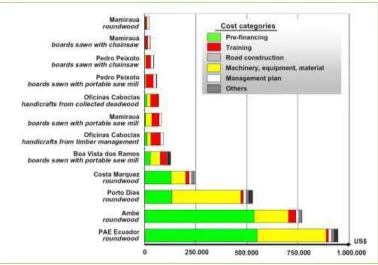
investments and investments of the supporting organizations and product prices obtained. Labor costs reflect local daily wage rates including conversions from family labor. Yearly machinery costs included costs for capital calculated with an interest rate of five percent. Depreciation was calculated linearly for a period of 10 years. Maintenance costs were defined as 60 percent of the depreciation costs. Costs for consumables were based whenever possible on data about real consumption.
Figure 10. Initial investments in community forestry initiatives. Estimates are based on interviews and secondary data considering (Pokorny 2010)
Table 7. Harvest and transport costs (US$/m3) in study sites (Pokorny 2005)
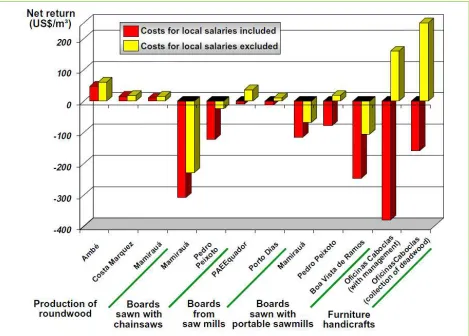
Figure 11. Annual net returns of commercial community forestry initiatives in the Brazilian Amazon with and without considering costs for local labor (Pokorny 2010)
As a consequence of the high costs of production, profits were at best modest (Figure 11), although all initiatives received relatively attractive prices for their timber from non-local buyers due to negotiations facilitated by the supporting development organizations. Despite the generally low level of local salaries, only the larger initiatives with a low level of vertical integration managed to cover labor costs and, in a few cases, generate low profits. All other initiatives were unable even to cover the operational costs of logging, though some cases did manage to pay a portion of the local labor costs. Furthermore, the expectation of enhancing income by adding value from further processing timber or production of manufactured products was not fulfilled though attractive prices for the products were paid. This was mainly because the production costs increased disproportionately as a consequence of more complex administration and the need for essential investments in machinery and equipment. While Forest Stewardship Council (FSC) certification has permitted access to a wider range of markets, the costs associated with FSC certification were found to be disproportionate in relation to the benefits generated – unless of course – the costs are met by external sources of financing. Initiatives seeking to add value also suffered from a higher proportion of fixed costs and the urgent need for capital to pre-finance operations, which seriously affected the flexibility and increased pressure on production.
To summarize this discussion, the report questions the concept of vertical integration of timber production in the context of commercial community forestry. It supports the argument favoring attempts for horizontal integration, enlarging the supply base and forming cooperative arrangements in the extraction process where appropriate harvesting technologies (AHTs) can be applied. One of the more interesting parts of the report to note in the context of this guidebook is that only enterprises that restricted themselves to logging operations, as well as the case of mobile sawmilling, achieved positive returns when all local salaries were included.
2.8 Case No. 8: Small-scale timber extraction in formal and non-formal operations in the Amazon region
Mejia, et al. (2015) studied eight cases of formal and non-formal timber extraction by smallholders through a mix of both quantitative and qualitative methods. The overall analysis relied on information from household surveys, analysis of selected cases of timber extraction and interviews with key informants. The paper is based on three sources of information: 1) household survey data indicates the importance of small-scale timber extractions for the livelihoods of smallholders, both new settlers and indigenous people; 2) analysis of selected cases of timber operations, whether undertaken following the implementation of the national forestry regulations or not, help estimate the costs and benefits of various operators in the timber value chain as well as the distribution of benefits; and 3) semi-structured interviews highlight market interactions and links between supply and end-market demand.
A total of 243 household surveys were conducted in 21 communities. The selection of households was made in two stages with stratification according to ethnic origin, size and location of communities.
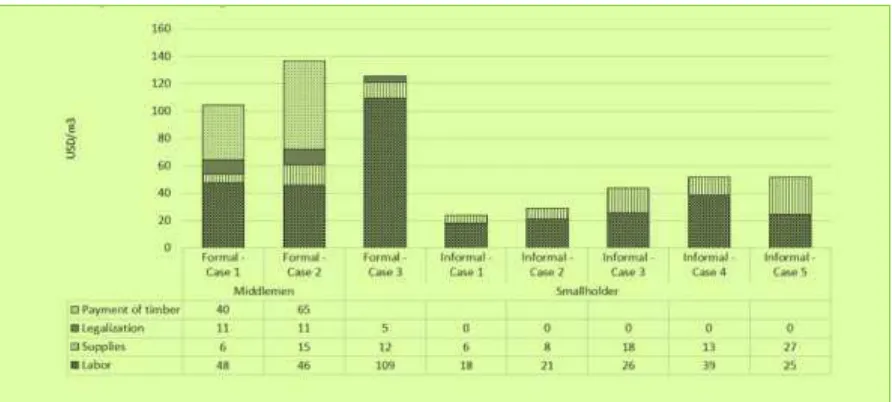
Figure 12. Distribution of costs (in US$/m3) for eight selected small-scale timber extraction
operations, with and without formal permits and according to different types of smallholder and middleman participation (Mejia, et al. 2015)
intermediation networks, rather than on whether the operations comply or not with existing forestry regulations.
Evidence suggests that larger timber extraction operations, which are often conducted by middlemen, are undertaken with approved plans and payments of royalties and other fees. Total costs of these operations are nearly twice as expensive as the non-formal systems. Even if royalty payments are deducted, these operations appear considerably more expensive, while smaller scale ones, which are undertaken by smallholders, remain outside of the law and focus on soft wood species. In turn, middlemen adopt flexible strategies by sourcing hard and semi-hard timber species from legal operations, often financed from their own funds, while also buying timber, mainly softwood from informal small-scale operations, in order to meet the demand from buyers in the cities. This is due to the fact that middlemen have to respond quickly to purchase orders from final buyers that specify volumes and species under relatively rigid time frames.
For smallholders, there is an important gap between what they can produce on their own outside of the law and what they can produce formally with the help of a middleman. This suggests that, in order to achieve legality, it is also important to meet the needs of capital, technological know-how and market access with final buyers. The role of middlemen as capital providers for timber harvesting indicates that smallholders lack access to finance and technologies, which hinders them from undertaking large volume harvesting operations under legally approved plans. The case study suggests that smallholders tend to earn more money by engaging in legal operations as long as they participate in the sawing and harvesting of hardwood species, but that also may likely result in the rapid exhaustion of their forests. Unfortunately, the ecological impacts of small-scale logging are not able to be addressed in this guidebook and do deserve more research. Indeed evidence does suggest that hardwood species are logged more intensively, which may lead to forest degradation.
The Mejia, et al. (2015) study argues that the right species and participation in harvesting are far more important than legality to smallholders’ income levels. Regulatory frameworks should have the flexibility to support the various smallholder strategies in using their own forests to gradually adapt their practices and strategies in ways that will allow them to obtain income from timber extraction while at the same time preserving and restoring their forests. However, policies must look beyond the supply side of the issue and give greater attention to improving the transparency of market networks that shape smallholders’ decisions and propose more collaborative solutions involving end-market buyers.
2.9 Summary findings of case studies
The case studies have pointed out difficulties in most commercially-oriented community forestry operations in which vertical integration was attempted along wood-based value chains. As pointed out by most researchers, there are no sound examples with the exception of mature community operations in Mexico (Bray 2002) where sustainable enterprises could be established.
Beyond the issue of up scaling in the correct direction, the following conclusions may also be drawn for the CFE context:
Land tenure is important but not an absolute prerequisite for the initial stages of CFE development. Regulatory barriers and the legality of forest harvesting appear to be the key obstacles.
Laws and policies that adequately address the realities and needs of CFEs are often non-existent.
The lengthy duration needed for CFEs to reach maturity (about 20–40 years) compromises the viability and impact of any support. Thus, long term support is critical to CFE development.
Managerial and operational capacity has often been overestimated.
Most sampled CFEs are highly undercapitalized, irrespective of size and scale.
There are numerous examples indicating that donor support has facilitated unsustainable investments in oversized, inappropriate and thus, unsustainable technologies.
The cultural context and the perception of local people in terms of cooperative enterprises has been too often neglected or misunderstood. Forestry development experts have, on many occasions, failed to adequately understand these local realities and have not adjusted their mode of operation (modus operandi) according to these local realities.
CFEs should be modeled on existing labor and distributive solidarity groups and should adopt discussions and a decision-making mechanism that coincides with existing practices and spaces.
Lack of knowledge about markets and their mechanisms have been a repeated shortcoming.
Remoteness, lack of road networks and subsequent long extraction distances to processing sites appear as issues throughout the case studies.
The service environment for CFE development is rarely conducive.
Certification, basically always driven by NGOs, often advocated as addressing some of the issues listed above, has not delivered convincing results.
Even when market distances are short and commercial timber stocks are abundant, local forestry producers rarely obtained annual per hectare incomes of more than US$ 20/ha.
Benefit distribution should represent the individual contributions of each member. Adequate amounts of surplus benefits should be invested in social projects (asset building) and in the enterprise capitalization.
3. Overview of small-scale technologies
The following summary table presented below attempts to provide an overview of possible small-scale technologies that may be appropriate in the community and smallholder forestry context of the Mekong region in Southeast Asia. The table is based on an intensive literature study, which contains comparative studies covering multiple technologies, which were carried out in Europe: Kantola (1988), LOBF (2002) and Skogsarbeten (1986); The United States and Canada: Nova Scotia Natural Resources (2006), Updegraff (2000), Windell (1999), Webster (2005), Kirk (1994), Halbrook (2005) and McCormack (2000); Costa Rica: CATIER (1997); Philippines: Laarman (1981); and also by international development organizations: FAO (1982, 1985 and 1986) and ILO (1970 and 1989).
Comparison chart for small-scale harvesting technologies
Technology Price (US$) Productivity and advantages Limitations
Manual systems
Crosscut saw 50-120 6 minutes (min) for 10 centimeter (cm) DBH softwood 15 min for 25 cm DBH softwood
15-20 min for 25 cm DBH hardwood Low costs
Reliable tool Safe operation
Relatively low skill level required for operating Available in most situations and sites
Strenuous work Can ensure safe handling
Wide range of tools that can all be manufactured locally according to standard designs by local
blacksmith’s workshops. Gas welding preferred for
joints Inexpensive
Based on local materials and skills Downhill skidding
100 (per sappie)
30 m extraction distance: 8 m3/hr 500 m extraction distance: 2 m3/hr
Team size three to four
Relatively high performance in comparison with mechanized methods
Entirely manual with use of sappies and turning hooks
Relatively low skill level required
Log chute
Can be locally manufactured from PVC pipes
Causes no soil damage, one of the most eco-friendly extraction methods for sloping terrain
Speed can be controlled with breaks inserted in chute 300 m extraction distance: 1 m3
/hr
Can be locally manufactured with scrap wheels
Modifications possible with clamp banks for small logs or bamboo
Combinations possible with animal logging
Uphill extraction only in pairs with pulleys
Limited suitability for uphill
Possibilities for short and long distance forwarding 100 m extraction distance: 3-4 m3/hr
1 000 m extraction distance: 0.3 m3/hr
Two horse teams needed for logs over 0.5 m3
Extractions from slopes up to 30 %possible
Can be more cost efficient than tractor extraction
Less damage to soils and remaining stands
Use of logging troughs to reduce friction
Combination with horse riding and trekking
Only found in some upland communities and specific locations (e.g. Lampang) Large mule breeding by Thai
Oxen/buffalo
600-1 000 (adult and trained)
Possibilities for short and long distance forwarding 100 m extraction distance: 2-3 m3/hr
1 000 m extraction distance: 0.1 m3 /hr
Lower performance than horses
Less suitable for sloping terrain
Two horse teams needed for logs over 0.5 m3
Can be more cost efficient than tractor extraction
Less damage to soils and remaining stands
Use of logging troughs to reduce friction
Normally operation only possible in pairs
Buffalo population is vanishing with introduction of tractor
Breeding and training of oxen for work is also receding in the region
Extraction of valuable timber over large distances 100 m extraction distance: 3-8 m3/hr
1 500 m extraction distance: 1 m3/hr
Can also be applied for log loading on trucks
Daily performance below 5 hrs animals need rest and cool down in water
Can be linked to eco/agro-tourism
Important animal in socio-cultural context in Asia
Controversial aspects of
Rafting of timber Minimal equipment
Panel construction: 5-10 tons/m3/hr/person Floating: 0.4 m3/hr over 5-10 kilometers (km) 15-20 ton rafts: 25 to 30 km /day / person
Traditional system with local skills
Ideal for smalls streams, lakes or reservoirs
High potential in areas with hydropower development (Lao PDR)
Low skill level on slow flowing rivers
Dangerous on fast-flowing streams
Rafting of bamboo Minimal
Panel construction: 1.5-2 tons/hr (2-3 persons) 20-30 ton rafts: 25-30 km/day (2 persons)
Seasonal operation can be adjusted to labor situation
Can be scaled-up through ecotourism
Skill level can be achieved in reasonable time
High potential in areas with hydropower development (Lao PDR)
Highly depended on river flows and obstruction in rivers
Safety aspects not known
Motorized rafting Outboard motors 30
Individual raft panels of volumes of 20-50 tons can be constructed and joined together to carry volumes of several hundred tons
Transport speed up to 100 km/day on slow flowing rivers or lakes
Skills for operating boats required
High potential in areas with hydropower development (Lao PDR) and the lower Mekong
Only possible on slow flowing rivers or natural lakes,
Mechanized hand-operated systems
Upright work posture is less strenuous than kneeling position with chainsaws
Can be used to clear brushwood prior to felling more efficiently than chainsaws
Safety training and equipment requirement similar to chainsaw
Portable winch
1 000-1 500
Max 30 m extraction distance: 2 m3/hr for 0.1 m3 logs Bamboo: 0.4 tons/hr over 20 m
Up and downhill operation possible
Ideal combination with chainsaws in short distance skidding
Simple operation low skill level required
Other applications outside forest harvesting
Small extraction range even with spill winches (max 50 m) Pulling power below 2 tons Only for small-sized material
Very high performance possible over extraction distances up to 100-150 m
Skidding direction changeable with pulleys
Skilled operators required for long distance extraction
Up and downhill operation possible
Limited application outside 300 m extraction distance: 1.5 m3/hr mixed logs 100 m extraction distance: 0.5 ton/hr bamboo
Highly specialized machine for difficult terrain that cannot be reached by tractor
Can operate up and downhill on slopes up to 40%
Local conversions form a variety of agriculture and construction machinery
Original machines from Europe are too expensive for the local context
to convert
Numerous suppliers and service points
Further modifications to trailers possible to increase efficiency
Load capacity 1.5 to 2.5 m 3
Locally widespread and adapted
Limited off-road capability with loaded trailers
Systems based on 4-wheel agricultural tractor
Agricultural tractor
Numerous suppliers and service points
Affordable at least in cooperatives
Base machine not dedicated to specific task
Adaptable to forest use at reasonable costs
Numerous forestry attachments available
Hydraulic system for specific applications
Excellent utilization rates outside forestry application
Two-wheel drive models have
100 m skidding plus forwarding distance:
4 m3/hr for 0.1 m3/piece to 6 m3/hr for 1 m3/piece 1 000 m skidding plus forwarding distance:
1.5 m3/hr for 0.1 m3/piece to 3 m3/hr for 1 m3/piece
Up and downhill operation possible
Proven extraction system over 50 years with high safety standards in manufacturing
Maximum skidding distance 60-100 m
High lead double drum
Up and downhill operation possible
Ideal for uphill extraction with less damage to soil due to reduced friction
Can be used with 50-hp tractors
Downhill extraction possible with double drum
Only reasonable system for long distance uphill extraction
Productivity highly dependent on extraction rates per ha (min 50 m3/ha)
Key criteria for selecting this equipment
Highly skilled labor required
Skidding bar or butt plate 300-600 Locally 1 000 m forwarding distance:
1.5 m3/hr for 0.1 m3/piece to 3 m3/hr for 1 m3/piece
Cheap and easy start-up harvesting system
Safe operation
Limited skills required
Back fork 300-400
Cheap and easy start up harvesting system for firewood short logs
Only for short logs (firewood)
Rear grapple
1 500-2 000
100 m forwarding distance:
8 m3/hr for 0.1 m3/piece to 12 m3/hr for 1 m3/piece 1 000 m forwarding distance:
2 m3/hr for 0.1 m3/piece to 5 m3/hr for 1 m3/piece
Very efficient loading time if logs are pre-stacked
Can only be applied for
Mainly used for very small logs or brushwood and bamboo
Many on-farm uses
High annual utilization rate
Log trailer
3-ton: 5 000 5-ton: 8 000
1 000 m extraction distance: 10-20 m3/hr 5 000 m extraction distance: 5-10 m3/hr
Can be supplied with own loading crane
Limited for non-forest use
Restricted to dirt roads and flat terrain
Can be used for efficient feeding of chippers and shredders
Very high productivity
Needs skilled operators Needs careful consideration
due to limited non-forest use
Hydraulic front dozer shield
1 000-1 500
Earth movements : 10-11 m3/hr in road surfacing
Log pushing and piling: 20-30 m3/hr
Blade ankle towards driving direction and tilt should be adjustable to allow dozer work
Versatile attachment for both small road improvements and skid trail constructions
Can used in piling up logs at landing sites
Serves also as additional front weight
Can be used for non forestry work
Mobile sawmilling
May allow extraction in very difficult and remote locations
Electric or petrol/diesel engines available for fully mobile operation
High quality of sawn product
Legal restrictions for use as
100 m skidding plus forwarding distance: 5-6 for 0.1 m3/piece to 6-7 m3/hr for 1 m3/piece
Slightly higher skidding performance than agricultural tractors
Can be used on difficult sites
Only application possible as conversion from construction machinery
-Uneconomic for long distance forwarding
-Only possible as used machine in the CFE context since too
expensive
All-terrain vehicle (ATV)
6 000-8 000
20-40 m extraction distance: 0.3 m3/hr
Most have 4-wheel drive with good traction
Low ground pressure
Possibility to link with outdoor tourism in off-season use
Already idly used in small-scale operations in the United States and Scandinavia
Can be equipped with removable hand tractor engines
Used by some plantation companies in the region
Operation with loads restricted to operation on good road surfaces Off-road use needs to be
Outreach: up to 100 m with respective winch size Performance similar to small single drum winches
Possible suppliers currently not known
Can be used for skidding and loading
4. Assessing and selecting appropriate small-scale technologies
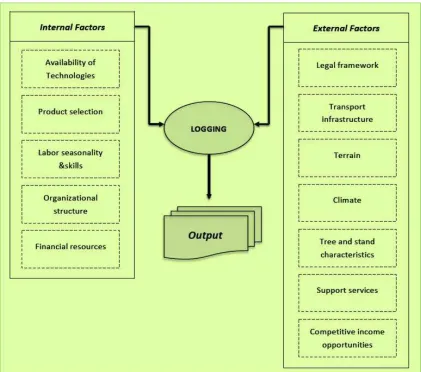
The following chart gives an overview of the most important aspects to be considered in assessing harvesting systems and subsequently selecting appropriate small-scale technologies. They can be grouped into 1) the internal factors under the control of the enterprise and 2) external factors, which, to a large extent, are outside the control of small enterprises. Factors like Improvements to transportation infrastructure and enhanced incorporation of support services could be, at least in the long run, addressed through cooperative structures that are beyond the current financial and managerial capacities of CFEs.
4.1 Legal environment
From a political and legal perspective, the major challenge for promoting viable CFEs is to ensure that regulations effectively address the underlying development problems, including limited access to suitable land, lack of infrastructure, high transaction costs, low levels of technology, restricted access to services and limited capacities. Three factors are addressed below in more detail:
(1) Do the respective laws allow the formation of CFEs in the wood sector and what legal enterprise forms and registration procedures prevail to set up the enterprise? While this issue can usually be addressed, it can cause considerable delays and unnecessary obstacles.
(2) Are restrictions in place on equipment purchase, ownership and operation? In Southeast Asia, we find a range of regulations, which are hardly conducive for applying small-scale harvesting technologies. The following examples illustrate the situation: 1) In Thailand, the purchase of petrol engine chainsaws of any size requires an official permit issued by
Thailand’s Royal Forest Department; even already established enterprises find it difficult to get such permits and thus resort to harvesting systems in which bush cutters are used for felling small- and medium-sized trees. 2) In Lao PDR, chainsaws may be purchased freely – if available – but need to be registered and kept under control of the provincial forest authorities, the equipment only made available on special requests when the owner has to then prove operations to be undertaken are legal. Because many conservationists see chainsaws as the reason for forest destruction, they contribute to a mindset that does not support the cause of efficient small-scale operations.
(3) The use of mobile sawmilling technology is apparently not foreseen in any of the laws in the Mekong region. Laws on establishing sawmills often include restrictions that do not allow construction of sawmills in close vicinity to natural forest areas. This approach makes the idea of mobile sawmilling inside forests not feasible. Furthermore some countries like Lao PDR have an installed over capacity of primary wood processing and further investments are thus difficult to rationalize.