1
MODIFICATION OF TARO FLOUR WITH FERMENTATION
PROCESS
Endang Srihari M
1and Farid Sri Lingganingrum
2Department of Chemical engiinering, Faculty of Engineering, Universitas Surabaya
Abstract
Taro is a food ingredient which contains a lot of carbohydrate. Product, that is come from taro, is still
limited because taro flour hasn’t been available at any market. However, the use of taro flour modified by the
fermentation process may a vary product of taro products, which are cake, bun, cookies, and other cakes. Food product, that using of taro flour is safe to be consumed for some people who have a gluten allergy. The objective of this research was learning the process making of modified taro flour with the process of fermentation, so that the modified taro flour has better characteristics, analyzing the proximate and organoleptic of modified taro flour, and apply the modified taro flour on making brownies and nastar. In this research, material, which were used, were mbote taro, as the main ingredient. Variables that used in this research are the types of microorganisms (Lactobacillus bulgaricus and Rhizopus oryzae) and the long time of fermentation.From this research, the optimal fermentation time for taro flour that fermented with Lactobacillus bulgaricus is 12 hours with the strength of the swelling is 62,96%. While, the optimal fermentation time for taro flour that fermented with Rhizopus oryzae is 3 days with the strength of the swelling is 62,04%. The results of the swelling power from modified taro flour approach the results of the swelling power of wheat flour. Moreover, the modified taro flour with the fermentation process can be applied in making brownies and cake nastar.
Keywords: modified taro flour, Lactobacillus bulgaricus, Rhizopus oryzae, swelling power
INTRODUCTION
Water content in taro quite high that it makes the taro easily damaged and cannot be durable withaout further processing. Taro processing became flour taro is one alternative to having that capability save longer. Flour taro can be used as a substitute for wheat flour, where wheat flour made from wheat that until recently was still import in Indonesia. From the results of previous research, it was stated that flour taro not containing gluten so that it can be consumed by the kids who have special needs. But taro flour not having ability expands as wheat flour.
For some people that having an allergy sufferers gluten and autistic consume wheat can be fatal , which can cause itching on the skin and damage to a smooth surface the intestinal wall that results in inability the intestinal wall of absorbing nutrients. While in flour taro not having gluten content, so that safe for individual having an allergy to gluten. Taro flour having weakness namely pastry and the bread made with taro farinaceous substance could not inflate as wheat flour.
To flour taro can replace of wheat then flour taro must be modified . One technique modification is by means fermentation. The modification which products produced having the characteristics of a better that is can be expands at the time of processed into food, like cake, bread, noodles, biscuit, and others.
Flour taro modified with the process of fermentation in this study using lactobacillus bulgaricus and rhizopus oryzae. Lactobacillus bulgaricus is lactic acid bacteria , while rhizopus oryzae is one type of mildew
This study attempts to make a modification of taro flour with characteristics that more developed that they can be an alternative a substitute for wheat flour .Then , flour taro modified were analysed with the proximate analysis , organoleptik and apply in some food products , as brownis and nastar .
RESEARCH METHODS
2
The analysis conducted in both types of flour modified is a total plate count, analysis of the ability to inflate flour, and analysis of organoleptik flour taro modified. Analysis of the ability to inflate flour used to select flour modified who have the ability to inflate the highest.Research the second stage is to know the characteristics of flour taro modified which includes characteristic proximate ( the water level , protein , coarse fiber , ashes , starch ) , the application of flour taro on food products , and analysis of organoleptik against the application of flour taro on food products
.
RESULTS AND DISCUSSION
1.
Total Plate CountFigure 1. The Results of the TPC curve using bacteria Lactobacillus bulgaricus
Based on figure 1 lactobacillus bulgaricus having a phase growth , among others include adaptation phase , phase logarithmic growth , growth phase fixed ( static ) and phase death. At the beginning of fermentation , lactobacillus surroundings. The growth of lactobacillus bulgaricus 6 hours until 9 hours undergo division cells rapidly. It can be seen based on figure 1 where at 0 hours to 12 hours lactobacillus bulgaricus growth is much higher. This could be occurred because at medium from 0 hours till 12 hours there are still content the necessary nutrients required as a source of food to do cell division. After passing fermentation process for 12 hours , the number of lactobacillus bulgaricus begins to decrease and obtained the number of microorganisms of 3,8x10⁶ cfu / ml.
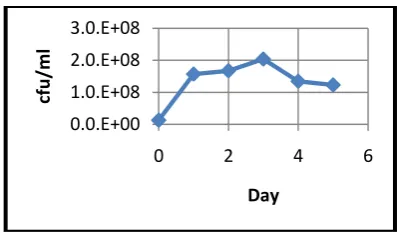
Figure 2. The Results of the TPC curve using bacteria Rhizopus oryzae
The highest growth of cells rhizopus oryzae seen in fermentation time for 3 days with the number of cells rhizopus oryzae obtained 2x10⁸ cfu/ml. After passing through the process of fermentation for 3 days a decline in the number of cells rhizopus oryzae into on day 4 and day to 5. This may be because nutrients in the medium is up, so that the number of cells the dead the longer will increase.
2.
The ability of flour taro modified to inflateOne important factor in flour is the
ability to inflate.The research, it can be seen
the ability inflate wheat flour is 66,67 %, while
the ability inflate flour taro who do not
modified is 25 %.
Figure 3. Inflate flour ability of taro fermented with lactobacillus bulgaricus
Figure 3, seen that flour taro the modification which have the ability to inflate highest was the fermentation for 12 hours is as much as 62,96 %. It is to be supported by the analysis result of tpc, whereby on when fermented for 12 hours the number of cells lactobacillus bulgaricus is the highest 3,8x10⁶ cfu/ml.
Based on research, the correlation between the ability to develop and the total plate count is expands the ability and total plate count taro flour modified use of lactobacillus bulgaricus rise to the fermentation for 12 hours .The increased capacity 0.0.E+00
1.0.E+06 2.0.E+06 3.0.E+06 4.0.E+06
0 3 6 9 12 15
C
fu
/m
l
hour
0.0.E+00 1.0.E+08 2.0.E+08 3.0.E+08
0 2 4 6
cf
u
/m
l
Day
0.000 20.000 40.000 60.000 80.000
0 3 6 9 1215
%
Hour
3
to inflate flour allegedly due to elevated levels of protein in flour taro modified resulting from single cell proteins. An increase in levels of a protein will help the ability of binding the water so as the retention of gas will increase , as a result there will be an increase the ability of developing a dough of flour .In addition , believed to be due to lactobacillus bulgaricus can produce gas co2 when aimed modification of taro with flour . The larger the total number lactobacillus bulgaricus , more and more gas CO2 resulted by that will affect the ability of inflate flour .Lactobacillus bulgaricus included the types of bacteria that is both thermoduric ( microorganisms that is resistant to high temperatures ) that makes lactobacillus bulgaricus still alive even though i was done drying flour taro until temperature 75oc . The ability inflate flour taro that equipped by lactobacillus bulgaricus decreased when fermented 15 hours . It was because the number of lactobacillus bulgaricus decreased. So that , the less lactobacillus bulgaricus that can produce gas CO2Figure 4 .A curve the ability inflate flour taro that equipped by oryzae rhizopus
Inflate flour ability of taro modified using rhizopus oryzae the highest is 3 days , namely on 61,29 %. It is to be supported by the analysis result of tpc , where at the time of ferment for 3 days showed the growth of rhizopus oryzae most higher by 2 x 10⁸ / cfu mls . rhizopus oryzae at various times having a brownish color. Flour taro modified by rhizopus oryzae of a brownish color due to the presence of oxygen causes a reaction enzimatis browning. Scent on each flour taro produced same .The scent of savory arises from each as a result. In flour taro that that is modified rhizopus oryzae use a little more rough compared with flour taro that uses lactobacillus bulgaricus. A sense of being inflicted on flour taro that equipped by lactobacillus bulgaricus is a sour
taste , while in flour modified by rhizopus oryzae give rise to a taste like flour in general. Flour taro are modified with the process of fermentation using lactobacillus bulgaricus having the character of organoleptik more resembling wheat flour compared with the process of fermentation using oryzae rhizopus
4. Proximate analysis flour taro modified
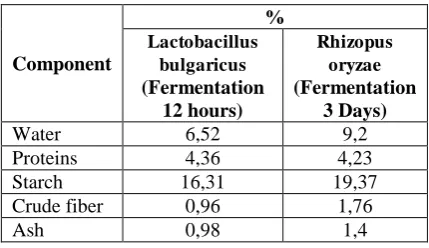
Table 1. The proximate flour taro modified use of lactobacillus bulgaricus and oryzae rhizopus
Component flour taro modified use of lactobacillus bulgaricus 6,52 % , while flour taro modified use of rhizopus oryzae 9.2 % .The age of keep flour produced will be longer than the age of keep segarnya tubers , because of the water content low in food can prevent and hinder the growth of microorganisms destroyer.
Levels of a protein on the taro fresh is 3 % (2).In this research levels of a protein flour taro modified using lactobacillus bulgaricus worth 4,36 % while flour taro modified using rhizopus worth 4,23 oryzae %.The increase in protein it is because of the ability of lactobacillus bulgaricus and rhizopus oryzae to produce protein into the taro (1).
Levels of carbohydrates ( mostly in the form of starch ) on taro fresh is 29 % (2). Levels of starch flour taro modified using lactobacillus bulgaricus worth 16,31 % while flour taro modified using rhizopus worth 19,37 oryzae %. Based on literature (1), after experiencing the process of fermentation, flour taro modified resulting decreased levels of starch, because organic material ( starch ) has been used to meet energy needs for growth microorganisms. Lactobacillus bulgaricus on, starch used for the source of nutrients, converted into simple sugars and produces lactic acid.While in rhizopus oryzae, starch used also for the source of nutrition and converted into simple sugars.
4
lactobacillus bulgaricus higher than using rhizopus oryzae .This allegedly because mikrooganisme also affecting structure starch content that cause differences in the comparison of amylose with it is produced by lactobacillus bulgaricus and rhizopus oryzae. The existence of a working enzyme -amylase produced by microorganisms in hydrolyze starch is by cutting a bond 1.4 -glikosidik but not cut ties 1.6 -glikosidik. The type of a bond polymers in of amylose more easily cut by an enzyme -amylase than any type of a bond polymers in it is. Of amylose that is cut used to be simple sugar. The higher amilopektin is going to cause increasingly high bind water ability.Taro fresh have levels of coarse fiber of 1.9 % (2). Levels of a fiber obtained from flour taro modified use of lactobacillus bulgaricus 0,96 % , while in flour taro modified use of rhizopus oryzae 1.76 %. Of the results can be seen that the level of fiber flour taro modified use rhizopus oryzae higher than flour taro modified use of lactobacillus bulgaricus .This influence on the characteristics of tenderness flour produced , where flour taro modified use rhizopus oryzae produces flour more coarse compared with flour taro modified use of lactobacillus bulgaricus.
Ashes in levels of tubers fresh taro equal to 1.3 % (2) .Levels of ashes in flour taro are modified with the process of fermentation using lactobacillus bulgaricus obtained was that 0,98 % , while in flour taro that equipped by rhizopus oryzae of 1.4 %. The high levels of the ashes of the food in a show of the total mineralnya content .
5. Organoleptik analysis flour taro modified as raw materials for the manufacture of nastar cake and cookies brownis.
Analysis organoleptik cake nastar and brownis from the flour taro modification done on this research include color, scent, texture, taste and the whole. Cake brownis assessment and nastar done by 10 people. The following is a cake nastar pictures with flour taro modified using lactobacillus bulgaricus , rhizopus oryzae , wheat flour , and flour taro.
Nastar different color with each other on a kind of flour and composition of the flour used. On nastar with a composition of 100 % flour taro are modified with the process of fermentation using lactobacillus bulgaricus having a color more bright compared with nastar who uses 100 % flour taro are modified with the process of fermentation using rhizopus oryzae. Nastar with flour taro modified use rhizopus oryzae has a slightly more fragrant
than with nastar using flour taro modified use of lactobacillus bulgaricus .Nastar with the composition of 100 percent of flour taro modified use rhizopus oryzae having a more gentle of nastar with the composition of 100 percent of flour taro modified use of lactobacillus bulgaricus. On nastar using 100 percent of flour taro modified use of lactobacillus bulgaricus give a sense more acid nastar compared with using 100 percent of flour taro modified use oryzae rhizopus .This is because , taro flour used has experienced the process of fermentation using lactic acid bacteria , namely that lactobacillus bulgaricus flour modified produced are more acid .
Brownis color do not differ much between one from the others , which is brownish color. To brownis with flour taro modified use of lactobacillus bulgaricus and rhizopus oryzae having a color not much different , that is equally brownish .This is because the content of chocolate enough in brownis , so that colors flour which initially was different become less look after processed into brownis. The aroma of chocolate did not differ much can be found in brownis with the composition of 100 % flour taro modified by lactobacillus bulgaricus and rhizopus oryzae. Brownis with the composition of 100 % flour taro modified by rhizopus oryzae having a softer than on brownis with the composition of 100 % flour taro modified by lactobacillus bulgaricus. Brownis produced with different types of and composition different flour Will cause a sense of relatively no different with each other , because of which it has been closed to the chocolate. To brownis with 100 percent of flour taro modified use of lactobacillus bulgaricus which was originally on nastar tasteless acid , now a sour taste that there have been lost .
Overall for products and brownis nastar if viewed from the observation that includes the scent , taste and texture and flour taro modified with the process of fermentation using rhizopus oryzae better than with flour taro modified with the process of fermentation using lactobacillus bulgaricus .But , when viewed in terms of appearance which is the color of the food products and flour taro modified with the process of fermentation using lactobacillus bulgaricus better than flour taro modified with the process of fermentation using rhizopus oryzae
.
CONCLUSIONS AND
RECOMMENDATIONS
Conclusions
From research can be summed up as follows: 1. Inflate flour ability of taro modified using
5
2. Flour taro modified using lactobacillusbulgaricus have time optimal fermentation 12 hours and flour taro modified using rhizopus oryzae have time optimal fermentation 3 days. 3. Flour taro modified using rhizopus oryzae had darker colors compared with flour taro modified using lactobacillus bulgaricus. 4. Flour taro modified use of lactobacillus
bulgaricus have the water content 6,52 %; ash 0,98 %; protein 4,36 %; coarse fiber 0,96 %; and starch 16,31 % , while flour taro modified use rhizopus oryzae have the water content 9.2 %; ash 1.4 %; protein 4,23 %; coarse fiber 1.76 %; and 19.37 % .
5. Flour taro modified use of lactobacillus bulgaricus and rhizopus oryzae can be applied as one of the material making brownis nastar and cake.
RECOMMENDATION.
1. In the next research analysis should be done proximate against flour taro has not been modified in order to know the difference between analysis proximate flour taro that was modified with flour taro that has not been modified.
2. Further research needs to be modified taro flour using bacteria food grade another to gain characteristics similar with wheat flour .
NOTASI
TSA : tinggi tepung yang disuspensikan
dengan air (cm)
TSE : tinggi tepung yang disuspensikan
dengan etanol (cm)
REFERENCES
1. Andawulan, N, (2010), “Analisa Pangan”, Jakarta, Penerbin Dian Rakyat.
2. Dewi, C.,(2004) Produksi gula Reduksi oleh
Rhizopus Oryzae dari Substrat Bekatul”,
Bioteknologi 2 (1) : 21-26, Mei 2005, ISSN :0216-6887.
3. Fennema, O.W., (1985), “Principle of food
science, food chemistry”,2nd
ed,Marcel Dekker Inc, New York.
4. Frazier, W., (1978), Food Microbiology Third Edition, New Delhi : Tata Mc graw-Hill Publishing Company limited.
5. Hadiwiyoto, S., (1983), “Teori dan Prosedur
Pengujian Mutu Susu dan Hasil Olahannya”,
Yogyakarta, Liberty.
6. Indriati, N., (2010), “Penggunaan Dichloran RoseBengal Chloramphenicol Agar (DRBC) Sebagai Media Tumbuh Kapang Pada Produk
Perikanan”, Jurnal Pascapanen dan
Bioteknologi Kelautan dan perikanan Vol.2 No.2.
7. Kurniati, L.I., Nur A, Setiyo G, dan Tri W,
(2012), “Pembuatan Mocaf (Modified Cassava Flour) dengan Proses Fermentasi menggunakan Lactobacillus plantarum, Saccharomyces cereviseae, dan Rhizopus oryzae”, Jurnal Teknik POMITS Vol.1, No. 2, (2012)1-6., 8. McLandsborough, L., (2003), Food
Microbiology Laboratory”, New York, CRC
Press.
9. Minarro, B., (2010) Influence of Unicellular Protein on Gluten-Free Bread Characteristics”, Eur Food Res Technol (2010) 231:171-179. 10.Nollet, L.M.L., (1996), “Handbook of Food
analysis”, vol 1, Marcel Dekker, Ic. N.Y,
Bassel.
11.Nurani, D., (2013), “Optimasi Proses Produksi Tepung Talas (Coloasia Esculenta, L.Schott)
Termodifikasi Secara fermentasi”, Jurnal
IPTEK, Volume 8, Nomor 1, April 2013: 65-71 12.Soekarto, S.T., (1985), “Penilaian Organoleptik
untuk Industri Pangan dan hasil Pertanian”,
Fakultas Teknologi Pertanian IPB Jurusan Ilmu dan Teknologi Pangan, Pusat Pengembangan Teknologi Pangan IPB, Bogor.
13.Suhaili A.; Sasangka P.; sutrisno, (2013),
“Penentuan Kondisi Optimum Fermentasi
Menggunakan Lactobacillus Bulgaricus Dalam Pembuatan Tepung Suweg (Amorphophallus
Campanulatus) Terfermentasi”, Kimia Student
Journal, Vol.2 No 1, pp 463-469, Universitas Brawijaya Malang
14.Syamsir, E., (2012), “Talas, Andalan Bogor”, Institut Pertanian Bogor.
15.Winarno, (1984), “Pengantar Teknologi