R E S E A R C H A R T I C L E
Open Access
Completeness and timeliness of tuberculosis
notification in Taiwan
Hsiu-Yun Lo
1,2, Shiang-Lin Yang
2, Pesus Chou
1, Jen-Hsiang Chuang
1,2and Chen-Yuan Chiang
3,4,5*Abstract
Tuberculosis (TB) is a notifiable disease by the Communicable Disease Control Law in Taiwan. Several measures have been undertaken to improve reporting of TB but the completeness and timeliness of TB notification in Taiwan has not yet been systemically evaluated.
Methods:To assess completeness and timeliness of TB notification, potential TB cases diagnosed by health care facilities in the year 2005-2007 were identified using the reimbursement database of national health insurance (NHI), which has 99% population coverage in Taiwan. Potential TB patients required notification were defined as those who have TB-related ICD-9 codes (010-018) in the NHI reimbursement database in 2005-2007, who were not diagnosed with TB in previous year, and who have been prescribed with 2 or more types of anti-TB drugs. Each potential TB case was matched to the national TB registry maintained at Taiwan Centers for Disease Control (CDC) by using national identity number or, if non-citizen, passport number to determine whether the patients had been notified to local public health authorities and Taiwan CDC. The difference in the number of days between date of anti-tuberculosis treatment and date of notification was calculated to determine the timeliness of TB reporting. Results:Of the 57,405 TB patients who were prescribed with 2 or more anti-tuberculosis drugs, 55,291 (96.3%) were notified to National TB Registry and 2,114 (3.7%) were not. Of the 55,291 notified cases, 45,250 (81.8%) were notified within 7 days of anti-tuberculosis treatment (timely reporting) and 10,041(18.2%) after 7 days (delayed reporting). Factors significantly associated with failure of notification are younger age, previously notified cases, foreigner, those who visited clinics and those who visited health care facilities only once or twice in 6 months. Conclusion:A small proportion of TB cases were not notified and a substantial proportion of notified TB cases had delayed reporting, findings with implication for strengthening surveillance of tuberculosis in Taiwan. Countries where the completeness and timeliness of TB notification has not yet been evaluated should take similar action to strengthen surveillance of TB.
Keywords:Completeness, Notification, Reporting, Tuberculosis
Background
Tuberculosis (TB) remains a major public health pro-blem in Taiwan. In 2009, a total of 13827 TB cases (13336 new and 491 relapse) were notified to Taiwan Centers for Disease Control (CDC); the notification rate of TB was 59.9 per 100000 population and TB mortality was 3.2 per 100000 population [1]. Complete and timely notification of TB to public health authorities is one of the essential components of TB control [2]. In Taiwan, notification of TB initiates assessment of TB cases by
public health nurses, assignment of directly observed therapy (DOT) observers, and contact tracing. Proper notification of TB provides surveillance data to keep track of the epidemic of tuberculosis.
TB is a notifiable disease by the Communicable Dis-ease Control Law in Taiwan. Several measures have been undertaken to improve notification of TB. The Bureau of National Health Insurance (NHI) introduced the no-notification-no- reimbursement (NNNR) policy and the notification-fee (NF) policy in 1997, resulting in a prompt increase in TB notification and the number of notified TB cases reached a historical peak in 1997 [3]. Further, Taiwan CDC periodically cross matched vital
* Correspondence: [email protected] 3
Department of Lung Health and NCDs, International Union Against Tuberculosis and Lung Disease, boulevard Saint-Michel, 75006 Paris, France Full list of author information is available at the end of the article
registration and National TB registry to identify failure of notification of cases who died of TB.
The completeness and timeliness of TB notification in Taiwan has not yet been systemically evaluated. The Bureau of NHI maintains a reimbursement database containing health care services provided by health care facilities who have signed contracts with the Bureau of NHI. We use the NHI reimbursement database to assess completeness and timeliness of TB notification in Tai-wan. We report results of this study.
Materials
We identify potential TB cases diagnosed by health care facilities in 2005-2007 using prescription records of the NHI reimbursement database. Each potential TB case was matched to the national TB registry maintained at Taiwan CDC by using national identity number or, if non-citizen, passport number to determine whether the patient had been notified to local public health authori-ties and Taiwan CDC. The difference in the number of days between date of anti-TB treatment and date of notification was calculated to determine the timeliness of TB reporting.
National health insurance database
The NHI Program was run by the government under the principle of mandatory and universal enrollment. The proportion of the population insured under the NHI Program was initially 92% when the NHI program was launched in 1995, and 99% of the populations was covered by NHI in the end of 2008 [4,5]. With the implementation of the NHI program, most hospitals and clinics (more than 90%) have signed contracts with the Bureau of NHI, and fee-for-service is reimbursed by the Bureau of NHI on a monthly schedule. The NHI reim-bursement database is case-based, including individual information of national identity number, sex, birthday, dates of outpatient visit and hospitalization, examina-tions, diagnosis using the International Classification of Disease, ninth revision (ICD-9) coding system and treatment.
TB services in Taiwan
TB service was mainly provided through a vertical pro-gramme in the past. Re-structuring of the TB control programme took place in 2001. Thereafter, diagnosis and treatment of TB have been provided through gen-eral health care system. Currently, TB patients can receive anti-TB treatment in any clinic or hospital, through the coverage of the NHI Program. However, there is no TB case register at facility level. Manage-ment of TB cases (DOT, contact tracing) are the responsibility of the public sector. The link between general health care facilities and the public sector for
the management of TB cases is established through TB notification.
TB notification and the computerized TB registration system
Taiwan has established a TB registry for decades. Taiwa-nese regulations stipulate that all suspected and con-firmed TB cases should be reported to the local Department of Health in each city/county within 7 days. Upon receiving notification, a public health nurse (PHN) in each township/village health station is respon-sible for patients visit (within seven days of notification), completion of a standard registration form, and supervi-sion of DOT observers in performing DOT. A compu-terized National TB Register with a registration network was established in 1994 [3]. With the establishment of the computerized system, the PHN in each township/vil-lage health station is responsible for entering reports of suspected and confirmed TB cases (reported cases) into the National TB Register via the registration network. A web-based TB notification system was launched in 2002. The proportion of TB notified through the web-based notification system was 78.8% in 2005, 88.5% in 2006, and 94% in 2007. The TB registry is also a case-based system including patients’national identity number (or, if non-citizen, passport number), birthday, sex, bacterio-logical examination (smear for acid-fast stain and cul-ture forM. tuberculosis), site of disease (pulmonary TB, extrapulmonary TB), date of initiation of anti-TB treat-ment, treatment regimen, and outcome of treatment.
Definition of TB case
For the purpose of this study, TB patients required noti-fication are those who have TB-related ICD-9 codes (010-018) in the NHI reimbursement database in 2005-2007, who were not diagnosed with TB in previous year, and who have been prescribed with 2 or more types of anti-TB drugs, including Isoniazid (H), Ethambutol (E), Rifampin (R), Pyrazinamide (Z), Prothionamide (PAS), Aminogylcoside (streptomycin, amikacin, and kanamy-cin) and Quinolone (ciprofloxacin, levofloxacin, ofloxa-cin and moxifloxaofloxa-cin), within 6 months.
Procedure of investigation
1. We identified patients who had TB-related ICD-9 codes in the NHI reimbursement database in 2005-2007. 2. We excluded those who already had TB-related ICD-9 codes in previous year.
3. We checked whether patients who were newly assigned with TB-related ICD-9 codes have been pre-scribed with anti-TB drugs.
been notified by 30 June 2008. Cases who could not be found at the national TB registry were classified as not notified. For those who have been notified previously and who have retreatment of TB in 2005-2007, we checked whether they were re-notified as retreatment cases. If not, they were also classified as not notified.
5. We investigated factors associated with failure of notification.
6. We calculated the difference in the number of days between date of initiation of anti-TB treatment and date of notification to assess timeliness of notification. Cases notified within 7 days of anti-TB treatment are classified as having timely reporting and after 7 days delayed reporting.
7. We investigated factors associated with delayed reporting.
8. We checked the completeness of data entry of criti-cal fields of notification form, including name, sex, birthday, address, reporting health care facilities, medical chart number, name of reporting doctor, date of diagno-sis, site of disease (pulmonary and/or extrapulmonary) and smear examinations.
Statistics analysis
SAS 9.2 (SAS Institute Inc., Cary, NC, USA) and Micro-soft Excel 2007 were used for data management and analysis. We assessed whether, age group, sex, type of case, nationality, type of health care facilities, and num-ber of visit to health care facilities in 6 months were associated with failure of notification of TB and delayed reporting in univariate analysis by chi square test. Vari-ables that were significantly associated with failure of notification or delayed reporting in a univariate analysis (P< 0.05) were selected for multivariable logistic regres-sion analyses by stepwise approach and likelihood ratio test was used to determine the final fitted model. Strati-fied analysis was performed to assess interaction in under-notification between nationality, type of cases and number of health care facilities visits in 6 months, and in delayed reporting between age groups, type of cases and type of health care facilities. P value < 0.05 was regarded as statistically significant.
This study was approved by the Institute Review Board of Taiwan CDC.
Results
There were 209,095 patients who had TB-related ICD-9 codes in the year 2005-2007 in the NHI reimbursement database. (Figure 1) Of the 209,095 patients, 64,377 (30.8%) had been assigned with TB-related ICD-9 codes in previous year and 144,718 (69.2%) were newly assigned with TB-related ICD-9 codes in the year 2005-2007. Of the 144,718 patients, 84,361 (58.3%) were not prescribed with any anti-TB drugs within 6 months
after being assigned with TB-related ICD-9 codes, 2,952 (2.1%) were prescribed with one anti-TB drug, 57,405 (39.7%) were prescribed with 2 or more type of anti-TB drugs. Of the 57,405 patients, 55,291 (96.3%) were noti-fied and 2,114 (3.7%) were not. Of the 57,405 patients, 52,763 (91.9%) were new TB cases and 4,642 (8.1%) were retreatment cases who had been notified pre-viously. Of the 52,763 new TB cases, 1,270 (2.4%) were not notified, and of the 4,642 retreatment cases, 844 (18.2%) were not notified. (p< 0.001)
Table 1 shows factors associated with failure of notifi-cation of TB. The proportion of un-notified cases was higher among patients aged 25-44 years (5.6%) (p < 0.001), retreatment cases (18.2%) (p< 0.001), foreigners (22.8%) (p< 0.001), those who visited clinics (5.9%) (p< 0.001), and those who visited health care facilities only once (14.1%), or twice (8.2%) (p< 0.001), as compared with other groups. In multivariate analysis, factors sig-nificantly associated with failure of notification of TB were age groups (≦24 years, adjOR 1.8, 95% CI 1.5-2.3; 25-44 years, adjOR 2.1, 95% CI 1.8-2.4; 45-64 years, adjOR 1.5, 95% CI 1.3-1.7; as compared with aged 65 years or more), retreatment cases (adjOR 11.5, 95% CI 10.4-12.8), foreigner (adjOR 6.8, 95% CI 5.6-8.1), type of health care facilities (clinic, adjOR 2.3, 95% CI 1.9-2.7; district hospital, adjOR 1.7, 95% CI 1.5-1.9; regional hos-pital, adjOR 1.2, 95% CI 1.1-1.3. as compared with med-ical centers) and number of visits to health care facilities in 6 months (once, adjOR 11.4, 95% CI 10.2-12.7; twice, adjOR 5.3, 95% CI 4.6-6.2, as compared with 3 times or more).
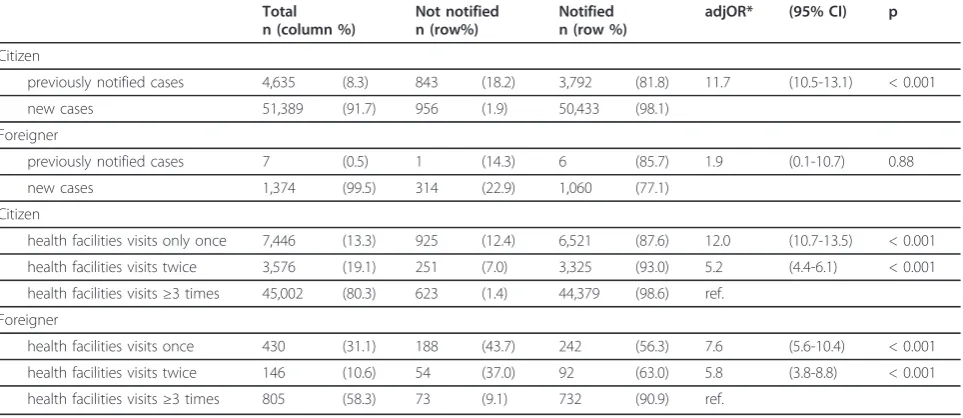
Table 2 shows TB notification among citizen and for-eigner, stratified by type of case and number of health facilities visits. The proportion of previously notified cases among citizens was higher than that among for-eigners (8.3% vs. 0.5%). The interaction between nation-ality and type of case was statistically significant (p= 0.04). The association between type of case and under-notification was statistically significant among citizens but not among foreigners. Under-notification of new TB cases was substantial among foreigners but not among citizens (22.9% vs. 1.9%). The proportion of patients who had visited health facilities for only once in 6 months was higher among foreigners than that among citizens (31.1% vs. 13.3%). The interaction between nationality and number of visits to health care facility in 6 months was also statistically significant (nationality * once: p < 0.01; nationality * twice: p= 0.63). Under-notification of those who visited health facilities only once (43.7%) or twice (37.0%) was particularly high among foreigners.
31-90 days and 0.7% after 90 days) and were considered as having delayed reporting. Higher proportions of new cases were notified within 7 days of anti-TB treatment (81.3% in 2005, 82.8% in 2006 and 84.1% in 2007) as compared with retreatment cases (73.5% in 2005, 72.8%
in 2006, 65.9% in 2007) (p< 0.001). (Table 3). The pro-portion of retreatment cases with timely reporting was 73.5% in 2005, which decreased to 65.9% in 2007.
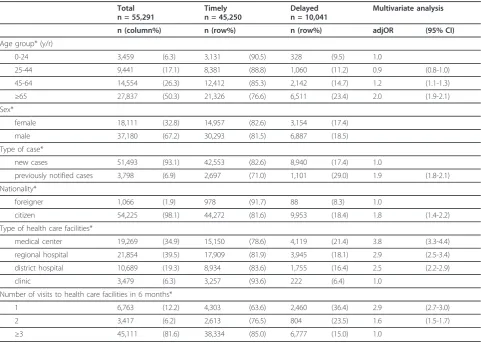
Table 4 shows factors associated with delayed reporting. In multivariate analysis, factors significantly
Notified
n=16,819
(96.8%)
Not
notified
n=554
(3.2%)
Notified
n=20,034
(95.5%)
Not
notified
n=941
(4.5%)
In the year 2005
n=20,975
In the year 2006
n=19,057
In the year 2007
n=17,373
Patients not prescribed with any
anti-tuberculosis drug (n=84,361)
30,021 in the year 2005
30,948 in the year 2006
23,392 in the year 2007
Patients prescribed with only one
anti-tuberculosis drug (n=2,952)
1,175 in the year 2005
968 in the year 2006
809 in the year 2007
Patients with tuberculosis-related
ICD-9 codes, 2005-2007
(n=209,095)
Patients newly assigned with
tuberculosis-related ICD-9 codes
(n=144,718)
52,171 in the year 2005
50,973 in the year 2006
41,574 in the year 2007
Patients with tuberculosis-related
ICD-9 codes in previous year
(n=64,377)
Patients prescribed with 2 or more
anti-tuberculosis drugs, 2005-2007
(n=57,405)
Notified
n=18,438
(96.8%)
Not
notified
n=619
(3.2%)
Table 1 Factors associated with failure of notification of tuberculosis in Taiwan, 2005-2007
Total n = 5,7405 n (column%)
Notified n = 55,291 n (row%)
Not notified n = 2,114 n (row%)
Multivariate analysis adjOR (95% CI)
Age group (y/r)*
0-24 3,584 (6.2) 3,459 (96.5) 125 (3.5) 1.8 (1.5-2.3)
25-44 9,996 (17.4) 9,441 (94.4) 555 (5.6) 2.1 (1.8-2.4)
45-64 15,072 (26.3) 14,554 (96.6) 518 (3.4) 1.5 (1.3-1.7)
≥65 28,753 (50.1) 27,837 (96.8) 916 (3.2) 1.0
Sex*
male 38,534 (67.1) 37,180 (96.5) 1,354 (3.5)
female 18,869 (32.9) 18,111 (96.0) 758 (4.0)
Type of case*
new cases 52,763 (91.9) 51,493 (97.6) 1,270 (2.4) 1.0
previously notified cases 4,642 (8.1) 3,798 (81.8) 844 (18.2) 11.5 (10.4-12.8)
Nationality*
citizen 56,024 (97.6) 54,225 (96.8) 1,799 (3.2) 1.0
foreigner 1,381 (2.4) 1,066 (77.2) 315 (22.8) 6.8 (5.6-8.1)
Type of health care facilities*
medical center 19,770 (34.4) 19,269 (97.5) 501 (2.5) 1.0
regional hospital 22,664 (39.5) 21,854 (96.4) 810 (3.6) 1.2 (1.1-1.3)
district hospital 11,273 (19.6) 10,689 (94.8) 584 (5.2) 1.7 (1.5-1.9)
clinic 3,698 (6.4) 3,479 (94.1) 219 (5.9) 2.3 (1.9-2.7)
Number of visits to health care facilities in 6 months*
once 7,876 (13.7) 6,763 (85.9) 1,113 (14.1) 11.4 (10.2-12.7)
twice 3,722 (6.5) 3,417 (91.8) 305 (8.2) 5.3 (4.6-6.2)
3 or more 45,807 (79.8) 45,111 (98.5) 696 (1.5) 1.0
* Statistically significant in univariate analysis (P< 0.05).
Table 2 Tuberculosis notification among citizen and foreigner, stratified by type of case and number of health facilities visits
Total n (column %)
Not notified n (row%)
Notified n (row %)
adjOR* (95% CI) p
Citizen
previously notified cases 4,635 (8.3) 843 (18.2) 3,792 (81.8) 11.7 (10.5-13.1) < 0.001
new cases 51,389 (91.7) 956 (1.9) 50,433 (98.1)
Foreigner
previously notified cases 7 (0.5) 1 (14.3) 6 (85.7) 1.9 (0.1-10.7) 0.88
new cases 1,374 (99.5) 314 (22.9) 1,060 (77.1)
Citizen
health facilities visits only once 7,446 (13.3) 925 (12.4) 6,521 (87.6) 12.0 (10.7-13.5) < 0.001
health facilities visits twice 3,576 (19.1) 251 (7.0) 3,325 (93.0) 5.2 (4.4-6.1) < 0.001
health facilities visits≥3 times 45,002 (80.3) 623 (1.4) 44,379 (98.6) ref.
Foreigner
health facilities visits once 430 (31.1) 188 (43.7) 242 (56.3) 7.6 (5.6-10.4) < 0.001
health facilities visits twice 146 (10.6) 54 (37.0) 92 (63.0) 5.8 (3.8-8.8) < 0.001
health facilities visits≥3 times 805 (58.3) 73 (9.1) 732 (90.9) ref.
associated with delayed reporting were the following: patients aged 45-64 years (adjOR 1.2, 95% CI 1.1-1.3), ≧ 65 years (adjOR 2.0, 95% CI 1.9-2.1), as compared with patients aged ≦24 years; previously treated cases (adjOR 1.9, 95% CI 1.8-2.1) as compared with new cases; citizens (adjOR 1.8, 95% CI 1.4-2.2) as com-pared with foreigners; patients treated in medical cen-ter (adjOR 3.8, 95% CI 3.3-4.4), regional hospital (adjOR 2.9, 95% CI 2.5-3.4) and district hospital (adjOR 2.5, 95% CI 2.2-2.9) as compared with clinic patients; those who visited health care facilities once
(adjOR 2.9, 95% CI 2.7-3.0), or twice (adjOR 1.6, 95% CI 1.5-1.7) in 6 months as compared with 3 times or more. The interaction between age group and type of health facility, and between type of case and type of health facility was statistically significant. Stratifying delayed notification among age groups and type of cases by types of health facilities demonstrated that the proportion with delayed notification was consis-tently highest in medically centers, followed by regio-nal hospital, district hospital and clinics in all strata (data not shown).
Table 3 Timeliness of notification of tuberculosis in Taiwan, 2005-2007
Number of patients (%) New cases Previously notified cases
2005 2006 2007 2005 2006 2007
n (%) n (%) n (%) n (%) n (%) n (%)
Total 55,291 100.0 18,662 100.0 17,135 100.0 15,696 100.0 1,372 100.0 1,303 100.0 1,123 100.0
0-7 days 45,250 81.8 15,176 81.3 14,181 82.8 13,196 84.1 1,008 73.5 949 72.8 740 65.9
8-30 days 8,006 14.5 2,771 14.8 2,362 13.8 2,040 13.0 280 20.4 273 21.0 280 24.9
31-90 days 1,630 2.9 555 3.0 477 2.8 399 2.5 51 3.7 62 4.8 86 7.7
≧91 days 405 0.7 160 0.9 115 0.7 61 0.4 33 2.4 19 1.5 17 1.5
Table 4 Factors associated with delayed reporting of tuberculosis in Taiwan, 2005-2007
Total n = 55,291
Timely n = 45,250
Delayed n = 10,041
Multivariate analysis
n (column%) n (row%) n (row%) adjOR (95% CI)
Age group* (y/r)
0-24 3,459 (6.3) 3,131 (90.5) 328 (9.5) 1.0
25-44 9,441 (17.1) 8,381 (88.8) 1,060 (11.2) 0.9 (0.8-1.0)
45-64 14,554 (26.3) 12,412 (85.3) 2,142 (14.7) 1.2 (1.1-1.3)
≥65 27,837 (50.3) 21,326 (76.6) 6,511 (23.4) 2.0 (1.9-2.1)
Sex*
female 18,111 (32.8) 14,957 (82.6) 3,154 (17.4)
male 37,180 (67.2) 30,293 (81.5) 6,887 (18.5)
Type of case*
new cases 51,493 (93.1) 42,553 (82.6) 8,940 (17.4) 1.0
previously notified cases 3,798 (6.9) 2,697 (71.0) 1,101 (29.0) 1.9 (1.8-2.1)
Nationality*
foreigner 1,066 (1.9) 978 (91.7) 88 (8.3) 1.0
citizen 54,225 (98.1) 44,272 (81.6) 9,953 (18.4) 1.8 (1.4-2.2)
Type of health care facilities*
medical center 19,269 (34.9) 15,150 (78.6) 4,119 (21.4) 3.8 (3.3-4.4)
regional hospital 21,854 (39.5) 17,909 (81.9) 3,945 (18.1) 2.9 (2.5-3.4)
district hospital 10,689 (19.3) 8,934 (83.6) 1,755 (16.4) 2.5 (2.2-2.9)
clinic 3,479 (6.3) 3,257 (93.6) 222 (6.4) 1.0
Number of visits to health care facilities in 6 months*
1 6,763 (12.2) 4,303 (63.6) 2,460 (36.4) 2.9 (2.7-3.0)
2 3,417 (6.2) 2,613 (76.5) 804 (23.5) 1.6 (1.5-1.7)
≥3 45,111 (81.6) 38,334 (85.0) 6,777 (15.0) 1.0
Completion of data entry of critical fields of notifica-tion form were 100% for patients’ name, sex, birthday, address, reporting health care facilities, medical chart number, name of reporting doctors, and date of diagno-sis. Of the 55291 patients, 21 (0.04%) had no informa-tion on site of disease. Of the 51992 pulmonary TB cases, 1386 (2.7%) had no information on smear examinations.
Discussion
Accurate, complete and timely reporting of notifiable diseases provide surveillance data to estimate disease burden, detect sporadic outbreaks and monitor epide-miological trends. Active surveillance may strengthen the completeness and accuracy of passive surveillance data [6-8]. As the majority of Taiwan citizens have been participated in the NHI program, the NHI reimburse-ment database offers a unique opportunity to conduct active surveillance to investigate completeness and time-liness of TB notification in Taiwan. We used prescrip-tion of 2 or more anti-TB drugs to identify potential TB cases diagnosed by clinicians. This approach has been applied in other settings previously [9,10]. Patients who were prescribed with only one anti-TB drugs was not included in this study because the majority of these cases were prescribed with either isoniazid, an aminogly-coside or a fluoroquinolone alone and may not fit the case definition of active TB.
Completeness of reporting of notifiable infectious dis-eases has been reported previously. Doyle and colleagues investigated reporting of notifiable infectious diseases in the US and found that reporting completeness varied from 9% to 99% and was most strongly associated with the disease being reported [6]. Studies in the US using various combinations of data of laboratory, clinic, phar-macy, and hospital discharge records reported that reporting completeness for TB ranged from 65% to 99.5% [8,10-13]. In United Kingdom, under-notification ranged from 7% to 27% [14,15]. Backer et al. listed sev-eral reasons related to under reporting, including insuffi-cient consultation hours, patient privacy, not knowing notification is required, reporting severe disease only, lack of laboratory confirmation, considering other health care worker will report, and not knowing report proce-dure [16].
Under-reporting of TB has been an issue in private sectors as well as public sectors not involved in national TB programme. Chiang et al. did a survey on TB ser-vices in big cities and reported substantial under-report-ing in Bangkok, Dhaka, Jakarta, Karachi, Kathmandu, and Manila [17]. Masjedi et al. investigated notification of 646 smear positive TB patients detected in the private laboratories in Tehran and reported that 87.3% of these patients could not be traced [18]. Improved TB
notification by public-public and public-private mix approach has been reported from studies in China [19], India [20], Indonesia [21], Kenya [22], Myanmar [23], Nepal [24], and Vietnam [19]
Our study revealed that under-notification of TB in Taiwan was not high and decreased from 4.5% in 2005 to 3.2% in 2007, probably reflecting the impact of activ-ities in strengthening surveillance of TB in Taiwan. However, timeliness of TB reporting was a concern because 18.8% of cases had delayed reporting. Younger age groups, especially those aged 25-44 years old, were more likely to be under reported. We speculated that TB may affect their job opportunity resulting in under reporting to keep TB confidential, which highlighted the importance of health education on TB in Taiwan. While delayed reporting decreased from 19.2% in 2005 to 17.1% in 2007 in the study population, delayed reporting occurred more frequently among the elderly. We specu-lated that this was due to difficulty in the diagnosis of TB among the elderly whose clinical manifestations were complicated by co-morbidity. Previously treated cases were substantially under notified (18.2%) and if notified, had delayed reporting (29.0%), probably because the notification system was not clear in guiding re-notification of patients who had already been regis-tered previously. However, under-notification among foreigners was substantial not only in previously notified TB cases but also new TB cases. Further, a high propor-tion of foreigners have visited health care facilities for only once or twice in 6 months. We speculated that these were because they left Taiwan after the diagnosis of TB. Patients who visited health care facilities once or twice in 6 months were associated with under notifica-tion and delayed reporting. We did not know what hap-pen to them (including foreigners). They might be died, or defaulted and remained source of transmission in the community.
notification. Those who were not reported were cap-tured at a later point in time and notified, and were classified as delayed reporting.
Completion of data entry of critical fields of notifica-tion form were 100% for patients’ name, sex, birthday, address, reporting health care facilities, medical chart number, name of reporting doctors, and date of diagno-sis, partly because these fields must be entered in the web-based notification system and because the majority were notified through the web-based system. Sputum smear examinations have been emphasized but were not set as “must enter” reporting fields in the web-based notification system to facilitate timely reporting. Clearly, it is essential to strengthen the information system to obtain results of smear examination of all pulmonary TB cases.
There were constraints of our study. First, results of bacteriological examinations were not available in the NHI reimbursement database. We were not able to determine whether under-notification was associated with bacteriological results. Second, prescription of 2 or more anti-TB drugs was used to identify TB cases. We may miss TB cases who were not prescribed with anti-TB drugs. Third, the NHI database did not specify his-tory of TB treatment. Therefore, previously treated cases may be miss-classified as new cases. Fourth, TB cases who did not participate in the NHI program were not captured by this study. We may under-estimate under notification of these patients. Finally, we did not use capture-recapture technique to estimate completeness of reporting [27]. However, the number of cases included in this study was large and the proportion of population covered by the NHI program was very high, implying that findings of this study is relevant in strengthening surveillance of TB in Taiwan.
Conclusion
In conclusion, a small proportion of TB cases prescribed with 2 or more anti-TB drugs were not notified and a substantial proportion of notified TB cases had delayed reporting. Under-notification of previously notified TB cases requires immediate attention of the surveillance system as the risk of drug-resistance among retreatment TB cases was substantially higher than that among new TB cases. Taiwan CDC should address factors associated with under-notification and delayed reporting to strengthen surveillance of TB in Taiwan. Countries where the completeness and timeliness of TB notifica-tion has not yet been evaluated should take similar action to strengthen surveillance of TB.
Acknowledgements
This study was officially approved by the Taiwan CDC. The authors would like to thank Office of Statistics of Department of Health and Bureau of
National Health Insurance who provided database for data matching. The authors thank all infection control staff of health care facilities and public health nurses of local public health authorities for their contributions in TB reporting and entering data of TB patients into the National TB Surveillance System of Taiwan CDC.
Author details
1Institute of Public Health, Community Medicine Research Center, National
Yang-Ming University, Linong Street, Taipei 11221, Taiwan.2Department of Health, Centers for Disease Control, Linsen S. Road, Taipei 11050, Taiwan. 3Department of Lung Health and NCDs, International Union Against
Tuberculosis and Lung Disease, boulevard Saint-Michel, 75006 Paris, France. 4Department of Internal Medicine, Wan Fang Hospital, Taipei Medical
University, No 111, Section 3 Hsin-Long Road, Taipei 116, Taiwan. 5Department of Internal Medicine, School of Medicine College of Medicine,
Taipei Medical University, Wu-Hsing Street, Taipei 110, Taiwan.
Authors’contributions
HYL and CYC proposed and designed the protocol of the study; HYL and SLY performed data analysis and interpreted the results; HYL wrote the first draft of the manuscript; PC and JHC discussed and revised the first draft of manuscript. CYC critically revised and finalized the manuscript. All authors read and approved the final manuscript.
Competing interests
The authors declare that they have no competing interests.
Received: 27 June 2011 Accepted: 12 December 2011 Published: 12 December 2011
References
1. Centers for Disease Control, Taiwan:Tuberculosis control report 2010.
Centers for Disease Control, Taiwan[http://www.cdc.gov.tw/lp.asp? ctNode=1947&CtUnit=1105&BaseDSD=31&mp=1], Accessed on 26 January 2011.
2. World Health Organization:TB impact measurement. Policy and recommendations for how to assess the epidemiological burden of TB and the impact of TB control. Stop TB policy paper; no. 2.World Health Organization Document2009, 1-58, WHO/HTM/TB/2009.416.
3. Chiang C-Y, Enarson DA, Yang SL, Suo J, Lin TP:The impact of national health insurance on the notification of tuberculosis in Taiwan.Int J Tuberc Lung Dis2002,6:974-979.
4. Bureau of National Health Insurance, Taiwan:National Health Insurance in Taiwan 2010.Bureau of National Health Insurance, Taiwan[http://www.nhi. gov.tw/English/webdata/webdata.aspx?
menu=11&menu_id=290&webdata_id=2974&WD_ID=290], Accessed on 25 June 2011.
5. Cheng TM:Taiwan’s new national health insurance program: genesis and experience so far.Health Aff2003,22:61-76.
6. Doyle TJ, Glynn MK, Groseclise SL:Completeness of notifiable infectious disease reporting in the United States: an analytical literature review.
Am J Epidemiol2002,155:866-874.
7. Bloch AB, Onorato IM, Ihle WW, Hadler JL, Hayden CH, Snider DE:The need for epidemic intelligence.Public Health Rep1996,111:26-33.
8. Curtis AB, McCray E, McKenna M, Onorato IM:Completeness and Timeliness of Tuberculosis Case Reporting. A Multistate Study.Am J Prev Med2001,20:108-112.
9. Maggini M, Salmaso S, Alegiani SS, Caffari B, Raschetti R:Epidemiological use of drug prescriptions as markers of disease frequency. An Italian experience 1991.J Clin Epidemiol1991,44:1299-1307.
10. Yokoe DS, Subramanyan GS, Nardell E, Sharnprapai S, McCray E, Platt R: Supplementing Tuberculosis Surveillance with Automated Data from Health Maintenance Organizations.Emerg Infect Dis1999,5:779-787. 11. Murray RJ, Hayden CH, Zahn F:Irregular reporting of tuberculosis cases
by laboratories in Nassau County, N.Y.Public Health Rep1974,89:385-388. 12. Driver CR, Braden CR, Nieves RL, Navarro AM, Rullan JV, Valway SE,
McCray E:Completeness of tuberculosis case reporting, San Juan and Caguas regions, Puerto Rico, 1992.Public Health Rep1996,111:157-161. 13. Trepka MJ, Beyer TO, Proctor ME, Davis JP:An evaluation of the
14. Pillaye J, Clarke A:An evaluation of completeness of tuberculosis notification in the United Kingdom.BMC Public Health2003,3:31. 15. Teo SS, Alfaham M, Evans MR, Watson JM, Riordan A, Sonnenberg P, Clark J,
Hayward A, Sharland M, Moore-Gillon J, Novelli V, Quinn D, Shingadia D:An evaluation of the completeness of reporting of childhood tuberculosis.
Eur Respir J2009,34:176-179.
16. Backer HD, Bissell SR, Vugia DJ:Disease reporting from an automated laboratory-based reporting system to the state health department via local county health department.Public Health Rep2001,116:257-265. 17. Chiang C-Y, Trébucq A, Billo N, Khortwong P, Elmoghazy E, Begum V,
Aditama TY, Ansari A, Baral SC, Vianzon RG:A survey of TB services in hospitals in seven large cities in Asia and North Africa.Int J Tuberc Lung Dis2007,11:739-746.
18. Masjedi MR, Fadaizadeh L, Taghizadeh Asl R:Notification of patients with tuberculosis detected in the private sector, Tehran, Iran.Int J Tuberc Lung Dis2007,11:882-886.
19. Quy HT, Lan NT, Lönnroth K, Buu TN, Dieu TT, Hai LT:Public-private mix for improved TB control in Ho Chi Minh City, Vietnam: an assessment of its impact on case detection.Int J Tuberc Lung Dis2003,7:464-471. 20. Dewan PK, Lal SS, Lonnroth K, Wares F, Uplekar M, Sahu S, Granich R,
Chauhan LS:Improving tuberculosis control through public-private collaboration in India: literature review.BMJ2006,332:574-577. 21. Irawati SR, Basri C, Arias MS, Prihatini S, Rintiswati N, Voskens J,
Kimerling ME:Hospital DOTS linkage in Indonesia: a model for DOTS expansion into government and private hospitals.Int J Tuberc Lung Dis
2007,11:33-39.
22. Chakaya J, Uplekar M, Mansoer J, Kutwa A, Karanja G, Ombeka V, Muthama D, Kimuu P, Odhiambo J, Njiru H, Kibuga D, Sitienei J: Public-private mix for control of tuberculosis and TB-HIV in Nairobi, Kenya: outcomes, opportunities and obstacles.Int J Tuberc Lung Dis2008, 12:1274-1278.
23. Maung M, Kluge H, Aye T, Maung W, Noe P, Zaw M, Jost SP, Uplekar M, Lönnroth K:Private GPs contribute to TB control in Myanmar: evaluation of a PPM initiative in Mandalay Division.Int J Tuberc Lung Dis2006, 10:982-987.
24. Newell JN, Pande SB, Baral SC, Bam DS, Malla P:Control of tuberculosis in an urban setting in Nepal: public-private partnership.Bull World Health Organ2004,82:92-98.
25. Yoo HS, Park O, Park HK, Lee EG, Jeong EK, Lee JK, Cho SI:Timeliness of national notifiable diseases surveillance system in Korea: a cross-sectional study.BMC Public Health2009,9:93.
26. Ward M, Brandsema P, van Straten E, Bosman A:Electronic reporting improves timeliness and completeness of infectious disease notification, The Netherlands, 2003.Euro Surveill2005,10:27-30.
27. Bassili A, Grant AD, El-Mohgazy E, Galal A, Glaziou P, Seita A, Abubakar I, Bierrenbach AL, Crofts JP, van Hest NA:Estimating tuberculosis case detection rate in resource-limited countries: a capture-recapture study in Egypt.Int J Tuberc Lung Dis2010,14:727-732.
Pre-publication history
The pre-publication history for this paper can be accessed here: http://www.biomedcentral.com/1471-2458/11/915/prepub
doi:10.1186/1471-2458-11-915
Cite this article as:Loet al.:Completeness and timeliness of tuberculosis notification in Taiwan.BMC Public Health201111:915.
Submit your next manuscript to BioMed Central and take full advantage of:
• Convenient online submission
• Thorough peer review
• No space constraints or color figure charges
• Immediate publication on acceptance
• Inclusion in PubMed, CAS, Scopus and Google Scholar
• Research which is freely available for redistribution