REINWARDTIA
A JOURNAL ON TAXONOMIC BOTANY,
PLANT SOCIOLOGY AND ECOLOGY
Vol. 14(1): 1-248, December 23, 2014
Chief Editor
Kartini Kramadibrata (Mycologist, Herbarium Bogoriense, Indonesia)
Editors
Dedy Darnaedi (Taxonomist, Herbarium Bogoriense, Indonesia) Tukirin Partomihardjo (Ecologist, Herbarium Bogoriense, Indonesia) Joeni Setijo Rahajoe (Ecologist, Herbarium Bogoriense, Indonesia) Marlina Ardiyani (Taxonomist, Herbarium Bogoriense, Indonesia) Topik Hidayat (Taxonomist, Indonesia University of Education, Indonesia) Eizi Suzuki (Ecologist, Kagoshima University, Japan)
Jun Wen (Taxonomist, Smithsonian Natural History Museum, USA)
Managing Editor
Himmah Rustiami (Taxonomist, Herbarium Bogoriense, Indonesia) Lulut Dwi Sulistyaningsih (Taxonomist, Herbarium Bogoriense, Indonesia) Secretary
Endang Tri Utami
Layout Editor
Deden Sumirat Hidayat Medi Sutiyatno
Illustrators
Subari
Wahyudi Santoso Anne Kusumawaty
Correspondence on editorial matters and subscriptions for Reinwardtia should be addressed to: HERBARIUM BOGORIENSE, BOTANY DIVISION,
RESEARCH CENTER FOR BIOLOGY- INDONESIAN INSTITUTE OF SCIENCES CIBINONG SCIENCE CENTER, JLN. RAYA JAKARTA - BOGOR KM 46, CIBINONG 16911, P.O. Box 25 Cibinong
INDONESIA
PHONE (+62) 21 8765066; Fax (+62) 21 8765062 E-MAIL: [email protected]
1 2 3
4
1 3 4
4
The Editors would like to thanks all reviewers of volume 14(1):
Abdulrokhman Kartonegoro - Herbarium Bogoriense, Bogor, Indonesia Altafhusain B. Nadaf - University of Pune, Pune, India
Amy Y. Rossman - Systematic Mycology & Microbiology Laboratory USDA-ARS, Beltsville, USA Andre Schuiteman - Royal Botanic Gardens, Kew, UK
Ary P. Keim - Herbarium Bogoriense, Bogor, Indonesia
Barry Conn - Royal Botanic Gardens National Herbarium of New South Wales, Sydney, Australia Dato' Abdul Latiff Mohamad - Universiti Kebangsaan Malaysia, Bangi, Selangor, Malaysia Daniel Potter - Department of Plant Sciences, University of California, Davis, California, USA
Deby Arifiani - Herbarium Bogoriense, Bogor, Indonesia Ferry J. W. Slik - University of Brunei Darussalam, Brunei
Henti H. Rachmat - Conservation and Rehabilitation Research and Development Center, Bogor, Indonesia Ian M. Turner - Royal Botanic Gardens, Kew, UK
Iskandar Z. Siregar - Bogor Agricultural University, Bogor, Indonesia Jay H. Bernstein - Kingsborough Community College, Brooklyn, New York, USA
Jens G. Rohwer - University of Hamburg, Hamburg, Germany Joan Pereira - SAN Herbarium, Sabah Forestry Department, Sabah, Malaysia
Kuswata Kartawinata - Herbarium Bogoriense, Bogor, Indonesia Lars H. Schmidt - University of Copenhagen, Copenhagen, Denmark
Mark Hughes - Royal Botanic Gardens, Edinburgh, UK Masahiro Kato - Kyoto University, Kyoto, Japan Nuril Hidayati - Herbarium Bogoriense, Bogor, Indonesia Ong Poh Teck - Forest Research Institute Malaysia, Kepong, Malaysia
Peter C. van Welzen - National Herbarium Netherlands, Leiden University Branch, Leiden, Netherlands Reuben Nilus - Sabah Forestry Department, Sabah, Malaysia
Rugayah - Herbarium Bogoriense, Bogor, Indonesia
Ruth Kiew - Forest Research Institute of Malaysia, Kepong, Malaysia
REINWARDTIA
Vol 14, No 1, pp: 157 − 162
157
FLORISTIC STUDY OF MEKONGGA PROTECTED FOREST: TOWARDS
ESTABLISHMENT OF THE MEKONGGA NATIONAL PARK
Received January 17, 2014; accepted August 4, 2014
ELIZABETH ANITA WIDJAJA
Herbarium Bogoriense, Botany Division, Research Center for Biology-LIPI, Cibinong Science Center, Jln. Raya Jakarta-Bogor Km. 46, Cibinong 16911, Bogor, Indonesia.Email:[email protected].
DANIEL POTTER
Department of Plant Sciences, University of California, Davis, USA. Email: [email protected]
ABSTRACT
WIDJAJA, E. A. & POTTER, D. 2014. Floristic study of Mekongga protected forest: towards establishment of Mekongga National Park. Reinwardtia 14(1): 157 – 162. ―Mekongga is one of the highest mountains in Southeast Sulawesi. The Mekongga region was declared as protected forest in 1994, after logging had been done in this area. A floristic study of this forest was conducted from 2009 through 2011 by visiting the area twice a year, once each during the dry and wet seasons, and collecting specimens from the flowering and fruiting plants. Other species were also recorded, but most of them cannot be identified because the plants were too young or were not in flower or fruit at the time of collection. Specimens of 855 species in 155 families were collected, of which 5% (44 species) are endemic to Sulawesi and 11% (91 species) are introduced species from China, South America, India, or even Madagascar. In addition, new records for Sulawesi were collected from Mekongga for species originally recorded from Java (50 species), Malaysia (35 species), the Philippines (28 species), New Guinea (14 species), Sumatra (13 species), Borneo (11 species), Moluccas (4 species) and the Lesser Sunda Islands (3 species). Based on these data, it seems that species have mostly migrated to Mekongga from Java, then from Malaysia and the Philippines. More than 10 new species are proposed from this area, including a bamboo (Poaceae) and members of the families Orchidaceae, Gesneriaceae, Melastomataceae, Myrtaceae and Araliaceae. Further study of the floristic account will be done, which can be used as baseline data in support of an important proposal to designate the Mekongga area as a national park.
Key words: Diversity, endemic, flora, Mekongga, mountain, Sulawesi.
ABSTRAK
WIDJAJA, E. A. & POTTER, D. 2014. Studi floristik hutan lindung Mekongga: dalam rangka pembentukan Taman Nasional Mekongga. Reinwardtia 14(1): 157 –162. ― Mekongga merupakan salah satu gunung tertinggi di Sulawesi Tenggara. Kawasan Mekongga dinyatakan sebagai hutan lindung pada tahun 1994, setelah kegiatan pembalakan hutan pada kawasan ini. Studi floristik pada kawasan ini dilakukan dari tahun 2009 sampai 2011 dengan mengunjungi kawasan tersebut dua kali setahun, ketika musim kemarau dan penghujan dan melakukan koleksi spesimen dari tumbuhan yang sedang berbunga dan berbuah. Jenis-jenis lainnya juga dicatat, tetapi kebanyakan tidak bisa diidentifi-kasi karena terlalu muda atau tidak sedang berbunga atau berbuah saat koleksi dilakukan. Selama penelitian, 855 jenis dari 155 suku telah dikoleksi, 5% (44 jenis) merupakan jenis endemik Sulawesi dan 11% (91 jenis) merupakan jenis introduksi dari China, Amerika Selatan, India, atau bahkan Madagaskar. Selain itu, terdapat rekaman baru untuk Sulawesi yang dikoleksi dari Mekongga untuk jenis-jenis yang berasal dari Jawa (50 jenis), Malaysia (35 jenis), Filipina (28 jenis), Niugini (14 jenis), Sumatera (13 jenis), Borneo (11 jenis), Maluku (4 jenis) dan Kepulauan Sunda Kecil (3 jenis). Berdasarkan pada data tersebut diatas, terlihat bahwa jenis-jenis tersebut pada umumnya bermigrasi ke Mekongga dari Jawa, Malaysia dan Filipina. Lebih dari 10 jenis baru diusulkan dari kawasan ini, termasuk didalam-nya bambu (Poaceae) dan jenis-jenis dari suku Orchidaceae, Gesneriaceae, Melastomataceae, Myrtaceae dan Arali-aceae. Penelitian lebih lanjut mengenai jumlah flora akan dilakukan, yang dapat digunakan sebagai data dasar dalam menunjang proposal penting untuk menjadikan Mekongga sebagai kawasan taman nasional.
REINWARDTIA
158 [VOL.14
INTRODUCTION
Sulawesi is one of the five large islands in Indonesia. Botanically the island is fascinating, with a high degree of endemism (Widjaja et al., 2010), though estimates of the total number of species and percentage of endemics vary considerably. Based on the recent compilation of Sulawesi Flora in order to make a check list of the Indonesian Flora, Sulawesi possess 6741 species, of which 2225 species (33%) are endemic to sesses 1765 species, of which 217 (12.3%) are en-demic. Thus, it is clear that more exploration on this island is needed to understand the mystery of flora in Sulawesi. One of the areas that possesses prominent plant diversity is the Mekongga moun-tain area in the southeastern part of the island. Mekongga is the highest mountain in the South-east Sulawesi Province (2620 m alt.) and covers three districts: Kolaka, North Kolaka and Konawe. The mountain possesses four types of forests: lowland tropical rainforest, lower montane forest, higher montane forest (with conspicuous thick and dense bryophyte covering) and subalpine forest. The mountain has long been considered to retain a high level of endemism due to its unique habitat, which is relatively isolated with soil obviously composed of high level of heavy metals, particu-larly nickel (as the mountain is within the legen-dary nickel rich Verbeck Range), limestone and karst. Mekongga is also the source of water for at least three major rivers in Southeast Sulawesi (the Konaweha-Lahumbuti, Toari and Woimendoa-Susua).
Unfortunately, despite the possibility of pos-sessing high level of endemism, there have been very few explorations ever made to the mountain, such as by Kjelberg in 1929 from 2 October – 4 November at the northern part of Mekongga mountains. The mountain diversity has long experienced threats including the uncontrolled logging and forest clearings from lowland up to 1800 m alt. Following the termination of the logging activities in 1993 some of the already opened areas then were transformed into cacao plantations. The rest of the unused open areas became secondary forests with numerous intro-duced and alien species. Nevertheless, some parts of the mountain still survive with fairly dense
tropical rainforests including several organisms that make the mountain biologically famous such as Anoa (Bubalus quarlesi), Babirusa (Babyrousa babirussa), Digo Macaque (Macaca ochreata), Sulawesi Hornbill (Aceros cassidix) and of course Tarsius (Tarsius spectrum). Due to this biological uniqueness it is regarded here that the status of Protected Forest is no longer suitable for protecting the amazing diversity. The improve-ment of the status to National Park is essential and urgently required.
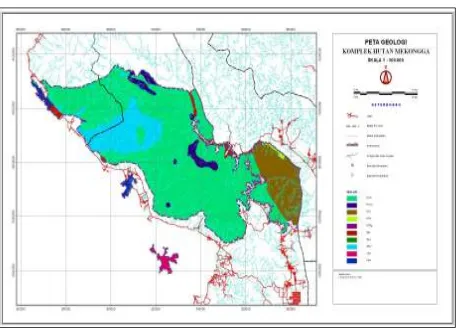
The current study has been conducted in the foothills of Mekongga Protected Forest (258519.5 hectares) in the vicinity of Tinukari Village, Pasir Angin Sub District and North Kolaka District, which also includes the Masembo River. The study areas covers various types of habitats including the lowland tropical rainforests from 0 up to 500 m altitude, and lower and upper montane forests around 500 to 2000 m alt. At lower montane forests the scenery is dominated by Bryophytes that densely cover the trees. Upper montane forests are dominated by subalpine forests consisting of fairly dwarfed trees. Several cacao plantations have been established by the local people after the logging, occurring from the base of the foothills (50 m alt.) up to 700 m alt. From the lowland area, the hills rise very steeply up to 1000 m, where the vegetation changes from lowland to highland forest, which extends to 2000 m, where it gives way to Bryophyte forest. After that, there are rocky, steep hills that extend to the peak of the mountain, and the vegetation changes to subalpine forest with dwarf trees. The Mekongga mountainous area consists of protected forest (258519.5 ha), limited production forest (46248.5 ha), production forest (24867.5 ha), conversion production forest (8684.35 ha) and conservation forest (Tourism Park Alam Padamarang 3654.1 ha and Tourist Park Mangolo 3869 ha) (Fig. 1).
2014] WIDJAJA & POTTER: Floristic study of Mekongga 159
Fig. 1. Map of Mekongga mountainous area (Source: BIPHUT Prov. Sultra in Associate Program – 4, 2012).
REINWARDTIA
160 [VOL.14
Fig. 3. Soil Map of Mekongga mountainous area (Source: BIPHUT Prov. Sultra in Associate Program – 4, 2012).
2014] WIDJAJA & POTTER: Floristic study of Mekongga 161
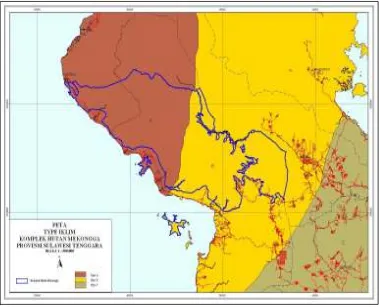
The highest rainfall day occurs in March and the lowest in July. There are two climates in this area, east monsoon which makes the area dry, called the dry season and west monsoon which makes the area wet, called the rainy season. Therefore, there are two types of climate due to rainfall, climate type A and climate type B (Fig. 4).
However, this climate has changed recently, probably due to global climate change.
METHOD
The floristic inventory has been done through exploration, in which all kind of plants found in flower or fruit or in spore are collected.
RESULTS AND DISCUSSION
During the first year inventory (2009), it was reported that 523 species (105 families) have been found (Widjaja et al., 2010). Based on the data collected during 2009 – 2011 inventories, it is recorded that 855 species from 155 families of plants have been recorded excluding around 10 taxa that are regarded as new species. Around 11% (91 species) turned out to be introduced or inva-Gesneriaceae (4 species), Fabaceae (4 species), Rubiaceae (3 species), and Ericaceae (3 species). Three species and one subspecies are endemic to Mekongga Mountain: Alocasia balgooyi, A. suhirmaniana (Araceae), Begonia mekonggensis and B. aptera subsp. hirtissima (Begoniaceae). Some new records for Sulawesi of species previously reported from Java (47 Species), Malay Peninsula (35 species), Philippines (25 species), New Guinea (14 species), Sumatra (5 species), Borneo (9 species), Moluccas (5 species) and Lesser Sunda islands (3 species) were collected. More than 10 new species are proposed from this area, including a taxon of bamboo (Poaceae) and taxa from families such as Araliaceae, Ericaceae, Gesneriaceae, Melastomataceae, Myrtaceae and Orchidaceae.
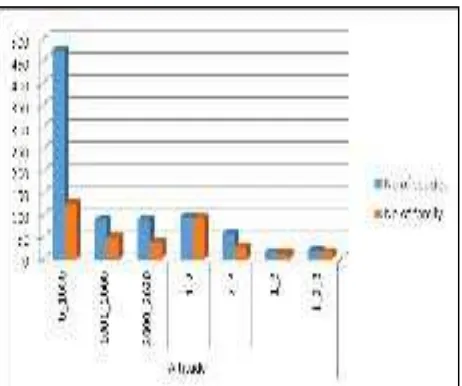
The results of this current study indicate that the number of species found in the lowland tropical rainforests (0 to 1000 m alt.) is 474 species from
126 families, which are mainly dominated by Euphorbiaceae, Lauraceae, Moraceae, Poaceae, Sapindaceae and Rubiaceae. In the lower montane to upper montane forests in much higher altitudes (1000 to 2000 m) the number of species decreases drastically to only 90 species from 50 (lower commonly found families are Ericaceae, Orchida-ceae, PolypodiaOrchida-ceae, PodocarpaOrchida-ceae, Hymeno-phyllaceae and Rubiaceae.
This current study shows that approximately 96 species from 93 families have been recorded in both lower and higher altitudes (from 0 to 2000 m). Fifty-eight species from 28 families have been recorded in much higher altitudes ranging from 1000 to 2620 m (peak of Mount Mekongga). Six-teen species from 13 families are found in both lowland and much higher altitudes (2000 to 2650 m). Nineteen species from 16 families are found in three altitude ranges (Fig. 5).
Based on the figures described above, the result of this current study also indicates that the highest level of species diversity is in the lowland tropical rainforests. The diversity in the family category apparently depends on the number of species that inhabit the area; thus the number of families in lowland tropical rainforests is conspicuously higher than at higher altitudes and within the higher altitudes the numbers at lower and upper montane forests are still higher than at the peak of the mountain despite the fact that the number of species is the same. In other words, in general the plant diversity of the Mekongga decreases with increasing altitude.
The noticeable diversity and endemism found in Mekongga Mountain as shown by the results of the studies described above suggests that the current status of the mountain as Protected Forest is no longer appropriate to protect their existence in the future; thus the improvement of the status is essential and the current study suggests the status of National Park as the best solution.
CONCLUSION
REINWARDTIA the upper mountain, especially near the top of the mountain. Ten species are new species from Mekongga including one bamboo, two orchids, one Myrtaceae, one Gesneriaceae, one Melas-tomatacae, one Ericaceae and one Araliaceae, which still require further research.
ACKNOWLEDGEMENTS
We would like to thank to the team of ICBG for shar-ing the information durshar-ing in the field, and also to our
colleagues (Arief Hidayat, Yessi Santika, Agus Suyadi, Wahyudi Santoso, Udjang Hapid) who helped to collect plants during the exploration. Beside that we would like also to thank the local people (Gusman, Basir, Jumaring, head of village and several people in the vil-lage of Tinukari) who always helped the team during the expedition. The project described was supported by Grant Number U01TW008160 from the Fogarty Inter-national Center, the Office of Dietary Supplements, the National Science Foundation and the Department of Energy. This project was supported by the USDA Agri-cultural Food Research Initiative of the National Insti-tute of Food and Agriculture, USDA, Grant #35621-04750. The content is solely the responsibility of the authors and does not necessarily represent the official views of the Fogarty International Center or the National Institutes of Health, the Office of Dietary Supplements, the National Science Foundation, the Department of Energy, or the Department of
Agricul-ture.”
Finally we would like to thank to the whole team who helped the expedition become successful.
REFERENCES
ASSOCIATE PROGRAM – 4, I. C. B. G. 2012.Usulan Perubahan Fungsi Kawasan, s.l.: s.n.
PUSAT PENELITIAN BIOLOGI, LIPI. Status keane-karagaman hayati Indonesia. Cibinong: s.n. (in press).
ROOS, M. C., KESSLER, P. J., GRADSTEIN, S. R. & BAAS, P. 2004. Species Diversity and endemism of five major Malesian islands: diversity-area relation-ships. Journal of Biogeography, V (31). Pp. 1893– 1908.
VAN WELZEN, P. C. & SLIK., J. W. F. 2009. Patterns in species richness and composition of plant families in the Malay Archipelago. Blumea 54: 166–171. WIDJAJA, E. A., HIDAYAT, A., SANTIKA, Y.,
ATI-KAH, T. D., SUMADIJAYA, A. & POTTER, D. 2010. Floristic diversity of Mekongga Mountains in South East Sulawesi, Indonesia. Paper presented at Flora Malesiana VIII, 23-27 August 2010, Singa-1001_2000: altitude from 1001 – 2000 m asl 2001_2620: altitude from 2001 – 2620 m asl
INSTRUCTION TO AUTHORS
Scope. Reinwardtia is a scientific irregular journal on plant taxonomy, plant ecology and ethnobotany published in December. Manuscript intended for a publication should be written in English.
Titles. Titles should be brief, informative and followed by author's name and mailing address in one-paragraphed.
Abstract. English abstract followed by Indonesian abstract of not more than 250 words. Keywords should be given below each abstract.
Manuscript. Manuscript is original paper and represent an article which has not been published in any other journal or proceedings. The manuscript of no more than 200 pages by using Times New Roman 11, MS Word for Windows of A4 with double spacing, submitted to the editor through <[email protected]>. New paragraph should be indented in by 5 characters. For the style of presentation, authors should follow the latest issue of Reinwardtia very closely. Author(s) should send the preferred running title of the article submitted. Every manuscript will be sent to two blind reviewers.
Identification key. Taxonomic identification key should be prepared using the aligned couplet type.
Nomenclature. Strict adherence to the International Code of Botanical Nomenclature is observed, so that taxonomic and nomenclatural novelties should be clearly shown. English description for new taxon proposed should be provided and the herbaria where the type specimens area deposited should be presented. Name of taxon in taxonomic treatment should be presented in the long form that is name of taxon, author's name, year of publication, abbreviated journal or book title, volume, number and page.
Map/line drawing illustration/photograph. Map, line drawing illustration, or photograph preferably should be prepared in landscape presentation to occupy two columns. Illustration must be submitted as original art accompanying, but separated from the manuscript. The illustration should be saved in JPG or GIF format at least 350 pixels. Legends or illustration must be submitted separately at the end of the manuscript.
References. Bibliography, list of literature cited or references follow the Harvard system as the following examples.
Journal : KRAENZLIN, F. 1913. Cyrtandraceae novae Philippinenses I. Philipp. J. Sci. 8: 163-179.
MAYER, V., MOLLER, ML, PERRET, M. & WEBER, A. 2003. Phylogenetic position and generic differentiation of Epithemateae (Gesneriaceae) inferred from plastid DNA sequence data. American J. Bot. 90: 321-329.
Proceedings :TEMU, S. T. 1995. Peranan tumbuhan dan ternak dalam upacara adat "Djoka Dju" pada suku Lio, Ende, Flores, Nusa Tenggara Timur. In: NASUTION, E. (Ed.). Presiding Seminar dan Lokakarya Nasional Etnobotani II. LIP1 & Perpustakaan Nasional: 263-268. (In Indonesian).
SIMBOLON, H. & MIRMANTO, E. 2000. Checklist of plant species in the peat swamp forests of Central Kalimantan, Indonesia. In: IWAKUMA et al. (Eds.) Proceedings of the International Symposium on: Tropical Peatlands. Pp. 179-190.
Book : RIDLEY, H. N. 1923. Flora of the Malay Peninsula 2. L. Reeve & Co. Ltd, London.
Part of Book : BENTHAM, G. 1876. Gesneriaceae. In: BENTHAM, G. & HOOKER, J. D. Genera plantarum 2. Lovell Reeve & Co., London. Pp. 990-1025.
Thesis : BAIRD, L. 2002. A Grammar of Keo: An Austronesian language of East Nusantara. Australian National University, Canberra. [PhD. Thesis].
Reinwardtia
Published by Herbarium Bogoriense, Botany Division, Research Center for Biology, Indonesian Institute of Sciences
Address: Jin. Raya Jakarta-Bogor Km. 46 Cibinong 16911, P.O. Box 25 Cibinong Telp. (+ 62) 21 8765066; Fax (+62) 21 8765062
E-mail: [email protected]
REINWARDTIA
Author Agreement Form
Title of article
Name of Author(s) :
I/We hereby declare that:
• My/Our manuscript was based on my/our original work.
• It was not published or submitted to other journal for publication.
• I/we agree to publish my/our manuscript and the copyright of this article is owned by Reinwardtia. • We have obtained written permission from copyright owners for any excerpts from copyrighted
works that are included and have credited the sources in our article.
Author signature (s) Date
MUHAMMAD EFFENDI, TATIK CHIKMAWATI & DEDY DARNAEDI. New cytotypes of Pteris ensiformis var. victoria from Indonesia 133
SUZANA SABRAN, REUBEN NILUS, JOAN T. PEREIRA & JOHN BAPTIST SUGAU. Contribution of the heart of Borneo (HoB) initiative towards botanical exploration in Sabah, Malaysia 137
WENNI SETYO LESTARI, BAYU ADJIE, TASSANAI JARUWATANAPHAN, YASUYUKI WATANO & MADE PHAR-MAWATI. Molecular phylogeny of maidenhair fern genus Adiantum (Pteridaceae) from Lesser Sunda Islands, Indonesia based on
Rbcl and Trnl-f 143
ELIZABETH A. WIDJAJA & DANIEL POTTER. Floristic study of Mekongga Protected Forest: towards establishment of the Mekongga National Park 157
YESSI SANTIKA, EKA FATMAWATI TIHURUA & TEGUH TRIONO. Comparative leaves anatomy of Pandanus, Freycinetia
and Sararanga (Pandanaceae) and their diagnostic value 163
SUHARDJONO PRAWIROATMODJO & KUSWATA KARTAWINATA. Floristic diversity and structural characteristics of mangrove forest of Raj a Ampat, West Papua, Indonesia 171
IAN M. TURNER. A new combination in Orophea (Annonaceae) for Uvaria nitida Roxb. ex G. Don 181
IVAN S AVINOV. Taxonomic revision of Asian genus Glyptopetalum Thwaites (Celastraceae R. Br.) 183
YUSI ROSALINA, NISYAWATL ERWIN NURDIN, JATNA SUPRIATNA & KUSWATA KARTAWINATA. Floristic compo-sition and structure of a peat swamp forest in the conservation area of the PT National Sago Prima, Selat Panjang, Riau, Indone-sia 193
IMAN HID AY AT & JAMJAN MEEBOON. Cercospora brunfelsiicola (Fungi, Mycosphaerellaceae), a new tropical Cercosporoid
fungus on Brunfelsia uniflora 211
MAX VAN BALGOOY & ELIZABETH A. WIDJAJA. Flora of Bali: a provisional checklist 219
EKA FATMAWATI TIHURUA & INA ERLINAWATI. Leaf anatomy of Pandanus spp. (Pandanceae) from Sebangau and Bukit
Baka-Bukit Raya National Park, Kalimantan, Indonesia 223
JULIA SANG & RUTH KIEW. Diversity of Begonia (Begoniaceae) in Borneo - How many species are there? 23 3
DIAN LATIFAH, ROBERT A. CONGDON & JOSEPH A. HOLTUM. A Physiological approach to conservation of four palm
REINWARDTIA
Vol. 14. No. 1.2014
CONTENTS
PageABDULROKHMAN KARTONEGORO & DANIEL POTTER. The Gesneriaceae of Sulawesi VI: the species from Mekongga Mts.
with a new species of Cyrtandra described 1
LIM CHUNG LU & RUTH KIEW. Codonoboea (Gesneriaceae) sections in Peninsular Malaysia 13
WISNU H. ARDI, YAYAN W. C. KUSUMA, CARL E. LEWIS, ROSNIATI A. RISNA, HARRY WIRIADINATA, MELISSA E. ABDO & DANIEL C. THOMAS. Studies on Begonia (Begoniaceae) of the Molucca Islands I: Two new species from Halmahera,
Indonesia, and an updated description of Begonia holosericea 19
YUZAMMI, JOKO R. WITONO & WILBERT L. A. HETTERSCHEID. Conservation status of Amorphophallus discophorus
Backer & Alderw. (Araceae) in Java, Indonesia 27
MOHAMMAD F. ROYYANI & JOENI S. RAHAJOE. Behind the sacred tree: local people and their natural resources sustainabil-ity 35
FIFI GUS DWIYANTI, KOICHI KAMIYA & KO HARADA. Phylogeographic structure of the commercially important tropical
tree species, Dryobalanops aromatica Gaertn. F. (Dipterocarpaceae) revealed by microsatellite markers 43
SACHIKO NISHIDA & HENK VAN DER WERFF. Do cuticle characters support the recognition of Alseodaphne, Nothaphoebe
and Dehaasia as distinct genera? 53
NURUL AMAL LATIFF, RAHAYU SUKMARIA SUKRI & FAIZAH METALI. Nepenthes diversity and abundance in five
habi-tats in Brunei Damssalam 67
NURUL HAZLINA ZATNI & RAHAYU SUKMARIA SUKRI. The diversity and abundance of ground herbs in lowland mixed Dipterocarp forest and heath forest in Brunei Darussalam 73
MUHAMMAD AMIRUL AIMAN AHMAD JUHARI, NORATNI TALIP, CHE NURUL ATNI CHE AMRI & MOHAMAD RUZI
ABDUL RAHMAN. Trichomes morphology of petals in some species of Acanthaceae 79
DIAN ROSLEINE, EIZI SUZUKI, ATIH SUNDAWIATI, WARDI SEPTIANA & DESY EKAWATI. The effect of land use history on natural forest rehabilitation at corridor area of Gunung Halimun Salak National Park, West Java, Indonesia 85
JULIUS KULIP. The Ethnobotany of the Dusun people in Tikolod village, Tambunan district, Sabah, Malaysia 101
PETER O'BYRNE. On the evolution of Dipodium R. Br 123
Reinwardtia is a LIPI accredited Journal (517/AU2/P2MI-LIPI/04/2013) Herbarium Bogoriense
Botany Division
Research Center for Biology - Indonesian Institute of Sciences Cibinong Science Center