J.Food Pharm.Sci. 4 (2016) 12 – 16
Avalaible online at www. jfoodpharmsci.com
Research Article
Toxicity Test Pediocin N6 Powder Produced from Isolates Pediococcus
Pentosaceus Strain N6 on White Mice
Nurjama’yah Br. Ketaren
1, Yetti Marlida
2, Arnim
2, Yuherman
2and
Herla Rusmarilin
31 Department of Agriculture, Faculty of Agriculture, Al- Azhar University Medan, Medan 20142, Indonesia
2 Department of Agriculture, Faculty of Animal Husbandry, Andalas University, Padang 25163, Indonesia
3 Department of Agriculture Technology, Faculty of Agricultural, University of North Sumatra, Medan 20155, Indonesia
ARTICLE INFO ABSTRACT
Received 12/04/2016
Received in revised form 25/05/2016 Accepted 22/07/2016
Available online 12/08/2016
E-mail address:
1. Introduction
Lethal Dose 50 is a quantity derived statistically, in order to declare a single dose of something expected compound can be deadly or cause significant toxic effects in 50% of experimental animals after treatment.
LD50 is a quantitative benchmark that is often used to
express the lethal dose range (Loomis, 1978).
Toxic effects on living creatures can be seen and can not. When the absorbed dose is relatively small, the damage
can be limited to a few cells only. There are still quite a lot of healthy cells to keep normal function of organs. If the cells were damaged, then the organ can no longer function normally. At that time usually poisoning (toxic work) appeared, generally as a disease process that is integral to the individual (Koeman, 1987).
The main objective of acute toxicity test of a drug or chemical is to establish the potential for acute toxicity, the dose range lethal or toxic dose related drugs, at one or more test animals. Moreover, this test is also intended Pediocin N6 powder is a bacteriocin the heat resistant derived from isolates
Pediococcus pentosaceus strain N6. These were isolated from water source
heat Rimbo Panti West Sumatra. Pediocin N6 powder has high antimicrobial activity, so the potential to be used as biopreservatif on meat and food processing industry which involves heating. Toxicity test was conducted to determine the effects of the toxic effect of a single dose of oral Pediocin N6
powder in test animals male white mice to determine the LD50 and see
changes in body weight of mice for 15 days of treatment. Changes in body weight of mice was determined by using non factorial experiment in a completely randomized design consists of 4 treatments and 5 replications. The test animals were divided into 4 groups and each treatment consisted of 5 mice. The treatments tested consisted of Pediocin N6 powder 5000 mg/kg body weight, 10,000 mg/kg body weight, 15,000 mg /kg and 20,000 mg /kg body weight of mice. The test results showed that the Pediocin N6 powder up to a dose of 20 000 mg/kg in a single oral dose administration, there are
no death of mice to 15 days of treatment. Based on the LD50 value of a single
oral dose can not be calculated, based on it can be stated LD50 value pseudo
Pediocin N6 powder greater than 20,000 mg /kg in male mice. The average changes in body weight of mice at a dose of Pediocin N6 powder treatment of up to 20,000 mg/kg every 2 days weighing from day 1 to day 15 of 2.1 gr. Based on these tests Pediocin N6 powder safe used as industry biopreservatif on meat and food processing involves heating.
to assess various clinical symptoms arise, the toxic effects of typical and intermediary mechanisms deaths of test animals. The initial criteria are often used to evaluate the toxicity testing of new compounds commonly used as an index to estimate mortality lethal
dose that may occur in humans. The LD50 alue is the
amount of the dose of a compound that can cause death in 50% of the population in a given period of time (Loomis, 1978).
Pediocin N6 powder including class IIa bacteriocin which is resistant to heat, produced from isolates of
Pediococcus pentosaceus strain N6 and has high
antimicrobial activity mainly against pathogenic bacteria
Listeria monocytogenes. One of the requirements for the
application of an antimicrobial peptide as food
preservative would be the evaluation of its
immunogenicity and Also the in vitro and in vivo toxicity. The testing of a potential antimicrobial food would Consider repeated and daily administration of the substance for a required time period to access a possible chronic toxicity (Pariza and Foster, 1983 and Pariza and Cook, 2010). The route of administration should be the same proposed for use in humans (Food and Drug Administration, 1988 and Post, 1996) and toxicological studies involving animals are a major component of
safety assessment of bacteriocins (Moreno et al., 2000).
Pediocin N6 powders have the potential to be used as a
natural preservative in food. According to Tagg et al.
(1976), bacteriocins as food biopreservatif must meet criteria such as preservatives or food additives among other more secure for consumers, has a bactericidal activity against the Gram-positive and Gram negative, stable, evenly distributed in the food system and economical. Therefore it is necessary for toxicity tests to determine the toxicity of the Pediocin N6 powder white mice and Pediocin N6 powder.
2.2. Giving a Dose of Pediocin N6 Powder Solution Pediocin N6 powder produced from isolates
Pediococcus pentosaceus strain N6 pure. Production of
Pediocin N6 powder capsule do with the material as much as 20% consists of maltodextrin and skim milk at a ratio of 5: 1 (83.3%: 16.67%) according to the methods Kailasapathy (2002) and the Pediocin N6 powder in it as much as 20%. The dose of Pediocin N6 powder solution 5000 mg /kg means Pediocin N6 powder given as 125 mg then added 5 ml of water and so on appropriate treatment dose. Award solution Pediocin N6 powder
done every morning during treatment. Before administering solution Pediocin N6 powder, mice were fasted for 4 hours before treatment but still were given a drink and 2 hours after treatment.
2.3. Granting Volume Solution Award Pediocin N66 Powder
Pediocin N6 powder solution according to the methods Kailasapathy (2002), given according to the weight of mice treated mice divided heaviest weight multiplied by 1 ml. Award solution Pediocin N6 powder done orally. Treated mice based on weight, volume solution of Pediocin N6 powder given as much as 0.8 g /ml, 0.84 g /ml, 0.88 g /ml, 0.92 g /ml, 0.96 g /ml and 1 g /ml.
2.4. Acute Toxity
Acute toxicity was assessed with 20 male mice and Pediocin N6 powder solution was administered orally at a dose according to treatment by Loomis (1987). After administration, the animals were kept under observation for a minimum of 48 h. The number of animals killed for
each of the doses was Noted and the LD50 calculated by
the Up and Down method, the which is one of the most used to reduce the number of animals used (Botham, 2004). In this study tested the dose of Pediocin N6 powder lowest 5.000 mg /kg and the highest dose is 20,000 mg /kg.
2.5. Experimental Animals
LD50 is determined by adding the log dose is low and the product of the distance proportion ratio higher dose to the lowest dose.
The equation to obtain LD50 namely:
g = h x i, y = g + log s, LD50 = anti log y
Where : h: pole
A: The percentage of deaths smaller and closest of the 50%
b: a larger percentage of deaths and the closest of the 50%
g: The result of multiplying the increase in dose to the size of the distance
y: The result of the addition between g and logs
2.7. Preference test
The method used is non factorial design in completely randomized design consists of 4 treatments and 5 replications. The test animals were divided into 4 groups and each treatment consisted of 5 mice. The treatments were tested in accordance Loomis (1978), consisting of:
1. Powder bacteriocins as much as 5000mg/kg
body weight of mice.
2. Powder bacteriocins as much as 10,000mg/kg
body weight of mice.
3. Powder bacteriocins 15,000 mg/kg body weight
of mice.
4. Powder bacteriocins as much as 20,000 mg/kg
body weight of mice.
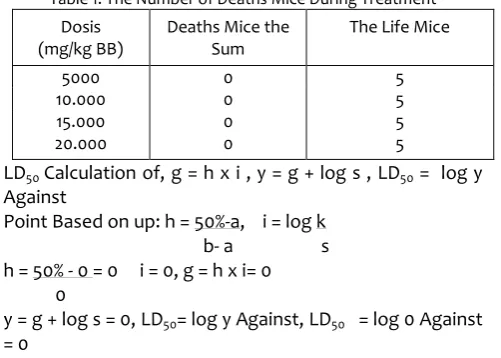
Table 1. The Number of Deaths Mice During Treatment
Dosis after a single dose of oral solution Pediocin N6 powder.
3. Results and Discussion
The number of deaths of test animals during 15 days of treatment is oral administration of a single dose of Pediocin N6 powder solution of can be seen in Table 1.
The results of the above study showed that giving a solution of Pediocin N6 powder until a dose of 20,000 mg / kg administration of a single oral dose in mice did not reveal any mortality up to 15 days of treatment.
Based on the LD50 value of a single oral dose can not be
calculated, based on the results of this study can only be
expressed LD50 value pseudo Pediocin N6 powder
greater than 20,000 mg/kg in male mice. Based on these tests show that the Pediocin N6 powder not toxic for white mice. This means Pediocin N6 powder safe used as biopreservatif in food because it comes from isolates of
Lactic Acid Bacteria (LAB) Pediococcus pentosaceus strain
N6. According Alakomi et al. (2000), this bacterium
include microorganisms GRAS (Generally Recognized As Safe) or group of microorganisms that safely be added in food because it is not toxic so it is known as Good Grade Microorganisms are microorganisms that are not a health risk. Furthermore, according to Barefoot and Klaeuhammer (1983), bacteriocins are antimicrobial compounds easily degraded by proteolytic enzymes in the digestive systems of humans and animals. Bacteriocins produced by lactic acid bacteria is very advantageous in the food industry, especially in the fermented food product as the activity could inhibit the growth of some bacteria contaminants cause decay and diseases are transmitted through food (food borne illnes). The addition of bacteriocins in foods other than to prevent spoilage as well as to extend the storage time of food and inhibits the growth of pathogenic bacteria.
According Jeevaratnam et al. 2005, the pickling
process food combined with heating in industrial processes and reduce the number of pathogenic microbes in this process involves microbes. Microbial resistance in industrial processes is a problem, and therefore in need of food preservation modern technology with a stable microbial warming and improve the quality of the food. Preserving biological microbes involves assistance in the form of BAL. LAB produce lactic acid component causing pathogenic bacteria are not able to grow more food. BAL utilization as a preservative is indispensable because it has antibacterial activity and resistance to heat.
According Bhunia et al. (1990) evaluated the
immunogenicity of pediocin PA-1 (ACh) to mice and found that it was not immunogenic for animals. Short-term administration of diets containing nisin (Nisaplin) induced an increase of of both CD4 and CD8 T-lymphocyte cell counts and Also a Decrease of B-lymphocyte counts. The macrophage / monocyte fraction was isolated from peripheral blood Became Significantly Increased after long-term administration
(100 days) of Nisaplin-containing diets (De Pablo et al.,
1999).
Although Several antimicrobial peptides have been purified and Characterized there are currently few studies on acute toxicity for comparison. Extensive toxicological studies Showed that nisin intake does not cause toxic effects to the human body with a Reported
LD50 of 6950 mg / kg, the which is similar to salt, when
Administered Orally (Jozala et al., 2007). Pediocin PA-1 is
another bacteriocin that has been used for the same purpose, and studies on its toxicity have been Reported
(Bhunia et al., 1990 and Dabour et al., 2009), Although its
use was not yet recommended by WHO (Drider et al.,
2006). Some authors have associated high LD50 of
bacteriocins with digestive enzymes capable of Rapidly inactivating Reviews These substances, being trypsin and chymotrypsin produced in the pancreas and released into the small intestine a prime example (Hara
et al., 1962, Eckner, 1992 and Cleveland et al ., 2001,
Deegan et al., 2006). In this regard, the peptide P34 is
sensitive to trypsin as well (Motta et al., 2007a). Claypool
et al. (1966) evaluated the effect of nisin in milk
chocolate consumed Orally and Noted that only ¼ of the original concentration was detected in saliva after a minute of use. Besides this, some bacteriocins can also be sometimes sensitive to ptyalin, being not detected in human saliva 10 min after the consumption of a liquid containing bacteriocin (Chandrapati and O'Sullivan, 1998).
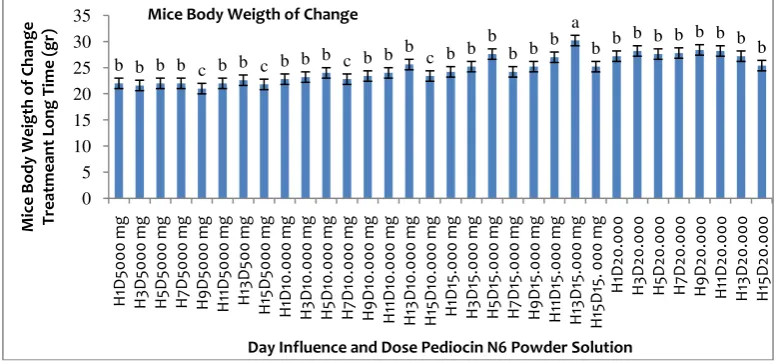
Figure 1. Graph Effect of Single Dose Oral Solution Pediocin N6 Powder Mice Against Weight Changes During Treatment
Developmental changes in body weight of male mice for 15 days treatment of a single dose of an oral solution of Pediocin N6 powders can be seen in Figure 1.The results of the analysis of changes in body weight of mice to a single dose of an oral solution of Pediocin N6 powder on white mice provide a significantly different effect to increase body weight in mice between the 13th day of treatment, the dose of 15,000 mg/Kg BW (H13D15.000 mg/Kg BW) with other treatments. Based on the results of treatment rataannya H13D15.000 mg/kg resulted in changes in body weight were higher at 30.2 grams. The use of solution Pediocin N6 powder to 20,000 mg /kg also showed changes in weight gain in mice. This shows that the administration of a solution of Pediocin N6 powder until a dose of 20,000 mg /kg did not cause toxic or poisonous to the rats on the contrary increase the body weight of mice. This is because the solution Pediocin N6 powder is a protein that is safe to eat mice can even be used as a source of protein for the body of mice and promote weight loss. According to
Tagg et al. (1976), bacteriocins is a protein compound
(such as peptides) that is bactericidal against microbes (bacteria) that if the terms of filogeniknya have close relations with the bacteriocin-producing microbes.
According to Salminen et al. (2004), bacteriocins is a
protein or peptide compounds that can didgradasi by protease enzymes in the digestive tract of humans and animals. This causes the bacteriocins can be used as an antimicrobial agent that is safe to preserve food. Additionally bacteriocins can inhibit bacterial spoilage and pathogenic bacteria in food.
Pediocin N6 powder dosing 15,000 mg /kg on day 1 until day - 12 happens to weight gain in mice but not statistically significant influence. Changes in body weight of mice to give real effect to raise the weight of mice on day 13 and then decreased at day -15. Dosing bacteriocins 15,000 mg /kg give real effect to increase body weight in mice as bacteriocins are proteins that can be used by the body in mice as a source of protein for weight gain in
mice. According Savadogo et al. (2006), Bacteriocins a
protein molecule or peptide ekstrasellular which have bactericidal or bacteriostatic action against bacteria that have a close kinship. The bacteriocins can be degraded weight were not significantly different from other Pediocin N6 powder treatment, this suggests that the intake of nutrients derived from mice to growth-treatment the same growth-treatment. The average weight gain in mice at a dose of treatment Pediocin N6 powder 20,000 mg/kg every 2 days weighing from day 1 to day 15 of treatment of 2.1 gr. Means there is weight gain of 1 g/head/day, corresponding according to Smith and Mangkoewidjojo (1988), that the normal range of the United Nations in mice by 1 g/ head /day. This is because the nutritional content of this treatment according to the needs of mice than that of male mice is more efficient in the use of feed.
b b b b c b b c b b b c b b
4. Conclusion
The results of toxicity testing solution on the Pediocin N6 powder white male mice showed that solution Pediocin N6 powder. Until a dose 20.000 mg /kg in a single oral dose administration did not reveal any
mortality up to 15 days of treatment. Based on the LD50
value of a single oral dose can not be calculated, based
on it can be stated LD50 value pseudo Pediocin N6
powder greater than 20,000 mg /kg in mice. This caused Pediocin N6 powder solution is a protein that can be degraded by proteolytic enzymes in the digestive channel animals and humans that are safe for
The author thank the Director General of Education (DIKTI), which has provided scholarships BPPDN so that I can complete the S3 Studies Research (Doctoral) and holds a PhD in livestock
Reference
Alakomi, H.L., Skytta, E., Saarela, M., Maffila Sandolm. 2000, Lactic Acid Permeabilizes Gram- Negatif Bacteria by Disrupting The Outer Membrane, J. Appl. Environt. Microbiol, 66: 2001-2005.
Barefoot, S. F and Klaenhammer, T.R. 1984, Purification and Characterization of the Lactobacillus acidophilus Bacteriocin Lactacin B. Antimicrob Agents Chemother, 126,328–34.
Bhunia, A.K., Johnson, M.C., Ray, B., Belden, E.L. 1990, Antigenic Property of Pediocin AcH Produced by Pediococcus acidilactici H, J. Appl. Bacteriol., 69 pp. 211– 215.
Botham, P.A. 2004, Acute Systemic Toxicity-Prospects for Tiered Testing Strategies Toxicol. In Vitro, 18 (2004), pp. 227–230.
Cleveland, J., Montville, T.J., Nes, I.F.and Chikindas, M.L. 2001, Bacteriocins: Safe, Natural Antimicrobials for Food Preservation, Int. J. Food Microbiol., 71pp. 1–20.
Claypool, L., Heinemann, B., Voris, L and Stumbo, C.R. 1996. Residence Time of Nisin in the Ooral Cavity Following Consumption of Chocolate Milk Containing Nisin, J. Dairy Sci., 49pp. 314–316.
Chandrapati, S. and O'Sullivan D.J. 1998, Procedure for Quantifiable Assessment of Nutritional Parameters Influencing Nisin Production by Lactococcus lactis subsp. Lactis, J. Biotechnol., 63pp. 229–233.
De Pablo, M.A., Gaforio, J.J., Gallego, A.M., Ortega, E., Gálvez, A. and Cienfuegos, G.A. 1999, Evaluation of Immunomodulatory Effects of Nisin-containing Diets on Mice, FEMS Immunol. Med. Microbiol., 24 pp. 35–42. Deegan, L.H., Cotter, P.D., Hill, C. and Ross, P. 2006,
Bacteriocins: Biological Tools for Bio-preservation and Shelf-life Extension, Int. Dairy J., 16 pp. 1058–1071. Dabour, N., Zihler, A., Kheadr, E., Lacroix, C. and Fliss, I. 2009,
In Vivo Study on the Effectiveness of Pediocin PA-1 and Pediococcus acidilactici UL5 at Inhibiting Listeria monocytogenes, Int. J. Food Microbiol., 133pp. 225–233.
Drider, D., Fimland, G., Héchard, Y., Mcmullen, L.M and Prévost, H. 2006, The Continuing Story of Class IIa Bacteriocins, Microbiol. Mol. Biol. Rev., 70 pp. 564–582. Eckner, F.K. 1992, Bacteriocins and Food Application, Dairy
Food Environ. Sanit., 12 pp. 204–209.
Food Drug Administration. 1988, Nisin Preparation: Affirmation of GRAS Status as Direct Human Food Ingredient, Federal Register, 53 pp. 29–33.
Hara, S., Yakazu, K., Nakakawaji, K., Takeuchi, T., Kobayashi, T., Sata, M., Imai, Z. and Shibuya, T. 1962, An Investigation of Toxicity of Nisin with a Particular Reference to Experimental Studies of its Oral Administration and Influences by Digestive Enzymes, J. Tokyo Med. Coll., 20 pp. 176–207.
Jeevaratnam, K., Jamuna, M and Bawa, A. S. 2005, Biological Preservation of Foods- Bacteriocins of Lactic acid Bacteria, Indian Journal of Biotechnology, Vol. 4: 446-458.
Jozala, A.F., Andrade, M.S., Arauz, L.J., Pessoa, J.R.A., and Vessoni-Penna T.C.2007, Nisin Production Utilizing Skimmed Milk Aiming to Reduce Process cost, Appl. Biochem. Biotechnol., 136 pp. 515–528.
Kailasapathy K. 2002, Microencapsulation of Probiotic Bacteria: Technology and Potential Applications, Curr Issues Intest Microbiol. 3: 39-48.
Koeman, J.H., 1987, Messenger Toxicology Universal, Translater by Yudono,R.H., 60, Gadjah Mada University Press,Yogyakarta.
Loomis T.A,1978, Essentials of Toxicology, 3rd Ed. Lea & Febiger, Philadelphia, PA pp 1–12.
Moreno,I., A.L.S. Lerayer., V.L.S. Baldine., M.F.F. Leitão, 2000, Chraracterization of Bacteriocins Produced by Lactococcus lactis strains, J. Microbiol., 31 (2000), pp. 184–192.
Motta, A.S., Cannavan, F.S., Tsai, S.M. and Brandelli, A, 2007a, Characterization of a Broad Range Antibacterial Substance from a New Bacillus Species Isolated from Amazon Basin, Arch. Microbiol., 188pp. 367–375.
National Institutes of Health, 1996, Guide for the Care and Use of Laboratory Animals, NIH Publication n. 82–83, National Institutes of Health, Bethesda.
Pariza, M.W and Foster E.M. 1983, Determining the Safety of Enzymes Used in Food Processing, J. Food Protect., 46 (1983), pp. 453–463.
Pariza, M.W and Cook M. 2010, Determining the Safety of Enzymes Used in Animal Feed Regul. Toxicol. Pharmacol., 56 pp. 332–342.
Post, R.C. 1996, Regulatory perspective of USDA on the Use of Antimicrobial and Inhibitors in Foods, J. Food Protect. (1996), pp. S78–S81.
Reed,L.J. and Muench, H, 1938, A Simple Method of Estimating Fifty Percent Endpoints. Amer.J.Hyg.27,493.
Salmien, S.A, Von Wright and Arthur Ouwehand, 2004, Lactic Acid Bacteria Microbiological and Functional Aspects 3rd, Eds. Marcel Dekker, Inc, New York.
Savadogo, A., Outtora, CAT., Bassole, IHN., Traore, AS. 2006, Bacteriocin and Lactic Acid Bacteria-Aminireview, Afr, J. Biotechnol. 5: 678-683.
Smith, B. J. dan S. Mangkoewidjojo. 1988. Maintain to Breed and The Use Attempt Animal in Tropic Region. Indonesia University Press, Jakarta.
Tagg, J. R., Dajani, A.S and Wanna Maker, L.W. 1976, Bacteriocins of Gram Positif Bacteria. J. Bacteria, 40 (3): 722-756.