MEASUREMENT OF TEACHERS’ SOCIAL-EMOTIONAL COMPETENCE: DEVELOPMENT OF THE SOCIAL-EMOTIONAL
COMPETENCE TEACHER RATING SCALE
by
KARALYN M. TOM
A DISSERTATION
Presented to the Department of Special Education and Clinical Sciences
and the Graduate School of the University of Oregon in partial fulfillment of the requirements
DISSERTATION APPROVAL PAGE Student: Karalyn M. Tom
Title: Measurement of Teachers’ Social-Emotional Competence: Development of the Social-Emotional Competence Teacher Rating Scale
This dissertation has been accepted and approved in partial fulfillment of the
requirements for the Doctor of Philosophy degree in the Department of Special Education and Clinical Sciences by:
Dr. Laura Lee McIntyre Co-Chair Dr. Jane Squires Co-Chair Dr. Christopher Murray Member
Dr. Lynn Kahle Outside Member
and
Kimberly Andrews Espy Vice President for Research & Innovation/Dean of the Graduate School
DISSERTATION ABSTRACT Karalyn M. Tom
Doctor of Philosophy
Department of Special Education and Clinical Sciences June 2012
Title: Measurement of Teachers’ Social-Emotional Competence: Development of the Social-Emotional Competence Teacher Rating Scale
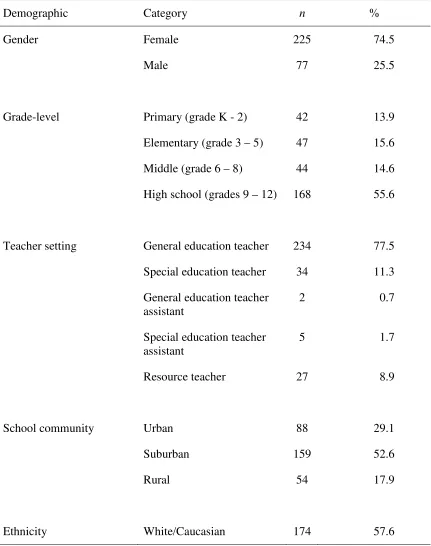
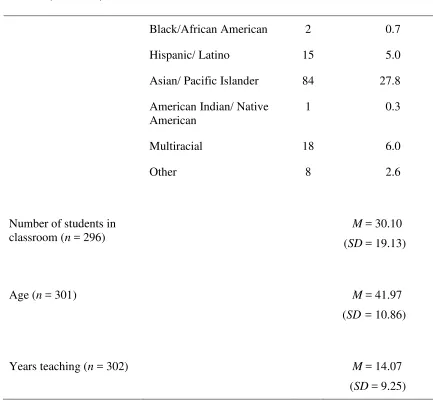
The significant role that teacher social-emotional competence (SEC) may play in the classroom environment through classroom management, forming positive teacher-student relationships, and implementation of social-emotional learning (SEL) curricula, as well as the influence SEC may have on teachers’ overall well-being, requires an assessment that is able to reliably measure this construct in a manner that is valid for research and applied purposes. This study investigated the development of a scale measuring teacher SEC, the Social-Emotional Competence Teacher Rating Scale (SECTRS). The SECTRS was created and evaluated by an expert panel. Following the content validation process and follow-up revisions, the scale was administered to a sample of teachers (N = 302) and the scale’s factor structure was explored, along with basic elements of the scale’s reliability and validity. Finally, demographic characteristics were assessed to determine if relationships to SEC scores existed across these
characteristics.
results revealed that the SECTRS factor and total scores had significant, positive
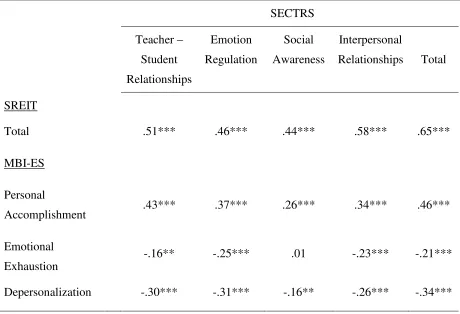
correlations (.44 to .65) with a scale measuring emotional intelligence and low, negative correlations with a scale measuring teacher burnout (.01 to -.34). Teacher ratings on the SECTRS did not demonstrate differences across gender, ethnicity, and community setting. Teacher ratings on the SECTRS differed based upon years of teaching
experience, age, teacher setting, and grade-level. Finally, the SECTRS was found to have significant, positive correlations with perceptions of teacher-student relationships (.40 to .64), controlling behavior management styles (.17 to .22), as well as positive school climate. The SECTRS had significant, negative correlations with authoritative
CURRICULUM VITAE NAME OF AUTHOR: Karalyn M. Tom
GRADUATE AND UNDERGRADUATE CHOOLS ATTENDED: University of Oregon, Eugene
Santa Clara University, Santa Clara, CA
DEGREES AWARDED:
Doctor of Philosophy, School Psychology, 2012, University of Oregon Bachelor of Science, Psychology, 2005, Santa Clara University
AREAS OF SPECIAL INTEREST: Social-Emotional Learning
Mental Health Promotion in Schools Response to Intervention
PROFESSIONAL EXPERIENCE:
School Psychology Intern, Northern Suburban Special Education District, 2011- Present
Practicum Supervisor, Graduate Teaching Fellowship, Early Intervention Program, University of Oregon, 2010-2011
Research Assistant, Graduate Teaching Fellowship, Center on Teaching and Learning, University of Oregon, 2010
Practicum Student, Child and Family Center, University of Oregon, Eugene, 2009-2011
Research Assistant, Graduate Teaching Fellowship, School Psychology Program, Graduate Teaching Fellowship, 2008-2010
GRANTS, AWARDS AND HONORS:
Clare Wilkins Chamberlin Memorial Research Award, University of Oregon, 2011 Fighting Funds Fellowship, University of Oregon, 2007
PUBLICATIONS:
Nese, R. N. T., Doerner, E., Romer, N., Kaye, N. C., Merrell, K. W., & Tom, K. M. (in press). Social emotional assets and resilience scales short form version: Development of a strength-based behavior rating scale system. Journal of Educational Research Online.
Romer, N., Ravitch, N. K., Tom, K., Merrell, K. W., & Wesley, K. L. (in press). Gender differences in positive social-emotional functioning. Psychology in the Schools.
Merrell, K.W., Cohn, B. P., & Tom, K. M. (2011). Development and validation of a teacher report measure for assessing social-emotional strengths of children and adolescents. School Psychology Review, 40(2), 226-241.
Merrell, K.W., Felver-Gant, J., & Tom, K. M. (2011). Development and validation of a parent report measure for assessing social-emotional competencies of children and adolescents. Journal of Child and Family Studies, 20(4), 529-540. doi: 10.1007/s10826-010-9425-0
Nese, R. N. T., & Tom, K. M. (2011). Teaching social emotional behavior within a school-wide positive behavior support framework: An application of a single case design. School Psychology: From Science to Practice, Summer 2011, 30-36.
ACKNOWLEDGEMENTS
TABLE OF CONTENTS
Chapter Page
I. INTRODUCTION ... 1
II. LITERATURE REVIEW ... 11
Mental Heath Statistics ... 11
Schooling as a Center for Preventative Interventions ... 13
SEL and Positive Student Outcomes ... 15
Teachers and SEL Outcomes ... 18
Teacher SEC and Its Influence on Instructional Outcomes ... 22
Teacher-Student Relationships ... 25
Positive Classroom Climate and Classroom Management ... 27
School Climate and Community ... 31
Need for a Teacher SEC Assessment ... 33
Self-Report Rating Scales ... 34
Current Scales ... 35
An Expanded Analysis on Teacher Self-Report ... 38
III. METHOD ... 41
Phase 1: Development of the SECTRS ... 41
Defining the Construct ... 41
SECTRS Constructs ... 42
Designing the Scale ... 44
Pilot Testing and Expert Review ... 45
Chapter Page
Participants ... 47
Measures ... 52
Emotional Intelligence ... 53
Teacher Burnout ... 53
Behavior and Instructional Management ... 54
School Climate ... 55
Teacher-Student Interactions ... 56
Procedure ... 57
IV. RESULTS ... 58
Data Screening ... 58
Exploratory Factor Analysis ... 58
Step 1 ... 59
Step 2 ... 59
Step 3 ... 60
Step 4 ... 60
Step 5 ... 60
Step 6 ... 60
Internal Consistency Reliability ... 66
Validity Based on Convergent and Discriminant Evidence ... 66
Group Comparisons ... 67
Gender ... 69
Ethnicity ... 72
Community Setting ... 76
Years Experience ... 79
Chapter Page
Grade Level ... 92
Number of Students in Classroom ... 98
Relationship to Prosocial Classroom Variables ... 98
Teacher-Student Relationship ... 98
Classroom Management ... 99
School Climate ... 99
V. DISCUSSION ... 101
Factor Analysis ... 101
Psychometric Properties of the SECTRS ... 105
Reliability ... 105
Validity ... 106
SEC by Teacher Demographics ... 106
Gender ... 107
Ethnicity ... 107
Community Setting ... 107
Years of Experience ... 108
Age ... 108
Teacher Setting ... 109
Grade Level ... 109
Class Size ... 110
Teacher-Student Relationship, Classroom Management, and School Climate ... 111
Teacher-Student Relationships ... 111
Classroom Management ... 112
School Climate ... 113
Chapter Page
Underrepresentation of Demographic Groups ... 114
Weak Factor Structure ... 115
Teacher Setting ... 115
Rater Bias ... 116
Future Directions ... 116
Further Investigation of Psychometric Properties ... 116
SEC Construct Definition ... 117
Examination of Culture and Community ... 117
Teacher SEC and SEL Implementation ... 118
Limiting Teacher Bias ... 118
Linking SEC Assessment to Intervention ... 119
Conclusion ... 120
APPENDIX: SECTRS ASSESSMENT ... 122
LIST OF FIGURES
Figure Page
1. Three-Tiered Model of Systematic Coordination of Mental Health
Prevention Interventions ... 14 2. Model of Teacher Social and Emotional Competence and Classroom
and Student Outcomes ... 24 3. A Model of the Rating Scale Development Process ... 43 4. The Five Core Competencies that Constitute Teacher SEC and Example
LIST OF TABLES
Table Page
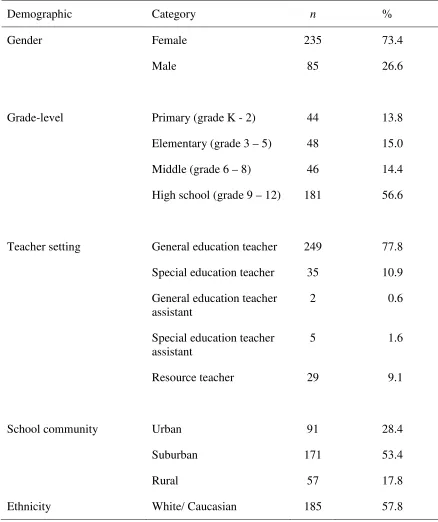
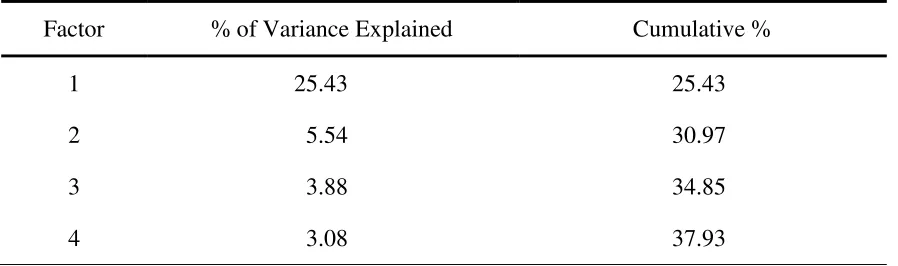
1. Demographic Characteristics of 320 Participating Teachers ... 49 2. Demographic Characteristics of 302 Participating Teachers ... 51 3. Percent of Variance Explained by Retained Factors (N = 320) ... 61 4. Pattern Coefficients for the Four Factors of the Social Emotional
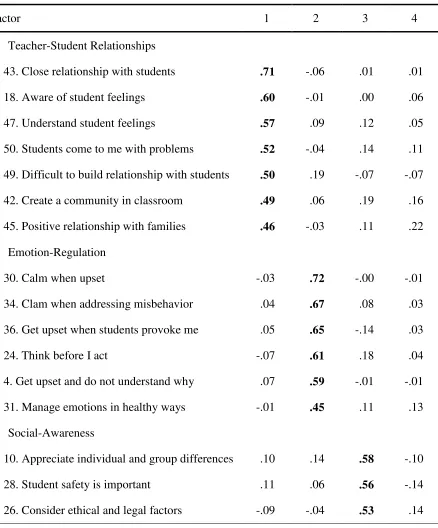
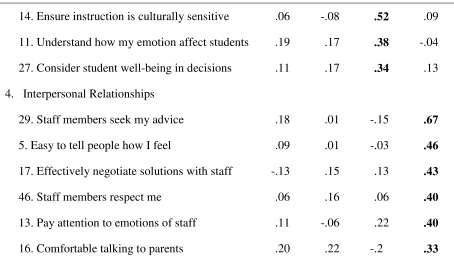
Competence Teacher Rating Scale with Oblimin Oblique Rotation
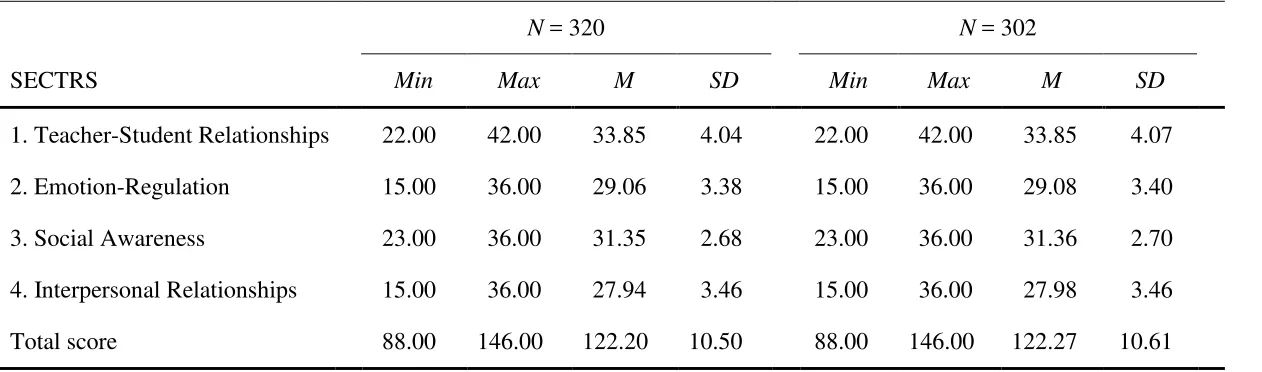
(N = 320) ... 63 5. Descriptive Statistics of the SECTRS Factor and Total Scores
for each Dataset... 65 6. Correlations Between SECTRS Scores and Scores from the
Self-Report EI Test and the Maslach Burnout Inventory (N = 302) ... 68 7. MANOVA Results for Gender and SECTRS Scores with Follow-Up
Univariate Analyses ... 70 8. Descriptive Statistics for Gender across SECTRS Subscales and
Total Scores ... 72 9. MANOVA Results for Ethnicity and SECTRS Scores with Follow-Up
Univariate Analyses ... 73 10. Descriptive Statistics for SECTRS Subscale and Total Scores by
Ethnicity ... 75 11. MANOVA Results for Community Setting and SECTRS Scores with
Follow-Up Univariate Analyses ... 77 12. Descriptive Statistics for Community Setting across SECTRS Subscales
and Total Scores ... 79 13. MANOVA Results for Years of Teaching Experience and SECTRS
Scores with Follow-Up Univariate Analyses ... 81 14. Descriptive Statistics for Years of Teaching Experience across
SECTRS Subscales and Total Scores ... 83 15. MANOVA Results for Teacher Age and SECTRS Scores with
Table Page
16. Descriptive Statistics for Years of Teaching Experience across
SECTRS Subscales and Total Scores ... 87 17. MANOVA Results for Teacher Setting and SECTRS Scores with
Follow-Up Univariate Analyses ... 89 18. Descriptive Statistics and Post-Hoc Analyses for Teacher Setting across
SECTRS Subscales and Total Score ... 91 19. MANOVA Results for Grade-Level and SECTRS Scores with
Follow-Up Univariate Analyses ... 94 20. Descriptive Statistics and Post-Hoc Analyses for Grade-Level across
SECTRS Subscales and Total Score ... 96 21. Effect Size of Post Hoc Pairwise Comparisons of the Effect of
Grade-Level on Subscales and Total Scores of the SECTRS ... 97 22. Correlations Between SECTRS Total and Subscale Scores and
Scores from the Inventory of School Climate – Teacher version, Behavior and Instructional Management Scale – 12 Item Version, and Quality Area One of the Psycho-Social Environment Profile
CHAPTER I
INTRODUCTION
Educators are increasingly recognizing that student success in life requires more than simply passing standardized tests and acquiring academic knowledge. Education must also encompass social and emotional skills that will allow students to effectively deal with the challenges that life brings them (Buchanan, Gueldner, Tran, & Merrell, 2009). Wang, Haertel, and Walberg (1997) examined instructional variables and their effect on student learning and found that some of the most influential learning factors were social and emotional factors, such as motivation, the ability to self-regulate, and application of self-control strategies. Other important factors related to social-emotional adjustment were the quality of teacher and student interactions and the classroom environment. Likewise, the National Center for Education Statistics (2002) found that some of the reasons students reported dropping out of school were related to social-emotional factors, including not getting along with teachers or peers, feeling left out, and not feeling safe in school. Schools are increasingly emphasizing mental health promotion given that lifelong mental disorders begin as early as age 14 and affect roughly 7.5 million children (Greenberg et al., 2003). Thus, schools may take on the responsibility of providing mental health services regardless of whether they have sufficient resources to do so.
(e.g., Merrell, 2010). Furthermore, schools can reach a large population of children who may be at-risk for developing future mental health disorders. Unfortunately several problems exist with current mental health services in the schools. First, schools tend to be reactive because they frequently do not provide services until children have been
identified for special education services or been through juvenile court (Greenberg et al., 2003). Second, schools are limited in their resources to meet the needs of all the students that may need mental health services (Greenberg et al, 2003). Third, school services may not be well coordinated, with services existing in isolation, or are episodic in their delivery (Farmer & Farmer, 1999; Greenberg et al., 2003). Lastly, there is very little information on types of treatments administered in schools and they often vary from general education consultation to interventions carried out by counselors, school
psychologists, and social workers. These types of interventions are usually not linked to other outcomes that are meaningful to the school (i.e. academics), resulting in a lack of accountability (Greenberg et al., 2003).
To address these limitations many schools are starting to adopt social and emotional learning (SEL) as a means to link prevention efforts with school-based interventions (Merrell, 2010). SEL has been defined by the Collaborative for Academic, Social, and Emotional Learning (CASEL) group as “the process of acquiring and
effectively applying the knowledge, attitudes, and skills necessary to recognize and manage emotions; developing caring and concern for others; making responsible
Positive outcomes from SEL can be categorized into three main areas: attitudes, behavior, and performance (Zins, Payton, Weissberg, & O’Brian, 2007). Changes in student attitudes include improvement in students’ motivation and commitment toward school and stronger feelings of belongingness and safety in the school and community (Zins et al., 2007). Student participation in SEL programs may also have positive effects on student behavior, including reductions of internalizing problems (e.g., anxiety and depression; Merrell, 2010) and reductions in externalizing problems (e.g., aggression and student interpersonal violence; Grossman et al., 1997). Other positive changes in
behaviors include increases in communication skills and fewer absences and school dropouts (Zins, Bloodworth, Weissberg, & Walberg, 2004; Zins et al., 2007). Student performance outcomes include academic outcomes such as higher grades and gains in standardized academic measures (Elias, 2006; Hoagwood et al, 2007) that may be the result of linking SEL skills such as problem solving and goal setting and applying these skills to academic endeavors (Zins et al., 2004). Students participating in SEL programs also display large increases in social-emotional knowledge (e.g., Merrell, 2010). These positive school outcomes are important and illustrate the need to educate students beyond academic skills. Ample evidence suggests that social and emotional factors have clear benefits that reduce barriers to accessing education and promote skills that allow students to engage in academic and social activities.
Health Act in 2003. This legislation required schools in the state to incorporate SEL into their school mission and take definitive steps toward developing the social and emotional competencies of their students (O’Brien & Resnik, 2009). More recently the Academic, Social and Emotional Learning Act of 2011 (HR 2437) was proposed to Congress, and if passed, will allow the Secretary of Education to award funding toward creating a
National Technical Assistance and Training Center that will provide training and support to states and local educational agencies that want to adopt and promote evidence-based SEL learning as well as create social and emotional learning standards and programs.
These new developments are paving the way for SEL implementation in schools. It is now essential that research focus on the finer details of effective implementation that will allow schools to adopt SEL practices successfully. One overlooked area that may affect the implementation of SEL programs is the social-emotional competence (SEC) of teachers. Teachers’ SEC influences important components of SEL program delivery such as teachers’ ability to implement behavior management strategies, encourage problem solving and cooperation among students, design appropriate instruction, and develop supportive and encouraging relationships with their students (Jennings & Greenberg, 2009). Understanding the relationship between teacher SEC and SEL programming will become important as more states start following Illinois’ lead and begin mandating SEL programs in schools.
between high teacher SEC on these three variables may contribute to a positive classroom climate, which in turn results in greater student social, emotional, and academic
outcomes.
Social-emotional competence is a broad construct that is typically understood as being the equivalent of the desired outcome of SEL programs. Therefore, teachers who are socially and emotionally competent will exhibit the core competencies outlined by the CASEL group: self-awareness, self-management, social awareness, relationship skills, and responsible decision-making with the added ability to apply these skills in the school setting (Jennings & Greenberg, 2009). It is often assumed that teachers have social-emotional skills upon entering the teaching profession. As a result of this assumption, many teachers do not receive the type of social and emotional support and strategies to help them cope and manage their emotions in effective ways. Therefore, Jennings and Greenberg proposed that deficits in SEC or lack of appropriate social-emotional supports may contribute to the high burnout and attrition rate seen in the teaching profession. Teachers are constantly exposed to emotionally provocative situations but have limited options for self-regulation when situations cause strong emotional reactions (Jennings & Greenberg, 2009). This constant exposure to negative emotionally charged events might reduce a teacher's intrinsic motivation and feelings of self-efficacy leading to high rates of teacher burnout (Jennings & Greenberg, 2009).
and emotional competencies may serve as a buffer for teachers and enable them to successfully navigate raised expectations through finding effective ways to regulate their emotions and prevent feelings of low self-efficacy and motivation.
Teacher SEC not only affects teachers’ well-being, but also may play a critical role in student outcomes. There is considerable literature to support the importance in the quality of the relationship and interaction between students and teachers to student outcomes (e.g., Wang et al., 1997). A teacher’s ability to listen and support students’ feelings and ideas has been shown to have an impact on student attention, learning, and brain development (Kusche & Greenberg, 2006). A supportive teacher-student
relationship is also important because having more positive social interactions creates a learning environment that facilitates student displays of appropriate behaviors in the classroom and allows for better acquisition of academic concepts (Merrell, 2010).
Teacher SEC can have a large impact in creating a warm, nurturing environment not only through building supportive interpersonal relationships, but also in teachers’ abilities to manage a classroom. Jennings and Greenberg (2009) hypothesized that socially-emotionally competent teachers are able to manage classrooms through motivating students intrinsically rather than through the use external rewards and
punishments to control behavior. In addition, teachers with high SEC are hypothesized to create community classrooms that are oriented toward cooperation and emphasize
social-emotionally competent would foster these types of social and emotional skills and thereby create positive classroom climates.
Finally, teacher SEC may also influence the implementation of SEL programs. When schools adopt an SEL program, teachers seldom receive the pre-service training that is necessary to implement the SEL program. Many teachers report lack of pre-service training as a barrier to SEL implementation (Buchanan et al., 2009). When teachers do receive pre-service training, activities primarily focus on familiarizing teachers with the SEL program and key components of SEL program delivery (Buchanan et al., 2009). Seldom does training address the SEC of teachers, which may be an important factor in SEL implementation.
Specifically teacher SEC may affect three critical implementation components of SEL programs: delivery of SEL, role modeling of concepts, and active reinforcement of skills throughout the day. The quality of teacher implementation of SEL program delivery (engaging and modeling) has been related to greater changes in classroom aggression above and beyond the number of lessons taught (Conduct Problems
frustration, or sadness in the classroom (Jennings & Greenberg, 2009). Teachers who are socially-emotionally competent will have an easier time recognizing these situations and understanding how to apply appropriate SEL techniques to resolve problems.
Arguably, teacher-student relationships and classroom management also influence teachers’ ability to adequately implement a SEL programs. In their book, Social and Emotional Learning in the Classroom, Merrell and Gueldner (2010) noted the importance of both teacher-student relationships and behavior management in successful
implementation of SEL programs. The relationship between teacher SEC and teacher-student relationships, classroom management, and SEL implementation may all be interrelated, rather than being thought of as separate outcomes of teacher SEC.
The assumption that teachers possess adequate SEC skills upon entering the teaching profession may in many cases be incorrect, and may have negative
consequences for both teachers and students. Supporting teacher well-being and expanding our knowledge base on teacher SEC is an important next step for SEL programming and student outcomes. By understanding the teacher SEC we can better examine its relation to teacher burnout, teacher-student relationships, classroom management, and ultimately implementation of SEL programs.
important in understanding the mental health of teachers, they are limited in their scope and design to address all the social and emotional factors that may be specific to teachers.
Based on the importance of understanding whether teachers possess adequate social and emotional competence, and to begin analyzing the effects that SEC may have on teachers, students, and class climate, new measures are needed that are capable of reliably and efficiently assessing teacher SEC. Such new measures should ideally incorporate the core components of a SEC teacher and also be specific to the teaching profession and context. This study was aimed at addressing these needs by establishing a teacher self-report scale to measure teacher SEC.
Research Questions:
1. What are important teacher SEC domains that would make up a teacher self-report scale of teacher SEC?
2. What potential items would be appropriate representations of these SEC domains? 3. Using an exploratory factor analysis technique with a national sample, what is the
likely underlying factor structure of the social-emotional competence teacher rating scale (SECTRS)?
4. Using Cronbach’s alpha, what is the internal consistency reliability of the SECTRS on a large sample of teacher self-report ratings?
5. What is the convergent validity between the SECTRS and other similar rating scales?
elementary school vs. middle school vs. high school), and years of teaching experience?
CHAPTER II
LITERATURE REVIEW
This brief review focuses on topics relating to the influence of teacher SEC on various personal and academic outcomes. Prevalence rates, costs of mental health disease in the United States, and the recognition that schools have the unique ability to
implement low-cost SEL programs as primary prevention efforts are reviewed first. Literature on SEL programming is summarized to reveal the positive effects that these programs have on students’ academic, behavioral, and emotional outcomes. The critical role of teachers as implementers of SEL programs is then described and how the quality of SEL implementation by teachers is related to positive outcomes. Studies are then summarized that highlight how teacher SEC may be related to classroom climate and student outcomes through teacher-student relationships and classroom management. Finally, the rationale for the development of a teacher SEC self-report measure is discussed as a way to further explore whether teacher SEC is the underlying construct across these instructional factors and how a measure may also be useful in teacher training programs. Books, articles, and book chapters for this brief literature review were retrieved from PsycINFO, Google Scholar, the CASEL website, and through the
University of Oregon library catalogue system.
Mental Health Statistics
Organization [WHO], 2004). The prevalence and cost of mental health disorders, both on society and to the people that suffer from the debilitating nature of these disorders, merit research in the area of prevention and early intervention of mental health disorders. Many mental health symptoms present themselves during childhood and adolescence, but less than a quarter of children receive appropriate, targeted interventions that address these manifestations when they arise (Greenberg et al., 2001; Greenberg et al., 2003).
Merrell (2008) contended that the prevalence of externalizing disorders such as Attention Deficit Hyperactivity Disorder (ADHD), Oppositional Defiant Disorder (ODD), and Conduct Disorder (CD) vary, but are quite common in children and
adolescents. The American Psychiatric Association (APA, 2000; DSM-IV-TR) estimates that ADHD occurs in 3% to 5% of school age children; ODD occurs in 2% to 16% of school age children; and CD occurs in 6% to 16% of boys and 2 – 9% of girls. Merrell (2008) stated that prevalence rates for internalizing disorders, such as anxiety and depression, are difficult to compute because these disorders, unlike externalizing
disorders, are not as readily identifiable. Merrell and Gueldner (2010) estimated that the prevalence rates for internalizing disorders may be as high as 4% to 6% of school-age children.
individual has suffered a magnitude of problems, including school dropout, incarceration, job loss, and relationship difficulties, before receiving any type of support. Therefore, the key to addressing mental health disorders must be through preventative efforts that respond to individuals’ needs before severe symptoms are present (Greenberg,
Domitrovich, & Bumbarger, 2001; WHO, 2004). Schooling as a Center for Preventative Interventions
The movement toward addressing student mental health through prevention efforts is starting to take place at schools. School systems are moving toward building the capacity to support prevention efforts through the adaptation of the public health model (Merrell & Buchanan, 2006) in academics, behavior, and mental health. This model has been represented through a three-tiered model of support that divides prevention efforts into three different levels: primary, secondary, and tertiary (Merrell & Buchanan, 2006). This model unifies the efforts through a seamless coordination of interventions that match the intensity of the intervention to the severity of the child’s need, as displayed in Figure 1.
At the primary level, all children receive a general mental health intervention with the goal being to prevent the development of mental health problems and exacerbation of existing problems (Greenberg et al., 2001). At the secondary level, children requiring additional services due to higher risk and failure to respond to primary prevention efforts, receive additional interventions in smaller groups that are targeted at their needs
receive individualized interventions provided by the school or community-based mental health providers (Merrell & Gueldner, 2010). Adelman and Taylor (2000) noted that a tiered system of coordinated service delivery is essential in decreasing the fragmentation that currently plagues many mental health initiatives and primary prevention efforts.
Figure 1. Three-tiered model of systematic coordination of mental health prevention interventions. Adapted from Preventive Interventions for Students with Internalizing Disorders: Effective Strategies for Promoting Mental Health in Schools, by K.W. Merrell and B.A. Gueldner. Copyright 2010 by National Association of School Psychologists.
In regard to promoting mental health in schools, Merrell and Gueldner (2010) suggested that SEL programs may be conceptualized as efforts at the primary prevention level, noting, “mental health promotion is focused on a common goal – the well-being of children” (p. 804). SEL programs focus on meeting the mental health needs of children
Primary Level (all students) 1.Structured SEL curricula 2.Effective school policies (e.g.,
Positive Behavior Supports) 3.Effective classroom routines
Secondary Level (15% - 20% of students) 1.Targeted SEL programming 2.Small group counseling and skills
training
3.Evidence-based group interventions Tertiary Level (about 5% of students) 1.Individual treatment 2.Special education services 3.Referral to and collaboration with
and adolescents by teaching emotional knowledge and skills to effectively manage their emotions, create meaningful relationships, and apply problem-solving skills.
SEL focuses on five core competencies: self-awareness, self-management, social awareness, relationship skills, and responsible decision-making (CASEL, 2011). Self-awareness is defined as the ability to recognize one’s feelings, thoughts, and emotions, as well as the ability to identify one’s strengths and the strengths in others. Self-awareness also includes having an appropriate level of self-confidence. Self-management includes the ability to manage one’s emotions, deal with stressful situations, and effectively set and work towards established goals. Social awareness is defined as the ability to take other people’s perspective, empathize, and having respect for individual differences. Relationship skills involve the ability to cooperate with others and establish healthy, meaningful relationships. Finally, responsible decision-making is the process of accurately assessing and evaluating social and academic situations and coming to decisions that are ethical and appropriate.
Therefore, at the primary prevention level, proponents of SEL programs
emphasize weaving these core values and competencies of SEL curricula into the broader mission of the school. One way that SEL supporters conceptualize doing this is through teaching SEL programs in general education classrooms. By integrating SEL programs into general education, coordination of mental health programs increases through unifying SEL learning and academic learning (Merrell & Gueldner, 2010). SEL and Positive Student Outcomes
support incorporating SEL curricula in schools to aide in student achievement. Brackett et al. (2009) asserted that schools that have seen decreases in problem behavior, increases in academic achievement, and increases in quality relationships have also been promoting SEL. Findings also suggest that children and adolescents who have social and emotional skills typically have more “positive relationships, are less likely to engage in risk-taking behaviors such as using drugs and alcohol, and experience fewer emotional symptoms, and perform better academically” (p. 335, Brackett et al., 2009). Furthermore, teachers perceive socially-emotionally competent students more positively socially, behaviorally, and emotionally with fewer anxious and depressive symptoms. Likewise, many of these social-emotional factors are barriers for many students to adequately access education successfully.
Durlak and Wells (1997) conducted a meta-analysis of 177 primary prevention, social-emotional learning curricula and found that programs implemented in the schools had positive outcomes, such as significantly reducing behavior problems and increasing social-emotional competencies. Specifically, reductions in externalizing and internalizing symptoms were found in many of these programs as well as increases in academic
performance (e.g., grades and achievement tests), with results maintaining in follow up studies. Significant positive effects were found (effect sizes ranging from .24 to .93) and follow up analyses across all dependent measures revealed that students participating in primary prevention program surpassed students in the control group by 59 – 82%.
as improved academic engagement. The study followed 2,937 students from grades 1 through 3 and concluded that, when implemented well, a multi-year SEL program prevented rates of aggression, increased social competence, and increased academic engagement in the elementary years. During the third year of implementation, students in the intervention group had significantly lower problem behaviors than children in the control group (p < .001). The results also revealed that students who started the
intervention with higher initial aggressive and oppositional behavior demonstrated more robust treatment effects (p < .001, ES = .24). Peer sociometric nominations revealed that boys in the control group received significantly higher ratings of aggressive (p < .001, ES = .20) and hyperactive (p < .05, ES = .12) behaviors.
In a more recent meta-analysis, Durlak, Weissberg, Dymnicki, Taylor, and Schellinger (2011) investigated the effects of school-based primary prevention social-emotional learning programs on a broad range of student outcomes. The researchers were particularly interested in six student outcomes: social and emotional skills, attitudes toward self and others, positive social behaviors, conduct problems, emotional distress, and academic performance. Studies from January 1, 1970 to December 31, 2007 were included, with a final sample of 213 studies involving 270,034 students. Results
suggested that student outcomes across all six categories improved. Students displayed an increase in their social and emotional skills (ES = .57), improved attitudes towards
later and found that effect sizes remained significant across all student outcomes.
Another important finding from this meta-analysis is the superior implementation of SEL programs by school personnel as compared to non-school personnel. SEL interventions implemented by school personnel resulted in positive effects across all six student
outcomes, whereas interventions implemented by non-school personnel only had positive effects across three student outcomes (i.e., SEL skills, prosocial attitudes, and reduced conduct problems). The results suggested that schools at all levels (i.e., elementary, middle, and high school) are capable of implementing SEL programs without having to hire outside personnel, and that the added benefit of using school personnel may be seen in improved student attitudes about themselves, lower emotional distress, and higher academic scores.
SEL is not only important for students’ academic success in school, but also has benefits in preparing students for the future by providing them with skills that will enable them to be successful in the workforce and in society. To that end, Cherniss and Goleman (2006) found that many of the skills that employers were looking for included the ability to create and work toward goals, the ability to adapt and overcome obstacles, personal self-management, interpersonal skills, cooperation, and problem-solving with the most desirable skills being communication skills, interpersonal skills, and initiative. This finding clearly displays the importance of instilling in children social and emotional competencies in addition to academic knowledge.
Teachers and SEL Outcomes
conducted by Buchanan et al. (2009), about 67.4% of surveyed teachers were the primary implementers of the SEL curriculum. Jennings and Greenberg (2009) hypothesized that teacher SEC may influence the implementation of SEL programs. These authors defined teacher SEC as the ability to exhibit core SEL competencies with the application of these skills to the school setting. For example, Jennings and Greenberg suggest that teachers who are self-aware will be able to recognize their own emotions and understand how different classroom situations influence their emotions. Self-aware teachers are more conscious of their emotional strengths and limitations. These teachers are also able to use their emotions, such as enthusiasm, to motivate their students to learn (Jennings & Greenberg, 2009).
Jennings and Greenberg (2009) asserted that the quality of SEL implementation is affected by teacher SEC. They suggest that teachers with low SEC will be less likely to generalize SEL concepts and will not provide a good role model of social-emotional skills. Likewise, Jennings and Greenberg argued that teachers with low SEC will experience higher burnout and stress, and that these factors may also affect SEL implementation. Research in the area of teacher implementation of SEL programs supports the relationship between teacher psychological experiences such as burnout, stress, self-efficacy, and self-awareness on SEL implementation. These psychological experiences are conceptualized as being related to teacher SEC.
Han and Weiss (2005) discussed the impact that teacher self-efficacy may have on SEL program implementation. They noted that teacher beliefs about teaching efficacy (i.e., the extent to which teachers believe they have an influence on students) have a strong influence on the motivation behind their interest in adopting a new instructional program. Han and Weiss found that teacher self-efficacy was related to a teacher’s ability to persevere despite facing setbacks as well as the amount of effort they were willing to expend on a new program initiative. Teachers who had high self-efficacy were also more motivated to obtain student outcomes and were willing to exert greater levels of effort to achieve results.
activities, less interest in new practices, and negative attitudes towards implementing a new program.
The Conduct Problems Prevention Research Group (1999) found that quality of teacher implementation was significantly related to student outcomes of the PATH curriculum. In their randomized clinical study involving 198 intervention classrooms and 180 control classrooms in four different states, the researchers investigated the impact of a primary prevention, social-emotional learning curriculum. The researchers were interested in how dosage and quality of implementation affected student behavior and classroom atmosphere. They found that the quality of teacher implementation of the social-emotional curriculum as measured by their skill in teaching the concepts,
managing the classroom, and modeling and generalizing the concepts, was significantly related to decreases in classroom aggression F(l, 167) = 9.90, p < .001; F(l, 167) = 16.54 p < .001; and F(l, 167) = 9.22, p < .001, respectively. These three quality measures were also related to higher scores on positive classroom climate F(l, 137) = 4.95, p < .01; F(l, 137) = 8.87, p < .01; and F(l, 137) = 4.94, p < .01, respectively. These effects remained significant even after controlling for the number of lessons taught. The researchers concluded that both implementation quantity and quality of social-emotional learning curricula are important in producing positive outcomes (The Conduct Problems Prevention Research Group, 1999).
Likewise, Ransford, Greenberg, Domitrovich, Small, and Jacobson (2009) investigated the influence of teacher burnout and sense of efficacy on their
implemented fewer supplemental activities F(1, 97) = 3.77, p < .05. The authors found that teachers who reported high levels of burnout and low levels of curriculum and
coaching support, implemented fewer lessons than other teachers, F(1, 97) = 7.32, p < .01 and F(1, 96) = 5.83, p < .05, respectively. Lastly, teachers who reported higher burnout and lower training implemented lessons with lower quality and fewer generalization activities, F(1, 98) = 10.31, p < .01, and F(1, 97) = 4.75, p < .05. Ransford et al. concluded that psychological experiences of teachers influence SEL implementation quality.
Teacher SEC and Its Influence on Instructional Outcomes
Jennings and Greenberg (2009) acknowledged that teacher SEC may also
influence other classroom climate variables, such as classroom management and teacher-student relationships. As Merrell and Gueldner (2010) pointed out, classroom
management and teacher-student relationships also contribute to successful
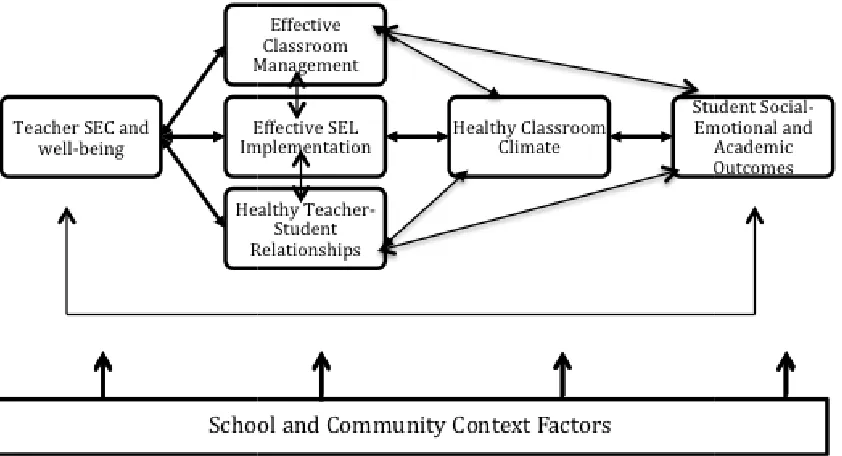
implementation of SEL programs. Figure 2 summarizes this relationship between factors that create a healthy classroom climate and ultimately influence positive student
outcomes. In addition to teacher factors, the model recognizes that school and community factors also influence this relationship at all levels. Research supporting the influence of teacher SEC on teacher-student relationships and classroom management is described next and linked to student academic and behavioral outcomes. In addition, the influence of school climate and community factors across all levels of the model are briefly summarized.
of a teacher is critical in creating a positive classroom atmosphere. They posited that the continuous responsibility of having to be a good example, the pressure of preparing students academically, and the frequency of dealing with interpersonal and behavioral problems in teaching profession creates a great deal of stress. The authors hypothesized that these inherent stressors of the teaching profession impact teachers who are at-risk for mental health problems, leading “maladjusted” teachers to act out using behaviors that are detrimental to students’ well-being.
Figure 2. A model of teache student outcomes. Adapted fr Emotional Competence in Rel and M. Greenberg, Review of American Educational Resear
Forehand, Jones, Brod self-reported levels of depress American children ages 7 to 1 analyses, the authors found th predicted child depressive sym depressive symptoms (β = 0.3 children, such that younger ch teachers and mothers endorse
her social and emotional competence and classroo from “The Prosocial Classroom: Teacher Social Relation to Student and Classroom Outcomes,” by of Educational Research, 79, p. 494. Copyright 20 earch Association.
rody, and Armistead (2002) explored the interactio ession in mothers and teachers on the adjustment o 15 years old. Using separate hierarchical multipl
that mothers reporting high levels of depressive s symptoms when those children’s teachers also repo
0.30 p < .01).The authors also found a similar risk children exhibited more externalizing symptoms rsed high levels of depressive symptoms. This effe
found for older children and the authors hypothesized that this may be because older children are less reliant on teachers for support, and find comfort from peers instead.
Lastly, Han and Weiss (2005) found that teacher’s sense of self-efficacy was related to instructional variables such as their persistence in teaching under difficult situations, commitment to teaching, openness to new ideas, and willingness to try alternative teaching methods to meet the needs of their students. Teacher self-efficacy was also related to student outcomes such as achievement, motivation, and students’ own sense of efficacy. Han and Weiss reported that teachers who experienced high burnout were more likely to have intensions on leaving the teaching profession, a higher rate of absenteeism, somatic problems, and negative interactions with students. Therefore, these studies suggest that the psychological well-being of teachers’ influences personal factors (e.g., their school attendance and personal health) and has consequences on students’ academic and behavioral outcomes.
Teacher-student relationships. Yoon (2002) investigated the relation between teacher characteristics (e.g., teacher stress, negative affect, and self-efficacy) and student-teacher relationships. Yoon found that student-teachers’ reports of stress and negative affect were significantly related to negative student-teacher relationships. However, none of the teacher characteristics were related to the number of positive teacher-student
students (β = -.01, p ≤ .05 and β = .01, p ≤ .01, respectively). These teachers were also found to report more conflict than would be predicted by the number of children displaying significant problem behaviors in their classroom. Conversely, teachers who displayed emotional support reported lower levels of conflict (β = -.04, p ≤ .05) between students than would be predicted by their reported behavioral problems in the classroom.
The relation between teacher stress and teacher-student relationship is especially important given that teacher-student relationships in kindergarten have been shown to predict children’s outcomes through eighth grade (Hamre & Pianta, 2001). Hamre and Pianta (2001) found that teachers’ report of high conflict and dependency with children in kindergarten correlated significantly with poor academic outcomes for boys in
elementary school and eighth grade (r = -.22 to r = .30, p < .05). High levels of teacher-student conflict for both boys and girls also predicted lower work-habit remarks in elementary school (β = .34, p < .01) and more discipline violations in later elementary grades (β = .03, p < .05). Interestingly, the authors also found that for children with high-levels of problem behaviors, having negative relationships with teachers became a stronger predictor of low work-habit ratings and disciplinary violations. This finding suggests that forming early, positive relationships with teachers may serve as a buffer for future academic difficulties irrespective of the level of problem behavior a child displays (Hamre & Pianta, 2001).
Cornelius-White (2007) synthesized 119 studies on learner-centered teacher-student relationships and found a moderate degree of association (r = .36) between positive teacher-student relationships and positive student outcomes (e.g., grades,
some of the strongest relations among teacher variables and positive student outcomes were related to teachers’ displays of empathy and warmth.
Similarly Baker, Grant, and Morlock (2008) examined how teacher-student relationships characterized by trust, warmth, and low conflict, predicted school adjustment with students with significant externalizing and internalizing symptoms. Positive teacher-student relationships were found to be positively related to school adaptation (r = .46, p < .001). For example, children who demonstrated externalizing behaviors problems but had a close relationship with the teacher had higher reading scores than children who displayed a similar degree of externalizing behavior problems but did not have a close relationship with the teacher. Likewise, students identified as having internalizing behavior problems and a positive relationship with the teacher had better work habits than similar peers with internalizing behavior problems but who did not have positive relationships with the teacher. Overall, the quality of teacher-student relationships independently predicted student adjustment outcomes (Baker et al., 2008).
Positive classroom climate and classroom management. Bru, Stephens, and Torsheim (2002) focused on the relation between students’ perception of class
increases the probability that the person will be more compliant and adhere to appropriate norms. Bru et al. also discussed the importance of emotional support as a way to improve student motivation and create positive learning experiences.
Emotional support has also been found to be important to middle school students’ success. Malecki and Demaray (2003) investigated which types of teacher support (i.e., emotional, instrumental, informational, appraisal, etc.) related to students’ social, behavioral, and academic outcomes. The authors found that all four types of support explained significant variance in social skills (10%), academic competence (13%), and school maladjustment (30%). However, emotional support, support given in the form of trust and love, was a significant predictor of social skills and academic outcomes (p < .001) and contributed the most unique variance to the model.
Providing emotional support to students was also found to be important to middle school students’ reports of happiness or subjective well-being. Suldo et al. (2009)
At the elementary school level, Hamre and Pianta (2005) found that emotional and instructional support in the first grade moderated risk in school achievement. They identified kindergarten students who displayed both demographic risk and functional risk. Demographic risk was defined as mothers with less than four years of college education; functional risk was defined as one standard deviation below the norm in academic and behavior. Children with demographic and functional risk factors in first-grade classrooms in classes that provided high instructional and emotional support had similar end-of-the-year achievement scores as children without demographic risk. In terms of teacher-student relationships, children displaying high functional risk, but placed in a classroom with high levels emotional support, had similar levels of conflict with their teachers as their low-risk peers. On the other hand, children with high functional risk in low emotionally supportive classrooms had higher levels of conflict with teachers. The results of this study revealed that having an emotionally and instructionally supportive classroom reduces functional and demographic risk and enhances academic outcomes (Hamre & Pianta, 2005).
and teaching engagement was mediated by students’ perceived personal support (z = 4.68, p < .05) and teacher cognitive activation (z = 2.87, p > .05). Students also reported feeling more competent and autonomous in classes that were taught by teachers with higher teaching engagement and self-regulatory abilities (R2 = .02).
Research in the area of teachers’ psychological well-being reveals that various aspects of teachers’ psychological processes can influence SEL program implementation by determining a teacher’s willingness to adopt a new program, the quality in which the program is delivered and reinforced, as well as through student-teacher relationships and classroom climate. At an individual level, Brackett et al. (2009) reported that teachers who were more skilled at regulating their emotions experienced less burnout, greater job satisfaction, were more likely to display more positive affect, and have more support from principals. Jennings and Greenberg (2009) hypothesized that teacher SEC is the underlying psychological process that contributes to teachers’ emotion regulation and promotion of teacher well-being. As illustrated in Figure 2, higher teacher SEC allows for better SEL implementation because social-emotional skills enable them to be more
openness, and a care for student success (e.g., Hamre et al., 2007; Hamre & Pianta, 2005; Rimm-Kaufman et al., 2002; Suldo et al., 2009).
School climate and community. The role that school climate and community factors play in supporting teacher SEC is next discussed next. As Bronfenbrenner (1979) notably stated in his article on human development, the understanding of a person must take into account the immediate setting as well as the larger context in which the person functions. This ecological framework posits that the relationship between a person and his or her environment is bidirectional and equally impacts both. Therefore, in relation to this study, it is important to understand that school climate and community factors may also impact many levels of this relationship. For example, in a critical literature review on teacher retention and attrition in special and general education, Billingsley (1993) found that district and school environments such as administrative support, collegial and parent support, teacher autonomy, teaching assignments, role demands, class size, and work rewards all influenced teacher decisions to remain in the field. The Alliance for Excellent Education (2005) reported that among the top reasons for teachers leaving the field were related to school climate factors such as the lack of planning time (65%) and lack of influence over school policy (52%).
support from principal, support from colleagues, attitude towards innovations, and relationship with parents explained about 54% of the variance of teacher well-being.
Kam, Greenberg, and Walls (2003) investigated factors that contributed to SEL program implementation. Three hundred fifty first graders in six different public schools and three schools were assigned to the intervention condition that implemented a SEL program. Two factors were found to have contributed significantly to the success of SEL program implementation – principal support and quality of program implementation. Interestingly, the study found a significant interaction between principal support and quality of program implementation across four areas of student outcomes: Aggression (F[3, 157] = 3.69, p = .01); behavior dysregulation (F[3, 157] = 4.62, p < .005); social-emotional competence (F[3, 157] = 2.52, p < .06); on-task behaviors (F[3, 157] = 3.44, p = .01). The authors concluded that a combination of both high principal support and high quality program implementation were necessary for SEL program implementation.
Battistich, Solomon, Kim, Watson, and Schaps (1995) examined the influence of school climate on various student outcomes, such as academic achievement, motivation, social and personal attitudes, and behaviors. Twenty-four elementary schools from six different districts across the United States were studied. Student’s perception of a positive school climate was found to have a statistically significant effect on their enjoyment of class (ES = .48), liking for school (ES = .47), and task orientation toward learning (ES = .38). However, there was not a significant effect for academic performance.
larger model that may help explain the relation between teacher well-being, healthy classroom climate, and positive student outcomes. SEC may also serve as a resiliency factor when teachers are faced with difficult school/community environments. Therefore, teacher SEC may be worth investigating to broaden our understanding of these
relationships.
Need for a Teacher SEC Assessment
A teacher SEC assessment is necessary in order to investigate the influence of teacher SEC on SEL program implementation and other academic outcomes. This SEC assessment need is not a new idea. In 1979, Miller and Wiltse advocated for the
incorporation of classes on self-discovery and personal development in teacher
preparation programs. Miller and Wiltse also supported the use of a screener to identify teachers who may be at-risk for developing mental health problems in the classroom, in order to provide additional support for these teachers.
In 2006, a similar appeal was made by Patti, who advocated that teacher
preparation include social-emotional curricula and provide teachers with opportunities to practice social-emotional skills. Patti noted that teacher education programs had
historically been inadequate in developing teachers’ abilities in communication, conflict resolution, and managing their emotions. Patti called for the use of an assessment upon entering the teaching profession to measure teacher SEC in areas such as positive emotional expression, “accurate self-assessment, self-regulation, conflict management, collaboration skills, (and) empathy” (p.74). Then, based upon the assessment, goals could be created, progress monitored, and growth evaluated through a posttest
SEC is to better prepare teachers’ social-emotional knowledge and skills in teacher training programs. Frequently it is assumed that teachers have social-emotional skills; by creating a measure to assess teacher SEC, teacher training programs may begin to realize that social-emotional skills are not inherent and must be addressed prior to teachers entering the field.
Therefore, there appears to be a need for a scale to measures teacher SEC so that the impact of teacher SEC on SEL program implementation, positive classroom climate, teacher-student relationships, student outcomes, and teacher well-being can be
investigated. Educational professionals, who recognize that these skills must be addressed in teacher preparation programs and cultivated before teachers enter the field, also
endorse the development of an assessment measuring teacher SEC. Self-Report Rating Scales
respondents respond to items in one direction; social desirability, when respondents select items that are socially desirable; faking, where respondents attempt to select items that create a more positive picture of themselves; and deviation, where the respondent endorses items in a haphazard or unusual manner.
Despite the challenges that face self-report assessment, Merrell (2008) noted that self-report measures of social-emotional behaviors are useful for gaining a greater understanding of the individual, screening for prevention and intervention purposes, and making decisions on further assessment. Self-report measures may also provide
information that would not be possible through direct observation or other sources of social-emotional assessment. Therefore, self-report measures are one way of obtaining unique information on theoretical constructs such as the construct of interest in this research study, teacher SEC. A self-report measure of teacher SEC will be developed and investigated.
Current Scales
Currently a few self-report measures are available to measure teacher well-being, such as teacher self-efficacy, teacher stress, and burnout. However there are two main limitations to the current measures available. First, many teacher-specific measures assess a narrow band of social-emotional constructs that do not represent all aspects of teacher SEC. Second, measures used in assessing teacher SEC were not specifically designed for teachers. The following three scales described below are scales that have been used in studying teacher well-being.
The Classroom Appraisal of Resources and Demands (CARD; Lambert,
measures teacher stress through examining the difference between a teacher’s perception of school-provided resources and demands of the classroom environment. This scale is based upon the transactional model of stress that conceptualizes teacher stress as being the result of perceived classroom demands exceeding available resources. The CARD is composed of 65-items, the Demands scale consists of 35 items and the Resources scale is consists of 30 items. The items are rated on a 5-point Likert scale (1 = Very Unhelpful or Not Demanding; 5 = Very Helpful or Extremely Demanding). A total stress score is computed by subtracting the Demand subtest from the Resources subtest. Studies on the CARD revealed strong internal reliability (Cronbach’s alpha = .92 to .95) and evidence for criterion validity (e.g., Lambert, McCarthy, O’Donnell, & Melendres, 2007; Lambert, O’Donnell, Kusherman, & McCarthy, 2006; Jazaar, Lambert, and O’Donnell, 2007). The benefit of the CARD is that it was created specifically to address stressors in the teaching profession; however, it does not measure teacher SEC.
handle students with challenging behaviors. This scale also lacks psychometric evidence to support its reliability and validity.
Another frequently administered self-report scale is the Maslach Burnout Inventory (MBI; Maslach, Jackson, & Leiter, 1997), which measures burnout and is composed of three scales: Emotional Exhaustion (EE, 9 items), Depersonalization (DP, 5 items), and Personal Accomplishment (PA, 8 items). Items relating to Emotional
Exhaustion ask how frequently respondents feel fatigue, frustration, and interpersonal stress. Items on the Depersonalization scale ask respondents how often they have
negative interactions with colleagues. Items that categorize the Personal Accomplishment subscale focus on how frequently respondents feel a sense of competence and personal achievement. The assessment uses a 7-point frequency scale that ranges from 0 “never” to 6 “everyday”. Reliability estimates of the MBI scale on a sample of 1,316 participants revealed a Cronbach’s coefficient alpha of .90 for the Emotional Exhaustion scale, .79 for the Depersonalization scale, and .71 for the Personal Accomplishment scale. Test-rest reliability ranging in time spans from 2-weeks to a year, obtained correlation coefficients ranging from .50 to .82. The MBI also obtained high convergent validity on studies investigating the relationship between burnout and the amount of workload, desires to leave one’s job, and interpersonal relationships. Discriminant validity studies on the MBI also supported the MBI as a valid measure that was different from job dissatisfaction and depression (Maslach et al., 1997).
studies on its factor structure revealed it to be similar to the MBI. Although this version of the MBI is suitable for the education setting, and teacher burnout is hypothesized to be related to teacher SEC, the MBI-ES is not a measure of teacher SEC. Therefore, this brief review of teacher self- report scales reveals that there are a limited number of validated teacher self-report scales available to use and supports the development of an assessment specifically on teacher SEC.
An expanded analysis on teacher self-report. Studies examining teacher well-being and demographic differences revealed that there are a few demographic differences such as age, education level, gender, number of years teaching, and class setting that may influence teacher well-being. For example, Griffith, Steptoe, and Cropley (1999)
Zabel and Zabel (2001) investigated the relationship between age, experience, and preparation to special education teachers’ report of burnout. The authors obtained a sample of 301 questionnaires from special education teachers in Kansas. No age differences between high (defined as one standard deviation above the mean) and low (defined as one standard deviation below the mean) scores across any of the subscales on the MBI-ES were found. There was also no significant correlation between the amount of teaching experience and burnout across the three MBI-ES subscales. The authors reported the correlations on the emotional exhaustion subscale approached significance (r = .10, p = .08) and differences between extremely high and low scoring groups on this subscale also approached significance (F = 3.18, p = .08). Teachers with master’s degrees had significantly higher scores on the Personal Achievement scale (F = 12.8; p < .01), but did not have significantly different scores from teachers with bachelor degrees on the
Emotional Exhaustion and Depersonalization scales.
This brief analysis of current teacher assessments calls attention to the limitations of current measures available to researchers and practitioners who are interested in studying teacher SEC. This analysis also reveals that a psychometrically sound measure of teacher SEC does not appear to exist. Interestingly, studies on teacher self-report measures also reveal that there may be demographic characteristics that influence teacher reports of well-being.
CHAPTER III
METHOD
Social-Emotional Competence Teacher Rating Scale (SECTRS) was developed as a teacher self-report measure of SEC in order to identify those teachers who may be in need of developing their social-emotional skills. In addition to assessment purposes, researchers can use this scale to understand the relationship between teacher SEC and positive classroom climate, teacher well-being, and SEL program implementation. SECTRS scale development consisted of six main steps that were supported by the literature in scale development (e.g., DeVellis, 2003; Merrell, 2008; Spector, 1992): (1) define construct, (2) design scale, (3) pilot test and expert review, (4) full administration, (5) evaluate items, and (6) validate. The development of the scale consisted of two phases as illustrated in Figure 3. Phase 1 included creating and refining a pilot version of the scale. Phase 2 consisted of pilot testing the scale with a diverse sample of participants in order to evaluate scale items and conduct reliability and validity analysis of the scale. Phase 1: Development of the SECTRS
was to clearly define the construct(s) of interest. The construct of interest for this research study was teacher SEC. As defined by the CASEL group and Jennings and Greenberg (2009), SEC consists of five core competencies: awareness, self-management, social awareness, relationship skills, and responsible decision-making. These constructs were clearly defined and answered research question one, “What are important teacher SEC domains that would make up a teacher self-report scale of teacher SEC?”
SECTRS constructs. Self-Awareness was defined as the ability to accurately assess one’s feelings, emotions, interests, and values. Teachers who are self-aware recognize their emotional patterns “and know how to generate and use emotions such as joy and enthusiasm to motivate learning in themselves and others” (Jennings &
Greenberg, 2009, p.495). Teachers also have a good understanding of their emotional strengths and weakness as well as have a realistic sense of self-confidence.
Social awareness was defined as the ability to take the perspective of and empathize with students, family, and staff members. Teachers who are socially aware “build strong and supportive relationships through mutual understanding and
cooperation” (Jennings & Greenberg, 2009, p.495). They are sensitive to cultural
diversity and appreciate different perspectives of parents, students, and school personnel. This sensitivity allows them to effectively problem solve conflicts between students and school personnel.
p.1). As such, teachers take i students, and/or staff member actions” (Jennings & Greenbe
Figure 3. A model of the ratin phase one, scale creation and from Summate Rating Scale C Publications.
Teachers demonstrate emotions and impulses when Greenberg, 2009). Teachers a ways that contribute to a posi
Phase 1
Phase 2
e into account how their decisions will impact the bers, as well as take “responsibility for their decisi nberg, 2009, p.495).
ating scale development process that includes two nd phase two, scale administration and validation. le Construction, by P. Spector. Copyright 1992 by
ate self-management through their ability to regula en faced with emotionally challenging situations (J
s are able to express and channel their emotions in ositive classroom climate and positive relationship
comfortable with student autonomy and encourage students to discover things on their own (Jennings & Greenberg, 2009). Teachers set and monitor progress toward academic goals (CASEL, 2011).
Lastly, having good relationship skills was defined as the ability for teachers to encourage and develop healthy and rewarding relationships with staff, with their students, and between others. Teachers with good relationships skills are able to prevent, manage, and resolve interpersonal conflict (CASEL, 2011), as well as seek help when needed. Figure 4 illustrates this theoretical model with example items that represented the five constructs.
Designing the scale. Items included in this scale were generated to reflect the five core competencies of SEC. In some instances items were adapted from existing scales. Item generation was used to answer research question two, “What potential items would be appropriate representations of these SEC domains?”. The final item pool consisted of 53 items. Nine items were adapted from the following scales: Social Emotional Assets and Resiliency Scales – adolescent version (SEARS-A; Merrell, 2011), Social Skills Rating System – secondary version (SSRS; Gresham & Elliot, 1990), and the Situational Self-Awareness Scale (SSAS; Govern & Marsch, 2001). Fifty-three original items were created based upon the theoretical constructs hypothesized to encompass teacher SEC. Figure 4 exhibits example items from the SECTRS scale (please see the Appendix for a copy of the full scale).
Teachers were asked the degr Responses were rated on a 6-6 (strongly agree); higher sco SEC.
Figure 4. The five core comp items that reflect the compete
Pilot testing and expe were designed, experts review either knowledgeable in the c education, were requested to p
Self-gree to which they aSelf-greed or disaSelf-greed with an ite -point scale. Item values ranged from 1 (strongly cores on the SECTRS represented higher levels of
petencies that constitute teacher SEC along with etency of interest.
xpert review. Once the initial pool of items and sc iewed the pool of items. A convenience sample of e content area or with practical experience working to provide feedback on the relevancy of the item to