23
Effect of Viral Marketing to Image B2B Exhibition Gilang Pratama, DR. Endang Ruswanti
Magister Management, Universitas Esa Unggul, Indonesia
Abstract: Problems that facing business to business exhibition in present-day is the lack of communication in using digital marketing, company cannot build image of exhibition and bring more visitor. This study uses viral marketing that measured with audience reach, diffusion of speed and peer to peer transmission as independent variables that can affect towards image of exhibitions as the dependent variable. This study is proving that is important for companies to be able to use the new tool in promotional mix especially the internet to advertise their products and services using social media. Hypothesis analyzed using SEM and by the statistical methods of non-hierarchical (K-means Cluster). The analysis generating result that hypothesis is accepted, and proved that viral marketing with variable Audience of reach, Diffusion of Speed and Peer-to-Peer Transmission affecting towards Image of exhibition Franchise License Expo. This study will further enrich the study of digital marketing especially viral marketing.
Abstrak: Masalah yang dihadapi industri pameran dengan jenis business to business di masa kini adalah kurangnya komunikasi dalam menggunakan pemasaran digital, perusahaan tidak bisa membangun citra pameran dan membawa lebih banyak visitor secara efektif dan efisien. Penelitian menggunakan viral marketing yang diukur dengan audience reach, diffusion of speed dan peer to peer transmission sebagai variabel independen yang dapat mempengaruhi terhadap citra pameran sebagai variabel dependen. Penelitian ini membuktikan bahwa penting bagi perusahaan untuk dapat menggunakan alat baru dalam bauran promosi terutama internet untuk mengiklankan produk dan layanan mereka menggunakan media sosial. Hipotesis dianalisis menggunakan SEM dan dengan metode statistik non-hirarkis (K-means Cluster). Hasil analisis menghasilkan hipotesis yang diterima, dan membuktikan bahwa viral marketing dengan variabel audience of reach, diffusion of speed and peer-to-peer transmission mempengaruhi terhadap Image Pameran. Penelitian ini lebih lanjut akan memperkaya studi tentang pemasaran digital terutama viral marketing.
24 Introduction
Exhibition industry is a big potential market that promises many profits from its sector when other sectors are slowing down facing global issues. Otherwise, Exhibition industry also facing issue according to fulfilling their visitor targeted. Visitor is the center of exhibition, if the exhibition company wants to named as a great exhibition, company itself should brings many visitor to their exhibition. This study is proves in how to build image of exhibition from new perspective in using viral marketing as a new tools in integrated marketing communication.
This study is a replication with modification of a previous study, entitled "Viral Marketing To Image Islamic Banking in Indonesia" written by Anwar (2009) and published by the University of Indonesia.modification in this study using statistical of non-hierarchical (K-means clustering) besides Strutural Equation Modelling (SEM) to testing the hyphotesis. Differences from previous study also in population, in this study the respondent changed from participants in blogging competition into the potential visitor Franchise and License Expo exhibition.
The background of chosen viral marketing, based on previous research conducted by (Chaffey, Chadwick, Johnston, and Mayer, 2009) the result is that there are benefits of viral marketing to build brand image better.In line with the result of study that conducted by Herdiana (2013) in his research proposes that viral marketing have high impact on brand image. Intended for proves especially in exhibiton industry, therefore we need more research on the effect of viral marketing particularly towards exhibition Image in Indonesia.
The current phenomenon occurs that in present-day moment where it is found that there has been a pattern almost identical in Indonesia, especially if they see the marketers have much use of the Internet, especially social media to marketing their products or services, the objective of using social media itself are aiming to reach more audience, accelerate deployment product information and allows the audience to share information of product or services to the other users. In Indonesia, facebook is a social networking site that is most widely used by the people of Indonesia and from all walks of life.
Based on the data and the phenomenons, author wants to prove effect of viral marketing in building the image of the exhibition with the type of business- to-business Franchise and License Expo.
Literature Review Marketing Mix
Managing a marketing communication system requires a draft strategy and effective and affecient marketing programs. Marketing Mix is a set of marketing tools that company uses to pursue the marketing objectives (Kotler and Keller, 2015).Corresponding Lupiyoadi (2006) stated that: "The marketing mix is a tool for marketers consisting of various elements of a marketing program that takes into consideration that the implementation of the marketing strategy and positioning are applied can be a success". Likewise, Kotler and Keller (2015) stated the marketing mix is a set of marketing variables that can be controlled by the company and used to achieve the target market.
25
value to the consumer. The Price, which is a cost that must be paid by the consumer to obtain a product.The Place, represents a combination of location and distribution channel decisions, in this case relating to how the delivery of services to consumers and where the strategic location (Lupiyoadi, 2006).
The third is Promotion, is an activity that used to communicate information about products to be sold.The People, a provider of services that greatly affect the quality of services rendered.The Phisycal Evidence that leads to the facilities offered by the company such as buildings and the quality of the appearance of the workers. And the last is the Process whereby a combination of all the activities, generally consists of procedures, work schedules, mechanisms and routine matters.
Definition of promotion in the marketing mix according to the experts, the Promotion is an element in the marketing mix of the scene organization to inform, persuade and remind the market of the organization or the product (Saladin, 2014). Another definition is promotional mix are the techniques that are designed to sell products (Ebert and Griffin, 2014). Kotler and Armstrong (2013) also stated that marketing communications are the means by which the company seeks to inform, persuade and remind consumers about their products and brands.
Promotion is also one of the variables in the marketing mix is essential implemented by the company in marketing services (Lupiyoadi, 2006). Based on the definitions put forward by experts on the above, it can be seen that the promotion is one element in the marketing mix companies are utilized to inform, persuade, and remind about the company's products.
Integrated Marketing Communications generally the company uses not only one marketing communications tools. The company has been using a mix of communication for a long time, but it does not mean that they are being practiced Integrated Marketing Communications. Difference when using integrated marketing communication is a strategy behind the use and how to mix in coordinated.short word, the mix of marketing communications as a controlled variable that is mixed so that the organization got a response that they requested from the target market (Kotler and Armstrong, 2013). Integrated marketing communications is a concept of marketing communications planning that recognizes the added value of a comprehensive plan in evaluating the strategic role of the various disciplines of communication (Belch, George, and Belch, 2009). As well, according to Duncan (2008) Integrated marketing communication or integrated marketing communications nowadays consists of two tools, they are Classic and New Tools.
This study focuses on the new tools, which always comes up with the technological developments and new ways to get things done. Advances in technology have led to a revolutionary change in the history of marketing, a dramatic change in communication using interactive media such as the Internet. Interactive media allows two-way communication is not just one form in one direction such as advertising. Bidirectional communication is an important part of the integrated marketing communication, unlike other media; the Internet is a hybrid media (Belch, George and Belch, 2009).
26
creating Awareness, Advertising on the Internet will be very useful for creating awareness of the specific products and services. Otherwise for small companies that have limited funds, Website offers an opportunity to create a higher awareness on what might be achieved through traditional media (Belch, George and Belch, 2009).
The second objective is developing interest or passions with way the use of the site for providing information, news, music, movies and other content for the audience.
The third goal is the dissemination of information in which the main purpose of the use of internet media is providing in-Depth Information about products and services. In market Business to business (B2B), having a website is a must because as consumers will expect them to see clearer information about the company. In the government sector, the contract or date of tender pronounce in the website.
The information consists of specifications, advantages, and others can be spread through the Internet to more potential interest in participants with lower prices compared with other media. The next goal is to create an image in which the Website and information disseminated over the Internet company aims to build a corporate image on the internet.
Then the fifth goal is to create a strong brand with the Internet, part of a program of integrated marketing communications, an appropriate tool in building brand image. The Internet can provide an opportunity to advertise them openly and continuously appropriately.
Viral Marketing
Viral marketing definition, according to experts, according to Wilson (2005) viral marketing is a marketing tactic consumer-to-consumer uses the internet to encourage individuals to convey a marketing message to others. Viral marketing is similar to a virus, information about the company and the brand message, the goods or services is transmitted to potential buyers then forward the information to other potential buyers by means of an extensive network that is bolted quickly (Dobele, Toleman and Beverl, 2005).
Kaikati (2004) stated that viral marketing is network-enhanced word of mouth. It is as well stated by Ferrel and Hartline (2010) that viral marketing is a Form of Communication electronic word of mouth. More details Kotler and Armstrong (2013) stated that Viral marketing is an Internet version of word-of - mouth marketing, which involves creating E-Mail messages or other marketing event that is so infectious that customers will want to pass it along to their friends.
Stated by Turban, Leidner, McLean and Wetherbe, (2012) viral marketing is a Word-of-mouth marketing in which customers promote a product or service by telling others about it. And concise opinion was also expressed by Arifin (2007) that viral marketing is a program that is designed like a virus and be contagious from one person to another rapidly and widely.
27
disseminate information about products or services, thus leading to more rapid and cost-effective adoption by the market.
The dimensions of the power associated with viral marketing are Audience Reach with means excess accessing different through social contacts (Helm, 2003). Second dimensions is the Diffusion of Speed where excess Reaching the audience in a period of rapid (Kaikati and Kaikati, 2004), Solid and rapid spread (Dobele, Toleman, and Beverl, 2005), while the dimensions of the power of viral marketing The third is the Peer-to Transmission-peer with the excess spread of conducted voluntarily by the sender of the message (Dobele, Toleman and Beverl, 2005).
Image
The term of Image gaining popularity since the 1950s that has been used in various contexts. Here are some opinions according to experts on the definition of image. Image of the company is perceived in consumer memory that reflects on the company (Zeithalm, Bitner and Gremler, 2013). Image is reproduction of the identity or the form of a person, object or organization (Sutojo, 2005).
Image is an impression, a feeling, a public self-image of the company; deliberately created the impression of an object, person or organization and the impression obtained by someone based on their knowledge and understanding of the facts of reality (Soemirat and Elvinaro, 2007). Stated by Kotler and Keller (2015) image is a set of beliefs, ideas and impressions that are owned by a person against an object.
Imagery is similarly the impression gained someone based on their knowledge and understanding of the facts of reality (Soemirat and Elvinaro, 2007). Based on the definitions put forward by experts on the above, it is known that there are similarities meaning of the image which is the public image of the organization. As a consequence the corporate image or the image of a company is a perception, and impression owned by a person against brand, product or company. Companies need a positive image, which mean, image is the one of the most important assets of a company.
Corporate image is formed not by itself, according to Dina, Pina, Martínez, and Chernatony (2008) aspects that influence the formation of corporate image include: Reputation, an opinion or a general view of an organization or a company.Credibility, the statements and attitude of trust towards company. And Service Quality, a global assessment or regarding the superiority of a service.Extension Quality, is a quality that is acceptable to the consumer after the company carrying out the expansion.And the last is the Fit, the opportunities to jointly use the existing services with the service after the company carrying out the expansion.
According to Harrison (2000) the image of the company an organization emerged from the four elements that interconnected. They are personality, reputation, values/ ethics and corporate identity. they can be explained as follows: the first is Personality that the overall characteristics of a company that understood by the environment outside the company, such as a trustworthy company, a company that cares about the environment and safety, and others.
28
products or services. The third element is the Values/ethics, which values or ethics the company affecting the reputation of the company itself. The values espoused by a company are a standard or benchmark of company itself. The fourth element is the Corporate Identity meaning the identity of the company that recognized in the name, symbols, logos, colors and rituals (ceremonies) to bring companies, brands. Corporate Identity can formed quickly. Hence the name, symbol, slogan or logo of the company must receive attention so as to represent the company and its products appropriately and easily recognizable.
Based on the considerations that affect the corporate image of the indications can be obtained from a variety of feedback such as complaints, pejorative media coverage, reports of the sales force, corporate identity can be formulated by make programs of activities to establish and develop the image so it becomes greater. Efforts to communicate the best corporate image by maintain the perception and build the perception of the target segments that are less positive (Sutojo, 2005).
Methods
Hypothesis Development
Accordingly on previous research, there are benefits of viral marketing to build a brand image (Chaffey, Chadwick, Johnston and Mayer, 2009). There is research which proves that there is a relationship between viral marketing and Brand (Anwar, 2013). From the review of literature above, then researchers propose hypotheses:
H1: "Viral marketing affect towards Image".
Determination of sample size base on percentage method according to Yount (1999). Population in this research is 1,000 people, so sampling size are 100 respondents (10% x 1,000). Data analysis techniques using in this research is Structural Equation Model (SEM). SEM was used to estimate multiple regression separate but interconnected together (simultaneously). Afterwards, the data analyzed with K-Means Cluster. Cluster analysis is a technique of multivariate used in data mining that aims to identify a group of objects that have similarities certain characteristics that can be separated with a group of other objects, so that objects that are in the same group is relatively more homogeneous than objects outside group. The number of the groups can be identified depending on lot and variety of data objects (Larose, 2014).
The purpose of this cluster formation is for further analysis and interpretation in accordance with the purpose of the research conducted. Cluster Solution as a whole depends on variables that are used as a basis for assessing similarity, addition or subtraction of relevant variables that could affect the substance of the analysis results Cluster. Cluster analysis can be applied to any field. However, the use of this technique is more familiar in the field of marketing as it is one of the activities carried out in marketing is grouping, known as market segmentation.This study uses data quality analysis, KMO factor analysis to test the validity and reliability testing.
Measurement
29
transmission and Image. Independent variables and the dependent variable under study is further described as follows, variable dimensions of viral marketing include: Audience Reach (X1), Diffusion of Speed (X2), and Peer-to-Peer transmission (X3) the third variable is the independent variable that is used as a decision variable, as a dependent variable (Y) which includes Personality, Reputation, Value / benefit, Identity.
Results and Discussion
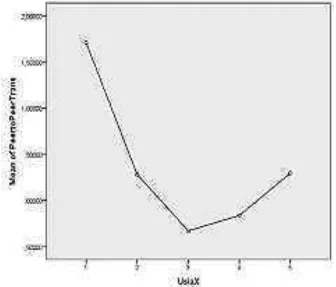
[image:7.596.145.481.363.650.2]In this study, first test are factor analysis and reliability testing as well as to test the validity of the questionnaire research indicators which are used as a measuring tool. The results showed that the questionnaire used is acceptable and reliable. Furthermore, this study sees whether there is influence between demographic groups of respondents to answer for each variable. This is done by testing a descriptive analysis of respondents with a One Way ANOVA. The results showed that the group of respondents with a younger age tends to be more sensitive for peer to peer transmission compared to the group of respondents with older age.
30
Table 1. Testing Structural Relationship Mode
Hypothesis T-value Description
Audience Reach 3.00 Data Supporting Hypothesis Diffusion of Speed 2.61 Data Supporting Hypothesis Peer-to-Peer Transmission 2.93 Data Supporting Hypothesis Source: data processing results.
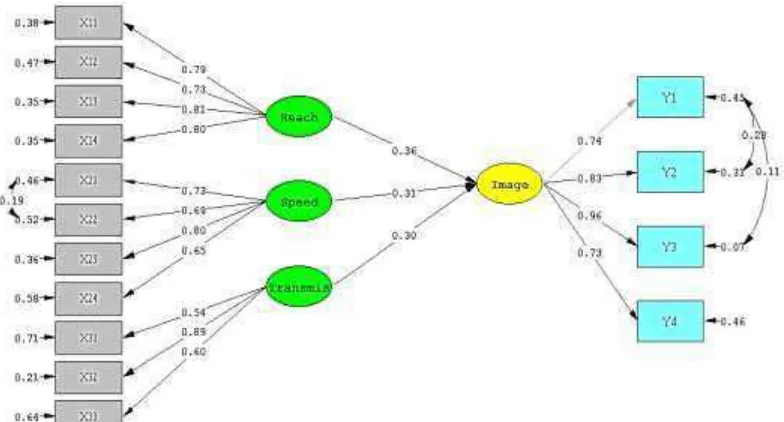
[image:8.596.118.510.228.439.2]Furthermore, this study resulted in the path diagram as shown below:
[image:8.596.127.536.487.687.2]Figure 2. Basic Model Standart
Table 2. Analisa Goodness of Fit
Group Indicator Value Description
1
Degree of Freedom Chi-square
NCP
Confidence Interval
79 130.10
51.10 23.67 ; 86.43
Good Fit
2
RMSEA
Confidence Interval P Value
0.08 0.055 ; 0.11
0.027
Good Fit
3
ECVI Model ECVI Saturated ECVI Independence Confidence Interval
4112 4124 16191 11.1 ; 2.50
31 4
AIC Model AIC Saturated AIC Independence CAIC Model CAIC Saturated
212.10 240.00 1944.97
359.92 672.62
Good Fit
5
IFN 0.93
Good Fit
IFN 0.97
IIFN NFN
0.96 0.97
IFN 0.90
IIFN 0.70
6 I caciti I 81.22 Marginal Fit
7
Standardized RMR GFI
AGFI PGFI
0.072 0.85 0.77 0.56
Marginal Fit
Source: data processing results.
Afterwards, the data analyzing with K-Means cluster to test and indentifying homogeneity variable in group.
Hypothesis Test Results are consists of Hypothesis 1; hypothesis obtained significant results with the number K-0004 based test Mean Cluster (if the value <0.05 then H1 accepted).
Hypothesis H2a: epecially for groups Diffusion of low speed, high-reach audience has a greater than Image Image of Audience Reach low.Obtained significant results with 0.449 figures.
Hypothesis H2b: especially for the lower group of Audience Reach, Diffusion of High Speed has a larger image than the Diffusion of Low Speed.Obtained significant results with 0.613 figures.
Discussion of Research Findings
First results show there is a positive influence between the audience reach and image. Analysis results shows that the audience reach affects towards image exhibitions, which mean a range that can be disseminated in the dissemination of information about the exhibition franchise exhibition and lisence expo virally spread through social networking site Facebook that can affect the image of the exhibition business to business franchise and lisence expo. With the growing amount of information that spread virally in social networking site Facebook, the audience already knows about the exhibition, can be classified as potential visitors to the exhibition. Using social media as a digital marketing platform proving that social media can reach a lot of people from different backgrounds.
32
world of digital marketing rapid dissemination of information is one aspect of competitive advantages, in this case an exhibition company should be able to inform potential visitors to the exhibition efectively. All information about exhibition should deliver to potensial visitor as fast as possible. Nowdays, image of exhibition can be build more faster by using social media, with advantages of social media all information about exhibition will deliver to many audience effectively.
The above explanation shows that the study results are positive influence directly between diffusion of the speed and image of exhibition, because respondent immediately distributing content that contains information about the exhibition to other audiences. Marketers should create interesting content, that trigger the audience willing to share its content to friends, more exciting the content, the more probable the contents can spread across social media.
Third result shows that there is a significant effect of peer to peer transmission to the image. This indicates that the peer - to- peer transmission directly affects the image of exhibition; the respondents in this study are willing to share information to facebook friends. This indicates viral marketing goes well in building the image of the exhibition. The success of an exhibition is measured by the number of visitors who come to the exhibition, the more visitors that come, an exhibition is considered successful. It is thus important for an organizer company to be able to build the image of the exhibition to the audience as much as possible.
Conclusion
There is a positive influence between Audience Reach, Diffusion of Speed, peer to peer Transmission and Image. This shows that the third variable affect the image of visitor’s exhibition directly. among others: Coverage that can be disseminated in information dissemination exhibitions Franchise and License Expo which viral spread through social networking site Facebook can affect the Image exhibition Business to Business Franchise and License Expo. With the growing amount of information that spread virally in social networking site Facebook, the audience already knows about the exhibition, can be classified as potential visitors to the exhibition.
33 quickly.
The above explanation shows that the study results are positive influence directly between Diffusion of Speed towards image, because the respondent immediately distributing content that contains information about the exhibition to other audiences. There is a significant influence of the Peer-to-Peer Transmission of the Image. This indicates that the Peer-to-Peer Transmission affect the image directly. The respondents in this study are willing to share information to facebook friends. This indicates viral marketing goes well in building the Image exhibition thus adding more visitor knowing the Image of exhibition. The success of an exhibition is measured by the number of visitors who come to the exhibition, the more visitors that come, an exhibition is considered successful.
Very important for a exhibition company to be able to build the Image exhibition to the audience effectively, efficiently and massively.
References
Aaker, D. A. (2009). Managing Brand Equity (9 ed.). New York: John Willey & Sons, Inc.
Alma, B., & Hurriyati, R. (2008). Manajemen Corporate & Strategi Pemasaran Jasa. Bandung: Alfabeta.
Anwar, R. N. 2009. Viral Marketing Terhadap image Perbankan Syariah di Indonesia. Jakarta: Universitas Indonesia.
Arifin, A. (2007). Viral Marketing on Strategy Edisi II (Membangun Mega Bisnis dengan Konsep Viral Marketing) (2 ed.). Indonesia: Andi Publisher.
Arikunto, S. (2002). Prosedur Penelitian Suatu Pendekatan Praktek. Jakarta: Rineka Cipta.
Augusty, F. (2013). Metode Penelitian Manajemen: Pedoman Penelitian untuk Skripsi, Tesis dan Disertasi Ilmu Manajemen (2 ed.). Semarang: Badan Penerbit Universitas Diponegoro.
Belch, G. E., & Belch, M. A. (2009). Advertising and Promotion : An Integrated. Marketing Communication Perpective (8 ed.). New York: McGraw-Hill.
Chaffey, D., Chadwick, F. E., Johnston, K., & Mayer, R. (2009). Internet marketing: strategy, implementation and practice (4 ed.). England: Prentice-Hall.
Dasgupta, S. (2013). Studies in Virtual Communities, Blogs, and Modern Social Networking: Measurements, Analysis, and Investigations (1 ed.). Hershey: IGI Global.
Dina, J. M., Pina, J. M., Martínez, E., & Chernatony, L. D. (2008). Modelling the Impact of Services Brand . Birmingham: Birmingham Business School. Dobele, A., Toleman, D., & Beverl, M. (2005). Controlled infection! Spreading
The Brand Message Through Viral. Business Horizons.
34 Prentice Hall.
Etzel, M. J., Stanton, W. J., & Walker, B. J. (2003). Marketing (13 ed.). England: The McGraw-Hill Companies.
Ferrel, O. C., & Hartline, M. D. (2010). Marketing Strategy (5 ed.). UK: South- Western.
Fornell, C., & Larcker, D. (1981). Evaluating Structural Equation Models with Unobservable Variable and Measurement Error. Journal of Marketing Research, 18, 39-50.
Ghozali, I., & Fuad, A. (2008). Structural Equation Modeling: Teori, Konsep dan Aplikasi Dengan Program Lisrel. Semarang: Badan Penerbit UNDIP.
Gruen, T. W., Osmonbekov, T., & Czaplewski, A. J. (2006). eWOM: The Impact of Customer- to-Customer Online Know-how Exchange on Customer Value and Loyalty. Business Research 59, 449-456.
Hair, J. F., Black, W. C., Babin, B. J., & Anderson, R. E. (2013). Multivariate Data Analysis (7 ed.). New York: Pearson.
Harrison, S. (2000). Public Relations: An Introduction. London: Cengage Learning EMEA.
Helm, D. (2003). Calculating The Value of Customer’s Referrals. Managing Service Quality. Berlin: Springer.
Herdiana, D. 2013. Analisis Kinerja Viral Marketing Terhadap Brand Smartphone Nokia (Survei Pada Komunitas Smartphone Nokia di Jejaring Sosial Facebook). Unpublished Tesis. Jakarta: Universits Pendidikan Indonesia. Hermawan, A. (2009). Penelitian Bisnis. Jakarta: Grasindo.
Kaikati, A. M., & Kaikati, J. G. (2004). Stealth Marketing: How to Reach Consumer Surreptitiously. California: California Management Review. Kotler, P., & Bowen, J. T. (2013). Marketing for Hospitality and Tourism (6 ed.). London: Prentice Hall.
Kotler, P., & Keller, K. L. (2015). Marketing Management (15 ed.). London: Prentice Hall.
Lamb, C. W., & Hair, J. F. (2012). Marketing (12 ed.). England: Cengage Learning.
Larose, D. T. (2014). Discovering Knowledge in Data: An Introduction to Data Mining (Wiley Series on Methods and Applications in Data Mining) (2 ed.). Hoboken: Wiley.
Lupiyoadi, R. (2006). Manajemen Pemasaran Jasa. Jakarta: Salemba Empat. Malhotra, N. K., & Dash, S. (2011). Marketing Research An Applied Orientation
(6 ed.). England: Pearson.
Mangold, W. G., Miller, F., & Brockway, G. R. (1999). Word-Of-Mouth Communication In The Service. Services Marketing, 73-89.
35 Research, 333.
Kotler, P., & Armstrong, G. (2013). Principles of Marketing (15 ed.). London: Prentice Hall.
Porter, L., & Golan, G. J. (2006). From Subservient Chickens to Brawny Men: A Comparison of Viral Advertising to Television Advertising. Journal of Interactive Advertising, 30.
R., D. T., & E., M. S. (2008). Client Perceptions of Integrated Marketing Communications. Journal of Advertising Research, 30-33.
Radiosunu. (2001). Manajemen Pemasaran (Suatu Pendekatan analisis). Yogyakarta: BPFE.
Saladin, D. (2014). Manajemen Pemasaran (4 ed.). Bandung: Linda Karya. Soemirat, S., & Elvinaro, A. (2007). Dasar-Dasar Public Relations. Jakarta: Pustaka Indonesia.
Sugiyono. (2008). Metode Penelitian Bisnis. Bandung: CV. Alfabeta.
Sutojo, S. (2005). Membangun Citra Perusahaan (2 ed.). Jakarta: Damar Mulia Pustaka.
Tjiptono, F. (2008). Pemasaran Strategik. Yogyakarta: Andi Publisher.
Turban, E., Leidner, D., McLean, E., & Wetherbe, J. (2012). Information Technology for Management: Transforming Organizations in the Digital Economy (6 ed.). New York: John Willey & Sons, Inc.
Wibisono, D. (2009). Riset Bisnis. Jakarta: Gramedia Pustaka Utama.
Widhiarso, W. (2010) Pengertian Dasar Structural Equation Model (SEM). Malang: Alfabeta.
Wilson, D. F. (2005, May Tuesday). 'The Six Simple Principles of Viral Marketing. Retrieved' April Tuesday, 2015, from Web Marketing Today: http://webmarketingtoday.com/articles/viral-principles/
Wuyts, S., & Bulte, C. V. (2007). Social Network And Marketing, For A Thorough Review Of Relevant Academic Literature. Marketing Science and Institute Relevant Knowledge Series.
Zeithalm, V., Bitner, M. J., & Gremler, D. D. (2013). Service Marketing (6 ed.). Canada: McGraw-Hill Education.