i
THE STUDENTS’ MOTIVATION IN READING AND READING INTEREST OF THE FIFTH SEMESTER STUDENTS OF IAIN PALANGKA RAYA
THESIS
Presented to Education Department of State Islamic Institute Palangka Raya as Partial Fulfillment of Requirements
for Degree of Sarjana Pendidikan
by:
CHITRA MULIATI SRN. 1001120607
STATE ISLAMIC INSTITUTE OF PALANGKA RAYA FACULTY OF TEACHER TRAINING AND EDUCATION
LANGUAGE EDUCATION DEPARTMENT STUDY PROGRAM OF ENGLISH EDUCATION
ii
THE STUDENTS’ MOTIVATION IN READING AND READING INTEREST OF THE FIFTH SEMESTER STUDENTS OF IAIN PALANGKARAYA
THESIS
Presented to Education Department of State Islamic Institute Palangka Raya as Partial Fulfillment of Requirements
for Degree of Sarjana Pendidikan
by:
CHITRA MULIATI SRN. 1001120607
STATE ISLAMIC INSTITUTE OF PALANGKA RAYA FACULTY OF TEACHER TRAINING AND EDUCATION
LANGUAGE EDUCATION DEPARTMENT STUDY PROGRAM OF ENGLISH EDUCATION
v
MOTTO AND DEDICATION
“Read! In the name of thy Lord and Cherisher, Who Created”
(Q.S. Al-„Alaq: 1)
This thesis is dedicated to:
vii ABSTRACT
Muliati, Chitra. 2017. The Students’ Motivation in Reading and Reading Interest of the Fifth Semester Students of IAIN Palangka Raya. Thesis, Department of Language
Education, Faculty of Teacher Training and Education, State Islamic Institute of Palangka Raya. Advisors: (I) Dra. Halimah, M.Pd (II) Luqman Baehaqi, S.S, M.Pd.
Keywords: motivation, reading motivation, types, reading interest
There is a major concern among educators about students who can not read but more seriously about those who can read but do not have the motivation to read. In recent years, many researchers have tried to find out the reason behind the lack of motivation to read. In any academic or higher learning context, reading is perceived as the most prominent language skill. It is through reading that the students learn new information and become able to synthesize, evaluate, and interpret. As the better readers the students are, the better achievement they get in second language acquisition. There must be reasons what control the students‟ behavior toward reading.
This study was aimed at: (1) investigating the factors that motivate the fifth semester students in reading, and (2) knowing what types of reading materials interest the students.
The study was descriptive study using qualitative approach with case study design. Data were collected through a questionnaire and interview which analyzed quantitatively. The subjects of study were 40 students from the fifth semester of IAIN Palangka Raya. The students are all in similar age of 20-21 years old. The samples of the study were chosen by using purposes sampling technique.
viii ABSTRAK
Muliati, Chitra. 2017. Motivasi Membaca dan Bahan Bacaan yang Diminati Mahasiswa Semester Lima IAIN Palangka Raya. Skripsi, Jurusan Pendidikan Bahasa, Fakultas Tarbiyah dan Ilmu Keguruan, Institut Agama Islam Negeri Palangka Raya.
Pembimbing: (I) Dra. Halimah, M.Pd (II) Luqman Baehaqi, S.S, M.Pd.
Keywords: motivasi, motivasi membaca, tipe-tipe, bahan bacaan yang diminati
Terdapat kekhawatiran besar di antara para pendidik terhadap para siswa yang tidak bisa membaca namun lebih-lebih terhadap mereka yang dapat membaca namun tidak memiliki motivasi untuk membaca. Dalam beberapa tahun terakhir, banyak peniliti mencoba untuk menemukan alasan dibalik kurangnya motivasi membaca. Di dalam konteks akademik, membaca dianggap sebagai keterampilan bahasa yang paling penting. Bahwa melalui membaca, para siswa mempelajari informasi baru dan mampu mensintesis, mengevaluasi dan menafsirkan hal-hal baru. Semakin baik seseorang dalam membaca, semakin baik pula pencapaian yang didapatkan dalam penguasaan bahasa kedua. Pasti ada alasan apa yang mengendalikan motivasi siswa dalam membaca.
Penelitian ini bertujuan untuk (1) menginvestigasi faktor-faktor yang memotivasi mahasiswa semester lima dalam membaca, (2) mengetahui tipe-tipe bahan bacaan yang menarik menurut mahasiswa.
Penelitian ini adalah analisis deskriptif yang menggunakan pendekatan kualitatif dengan desain studi kasus. Data dikumpulkan melalui kuisioner dan wawancara yang dianalisis dengan metode kuantitatif. Subyek penelitian adalah empat puluh orang mahasiswa semester lima di IAIN Palangka Raya. Mereka memiliki rentang usia yang sama berkisar 20-21 tahun. Sampel dari penelitian dipilih berdasarkan teknik purposive sampling.
ix
ACKNOWLEDGMENTS
The writer would like to express her sincere gratitude to Allah SWT., for the blessing bestowed in her whole life particularly during the thesis writing without which this thesis would not have come to its final form. Sholawat and salam always be bestowed to the last prophet Muhammad SAW., having shown us the role of life to make our life true.
Her appreciation is addressed to:
1. Dean of Faculty of Teacher Training and Education of the State Islamic Institute of Palangka Raya, Drs. Fahmi, M.Pd., for his invaluable assistance both in academic and administrative matters.
2. Vice Dean in Academic Affairs, Dra. Hj. Raudhatul Jennah, M.Pd., for her invaluable assistance both in academic and administrative matters.
3. Chair of Department of Language Education, Dr. Hj. Hamidah, M.A., for her invaluable assistance both in academic and administrative matters.
4. Secretary of Department of Language Education, Santi Erliana, M.Pd., for her invaluable assistance both in academic and administrative matters.
5. Secretary of Study Program of English Education, M. Zaini Miftah, M.Pd., for his invaluable assistance both in academic and administrative matters.
6. Her thesis advisors, Dra. Halimah, M.Pd. and Luqman Baehaqi, S.S., M.Pd., for their generous advice, valuable guidance and elaborated correction during their busy time to the completion of her thesis.
7. Both members of the board of examiners, for their corrections, comments and suggestions which are profitable to the accomplishing of this thesis.
x
9. Her beloved parents, H. Anas Ikhsanuddin and Murti Astuti, for their moral support and endless prayer so that she is able to finish her study. May Allah SWT bless them all. Amin.
Palangka Raya, June 2017 The writer,
xi
CHAPTER II REVIEW OF RELATED LITERATURE ...9
xii
4. Testing the Validity and Reliability ...37
a. Validity Test ...38
CHAPTER IV RESEARCH FINDINGS AND DISCUSSION ...49
A. Data Presentation ...49
1. Motivation for Reading Questionnaire ...49
2. Reading Interest...62
B. Research Findings ...65
C. Discussion ...67
CHAPTER V CONCLUSION AND SUGGESTION ...74
A. Conclusion ...74
B. Suggestion ...75
REFERENCES ...77
xiii
LIST OF TABLES
Table Page
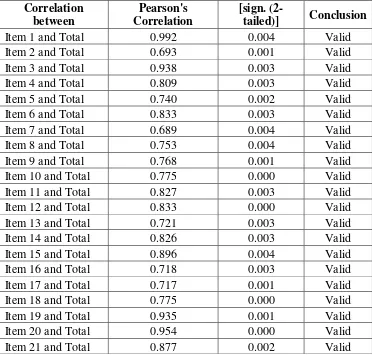
3.1 Validity Test of Motivation Reading Questionnaire ... 38
3.2 Reliability Test of Motivation Reading Questionnaire ... 41
4.1 Standard Deviation of Each Item in MRQ ... 50
4.2 The distribution of frequency of questionnaire scale ... 52
4.3 The distribution of the frequency in competence and self efficacy beliefs 52 4.4 The distribution of the frequency in goals for reading categories ... 53
4.5 The distribution of the frequency in social purposes for reading ... 54
4.6 The frequency distribution of the dimension of self efficacy ... 55
4.7 The frequency distribution of the dimension of challenge ... 55
4.8 The frequency distribution of the dimension of work-avoidance ... 56
4.9 The frequency distribution of the dimension of curiosity ... 57
4.10 The frequency distribution of the dimension of involvement ... 57
4.11 The frequency distribution of the dimension of curiosity ... 58
4.12 The frequency distribution of the dimension of recognition ... 59
4.13 The frequency distribution of the dimension of grades ... 59
4.14 The frequency distribution of the dimension of competition ... 60
4.15 The frequency distribution of the dimension of social ... 61
4.16 The frequency distribution of the dimension of compliance ... 61
4.17 Types of reading materials preferred by the participants ... 62
xiv
LIST OF APPENDICES
Appendix Page
xv
CHAPTER I
CHAPTER I INTRODUCTION
The chapter covers the background of the study, research problem, objective of the study, scope and limitation, significance of the study, and definition of key terms.
A.Background of Study
English is an international language in every part of people‟s life in
the world. Science, news, theory, philosophy, and many others can be learnt from another countries which mostly are written in English. In order to understand them, being able to read in English becomes an essential thing for everyone to enrich his or her knowledge. This idea is supported by the fact that reading has become a part of our daily life. We read many kinds of written materials from newspaper, magazine, academic books using English.
Grellet (1986: 4) states that there are two main reasons for reading, the first one is reading for pleasue and the second is reading for information. Those reasons may affect us to read as much as possible to get a lot of information, knowledge, enjoyment and even problem solutions from reading activity. Therefore, the ability to read the text in any form will give a great deal of advantages in our life.
Reading is one of the most important components of our language and it is an essential tool for lifelong learning for all learners. In order to
2
face the 21st century, education has to prepare these learners to adapt to social and technological changes that are taking place at an unprecedented rate. Education under these circumstances depends largely on language competency. In this context, Noor (2011: 2) states reading especially is a resource for continued education, for the acquisition of new knowledge and skills, for gaining information through media, especially newspapers, books, radio, television, and the computers. Thus the achievement of quality basic education calls for the development of good reading habits of both young and adult learners.
Reading becomes the main aim of language teaching which is a skill and a part of the teaching program. Its purposes are to enable students to read and understand the text materials correctly. Then it is essential to read in the right way in order to understand the target language. Students who read the text in their own language it is not really difficult for them to read it. However, when they read it in a foreign language they have difficulties in reading. According to Badawi (1992: 18), there are several factors effect students‟ ability to learn reading: Conceptual development based on external and internal stimuli can be defined as the motivation. Then, experimental background which influences the prior knowledge of the reader and the language competency which will enable the reader to understand and compehend what they read.
comprehension is meant as the act of grasping the reading content with the mind. Comprehension includes recognizing and understanding main ideas and related details. This is in line with Nuttal‟s statement that reading
comprehension is not only on the pronouncing or loud reading, but also on the understanding reading taken in consideration. Nuttal (1982: 3) concludes that it is unlike that you were interested in the pronunciation of what you read except in a tiny minority of eases, it is even likely that you were interested in grammatical structures used. You read because you want to get something from the writing; fact, ideas, enjoyment, even feelings or family community (from a letter): whatever you want to get the message that the writer had expressed.
Therefore, Spangler (2000: 15) in order to become mature and effective reader that can understand and grasp the reading content, students must have the skill and the will. The will to read, or later will be mentioned as motivation, will influence students interest in reading, whether they will engage and engross in their reading. Motivation, as a subjective factor, always affects students‟ learning behavior. Spolsky, an American linguist
4
The role of motivation in language learning has been studied since 1960s. Most language teachers will agree that motivation of the students is one of the most important factors influencing their success or failure in language learning. American linguist Brown (2000: 143) said that if one has the proper motivation in second language learning, he could certainly be successful, which brought out the importance of motivation and the way it can overcome unfavorable circumstances in other aspects of language learning.
Researchers and practitioners have become increasingly aware of the importance of reading motivation in explaining literacy behavior. Cramer and Castle (1994: 19) even suggested that attention to the affective aspects of reading, such as motivation, may help combat the increasing disaffection from reading. Indeed, according to Mitchell (1992: 65) motivation for learning is thought to be one of the most critical determinants of the success and quality of any learning outcome and Guthrie (2000: 408) also stated that it is therefore likely “that motivational processes are the foundation for coordinating cognitive goals and strategies in reading”. According to
achievement that was described earlier as defined by Stanovich (1986: 407). Better readers tend to read more because they are motivated to read, which leads to improved vocabulary and better skills. As a result, the gap between good and poor readers grows over time. The same circular relationship holds for other areas in literacy, including writing and speaking and/or listening skills.
The problems about students‟ motivation to read are also faced by
university students of IAIN Palangka Raya. Some people found out that they were not “in love” in books so that they felt difficult to read. Some
others stated, books were not interesting eventhough the fact is that they needed to read to get information (knowledge). While others, said that preference books influenced them to read and comprehend the books. Some others complained about their mastery on vocabulary, they said it was difficult to read when you wonder what the word‟s meaning.
6
B.Research Problem
Based on the background of the study above, the problems of the study are as follow:
1. What are motivations that influence students in reading? 2. What types of reading materials interest the students?
C.Objectives of the Study
The objectives of this study are:
1. To investigate the motivations that influence students in reading. 2. To know what types of reading materials interest the students.
D.Scope and Limitation
The research is only conducted to the fifth semester students in academic year 2016/2017 at IAIN Palangka Raya. The research is conducted limited only to find out the factors affecting motivation in reading and what reading materials interest the fifth semester students at IAIN Palangka Raya.
E.Significance of the Study
EFL teachers who might use this research result as an input for English teaching learning, after knowing the factors that affect student motivation in reading in order to provide an array of reading materials then the students will be more engaged and engrossed in their reading. And for the students, hopefully they will have a better improvement in reading by finding the reading materials which provide textual, realistic, readable, and convincing text that will interest and fulfill their need based on their motivations in reading.
F.Definition of Key Terms 1. Motivation:
Motivation is general desire or willingness that becomes the reason(s) someone has for acting and behaving in a particular way.
2. Reading interest:
Reading interest is the persistent tendency of particular source of reading which arising a strong desire to read.
3. Type:
8
CHAPTER II
CHAPTER II
REVIEW OF RELATED LITERATURE
This chapter presents the review of literature. It covers the three major sections; previous studies, the nature of motivation, factors influencing students‟ motivation, the nature of reading, and reading interest.
A.Related Studies
A research of a survey was carried out to identify Petroleum Engineering students‟ motivation and attitudes towards learning the English
language. The study investigated students‟ motivation in terms of three motivational constructs: instrumental motivation, integrative motivation and personal motivation. The study sample consisted of 81 petroleum engineering students at Hadhramout University of Sciences and Technology (HUST). A questionnaire and interviews were used for data collection. For the students‟ motivation, the findings showed the subjects‟ greater support
of instrumental reasons for learning the English language including utilitarian and academic reasons. Personal reasons were also regarded as important motives by the students. However, regarding the integrative reasons, the results provided evidence that learning English as a part of the culture of its people had the least impact in students‟ English language
motivation. On the other hand, data for the students‟ attitudes revealed that most of students had positive attitudes towards the social value and educational status of English. In addition, the findings showed the students‟
9
positive orientation toward the English language. Interestingly enough, the results of research conducted by Tamimi and Shuib (2009: 17) indicated that a high number of the students showed their interest in the culture of the English speaking world as represented by English-language films. Finally, some pedagogical implications that would help the students‟ motivation and attitudes were presented.
One significant area where learners‟ preferences influence their
learning can be seen in reading (Tamimi, 2009: 18). In any academic or higher learning context, reading is perceived as the most prominent academic language skill for all second and foreign language learners. It is through reading that these learners learn new information and become able to synthesize, evaluate and interpret in order to learn more about their subject matter. Pursuing a postgraduate study requires extensive reading practices which will enable the learners to extend their literacy that indicated students‟ primary preference for reading online materials.
motivated towards reading. In addition, reading literary materials fosters students‟ language development and is assumed to be a channel for learning
about other cultures. Therefore, students should be motivated and encouraged to read different text types in foreign language as part of both compulsory and elective courses as suggested by Noor (2011: 3).
There is a major concern among educators and parents about students who cannot read but more seriously about those who can read but do not have the motivation to read. The study investigated 245 undergraduates‟ level of reading motivation and their reading strategies use
when they read academic texts. The results showed that the undergraduates‟
reading motivation was of moderate level and they mostly use the cognitive reading strategy instead of the metacognitive reading strategy. There seemed to be a connection between the undergraduates‟ reading motivation
and the reading strategy used. The results indicated that the undergraduates‟
11
improving students‟ intrinsic motivation and decreasing their extrinsic
motivation. Other research results conducted by Bavaria (2011: 39) revealed that there was a significant difference among the five Diploma programs and finally, the students‟ reading motivation had no significant relationship
with their economic background.
Another study conducted by Sanford (2015: 197) revealed that when the motivation-to-read factors were added to the regression equation, students‟ predictive value was marginalized and only extrinsic motivation
remained a predictor, albeit for students‟ who were less extrinsically
motivated. Clearly, student motivation-to-read is important to reading in general and comprehension specifically (Guthrie, 2008). Without a desire to read, students will only pick up a book when absolutely necessary, many will not read one for pleasure. One reason for lack of motivation-to-read is that reading is a cognitive task for them, it has not become automatized, and is difficult. Improvements in reading comprehension and general reading ability should therefore increase a student‟s motivation to read.
Additionally, the instruments used to measure motivation-to-read should focus on fewer constructs (i.e., student engagement, intrinsic motivation, extrinsic motivation) so that better analyses can be rendered.
B.Nature of Motivation
Bandura (1986: 49) defines self-efficacy as the beliefs we have about ourselves that cause us to make choices, put forth effort, and persist in the face of difficulty.
Reading motivation is a complex construct since there are two aspects of reading motivation that are based on different reasons or goals that give rise to an action – namely intrinsic and extrinsic motivation. According to Ryan and Deci (2000: 16), intrinsic motivation refers to engagement in an activity that is based on personal interest in the activity itself. Readers who are intrinsically motivated are more likely to find a variety of topics that interest them and to benefit from an accompanying sense of pleasure. Studies have linked intrinsic reading motivation to:
a. Greater reading frequency and greater breadth of reading (Hidi, 2000: 27).
b. Greater reading (Cox and Guthrie, 2001: 131).
c. Greater retention of key information (Guthrie, van Meter, Hancock, Alao, Anderson, McCann, 1998: 275).
d. Greater persistence in coping with difficulties, mastering the required skills and becoming self-determined in reading tasks.
Wigfield and Guthrie (2000: 188) reported that several aspects of intrinsic motivation predict breadth of reading and reading comprehension: importance, curiosity, involvement and challenge. These can be described in more detail as follows:
13
b. Curiosity is the desire to learn about a particular topic of personal interest.
c. Involvement refers to the enjoyment of reading certain kinds of literary or information texts.
d. Preference for challenging reading is the satisfaction of mastering or assimilating complex ideas in text.
By contrast, extrinsic motivation involves engagement in an activity in response to external values and demands. For example, when children read to avoid punishment or to meet teachers‟ or parents‟ expectations, they are extrinsically motivated because their desire to read is controlled externally. Extrinsically motivated pupils may therefore not read because they are interested but because they want to attain certain outcomes (e.g. recognition from others or good grades). Wigfield and Guthrie (1997: 43) reported that extrinsic motivation was made up of three aspects: recognition, grades and competition.
According to Wigfield (1997: 22), these aspects can be defined as follows:
a. Reading for recognition is the pleasure in receiving a tangible form of recognition for success
b. Reading for grades refers to the desire to be favorably evaluated by the teacher.
Several studies have shown that both forms of motivation predict amount and breadth of reading, but that the relationship is stronger for intrinsic motivation.
Research has also shown that intrinsic but not extrinsic motivation predicts reading for pleasure. For example, children who were intrinsically motivated read fiction at least once a week, and in some case almost daily as reported by Wang and Guthrie (2004: 180). By contrast, extrinsic motivation was negatively associated with reading for pleasure, suggesting that children who read for the outcomes of reading are less likely to get enjoyment from books. The literature also indicates that the two forms of motivation have different relationships with text comprehension. Intrinsic motivation was positively related to text comprehension after other variables, such as extrinsic motivation and reading amount, were controlled for.
Extrinsic motivation, on the other hand, was negatively associated with text comprehension in this study. Indeed, there is some indication in the literature that pupils who are extrinsically motivated readers are more likely to use strategies at surface level, such as guessing and memorization as pointed by Pintrich and Schrauben (1992: 110).
15
has typically been related to learning that leads to conceptual understanding and higher level thinking skills, while extrinsic motivation tends to lead to “surface” rather than “deep” learning.
C.Factors Influence Motivation
There are some factors influencing students‟ motivation towards
their reading interest. Major factors usually differs in gender, age, socio-economic background, and reading habit.
1. Gender
females reported a stronger interest in Romance, Friendship, Animal Stories, Adventure, and Historical Fiction, while the males reported stronger preferences for the categories of Sports and Science. Also, the male respondents had a stronger preference for non-fiction than did the female respondents.
2. Age
It has been suggested that mature students (>23 years old) may have difficulties coping with the demands of learning compared to young students (<23 years old) (Newman-Ford, Lloyd & Thomas, 2009: 76). Indeed, Richardson (1994: 14) concludes that mature students seek a deeper meaning towards their academic work and were less likely to adopt a surface approach or reproducing orientation like the younger students. This affects their preference in reading materials.
Duthie (2005: 128) found that as students grow older, the interests to engage in texts are less likely to occur because of the other free-time possibilities that are competing for the adolescent‟s attention. It is
17
genre preferences increase. Because of the differences in reading preferences at various grade levels, it is important that males and females are being provided with adequate exposure to a mixture of texts.
3. Socio-economic Background
Several authors (Guthrie, 1978: 62; Lietz, 1996: 11; OECD, 2001, 2002; Fredriksson, 2002: 19) emphasize that parents‟ level of education,
socio-economic position of the family and cultural heritage play an important role in the learning achievements of students. The analysis of the data among the 4th graders in Latvia reveals the similar coherence between parents‟ education, study aids at home, financial position of the
family and students‟ motivation in reading.
Other socio-economic factors are also taken into consideration when a student reads. Students‟ parents, siblings, and peers, as well as their culture images all play an important role in students‟ selection of
reading materials. Geske and Ozola (2009: 28) have found that there are multiple factors explaining students‟ reading achievements. Several studies have indicated that there are various factors that influence students‟ literacy levels. These factors include gender, confidence,
motivation and attention towards reading, school, parents‟ schooling,
socioeconomic and culture disparities, and various home situations as well as students‟ background. It is suggested that students who have
achievement. This means that students with educated parents have higher reading success and reading habits thus are intrinsically motivated to read various reading materials (Geske & Ozola, 2009: 37).
4. Reading Habits
19
extensively is almost nearly absent among the greater number of students in the schooling system today (Issa, 2012: 29).
The habits for visiting library also becomes one of the factors influencing students‟ motivation to read. Pachtman and Wilson (2006:
22) discovered from their research findings that supplying ample books in the class library, allowing students to choose their own books, participating in book counts and celebrations, and being able to visit the class library every day were the top results from student questionnaires and surveys on student motivation.
D.Nature of Reading
According to Oxford Advanced Learner‟s Dictionary (2005: 1383),
reading is the activity or occupation of reading or a way in which something interpreted or understood, e.g. books, stories, newspapers or articles.
Reading is an important gateway to personal development, and to social, economic and civic life as opined by Holden (2004: 88). It allows us to learn “about other people, about history and social studies, the langue
arts, science, mathematics, and the other content subjects that must be mastered in school”. As noted by the Department for Culture, Media and
Sport, “people cannot be active or informed citizens unless they can read.
Reading is a prerequisite for almost all cultural and social activities”.
levels of literacy to perform their jobs, run their households, act as citizens and conduct their personal lives. They will need literacy to cope with the flood of information they will find everywhere they turn. They will need literacy to feed their imaginations so they can create the world of the future. In a complex and sometimes even dangerous world, their ability to read can be crucial.
Reading is a key to a wealth of experience that links people in a way far beyond distance or time. Reading provides experience to the individual so that he may expand his horizons, identify, extend and intensify his interest and gain deeper understanding of himself and other human being and of the world. Reading is important for students in general in order to cope with new knowledge in a changing world – that of the technological age. The ability to read is at the heart of self-education and lifelong learning. Mokatsi (2005: 68) suggests that reading is a very important issue which is not only about enjoyment but a necessity; the basic tool of education. Reading makes way for a better understanding of one‟s own
21
E.Reading
1. Definition of Reading
Reading knowledge is broadened and well-informed by reading. Reading is really crucial our knowledge is usually broadened and informed by reading activities, and the activity of reading can be found in the internet, book, etc. Students should practice their reading more and more, so that their reading ability and their reading experience will be improved. They may find difficulty and frustrating, but if they keep practicing, they will have a good sense of English and will help them to grasp the total meaning of the words. Another thing should be remembered in reading that students should not open a dictionary too often because it will slow down their reading rate and can make them bored. If they find new words, they should try to guess the meanings by trying to find out any clue words according to the context in the passages.
reading as the process of acquiring and authors meaning and of interpreting, evaluating, and effecting upon those meanings. F. Dubin (1986: 6) explained the meaning of reading is primarily a cognitive process, which means that the brain does most of the work.
Those statements above show the various definitions of reading, they mean generally. Reading means a complex process of thinking in assigning meaning from printed materials which involve most of the reader‟s intellectual act such as pronunciation and comprehension in
order to receive ideas or information extended by the text. It can be seen that reading is not only looking at word in the form of graphic symbols but also getting meaning from word to word or line to line to understand what we read. It means that reading is a process to understand the text content and to get information.
2. Aims of Reading
A person may read for many purposes, and purpose helps to understand more what is read by people. If he is reading for pleasure or reading for pure recreation and enjoyment, he may read either quickly or slowly based on the way he likes or feels. But if reads for studying or setting information such news, science or same line, which are part of his study or assignment he does it very slowly and carefully.
23
reading for classifying, reading for evaluating and reading for comparing of contest.
a. Reading for details and fact is reading to know what is done by the subject of the story.
b. Reading for main ideas is reading to get the problem statement. c. Reading for sequence of organization is reading to know each part of
the story
d. Reading for inference is reading to know what is the writer meant by its story
e. Reading for classifying is reading to find unusual things
f. Reading for evaluating is reading to know the value of the story g. Reading for comparing or contest is reading to compare the way of
life of the story with the way of life of the reader.
Grellet (1981: 4) said that the aim of reading is: a. Reading for pleasure
b. Reading for information (in order to find out something or in order to do something with the information you get).
a. Leisure-time reading. It is reading for enjoyment which may vary in to follow your favorite sport, comic, article, and movie program. b. More serious reading. It is reading to study for a goal such as to
obtain factual information and solve problems. 3. Types of Reading
Depending on the purposes of reading it also can be classified into two types of activities, intensive and extensive reading as defined by Nuttal (1982: 23).
a. Intensive reading:
Intensive reading means reading shorter texts to extract specific information. This activity is likely more to emphasize the accuracy activity involving reading for detail. The process of scanning takes a more prominent role here than skimming. Reader is trying to absorb all the information given, example: Reading dosage instruction for medicine.
b. Extensive reading:
Reader deals with a longer text as a whole, which requires the ability to understand the component part and their contribution the overall meaning, usually for one‟s own pleasure. This is a fluency activity,
25
F.Reading Interest
Reading interest or preferences seemed to be differed with different age levels. Mellon (1990: 228) surveyed the leisure reading choices of rural teenagers and found that their reasons for leisure reading were for entertainment and for acquiring information. Magazines and newspapers were found to be the most preferred reading materials of teenagers. It has also been shown that informational reading was the main purpose for adult reading and their most popular books are: adventure, crime, social problems, novels, politics, and sports in ranking sequence. Platt (1986: 39) reviewed several selected studies on reading preferences of adolescents, and concluded that adolescents do read extensively in books, periodicals, and newspapers. Graduate and undergraduate students‟ reading behaviors are slightly varied.
Hall (1989: 18) examines 285 freshmen at a large southern urban university. Over 70% of all students favored reading magazines and newspapers most and novels least, and half of the students read the sports, entertainment and front-page sections of the newspaper regularly. In addition, graduate ESL students spent more time reading academic materials than did their undergraduate counterparts.
to benefit from the opportunity to gain access to the wide range of knowledge. Besides, when readers read to get information, they indirectly improve their reading skills. This is supported by Eskey (2002) who stated that by reading, one learns to read and becomes better at reading. Due to this, people who read extensively can become good readers as they are exposed to new words. As a result, they will like reading and become successful.
The early experience ESL students encounter when reading second language materials could determine their attitudes towards reading and that students will employ the attitude that they have adopted towards reading in a second language as they advance to the development stages of reading as pointed by Marrero (2010). According to Mc Kool (2004: 131), reading interest is defined as readings done when students are outside the school compound. Furthermore, the US Department of Education defined reading interests as whether or not students like to read in their spare time or at home or whether they like to go to the library. Besides, Khairudddin (2013: 169) suggested that reading interest is also defined by the number of books read in a month and the number of times students read in a week and the favorite genres and types of English reading materials.
27
they will gain more knowledge and this will help them to have wider and broader perspectives on certain issues. Besides, Anderson, Fielding and Wilson (1988) found that students‟ reading interest is one of the best predictors of a child‟s growth in reading.
CHAPTER III
RESEARCH
28
CHAPTER III
RESEARCH METHODOLOGY
This chapter covers: a). Research Type, b.) Research Design, c.) Role of the Researcher in the Study, d.) Research Site, e.) Sources of Data, f). Research Instrument, g). Data Collection Procedure, g). Data Analysis Procedure, and h.) Data Endorsement.
A.Research Type
Qualitative research is a board field of inquiry that uses unstructured data collection method, such as observation or document to find themes and meanings to inform our understanding of the world. Qualitative research tends to try uncovering the reasons for behavior, attitudes and motivations, instead of just the details of what, where and when. Qualitative research can be done across many disciplines, such as social science, healthcare and business as pointed by Gay (1981: 13).
According to Ary (2003: 423) qualitative research involves studies that do not attempt to quantify their results through statistical summary or analysis. Qualitative studies typically involve interviews and observations and documents analysis without formal measurement which will be used to understand perspectives and interpret behavior and intention in order to contextualize findings and may create theory grounded in the findings itself. The research used qualitative research type to describe the factors that affecting students‟ motivation in reading and focuses only in quality of
nature of reading in students‟ behavior and activities. Furthermore, the
assumptions based on this research type are the reality in the field is socially constructed, it means that the behavior or activities of reading is always changing as time goes by and the complex variables, in this case are the motivation and the factors that affecting them are difficult to measure hence this research used flexible, evolving, and emergent methods which are explained in the research design. (Ary, 2010: 112)
B.Research Design
This research used case study research designs or approaches which can be based on their function, characteristics, or disciplinary perspective. One‟s selection of a research design is determined by how well it allows full
investigation of a particular research question as pointed by Hancock and Algozzine (2006: 31). Employed by researchers in the fields of psychology, sociology, education, medicine, law, political science, government, and business, case study designs are often related to the disciplinary background from which they are derived. Furthermore, according to Ary (2010: 455) case study, which is an in-depth examination of individual or unit will emphasize of understanding why the individual does what he or she does and how behavior changes the individual responds to the environment.
30
qualitative research (because a single case cannot be representative of a population), actual case studies often include quantitative data collection instruments as well such as questionnaires (Verschuren, 2003: 148). Thus, the case study is not a specific technique but rather a method of collecting and organizing data so as to maximize the understanding of the unitary character of the social being or object studied (Dornyei, 2007: 151).
The case study orientation that was used is the historical analysis. Historical case studies are often descriptions of events, programs, or organizations as they have evolved over time. Extending traditional historical research, historical case study research typically includes direct observation and interviews of key participants. Historical case study research produces more than a chronological listing of events; it results in a researcher‟s descriptive interpretation of factors that both cause and result
from the events (Hancock and Algozzine, 2006: 31). This research conducted the method of document analyses and interviews from the participants to understand better a theoretical explanation that underpinned a particular issue rather than wanted to understand the issue itself. In other words, the writer gathered information about students‟ motivation through
documents analyses to determine the factors which affecting their motivation towards reading.
C.Research Site
needed information from the students and so that it did not disturb the teaching learning process. The subject of the study was the students of fifth semester of IAIN Palangka Raya as informants to respond and give information this study requires.
D.Sources of the Data
Data sources in this research were the informants (the person who gave the information, resources, data sources) or referred to the subject under study took important role since they were not only as a source of data, but also the actors who determined the success of a study based on the information provided. The participants were the fifth semester students of IAIN Palangka Raya. Simple random sampling technique was utilized when selecting the sample for this research. This was to ensure that every student has an equal chance of being selected. It was assumed that the fifth semester students (as in early twenties) were matured enough to answer the questions given to them as they were in the late adolescence. As Steinberg (2005: 16) suggests, during adolescence, adolescents are able to think of abstract things like interests, perspectives and attitudes better. They are also more likely to see things as relative, rather than absolute. Because of this, the fifth semester students were supposed to be able to give the most accurate answer in terms of their motivation and interest in reading.
32
The sampling for the cases is purposive and can be described as what Patton (2002: 236) refers as critical case sample which are those that can make a point quite dramatically or are particularly important. Sixty percent (60%) or 43 participants of the entire of fifth semester student population of 71 was sampled for the study. The sample size is supported by Babbie (2005: 176) using the rules of thumb, that for a population below 1000, a sample size of 5-10% is acceptable. To improve the reliability and validity of the research instrument, the questionnaire was pilot-tested/tried-out on similar but smaller sample group. Meanwhile the sample for interview were chosen by using rules of thumb procedure. About 5-10% of all samples was considered as a good number as the representatives.
E.Research Instrument
1. Motivation for Reading Questionnaire
little different from me, a little like me, and a lot like me. The exception of the calculation for the scale of work-avoidance is done by reverse counting in the SPSS descriptive analysis.
2. Reading Interest Questionnaire
The reading interest questionnaire was adapted from Panigrahi and Panda (2014) investigated a study of the reading interest and information eliciting sources of 130 school going children of two leading English-medium schools in Rourkela, India and identifies factors that hinder the development of reading interests.
The questionnaire item is only one to discover students‟ interest in
reading with eighteen types of reading material choices. Students were not limited to choose in particular numbers as it showed their preference in reading.
3. Interview
34
Brown (2001), for example, argues that questionnaire data and interview data can be seen as inherently complementary:
Interview allows the main theses of a qualitative project to be tested in a survey study in order to determine the distribution and frequency of the phenomena that have been uncovered.
In a similar vein, Gillham (2000: 82) urges survey researchers to conduct semi-structured interviews to accompany questionnaire results in order to gain a better understanding of what the numerical responses actually mean. Interview data can both illustrate and illuminate questionnaire results and can "bring your research study to life". Indeed, questionnaires lend themselves to follow-up retrospective research in which participants are asked to go through their own responses with an interviewer and provide retrospective comments on the reason for their particular answer in each item. Thus, in this design the participant's own item responses serve as prompts for further open-ended reflection and, at the same time, the coverage of all the items ensures systematicity and comprehensiveness.
4. Testing the Validity and the Reliability of the Instruments
instrument itself but on the interpretation and meaning of the scores derived from the instrument. The category of instrument used in this research was validity coefficient (ray) which is defined as coefficient of correlation
between test scores and criterion. Like any correlation coefficient, the size of a validity coefficient is influenced by the strength of the relationship between test and criterion and the range of individual differences in the group. As usual, the nearer the coefficient is to 1.00 (+or −), the stronger the evidence is that the test is useful for the stated purpose.
Meanwhile, reliability of a measuring instrument is the degree of consistency with which it measures whatever it is measuring (Ary, 2010: 255). Psychologists and educators are concerned about the consistency of their measuring devices when they attempt to measure such complex constructs as scholastic aptitude, achievement, motivation, anxiety, and the like. People who use such measuring instruments must identify and use techniques that will help them determine to what extent their measuring instruments are consistent and reliable. Reliability may also be defined theoretically as the ratio of the true score variance to the observed score variance in a set of scores. The equation for reliability of the coefficient of reliability (rxx) can range from 1, when there is no error in the measurement,
36
the reliability. Conversely, if the reliability coefficient is near 1.00, the instrument has relatively little error and high reliability.
a. Validity Test
The validity test of the instrument was done and analyzed by using Statistical Package for Social Science (SPSS) Version 16. The pilot-tested questionnaire was given to 15 students or 21,12% of the total population of fifth semester students. Each items in the questionnaire was analyzed using Pearson chi-square test.
Item 22 and Total 0.933 0.000 Valid
As explained before, the nearer the coefficient is to 1.00 (+or −),
38
[sig. (2-tailed)] for each item is also less than standard significant (α) of 0.05.
b. Reliability Test
The reliability test of the instrument was administered and analyzed by using Statistical Package for Social Science (SPSS) Version 16. The score taken from the try-out questionnaire was analyzed by scaling and determining the reliability analysis. The Cronbach‟s Alpha model was used for this analysis.
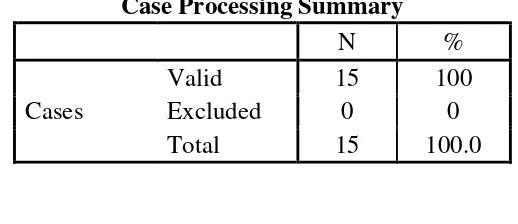
Table 3.2 Reliability Test of Motivation for Reading Questionnaire Case Processing Summary
N %
Cases
Valid 15 100
Excluded 0 0
Total 15 100.0
Reliability Statistics
Cronbach's Alpha N of Items
0.919 54
Coefficient of reliability analysis is 0.919 with Cronbach‟s Alpha.
percent is error. It can be concluded that the result of this questionnaire has quite high reliability.
5. The Role of the Researcher
The writer‟s role in this research was an observer as participant.
As stated by Donald Ary (2010: 433) this role means that researchers may interact with subjects enough to establish rapport but do not really become involved in the behaviors and activities of the group. The status as an observer/researcher is known to those under study. The role is more peripheral rather than the active role played by the participant observer.
The writer interacted with participants through interviews in which was going to be the sources of data to be analyzed and determined. Other than that, the writer had no involvements in the behavior, in this case, the motivations of students towards reading.
F.Data Collection Procedure
40
motives, social aspects of reading and the desire to avoid reading. The researcher distributed the questionnaire to the students in class. Students were given ample time to answer the questions in the questionnaire and the session took approximately 20 minutes. The researcher remained in the classroom to respond to any queries from the students while they answered the questionnaire. Upon completion, the researcher collected all answered questionnaires.
From the total of forty-three copies of Motivation for Reading Questionnaire, forty three copies were filled and returned with the response rate of 100%. However, three of the questionnaires had many item non-responses and it was classified as a unit (complete) non-response, thus reducing the response rate to 93,02%. The sample of 40 students consisted of 75% female and 25% male. There was no age group classification as the students are all in similar age of 20-21 years old.
attitudes, perspective, and habits towards reading as the questions had no right or wrong answer. Analysis of the transcript was done after the analysis data of the questionnaire as the interview acted as the compulsory data. The case studies were used to gain a better understanding of individual and representative participants in the study. They were administered and used in the write-up to illustrate and draw conclusions from the questionnaire data.
The interviewed students were chosen based on their result in motivation for reading questionnaire with various ranges between those who showed positive attitude of reading motivation to those who did not and those in between. Hence, seven students were being interviewed with interview guidance with eight (8) questions in it. All the case studies interviews were semi-structured and open-ended. Each interview was digitally recorded and transcribed for analysis. The transcription procedure used the „pick and mix‟ suggested by Dornyei (2007: 248). This simply
meant taking notes while listening to the recording, possibly marking the data that warrant more elaborate analysis. The case study is often balancing act between goals and resources and if it is possible, in certain situation videotape analysis can be justified as a good compromise because the particular data may not deserve the huge investments of a full transcript.
G.Data Analysis
42
and other materials that are accumulated to increase understanding of them and to enable the researcher to present what the researcher has discovered to others. This research uses some steps of data analysis gathered from document analysis and interview as follows:
a. Collecting data: in this research, the data was collected from the questionnaire. Then the result of document analysis categorized students‟ motivation toward reading by knowing the categories and
dimensions they were into. As for the reading interest and another data collected from the questionnaire was analyzed using descriptive statistics where frequency counts were tabulated and converted to percentages.
b. Transcribing: the transcription of the interview used the principle of „pick and mix‟ procedure as suggested by Dornyei (2007: 248). The writer invented individualized transcriptions and rules and formats that fit this research purpose. The writer also hired a research transcriber as the comparative tool for corroborating the transcription done by the writer herself.
c. Coding: After taking notes of the digital recording (videotape), the coding was used for categorizing and checking the coherence between the researcher and the hired researcher‟s note.
beginning to decide what things mean, is noting regularities, patterns, explanations, possible configurations, causal flows, and propositions. Final conclusions may not appear until data collection is over as pointed by Miles and Huberman (1984: 57). According to the data that is collected, as in Motivation for Reading Questionnaire creates a conclusion what factors that influence their motivation toward reading and their reading interest in reading. Thus, the interview with the students was scripted. The evidence based on structural corroboration is used to enhance the credibility of this research. As stated by Eisner (1998: 110) this method which multiple types data are related to each other to support or contradict the interpretation and evaluation, refers as triangulation. This method shows if the data triangulation taken from questionnaire and interview support to or contradict with each other for drawing conclusions.
H.Data Endorsement
44
68). Qualitative research is iterative rather than linear, so the repetitive back and forth movements between design and implementation to ensure congruence among question formulation, literature, recruitment, data collection strategies, and analysis. Data are systematically checked, focus is maintained, and the fit of data and the conceptual work of analysis and interpretation are monitored and confirmed constantly. Verification strategies help the researcher identify when to continue, stop or modify the research process in order to achieve reliability and validity and ensure rigor. Verification strategies that will be used in this research are the methodological coherence, sampling sufficiency, developing a dynamic relationship between sampling, data collection and analysis, and theory development.
and analysis is the essence of attaining reliability and validity. Furthermore, theory development is to move with deliberation between a micro perspective of the data and a macro conceptual/theoretical understanding. Together, all of these verification strategies incrementally and interactively contribute to and build reliability and validity, thus ensuring rigor.
The research‟s interpretation is processed by using triangulation
46
CHAPTER IV
CHAPTER IV
RESEARCH FINDINGS AND DISCUSSION
In this chapter, the writer presented the data which had been collected from the research in the field of study. The data were the result of motivation for reading questionnaire, interview, the research findings, and discussion.
A.Data Presentation
1. Motivation for Reading Questionnaire
In this study, the writer used Motivation Reading Questionnaire to analyze the students‟ reading motivation. The MRQ was administered by
the writer herself and given to forty three students of fifth semester students of IAIN Palangka Raya. The administration was done in one of the classrooms of FTIK building. The students were told they were going to answer questions with 54 items about their reading, and that the questions had no right or wrong answers. The students answered each item on a 1 to 4 scale, with answer choices ranging from very different from me to a lot like me.
The result of the Motivation Reading Questionnaire were tabulated and coded by doing the descriptive analysis using SPSS 16.0. The descriptive analysis is used to find central decencies of mean and standard deviation and the frequency for each items in the questionnaire.
47
Table 4.1 Standard Deviation of Each Item in MRQ
Item 40 40 0 2,85 3 0,8638
Each items in questionnaire was categorized into respective categories and dimensions. The categories fall into (1) competence and efficacy beliefs with the dimensions of self-efficacy, challenge, and work avoidance, (2) goals for reading including the dimensions of curiosity, involvement, importance, recognition, grades, and competition, (3) social purpose for reading with the dimensions of social and compliance. The mean of the frequency for each scale demonstrated the students‟
motivation in reading with the calculation of the total mean divided with the total items, in which showed 2,66 in average.
49
Table 4.2 The distribution of frequency of questionnaire scale
Scale Frequency Percentage
Very different from me 251 11,62 A little different from me 668 30,93 A little like me 812 37,59 A Lot like me 429 19,86
Total 2160 100
The distribution of the frequency in each categories gave the insights of the major outline in reading motivation. The categories include competence and self-efficacy beliefs, goals for reading, and the social purposes of reading.
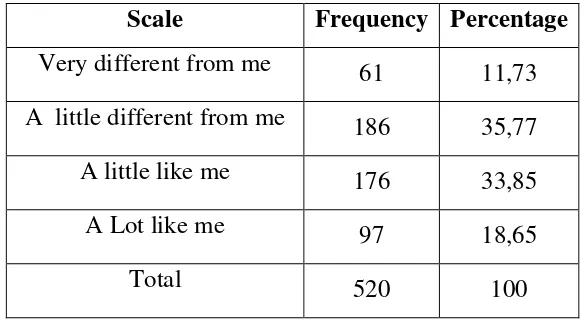
Table 4.3 The distribution of the frequency in competence and self-efficacy beliefs categories
Scale Frequency Percentage
Very different from me 61 11,73 A little different from me 186 35,77 A little like me 176 33,85 A Lot like me 97 18,65
Total 520 100
“a little like me” 176 points with or 33,85%. It could be concluded that the students had low to moderate level of confidence that they were doing well with reading. The lack of competence while reading indeed made the students feel reluctant to read. Hence, the desire to read and understand more might hindrance them to be better and active readers.
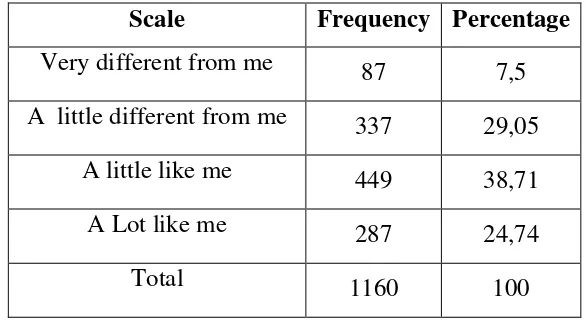
Table 4.4 The distribution of the frequency in goals for reading categories
Scale Frequency Percentage
Very different from me 87 7,5 A little different from me 337 29,05
A little like me 449 38,71 A Lot like me 287 24,74
Total 1160 100
51
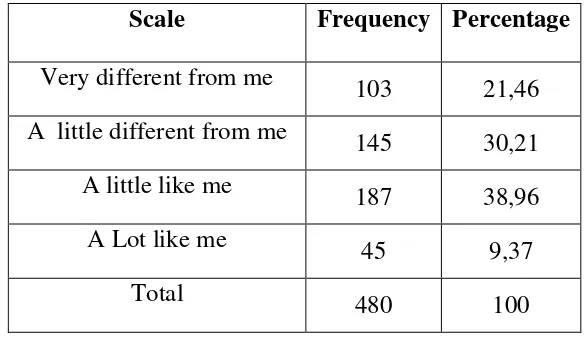
Table 4.5 The distribution of the frequency in social purposes for reading categories
Scale Frequency Percentage
Very different from me 103 21,46 A little different from me 145 30,21 A little like me 187 38,96
A Lot like me 45 9,37
Total 480 100
The last category of social purpose for reading shows that students are more likely have a quite moderate points for every scale, with the exception of “a lot like me” with only 45 points or 9,37%.
These three categories only represented the whole frequency of the items with the dimensions in them. Yet to classify thoroughly, the data presentation of each dimension is demonstrated as follows:
Table 4.6 The frequency distribution of the dimension of self-efficacy
Scale Frequency Percentage
Very different from me 19 21,46 A little different from me 66 30,21 A little like me 62 38,96
A Lot like me 13 8,37
For self-efficacy and competency in reading with a percentage of 38,96%, one third of the samples agreed that they did not have the competency and efficacy belief that they can be successful in their reading. On the other hand, only a small percentage of 8.37% stated that they can be successful in reading. The data showed that the samples had a quite high level of curiosity yet have less confidence that they could perform well in reading.
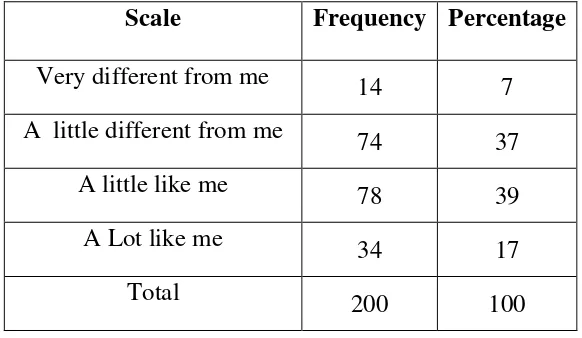
Table 4.7 The frequency distribution of the dimension of challenge
Scale Frequency Percentage
Very different from me 14 7 A little different from me 74 37
A little like me 78 39
A Lot like me 34 17
Total 200 100
53
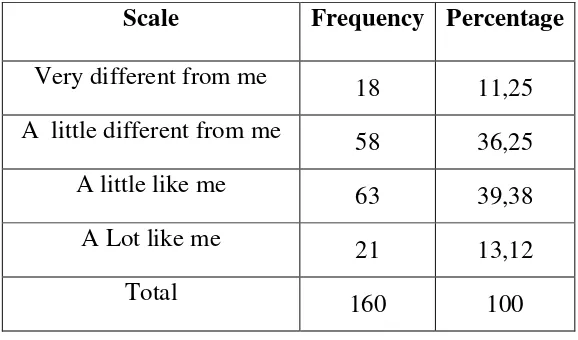
Table 4.8 The frequency distribution of the dimension of work-avoidance
Scale Frequency Percentage
Very different from me 28 17,5 A little different from me 46 28,75
A little like me 36 22,5 A Lot like me 50 31,25
Total 160 100
The work avoidance dimension revealed that 31.25% of the samples with 50 points agreed that they would avoid reading activities if the words or vocabulary and the stories are difficult. Hence, when the students lack a sense of self-efficacy, they are likely to avoid challenging reading activities.
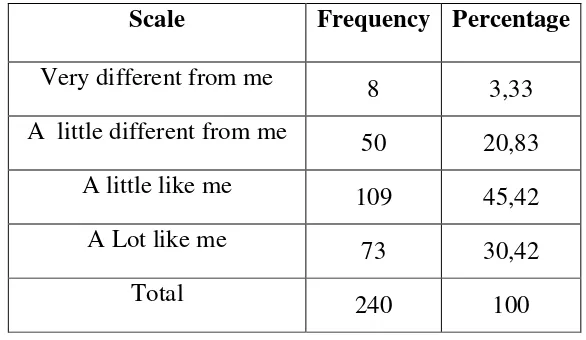
Table 4.9 The frequency distribution of the dimension of curiosity
Scale Frequency Percentage
Very different from me 8 3,33 A little different from me 50 20,83
A little like me 109 45,42 A Lot like me 73 30,42
Total 240 100
that curiosity is the drive that makes them want to read while on the other end, 3.35% of the total samples stated that curiosity would not make them want to read. From the moderately high percentage score, it clearly shows that the samples‟ curiosity motivates them strongly to read.
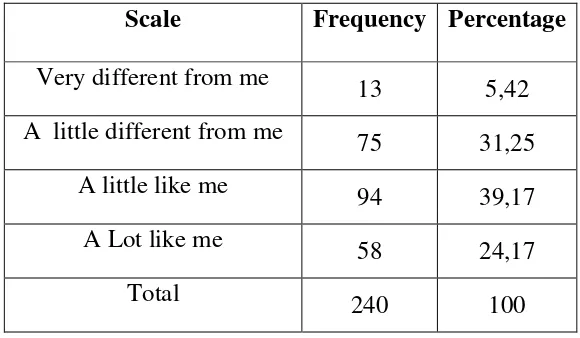
Table 4.10 The frequency distribution of the dimension of involvement
Scale Frequency Percentage
Very different from me 13 5,42 A little different from me 75 31,25
A little like me 94 39,17 A Lot like me 58 24,17
Total 240 100
55
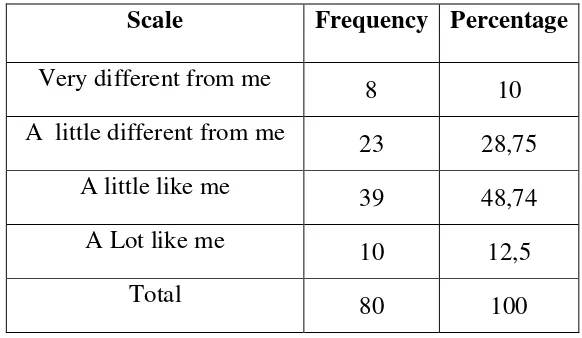
Table 4.11 The frequency distribution of the dimension of importance
Scale Frequency Percentage
Very different from me 8 10 A little different from me 23 28,75
A little like me 39 48,74
A Lot like me 10 12,5
Total 80 100
Most of the respondents have a quite strong feeling about the importance of reading and most of the samples that is 48.74% agreed that reading is important and a small percentage of the samples with 8 points or 10% stated that it is very different form them to diss on the importance of reading.
Table 4.12 The frequency distribution of the dimension of recognition
Scale Frequency Percentage
Very different from me 24 12 A little different from me 60 30 A little like me 70 35
A Lot like me 48 23
Total 200 100