Alistair S. Grandison
1.1
Introduction
Food processing is seasonal in nature, both in terms of demand for products and availability of raw materials. Most crops have well established harvest times – for example the sugar beet season lasts for only a few months of the year in the UK, so beet sugar production is confined to the autumn and winter, yet de- mand for sugar is continuous throughout the year. Even in the case of raw ma- terials which are available throughout the year, such as milk, there are estab- lished peaks and troughs in volume of production, as well as variation in chem- ical composition. Availability may also be determined by less predictable factors, such as weather conditions, which may affect yields, or limit harvesting. In other cases demand is seasonal, for example ice cream or salads are in greater demand in the summer, whereas other foods are traditionally eaten in the win- ter months, or even at more specific times, such as Christmas or Easter.
In an ideal world, food processors would like a continuous supply of raw ma- terials, whose composition and quality are constant, and whose prices are pre- dictable. Of course this is usually impossible to achieve. In practice, processors contract ahead with growers to synchronise their needs with raw material pro- duction. The aim of this chapter is to consider the properties of raw materials in relation to food processing, and to summarise important aspects of handling, transport, storage and preparation of raw materials prior to the range of proces- sing operations described in the remainder of this book. The bulk of the chapter will deal with solid agricultural products including fruits, vegetables, cereals and legumes; although many considerations can also be applied to animal-based materials such as meat, eggs and milk.
1
Food Processing Handbook.Edited by James G. Brennan
Copyright © 2006 WILEY-VCH Verlag GmbH & Co. KGaA, Weinheim ISBN: 3-527-30719-2
1
Postharvest Handling and Preparation of Foods for Processing
1.2
Properties of Raw Food Materials and Their Susceptibility to Deterioration and Damage
The selection of raw materials is a vital consideration to the quality of processed products. The quality of raw materials can rarely be improved during processing and, while sorting and grading operations can aid by removing oversize, under- size or poor quality units, it is vital to procure materials whose properties most closely match the requirements of the process. Quality is a wide-ranging con- cept and is determined by many factors. It is a composite of those physical and chemical properties of the material which govern its acceptability to the ‘user’.
The latter may be the final consumer, or more likely in this case, the food pro- cessor. Geometric properties, colour, flavour, texture, nutritive value and free- dom from defects are the major properties likely to determine quality.
An initial consideration is selection of the most suitable cultivars in the case of plant foods (or breeds in the case of animal products). Other preharvest fac- tors (such as soil conditions, climate and agricultural practices), harvesting methods and postharvest conditions, maturity, storage and postharvest handling also determine quality. These considerations, including seed supply and many aspects of crop production, are frequently controlled by the processor or even the retailer.
The timing and method of harvesting are determinants of product quality.
Manual labour is expensive, therefore mechanised harvesting is introduced where possible. Cultivars most suitable for mechanised harvesting should ma- ture evenly producing units of nearly equal size that are resistant to mechanical damage. In some instances, the growth habits of plants, e.g. pea vines, fruit trees, have been developed to meet the needs of mechanical harvesting equip- ment. Uniform maturity is desirable as the presence of over-mature units is as- sociated with high waste, product damage, and high microbial loads, while un- der-maturity is associated with poor yield, hard texture and a lack of flavour and colour. For economic reasons, harvesting is almost always a ‘once over’ exercise, hence it is important that all units reach maturity at the same time. The predic- tion of maturity is necessary to coordinate harvesting with processors’ needs as well as to extend the harvest season. It can be achieved primarily from knowl- edge of the growth properties of the crop combined with records and experience of local climatic conditions. The ‘heat unit system’, first described by Seaton [1]
for peas and beans, can be applied to give a more accurate estimate of harvest date from sowing date in any year. This system is based on the premise that growth temperature is the overriding determinant of crop growth. A base tem- perature, below which no growth occurs, is assumed and the mean temperature of each day through the growing period is recorded. By summing the daily mean temperatures minus base temperatures on days where mean temperature exceeds base temperature, the number of ‘accumulated heat units’ can be calcu- lated. By comparing this with the known growth data for the particular cultivar, an accurate prediction of harvest date can be computed. In addition, by allowing
fixed numbers of accumulated heat units between sowings, the harvest season can be spread, so that individual fields may be harvested at peak maturity. Sow- ing plans and harvest date are determined by negotiation between the growers and the processors; and the latter may even provide the equipment and labour for harvesting and transport to the factory.
An important consideration for processed foods is that it is the quality of the processed product, rather than the raw material, that is important. For mini- mally processed foods, such as those subjected to modified atmospheres, low- dose irradiation, mild heat treatment or some chemical preservatives, the char- acteristics of the raw material are a good guide to the quality of the product.
For more severe processing, including heat preservation, drying or freezing, the quality characteristics may change markedly during processing. Hence, those raw materials which are preferred for fresh consumption may not be most appropriate for processing. For example, succulent peaches with delicate flavour may be less suitable for canning than harder, less flavoursome cultivars, which can withstand rigorous processing conditions. Similarly, ripe, healthy, well col- oured fruit may be perfect for fresh sale, but may not be suitable for freezing due to excessive drip loss while thawing. For example, Maestrelli [2] reported that different strawberry cultivars with similar excellent characteristics for fresh consumption exhibited a wide range of drip loss (between 8% and 38%), and hence would be of widely different value for the frozen food industry.
1.2.1
Raw Material Properties
The main raw material properties of importance to the processor are geometry, colour, texture, functional properties and flavour.
1.2.1.1 Geometric Properties
Food units of regular geometry are much easier to handle and are better suited to high speed mechanised operations. In addition, the more uniform the geom- etry of raw materials, the less rejection and waste will be produced during prep- aration operations such as peeling, trimming and slicing. For example, potatoes of smooth shape with few and shallow eyes are much easier to peel and wash mechanically than irregular units. Smooth-skinned fruits and vegetables are much easier to clean and are less likely to harbour insects or fungi than ribbed or irregular units.
Agricultural products do not come in regular shapes and exact sizes. Size and shape are inseparable, but are very difficult to define mathematically in solid food materials. Geometry is, however, vital to packaging and controlling fill-in weights. It may, for example, be important to determine how much mass or how many units may be filled into a square box or cylindrical can. This would require a vast number of measurements to perform exactly and thus approxima- tions must be made. Size and shape are also important to heat processing and
1.2 Properties of Raw Food Materials and Their Susceptibility to Deterioration and Damage 3
freezing, as they will determine the rate and extent of heat transfer within food units. Mohsenin [3] describes numerous approaches by which the size and shape of irregular food units may be defined. These include the development of statistical techniques based on a limited number of measurements and more subjective approaches involving visual comparison of units to charted standards.
Uniformity of size and shape is also important to most operations and pro- cesses. Process control to give accurately and uniformly treated products is al- ways simpler with more uniform materials. For example, it is essential that wheat kernel size is uniform for flour milling.
Specific surface (area/mass) may be an important expression of geometry, especially when considering surface phenomena such as the economics of fruit peeling, or surface processes such as smoking and brining.
The presence of geometric defects, such as projections and depressions, com- plicate any attempt to quantify the geometry of raw materials, as well as pre- senting processors with cleaning and handling problems and yield loss. Selec- tion of cultivars with the minimum defect level is advisable.
There are two approaches to securing the optimum geometric characteristics:
firstly the selection of appropriate varieties, and secondly sorting and grading operations.
1.2.1.2 Colour
Colour and colour uniformity are vital components of visual quality of fresh foods and play a major role in consumer choice. However, it may be less impor- tant in raw materials for processing. For low temperature processes such as chilling, freezing or freeze-drying, the colour changes little during processing, and thus the colour of the raw material is a good guide to suitability for proces- sing. For more severe processing, the colour may change markedly during the process. Green vegetables, such as peas, spinach or green beans, on heating change colour from bright green to a dull olive green. This is due to the conver- sion of chlorophyll to pheophytin. It is possible to protect against this by addi- tion of sodium bicarbonate to the cooking water, which raises the pH. However, this may cause softening of texture and the use of added colourants may be a more practical solution. Some fruits may lose their colour during canning, while pears develop a pink tinge. Potatoes are subject to browning during heat processing due to the Maillard reaction. Therefore, different varieties are more suitable for fried products where browning is desirable, than canned products in which browning would be a major problem.
Again there are two approaches: i.e. procuring raw materials of the appropri- ate variety and stage of maturity, and sorting by colour to remove unwanted units.
1.2.1.3 Texture
The texture of raw materials is frequently changed during processing. Textural changes are caused by a wide variety of effects, including water loss, protein de- naturation which may result in loss of water-holding capacity or coagulation, hydrolysis and solubilisation of proteins. In plant tissues, cell disruption leads to loss of turgor pressure and softening of the tissue, while gelatinisation of starch, hydrolysis of pectin and solubilisation of hemicelluloses also cause soft- ening of the tissues.
The raw material must be robust enough to withstand the mechanical stres- ses during preparation, for example abrasion during cleaning of fruit and vege- tables. Peas and beans must be able to withstand mechanical podding. Raw ma- terials must be chosen so that the texture of the processed product is correct, such as canned fruits and vegetables in which raw materials must be able to withstand heat processing without being too hard or coarse for consumption.
Texture is dependent on the variety as well as the maturity of the raw material and may be assessed by sensory panels or commercial instruments. One widely recognised instrument is the tenderometer used to assess the firmness of peas.
The crop would be tested daily and harvested at the optimum tenderometer reading. In common with other raw materials, peas at different maturities can be used for different purposes, so that peas for freezing would be harvested at a lower tenderometer reading than peas for canning.
1.2.1.4 Flavour
Flavour is a rather subjective property which is difficult to quantify. Again, fla- vours are altered during processing and, following severe processing, the main flavours may be derived from additives. Hence, the lack of strong flavours may be the most important requirement. In fact, raw material flavour is often not a major determinant as long as the material imparts only those flavours which are characteristic of the food. Other properties may predominate. Flavour is nor- mally assessed by human tasters, although sometimes flavour can be linked to some analytical test, such as sugar/acid levels in fruits.
1.2.1.5 Functional Properties
The functionality of a raw material is the combination of properties which deter- mine product quality and process effectiveness. These properties differ greatly for different raw materials and processes, and may be measured by chemical analysis or process testing.
For example, a number of possible parameters may be monitored in wheat.
Wheat for different purposes may be selected according to protein content.
Hard wheat with 11.5–14.0% protein is desirable for white bread and some wholewheat breads require even higher protein levels, 14–16% [4]. In contrast, soft or weak flours with lower protein contents are suited to chemically leavened products with a lighter or more tender structure. Hence protein levels of 8–11%
1.2 Properties of Raw Food Materials and Their Susceptibility to Deterioration and Damage 5
are adequate for biscuits, cakes, pastry, noodles and similar products. Varieties of wheat for processing are selected on this basis; and measurement of protein content would be a good guide to process suitability. Furthermore, physical test- ing of dough using a variety of rheological testing instruments may be useful in predicting the breadmaking performance of individual batches of wheat flours [5]. A further test is the Hagberg Falling Number which measures the amount of a-amylase in flour or wheat [6]. This enzyme assists in the break- down of starch to sugars and high levels give rise to a weak bread structure.
Hence, the test is a key indicator of wheat baking quality and is routinely used for bread wheat; and it often determines the price paid to the farmer.
Similar considerations apply to other raw materials. Chemical analysis of fat and protein in milk may be carried out to determine its suitability for manufac- turing cheese, yoghurt or cream.
1.2.2
Raw Material Specifications
In practice, processors define their requirements in terms of raw material speci- fications for any process on arrival at the factory gate. Acceptance of, or price paid for the raw material depends on the results of specific tests. Milk deliveries would be routinely tested for hygienic quality, somatic cells, antibiotic residues, extraneous water, as well as possibly fat and protein content. A random core sample is taken from all sugar beet deliveries and payment is dependent on the sugar content. For fruits, vegetables and cereals, processors may issue specifica- tions and tolerances to cover the size of units, the presence of extraneous vege- table matter, foreign bodies, levels of specific defects, e.g. surface blemishes, in- sect damage etc., as well as specific functional tests. Guidelines for sampling and testing many raw materials for processing in the UK are available from the Campden and Chorleywood Food Research Association (www.campden.co.uk).
Increasingly, food processors and retailers may impose demands on raw material production which go beyond the properties described above. These may include ‘environmentally friendly’ crop management schemes in which only specified fertilisers and insecticides are permitted, or humanitarian con- cerns, especially for food produced in Third World countries. Similarly animal welfare issues may be specified in the production of meat or eggs. Another im- portant issue is the growth of demand for organic foods in the UK and Western Europe, which obviously introduces further demands on production methods, but are beyond the scope of this chapter.
1.2.3
Deterioration of Raw Materials
All raw materials deteriorate following harvest, by some of the following mecha- nisms:
– Endogenous enzymes: e.g. post-harvest senescence and spoilage of fruit and vegetables occurs through a number of enzymic mechanisms, including oxi- dation of phenolic substances in plant tissues by phenolase (leading to brown- ing), sugar-starch conversion by amylases, postharvest demethylation of pectic substances in fruits and vegetables leading to softening tissues during ripen- ing and firming of plant tissues during processing.
– Chemical changes: deterioration in sensory quality by lipid oxidation, non- enzymic browning, breakdown of pigments such as chlorophyll, anthocya- nins, carotenoids.
– Nutritional changes: especially ascorbic acid breakdown.
– Physical changes: dehydration, moisture absorption.
– Biological changes: germination of seeds, sprouting.
– Microbiological contamination: both the organisms themselves and toxic prod- ucts lead to deterioration of quality, as well as posing safety problems.
1.2.4
Damage to Raw Materials
Damage may occur at any point from growing through to the final point of sale.
It may arise through external or internal forces.
External forces result in mechanical injury to fruits and vegetables, cereal grains, eggs and even bones in poultry. They occur due to severe handling as a result of careless manipulation, poor equipment design, incorrect containerisa- tion and unsuitable mechanical handling equipment. The damage typically re- sults from impact and abrasion between food units, or between food units and machinery surfaces and projections, excessive vibration or pressure from overly- ing material. Increased mechanisation in food handling must be carefully de- signed to minimise this.
Internal forces arise from physical changes, such as variation in temperature and moisture content, and may result in skin cracks in fruits and vegetables, or stress cracks in cereals.
Either form of damage leaves the material open to further biological or chem- ical damage, including enzymic browning of bruised tissue, or infestation of punctured surfaces by moulds and rots.
1.2 Properties of Raw Food Materials and Their Susceptibility to Deterioration and Damage 7
1.2.5
Improving Processing Characteristics Through Selective Breeding and Genetic Engineering
Selective breeding for yield and quality has been carried out for centuries in both plant and animal products. Until the 20th century, improvements were made on the basis of selecting the most desirable looking individuals, while in- creasingly systematic techniques have been developed more recently, based on a greater understanding of genetics. The targets have been to increase yield as well as aiding factors of crop or animal husbandry such as resistance to pests and diseases, suitability for harvesting, or development of climate-tolerant vari- eties (e.g. cold-tolerant maize, or drought-resistant plants) [7]. Raw material quality, especially in relation to processing, has become increasingly important.
There are many examples of successful improvements in processing quality of raw materials through selective plant breeding, including:
– improved oil percentage and fatty acid composition in oilseed rape;
– improved milling and malting quality of cereals;
– high sugar content and juice quality in sugar beets;
– development of specific varieties of potatoes for the processing industry, based on levels of enzymes and sugars, producing appropriate flavour, texture and colour in products, or storage characteristics;
– brussels sprouts which can be successfully frozen.
Similarly traditional breeding methods have been used to improve yields of animal products such as milk and eggs, as well as improving quality, e.g. fat/lean content of meat. Again the quality of raw materials in relation to processing may be im- proved by selective breeding. This is particularly applicable to milk, where breed- ing programmes have been used at different times to maximise butterfat and pro- tein content, and would thus be related to the yield and quality of fat- or protein- based dairy products. Furthermore, particular protein genetic variants in milk have been shown to be linked with processing characteristics, such as curd strength during manufacture of cheese [8]. Hence, selective breeding could be used to tailor milk supplies to the manufacture of specific dairy products.
Traditional breeding programmes will undoubtedly continue to produce im- provements in raw materials for processing, but the potential is limited by the gene pool available to any species. Genetic engineering extends this potential by allowing the introduction of foreign genes into an organism, with huge potential benefits.
Again many of the developments have been aimed at agricultural improvements, such as increased yield, or introducing herbicide, pest or drought resistance, but there is enormous potential in genetically engineered raw materials for processing [9]. The following are some examples which have been demonstrated:
– tomatoes which do not produce pectinase and hence remain firm while col- our and flavour develop, producing improved soup, paste or ketchup;
– potatoes with higher starch content, which take up less oil and require less energy during frying;
– canola (rape seed) oil tailored to contain: (a) high levels of lauric acid to im- prove emulsification properties for use in confectionery, coatings or low fat dairy products, (b) high levels of stearate as an alternative to hydrogenation in manufacture of margarine, (c) high levels of polyunsaturated fatty acids for health benefits;
– wheat with increased levels of high molecular weight glutenins for improved breadmaking performance;
– fruits and vegetables containing peptide sweeteners such as thaumatin or monellin;
– ‘naturally decaffeinated’ coffee.
There is, however, considerable opposition to the development of genetically modified foods in the UK and elsewhere, due to fears of human health risks and ecological damage, discussion of which is beyond the scope of this book. It therefore remains to be seen if, and to what extent, genetically modified raw materials will be used in food processing.
1.3
Storage and Transportation of Raw Materials
1.3.1 Storage
Storage of food is necessary at all points of the food chain from raw materials, through manufacture, distribution, retailers and final purchasers. Today’s con- sumers expect a much greater variety of products, including nonlocal materials, to be available throughout the year. Effective transportation and storage systems for raw materials are essential to meet this need.
Storage of materials whose supply or demand fluctuate in a predictable man- ner, especially seasonal produce, is necessary to increase availability. It is essen- tial that processors maintain stocks of raw materials, therefore storage is neces- sary to buffer demand. However, storage of raw materials is expensive for two reasons: firstly, stored goods have been paid for and may therefore tie up quan- tities of company money and, secondly, warehousing and storage space are expensive. All raw materials deteriorate during storage. The quantities of raw materials held in store and the times of storage vary widely for different cases, depending on the above considerations. The ‘just in time’ approaches used in other industries are less common in food processing.
The primary objective is to maintain the best possible quality during storage, and hence avoid spoilage during the storage period. Spoilage arises through three mechanisms:
– living organisms such as vermin, insects, fungi and bacteria: these may feed on the food and contaminate it;
1.3 Storage and Transportation of Raw Materials 9
– biochemical activity within the food leading to quality reduction, such as: res- piration in fruits and vegetables, staling of baked products, enzymic browning reactions, rancidity development in fatty food;
– physical processes, including damage due to pressure or poor handling, phys- ical changes such as dehydration or crystallisation.
The main factors which govern the quality of stored foods are temperature, moisture/humidity and atmospheric composition. Different raw materials pro- vide very different challenges.
Fruits and vegetables remain as living tissues until they are processed and the main aim is to reduce respiration rate without tissue damage. Storage times vary widely between types. Young tissues such as shoots, green peas and imma- ture fruits have high respiration rates and shorter storage periods, while mature fruits and roots and storage organs such as bulbs and tubers, e.g. onions, pota- toes, sugar beets, respire much more slowly and hence have longer storage peri- ods. Some examples of conditions and storage periods of fruits and vegetables are given in Table 1.1. Many fruits (including bananas, apples, tomatoes and mangoes) display a sharp increase in respiration rate during ripening, just be- fore the point of optimum ripening, known as the ‘climacteric’. The onset of the climacteric is associated with the production of high levels of ethylene, which is believed to stimulate the ripening process. Climacteric fruit can be har- vested unripe and ripened artificially at a later time. It is vital to maintain care- ful temperature control during storage or the fruit will rapidly over-ripen. Non- climacteric fruits, e.g. citrus fruit, pineapples, strawberries, and vegetables do not display this behaviour and generally do not ripen after harvest. Quality is therefore optimal at harvest, and the task is to preserve quality during storage.
With meat storage the overriding problem is growth of spoilage bacteria, while avoiding oxidative rancidity. Cereals must be dried before storage to avoid
Table 1.1 Storage periods of some fruits and vegetables under typical storage conditions (data from [25]).
Commodity Temperature (8C) Humidity (%) Storage period
Garlic 0 70 6–8 months
Mushrooms 0 90–95 5–7 days
Green bananas 13–15 85–90 10–30 days
Immature potatoes 4–5 90–95 3–8 weeks
Mature potatoes 4–5 90–95 4–9 months
Onions –1 to 0 70–80 6–8 months
Oranges 2–7 90 1–4 months
Mangoes 5.5–14 90 2–7 weeks
Apples –1 to 4 90–95 1–8 months
French beans 7– 8 95–100 1–2 week
germination and mould growth and subsequently must be stored under condi- tions which prevent infestation with rodents, birds, insects or moulds.
Hence, very different storage conditions may be employed for different raw materials. The main methods employed in raw material storage are the control of temperature, humidity and composition of atmosphere.
1.3.1.1 Temperature
The rate of biochemical reactions is related to temperature, such that lower stor- age temperatures lead to slower degradation of foods by biochemical spoilage, as well as reduced growth of bacteria and fungi. There may also be limited bac- teriocidal effects at very low temperatures. Typical Q10 values for spoilage reac- tions are approximately 2, implying that spoilage rates would double for each 108C rise, or conversely that shelflife would double for each 108C reduction.
This is an oversimplification, as Q10may change with temperature. Most insect activity is inhibited below 48C, although insects and their eggs can survive long exposure to these temperatures. In fact, grain and flour mites can remain active and even breed at 08C.
The use of refrigerated storage is limited by the sensitivity of materials to low temperatures. The freezing point is a limiting factor for many raw materials, as the tissues will become disrupted on thawing. Other foods may be subject to problems at temperatures above freezing. Fruits and vegetables may display physiological problems that limit their storage temperatures, probably as a re- sult of metabolic imbalance leading to a build up of undesirable chemical spe- cies in the tissues. Some types of apples are subject to internal browning below 38C, while bananas become brown when stored below 138C and many other tropical fruits display chill sensitivity. Less obvious biochemical problems may occur even where no visible damage occurs. For example, storage temperature affects the starch/sugar balance in potatoes: in particular below 108C a build up of sugar occurs, which is most undesirable for fried products. Examples of storage periods and conditions are given in Table 1.1, illustrating the wide ranges seen with different fruits and vegetables. It should be noted that pre- dicted storage lives can be confounded if the produce is physically damaged, or by the presence of pathogens.
Temperature of storage is also limited by cost. Refrigerated storage is expen- sive, especially in hot countries. In practice, a balance must be struck incorpor- ating cost, shelflife and risk of cold injury. Slower growing produce such as onions, garlic and potatoes can be successfully stored at ambient temperature and ventilated conditions in temperate climates.
It is desirable to monitor temperature throughout raw material storage and distribution.
Precooling to remove the ‘field heat’ is an effective strategy to reduce the peri- od of high initial respiration rate in rapidly respiring produce prior to transpor- tation and storage. For example, peas for freezing are harvested in the cool early morning and rushed to cold storage rooms within 2–3 h. Other produce, such
1.3 Storage and Transportation of Raw Materials 11
as leafy vegetables (lettuce, celery, cabbage) or sweetcorn, may be cooled using water sprays or drench streams. Hydrocooling obviously reduces water loss.
1.3.1.2 Humidity
If the humidity of the storage environment exceeds the equilibrium relative hu- midity (ERH) of the food, the food will gain moisture during storage, andvice versa. Uptake of water during storage is associated with susceptibility to growth of microorganisms, whilst water loss results in economic loss and more specific problems, such as cracking of seed coats of cereals, or skins of fruits and vege- tables. Ideally, the humidity of the store would equal the ERH of the food so that moisture is neither gained nor lost, but in practice a compromise may be necessary. The water activity (aw) of most fresh foods (e.g. fruit, vegetables, meat, fish, milk) is in the range 0.98–1.00, but they are frequently stored at a lower humidity. Some wilting of fruits or vegetable may be acceptable in prefer- ence to mould growth, while some surface drying of meat is preferable to bacte- rial slime. Packaging may be used to protect against water loss of raw materials during storage and transport, see Chapter 9.
1.3.1.3 Composition of Atmosphere
Controlling the atmospheric composition during storage of many raw materials is beneficial. The use of packaging to allow the development or maintenance of particular atmospheric compositions during storage is discussed in greater de- tail in Chapter 9.
With some materials, the major aim is to maintain an oxygen-free atmo- sphere to prevent oxidation, e.g. coffee, baked goods, while in other cases ade- quate ventilation may be necessary to prevent anaerobic fermentation leading to off flavours.
In living produce, atmosphere control allows the possibility of slowing down metabolic processes, hence retarding respiration, ripening, senescence and the development of disorders. The aim is to introduce N2and remove O2, allowing a build up of CO2. Controlled atmosphere storage of many commodities is dis- cussed by Thompson [10]. The technique allows year-round distribution of apples and pears, where controlled atmospheres in combination with refrigera- tion can give shelflives up to 10 months, much greater than by chilling alone.
The particular atmospheres are cultivar specific, but in the range 1–10% CO2, 2–13% O2at 38C for apples and 08C for pears. Controlled atmospheres are also used during storage and transport of chill-sensitive crops, such as for transport of bananas, where an atmosphere of 3% O2and 5% CO2is effective in prevent- ing premature ripening and the development of crown rot disease. Ethene (ethylene) removal is also vital during storage of climacteric fruit.
With fresh meat, controlling the gaseous environment is useful in combina- tion with chilling. The aim is to maintain the red colour by storage in high O2
concentrations, which shifts the equilibrium in favour of high concentrations of
the bright red oxymyoglobin pigment. At the same time, high levels of CO2are required to suppress the growth of aerobic bacteria.
1.3.1.4 Other Considerations
Odours and taints can cause problems, especially in fatty foods such as meat and dairy products, as well as less obvious commodities such as citrus fruits, which have oil in the skins. Odours and taints may be derived from fuels or ad- hesives and printing materials, as well as other foods, e.g. spiced or smoked products. Packaging and other systems during storage and transport must pro- tect against contamination.
Light can lead to oxidation of fats in some raw materials, e.g. dairy products.
In addition, light gives rise to solanine production and the development of green pigmentation in potatoes. Hence, storage and transport under dark condi- tions is essential.
1.3.2
Transportation
Food transportation is an essential link in the food chain and is discussed in de- tail by Heap [11]. Raw materials, food ingredients, fresh produce and processed products are all transported on a local and global level, by land, sea and air. In the modern world, where consumers expect year-round supplies and nonlocal products, long distance transport of many foods has become commonplace and air transport may be necessary for perishable materials. Transportation of food is really an extension of storage: a refrigerated lorry is basically a cold store on wheels. However, transport also subjects the material to physical and mechani- cal stresses, and possibly rapid changes in temperature and humidity, which are not encountered during static storage. It is necessary to consider both the stres- ses imposed during the transport and those encountered during loading and unloading. In many situations, transport is multimodal. Air or sea transport would commonly involve at least one road trip before and one road trip after the main journey. There would also be time spent on the ground at the port or airport where the material could be exposed to wideranging temperatures and humidities, or bright sunlight, and unscheduled delays are always a possibility.
During loading and unloading, the cargo may be broken into smaller units where more rapid heat penetration may occur.
The major challenges during transportation are to maintain the quality of the food during transport, and to apply good logistics – in other words, to move the goods to the right place at the right time and in good condition.
1.3 Storage and Transportation of Raw Materials 13
1.4
Raw Material Cleaning
All food raw materials are cleaned before processing. The purpose is obviously to remove contaminants, which range from innocuous to dangerous. It is im- portant to note that removal of contaminants is essential for protection of pro- cess equipment as well as the final consumer. For example, it is essential to remove sand, stones or metallic particles from wheat prior to milling to avoid damaging the machinery. The main contaminants are:
– unwanted parts of the plant, such as leaves, twigs, husks;
– soil, sand, stones and metallic particles from the growing area;
– insects and their eggs;
– animal excreta, hairs etc.;
– pesticides and fertilisers;
– mineral oil;
– microorganisms and their toxins.
Increased mechanisation in harvesting and subsequent handling has generally led to increased contamination with mineral, plant and animal contaminants, while there has been a general increase in the use of sprays, leading to in- creased chemical contamination. Microorganisms may be introduced preharvest from irrigation water, manure, fertiliser or contamination from feral or domes- tic animals, or postharvest from improperly cleaned equipment, wash waters or cross-contamination from other raw materials.
Cleaning is essentially separation in which some difference in physical prop- erties of the contaminants and the food units is exploited. There are a number of cleaning methods available, classified into dry and wet methods, but a combi- nation would usually be employed for any specific material. Selection of the ap- propriate cleaning regime depends on the material being cleaned, the level and type of contamination and the degree of decontamination required. In practice a balance must be struck between cleaning cost and product quality, and an ‘ac- ceptable standard’ should be specified for the particular end use. Avoidance of product damage is an important contributing factor, especially for delicate mate- rials such as soft fruit.
1.4.1
Dry Cleaning Methods
The main dry cleaning methods are based on screens, aspiration or magnetic se- parations. Dry methods are generally less expensive than wet methods and the ef- fluent is cheaper to dispose of, but they tend to be less effective in terms of clean- ing efficiency. A major problem is recontamination of the material with dust. Pre- cautions may be necessary to avoid the risk of dust explosions and fires.
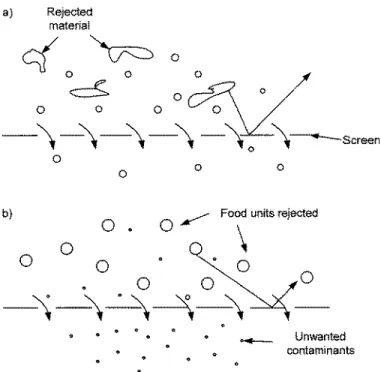
Screensare essentially size separators based on perforated beds or wire mesh.
Larger contaminants are removed from smaller food items: e.g. straw from cere-
al grains, or pods and twigs from peas. This is termed ‘scalping’, see Fig. 1.1 a.
Alternatively, ‘dedusting’ is the removal of smaller particles, e.g. sand or dust, from larger food units, see Fig. 1.1 b.
The main geometries are rotary drums (also known as reels or trommels), and flatbed designs. Some examples are shown in Fig. 1.2.
1.4 Raw Material Cleaning 15
Fig. 1.1 Screening of dry particulate materials: (a) scalping, (b) dedusting.
Fig. 1.2 Screen geometries: (a) rotary screen, (b) principle of flatbed screen.
Abrasion, either by impact during the operation of the machinery, or aided by abrasive discs or brushes, can improve the efficiency of dry screens. Screening gives incomplete separations and is usually a preliminary cleaning stage.
Aspirationexploits the differences in aerodynamic properties of the food and the contaminants. It is widely used in the cleaning of cereals, but is also incor- porated into equipment for cleaning peas and beans. The principle is to feed the raw material into a carefully controlled upward air stream. Denser material will fall, while lighter material will be blown away depending on the terminal Fig. 1.2 (b)
velocity. Terminal velocity in this case can be defined as the velocity of upward air stream in which a particle remains stationary; and this depends on the den- sity and projected area of the particles (as described by Stokes’ equation). By using different air velocities, it is possible to separate say wheat from lighter chaff (see Fig. 1.3) or denser small stones. Very accurate separations are pos- sible, but large amounts of energy are required to generate the air streams. Ob- viously the system is limited by the size of raw material units, but is particularly suitable for cleaning legumes and cereals.
Air streams may also be used simply to blow loose contaminants from larger items such as eggs or fruit.
Magneticcleaning is the removal of ferrous metal using permanent or electro- magnets. Metal particles, derived from the growing field or picked up during transport or preliminary operations, constitute a hazard both to the consumer and to processing machinery, for example cereal mills. The geometry of mag- netic cleaning systems can be quite variable: particulate foods may be passed over magnetised drums or magnetised conveyor belts, or powerful magnets may be located above conveyors. Electromagnets are easy to clean by turning off the power. Metal detectors are frequently employed prior to sensitive processing equipment as well as to protect consumers at the end of processing lines.
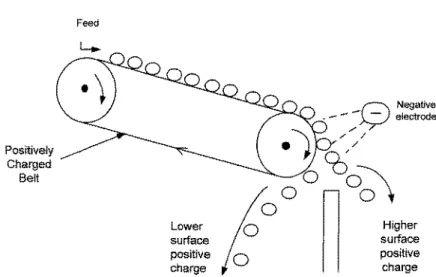
Electrostaticcleaning can be used in a limited number of cases where the sur- face charge on raw materials differs from contaminating particles. The principle can be used to distinguish grains from other seeds of similar geometry but dif- ferent surface charge; and it has also been described for cleaning tea. The feed
1.4 Raw Material Cleaning 17
Fig. 1.3 Principle of aspiration cleaning.
is conveyed on a charged belt and charged particles are attracted to an oppo- sitely charged electrode (see Fig. 1.4) according to their surface charge.
1.4.2
Wet Cleaning Methods
Wet methods are necessary if large quantities of soil are to be removed; and they are essential if detergents are used. However, they are expensive, as large quantities of high purity water are required and the same quantity of dirty efflu- ent is produced. Treatment and reuse of water can reduce costs. Employing the countercurrent principle can reduce water requirements and effluent volumes if accurately controlled. Sanitising chemicals such as chlorine, citric acid and ozone are commonly used in wash waters, especially in association with peeling and size reduction, where reducing enzymic browning may also be an aim [12].
Levels of 100–200 mg l–1 chlorine or citric acid may be used, although their ef- fectiveness for decontamination has been questioned and they are not permitted in some countries.
Soaking is a preliminary stage in cleaning heavily contaminated materials, such as root crops, permitting softening of the soil and partial removal of stones and other contaminants. Metallic or concrete tanks or drums are em- ployed; and these may be fitted with devices for agitating the water, including stirrers, paddles or mechanisms for rotating the entire drum. For delicate pro- duce such as strawberries or asparagus, or products which trap dirt internally, e.g. celery, sparging air through the system may be helpful. The use of warm water or including detergents improves cleaning efficiency, especially where mineral oil is a possible contaminant, but adds to the expense and may damage the texture.
Fig. 1.4 Principle of electrostatic cleaning.
Spray washingis very widely used for many types of food raw material. Efficiency depends on the volume and temperature of the water and time of exposure. As a general rule, small volumes of high pressure water give the most efficient dirt re- moval, but this is limited by product damage, especially to more delicate produce.
With larger food pieces, it may be necessary to rotate the unit so that the whole surface is presented to the spray (see Fig. 1.5 a). The two most common designs are drum washers and belt washers (see Figs. 1.5 a, b). Abrasion may contribute to the cleaning effect, but again must be limited in delicate units. Other designs include flexible rubber discs which gently brush the surface clean.
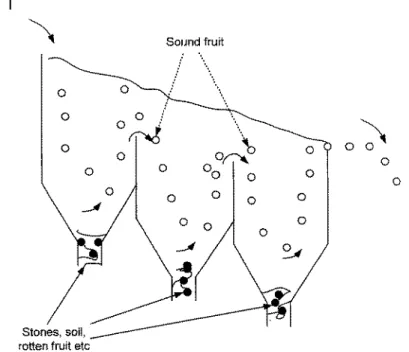
Flotation washing employs buoyancy differences between food units and con- taminants. For instance sound fruit generally floats, while contaminating soil, stones or rotten fruits sink in water. Hence fluming fruit in water over a series of weirs gives very effective cleaning of fruit, peas and beans (see Fig. 1.6). A dis- advantage is high water use, thus recirculation of water should be incorporated.
Froth flotationis carried out to separate peas from contaminating weed seeds and exploits surfactant effects. The peas are dipped in an oil/detergent emul- sion and air is blown through the bed. This forms a foam which washes away the contaminating material and the cleaned peas can be spray washed.
Following wet cleaning, it is necessary to remove the washing water. Centrifu- gation is very effective, but may lead to tissue damage, hence dewatering screens or reels are more common.
1.4 Raw Material Cleaning 19
Fig. 1.5 Water spray cleaning: (a) spray belt washer, (b) drum washer.
Prestorage hot water dipping has been used as an alternative to chemical treatments for preserving the quality of horticultural products. One recent devel- opment is the simultaneous cleaning and disinfection of fresh produce by a short hot water rinse and brushing (HWRB) treatment [13]. This involves plac- ing the crops on rotating brushes and rinsing with hot water for 10–30 s. The effect is through a combination of direct cleaning action plus the lethal action of heat on surface pathogens. Fungicides may also be added to the hot water.
1.4.3 Peeling
Peeling of fruits and vegetables is frequently carried out in association with cleaning. Mechanical peeling methods require loosening of the skin using one of the following principles, depending on the structure of the food and the level of peeling required [14]:
– Steam is particularly suited to root crops. The units are exposed to high pres- sure steam for a fixed time and then the pressure is released causing steam to form under the surface of the skin, hence loosening it such that it can be removed with a water spray.
– Lye (1–2% alkali) solution can be used to soften the skin which can again be removed by water sprays. There is, however, a danger of damage to the prod- uct.
Fig. 1.6 Principle of flotation washing.
– Brine solutions can give a peeling effect but are probably less effective than the above methods.
– Abrasion peeling employs carborundum rollers or rotating the product in a carborundum-lined bowl, followed by washing away the loosened skin. It is effective but here is a danger of high product loss by this method.
– Mechanical knives are suitable for peeling citrus fruits.
– Flame peeling is useful for onions, in which the outer layers are burnt off and charred skin is removed by high pressure hot water.
1.5
Sorting and Grading
Sorting and grading are terms which are frequently used interchangeably in the food processing industry, but strictly speaking they are distinct operations. Sort- ing is a separation based on a single measurable property of raw material units, while grading is “the assessment of the overall quality of a food using a number of attributes” [14]. Grading of fresh produce may also be defined as ‘sorting ac- cording to quality’, as sorting usually upgrades the product.
Virtually all food products undergo some kind of sorting operation. There are a number of benefits, including the need for sorted units in weight-filling operations and the aesthetic and marketing advantages in providing units of uniform size or colour. In addition, it is much easier to control processes such as sterilisation, dehydration or freezing in sorted food units; and they are also better suited to mechanised operations such as size reduction, pitting or peel- ing.
1.5.1
Criteria and Methods of Sorting
Sorting is carried out on the basis of individual physical properties. Details of principles and equipment are given by Saravacos and Kostaropoulos [15], Bren- nan et al. [16] and Peleg [17]. No sorting system is absolutely precise and a bal- ance is often struck between precision and flow rate.
Weight is usually the most precise method of sorting, as it is not dependent on the geometry of the products. Eggs, fruit or vegetables may be separated into weight categories using spring-loaded, strain gauge or electronic weighing de- vices incorporated into conveying systems. Using a series of tipping or com- pressed air blowing mechanisms set to trigger at progressively lesser weights, the heavier items are removed first, followed by the next weight category and so on. These systems are computer controlled and can additionally provide data on quantities and size distributions from different growers. An alternative system is to use the ‘catapult’ principle where units are thrown into different collecting chutes, depending on their weight, by spring-loaded catapult arms. A disadvan- tage of weight sorting is the relatively long time required per unit; and other
1.5 Sorting and Grading 21
methods are more appropriate with smaller items such as legumes or cereals, or if faster throughput is required.
Size sorting is less precise than weight sorting, but is considerably cheaper.
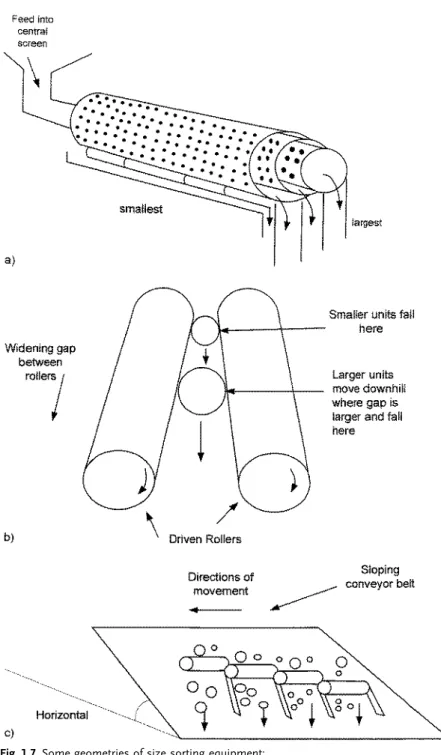
As discussed in Section 1.2, the size and shape of food units are difficult to de- fine precisely. Size categories could involve a number of physical parameters, in- cluding diameter, length or projected area. Diameter of spheroidal units such as tomatoes or citrus fruits is conventionally considered to be orthogonal to the fruit stem, while length is coaxial. Therefore rotating the units on a conveyor can make size sorting more precise. Sorting into size categories requires some sort of screen, many designs of which are discussed in detail by Slade [18], Brennan et al. [16] and Fellows [14]. The main categories of screens are fixed aperture and variable aperture designs. Flatbed and rotary screens are the main geometries of the fixed bed screen and a number of screens may be used in se- ries or in parallel to sort units into several size categories simultaneously. The problem with fixed screens is usually contacting the feed material with the screen, which may become blocked or overloaded. Fixed screens are often used with smaller particulate foods such as nuts or peas. Variable aperture screens have either a continuous diverging or stepwise diverging apertures. These are much more gentle and are commonly used with larger, more delicate items such as fruit. The principles of some sorting screens are illustrated in Fig. 1.7.
Shapesorting is useful in cases where the food units are contaminated with particles of similar size and weight. This is particularly applicable to grain which may contain other seeds. The principle is that discs or cylinders with accurately shaped indentations will pick up seeds of the correct shape when rotated through the stock, while other shapes will remain in the feed (see Fig. 1.8).
Density can be a marker of suitability for certain processes. The density of peas correlates well with tenderness and sweetness, while the solids content of potatoes, which determines suitability for manufacture of crisps and dried prod- ucts, relates to density. Sorting on the basis of density can be achieved using flo- tation in brine at different concentrations.
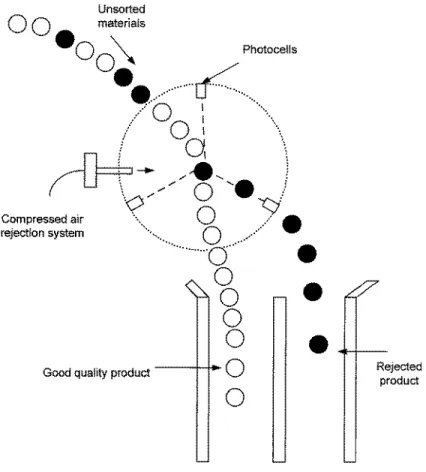
Photometric properties may be used as a basis for sorting. In practice this usually means colour. Colour is often a measure of maturity, presence of defects or the degree of processing. Manual colour sorting is carried out widely on con- veyor belts or sorting tables, but is expensive. The process can be automated using highly accurate photocells which compare reflectance of food units to pre- set standards and can eject defective or wrongly coloured, e.g. blackened, units, usually by a blast of compressed air. This system is used for small particulate foods such as navy beans or maize kernels for canning, or nuts, rice and small fruit (see Fig. 1.9). Extremely high throughputs have been reported, e.g. 16 t h–1 [14]. By using more than one photocell positioned at different angles, blemishes on large units such as potatoes can be detected.
Colour sorting can also be used to separate materials which are to be pro- cessed separately, such as red and green tomatoes. It is feasible to use transmit- tance as a basis for sorting although, as most foods are completely opaque, very
1.5 Sorting and Grading 23
Fig. 1.7 Some geometries of size sorting equipment:
(a) concentric drum screen, (b) roller size sorter, (c) belt and roller sorter.
few opportunities are available. The principle has been used for sorting cherries with and without stones and for the internal examination, or ‘candling’, of eggs.
1.5.2 Grading
Grading is classification on the basis of quality (incorporating commercial value, end use and official standards [15]), and hence requires that some judgement on the acceptability of the food is made, based on simultaneous assessment of several properties, followed by separation into quality categories. Appropriate in- spection belts or conveyors are designed to present the whole surface to the op- erator. Trained manual operators are frequently used to judge the quality, and may use comparison to charted standards, or even plastic models. For example, a fruit grader could simultaneously judge shape, colour, evenness of colour and degree of russeting in apples. Egg candling involves inspection of eggs spun in front of a light so that many factors, including shell cracks, diseases, blood spots or fertilisation, can be detected. Apparently, experienced candlers can grade thousands of eggs per hour. Machine grading is only feasible where quali- Fig. 1.8 Cross-section of disc separators for cleaning cereals.
ty of a food is linked to a single physical property and hence a sorting operation leads to different grades of material. Size of peas, for example, is related to ten- derness and sweetness, therefore size sorting results in different quality grades.
Grading of foods is also the determination of the quality of a batch. This can be done by human graders who assess the quality of random samples of foods such as cheese or butter, or meat inspectors who examine the quality of individ- ual carcasses for a number of criteria. Alternatively, batches of some foods may be graded on the basis of laboratory analysis.
There is much interest in the development of rapid, nondestructive methods of assessing the quality of foods, which could be applied to the grading and sorting of foods. Cubeddu et al. [19] describe the potential application of ad- vanced optical techniques to give information on both surface and internal properties of fruits, including textural and chemical properties. This could per- mit classification of fruit in terms of maturity, firmness or the presence of de- fects, or even more specifically, the noninvasive detection of chlorophyll, sugar and acid levels. Another promising approach is the use of sonic techniques to
1.5 Sorting and Grading 25
Fig. 1.9 Principle of colour sorter.
measure the texture of fruits and vegetables [20]. Similar applications of X-rays, lasers, infrared rays and microwaves have also been studied [15].
Numerous other miscellaneous mechanical techniques are available which ef- fectively upgrade the material such as equipment for skinning and dehairing fish and meat, removing mussel shells, destemming and pitting fruit etc. [15].
1.6 Blanching
Most vegetables and some fruits are blanched prior to further processing opera- tions, such as canning, freezing or dehydration. Blanching is a mild heat treat- ment, but is not a method of preservation per se. It is a pretreatment usually performed between preparation and subsequent processing. Blanching consists of heating the food rapidly to a predetermined temperature, holding for a speci- fied time, then either cooling rapidly or passing immediately to the next proces- sing stage.
1.6.1
Mechanisms and Purposes of Blanching
Plant cells are discrete membrane-bound structures contained within semirigid cell walls. The outer or cytoplasmic membrane acts as a skin, maintaining tur- gor pressure within the cell. Loss of turgor pressure leads to softening of the tissue. Within the cell are a number of organelles, including the nucleus, vacu- ole, chloroplasts, chromoplasts and mitochondria. This compartmentalisation is essential to the various biochemical and physical functions. Blanching causes cell death and physical and metabolic chaos within the cells. The heating effect leads to enzyme destruction as well as damage to the cytoplasmic and other membranes, which become permeable to water and solutes. An immediate ef- fect is the loss of turgor pressure. Water and solutes may pass into and out of the cells, a major consequence being nutrient loss from the tissue. Also cell constituents, which had previously been compartmentalised in subcellular or- ganelles, become free to move and interact within the cell.
The major purpose of blanching is frequently to inactivate enzymes, which would otherwise lead to quality reduction in the processed product. For exam- ple, with frozen foods, deterioration could take place during any delay prior to processing, during freezing, during frozen storage or during subsequent thaw- ing. Similar considerations apply to the processing, storage and rehydration of dehydrated foods. Enzyme inactivation prior to heat sterilisation is less impor- tant as the severe processing will destroy any enzyme activity, but there may be an appreciable time before the food is heated to sufficient temperature, so quali- ty may be better maintained if enzymes are destroyed prior to heat sterilisation processes such as canning.
It is important to inactivate quality-changing enzymes, that is enzymes which will give rise to loss of colour or texture, production of off odours and flavours or breakdown of nutrients. Many such enzymes have been studied, including a range of peroxidases, catalases and lipoxygenases. Peroxidase and to a lesser ex- tent catalase are frequently used as indicator enzymes to determine the effec- tiveness of blanching. Although other enzymes may be more important in terms of their quality-changing effect, peroxidase is chosen because it is ex- tremely easy to measure and it is the most heat resistant of the enzymes in question. More recent work indicates that complete inactivation of peroxidase may not be necessary and retention of a small percentage of the enzyme follow- ing blanching of some vegetables may be acceptable [21].
Blanching causes the removal of gases from plant tissues, especially intercel- lular gas. This is especially useful prior to canning where blanching helps achieve vacua in the containers, preventing expansion of air during processing and hence reducing strain on the containers and the risk of misshapen cans and/or faulty seams. In addition, removing oxygen is useful in avoiding oxida- tion of the product and corrosion of the can. Removal of gases, along with the removal of surface dust, has a further effect in brightening the colour of some products, especially green vegetables.
Shrinking and softening of the tissue is a further consequence of blanching.
This is of benefit in terms of achieving filled weight into containers, so for ex- ample it may be possible to reduce the tinplate requirement in canning. It may also facilitate the filling of containers. It is important to control the time/tem- perature conditions to avoid overprocessing, leading to excessive loss of texture in some processed products. Calcium chloride addition to blanching water helps to maintain the texture of plant tissue through the formation of calcium pectate complexes. Some weight loss from the tissue is inevitable as both water and sol- utes are lost from the cells.
A further benefit is that blanching acts as a final cleaning and decontamina- tion process. Selman [21] described the effectiveness of blanching in removing pesticide residues or radionuclides from the surface of vegetables, while toxic constituents naturally present (such as nitrites, nitrates and oxalate) are reduced by leaching. Very significant reductions in microorganism content can be achieved, which is useful in frozen or dried foods where surviving organisms can multiply on thawing or rehydration. It is also useful before heat sterilisation if large numbers of microorganisms are present before processing.
1.6.2
Processing Conditions
It is essential to control the processing conditions accurately to avoid loss of tex- ture (see Section 1.6.1), weight, colour and nutrients. All water-soluble materi- als, including minerals, sugars, proteins and vitamins, can leach out of the tis- sue, leading to nutrient loss. In addition, some nutrient loss (especially ascorbic acid) occurs through thermal lability and, to a lesser extent, oxidation. Ascorbic
1.6 Blanching 27
acid is the most commonly measured nutrient with respect to blanching [21], as it covers all eventualities, being water soluble and hence prone to leaching from cells, thermally labile, as well as being subject to enzymic breakdown by ascor- bic acid oxidase during storage. Wide ranges of vitamin C breakdown are ob- served, depending on the raw material and the method and precise conditions of processing. The aim is to minimise leaching and thermal breakdown while completely eliminating ascorbic acid oxidase activity, such that vitamin C losses in the product are restricted to a few percent. Generally steam blanching sys- tems (see Section 1.6.3) give rise to lower losses of nutrients than immersion systems, presumably because leaching effects are less important.
Blanching is an example of unsteady state heat transfer involving convective heat transfer from the blanching medium and conduction within the food piece.
Mass transfer of material into and out of the tissue is also important. The pre- cise blanching conditions (time and temperature) must be evaluated for the raw material and usually represent a balance between retaining the quality character- istics of the raw material and avoiding over-processing. The following factors must be considered:
– fruit or vegetable properties, especially thermal conductivity, which will be de- termined by type, cultivar, degree of maturity etc.;
– overall blanching effect required for the processed product, which could be ex- pressed in many ways including: achieving a specified central temperature, achieving a specified level of peroxidase inactivation, retaining a specified pro- portion of vitamin C;
– size and shape of food pieces;
– method of heating and temperature of blanching medium.
Time/temperature combinations vary very widely for different foods and differ- ent processes and must be determined specifically for any situation. Holding times of 1–15 min at 70–1008C are normal.
1.6.3
Blanching Equipment
Blanching equipment is described by Fellows [14]. The two main approaches in commercial practice are to convey the food through saturated steam or hot water. Cooling may be with water or air. Water cooling may increase leaching losses but the product may also absorb water, leading to a net weight gain. Air cooling leads to weight loss by evaporation but may be better in terms of nutri- ent retention.
Conventional steam blanching consists of conveying the material through an atmosphere of steam in a tunnel on a mesh belt. Uniformity of heating is often poor where food is unevenly distributed; and the cleaning effect on the food is limited. However, the volumes of wastewater are much lower than for water blanching. Fluidised bed designs and ‘individual quick blanching’ (a three-stage process in which vegetable pieces are heated rapidly in thin layers by steam,
held in a deep bed to allow temperature equilibration, followed by cooling in chilled air) may overcome the problems of nonuniform heating and lead to more efficient systems.
The two main conventional designs of hot water blancher arereelandpipede- signs. In reel blanchers, the food enters a slowly rotating mesh drum which is partly submerged in hot water. The heating time is determined by the speed of rotation. In pipe blanchers, the food is in contact with hot water recirculating through a pipe. The residence time is determined by the length of the pipe and the velocity of the water.
There is much scope for improving energy efficiency and recycling water in either steam or hot water systems. Blanching may be combined with peeling and cleaning operations to reduce costs.
Microwave blanching has been demonstrated on an experimental scale but is too costly at present for commercial use.
1.7
Sulphiting of Fruits and Vegetables
Sulphur dioxide (SO2) or inorganic sulphites (SO32–) may be added to foods to control enzymic and nonenzymic browning, to control microbial growth, or as bleaching or reducing agents or antioxidants. The main applications are preserv- ing or preventing discolouration of fruit and vegetables. The following sulphit- ing agents are permitted by European law: sulphur dioxide, sodium sulphite, so- dium hydrogen sulphite, sodium metabisulphite, potassium metabisulphite, cal- cium sulphite, calcium hydrogen sulphite and potassium hydrogen sulphite.
However, sulphites have some disadvantages, notably dangerous side effects for asthmatics; and their use has been partly restricted by the US Food and Drug Administration.
Sulphur dioxide dissolves readily in water to form sulphurous acid (H2SO3);
and the chemistry of sulphiting agents can be summarised as follows:
H2SO3$HHSO3 pK12 HSO3 $HSO23 pK17
Most foods are in the pH range 4–7 and therefore the predominant form is HSO3–. Sulphites react with many food components, including aldehydes, ke- tones, reducing sugars, proteins and amino acids, to form a range of organic sulphites [22]. It is not clear exactly which reactions contribute to the beneficial applications of sulphites in the food industry. It should be noted that some of the reactions lead to undesirable consequences, in particular leading to vitamin breakdown. For example, Bender [23] reported losses of thiamin in meat prod- ucts and fried potatoes when sulphiting agents were used during manufacture.
In contrast, the inhibitory effect of sulphiting agents on oxidative enzymes, e.g.
1.7 Sulphiting of Fruits and Vegetables 29
ascorbic acid oxidase, may aid the retention of other vitamins including ascorbic acid and carotene.
Sulphites may be used to inhibit and control microorganisms in fresh fruit and fruits used in the manufacture of jam, juice or wine. In general, the anti- microbial action follows the order [22]: Gram negative bacteria > Gram positive bacteria > moulds > yeasts.
The mechanism(s) of action are not well understood, although it is believed that undissociated H2SO3 is the active form, thus the treatment is more effec- tive at low pH (³4).
A more widespread application is the inhibition of both enzymic and non- enzymic browning. Sulphites form stable hydroxysulphonates with carbonyl compounds and hence prevent browning reactions by binding carbonyl inter- mediates such as quinones. In addition, sulphites bind reducing sugars, which are necessary for nonenzymic browning, and inhibit oxidative enzymes includ- ing polyphenoloxidase, which are responsible for enzymic browning. Therefore, sulphite treatments can be used to preserve the colour of dehydrated fruits and vegetables. For example, sundried apricots may be treated with gaseous SO2to retain their natural colour [24], the product containing 2500–3000 ppm of SO2. Sulphiting has commonly been used to prevent enzymic browning of many fruits and vegetables, including peeled or sliced apple and potato, mushrooms for processing, grapes and salad vegetables.
References
1 Seaton, H. L.1955, Scheduling plantings and predicting harvest maturities for processing vegetables,Food Technology9, 202–209.
2 Maestrelli, A.2000, Fruit and vegetables:
the quality of raw material in relation to freezing, inManaging Frozen Foods, ed.
C. J. Kennedy, Woodhead Publishing, Cambridge, pp. 27–55.
3 Mohsenin, N. N.1989,Physical Properties of Food and Agricultural Materials, Gor- don and Breach Science Publishers, New York.
4 Chung, O. K., Pomeranz, Y.2000, Cereal Processing, inFood Proteins: Processing Applications, ed. S. Nakai, H. W. Modler, Wiley-VCH, Chichester, pp. 243–307.
5 Nakai, S., Wing, P. L.2000, Breadmak- ing, inFood Proteins: Processing Applica- tions, ed. S. Nakai, H. W. Modler, Wiley- VCH, Chichester, pp. 209–242.
6 Dobraszczyk, B. J.2001, Wheat and Flour, inCereals and Cereal Products:
Chemistry and Technology, ed. D. A. V.
Dendy, B. J. Dobraszczyk, Aspen, Gaithersburg, pp. 100–139.
7 Finch, H. J. S., Samuel, A. M., Lane, G. P. F.2002,Lockhart and Wiseman’s Crop Husbandry, 8th edn, Woodhead Publishing, Cambridge.
8 Ng-Kwai-Hang, K. F., Grosclaude, F.
2003, Genetic polymorphism of milk proteins, inAdvanced Dairy Chemistry, vol. 1 – Proteins – part B, ed. P. F. Fox, P. L. H. McSweeney, Kluwer Academic/
Plenum, New York, pp. 739– 816.
9 Nottingham, S.1999,Eat Your Genes, Zed Books, London.
10 Thompson, A. K.1998,Controlled Atmo- sphere Storage of Fruits and Vegetables, CAB International, Wallingford.
11 Heap, R., Kierstan, M., Ford, G.1998, Food Transportation, Blackie, London.
12 Ahvenian, R.2000, Ready-to-use fruit and vegetable,Fair-Flow Europe Technical
![Table 1.1 Storage periods of some fruits and vegetables under typical storage conditions (data from [25]).](https://thumb-ap.123doks.com/thumbv2/123dok/11571658.0/10.723.153.635.692.892/table-storage-periods-fruits-vegetables-typical-storage-conditions.webp)