Despite the prevalence and burden of mental health problems, young adults with mental health problems are the least likely to seek professional help. The results of the study showed that around a third of participants did not seek help for emotional or mental health problems and that of those who did seek help, the majority had received help from their friends or their GP.
INTRODUCTION
Biddle et al, (2004) showed that help-seeking rates among young people living in the UK were low even when their mental health problems were severe. Clement et al., (2014) conducted a systematic review on the impact of mental health-related stigma on help-seeking and found that internalizing stigma (holding stigmatized views of self) and treatment stigma (stigma associated with seeking or receiving treatment) have a small but consistently negative association with seeking mental health help from services.

METHOD
Participants were asked to indicate whether they had any of the listed mental health problems. The 38 developed by the researcher were all evaluated during the consultation and piloting of the survey.
RESULTS
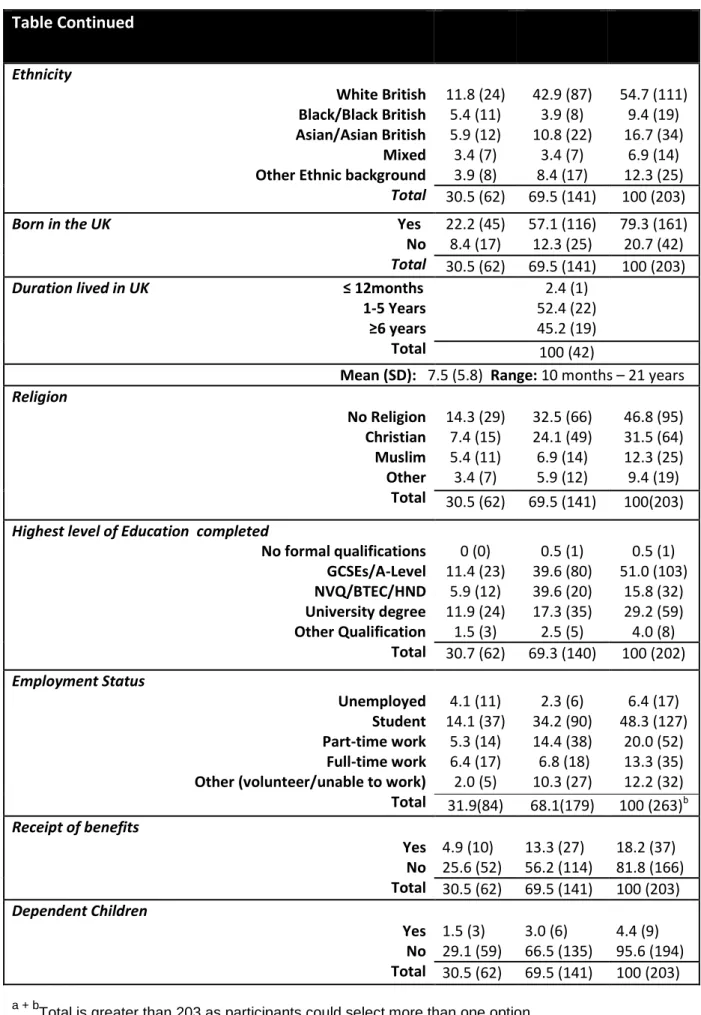
A small proportion of the sample reported receiving benefits (18%, n = 37) and 7% (n = 15) said they were unable to work due to illness or disability.

Prevalence of Psychological Distress and Self-Efficacy
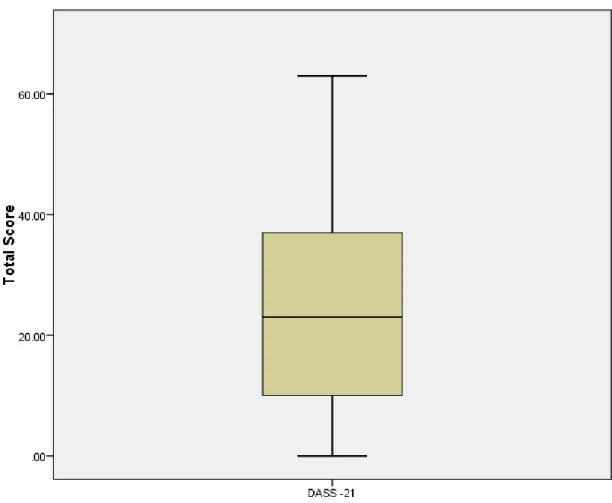
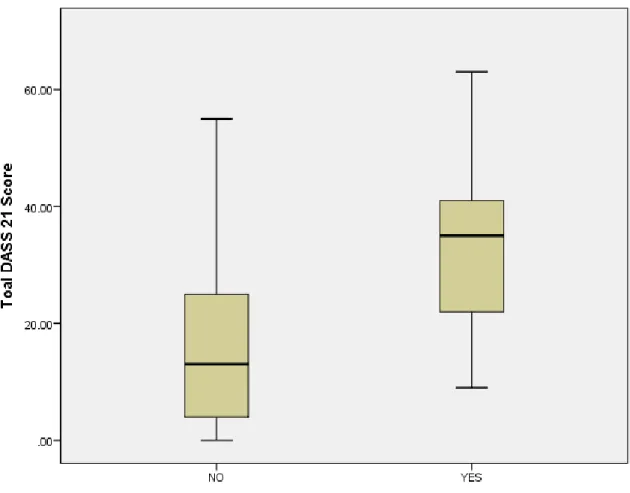
In the total sample, 33% to 41% of participants scored within the “normal” range on all subscales of the DASS-21. The distribution of scores on the DASS21 was analyzed based on whether participants self-reported a current emotional or mental health problem, which is illustrated in Figure 5. 51 As shown in Figure 5, there were a number of participants who did not self-report a problem with their emotional or mental health. current mental health problems, but who obtained a high score on the total DASS-21.
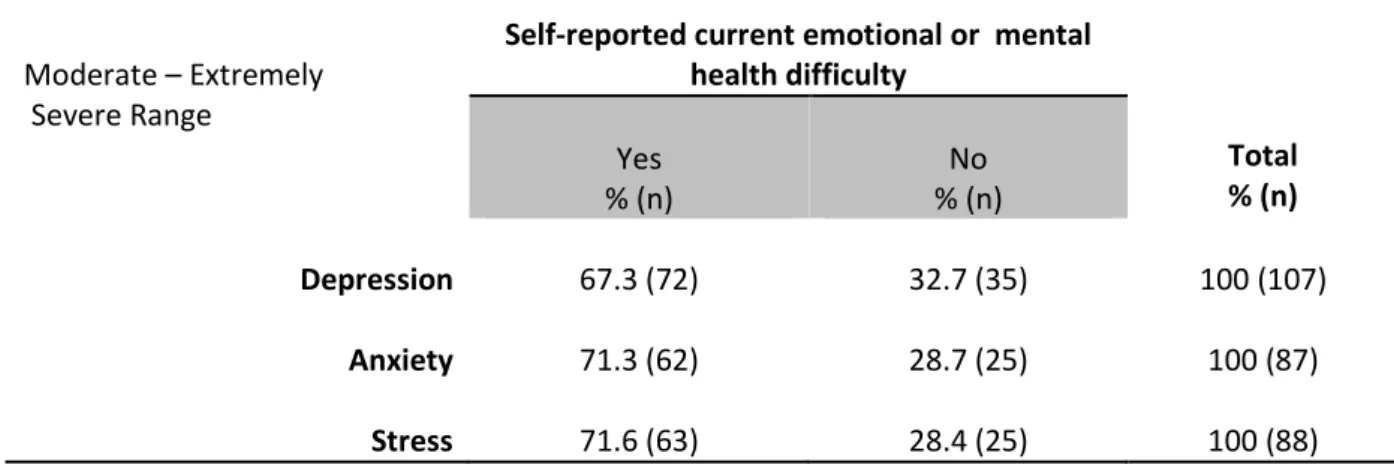
Percentage of participants scoring within the 'moderate–extremely severe' range on the DASS-21 subscale, depending on whether they self-reported a current emotional or mental health problem. The percentage of participants who scored within the 'severe to extremely severe' range on the DASS-21 subscale but did not reveal any current emotional or mental health problems was also calculated.

Experience of Help-Seeking
Participants who had sought help for psychological problems (n = 84) were asked to indicate from whom they had sought help. Of those who sought help, the majority (86%, n = 72) had received help from their GP and/or a mental health professional (i.e. psychologist, mental health nurse). Participants' experiences of seeking help from their GP or mental health professionals were assessed (Figure 11).
A large proportion of respondents indicated that they had no preference for where they saw a mental health professional (42%, n = 75). The least preferred way to get help from a mental health professional was over the phone (16%, n = 28).
Variables Associated With Previous Help-Seeking
Variables associated with formal and informal help-seeking among participants reporting lifetime mental health problems. 64 In an investigation of the association between whether friends or family sought help and participants' help-seeking behavior, 64% (n = 45) of participants who reported help-seeking also knew friends who sought help. As shown in Table 8, a nonsignificant relationship was found between DASS-21 total score and prior help-seeking (rpb = 0.17, p = .06).
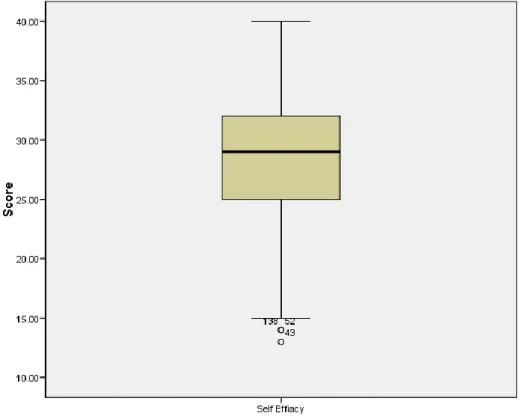
However, a modest but significant correlation was found between the GSE scale and the DASS-21 stress subscale, with help-seeking behavior. 65 There was a significant but inverse relationship between scores on the GSE scale and prior help-seeking behavior, as evidenced by the negative correlation (rpb = -0.24, p < .001).

Future Help-Seeking Intentions
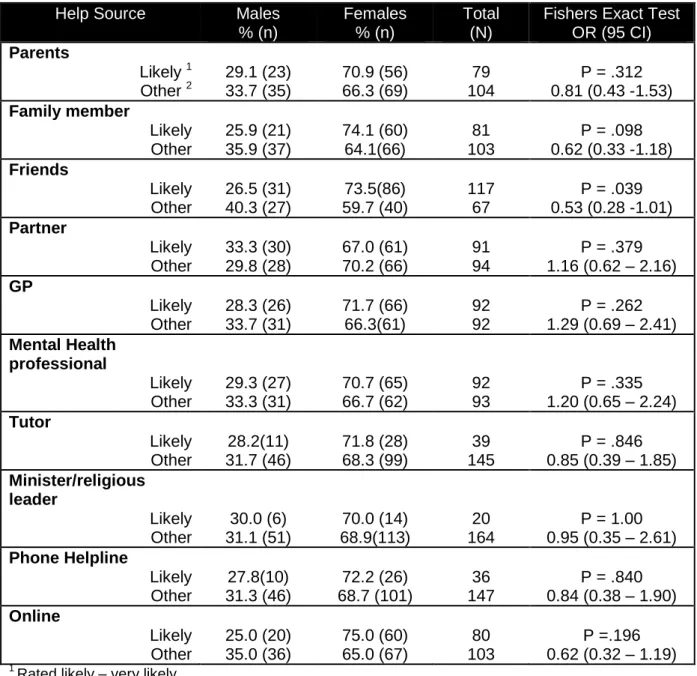
However, chi-square analysis showed that there was no significant association between gender and intention to seek professional help (Fisher's exact, p = 0.255). A non-significant relationship was found between completed highest level of education and intention to seek professional help (Fisher's Exact, p >.05). However, analysis using descriptive statistics revealed that 62% (n = 69) of students and almost half of full-time youth (49%, n = 16) reported a willingness to seek professional help in the future.
However, intention to seek help was not significantly related to current mental health problems (Fisher's Exact, p = .287). The analysis showed that participants reported a greater intention to seek professional help if they experienced fewer help-seeking barriers.
Perceived Barriers and Facilitators to Help-Seeking
A preference for self-reliance rather than seeking external help for their mental health problems also emerged as a main theme in the analysis. Whereby 84% (n = 146) of participants expected this to act as a barrier to some extent and 36% (n = 62) believed it would act as a major barrier to them seeking professional help in the future. As shown in the table above, the most commonly expected instrumental barrier was 'not being able to afford the financial costs' associated with seeking professional help.
Sixty-seven percent (n = 118) of participants expected this to be a barrier to some extent and 27% (n = 47) thought it would be a major barrier to seeking help in the future. The importance of confidentiality and reducing stigmatization also emerged as a facilitating theme in the written text.
Predicting Help-Seeking Intentions
This study aimed to examine young adults' help-seeking behavior and to identify the barriers they face when seeking help for psychological distress. One third of the participants did not seek help for an emotional or mental health problem and a significant relationship was found between gender, self-efficacy, symptoms of stress and whether help was sought or not. Of those who sought help, more than four-fifths accessed support from a GP or mental health professional and around half were satisfied with the care they received.
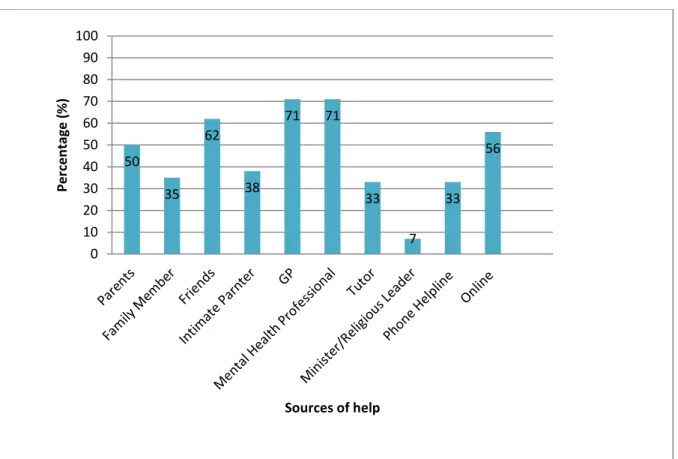
Friends were endorsed as the most preferred resource when seeking help in the future and a third reported that they were unlikely to seek help from their GP. Intention to seek professional help was significantly associated with: previous help seeking, satisfaction with services, perceived stigma, and perceived support from family and friends for seeking help.
DISCUSSION
Socio-demographic Profile and Prevalence of Distress
Psychological disorders were also assessed using the DASS-21 and, as expected, those who self-reported psychological problems were significantly more likely to obtain higher scores on the DASS-21. However, 27% and 25% of participants who scored in the “severe–extremely severe” range on the anxiety and depression subscales, respectively, did not self-report a current emotional or mental health problem. This discrepancy between self-reported mental health problems and levels of distress indicated by the DASS-21 may be explained by a number of factors.
It is also a possibility that this finding is an artifact of low specificity on the part of the DASS-21 scale, with the difference between self-perceived mental health problems and level of distress as reported on the 'false positives' scale. It is possible that because of the research topic, a greater number of young people who experienced a mental health problem were motivated to participate in the study.
Experience of Help-Seeking
However, it is possible that this term was very broad and resulted in an overestimation of mental health problems, preventing a clinical diagnosis. Since GPs mainly act as gatekeepers for mental health care, it is possible that women are more likely to be referred to specialist services by their GP than young men. However, it would be important to determine the process by which young people access help from a mental health professional and to what extent this is determined by personal or external factors.
Nevertheless, an interesting finding is that participants in the current study were more likely to seek help from their GP or mental health professional than found in previous studies. Therefore, further research is needed to explore how service providers may serve as barriers to youth accessing mental health support.
Associated with Help-Seeking
Interestingly, however, in the current study, psychological problems alone were not sufficient motivation for participants to seek help. Therefore, in the current study, intention to seek help was measured as a predictor of future help-seeking behavior. The current study also assessed the effects of psychological distress on the intention to seek professional help.
The results of the current study showed a significant relationship between intention to seek help and previous help-seeking experiences, especially when the experience was positive. This concept is consistent with previous studies that found perceived benefits of help seeking to be a strong predictor of intention to seek help (O'Connor et al., 2014).
Perceived Barriers & Facilitators to Help-Seeking
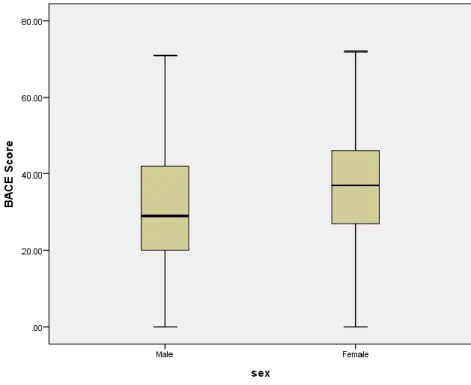
A total of 169 participants completed the BACE scale, which measured the barriers that may prevent professional help-seeking in the future. As previously mentioned, difficulties in expressing mental health concerns also emerged as a barrier theme in the qualitative feedback. These findings may explain why over two-thirds of the sample in the current study indicated that they were unlikely to seek help using a telephone helpline.
It is interesting that the themes that emerged in the data are aligned with the NHS values, which stipulate the importance of compassion, respect and dignity (NHS England, 2014). Furthermore, the themes that emerged in the written feedback are also consistent with previous research that investigated young people's views of helpers (Freake, Barley, & Kent, 2007).
Predicting Help-Seeking Intentions
This research has provided valuable information that contributes to the understanding of young adults' help-seeking behavior in mental health settings. However, as the study aimed to identify the help-seeking behavior of young people most likely to need mental health care, there were clear reasons to include mental health organizations in the recruitment strategy. This study aimed to increase our understanding of the factors that may influence access to mental health care among young adults aged 18 to 25.
The importance of promoting mental health in children and young people from black and minority ethnic communities. Age, gender, and underutilization of mental health services: The influence of help-seeking attitudes. Factors influencing young people's mental health help-seeking behavior: A study based on the health belief model.
Help-seeking behavior in men and women with common psychological problems: cross-sectional study.