
Agile combat support doctrine and logistics officer training: do we need an integrated logistics school for the expeditionary air and space force. Reggie Hall's Agile Combat Support Doctrine and Logistics Officer Training: Do We Need an Integrated Logistics School for the Air and Space Expeditionary Force.
About the Author
Colonel Hall is a distinguished graduate of the Squadron Officer School and a graduate of the Air Command and Staff College (ACSC). This article is based on his ACSC dissertation, which was a finalist for the Dean's Most Outstanding Research Project.
Preface
Similar reports from commanders who deployed logistics officers to Operation Allied Force corroborated her anecdotal experiences: The Air Force is sending new logistics officers to emergency locations to perform cross-functional logistics tasks without the training required to do their jobs. I decided to focus my research on this problem and investigate the need for cross-functional training for recruiting logistics officers in the Air Force.
Acknowledgments
Integrated Logistics Officer
Training—Do We Have It, Do We Need It, Can We Find It, and How Do We Get It?
Data Collection
Operational employment procedures for the ACS and Air and Space Expeditionary Forces (AEF) are examined to determine whether the current training philosophy for Air Force logistics officers is strategically aligned with operational tactics and training required to employ and sustain combat capability. Unfortunately, due to the method of respondent selection, the results of this research cannot be generalized to the larger population of Air Force logistics officers.
Benchmarking Officer Training
US Army’s Approach, USAF Weapons School and Red Flag Exercises
The synthesis of historical lessons with our expectations and current environmental factors leads to the development of theories – what an epistemic community believes and claims to be true based on empirical validation through repetition.3 Transforming historical truths and theoretical concepts into codified principles about what we believe and affirm becomes sanctioned as doctrine. Professor Caffrey describes the learning process as “lessons learned from experience drive changes in focus areas of importance and training priorities.
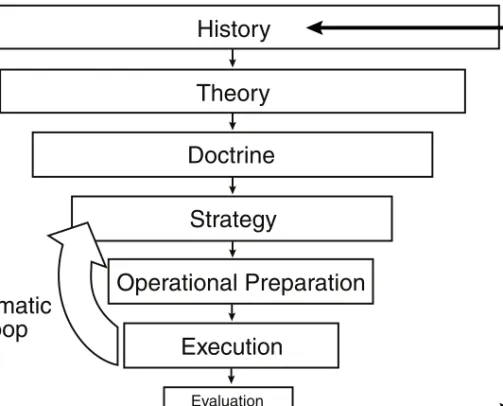
Creation of Air Force Logistics Doctrine
1-10 sparked heated debate in the logistics community due to the exclusion of the word logistics from the title of the source logistics document. Summary of the Air Force's journey to logistics doctrine to date culminates in the development of ACS as a core competency of the global engagement vision for air and space power projection.
Development of Agile Combat Support Doctrine
Agile Combat Support is the cornerstone of Global Engagement and the foundation for the Air Force's other core competencies. Now that the Air Force Chief of Staff's approval has been obtained, it seems that logistics have reached the pinnacle of operational legitimacy in ACP doctrine.
Integrated Logistics
Officer Training—Do We Have It?
The first significant correlation at the .05 level (.432, n = 41) identifying an absence of integrated training is deployed cross-functional logistics duties and learning on the job in a deployed location. The second match being adequately trained to perform deployed duties and to learn on the job in a deployed location was significant at the .05 level (-446, n = 38).
Integrated Logistics Officer Training—Do We Need It? Connecting ACS Doctrine with
I performed support group command duties, responsible for accommodation, brass, force protection and morale, welfare and recreation. Data analysis points to a need for extensive cross-functional expertise and training at a level beyond superficial familiarization or initial exposure.
Expeditionary Air and Space Force Strategy and Tactical Training
Successful organizations have a direct link between a well-thought-out vision, well-defined goals, and specific objectives.8 The goals are what we intend to do (for example, quickly deploy and sustain light, lean, and lethal forces); and the objectives are what we do at work level to achieve those goals.9 All actions in the process must be well balanced and mutually supportive; the tactical competencies that determine how and if the goals will be achieved must align with the objectives achieved to facilitate success. Tilford Jr.; and Dennis Showalter's article "The First Jet War" provide a detailed discussion of Air Force air warfare operations in the conflicts listed above.
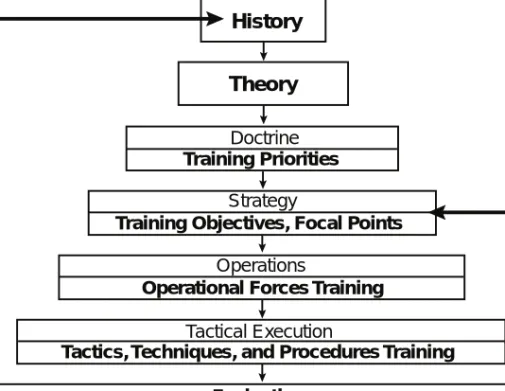
Everything Old Is New
The urgency of the situation is compounded by the demand made at the October 1996 USAF AEF Headquarters Conference for rapid deployment of tailored troop packages anywhere in the world, rapid production logistics processes, commencement of operations and combat flights within 48 hours. 12.
Again—Expeditionary Air and Space Force
Return to USAF Airpower Projection
Logistics officer training - the bedrock that supports the entire construction - is out of balance. We need look no further than the origin of where the Air Force came to find the road map—the United States military.
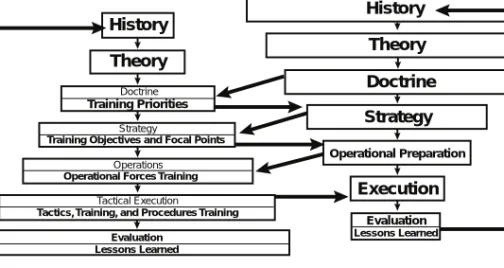
Integrated Logistics Officer Training—Can We Find It?
However, the Army has responded to this doctrinal requirement by restructuring its logistics officer training to develop multifunctional logisticians better prepared to support and sustain combat operations. The data indicating a perceived need for a selective, integrated, expert logistics course combined with the empirical confirmation of the Army's current cross-functional programs suggest that integrated logistics officer training is available.
Integrated Logistics Officer Training—How Do We Get It?
Williams, USMC, “The Canvas and the Clock: The Impact of Logistics at the Operational Level of War” (magistrsko delo, Naval War College), maj 1993. Steven Lange, “The Imperial Japanese Navy Air Force in the Pacific War,” n.p., on-line, Internet, 13. marec 2000, dostopno na http://www.
Examining AFIT, ALOC, and Functional Area Training
AFIT Graduate Logistics Management and Continuing Education Courses
In response to the logistics community's need for a "real-world" logistics training course, AFIT established the first Combat Logistics Course in 1985 to familiarize managers with wartime logistics operations and planning.6 AFIT's Logistics Management Division educational programs continue to provide a wide variety of courses. to meet operational training requirements. All additional logistics courses in the Department of Logistics Management catalog focus on policies, programming, and planning, rather than integrated logistics job functions.
Advanced Logistics Officer Course—The Attempt to Create
The officers were tasked with preparing a brief presentation on their area of expertise, for example a transport officer would summarize the responsibilities of the various jobs held in the career field and the duties performed in their current positions. Similar to the LOG 299 course, one of the main benefits of ALOC is the opportunity to discuss logistics topics and exchange information with logisticians from around the world.
Foolish Builders—Air Force Functional Logistics Officer Courses
The Basic Supply Operations Officer course spans 54 academic days and focuses on the skills and knowledge required to perform Supply Operations Officer duties in the management of the Standard Base Supply System.16 The program is divided into phases with topics ranging from from basic supply functions, inventory management, policy and equipment management to feed contingency/war mission support and support.17 As with the transportation course, logistics disciplines such as contracting, scheduling and aircraft maintenance are not included in the supply curriculum. The bridge courses are abbreviated versions of the basic officer training courses and help with the transition to the new professional field.
Benchmarking Army
Interdisciplinary Logistics Officer Training
Wise Builders—Army Combined Logistics Captains Career Course
CLCC training is also part of the Army's response to force reorganization and downsizing. The Army recognizes the critical importance of logistics in warfighting and invests in human resources for the long term by training technically skilled and tactically capable logisticians to conduct multi-role operations across the spectrum of disciplines.
Eliminating the Blind Spot—Using Operational Experience to Align Doctrine and Training
The Army took integrated training out of the classroom and applied it to the battlefield, incorporating realistic logistics integration into the National Training Center's (NTC) field training exercise program. Accomplishing the additional logistics functions was difficult and required a broad understanding of nearly all disciplines.”13 According to Colonel Flannery, the two most important lessons learned from Golden Bear '91 were the need for a standardized NTC multipurpose logistics scenario to disseminate integrated doctrine with practical experience and additional force safety and security training for deployed personnel.14 Combining operational feedback from the field with the understanding that combatant leaders at all levels must understand the relationship between combat capability and combat support, the Army incorporated integrated logistics activities into NTC exercises.
Training as You Fight—Integrating Combat Logistics in Operational Training
Vaughn, “Learning from the Army Logistics Officer Training System,” Air Force Journal of Logistics, Summer. Collins Jr., USA, “Logistics Support for Operation Provide Comfort II,” Army Logistician, May–June.
Applying the USAF Weapons School and Red Flag Templates
Origins of the Air Corps Gunnery School and Progression to the USAF Weapons School
The weapons school's focus is solely on training elite pilots to become the most qualified instructors, thus producing weapons system experts both in the air and on the ground.6 The students are taught everything about their weapons system and the most effective tactics in employing all weapons for their aircraft, as well as advanced levels of all Air Force combat systems.7 The origins, history, and mission of the Ordnance School reveal a striking similarity between the combat-driven need to improve pilot tactical training and the ACS doctrine and AEF requirements for cross-logistics employment training. Highlighting the value these graduates add to the Air Force's warfighting mission—and their return on the educational investment—highlights the potential for similar returns from integrated logistics school graduates.
Value and Utility of Weapons School Training
Leveraging Tactical Expertise to Enhance Air and Space Power
The value of gun school training in meeting the wartime combat needs of air and space force application and in preparing officers for senior leadership is compounded by the practical utility provided to the field. As Colonel James Conroy noted, “You want your experts to be there when you fight; the School of Weapons believes that people always perform at the highest level at which they have been trained, and to the extent that they have learned from and applied lessons from the past.” Colonel Bentley Rayburn, Commander of the Weapons School from 1993 to 1995, recorded the contributions of the Weapons School by saying, “We are known for our value to the Air Force.
Origins of Red Flag: The Need for Comprehensive Aerial Combat Training
Although Red Flag training is a critical element of aircrew training, it is not directly linked to the Weapons School curriculum. Lt Col Barbara Collins explains “Weapons School is not integrated with Red Flag, although we do communicate with them.
Red Flag Integrated Combat Training—A Model for Requirements-Driven Logistics Training
Brigadier General John Barry, Commander, 56th Fighter Wing, Luke AFB, Ariz., interview with author, 15 December 1999. Lt. Col. Robert Condon, Deputy Commander, USAF Weapons School, Nellis AFB, Nev., interview with author, 21 January 2000.
Conclusions and Recommendations
At worst, it undermines the Air Force's ability to effectively project power in air and space and degrades AEF capability. The potential for disaster increases if we do not institutionally train our logistics professionals to use light, lean, and lethal air and space power in the AOR.
Recommendations
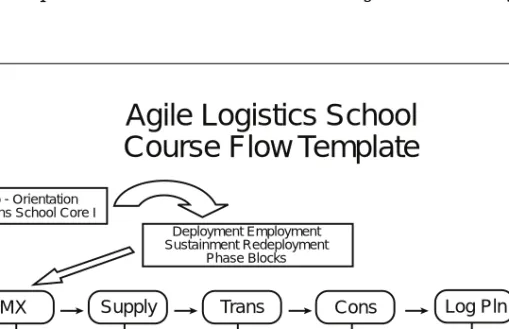
Employment and redeployment aspects of Red Flag combat exercises offer ideal capstones, practical training application and evaluation opportunities for integration, interaction and synchronization of integrated logistics training in real-world scenarios. Just as the Weapons School creates the "instructor's instructor" and builds future operational leaders, the Agile Logistics School will "activate the logistics enabler" and prepare logistics officers for the challenges of integrated logistics leadership positions.
Logistics Officer Survey
CRITICAL. Foundation upon which all other USAF core competencies depend on
IMPORTANT. Coequal with other core competencies
Bibliography
Learn from the Army Logistics Officer Training System.” Air Force Journal of Logistics 22, no. A Historical Perspective on the Future of Military Logistics.” Air Force Journal of Logistics 21, nos.