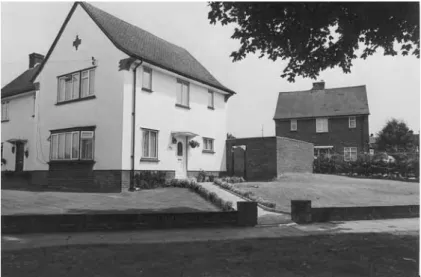
Providing and managing social housing for those who do not have access to the housing market is essential for maintaining the fabric of society. There are very few countries in the world where some form of subsidized housing does not exist, and the total number of social housing units is likely to grow globally, as do the challenges facing the sector.
Introduction
In some parts of the country, there is an oversupply of housing relative to demand, while in others there is a shortage. The amount of housing available versus the demand (and need) for it varies across countries and around the world and over time, and this relative difference helps determine the price of the commodity, as it does for anything else, at least in the private sector, increasingly as well as in the social housing sector.
1 Supply and demand
The price of housing for the consumer, both in the rental and owner-occupied sectors, and certainly in the general housing area, varies greatly by area and type, and the underlying reason for this is economics. The economics of supply and demand also directly affect rent levels in the social rented sector - those familiar with rent restructuring will know that one of the components that helps determine target rent levels is the market value of property, as well as average manual earnings levels. which addresses the element of effective.
What has supply and demand got to do with housing?
Therefore, there is a significant and growing level of unmet housing need, which is related to, but not the same as, the economic concept of demand, in South East England, as well as in other parts of the UK. In crude terms, many households cannot currently afford to become private owners or renters in the private sector.
What is affordable housing?
So 'affordable housing' in this context really means the number of houses and flats needed by households that cannot afford to compete in the market. In summary, therefore, there is a shortage of affordable housing in the South East of England, and a surplus in some other parts of the country.

Demand and need
Since the mid-1980s, the trend has been to move away from an institutional approach to the containment of groups with special needs, towards 'community care'. A distinction is often made between housing and other forms of needs in the context of serving groups with special needs, especially when the issue of payment for services is considered.
Acute housing need
It is a sign of the seriousness and cost of homelessness to the state that in 2002 the Office of the Deputy Prime Minister (ODPM) established a specific division to focus on the issue, the Homelessness Directorate, and it advises local authorities published. on how to prevent homelessness, following the refinement of legislation to broaden the definition of vulnerability, as previously mentioned (ODPM Homelessness Directorate, 2003). It is a topic that became known again after a lapse of at least fifty years in 2003, when the results of the English Home Condition Survey were published, and linked to the 2001 census figures.

The management of housing need
It is particularly important in areas of high demand and low turnover in the council rented sector, such as London and the South East. Arguments in favor are, among other things, that a great many of those who apply for social housing through municipal housing registers also appear on housing association lists, and therefore in many cases the household would have been accommodated in the same way if it had only applied to the association . - on the award criteria adopted by the association.
Supply issues
If a developer will only build houses for sale and can control the form of tenure through ownership of the sales route, then a given scheme will at least initially be available for owner occupation only. There are often 'staircase' arrangements where the occupier can purchase successive shares in the property until they become full owner-occupiers, whether or not the purchase is backed by a mortgage, which allows the disposal of the freehold or sublet to the occupier at the current market rate.

Areas of oversupply
Since the mid-1980s, councils have had to become enablers rather than direct providers, particularly in areas where housing has declined. Councils have increasingly moved towards a strategic housing role, which involves drawing up rehousing plans and liaising with providers such as housing associations to rehouse people seeking the social rented sector.
Postscript to Chapter 1: Can regional planning solve the problems of supply
Then there's the marketability factor – it's one thing to try to build a way out of a housing shortage crisis, and quite another to market homes in areas that people may be unfamiliar with or where they'd rather not go: ness Milton Keynes, which until now has failed to reach its target of 250,000 inhabitants, which should have been reached in the 1980s, despite slick television marketing and one of the best shopping and leisure complexes in the Western world. Houses on stilts as in Thailand to withstand rising tides in the wake of sea level rise caused by global warming; pontoon roads as in the Cays of Florida; a canal boat quarter reminiscent of old Amsterdam, all serviced by water taxis: and the most amazing marina imaginable.
Bibliography and reading advice
Websites
For official housing advice and factual information on all topics relevant to local authorities: www.odm.gov.uk/. For the views of housing's professional body, the Chartered Institute of Housing, on supply and demand, and other relevant matters, visit www.cih.org.uk on a regular basis.
2 Housing management
Two aspects are key here - firstly, the management of the people in the apartment and the property itself. More specifically, the development of housing management needs to be seen in the context of changes in policy and practice in the public sector as a whole.
General needs housing management
The diversification of social housing management, especially by allowing tenants to run their own show to some extent, was boosted by the Right to Manage clauses of the Leasehold Reform, Housing and Urban Development Act 1993. In recent years there has been a development in the use of anti-social behavior orders, following the powers set out in the Housing Act 1996 (as amended by the Anti-Social Behavior Act 2003), various criminal acts, including liamentary assignments and guidance.
Special needs housing management
It can be argued that the difficulty in using the accommodation is not the impairment or disability per se, although there is clearly a contributing factor, but rather the limitations of the accommodation itself, which hinder and deprive, and the role of housing. management in the broadest sense is to eliminate or at least mitigate this deficiency. The model was an inpatient one, where the patient is brought into a facility where they receive a package of care until they are well enough to go home, if ever.
Special consideration groups
Some fell out with the notorious landlord Rachman in Notting Hill; others to the slum landlords of south London. Polish refugees in the pre-Solidarity era and other refugees from Eastern Europe fleeing moribund state communist regimes before the revolutions of the late 1980s.
The management of temporary accommodation
Sometimes the tenant's rent involves a contribution to the management and maintenance costs of the property, which are the responsibility of the tenant. In these cases, a large part of the housing management task may well be to ensure that the HB claim is made quickly and that HB is paid correctly and on time, in order to minimize the difference between payment to the municipality or RSL. , and further payment to the owner, depending on the frequency of the negotiated main rent payment.
Involving the customer
The bottom line is that the majority of social housing tenants are customers in the formal sense of the word and therefore have customer rights, as well as the right to be treated as customers. It's also a good idea to ask if tenants want to be involved in managing or controlling the services they receive.
Self-management
ODPM provides grant money to support the agreement negotiation process through section 16 of the Housing and Planning Act 1986. The failure of the Tenants' Choice initiative under the Housing Act 1988 is a stark reminder of this fact.
Repairs and maintenance
Cyclic maintenance is where maintenance is carried out on a regular basis - on a cycle - say on an annual basis, for example in the case of boiler maintenance. In the case of housing societies, in most cases there is no central revenue subsidy from the Housing Corporation, and repairs and.
Some organisational management issues
For example, in the case of rent Table 2.3 Ordinary housing organization X – roles towards goals and objectives (excerpt). It is not sufficient to increase remuneration rates, although the relative competitiveness of the sector must be considered.
Bibliography
Supporting people: an overview of housing support policy and cost developments since 1997. Economics is probably no more dismal than any other field of study and understanding the subject can actually help build national wealth and is certainly essential to the governance of a country that often reveals more in violation as in act.
3 Housing finance
It seeks to place social housing firmly in the context of wider economic management issues and to trace the evolution of these controls over recent decades. Its importance in the national balance sheet pales in comparison to expenditure on education, social security, health and defence.
Government macro-economic controls
Although views on the classical monetarist position now vary, the essence of the approach still permeates Treasury thinking. It can be seen in the context of the emergence from the wartime command economy, rationing, the foundation of the modern welfare state and a response to the hardships of the Great Depression of the 1920s and the troubles of the 1930s.
Housing balances
The philosophy of public expenditure control is manifested through the biennial Comprehensive Spending Reviews, introduced in 1998, which set out departmental spending limits in the context of actual and forecast national economic performance and the government's view of investment and current needs, but with the emphasis on the former. The problem is therefore how to maintain a low or affordable rent regime and to provide reasonable management and maintenance services without unnecessary appeal to the public purse, in line with low taxes, and against the background of owner-occupation as the preferred form of tenure which, since the abolition of mortgage interest tax relief at source, receives very low levels of public subsidy.
Integrative overview – capital and revenue finance
Day-to-day repairs and scheduled maintenance are revenue expenses, as are regular council tax payments and meeting bills. If you sell your house, the amount you have left after paying off the mortgage and other debt secured by the house is called equity and is a capital sum: and if you put it into stocks and shares, it's a capital investment that should generate an investment income (revenue income).
Differences between the sectors
Part of this borrowing is supported by government grants, by a stream of central revenue support, and the rest is up to the local authority to fund through locally generated revenue (ODPM, 2003a). other priorities in the Expenditure Overview, which provides spending limits for three years. Finally, for 2004/05, the way in which management and maintenance expenses are assessed for subsidy purposes has changed - the so-called management and maintenance allowance.
Capital operations in the social housing sector
Until April 2004, local authorities competed each year for approval for capital expenditure under the Housing Investment Program (HIP). Credit approvals were issued based on consumption need as indicated by the General Needs Index (GNI), an attempt to weigh the housing needs of one world against another using a "points" system.
Capital receipts
The allocation took into account part of the capital receipts from the sale of land, housing and other assets at the bank up to the beginning of the expenditure year. The arrival of the Allowance for Major Repairs (MRA) in 2001 meant a significant change in resources for municipalities.
Scope for reform
In the author's view, it is only ideology, not sound economics, that prevents the return of councils to the development process. It would have reserve planning powers to assemble land parcels and ensure that NIMBY-like considerations do not get in the way of housing needs.
Housing association capital finance
The source of development available is the Approved Development Program (ADP) – the Corporation's capital budget voted on a triennial basis by Parliament and arising from the Expenditure Review. SHG is repayable only in the case of low-cost home ownership, on sale of a 'part' of the value of the property to the buyer.
Scope for reform in the housing association capital area
But by playing the private lending game, they do contribute to the profits of private financial organizations, and if they were not players, the private lending market would be much smaller. Another option would be to reduce the exposure of housing associations to the private credit sector, which cannot be guaranteed as a source of financing.
Revenue operations in the social housing sector
In the third case, where assumed income is less than assumed expenditure, an equivalent amount of the HRA subsidy is payable to the council. Due to the notional nature of the subsidy calculation, it may be more or less than what is actually required.
Scope for HRA subsidy reform
Another option would be to abandon rent reform and allow councils to raise rents to the extent they need to cover the actual costs of providing council housing services. The conclusion is that ringfencing in the form it exists now only makes moral sense if it also applies to HRA contributions to GF.
Rent restructuring
Despite some misgivings, by 2005 most social landlords had introduced some form of rent restructuring and de-pooling of service charges. It also means that this part of municipal revenue, and thus the assessment of the ability of municipalities to finance their own costs, management and maintenance of housing on an annual basis, can be measured more accurately.
Which subsidy – capital grant or revenue?
It might be possible to start by thinking about the basics that all households need. Assessing the level of income support is more complicated due to differences in the nature of households.
Types of housing benefit
So why is this acceptable in the area of housing benefit, which is part of the national social security system. Estimation of the need to spend on maintenance and management in the Local Authority housing stock.HMSO.
4 Housing development
It examines the crucial role of central government and non-governmental organizations, especially the Housing Association, as important sources of development resources, increasingly working with private financiers to provide and enable funds for the development of new housing, and the regeneration and conversion of older stock. In light of the shortage of social housing and the resulting decline in turnover in the available housing stock, social housing will have to house the same household for much longer than before. the changing quality of life requirements resulting from changes in the life cycle are becoming increasingly important.
The enabling and production of new build development for rent and for sale
This will be firmly set in the context of the 2003 Plan for Sustainable Communities, as amended, which emphasizes the importance of sufficient affordable housing in the growth areas, focusing on London and the South East, and the development challenges this will bring for all concerned. (see Chapter 1). This is what makes housing development such an interesting and sometimes risky career choice, but there is a certain joy in seeing the results of all this planning in new housing development that meets need and meets with resident satisfaction.
The strategic planning process
INFLOW (new households forming households plus-migrating) minus OUTFLOW (households migrating plus households no longer needing housing) This would give a rough measure of the number of additional homes needed based on natural growth, natural 'wasting' through death; inflows and outflows. Not all properties will be affordable to those on lower incomes, so an attempt must be made to estimate the number of affordable homes needed, taking into account the economic characteristics of households likely to need a new, second-hand or converted property .
Affordable housing requirement
If possible, supply can be estimated as the number of homes produced at given prices. A positive number means there is no need to build or enable affordable housing in the area.
Planning policy implications
A negative figure indicates the estimated level of affordable housing shortage in the area, which may increase or decrease over the plan period depending on the estimated trends entered into the model. This is particularly feasible where a change of land use is required by a residential developer, or where it is anticipated that the development may not fully meet the density standards required in the local plan.
Who can produce affordable housing?
At the end of the estimation process, and taking into account changes in local planning policy or flexibility within the existing framework, it should be possible to arrive at a picture of how much affordable housing is needed, of what type, and within which areas to meet the estimated need. It is then a matter of trying to determine the form of affordable housing in terms of property rights: and this goes beyond urban and rural planning and is about mobilizing relevant agencies to produce the goods, and it is to this that we now focus to target. .
Why not councils?