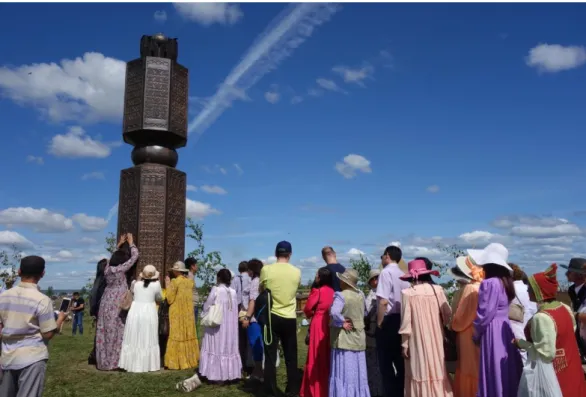
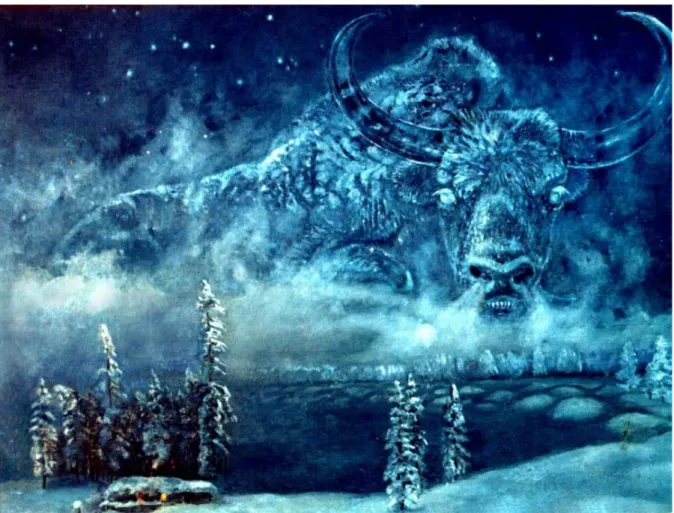
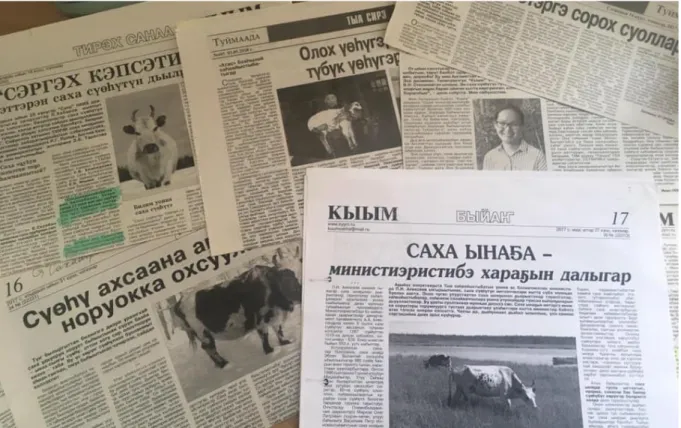
Some of the most memorable moments of my time at Cambridge and on the pitch were with them. Minister and director of the conservation farm at the opening of the new A very interesting example of the fusion of intellectuals and shepherds into the same people (see Chapter 4).
In the first half of the chapter I analyze the ideological bases of the project on indigenous cattle.
Cattle and ethnic Others through Soviet and post-Soviet history
In the deep pre-Soviet past, it was women who did most of the cow work. It is the Sakha cattle that bore most of the burden of the Soviet livestock improvement reform. 42 But this is only part of the story of the assimilation of domestic cattle by foreign breeds in the Soviet period.
The life of the Sakha and the evolution of Sakha ethnonationalism in the post-Soviet years. In the case of the Sakha, this cooling had an immediate effect on their control over diamonds. Here, the herders did not switch back to the native cattle breed after the fall of the Soviet Union.
I will elaborate on this from a more analytical point of view in the last chapter of the thesis. Andrei once told me that the death of native cattle would also mean the 'death of the Sakha people'. They told me that due to the insufficient number of these animals, it could hardly be effective.
With the supply of Kobe beef very low, it is also one of the most expensive varieties of beef in the world (Batter 2018). For example, one of the youngest herders in the village is an Eveny woman Gutya. 140 That is why the shepherds in Sakkyrr do not stand aside from the discourse of the intellectuals.
This is implied in the allusion the author of the above article makes to the. In the Soviet period, a large amount of Sakha horses were left intact throughout the northern districts of the republic. 197 hidden transcripts, he teases out a specific class expressed in the teeth of the.

The intellectuals and their project on the revival of native cattle
The power of the intellectuals and the virtues of native cattle
Since the 2000s, the republic's government has also directed ever-increasing amounts of money from the local budget to domestic cattle breeding. Nadezhda Egorovna was very proud to be part of the well-known village for switching entire villages to the local breed of cattle. Andreevna was already wondering how she would fit all the animals into the cowshed next fall.
Although numerous doses of sperm from local bulls were stored in the local Animal Sperm Bank, they were obtained from only seven bulls in the 1980s. It turned out that in the process of checking the purity of the bull's breed, Aisen missed the estrous cycle of his cow. . Scholars have recently argued that they see nonhuman charisma as a manifestation of the agency of these animals (Lorimer 2007; Barua 2016; White 2016).
This is especially true for men who are fascinated by the unusually large size of the testicles of these animals. A screenshot of the video featuring the native bull, posted to a male group's Instagram account. He claims that they are 'the emotional focus of the whole event, for there lies the whole danger for the man' (ibid: 94).
Similarly, it is the aggressive masculinity embodied in the massive horns of indigenous Sakha bulls that draws much joy from their owners and onlookers. So Pavel told me a story about the village of Odjulun in central Yakutia, which recently boycotted indigenous cattle.
Cattle herding as a shameful burden in Tastakh
102 introduction of gas heating was one of the reasons why they got rid of their cattle. About half of the town's school children also study in the district center where they live with their extended families. Only a group of horse herders who worked with the local horse herder brigade of the farm remained behind.
According to my interlocutors, he told them that the arrival of state cattle would be a great advantage for the "development of the village" (nehilienne saydyytygar eiebyulleekh buoluo). Also, the minutes of the assembly say that intellectuals from Yakutsk and officials from the district center promised economic benefits to the villagers. 112 It is this economic inefficiency that actually explains the lack of Sakha cattle in the republic: most herders consider breeding unprofitable.
For these economic reasons, the majority of pastoralists in Tastakh still keep their livestock – regardless of the breed of these animals. 115 and that it was her husband who took care of all the cattle. But this is not because they are of the Sakha race; as I argued, they do not regard them as such.
In her ethnography of the Nuer, Sharon Hutchinson describes their intersubjectivity with cattle as a 'potent equation. For example, if a Nuer man died without heirs, his relatives […] were obliged to collect cattle and marry a 'ghost wife' in the deceased's name to bear him children” (ibid, my emphasis).

Human-cattle partnership in Sakkyryr
Its importance to the locals is reflected in the district's emblem, which features a snow sheep leaping over the mountains. Thus, the herdsmen in Sakkyryr have never kept breeds of cattle other than the Sakha breed. For example, at one of Terut Baai's meetings, Alla told us about her experience of spending a month on the Chomchoevs' cattle farm.
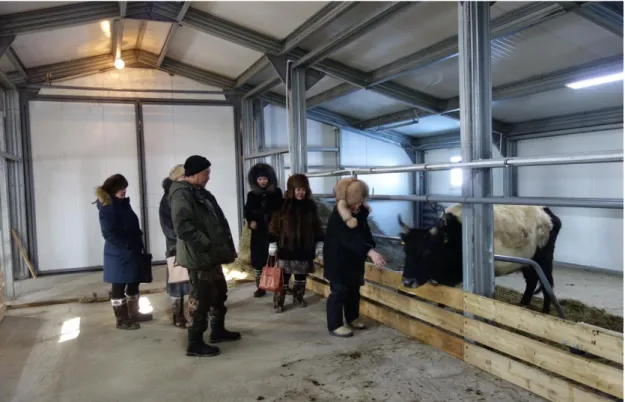
In this northern ulus, the shepherds keep their cattle even earlier due to the earlier onset of the first frost. Like the farm in Tastakh, these are one of the biggest employers in these villages. The minister and the director of the conservation farm at the opening of the new cow shed.
In addition, it is not uncommon for members of the local community to make lifelong friends with foreign researchers. In Tastakh, most shepherds tie the hind legs of their cows with a rope before milking them. For it is believed that there is a danger that whatever you say about others materializes not only in the lives of those people, but also in the life of the speaker.
26 Aware of all the complexity and porosity of the distinction between 'wild' and 'domesticated' animals (Cassidy 2007; Stépanoff 2017), following John Knight (2017), I am here using this distinction in the most conventional sense. At the beginning of this chapter I showed how the greater diversity of pastoral animals is a manifestation of the cultural hybridity of the natives.
The shortage of manliness and of Sakha kind: anxieties over Sakha ethnic
However, the Sakha's evocations of their Turkish roots in the 1990s were largely based on their fantasies about the common past with other Turks, rather than on their actual knowledge of it. The same can be said of the Soviet Sakha, which knew virtually no foreigners other than the Slavic peoples. By the time I did my fieldwork, it seemed to have become the main highlight of the Republic Day festivities.
In Chapter 1, I established that Sakha men have experienced a prolonged insecurity of masculinity since the collapse of the Soviet Union. In the eyes of the nationalists, therefore, the weakness of men threatens not only the men themselves, but all the Sakha peoples and is a matter of great urgency. The leader of the Turgun club believes that the ancestors of the Sakha were the warrior caste (voiny) of Genghis Khan, called Uraankhay.
The most important thing in the passage about the Odunu bull is that he is one of the Sakha race who is facing off against a herd of non-Saka cattle. Therefore, the need to increase the number of Sakha population has occupied the minds of these nationalists no less than the desire to empower men. The desire to increase the number of Sakhas also leads nationalists to try to control the sex lives of women.
This was at a time when the Sakha regarded blood more as an attribute of a tribe, rather than of an imagined entity of the 'Sakha people'. Another grateful IVF patient even said that 'it was because of the availability of IVF that the number of Sakhas increased'.

The project of native cattle as an ideology and cooperation
I have also illustrated how these negative events in the life of the Sakha changed their nationalist sentiment and rhetoric. The core of this threat lies in the power imbalance that allegedly exists between Sakha and these migrants in favor of the latter. Lévi-Strauss rather gave priority to the '..is to ..as ..is to ..'-relationships of the elements, rather than the elements themselves (Stasch 2018: 65).
Since these cattle were almost completely assimilated by larger imported breeds during the Soviet period, only a few hundred of them remained in the remote northern corner of Yakutia in the 1990s. I believe that the Sakha nationalists are fashioning an ethno-national symbol from a species that they previously thought was unfriendly to man (see next section). 192 leaves the impression that when animals are chosen as totems at some unspecified period in the life of human society, they remain so forever.
They argued that animals also occupy a prominent place in the real lives of people as a source of livelihood and argued that the economic and the conceptual value of the animals considered to be symbolically significant need not be mutually exclusive. not. Symbolic compensation has long been considered one of the functions of ritual, though rarely overt. Yet such a position of the groom in daily life stands in stark contrast to the role he takes in chisungu.
However, this compensation is of a more emotional and psychological quality and does not lead to the actual improvement of the status of subordinate groups (Gluckman 1954; Turner 1969). Like many other nation-states, Australia has seen a rise in populism since the turn of the millennium.