Citation:Schmitt, I.; Meyer, F.; Krahn, I.; Henke, N.A.; Peters-Wendisch, P.;
Wendisch, V.F. From Aquaculture to Aquaculture: Production of the Fish Feed Additive Astaxanthin by Corynebacterium glutamicumUsing Aquaculture Sidestream.Molecules 2023,28, 1996. https://doi.org/
10.3390/molecules28041996 Academic Editor: Gregory Chatel Received: 16 December 2022 Revised: 31 January 2023 Accepted: 17 February 2023 Published: 20 February 2023
Copyright: © 2023 by the authors.
Licensee MDPI, Basel, Switzerland.
This article is an open access article distributed under the terms and conditions of the Creative Commons Attribution (CC BY) license (https://
creativecommons.org/licenses/by/
4.0/).
molecules
Article
From Aquaculture to Aquaculture: Production of the Fish Feed Additive Astaxanthin by Corynebacterium glutamicum Using Aquaculture Sidestream
Ina Schmitt, Florian Meyer, Irene Krahn, Nadja A. Henke , Petra Peters-Wendisch and Volker F. Wendisch *
Institute for Genetics of Prokaryotes, Faculty of Biology and CeBiTec, Bielefeld University, 33615 Bielefeld, Germany
* Correspondence: [email protected]
Abstract: Circular economy holds great potential to minimize the use of finite resources, and re- duce waste formation by the creation of closed-loop systems. This also pertains to the utilization of sidestreams in large-scale biotechnological processes. A flexible feedstock concept has been es- tablished for the industrially relevantCorynebacterium glutamicum, which naturally synthesizes the yellow C50 carotenoid decaprenoxanthin. In this study, we aimed to use a preprocessed aquacul- ture sidestream for production of carotenoids, including the fish feed ingredient astaxanthin by C. glutamicum. The addition of a preprocessed aquaculture sidestream to the culture medium did not inhibit growth, obviated the need for addition of several components of the mineral salt’s medium, and notably enhanced production of astaxanthin by an engineeredC. glutamicumproducer strain.
Improved astaxanthin production was scaled to 2 L bioreactor fermentations. This strategy to improve astaxanthin production was shown to be transferable to production of several native and non-native carotenoids. Thus, this study provides a proof-of-principle for improving carotenoid production by C. glutamicumupon supplementation of a preprocessed aquaculture sidestream. Moreover, in the case of astaxanthin production it may be a potential component of a circular economy in aquaculture.
Keywords:Corynebacterium glutamicum; astaxanthin; RAS; aquaculture sidestream; circular economy
1. Introduction
The consumer demand for seafood is rising as the world population is growing and healthier diets are becoming more important. The worldwide fish production was 178.5 million tons (mt) in 2018, and is anticipated to reach 204.4 mt in 2030 [1]. This tremen- dous demand for fish cannot be met by fishery alone. Accordingly, aquaculture is the fastest-growing food production system [2], enabling the fishing industry to meet the global needs [3,4]. The amount of seafood bred in aquaculture systems contributed 46% of the global production (82.1 mt) in 2018, and this share is expected to reach 53% (108.5 mt) in 2030 [1].
Recirculating aquaculture systems (RAS) present a promising alternative to the tra- ditional cultivation systems as they have greatly reduced land and water requirements, and can be built without exploitation of farmland [5,6]. Moreover, they offer year-round fish growth and provide a high degree of environmental control [7,8]. RAS have great opportunities for waste management and nutrient recycling [9]. The lower flow rates of RAS compared to raceway systems, and the high stocking densities of RAS compared to ponds and cages lead to lesser, more concentrated effluents from the fish tanks, which can be treated more cost effectively [2,7,9,10]. RAS and other aquaculture effluents are mainly composed of settleable and dissolved nutrients from feces and unconsumed fish feed [11], which need to be removed in order to reuse the water for the fish tanks. Via settling of the backwash water, a sludge phase containing most of the settleable wastes and an aqueous sidestream can be obtained [7,12]. Several efforts have been made to recycle this solid and
Molecules2023,28, 1996. https://doi.org/10.3390/molecules28041996 https://www.mdpi.com/journal/molecules
aqueous sidestreams from RAS. For instance, the aqueous phase of the waste streams has been used for the cultivation of several algae [13–15]. The algal biomass may be used as natural fertilizer [15,16], an aquaculture feed [17,18], or food [19] ingredient. Alternatively, the algae can be used for the extraction of high value compounds, such as polyunsaturated fatty acids [20] or vitamins [21]. Further technological developments are in demand to utilize these aquaculture sidestreams.
One of the most important quality criteria of aquaculture bred fish, such as salmon (2.4 mt in 2018) and rainbow trout (0.8 mt in 2018), and crustaceans (9.4 mt in 2018) [1], is the degree of flesh and/or shell pigmentation, as it dictates their market value [22,23]. As fish and other aquatic animals are unable to synthesize the responsible carotenoidsde novo carotenoids are mixed into the feed of farmed fish and crustaceans [24,25]. Astaxanthin and other carotenoids from synthetic [23,26,27] and from natural sources, such as yeasts [28,29], algae [30–32], maize [33], and bacteria [22,34], have been used in aquatic feed formulations, achieving different levels of coloration. The red, cyclic C40 carotenoid astaxanthin is the major carotenoid used in aquatic feeds [25]. The global astaxanthin market is predicted to reach 4.75 billion US$ in 2028, with an annual growth rate of 16.8% [35]. Currently, the petrochemical synthesis of astaxanthin is the most cost-efficient and, therefore, dom- inates the market [24,36]. However, there is a growing trend towards naturally sourced carotenoids due to consumer demand and regulation. This opens the market for alternative production technologies. Furthermore, it was shown that the antioxidant properties of natural astaxanthin fromHaematococcus pluvialisare stronger than those of synthetic astax- anthin [37]. However, studies with rainbow trout showed that the esterified astaxanthin produced by microalgae are deposited in fish muscle less effectively than the free variant, and therefore cause lower coloration [38,39]. Taken together, the demand for natural, unes- terified astaxanthin that can be produced efficiently and environmentally friendly is rising.
Microbial hosts, such asYarrowia lipolytica[40,41],Paracoccus carotinifaciens[42],Escherichia coli[43,44],Saccharomyces cerevisiae[45], andCorynebacterium glutamicum[46] are natural or heterologous producers of carotenoids and have been engineered for high-level production of astaxanthin.
Astaxanthin can be synthesized by the Gram+soil bacteriumC. glutamicumthat is a natural producer of the yellow C50 carotenoid decaprenoxanthin and its glucosides [47]
(Figure1). Metabolic engineering is effective forC. glutamicum, which efficiently pro- duces the endogenous decaprenoxanthin [48] and lycopene [49], and the heterologous isoprenoidsα-pinene [50], (+)-valencene [51], 4-apolycopene and 4-aponeurosporene [52], patchoulol [53],α-farnesene [54]α-carotene [55], bisanhydrobacterioruberin (BABR) [56], C.p.450 and sarcinaxanthin [57],β-carotene [57], and astaxanthin [46]. In order to achieve high level astaxanthin production several engineering strategies have been applied. First, the carotenoid biosynthesis pathway was terminated at lycopene by deletion of crtYeYfEb[49,58], and the precursor supply was improved [58,59]. Furthermore, the regula- tory mechanism of the carotenoid biosynthesis by its precursor molecule geranylgeranyl pyrophosphate (GGPP) responsive transcriptional repressor CrtR was elucidated [57,60]
and deletion of its gene was shown to improve astaxanthin production [46]. Conversion ofβ-carotene to astaxanthin was improved by a fusion protein of the heterologousβ- carotene hydroxylase andβ-carotene ketolase fromFulvimarina pelagi[46]. A CRISPRi library screening identified potential further targets for metabolic engineering [61].
In addition to genetic engineering, other attempts have been made to optimize the carotenoid production by microbial hosts and to design sustainable production processes.
Successful strategies include: two-stage cultivations [62,63], the adjustment of operative bioprocess parameters, such as aeration rate [64], CO2levels [65], light irradiation [66,67], temperature [68,69], pH [70,71], optimization of the growth medium composition [72,73], and utilization of various sustainable carbon sources [64,74–76].
Molecules2023,28, 1996 3 of 21
Molecules 2023, 28, 1996 3 of 22
temperature [68,69], pH [70,71], optimization of the growth medium composition [72,73], and utilization of various sustainable carbon sources [64,74–76].
Figure 1. Carotenoid Biosynthesis in C. glutamicum. Gene names are given next to the reactions catalyzed by their gene products. Heterologous genes are depicted with a grey box. GAP:
Glyceraldehyde 3-phosphate; IPP: isopenthenyl pyrophosphate; DMAPP: dimethylallyl diphosphate; BABR: bisanhydrobacterioruberin; C.p.450: 2,2′-bis-(4-hydroxy-3-methybut-2enyl)- β,β-carotene; dxs: 1-deoxy-D-xylulose 5-phosphate synthase; idsA: geranylgeranyl pyrophosphate synthase; crtE: geranylgeranyl pyrophosphate synthase; crtB: phytoene synthase, crtI: phytoene desaturase; crtEb: lycopene elongase; crtYe/f: ϵ-cyclase; crtYg/h Ml: C50 carotenoid γ-cyclase from Micrococcus leuteus; lbtBCDs: subunit of C50 carotenoid β-cyclase (B) and lycopene elongase (C) from Dietzia sp. CQ4; lbtABDs: C50 carotenoid β-cyclase from Dietzia sp. CQ4; crtYPa: lycopene cyclase from Pantoea ananatis; crtWFp: β-carotene ketolase from Fulvimarina pelagi; crtZFp: β-carotene hydroxylase from Fulvimarina pelagi.
C. glutamicum has been engineered for utilization of agricultural sidestreams [77].
This is relevant since the bacterium is used for decades in the production of amino acids at the million ton scale [78]. The flexible feedstock concept for C. glutamicum comprises efficient utilization for growth and production of a number of compounds, for instance, the lignocellulosic sugars arabinose [79,80] and xylose [81–84], the chitin derived amino sugars glucosamine [85] and N-acetyl-glucosamine [86]. Furthermore, also less processed substrates, such as chitin [87], and hydrolysates of plant biomass, such as rice straw or wheat bran [88–90], and sidestreams from biodiesel factories [91], biorefineries [92], or the starch and paper industry [93,94] were harnessed as carbon sources for C. glutamicum.
Here, we studied if a sidestream from a Norwegian salmon farm, operated as a RAS, can be utilized as component of the growth medium to support growth and carotenoid production by C. glutamicum.
Figure 1. Carotenoid Biosynthesis inC. glutamicum. Gene names are given next to the reactions catalyzed by their gene products. Heterologous genes are depicted with a grey box. GAP: Glyc- eraldehyde 3-phosphate; IPP: isopenthenyl pyrophosphate; DMAPP: dimethylallyl diphosphate;
BABR: bisanhydrobacterioruberin; C.p.450: 2,20-bis-(4-hydroxy-3-methybut-2enyl)-β,β-carotene;dxs:
1-deoxy-D-xylulose 5-phosphate synthase;idsA: geranylgeranyl pyrophosphate synthase;crtE: ger- anylgeranyl pyrophosphate synthase;crtB: phytoene synthase,crtI: phytoene desaturase;crtEb:
lycopene elongase;crtYe/f:-cyclase;crtYg/h Ml: C50 carotenoidγ-cyclase fromMicrococcus leuteus;
lbtBCDs: subunit of C50 carotenoidβ-cyclase (B) and lycopene elongase (C) fromDietziasp. CQ4;
lbtABDs: C50 carotenoidβ-cyclase fromDietziasp. CQ4;crtYPa: lycopene cyclase fromPantoea ananatis;crtWFp:β-carotene ketolase fromFulvimarina pelagi;crtZFp:β-carotene hydroxylase from Fulvimarina pelagi.
C. glutamicum has been engineered for utilization of agricultural sidestreams [77].
This is relevant since the bacterium is used for decades in the production of amino acids at the million ton scale [78]. The flexible feedstock concept forC. glutamicumcomprises efficient utilization for growth and production of a number of compounds, for instance, the lignocellulosic sugars arabinose [79,80] and xylose [81–84], the chitin derived amino sugars glucosamine [85] andN-acetyl-glucosamine [86]. Furthermore, also less processed substrates, such as chitin [87], and hydrolysates of plant biomass, such as rice straw or wheat bran [88–90], and sidestreams from biodiesel factories [91], biorefineries [92], or the starch and paper industry [93,94] were harnessed as carbon sources forC. glutamicum.
Here, we studied if a sidestream from a Norwegian salmon farm, operated as a RAS, can be utilized as component of the growth medium to support growth and carotenoid production byC. glutamicum.
2. Results
2.1. Analysis of the Untreated Aquaculture Sidestream
The liquid phase of an aquaculture sidestream from a Norwegian RAS salmon farm was analyzed regarding its physical parameters and nutrient composition in order to get insights about which components of the standard minimal growth medium CGXII ofC. glutamicummight be substitutable by the aquaculture sidestream. The aquaculture sidestream has a pH of 5.5, and a dry matter fraction of 16.5 g L−1. In a loss on ignition analysis an organic fraction could not be detected (detection limit 0.1% (w/w) of dry matter fraction). The nutrient analysis of the aquaculture sidestream (Figure2) showed that nitrogen (8 g L−1) is the major macronutrient present in the aquaculture sidestream, followed by potassium (3 g L−1K, 3 g L−1K2O) and sulphate (2 g L−1). Furthermore, elemental sulfur, phosphorus, calcium, zinc, and boron were detected. The analysis also covered ammonium derived nitrogen (NH4-N) (<1 g L−1), P2O5(<3 g L−1), CaO (<2 g L−1), Mg (<1 g L−1), MgO (<2 g L−1), Mn, Cu, and Mo (all <0.0000485 g L−1), but these nutrients could not be detected.
2. Results
2.1. Analysis of the Untreated Aquaculture Sidestream
The liquid phase of an aquaculture sidestream from a Norwegian RAS salmon farm was analyzed regarding its physical parameters and nutrient composition in order to get insights about which components of the standard minimal growth medium CGXII of C.
glutamicum might be substitutable by the aquaculture sidestream. The aquaculture
sidestream has a pH of 5.5, and a dry matter fraction of 16.5 g L
−1. In a loss on ignition analysis an organic fraction could not be detected (detection limit 0.1% (w/w) of dry matter fraction). The nutrient analysis of the aquaculture sidestream (Figure 2) showed that nitrogen (8 g L
−1) is the major macronutrient present in the aquaculture sidestream, followed by potassium (3 g L
−1K, 3 g L
−1K
2O) and sulphate (2 g L
−1). Furthermore, elemental sulfur, phosphorus, calcium, zinc, and boron were detected. The analysis also covered ammonium derived nitrogen (NH
4-N) (<1 g L
−1), P
2O
5(<3 g L
−1), CaO (<2 g L
−1), Mg (<1 g L
−1), MgO (<2 g L
−1), Mn, Cu, and Mo (all <0.0000485 g L
−1), but these nutrients could not be detected.
Figure 2. Nutrient composition of the aquaculture sidestream. Macro- and Micro-nutrients detected in an analysis of the untreated aquaculture sidestream performed by Eurofins Agraranalytik Deutschland GmbH. Nutrients below the detection limit are not represented.
Furthermore, the amino acid and amine composition of preprocessed aquaculture sidestream (AQ) was analyzed via HPLC. The results (Table S1) display that besides proteinogenic amino acids, the non-proteinogenic
ω-amino acid 5-aminovaleric acid(5-AVA), and the diamines putrescine and cadaverine are present in AQ. The concentrations of the proteinogenic amino acids range from 0.5 to 10.7 mg L
−1, while 5- AVA (76 mg L
−1), putrescine (62 mg L
−1), and cadaverine (53 mg L
−1) are present in higher concentrations.
Moreover, an ion exchange chromatography (detection with a RID at λ = 210 nm)
analysis of AQ was performed via HPLC (Figure S2). Four Peaks were detected. However, none of the peaks could be identified. Glucose, malate, lactate, trehalose, succinate, and
α-ketoglutarate were used as standards and can therefore be excluded as possiblecarbohydrate components of the AQ.
2.2. Growth in Various Media Based on or Supplemented with AQ
In order to use the aquaculture sidestream as a growth medium component, it was preprocessed. Centrifugation and subsequent sterile filtration (Section 4.1) were applied to obtain a clear liquid. C.
glutamicum WT was used to verify if AQ as a new complexmedia component is compatible with growth. Therefore, cultivations in different media compositions were performed in a Biolector
®microcultivation system. Addition of AQ to the standard minimal growth medium CGXII to 20% (v/v) led to significantly increased biomass formation (from OD
600 nm52.0 ± 0.9 to 62.0 ± 0.8) and decaprenoxanthin content
Figure 2. Nutrient composition of the aquaculture sidestream. Macro- and Micro-nutrients de- tected in an analysis of the untreated aquaculture sidestream performed by Eurofins Agraranalytik Deutschland GmbH. Nutrients below the detection limit are not represented.Furthermore, the amino acid and amine composition of preprocessed aquaculture sidestream (AQ) was analyzed via HPLC. The results (Table S1) display that besides proteinogenic amino acids, the non-proteinogenicω-amino acid 5-aminovaleric acid (5- AVA), and the diamines putrescine and cadaverine are present in AQ. The concentrations of the proteinogenic amino acids range from 0.5 to 10.7 mg L−1, while 5-AVA (76 mg L−1), putrescine (62 mg L−1), and cadaverine (53 mg L−1) are present in higher concentrations.
Moreover, an ion exchange chromatography (detection with a RID atλ= 210 nm) analysis of AQ was performed via HPLC (Figure S2). Four Peaks were detected. How- ever, none of the peaks could be identified. Glucose, malate, lactate, trehalose, succinate, andα-ketoglutarate were used as standards and can therefore be excluded as possible carbohydrate components of the AQ.
2.2. Growth in Various Media Based on or Supplemented with AQ
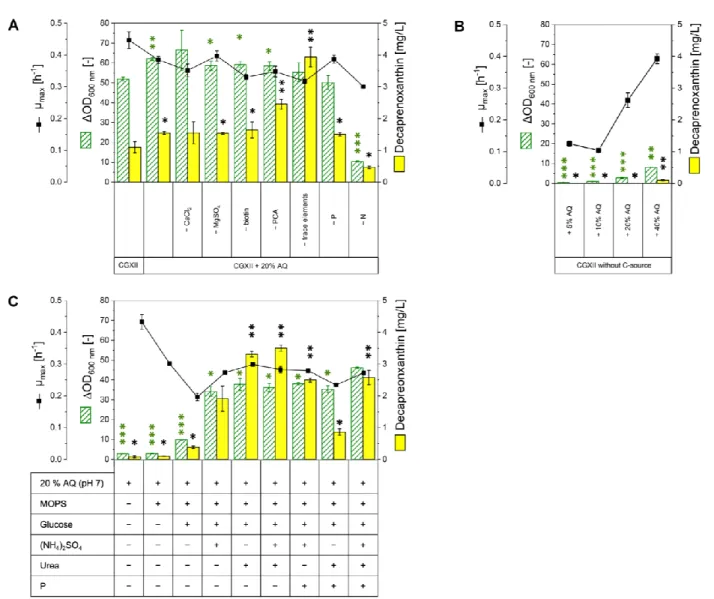
In order to use the aquaculture sidestream as a growth medium component, it was preprocessed. Centrifugation and subsequent sterile filtration (Section4.1) were applied to obtain a clear liquid. C. glutamicumWT was used to verify if AQ as a new complex media component is compatible with growth. Therefore, cultivations in different media compositions were performed in a Biolector®microcultivation system. Addition of AQ to the standard minimal growth medium CGXII to 20% (v/v) led to significantly increased biomass formation (from OD600 nm52.0±0.9 to 62.0±0.8) and decaprenoxanthin content (from 1.1±0.2 to 1.6 ±0.0 mg L−1), while the growth rate was only slightly reduced (Figure3A). To elucidate which components of CGXII could be replaced by the complex
Molecules2023,28, 1996 5 of 21
media component AQ, each component of the CGXII media composition was substituted by 20% (v/v) AQ (Figure3A). Replacement of the CGXII components CaCl2, MgSO4, biotin, protocatechuic acid (PCA), or trace elements by AQ led to comparable biomass formation and growth rates compared to CGXII with addition of 20% (v/v) AQ. This indicated that addition of 20% (v/v) AQ is sufficient to replace these components of CGXII.
However, replacing PCA or trace elements with 20% (v/v) AQ significantly increased decaprenoxanthin production (plus 58% for PCA; plus 155% for trace elements). The addition of AQ instead of phosphorous reduced biomass formation (∆OD600 nmof 50±3.7;
minus 19%), but decaprenoxanthin production was comparable. The replacement of nitrogen had the strongest negative effect: biomass formation was reduced to one-fifth (∆OD600 nmof 10±0.3), the maximal growth rate by one-third (0.3±0.0 h−1), and the decaprenoxanthin production by more than half (0.5±0.0 mg L−1) compared to CGXII.
To test whether AQ could function as a carbon source forC. glutamicum, the standard carbon source glucose was replaced by 5%, 10%, 20%, or 40% (v/v) AQ (Figure3B). In all cases growth was observed, but even with the addition of 40% (v/v) AQ only one-sixth of biomass formation (∆OD600 nmof 8.0±0.0) was observed (Figure3B). These results indicate that AQ can only partially substitute for the carbon and nitrogen sources of CGXII medium.
Second, we tested ifC. glutamicumWT could grow with 20% (v/v) AQ (adjusted to pH 7) as sole medium component. However, the biomass and decaprenoxanthin forma- tion were negligible (Figure3C). When MOPS buffer (42 g L−1, adjusted to pH 7) and glucose were added, some growth (∆OD600 nmof 10±0.2) and decaprenoxanthin produc- tion (0.4±0.0 mg L−1) were detected (Figure3C). The addition of the nitrogen sources ammonium sulfate and/or urea increased biomass formation to∆OD600 nmof 34±2.3, 38±0.5 and 36 ±2.1 for ammonium sulfate, urea, and both, respectively. Regarding decaprenoxanthin production, a significant increase was observed upon addition of urea alone (3.3±0.1 mg L−1), or combined with ammonium sulfate (3.5±0.1 mg L−1). The decaprenoxanthin titer was 3-fold higher than from the standard CGXII medium.
Third, we developed an AQ based growth medium for carotenoid production with C. glutamicum, in which all components that could be replaced by AQ without reducing biomass formation or decaprenoxanthin production (CaCl2, MgSO4, biotin, trace elements, and PCA) were omitted. The new medium was named CGAQ, and it contained 20% (v/v) AQ, 42 g L−1MOPS buffer, 40 g L−1glucose, 20 g L−1(NH4)2SO4, 5 g L−1urea, 1 g L−1 K2HPO4, and 1 g L−1KH2PO4). Growth ofC. glutamicumwas supported by the medium CGAQ (Figure3C). The biomass formation in CGAQ was comparable to the culture grown in CGXII, even though the growth rate dropped from 0.45±0.02 h−1to 0.27±0.01 h−1. Notably, a more than doubled decaprenoxanthin content of 2.6±0.2 mg L−1was observed using medium CGAQ.
Taken together, we have developed two growth media using AQ that are suitable for C. glutamicum: CGAQ and the regular CGXII minimal medium supplemented with 20%
(v/v) AQ.
2.3. Carotenoid Production in AQ Supplemented Media
As the new AQ based medium CGAQ more than doubled the decaprenoxanthin production, we further tested its impact on the production of other carotenoids. Therefore, we performed production experiments in the Biolector® microcultivation system using strains overproducing various carotenoids. Strain ASTA* produces astaxanthin while ASTALYS* (strain construction see Section4.4) is producing astaxanthin along with L- lysine. Strains LYC6, BETA4, ZEA5, and CAN5 (strain construction of ZEA5 and CAN5 see Section4.4) produce the astaxanthin precursors lycopene,β-carotene, zeaxanthin, and canthaxanthin, respectively. Furthermore, we chose strains MB001∆crtR, BABR1, CP1, and SAX1 for production of the C50 carotenoids decaprenoxanthin, BABR, C.p.450, and sarcinaxanthin, respectively. All strains were grown either in CGXII, CGXII supplemented with 20% (v/v) AQ or CGAQ (Figures4, S3 and S4).
Molecules2023,28, 1996 6 of 21
(from 1.1 ± 0.2 to 1.6 ± 0.0 mg L
−1), while the growth rate was only slightly reduced (Figure 3A). To elucidate which components of CGXII could be replaced by the complex media component AQ, each component of the CGXII media composition was substituted by 20%
(v/v) AQ (Figure 3A). Replacement of the CGXII components CaCl
2, MgSO
4, biotin, protocatechuic acid (PCA), or trace elements by AQ led to comparable biomass formation and growth rates compared to CGXII with addition of 20% (v/v) AQ. This indicated that addition of 20% (v/v) AQ is sufficient to replace these components of CGXII. However, replacing PCA or trace elements with 20% (v/v) AQ significantly increased decaprenoxanthin production (plus 58% for PCA; plus 155% for trace elements). The addition of AQ instead of phosphorous reduced biomass formation (∆OD
600 nmof 50 ± 3.7;
minus 19%), but decaprenoxanthin production was comparable. The replacement of nitrogen had the strongest negative effect: biomass formation was reduced to one-fifth
(∆OD600 nmof 10 ± 0.3), the maximal growth rate by one-third (0.3 ± 0.0 h
−1), and the decaprenoxanthin production by more than half (0.5 ± 0.0 mg L
−1) compared to CGXII. To test whether AQ could function as a carbon source for C. glutamicum, the standard carbon source glucose was replaced by 5%, 10%, 20%, or 40% (v/v) AQ (Figure 3B). In all cases growth was observed, but even with the addition of 40% (v/v) AQ only one-sixth of
biomass formation (∆OD600 nmof 8.0 ± 0.0) was observed (Figure 3B). These results indicate that AQ can only partially substitute for the carbon and nitrogen sources of CGXII medium.
Figure 3. Growth of C. glutamicum WT in AQ containing media. ∆OD600 nm, µmax, and decaprenoxanthin production after 48 h of C. glutamicum WT grown in a Biolector® flowerplate Figure 3. Growth ofC. glutamicumWT in AQ containing media.∆OD600 nm,µmax,and decaprenox- anthin production after 48 h ofC. glutamicumWT grown in a Biolector®flowerplate microcultivation system. The maximal OD600 nmdifference from the initial OD600 nmduring 48 h of cultivation is given as∆OD600 nm. Values and error bars represent means and standard deviations of triplicate cultiva- tions. Statistical significance in comparison to the cultivation in CGXII medium was assessed for
∆OD600 nm(marked in green) and decaprenoxanthin production (marked in black) in Student’st-test (***p< 0.0001, **p< 0.001, *p< 0.05). (A) Growth on CGXII, CGXII with addition of 20% (v/v) AQ and CGXII with 20% (v/v) AQ replacing media components of the CGXII composition. (B) Growth on CGXII without carbon source, 5 to 40% (v/v) AQ were supplemented as replacement. (C) Growth on AQ as the sole medium component, with adjustment to pH 7 and the addition of MOPS buffer, glucose, (NH4)2SO4, and/or urea and phosphorous source (P). The last column represents the AQ based medium CGAQ.
Decaprenoxanthin and biomass formation by MB001∆crtRwere increased in CGAQ (55.1±1.8 mg L−1decaprenoxanthin; plus 13%), but reduced by supplementation of CGXII with 20% (v/v) AQ (Figure4). Lycopene formation by LYC6 in CGAQ (8.7±0.4 mg L−1) was comparable to the one in CGXII, but was reduced by 24% when AQ was supplemented.
Production of BABR by strain BARBR1 was increased by supplementation of CGXII with 20% (v/v) AQ (13.7 ± 1.2 mg L−1; plus 17%), and further improved in CGAQ (20.3±1.6 mg L−1; plus 73%), while the biomass formation was decreased in CGAQ.
Production of two other non-native C50 carotenoids C.p.450 and sarcinaxanthin by strains CP1 and SAX1, respectively, was reduced in CGAQ as was biomass formation. However,
Molecules2023,28, 1996 7 of 21
upon addition of AQ to CGXII, carotenoid production increased considerably: plus 280%
C.p.450 (47.5±1.2 mg L−1), and plus 360% sarcinaxanthin (72.3±4.3 mg L−1).
Molecules 2023, 28, 1996 7 of 22
of two other non-native C50 carotenoids C.p.450 and sarcinaxanthin by strains CP1 and SAX1, respectively, was reduced in CGAQ as was biomass formation. However, upon addition of AQ to CGXII, carotenoid production increased considerably: plus 280%
C.p.450 (47.5 ± 1.2 mg L
−1), and plus 360% sarcinaxanthin (72.3 ± 4.3 mg L
−1).
A similar pattern was observed for production of astaxanthin and its precursors by BETA4, ZEA5, CAN5, and ASTA*, respectively. In CGAQ, these strains exhibited reduced biomass and carotenoid formation. By contrast, the addition of AQ to CGXII had a positive impact on biomass formation and carotenoid production. While the slight increases in
production of β-carotene (127.4 ± 2.7 mg L−1; plus 6%) and canthaxanthin (3.0 ± 0.2 mg L
−1; plus 5%) were not significant compared to CGXII, considerable and statistically significant increases were observed for zeaxanthin (0.6 ± 0.0 mg L
−1; plus 173%) and astaxanthin (7.4
± 0.1 mg L
−1; plus 213%).
The strain that co-produces astaxanthin with lysine, ASTALYS*, showed very low biomass formation compared to the other carotenoid production strains, which increased significantly upon addition of AQ to the medium (5.6 ± 0.2; plus 393%) or in the CGAQ medium (4.0 ± 0.2; plus 246%). Strain ASTALYS* showed 1.5-fold increased astaxanthin production (0.3 ± 0.0 mg L
−1) upon addition of AQ to CGXII. Lysine production was increased 1.8-fold in CGAQ (1.40 ± 0.03 g L
−1), and more than 6-fold (5.52 ± 0.14 g L
−1) upon supplementation of CGXII with AQ.
For all strains, changes in the total carotenoid content (Figure S3) were observed. In case of strains
MB001∆crtR, LYC6, and BETA4, all precursors were converted todecaprenoxanthin, lycopene and
β-carotene, respectively. Here, changes in totalcarotenoids arose solely from changes in the respective product. In the other strains conversion of the precursors e.g., lycopene and β-carotene was incomplete, and therefore changes in the total carotenoid contents result from changes in product and precursor contents.
Taken together, the usage of AQ as a media component showed a positive effect on the carotenoid production by
C. glutamicum. Notably, while production of the nativecarotenoid decaprenoxanthin was increased in CGAQ, supplementation of 20% AQ to CGXII improved production of most other carotenoids, in particular astaxanthin.
Figure 4. Carotenoid production of C. glutamicum strains in AQ supplemented media. Carotenoid production of C. glutamicum MB001∆crtR (decaprenoxanthin), LYC6 (lycopene), CP1 (C.p.450), Figure 4. Carotenoid production ofC. glutamicumstrains in AQ supplemented media.Carotenoid production ofC. glutamicumMB001∆crtR(decaprenoxanthin), LYC6 (lycopene), CP1 (C.p.450), BABR1 (bisanhydrobacterioruberin), SAX1 (sarcinaxanthin), BETA4 (β-carotene), ZEA5 (zeaxanthin), CAN5 (canthaxanthin), ASTA* (astaxanthin) grown on CGXII, CGXII supplemented with 20% (v/v) AQ, or the AQ derived medium CGAQ for 48 h. Values and error bars represent means and standard deviations of triplicate cultivations. Statistical significance in comparison to the cultivation of each strain in CGXII medium was assessed in Student´st-test (***p< 0.0001, **p< 0.001, *p< 0.05).
A similar pattern was observed for production of astaxanthin and its precursors by BETA4, ZEA5, CAN5, and ASTA*, respectively. In CGAQ, these strains exhibited reduced biomass and carotenoid formation. By contrast, the addition of AQ to CGXII had a positive impact on biomass formation and carotenoid production. While the slight increases in production ofβ-carotene (127.4±2.7 mg L−1; plus 6%) and canthaxanthin (3.0±0.2 mg L−1; plus 5%) were not significant compared to CGXII, considerable and statistically significant increases were observed for zeaxanthin (0.6±0.0 mg L−1; plus 173%) and astaxanthin (7.4±0.1 mg L−1; plus 213%).
The strain that co-produces astaxanthin with lysine, ASTALYS*, showed very low biomass formation compared to the other carotenoid production strains, which increased significantly upon addition of AQ to the medium (5.6±0.2; plus 393%) or in the CGAQ medium (4.0±0.2; plus 246%). Strain ASTALYS* showed 1.5-fold increased astaxanthin production (0.3 ±0.0 mg L−1) upon addition of AQ to CGXII. Lysine production was increased 1.8-fold in CGAQ (1.40±0.03 g L−1), and more than 6-fold (5.52±0.14 g L−1) upon supplementation of CGXII with AQ.
For all strains, changes in the total carotenoid content (Figure S3) were observed.
In case of strains MB001∆crtR, LYC6, and BETA4, all precursors were converted to de- caprenoxanthin, lycopene andβ-carotene, respectively. Here, changes in total carotenoids arose solely from changes in the respective product. In the other strains conversion of the precursors e.g., lycopene andβ-carotene was incomplete, and therefore changes in the total carotenoid contents result from changes in product and precursor contents.
Taken together, the usage of AQ as a media component showed a positive effect on the carotenoid production byC. glutamicum. Notably, while production of the native
carotenoid decaprenoxanthin was increased in CGAQ, supplementation of 20% AQ to CGXII improved production of most other carotenoids, in particular astaxanthin.
2.4. Fermentative Production of Astaxanthin in AQ Supplemented Media
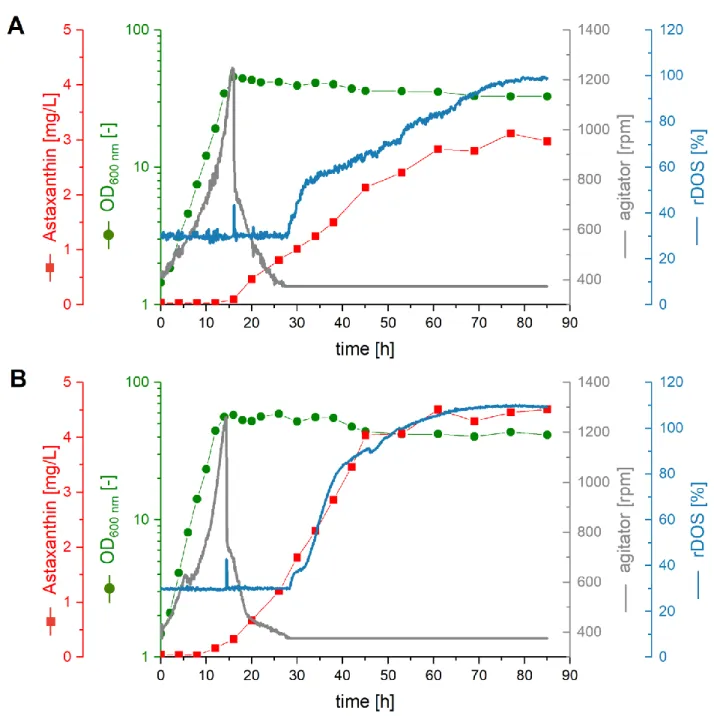
After having shown that astaxanthin production byC. glutamicumASTA* was en- hanced by the addition of 20% (v/v) AQ to CGXII medium in microcultivation, lab-scale bioreactors (2 L) were used to test if this improvement was stable at larger scale. Two paral- lel 2 L batch fermentations usingC. glutamicumASTA* were performed. They contained either CGXII medium (Figure5A) or CGXII plus 20% (v/v) AQ (Figure5B). After 16 h, both cultures reached the stationary phase. The biomass formation was higher upon AQ supplementation (∆OD600 nmof 58 as compared to 46), as was the growth rate (0.31 h−1 compared 0.24 h−1). In CGXII, astaxanthin accumulated to a cellular content of 0.38 mg g−1 cell dry weight (CDW) (equivalent to 3.12 mg L−1) during 77 h, with a maximal volumetric productivity of 0.05 mg L−1h−1(Figure5A). Upon AQ supplementation, the maximum as- taxanthin concentration of 4.51 mg L−1(cellular content of 0.44 mg g−1CDW) was reached already after 61 h, increasing the maximal volumetric productivity to 0.09 mg L−1h−1 (Figure5B). Thus, astaxanthin production was considerably improved regarding titers and volumetric productivities in bioreactor batch cultivation indicating that the beneficial effect of AQ supplementation is transferable to larger scales under defined bioreactor conditions.
With the aim to improve astaxanthin production in bioreactor cultivation, fed-batch fermentations were performed. In a comparison, 1 L CGXII with 20% (v/v) AQ medium was used as a batch medium, and either 600 mL CGXII concentrate or CGXII concentrate supplemented with 20% (v/v) AQ were used as feed medium (Figure S5). Both cultures reached the stationary phase after about 32 h with comparable growth rates (0.21 h−1for CGXII concentrate as feed, 0.19 h−1for CGXII concentrate with 20% (v/v) AQ as feed).
With CGXII concentrate as feed, a maximal∆OD600 nmof 206, and an astaxanthin concen- tration of 6.1 mg L−1(cellular content of 0.15 mg g−1) accumulated during 64 h with a maximum productivity of 0.10 mg L−1h−1(Figure S5A). When AQ was added to the feed, the∆OD600 nmwas 208 and an astaxanthin concentration of 3.8 mg L−1(cellular content of 0.08 mg g−1CDW) accumulated during 64 h with a maximum volumetric productivity of 0.08 mg L−1h−1(Figure S5B). Therefore, the beneficial effect of AQ supplementation is stable at larger scales, at least in the batch phase. However, additional supplementation of AQ via the feed did not further increase production. H3PO4was used as acid for pH adjustments in all fermentations. The H3PO4consumption during both batch fermentations was comparable, as was the consumption during both fed-batch fermentations. Therefore, the addition of H3PO4did not lead to significant differences in the phosphorus source com- position of the cultivation media, and all occurring effects can be attributed to the presence or absence of AQ in the medium. The total carotenoid content was more than doubled in both fed-batch fermentations (max. 72.7 mg L-1when fed with CGXII concentrate, and max.
106 mg L−1when fed with CGXII concentrate plus 20% (v/v) AQ, respectively) compared to the batch fermentations (max. 24.8 mg L-1in CGXII and max. 30.3 mg L-1in CGXII plus 20% (v/v) AQ) (Figure S6). Thus, the best conditions for astaxanthin production using AQ byC. glutamicumstrain ASTA* required supplementation of 20% (v/v) AQ in the batch phase, but not during the feeding phase.
Molecules2023,28, 1996 9 of 21
Molecules 2023, 28, 1996 9 of 22
Figure 5. Batch-Fermentations. Progression of astaxanthin content (red squares), OD600 nm (green dots), agitator speed (grey line), and relative dissolved oxygen concentration (rDOS) (blue line) over time during 2 L batch fermentations with C. glutamicum ASTA* grown in CGXII medium (A) and CGXII medium supplemented with 20% (v/v) AQ (B).
3. Discussion
In this study, a promising example with potential for the circular economy was presented. The liquid phase of a sidestream from a recirculating aquaculture system for salmon served as a sustainable feedstock for
C. glutamicum. Fermentative production ofseveral carotenoids, including the aquaculture feed ingredient astaxanthin was increased by usage of AQ.
Growth of
C. glutamicum was supported by AQ as the sole medium component.However, it was a poor source of carbon and nitrogen. The addition of glucose, urea, and/or ammonium sulfate restored the growth to levels comparable with the standard medium. While L-glutamine, L-glutamate and a number of other amino acids present in
Figure 5. Batch-Fermentations.Progression of astaxanthin content (red squares), OD600 nm(green dots), agitator speed (grey line), and relative dissolved oxygen concentration (rDOS) (blue line) over time during 2 L batch fermentations withC. glutamicumASTA* grown in CGXII medium (A) and CGXII medium supplemented with 20% (v/v) AQ (B).3. Discussion
In this study, a promising example with potential for the circular economy was pre- sented. The liquid phase of a sidestream from a recirculating aquaculture system for salmon served as a sustainable feedstock forC. glutamicum. Fermentative production of several carotenoids, including the aquaculture feed ingredient astaxanthin was increased by usage of AQ.
Growth of C. glutamicumwas supported by AQ as the sole medium component.
However, it was a poor source of carbon and nitrogen. The addition of glucose, urea, and/or ammonium sulfate restored the growth to levels comparable with the standard medium. While L-glutamine, L-glutamate and a number of other amino acids present in AQ, e.g., L-alanine, L-asparagine, L-serine, and L-threonine, can be used as nitrogen sources
byC. glutamicum[95], their concentration was comparatively low. Other amines present in AQ, such as putrescine, cadaverine, and 5-AVA, cannot be utilized as nitrogen sources by C. glutamicum[96–98]. Likely, nitrites and nitrates are present in AQ.C. glutamicumis able to metabolize nitrate to nitrite as part of a respiratory chain [99,100]; however, neither is used as a nitrogen source. In RAS, nitrogen is typically removed from the circulating water, e.g., by biofilter arrangements containing microbial communities of nitrifying and denitrifying microorganisms [101,102]. Prior to the demonstration that AQ supported growth and carotenoid production byC. glutamicum, it was reported that the supplementation of an aquaculture sidestream with aquaculture sludge improved growth and omega-3 fatty acid production of an algal co-cultivation [21].
Carotenoid production byC. glutamicumwas improved by supplementation with AQ.
However, since AQ is a complex source of macro- and micro-elements, it is very difficult to speculate which component(s) cause the improvement. It is tempting to hypothesize that trace elements may be involved as several enzymes of carotenogenesis use metal ions as cofactors. For example, prenyltransferases use divalent metal ions, such as Mg2+and Mn2+
as cofactors [103–105]. InC. glutamicum, the geranylgeranyl pyrophosphate synthases IdsA and CrtE require Mg2+for their activity [106]; however, Mg and MgO concentrations in AQ were below the detection limit (<3 g L−1). It is not known whether the substrate specificities of the prenyltransferases used here (IdsA, CrtE, CrtB, CrtEb, or LbtBC) are affected when Mg2+is replaced by Mn2+, as was recently observed for a flavonoid prenyltransferase from Artocarpus heterophyllus[107]. Ferredoxin is involved as an electron carrier in several steps of decaprenoxanthin biosynthesis inC. glutamicum.For example, 28 reduced ferredoxins are required for the biosynthesis of the isoprenoid diphosphate precursors DMAPP, IPP and HMBPP, while their conversion to decaprenoxanthin yields only three reduced ferre- doxins [61]. For the biosynthesis of zeaxanthin and astaxanthin, four additional reduced ferredoxins are required for the reactions catalyzed by CrtZ [108]. These iron-sulfur cluster containing enzymes of carotenoid biosynthesis have a high demand for sulfur and iron to be provided by the medium. In this respect, it is noteworthy that supplementation with AQ (containing 1 g L−1S and 2 g L−1SO4) increased sulfur availability. Taken together the diverging effects of AQ supplemented CGXII and CGAQ on the production of the tested native and heterologous carotenoids prompt that the production of each carotenoid may be improved by optimization of the (trace) element composition of the growth medium.
Earlier studies in carotenoid producing yeast [109,110] and bacteria [111,112] suggest that the optimum concentration ratios for trace elements have to be evaluated with regards to the production host, the involved enzymes, their cofactors, and further reaction partners.
Bacterial astaxanthin production from AQ was demonstrated here for the first time.
Previously, sidestream derived astaxanthin production was described for the yeastXantho- phyllomyces dendrorhous. Cultures ofX. dendrorhousproduced up to 9.69µg L−1astaxanthin when grown for five days on pre-treated whey, a sidestream of the dairy industry (volumet- ric productivity of 0.08µg L−1h−1), and up to 1.88 mg L−1astaxanthin when cultivated in a fruit and vegetable waste derived medium for 7 days (0.01 mg L−1h−1) [113]. Moreover, 26 mg L−1astaxanthin were produced byX. dendrorhousafter about 200 h of cultivation (0.13 mg L−1h−1) in a partially-saccharified mussel wastewater [114]. In a co-cultivation of the bacteriumBacillus subtilisand the algaH. pluvialisfor astaxanthin production from a starch-containing sidestream of a potato processing plant a titer of 8 mg L−1astaxanthin was achieved after 350 h of cultivation (0.02 mg L−1h−1) [115]. Our study revealed a much faster astaxanthin production (7.4 mg L−1in 48 h; 0.15 mg L−1h−1) upon supplementation with AQ and partially also higher titers than those achieved byX. dendrorhous. The yeast P. rhodozymaproduced about 130 mg L−1astaxanthin after 120 h by direct fermentation of food wastes (1.08 mg L−1h−1) [116]. On stillage media derived from bagasse-based ethanol fermentation ofS. cerevisiae, about 18 mg L−1astaxanthin accumulated within one week of fermentation (0.10 mg L−1h−1) [117]. Both sidestreams are much richer as compared to the AQ used in this study. The total carotenoid concentrations of up to about 0.1 g L−1 observed in this study may indicate that more astaxanthin can be produced if all precursor
Molecules2023,28, 1996 11 of 21
carotenoids are converted to astaxanthin. This may be approached by adjusting the copy number and/or expression levels ofcrtZandcrtWas previously demonstrated forE. coli andS. cerevisiae[118,119].
In aquatic feeds, bacterial biomass proved to be a sustainable, protein rich substrate to partially or completely replace traditional protein sources, such as fish meal [120]. In aquaculture feed formulations, phototrophic purple bacteria [121,122], lactic acid bacte- ria [123], and methanotrophic bacteria [124,125] have been used. Feeding whole cells of C. glutamicumto fish or crustaceans may be an option to provide astaxanthin and additional components relevant as feed additives. For this application, the strain ASTALYS* may be beneficial as it secretes L-lysine to the culture medium and accumulates astaxanthin in the cells [126]. Lysine typically is deficient in aquatic feeds [127,128] and astaxanthin is used in flesh and/or shell coloration of several aquaculture reared fish and crustaceans [24,127].
Whole cells obtained by spray-drying fermentation broth of L-lysine producingC. glutam- icumwere already commercialized for poultry feeds [95]. Thus, spray-dried fermentation broth ofC. glutamicumASTALYS* may support growth of poultry and coloration of egg yolks. In this regard, it has to be noted that several amino acid producingC. glutamicum strains have been approved by the European Food Safety Authority (EFSA) as a feed addi- tive for all animal species [129]. Today, the establishment of a circular economy-based fish farm, including fish tanks and bioreactors, might be visionary. However, on-site production of the fish feed ingredients by cultivation of bacteria and algae on the sidestreams from the fish tanks would not only reduce the energy consumption of RAS due to reduced transport of feed ingredients [7], but would be one step closer towards a sustainable society.
4. Materials and Methods
4.1. Preprocessing of the Aquaculture Sidestream
The aquaculture sidestream was collected from the sump of a post-smolt RAS for salmon operated by Lumarine AS (Tjeldbergodden, Norway) outside of Trondheim (Norway).
A plastic canister was filled with aquaculture sidestream, and was left to settle by grav- itation for 0.5 h. The supernatant (liquid aquaculture sidestream) was thereafter gently poured off, frozen (−20◦C), and transported to our research facility in Bielefeld (Germany).
The liquid aquaculture sidestream was defrosted, stirred, and frozen (−20◦C) in smaller containers until further use. Preprocessing of the liquid aquaculture sidestream in order to use it as a growth medium component was implemented by a 90 min centrifugation step at 4000 rpm and subsequent sterile filtration of the supernatant. The filtration was performed with a vacuum driven Steritop®(Millipore, Burlington, MA, USA) with 0.22µm pore diameter. The resulting AQ was used in the growth experiments.
4.2. Microorangisms and Cultivation Conditions
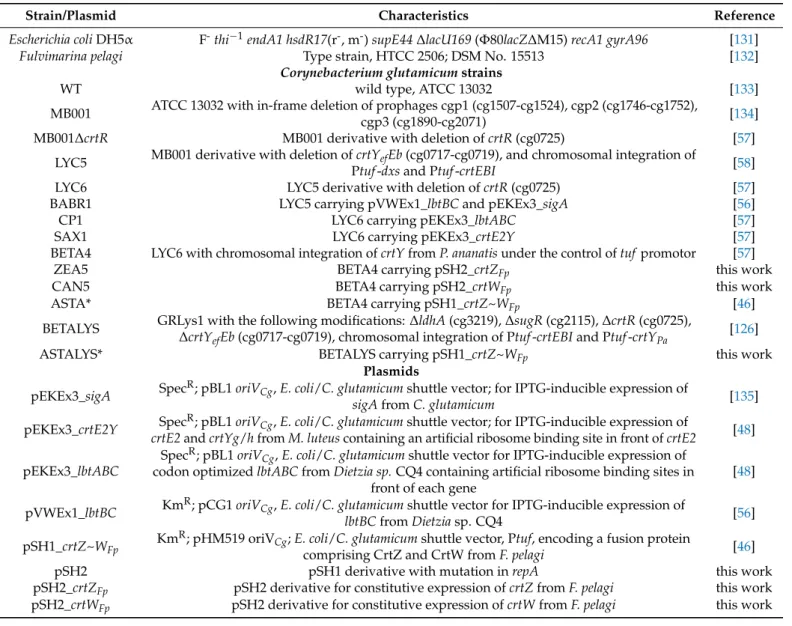
Strains and plasmids used in this study and their characteristics and references are listed in Table1. Chemicals were delivered by Carl Roth (Karlsruhe, Germany), if not stated differently. Precultures were grown in 100 mL or 500 mL shake flasks at 30◦C and 120 rpm, or 37◦C and 180 rpm forC. glutamicumorE. colirespectively. Precultures ofE. coli DH5α,C. glutamicumATCC 13032, and derived strains were grown in LB medium [130].
C. glutamicumASTALYS* precultures were grown in BHIS (37 g L−1BHI, 91 g L−1Sorbitol) supplemented with 10 g L−1glucose. For main cultures CGXII minimal medium (20 g L−1 (NH4)2SO4, 1 g L−1 K2HPO4, 1 g L−1 KH2PO4, 5 g L−1 urea, 42 g L−1 MOPS buffer, 0.2 mg L−1biotin, 30 mg L−1PCA, 10 mg L−1CaCl2, 250 mg L−1MgSO4·7 H2O, trace elements: 10 mg L−1FeSO4·7 H2O, 10 mg L−1MnSO4·H2O, 0.02 mg L−1NiCl2·6 H2O, 0.313 mg L−1CuSO4·5 H2O, and 1 mg L−1ZnSO4·7 H2O) [95] supplemented with 40 g L−1 glucose was used as a control. Comparisons of AQ-based or -supplemented media were carried out using 20% (v/v) AQ. When appropriate, 25µg mL−1kanamycin, 100µg mL−1 spectinomycin, and 1 mM IPTG were added to the medium. Cultures were inoculated to an initial OD600 nmof 1 after washing in TN buffer (50 mM Tris, 50 mM NaCl and pH 6.3).
For OD measurements a Shimadzu UV-1202 spectrophotometer (Duisburg, Germany) was
used. Growth experiments were conducted in 1 mL scale with gas permeable sealing foil in a flowerplate of the Biolector®microcultivation system (m2p-labs GmbH, Baesweiler, Germany) at 30◦C and 1100 rpm in triplicates.
Table 1.Strains and plasmids used in this study.
Strain/Plasmid Characteristics Reference
Escherichia coliDH5α F-thi−1endA1 hsdR17(r-, m-)supE44∆lacU169(Φ80lacZ∆M15)recA1 gyrA96 [131]
Fulvimarina pelagi Type strain, HTCC 2506; DSM No. 15513 [132]
Corynebacterium glutamicumstrains
WT wild type, ATCC 13032 [133]
MB001 ATCC 13032 with in-frame deletion of prophages cgp1 (cg1507-cg1524), cgp2 (cg1746-cg1752),
cgp3 (cg1890-cg2071) [134]
MB001∆crtR MB001 derivative with deletion ofcrtR(cg0725) [57]
LYC5 MB001 derivative with deletion ofcrtYefEb(cg0717-cg0719), and chromosomal integration of
Ptuf-dxsand Ptuf-crtEBI [58]
LYC6 LYC5 derivative with deletion ofcrtR(cg0725) [57]
BABR1 LYC5 carrying pVWEx1_lbtBCand pEKEx3_sigA [56]
CP1 LYC6 carrying pEKEx3_lbtABC [57]
SAX1 LYC6 carrying pEKEx3_crtE2Y [57]
BETA4 LYC6 with chromosomal integration ofcrtYfromP. ananatisunder the control oftuf promotor [57]
ZEA5 BETA4 carrying pSH2_crtZFp this work
CAN5 BETA4 carrying pSH2_crtWFp this work
ASTA* BETA4 carrying pSH1_crtZ~WFp [46]
BETALYS GRLys1 with the following modifications:∆ldhA(cg3219),∆sugR(cg2115),∆crtR(cg0725),
∆crtYefEb(cg0717-cg0719), chromosomal integration of Ptuf-crtEBIand Ptuf-crtYPa [126]
ASTALYS* BETALYS carrying pSH1_crtZ~WFp this work
Plasmids
pEKEx3_sigA SpecR; pBL1oriVCg,E. coli/C. glutamicumshuttle vector; for IPTG-inducible expression of
sigAfromC. glutamicum [135]
pEKEx3_crtE2Y SpecR; pBL1oriVCg,E. coli/C. glutamicumshuttle vector; for IPTG-inducible expression of
crtE2andcrtYg/hfromM. luteuscontaining an artificial ribosome binding site in front ofcrtE2 [48]
pEKEx3_lbtABC
SpecR; pBL1oriVCg,E. coli/C. glutamicumshuttle vector for IPTG-inducible expression of codon optimizedlbtABCfromDietzia sp.CQ4 containing artificial ribosome binding sites in
front of each gene
[48]
pVWEx1_lbtBC KmR; pCG1oriVCg,E. coli/C. glutamicumshuttle vector for IPTG-inducible expression of
lbtBCfromDietziasp. CQ4 [56]
pSH1_crtZ~WFp KmR; pHM519 oriVCg;E. coli/C. glutamicumshuttle vector, Ptuf, encoding a fusion protein
comprising CrtZ and CrtW fromF. pelagi [46]
pSH2 pSH1 derivative with mutation inrepA this work
pSH2_crtZFp pSH2 derivative for constitutive expression ofcrtZfromF. pelagi this work pSH2_crtWFp pSH2 derivative for constitutive expression ofcrtWfromF. pelagi this work
4.3. Fermentative Production
A glass bioreactor with a total volume of 3.7 L (KLF, Bioengineering AG, Switzerland) was used for the fermentations. Two six-bladed Rushton turbines were placed on the stirrer axis with a distance of 6 cm and 12 cm from the bottom of the reactor. A mechanical foam breaker was installed on the stirrer axis with a distance of 22 cm to the bottom of the reactor. The stirrer to reactor diameter ratio was 0.39, and the aspect ratio of the reactor was 2.6:1.0. A steady airflow of 1 NL min−1was maintained from the bottom through a ring-sparger. The fermentations were performed with a head space overpressure of 0.3 bar.
An automatic control of the stirrer speed between 400 rpm and 1500 rpm kept the relative dissolved oxygen saturation (rDOS) at 30%. The temperature was kept at 30◦C, and a pH of 7.0 was automatically maintained by the addition of 10% (v/v) H3PO4and 4 M KOH. For inoculation a first pre-culture was grown in 10 mL LB medium with addition of 10 g L−1glucose and 25µg mL−1kanamycin in a 100 mL shake flask. A second pre-culture in 200 mL CGXII medium with addition of 40 g L−1glucose and 25µg mL−1kanamycin in a 2 L shake flask was inoculated to an OD600 nmof 1. For the batch fermentation an
Molecules2023,28, 1996 13 of 21
initial working volume of 2 L was inoculated to an OD600 nmof 2 from the second pre- culture. The fed-batch fermentations were performed with an initial working volume of 1 L, inoculated to an OD600 nmof 2 with the second pre-culture. An amount of 600 mL feed medium (CGXII concentrate) was used with the following formulation: 433.7 g L−1 glucose, 34.4 g L−1 (NH4)2SO4, 8.7 g L−1K2HPO4, 8.7 g L−1KH2PO4, 8.6 g L−1Urea, 5.2 g L−1MgSO4·7 H2O, 100 mg L−1FeSO4·7 H2O, 100 mg L−1MnSO4·H2O, 0.2 mg L−1 NiCl2·6 H2O, 3.13 mg L−1CuSO4·5 H2O, 10 mg L−1ZnSO4·7 H2O, 1 mg L−1Biotin, and 6 mL L−1Antifoam 204. If indicated, 20% (v/v) AQ was added to this feed formulation. A steady airflow of 0.5 NL min−1was maintained from the bottom through a ring sparger for the first 24 h of cultivation, afterwards the airflow was increased to 1 NL min−1. The feed was primed when the rDOS fell below 30% for the first time. The feed pump activated every time the rDOS exceeded 60% and stopped when it subsequently fell below 60%, to prevent oversaturation with glucose. Foam formation during the fermentation was reduced by addition of antifoam 204 controlled via an antifoam probe. Samples during the fermentations were collected with an autosampler and cooled down to 4◦C until further use.
4.4. Recombinant DNA Work
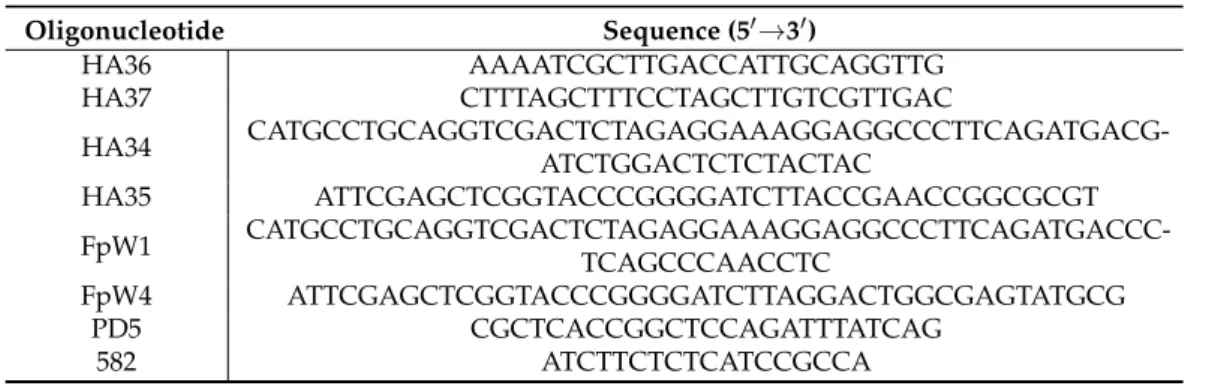
The pSH2 expression vector was constructed by site-directed mutagenesis of therepA gene in the pSH1 vector. This mutation (exchange of Gly at position 429 of RepA protein by Glu) resulted in an increased plasmid copy number. Site-directed mutagenesis was performed via plasmid backbone amplification (primer HA36 + HA37; see Table2) with PfuTurbo DNA Polymerase (Agilent, Santa Clara, CA, USA). The plasmids pSH2_crtZFp
and pSH2_crtWFpwere constructed inE. coliDH5αon the basis of pSH2. Polymerase chain reaction (PCR) fragments ofcrtZFpandcrtWFpwere generated fromFulvimarina pelagiusing the primers HA34 + HA35, and FpW1 + FpW4, respectively. The PCR products were cloned into the BamHI (Thermo Fisher Scientific, Waltham, MA, USA) digested pSH2 vector by Gibson assembly [136]. The CaCl2-competentE. coliDH5αwere prepared and transformed via heat shock [137]. Transformants were screened by colony PCR using the primers PD5 and 582. Plasmid isolates were prepared with a plasmid miniprep kit (GeneJet, Thermo Fisher Scientific, Schwerte, Germany), and confirmed via sequencing with primers PD5 and 582.C. glutamicumstrains were transformed by electroporation [138]. For the construction of ASTALYS*, BETALYS [126] was transformed with pSH1_crtZ~W[46].
Table 2.Oligonucleotides used in this study.
Oligonucleotide Sequence (50→30)
HA36 AAAATCGCTTGACCATTGCAGGTTG
HA37 CTTTAGCTTTCCTAGCTTGTCGTTGAC
HA34 CATGCCTGCAGGTCGACTCTAGAGGAAAGGAGGCCCTTCAGATGACG-
ATCTGGACTCTCTACTAC
HA35 ATTCGAGCTCGGTACCCGGGGATCTTACCGAACCGGCGCGT
FpW1 CATGCCTGCAGGTCGACTCTAGAGGAAAGGAGGCCCTTCAGATGACCC-
TCAGCCCAACCTC
FpW4 ATTCGAGCTCGGTACCCGGGGATCTTAGGACTGGCGAGTATGCG
PD5 CGCTCACCGGCTCCAGATTTATCAG
582 ATCTTCTCTCATCCGCCA
4.5. Quantification of Macro- and Micronutrients
A 1·10−2dilution of the untreated liquid aquaculture sidestream in water was sent to Eurofins Agraranalytik Deutschland GmbH (Jena, Germany) to analyze the pH, organic substance content, and total nitrogen, ammoniacal nitrogen, phosphorous, phosphorous as P2O5, potassium, potassium as K2O, magnesia, magnesia as MgO, calcium, calcium as CaO, sulfur, sulfur as SO4, boron, manganese, molybdenum, copper, and zinc content of the untreated liquid aquaculture sidestream.
4.6. High-Performance Liquid Chromatography (HPLC) Analysis
For all HPLC analysis an Agilent 1200 series system (Agilent Technologies Deutschland GmbH, Böblingen, Germany) was used. Culture samples (200 or 500µL) were centrifuged at 14,000 rpm for 10 min, the supernatants and pellets were stored separately at−20◦C until analysis.
4.6.1. Quantification of Amino Acids and Amines
For the analysis of extracellular amino acids and their derivatives 5µL sample and an automatic pre-column derivatization withortho-phthaldialdehyde (OPA) were used with a reversed-phase main column (LiChrospher 100 RP18 EC-5, 125× 4.6 mm; CS- Chromatographie Service GmbH, Langerwehe, Germany).L-asparagine was used as an internal standard. The separation was achieved at 40◦C with 0.25% (v/v) sodium acetate (pH 6.0) (A) and methanol (B) as mobile phases, with the following gradient and flow profile:
0 min 20% B 0.7 mL min−1, 3 min 38% B 0.7 mL min−1, 6 min 42% B 0.1 mL min−1, 7 min 46% B 0.7 mL min−1, 14.5 min 70% B 1.2 mL min−1, 14.8 min 75% B 1.2 mL min−1, 16.8 min 85% B 1.2 mL min−1, 17.8 min 20% B 1.2 mL min−1, and 19.5 min 20% B 1.2 mL min−1 adapted from [139]. The fluorescent derivatives were detected using a fluorescence detector with an excitation wavelength of 230 nm, and an emission wavelength of 450 nm.
4.6.2. Quantification of Carbohydrates and Organic Acids
The carbohydrates in the cultivation medium were quantified with an organic acid resin column (Aminex, 300 mm×8 mm, 10µm particle size, 25 Å pore diameter; CS- Chromatographie Service GmbH, Langerwehe, Germany) under isocratic conditions with a flow of 0.8 mL min−1as described previously [80]. The analytes were detected using a refractive index detector (RID) and a diode array detector (DAD) at 210 nm.
4.6.3. Quantification of Carotenoids
The analysis of carotenoids was performed as previously described [61]. Samples were extracted until the remaining pellet of cell debris was colorless; no further analysis in regards to recovery percentage and purity of the extracted carotenoids was performed.
Carotenoid analysis was performed for all growth and production experiments in this study. For quantification of the carotenoid contents the peaks detected at 471 nm were used.
Decaprenoxanthin, BABR, C.p. 450, and sarcinaxanthin contents presented in the results section were standardized withβ-carotene.
5. Conclusions
The preprocessed liquid phase of a sidestream from a recirculating aquaculture system for salmon was shown to be suitable to support growth and carotenoid production by C. glutamicum. The beneficial effect of adding this sidestream to growth media was observed for strains overproducing either native or non-native carotenoids. In particular, astaxanthin production more than doubled upon AQ supplementation in small-scale cultivation, and in 2 L batch and fed-batch bioreactor fermentations. Thus, our proof-of-principle example for production of the fish feed supplement astaxanthin from AQ holds the potential to contribute to the establishment of the circular economy in aquaculture.
Supplementary Materials:The following supporting information can be downloaded at: https://
www.mdpi.com/article/10.3390/molecules28041996/s1, Table S1: Amino acid concentrations in the aquaculture sidestream, Figure S1: Chromatogram of the amino acid analysis of the aquaculture sidestream, Figure S2: Chromatogram of the carbohydrate analysis of the aquaculture sidestream, Figure S3: Carotenoid content ofC. glutamicumstrains grown in AQ supplemented media, Figure S4:
Growth ofC. glutamicumstrains in AQ supplemented media, Figure S5: Fed-batch fermentations, Figure S6: Carotenoid content ofC. glutamicumASTA* during batch and fed-batch fermentations.
Molecules2023,28, 1996 15 of 21
Author Contributions:Conceptualization, I.S., F.M., N.A.H., P.P.-W. and V.F.W.; investigation, I.S., F.M., I.K. and N.A.H.; writing—original draft preparation, I.S.; writing—review and editing, F.M., N.A.H., P.P.-W. and V.F.W.; supervision, V.F.W.; project administration, N.A.H. and V.F.W.; fund- ing acquisition, N.A.H. and V.F.W. All authors have read and agreed to the published version of the manuscript.
Funding:This research was funded by the ERA CoBlueBio project SIDESTREAM cofunded by the German Federal Ministry of Education and Research (BMBF) (grant number: 161B0950A). IS, FM, and NAH acknowledge funding by BMBF project KaroTec (grant number: 03VP09460). Support for the article processing charge by the Deutsche Forschungsgemeinschaft and the Open Access Publication Fund of Bielefeld University is acknowledged. The funding bodies had no role in the design of the study or the collection, analysis, or interpretation of data, or in writing the manuscript.
Institutional Review Board Statement:Not applicable.
Informed Consent Statement:Not applicable.
Data Availability Statement:Not applicable.
Acknowledgments:We thank Arne Malzahn from SINTEF Ocean, Trondheim, Norway, and Luma- rine AS, Tjeldbergodden, Norway, for providing the liquid aquaculture sidestream. Additionally, we thank Joe Max Risse and Thomas Schäffer from Fermentation Technology, Technical Faculty and CeBiTec, Bielefeld University, for technical assistance and advice.
Conflicts of Interest:The authors declare no conflict of interest.
Sample Availability:Not applicable.
References
1. FAO.The State of World Fisheries and Aquaculture 2020; FAO: Rome, Italy, 2020; ISBN 978-92-5-132692-3.
2. Mugwanya, M.; Dawood, M.A.O.; Kimera, F.; Sewilam, H. A review on recirculating aquaculture system: Influence of stocking density on fish and crustacean behavior, growth performance, and immunity.Ann. Anim. Sci.2022,22, 873–884. [CrossRef]
3. Costello, C.; Cao, L.; Gelcich, S.; Cisneros-Mata, M.Á.; Free, C.M.; Froehlich, H.E.; Golden, C.D.; Ishimura, G.; Maier, J.;
Macadam-Somer, I.; et al. The Future of Food from the Sea.Nature2020,588, 95–100. [CrossRef]
4. Willett, W.; Rockström, J.; Loken, B.; Springmann, M.; Lang, T.; Vermeulen, S.; Garnett, T.; Tilman, D.; DeClerck, F.; Wood, A.;
et al. Food in the Anthropocene: The EAT–Lancet Commission on Healthy Diets from Sustainable Food Systems.Lancet2019, 393, 447–492. [CrossRef] [PubMed]
5. Murray, F.; Bostock, J.; Fletcher, D.Review of Recirculation Aquaculture System Technologies and Their Commercial Application; Stirling Aquaculture, Institute of Aquaculture, University of Stirling: Stirling, UK, 2014.
6. Verdegem, M.C.J.; Bosma, R.H.; Verreth, J.A.J. Reducing Water Use for Animal Production through Aquaculture.Int. J. Water Resour. Dev.2006,22, 101–113. [CrossRef]
7. Martins, C.I.M.; Eding, E.H.; Verdegem, M.C.J.; Heinsbroek, L.T.N.; Schneider, O.; Blancheton, J.P.; d’Orbcastel, E.R.; Verreth, J.A.J.
New Developments in Recirculating Aquaculture Systems in Europe: A Perspective on Environmental Sustainability.Aquac. Eng.
2010,43, 83–93. [CrossRef]
8. Masser, M.P.; Rakocy, J.; Losordo, T.M. Recirculating Aquaculture Tank Production Systems. South. Reg. Aquac. Cent. Publ.
1992, 13.
9. Campanati, C.; Willer, D.; Schubert, J.; Aldridge, D.C. Sustainable Intensification of Aquaculture through Nutrient Recycling and Circular Economies: More Fish, Less Waste, Blue Growth.Rev. Fish. Sci. Aquac.2022,30, 143–169. [CrossRef]
10. Boyd, C.E.; D’Abramo, L.R.; Glencross, B.D.; Huyben, D.C.; Juarez, L.M.; Lockwood, G.S.; McNevin, A.A.; Tacon, A.G.J.; Teletchea, F.; Tomasso Jr, J.R.; et al. Achieving Sustainable Aquaculture: Historical and Current Perspectives and Future Needs and Challenges.J. World Aquac. Soc.2020,51, 578–633. [CrossRef]
11. van Rijn, J. Waste Treatment in Recirculating Aquaculture Systems.Aquac. Eng.2013,53, 49–56. [CrossRef]
12. Dauda, A.B.; Ajadi, A.; Tola-Fabunmi, A.S.; Akinwole, A.O. Waste Production in Aquaculture: Sources, Components and Managements in Different Culture Systems.Aquac. Fish.2019,4, 81–88. [CrossRef]
13. Ansari, F.A.; Singh, P.; Guldhe, A.; Bux, F. Microalgal Cultivation Using Aquaculture Wastewater: Integrated Biomass Generation and Nutrient Remediation.Algal Res.2017,21, 169–177. [CrossRef]
14. Han, P.; Lu, Q.; Fan, L.; Zhou, W. A Review on the Use of Microalgae for Sustainable Aquaculture. Appl. Sci. 2019,9, 2377.
[CrossRef]
15. Milhazes-Cunha, H.; Otero, A. Valorisation of Aquaculture Effluents with Microalgae: The Integrated Multi-Trophic Aquaculture Concept.Algal Res.2017,24, 416–424. [CrossRef]
16. Roy, E.D. Phosphorus Recovery and Recycling with Ecological Engineering: A Review.Ecol. Eng.2017,98, 213–227. [CrossRef]
17. Khatoon, H.; Banerjee, S.; Syakir Syahiran, M.; Mat Noordin, N.Bt.; Munafi Ambok Bolong, A.; Endut, A. Re-Use of Aquaculture Wastewater in Cultivating Microalgae as Live Feed for Aquaculture Organisms.Desalination Water Treat.2016,57, 29295–29302.
[CrossRef]
18. Roy, S.S.; Pal, R. Microalgae in Aquaculture: A Review with Special References to Nutritional Value and Fish Dietetics.Proc. Zool.
Soc.2015,68, 1–8. [CrossRef]
19. Wells, M.L.; Potin, P.; Craigie, J.S.; Raven, J.A.; Merchant, S.S.; Helliwell, K.E.; Smith, A.G.; Camire, M.E.; Brawley, S.H. Algae as Nutritional and Functional Food Sources: Revisiting Our Understanding.J. Appl. Phycol.2017,29, 949–982. [CrossRef]
20. Queiroz, M.I.; Hornes, M.O.; Gonçalves da Silva Manetti, A.; Zepka, L.Q.; Jacob-Lopes, E. Fish Processing Wastewater as a Platform of the Microalgal Biorefineries.Biosyst. Eng.2013,115, 195–202. [CrossRef]
21. Tossavainen, M.; Lahti, K.; Edelmann, M.; Eskola, R.; Lampi, A.-M.; Piironen, V.; Korvonen, P.; Ojala, A.; Romantschuk, M.
Integrated Utilization of Microalgae Cultured in Aquaculture Wastewater: Wastewater Treatment and Production of Valuable Fatty Acids and Tocopherols.J. Appl. Phycol.2019,31, 1753–1763. [CrossRef]
22. Grassi, T.L.M.; do Espírito Santo, E.F.; de Siqueira Marcos, M.T.; Cavazzana, J.F.; Oliveira, D.L.; Bossolani, I.L.C.; Ponsano, E.H.G.
Bacterial Pigment for Nile Tilapi