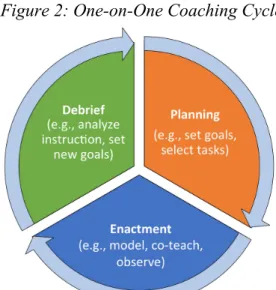
Doing so can further clarify when and why certain types of coaching activities are useful in supporting individual teacher learning. In this study, I addressed these two issues by identifying a range of individual coaching practices for which there is evidence that they can support teacher learning.
Identifying Instances of High-Quality One-on-One Coaching
The aim of this analysis was to identify a set of one-to-one coaching practices for which there is evidence that they are associated with improvements in teachers' teaching. I then analyzed the resulting set of research reports to identify those where there was evidence that the one-on-one coaching actually supported teachers' development of ambitious instructional practices, thereby retaining only those reports that met my criterion of high-.
Decomposing Instances of High-Quality One-on-One Coaching
Unfortunately, authors of research reports do not always make clear the purpose of the described coaching activities. Therefore, I used the codes "pedagogical content knowledge" and "vision of high-quality teaching" to indicate the kind of knowledge and perspectives implicit in the implementation of the coaching activities.
Identify developmentally appropriate next steps for individual teachers’
Similarly, coaches can elicit teachers' reasoning in order to identify developmentally appropriate next steps for them to improve their teaching, and thus plan how to support teachers' learning. This in turn helped coaches to make decisions about appropriate next steps for the teachers to improve their teaching.
Support teachers to connect instruction to students’ thinking and learning in a given content area
I conjecture that the implementation of this coaching practice is likely to imply a sophisticated vision of high-quality teaching, content knowledge, and knowledge of student thinking in a particular content area. This knowledge of student thinking likely informed how the coach facilitated student analysis of teachers.
Orient teachers to students’ current capabilities in a given content area My analysis also indicates that high-quality coaching involves orienting teachers to
This coaching practice is likely to imply productive views of students' current abilities in a given content area. The implementation of this practice is likely to involve the development of productive views of the trainers about the current abilities of the students in a particular content area.
Negotiate next steps for teachers’ instructional improvement
As these conversations extended over the course of the school year, the coach drew on her sophisticated understanding of high-quality instruction to identify potential points of contact between the improvement goals she had identified and the practice problems the teacher had identified. This enabled the coach to legitimize the teacher's concerns, but also allowed her to problematize aspects of the teacher's current instruction in ways consistent with the improvement goals she had identified.
Support teachers to improve their enactment of ambitious instructional practices
In both of these cases, the coach intervened to support the participating teachers' implementation of ambitious teaching practices. And yet, identifying productive instructional improvement goals is not enough to ensure that one-on-one mathematics coaching is effective in supporting teacher learning.
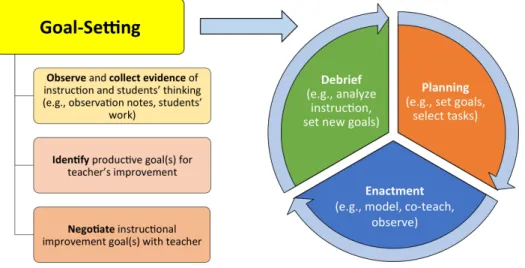
Identifying Productive Instructional Improvement Goals. In my first analysis, I examined the 35 coaching cycles to determine whether and how coaches identified
This enabled me to determine whether the teacher's implementation of earlier phases of the lesson hindered the students' learning opportunities in subsequent phases of the lesson. If my analysis of the field notes didn't align with the coach's suggested improvement goals, I took it as one. I then conducted a second analysis of the coach interviews, using this refined coding scheme to categorize the identification processes the coaches described.
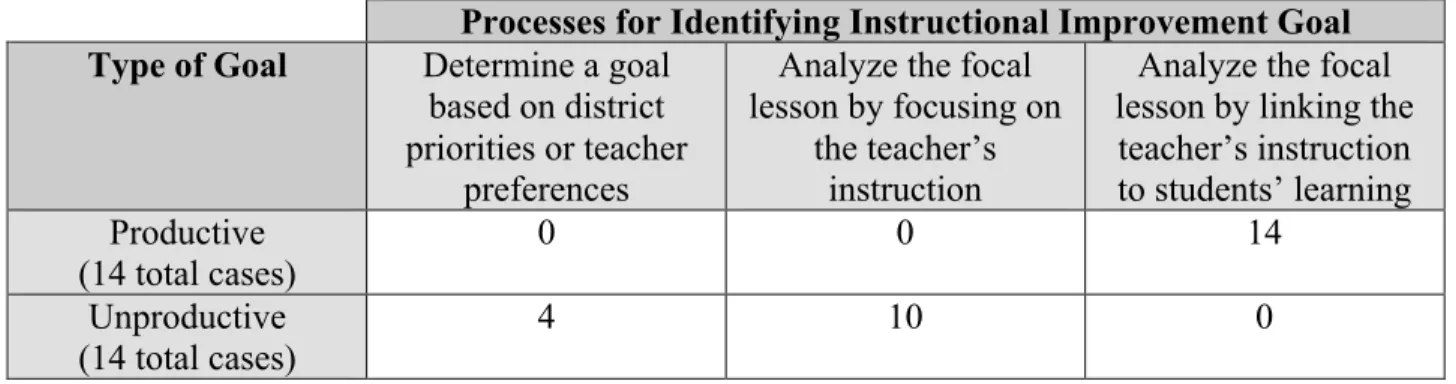
In the fourth and final stage of the analysis, I compared the 14 cases in which coaches identified productive goals with the 14 cases in which they did not.
Negotiating Productive Instructional Improvement Goals. In this analysis, I examined the 14 cycles in which coaches identified productive instructional
In this case, it was straightforward to determine that the phases of the lesson that the trainer and the teacher were focusing on did not match, and thus the specific aspects of the teaching. In the remaining two cycles, the coach was explicit about the lesson phase and the specific aspect of instruction, but the teacher did not specify an instructional improvement goal. In total, I identified 10 instances in which the coach and teacher stated compatible goals for instructional improvement.
In the remaining case, the coach and the teacher agreed on a different goal than the one the coach had identified prior to the debriefing phase of the coaching cycle.
How can mathematics coaches identify productive goals for teachers’
The coaches then described specific actions that the teacher took in the lesson, without then describing the consequences of those actions for students' learning opportunities. To illustrate this process, I focus on a representative case in which the coach determined that the teacher had a missed opportunity to support student learning. On this basis, the trainer identified the following weakness in the teacher's current practice: selection and.
In ten of the cases, the coaches identified the goals based on their analysis of the teacher's instruction in the focal lesson.
How can coaches negotiate instructional improvement goals with teachers, such that coaches and teachers agree upon a productive goal?
In response, the coach reframed the teacher's rationale by linking it to a more productive goal. The trainer and teacher then discussed how the teacher could facilitate whole-class discussions more effectively. This seemed to support the teacher in understanding the specific improvement at the heart of the coach's proposed goal.
This indicates that the coach had supported the teacher in coming to see her alternative, productive goals as worthwhile.
Unproductive Negotiation. In this case, the negotiation followed a lesson in which the teacher demonstrated a procedure for calculating the volume of rectangular prisms and
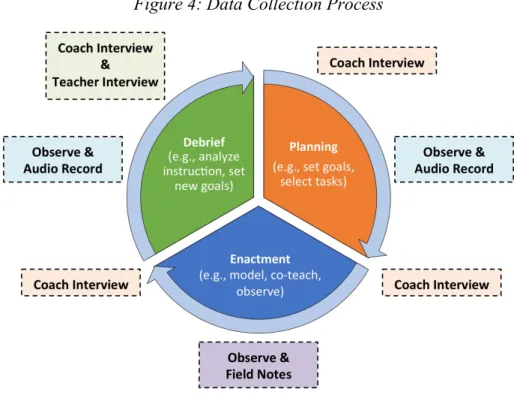
- Before Co-Planning Coach Interview (15-20 min.)
- Co-Planning Observation
- After Co-Planning Coach Interview (15-20 min.)
- Coaching Observation Protocol
By taking similar steps during the negotiation, the coach supported the teacher in understanding that achieving the alternative goal would likely enhance student learning. I found that coaches identified productive instructional improvement goals over 14 cycles, and did so based on an analysis of the focal lesson in which they linked teacher instruction to student learning. The Coach describes what the teacher did during the lesson, without linking these actions to the students' learning process.
Goals for the conversation: What are your goals for the teacher's learning in the co-planning conversation.
Embed images taken during the lesson into this document where possible (eg images of selected student work, public records created during the lesson, assignment).
IMPLEMENTATION OF THE TASK
- Post In-Class Work Coach Interview (15-20 min.)
- Coach-Teacher Debrief Conversation Observation Protocol
- Debrief Follow-Up Interview with Coach (20 min.)
- Debrief Follow-Up Interview with Teacher (20 min.)
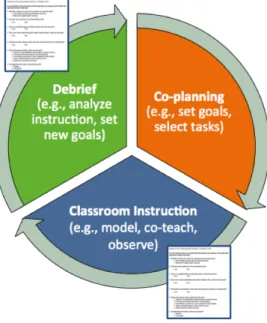
REMEMBER: COLLECT A COPY OF THE EVIDENCE IF POSSIBLE (eg student work, practical measures data, trainer's notes, etc.)]. In a high-quality implementation of the lesson planning phase, individual coaches and teachers plan an upcoming lesson by clarifying and reiterating goals for student learning and for the teacher to improve her teaching practices. By definition, the whole class discussion measure provides an additional perspective on aspects of teaching linked to student learning - the students' perspective.
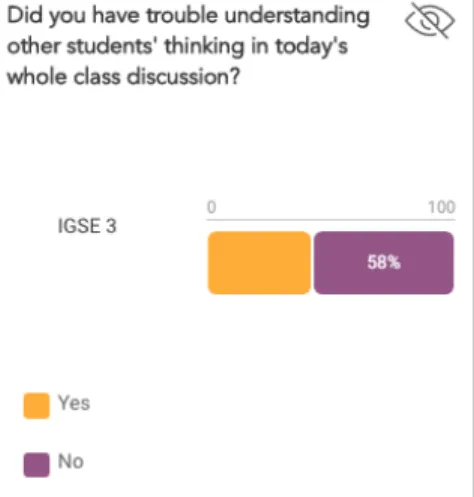
In the response phase, the trainer and teacher can administer the whole class discussion measure.
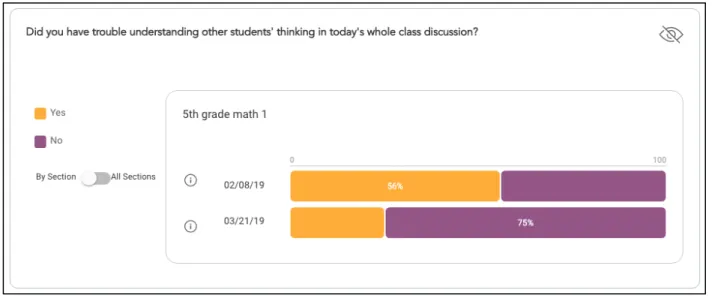
Account for Students’ Learning with Regard to Instruction More Effectively Recall that high-quality debrief conversations involve accounting for students’ learning
If this conjecture is confirmed, it indicates that integrating practical instructional measures into one-on-one coaching cycles may enable coaches to be more effective in supporting teacher learning. In what follows, I outline two ways in which coaches' use of the field data could enable them to improve the quality of debriefing conversations with teachers, in addition to determining whether changes in instruction are an improvement.
Identify Areas for Instructional Improvement
Support trainers in using whole class discussion measures in one-to-one coaching cycles. In the fifth session of the coaching PD, we introduced the measure of discussion in the whole class. In order to document the development of coaches during the PD design study, we.
This allowed me to determine whether coaches' use of the measure allowed them to improve debriefing conversations.
Identify Episodes in Which Coaches and Teachers Discussed Practical Measures Data. In the first phase of my analysis, I identified discrete units of talk in each
Characterize the Topics in Episodes Featuring Practical Measure Data. In the second phase of my analysis, I examined the aforementioned 61 episodes in order to
For example, I coded the passage referred to above using the code, “topic type – aspect(s) of teaching – what the teacher did in the lesson”. When relevant, I aligned codes for the types of topics discussed in the episodes with terminology used in the coaching literature and with the language used in my two hypotheses about coaches' use of practical measures. This meant that I used the code "topic type – account for students' learning in relation to teaching" to describe claims, questions or conjectures in which the coach or teacher made a connection between aspects of teaching in the lesson and what students learned have in the lesson, thereby explaining why students learned what they learned.
I used the code "topic type - areas for improvement" to describe topics in which the coach or teacher a) noted something that went well in the lesson and suggested that the teacher continue to do so in future lessons or b) noted something that did not go well in the lesson and suggested that they make specific changes in the instruction to address that weakness in future lessons.
Determine Whether and How Analyzing the Practical Measure Data Improved the Quality of the Debrief. In the third phase of my analysis, I examined the 61
In the third phase of my analysis, I examined the 61 .. quality of the debriefing conversation, in addition to enabling coaches and teachers to determine whether a change in instruction was an improvement. The episode involved topics that emerged directly from coaches and teachers. discussions of the practical benchmark data, and was unlikely to have arisen without the data. Second, I compared the topics directly related to the intended focus of the practical benchmark item with the other data available to the coach and teacher in the debriefing conversation.
Finally, I compared the themes with the questions that the coaches and teachers discussed in the conversations prior to the data analysis of the practical measures.
Can coaches’ use of the practical measure data in one-on-one coaching cycles improve the quality of their debrief conversations with teachers? If so, how?
However, when discussing these additional topics, coaches and teachers did not consider student learning in relation to the lesson, nor did they identify areas for it. For example, in one episode, the coach and the teacher analyzed students' answers to practical tasks that read: "What was the purpose of today's whole class discussion?". As discussed below, they may have done this by linking students' responses to the practical action item to a specific aspect of the teacher's instruction, as this was seen as a necessary step in using the data to better account for student learning by following instruction or identifying areas for improvement. , which we would not have without the data.
Second, coaches and teachers discussed how that aspect of teaching affected students' learning or learning opportunities in the lesson, with evidence of students' thinking and learning in the lesson to do so.
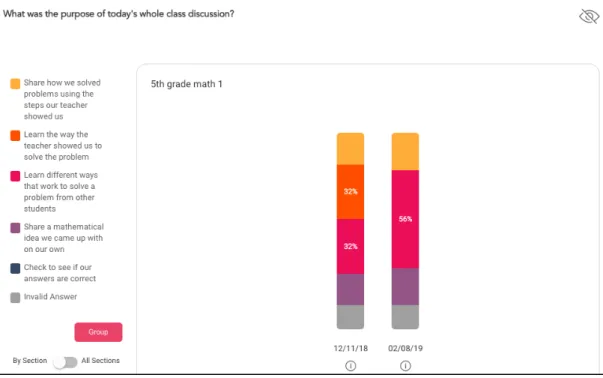
Identify Areas for Improvement. In four episodes, discussing the practical measure data enabled the coaches and teachers to identify areas for improvement that
First, coaches and teachers discuss the practical metrics related to some aspect of the teacher's classroom instruction, as Susan and Kim did. In this episode, the teacher therefore suggested a change in instruction, without explicitly articulating an instructional weakness in the lesson. This indicated that Eleanor wanted to address the weakness in the lesson and thus saw the weakness as an area for future improvement.
First, coaches and teachers identify a weakness in the lesson based on their interpretation of the data, as Joy did in the illustration above.
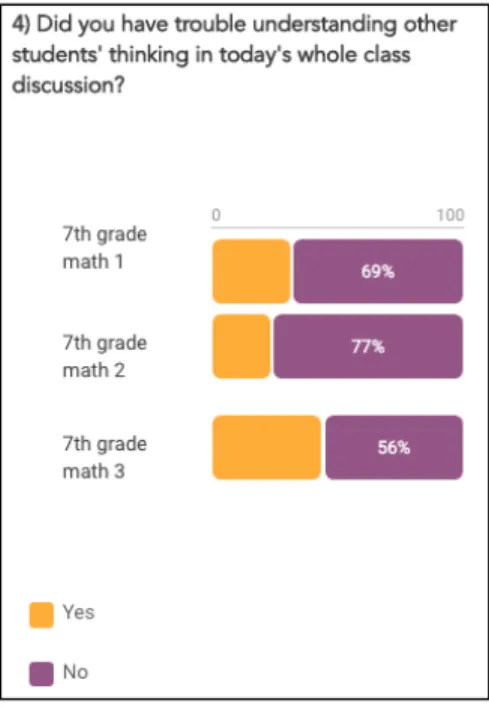
What distinguishes instances in which coaches’ use of the practical measure data improves the quality of their debrief conversations from those in which it does not?
In two of the ten episodes, coaches asked teachers to explain why students' responses to particular survey items changed over time. Again, this seemed to prompt teachers to relate student responses to aspects of learning in the lesson. Additionally, I found in cases where data discussion enhanced debriefing conversations, coaches prompted teachers to connect student responses to the practice measure to aspects of their instruction in the central lesson.
In the first three of their five coaching cycles, the coach actively supported the teacher in relating students' responses to the practical measure to specific aspects of her teaching.