WHEN SEXUAL ASSAULT IS POLITICAL: VARIATIONS IN REACTIONS AND POLITICAL BEHAVIOR AMONG WOMEN SEXUAL ASSAULT SURVIVORS
By
Lauren Michelle Chojnacki
Dissertation
Submitted to the Faculty of the Graduate School of Vanderbilt University
in partial fulfillment of the requirements for the degree of
DOCTOR OF PHILOSOPHY in
Political Science August 11 , 2023 Nashville, Tennessee
Approved:
Cindy D. Kam, Ph.D.
Allison P. Anoll, Ph.D.
John Sides, Ph.D.
Amanda Clayton, Ph.D.
Dara Kay Cohen, Ph.D.
Copyright © 2023 Lauren Michelle Chojnacki All Rights Reserved
Dedicated to my family, friends, and all the women who have inspired and participated in this project.
ACKNOWLEDGMENTS
First, I want to thank my advisor, Cindy Kam. From my discussions with other scholars I know that I am not the first graduate student who has ever wanted to study sexual assault - but think I was the first student to receive full support. Sexual assault is a polarizing topic, yet Cindy has never tried to discourage me from studying it and instead has supported the project from the first moment I told her about it. For that I am incredibly grateful. She has also given me extremely valuable guidance and has pushed me to become a much more thoughtful scholar.
I also had a wonderful committee of scholars by my side to offer incredibly helpful insight and support.
Allison Anoll, Amanda Clayton, John Sides and Dara Kay Cohen were all instrumental in moving this project forward, and I hope that you all can see your suggestions in the dissertation. Thank you so much for your time spent reading drafts, including me in conferences, providing funding and overall being great people to talk about research with.
I have also benefited from the mentorship and guidance of those in academia outside my committee.
Cassy Dorff has been an incredible mentor in my time at Vanderbilt. Cassy, you have both pushed me to gain new skills and have made me feel more confident in my own abilities moving forward. I have grown so much as a scholar from working with you. Skip (Arthur) Lupia has also been an extremely valuable mentor for me from the time I was an undergraduate until now. Thank you for taking a chance on me when I was a clueless college junior who didn’t even know what a PhD was and continuing to stick by my side throughout this process. Your support, even from halfway across the country, has meant the world to me. I would also like to acknowledge Kristin Michelitch, Marzia Oceono, Tara McKay, Sharece Thrower and Dave Lewis, who have also all provided me with valuable academic or teaching support over the course of the program.
Next, I want to acknowledge the friends I have made at Vanderbilt. Colin Henry for responding to my all my questions about R (even the extremely basic ones), countless Osa coffee runs, and sending pictures of your dog, Harper, when needed. Kat Traut for being such a grounding and important presence, helping me to see the bigger picture of why I am here and what I can accomplish. Colette Marcellin for always lending a listening ear on both academic and more general life matters. Kaleigh Ruiz, Sara Kirshbaum, Chris Piper, Nick Bednar, Alex Lawhorne, Mike Hendricks, Georgia Anderson-Nilsson and Marc Trussler were all also important friends and colleagues who contributed to my growth and scholarship while here at Vanderbilt.
Meredith McLain. Where to start. I remember screaming of happiness when I first saw that we would both be attending Vanderbilt after meeting you at the visit weekend. My instinct was right and you have become one of my closest friends. From our mutual love of Taylor Swift deep cuts (justice for Holy Ground), reality television, Nashville cocktail bars and our disdain for the trash palace that was our first apartment - we have gained such a deep and important friendship. While grad school may not have been ’the best days of our lives’, doing it with you made it so much better. I truly could not have done this without you.
I also want to thank the friends I have made from the East Nasty Running Club. You all have been such an important support system as I have moved through this program. From letting me rant on long runs, to coffee date sad girl walks and even humoring me and dressing up like Pitbull to attend a Pitbull concert - you have provided me with so much joy and have reminded me that there is life and passion outside of academia.
I am so lucky to have such a thoughtful, driven, smart group of friends by my side.
There are few more scattered thanks I wish to give. I have had the privilege of working with a great ther- apist, Kierra, while in Nashville who has helped me navigate through the PhD process. I must acknowledge Taylor Swift, who has released an album every year I was in grad school, and my dog Scooter, for being the best thing that has ever existed.
Last, but certainly not least, I want to thank my family - my father Matt, my mother Lisa, and my sister Alyssa. They have been so supportive of me throughout this process, always giving me pep-talks when I need it, reading countless papers and chapters to look for edits and sending pictures of Scooter to keep the motivation up. I can’t imagine where I would be without you. Thank you so much.
TABLE OF CONTENTS
Page
LIST OF TABLES . . . vii
LIST OF FIGURES . . . ix
1 Taylor Swift, Aly Raisman and Your Friends: The Puzzle of Sexual Assault and Political Be- havior . . . 1
1.1 The Puzzle: Different Outcomes after Sexual Assault . . . 3
1.2 Introducing Personal Narratives . . . 4
1.3 Differences Between Respondents . . . 9
1.4 When Does Sexual Assault Affect Political Behavior? . . . 11
2 Listening to and Learning From Survivors: Using Semi-Structured Interviews to Examine How Sexual Assault and Politics are Connected . . . 13
2.1 The Effects of Sexual Assault . . . 13
2.2 Grounded Theory . . . 17
2.3 Method: Semi-structured interviews . . . 18
2.4 Data Analysis: The Process of Grounded Theory . . . 23
2.5 Main Theories . . . 26
2.5.1 Theory 1: Political System Attribution . . . 26
2.5.2 Theory 2: Attending Therapy . . . 30
2.5.3 Theory 3: Survivor/Victim Identity . . . 32
2.6 Outcomes . . . 34
2.6.1 Political Attitudes . . . 34
2.6.2 Support for Oppressed Groups . . . 35
2.6.3 Political Participation . . . 37
2.7 Chapter Conclusion . . . 40
3 Survey Measurement and Implementation . . . 41
3.1 Survey Instrument . . . 42
3.2 Survey Implementation . . . 45
3.3 Sample Characteristics . . . 46
3.4 Chapter Conclusion . . . 49
4 Who’s To Blame? Quantitative Analysis of Political System Attribution . . . 50
4.1 Political System Attribution Distribution . . . 50
4.2 Demographics of Political System Attribution . . . 51
4.3 Analysis of the Effect of Political System Attribution on Policy Attitudes . . . 52
4.4 Analysis of the Effect of Political System Attribution on Women’s Rights Political Partici- pation . . . 61
4.5 Qualitative Evidence . . . 65
4.6 Chapter Conclusion . . . 66
5 Processing the Assault: Quantitative Analysis of Attending Therapy . . . 68
5.1 Demographics of Attending Therapy . . . 68
5.2 Effect of Attending Therapy on Political System Attribution . . . 70
5.3 Effect of Attending Therapy of Policy Attitudes . . . 71
5.4 Effect of Attending Therapy on Views Towards Oppressed Groups . . . 73
5.5 Chapter Conclusion . . . 75
6 One of Many: Quantitative Analysis of Self-Labeling as a Survivor/Victim . . . 77
6.1 Demographics of a Survivor/Victim Identity . . . 77
6.2 Effect of a Survivor/Victim Identity on Policy Attitudes . . . 79
6.3 Effect of a Survivor/Victim Identity on Views Towards Oppressed Groups . . . 81
6.4 Effect of a Survivor/Victim Identity on Political Participation . . . 84
6.5 Chapter Conclusion . . . 87
7 Beyond the Survivor Sample: Examining Those Who Have Personally Experienced Sexual Assault in Comparison to Those With Proximate Contact and No Contact . . . 88
7.1 Demographics of Personal Experience, Proximate Contact and No Contact . . . 90
7.2 Effects of Political System Attribution Among the Groups . . . 92
7.2.1 Effect of Political System Attribution on Policy Attitudes for Personal, Proximate and No Contact . . . 94
7.2.2 Effect of Political System Attribution on Women’s Rights Political Participation by Personal, Proximate, and No Contact . . . 97
7.3 Effect of Attending Therapy by Personal, Proximate and No Contact . . . 100
7.3.1 Effect of Attending Therapy on Political Attitudes for Personal, Proximate and No Contact . . . 101
7.3.2 Effect of Attending Therapy on Views Towards Oppressed Groups by Personal, Proximate and No Contact . . . 104
7.4 Chapter Conclusion . . . 105
8 Conclusion . . . 107
8.1 Discussion of Main Objective . . . 107
8.2 What does this dissertation mean for the study of politics in America? . . . 111
8.3 Conclusion . . . 113
A Chapter 2 Appendix . . . 114
B Chapter 3 Appendix . . . 118
C Chapter 4 Appendix . . . 130
D Chapter 6 Appendix . . . 134
E Chapter 7 Appendix . . . 137
References . . . 143
LIST OF TABLES
Table Page
3.1 Sample Characteristics: Race Distribution . . . 47
3.2 Sample Characteristics: Income Distribution . . . 48
3.3 Sample Characteristics: Education Distribution . . . 48
3.4 Sample Characteristics: Partisan Distribution . . . 49
4.1 Distribution of Political System Attribution . . . 50
4.2 Effect of Political System Attribution on Policy Attitudes . . . 54
4.3 Mean Women’s Rights Participation Scale . . . 62
4.4 Effect of Political System Attribution on Women’s Rights Political Participation . . . 64
5.1 Demographics of Attending Therapy . . . 70
5.2 Effect of Therapy on Political System Attribution . . . 71
5.3 Effect of Therapy on Policy Attitudes . . . 72
5.4 Distribution of Views Towards Oppressed Groups for Survey Respondents . . . 74
5.5 Effect of Therapy on View Towards Oppressed Groups . . . 75
6.1 Demographics of a Survivor/Victim Identity . . . 78
6.2 Effect of a Survivor/Victim Identity on Policy Attitudes . . . 80
6.3 Effect of a Survivor/Victim Identity on Views Towards Oppressed Groups . . . 82
6.4 Effect of a Survivor/Victim Identity on Women’s Rights Political Participation . . . 85
7.1 Distribution of Personal Experience, Proximate Experience and No Contact Among the Full Sample . . . 89
7.2 Demographics of Personal Experience, Proximate Experience and No Contact Among the Full Sample . . . 91
7.3 Political System Attribution Scale by Personal, Proximate and No Contact . . . 93
7.4 Effect of Proximate and No Contact Categories on Political System Attribution . . . 94
7.5 Mean of Policy Attitudes for Personal, Proximate and No Contact . . . 95
7.6 Effect of Political System Attribution on Policy Attitudes With Group Indicators . . . 96
7.7 Mean of Women’s Rights Political Participation Items and Scale by Personal, Proximate and No Contact . . . 99
7.8 Mean of Attending Therapy by Personal, Proximate and No Contact . . . 100
7.9 Effect of Proximate and No Contact on Attending Therapy . . . 101
7.10 Effect of Attending Therapy on Political Attitudes with Group Indicators . . . 102
7.11 Mean of Views Towards Oppressed Groups by Personal, Proximate and No Contact . . . 104
7.12 Effect of Proximate and No Contact on Views Towards Oppressed Groups . . . 105
C.1 Distribution of Abortion Opinions . . . 130
C.2 Distribution of Accused Politician Opinions . . . 130
C.3 Distribution of Rape Sentence Opinions . . . 130
C.4 Effect of Political System Attribution on All Crime Outcomes . . . 131
C.5 ANES Sample Comparison for Political Participation . . . 133
D.1 Binary Indicators for Survivor/Victim/Both Identities and Policy Attitudes . . . 134
D.2 Effect of Binary Indicators for Survivor/Victim/Both Identities on Views Towards Op- pressed Groups . . . 135
D.3 Effect of Binary Indicators for Survivor/Victim/Both Identities on Women’s Rights Partic- ipation . . . 136
E.1 Effect of Proximate and No Contact on Political Attitudes . . . 137
E.2 Moderation Analysis Examining if The Effect of Political System Attribution on Political Attitudes is Moderated by Personal Experience, Proximate Contact or No Context with Sexual Assault . . . 138 E.3 Effect of Proximate and No Contact on Women’s Rights Political Participation . . . 139 E.4 Moderation Analysis Examining if the Effect of Political System Attribution on Political
Participation is Moderated by Personal Experience, Proximate Contact or No Context with Sexual Assault . . . 140 E.5 Moderation Analysis Examining if The Effect of Attending Therapy on Political Attitudes
is Moderated by Personal Experience, Proximate Contact or No Context with Sexual Assault141 E.6 Moderation Analysis Examining if The Effect of Attending Therapy on Views Towards
Oppressed Groups is Moderated by Personal Experience, Proximate Contact or No Con- text with Sexual Assault . . . 142
LIST OF FIGURES
Figure Page
4.1 Political System Attribution by Political Party . . . 52
4.2 Predicted Probabilities of Accused Politician Category by Political System Attribution . . 56
4.3 Predicted Probabilities of Preferred Rape Sentences by Political System Attribution . . . 58
4.4 Predicted Probabilities of Preferred Drug Possession and Murder Sentences by Political System Attribution . . . 60
4.5 Percentage of Women Who Participate in Each Item on the Women’s Rights Participation Scale . . . 62
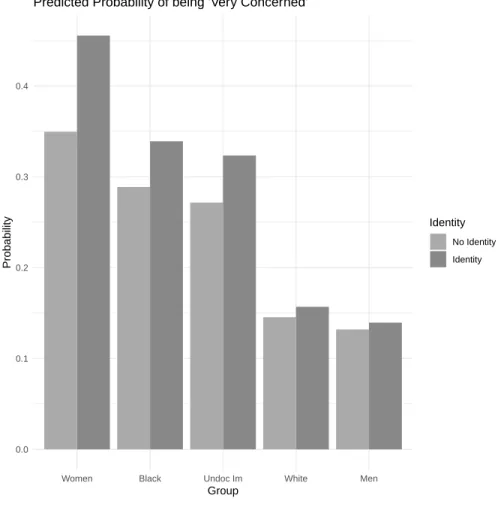
4.6 Predicted Probability of Women’s Rights Acts by Political System Attribution Category . 65 6.1 Predicted Probability of Being ’Very Concerned’ for Groups Based on Survivor/Victim Identity . . . 83
6.2 Predicted Probability of Participating in Women’s Rights Acts by Survivor/Victim Identity 86 7.1 Comparison of the Predicted Probability of Supporting the Death Sentence by Political System Attribution for No Contact and Personal Experience . . . 97
7.2 Predicted Probabilities of Abortion Views and Rape Sentence by Attending Therapy for Personal and No Contact . . . 103
A.1 Interview Guide . . . 115
A.2 Participation Flyer . . . 117
B.1 Survey Instrument . . . 119
C.1 Predicted Probabilities of Abortion Views by Political System Attribution Category . . . 132
CHAPTER 1
Taylor Swift, Aly Raisman and Your Friends: The Puzzle of Sexual Assault and Political Behavior
Taylor Swift first became famous in 2006 for her country music about pickup trucks, kissing in the rain and high school football games. She was blonde, white, and sweet – the All-American girl who was ready to appeal to conservative middle America. Reflecting on her earlier career in her 2019 Netflix documentary, Miss Americana, Swift explains that throughout her early career she was encouraged to not get political by her management to maintain this profitable image. Any time Swift would get close to speaking about politics, she was warned that her fate could follow that of The Chicks (formally known as The Dixie Chicks), the all-girl country-pop group who were disowned by country music after criticizing Republican President George W. Bush (Wilson, 2020). Heeding these warnings, Swift listened to her management and continued to maintain a ‘good girl’ image to keep the peace and not alienate any listeners.
This all changed in 2017. When Swift was still firmly non-political in 2013, a radio DJ stuck his hand up the back of Swift’s dress at a meet and greet. Swift did not publicly acknowledge the incident at the time and instead privately told her security and the radio station, who fired the DJ. In 2015, the DJ chose to make the incident public and sued Swift for defamation and wage loss. Instead of quietly settling like the DJ wanted, Swift decided to counter-sue the DJ for a symbolic one dollar, meant to represent all the women who have been through similar scenarios but did not have the voice or status that she did. In court, Swift delivered a powerful testimony, claiming, “He grabbed my bare a**” (Ryzik, 2017) when asked to describe what happened. The case against Swift was dismissed and she won her symbolic one dollar.
After the trial, Swift continued to talk about the case rather than move on from it. In 2017, Swift, along with other survivors of sexual assault, was on the cover of Time Magazine as one of the Silence Breakers, women who were speaking out against sexual assault and abuse after the #MeToo Movement. The symbolic dollar was prominently featured in her music video for “Look What You Made Me Do”, the lead single off her 2017 album,reputation, and has remained a visual for Swift ever since. Swift also chose to part ways with her management after 2017 to have more control over her own career and image.
Swift’s comfort with taking public political positions has continued to grow. In 2019 Swift released two political songs: You Need to Calm Down, a pro-LGBTQ+ song and video which included a petition for equal rights at the end, and Only the Young – a song about her reaction to Hillary Clinton’s Presidential race loss and the hope that young people bring to politics. Swift also made her first political endorsement – endorsing Tennessee Senate Democratic candidate Phil Bredesen over Republican Marsha Blackburn. In the Netflix documentary, Swift breaks down her decision to make the endorsement after processing everything
that occurred in her trial.
“I just thought to myself [after the sexual assault trial], ‘Next time there is any opportunity to change anything, you better know what you stand for and what you want to say. . . She (Blackburn) votes against the re-authorization of the Violence Against Women Act, which is just basically protecting us from domestic abuse and stalking. Stalking. She thinks that if you’re a gay couple, or even if you look like a gay couple, you should be allowed to be kicked out of a restaurant. It’s really basic human rights, and it’s right and wrong at this point...”
– Taylor Swift inMiss Americana
Swift has continued to involve herself in politics since 2019. In 2020, Swift made a public endorsement of Joe Biden and Kamala Harris for the 2020 Presidential race. She has stated her pro-choice views in interviews, has tweeted against white supremacy and she has called on various members of Congress at awards acceptance shows for various causes. While some may argue that was late to the political show, there is no doubt that Swift is now willing to insert herself into political conversations and is no longer afraid of the career consequences of doing so.
Swift’s journey to becoming a political figure is like that of another famous woman – Aly Raisman. In 2016, Aly Raisman became the third most decorated Olympic gymnast in United States history. Raisman had been working her whole life to become an elite gymnast, and like most women aiming to become Olympians, she was willing to do whatever it took to get there. The culture of gymnastics tends to instill an authoritarian type of coaching on the girls, where the views of the coach are taken as the final word. Raisman claims that this culture in gymnastics normalized abuse of all kinds- physical, mental, and emotional. It was not until after Raisman left gymnastics that she truly realized how bad it was (Orbey, 2021). Like Swift, Raisman states in an interview that she was encouraged to keep her mouth shut, listen to the authority figures and generally be an agreeable and pliable person to reach her goals (Orbey, 2021).
This culture created a situation where Raisman was unable to recognize her own abuse. When Raisman got injured and was referred to the ‘best’ doctor for gymnasts, serial rapist Larry Nassar, she had no hesitations about going. Many investigations show that even at this point in time, women had reported him for sexual abuse. However, nothing had ever came of those accusations and USA Gymnastics had swept the allegations under the rug and allowed Nassar to keep working. Raisman, who was only 15 years old, had no idea that the ‘procedures’ Nassar was forcing upon her were sexual assault. She believed that those in positions of authority, including Nassar, only wanted the best for her. She later revealed that this abuse was still occurring while she was competing at the 2016 Olympics in Rio.
When Larry Nassar’s abuse was first made public in theIndy Star, brought forward by former gymnast
Rachel Denhollander, Aly Raisman came forward as one of the many women who was abused by Nassar. At the time, Raisman was the highest profile person to come out against Nassar, though recently Simone Biles (the most decorated gymnast in United States history) has also come forward after her own mental struggles at the 2020 Olympics.
Since coming forward, Raisman has shed the submissive persona gymnastics had instilled in her and has instead used her own abuse as a call to action to prevent abuse in other young women (Abad-Santos, 2017).
In 2017, in the interview with60 Minuteswhere she revealed what happened to her, Raisman stated:
“I care a lot you know, when I see these young girls that come up to me, and they ask for pictures or autographs, whatever it is, every time I look at them, every time I see them smiling, I just think– I just want to create change so that they never, ever have to go through this.”
- Aly Raisman
Raisman has stayed true to her word to create change. Today, she is a prominent activist for sexual assault survivors. Raisman is a spokesperson for Darkness to Light – an organization dedicated to prevention of child sexual abuse. She has also testified in court cases against Nassar and the organization USA Gymnastics to create safer environments for athletes. Raisman has also lobbied Congress, along with other prominent gymnasts such as Biles, to make sexual abuse cases more seriously. Additionally, she has discussed the assaults and the aftermath in her bookFierceand speaks around the country against sexual assault.
There is no doubt now that Aly Raisman is outspoken. Rather than being timid and willing to do whatever it takes to be a gymnast, Raisman is now re-writing the rules for what a successful gymnast and giving young girls the role-model she never had. Rather than stay silent, she is fighting back against an entrenched and powerful organization to make sure that other women never have to deal with the same abuse.
1.1 The Puzzle: Different Outcomes after Sexual Assault
Sexual assault is defined by RAINN, the nation’s largest anti-sexual violence organization, as any form of
’sexual contact or behavior that occurs without explicit consent of the victim.’ Rape is defined as ’penetration, no matter how slight, of the vagina or anus with anybody part or object, or oral penetration by a sex organ of another person, without the consent of the victim”RAINN - Rape, Abuse & Incest National Network(2021).
This dissertation will focus on rape but will use the terms rape and sexual assault interchangeably - as rape is a form of sexual assault.
Sexual assault is a traumatic experience that can lead to symptoms such as depression, PTSD, and can cause an individual to withdraw from daily life (Mason and Lodrick, 2013). Typically, mental health is-
sues like depression can also cause someone to withdraw from politics (Ojeda, 2015; Hobbs, Christakis and Fowler, 2014). Yet, for both Swift and Raisman, there was an opposite effect. Coming to terms with their sexual assaults emboldened them to become more outspoken and involved in politics, not less. Swift devel- oped a more liberal, feminist persona and Raisman became an outspoken activist. It would have been easier for both women to privately settle their cases or to not come forward at all, yet they both came forward in very public ways and drew attention to the issue by participating more in politics, not less.
The idea that women may be spurred to change their political behavior based on their sexual assault is consistent with lines of political science literature that show that experiencing a victimizing event can affect political participation (Blattman, 2009; Bateson, 2012; Marsh, 2022; Hartman and Morse, 2020) and that life changing events have concrete effects on a wide variety of attitudes and behaviors (Stoker and Jennings, 1995; Hobbs, Christakis and Fowler, 2014; Kam, Kirshbaum and Chojnacki, 2022). However, we should not expect there to be a universal effect of sexual assault on women, as there are reasons to believe that there is meaningful variation among the group. Sexual assault is not a cut and dry crime like petty theft (Bateson, 2012) and requires internal negotiation and acceptance that can vary widely among survivors (Armstrong, Gleckman-Krut and Johnson, 2018). The variation in interpretations and understandings of sexual assault could subsequently affect if and how someone chooses to engage in politics after an assault, meaning that these different interpretations that emerge from sexual assault would create the change, not simply the assault itself. This project aims to uncover what some of these varying circumstances and reactions are that can lead to change in political attitudes and participation among some sexual assault survivors, but not others and leads to the main research question of the project:When will sexual assault affect the political behavior of women survivors?
1.2 Introducing Personal Narratives
To begin exploring how different reactions and interpretations of sexual assault may lead to different political outcomes, this section introduces narratives from five different women who are sexual assault survivors that provide some initial insights into how sexual assault affects political behavior. The narratives are from five women- Kaitlyn, Courtney, Rebecca, Michelle, and Sienna who participated in semi-structured interviews for this dissertation1. These respondents were chosen to highlight for two reasons 1) they have illustrative stories and quotes and 2) they are all demographically similar. By examining women who are similar in demographics, but have different reactions, ideas can start to form of what specific circumstances create political change rather than just attributing the change to the demographics, which may be the instinct if the narratives presented were from women of widely varying race, class, and ethnicity statuses.
1All names and potentially identifying details have been changed to preserve the anonymity of the respondents.
All five respondents are white and have college degrees. Four out of five of the respondents are in their 20’s and three out of five express strong religious ideals that guide how they operate in life. They are either from the South or Midwest, ie: places that tend to have a stronger conservative ethos than the West or Northeast. Despite these similarities in life, these women all had slightly different reactions to their assaults.
While some of these women here follow the narrative laid out by Taylor Swift and Aly Raisman and change their political beliefs and participation, others do not experience any changes to their political behavior. The subsequent chapter (Chapter 2) will delve even deeper into these differences and suggest reasons why political behavior varies after an assault.
Kaitlyn
Kaitlyn is a college-educated, white woman in her late twenties who lives in the South. Kaitlyn is a person who holds her religious faith as something that is very important to her and wants to eventually become a therapist. Currently, she works in ministry at a religious high school. Kaitlyn comes from a family with some conservatives and some liberals but considers herself to be a liberal. Kaitlyn is very passionate about social justice and is a vocal supporter of LGBTQ+ rights, despite her church’s position, and makes a strong effort to make sure that everyone around her knows she is supportive of them.
Kaitlyn’s assaults took place after parties when she was a sophomore in college at a faith-based university.
Her perpetrators were known acquaintances. Kaitlyn reported her assaults to university authorities, where she was required to not only go through university proceedings but also religious processes the university had in place. Eventually, Kaitlyn’s case became a very high-profile case in the community she lived in at the time, despite her best efforts to try and keep the case low-profile. The assault cases played a large role in her college experience and became a defining element of college, as she was embroiled in legal proceedings for all her sophomore, junior and senior years. One perpetrator did eventually receive punishment from the university, but less than she would have liked them to. After college, she left the city she was in so she could leave that experience behind her and move forward.
Over time, Kaitlyn has attended therapy and thought deeply about her assault and how it is connected to systems of oppression, something she deeply cares about, and what that means for her own life. Kaitlyn says that rape culture played a role in her assault and allows her to see how she is connected to those systems of oppression. Kaitlyn sees the assault as something that has fundamentally changed how she interacts with the outside world and as a defining moment in her own life.
Kaitlyn is very involved in politics. Her interest in politics followed her assaults. After her assault, Kaitlin wanted to learn more about oppression and chose to major in African American studies along with her Theology major. Before her job in ministry, Kaitlin worked in racial justice and advocacy and Diversity,
Equity, and Inclusion. Currently, Kaitlin uses this lens to inform how she teaches concepts related to diversity, sexual health, and LGBTQ+ rights to her high school students.
Courtney
Courtney is a white college senior in her early twenties from the Midwest. She is a talented artist who hopes to one day start a business where she can utilize her artistic abilities. She also loves yoga, skiing and traveling.
Courtney comes from a conservative family and considers herself to be conservative.
Courtney’s assault took place at a college party by an acquaintance with whom she felt comfortable. At the time of the interview, Courtney’s assault was recent. Courtney did not report her assault to the police because she did not want the assault to be permanently attached to her on a public record, but she had no hesitation in labeling what happened to her as assault and cutting off contact with her perpetrator immediately. She did not tell many people what happened, but those that she did tell believed her and supported her. She is very forward about her experience and does not feel like she should sugar coat it for anyone.
After her assault, Courtney went to a local rape crisis center, but at the time of the interview did not want to continue with any type of therapy. Even though Courtney recognizes what happened to her as assault and is not happy with it, she does not want the assault to become something that is a defining moment for her.
She does not blame herself whatsoever but thinks that the situation probably looks less black and white from the outside since she and the perpetrator had both been drinking alcohol. She does not think he would have attacked her had he not been drinking.
Courtney is moderately involved in politics. While she does not think that being a conservative is the defining factor of her identity (she identifies as conservative, but not necessarily a Republican), she continues to be active in a local conservative organization that she was involved in before her assault. Those from the conservative organization who know what happened are supportive and believe her. While she is conservative, she does her best to be able to talk and communicate with liberals because she typically works around liberal people.
Rebecca
Rebecca is a college-educated (undergraduate and Masters), white woman in her forties from the Midwest.
Rebecca works as an engineer and is an extremely devoted mother and wife. She loves to travel and is very dedicated to her religious beliefs. Rebecca is very community oriented; she is involved in her local PTA and church and tries to provide a safe space for both her children and other children in the community who need it.
Rebecca’s dedication to children comes from her own experiences. Rebecca’s violent assault took place
when she was a young teenager by a known and trusted person who she had worked for consistently as a babysitter. She reported her assault to the police immediately, and her rapist was eventually convicted. This was an extremely difficult experience for her because her rapist was a close family friend, and she was blamed for “ruining his life” and called sexually promiscuous, which was psychologically damaging for her as she had intended to abstain from sex until marriage because of her religious beliefs.
Very few people outside of Rebecca’s most inner circle know about her assault. She told her immediate family afterwards and they were extremely supportive and helped her through the medical and legal process.
Rebecca’s assault affected how she dated for many years. She never felt comfortable being alone with a man and always went on dates with friends. When she eventually told her current husband about her assault, he was extremely supportive of her, which made Rebecca feel comfortable committing to a relationship with him. Rebecca recently told her oldest son, who is in high school, about her assault because he is entering the age where he may be considering sexual relationships. This was a very difficult moment for her, but she felt it was necessary to give him context to how she thinks and advises his decisions towards relationships. Outside of her family, Rebecca has one close friend with a similar experience who she has discussed her assault with.
Rebecca sees assault as an issue that is rooted in the family and connects it to how she raises her boys. She says multiple times in the interview that she aims to provide a safe place for children because you never know what they are going through, as most people in her life did not know what she was going through at the time.
Rebecca is neutral towards politics. She has not voted in the last few national elections; however, she thinks that any politician accused of sexual assault is automatically less trustworthy. While she tends to stay neutral in politics, she does think that kindness needs to be regarded with greater importance. During the 2016 election, she was the only person on her street to not have a Trump sign and she expresses that she wishes Hillary Clinton would have won. Rebecca does care very much about how local schools are operated – her discussion with her son about her own assault took place when he was going through sex education classes so that he would have the full picture of what consent and sexual relationships look like.
Michelle
Michelle is a college-educated women from the Midwest in her early-twenties who is currently in graduate school. She is extremely ambitious (something she struggled with admitting in the past but is very proud of now) and is an avid animal lover with an exceptional soft spot for cows. Michelle is from a conservative family and grew up conservative, though she considers herself to be an independent now and has voted for both political parties in her life.
Michelle’s religious faith is very important to her, and she always wanted to take it slow when it came to sexual relationships. Originally from a small, rural, farming town, Michelle thought she was going to marry
her high school boyfriend. However, once she moved away and went to college, Michelle realized she wanted freedom and broke off the relationship. Over time, Michelle came to realize that the entire relationship had been coercive in terms of sex, and that she had never truly consented to what took place. She has gone to therapy for her assaults, which has helped her talk through what happened in a way that she would not be able to with her family.
Michelle has only discussed her experiences in full detail with a therapist. Michelle has discussed her past relationship with her friends to an extent but has not told them everything. She says her friends have some context to the controlling nature of the relationship because they had spoken to her about it, but did not know the full extent and that she did not want to be sexually active. Her hesitation to fully disclose to her friends comes from her worry that people will not understand why she is uncomfortable with what happened, as most of her friends do not come from the same religious background as she does and may have more liberal views on sex. Michelle has never reported her assault to the police and does not know if it qualifies as something worth reporting to the police. Michelle sees her assault as connected to the way that women are largely treated in society. While she does not explicitly blame rape culture like Kaitlin, she expresses that over time she has come to appreciate women becoming free and not having to ask permission to do things.
Michelle is moderately involved in politics. She considers herself to be neutral towards the national level but does vote in every election and is relatively well-versed in what is happening. Even though Michelle considers herself to be neutral, she is quite active at her local level. Michelle is the president of her grad- uate student association and ran on a platform that emphasized mental health, something she realized was important specifically after her abusive relationship and is also a prominent issue in her chosen field of study.
Sienna
Sienna is a white, college-educated woman in her mid-twenties from the Midwest. She is currently in graduate school and is extremely passionate about issues of inequality. Sienna is someone who has given quite a bit of thought to how sexual assault has affected her life and sees it as an important and influential event. Sienna considers herself to be liberal.
Sienna’s assault was perpetrated by her boyfriend at the time. Sienna did not initially label her experience as assault and tried to pass it off as a regrettable sexual experience. However, she started to display symptoms of PTSD (though she did not identify it as such at the time). These symptoms were very distressing for her, so she sought out help and eventually began intense trauma therapy. Through this trauma therapy, Sienna realized what happened to her and came to terms with the unhealthy nature of her past relationship. Like many survivors, Sienna initially held some self-blame for the attack, however, over time she began to accept and understand that the assault was not her fault. After going through trauma therapy, Sienna started to slowly
tell those in her life about her assault and has been able to establish a strong support network. Sienna has a strong sense of kinship with other survivors and sees herself as connected to other survivors.
Sienna is extremely involved in politics. Sienna has always been interested in politics, even before her assault. Now, Sienna has become a loud advocate for sexual assault despite the mental effect it takes on her.
On her college campus, Sienna helped found an anti-sexual assault group that provided her a space to both address the issue and allowed her to form a strong network of survivors to help her heal. Her efforts were especially prominent because her college campus was at the center of a large sexual assault scandal at the time, which lead to her group gaining some national attention. She has also worked on a political campaign in the past and intends to work in politics after she finishes her graduate degree in a field that is related to politics.
1.3 Differences Between Respondents
Through examining the narrative of these women, three circumstances emerge that could suggest eventual differences in political behavior among sexual assault survivors. First, is who/what a person holds respon- sible for the attack. Second is the effect of attending therapy and deeply processing the event. Last is how connected the respondent feels to other survivors who have experienced the same thing.
Responsibility Attribution – Kaitlyn and Michelle v Rebecca and Courtney
The first major difference to be explored is responsibility attribution. Both Kaitlyn and Michelle express on some level that they see the way society treats women as a reason that the assault took place. While both attribute responsibility to the perpetrator, they also see themselves caught in a system that systematically enforces power differences between men and women and express a desire to break this system. The fact that Kaitlin and Michelle see themselves as part of a larger system suggests they both understand the deeply polit- ical concept of rape culture, even if they do not mention rape culture specifically, and see it is an underlying reason for why rape occurs in society.
On the other hand, Rebecca and Courtney do not discuss societal level factors that suggest that they blame rape culture for their assaults. When discussing causes for their assaults, Rebecca, and Courtney focus on more individual level factors such as the morals of the perpetrator themselves and the way that families choose to raise their boys as the reasons why rape continues to persist. While neither respondent blames themselves or sees the act as defensible, their blame lies more in individual level factors that suggest if the perpetrator or family was different, then maybe the assault would not have occurred.
The difference between attributing sexual assault to societal and political forces as compared to individual level factors may be creating difference in the political actions of the individuals. Kaitlyn and Michelle tend
to participate in politics more than Rebecca and Courtney and express more specific and targeted opinions towards women’s rights. This suggests that women who see the political system as responsible in some way for their assault may be more likely to interact with politics concerning women’s rights in comparison to women who do not see politics as appropriate place to deal with their assault. It is important to note here, that the women who do not blame politics (Rebecca and Courtney) do not excuse the assault or blame themselves, they just see the causes and solutions to sexual assault as more appropriate for other areas of life that are not related to politics.
Attending Therapy – Sienna and Michelle v Courtney
Another major difference that emerges is attending therapy in the wake of an assault. Sienna underwent in- tense therapy after her own assault. Courtney, at least at the time, had not undergone the same type of therapy.
While Sienna and Courtney had differing predispositions before their assaults, Sienna’s liberal positions only strengthened whereas Courtney’s opinions remained relatively the same. Michelle also offers an interesting case here. Michelle speaks with very few people about her assault besides her former therapist, yet her views towards issues like women’s rights have moved to the left after processing her relationship. This may show that even if someone does not have a strong support system around, having the opportunity to process the event through therapy could be enough to create at least a subtle change in political behavior.
Connection to other Survivors (Survivor/Victim Identity) – Sienna and Kaitlyn v Rebecca and Court- ney
The last potential variation that will be explored in this dissertation is if the respondent identifies as a Sur- vivor/Victim of assault. Over the course of their interviews, Kaitlin and Sienna repeatedly indicated that they felt a connection to other survivors of sexual assault, and that this feeling of care and connection led them to act in ways that helped other survivors of sexual assault and other people in similar situations.
Rebecca and Courtney did not express the same feelings of closeness to other survivors. It is clear from the interviews that for both Rebecca and Courtney, their assaults, while traumatic, did not influence how they connect with other women and how close they feel to them. The contrast between these respondents suggests that when someone sees themselves as strongly connected to other survivors of sexual assault, they are more likely to act on behalf of the group that they see themselves as part of versus when that tie is weak or does not exist.
1.4 When Does Sexual Assault Affect Political Behavior?
This dissertation provides a starting point for those interested in understanding when sexual assault will affect the political behavior of survivors. Rather than treating sexual assault as a binary variable that assumes every woman reacts to and is affected in the same way by sexual assault, this dissertation attempts to examine why survivors act differently from each other and examines what creates that variation.
Based off original semi-structured interviews with 16 survivors of sexual assault, the dissertation proposes that three variables should affect political behavior: Political System Attribution, Attending Therapy, and a Survivor/Victim Identity. Political System Attributions reflects the idea that as someone holds politics as more responsible for the causes or the solutions to sexual assault, it will affect their behavior. Attending Therapy proposes that as women reflect more about their assault, they will be more likely to change their political behavior. The last variable, a Survivor/Victim Identity proposes that women who strongly self-identify as a Survivor or Victim, indicating they consider it as something that is important to who they are as a person, they will be more likely to change their political behavior. The interviews also revealed three ways that political behavior may be affected: Attitudes towards Women’s Rights, Political Participation concerning Women’s Rights and Views Towards Oppressed Groups.
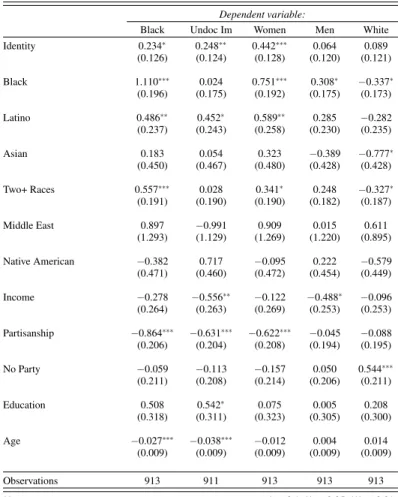
Ultimately, when tested using a survey, the results show that Political System Attribution and a Sur- vivor/Victim Identity are significantly related to the political behavior of survivors, with less concrete evi- dence for Attending Therapy. Political System Attribution affects both Political Attitudes concerning Women’s Rights and Political Participation concerning Women’s Rights. As someone holds the Political System as more responsible for their assault, they will move in the liberal direction on their attitudes and increase their participation. Similarly, a Survivor/Victim Identity increases Political Participation concerning Women’s Rights and also significantly affects the views someone has towards oppressed out-groups – meaning that those who specifically identify as a Survivor or Victim are more empathetic towards people who are op- pressed in society than those who do not choose to identify as a Survivor or Victim.
The following chapters will work to build out the three concepts: Political System Attribution, Attending Therapy and Survivor/Victim Identity. Chapter Two will present a more thorough analysis of these concepts using data from 16 semi-structured interviews with survivors of sexual assault and will offer both concrete hypotheses. Chapter Three discusses the best way to quantitatively test the hypotheses through a survey and presents both the measurements of concepts as well as general demographics of the survey.
Chapter Four will present the Political System Attribution findings, Chapter Five the Therapy findings, and Chapter Six the Survivor/Victim Identity findings. Chapter Seven will provide a descriptive comparison between sexual assault survivors and non-survivors to give some context to how localized the main findings of
the dissertation are to survivors in comparison to women in general. Last, Chapter 8 concludes by discussing some larger implications and potential future applications of the project.
CHAPTER 2
Listening to and Learning From Survivors: Using Semi-Structured Interviews to Examine How Sexual Assault and Politics are Connected
2.1 The Effects of Sexual Assault
Sexual assault can have long term psychological effects on those who are subjected to it. Survivors of sexual assault can experience psychological symptoms such as PTSD, anxiety, depression, difficulties with social adjustment, difficulties with sexual functioning, and suicidal ideation at levels significantly above someone who has not experienced sexual assault (Mason and Lodrick, 2013; Ullman, Peter-Hagene and Relyea, 2014).
Rape survivors are also more likely to engage in coping mechanisms such as heavy alcohol and drug use because of these problems (Mason and Lodrick, 2013; Miranda et al., 2002). Many survivors also do not immediately recognize their assault as the reason that these damaging effects emerge (Ullman, 1996; Ahrens, Stansell and Jennings, 2010). The unclear causes of their symptoms can create situations where the women blame themselves for both the attack and their resulting psychological problems – decreasing the amount of help that they seek for the symptoms (Ullman, 1996; Ahrens, Stansell and Jennings, 2010).
Additionally, survivors of sexual assault may face economic distress after their assault. Loya (2015) finds that after an assault, women experience a decline in long term economic well-being due to the psychological problems they develop disrupting employment by diminished job performance, inability to work, and even job loss in some circumstances. This is supported by (Peterson et al., 2017) who demonstrates that the lifetime cost of a rape is $122,461 due to factors such as medical care, criminal justice system costs and lost work productivity. Women may also have long lasting physical effects that can continue to impact their health for the rest of their lives (Ahrens, Stansell and Jennings, 2010).
Current Understanding of Sexual Violence, Sexual Harassment and Politics
Despite the wide-reaching effects of sexual assault, there has not been a comprehensive study of the effects of sexual assault in American politics. This omission seems puzzling, as American political science litera- ture has consistently taken mental health, physical health and life changing events as serious variables that affect one’s political life (Ojeda, 2015; Schur and Adya, 2013; Schur and Kruse, 2000; Hobbs, Christakis and Fowler, 2014; Highton, 2000; Stoker and Jennings, 1995). When studied in political science, sexual vi- olence is mostly studied In the context of countries outside of the United States (Cohen, 2013; Wood, 2006;
Koos, 2018) and is framed as a tool of war. Rather than use an ethical frame that tackles systematic reasons why assault may occur, Crawford (2017) proposed that the tool-of-war frame is used to get society and the
discipline of political science to take it more seriously, as the concept of rape can make certain audiences un- comfortable. The results of the study of wartime sexual violence have found important and concrete effects that demonstrate the importance of studying assault using this wartime frame. For example, Cohen (2013) finds that armed actors commit rape to create unit cohesion rather than as a sexual act, Wood (2006) docu- ments that rape is a strategic choice during war and?finds that victims of wartime sexual violence will later engage in more pro-social behavior compared to those who did not experience violence. This literature is useful in showing clear and concrete effects of rape in these wartime contexts, however, it has yet to address why levels of sexual violence continue to remain high even in times of peace or countries that are not at war – like America.
In the American context, 2017’s #MeToo movement has also spurred political scientists to study concepts related to sexual assault. Jose, Fowler and Raj (2019) and Bankert (2020) find that there are differences in reports of sexual harassment and assault between liberal and conservative women. Craig and Cossette (2020) further show the effects of partisanship by demonstrating that partisanship shapes citizen’s attitudes towards sexual harassment. Expanding the research on how sexual assault it related to American politics beyond partisanship, Schwarz, Baum and Cohen (2020) examine how the public views rape and makes decisions on juries about punishment, finding that people take individual characteristics of victims and perpetrators into account. Castle et al. (2020) also find that the #MeToo movement increased awareness of sexual assault, which subsequently increased political participation for highly interested, Democratic women. This small but growing line of research acknowledges that sexual harassment and violence have taken on a partisan and political meaning in American society. However, the focus tends to be on how partisans interpret the meaning of harassment, rather than understanding how the events themselves affect the subsequent political behavior of the women.
Political Effects of Crime and Life Altering Events
Literature that explores the effect of crime and life altering events also suggest possible political effects that could emerge from sexual assault. Research that has focused on other types of crime victimization have shown consistent effects on political participation. Bateson (2012) demonstrates that individuals who experience crime participate in politics more, while Blattman (2009) shows that individuals who were forced into violent experiences in their youth were more active in political life later in life due to post-traumatic growth. This work on victimization is furthered by Dorff (2017) who shows that individuals who experience violent crimes but have strong support networks are more politically active in Mexico and Lupu and Peisakhin (2017) who demonstrate that experiencing political violence leaves a long-lasting effect on the political participation on not just the victims, but also their descendants.
Political Science literature has also demonstrated that major life events not related to crime can change the political behavior of individuals. Stoker and Jennings 1995 show that marriage affects political partici- pation as partners adjust to the participation level of their partner. Political participation is also affected by moving residences (Highton, 2000), becoming a widow (Hobbs, Christakis and Fowler, 2014) and depression (Ojeda, 2015). Beyond political participation, (Greenlee, 2014) demonstrates that motherhood will change the political attitudes of mothers over time. Taken together with the literature on crime victimization, the life changes literature and crime victimization literature draw clear lines between significant events in one’s life and political outcomes. However, exactly how these lines form is not quite clear.
Politicization
The literature on sexual assault in non-American contexts, sexual harassment, crime and life changing events implies that sexual assault is something that can become politicized among those who experience it. Here, I will explain what it means for a concept to become politicized.
Politicization is an abstract concept that has been understood to mean different things to scholars de- pending on what they are discussing. Some scholars theorize politicization as a process by which the public opinion of previously neutral ideas becomes polarized along partisan lines, oftentimes due to the rhetoric of political elites. This is the case when thinking about things like climate change or everyday objects that obtain political meaning like an oat milk latte (Bolsen and Druckman, 2015; Gauchat, 2012; Lee, 2020) and is what is demonstrated in the current sexual harassment literature that shows liberals and conservatives think differently about sexual harassment (Jose, Fowler and Raj, 2019; Bankert, 2020; Craig and Cossette, 2020).
Identity scholars conceptualize politicization slightly differently, as they are not studying how already formed political groups assign political meaning to things, but how the groups themselves become politically charged. Campbell et al. (1960) first described a political identity as “when group members develop a similar set of political beliefs and adhere to group norms in support of a specific political party, candidate, policy issue or course of political action” (quoted in Huddy (2013), pg. 739). Huddy (2013) elaborates on this and contends that a social identity “can acquire meaning through the influence of group leaders who advocate certain beliefs and policy positions or take specific political action” to become a political identity. These identity scholars stress that an identity is only political when someone acts upon this group membership in a way that is politically consequential. Rather than groups becoming polarized in opinion about things, this conceptualization of politicization considers when an identity someone identifies with becomes politically consequential and becomes the lines upon which polarization can occur (for examples see: (P´erez, 2015;
Gay, 2004; Conover, 1988). This is what we see in the literature on crime victimization where someone acts in a political way because of the event that they have experienced (Bateson, 2012; Blattman, 2009; Dorff,
2017).
Given that we already know that events related to sexual assault can develop political meaning (Bankert, 2020) and we know that there are concrete effects that emerge from victimization in comparative contexts, it is reasonable to assume that sexual assault itself could take on political meaning by those who experience.
However, what remains less clear when exactly sexual assault will take on this meaning among those who experience it.
Why the current literature is not sufficient
So far, this chapter has worked to establish that sexual assault is a widespread problem with far reaching effects, and that it is possible these effects can extend to politics. However, while I can establish the idea that sexual assault and political behavior may be connected, current literature does not provide enough of a foundation to theorize what various reactions from sexual assault will create changes in political behavior and what specific attitudes or participatory variables should be affected.
First, the current literature on sexual violence outside of the American context tends to focus on sexual violence as a tool-of-war or strategy. Therefore, the theoretical foundations of these pieces are not applicable to contexts of active peacetime in a country. Additionally, the American literature on sexual harassment does not extend to sexual violence. This omission may be for various reasons, such as the timeliness of studying harassment in the wake of #MeToo and the methodological challenges that come from studying sexual assault (Koss et al., 2007). However, because sexual assault is a more violent event than harassment – we cannot be sure that the experiences function the same. The literature on sexual harassment also tends to focus on partisan interpretation of the concepts, rather than how assault or harassment itself affects subsequent political behavior. Considering the patriarchal roots of sexual assault (Kessel, 2022), it is important to consider that not only is partisanship shaping interpretation of assault– but that for women who have been through it, assault may also be shaping the political attitudes that form the basis for observable political outcomes like partisanship.
Second – regarding the crime literature and life changes literature - sexual assault is a unique experi- ence that may operate differently due to the sometimes-invisible nature and unclear victimization signals that occur. Crimes like petty theft (Bateson, 2012) and violence (Blattman, 2009), while no doubt psychologi- cally damaging, are crimes that victims can easily identify. The same goes for life changes like widowhood, marriage, and moving, where the change is very clear (Hobbs, Christakis and Fowler, 2014; Stoker and Jen- nings, 1995). Sexual assault does not always have these clear indications of victimhood or change. Survivors of sexual assault do not always immediately realize what happened to them, and it can take years of ne- gotiating meaning to reach the conclusion that they were assaulted (Ahrens, Stansell and Jennings, 2010).
Psychology and sociology literature show that women have a hard time processing rape and often explain it away to protect their own mental state (Mason and Lodrick 2013, Armstrong, Gleckman-Krut and Johnson 2018; Swanson and Szymanski 2020). Women are also not immune from internalizing rape myths (false beliefs about what is sexual assault)1that make it hard for them to understand what happened (Armstrong, Gleckman-Krut and Johnson, 2018). Additionally, the feelings of shame and embarrassment associated with sexual assault are not typically present in victims of other crimes (Weiss, 1994) and rape and sexual assault are routinely under-reported meaning that victims are less likely to get justice. The differences in processing and understanding of what happening among survivors can creates circumstances where there could be vastly different reactions and actions taken by women who experience sexual assault. These variations in reactions may be important when determining the actions someone takes.
Because the literature is under-theorized, I also turned to existing data to try and gain a landscape for what the connections between sexual assault and politics may be. However, existing data sets that ask questions about sexual assault do not ask about politics in American politics and vice versa, making it hard to examine any connections. While political data sets have started to ask about sexual harassment (such as the American National Election Studies), there are still no data sets that ask about sexual assault or rape. The lack of quality data surrounding this question makes it hard to even understand descriptively what the landscape around sexual assault and politics looks like and how connections between the two develop.
2.2 Grounded Theory
Because there is not enough literature to adequately theorize hypotheses about the connection between sexual assault and politics, and existing data does not allow for exploratory analyses, this project will first take a constructionist grounded theory approach as laid out in Charmaz (2014). A grounded theory approach adds an extra step to a research process. Instead of following the pattern of Research Question⇒Theory⇒Data Collection⇒Results, it follows pattern of Research Question⇒Data Collection⇒Theory⇒New Data Collection⇒Results. In simpler terms, it requires collecting data first to help develop a theory, and then continuing to test the theory that was derived from the first round of data collection. For this specific project, it will allow me to collect primary data from survivors of sexual assault that can help me theorize about why sexual assault and political behavior might be connected.
Constructionist grounded theory consists of collecting primary data sources (in this case, interviews with survivors of sexual assault) and systematically examining those interviews line by line to find commonalities and form a theory. It is a “systematic, yet flexible method for collecting and analyzing qualitative data” that
1An example of a rape myth is that rape normally occurs in dark places by unknown people. Research shows that 90% of victims know their perpetrator in some way (RAINN: Statistics, 2022).
allows researchers to construct theory from the data itself (Charmaz 2014, p. 1). Constructionist grounded theory requires bringing an open mind to the data, and allowing the data itself to tell us what is happening by constantly studying, coding, comparing, and synthesizing the data. By coding and comparing the data, analytic questions and patterns can begin to emerge and provide a clearer conceptual picture of what is occur- ring (Charmaz, 2014). The intent of grounded theory is not to test a hypothesis, but to use this repetitive and in-depth process to generate ideas or hypotheses about a particular situation that is rooted in the perceptions and experiences of the participants (Komives et al., 2005).
2.3 Method: Semi-structured interviews
In this study, I have chosen to engage in semi-structured interviews with survivors of sexual assault that directly ask questions about one’s experiences, interpretations of assault, and politics as the primary texts to derive and develop theories. Semi-structured interviews are a form of interviewing that consists of creating a set of open-ended questions (called an interview guide) that will ask respondents to talk about their political behavior, assault, and ways they may be connected, but also offers flexibility for the respondents to highlight what they think is important or should be noted. The semi-structured nature of these interviews does not require one to rigidly follow lines of questioning, but instead allows for deviation as the respondents point to new connections that the researcher may not have thought of before (Mason, 2002). Semi-structured interviews are the best method given the intent of the project because they allow one to explore both specific questions concerning the constructs around sexual assault, but also provide room for detail, depth and insight that a typical survey or even a fully structured interview cannot provide (Leech, 2002). By allowing for the material to evolve over the course of the interview, new ideas can emerge. Semi-structured interviews also give agency to the respondents to dictate what is important, therefore making sure I do not impose my own opinions of how someone should react or behave after an assault onto the respondents.
The interview guide for the semi-structured interviews is informed by existing literature surrounding trauma (Strauss Swanson and Szymanski, 2020), sexual assault and harassment (Jose, Fowler and Raj, 2019;
Ullman, 1996) and political attitudes, identities and participation (Bateson, 2012; Blattman, 2009). Ad- ditionally, I collected and examined 43 publicly available interviews and articles with survivors of sexual assault in national news outlets such as TIME (Zacharek, Dockterman and Sweetland Edwards, 2017), Allure (Zipursky, 2020) and The New York Times (Ryzik, 2017) to guide the original questions. These interviews covered both elite actors, such as Taylor Swift and Gretchen Carlson, and local activists interviewed by local papers, to develop a sense of why these women were publicly speaking out and acting in a political way. By engaging in content analysis with these interviews, I was able to begin developing ideas on how someone comes to arrive at a political interpretation of their assault. However, these publicly available interviews were
not conducted for the purpose of directly understanding the link between politics and sexual assault, so while they provided a foundation for beginning to theorize, they could not provide a full understanding that would substitute for conducting my own interviews.
Below are some of the questions used in the interview guide. The full interview guide is in Appendix A. During the interviews, I asked most of the questions to most respondents, however, if the conversation took an important or interesting turn, I did not force it back to the interview guide. I also did not tend to ask the question ’Oftentimes we can dwell on the negatives of these events, and they truly are negative, but I am curious to know if there is anything you are proud about in the way that you have handled the event and moved forward in your life?’ to the respondents because the positives tended to come up organically so it did not feel natural to the conversation.
• What were your initial feelings and reactions after the event?
• Did you tell anyone about this event?
• How do you interpret this event in terms of its causes? Has this changed over time?
• What does this event mean to you now?
• Do you feel that this event has influenced the way you interact with the world?
Before moving forward with the study description, I want to address the concern for ethics that went into the construction of the interview guide. Extreme care was taken to make sure that risks of participating in the interview were minimized for participants. Before engaging in interviews, I competed the course ‘Trauma:
Impact and Intervention’ through Vanderbilt’s Human Development and Counseling Program. This course is intended for those learning to become therapists and enabled me to take a trauma informed approach to the research. This class gave me the toolkit to understand how to structure conversations regarding trauma by starting with a warm-up period, moving into the substantive questions (above), and then providing a wind down period to transition individuals back into their day. This wind down period is unique to situations with trauma and is not always found in qualitative interviews. Whereas qualitative interviews do typically involve a wind-up period to gain rapport, the extra emphasis I put on transitioning someone back into their day ensured that risks are minimized. Before the interview respondents also engaged in an informed consent conversation, rather than just a statement, to ensure they knew their rights and were informed that they could stop the interview at any point in time.
Recruitment Process
Once the study passed through the full university IRB process2, respondents were recruited through a pur- posive, online snowball sample using a social media flyer (included in Appendix A) asking for survivors of sexual assault3to participate in an interview about political values and sexual assault. Purposive sampling consists of ‘sampling on meaning,’ where I select people precisely because they have the characteristics that I am looking for, rather than recruiting a representative sample and hoping some people have those charac- teristics (Luborsky and Rubenstein, 1995). By recruiting in this way, I can make sure that I have respondents who were exemplars of my phenomena (survivors of sexual assault) and could speak to the topic on hand - politics4. The flyer was originally posted to my own social media pages and was made public, so anyone who wanted to share the flyer would be able to do so.
A snowball sample is a way to gradually accumulate participants, starting with a few known members of the population of interest and then asking those participants to refer other participants to the study (Kuzel, 1999; Lynch, 2013). I chose a snowball sample because it is a good way to get participants from hard- to-reach groups, or groups that are ‘hidden’ from society in one way or another (Weiss, 1994). Survivors of sexual assault meet this criterion of a ‘hidden’ population because many people who experience sexual assault do not have a public persona as a survivor activist and avoid disclosing their status beyond a small group to avoid stigmatization from society (Ullman, 1996). By utilizing the private networks (ie: people such as friends and families that are close to the individuals and have experienced sexual assault as well) that form between survivors I may be able to get more individuals to feel comfortable participating in a study about sexual assault than they may be otherwise. It is important to note that while the study is utilizing my social networks, I had no previous relationship or contact with any of the respondents before our interview took place. In the end, the flyer was shared at least 26 on times of Facebook and 24 times on Instagram. For a conservative estimate, say that each person who shared it has 25 unique followers – this means that the flyer received at least an estimate of 1,250 views online.
Participants
Overall, 26 women contacted me to participate in the study and 16 of these contacts resulted in a com- pleted interview5. The women range in age from 21-45 and are mostly white, middle to upper-middle class, cis-gender and highly educated. For qualitative studies, respondents should be interviewed until it appears that no new information is being gleaned from additional respondents. When I reached 16 respondents and
2This study went through a full IRB review at Vanderbilt University and was approved on 10/30/2021, IRB #211756.
3I choose to use the term sexual assault rather than rape due to the stigma that surrounds rape, knowing that by using sexual assault rather than rape I would be able to talk to a wider range of people
4For an example of a similar method see: Mosley et al. (2021).
5This is a typical amount for a grounded theory study. Mosley et al. (2021) recruited 10 participants, Strauss Swanson and Szymanski (2020) recruited 16 and Komives et al. (2005) recruited 5 people for 3 interviews, totaling 15 interviews.