Volume 43 Issue 11 Article 5
2018
Rethinking Teacher Education for Classroom Behaviour Rethinking Teacher Education for Classroom Behaviour
Management: Investigation of an Alternative Model using an Management: Investigation of an Alternative Model using an Online Professional Experience in an Australian University.
Online Professional Experience in an Australian University.
Angela Page
University of New England, [email protected] Marguerite Jones
University of New England, [email protected]
Follow this and additional works at: https://ro.ecu.edu.au/ajte Part of the Higher Education and Teaching Commons Recommended Citation
Recommended Citation
Page, A., & Jones, M. (2018). Rethinking Teacher Education for Classroom Behaviour Management:
Investigation of an Alternative Model using an Online Professional Experience in an Australian University..
Australian Journal of Teacher Education, 43(11).
http://dx.doi.org/10.14221/ajte.2018v43n11.5 This Journal Article is posted at Research Online.
https://ro.ecu.edu.au/ajte/vol43/iss11/5
Rethinking Teacher Education for Classroom Behaviour Management:
Investigation of an Alternative Model using an Online Professional Experience in an Australian University.
Angela Page Marguerite Jones University of New England
Abstract. This paper responds to the theory-practice divide regarding classroom behaviour management in teacher education. Qualitative interviews and surveys were used to investigate whether an alternative model using an online professional experience could improve
perceptions of teacher education students’ beliefs, knowledge, perceived skills and confidence in classroom management. Teacher education students participated in an innovative Master of Teaching course designed to integrate ecological classroom management theory, video observation, and critical reflection in an online professional experience (practicum). Results indicated that
participants, upon completion of the course, reported improvements in their beliefs, knowledge, perceived skills and confidence in classroom management. Additionally, in a subsequent in-school professional experience, a preference for initial correction and prevention strategies to manage the learning environment was highlighted. The implications for future teacher education programmes are presented.
Introduction
In Australia there is an intensive policy focus on teacher effectiveness for competitive international economic advantage. Evident is a key push for initial teacher education courses to have measurable impact on future classroom practices, to enhance students’ learning outcomes in schools. Teacher education students, experienced teachers and teacher educators alike consider classroom behaviour management and professional experience to be vital components of this educative process (Ramsey, 2000; Parliament of Australia, 2007; Darling-Hammond, 2009; Bullock & Russell, 2010; Cohen, Hoz, & Kaplan, 2013; Teacher Education Ministerial Advisory Group, 2014). Classroom management course work in teacher education, and the opportunities to implement strategies during professional experience, have a significant impact on teacher education students’ beliefs, knowledge, skills and confidence and in coping with student behaviour (Giallo & Little, 2003; Woodcock & Reupert, 2012). This being the case it is surprising that both have remained relatively unchanged in teacher education. Perennial issues of porous links (Sullivan, Johnson, Owens & Conway, 2014) between classroom management theory, practices witnessed during the initial Observation Professional Experience, and
opportunities to critically reflect upon these exist.
Graduate teachers are required to be skilled in classroom management although
understanding of the term can vary (Egeberg, McConney, & Price, 2016). For some it is simply understood as teacher control of student behaviour, for others a much broader conceptualisation includes management of the classroom environment, the pedagogy, and insights into ones’
students and how they learn (Jones, Page & Charteris, in press). This broader meaning encompasses not only teacher centered behaviour management but also the fundamental standpoint that environment and relationships underpin engagement and learning. Likewise, it is indicative of a greater holistic focus that embraces the notion that classroom strategies include teacher and student actions and behaviours (Jackson, Simoncini, & Davidson, 2013).
Effectively managing behaviours in the classroom is arguably the most important skill that can be delivered in teacher education (O'Neill & Stephenson, 2014; Woodcock & Reupert, 2012).
Often graduate teachers are “bewildered and overwhelmed” (Subban & Round, 2015, p. 118) or fearful of not being able to manage the class (Black, Noltemeyer, Davis, & Schwartz, 2016).
It is important that teachers graduate with high levels of perceived competence and efficacy in classroom management since failure to do so leads to attrition (Simonsen et al., 2014). Teachers who perceive themselves as more capable in managing the classroom
environment and providing academically sound pedagogy, are less stressed and subsequently, less likely to leave the profession (Woodcock & Reupert, 2012). This being the case, it is timely as teacher educators, to critique our practices in preparing teacher education students for managing their classrooms and supporting them to develop the necessary knowledge, skills and efficacy. In doing so, concerns of many teacher education students that course work, in and of itself, is inadequate in providing the necessary skill development to address behavioural issues in their classrooms would be addressed (Giallo & Little, 2003).
In order to determine a way forward for enriching skill development, a course was designed, Classroom management and research: PrEx 10, that interwove observation
professional experience, classroom management, and research. The intention was to replace an in-school, face-to-face observation practicum within the Masters of Teaching. Although Masters of Teaching students are more likely to be mature age students retraining from a previous profession, they may also have completed an undergraduate degree before advancing straight into the Masters. In either case, these students face the same classroom management challenges as their undergraduate counterparts, both being novice teacher education students.
What is different, however, is the need to accelerate such knowledge, skills and efficacy since fewer professional experience placements are required to complete the degree. For example, Bachelor of Education students undertake 80 days in four practicums whereas Masters of Teaching students are required to participate in 60 days in three practicums. This paper
commences by critiquing current classroom management theory and pedagogy in initial teacher education. In particular, it examines the lack of evidence-based theory and research, the theory to practice gap, inclinations to ‘problematise’ student behaviour, and how generalised theories, that take little account of school and classroom ecologies, are delivered in initial teaching programmes. We go on to critique the traditional model of observation professional experience, initial teacher education learning when observing teaching, and the extent to which critically reflective practice is developed and enlightens beliefs. We then present an innovative academic scaffold, the Observation Learning Synthesis framework, that interweaves current classroom management theory, observation of teaching, and critically reflective practice, within a Masters of Teaching course.
A Traditional Approach
Hamilton (2015) found that classroom behaviour management theories in teacher education are generally taught on a continuum of behaviourist to humanistic approaches, with the former problematising the student, and the latter providing another model where teachers drive teacher-student relationships. Understandably, teacher education students are more confident in addressing behaviours that are low-level and less confrontational (Black et al., 2016). Therefore it comes as little surprise that first year teacher education students are found to use more corrective measures, be less confident and consider their management strategies to be less effective in the face of significant challenge (Reupert &
Woodcock, 2010). These issues, it appears, can prevail throughout the degree. Peters (2012) found that although final year teacher education students used less intrusive classroom behaviour management strategies, and their perceptions of confidence and competence were higher, they still tended to opt for narrow behaviourist interventions.
A significant consideration in approaches to teaching classroom management is the development of confidence (Bandura, 2006) for implementing specific knowledge and skills to achieve a desired outcome. Confidence alone however, does not always lead to better practice (Tschannen-Moran, Woolfolk Hoy, & Hoy, 2001). Teacher education students’ confidence, implementation and success of various behaviour management strategies can vary across the years of their teacher education course (Woodcock & Reupert, 2012). In addition, there has been a lack of supportive evidence reported for largely psychotherapeutic approaches to behaviour management theory being taught in undergraduate teacher education coursework across Australia (O’Neill & Stephenson, 2011). O'Neill and Stephenson (2014) for example, found only 18 out of the 55 courses that were analysed provided evidence-informed classroom management strategies.
Theory and Practice Divide
O'Neill and Stephenson (2011) completed an analysis of Australian teacher education and found that the predominant content of classroom behaviour management courses were
theoretical models of management delivered in the form of isolated topics. The practice of studying one model a week was usual practice. There is a risk in allowing teacher educators to assume that teaching stand-alone theories to students is sufficient. The dilemma of such an approach compounds the concerns of researchers in classroom management regarding the theory and practice divide (Reupert & Woodcock, 2011). Peters (2012) found that the impact of failing to integrate classroom management knowledge and practice is apparent and a narrow range of strategies are used. The limitations in the capacity to respond to students from diverse backgrounds and behaviours are evident. Such shortcomings ultimately impact the potential for student engagement and learning in classrooms.
What teacher education programmes do to prepare their students to achieve an
understanding of the complexities of classroom management, and its relationship to student learning, is fundamentally important. Historically, teacher education students have had their first opportunity to encounter classroom management, from the perspective of a prospective teacher, when they have undertaken the initial observation practicum. Such face-to-face initial practicums can be valuable, however, on occasions, the teacher education students can be vulnerable to the potentially negative classroom management practices of their supervising
teacher (Hamilton, 2015; Peters, 2012), and inadequate supervision as they put their tentative theory into practice. For these reasons, the relationship between teacher education programmes and subsequent supervised professional experience in schools has been described as tenuous at best (Allen et al., 2013).
Additionally, there exists a theory to practice divide when teacher education students, engaged in professional experience, have not been provided with adequate scaffolds for
collecting data during the observation process. Bradfield and Hudson (2012) reported a similar finding where Queensland teacher education students, when observing their supervising teachers, were not given any observation parameters. The capacity to collect valid data allows for opportunities to link classroom management theory to their witnessed accounts, and to analyse, evaluate and reflect upon the quality of the classroom management behaviours witnessed (Jackson et al., 2013).
Problematising Student Behaviour
Many of the prevailing narratives that exist within classroom management theories take a deficit view of the child (McDonald, 2010). The consequence can be that teacher education students often report that effective behaviour management is related to levels of control (Hamilton, 2015; Peters, 2012; Sullivan et al., 2014). Millei and Petersen (2014) elaborate on this perspective, stating that often student behaviour is equated with problem behaviour. These behaviours, often defined as disruptive and defiant, serve to pathologise the student by locating the problem within the child. When such understandings are perpetuated teacher education students may grasp at quick fix solutions, which ultimately narrow their propensity for reflective practice (Jackson et al., 2013; O'Neill & Stephenson, 2013). Such limitations in classroom management course work often leave teacher education students feeling unprepared, lacking in both the skills and confidence necessary to manage the realities of the classroom.
Need for understanding Local Context
Within teacher education a more ecological understanding of classroom management, which takes account of specific contextual factors is needed. To inform effective classroom management practice, the quality of the pedagogy, the nature of the learning environment, and teachers’ responsiveness to their students, need to be interwoven. Peters (2012) discusses the importance of context and the student-teacher relationship within the school setting, noting the imperative of being alert to the diversity of students’ backgrounds and experiences. Reupert and Woodcock (2011) confirm that unique cultural variables have a significant impact on teacher education students’ beliefs about their teaching. Commonalities and differences exist within and across countries. For example, a significant difference is the greater level of control used by Australian teacher education students compared with their Canadian counterparts. The latter were more likely to use preventative strategies (Reupert & Woodcock, 2011) that focused on learning and the well being of students.
Observational Professional Experience
In New South Wales (NSW), Australia, teacher education students undertake professional experience in which they are expected to develop a knowledge of classroom behaviour
management techniques (Board of Studies Teaching and Educational Standards NSW, 2015).
Teacher education students are given opportunities in these practicums to “consolidate, refine and demonstrate their knowledge and understanding of students and how they learn” (p. 2).
Without the opportunity to observe a variety of theories being enacted in the classroom, and to critically reflect upon these, there is a very real danger that teacher education students will at times implement ill-informed classroom management strategies they observe. Furthermore, it is often perceived that theories encountered in coursework are far removed from the realities of classroom practice, and may in fact be antithetical to the philosophy and beliefs of the
developing teacher. Thus, the observation professional experience can be problematic for teacher education students not only in terms of the modelling they observe, but also the disconnect between the teacher education programmes and the supervision that is given to teacher education students. For instance, in practicing teachers’ perceived adequacy of preparation for roles of mentoring and supervising student teachers (Uusimaki, 2013).
A Model of the Traditional Approach
In summary, we perceive the traditional approach to classroom management as three separate entities, as illustrated in Figure 1.
Figure 1: Traditional Approaches to Classroom Management in Teacher Education
As Figure 1 shows, the circle consists of three modes of delivery that are isolated and detached. This traditional approach to classroom management pedagogy in teacher education limits opportunities for the developing teacher to integrate theory, professional experience and observation. The inadequacies of an explicit pedagogy of critical reflection, likewise impact the potential to create a holistic schema in which the multifaceted dynamics of classroom
management are integrated. It was understood that a new approach was needed, one that delivered not only a richer contemporary content, but also a stronger pedagogical method for delivering that content.
An Alternative Approach
At the commencement of Trimester 1 2016 the authors designed and delivered an innovative new course, EDUC 540 Classroom management and Research: PrEx 10. The intention was to replace the existing classroom management course, and the in-school Observation Professional Experience, for Masters of Teaching (MTch) students previously undertaken in a school setting where the teacher education student observed the experienced teacher using generic observation scaffolds.
Background research undertaken by the authors provided confirmation for prioritising ecological theory. Therefore the decision was made to replace the first in-school professional experience (Observation practicum) with video recordings of classroom practice filmed in local classrooms by the univeristy’s professional film unit and under the direction of the academics writing the Unit. The videos were made accessible in a Professional Experiences library that sat within the EDUC 540 Moodle site. To access each video teacher education students had to agree to a confidentiality clause before gaining access each week. In addition, iteratively developed observation scaffolds, reporting writing, and the synthesising of new knowledge was supported through critical reflection. We understood that through this interwoven approach teacher education students’ knowledge, understanding, observation skills, and beliefs (philosophy) would be integrated to form a holistic conceptualisation of classroom management. In addition, a depth of learning at the professional and the intra-personal levels would be enhanced. In these ways we believed we were responding to critiques of the traditional approach.
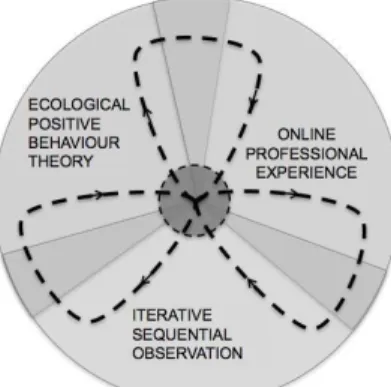
Figure 2 provides a visual representation of the innovative approach.
Figure 2: Observation Learning Synthesis Framework
Figure 2 illustrates the manner in which critical reflection is conceptualised, that is, as the means of synthesising what otherwise would be disparate bodies of knowledge (theory),
professional practice (videos) and observation. Particularly noteworthy are the deliberate
opportunities to integrate theory and practice, to develop a praxis of noticing (Mason, 2002) and evidence informed responding.
EDUC540 incorporates a growing body of research that supports the view that evidence- informed classroom management pedagogy is the most effective in changing teacher education students’ behaviour (Peters, 2012; Simonsen, Fairbanks, Briesch, Myers, & Sugai, 2008).
Developing evidence informed understandings of approaches to management are hallmarks of effective teaching (Sullivan et al., 2014). Relationships between perceived preparedness, confidence and classroom placement experiences are factors that contribute to the development and maintenance of teacher self-efficacy in classroom management (Giallo & Little, 2003).
Given that there is a clear association between preparedness and subsequent effective teaching practice, it is important to develop teacher education students’ professional competencies and self-belief to provide optimal learning for students in their classrooms (Hamilton, 2015).
Theory and Practice
EDUC540 addresses the criticism of theories being taught as isolated constructs. A more progressive understanding of classroom (rather than simply behaviour) management is needed, one that takes a broader perspective to include the ecology of the classroom (Jackson et al., 2013). Such a standpoint broadens the lens from which teacher education students observe classroom management practices, and take into account “teachers’ professional reflections that holistically focus on the classroom environment inclusive of teacher strategies and student behavior rather than solely focus on student
(mis)behaviour” (p. 30).
In doing so, the course incorporates the move in recent years to a shift towards a more ecological perspective of classroom management that includes an emphasis on positive teacher and student behaviours for learning (Lyons, Arthur-Kelly, & Ford, 2015; Parsonson, 2012). This has required a significant shift from engagement with more traditional theories and models of behaviour management in coursework. Opportunities to observe, critique, report and reflect upon these more holistic approaches enable preexisting habits of mind and points of view to be
challenged and replaced with more evidence informed holistic conceptualisations (Reupert &
Woodcock, 2010; Sullivan et al., 2014).
In New South Wales, many schools have embraced positive learning frameworks that address classroom management from an ecological perspective (McDonald, 2010), in particular we refer to, and have chosen to focus upon, Positive Behaviour for Learning. This school-wide approach to classroom and behaviour management was first developed in the United States and is known as School-wide Positive Behavioral Interventions and Support (SWPBIS) (Simonsen et al., 2008; Sugai & Horner, 2002). This model has been modified and updated for the Australian context and renamed Positive Behaviour for Learning. The change in name reflects the greater emphasis on facilitating teacher’ and student’ behaviours, which enhance learning outcomes. In addition, the shift reflects the inclusion of Australian language and schooling expectations (Mooney, Dobia, Barker, Power & Watson, 2008).
An underpinning feature of Positive Behaviour for Learning is its emphasis on adopting strategies that are evidence-based (Parsonson, 2012). The inclusion of practices proven to be effective in classroom management will enable teacher educators “to make decisions that are more informed by empirical research about what classroom behavior models to impart or which texts to prescribe” (O'Neill & Stephenson, 2014, p. 18).
Video Observation
“Lesson observation is vital to best practice” (Subban & Round, 2015, p. 129).
Within EDUC540 videos were made in local classrooms with experienced teacher. In the first instance the initive of filming in local classrooms was a collaboration between the New South Wales Department of Education and university’s legal representatives. Secondly, the Manager of Professional Experience and academics from [details removed for peer review]
School of Education approached Principals in local schools regarding potential collaborations with teachers to film, and to pursue parent permissions. were gained. These videos specifically targeted the implementation, within classrooms and lessons, of school-wide approaches to classroom and behaviour management such as Positive Behaviour for Learning, Assessment for Learning, and dimensions of the Quality Teaching in New South Wales Public school (NSW DET, 2003) to ensure Intellectual Quality, Quality Learning Environments, and elements of Significance, where these theories underpinning these approaches were systematically taught in four two-week modules within EDUC 540, an eight week unit taught through the Moodle platform. In doing so, the unit addressed the Australian Institute for Teaching and School Leadership (AITSL, 2011) teaching standards of 3.2: Plan, structure and sequence learning programs, 3.5: Use effective classroom communication, 4.2: Manage classroom activities, 4.3:
Manage challenging behaviour, and 4.4: Manage student safety.
The use of classroom videos of teaching has become popular in teacher education as they allow for recording of the richness and complexity of practice, and can be used for later analysis in terms of encoding from multiple perspectives (Borko, 2016). The benefits of using videos as a pedagogical tool in teacher education is well-understood, particularly in terms of bridging the gap between theory and practice (Lin, 2005; Taylor, 2002), deepening learning (Llinares &
Valls, 2010), and developing professional vision (Seidel, Stürmer, Bloomberg, Kobarg, &
Schwindt, 2011).
The move to online professional experience in the form of videos catalogued in the online Professional Experiences library within the EDUC 540 Moodle site enables all students to view the same targeted teaching and learning content. This provides deliberate foci for the teacher education students, and opportunities to socially construct their understandings, as they engage in the Learning Community forum discussions with six to eight of their colleagues each week, in the Moodle site. Stimulus readings and discussion questions are provided to support to support evidence-informed understandings, and to take a more critical, evidence-informed lens. In addition, a variety of observation scaffolds designed by the academics are iteratively introduced each week to support the development of skills including data collection, analysis and report writing. These include an essential skills checklist that allows teacher education students to discern the extent to which positive and pro-active classroom practice (Jackson et al., 2013) such as differentiation (Bradfield & Hudson, 2012; Subban & Round, 2015) are being used.
Additionally, checklists foster productive and constructive dialogue within learning communities (Subban & Round, 2015).
While observation methods are open to subjective interpretation, they are also useful in collecting purposeful and evidence-based data that can complement decision making and improve understanding (Renninger & Bachrach, 2015). Although we are not advocating that all professional experience can or should be undertaken online, we popose in this article, arguments for an intial online Observation practicum before teacher education students undertake
subsequent professional experiences in schools and classrooms. Recent studies have indicated that video observations are more effective than face-to-face-classroom observation since they limit the number of potential distractions from extraneous variables (Santagata & Yeh, 2016;
Schlesinger & Jentsch, 2016). In addition, greater ecological validity can also be achieved over other methods to teach classroom management skills (Bruckmaier, Krauss, Blum, & Leiss, 2016;
König & Kramer, 2016). Beswick and Muir (2013) suggest that, “videos in settings familiar to preservice teachers, and involving teachers with whom they can identify … might be most effective” (p. 2).
Critically Reflective Practice
The importance of reflection in teacher education professional learning is well known.
Reflection, both critical and non-critical, was integrated into weekly coursework. Students, placed in small online Learning Community forum groups, were scaffolded: to grapple with theory, to apply it to observations of teaching and the collection of data, and, to evaluate classroom management practices. Through processes of Content and Process (Cranton, 2006), non-critical reflection, students were engaged in the co-construction of their own theories (Orland-Barak & Yinon, 2007) of classroom management. Following on, students were supported to engage in Premise (Cranton, 2006) reflection, a critically reflective practice of synthesising their learning through the interrogation and evolution of their core beliefs
(Korthagen & Vasalos, 2005, 2010). Underpinning these reflective practices were opportunities for students to hone the skills of ‘noticing’ (Mason, 2002).
As conceptualised in Figure 2, critical reflection synthesises transformative learning. As teacher educators we believed that the ‘revolutionary’ practices within EDUC540 pedagogy would support better outcomes for our teacher education students as they transitioned from an online Observation practicum to in-school, face-to-face professional experience context.
Research evidence was sought to explore approaches that enabled teacher education students to engage more comprehensively with the ecology of classroom management. To achieve this aim, the percptions of the teacher education students were investigated. Perceptions, for the purposes of this study, were defined as representations of their understanding of their own beleifs,
knowledge, skills and confidence (Beijaard, Verloop, & Vermunt, 2000).
Research Questions
The current research explored the teacher education students’ classroom management beliefs, knowledge, skills and confidence as a result of their participation in the EDUC540 course, and after their subsequent in-school professional experience. The study used the following exploratory research questions:
1. In what ways did the teacher education students’ perceptions (beliefs, knowledge, skills and confidence) of classroom management change upon completion of the course?
2. What classroom behaviour management techniques do teacher education students use confidently and successfully in the classroom, after completion of the MTch course?
Method
Approval for the research was granted by the University’s Human Research Ethics Committee.
Survey methodology was employed to answer the research question using a cross- sectional sample drawing on the population of the student cohort. Survey methodology was deemed to be appropriate as it pursues the purpose of describing the aspects and characteristics of the selected group of participants. The survey method employed open-ended qualitative pre- structured online questionnaire and a quantitative online survey.
Participants
Seventy-five participants completed the first survey that was presented at the end of the teaching unit. Thirty-two participants responded to the second survey, after a four weeks practicum. It is likely that the time frame between the two surveys was responsible for this reduction. Participant numbers were from a convenience sample of 199 enrolled in the course.
Demographic questions of participants’ name, gender or age were not sought, as it was not intended to provide insights about the impact of these variables on the teacher education students’ beliefs, knowledge, perceived skills and confidence. Rather, trends across all respondents in relation to the research questions were sought.
Teacher education students were enrolled in the Master of Teaching degree at the School of Education, [details removed for peer review] in Trimester 1, 2016. Participants had completed the unit before the exploratory study was undertaken to minimise any potential influence by the researchers who also delivered the teaching. These students lived in a variety of locations around Australia as well as overseas.
Instruments
The Classroom Management Questionnaire (CMQ) was used to answer the first research question. The questionnaire was adapted from a survey schedule by Jackson et al. (2013) to determine Queensland teacher education students’ beliefs, knowledge, skills and confidence of classroom management. Likewise the content of the CMQ ascertained participants’ philosophy, understanding, efficacy, and the implications for their practice.
Examples of the CMQ include the following questions: What does a well organised classroom look like, sound like and feel like? What steps do you intend to take in order to manage your classroom well? Did any of your beliefs about classroom management change during the unit? Do you feel more confident in classroom management after this unit? The CMQ examined the first research question concerning their beliefs, knowledge, perceived skills and confidence of classroom management and the beginning and at the completion of the course. All students enrolled in the unit completed the pre-CMQ assessment and seventy-five participants responded to the post-assessment.
In order to address the second research question, The Survey of Behavior Management Practices – SOBMP (Woodcock & Reupert, 2013) was administered after the teacher education students had completed their second professional experience, which was undertaken in a school in contrast to the initial online professional experience. Reupert and Woodcock’s initial survey (2010) was developed to assess teacher education students’ frequency, confidence and success regarding various classroom and behaviour management strategies. The survey also sought to establish if there was a difference between the teacher education students’ teaching intentions regarding classroom management and the implementation of these in real-life classroom contexts. The SOBMP includes 31 five-point Likert-scale items on management strategies.
Participants were asked to rate each item on a range of 1 (Not at all), to 3 (Somewhat), and then to 5 (Extremely). The items were categorised into four subscale variables that consisted of prevention (e.g., establishing routines), reward (e.g., rewards given such as stickers and privileges), initial correction (low level of intrusive correction such as teacher proximity), and later correction (higher level of intrusion such as timeout) strategies. Internal reliability (Cronbach’s alpha) resulted in an acceptable (>.70) score.
Procedure
Participants were asked to complete the CMQ at the beginning and end of the unit.
Transcriptions of the questionnaires were analysed following Constructivist Grounded Theory (Charmaz, 2000), with transcripts being examined in terms of the shifts in the respondent’s beliefs, knowledge, perceived skills and confidence of classroom management.
These were then coded to construct meaning from the context. The participants
completed the SOBMP (Woodcock & Reupert, 2013) which was presented using the Qualtrics Survey Software platform at the end of their first face-to face in school practicum. Means and standard deviations were calculated and analysed using IBM SPSS Statistics V22.0 (IBM Corp., 2013) for the responses to each item of the SOBMP. Additionally, the subscale scores in terms of the frequency of the classroom management strategies most often used, confidence in using the various strategies, and success in terms of managing classrooms were determined.
Results
The results section is divided into three main findings. The first section describes teacher education students’ perceptions of their beliefs, knowledge and confidence of classroom
management prior to the unit. The second section relates to how the unit shifted teacher education students’ beliefs and improved in their levels of knowledge and confidence in classroom management. The next section details the frequency, confidence and success regarding various classroom and behaviour management strategies employed by teacher education students in subsequent face-to-face in-school practicums.
Teacher Education Students’ Beliefs, Knowledge and Confidence of Classroom Management Prior to the Unit
In terms of beliefs regarding classroom management, students understood their role as teachers in classroom management to be one of maintaining control: “I believe classroom management is the ability for a teacher to maintain a controlled state of learning while
progressing through a task. Controlled progress being the ability to positively engage with any and all students in a given task” (Participant 46). Further, it was common for participants to report that the important perceived skills therefore, were those that lent itself to the goal of control as Participant 23 stated: “Factors I believe affect student performance are: Routine, structure, organisation/time management, engagement, environment, peers, opportunity to practice learnt skills”. Accordingly, teacher education students’ desired to learn knowledge in areas of:
• maintaining control of the class,
• using methods designed to control problems,
• ensuring all class members are able to freely engage in learning without impediment,
• limiting distractions by way of what is taught and how it is taught, • ensuring all students are engaged with what they are learning,
• limiting distractions which can lead to unruly behaviour.
Many students reflected a rather business-like approach to classroom management, captured in the claims: “Classroom management is the process by which the teacher is able to
carry out his/her responsibilities and activities regardless of student behavior or unexpected disruptions. It is the ability to control and manage class activities and behaviors to ensure operations runs smoothly” (Participant 56).
In addition to articulating pre-existing beliefs and knowledge at the commencement of the unit, participants expressed a lack in confidence, as reported by Participant 23 who stated that
“I’m nervous about working with students who aren’t interested in being in the group, who are already disengaged and not wanting to learn.” Further, students at the commencement of EDUC 540 wanted support in:
• developing a track record of effective and interesting teaching, fairness to students and skillful command of the classroom, so that students like and respect the teacher,
• nurturing a positive presence and inclusive atmosphere in the classroom to earn students’
trust and appreciation,
• communicating effectively and setting clear examples of what is permitted and what is not permitted in the particular classroom or learning environment, e.g. consistent guidelines, standards and expectations for behaviour as well as for academic performance,
• fostering student input and interaction while minimising disruptive influences in the classroom.
Shifts in Teacher Education Students’ Beliefs and Improvements in Levels of Knowledge and Confidence
Teacher education students perceived that prior to the unit, they did not feel confident in their role as a teacher to prepare to manage as class by means of control. However, at the
completion of the unit, participants reported shifts in the belief that classroom management is not just about control, that they now possessed a range of straightforward techniques on classroom management and that they were more confident to manage a classroom. Participants were also able to provide specific examples of these shifts and improvements than they were able to articulate at the commencement of the unit.
Classroom Management Questionnaire- Beliefs
As Figure 1 indicates, seventy-six percent of respondents reported positive changes in their beliefs regarding classroom management. Participant 3 stated,
My prior experiences shaped my beliefs of the school system, how a teacher should interact and teach the required content. During the course I was introduced to literature, authors and other student perspectives, which help develop my own beliefs.
Of note, 46% of participants reported that their shift in belief was around the notion that classroom management was “much more than just managing naughty kids”
(Participant 5). Classroom management, described Particpant 38, “is being able to create an environment conducive to learning encompassing the requirements of the students and
managing their behaviour”. Participant 13 addionally, stated that “I didn’t realise the importance of fostering relationships, and how boredom and activities which lack engagement can be a major factor in poor classroom behaviour”.
Classroom Management Questionnaire- Knowledge
Ninety-two percent of participants related specific changes in their classroom
management knowledge, depicted in Figure 1, which indicates an even greater percentage shift than shifts in beliefs . Simple and straightforward classroom management techniques “that reflect good systems because you can’t assume things will fall into place automatically” (Participant 4) were also reported as important by 61% of respondents. Techniques included teacher
questioning, setting up classrooms, general versus specific praise and strategies to encourage student engagement. One respondent (Participant 4) stated for example that, “The course
highlighted to me that classroom behaviour can be managed through the adoption of a handful of straightforward techniques, which serve to structure the way students perceive and respond to their learning environment.” Observation skills and observation scaffolds were reported as important by 59% of respondents for the purposes of the development of skills in the area of
“observational techniques and tools and data collection methods” (Particpant 46). Participant 6 expanded on concept giving more detail: “it’s not only about watching but also analysing what is happening and why. It is about critically evaluating a teacher's classroom management strategies using various tools (surveys, narratives, etc) to give feedback and/or inform research, in order to improve classrooms”.
Classroom Management Questionnaire- Confidence
Again, Figure 1 shows a strong percentage increase in reported levels of confidence.
Ninety-two percent of respondents reported that they felt more confident in classroom
management. One participant corroborated the finding of a relationship between course content and increased confidence:
Yes - although I have not yet started my prac, I feel as though I have more tools and reference points at my fingertips for when I do start than before I started. I think I will also be able to incorporate the observation tools into both research projects and reflective practice/action research (Participant 20).
While indicating that they felt more confident, Participant 33 issued a caution: “I do feel more confident, though I am interested to see how that works out during my professional experience when the rubber hits the road”.
Application of Teaching Intentions in Classroom Management Strategies
The SOBMP administered after the teacher education students had completed their second professional experience undertaken in a school, was used to answer the remaining research question. It investigated the classroom behaviour management techniques that participants implemented in the classroom. The strategies were categorised into four subscale variables in accordance with Reupert and Woodcock (2010) analysis of strategy associations.
The subscale results for frequency of use, confidence and success of each of the 31 strategies are indicated in Table 1 with each respective mean for the four categories of behaviours. Internal reliability all resulted in acceptable (>.70) scores of reliability (Cronbach’s alpha) for all of the subscales.
Strategies Frequency Confidence Success
Reward 2.38 (.79) 2.85 (.84) 2.60 (.86)
Prevention 3.12 (.74) 3.45 (.42) 3.33 (.65)
Initial correction 3.18 (.47) 3.37 (.48) 3.24 (.49)
Later correction 1.38 (.53) 1.92 (.91) 1.90 (.83)
Table 1: Frequency, Confidence and Success Means and Standard Deviations for the Subscales of the SOBMP
Survey of Behavior Management Practices- Frequency
While there was a similar result found between the use of initial and prevention strategies the results indicated that initial correction strategies (M = 3.18, SD = .47) and prevention
strategies (M = 3.12, SD = .74) were used more than rewards strategies and later correction strategies.
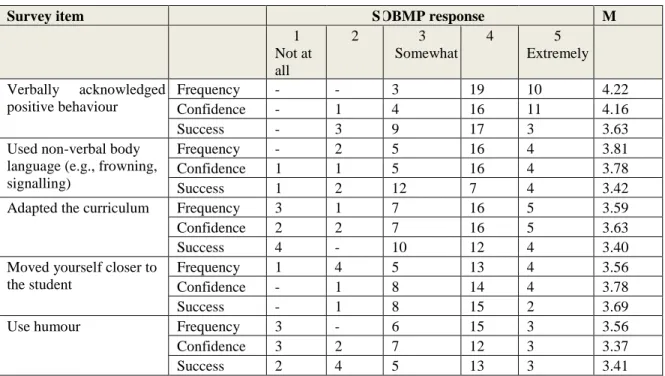
Table 2 shows the five most prevalent classroom management practices employed by the participants as presented within the SOBMP items. These practices are listed in order of most likely to least likely. Table 2 also indicates the frequency of participants’ use of the five classroom management practices, ranging from ‘Not at All’ to
‘Extremely’. This data shows the relationship between frequency, confidence and success of these items that a mean alone would not allow.
Survey item S OBMP response M
1
Not at all
2 3
Somewhat
4 5
Extremely
Verbally acknowledged positive behaviour
Frequency - - 3 19 10 4.22
Confidence - 1 4 16 11 4.16
Success - 3 9 17 3 3.63
Used non-verbal body language (e.g., frowning, signalling)
Frequency - 2 5 16 4 3.81
Confidence 1 1 5 16 4 3.78
Success 1 2 12 7 4 3.42
Adapted the curriculum Frequency 3 1 7 16 5 3.59
Confidence 2 2 7 16 5 3.63
Success 4 - 10 12 4 3.40
Moved yourself closer to the student
Frequency 1 4 5 13 4 3.56
Confidence - 1 8 14 4 3.78
Success - 1 8 15 2 3.69
Use humour Frequency 3 - 6 15 3 3.56
Confidence 3 2 7 12 3 3.37
Success 2 4 5 13 3 3.41
Table 2: Results of Responses to the Individual SOBMP Items to Identify the Most Prevalent Classroom Management Techniques Used
Survey of Behavior Management Practices- Confidence
The results for the Confidence subgroup revealed comparable findings to that of the Frequency subgroups. There was a similar result in the means of confidence for initial and prevention strategies. The outcomes also indicated that initial correction strategies (M = 3.37, SD
= .48) and prevention strategies (M = 3.45, SD = .42) were more confidently used than reward strategies and later correction strategies.
3.6. Survey of Behavior Management Practices- success
Again, the results for the Success subgroup were comparable to the frequency and the confidence subgroup findings. There were similarities found between the level of success for initial and prevention strategies. Initial correction strategies (M = 3.24, SD = .49) and prevention strategies (M = 3.33, SD = .65) were used more than reward strategies and later correction strategies.
Spearman correlation showed a strong positive effect between the ordinal variables of frequency and confidence (r = .69, p < .001), frequency and success (r = .87, p < .001), and confidence and success (r = .68, p < .001).
Discussion and Conclusion
The current study explored the perceptions of teacher education students in classroom management within a Master of Teaching classroom management course that integrated
evidence-based theoretical frameworks and observation using online learning management tools.
Online observations were achieved using a range of observation techniques and recording templates. The data was then interpreted using report-writing scaffolds that allowed the students to develop skills in observing, reporting and analyzing. Learning communities were also
employed as a mechanism for students to first discuss and make sense of their findings collaboratively.
The teacher education students’ beliefs, knowledge, perceived skills and confidence regarding classroom management after their participation in the course, and following their subsequent professional experience in a classroom, were investigated.
The Classroom Management Questionnaire findings showed that teacher education students shifted positively in their beliefs (76%) and that this shift included an understanding that classroom management was an ecological challenge (46%). Nearly all of the respondents (92%) reported that they had improved in knowledge of classroom management skills, where 61%
stated the development of specific classroom management techniques. Similarly, nearly all (92%) teacher education students reported an improvement in levels of confidence.
In order to determine a relationship between teacher education students’ perceptions of their teaching and actual behaviours in a face-to-face professional experience, we collected data to assess the frequency, confidence and success of behaviour management strategies. The results from the SOBMP indicated that teacher education students preferred to use initial correction and prevention strategies to manage their classrooms. This was followed by reward and later
correction strategies. The most preferred classroom management behaviours used were, in order of prevalence, verbally acknowledging positive behaviour, using non-verbal body language, adapting the curriculum, moving closer to the student, and using humour.
Additionally, frequency, confidence and success were all significantly correlated. This indicated that the more frequently a strategy was employed, the more likely that increased levels
of confidence and success were achieved. Of interest, this finding supported results from the CMQ reporting high levels of confidence (92%) and knowledge of classroom management skills (92%) at the completion of the course. Prior studies using the SOBMP indicated that teacher education students used reward and initial correction as a preferred strategy, followed by
preventive and finally later correction strategies (Woodcock & Reupert, 2013). Similarly, within the current study, teacher education students who had undertaken EDUC 540 were more likely to use, were more confident, and were more successful in implementing initial corrections
strategies. The Woodcock and Reupert study recommended that preventative strategies should be the primary classroom management technique used by teachers, as it is considered to be the most effective. The finding that participants in the present study used this approach, along with initial correction, in preference to other strategies validates the Observation Learning Synthesis
Framework, and is certainly encouraging.
Findings from the CMQ echoed those of Jackson et al. (2013), whereby increases in teacher education students’ knowledge and confidence resulted from professional learning that focused upon data-driven positive and pro-active classroom management strategies. A further comparable outcome was that critical reflection played an integral role in the enhancement of professional development.
Observation Learning Synthesis Framework
Traditional teaching approaches to behaviour management have tended to oversimplify student difficulties and disregard the context in which they occur. There has been a call to challenge traditional pedagogy, and to encourage the teaching of ecological frameworks
informed by reflective feedback (Reupert & Woodcock, 2010). By reconceptualising classroom behaviour management, using the Observation Learning Synthesis Framework, we believe we have successfully responded to this challenge. Delivery to teacher education students of ecological positive behaviour theories, iterative sequential observations and online professional experiences enabled the capacity for critical reflective practice. Our results showed that the teacher education students enrolled in this cohort have developed a range of philosophical approaches to classroom management that addresses the failings of traditional methods.
Limitations
Several limitations in the study are noted. Firstly, the response rate to the SOBMP (16%) undertaken was low compared to participant responses to the CMQ (38%). The low number could partly be explained by the fact that teacher education students were invited to complete the SOBMP after they had concluded their face-to-face professional experience, whereas the post- evaluation CMQ immediately followed the EDUC540 course work. It was therefore likely that the time gap between the CMQ and the SOBMP resulted in a high attrition rate.
Additionally, the current research did not explore a comparison of the survey or
questionnaire to other comparable classroom behaviour management courses that are delivered in a more traditional sense. The conclusions from the study can only be used to reflect upon the content and context of a one-trimester course in an Australian teacher education unit and therefore reflects short-term growth.
Implications
The Framework, however, provides a prototype for future developments in classroom management courses and associated research in teacher education. There has been a call for a rethinking of traditional methods of classroom behaviour management. The Observation Learning Synthesis framework to address concerns, provides an innovation that is both
optimistic and transformative. The Framework, which deliberately integrates theory, practice and critical reflection in an online environment, provides opportunities to impact teacher education students’ beliefs, knowledge, perceived skills and confidence regarding classroom management.
This can be realized by using learning communities to challenge students’ initial thinking about classroom management. Teacher education students are then encouraged to critique the material presented to them, promoting the life-long learning practice of becoming discerning learners rather than passive recipients of course material. These aspects are supported through the provision of observation and learning scaffolds ensures teacher education students are given a shared structure upon which to develop their knowledge and understanding of evidence-based classroom management strategies. Finally, it is hoped that the links that teacher education students are required to demonstrate between contemporary theory and evidence-based practice will provide these beginning teachers with the compencies that make robust classroom managers.
In doing so, they will be less likley to leave the profession as many before them have because of difficulties around classroom management. Now exists the potential for an evolution of thinking and practice in future teacher education coursework not only in Australian university context but worldwide.
References
Allen, J., Gregory, A., Mikami, A., Lun, J., Hamre, B., & Pianta, R. (2013). Observations of effective teacher-student interactions in secondary school classrooms: Predicting student achievement with the classroom assessment scoring systemsecondary. School
Psychology Review, 42(1), 76-98.
Australian Institute of Teaching and School Leadership. (2011). Australian professional standards for teachers. Retrieved from http://www.aitsl.edu.au/australian-professional- standards-for-teachers/standards/list
Bandura, A. (2006). Toward a psychology of human agency. Perspectives on Psychological Science, 1, 164-180. https://doi.org/10.1111/j.1745-6916.2006.00011.x
Beijaard, D., Verloop, N., & Vermunt, J. D. (2000). Teachers’ perceptions of professional identity: An exploratory study from a personal knowledge perspective. Teaching and teacher education, 16(7), 749-764. https://doi.org/10.1016/S0742-051X(00)00023-8 Beswick, K., & Muir, T. (2013). Making connections: Lessons on the use of video in teacher
education students teacher education. Mathematics Teacher Education and Development, 15(2), 1-22.
Black, J., Noltemeyer, A., Davis, D., & Schwartz, T. (2016). Teacher education students teachers’ responses to student behaviour in a mixed-reality environment. Creative Commons, 1-10. https://doi.org/10.1177/2158244016633494
Board of Studies Teaching and Educational Standards NSW. (2015). Initial Teacher Education in NSW: Professional Experience Policy.
Borko, H. (2016). Methodological contributions to video-based studies of classroom teaching and learning: A commentary. ZDM Mathematics Education, 48, 213-218.
https://doi.org/10.1007/s11858-016-0776-x
Bradfield, K., & Hudson, P. (2012). Examining teaching strategies within teacher education students teachers' practicum experiences. Paper presented at the 19th International Conference on Learning, London.
Bruckmaier, G., Krauss, S., Blum, W., & Leiss, D. (2016). Measuring mathematics teachers’
professional competence by using video clips (COACTIV video). ZDM Mathematics Education, 48(1-2), 111-124. https://doi.org/10.1007/s11858-016-0772-1
Bullock, S. M., & Russell, T. (2010). Does teacher education expect too much from the field experience? in T. Falkenberg & H. Smit (Eds.), Field experiences in the context of reform of Canadian teacher education programs (pp. 91-100).
Winnipeg: University of Manitoba, Manitoba.
Charmaz, K. (2000). Constructivist and objectivist grounded theory. In N. K. Denzin & Y.
Lincoln (Eds.), Handbook of qualitative research (pp. 509-535). Thousand Oaks, CA:
Sage.
Cranton, P. (2006). Understanding and promoting transformative learning: A guide for educators of adults. San Francisco: Jossey-Bass.
Cohen, E., Hoz, R., & Kaplan, H. (2013). The practicum in teacher education students teacher education: A review of empirical studies, Teaching Education, 24(4), 345-380.
https://doi.org/10.1080/10476210.2012.711815
Darling-Hammond, L. (2009). Recognising and enhancing teacher effectiveness. International Journal of Educational and Psychological Assessment, 3, 1-34.
Egeberg, H., McConney, A., & Price, A. (2016). Classroom management and national professional standards for teachers: A review of the literature on theory and practice.
Australian Journal of Teacher Education, 41(7), 1-18.
https://doi.org/10.14221/ajte.2016v41n7.1
Giallo, R., & Little, E. (2003). Classroom behaviour problems: The relationship between preparedness, classroom experiences, and self-efficacy in graduate and student teachers.
Australian Journal of Educational & Developmental Psychology, 3, 2134.
Hamilton, L. (2015). Early professional development in the Scottish context: Teacher education students high school teachers and the management of behavior in classrooms. Teacher Development, 19(3), 328-343. https://doi.org/10.1080/13664530.2015.1032338
IBM Corp. Released 2013. IBM SPSS Statistics for Windows, Version 22.0. Armonk, NY: IBM Corp.
Jackson, C., Simoncini, K., & Davidson, M. (2013). Classroom profiling training: Increasing teacher education students' confidence and knowledge of classroom management skills.
Australian Journal of Teacher Education, 38(8), 30-45.
https://doi.org/10.14221/ajte.2013v38n8.2
Jones, M., Page, A., & Charteris, J (in press). The discipline of noticing in the online practicum experience: Preparing teacher education students for ‘emergent seeing’ in schools.
König, J., & Kramer, C. (2016). Teacher professional knowledge and classroom management:
On the relation of general pedagogical knowledge (GPK) and classroom management expertise (CME). ZDM Mathematics Education, 48, 139-151.
https://doi.org/10.1007/s11858-015-0705-4
Korthagen, F. A. J., & Vasalos, A. (2005). Levels in reflection: Core reflection as a means to enhance professional growth. Teachers and Teaching: Theory and practice, 11(1), 47-71.
https://doi.org/10.1080/1354060042000337093
Korthagen, F. A. J., & Vasalos, A. (2010). Going to the core: Deepening reflection by
connecting the person to the profession. In N. Lyons (Ed.), Handbook of reflection and reflective inquiry: Mapping a way of knowing for professional reflective inquiry (pp. 529- 552). London: Springer.
Llinares, S., & Valls, J. (2010). Prospective primary mathematics teachers’ learning from on-line discussions in a virtual video-based environment. Journal of Mathematics Teacher Education, 13(2), 177-196. https://doi.org/10.1007/s10857-009-9133-0
Lin, P. (2005). Using research-based video-cases to help teacher education students primary teachers conceptualize a contemporary view of mathematics teaching. International Journal of Science and Mathematics Education, 3(3), 351–377.
https://doi.org/10.1007/s10763-004-8369-5
Lyons, G., Arthur-Kelly, M., & Ford, M. (2015). The Lyford Model of Classroom Management:
Authentication through continuing "reflections from the field". Creative Education, 6(19), 2063-2076. https://doi.org/10.4236/ce.2015.619211
Mason, J. (2002). Researching your own practice: The discipline of noticing. Routledge, London.
McDonald, T. (2010). Positive learning framework: Creating learning environments in which all children thrive. Reclaiming Children and Youth, 19(2), 16-20.
Millei, Z., & Petersen, E. B. (2014). Complicating ‘student behavior’: Exploring the discursive constitution of ‘learner subjectivities’. Emotional and Behavioral Difficulties, 20(1), 20- 34. https://doi.org/10.1080/13632752.2014.947097
Mooney, M., Dobia, B., Barker, K., Power, A., & Watson, K. (2008). Positive behavior for learning: Investigating the transfer of a Courseed States system into the NSW Department of Education and Training Western Sydney Region schools. Penrith, NSW: University of Western Sydney.
NSW DET (NSW Department of Education and Training) (2003). Quality Teaching in NSW Public Schools: Discussion paper. Sydney: NSW DET, Professional Support and Curriculum Directorate.
Orland-Barak, L., & Yinon, H. (2007). When theory meets practice: What student teachers learn from guided reflection on their own classroom discourse. Teaching and Teacher
Education, 23(6), 957-969. https://doi.org/10.1016/j.tate.2006.06.005
O'Neill, S., & Stephenson, J. (2011). Classroom behavior management preparation in undergraduate primary teacher education in Australia: A web-based investigation.
Australian Journal of Teacher Education, 36(10), 35-52. doi:
10.14221/ajte.2011v36n10.3
O'Neill, S., & Stephenson, J. (2013). One year on: First-year primary teachers' perceptions of preparedness to manage misbehavior and their confidence in the strategies they use.
Australasian Journal of Special Education, 37(2), 125146.
https://doi.org/10.1017/jse.2013.15
O'Neill, S., & Stephenson, J. (2014). Evidence-based classroom and behavior management content in Australian teacher education students primary teachers' coursework: Wherefore art thou? Australian Journal of Teacher Education, 39(4), 1-22.
https://doi.org/10.14221/ajte.2014v39n4.4
Parliament of Australia. (2007). Top of the Class: Report on the Inquiry into Teacher Education, Canberra: House of Represenative Standing Committee on Education and Vocational Training.
Parsonson, B. (2012). Evidence-based classroom behavior management strategies. Kairaranga, 13(1), 16-23.
Peters, J. H. (2012). Are they ready? Final year teacher education students teachers' learning about managing student behaviour. Australian Journal of Teacher Education, 37(9), 18- 42. https://doi.org/10.14221/ajte.2012v37n9.2
Ramsey, G. A. (2000). Quality Matters: Revitalising Teaching: Critical Times, Crtitcal Choices:
Report of the Review of Teacher Education, New South Wales, Sydney, NSW Department of Education and Training.
Renninger, K. A., & Bachrach, J. E. (2015). Studying triggers for interest and engagement using observational methods. Educational Psychologist, 50(1), 5869.
https://doi.org/10.1080/00461520.2014.999920
Reupert, A., & Woodcock, S. (2010). Success and near misses: Teacher education students teachers’ use, confidence and success in various classroom management strategies.
Teaching and Teacher Education, 26(6), 1261-1268.
https://doi.org/10.1016/j.tate.2010.03.003
Reupert, A., & Woodcock, S. (2011). Canadian and Australian teacher education students teachers’ use, confidence and success in various behavior management strategies.
International Journal of Educational Research, 50(5), 271-281.
https://doi.org/10.1016/j.ijer.2011.07.012
Santagata, R., & Yeh, C. (2016). The role of perception, interpretation, and decision making in the development of beginning teachers’ competence. ZDM Mathematics Education, 48, 153-165. https://doi.org/10.1007/s11858-015-0737-9
Schlesinger, L., & Jentsch, A. (2016). Theoretical and methodological challenges in measuring instructional quality in mathematics education using classroom observations. ZDM Mathematics Education, 48, 29-40. doi: 10.1007/s11858-0160765-0
Seidel, T., Stürmer, K., Bloomberg, G., Kobarg, M., & Schwindt, K. (2011). Teacher learning from analysis of videotaped classroom situations: Does it make a difference whether teachers observe their own teaching or that of others? Teaching and
Teacher Education, 27, 259-267. https://doi.org/10.1016/j.tate.2010.08.009 Simonsen, B., Fairbanks, S., Briesch, A., Myers, D., & Sugai, G. (2008). Evidence-based
practices in classroom management: Considerations for research to practice.
Education and Treatment of Children, 31(3), 351-380.
Simonsen, B., MacSuga-Gage, A. S., Briere III, D. E., Freeman, J., Myers, D., Scott, T. M., &
Sugai, G. (2014). Multitiered support framework for teachers’ classroommanagement practices: Overview and case study of building the triangle for teachers. Journal of Positive Behavior Interventions, 16(3), 179-190.
https://doi.org/10.1177/1098300713484062
Subban, P. K., & Round, P. (2015). Differentiated Instruction at Work. Reinforcing the art of classroom observation through the creation of a checklist for beginning and teacher education students teachers. Australian Journal of Teacher Education, 40(5), 117-131.
https://doi.org/10.14221/ajte.2015v40n5.7
Sugai, G., & Horner, R. (2002). The evolution of discipline practices: School-wide positive behavior supports. Child and Family Behavior Therapy, 24(1-2), 23-50.
https://doi.org/10.1300/J019v24n01_03
Sullivan, A. M., Johnson, B., Owens, L., & Conway, R. (2014). Punish them or engage them?
Teachers’ views of unproductive student behaviours in the classroom. Australian Journal of Teacher Education, 39(6), 43-56. doi: 10.14221/ajte.2014v39n6.6
Taylor, M. (2002). Implementing the standards: Keys to establishing positive professional inertia in preservice matheatics teachers. School Science and Mathematics, 102(3), 137-142.
https://doi.org/10.1111/j.1949-8594.2002.tb17907.x
Teacher Education Ministerial Advisory Group (2014). Action Now: Ready Teachers, Department of Education and training, Canberra.
Tschannen-Moran, M., & Woolfolk Hoy, A. E. (2001). Teacher efficacy: Capturing an elusive construct. Teacher and Teacher Education, 17(7), 783-805.
https://doi.org/10.1016/S0742-051X(01)00036-1
Uusimaki, L. (2013). Empowering teacher education students teacher supervisors’ perspectives:
A relational-cultural approach towards mentoring. Australian Journal of Teacher Education, 38(7), 45-58. https://doi.org/10.14221/ajte.2013v38n7.1
Woodcock, S., & Reupert, A. (2012). A cross-sectional study of student teachers’ behaviour management strategies throughout their training years. The Australian Educational Researcher, 39(2), 159-172. https://doi.org/10.1007/s13384-012-0056-x
Woodcock, S., & Reupert, A. (2013). Does training matter? Comparing the behavior
management strategies of teacher education students teachers in a four-year program and those in a one-year program. Asia-Pacific Journal of Teacher Education, 41(1), 84-98.
https://doi.org/10.1080/1359866X.2012.753991