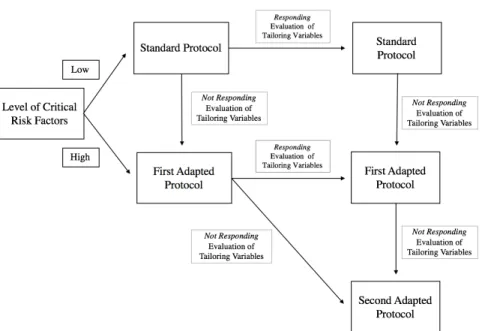
Within school contexts, the noncurricular model links these components across a three-tiered organizational framework (Walker et al., 1996), creating a continuum of behavioral support (Bradshaw, Waasdorp, & Leaf, 2015; Horner, 2017). Wehby & Kern (2014) outlined the integration of an adaptive intervention model and multilevel systems of behavioral support as a responsive approach to intervention intensification for non-responders of Level II support. Adaptations were presented as modifications to an existing treatment protocol (eg, a standardized Level II treatment) to address each of the.
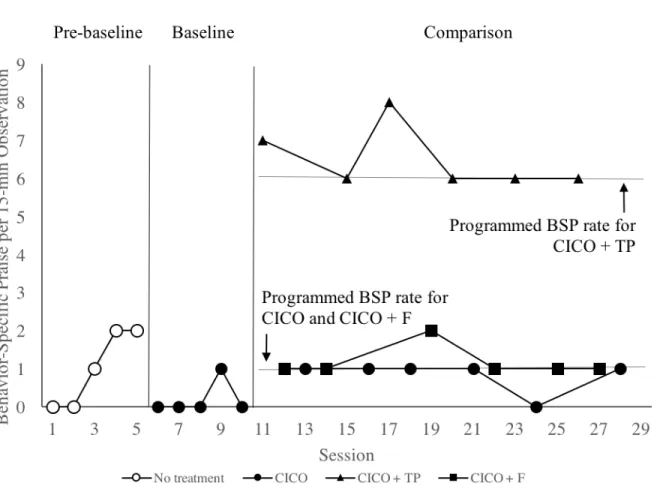
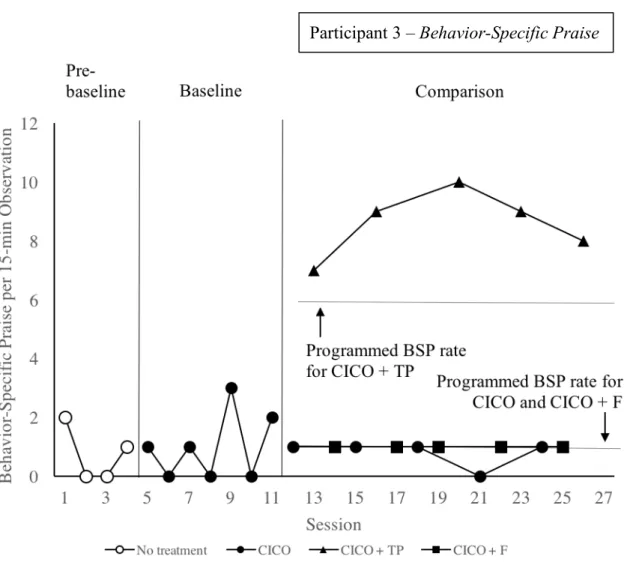
Examples of an adaptive approach to intervention intensification in Level II research demonstrate the value of adaptations to a standard treatment protocol informed by critical factors. While definitions of behavior-specific praise vary within educational research, the distinct form of recognition is generally understood to include. Teachers' incidental use of behavior-specific praise is associated with effectively increasing a range of appropriate student behaviors, student disability, and grade level.
Additional research is needed to examine the use of these variables as critical factors within an adaptive approach to intervention intensification at Level II.
Method
Definitions, examples, and non-examples of student-related dependent variables measured through the MOOSES program are found in Table 2. All rating scales were completed before study results were provided to participating teachers. Each participating CICO coordinator and teacher attended a one-on-one training session prior to the start of the baseline phase.
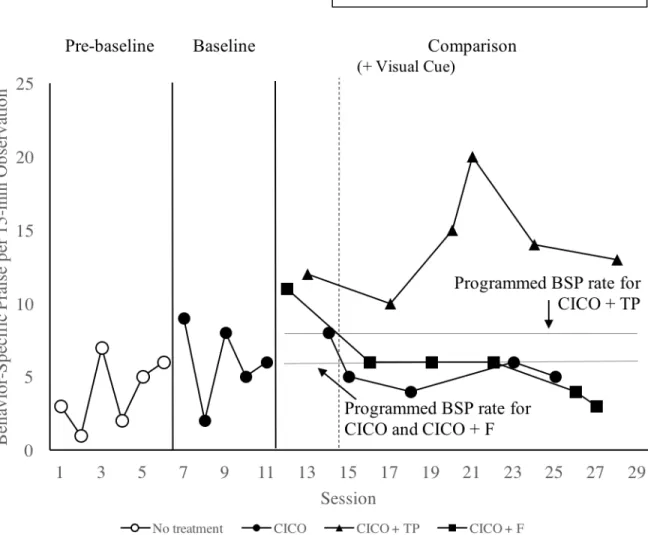
The script provided an overview of CICO and an opportunity to check the student's understanding of the treatment. One variation of the standard CICO protocol addressed a teacher practice (CICO + TP), while the other addressed a behavioral function (CICO + F). Procedures of the CICO + TP condition were almost identical to CICO procedures implemented during the baseline phase, with the exception that concerns.
Before beginning the comparison phase, the first author evaluated the FBA scores for each participating student and developed a hypothesis about the primary consequence of maintaining the student's disruptive behavior.
Results
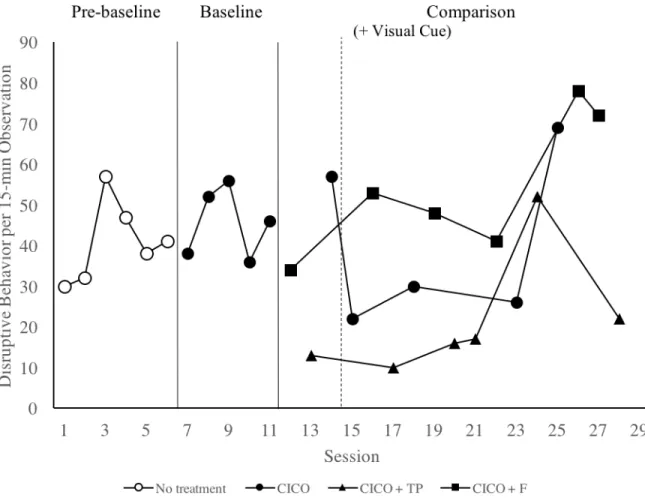
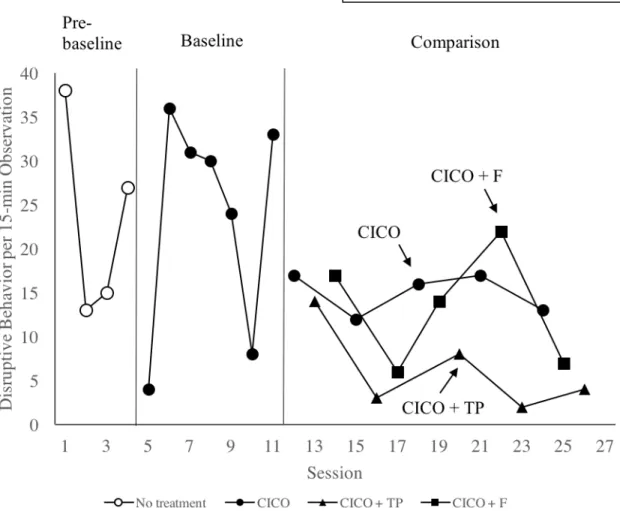
In the pre-baseline phase, Participant 1 exhibited high levels of disruptive behavior, with rates of the behavior ranging from 30 to 57 occurrences per session. 15-minute session. With the introduction of the baseline phase, the levels of the behavior remained high and a zero-celerating trend with increased stability was observed (range of values fell within ± 25% of the median value of the condition). During the comparison phase, levels of disruptive behavior remained high with continued implementation of CICO.
Relative to the CICO condition, levels of disruptive behavior in the CICO + F condition were consistently higher. Levels of disruptive behavior in the CICO + TP condition were consistently lower than observed levels in the CICO condition. Thus, a functional relationship was demonstrated between CICO + TP and reduced rates of disruptive behavior relative to implementation of CICO.
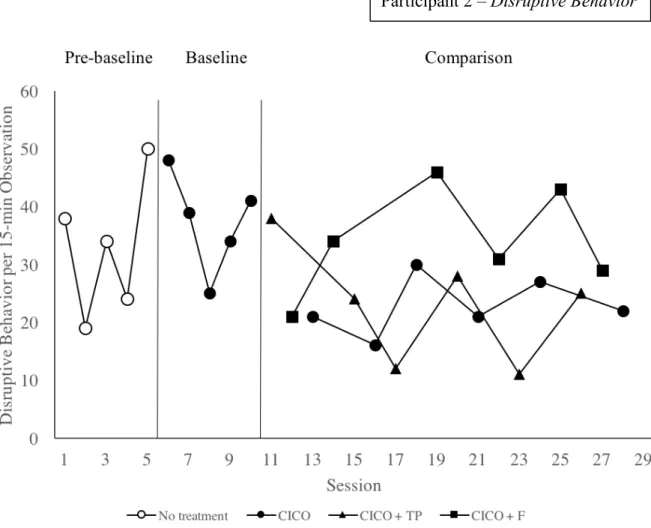
During the comparison phase, levels of disruptive behavior decreased with continued implementation of the standard CICO protocol, while variability in the data values Participant 1 – Disruptive Behavior increased. As with Participant 1, levels of disruptive behavior observed during the CICO + F condition were consistently higher than those of the CICO condition. As counter-therapeutic changes in levels were observed for five of six adjacent data points of the comparison conditions, a functional relationship between CICO +F and reduced disruptive behavior was not demonstrated.
Likewise, a functional relationship between CICO + TP and decreased rates of disruptive behavior was not demonstrated given inconsistent differentiation between the data paths for the CICO + TP and CICO conditions (PND = 66.7%). As with Participant 1, levels of disruptive behavior in the CICO + TP condition were consistently lower than those observed in the CICO + F condition, with differentiation observed for five of six adjacent data points for the compared conditions. During the comparison phase, the level of disruptive behavior decreased and stabilized, and a zero-celerating trend was observed with continued implementation of CICO (100% of reach).
Inconsistent differentiation between levels of disruptive behavior in the CICO and CICO + F conditions occurred, providing insufficient evidence of a functional relationship between the conditions (PND = 40%). As with Participant 1, levels of disruptive behavior in the CICO + TP condition were consistently lower than observed levels in the CICO and CICO + F conditions.
Discussion
Although function-based modifications to CICO have previously been associated with improved behavioral outcomes for students with problem behaviors, the results of the current study differ from previous findings, providing evidence for their relative ineffectiveness. As in the current study, four of the reviewed studies adapted the standard protocol to provide a function-based incentive at the end of the day, conditional on goal achievement (Campbell & Anderson 2008; Kilgus et al., 2016; March & Horner, 2002; Turtura, Anderson, & Boyd, 2014). All four studies reported results indicating a functional relationship between implementation of the modified treatment and improved student behavior.
Although the findings seem to support the potential of function-based adaptations in Level II, the interpretation of the study results is less clear when considering those modifications made to the standard protocol simultaneously and in addition to a function-based stimulus. In this study, a single, indirect assessment method was used – the administration of FACTS. Although administration of the FACTS alone has been recommended as an abbreviated approach to assessing functional behavior at Level II (e.g., McIntosh, Campbell, Carter, & Dickey, 2009), evidence suggests that indirect assessments may be a non- reliable for determining behavioral function (see Oliver, Pratt, & Normand, 2015).
Therefore, it is possible that the hypothesized functions generated by the FACTS were inaccurate, leading to a misalignment between the CICO + F condition adjustments and the actual behavioral functions. Given the preliminary nature of the current findings and the limitations of interpreting existing research on function-based adjustments to CICO, more research on systematic intensifications of CICO based on behavioral function is clearly needed before the significance of the variable as a critical factor in process is rejected or promoted. Level II. Two of the three teachers reported that they preferred CICO+F over the other treatment options when interviewed to assess their opinions on the efficacy of the treatments compared.
Related to interference from multiple treatments, observations of disruptive behavior during CICO sessions of the comparison phase deviated from the basic patterns of responding across participants, despite counterbalanced conditions. This change in response patterns suggests that participants' experience with one condition from the comparison phase may have influenced the effectiveness of the other conditions. Because the current study did not use a “best alone” condition to examine the data pattern of the superior treatment in the absence of rapid alternation with other conditions, its ultimate, “separate” effects are unclear.
Given the preliminary nature of the present findings, replication of the current study is needed to strengthen their validity. Finally, CICO was adapted in this study after implementation of the standard protocol was judged to be inadequately effective.
Conclusion
A two-year study of the outcomes of the Check, Connect, and Expect intervention for students at risk for serious behavioral problems. A systematic evidence review of the Check-in/Check-out program for reducing student challenging behavior. 38th Annual Report to Congress on the Implementation of the Individuals with Disabilities Education Act, 2016.
Talking to peers without permission; the target student watches the teacher's model instructions; listening to instructions but not raising his hand to offer a response when given the opportunity to respond. Note: A 5-s encoding delay was used to pause the recording of active participation; the encoding delay required the observer to observe the absence of a response for 5 s before response recording was paused. Associated with an academic response and a behavioral response, a chain of sequentially connected behavioral units required to perform a required response (eg, when instructed to write a word, writing each letter of a word; when instructed to move seats, push a chair, walk to a new location and sitting).
A continuous occurrence of the topography of an individual behavior that was defined as disruptive behavior was coded as one response, unless the duration of the occurrence was longer than 7 s; the continuous occurrence of a response lasting longer than 7 s was coded as a single response every 7 s until the response ended. Teacher Academic OTR Frequency A question, statement, or gesture by a teacher to a target student or group, including a target student seeking an answer to an academic request. Behavioral OTR Frequency A question, statement, or gesture by a teacher to a target student or a group that includes the target student seeking a response to a procedural request that does not indicate disapproval of the students' social behavior.
Teachers request the target student to stand on his/her chair and push; teacher asks the whole class to take out a textbook;. Teacher asks the target student to explain his thinking related to an academic response; teacher redirects the target student's noncompliant behavior. Frequency A verbal statement by the teacher to the target student or a group including the target student indicating that academic or social behavior is approved as the recognition of adequacy or accuracy.
Reprimand Frequency A verbal statement made by the teacher to the target student or group of students indicating disapproval of the student's social behavior; that. Evaluation of the component, attempting to retrieve home-school reports, began after completion of students' first DPR in the baseline phase or during the student's second CICO cycle. With this white CICO sheet you earn points in class and then we meet at the end of the day to see if you have reached your point goal.
If you reach your point goal today, you'll earn special time at the end of the day with your friend.