Agriculture in Egypt
Mahmoud Saleh, Nabil El-Wakeil, Huda Elbehery, Nawal Gaafar, and Shimaa Fahim
Abstract Biological control is the use of beneficial organisms (predators, parasit- oids, or pathogens) to decrease the population density of pest organisms (insects, mites, or plant pathogens). It is a main component of sustainable agriculture which is a system for maintaining the production on the long run without degrading the environmental resources. With the increased consciousness about the hazards of traditional chemicals in agriculture, it was noticed a remarkable decrease in the use of pesticides and an increase in the use of biological control agents (natural enemies). Biological control in any country depends on many factors, of the top importance are three namely: an abundance of natural enemies in the country, mass production, and field application of these natural enemies for the pest control.
Egypt, like many other countries, has the potentiality to have a biological control industry. In this chapter, we discussed the status and potential of biological control in sustainable agriculture in Egypt through studying the abundance, the mass production, and the field application of natural enemies. Studied natural enemies included parasitoids, predators, predatory mites, and entomopathogenic nematodes.
Keywords Biological control, Entomopathogenic nematodes, Insect predators, Parasitoids, Predacious mites, Sustainable agriculture
Contents
1 Introduction . . . 146
2 Background . . . 147
2.1 Definition of Sustainable Agriculture and Biological Control . . . 147
2.2 History of Biological Control . . . 148
2.3 Abundance of Natural Enemies . . . 148
2.4 Mass Production of Natural Enemies . . . 149
M. Saleh, N. El-Wakeil (*), H. Elbehery, N. Gaafar, and S. Fahim
Pests and Plant Protection Department, National Research Centre, Dokki, Cairo, Egypt e-mail:[email protected]
A. M. Negm, M. Abu-hashim (eds.),Sustainability of Agricultural Environment in Egypt: Part II - Soil-Water-Plant Nexus, Hdb Env Chem (2019) 77: 145–188, DOI 10.1007/698_2017_162,©Springer International Publishing AG 2017, Published online: 14 December 2017
145
2.5 Field Application of Natural Enemies . . . 151
3 Pillars of Biological Control Industry . . . 152
3.1 Abundance of Natural Enemies . . . 152
3.2 Mass Production of Some Natural Enemies . . . 159
3.3 Field Application of Natural Enemies . . . 164
4 Potential of Biological Control in Egypt . . . 174
5 Conclusions and Recommendation . . . 177
References . . . 178
1 Introduction
Egypt is a populous country of about 90 million people living near the banks of the Nile River in an area of about 5% of its whole 1 million km2area. The large desert areas are mostly inhabited. The total fertile area is about 3.3 million ha of which 25%
is reclaimed from the desert. Agriculture contributes over 13% of the Egyptian gross domestic product (GDP) and over 30% of employment opportunities. More than 57%
of Egyptians live in rural areas. That means enhancing sustainable agriculture and rural development should be an engine for the socio-economic development [1]. Agri- cultural production has to increase by 7% by 2050 to face the population increase [2]. This production increase should be achieved in a system that preserves the environment and limits the use of pesticides and undesirable chemicals in agriculture.
Sustainable agriculture is a system for maintaining production in the long run without degrading the natural resources by using low-input technologies. These technologies should improve soil fertility, enhance biological pest control, maximize recycling, etc. [3]. Sustainable agriculture has been neglected and suffered from limited adop- tion [4]. Integrated pest management programs of Ministry of Agriculture and Land Reclamation in Egypt avoid using chemical pesticides except in case of necessity using selective pesticides at optimal concentrations and time to protect the natural enemy population in Egyptian fields [5].
“Biological control can be effective in all types of agricultural systems, includ- ing organic, sustainable, and conventional agriculture” [6]. Biological control is a natural process that plays an important role in the suppression of pests in field crop, vegetable, and orchards [7–9]. It is the use of a living organism (a predator, a parasitoid or a pathogenic) to decrease the population density of another organism (for example, an insect, a mite, or a plant pathogen). A lot of the best examples of biological control proceed completely unnoticed by the farmer, simply because both the pest and its natural enemies coexist at such low densities that there is no perceptible problem in the crop, even though the pest is present [10,11]. In short, whenever biological control has a role in pest population reduction, pest control decisions should be weighted by considerations of how natural enemies will be impacted, and what tactics might be practicable to conserve and maximize the efficacy of natural enemies [12]. It is generally approved that integrated biological
control is the preferred approach for realizing the sustainable agriculture. Biological control is self-sustaining, nonpolluting, and cheap. Success in biological control of agricultural pests has many ecological, economic, social, and environmental positive impacts. It is an alternative to broad-spectrum and persistent pesticides as well as to genetically engineered resistance in crops [13].
Biological control industry in a given country depends on several factors including the highly qualified personnel, the infrastructure, the equipment, and the market. Also of the most important factors are the three pillars of biological control industry, namely (1) Abundance of the natural enemies in the native environment where they can be used for achieving the sustainable management of the target pests. (2) The possibility of mass producing the natural enemies either in vivo or in vitro to meet the needs of the biopesticide market. (3) The field application technology and measures of success in the biological control process.
The objective of this chapter is to discuss the status and potential of biological control in sustainable agriculture in Egypt through monitoring the abundance of natural enemies, the mass production, and the field application of these natural enemies.
Studied natural enemies include (a) Parasitoids and predators, (b) Predatory mites, and (c) Entomopathogenic nematodes.
2 Background
2.1 Definition of Sustainable Agriculture and Biological Control
Sustainable agriculture is a system for maintaining production in the long run without degrading the natural resources by using low-input technologies [3]. These technologies should improve soil fertility, enhance biological pest control, maximize recycling, and so on. In another definition, sustainable agricul- ture is an integrated system of the agricultural practices in a specific site that is lasting over the long term. This system should satisfy human food and fiber needs, enhance environmental quality, and efficiently use the non-renewable resources [1,3].
Biological control, where natural enemies are periodically distributed, is com- mercially applied over large areas in many countries. Initially biological control was used to control insect pests that had become resistant to pesticides. Now it is applied for reasonable cost/benefit ratio which is comparable with conventional chemical pesticides. More than 125 species of natural enemies are commercially used for biological control worldwide [14]. Biological control can be applied either in open fields, in case of crops that are attacked by a few pest species, or in greenhouse crops. It has no phytotoxic effects on young plants, flowers, or
premature fruits. Biological control can be effective in all types of agricultural systems: organic, sustainable, and conventional [6].
2.2 History of Biological Control
The history of biological control may be considered from Egyptian records of 4,000 years ago where domestic cats were depicted as useful in rodent control.
With the development of sophisticated agriculture, the Chinese citrus growers placed nests of predaceous ants in trees where the ants fed on foliage feeding insects. Insect parasitism was recognized in 1602 by the Italian Aldrovandi who observed the cocoons ofApanteles glomeratusbeing attached to larvae ofPieris rapae. By 1762 the first successful importation of an organism for biological control was the introduction of the mynah bird from India to the island of Mauritius for locust control. Most biological control agents, including preda- tors, parasitoids, and insect pathogens at work in the agricultural environments are naturally occurring ones, which provide excellent regulation of many pests with little or no assistance from humans [9,10,15–19]. The natural existence of biological control agents is one reason that many plant-feeding insects do not become economic pests. There is a great potential for increasing the benefits from natural enemies, through the elimination or reduction of the use of chem- ical pesticides [20].
2.3 Abundance of Natural Enemies
There are natural enemies in nature, and they prevent some species from population outbreaks. This is widely identified as a fact, but it is a phenomenon that cannot be easily explained from an ecological point of view. Natural enemies definitely eat/parasitize their preys/hosts.
Egg parasitoids, by definition, are those that attack and complete their development within a host egg. They may be either solitary or gregarious, but in all cases, they prevent the host egg from hatching and completing its development (Fig. 1). Trichogramma species being abundant in all inhabiting continents were chosen for commercial production and field application worldwide.
Predatory mites act as an important biological control agents of small arthropod pests such as other mite pest groups, whiteflies, and thrips. According to van Lenteren [21], Acari is the second biggest group (after Hymenoptera) of natural enemies used commercially.
Phytoseiids are widely used in biological control programs [22, 23], these predatory mites can reduce the population of spider mite pests under the econom- ical damage levels in some agricultural ecosystems; its development depends on the type of food, temperature, and humidity. It is found that where the predatory mites are easily found, then the incidence of pest damage is decreased.
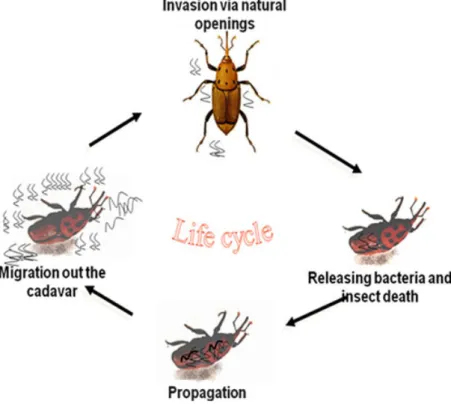
Entomopathogenic nematodes (EPNs) in families Steinernematidae and Heterorhabditidae are lethal microscopic roundworms associated with symbi- otic bacteria in the family Enterobacteriaceae (genera Xenorhabdus and Photorhabdus). EPNs are effective in controlling a variety of economically important pests. EPNs have recently become a main component of biological control of insect pests so that it ranks #2 in the market of bioinsecticides after the entomopathogenic bacterium,Bacillus thuringiensis. The only free-living stage of the nematode is the infective juvenile (IJ) which is capable of actively seeking out hosts [24]. Following entry through natural body openings, and in some cases through the cuticle, the IJs release the symbiotic bacteria into the insect hemocoel [25]. The bacteria then multiply rapidly, killing the host within 1–2 days. EPNs complete 1–3 generations in the host cadaver and new infective juveniles are produced as food resources are depleted. Nematodes feed on host tissues and bacterial cells and complete their life cycle in 7–12 days (Fig. 2).
Huge numbers of IJ then emigrate from the insect cadaver looking for surviving victims. Thus, EPNs have potential to recycle and provide long-term pest control.
2.4 Mass Production of Natural Enemies
Mass production of natural enemies involves the production of millions of insects (host and natural enemy), with the objectives of controlling pests. Insect production that can accomplish goals at an acceptable cost/benefit ratio, in numbers exceeding from 10 thousand to 1 million times the average productivity of a population of native females; Systematic, automated activity conducted in integrated facilities, to produce a relatively large supply of insects for distribution. Mass rearing is started from smaller-scale or research rearing (conducted by one or two people), or intermediate-sized rearing, upon which basic research about the target (often an agricultural pest) and the natural enemy (parasitoid or predator) are conducted.
Fig. 1 Life cycle ofTrichogrammaspecies
Therefore, to produce natural enemies, two species have to be reared, the pest and the natural enemy. The potential for rearing a large number of natural enemies increased as artificial diets began to be developed since the 1960s, with emphasis on artificial diets for Lepidoptera, Coleoptera, and Diptera.
There are more than 200 known species ofTrichogrammaaround the world, but only 19 species have been mass reared for use in augmentative biological control [26]. In fact, for many years, only one or two species dominated field trials and commercial applications in each of the major continents, T. chilonis in Asia, T. dendrolimi in China, T. evanescens in Egypt, and Europe and T. pretiosum in both North and South America [14,27–30].
These species appear to have dominatedTrichogrammatrials based primarily on ease of rearing on the factitious stored product [31]. While commercial viability is clearly enhanced by the ease of rearing and a broad host range of target pests, technical effectiveness can be an important trade-off for this strategy.
The phytoseiid mite Phytoseiulus persimilis was successfully mass rearing on the two-spotted spider mite, Tetranychus urticae, whereas P. persimilis had great population growth rate comparative to its prey mite [32]. Additionally, among the most important phytoseiid mites that sold commercially and used as bio-control agents of greenhouse pests wereNeoseiulus californicus,N. barkeri,N. cucumeris, N. fallacis, Iphiseius degenerans, Galendromus helveolus, and G. occidentalis [33,34].
Fig. 2 Life cycle of entomopathogenic nematodes
Entomopathogenic nematodes could be produced through either in vivo or in vitro procedures. For laboratory and semi-field experiments, in vivo production should be the suitable technique. When it comes to using of EPNs for large scales, in vitro production is currently the economically practical strategies to supply EPNs at rational costs.
2.5 Field Application of Natural Enemies
One goal in pest control is to develop methods that suppress pests without harming other organisms. An ideal method would be to augment organisms to control insects. This can be accomplished by mass releasing the natural enemies for controlling agricultural pests.
Trichogramma releases have been used against pests on a wide variety of agricultural crops including industrial crops (beet, cotton, soybean, and sugarcane), cereals (corn, rice, and sorghum), vegetables (cabbage, pepper, and tomato), and tree crops (apple, citrus, grape, and olive) [26, 27, 35, 36]. During the past five decades, Trichogramma spp. have been evaluated as biological control agents for lepidopteran pest suppression in cotton [20,37–40].
Augmentative releases of lacewings are released into commercial crops; they are released as first instar larvae at a rate of 1,000/ha, when released into sites with aphid infestations. Growers releasing lacewings early in areas without the nearby use of broad-spectrum organophosphate insecticides gained good control of aphids [41, 42]. However, the results are achieved by a combination of what is released, and the higher level of naturally occurring natural enemies in different sites. Smith [35] suggested that greater highlighting should be placed on the combination of more than one of bio-control agents, i.e.,Trichogrammawith other control options.
Trials have shown that this combination can provide greater control of stem borers in corn in the USA [43], India [44], and China [45]. In Egypt, a biological control program ofHelicoverpa armigerais the combined use of parasitoids and predators.
The combination between parasitism of Trichogramma species and predation of Chrysoperla carnea onH. armigerawas investigated under greenhouse [46]. This management type deserves greater attention as a practicable tactic in IPMs.
There were many examples for the successful use of the predatory phytoseiids against several pests. Tetranychus urticae is one of the most important pest infesting many fruit trees, field crops, vegetables and greenhouse crops [47] causes a reduction in the crop yields [48]. One of the most successful bio-control agents is P. persimiliswhich is used in controllingT. urticae. It is widely used commercially in the control ofT. urticae. Other phytoseiid species have also been used to control T. urticae. For example, N. californicus has used successfully in the biological control of T. urticae [49]. Moreover, N. californicus has been reported to be effective in control of the broad mite, Polyphagotarsonemus latus, on pepper [50]
as well as other tarsonemid mite pest Phytonemus palliduson strawberry [51,52].
Field application of EPNs does not require specialized application equipment since they are well matched with regular agrochemical tools, i.e., sprayers and irrigation systems. Each nematode species has a unique array of characteristics, including different environmental tolerances, dispersal tendencies, and foraging behaviors [24].
3 Pillars of Biological Control Industry 3.1 Abundance of Natural Enemies
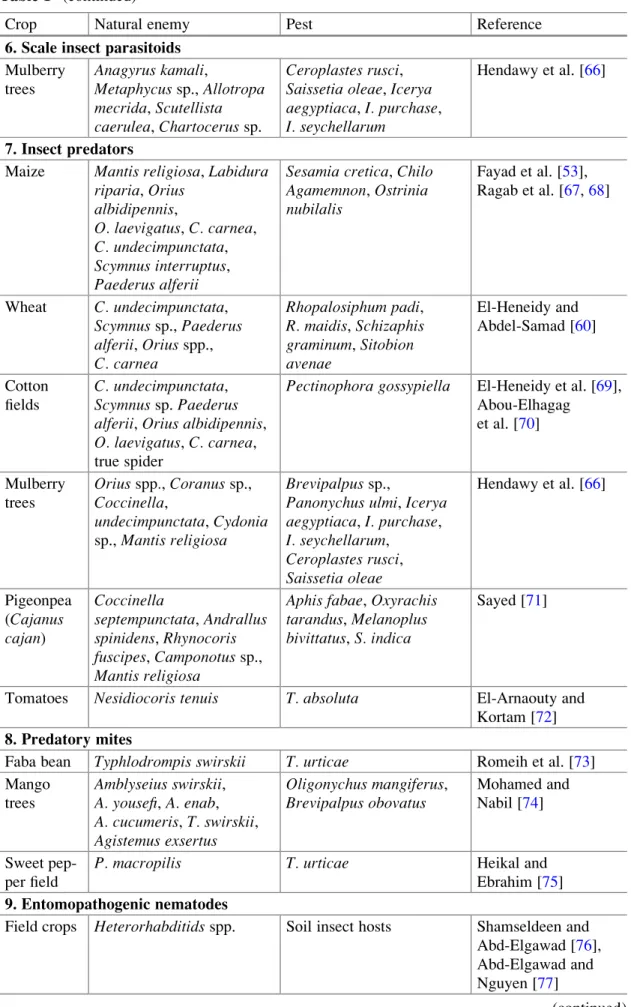
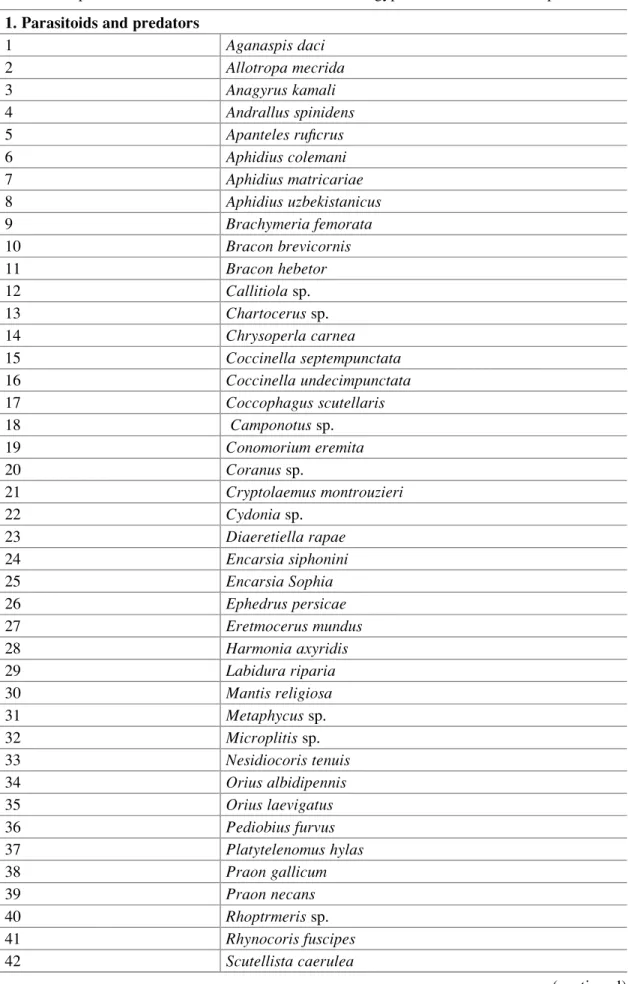
Table1 shows an assortment of survey attempts of some natural enemies in Egypt, including egg parasitoids, larval parasitoids, pupal parasitoids, aphid parasitoids, whitefly parasitoids, insect-scale parasitoids, insect predators, predatory mites, and entomopathogenic nematodes.
3.1.1 Parasitoids and Predators
Egg Parasitoids
Egypt cultivates about 105,000 ha of sugar cane yearly as a main crop of the sugar industry. The lesser sugar cane borerChilo agamemnonis the most destructive pest of sugarcane in Egypt. Natural parasitism by the egg parasitoids Trichogramma evanescens on C. agamemnon egg masses reached up to 80% [85–87]. Unfortu- nately, this high rate of natural parasitism occurs at the end of the season and shortly before cropping. This pest attacks the crop in May, 1 month earlier than the parasitized activity [88].
Around the world today,Trichogrammaspecies are the most broadly used as an insect natural enemy [26], partly because they are easy to mass production and they attack various important insect pests. The diversity of locally occurring egg para- sitoid species had been surveyed and identified [56]. In Egypt, Fayad et al. [53]
surveyed the natural enemies associated with the three corn borers,Sesamia cretica, Chilo agamemnon, andOstrinia nubilalisin corn fields in Egypt. They recorded the egg parasitoids Trichogramma evanescens and Platytelenomus hylas, the larval parasitoidsApanteles ruficrus,Bracon hebetor,Tachina larvarum, andMicroplitis sp. and the pupal parasitoids, Conomorium eremita,Callitiolasp. andRhoptrmeris sp. Ragab et al. [54] surveyed the egg parasitoids associated withOstrinia nubilalis and Chilo Agamemnon; they confirmed that Trichogramma evanescens was dom- inant in maize fields. Ragab et al. [55] investigated sorghum and maize fields to assess the egg parasitoids accompanyingS. cretica, they found thatPlatytelenomus hylas has shown good efficacy in early of the season whenS. creticais dispersed.
Several Trichogramma species associated with eggs of the olive moth (Prays oleae) and the jasmine moth (Palpita unionalis) in olive groves in western desert in
Table 1 Abundance of natural enemies in Egypt
Crop Natural enemy Pest Reference
1. Egg parasitoids
Maize Platytelenomus hylas Sesamia cretica Fayad et al. [53]
Trichogramma evanescens Ostrinia nubilalis,Chilo agamemnon
Maize T. evanescens Ostrinia nubilalis,Chilo agamemnon
Ragab et al. [54]
Maize Platytelenomus hylas Sesamia cretica Ragab et al. [55]
Olive T. bourarachae, T. cordubensis, T. euproctidis,
T. evanescens,T. oleae, T. nerudai
Prays oleae,Palpita unionalis
Hegazi et al. [40,56]
Olive fields
T. evanescens Prays oleae Agamy [39]
Tomatoes Trichogramma-29 strains Tuta absoluta El-Arnaouty et al. [16]
2. Larval parasitoids
Maize Apanteles ruficrus,Bracon hebetor,Tachina
larvarum,Microplitissp.
Sesamia cretica,Ostrinia nubilalis,Chilo
agamemnon
Fayad et al. [53]
Guava or citrus fruits
Aganaspis daci Bactrocera zonata, Ceratitis capitata
El-Heneidy et al. [19]
Tomatoes, Potatoes
Bracon hebetor,Apanteles spp.
Phthorimaea operculella, Spodoptera littoralis, Agrotis ipsilon
ELbehery [57]
3. Pupal parasitoids
Maize Conomorium eremite Sesamia cretica Fayad et al. [53]
Callitiolasp.,Rhoptrmeris sp.
Ostrinia nubilalis,Chilo agamemnon
Maize Pediobius furvus Sesamia cretica El-Wakeil et al. [58]
Cabbage Brachymeria femorata Piers rapae Kamal [59]
4. Aphid parasitoids
Wheat Aphidius matricariae, A. colemani,Diaeretiella rapae,Praon necans, Ephedrus persicae Trioxys sp.
Rhopalosiphum padi, R. maidis,Schizaphis graminum,Sitobion avenae
El-Heneidy and Abdel-Samad [60], Sobhy et al. [61]
Wheat Aphidius matricariae, A. uzbekistanicus,Praon gallicum
Sitobion avenae Ibrahim and Afifi [62]
5. Whitefly parasitoids Tomato,
Potato
Encarsia Sophia, Eretmocerus mundus, E. siphonini
Bemisia tabaci Abd-Rabou and Abou-Setta [63], Abd-Rabou [64], Simmons and Abd-Rabou [65]
(continued)
Table 1 (continued)
Crop Natural enemy Pest Reference
6. Scale insect parasitoids Mulberry
trees
Anagyrus kamali,
Metaphycussp.,Allotropa mecrida,Scutellista caerulea,Chartocerussp.
Ceroplastes rusci, Saissetia oleae,Icerya aegyptiaca,I. purchase, I. seychellarum
Hendawy et al. [66]
7. Insect predators
Maize Mantis religiosa,Labidura riparia,Orius
albidipennis,
O. laevigatus,C. carnea, C. undecimpunctata, Scymnus interruptus, Paederus alferii
Sesamia cretica,Chilo Agamemnon,Ostrinia nubilalis
Fayad et al. [53], Ragab et al. [67,68]
Wheat C. undecimpunctata, Scymnussp.,Paederus alferii,Oriusspp., C. carnea
Rhopalosiphum padi, R. maidis,Schizaphis graminum,Sitobion avenae
El-Heneidy and Abdel-Samad [60]
Cotton fields
C. undecimpunctata, Scymnussp.Paederus alferii,Orius albidipennis, O. laevigatus,C. carnea, true spider
Pectinophora gossypiella El-Heneidy et al. [69], Abou-Elhagag
et al. [70]
Mulberry trees
Oriusspp.,Coranussp., Coccinella,
undecimpunctata,Cydonia sp.,Mantis religiosa
Brevipalpussp.,
Panonychus ulmi,Icerya aegyptiaca,I. purchase, I. seychellarum,
Ceroplastes rusci, Saissetia oleae
Hendawy et al. [66]
Pigeonpea (Cajanus cajan)
Coccinella
septempunctata,Andrallus spinidens,Rhynocoris fuscipes,Camponotussp., Mantis religiosa
Aphis fabae,Oxyrachis tarandus,Melanoplus bivittatus,S. indica
Sayed [71]
Tomatoes Nesidiocoris tenuis T. absoluta El-Arnaouty and Kortam [72]
8. Predatory mites
Faba bean Typhlodrompis swirskii T. urticae Romeih et al. [73]
Mango trees
Amblyseius swirskii, A. yousefi,A. enab, A. cucumeris,T. swirskii, Agistemus exsertus
Oligonychus mangiferus, Brevipalpus obovatus
Mohamed and Nabil [74]
Sweet pep- per field
P. macropilis T. urticae Heikal and
Ebrahim [75]
9. Entomopathogenic nematodes
Field crops Heterorhabditidsspp. Soil insect hosts Shamseldeen and Abd-Elgawad [76], Abd-Elgawad and Nguyen [77]
(continued)
Egypt were surveyed, where T. bourarachae, T. cordubensis, T. pretiosum, and T. cacociae were recorded [39,56]. In tomatoes, El-Arnaouty et al. [16] surveyed the natural enemy’s associated Tuta absoluta, they mentioned that Trichogramma species were the dominant parasitoid.
Larval Parasitoids
Larval parasitoids come in the second important level after egg parasitoids. The following larval parasitoidsApanteles ruficrus,Bracon hebetor,Tachina larvarum, and Microplitis sp. were recorded on corn borers S. cretica, C. agamemnon and O. nubilalisin maize fields [53]. El-Heneidy and Sekamatte [89] surveyed the larval parasitoids of the cotton bollworms and recorded 21 parasitoid species belonging seven families. Of the 21 species, 10, 7, and 4 were found onHelicoverpa armigera, Earias insulana, and Pectinophora gossypiella, respectively. The larval parasitoid Aganaspis daci was retrieved from naturally infested Bactrocera zonata or Ceratitis capitata in guava or citrus orchards in Giza, Egypt [19]. Elbehery [57]
found two larval parasitoids Bracon spp. and Apanteles spp. on the potato tuber moth Phthorimaea operculella, the cotton leafwormSpodoptera littoralis, and the black cutwormAgrotis ipsilon.
Pupal Parasitoids
In 1937 the most important pupal parasitoidBrachymeria femorataon the pupae of the cabbage wormP. rapaewas recorded for the first time and described by Kamal [59]. Fayad et al. [53] surveyed this pupal parasitoid;Conomorium eremiteagainst S. cretica; and other two wasp species Callitiola sp. and Rhoptrmeris sp. against C. agamemnon and O. nubilalis in maize fields. El-Wakeil et al. [58] surveyed and identified a pupal parasitoid (gregarious endo-parasitoid) Pediobius furvus (Eulophidae) of Sesamia cretica pupae in El-Beheira Governorate, Egypt. The Table 1 (continued)
Crop Natural enemy Pest Reference
Mango Heterorhabditis egyptii Soil insect hosts Abd-Elgawad and Ameen [78]
Citrus Heterorhabditis indica Soil insect hosts Abdel-Zaher and Abd-Elgawad [79], Abouelhag and El-Sadawy [80]
Hibiscus Heterorhabditis taysearae, Steinernema abbasi, Steinernema carpocapsae
Soil insect hosts Shamseldeen et al.
[81,82], Abu-Shady et al. [83]
Steinernema Kushidai Soil insect hosts Atwa [84]
parasitism percent were 8.4 and 15.4 in August and September, respectively. The parasitoids emerged from one pupa ranged from 28 to 222 wasps.
Aphid Parasitoids
There are several aphid parasitoids prevails on wheat aphids (Rhopalosiphum maidis, Rhopalosiphum padi, and Sitobion avenae) in Egypt. Ibrahim and Afifi [62] stated that the highest aphid counts on wheat cultivars at the end of March.
Aphidius matricariae, A. uzbekistanicus, and Praon gallicum were the primary parasitoids of Sitobion avenae. El-Heneidy and Abdel-Samad [60] surveyed para- sitoid species in the experimental wheat fields associated cereal aphid species which are mostly specific on a single or certain group of insect hosts: Aphidius matricariae, A. colemani, Diaeretiella rapae, Praon necans, Ephedrus persicae, and Trioxys sp. Sobhy et al. [61] surveyed the seasonal occurrence of aphid parasitoid species, associated with aphid on wheat plants. The results revealed the presence of these parasitoid species: A. colemani, A. matricariae, Diaeretiella rapae, Praon necans,Ephedrus persicae,Aphidius spp., andAphelinus spp. Para- sitism percent of A. colemanireached 21.7%.
Whitefly Parasitoids
The whitefly Bemisia tabaci is very important insect pest infesting most of vege- tables and field crops in Egypt. The whiteflies parasitoids Encarsia Sophia, Eretmocerus mundus E. siphonini were surveyed for several years in Egypt [63–
65]. These parasitoids can’t control the whitefly population by themselves in Egypt.
Therefore insecticides are still used to control this pest.
Scale Insect Parasitoids
Hendawy et al. [66] recorded the following parasitoids:Encarsia citrina,Anagyrus kamali,Metaphycus sp.,Allotropa mecrida,Scutellista caerulea, and Chartocerus sp. during their studies on Mulberry trees infesting with scale insects.
Inset Predators
Insect predators belong to several orders (Heteroptera, Neuroptera, Diptera, Hyme- noptera, and Coleoptera) and found in most of the environments throughout the world. Larvae and/or adults are the voracious predators of exposed eggs, small larvae of beetle and lepidopterous pests. It also feeds on slow-moving, soft-bodied arthropods such as aphids, jassids, thrips, whitefly, scales, mealy bugs, and mites.
In Egypt,Mantis religiosa,Labidura riparia,Orius albidipennis,O. laevigatus, C. carnea,C. undecimpunctata,Scymnus interruptus, and Paederus alferii associ- ating with corn borers S. cretica, C. agamemnon and O. nubilalis in maize fields were recorded [53, 67, 68]. El-Heneidy et al. [70] surveyed the population of predators continually in clover then in cotton fields, who mentioned that the predators started to increase in the clover fields during March–May until it reached their peaks of abundance during late April and May. In June, the predators migrate to the cotton fields and achieve the maximum abundance in the latter fields during June and July. In cotton fields, El-Heneidy et al. [69] and Abou-Elhagag [90]
surveyed some predators in Egypt; they recorded Coccinella undecimpunctata, Scymnus sp. Paederus alferii, Orius spp., Chrysoperla carnea and true spider.
The considered predators reached their peaks during July and Early of August.
Oriusspecies was the dominant predator followed by spider. El-Heneidy et al. [91]
counted visually the predatory species accompanying cotton pests in Uganda. They recorded immature and adults stages of several predators: coccinellids, anthocoris, staphylinidae, labiduridae, syrphidae, ants, and true spiders. El-Heneidy et al. [92]
found that predators associated cotton insect pests were more dominant in early plantation than those in the late one, as well as in the mid of season than the end of the season.
The aphidophagous predatory species such as C. undecimpunctata, Scymnus interruptus,Paederus alferii,Oriusspp.,Chrysoperla carneaand true spider were recorded preying the cereal aphid species (Rhopalosiphum padi, R. maidis, Schizaphis graminum) in wheat fields [60]. A polyphagous predator widely distrib- uted in the Mediterranean region,Nesidiocoris tenuiswas recorded for the first time in Egypt associated withT. absoluta in aubergine and tomato plantations in Giza, Qalyubia, and Faiyum Governorates [72]. Sayed [71] recordedC. septempunctata, Andrallus spinidens,Rhynocoris fuscipes,Camponotussp., andMantis religiosaon Pigeonpea plants and mentioned that these predators played an important role in reduction insect pest population.
3.1.2 Natural Abundance of the Predatory Mites
Tetranychus urticaeis a major pest on strawberry, andN. californicus is one of the most important phytoseiid predators feeding on that mite pest. The results of Greco et al. [93] suggested thatN. californicusis a promising natural enemy for controlling T. urticae on strawberry. Domingos et al. [94] identified the mite fauna associated with grapevine in Brazil to evaluate the fluctuation of the populations of the phy- tophagous mites and their predators. T. urticae and Oligonychus mangiferus com- prised 74% of phytophagous mites. Euseius citrifolius and Neoseiulus idaeus comprised more than 80% of Phytoseiid mites.
The seasonal abundance of T. urticae and the naturally occurring predatory arthropods were investigated on castor bean, Egypt [95]. Their results showed that Stethorus gilvifronsandScolothrips longicorniswere the predominated preda- cious insects ofT. urticae. The abundance ofT. urticaeand its predatorS. gilvifrons
were the lowest in summer reaching its peak in spring. However, the mean abundance of S. longicorniswas the highest in summer followed by spring, winter, and autumn. Romeih et al. [73] investigated the population density ofT. urticaein Beheira Governorate, Egypt, during 2010–2012 on faba bean, and mentioned that the infestation ofT. urticae reached their peaks during March. The predatory mite Typhlodrompis swirskiiwas firstly recorded at the beginning of January for the two seasons.
The predatory mite Phytoseiulus macropilis in sweet pepper field and spider mite, T. urticae were surveyed weekly by [75]. A predatory mite could appear naturally in the absence of harmful pesticides and could play a good role as a biological control agent. Mohamed and Nabil [74] investigated the mango orchards to find the predators associated with mite pests and found thatAmblyseius yousefi, A. enab, A. cucumeris, A. cydnodactylon, T. swirskii, and Agistemus exsertus predatory mites were present in high numbers.
3.1.3 Natural Abundance of Entomopathogenic Nematodes
Surveys of entomopathogenic nematodes (EPNs) are useful for discovery of new species and strains, greater understanding of the nematode ecology and for expanded utilization of these nematodes in the biological control of insect pests [96,97]. There are about 70 species of Steinernema and 25 species of Heterorhabditis have been described worldwide [98–100]. Use ofGalleria-bait technique is common for isola- tion of entomopathogenic nematodes [101–107]. In this technique, larvae of the greater wax moth, Galleria mellonella is used for extraction of entomopathogenic nematodes from the soil. This insect is also used for laboratory evaluation of quality traits (including virulence) of entomopathogenic nematodes and for their in vivo mass production [97]. Surveys of EPNs have been conducted in many parts of the world [102,108–112]. Hominick [113] reported that searching for entomopathogenic nem- atodes often yield numerous isolates of steinernematids and/or heterorhabditids; he found that between 2 and 46% of the collected samples were positive.
Entomopathogenic nematode research started in Egypt in the 1970s by late Dr. Tayseer El-Kifl when she worked on the bio-control of the cotton leaf worm Spodoptera littoraliswithNeoaplectana(Steinernema)carpocapsae[114–116]. Native strains of EPNs were isolated for the first time in Egypt [117].
Identical surveys of EPNs in Egypt still in progress as Abd-Elgawad stated [118]. However, attempts of isolation of new EPNs are continuous in everywhere in Egypt. These continuous attempts are mostly irregular either in time or site [76–
83]. The study of Saleh et al. [18] was the first population in a specific region for an expanded period in Egypt. In this study, biweekly soil samples were collected from fruit orchards on the area around Cairo-Alexandria desert road during January–June 2014 and 2015. These orchards contained trees of citrus, pomegranate, figs, grapes, date palms, olives, mangoes, guava, pears, peaches, and apples. Both Steinernema andHeterorhabditisgenera could be isolated. The rate of nematode natural existence was varied according to the nematode genus and sampling time. Out of 180 soil
samples, entomopathogenic nematodes were isolated 30 times (28 Heterorhabditis and 2 Steinernema). Steinernema was found in January and March while Hetero- rhabditiswas found along the whole season with higher abundance in April–June. No clear relationship could be detected between the nematode abundance and the fruit type. Four isolates were selected for testing their virulence against the wax moth larvae G. mellonella.All tested isolates were virulent to the larvae with differences among them. Most of the previous attempts for isolation of entomopathogenic nematodes were through irregular field visits to different regions of Egypt, and most of the Egyptian nematode isolates belonged to Heterorhabditisspp. [81,117].
However,Steinernema carpocapsaewas identified for the first time in Egypt in 1996 [82] andSteinernema kushidai [84].
3.2 Mass Production of Some Natural Enemies
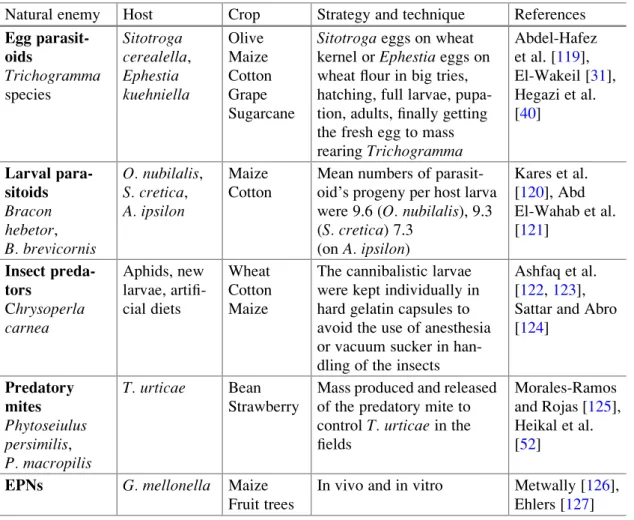
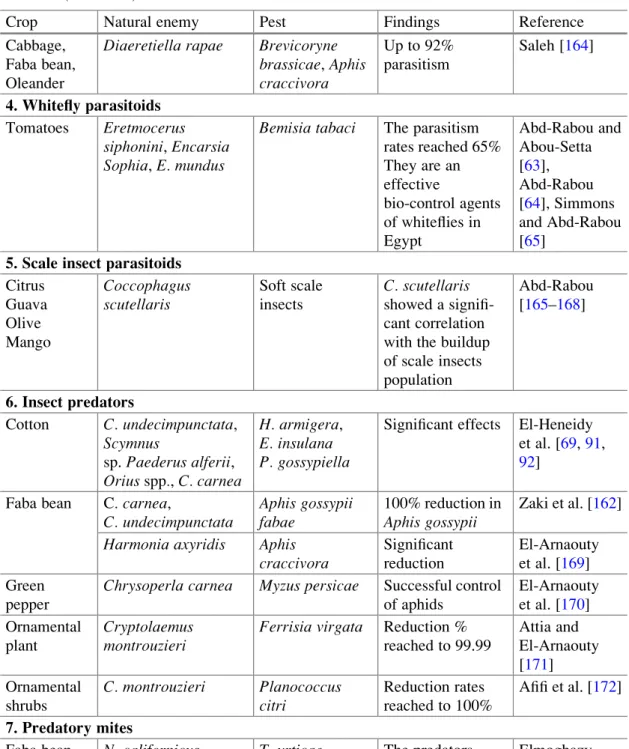
Table2shows a collection of mass production attempts of some natural enemies in Egypt, including egg parasitoids, larval parasitoids, insect predators, predatory mites, and entomopathogenic nematodes.
Table 2 Mass production of some natural enemies
Natural enemy Host Crop Strategy and technique References Egg parasit-
oids
Trichogramma species
Sitotroga cerealella, Ephestia kuehniella
Olive Maize Cotton Grape Sugarcane
Sitotrogaeggs on wheat kernel orEphestiaeggs on wheat flour in big tries, hatching, full larvae, pupa- tion, adults, finally getting the fresh egg to mass rearingTrichogramma
Abdel-Hafez et al. [119], El-Wakeil [31], Hegazi et al.
[40]
Larval para- sitoids Bracon hebetor, B. brevicornis
O. nubilalis, S. cretica, A. ipsilon
Maize Cotton
Mean numbers of parasit- oid’s progeny per host larva were 9.6 (O. nubilalis), 9.3 (S. cretica) 7.3
(onA. ipsilon)
Kares et al.
[120], Abd El-Wahab et al.
[121]
Insect preda- tors
Chrysoperla carnea
Aphids, new larvae, artifi- cial diets
Wheat Cotton Maize
The cannibalistic larvae were kept individually in hard gelatin capsules to avoid the use of anesthesia or vacuum sucker in han- dling of the insects
Ashfaq et al.
[122,123], Sattar and Abro [124]
Predatory mites Phytoseiulus persimilis, P. macropilis
T. urticae Bean Strawberry
Mass produced and released of the predatory mite to controlT. urticaein the fields
Morales-Ramos and Rojas [125], Heikal et al.
[52]
EPNs G. mellonella Maize
Fruit trees
In vivo and in vitro Metwally [126], Ehlers [127]
3.2.1 Mass Production of Parasitoids and Predators
Egg Parasitoids (Trichogramma)
Trichogramma was mass reared on different factitious hosts, including advantages and disadvantages of these systems as mentioned by El-Wakeil [31]. The focus on the hosts arises from the fact that only minor differences exist in the last step of Trichogramma production thus the host rearing is usually the most important step that decides on cost efficacy and viability of Trichogrammaproduction.
The eggs ofS. cerealellaare mostly used as a laboratory host forTrichogrammain Egypt, Europe as well many countries over the world. It is the first alternative host on which T. evanescens was successively reared on. Based on the mass rearing tech- niques forS. cerealella reported by Konig et al. [128], we developed a method with adapted procedures and equipment for mass rearing Trichogramma.Trichogramma has been mass-reared since early of the 1980s with peak production of million wasps/
day. The cost of production of Trichogramma species was reduced by 1/3 through improvement ofS. cerealellaegg collecting facilities [39,119,129].
Mass rearing of factitious hosts forTrichogrammaproduction is labor intensive and costly, besides being affected by abiotic and biotic factors. Studies on the rearing of Trichogramma in vitro on artificial host eggs began in the middle of 1970s in China [130]. Further research has shown that efficacies are similar to the same species reared from the factitious eggs. Oviposition stimulants that improved egg production by Trichogramma were selected [131]. Mechanized production of Trichogramma with artificial host eggs has been successful. A prototype for producing artificial host eggs was manufactured which automatically completes all five processes, including setting up synthetic membrane, forming the “egg-shells,”
injecting the artificial media into the shells, sealing the double-layered membrane, and separating into egg cards [132, 133]. Parasitism rates are similar to those achieved by wasps reared on normal eggs [134]. The parasitoids from in vitro rearing have been used for control of Asian corn borer and cotton bollworm over 150,000 ha in the 1990s [130]. A releasing container for Trichogramma reared on artificial host eggs was also designed, and the emergence rate was over 90% [135].
Mass Production of Larval Parasitoids (BraconSpecies)
The full-grown wax moth larvae Galleria mellonella were used for rearing the Braconid wasps. These larvae were transferred into a jar (20 larvae/jar) with a folded corrugated paper sheet, where full-fed larvae took a position on the corru- gated paper sheet for pupation (Fig. 3). Pairs of female and male Bracon spp.
adults – 1–2 days old were released in the jar covered with muslin cloth then fitted with rubber lids for parasitism and egg lying. Drops of honey were added on jar wall as a food source which made vital effects on the efficiency of parasitoid wasps [121]. The parasitoids were transferred daily, to a new jar prepared with a
corrugated paper sheet with fresh host larvae until the death. The corrugated paper sheet with parasitized larvae was kept until pupation and adult emergence, which will be prepared to mass release in the target fields. Kares et al. [120] reared the ecto-larval parasitoid species,Bracon brevicornison three different hosts:Ostrinia nubilalis, Sesamia cretica and Agrotis ipsilon. Mean numbers of parasitoid’s progeny per host larva were 9.6 (on O. nubilalis), 9.3 (on S. cretica), and 7.3 (on A. ipsilon).
Insect Predators
Sattar and Abro [124] mass reared Chrysoperla carnea adults for Integrated Pest Management Programs of some target insect pests. Rearing techniques for C. carnea have been improved to have its mass rearing in the laboratory and to make releases in fields. In this technique, the cannibalistic larvae were kept individually in hard gelatin capsules (500 mg) to avoid the use of anesthesia or vacuum sucker in the handling of the insects, as used in old techniques. After 10 days of larval development, the formed pupae were collected, and then these pupae were placed in cages for adult emergence and egg deposition. Harvested eggs were used for field application [122,123,136].
3.2.2 Mass Production of Predatory Mites
Phytoseiulus persimilis is one of the successful bio-control agents of spider mites on vegetables in glasshouses and field crops [21,137,138]. Since its introduction approximately 40 years ago, phytoseiids have gained recognition for their impor- tance as natural enemies of thrips, whiteflies, and spider mites [139]. Zhang [33]
reported that at least 20 species of phytoseiids were available at a commercial scale.
P. persimiliswas the most phytoseiid mite that has been widely mass-produced and sold commercially [140]. In Egypt, commercial mass production of predators in Egypt is still in progress. Attempts of predator production are limited to field experimentation, rather than commercial purposes. Heikal et al. [52] produced Fig. 3 The full-grown
larvaeG. mellonellawith adultsBracon hebetor
and released of the predatory mites P. macropilis to control T. urticae in strawberry fields.
Manual Methods
Mass production of phytoseiid mites such asP. persimilis depends on bean plants that grow in the greenhouse for spider mite production and later the introduction of the predatory mite was done. Infested leaves from the pure culture are used to infest bean plants in the greenhouses to provide a continuous source of the prey. Predators are later introduced to plants heavily infested with spider mites. The bean plants are harvested when it arrived at the maximum density of the predator [141].
In Egypt, the biological fitness of the phytoseiid mites,N. californicus,T. swirskii and Euseius scutalis was studied by Romeih et al. [142] when they offered Corcyra cephalonica and/or Ephestia kuehniella eggs as food. The first species, N. californicus, failed to feed onC. cephalonicaeggs at the two tested temperatures (25 and 30C) and could not complete its life cycle. Concerning the three other species, all of them displayed a better fitness at 30C than at 25C, whereT. swirskii andE. scutalisresponded positively for rearing on both eggs ofC. cephalonicaand E. kuehniella. However, T. swirskii showed a better response to this diet than the prior species.
Rearing of the Phytoseiid Mites and Cage Design
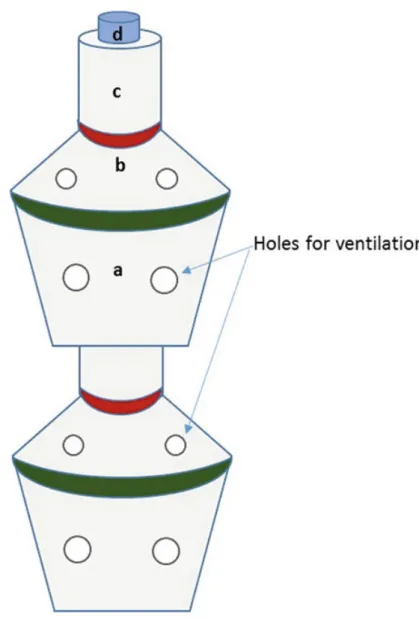
The rearing system existing here was described by Morales-Ramos and Rojas [125]. This system is based on the main principles of the stacked cage of Fournier et al. [143], but an exclusive modular structure of matching cage units was designed. Stackable modular units were built from storage containers (a), 250 mL plastic laboratory funnels (b), 120 mL specimen containers, and (c) 50 mL plastic centrifuge tubes (d) (Fig. 4).
The infested bean leaves with a high density ofT. urticaewere put in every cage unit stacked vertically to let mites to walk up. A cage series can be initiated by introducing a small number of adult predatory mites (10–100) in the cage unit filled recently with infested leaves. After the reduction of the prey mites, a new unit is connected to the old unit top by removing the connection cup cover to let the predators to go to the new unit.
3.2.3 Mass Production of Entomopathogenic Nematodes
Entomopathogenic nematodes can be produced through either in vivo or in vitro techniques. For the laboratory use and small-scale field testing, in vivo production of EPNs is the appropriate method where larvae of the greater wax Galleria mellonella are usually used [144]. For commercial use of EPNs at a larger scale
for international markets, in vitro production is currently used. EPNs can be grown on Petri dishes using different agar media [145,146]. A major improvement in mass production was achieved by Bedding [147] when he producedSteinernemaspp. on a three-dimensional medium in flasks, using polyether-polyurethane sponge as a medium carrier. Autoclavable plastic bags can be used to scale up this method [148]. Bedding et al. [149] developed a culture vessel comprising a tray with side walls and overlapping lids that allowed gas exchange through a layer of polyether- polyurethane foam. These trays are particularly well suited for developing countries as forced aeration is not necessary, making this system independent from cuts in the power supply. Nematodes can be extracted from solid media with centrifugal sifters, or by washing nematodes out of the sponge in simple washing machines and then separating the IJ by sedimentation or migration. The process of industri- alization of in vitro solid-state production of EPNs includes the culture of symbiotic bacteria, production of EPN, harvest, quality control, and storage [150–152].
In Egypt Metwally [126] studied the suitability of native and imported EPNs to in vitro production using the agar plates firstly then the Bedding flasks techniques.
Fig. 4 Design of rearing cage of predatory mite, consisting of two units
The Egyptian nematodes differed significantly in their production ability on agar plates according to the nematode species and used the medium. S. carpocapsae BA2 achieved its highest production on medium composed of “starch 6 g, glucose 5 g, yeast extract 7.5 g, agar 8 g, corn oil 5 ml and 500 ml water” (about 1 million nematodes/dish of 9 cm in diameter). It was the first tray to propagate an Egyptian nematode on an artificial medium. S. riobrave, the worldwide well-known EPN, propagated the best also on the same medium giving 1.16 million nematodes/dish.
The Egyptian H. bacteriophora BA1 propagated successfully on the same media however it failed to propagate on other media. The worldwide H. marelatus suc- cessfully propagated on most tried artificial media. Virulence of EPNs produced from in vivo and in vitro (agar plates) against larvae ofG. mellonella was statisti- cally the same. Propagation ability in G. mellonella larvae of EPNs produced from in vivo or in vitro (agar plates) was statistically comparable. Neither S. carpocapsae BA2 norH. bacteriophora BA1 could continue growth in studied media in Bedding-flasks. HoweverS. riobrave,H. marelatus,S. scapterisciand the local isolateSteinernemasp. SA succeeded in propagation using the Bedding-flask technique. Numbers of produced nematodes differed significantly according to the nematode and the used growth medium.S. riobrave achieved the highest offspring production on both used media reaching 45.54 106 IJs/500cc flask. The subcul- ture of EPNs in Bedding-flasks was successful when two cubes (containing approx- imately 4 g growth medium) of sponge were transferred to a new flask.
3.3 Field Application of Natural Enemies
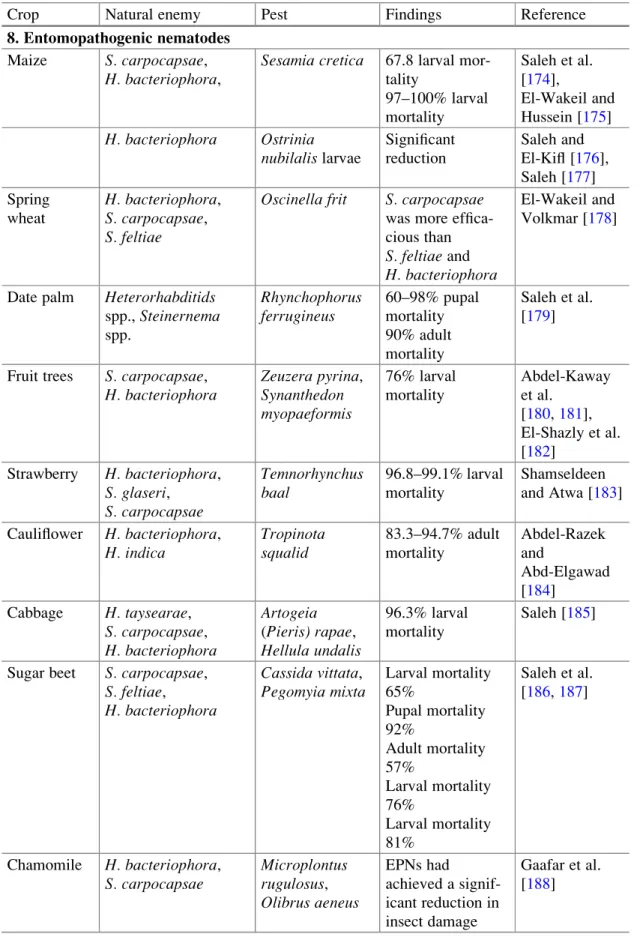
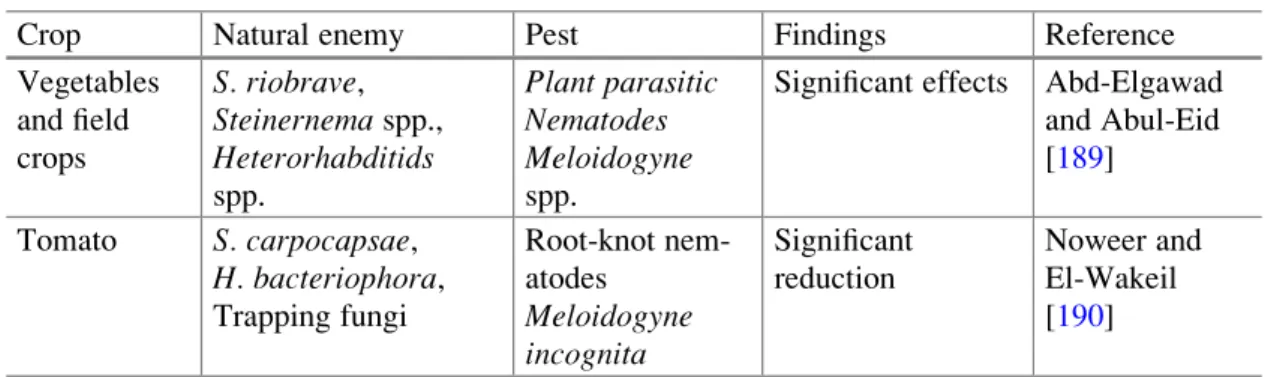
Natural enemies are released in the fields in different stages according to the kind of the natural enemies, for example the egg parasitoid Trichogramma is released as parasitized host eggs. The larval parasitoids are usually released as adult wasps. The aphid parasitoids are applied as host mummies, while the white fly parasitoids are released in the pupal stage. The lacewingChrysoperla carneais released in the egg and larval stages. The coccinellid predators may be applied as larvae or adults. The anthocoris predatory bug is released in the nymph or adult stages. The predatory mites are released in the adult stage. Table3shows the mass field application trials of some natural enemies in Egypt, including egg parasitoids, larval parasitoids, aphid parasitoids, whitefly parasitoids, insect-scale parasitoids, insect predators, predatory mites, and entomopathogenic nematodes.
3.3.1 Field Application of Parasitoids and Predators
Egg Parasitoids
Trichogramma evanescensis extensively used in inundative releases against some lepidopterous pests in Egypt as well as in Europe and over the world. Both,
Table 3 Examples of field application of natural enemies in different crops
Crop Natural enemy Pest Findings Reference
1. Egg parasitoids
Cotton Trichogramma evanescens
Pectinophora gossypiella, Earias insulana, Helicoverpa armigera
Significant effects El-Wakeil [153], Abdel- Hafez et al.
[119], Saad et al. [154]
Maize Sorghum
T. evanescens S. cretica, O. nubilalis, C. agamemnon
The parasitism % increased mark- edly and steadily as the season advances
Ragab et al.
[54]
Sugarcane fields
Trichogrammaspp. Chilo agamemnon
86% parasitism rates
65% damage reduction
El-Heneidy et al. [88], Abbas [155]
Olives Trichogrammaspp. Prays oleae, Palpita unionalis
Egg parasitism 91%
Larval population reduction 83%
Herz and Hassan [156], Hegazi et al.
[40,157]
Grape orchards
T. evanescens Lobesia botrana 97% parasitism 96.8% damage reduction
El-Wakeil et al.
[36]
Tomatoes Trichogramma (29 strains)
Tuta absoluta Keeping the dam- age ofTuta absolutaunder an acceptable threshold
Khidr et al.
[158], El-Arnaouty et al. [16]
Tomatoes Trichogrammaspp. Helicoverpa armigera
Infestation reduc- tion reached to 72%
El-Heneidy et al. [159]
Cabbages T. buesi Pieris rapae Significant
reduction
Abbas [160]
2. Larval parasitoids
Maize Bracon brevicornis O. nubilalis, S. cretica
Highly significant effect on corn borers
Zaki et al. [161]
Fruit orchards
Aganaspis daci Bactrocera zonata
Significant reduction
El-Heneidy et al. [19]
Tomatoes, potatoes
B. hebetor,Apanteles spp.
Phthorimaea operculella, S. littoralis
Significant effects Elbehery [57]
Cabbage field
Diaeretiella rapae, Eretmocerus mundus
Brevicoryne brassicae B. tabaci
Resulted in 32%
parasitism
Zaki et al. [162]
3. Aphid parasitoids
Wheat A. matricariae, A. colemani,
D. rapae,P. necans, E. persicae
R. padi, R. maidis, S. graminum, S. avenae
Significant effects El-Heneidy [163]
(continued)
Table 3 (continued)
Crop Natural enemy Pest Findings Reference
Cabbage, Faba bean, Oleander
Diaeretiella rapae Brevicoryne brassicae,Aphis craccivora
Up to 92%
parasitism
Saleh [164]
4. Whitefly parasitoids Tomatoes Eretmocerus
siphonini,Encarsia Sophia,E. mundus
Bemisia tabaci The parasitism rates reached 65%
They are an effective
bio-control agents of whiteflies in Egypt
Abd-Rabou and Abou-Setta [63], Abd-Rabou [64], Simmons and Abd-Rabou [65]
5. Scale insect parasitoids Citrus
Guava Olive Mango
Coccophagus scutellaris
Soft scale insects
C. scutellaris showed a signifi- cant correlation with the buildup of scale insects population
Abd-Rabou [165–168]
6. Insect predators
Cotton C. undecimpunctata, Scymnus
sp.Paederus alferii, Oriusspp.,C. carnea
H. armigera, E. insulana P. gossypiella
Significant effects El-Heneidy et al. [69,91, 92]
Faba bean C. carnea,
C. undecimpunctata
Aphis gossypii fabae
100% reduction in Aphis gossypii
Zaki et al. [162]
Harmonia axyridis Aphis craccivora
Significant reduction
El-Arnaouty et al. [169]
Green pepper
Chrysoperla carnea Myzus persicae Successful control of aphids
El-Arnaouty et al. [170]
Ornamental plant
Cryptolaemus montrouzieri
Ferrisia virgata Reduction % reached to 99.99
Attia and El-Arnaouty [171]
Ornamental shrubs
C. montrouzieri Planococcus citri
Reduction rates reached to 100%
Afifi et al. [172]
7. Predatory mites
Faba bean N. californicus, T. swirskii
T. urticae The predators decreased the spi- der population density
Elmoghazy et al. [49]
Apple P. persimilis T. urticae The predator caused high reduction in pest infestation up to 89%
Metwally et al.
[173]
Sweet pepper
P. macropilis T. urticae The densities remained more less the economic levels
Heikal and Ebrahim [75]
(continued)
Table 3 (continued)
Crop Natural enemy Pest Findings Reference
8. Entomopathogenic nematodes Maize S. carpocapsae,
H. bacteriophora,
Sesamia cretica 67.8 larval mor- tality
97–100% larval mortality
Saleh et al.
[174],
El-Wakeil and Hussein [175]
H. bacteriophora Ostrinia nubilalislarvae
Significant reduction
Saleh and El-Kifl [176], Saleh [177]
Spring wheat
H. bacteriophora, S. carpocapsae, S. feltiae
Oscinella frit S. carpocapsae was more effica- cious than S. feltiaeand H. bacteriophora
El-Wakeil and Volkmar [178]
Date palm Heterorhabditids spp.,Steinernema spp.
Rhynchophorus ferrugineus
60–98% pupal mortality 90% adult mortality
Saleh et al.
[179]
Fruit trees S. carpocapsae, H. bacteriophora
Zeuzera pyrina, Synanthedon myopaeformis
76% larval mortality
Abdel-Kaway et al.
[180,181], El-Shazly et al.
[182]
Strawberry H. bacteriophora, S. glaseri,
S. carpocapsae
Temnorhynchus baal
96.8–99.1% larval mortality
Shamseldeen and Atwa [183]
Cauliflower H. bacteriophora, H. indica
Tropinota squalid
83.3–94.7% adult mortality
Abdel-Razek and
Abd-Elgawad [184]
Cabbage H. taysearae, S. carpocapsae, H. bacteriophora
Artogeia (Pieris) rapae, Hellula undalis
96.3% larval mortality
Saleh [185]
Sugar beet S. carpocapsae, S. feltiae,
H. bacteriophora
Cassida vittata, Pegomyia mixta
Larval mortality 65%
Pupal mortality 92%
Adult mortality 57%
Larval mortality 76%
Larval mortality 81%
Saleh et al.
[186,187]
Chamomile H. bacteriophora, S. carpocapsae
Microplontus rugulosus, Olibrus aeneus
EPNs had
achieved a signif- icant reduction in insect damage
Gaafar et al.
[188]
(continued)
inoculative and inundative approaches have been evaluated and applied for biolog- ical control of maize, cotton, grape, sugarcane, etc. in Egypt. Inoculative releases aim to support naturally occurring populations of the biological control agent by releasing small agent numbers before the pest populations buildup.
Inundative releases of 150,000–300,000 wasps/ha at 45 release points/ha gener- ated egg parasitism rates of 60–85% with an associated reduction in crop damage of 65–92% [191,192]. Releases of 610,000 wasps/acre per week over a period of 5–9 weeks in Mexico reduced tomato fruit worm populations by 80–90% and fruit damage was often comparable to plots treated with conventional insecticides [193]. Similarly, for glasshouse tomatoes in Brazil, a release rate of 800,000 wasps/ha has reduced fruit damage by tomato borer to levels that are comparable to the use of conventional insecticides [29]. In Egypt, 11 two-weekly releases of 3 million female wasps/ha through the season proved to be very effective in suppressing two key lepidopteran pests of olive [157]. Other examples that provide good evidence of the success of inundative releases of Trichogramma are the use ofT. pretiosumin tomato for control ofHelicoverpa zeain Mexico and for control ofTuta absoluta in Brazil, and initial trials with indigenousT. buesifor control of cabbage worm in Egypt [160].
In olive orchards, Herz and Hassan [156] studied many of indigenous Trichogrammastrains in olive groves in the Mediterranean region (T. bourarachae, T. cacoeciae,T. cordubensis,T. euproctidis,T. nerudai,T. oleaeas well as commer- cially available strains (T. brassicae,T. cacoeciae,T. evanescens). They obtained that these indigenousTrichogrammastrains attribute as biological control agents against lepidopterous olive pests likePrays oleaeandPalpita unionalis. Hegazi et al. [157]
evaluated the efficacy of released Trichogrammaspecies in controlling Prays oleae andPalpita unionalisin olive groves in Egypt, and found that the released parasitoids accomplished higher egg parasitism (up to 91%). Larval densities of target pests were significantly reduced up to 83% on Trichogramma release trees in comparison to control trees. Hegazi et al. [40] selected four species of genus Trichogramma and compared aiming to select suitable candidates for control of lepidopteran olive pests.
Three of them (T. bourarachae, T. cordubensis, T. euproctidis) had been collected from olive groves, whereas the commercially available strain used (T. evanescens) was originally isolated from sugarcane fields.
Table 3 (continued)
Crop Natural enemy Pest Findings Reference
Vegetables and field crops
S. riobrave, Steinernemaspp., Heterorhabditids spp.
Plant parasitic Nematodes Meloidogyne spp.
Significant effects Abd-Elgawad and Abul-Eid [189]
Tomato S. carpocapsae, H. bacteriophora, Trapping fungi
Root-knot nem- atodes
Meloidogyne incognita
Significant reduction
Noweer and El-Wakeil [190]