
Portions of this book are adapted from The Craft of Research, 2nd edition, by Wayne C. A manual for writers of research papers, theses, and dissertations : Chicago style for students and researchers / Kate L.
A Note to Students
Preface
The chapters on citation include new types of sources, such as weblogs, that have appeared since 2003 and are therefore not covered in the current edition of CMOS. In the years since, this material has become the primary authority for dissertation offices across the country.
Acknowledgments
Research and Writing
From Planning to Production
Overview of Part I
You'll begin your journey to full competency when you not only know what to expect, but can also begin practicing the skills that experienced researchers started learning when they were where you are now. The first step in learning the skills of sound research is to understand how experienced researchers think about its objectives.
1 What Research Is and How Researchers Think about It
How Researchers Think about Their Aims
If we can figure out why the Alamo story became a national legend, we can then answer a larger question: How have regional myths shaped our national character. We might ask how many cats slept in the Alamo the night before the battle, but so what if we find out.
Three Kinds of Questions That Researchers Ask
- Conceptual Questions: What Should We Think?
- Practical Questions: What Should We Do?
- Applied Questions: What Must We Understand before We Know What to Do?
- Choosing the Right Kind of Question
- The Special Challenge of Conceptual Questions: Answering So What?
You ask a different kind of question—call it a practice question—when you answer So What. For a research paper in an introductory course, your instructor may be comfortable with any plausible answer to So what.
2 Moving from a Topic to a Question to a Working Hypothesis
- Find a Question in Your Topic
- Search Your Interests
- Make Your Topic Manageable
- Question Your Topic
- Evaluate Your Questions
- Propose Some Working Answers
- Decide on a Working Hypothesis
- Beware the Risks in a Working Hypothesis
- If You Can't Find an Answer, Argue for Your Question
- Build a Storyboard to Plan and Guide Your Work
- State Your Question and Working Hypotheses
- State Your Reasons
- Sketch in the Kind of Evidence You Should Look For
- Look at the Whole
- Organize a Writing Support Group
Review your list of probing questions to find one you can answer; if you skipped that step, go back to 2.1.3. We've focused so much on questions that you might think your project will fail if you can't answer yours.
3 Finding Useful Sources
- Understand the Kinds of Sources Readers Expect You to Use
- Consult Primary Sources for Evidence
- Read Secondary Sources to Learn from Other Researchers
- Read Tertiary Sources for Introductory Overviews
- Record Your Sources Fully, Accurately, and Appropriately
- Determine Your Citation Style
- Record Bibliographic Data
- Search for Sources Systematically
- Look for Someone Who Knows Something about Your Topic
- Skim the Internet
- Talk to Reference Librarians
- Browse in Your Reference Area
- Skim a Few Specialized Reference Works
- Search Your Library Catalog
- Search Guides to Periodical Literature
- Browse the Shelves
- For Advanced Projects, Follow Bibliographic Trails
- Evaluate Sources for Relevance and Reliability
- Evaluate the Relevance of Sources
- Evaluate the Reliability of Print Sources
- Evaluate the Reliability of Online Sources
- Look beyond the Usual Kinds of References
If you're allowed into the stacks (where all the books you can look at are kept), find the bookshelf in your subject. If you are new to a field, you can get a rough impression of the academic quality of a journal by its appearance.
4 Engaging Sources
- Read Generously to Understand, Then Critically to Engage and Evaluate
- Look for Creative Agreement
- Look for Creative Disagreement
- Take Notes Systematically
- Create Templates for Notes
- Know When to Summarize, Paraphrase, or Quote
- Guard against Inadvertent Plagiarism
- Take Useful Notes
- Use Note-Taking to Advance Your Thinking
- Take Notes Relevant to Your Question and Working Hypothesis
- Record Relevant Context
- Categorize Your Notes for Sorting
- Write as You Read
- Review Your Progress
- Search Your Notes for an Answer
- Invent the Question
- Re-sort Your Notes
- Manage Moments of Normal Panic
The source is just speculating that X might be true, but maybe you can provide evidence to prove it is. If you can't find a hypothesis in your notes, look for a pattern of ideas that might lead you to it.
5 Planning Your Argument
- What a Research Argument Is and Is Not
- Build Your Argument around Answers to Readers' Questions
- Turn Your Working Hypothesis into a Claim
- Assemble the Elements of Your Argument
- State and Evaluate Your Claim
- Support Your Claim with Reasons and Evidence
- Acknowledge and Respond to Readers' Points of View
- Establish the Relevance of Your Reasons
- Distinguish Arguments Based on Evidence from Arguments Based on Warrants
- Assemble an Argument
The reason is a valid instance of the general state (80° is a valid instance of being hot). The claim is a valid example of the general consequence (wearing a long-sleeved shirt is a valid example of protecting your arms from insect bites).
6 Planning a First Draft
Avoid Unhelpful Plans Avoid certain approaches
Create a Plan That Meets Your Readers' Needs
- Converting a Storyboard into an Outline
- Sketch a Working Introduction
- Identify Key Terms Expressing Concepts That Unite the Report and Distinguish Its Parts To feel that your report is coherent, readers must see a few central concepts running through all of
- Use Key Terms to Create Subheads That Uniquely Identify Each Section
- Order Your Reasons
- Make Your Order Clear with Transitional Words
- Sketch a Brief Introduction to Each Section and Subsection
- For Each Section, Sketch in Evidence, Acknowledgments, Warrants, and Summaries
- Sketch a Working Conclusion
If you leave your claim at the bottom of your introduction page, repeat a version of it at the top of a new closing page at the end of your storyboard. You should have put your closing claim at the top of the closing page of your storyboard.
File Away Leftovers
If you have different types of evidence supporting the same reason, group and organize them in a way that makes sense to your readers. If you think readers will question the truth of the order, outline a mini-argument to support it.
7 Drafting Your Report
- Draft in the Way That Feels Most Comfortable
- Develop Productive Drafting Habits
- Use Your Key Terms to Keep Yourself on Track
- Quote, Paraphrase, and Summarize Appropriately
- Integrate Quotations into Your Text
- Use Footnotes and Endnotes Judiciously
- Interpret Complex or Detailed Evidence before You Offer It
- Be Open to Surprises
- Guard against Inadvertent Plagiarism
- Signal Every Quotation, Even When You Cite Its Source
- Don't Paraphrase Too Closely
- Usually Cite a Source for Ideas Not Your Own
- Don't Plead Ignorance, Misunderstanding, or Innocent Intentions
- Guard against Inappropriate Assistance
- Work through Chronic Procrastination and Writer's Block
If you use bibliography-style citations (see 3.2.1), you will need to decide how to use footnotes and endnotes (see Chapter 16 for their formal requirements) as you draft. You risk accusations of plagiarism if you don't mark it off with quotation marks or quotation marks.
8 Presenting Evidence in Tables and Figures
- Choose Verbal or Visual Representations
- Choose the Most Effective Graphic
- Design Tables and Figures
- Frame Each Graphic to Help Your Readers Understand It
- Keep the Image as Simple as Its Content Allows
- Follow Guidelines for Tables, Bar Charts, and Line Graphs
- Communicate Data Ethically
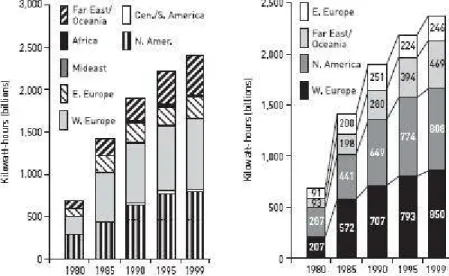
For example, the two bar charts in Figure 8.10 display identical data, yet appear to send different messages. It appears that the two graphs in Figure 8.12 convey different messages, even though they represent exactly the same data.
9 Revising Your Draft
- Check Your Introduction, Conclusion, and Claim
- Make Sure the Body of Your Report Is Coherent
- Check Your Paragraphs
- Let Your Draft Cool, Then Paraphrase It
If readers might miss the connections, change some of those related words to key terms. The point of each section is stated in a sentence at the end of a brief introduction to that section (or at the end of it).
10 Writing Your Final Introduction and Conclusion
Draft Your Final Introduction
- Establish a Brief Context of Prior Research
- Restate Your Question as Something Not Known or Fully Understood
- State the Significance of Your Question
- State Your Claim
- Draft a New First Sentence
What is not understood is whether such non-expert risk assessment is based on random guesswork or whether it has systematic properties. What is not understood is whether such non-expert risk assessment is based on random guesswork or whether it has systematic properties. The Question Rephrased [So what?] Until we understand how risk is understood by non-experts, an important aspect of human reasoning will remain a puzzle: the kind of cognitive processing that works systematically but is beyond the reach of the , which is called "rational thinking".
Draft Your Final Conclusion
- Restate Your Claim
- Point Out a New Significance, a Practical Application, or New Research (or All Three) After stating your claim, remind readers of its significance, or better, state a new significance or a
George Miller used to drive long distances to meet clients because he believed the risk of a plane crash was too great. He always drove long distances to meet clients because he believed the risk of a plane crash was too great.
Write Your Title Last
Once we understand this imaginative but systematic assessment of risk, it should be possible for risk communicators to better explain risk in everyday life. Although these factors improve our understanding of risk, they do not exhaust the "human" factors in assessing it.
11 Revising Sentences
- Focus on the First Seven or Eight Words of a Sentence
- Avoid Long Introductory Phrases and Clauses
- Make Subjects Short and Concrete
- Avoid Interrupting Subjects and Verbs with More than a Word or Two
- Put Key Actions in Verbs, Not in Nouns
- Put Information Familiar to Readers at the Beginning of a Sentence, New Information at the End
- Choose Active or Passive Verbs to Reflect the Previous Principles
- Use First Person Pronouns Appropriately
- Diagnose What You Read
- Choose the Right Word
- Polish It Off
- Give It Up and Print It Out
After that, they are old information and so can appear at the beginning of future sentences. Now the topic is familiar and the new information in the longer phrase is at the end.
12 Learning from Your Returned Paper
Find General Principles in Specific Comments
Talk to Your Instructor
13 Presenting Research in Alternative Forums
- Plan Your Oral Presentation
- Narrow Your Focus
- Understand the Difference between Listeners and Readers
- Design Your Presentation to Be Listened To
- Sketch Your Introduction
- Design Notes for the Body of Your Talk So That You Can Understand Them at a Glance Do not write your notes as complete sentences (much less paragraphs) that you read aloud; notes
- Model Your Conclusion on Your Introduction
- Prepare for Questions
- Create Handouts
- Plan Your Poster Presentation
- Plan Your Conference Proposal
If you need to skip something, use the question-and-answer period to come back to it. Expect questions about data or sources, especially if you didn't cover them in your speech.
14 On the Spirit of Research
We replace them only after we are convinced by good arguments backed by good reasons based on the best evidence available, and after a friendly but searching give-and-take that tests those arguments as seriously as we can. In short, we become responsible believers when we can make our own sound arguments that test and evaluate those of others.
Source Citation
15 General Introduction to Citation Practices
- Reasons for Citing Your Sources You cite sources for at least four reasons
- The Requirements of Citation
- Situations Requiring Citations
- Information Required in Citations
- Two Citation Styles
- Bibliography Style
- Reference List Style
- Citation of Electronic Sources
- Online Sources
- Other Electronic Media
- Preparation of Citations
- A Word on Citation Software
Adrian Johns, The Nature of the Book: Print and Knowledge in the Making (Chicago: University of Chicago Press.) At the end of the citation, include the URL and the date you accessed the material (see below).
16 Notes-Bibliography Style: The Basic Form
- Basic Patterns
- Order of Elements
- Punctuation
- Capitalization
- Typography of Titles
- Numbers
- Abbreviations
- Indentation
- Bibliographies
- Types of Bibliographies
- Arrangement of Entries
- Sources That May Be Omitted
- Notes
- Footnotes versus Endnotes
- Referencing Notes in Text
- Numbering Notes
- Formatting Notes
- Complex Notes
- Short Forms for Notes
- Shortened Notes
- Ibid
- Parenthetical Notes
If there is more than one footnote on a page, use superscript symbols in the sequence. Cite the quotations in the same order as the references appear in the text; separate quotes with semicolons.
17 Notes-Bibliography Style: Citing Specific Types of Sources
Books
- Author's Name
- Title
- Edition
- Volume
- Series
- Facts of Publication
- Page Numbers and Other Locating Information
- Chapters and Other Titled Parts of a Book
- Letters and Other Communications in Published Collections
- Online and Other Electronic Books
If the parts in the series are numbered, you may indicate the number of the work. If you quote a section with a general title, such as introduction, foreword, or afterword, add that term before the title of the book.
Journal Articles
- Author's Name
- Article Title
- Journal Title
- Issue Information
- Page Numbers and Other Locating Information
- Special Issues and Supplements
- Articles Published Online
If an article has been accepted for publication but has not yet appeared, use forthcoming instead of the date and page number. Unlike a special issue, it is numbered separately from the journal's regular issues, often with S as part of the page numbers.
Magazine Articles
If page numbers are not available, you can identify the location of a quoted passage in a note by adding a descriptive locator (such as a preceding subheading) after the word below before the URL and date of access. Brian Uzzi and Jarrett Spiro, “Collaboration and Creativity: The Small World Problem,” American Journal of Sociology 111,.
Newspaper Articles
- Special Format Issues
- Special Types of Newspaper Citations
You can use both or, to save space, the column title alone (in Roman type, not enclosed in quotation marks). You can identify the location of a quoted passage in a note by adding a descriptive locator (such as a preceding subheading) after the word below.
Additional Types of Published Sources
- Classical, Medieval, and Early English Literary Works
- The Bible and Other Sacred Works
- Reference Works
- Reviews
- Abstracts
- Pamphlets and Reports
- Microform Editions
- CD-ROMs or DVD-ROMs
- Online Databases
You generally should not include them in your bibliography, although you may choose to include a specific review that is critical to your argument or frequently cited. You generally should not include them in your bibliography, although you may choose to include a specific abstract that is critical to your argument or frequently cited.
Unpublished Sources
- Theses and Dissertations
- Lectures and Papers Presented at Meetings
- Interviews and Personal Communications
- Manuscript Collections
The most important elements are the name of the other person, the type of communication and the date of the communication. To quote a letter in a note, start with the letter writer's name, followed by to and the recipient's name.
Informally Published Electronic Sources
- Web Sites
- Weblog Entries and Comments
- Electronic Mailing Lists
If there is no named author, please provide the name of the site owner. To cite an entry published in a blog (or blog) by the author of a website, follow the basic template for websites.
Sources in the Visual and Performing Arts
- Visual Sources
- Live Performances
- Television Programs and Other Broadcast Sources
- Sound Recordings
- Video Recordings
- Online Multimedia Files
- Texts in the Visual and Performing Arts
You should cite most of the sources covered in this section only in footnotes or by weaving key elements into your text. In the bibliography entry only, include the name and location(s) of the exhibition after the publication record.
Public Documents
- Elements to Include, Their Order, and How to Format Them In your citations, include as many of the following elements as you can
- Congressional Publications
- Presidential Publications
- Publications of Government Departments and Agencies
- U.S. Constitution
- Treaties
- Legal Cases
- State and Local Government Documents
- Canadian Government Documents
- British Government Documents
- Publications of International Bodies
- Unpublished Government Documents
- Online Public Documents
Before 1874, laws were published in the seventeen-volume Statutes at Large of the United States of America, 1789-1873. Presidential proclamations, executive orders, vetoes, addresses, and the like are published in the Weekly Compilation of Presidential Documents and in the Public Papers of the Presidents of the United States.
One Source Quoted in Another
The United Kingdom has a number of custodians of unpublished government documents, most notably the Public Record Office (PRO) and the British Library (BL), both in London. Please note that a URL alone is not enough; you must provide the full facts of the publication, to the extent they can be determined, so that a reader can search for the source if the URL changes.
18 Parenthetical Citations–Reference List Style: The Basic Form
Basic Patterns
- Order of Elements
- Punctuation
- Capitalization
- Typography of Titles
- Numbers
- Abbreviations
- Indentation
The order of elements in reference list entries follows the same general pattern for all types of sources: author, date (year) of publication, title, other facts about the publication. Plurals are usually formed by adding s (ed.), unless the abbreviation ends in an s (use trans. for both singular and plural).
- Arrangement of Entries
- Sources That May Be Omitted
For edited or translated works, place a comma and the appropriate designation (ed., trans., etc.) after the dash. For magazine and newspaper articles without an author, use the title of the magazine or newspaper instead of the author (see 19.3 and 19.4).
Parenthetical Citations
- Placement in Text
- Special Elements and Format Issues
- Footnotes and Parenthetical Citations
Use the same designations in your parenthetical citations (letters set in Roman script, without a space after the date). For magazine and newspaper articles without authors, use the title of the magazine or newspaper instead of the author in both places (see 19.3 and 19.4).
19 Parenthetical Citations–Reference List Style: Citing Specific Types of Sources
Books
- Author's Name
- Date of Publication
- Title
- Edition
In a reference list entry for a book with more than one author, list the first author's name in reverse order, followed by a comma, and list the rest of the authors in standard order. If there is a translator as well as an editor, list the names in the same order as on the title page of the original.
