DOENGES MOORHOUSE MURR
Guidelines for Individualizing Client Care Across the Life Span
lOTH EDITION
INDEX OF DISEASES/DISORDERS
Gastrectomy/gastroplasty (see DavisPlus) Gastric bypass, 442
Glaucoma DavisPlus Graves’ disease, 471 Heart failure: chronic, 38 Hemodialysis, 641 Hemolytic anemia, 541 Hemothorax, 169 Hepatitis, 482
Herniated nucleus pulposus (see DavisPlus) HIV- positive client, 785
Hospice, 970
Hypercalcemia (calcium excess) (see DavisPlus) Hyperkalemia (potassium excess) (see DavisPlus) Hypermagnesemia (magnesium excess) (see DavisPlus) Hypernatremia (sodium excess) (see DavisPlus) Hypertension: severe, 26
Hyperthyroidism (Graves’ disease, thyrotoxicosis, thyroid storm), 471 Hypervolemia (extracellular fl uid volume excess) (see DavisPlus) Hypocalcemia (calcium defi cit) (see DavisPlus)
Hypokalemia (potassium defi cit) (see DavisPlus) Hypomagnesemia (magnesium defi cit) (see DavisPlus) Hyponatremia (sodium defi cit) (see DavisPlus)
Hypovolemia (extracellular fl uid volume defi cit) (see DavisPlus) Hysterectomy, 666
Ileostomy, 368
Infl ammatory bowel disease: ulcerative colitis, Crohn’s disease, 352 Iron- defi ciency anemia, 541
Laminectomy (see Spinal Surgery), 276 Laryngectomy (see DavisPlus) Lewy body disease, 851 Leukemias, 569
Lung cancer: postoperative care, 159 Lymphomas, 582
Mastectomy, 675 Meningitis, 267
Metabolic acid- base imbalances (see DavisPlus) Metabolic acidosis— primary base bicarbonate defi ciency
(see DavisPlus)
Metabolic alkalosis— primary base bicarbonate excess (see DavisPlus)
Minimally invasive direct coronary artery bypass (MIDCAB), 98 Multiple sclerosis, 311
Myo car dial infarction, 72 Obesity, 430
Bariatric surgery, 442 Pancreatitis, 511 Parkinson’s disease, 330 Parenteral feeding, 525 Pediatric considerations, 993 Peritoneal dialysis, 635 Peritonitis, 389 Pernicious anemia, 541 Pneumonia, 147 Pneumothorax, 169 Acid- base imbalances DavisPlus
Acquired immunodefi ciency syndrome (AIDS), 800 Acute coronary syndrome (ACS), 54
Acute kidney injury (acute renal failure), 595 Adult leukemias, 569
Alcohol: acute withdrawal, 919 Alzheimer’s disease, 851 Amputation, 718
Anemia— iron defi ciency, anemia of chronic disease, pernicious, aplastic, hemolytic, 541
Angina: chronic/stable, 64 Anorexia nervosa, 413 Aplastic anemia, 541 Appendectomy, 382 Asthma, 132 Bariatric surgery, 442
Benign prostatic hyperplasia (BPH), 686 Brain infections: meningitis and encephalitis, 267 Bulimia nervosa, 413
Burns: thermal, chemical, and electrical— acute and convalescent phases, 740
Cancer, general considerations, 945 Cardiac dysrhythmias, 85, 86 Cardiac surgery: postoperative care, 98 Cardiomyoplasty, 46
Cerebrovascular accident/stroke, 247 Chemical burns, 741
Cholecystectomy DavisPlus Cholecystitis with cholelithiasis, 399 Cholelithiasis, 399
Chronic obstructive pulmonary disease (COPD) and asthma, 132 Cirrhosis of the liver, 494
Colostomy, 368
Coronary artery bypass graft (CABG), 98
Cranioce re bral trauma— acute rehabilitative phase, 226 Crohn’s disease, 352
Dementia: Alzheimer’s type/vascular dementia/, Lewy body disease, frontotemporal dementia, 851
Deep vein thrombosis (DVT), 120 Diabetes mellitus, 454
Diabetic ketoacidosis, 454 Dialysis: hemodialysis (HD), 641 Dialysis: peritoneal (PD), 635 Disaster considerations, 980
Disc surgery (now called Spinal Surgery), 276 Dysrhythmias, 85, 86
Eating disorders: anorexia nervosa/bulimia nervosa, 413 Electrolyte imbalances DavisPlus
Electrical burns, 740 Encephalitis, 267
End- stage renal disease, 607 Enteral feeding, 525 Esophageal bleeding, 347 Extended care, 896
Fecal diversions: postoperative care of ileostomy and colostomy, 368 Fluid and electrolyte imbalances, DavisPlus
Fractures, 702
Stroke, 247
Substance use disorders (SUDs), 929 Surgical interventions, 873 Thermal burns, 740
Thrombophlebitis: venous thromboembolism, 120 Thyroidectomy (see DavisPlus)
Thyrotoxicosis, 471 Total joint replacement, 729
Total nutritional support: parenteral/enteral feeding, 525 Tuberculosis (TB), pulmonary, 204
Ulcerative colitis, 352
Upper gastrointestinal bleeding, 340
Urinary diversions/urostomy (postoperative care) Urinary stones (calculi), 656
Urostomy, 645 Valve replacement, 98 Vascular dementia, 851
Venous thromboembolism (VTE) disease, 120 Ventilatory assistance (mechanical), 187 Wound care: complicated or chronic, 762 Primary base bicarbonate defi ciency (see DavisPlus)
Primary base bicarbonate excess (see DavisPlus) Primary carbonic acid defi cit (see DavisPlus) Primary carbonic acid excess (see DavisPlus) Prostatectomy, 694
Psychosocial aspects of care, 835 Pulmonary emboli (PE), 120 Pulmonary tuberculosis (TB), 204 Radical neck surgery (see DavisPlus) Renal calculi, 656
Renal dialysis— general considerations, 623 Renal failure: acute, 595
Renal failure: chronic, 607
Respiratory acid- base imbalances (see DavisPlus) Respiratory acidosis (see DavisPlus)
Respiratory alkalosis (see DavisPlus) Rheumatoid arthritis (RA), 824
Respiratory failure/ventilatory assistance, 187 Ruptured intervertebral disc (see DavisPlus) Seizure disorders, 216
Sepsis/Septic Shock, 772 Sickle cell crisis, 552
Spinal cord injury (acute rehabilitative phase), 288
When a risk diagnosis is used, the identifi ed risk factors serve as the “evidenced by” segment of the nursing diagnosis statement, and interventions are provided to pre- vent progression to a problem- focused diagnosis. Further- more, health- promotion diagnoses (readiness for enhanced) do not contain related factors but do have defi ning charac- teristics for the “evidenced by” segment of the client diag- nostic statement.
DESIRED OUTCOMES/EVALUATION CRITERIA— CLIENT WILL
These give direction to client care as they identify what the client or nurse hopes to achieve. They are stated in general terms to permit the practitioner to modify or individualize them by adding timelines and specifi c client criteria so they become “mea sur able.” For example, “Client will appear re- laxed and report anxiety is reduced to a manageable level within 24 hours.”
Nursing Outcomes Classifi cation (NOC) labels are also included. The outcome label is selected from a stan- dardized nursing language and serves as a general header for the outcome indicators that follow.
ACTIONS/INTERVENTIONS
Nursing Interventions Classifi cation (NIC) labels are drawn from a third standardized nursing language and serve as a general header for the nursing actions that follow.
Nursing actions are divided into independent— those actions that the nurse performs autonomously— and collaborative— those actions that the nurse performs in con- junction with others, such as implementing physician orders.
The interventions in this book are generally ranked from most to least common. When creating the individual plan of care, interventions would normally be ranked to refl ect the client’s specifi c needs and situation. In addition, the division of in de pen dent and collaborative is arbitrary and is actually dependent on the individual nurse’s capabilities, agency pro- tocols, and professional standards.
RATIONALE
Although not commonly appearing in client plans of care, rationale has been included here to provide a pathophysiolog- ical basis to assist the nurse in deciding about the relevance of a specifi c intervention for an individual client situation.
CLIENT ASSESSMENT DATABASE
Provides an overview of the more commonly occurring eti- ology and coexisting factors associated with a specifi c med- ical and/or surgical diagnosis or health condition as well as the signs and symptoms and corresponding diagnostic fi nd- ings. The Database contains the information used to iden- tify Nursing Diagnoses for planning client care.
NURSING PRIORITIES
Establishes a general ranking of needs and concerns on which the Nursing Diagnoses are ordered in constructing the plan of care. This ranking would be altered according to the individ- ual client situation.
DISCHARGE GOALS
Identifi es generalized statements that could be developed into short- term and intermediate goals to be achieved by the client before being “discharged” from nursing care. They may also provide guidance for creating long- term goals for the client to work on after discharge.
NURSING DIAGNOSIS
The general need or prob lem diagnosis is stated without the distinct cause and signs and symptoms, which would be added to create a client diagnostic statement when specifi c client in- formation is available. For example, when a client displays in- creased tension, apprehension, quivering voice, and focus on self, the nursing diagnosis of Anxiety might be stated: se- vere Anxiety related to value confl ict, threat to current sta- tus as evidenced by increase in tension, apprehensiveness;
voice quivering, self- focused.
In addition, diagnoses identifi ed within these guides for planning care as actual, risk, health promotion, or syn- drome can be changed or deleted and new diagnoses added, depending entirely on the specifi c client situation or avail- able information.
MAY BE RELATED TO/POSSIBLY EVIDENCED BY
These lists provide the usual or common reasons (etiology) why a par tic u lar need or prob lem may occur with probable signs and symptoms, which would be used to create the “re- lated to” and “evidenced by” portions of the client diagnos- tic statement when the specifi c situation is known.
KEY TO ESSENTIAL TERMINOLOGY
Diversional Activity Engagement, defi cient Dry Eye, risk for
Dry Mouth, risk for
Eating Dynamics, in effec tive adolescent Eating Dynamics, in effec tive child Eating Dynamics, in effec tive infant Electrolyte Imbalance, risk for Elimination, impaired urinary
Emancipated Decision- Making, impaired
Emancipated Decision- Making, readiness for enhanced Emancipated Decision- Making, risk for impaired Emotional Control, labile
Energy Field, imbalanced Falls, risk for
Family Pro cesses, dysfunctional Family Pro cesses, interrupted
Family Pro cesses, readiness for enhanced Fatigue
Fear
Feeding Pattern, in effec tive infant Female Genital Mutilation, risk for Fluid Balance, readiness for enhanced [Fluid Volume, defi cient hyper/hypotonic]
Fluid Volume, defi cient [isotonic]
Fluid Volume, excess Fluid Volume, risk for defi cient Fluid Volume, risk for imbalanced Frail El derly Syndrome
Frail El derly Syndrome, risk for Gas Exchange, impaired
Gastrointestinal Motility, dysfunctional Gastrointestinal Motility, risk for dysfunctional Grieving
Grieving, complicated Grieving, risk for complicated
[Growth, risk for disproportionate] (retired 2018) Health, defi cient community
Health Be hav ior, risk- prone
Health Literacy, readiness for enhanced Health Maintenance, in effec tive Health Management, in effec tive Health Management, in effec tive family Health Management, readiness for enhanced Home Maintenance, impaired
Hope, readiness for enhanced Hopelessness
Human Dignity, risk for compromised Hyperthermia
Hyperbilirubinemia, neonatal Hyperbilirubinemia, risk for neonatal Hypothermia
Hypothermia, risk for
Hypothermia, risk for perioperative Immigration Transition, risk for complicated Impulse Control, in effec tive
Incontinence, bowel
Incontinence, functional urinary Incontinence, overfl ow urinary Incontinence, refl ex urinary Incontinence, risk for urge urinary Incontinence, stress urinary Incontinence, urge urinary Activity Intolerance [specify level]
Activity Intolerance, risk for Activity Planning, in effec tive Activity Planning, risk for in effec tive Acute Substance Withdrawal Syndrome Acute Substance Withdrawal Syndrome, risk for Adaptive Capacity, decreased intracranial
Adverse Reaction to Iodinated Contrast Media, risk for Airway Clearance, in effec tive
Allergy Reaction, risk for Anxiety
Aspiration, risk for
Attachment, risk for impaired Autonomic Dysrefl exia Autonomic Dysrefl exia, risk for Be hav ior, disor ga nized infant Be hav ior, risk for disor ga nized infant
Be hav ior, readiness for enhanced or ga nized infant Bleeding, risk for
Blood Glucose Level, risk for unstable Blood Pressure, risk for unstable Body Image, disturbed
Breast Milk Production, insuffi cient Breastfeeding, in effec tive Breastfeeding, interrupted
Breastfeeding, readiness for enhanced Breathing Pattern, in effec tive Cardiac Output, decreased Cardiac Output, decreased, risk for Childbearing Pro cess, in effec tive
Childbearing Pro cess, readiness for enhanced Childbearing Pro cess, risk for in effec tive Chronic Pain Syndrome
Comfort, impaired
Comfort, readiness for enhanced Communication, impaired verbal Communication, readiness for enhanced Confusion, acute
Confusion, risk for acute Confusion, chronic Constipation
Constipation, chronic functional Constipation, perceived Constipation, risk for
Constipation, risk for chronic functional Contamination
Contamination, risk for Coping, compromised family Coping, defensive
Coping, disabled family Coping, in effec tive
Coping, in effec tive community Coping, readiness for enhanced
Coping, readiness for enhanced community Coping, readiness for enhanced family Death Anxiety
Decision- Making, readiness for enhanced Decisional Confl ict
Denial, in effec tive Dentition, impaired Development, risk for delayed Diarrhea
NURSING DIAGNOSES ACCEPTED FOR USE AND RESEARCH FOR 2018–2020
Role Strain, caregiver Role Strain, risk for caregiver Self- Care, readiness for enhanced Self- Care defi cit, Bathing Self- Care defi cit, Dressing Self- Care defi cit, Feeding Self- Care defi cit, Toileting
Self- Concept, readiness for enhanced Self- Esteem, chronic low
Self- Esteem, risk for chronic low Self- Esteem, risk for situational low Self- Esteem, situational low Self- Mutilation
Self- Mutilation, risk for Self- Neglect
[Sensory Perception, disturbed (specify: visual, auditory, kinesthetic, gustatory, tactile, olfactory)] (retired 2012)
Sexual Dysfunction Sexuality Pattern, in effec tive Shock, risk for
Sitting, impaired Skin Integrity, impaired Skin Integrity, risk for impaired Sleep, readiness for enhanced Sleep Deprivation
Sleep Pattern, disturbed Social Interaction, impaired Social Isolation
Sorrow, chronic Spiritual Distress Spiritual Distress, risk for
Spiritual Well- Being, readiness for enhanced Standing, impaired
Stress Overload
Substance Withdrawal Syndrome, acute Substance Withdrawal Syndrome, risk for acute Sudden infant Death, risk for
Suffocation, risk for Suicide, risk for
Surgical Recovery, delayed Surgical Recovery, risk for delayed Surgical Site Infection, risk for Swallowing, impaired Thermal Injury, risk for Thermoregulation, in effec tive Thermoregulation, risk for in effec tive Thromboembolism, risk for venous Tissue Integrity, impaired Tissue Integrity, risk for impaired Tissue Perfusion, in effec tive peripheral Tissue Perfusion, risk for decreased cardiac Tissue Perfusion, risk for in effec tive ce re bral Tissue Perfusion, risk for in effec tive peripheral Transfer Ability, impaired
Trauma, risk for vascular Unilateral Neglect
Ventilation, impaired spontaneous
Ventilatory Weaning Response, dysfunctional Vio lence, risk for other- directed
Vio lence, risk for self- directed Walking, impaired
Wandering [specify sporadic or continual]
[ ] author recommendations Injury, risk for
Injury, risk for corneal Injury, risk for urinary tract Insomnia
Knowledge, defi cient
Knowledge, readiness for enhanced Latex Allergy Reaction
Latex Allergy Reaction, risk for Lifestyle, sedentary
Liver Function, risk for impaired Loneliness, risk for
Maternal- Fetal Dyad, risk for disturbed Memory, impaired
Mobility, impaired bed Mobility, impaired physical Mobility, impaired wheelchair Mood Regulation, impaired Moral Distress
Mucous Membrane Integrity, impaired oral Mucous Membrane Integrity, risk for impaired oral Nausea
Neonatal Abstinence Syndrome
Neurovascular Dysfunction, risk for peripheral Nutrition: less than body requirements, imbalanced Nutrition, readiness for enhanced
Obesity
Occupational Injury, risk for Overweight
Overweight, risk for Pain, acute Pain, chronic Pain, labor
Palliative/end- of- life care— hospice, Parenting, impaired
Parenting, readiness for enhanced Parenting, risk for impaired
Perioperative Positioning Injury, risk for Personal Identity, disturbed
Personal Identity, risk for disturbed Physical Trauma, risk for Poisoning, risk for Post- Trauma Syndrome Post- Trauma Syndrome, risk for Power, readiness for enhanced Powerlessness
Powerlessness, risk for Pressure Ulcer, risk for Protection, in effec tive Rape- Trauma Syndrome Relationship, in effec tive
Relationship, readiness for enhanced Relationship, risk for in effec tive Religiosity, impaired
Religiosity, readiness for enhanced Religiosity, risk for impaired Relocation Stress Syndrome Relocation Stress Syndrome, risk for Resilience, impaired
Resilience, readiness for enhanced Resilience, risk for impaired Retention, urinary Role Confl ict, parental Role Per for mance, in effec tive
Herdman, TH, and Kamitsuru, S (eds): Nursing Diagnoses— Defi nitions and Classifi cation 2018–2020. Copyright © 2018, 1994–2018 NANDA International. Used by arrangement with Thieme. In order to make safe and effective judgments using NANDA- I nursing diagnoses, it is essential that nurses refer to the defi nitions and defi ning characteristics of the diagnoses listed in this work.
NURSING CARE
PLANS
Guidelines for Individualizing Client Care Across the Life Span
10
thEDITION
Marilynn E. Doenges, APRN, BC- Retired
Clinical Specialist, Adult Psychiatric/Mental Health Nursing, Retired Retired Adjunct Faculty
Beth- El College of Nursing and Health Sciences, UCCS Colorado Springs, Colorado
Mary Frances Moor house, RN, MSN, CRRN
Adjunct Faculty/Clinical Instructor Pikes Peak Community College Nurse Consultant/TNT- RN Enterprises Colorado Springs, Colorado
Alice C. Murr, BSN, RN- Retired
Retired Legal Nurse Consultant, certified Rehabilitation Case Manager, and certified practitioner in Critical Care Nursing Parkville, Missouri
F. A. Davis Com pany 1915 Arch Street Philadelphia, PA 19103 www . fadavis . com
Copyright © 2019 by F. A. Davis Com pany
Copyright © 1984, 1989, 1993, 1997, 2000, 2002, 2006, 2010, 2019 by F. A.
Davis Com pany. All rights reserved. This book is protected by copyright. No part of it may be reproduced, stored in a retrieval system, or transmitted in any form or by any means, electronic, mechanical, photocopying, recording, or other wise, without written permission from the publisher.
Printed in the United States of Amer i ca
Last digit indicates print number: 10 9 8 7 6 5 4 3 2 1 Acquisitions Editor: Jacalyn Sharp
Se nior Content Proj ect Man ag er: Amy M. Romano Art and Design Man ag er: Carolyn O’Brien
As new scientifi c information becomes available through basic and clinical research, recommended treatments and drug therapies undergo changes. The authors and publisher have done every thing pos si ble to make this book accu- rate, up- to- date, and in accord with accepted standards at the time of publica- tion. The authors, editors, and publisher are not responsible for errors or omissions or for consequences from application of the book, and make no warranty, expressed or implied, in regard to the contents of the book. Any practice described in this book should be applied by the reader in accordance with professional standards of care used in regard to the unique circumstances that may apply in each situation. The reader is advised always to check prod- uct information (package inserts) for changes and new information regarding dose and contraindications before administering any drug. Caution is espe- cially urged when using new or infrequently ordered drugs.
Library of Congress Cataloging- in- Publication Data
Names: Doenges, Marilynn E., 1922– author. | Moorhouse, Mary Frances, 1947–
author. | Murr, Alice C., 1946– author.
Title: Nursing care plans : guidelines for individualizing client care across the life span / Marilynn E. Doenges, Mary Frances Moorhouse, Alice C. Murr.
Description: Edition 10. | Philadelphia : F.A. Davis Company, [2019] | Includes bibliographical references and index.
Identifi ers: LCCN 2018041708 (print) | LCCN 2018042523 (ebook) | ISBN 9780803694958 | ISBN 9780803660861 (pbk. : alk. paper) Subjects: | MESH: Patient Care Planning | Nursing Process | Handbooks Classifi cation: LCC RT49 (ebook) | LCC RT49 (print) | NLM WY 49 | DDC 610.73—dc23
LC record available at https://lccn.loc.gov/2018041708
Authorization to photocopy items for internal or personal use, or the internal or personal use of specifi c clients, is granted by F. A. Davis Com pany for users registered with the Copyright Clearance Center (CCC) Transactional Report- ing Ser vice, provided that the fee of $.25 per copy is paid directly to CCC, 222 Rosewood Drive, Danvers, MA 01923. For those organ izations that have been granted a photocopy license by CCC, a separate system of payment has been arranged. The fee code for users of the Transactional Reporting Ser vice is:
978-0-8036-6086-1/19 0 + $.25.
To our families, friends, and colleagues, who much of the time have had to manage without us while we work, as well as having to cope with our strug gles and frustrations.
The Doenges families: the late Dean, whose support and encouragement is sorely missed; Jim; Barbara and Bob Lanza;
David, Monita, and Tyler; Matthew, Trish, Sara, and Natilia; John, Holly, Nicole, and Kelsey; and the Daigle families:
Nancy, Jim; Jennifer, Brandon, Annabelle, Will, and Henry Smith- Daigle, and Jonathan, Kim, and Mandalyn JoAn (MED).
The Moor house family: the late and ever pres ent Jan; Paul Moor house and Jessica Kantorski; Jason and Thenderlyn Moor house; Alexa, Tanner, and Quinton Plant; and Mary Isabella Moor house and Richard Ortiz Vega (MFM).
To the memory of my long- time dear friend Peggy French, who lost her battle with heart failure last year. I miss her laughter and jokes that carried me through many a day in my “writing cave” over the last 32 years (ACM).
To our F. A. Davis family, especially Robert Allen whose support is so vital to the completion of a proj ect of this magnitude.
We are happy to welcome Jacalyn Sharp, who is the Acquisitions Editor for this proj ect. And last but not least, Amy Romano, who supports us on a daily basis and keeps track of all the pieces. Thank you for your support and understanding. We are fortunate to have you working with us.
To the nurses we are writing for, who daily face the challenge of caring for the acutely ill client and are looking for a practical way to or ga nize and document this care. We believe that nursing diagnosis and these guides will help.
To NANDA- I and to the international nurses who are developing and using nursing diagnoses— here we come!
Fi nally, to the late Mary Lisk Jeffries, who initiated the original proj ect. The memory of our early friendship and strug gles remains with us. We miss her and wish she were here to see the growth of the profession and how nursing diagnosis has contributed to the pro cess.
Lisa L. Doremus, MSN, RN, CMSRN Hospice Nurse
Abode Hospice & Home Health Adjunct Faculty
Pikes Peak Community College Colorado Springs, Colorado Linda R. Renberg, BA Instructor, Retired
En glish, Music and Education Mitchell, South Dakota Statistical Research
CONTRIBUTORS TO THE 10TH EDITION
Mope T. Adeola, RN, MSN, CNS, OCN Jane V. Arndt, MS, RN, CWOCN
Sharon A. Aronovitch, PhD, RN, ACNS- BC, CWOCN- AP Cathryn Baack, PhD, RN, CPNP
Nancy Buttry, MSN, RN Kathleen A. Curtis, RN, MSN Rosemary Fliszar, PhD, RN, CNE Catherine M. Gagnon, RNC- OB, MSN Brenda Hicks, RN, OCN
Christie A. Hinds, MSN, APRN- BC Jennifer Limongiello, MSN, ARNP William H. Loughmiller, CRT Maria Mackey, MSN, RN
Margaret (Peggy) Malone, MN, RN, CCRN Larry Manalo, RN, MSN
Julie Matheny, RRT Laure Miller, MSN, RN
Kathleen Molden, RN, MSN, CNE Ellen Odell, DNP, ACNS, CNE, RN Lillian Ostrander, RN, MSN, MALS Kimberly Tucker Pfennigs, MA, BAN, RN Nancy E. Rogers, MA, BSN, RN
Gilda Rolls- Dellinger, RN
Rochelle Salmore, MSN, RN, CGRN, NE, BC April Sheker, RN, MSN(c), CMSRN
Geri L. Tierney, RN, BSN, ONC Kathleen H. Winder, RN, BSN
Ruth A. Wittmann- Price, PhD, RN, CNS, CNE David W. Woodruff, MSN, RN- BC, CMSRN, CEN Anne Zobec, MS, RN, CS, NP, AOCN
CONTRIBUTORS TO PREVIOUS EDITIONS
Tammie McCoy, PhD, RN
Professor and Chair, BSN Department Mississippi University for Women Columbus, Mississippi
Roxann Sparks, RN, MSN, MICN, LNC, ENPC Assistant Director, Vocational Nursing Merced College
Merced, California Annette Stacy
Emeritus Associate Professor of Nursing Arkansas State University
Jonesboro, Arkansas
Heather Vitko, RN, MSN, CCRN, CNL Assistant Professor
Saint Francis University Loretto, Pennsylvania Catherine D. Hall, MSN, RN, OCN, CNE
Assistant Professor Albany State University Albany, Georgia
Norma Katz, MS, PMHNP, BC, RN Assistant Professor
Westchester Community College Valhalla, New York
Laurel Lalicker, MSN, RN, CNN, CNE Professor
Aims Community College Greeley, Colorado
Margaret Mackowick, MR, RN Assistant Professor
North Dakota State University Fargo, North Dakota
REVIEWERS FOR THE 10TH EDITION
The late Nancy Lea Car ter, RN, MA Clinical Nurse, Orthopedics Albuquerque, New Mexico
Special thanks for many hours of research!
Kathe Lynn Ellis Case Man ag er
Colorado Springs, Colorado Statistical Research
ACKNOWL EDGMENTS
care plan book, recognized as an impor tant adjunct for stu- dent learning.
In writing the second edition, we recognized the need for an assessment tool with a nursing focus instead of a medi- cal focus. Not fi nding one that met our needs, we con- structed our own. To facilitate prob lem identifi cation, we categorized the nursing diagnosis labels and the information obtained in the client assessment database into a framework entitled “Diagnostic Divisions.” Our philosophy is to pro- vide a way in which to gather information and to intervene benefi cially, while thinking about the rationale for every action we take and the standardized language that best ex- presses it. When nurses do this, they are defi ning their prac- tice and are able to identify it with a code and charge for it.
By doing this, we promote client protection (quality of care issue) and provide for the defi nition and protection of nurs- ing practice and the protection of the individual ( legal im- plications). The latter is impor tant because we live in a litigation- minded society and the nurse’s license and liveli- hood are at stake.
One of the most signifi cant achievements in the health- care fi eld over the past 25 or more years has been the emer- gence of the nurse as an active coordinator and initiator of client care. Although the transition from physician’s help- mate to healthcare professional has been painfully slow and is not yet complete, the importance of the nurse within the system can no longer be denied or ignored. Today’s nurse designs nursing care interventions that move the total client toward improved health and maximum in de pen dence.
Professional care standards and healthcare providers and consumers will continue to increase the expectations for nurses’ per for mance. Each day brings new challenges in cli- ent care and the strug gle to understand the human responses to actual and potential health prob lems. To meet these chal- lenges competently, the nurse must have up- to- date assess- ment skills and a working knowledge of pathophysiological concepts concerning the common diseases and conditions presented. We believe that this book is a tool, providing a means of attaining that competency.
In the past, plans of care were viewed principally as learning tools for students and seemed to have little rele- vance after graduation. However, the need for a written format to communicate and document client care has been recognized in all care settings. In addition, healthcare policy, governmental regulations, and third- party payer require- ments have created the need to validate many things, includ- ing appropriateness of care provided, staffi ng patterns, and monetary charges. Thus, although the student’s “case stud- ies” are too cumbersome to be practical in the clinical set- ting, it has long been recognized that the client plan of care meets certain needs and therefore its appropriate use was validated.
We are often asked how we came to write the Care Plan books. In the late 1970s, we were involved with some pub- lishing efforts that did not come to fruition. In this work, we had included care plans, so ensuing discussions revolved around the need for a Care Plan book. We spent a year strug- gling to write care plans before we realized our major diffi - culty was the lack of standardized labels for client prob lems.
At that time, we were given a list of nursing diagnoses from the Clearing house for Nursing Diagnosis, which became the North American Nursing Diagnosis Association (NANDA) and is now NANDA International (NANDA- I). This work answered our need by providing concise titles that could be used in vari ous plans of care and followed across the spec- trum of client care. We believed these nursing diagnosis la- bels would both defi ne and focus nursing care.
Because we had long been involved in direct client care in our nursing careers, we knew there was a need for guidelines to assist nurses in planning care. As we began to write, our focus was the nurse in a small rural community who at 2 a.m. needed the answer to a burning question for her client and had few resources available. We believed the book would give defi nition and direction to the development and use of individualized nursing care. Thus, in the fi rst edi- tion, the theory of nursing pro cess, diagnosis, and interven- tion was brought to the clinical setting for implementation by the nurse. We also anticipated that nursing students would appreciate having access to these guidelines as they strug- gled to learn how to provide nursing care. Therefore, we did not consider the book to be an end in itself but rather a vehicle for the continuing growth and development of the profession.
Obviously, we struck a chord and met a need because the fi rst edition was an immediate success.
In becoming involved with the original NANDA, we acknowledged that maintaining a strict adherence to its wording, while adding our own clearly identifi ed recom- mendations, would help develop this neophyte standardized language and would promote the growth of nursing as a pro- fession. We have continued our involvement with NANDA- I, promoting the use of the language by practicing nurses in the United States and around the world and encouraging them to participate in updating and refi ning the diagnoses.
The wide use of our books within the student population has supported and fostered the ac cep tance of both the activity of diagnosing client prob lems or needs and the use of stan- dardized language.
Nursing instructors initially expressed concern that students would simply copy the plans of care and thus limit their learning. However, as students used the plans to indi- vidualize care and to develop practice priorities and client care outcomes, the book met with more ac cep tance. Instruc- tors began not only to recommend the book but also to adopt it as an adjunct text. Today, it remains a best- selling nursing
INTRODUCTION
INTRODUCTION Statements that provide a clear picture of the client’s needs.
Next, Desired Client Outcomes are stated in mea sur able be- havioral terms to evaluate both the client’s pro gress and the effectiveness of care provided.
Corresponding actions/interventions are designed to promote resolution of the identifi ed client needs. The nurse acting in de pen dently or collaboratively within the health team then uses a decision- making model to or ga nize and pri- oritize nursing interventions. No attempt is made in this book to indicate whether in de pen dent or collaborative actions come fi rst because this must be dictated by the individual situation. We do, however, believe that every collaborative action has a component that the nurse must identify and for which nursing has responsibility and accountability.
Rationales for the nursing actions, which are not re- quired in the customary plan of care, are included to assist the nurse in deciding whether the interventions are appro- priate for an individual client. Additional information is pro- vided to further assist the nurse in identifying and planning for rehabilitation as the client progresses toward discharge and across all care settings. Continuing the life span, a plan of care for children (Pediatric Considerations) is included in Chapter 14, and Pediatric Pearls have been added to 14 plans of care common to this population. The Pediatric Pearls are noted by this icon . Finally, a bibliography is provided as a reference and to allow further research as desired.
This book is designed for students who will fi nd the plans of care helpful as they learn and develop skills in ap- plying the nursing pro cess and using nursing diagnoses. It will complement their classroom work and support the criti- cal thinking pro cess. The book also provides a ready refer- ence for the practicing nurse as a catalyst for thought in planning, evaluating, and documenting care.
As a fi nal note, this book is not intended to be a proce- dure manual, and efforts have been made to avoid detailed descriptions of techniques or protocols that might be viewed as individual or regional in nature. Instead, the reader is re- ferred to a procedure manual or text covering Standards of Care if detailed direction is desired.
As we always say when we sign a book, “Use and enjoy.”
MED, MFM, and ACM The practicing nurse, as well as the nursing student, can
welcome this text as a ready reference in clinical practice. It is designed for use in the acute care, community, and home- care settings. It is or ga nized by systems for easy reference.
Chapter 1 reviews the use of the nursing pro cess in for- mulating plans of care and the nurse’s role in the delivery of that care. Nursing diagnoses, outcomes, and interventions are discussed to assist the nurse in understanding her or his role in the nursing pro cess. In this book, we have also linked NANDA- I diagnoses with two other standardized nursing languages— Nursing Interventions Classifi cation (NIC) and Nursing Outcomes Classifi cation (NOC).
A nursing- based assessment tool and NANDA- I diag- nosis labels or ga nized in Diagnostic Divisions are provided to assist the nurse in employing critical thinking and identi- fying appropriate nursing diagnoses. A sample client situa- tion with an individual database and a corresponding plan of care is included to further demonstrate how critical thinking is used to adapt nursing pro cess theory to practice. Fi nally, several creative approaches for developing and documenting the planning of care are also included. Mind mapping is one technique or learning tool provided to assist you in achieving a holistic view of your client, enhance your critical thinking skills, and facilitate the creative pro cess of planning client care.
Chapters 2 through 14 pres ent plans of care that in- clude information from multiple disciplines to assist the nurse in providing holistic care. In addition to the care plans in the textbook, you will also fi nd Psychiatric and Maternal/
Newborn care plans on DavisPlus. (To access these, use the Plus Code found in front of your book.)
Each plan includes a Client Assessment Database pre- sented in a nursing format and associated Diagnostic Stud- ies. After the database is collected, Nursing Priorities are sifted from the information to help focus and structure the care. Discharge Goals are created to identify what should be generally accomplished by the time of discharge from the care setting.
Nursing diagnosis labels are then chosen and combined with pos si ble related factors designated by “may be related to,” and/or the signs and symptoms or defi ning characteris- tics as “possibly evidenced by,” to create Client Diagnostic
Diabetes Mellitus and Diabetic Ketoacidosis 454 Hyperthyroidism, Thyrotoxicosis, and Thyroid Storm 471 Hepatitis 482
Cirrhosis of the Liver 494 Pancreatitis 511
Total Nutritional Support: Parenteral/Enteral Feeding 525 Metabolic Acid- Base Imbalances (see DavisPlus)
Metabolic Acidosis: Primary Base Bicarbonate Deficiency Metabolic Alkalosis: Primary Base Bicarbonate Excess Thyroidectomy (see DavisPlus)
CHAPTER 7
Diseases of the Blood/Blood- Forming Organs 541
Anemias: Iron Deficiency, Anemia of Chronic Disease, Pernicious, Aplastic, Hemolytic 541
Sickle Cell Crisis 552 Adult Leukemias 569 Adult Lymphomas 582 CHAPTER 8
Renal and Urinary Tract Disorders 595 Acute Kidney Injury (Acute Renal Failure) 595 Renal Failure: Chronic Kidney Disease and End- Stage Renal Disease 607
Renal Dialysis: General Considerations 623 Peritoneal Dialysis (PD) 635 Hemodialysis (HD) 641
Urinary Diversions: Urostomy (Postoperative Care) 645 Urinary Stones (Calculi) 656
CHAPTER 9 Women’s Health 666
Hysterectomy 666 Mastectomy 675 CHAPTER 10 Men’s Health 686
Benign Prostatic Hyperplasia (BPH) 686 Prostatectomy 694
CHAPTER 11
Orthopedic Disorders 702 Fractures 702
Amputation 718
Total Joint Replacement 729 CHAPTER 12
Integumentary Disorders 740
Burns: Thermal, Chemical, and Electrical (Acute and Convalescent Phases) 740
Wound Care: Complicated or Chronic 762 CHAPTER 13
Systemic Infections and Immunological Disorders 772 Sepsis/Septic Shock 772
The HIV- Positive Client 785
Acquired Immunodeficiency Syndrome (AIDS) 800 Rheumatoid Arthritis (RA) 824
CHAPTER 14 General 835
Psychosocial Aspects of Care 835
Dementias: Alzheimer’s Type/Vascular Dementia/Lewy Body Disease/
Frontotemporal Dementia 851 INDEX OF NURSING
DIAGNOSES APPEARS ON PAGE v
INTRODUCTION xiv CHAPTER 1
The Nursing Pro cess: Planning Care Using Critical Thinking 1 CHAPTER 2
Cardiovascular Disorders 26 Hypertension: Severe 26 Heart Failure: Chronic 38
Acute Coronary Syndromes (ACS) 54 Angina: Chronic/Stable 64 Myo car dial Infarction 72 Dysrhythmias 85
Cardiac Surgery: Coronary Artery Bypass Graft (CABG) and Valve Replacement: Postoperative Care 98
Aortic Aneurysms (Abdominal and Thoracic) 110
Venous Thromboembolism (VTE) Disease Including Deep Vein Thrombosis (DVT) and Pulmonary Embolism (PE) 120 CHAPTER 3
Respiratory Disorders 132
Chronic Obstructive Pulmonary Disease (COPD) and Asthma 132 Pneumonia 147
Lung Cancer: Postoperative Care 159 Pneumothorax/Hemothorax 169
Acute Lung Injury/Acute Respiratory Distress Syndrome 177 Respiratory Failure/Ventilatory Assistance 187
Pulmonary Tuberculosis (TB) 204 CHAPTER 4
Neurological/Sensory Disorders 216 Seizure Disorders 216
Cranioce re bral Trauma—(Acute Care Phase) 226 Cerebrovascular Accident (CVA/Stroke) 247 Brain Infections: Meningitis and Encephalitis 267 Spinal Surgery 276
Spinal Cord Injury (Acute and Rehabilitative Phases) 288 Multiple Sclerosis (MS) 311
Parkinson’s Disease (PD) 330 Glaucoma (see DavisPlus)
Herniated Nucleus Pulposus (Ruptured Intervertebral Disc) (see DavisPlus)
CHAPTER 5
Gastrointestinal Disorders 340 Upper Gastrointestinal Bleeding 340
Inflammatory Bowel Disease (IBD): Ulcerative Colitis, Crohn’s Disease 352
Fecal Diversions: Postoperative Care of Ileostomy and Colostomy 368 Appendectomy 382
Peritonitis 389
Cholecystitis with Cholelithiasis 399 Cholecystectomy (see DavisPlus) 407 Gastrectomy/Gastric Resection (see DavisPlus) CHAPTER 6
Metabolic and Endocrine Disorders 413
Eating Disorders: Anorexia Nervosa/Bulimia Nervosa 413 Obesity 430
Bariatric Surgery 442
CONTENTS IN BRIEF
CONTENTS IN BRIEF Pediatric Considerations 993
Fluid and Electrolyte Imbalances (See DavisPlus)
Definitions for NANDA-I Nursing Diagnoses Used in This Text 1009 Index of Nursing Diagnoses 1013
Surgical Interventions 873 Extended/Long- Term Care 896 Alcohol: Acute Withdrawal 919 Substance Use Disorders (SUDs) 929 Cancer: General Considerations 945 Palliative/End- of- Life Care— Hospice 970 Disaster Considerations 980
Skin/Tissue Integrity, impaired 107 Knowledge, defi cient 108
Aortic Aneurysms: (Abdominal and Thoracic) 110
Venous Thromboembolism (VTE) Disease Including Deep Vein Thrombosis (DVT) and Pulmonary Embolism (PE) 120
Tissue Perfusion, in effec tive peripheral 125 Pain, acute 127
Gas Exchange, impaired (in presence of pulmonary embolus) 128
Knowledge, defi cient 130 CHAPTER 3
Respiratory Disorders 132
Chronic Obstructive Pulmonary Disease (COPD) and Asthma 132 Airway Clearance, in effec tive 137
Gas Exchange, impaired 140
Nutrition: less than body requirements, imbalanced 142 Health Management, in effec tive 143
Pneumonia 147
Airway Clearance, in effec tive 151 Gas Exchange, impaired 153 Infection, risk for [spread] 154 Activity Intolerance 155 Pain, acute 156
Fluid Volume, risk for defi cient 157 Knowledge, defi cient 158
Lung Cancer: Postoperative Care 159 Gas Exchange, impaired 163 Airway Clearance, in effec tive 165 Pain, acute 166
Anxiety [specify level] 167 Knowledge, defi cient 167 Pneumothorax/Hemothorax 169
Breathing Pattern, in effec tive 173 Knowledge, defi cient 177
Acute Lung Injury/Acute Respiratory Distress Syndrome 177 Respiratory Failure/Ventilatory Assistance 187 Breathing Pattern, in effec tive/Spontaneous Ventilation,
impaired 192
Airway Clearance, in effec tive 195 Communication, impaired verbal 196 Anxiety [specify level] 197
Oral Mucous Membrane, impaired 198
Nutrition: less than body requirements, imbalanced 198 Infection, risk for 199
Ventilatory Weaning Response, risk for dysfunctional 201 Knowledge, defi cient 203
Pulmonary Tuberculosis (TB) 204
Infection, risk for [spread/reactivation] 208 Airway Clearance, in effec tive 210 Gas Exchange, risk for impaired 211
Nutrition: less than body requirements, imbalanced 212 Health Management, risk for in effec tive 214
Respiratory Acid- Base Imbalances (See DavisPlus) Respiratory Acidosis (Primary Carbonic Acid Excess)
(See DavisPlus) Gas Exchange, impaired
Respiratory Alkalosis (Primary Carbonic Acid Defi cit) (See DavisPlus)
Gas Exchange, impaired INDEX OF NURSING
DIAGNOSES APPEARS ON PAGE v
INTRODUCTION xiv CHAPTER 1
The Nursing Pro cess: Planning Care Using Critical Thinking 1 Defining Nursing 1
Critical Thinking 1
Where Does Nursing Diagnosis Fit? 1
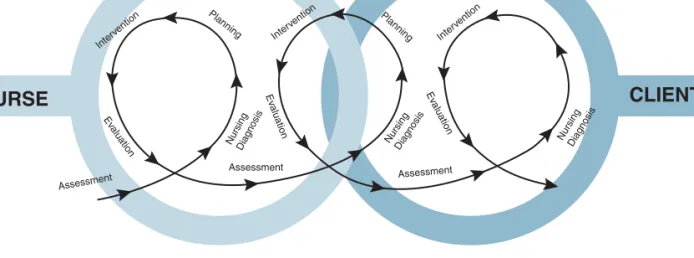
How the Nursing Pro cess Works with Nursing Diagnosis 2 The Plan of Care 11
Doing It 11
Step 1: Assessment 11 Step 2: Diagnosis 11 Step 3: Planning 11 Step 4: Implementation 17
Step 5: Evaluation and Documentation of Plans of Care 18 CHAPTER 2
Cardiovascular Disorders 26 Hypertension: Severe 26
Cardiac Output, risk for decreased 30 Activity Intolerance 32
Pain, acute 32 Overweight 33 Coping, in effec tive 33
Health Management, in effec tive 35 Heart Failure: Chronic 38
Cardiac Output, decreased 43 Activity Intolerance 46 Fluid Volume, excess 47
Gas Exchange, risk for impaired 49 Pain, risk for chronic 50
Skin Integrity, risk for impaired 50 Health Management, in effec tive 51 Acute Coronary Syndrome (ACS) 54
Pain, acute 58
Tissue Perfusion, risk for decreased cardiac 60 Cardiac Output, risk for decreased 61 Knowledge, defi cient 63
Angina: Chronic/Stable 64 Pain, risk for acute 67
Cardiac Output, risk for decreased 69 Health Management, in effec tive 70 Myo car dial Infarction 72
Pain, acute 77
risk for decreased cardiac Tissue Perfusion 78 Cardiac Output, risk for decreased 79 Activity Intolerance 82
Anxiety [moderate/severe] 82 Knowledge, defi cient 83 Dysrhythmias 85
Cardiac Output, risk for decreased 90 Poisoning, risk for [Digoxin Toxicity] 94 Health Management, in effec tive 96
Cardiac Surgery: Coronary Artery Bypass Graft (CABG) and Valve Replacement: Postoperative Care 98
Cardiac Output, risk for decreased 102 Pain, acute 104
Breathing Pattern, risk for in effec tive 106
DETAILED CONTENTS
DETAILED CONTENTS
Swallowing, impaired 336 Confusion, risk for chronic 338 CHAPTER 5
Gastrointestinal Disorders 340 Upper Gastrointestinal Bleed 340
Fluid Volume, defi cient 340 Shock, risk for 344 Anxiety [specify level] 349 Pain, acute 350
Knowledge, defi cient 350
Inflammatory Bowel Disease (IBD): Ulcerative Colitis, Crohn’s Disease 352
Diarrhea 359
Fluid Volume, risk for defi cient 361
Nutrition: less than body requirements, imbalanced 361 Anxiety [specify level] 363
Pain, acute 364 Coping, in effec tive 365
Health Management, in effec tive 366
Fecal Diversions: Postoperative Care of Ileostomy and Colostomy 368 Body Image, disturbed 370
Pain, acute 371
Skin Integrity, risk for impaired 372 Skin Integrity, risk for impaired 374 Fluid Volume, risk for defi cient 375
Nutrition: less than body requirements, risk for imbalanced 376 Constipation/Diarrhea, risk for 377
Sleep Pattern, disturbed 378 Sexual Dysfunction, risk for 378 Knowledge, defi cient 380 Appendectomy 382
Infection, risk for/Surgical Site Infection, risk for 385 Fluid Volume, risk for defi cient 386
Pain, acute 387 Knowledge, defi cient 388 Peritonitis 389
Infection, risk for [spread] 392 Shock, risk for 395
Pain, acute 396
Nutrition: less than body requirements, risk for imbalanced 397 Anxiety [specify level] 398
Knowledge, defi cient 398 Cholecystitis With Cholelithiasis 399
Pain, acute 403
Fluid Volume, risk for defi cient 404
Nutrition: less than body requirements, risk for imbalanced 405 Knowledge, defi cient 406
Cholecystectomy 407 (See DavisPlus) CHAPTER 6
Metabolic and Endocrine Disorders 413
Eating Disorders: Anorexia Nervosa/Bulimia Nervosa 413 Eating Dynamics, ineffective child/adolescent 419 Nutrition: less than body requirements, imbalanced 419 Fluid Volume, risk for defi cient 423
Body Image, disturbed 424 Self- Esteem, chronic low 425
Coping, readiness for enhanced family 427 Skin Integrity, risk for impaired 428 Health Management, in effec tive 429 Eating Disorders: Obesity 430
Obesity: more than body requirements, imbalanced 340 Lifestyle, sedentary 437
Body Image, risk for disturbed 438 Social Isolation, impaired 440 Health Management, in effec tive 441 Bariatric Surgery 442
Breathing Pattern, in effec tive 445 CHAPTER 4
Neurological/Sensory Disorders 216 Seizure Disorders 216
Trauma/Suffocation, risk for 220 Airway Clearance, risk for in effec tive 220
Self- Esteem, [specify situational or chronic low] 223 Health Management, in effec tive 224
Cranioce re bral Trauma— Acute Rehabilitative Phase 226 risk for decreased intracranial Adaptive Capacity 233 Breathing Pattern, risk for in effec tive 237
Confusion, risk for acute 238
[Sensory Perception, disturbed (specify)] 239 Infection, risk for 240
Nutrition: less than body requirements, risk for imbalanced 241 Mobility, impaired physical 242
Trauma, risk for physical 243 Family Pro cesses, interrupted 244 Knowledge, defi cient 245
Cerebrovascular Accident (CVA)/Stroke 247 Tissue Perfusion, in effec tive ce re bral 252 Mobility, impaired physical 255
Communication, impaired verbal [and/or written] 257 [Sensory Perception, disturbed [specify] 258 Self- Care defi cit [specify] 259
Coping, in effec tive 261
Swallowing, risk for impaired 262 Neglect, unilateral 264
Knowledge, defi cient 265
Brain Infections: Meningitis and Encephalitis 267 Infection, risk for [spread] 270
Intracranial Adaptive Capacity, risk for decreased 272 Comfort, impaired 273
Knowledge, defi cient 275 Spinal Surgery 276
Peripheral Neurovascular Dysfunction, risk for 279 Injury, risk for [spinal] 280
Breathing Pattern, risk for in effec tive 281 Pain, acute 281
Mobility, impaired physical 283 Infection, risk for 283
Urinary Retention, risk for acute 285 Knowledge, defi cient 286
Spinal Cord Injury (Acute Care and Rehabilitative Phase) 288 Breathing Pattern, risk for in effec tive 292
Trauma, risk for [additional spinal] 294 Mobility, impaired physical 295
[Sensory Perception, disturbed tactile/proprioception] 297 Pain, acute 298
Grieving 299
Self- Esteem, risk for situational low 301 Bowel Incontinence/Constipation 302 Elimination, impaired urinary 303
Pressure Ulcer/Tissue Integrity, risk for impaired 305 Knowledge, defi cient 306
Autonomic Dysrefl exia, risk for 309 Multiple Sclerosis (MS) 311
Fatigue 315
Self- Care defi cit [specify] 318 Elimination, impaired urinary 320
Constipation/bowel Incontinence, risk for 322 Self-Esteem, risk for chronic 324
Powerlessness 324
Coping, risk for in effec tive 323 Coping, risk for compromised family 326 Urinary Elimination, impaired 320 Caregiver Role Strain, risk for 327
Health Management, readiness for enhanced 328 Parkinson’s Disease (PD) 330
Sickle Cell Crisis 552
Gas Exchange, impaired 558 Pain, acute/chronic 560
Tissue Perfusion, risk for in effec tive [specify] 562 Fluid Volume, risk for defi cient 564
Mobility, impaired physical 564 Skin Integrity, risk for impaired 565 Infection, risk for 566
Health Management, in effec tive 566 Adult Leukemias 569
Infection, risk for 574
Fluid Volume, risk for defi cient 575 Pain, acute 577
Fatigue 578
Knowledge, defi cient 579 Adult Lymphomas 582
Gas Exchange, risk for impaired 587 Nausea 590
Sexual Dysfunction 591 Knowledge, defi cient 592 CHAPTER 8
Renal and Urinary Tract Disorders 595 Acute Kidney Injury (Acute Renal Failure) 595
Fluid Volume, excess 601
Cardiac Output, risk for decreased 603 Fluid Volume, risk for defi cient 604 Infection, risk for 605
Knowledge, defi cient] 606
Renal Failure: Chronic Kidney Disease and End- Stage Renal Disease 607
Electrolyte Imbalance, risk for 613 Cardiac Output, risk for decreased 614 Activity Intolerance, risk for 616 Bleeding, risk for 617
Confusion, risk for acute 618 Skin Integrity, risk for impaired 619
Oral Mucous Membrane, risk for impaired 620 Health Management, in effec tive 620
Renal Dialysis— General Considerations 623
Nutrition: less than body requirements, imbalanced 625 Skin Integrity, risk for impaired 627
Self- Care defi cit (specify) 628 Constipation, risk for 629 Confusion, risk for acute 630 Anxiety [specify level] 631 Body Image, disturbed 631
Health Management, risk for in effec tive 633 Peritoneal Dialysis (PD) 635
Fluid Volume, risk for excess 635 Fluid Volume, risk for defi cient 636 Trauma, risk for physical 637 Pain, acute 638
Infection, risk for 639
Breathing Pattern, risk for in effec tive 640 Hemodialysis (HD) 641
Injury, risk for 642
Fluid Volume, risk for defi cient 643 Fluid Volume, risk for excess 644
Urinary Diversions: Urostomy (Postoperative Care) 645 Skin Integrity, risk for impaired 647
Body Image, disturbed 648 Pain, acute 650
Infection, risk for 651
Sexual Dysfunction, risk for 653 Knowledge, defi cient 654 Urinary Stones (Calculi) 656
Pain, acute 660
Elimination, impaired urinary 661 Tissue Perfusion, risk for in effec tive [specify] 447
Fluid Volume, risk for defi cient 447
Nutrition: less than body requirements, risk for imbalanced 448 Skin/Tissue Integrity, impaired 449
Infection, risk for 450 Diarrhea 451
Knowledge, defi cient 452
Diabetes Mellitus and Diabetic Ketoacidosis 454 Fluid Volume, defi cient [specify] 459 Blood Glucose Level, unstable 461 Infection, risk for 464
[Sensory Perception, risk for disturbed (specify)] 465 Coping, in effec tive 466
Health Management, in effec tive 467
Hyperthyroidism, Thyrotoxicosis and Thyroid Storm 471 Cardiac Output, risk for decreased 475
Fatigue 477
Nutrition: less than body requirements, risk for imbalanced 478 Anxiety [specify level] 478
Dry Eye, risk for 480 Knowledge, defi cient 481 Hepatitis 482
Liver Function, impaired 486 Fatigue 487
Nutrition: less than body requirements, imbalanced 489 Fluid Volume, risk for defi cient/Bleeding 490
Self- Esteem, risk for situational low 491 Infection, risk for [secondary/spread] 492 Knowledge, defi cient 493
Cirrhosis of the Liver 494
Nutrition: less than body requirements, imbalanced 498 Fluid Volume, risk for excess 500
Infection, risk for 502
Skin Integrity, risk for impaired 503 Breathing Pattern, risk for in effec tive 504 Bleeding, risk for 505
Venous Thromboembolism 505 Confusion, risk for acute 507 Body Image, disturbed 509 Health Management, in effec tive 509 Pancreatitis 511
Pain, acute 516
Fluid Volume, risk for defi cient 517
Nutrition: less than body requirements, imbalanced 519 Blood Glucose Level, risk for unstable 521
Infection, risk for [sepsis] 522 Gas Exchange, risk for impaired 523 Health Management, in effec tive 523
Total Nutritional Support: Parenteral/Enteral Feeding 525 Nutrition: less than body requirements, imbalanced 530 Infection, risk for 534
Injury, risk for 535