See discussions, stats, and author profiles for this publication at: https://www.researchgate.net/publication/328829030
Oral and dental diseases: Causes, prevention and treatment strategies
Chapter · November 2018
CITATIONS
7
READS
27,006
1 author:
Naseem Shah
Centre for Dental Education & Research All India Institute of Medical Sciences New Delhi 150PUBLICATIONS 3,804CITATIONS
SEE PROFILE
All content following this page was uploaded by Naseem Shah on 09 November 2018.
!"#
Oral and dental diseases: Causes, prevention and treatment strategies
Oral and dental diseases: Causes, prevention and treatment strategies
N ASEEM SH AH
Dental caries is an infectious microbiological disease of the teeth that results in localized dissolution and destruction of the calcified tissues. It is the second most common cause of tooth loss and is found universally, irrespective of age, sex, caste, creed or geographic location. It is considered to be a disease of civilized society, related to lifestyle factors, but heredity also plays a role. In the late stages, it causes severe pain, is expensive to treat and leads to loss of precious man-hours. H owever, it is preventable to a certain extent.
The prevalence of dental caries in India is 50% –60% .
Aetiology
An interplay of three principal factors is responsible for this multifactorial disease.
•
H ost (teeth and saliva)
•
M icroorganisms in the form of dental plaque
•
Substrate (diet)
Thus, caries requires a susceptible host, cariogenic oral flora and a suitable substrate, which must be present for a sufficient length of time.
Host factors
Teeth1–4• Com position: Deficiency in fluorine, zinc, lead and iron
content of the enamel is associated with increased caries.
• M orphological characteristics: Deep, narrow occlusal
fissures, and lingual and buccal pits tend to trap food debris and bacteria, which can cause caries. As teeth get worn (attrition), caries declines.
• Position: The interdental areas are more susceptible to dental
caries. Malalignment of the teeth such as crowding, abnormal spacing, etc. can increase the susceptibility to caries.
Saliva5–8
Saliva has a cleansing effect on the teeth. N ormally, 700–
800 ml of saliva is secreted per day. Caries activity increases as the viscosity of the saliva increases. Eating fibrous food and chewing vigorously increases salivation, which helps in digestion as well as improves cleansing of the teeth. The quantity as well as composition, pH, viscosity and buffering capacity of the saliva plays a role in dental caries.
• Q uantity:
Reduced salivary secretion as found in xerostomia and salivary gland aplasia gives rise to increased caries activity.
• Com position: Inorganic—fluoride, chloride, sodium,
magnesium, potassium, iron, calcium and phosphorus are inversely related to caries.
O rganic—ammonia retards plaque formation and neutralizes the acid.
• pH: A neutral or alkaline pH can neutralize acids formed
by the action of microorganisms on carbohydrate food substances.
• A ntibacterial factors: Saliva contains enzymes such as
lactoperoxidase, lypozyme, lactoferrin and immuno- globulin (Ig)A, which can inhibit plaque bacteria.
Dental plaque
9–12Dental plaque is a thin, tenacious microbial film that forms on the tooth surfaces. M icroorganisms in the dental plaque ferment carbohydrate foodstuffs, especially the disaccharide sucrose, to produce acids that cause demineralization of inorganic substances and furnish various proteolytic enzymes to cause disintegration of the organic substances of the teeth, the processes involved in the initiation and progression of dental caries. The dental plaque holds the acids produced in close contact with the tooth surfaces and prevents them from contact with the cleansing action of saliva.
DENTAL CARIES
Division of Conservative Dentistry and Endodontics Centre for Dental Education and Research
All India Institute of M edical Sciences, N ew Delhi 110029 e-mail: [email protected]
!"$ Shah
Table 1. Causes of dental caries
Direct Indirect Distant
1. Tooth • Poor contact between the teeth resulting in food • Socioeconomic status
• Structure·fluoride content and other trace impaction and caries due to the following • Literacy level
elements such as zinc, lead, iron causes • Location·urban, rural
• Morphology·deep pits and fissures ·malalignment of the teeth (crowding) • Age
• Alignment·crowding ·loss of some teeth and failure to replace them • Sex 2. Microorganisms·dental plaque accumulation • Gingival recession leading to root caries • Dietary habits
due to poor oral hygiene • Climatic conditions and soil type
3. Diet • Social and cultural practices
• Intake of refined carbohydrates such as • Availability/access to health care facility
sucrose, maltose, lactose, glucose, fructose, • Health insurance
cooked sticky starch, etc.
·quantity; frequency, physical form; oral clearance rate
• Saliva (quantity and quality)
·reduced secretion (xerostomia) increases caries
·Viscosity: more viscous, more caries
·pH: alkaline pH neutralizes acid, less caries
·enzymes: lactoperoxidase, lysozyme lactoferrins
·immunoglobulins IgA
Substrate
13–16The role of refined carbohydrates, especially the disac- charide sucrose, in the aetiology of dental caries is well established. The total amount consumed as well as the physical form, its oral clearance rate and frequency of consumption are important factors in the aetiology.
Vitamins A, D, K, B complex (B6), calcium, phosphorus, fluorine, amino acids such as lysine and fats have an inhibitory effect on dental caries.
Indirect causes
17,18• Loss of some natural teeth and failure to replace them results in drifting of the teeth in the edentulous space.
This leads to increased food impaction between the teeth and formation of new carious lesions.
• M alalignment of the teeth, especially crowding, does not allow proper cleaning between the teeth and leads to an increased incidence of caries.
• Gingival recession, abrasion and abfraction defects at the neck of the tooth increase root caries.
• Selenium in the soil increases the formation of caries while molybdenum and vanadium decrease it.
• A high temperature is associated with a lower prevalence of caries. Water has a cleansing effect on the teeth. If the fluoride content of the water is at an optimum concen- tration, it will also exert an anticaries effect.
Distant causes
19,20• A low socioeconomic and literacy status is associated with caries.
• Urbanization is linked to an increased incidence of caries.
• Caries is more common in childhood and adolescence,
and after 60 years of age, when the incidence of root caries is higher.
• Females develop caries more often than males.
• Non-vegetarians develop caries more often than vegetarians.
• Availability/access to a health care facility can affect utilization of health care services.
• Lack of oral health insurance promotes oral neglect and increases disease levels.
Table 1 summarizes the causes of dental caries.
Prevention and control of dental caries
1. Increase the resistance of the teeth.
21–25System ic use of fluoride: (i) Fluoridation of water, milk
and salt; (ii) fluoride supplementation in the form of tablets and lozenges; and (iii) consuming a fluoride-rich diet such as tea, fish, etc.
Topical: (i) Use of fluoridated toothpaste and mouth
wash; (ii) use of fluoride varnishes (in-office application, longer duration of action, high fluoride content); (iii) use of casein phosphopeptide–amorphous calcium phosphate (CPP–ACP), which is available as tooth mousse, helps to remineralize the soft initial carious, demineralized areas of the teeth.
2. Combat the microbial plaque by physical and chemical methods.
(i)
Physical m ethods26–30The correct method and frequency of brushing should be followed—in the morning and before going to bed and preferably after every major meal.
Tongue cleaning and the use of indigenous agents such
as the bark of neem or mango (where toothbrush and paste
are unaffordable) should be encouraged. The use of coarse
!""
Oral and dental diseases: Causes, prevention and treatment strategies
toothpowder and tobacco-containing dentifrices should be avoided.
The use of various interdental cleaning aids such as dental floss, interdental brush, water pik, etc. supplements the cleansing effect of a toothbrush. Use of an electronic toothbrush in children and persons with decreased manual dexterity is recommended.
(ii)
Chem ical m ethodsThese include the use of a fluoride-containing toothpaste, mouth rinses and 0.2% chlorhexidine and povidine–iodine mouthwash. These should be used on prescription of a dental surgeon.
3. M odify the diet.
31–34Reduce the intake and frequency of refined carbo- hydrates. Avoid sticky foods and replace refined with unrefined natural food. Increase the intake of fibrous food to stimulate salivary flow, which is protective against caries.
Consume caries-protective foods such as cheese, nuts, raw vegetables, fruits, etc. Stimulate salivary flow with sugar- free chewing gum. Xylitol (a sugar substitute)-containing chewing gum, if chewed between meals, produces an anti- caries effect by stimulating salivary flow.
Preventive interventions
35–43The use of pit and fissure sealants
35,36and application of fluoride varnish
37,38help in slowing down the development of caries.
Preventive restorations should be carried out
39,40and atraumatic restorative treatment (ART) should be used as a community-based approach for the treatment and preven- tion of dental caries.
41–43Treatment of dental caries
Treatment comprises removal of decay by operative pro- cedures and restoration with appropriate materials such as silver fillings, gold inlays, composite resin, glass ionomer cement, full metal or porcelain crowns, etc. In advanced cases, where the pulp of the tooth is involved, endodontic treatment may be required. Where there is extensive destruction of the tooth structure or when endodontic treatment is not feasible, extraction of the tooth and replacement by an artificial prosthesis may be required.
Miscellaneous measures These include the following:
• Prevention of malocclusion (especially crowding of the teeth)
• Prevention of premature loss of deciduous teeth
• Restoration of missing permanent teeth by prostheses (dentures)
• M aking sugar-free chewing gum freely available and affordable in the country
• Using sugar substitutes such as saccharine, xylitol, mannitol, aspartame, etc. in paediatric medicinal syrups, bakery products, jams, marmalade, etc.
• Making toothbrushes and fluoridated toothpaste available to the masses at low cost. Regular use of fluoridated toothpaste is proven to reduce the incidence of dental caries by 30% .
Table 2 summarizes the prevention and treatment strate- gies for dental caries.
References
1. Babaahmady KG, M arsh PD, Challacombe SJ, N ewman H N . Variations in the predominant cultivable microflora of dental plaque at defined subsites on approximal tooth surfaces in children.
A rch O ral Biol 1997;42:101–11.
2. Liu F. [The relation between the resistance distribution on crown surface and caries.] Z honghua Kou Q iang Y i X ue Z a Z hi 1993;28:47–9.
3. M arcucci M , Bandettini M V. Dental caries in the rat in relation to the chemical composition of the teeth and diet. Variations in the diet of the Ca/P ratio obtained by changes in the phosphorus content.M inerva Stom atol 1981;30:17–20.
4. H aldi J, Wynn W, Bentley KD, Law M L. Dental caries in the albino rat in relation to the chemical composition of the teeth and of the diet. IV. Variations in the Ca/P ratio of the diet induced by changing the calcium content. J N utr 1959;67:645–53.
5. Daniels TS, Silverman S, M ichalski JP, Greenspan JS, Sylvester RA, Talal N . The oral component of Sjogren’s syndrome. O ral Surg 1975;39:875–85.
6. Finn SB, Klapper CE, Voker JF. Intra-oral effects upon experimental hamster caries. In: RF Sognnaes (ed). A dvances in ex perim ental caries research. Washington, DC: American Association for the Advancement of Sciences; 1955:155–68.
7. Frank RM , H erdly J, Phillippe E. Acquired dental defects and salivary gland lesions after irradiation for carcinoma. J A m D ent A ssoc 1965;70:868–83.
8. Kermiol M , Walsh RF. Dental caries after radiotherapy of the oral regions.J A m D ent A ssoc 1975;91:838–45.
9. Fitzgerald RJ, Keyes PH . Demonstration of the etiologic role of streptococci in experimental caries in the hamster. J A m D ent A ssoc 1960;61:9–19.
10. Keyes PH . The infection and transmissible nature of experimental dental caries. A rch O ral Biol 1960;1:304–20.
Table 2. Prevention and treatment of dental caries
Medical interventions Non-medical interventions Other interventions
• Use of systemic • Oral health education • Make oral health and topical • Nutrition and diet care more fluorides • Proper methods of accessible and
• Use of pit and maintaining oral hygiene affordable fissure sealants ·use of fluoride tooth- • Improve the
• Preventive paste and brush socioeconomic
restorations ·use of dental floss and and literacy level
• Different types of interdental brushes, etc. of the population restorations and ·antiseptic mouth washes • Include oral health endodontic (under prescription) care in general
treatment health insurance
• Regular dental check-up
!"% Shah
11. O rland FJ, Blayney JR, H arrison RW, Reyniers JA, Trexler PD, Ervin RF, et al. Experimental caries in germ-free rats inoculated with enterococci. J A m D ent A ssoc 1955;50:259–72.
12. Rosen S, Kolstad RA. Dental caries in gnotobiotic rats inoculated with a strain of Peptostreptococcus interm edius. J D ent R es 1977;56:187.
13. Burt BA, Eklund Sa, M organ KJ, Larkin FE, Guire KE, Brown LO ,et al. The effects of sugar intake and frequency of ingestion on dental caries increment in a three-year longitudinal study.
J D ent R es 1988;67:1422–9.
14. Caldwell RC. Physical properties of foods and their caries- producing potential. J D ent R es 1970;49:1293–8.
15. H arris RS. M inerals: Calcium and phosphates. In: RF Gould (ed).
D ietary chem icals vs. dental caries. A dvances in chem istry services 94. Washington, DC: American Chemical Society; 1970:116–22.
16. N izel AE. N utrition in preventive dentistry:Sciences and practice.
2nd ed. Philadelphia: WB Saunders; 1981:417–52.
17. H elm S, Petersen PE. Causal relation between malocclusion and caries.A cta O dontol Scand 1989;47:217–21.
18. Warr en JJ, Slayto n RL, Yo nezu T, Kan ellis M J, Levy SM . Interdental spacing and caries in primary dentition. Pediatr D ent 2003;25:109–13.
19. Ellwood RP, Davies GM , Worthington H V, Blinkhorn AS, Taylor GO , Davies RM . Relationship between area deprivation and the anticaries benefit of an oral health programme providing free fluoride toothpaste to young children. Com m un D ent O ral Epidem iol 2004;32:159–65.
20. Shah N , Sundaram KR. Impact of socio-demographic variables, oral hygiene practices, oral habits and diet on dental caries ex p er ien ce o f In d ia n eld er ly: A co m m u n it y-b a sed st u d y.
G erodontology 2004;21:43–50.
21. H icks J, Garcia-Godoy F, Flaitz C. Biological factors in dental caries: Role of remineralization and fluoride in the dynamic process of demineralization and remineralization (Part 3). J Clin Pediatr D ent 2004;28:203–14.
22. Kargul B, Caglar E, Tanboga I. H istory of water fluoridation.
J Clin Pediatr D ent 2003;27:213–17.
23. Featherstone JD. Prevention and reversal of dental caries: Role of low level fluoride. Commun Dent O ral Epidemiol 1999;27:31–40.
24. Stephen KW. Systemic fluorides: Drops and tablets. Caries R es 1993;27(Suppl. 1):9–15.
25. Cai F, Shen P, M organ M V, Reynolds EC. Remineralization of enamel subsurface lesions in situ by sugar-free lozenges containing casein phosphopeptide–amorphous calcium phosphate. Aust Dent J 2003;48:240–3.
26. Klock B. Krasse B. Effect of caries preventive measures in children
with high numbers of S. m utans and lactobacilli. Scand J D ent R es 1978;86:221.
27. Krasse B. Caries risk:A practical guide for assessm ent and control.
Chicago: Q uintessence Publishing Co. Inc; 1985.
28. Loe H . H uman research model for the production and prevention of gingivitis. J D ent R es 1971;50:256.
29. Emilson CG. Potential efficacy of chlorhexidine against mutant streptococci and human dental caries. J D ent R es 1994;73:
682–91.
30. Twetman S. Antimicrobials in future caries control? A review with sp ecia l r efer en ce t o ch lo r h ex id in e t r ea t m en t . C aries R es 2004;38:223–9.
31. M arshall TA. Carries prevention in pediatrics: Dietary guidelines.
Q uintessence Int 2004;35:332–5.
32. van Loveren C, Duggal M S. Experts’ opinions on the role of diet in caries prevention. Caries R es 2004;38(Suppl. 1):16–23.
33. Vanobbergen J, Declerck D, M walili S, M artens L. The effectiveness of a 6 -yea r o r al h ea lth ed u ca tio n p ro gr a mme fo r p r ima r y schoolchildren.Com m un D ent O ral Epidem iol 2004;32:173–82.
34. TanzerJM . Xylitol chewing gum and dental caries. Int D ent J 1995;45(Suppl. 1): 65–76.
35. Kumar J, Siegal M D. Workshop on guidelines for sealant use:
Recommendations. J Pub H ealth D ent 1955;5(Special issue):
263–73.
36. Swift EJ Jr. The effect of sealants on dental caries: A review. J A m D ent A ssoc 1988;116:700–4.
37. Beltran-Aguilar ED, Goldstein JW, Lockwood SA. Fluoride varnishes—a review of their clinical use, cariostatic mechanism, efficacy and safety. J A m D ent A ssoc 2000;131:589–96.
38. Savanberg M , Westergren G. Effect of SnF2, administered as mouth rinses or topically applied, on Streptococcus m utans,Streptococcus sanguisand lactobacilli in dental plaque and saliva. Scand J D ent R es 1983;91:123.
39. Simonsen RJ. Preventive resin restoration. Q uintessence Int 1978;9:69–76.
40. Simonsen RJ. Preventive resin restorations: Three year results.
J A m D ent A ssoc 1980;100:535–9.
41. Frencken JE. [Atraumatic restorative treatment (ART). A special tissue preservative and patient-friendly approach.] N ed Tijdschr Tandheelk d 2003;110:218–22.
42. Carvalho CK, Bezerra AC. M icrobiological assessment of saliva from children subsequent to atraumatic restorative treatment (ART). Int J Paediatr D ent 2003;13:186–92.
43. Smales RJ, Gao W. In vitro caries inhibition at the enamel margins of glass ionomer restorations developed for the ART technique.
J D ent 2000;28:249–56.
Dentofacial anomalies include hereditary, developmental and acquired malocclusion or malalignment of the teeth.
Worldwide, the average prevalence of malocclusion in the 10–12 years’ age group is reported to be 30% –35% .
Aetiology Direct causes
1–17•
H eredity: H ereditary factors play an important role inconditions such as cleft lip and palate, facial asymmetries,
variations in tooth shape and size, deep bites, discre- pancies in jaw size.
1–4•
Congenital: These include cleft lip and palate, andsyndromes associated with anomalies of craniofacial structures, cerebral palsy, torticollis, cleidocranial dysostosis, congenital syphilis, etc.
5,6•
A bnorm al pressure habits and functional aberrations:These include abnormal suckling, thumb and finger sucking, tongue thrusting and sucking, lip and nail biting, mouth breathing, enlarged tonsils and adenoids, trauma and accidents.
7–13DENTOFACIAL ANOMALIES OR MALOCCLUSION
!"&
Oral and dental diseases: Causes, prevention and treatment strategies
Factors responsible for causing dentofacial anomalies and malocclusion are summarized in Table 3.
Prevention and treatment
28–33The prevention and treatment of dentofacial anomalies can be undertaken at three levels (Table 4).
• Primary prevention—Preventive orthodontics
• Secondary prevention—Interceptive orthodontics
• Tertiary prevention—Corrective orthodontic treatment by removable and fixed appliances, and surgical orthodontics
•
L ocal factors: These include abnormalities of numbersuch as supernumerary and missing teeth, abnormalities of tooth size and shape, abnormal labial frenum causing spacing between the upper anterior teeth, premature tooth loss with drifting of the adjoining and opposite teeth, prolonged retention of the milk teeth, delayed eruption of the permanent teeth, abnormal eruptive path, dental caries, and improper dental restorations.
14–17Indirect causes
18–25 Environm ental—Prenatal: trauma, maternal diet and metabolism, German measles, certain drugs and position in utero
—Postnatal: birth injury, cerebral palsy, temporomandibular joint injury
Distant causes
26,27•
Endocrine im balance: H ypothroidism is related to anabnormal resorption pattern, delayed eruption and gingival disturbances. Retained deciduous teeth may be due to hypothroidism.
•
M etabolic disturbance and infectious diseases: Acutefebrile conditions delay growth and development.
Diseases such as poliomyelitis, muscular dystrophy and cerebral palsy have a characteristic deforming effect on the dental arch.
•
N utritional: Vitamin D, calcium and phosphorus areassociated with bone metabolism and their deficiency could lead to growth disturbances.
•
A bnorm al m uscle function and posture: Psychogenictics and abnormal head posture can contribute towards malrelation of the jaws.
Table 3. Causes of dentofacial anomalies and malocclusion
Direct Indirect Distant
• Hereditary/congenital • Environmental factors • Poor nutritional status·deficiency of
• Abnormal pressure habits and functional ·prenatal causes such as trauma, vitamin D, calcium and phosphates
aberrations maternal diet and metabolism, • Endocrine imbalance such as hypothyroidism
·abnormal suckling German measles, certain drugs, • Metabolic disturbances and muscular dystrophies
·mouth breathing and position in utero • Infectious diseases such as poliomyelitis
·thumb and finger sucking ·postnatal causes such as birth injury, • Functional aberrations
·tongue thrusting and sucking cerebral palsy, temporomandibular ·psychogenic tics and bruxism
·abnormal swallowing joint injury ·posture
• Trauma and accidents
• Local factors
·abnormalities of number (supernumerary teeth, missing teeth)
·abnormalities of tooth size and shape
·abnormal labial frenum and mucosal barriers
·premature tooth loss
·prolonged retention of deciduous teeth
·delayed eruption of permanent teeth
·abnormal eruptive path
·untreated dental caries and improper dental restorations, especially on the proximal surfaces
Table 4. Strategies for the prevention and treatment of dentofacial anomalies and malocclusion
Medical interventions Non-medical interventions
• Habit-breaking appliances • Control harmful oral habits
• Serial extractions • Prenatal and perinatal care
• Space-maintainers and -regainers • Genetic counselling
• Functional appliances in developing malocclusion to correct jaw relations
• Frenectomies and simple appliances to correct anterior cross-bites
• Removable and fixed appliances
• Orthognathic and plastic surgery
• Speech therapy
• Regular dental check-up for early intervention
• Counselling
• Preservation and restoration of primary and permanent teeth
!%' Shah
Primary prevention
This includes control of harmful oral habits, and preservation and restoration of primary and permanent dentition.
Secondary prevention
H abit-breaking appliances should be used. Serial extrac- tions, space maintainers/regainers, and functional appliances to correct jaw relations are other modalities. Frenectomies and simple appliances can be used to correct anterior cross- bites.
Tertiary prevention
Corrective orthodontic treatment includes the use of fixed and removal appliances and surgical orthodontics in cases of severe malocclsion.
References
1. M ossey PA. The heritability of malocclusion: Part 1. Genetics, principles and terminology. Br J O rthod 1999;26:103–13.
2. M ossey PA. The heritability of malocclusion: Part 2. The influence of genetics in malocclusion. Br J O rthod 1999;26:195–203.
3. Varrela J. Genetic and epigenetic r egulation of craniofacial development.Proc Finn D ent Soc 1991;87:239–44.
4. M oss M L. Genetics, epigenetics, and causation. A m J O rthod 1981;80:366–75.
5. Golan I, Baumert U, H rala BP, M ussig D. Early craniofacial signs of cleidocranial dysplasia. Int J Paediatr D ent 2004;14:49–53.
6. O rtiz-Posadas M R, Vega-Alvarado L, Toni B. A similarity function to evaluate the orthodontic condition in patients with cleft lip and palate.M ed H ypotheses 2004;63:35–41.
7. Chen Q R, Z hong H L. [Lower lip biting habits and malocclusions.]
Shanghai Kou Q iang Yi X ue 1994;3:3–6.
8. Yamaguchi H , Sueishi K. M alocclusion associated with abnormal posture.Bull Tok yo D ent Coll 2003;44:43–54.
9. daCosta O O , O renuga O O . Dentofacial anomalies related to the digit sucking habit. A fr J M ed M ed Sci 2002;31:239–42.
10. M assler M . O ral habits: Development and management. J Pedod 1983;7:109–19.
11. Popovich F. The prevalence of sucking habit and its relationship to oral malformations. A ppl T her 1966;8:689–91.
12. H atzakis S, Toutountzakis N . Speech defects and malocclusion.
H ell Stom atol Chron 1984;28:97–106.
13. H awkins AC. M outh breathing and its relationship to malocclusion and facial abnormalities. N M D ent J 1969;20:18–21.
14. N ik-H ussein N N . Supernumerary teeth in the premaxillary region:
Its effects on the eruption and occlusion of the permanent incisors.
A ust O rthod J 1990;11:247–50.
15. N orthway WM , Wainright RL, Demirjian A. Effects of premature loss of deciduous molars. A ngle O rthod 1984;54:295–329.
16. Basdra EK, Kiokpasoglou M N , Komposch G. Congenital tooth anomalies and malocclusions: A genetic link? Eur J O rthod 2001;23:145–51.
17. Forsberg CM , Tedestam G. Etiological and predisposing factors related to traumatic injuries to permanent teeth. Sw ed D ent J 1993;17:183–90.
18. Proffit WR. O n the aetiology of malocclusion. The N orthcroft lecture, 1985 presented to the British Society for the Study of O rthodontics, O xford, 18 April, 1985. Br J O rthod 1986;
13:1–11.
19. Defabianis P. Post-traumatic TM J internal derangement: Impact on facial growth (findings in a pediatric age group). J Clin Pediatr D ent 2003;27:297–303.
20. Sch o en w et t er R F. A p o ssib le r ela t io n sh ip b et w een cer t a in malocclusions and difficult or instrumental deliveries. A ngle O rthod 1974;44:336–40.
21. Vittek J, Winik S, Winik A, Sioris C, Tarangelo AM , Chou M . An a lysis o f o r t h o d o n t ic a n o m a lies in m en t a lly r et a r d ed developmentally disabled (M RDD) persons. Spec Care D entist 1994;14:198–202.
22. Strodel BJ. The effects of spastic cerebral palsy on occlusion. A SD C J D ent Child 1987;54:255–60.
23. M atsumoto S, M orinushi T, O gura T. Time dependent changes of variables associated with malocclusion in patients with Duchenne muscular dystrophy. J Clin Pediatr D ent 2002;27:53–61.
24. Singh GD, Rivera-Robles J, de Jesus-Vinas J. Longitudinal craniofacial growth patterns in patients with orofacial clefts:
Geometric morphometrics. Cleft Palate Craniofac J 2004;41:
136–43.
25. M g’ang’a PM , Chindia M L. Dental and skeletal changes in juvenile hypothyroidism following treatment: Case report. O dontostom atol Trop 1990;13:25–7.
26. Gola G. [Dietetic factors in the development of the facial bones and in the etiology of malocclusion.] R iv O dontostom atol Im plantoprotesi 1983;3:25–9, 31.
27. Iwamoto J, Takeda T, Ichimura S, Sato Y, Yeh JK. [Differential effect of vitamin K and vitamin D supplementation on bone mass in young rats fed normal or low calcium diet.] Yonsei M ed J 2004;45:314–24.
28. Kerosuo H . The role of prevention and simple interceptive measures in reducing the need for orthodontic treatment. M ed Princ Pract 2002;11:16–21.
29. Varrela J, Alanen P. Prevention and early treatment in orthodontics:
A perspective. J D ent R es 1995;74:1436–8.
30. Sa p in o S. Sp a ce m a in t en a n ce d evices. M in erv a St o m at o l 1989;38:981–7.
31. Binder RE. Serial extraction in preventive dentistry. Clin Prev D ent 1979;1:21–2.
32. Richard JP. Superior labial frenectomies in the child. Pedod Fr 1977;11:171–6.
33. Taylor PM , M ason RM . An orthodontist’s perspective on the use of habit appliances. Int J O rofacial M yology 2002;28:3–4.
!%(
Oral and dental diseases: Causes, prevention and treatment strategies
Periodontal diseases are one of the major causes of tooth loss in India. These include pathological conditions of the supporting structures of the teeth, i.e. gingiva, alveolar bone, periodontal ligament and cementum. Gingival and periodontal diseases affect 90% of the population. Gingival disease progresses to periodontal disease, if not checked in time.
Aetiology Direct causes
11111–66666These include poor oral hygiene leading to accumulation of dental plaque and calculus, and traumatic occlusion.
PERIODONTAL DISEASES
Table 5. Causes of periodontal diseases
Direct Indirect Distant
• Poor oral hygiene resulting in • Food impaction • Socioeconomic status
accumulation of dental plaque • Chewing and smoking of tobacco • Literacy level
and calculus • Malnutrition·deficiency of vitamins A and C • Access to oral health care facility
• Traumatic occlusion • Endocrine disturbances • Oral health knowledge and
·physiological (puberty, pregnancy and the menopause) awareness
·pathological (hyperthyroidism, hyperparathyroidism and • Health insurance diabetes mellitus)
• Decreased immunity·HIV infection, persons on immunosuppressive drugs
• Blood disorders·anaemia, leukaemia
• Idiopathic·gingival fibromatosis
• Drug induced·phenytoin sodium, nifedipine, etc.
Table 6. Prevention and treatment of periodontal diseases
Medical interventions Non-medical interventions Other interventions
• Scaling and polishing of teeth • Oral health education • Make oral health care more accessible
• Oral and systemic antibiotics • Nutrition and diet and affordable
• Use of mouth washes • Proper methods of oral hygiene maintenance • Improve the socioeconomic and literacy
• Gingival and periodontal surgery ·use of toothpaste and tooth brush level of the population
·gingivoplasty, gingivectomy, flap surgery, ·use of inter-proximal cleaning devices such as • Include oral health care in general health mucogingival surgeries, guided tissue interdental brushes, dental floss and water pik, etc. insurance
regeneration, synthetic bone grafts, etc. • Regular dental check-up
Indirect factors
7–18• M alnutrition (deficiency of vitamins A and C, niacin and protein) is associated with a higher prevalence of periodontal diseases.
• Endocrine disturbances including physiological causes such as puberty, pregnancy, menopause, and pathological causes such as hyperthyroidism, hyperparathyroidism and diabetes may aggravate existing periodontal disease.
• Decreased immunity as in persons with H IV and those on immunosuppressive drugs.
• Blood disorders such as acute monocytic leukaemia and pernicious anaemia can lead to periodontal diseases.
• M alalignment of the teeth interferes with proper plaque control.
• Tobacco smoking and chewing reduce tissue resistance and increase the susceptibility to periodontal diseases.
• An improper brushing technique, besides resulting in inadequate plaque removal, can also cause gingival recession.
• Drugs—certain drugs such as phenytoin sodium and nifedipine can cause gingival hyperplasia.
Distant causes
19–25These include low socioeconomic and literacy level, difficult access to an oral health care facility, poor oral health awareness, and lack of oral health insurance. Stress is known to predispose to acute necrotizing ulcerative gingivitis.
The various causes of periodontal diseases are sum- marized in Table 5.
Prevention and treatment
These are the same as for dental caries.
26–38O ral health
education is required for the maintenance of oral hygiene
(brushing, flossing, rinsing, etc.). The use of chemical
mouthwashes (under prescription) and improved nutrition,
as well as removal or treatment of aggravating factors are
additional strategies. Interventions for the prevention and
treatment of periodontal diseases are given in Table 6.
!%! Shah
References
1. Lovegrove JM . Dental plaque revisited: Bacteria associated with periodontal disease. J N Z Soc Periodontol 2004;87:7–21.
2. Listgarten M A. Pathogenesis of periodontitis. J Clin Periodontol 1986;13:418–30.
3. H iggins TJ, H unter N , Knox KW. Current concepts in periodontal diseases.M ed J A ust 1985;142:590–4.
4. O verman PR. Biofilm: A new view of plaque. J Contem p D ent Pract 2000;1:18–29.
5. Genco RJ. Current view of risk factors for periodontal diseases.
J Periodontol 1996; 67(Suppl.):1041–9.
6. Checchi L, D’Achille C, M ontella A. Tartar and periodontal disease—a cofactor in etiopathogenesis. D ent Cadm os 1991;59:80–
4, 87–90, 93–5.
7. Verma S, Bhat KM . Diabetes mellitus—a modifier of periodontal disease expression. J Int A cad Periodontol 2004;6:13–20.
8. Genco RJ, Grossi SG. Is estrogen deficiency a risk factor for p er io d o n t a l d isea se? C o m p en d C o n t in E d u c D en t Su p p l 1998;22:S23–S29.
9. G en co R , O ffen b a ch er S, Beck J. Per io d o n t a l d isea se a n d cardiovascular disease: Epidemiology and possible mechanisms.
J A m D ent A ssoc 2002;133(Suppl.):14S–22S.
10. Gera I. [O steoporosis: A risk factor for periodontal disease (literature review).] Fogorv Sz 2002;95:49–54.
11. Kinane DF, M arshall GJ. Periodontal manifestations of systemic disease.A ust D ent J 2001;46:2–12.
12. Johnson GK, Slach N A. Impact of tobacco use on periodontal status.J D ent Educ 2001;65:313–21.
13. Slots J, Contreras A. H erpesviruses: A unifying causative factor in periodontitis?O ral M icrobiol Im m unol 2000;15:277–80.
14. Seymour RA, Ellis JS, Thomason JM . Risk factors for drug-induced gingival overgrowth. J Clin Periodontol 2000;27:217–23.
15. H ennig BJ, Parkhill JM , Chapple IL, H easman PA, Taylor JJ.
Association of a vitamin D receptor gene polymorphism with lo ca lized ea r ly-o n set p er io d o n t a l d isea ses. J Perio d o n t o l 1999;70:1032–8.
16. Enwonwu CO . Interface of malnutrition and periodontal diseases.
A m J Clin N utr 1995;61:430S–436S.
17. Turnbull B. Smoking and periodontal disease. A review. J N Z Soc Periodontol 1995;79:10–15.
18. M urray PA. H IV disease as a risk factor for periodontal disease.
Com pendium 1994;15:1052, 1054–63; quiz 1064.
19. Schenkein H A, Burmeister JA, Koertge TE, Brooks CN , Best AM , M oore LV, et al. The influence of race and gender on periodontal microflora.J Periodontol 1993;64:292–6.
20. Dougherty M A, Slots J. Periodontal diseases in young individuals.
J Calif D ent A ssoc 1993;21:55–69.
21. Genco RJ. H ost responses in periodontal diseases: Current concepts.J Periodontol 1992;63(Suppl.):338–55.
22. H ung H C, Willett W, Ascherio A, Rosner BA, Rimm E, Joshipura KJ. Tooth loss and dietary intake. J A m D ent A ssoc 2003;134:
1185–92.
23. Page RC. Current understanding of the aetiology and progression of periodontal disease. Int D ent J 1986;36:153–61.
24. Forrest JL, M iller SA. M anual versus powered toothbrushes: A summary of the Cochrane O ral H ealth Group’s Systematic Review.
Part II. J D ent H yg 2004;78:349–54.
25. Borrell LN , Burt BA, N eighbors H W, Taylor GW. Social factors and periodontitis in an older population. A m J Public H ealth 2004;94:748–54.
26. Bsoul SA, Terezhalmy GT. Vitamin C in health and disease.
J Contem p D ent Pract 2004;5:1–13.
27. Nield-Gehrig JS, Daniels AH . Improving awareness and dental care of diabetic patients. Pract Proceed A esthet D ent 2004;16:85–7.
28. Deery C, H eanue M , Deacon S, Robinson PG, Walmsley AD, Worthington H , et al. The effectiveness of manual versus powered toothbrushes for dental health: A systematic review. J D ent 2004;32:197–211.
29. Glassman P, M iller CE. Preventing dental disease for people with special needs: The need for practical preventive protocols for use in community settings. Spec Care D entist 2003;23:165–7.
30. Glassman P. Practical protocols for the prevention of dental disease in community settings for people with special needs: Preface. Spec Care D entist 2003;23:157–9.
31. Kendall KH , M arshall RI. Antibiotics for periodontal therapy—
where are we now and where are we going? Prophylaxis and systemic antibiotics.Ann R Australas Coll Dent Surg 2002;16:93–4.
32. Venezia E, Shapira L. Use of antimicrobial agents during supportive periodontal therapy. O ral D is 2003;9(Suppl. 1):63–70.
33. Baehni PC, Takeuchi Y. Anti-plaque agents in the prevention of biofilm-associated oral diseases. O ral D is 2003;9(Suppl. 1):23–9.
34. H affajee AD, Arguello EI, Ximenez-Fyvie LA, Socransky SS.
Controlling the plaque biofilm. Int D ent J 2003;53(Suppl. 3):
191–9.
35. O wer P. The role of self-administered plaque control in the management of periodontal diseases. 2: M otivation, techniques and assessment. D ent Update 2003;30:110–16.
36. Frentzen M, Ploenes K, Braun A. Clinical and microbiological effects of local chlorhexidine applications. Int Dent J 2002;52:325–9.
37. H ancock EB, N ewell DH . The role of periodontal maintenance in dental practice. J Indiana D ent A ssoc 2002;81:25–30.
38. Cobb CM . Clinical significance of non-surgical periodontal therapy: An evidence-based perspective of scaling and root planing.
J Clin Periodontol 2002;29(Suppl. 2):6–16.
India has the highest prevalence of oral cancer in the world (19/100,000 population). It is the most common cancer in men and the fourth most common cancer in women, and constitutes 13% –16% of all cancers. Of all the oral cancers, 95% are related to the use of tobacco.
O ral cancer has a high morbidity and mortality. The 5- year survival rate is 75% for local lesions but only 17% for those with distant metastasis. Therefore, early diagnosis of oral cancer is important. Since the oral cavity is easily accessible for examination and the cancer is always preceded by some pre-cancerous lesion or condition such as a white or red patch, an ulcer or restricted mouth opening, it is
preventable to a great extent. Unfortunately, in India, most cancers are diagnosed at a very late stage, when treatment not only becomes more expensive, but the morbidity and mortality also increase.
Aetiology Direct causes
• Tobacco—M any forms of tobacco are used in India—
smoking (78% ); chewing of betel quid, paan m asala,
gutka,etc. (19% ); inhalation of snuff (2% ); and dentifrices(>1% )
ORAL CANCER
!%) Oral and dental diseases: Causes, prevention and treatment strategies
Table 7. Causes of oral cancer
Direct Indirect Distant
• Tobacco smoking/chewing • Industrial pollution·asbestos, lead, leather and • Low socioeconomic and literacy level
• Paan masala/gutka chewing textile industries • Poor access to oral health care facilities
• Infections·HPV, HSV, AIDS, syphilis, • Compromised immune status for prevention and early detection candidiasis • Nutritional deficiencies (vitamins A and B complex, • Poor oral health awareness
• Chronic irritation·faulty prosthesis, sharp and zinc) teeth
• Exposure to radiation
Table 8. Prevention and treatment of oral cancer
Medical interventions Non-medical interventions Other interventions
• Biopsy of pre-malignant lesions • Stop all oral abusive habits such as tobacco • Self-examination of the oral cavity
• Surgery smoking and chewing • Prevent initiation of harmful habits
• Radiotherapy • Improve oral hygiene • Industrial safety legislation and protection of
• Chemotherapy • Remove all irritants from the mouth the health of workers
• Combination treatment • Improve the nutritional status
• Undergo regular oral check-up
• Alcohol
6,7• Bacterial infections such as syphilis, and fungal (candi- diasis) and viral (H PV, H SV, AIDS) infections
8–10• Chronic irritation due to sharp teeth and faulty pros- thesis
11,12• Exposure to radiation
16,17Indirect causes
• Industrial pollution due to asbestos, lead
13–15• N utritional deficiencies such as those due to vitamins A, B complex, and iron deficiency
18–19Distant causes
• Low socioeconomic and literacy level
• Poor oral health awareness
• Poor access to oral health care facilities for prevention and early detection
Table 7 lists the direct, indirect and distant causes of oral cancer.
Prevention and treatment
Strategies for prevention and treatment of oral cancer are summarized in Table 8.
References
1. Gupta PC. G utk a: A major new tobacco hazard in India. Tob Control 1999;8:134.
2. Dharkar D. Oral cancer in India: Need for fresh approaches. Cancer D etect Prev 1988;11:267–70.
3. Shiu M N , Chen TH . Impact of betel quid, tobacco and alcohol on three-stage disease natural history of oral leukoplakia and cancer:
Implications for prevention of oral cancer. Eur J Cancer Prev 2004;13:39–45.
4. Gerson SJ. O ral cancer. Crit R ev O ral Biol M ed 1990;1:153–66.
5. M aier H , Weidauer H . Alcohol drinking and tobacco smoking are the chief risk factors for EN T tumors. Increased incidence of mouth cavity, pharyngeal and laryngeal carcinomas. Fortschr M ed 1995;113:157–60.
6. Kabat GC, Wynder EL. Type of alcoholic beverage and oral cancer.
Int J Cancer 1989;43:190–4.
7. Weinstein RL, Francetti L, M aggiore E, M archesi G. Alcohol and smoking. The risk factors for the oral cavity. M inerva Stom atol 1996;45:405–13.
8. Dickenson AJ, Currie WJ, Avery BS. Screening for syphilis in patients with carcinoma of the tongue. Br J O ral M ax illofac Surg 1995;33:319–20.
9. Iamaroon A, Pongsiriwet S, Mahanupab P, Kitikamthon R, Pintong J.
Oral non-H odgkin lymphomas: Studies of EBV and p53 expression.
O ral D is 2003;9:14–18.
10. Glick M , M uzyka BC, Lurie D, Salkin LM . O ral manifestations associated with H IV-related disease as markers for immune su p p r essio n a n d AID S. O ral Su rg O ral M ed O ral Pat h o l 1994;77:344–9.
11. Llewellyn CD, Linklater K, Bell J, Johnson NW, Warnakulasuriya S.
An analysis of risk factors for oral cancer in young people: A case–control study. O ral O ncol 2004;40:304–13.
12. Lockhart PB, N orris CM Jr, Pulliam C. Dental factors in the genesis of squamous cell carcinoma of the oral cavity. O ral O ncol 1998;34:133–9.
13. M ose E, Lee WR. O ccurrence of oral and pharyngeal cancers in textile workers. Br J Ind M ed 1974;31:224.
14. Varghese I, Rajendran R, Sugathan CK, Vijayakumar T. Prevalence of oral submucous fibrosis among the cashew workers of Kerala, South India. Indian J Cancer 1986;23:101–4.
15. Kennedy AR, Billings PC, M aki PA, N ewberne P. Effects of various preparations of dietary protease inhibitors on oral carcinogenesis in hamsters induced by DM BA. N utr Cancer 1993;19:191–200.
16. Pogoda JM , Preston-M artin S. Solar radiation, lip protection, and lip cancer risk in Los Angeles County women (California, United States).Cancer Causes Control 1996;7:458–63.
17. Elwood JM . Epidemiological studies of radiofrequency exposures and human cancer. Bioelectrom agnetics 2003;Suppl. 6:S63–S73.
18. M cLaughlin JK, Gridley G, Block G, Winn DM , Preston-Martin S, Schoenberg JB, et al. Dietary factors in oral and pharyngeal cancer.
J N atl Cancer Inst 1988;80:1237–43.
19. La Vecchia C, N egri E, D’Avanzo B, Boyle P, Franceschi S. Dietary in dica to r s o f o ra l a n d p h ar yn gea l ca ncer. I n t J E pid em io l 1991;20:39–44.
!%* Shah
Table 9. Causes of dental fluorosis
Direct Indirect Distant
• Exposure to high levels of fluorides: >1 ppm of • Tropical climate·excess ingestion of water • Poor nutritional status·deficiency of fluoride in drinking water and beverages with a high fluoride content vitamin D, calcium and phosphates
• Airborne fluoride from industrial pollution (aluminium • Presence of kidney diseases affecting the • Decreased bone phosphatase activity is factories, phosphate fertilizers, glass-manufacturing excretion of fluoride linked to fluoride toxicity
industries, ceramic and brick products) • Thyroid and thyrotrophic hormones have a
• Fluoride-rich dietary intake·sea food, poultry, grain synergistic effect on fluoridetoxicity and cereal products (especially sorghum), tea, rock
salt, green leafy vegetables, etc.
Table 10. Strategies for the prevention of dental fluorosis
Primary prevention Secondary prevention Tertiary prevention
• Specific guidelines on the use and • Improve the nutritional status, especially of Treat the discoloured/disfigured dentition by appropriate dose levels of fluoride expecting mothers, newborns and children up appropriate aesthetic treatment such as bleaching, supplements, and use of fluoride to the age of 12 years. micro-abrasion, laminate veneers, etc.
toothpaste for young children • Treat other causes of fluoride toxicity such as
• In high fluoride areas kidney and thyroid diseases, etc.
·provide an alternate supply of drinking water
·employ defluoridation techniques at the community or individual level
DENTAL FLUOROSIS
1–6Fluorine is a trace element which has a caries-preventive effect. The optimum level of fluorine in drinking water is 0.75–1 ppm. A fluoride content higher than 1 ppm is known to cause dental and skeletal fluorosis. Dental fluorosis is also known as ‘mottled enamel’. It manifests as unsightly, chalky white or yellowish-brownish discoloration of the teeth, sometimes with structural defects in the enamel such as pitting of the surface. Table 9 lists the direct, indirect and distant causes of dental flourosis.
Fluoride toxicity depends upon several factors such as (i) the total quantity of ingested fluoride from all sources—
water, food and drugs with a high fluoride content, (ii) climatic conditions of the region—in tropical countries such as India, water consumption can be high causing higher ingestion of fluoride-containing water, (iii) nutritional status of the individual—deficiency of vitamin D, calcium and phosphate can aggravate the manifestations of fluoride toxicity, (iv) presence of advanced kidney disease and hyperthyroidism are associated with manifestations of fluoride toxicity.
The prevention of dental fluorosis can be undertaken at three levels (Table 10).
References
1. H odge H C. The concentration of fluoride in drinking water to give the point of minimum caries with maximum safety. J A m D ent A ssoc 1950;40:436.
2. Dean H T, Jay P, Arnold FA, Elvove E. Domestic water and dental caries including certain epidemiological aspects of oral L . acidophilus. Public H ealth R ep 1939;54:862–88.
3. Beltran-Aguilar Ed, Goldstein JW, Lockwood SA. Fluoride varnishes—a review of their clinical use, cariostatic mechanism, efficacy and safety. J A m D ent A ssoc 2000;131:589–96.
4. Svanberg M , Westergren G. Effect of SN F2, administered as mouth rinses or topically applied, on Streptococcus m utans, Streptococcus sanguis and lactobacilli in dental plaque and saliva. Scand J D ent R es 1983;91:123.
5. M oudgil A, Srivastava RN , Vasudev A, Bagga A, Gupta A.
Fluorosis with crippling skeletal deformities. Indian Pediatr 1986;23:767–73.
6. Susheela AK. Treatise on fluoride. Project report, sponsored by Task Force on Safe Drinking Water, Government of India. 2003.
!%#
Oral and dental diseases: Causes, prevention and treatment strategies
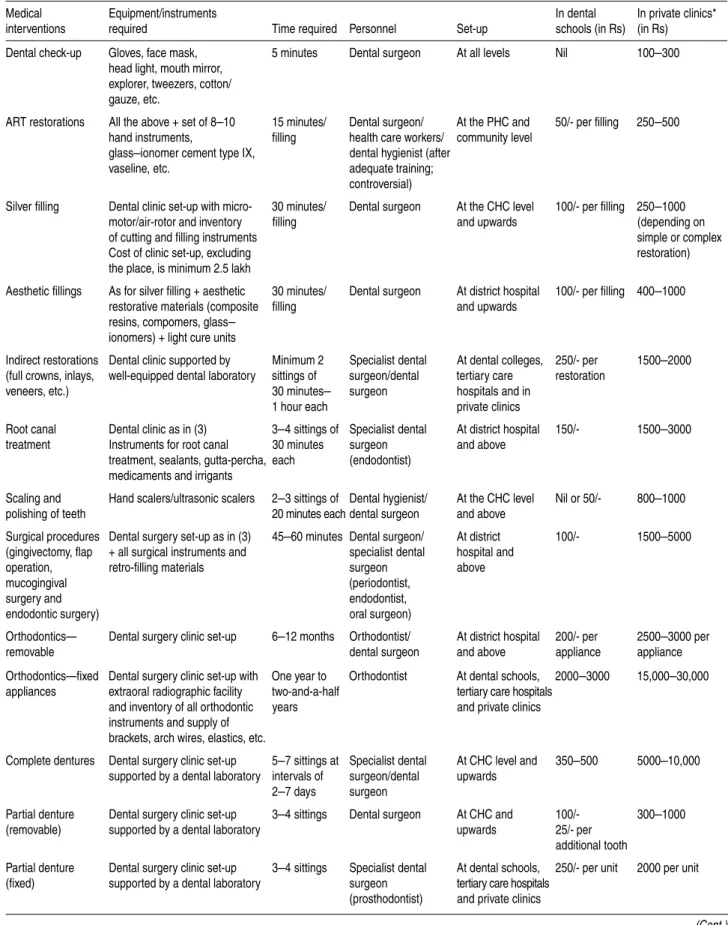
Table 11. Equipment, minimum manpower required and approximate cost for medical interventions for oral and dental diseases
Medical Equipment/instruments In dental In private clinics*
interventions required Time required Personnel Set-up schools (in Rs) (in Rs)
Dental check-up Gloves, face mask, 5 minutes Dental surgeon At all levels Nil 100–300
head light, mouth mirror, explorer, tweezers, cotton/
gauze, etc.
ART restorations All the above + set of 8–10 15 minutes/ Dental surgeon/ At the PHC and 50/- per filling 250–500 hand instruments, filling health care workers/ community level
glass–ionomer cement type IX, dental hygienist (after
vaseline, etc. adequate training;
controversial)
Silver filling Dental clinic set-up with micro- 30 minutes/ Dental surgeon At the CHC level 100/- per filling 250–1000
motor/air-rotor and inventory filling and upwards (depending on
of cutting and filling instruments simple or complex
Cost of clinic set-up, excluding restoration)
the place, is minimum 2.5 lakh
Aesthetic fillings As for silver filling + aesthetic 30 minutes/ Dental surgeon At district hospital 100/- per filling 400–1000 restorative materials (composite filling and upwards
resins, compomers, glass–
ionomers) + light cure units
Indirect restorations Dental clinic supported by Minimum 2 Specialist dental At dental colleges, 250/- per 1500–2000 (full crowns, inlays, well-equipped dental laboratory sittings of surgeon/dental tertiary care restoration
veneers, etc.) 30 minutes– surgeon hospitals and in
1 hour each private clinics
Root canal Dental clinic as in (3) 3–4 sittings of Specialist dental At district hospital 150/- 1500–3000 treatment Instruments for root canal 30 minutes surgeon and above
treatment, sealants, gutta-percha, each (endodontist) medicaments and irrigants
Scaling and Hand scalers/ultrasonic scalers 2–3 sittings of Dental hygienist/ At the CHC level Nil or 50/- 800–1000
polishing of teeth 20 minutes each dental surgeon and above
Surgical procedures Dental surgery set-up as in (3) 45–60 minutes Dental surgeon/ At district 100/- 1500–5000 (gingivectomy, flap + all surgical instruments and specialist dental hospital and
operation, retro-filling materials surgeon above
mucogingival (periodontist,
surgery and endodontist,
endodontic surgery) oral surgeon)
Orthodontics· Dental surgery clinic set-up 6–12 months Orthodontist/ At district hospital 200/- per 2500–3000 per
removable dental surgeon and above appliance appliance
Orthodontics·fixed Dental surgery clinic set-up with One year to Orthodontist At dental schools, 2000–3000 15,000–30,000 appliances extraoral radiographic facility two-and-a-half tertiary care hospitals
and inventory of all orthodontic years and private clinics instruments and supply of
brackets, arch wires, elastics, etc.
Complete dentures Dental surgery clinic set-up 5–7 sittings at Specialist dental At CHC level and 350–500 5000–10,000 supported by a dental laboratory intervals of surgeon/dental upwards
2–7 days surgeon
Partial denture Dental surgery clinic set-up 3–4 sittings Dental surgeon At CHC and 100/- 300–1000
(removable) supported by a dental laboratory upwards 25/- per
additional tooth
Partial denture Dental surgery clinic set-up 3–4 sittings Specialist dental At dental schools, 250/- per unit 2000 per unit (fixed) supported by a dental laboratory surgeon tertiary care hospitals
(prosthodontist) and private clinics
(Cont.)
!%$ Shah
Biopsy Dental surgery set-up 15–30 minutes Dental surgeon At the CHC level Nil 500–1000
and upwards
Surgical extraction Dental surgery set-up + all 1 hour Oral surgeon/dental At district hospital 100 2000–3000
(impaction) surgical instruments and surgeon and above
retro-filling materials
Fracture reduction/ Dental surgery set-up as 1 hour Oral surgeon/dental At district hospital Nil 5000–8000 cyst enucleation/ for silver filling + all surgical surgeon and above
benign growth instruments and retro-filling
excision materials
PHC: primary health centre; CHC: community health centre; ART: atraumatic restorative treatment
*These rates are common in Delhi; may vary from State to State.
Table 11 (cont.). Equipment, minimum manpower required and approximate cost for medical interventions for oral and dental diseases
Medical Equipment/instruments In dental In private clinics*
interventions required Time required Personnel Set-up schools (in Rs) (in Rs)
O ral and dental diseases are widely prevalent in India.
Though not life-threatening, these diseases are often very painful, expensive to treat and cause loss of several man- days. O n the other hand, they are, to a great extent, preventable. It has now been recognized that oral and general health are closely interlinked. Periodontal (gum) diseases are found to be closely associated with several serious systemic illnesses such as cardiovascular and pulmonary diseases, stroke, low birth-weight babies and preterm labour. Besides, poor oral health affects the functions of mastication and speech, and ultimately the overall well-being of an individual.
The major oral and dental diseases/disorders are (i) dental caries, (ii) periodontal diseases, (iii) dentofacial anomalies and malocclusion, (iv) edentulousness (tooth loss), (v) oral cancer, (vi) maxillofacial and dental injuries, and (vii) fluorosis.
EPIDEMIOLOGY OF ORAL AND DENTAL DISEASES Dental caries
Dental caries is a universal disease affecting all geographic regions, races, both the sexes and all age groups. The prevalence of dental caries is generally estimated at the ages of 5, 12, 15, 35–44 and 65–74 years for global monitoring of trends and international comparisons. The prevalence is expressed in terms of point prevalence (percentage of population affected at any given point in time) as well as DM FT index (number of decayed, missing and filled teeth in an individual and in a population).
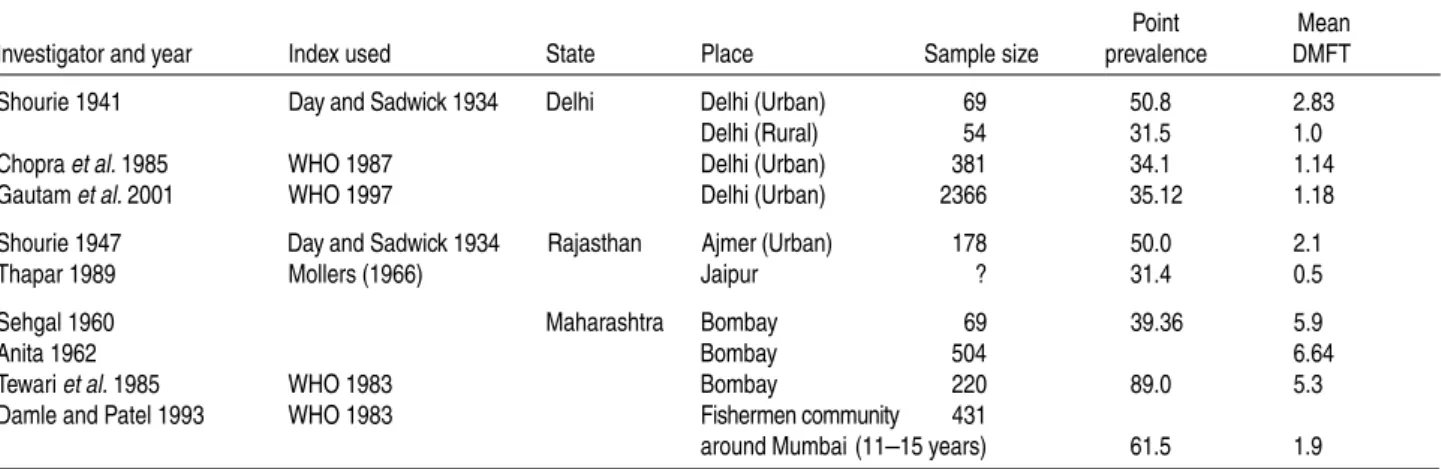
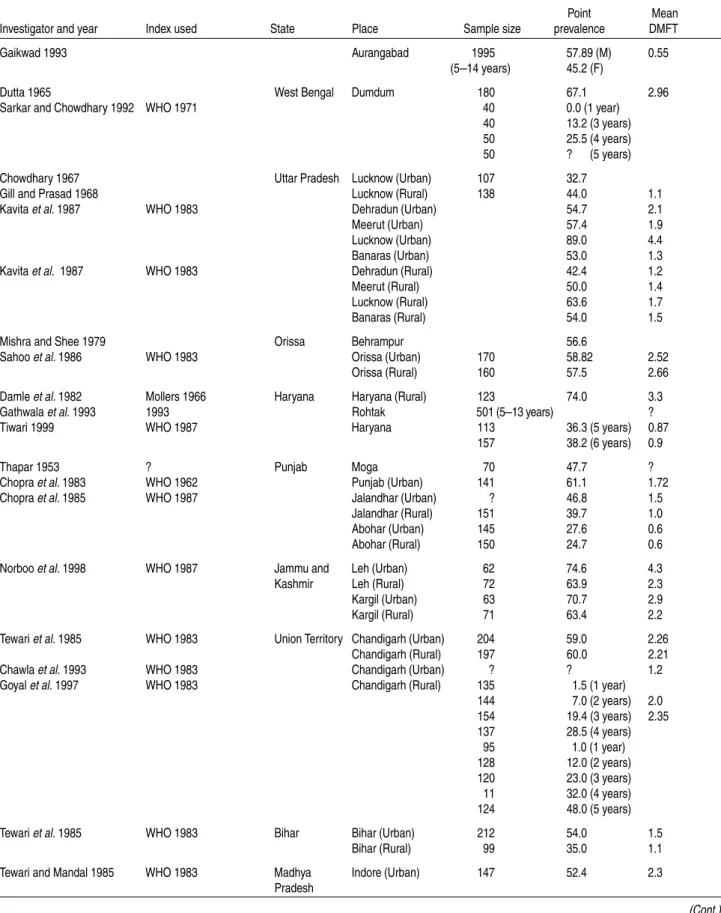
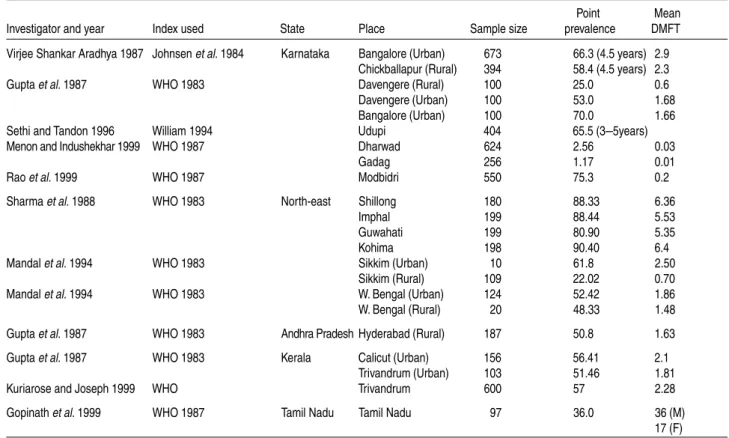
As per the WH O O ral H ealth Surveillance 1992, the DMFT index in 12-year-old Indian is 0.89. In India, different investigators have studied various age groups, which can be broadly classified as below 12 years, above 12 years, above 30 years and above 60 years (Tables 12–15). Based on the analysis of all these tables, the prevalence of dental caries in urban and rural populations at various specified age groups has been calculated (Table 16).
Table 12. Incidence of caries in the age group of less than 12 years
Point Mean
Investigator and year Index used State Place Sample size prevalence DMFT
Shourie 1941 Day and Sadwick 1934 Delhi Delhi (Urban) 69 50.8 2.83
Delhi (Rural) 54 31.5 1.0
Chopra et al. 1985 WHO 1987 Delhi (Urban) 381 34.1 1.14
Gautam et al. 2001 WHO 1997 Delhi (Urban) 2366 35.12 1.18
Shourie 1947 Day and Sadwick 1934 Rajasthan Ajmer (Urban) 178 50.0 2.1
Thapar 1989 Mollers (1966) Jaipur ? 31.4 0.5
Sehgal 1960 Maharashtra Bombay 69 39.36 5.9
Anita 1962 Bombay 504 6.64
Tewari et al. 1985 WHO 1983 Bombay 220 89.0 5.3
Damle and Patel 1993 WHO 1983 Fishermen community 431
around Mumbai (11–15 years) 61.5 1.9
(Cont.)
!%"
Oral and dental diseases: Causes, prevention and treatment strategies
Table 12 (cont.). Incidence of caries in the age group of less than 12 years
Point Mean
Investigator and year Index used State Place Sample size prevalence DMFT
Gaikwad 1993 Aurangabad 1995 57.89 (M) 0.55
(5–14 years) 45.2 (F)
Dutta 1965 West Bengal Dumdum 180 67.1 2.96
Sarkar and Chowdhary 1992 WHO 1971 40 0.0 (1 year)
40 13.2 (3 years)
50 25.5 (4 years)
50 ? (5 years)
Chowdhary 1967 Uttar Pradesh Lucknow (Urban) 107 32.7
Gill and Prasad 1968 Lucknow (Rural) 138 44.0 1.1
Kavita et al. 1987 WHO 1983 Dehradun (Urban) 54.7 2.1
Meerut (Urban) 57.4 1.9
Lucknow (Urban) 89.0 4.4
Banaras (Urban) 53.0 1.3
Kavita et al. 1987 WHO 1983 Dehradun (Rural) 42.4 1.2
Meerut (Rural) 50.0 1.4
Lucknow (Rural) 63.6 1.7
Banaras (Rural) 54.0 1.5
Mishra and Shee 1979 Orissa Behrampur 56.6
Sahoo et al. 1986 WHO 1983 Orissa (Urban) 170 58.82 2.52
Orissa (Rural) 160 57.5 2.66
Damle et al. 1982 Mollers 1966 Haryana Haryana (Rural) 123 74.0 3.3
Gathwala et al. 1993 1993 Rohtak 501 (5–13 years) ?
Tiwari 1999 WHO 1987 Haryana 113 36.3 (5 years) 0.87
157 38.2 (6 years) 0.9
Thapar 1953 ? Punjab Moga 70 47.7 ?
Chopra et al. 1983 WHO 1962 Punjab (Urban) 141 61.1 1.72
Chopra et al. 1985 WHO 1987 Jalandhar (Urban) ? 46.8 1.5
Jalandhar (Rural) 151 39.7 1.0
Abohar (Urban) 145 27.6 0.6
Abohar (Rural) 150 24.7 0.6
Norboo et al. 1998 WHO 1987 Jammu and Leh (Urban) 62 74.6 4.3
Kashmir Leh (Rural) 72 63.9 2.3
Kargil (Urban) 63 70.7 2.9
Kargil (Rural) 71 63.4 2.2
Tewari et al. 1985 WHO 1983 Union Territory Chandigarh (Urban) 204 59.0 2.26
Chandigarh (Rural) 197 60.0 2.21
Chawla et al. 1993 WHO 1983 Chandigarh (Urban) ? ? 1.2
Goyal et al. 1997 WHO 1983 Chandigarh (Rural) 135 1.5 (1 year)
144 7.0 (2 years) 2.0
154 19.4 (3 years) 2.35
137 28.5 (4 years)
95 1.0 (1 year)
128 12.0 (2 years)
120 23.0 (3 years)
11 32.0 (4 years)
124 48.0 (5 years)
Tewari et al. 1985 WHO 1983 Bihar Bihar (Urban) 212 54.0 1.5
Bihar (Rural) 99 35.0 1.1
Tewari and Mandal 1985 WHO 1983 Madhya Indore (Urban) 147 52.4 2.3
Pradesh
(Cont.)
!%% Shah
Virjee Shankar Aradhya 1987 Johnsen et al. 1984 Karnataka Bangalore (Urban) 673 66.3 (4.5 years) 2.9 Chickballapur (Rural) 394 58.4 (4.5 years) 2.3
Gupta et al. 1987 WHO 1983 Davengere (Rural) 100 25.0 0.6
Davengere (Urban) 100 53.0 1.68
Bangalore (Urban) 100 70.0 1.66
Sethi and Tandon 1996 William 1994 Udupi 404 65.5 (3–5years)
Menon and Indushekhar 1999 WHO 1987 Dharwad 624 2.56 0.03
Gadag 256 1.17 0.01
Rao et al. 1999 WHO 1987 Modbidri 550 75.3 0.2
Sharma et al. 1988 WHO 1983 North-east Shillong 180 88.33 6.36
Imphal 199 88.44 5.53
Guwahati 199 80.90 5.35
Kohima 198 90.40 6.4
Mandal et al. 1994 WHO 1983 Sikkim (Urban) 10 61.8 2.50
Sikkim (Rural) 109 22.02 0.70
Mandal et al. 1994 WHO 1983 W. Bengal (Urban) 124 52.42 1.86
W. Bengal (Rural) 20 48.33 1.48
Gupta et al. 1987 WHO 1983 Andhra Pradesh Hyderabad (Rural) 187 50.8 1.63
Gupta et al. 1987 WHO 1983 Kerala Calicut (Urban) 156 56.41 2.1
Trivandrum (Urban) 103 51.46 1.81
Kuriarose and Joseph 1999 WHO Trivandrum 600 57 2.28
Gopinath et al. 1999 WHO 1987 Tamil Nadu Tamil Nadu 97 36.0 36 (M)
17 (F) DMFT: number of decayed, missing and filled teeth
Table 12 (cont.). Incidence of caries in the age group of less than 12 years
Point Mean
Investigator and year Index used State Place Sample size prevalence DMFT
Table 13. Incidence of dental caries in children above 12 years of age
Point Mean
Investigator and year Index used State Place Sample size prevalence DMFT
Shourie 1941 Day and Sadwick 1934 Delhi Delhi (Urban) 95 (12 years) 54.8 5.7
Shourie 1941 Day and Sadwick 1934 Delhi (Urban) 19 52.7 1.2
Delhi (Rural) 40 (15 years) 42.5 1.1
Gupta et al. 1993 WHO 1983 New Delhi (12 years) 87.0 0.86
Chopra et al. 1995 WHO 1987 Delhi (Urban) 392 (15 years) 20.9 0.42
Shourie 1942 Day and Sadwick 1934 Tamil Nadu Tamil Nadu (Urban) 42 57 2.0
Gopinath et al. 1999 WHO 1987 Tamil Nadu 232 (12 years) 61.2 3.2 (M)
3.7 (F)
Shourie 1947 Day and Sadwick 1934 Rajasthan Ajmer (Urban) (15 years) 56.3
Thapar et al. 1989 Moller 1966 Rajasthan (Rural) (12 years) 31.4 0.5
Chaudhary et al. 1957 Own criteria Uttar Pradesh Lucknow 368 (12 years) 32.0 1.15
Chaudhary et al. 1957 Own criteria Lucknow 107 (5 years) 32.7
Gill et al. 1968 WHO 1962 Lucknow (Urban) 99 (12 years) 99.0 43.3
Gill et al. 1968 WHO 1962 Lucknow (Urban) 23 (15 years) 66.8 0.7
Mehta et al. 1987 WHO 1983 Dehradun (Urban) 202 (15 years) 45.0 1.0
Meerut (Urban) 42.0 1.1
Lucknow (Urban) 42.6 1.0
Banaras (Urban) 38.4 1.0
Mehta et al. 1987 WHO 1983 Dehradun (Rural) 112 (15 years) 38.2 0.8
Meerut (Rural) 38.4 0.8
Lucknow (Rural) 20.5 0.4
Banaras (Rural) 41.0 0.8
Singh et al. 1999 WHO 1987 Faridabad (Rural) 233 (12 years) 33.1 0.79
(Cont.)
!%&
Oral and dental diseases: Causes, prevention and treatment strategies
Table 13 (cont.). Incidence of dental caries in children above 12 years of age
Point Mean
Investigator and year Index used State Place Sample size prevalence DMFT
Singh et al. 1999 WHO 1987 Faridabad (Rural) 207 (15 years) 42.5 1.29
Anita 1962 Maharashtra Bombay 503 (15 years) 2.5
Damle et al. 1982 Moller 1966 Naraingarh (Rural) 230 (15 years) 77.2 2.4
Damle and Patel 1984 WHO 1983 Bombay (15 years) 78.0 3.6
Tiwari et al. 1985 WHO 1983 Bombay (Urban) 202 (15 years) 96.0 4.7
Damle and Ghonmode 1993 WHO 1983 Nagpur (12 years) 82.6 4.0
Damle and Ghonmode 1993 WHO 1983 Nagpur (15 years) 82.6 4.0
1993? Nagpur 1811 (12–18 years) 81.3 >3
1994? WHO 1983 Bombay (Urban) 367 (12 years) 80.0 3.8
Rodrigues and Damle 1998 Mumbai 68.02
Ali et al. 1998 WHO 1987 Akola 508 (5–6 years) 61.4%
2.75+3.98
Rodrigues and Damle 1998 WHO 1997 Bhiwandi 256 (12 years) 55.5 1.08
Tiwari and Chawla 1977 WHO 1971 Uttaranchal Chandigarh (Urban) 82 (15 years) 86.6 4.7
Tiwari et al. 1983 WHO 1966 Chandigarh
(Urban) 217 51.1 1.38
(Rural) 205 (15 years) 47.5 1.30
Chawla et al. 1993 WHO 1983 Chandigarh (12 years) 1.2
Damle et al. 1982 Moller 1966 Haryana Haryana (Rural) 152 (12 years) 89.5 3.2
Tiwari et al. 1985 WHO 1983 Haryana (Urban) 229 50.0 1.35
Haryana (Rural) 200 (15 years) 47.5 1.30
Sharma et al. 1998 WHO Haryana District 3031 (12–16 years) 36.7 0.67
(Gurgaon and Mahendragarh)
Gauba et al. 1983 Moller 1966 Punjab Punjab (Rural) 173 (12 years) 86.1 3.9
Gauba et al. 1983 Moller 1966 Ludhiana (Rural) 101 (15 years) 88.1 5.0
Chopra et al. 1983 WHO 1962 Punjab (Urban) 255 (12 years) 67.2 1.3
Chopra et al. 1995 WHO 1987 Jalandhar (Urban) 150 42.0 0.9
Jalandhar (Rural) 146 24.7 0.46
Abohar (Urban) 46 21.0 0.43
Abohar (Rural) 46 24.0 0.43
Mishra and Shee 1985 Orissa Orissa (12 years) 61.1
Tiwari et al. 1985 WHO 1983 Orissa (Rural) 174 63.8 2.1
Orissa (Urban) 159 (12 years) 63.1 2.1
Sahoo et al. 1986 WHO 1983 Orissa Urban) (12 years) 63.8 2.1
Orissa (Rural) 67.9 2.0
Sahoo et al. 1986 WHO 1983 Orissa (Urban) 175 (15 years) 62.3 2.0
Mandal et al. 1994 WHO 1987 Orissa (Rural) 121 (15–16 years) 19.8 0.3
Mandal et al. 1994 WHO 1987 Bhubaneshwar (Urban) 120 18.3 0.3
Mandal et al. 2001 WHO 1983 Orissa (Urban) 702
Orissa (Rural) 351 56.0
351 48.7
Tiwari et al. 1985 WHO 1983 Himachal Pradesh Himachal (Urban) 178 50.0 1.2
Himachal (Rural) 191 (15 years) 49.0 1.3
Tiwari et al. 1985 WHO 1983 Bihar Bihar (Urban) 160 42.5 1.2
Bihar (Rural) 202 (15 years) 49.5 1.3
Tiwari and Mandal 1985 WHO 1983 Madhya Pradesh Indore (Urban) 162 (15 years) 68.0 2.8
Sharma et al. 1988 WHO 1983 North-east Shillong (Urban) 183 60.1 2.1
Imphal (Urban) 197 63.45 1.76
Guwahati (Urban) 200 83.5 3.13
Kohima and
Mokokochung (Urban) 195 (15 years) 63.08 2.36
Mandal et al. 1994 WHO 1987 Gangtok (Urban) 106 (15 years) 30.2 0.5
(Cont.)
!&' Shah
Mandal et al. 1994 WHO 1987 Sikkim (Rural) 106 (15–16 years) 17.9 0.3
Mandal et al. 2001 WHO 1983 Sikkim 644
(Urban) 323 61.8
(Rural) 321 22.0
Mandal et al. 1994 WHO 1987 West Bengal Calcutta (Urban) 119 21.0 0.3
Mandal et al. 1994 WHO 1987 West Bengal (Rural) 118 15.2 0.3
Mandal et al. 2001 WHO 1983 West Bengal 720 52.4 5.6
(Urban) 361 48.3
(Rural) 359
Norboo et al. 1998 WHO 1987 Jammu and Leh (Rural) 74 43.2 0.87
Kashmir Kargil (Rural) 69 (12 years) 29.0 0.68
Norboo et al. 1998 WHO 1987 Leh (Urban) 65 47.7 1.01
Kargil (Urban) 73 (12 years) 35.8 0.63
Norboo et al. 1998 WHO 1987 Leh (Urban) 70 60.0 1.01
Leh (Rural) 60 45.0 1.15
Kargil (Urban) 79 47.5 1.2
Kargil (Rural) 69 (15 years) 39.7 1.0
Nagaraga Rao 1980 Karanataka Udupi (2 years) 4.1
Gupta et al. 1987 WHO 1983 Davangere (Rural) 98 (15 years) 42.86 1.07
Menon and Indushekhar 1999 WHO 1987 Dharwad 300 31.0 0.78
Gadag 488 (12 years) 24.6 0.6
Rao et al. 1999 WHO 1987 Moodbidri (Urban) 771 (12 years) 67.1 1.29
Menon and Indushekhar 1999 WHO 1987 Dharwad 106 55.7 1.09
Gadag 127 (15 years) 30.3 0.75
Sogi and Bhasker 2001 Davangere 3.12
Javali and Prasad 2001 WHO Karnataka 8152 (12–17 years) 43.5 (M) 1.57
50.5 (F)
Kulkarni and Deshpande 2002 WHO 1987 Belgaum 2005 (11–15 years) 45.12% 1.18
Gupta et al. 1987 WHO 1983 Andhra Pradesh Hyderabad 85 (15 years) 34.12 0.96
Retnakumari 2000 WHO 1997 Varkala 119 (12 years) 67.2 2.067
Goel et al. 2000 WHO 1987 Puttur 203 (12 years) 59.6 1.87
DMFT: number of decayed, missing and filled teeth
Table 13 (cont.). Incidence of dental caries in children above 12 years of age
Point Mean
Investigator and year Index used State Place Sample size prevalence DMFT
Table 14. Incidence of dental caries in the age group of above 30 years
Point Mean
Investigator and year Index used State Place Sample size prevalence DMFT
Barreto et al. 1953 Maharashtra Bombay 331 1.50
Mangi and Jalili 1967 Madhya Pradesh Madhya Pradesh 331 4.10
Ramachandran et al. 1973 Tamil Nadu Tamil Nadu (Urban) NA 2.88
Tamil Nadu (Rural) 2.10
Damle et al. 1982 Mollers 1966 Haryana Haryana (Rural) 667 61 1.70
Tewari et al. 1985 WHO 1983 Haryana (Urban) 101 46.5 1.5
Haryana (Rural) 200 68.0 3.04
Tewari et al. 1985 WHO 1983 Uttaranchal Chandigarh (Urban) 156 81.4 4.38
Chandigarh (Rural) 196 82.1 4.38
Tewari et al. 1985 WHO 1983 Uttar Pradesh Lucknow (Urban) 199 47.0 1.13
Lucknow (Rural) 118 45.8 1.22
Tewari et al. 1985 WHO 1983 Jammu and J&K (Urban) NA 4.9
Kashmir J&K (Rural) NA 5.8