Cervical Cancer Screenings in Sexual and Gender Minority Individuals:
Evidence from the Behavioral Risk Factor Surveillance System, 2018-2019.
Lindsay R. Mosca Honors Thesis
Department of Medicine, Health, and Society April 2021
Thesis Advisor: Professor Gilbert Gonzales, PhD MHA
ABSTRACT Background:
The rate of new cervical cancer cases and cervical cancer deaths in the United States has
declined in the last fifty years due to the widespread use of cervical cancer screenings known as Papanicolaou (Pap) tests. Sexual minority women, or women who identify as lesbian, bisexual, queer or otherwise have sex with women, may be less likely to receive Pap test screenings than heterosexual women. Other studies that have been conducted on sexual minority women do not consider the intersection of sexual orientation and gender identity. This study examined sexual orientation disparities in Pap test screenings among cisgender women as well as individuals assigned female at birth with a cervix who identify as transgender (female-to-male, FTM), or gender nonconforming.
Methods: This study used data on adults aged 18-64 years who self-responded that their sex assigned at birth was female (n = 147,840) from the 2018 and 2019 Behavioral Risk Factor Surveillance Survey. We used descriptive statistics and logistic regression models to examine the associations between sexual orientation and Pap test use in the previous three years. All analyses were conducted in Stata.
Results: Individuals who reported that their sex at birth was female and identified as gay or lesbian were less likely to have had a Pap test in the last three years compared to heterosexual individuals (OR, 0.75; 95% CI, 0.55-0.99). Individuals who responded “something else” when asked about their sexual orientation were less likely to have had a Pap test in the last three years compared to heterosexual individuals (OR, 0.67; 95% CI, 0.48-0.83). Transgender (FTM) individuals were less likely to have received a Pap test in the last three years compared to cisgender women (OR, 0.55; 95% CI, 0.31-0.98). Gender non-conforming individuals were also
less likely than non-transgender individuals to have received a Pap test in the last three years, but these results were not significant (OR, 0.90; 95% CI, 0.45-1.82 for gender non-conforming).
Conclusions/Implications: All individuals with a cervix are at risk of cervical cancer, regardless of their sexual orientation or gender identity. Sexual orientation and gender identity disparities in sexual and reproductive health services demonstrate a need to reconsider the way in which these services are provided. Our study found that some SGM individuals were less likely to be
compliant in Pap test screenings than non-SGM individuals. Further research should be done to conclude the impact of sexual orientation and gender identity on Pap test screening compliance.
ABSTRACT ... 2
INTRODUCTION ... 5
BACKGROUND ... 7
METHODOLOGY ... 20
RESULTS ... 23
DISCUSSION ... 24
CONCLUSIONS ... 32
REFERENCES ... 36
FIGURES ... 39
INTRODUCTION
Cervical cancer is a deadly disease with the rate of new cases per year being 7.4 per 100,000 women.1 Contrary to other types of cancer, cervical cancer is well understood in terms of prevention, etiology, and treatment. The development of this knowledge base has contributed to better outcomes and a decline in cervical cancer deaths over time. However, the limited data that has been collected on sexual and gender minorities (SGM) raises the question of whether SGM individuals are following the trend that is observed in the general population.
While cervical cancer is widespread, sexual and gender minorities including individuals who identify as lesbian, gay, bisexual, transgender, or gender non-conforming, may experience different outcomes when faced with this disease than their heterosexual or cisgender
counterparts. The data that is available from cancer registries such as the Surveillance,
Epidemiology, and End Results (SEER) Program does not include data on sexual orientation or gender identity.2 This provides a challenge for researchers to investigate the relationships
between SGM status and cancer incidences because quantitative data is not routinely collected in a way in which direct relationships could be parsed out using cancer registry data. In order to study cancer disparities in SGM people, researchers have utilized other methods such as
investigating cancer risk behaviors and the use of preventive care received using national health surveys.
This study focuses specifically on the use of cervical cancer screenings, known as Papanicolaou (Pap) tests, to prevent cervical cancer. The purpose of investigating Pap test compliance is to highlight disparities in SGM individuals use of preventive care for cervical cancer. Cervical cytologic screenings are used to detect abnormalities in cervical cells that are associated with the development of cervical cancer. The result of cervical cytologic screenings
guide whether further evaluation, including cervical biopsy and colposcopy, is necessary. Since the development of the Pap test, cervical cytologic screenings have served a critical role in the prevention and detection of cervical cancer.
Using nationally representative data from the 2018 and 2019 Behavioral Risk Factor Surveillance Survey (BRFSS), this study serves as a follow up to other studies that have been conducted in the past which investigate sexual and gender minority disparities in cervical cancer screenings. The BRFSS includes a question in their standard questionnaire about Pap test
screening and asks respondents to share whether they have or have not ever had a Pap test—and if so, when they received a Pap test. This question is only asked to individuals that reported earlier in the survey that their sex at birth was female. Therefore, individuals who are included in this sample self-reported that their sex at birth was female. This sample was further limited by the collection of sexual orientation and gender identity (SOGI) data because the BRFSS includes SOGI data as an optional module for states to add. The BRFSS began offering this module in 2014 and continues to offer it to states as an add-on module.3 In 2018, there were 28 states and one U.S. territory (Guam) that included this additional module.4 In 2019, there were 30 states and one U.S. territory (Guam) that included this additional module.5 This study utilized data from the states that asked the SOGI module questions in 2018 or 2019. The sample included 147,840 individuals aged 18-64 years who reported being assigned female at birth.
In this study I assessed the likelihood of having received a timely pap test for all individuals with a cervix aged 18 to 64 years. Timeliness is defined using the guidelines and recommendations from the American College of Obstetricians and Gynecologists (ACOG) and the U. S. Preventive Services Task Force (USPSTF) published in 2018 which indicate screening every three years.6,7 This study investigated whether SGM individuals were less likely to have
had a timely Pap than their non-SGM counterparts. This analysis could potentially reveal
disparities in the use of preventive care measures such as cervical cancer screenings which would provide further evidence that SGM individuals are more at risk of developing cervical cancer.
BACKGROUND
What is the history of the Pap test?
The Papanicolaou (Pap) test is named after George Papanicolaou who is the physician who developed the screening technology.8 Papanicolaou and one of his collaborators, Dr. Herbert Trout, published the findings of this cancer screening tool in 1941.8 Considering that cytologic diagnoses and cytology labs were a fairly new concept at the time, it was not until the 1960s that Pap testing became widespread in the United States. Since then, cervical cytologic testing has been the primary method of cervical cancer detection in the United States and in other countries around the world.
How does cervical cancer relate to HPV?
In 1975, Dr. Harald zur Hausen made a hypothesis that human papillomavirus (HPV) infection was the primary cause of cervical cancer. This link between HPV and cancer led to the development of diagnostics and treatments for HPV, including the HPV vaccine. The HPV vaccine was introduced in 2006 and is recommended as an effective way of reducing the risk of cervical cancer. The expansion of cervical cancer prevention recommendations to include HPV testing and HPV vaccinations has contributed to further changes and updates to guidelines over the years. The link between HPV and cervical cancer has provided crucial knowledge about what
cervical cancer has increasingly tied cervical cancer to sexual activity which dictated many of the guideline changes in the early 80s.
How have the recommendations for cervical cancer screening changed over the years, and what are they currently?
The recommendations for cervical cancer screening come from agencies such as the American Cancer Society (ACS), the American College of Obstetricians and Gynecologists (ACOG), and the U.S. Preventative Services Task Force (USPSTF). These agencies began recommending cervical cancer screenings in the 1950s and continue to release updated
recommendations based on available research. The frequent changes to cervical cancer screening guidance means that compliance has not been consistently defined over the years. In addition, while these recommendations are released to guide clinical practice for cervical cancer
screening, it is ultimately up to the individual provider and patient to determine their compliance within these guidelines.
From the 1950s to 1988, the ACOG recommended that all women receive an annual Pap test. In 1995, the ACOG released an update that specified the age at which women should start receiving annual Pap tests, either at 18 years-old or at the age that they become sexually active, whichever comes first. In 2002, the ACS includes new age limitations to their recommendation by saying that women should receive their first Pap test either at the age they begin having sexual intercourse and the three years that follow, but no later than the age of 21. This
recommendation also adds that women over the age of 70 could stop getting tested if they’ve received two consecutive negative tests.
In 2003, the ACOG changed their age recommendation to mirror that of the ACS and recommends that women should begin annual Pap tests by age twenty-one and receive them earlier if they are sexually active. The ACOG adds a limitation to annual Pap testing of women over the age of 30, including an option for women over 30 to have less frequent screening. The USPSTF released a recommendation in 2003, as well, including that cervical cancer screening should be conducted at least every three years. They recommend that women discontinue screening after age 65.
Until 2012, cervical cancer screening recommendations did not include HPV testing as part of the cervical cancer screening protocol. In 2012, however, both the ACOG and the USPSTF recommended that women aged 21-29 should receive a Pap test every three years but women aged 30-65 could lengthen their time in between screenings to 5 years if they also received an HPV test along with a Pap test, also known as a co-test.7,9,10
In 2018, the USPSTF and the ACOG updated their guidelines for cervical cancer screening.6,11 Both recommend women aged 21-29 years should obtain a Pap test every three years, which is consistent to what was recommended by both agencies in 2012. However, ACOG recommends that women aged 30-65 years should have a Pap test and an HPV test (co-testing) every five years, or a Pap test alone every three years.6 The recommendation from the USPSTF recommendation for women aged 30-65 years differs slightly, recommending either co-testing every five years, a Pap test alone every three years, or HPV testing alone every five years.11
The most recent recommendations for cervical cancer screenings that had been released prior to the data collection for this study were released by the ACOG and USPSTF in 2018.9,11 Since then, the ACOG and the USPSTF have reaffirmed their recommendations from 2018 as recently as June 2020.12 While the 2018 guidelines from ACOG and USPSTF are the most recent
guidelines they have published, they are not the most recent guidelines that have been released by similar agencies. In July 2020, the ACS released cervical cancer screening recommendations that are distinct from what they had previously recommended in 2012.13 These recommendations are distinct from what was recommended by the USPSTF or ACOG in 2018 and are therefore not reflected in this study as being the guidelines for compliance. The 2020 ACS
recommendations state that women should begin cervical cancer screening at age 25 instead of age 21. In addition, they should utilize HPV screening as their preferred method over Pap test or cytology screening. They promote Pap test screening in areas in which HPV screenings are unavailable, and additionally recommend co-testing, but remark that cytology testing should be phased out once HPV screening is more widely available.14
In conducting this study, compliance was defined utilizing the recommendations from the USPSTF and ACOG released in 2018.9,11 As the most recent recommendations available during the time in which BRFSS 2018 and 2019 data was collected, it felt most appropriate to define compliance for this study using these recommendations. It is possible that non-compliant
individuals in this study would be seen as compliant according to 2020 guidelines from the ACS.
However, I define individuals as non-compliant if they were non-compliant at the time of response according to the most recent guidelines which were released in 2018.
What is the significance of cervical cancer screenings for sexual and gender minority individuals?
Available research has shown that certain health conditions disproportionately affect SGM individuals. Some of these conditions include cancer-related risk factors, such as tobacco
use.15,16 Many studies have shown disparities in mental and physical health outcomes for sexual
and gender minority individuals compared to their majority counterparts, including higher odds of depression, poor physical health, chronic conditions, and obesity.17–19 These results vary by specific population of sexual and gender minorities but point to a broader trend that there are health disparities in SGM individuals. The documented differences in access to health care for SGM individuals undoubtably contributes to these disparities. The investigation of Pap test screening compliance of SGM compared to non-SGM individuals is an attempt to add to current research on SGM health disparities including health care outcomes and barriers to care which contribute to disparities in SGM cancer care and survivorship.20,21
Organizations such as the National Cancer Institute’s Surveillance, Epidemiology, and End Results (SEER) Program take part-take in cancer surveillance and work to track new information including severity, treatment, survival, and morbidity. The collection of this
information has been essential to provide our health system with a clear understanding of cancer in the United States.1 It allows them to follow trends, patterns, and recognize disparities.
However, many of these surveillance programs, including SEER, do not collect sexual orientation and gender identity data.2 This provides a challenge for the recognition of cancer disparities in SGM individuals, as they cannot be easily recognized through cancer surveillance.
To remedy this, those studying SGM cancer disparities have had to utilize other strategies to identify the disparities in this population such as state-level health surveys.17 This study is similar to other studies which rely on population health surveys to investigate cancer disparities in SGM individuals.17,22
How does sexual orientation influence cervical cancer screening?
In investigating the disparities of cervical cancer screenings in SGM individuals, it is important to parse out subgroups to highlight the different experiences of individuals based on their specific sexual orientation or gender identity. The BRFSS SOGI module does not ask participants about sexual behavior or sexual partners, therefore we rely on the BRFSS SOGI module question which asks individuals how they identify to determine their sexual orientation.
Previous literature has indicated differences in health care and health outcomes between lesbian women and bisexual women, therefore, it is important to investigate the different
experiences of lesbian women that might influence disparities in Pap test screening as a separate experience than that of bisexual women.23,24
Lesbian identified women are assumed to be women who have sex with women. Given that cervical cancer is predominantly caused by HPV, which is the most common STI, the misconception that lesbian women cannot pass or contract HPV from their female partners has led to a lower perceived risk of cervical cancer in this population.23 This trend is not unique to HPV, as lesbian women more broadly have lower use of STI testing than bisexual or
heterosexual women.24,25
Sexual activity is an important entry point to sexual and reproductive health care for women who have sex with men who might seek care for STI testing or contraception. Women who have sex with women might not seek care from a sexual and reproductive health care provider because they do not perceive their risk for STI to be as high as individuals who are having sex with men. The misconception that sex between women is safer than sex between opposite-sex partners is potentially harmful. Women who feel they are at a lower risk for HPV might feel that they are at a lower risk for cervical cancer, and subsequently receive screenings
for cervical cancer later in life or less frequently. Studies have shown that lesbian women receive less frequent Pap test screenings than heterosexual women, which places them at a higher risk for cervical cancer.23 The way in which cervical cancer mortality and outcomes have changed significantly has been due to the widespread use of cervical cancer screening tools. If lesbian women are not getting screened as often, they might be diagnosed later in life with cervical cancer and have worse disease outcomes than if the diagnosis was made sooner.
An additional entry point to health care for women if they are sexually active is to receive contraception. Women who are sexually active with men might initiate care with a sexual and reproductive health care provider to obtain hormonal contraception to prevent pregnancy. This can influence the timing of Pap test screenings for individuals because sexual and reproductive health care providers who provide contraception may provide regular care which would include timely Pap screening. A study conducted by Agénor et. al found a positive association between heterosexual and bisexual women who received contraception and Pap test use.23 Contraception can serve as an entry point to seeing providers of sexual and reproductive health services such as gynecologists. These providers are the predominant source of cervical cancer screenings which would be part of routine care, so individuals who have already established a routine of seeing a provider might be more likely to receive timely care. If the entry point to sexual and reproductive healthcare is to seek out contraception, then women who have sex with women are potentially starting gynecologic care later in life. A study conducted on cervical cancer screenings found that women who had never had sex with men were significantly less likely to have undergone a pelvic exam and had their first Pap test at an older age than women who had sex with men.24
Therefore, the disparities that we see in cervical cancer screening might be due to a disparity in sexual and reproductive health services use for sexual minority individuals. Lesbian
women have differing reproductive health care needs than women who have sex with men, which may include a lower use of contraception and subsequently a less frequent need to seek reproductive health services.
The link between sexual and reproductive health services use and Pap test screenings is investigated in a different study that specifically examines an association between pregnancy history and cervical cancer screenings.26 Sexual minority women of reproductive age who reported a history of pregnancy had an increased odds of having a Pap test in the last year compared to sexual minority women who had never been pregnant.26 If pregnancy is
additionally seen as a cue to sexual and reproductive health care utilization, this study further supports the conclusion that the disparities in cervical cancer screenings in sexual minority women are due to broader disparities in access to sexual and reproductive health care services.
It is important to recognize that bisexual women will have a distinct experience receiving sexual and reproductive health care from lesbian women due to biases and stigma. The stigma of
“promiscuity” that has been placed on bisexual individuals has led to a misconception that bisexual individuals are at a higher risk of contracting HPV or other STIs.23 This stigma shows up in the data as we see that women who have sex with both men and women showed a
significantly higher prevalence of STI testing than heterosexual women.23 This could potentially be due to biases in providers who might recommend STI screening more frequently in bisexual individuals, or because individuals perceive their sexual behaviors to be riskier if they include same-sex and opposite-sex partners.
As a consequence of bisexual individuals being more likely to receive STI testing, it is understandable that they might receive a timelier Pap test than lesbian individuals because STI testing serves as an entry point into sexual and reproductive health care. Contraception can also
serve as an entry point into this health care similar to what we see in heterosexual women if bisexual women are engaging in sex with men.23,26
Regardless of their entry point into sexual and reproductive health care, the experience of sexual minority patients with health care providers might differ from the experience of
heterosexual patients. Individuals who disclose their sexual behaviors with their providers are required to “out” themselves, and not all providers are uniformly receptive. The relationship between patient and provider will be influenced by the heterosexism that dominates medicine, and ultimately can make sexual minority patients feel more disconnected from their providers. A patient-provider relationship is essential for quality care. A study conducted on sexual minority women by Tabaac, et al. (2019) found that higher patient-provider communication quality and trust in providers was positively associated with patients’ intentions for future cervical cancer screenings. While they did not find a direct effect between medical heterosexism and patients’
intentions for future cervical cancer screenings, they did find a significant mediation effect between perceived medical heterosexism and patient-provider communication quality.27 Patients that reported higher perceived medical heterosexism reported lower provider communication quality, leading to an indirect effect that these patients would be less likely to set intentions for future cervical cancer screenings.27
How does transgender status influence cervical cancer screening?
Cervical cancer screening disparities in transgender individuals might arise from a lack of routine care. Transgender individuals experience decreased health care utilization due to the fear of being mistreated or misgendered by medical professionals. In addition to barriers that
contribute to poor access and utilization of routine medical care, there is an unmet need of
provider training in the care of transgender patients. This makes it more difficult for transgender individuals to feel welcome in the health care system, as provider competency influences the patient-provider relationship and the entire health care experience.
Cervical cancer screening disparities in transgender individuals might also be due to gender dysphoria.28–30 Gender dysphoria is the psychological distress that transgender individuals may feel as a result of the incongruence between their natal sex and gender identity.
Cervical cancer screening involves an interaction with anatomy that can trigger gender dysphoria, potentially exacerbating feelings of distress.31 Therefore, cervical cancer screening can potentially exacerbate gender dysphoria, and this may prevent transgender individuals from regular gynecologic exams.
The American College of Obstetricians and Gynecologists recommends that cervical cancer screening should be performed according to age-related guidelines for all individuals with a cervix.32 There are not separate guidelines for cancer screening in transgender individuals because there is not yet enough data on cancer in transgender individuals to devise any sort of preventive plan. We do not yet know the effects of long-term hormone therapy and surgical procedures on cancer in transgender individuals. We do know, however, that transgender individuals are less likely than cisgender women to have received a timely Pap test. A study conducted by Peitzmeier, et al. (2014) examined the characteristics associated with having received a timely Pap test for a group of cisgender women and a group of female-to-male (FTM) transgender men.33 FTM individuals had 37% lower odds of having received a timely Pap test than non-transgender women.33 In addition, transgender individuals who do receive Pap tests are more likely to have an unsatisfactory Pap test than cisgender women.34 Pap tests are classified as unsatisfactory if the collected sample from the patient can’t be evaluated in the laboratory due to
a lack of cells or obscuring factors such as blood in the sample. Unsatisfactory samples are unreadable by the cytologist and individuals are recommended to get rescreened within 2 to 4 months to repeat the screening. It is suggested that transgender individuals might have a higher likelihood of receiving an unsatisfactory Pap test than non-transgender individuals due to the effects of testosterone therapy.34 Long-term testosterone therapy can induce vaginal and cervical atrophy which might make collecting a sample more difficult.32 Further research needs to be done on the effects of long-term hormone therapy in transgender individuals, particularly as it relates to cancer.
How does heteronormativity and cisnormativity influence the health care of SGM individuals?
The norms and assumptions within our society are inevitably reflected in our health care system. Therefore, these influences make their way into cancer care. The multilevel influences on the cancer care continuum model (MICCC) was created by Taplin et al. (2012) as an example for the way in which health care delivery and heath disparities should be analyzed on a
multilevel health care system such as the United States.35 The goal of this model was to conceptualize the health care system in multiple levels in order to improve the quality and outcomes of cancer-related care. Taplin and colleagues chose to implement this model on cancer because “[cancer] spans the continuum of health care issues from primary prevention through long-term survival and end-of-life-care.”35 To develop this model, Taplin and colleagues adapt other social ecological frameworks to fit the understanding of cancer care delivery.35 The model they come up with identifies seven potential targets that influence health care delivery, in descending order of influence: the individual patient, the provider, family and social supports, local community environment, state environment, and the national environment.35
A later study conducted in 2020 utilized the MICCC framework to evaluate the barriers to cancer screening behavior in LGBTQ people.36 Haviland et al. (2020) conducted an integrated study which incorporated the MICCC framework with a lens of queer theory to suggest that assumptions of heterosexuality and a gender binary, also known as heteronormativity and cis- normativity, are influences that affect the health care system, and ultimately, the cancer care of LGBTQ individuals.36 Queer theory suggests that it is “the binary nature of heteronormativity, through institutional practices, creates systematic discrimination against those who do not conform to traditional gender roles.” Through this lens, the broader health care system partakes in this by ostracizing individuals who are either non-heterosexual, transgender, or gender nonconforming.
A qualitative study conducted in 2019 called The Cancer Margins Project provides an understanding of the way in which heteronormative and cisnormative cancer narratives shape the cancer experience for SGM individuals. One mentioned example of a heteronormative and cisnormative narrative that shapes the cancer experience that many will be familiar with is the pink ribbon for breast cancer. The pink ribbon used in the branding of a cancer support website was interpreted by participants of this study as “an effect of heteronormative and cisnormative narratives.”37 The way in which cancer care is marketed represents these binaries, which further supports that cancer care is conducted in this manner. Participants in this study describe the experience of searching for a provider that is “LGBT friendly.”37 This added responsibility of finding a provider is essentially put on the patient themselves. The knowledge-seeking behavior that is described is a product of the failure of the health care system to properly deliver care to SGM individuals. Part of this knowledge-seeking behavior relates to the idea that even if they find a “friendly” provider, this does not guarantee high quality of care. Patients in this study
described a feeling of a general lack of knowledge from providers to manage SGM cancer cases, especially in individuals who have also received gender affirming care. When gender diverse patients look online as a knowledge-seeking behavior, none of the patients reported “accessing any cancer health information or support online that was specific to gender minority populations and many indicated that they were lacking support.”37 Even if these patients had found resources online to guide their care, it should be considered that there are power structures in place that guide the relationship between patient and provider. If a patient did learn something about how their provider should be caring for them, they may not be comfortable sharing it. One patient in the study describes an experience in which the provider’s lack of knowledge and experience treating LGBT individuals made them feel like “the unique patient that they don’t have any experience with.”37 The patient goes on to say in the interview that “specialists at the best of times don’t really want to get their information from their patients. They don’t want to be educated by their patients because it tips the power imbalance, doesn’t it?”37 This excerpt emphasizes the need for an evaluation of the typical education that medical providers receive in caring for LGBT patients, particularly in fields such as gynecology.
METHODOLOGY Study Population
This study used data from the 2018 and 2019 Behavioral Risk Factor Surveillance System (BRFSS), a nationally representative survey telephone survey of the adult population conducted by the Centers for Disease Control and Prevention (CDC). Participants are randomly selected and asked a set of core questions regarding demographics, health-related risk behaviors, health conditions, and use of preventive services.
The core BRFSS questionnaire does not include questions on sexual orientation or gender identity. In 2014, the CDC offered an additional module that includes SOGI questions for states to opt-into. The states that included the additional SOGI module questions for 2018 are:
Connecticut, Delaware, Florida, Hawaii, Idaho, Illinois, Kansas, Louisiana, Maryland, Minnesota, Mississippi, Missouri, Montana, Nevada, New York, North Carolina, Ohio,
Oklahoma, Pennsylvania, Rhode Island, South Carolina, Tennessee, Texas, Vermont, Virginia, Washington, West Virginia, and Wisconsin.4 The states that included the additional SOGI module questions for 2019 are: Alaska, Arizona, Colorado, Connecticut, Delaware, Florida, Georgia, Hawaii, Idaho, Iowa, Kansas, Louisiana, Maryland, Minnesota, Mississippi, Montana, New York, North Carolina, Ohio, Oklahoma, Rhode Island, South Carolina, Tennessee, Texas, Utah, Vermont, Virginia, Washington, West Virginia, and Wisconsin.5 Both the 2018 and 2019 BRFSS SOGI modules were also conducted in one US territory (Guam).4,5
For my study sample, I included individuals age 18-64 who responded that their sex at birth was female. I only included individuals in the sample who responded to the SOGI module questions that ask about sexual orientation and gender identity. To categorize individuals by sexual orientation, the BRFSS 2018 and 2019 SOGI module asks individuals to select which of the following categories best represents how they identify: straight, gay or lesbian, bisexual, or something else. I excluded individuals who responded that they did not know the answer or refused to answer. In addition, the SOGI module includes a question that asks individuals to answer the question “Do you consider yourself to be transgender?” If respondents answer “Yes”
to this question, they are then asked, “Do you consider yourself to be male-to-female, female-to- male, or gender nonconforming?” For this study I included individuals who responded to the initial question “Do you consider yourself to be transgender?” Therefore, I was able to categorize
participants in this study by gender identity as follows: transgender (male-to-female), transgender (female-to-male), transgender (gender nonconforming), or not transgender (cisgender).
The initial analysis I conducted pooled together a subpopulation of individuals who responded that they are not transgender (cisgender). The other subpopulation I used included individuals who identified as transgender (female-to-male). For each of these subpopulations, I compared sexual minority individuals to non-sexual minority individuals. Individuals were considered to be sexual minority individuals if they responded to the question about their sexual orientation as either: gay or lesbian, bisexual, or something else. Individuals who responded that they are straight, or heterosexual were the comparison group.
This data analysis was successful for the subpopulation of cisgender individuals, however, for the subpopulation of transgender individuals, the sample size was expectedly limited (Table 2). For this reason, I redesigned my data analysis to focus on sexual orientation and decided to pool all participants together as opposed to separating them into subpopulations based on gender identity (Table 3). I used the same BRFSS data conducted in 2018 and 2019 and included individuals age 18-64 who responded that their sex at birth was female. I only included individuals in the sample who responded to the SOGI module questions that ask about sexual orientation and gender identity (n = 147,840). The large majority of this sample identified as heterosexual (n = 137,440). There were a larger number of individuals who identified as bisexual (n = 5,875) than lesbian (2,388). There was a significant number of individuals who identified as
“something else” (n = 1,848). The large majority of the sample identified as non-transgender (n = 147,297) but there were participants in this sample who identified as transgender (n = 318) and as gender non-conforming (n = 185).
Study Outcomes
The primary outcome of interest of this study was Pap test compliance among SGM individuals. Individuals were only asked about their Pap test history if they had responded
“Female” to the question “What is your sex? or What was your sex at birth?” Individuals were asked if they have ever had a Pap test, and depending on their response, they are asked about how long it has been since their last Pap test.38 Individuals were considered to be compliant according to the guidelines of the USPSTF and ACOG if they have had a Pap test in the last three years.11,12
Statistical Analysis
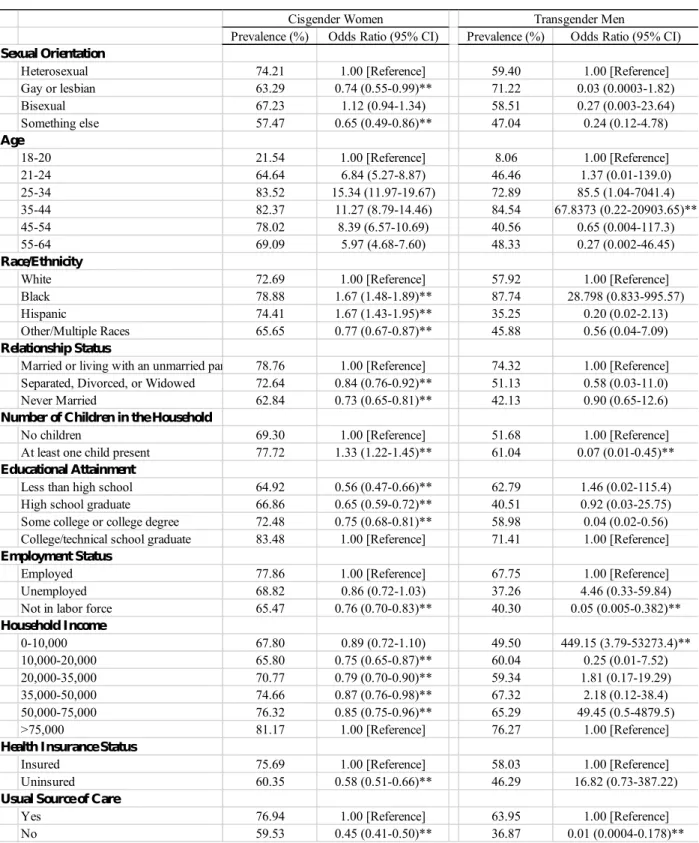
To describe the study sample, I used descriptive statistics to characterize the sample based on transgender status and sexual minority status. First, I summarized age, race/ethnicity, marital status, children in household, educational attainment, employment status, income level, health insurance status, and usual source of care for individuals based on sexual minority status who reported that their sex assigned at birth was female (Table 1).
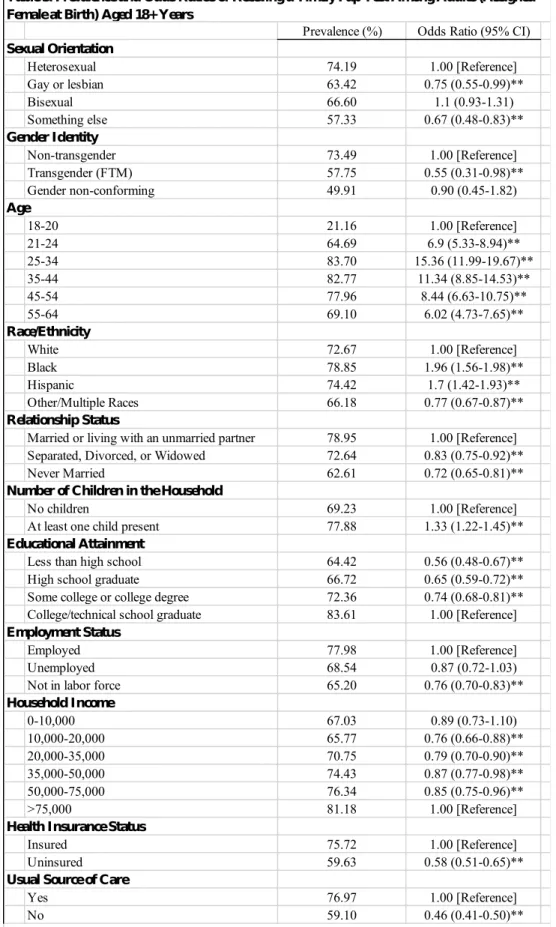
Next, I used logistic regression model to compare the prevalence of receiving a timely Pap test (0 = has not had a Pap test within the last 3 years, 1 = has had a Pap test within the last 3 years). Table 2 represents prevalence estimates and odds ratios of Pap test compliance by sexual minority status for cisgender women and transgender men. Table 3 represents prevalence
estimates and odds ratios of Pap test compliance for all individuals who responded that their sex at birth is female. Results from the logistic regression models are presented as odds ratios (ORs) with 95% confidence intervals. I conducted my analyses using Stata. All analyses used survey weights and the svy command to adjust for standard errors within the BRFSS.
RESULTS
Table 1 presents data on the sociodemographic and health care characteristics of individuals who responded that their sex assigned at birth was female by sexual minority and gender minority status. Compared to cisgender heterosexual women, cisgender sexual minority women tended to be younger (17.5% were 21-24), racial/ethnic minorities (19.5% were
Hispanic, 9.4% were other/multiple races), never married (47.4%), have no children in the household (54%), attended some college (34.6%), unemployed (7.9%), uninsured (18.7%), and do not have a usual source of care (32.3%). Similar patterns were found among the comparison of transgender sexual minorities and heterosexual transgender men. Compared to transgender heterosexual men, sexual minority transgender men tended to be younger (31.6% were 18-20), never married (62.3%), have no children in the household (62.4%), attended some college (33.2%), unemployed (9.1%), uninsured (18.1%), and did not have a usual source of care (31.8%).
Table 2 presents prevalence estimates and odds ratios of Pap test compliance by sexual minority status for cisgender women and transgender men. Gay or lesbian cisgender women were less likely to have had a Pap test in the last three years compared to heterosexual cisgender women (OR, 0.74; 95% CI, 0.55-0.99). Cisgender women who responded “something else”
when asked about their sexual orientation were less likely to have had a Pap test in the last three years compared to heterosexual cisgender women (OR, 0.65; 95% CI, 0.49-0.86). Bisexual cisgender individuals were more likely to have had a Pap test in the last three years than heterosexual cisgender women, but this result was not statistically significant. Compared to heterosexual transgender individuals, sexual minority transgender individuals were less likely to
have received a Pap test in the last three years, but these results were not statistically significant (OR, 0.03; 95% CI, 0.0003-1.82 for gay/lesbian transmen).
Table 3 presents prevalence estimates and odds ratios of Pap test compliance for all individuals who responded that their sex assigned at birth was female. Individuals who identified as gay or lesbian were less likely to have had a Pap test in the last three years compared to heterosexual individuals (OR, 0.75; 95% CI, 0.55-0.99). Individuals who responded “something else” when asked about their sexual orientation were less likely to have had a Pap test in the last three years compared to heterosexual individuals (OR, 0.67; 95% CI, 0.48-0.83). Bisexual cisgender individuals were more likely to have had a Pap test in the last three years than heterosexual individuals, but this result was not statistically significant. Compared to the
reference group of non-transgender (cisgender) individuals, transgender (FTM) individuals were less likely to have received a Pap test in the last three years (OR, 0.55; 95% CI, 0.31-0.98).
Gender non-conforming individuals were also less likely than non-transgender individuals to have received a Pap test in the last three years, but these results were not significant (OR, 0.90;
95% CI, 0.45-1.82 for gender non-conforming).
DISCUSSION
This study used a population-based sample of cisgender and transgender adults in the United States to characterize disparities in Pap test screenings by sexual minority and gender minority status. SGM disparities in cervical cancer screening have been understudied, primarily because of the lack of data collection on sexual orientation and gender identity (SOGI) in cancer registries and electronic health records (EHR). This analysis is similar to other investigations of Pap test screenings in SGM individuals, but it is unique in that it includes transgender
because it utilizes the recent responses from the BRFSS 2018 and 2019. These are the years that immediately follow the updated recommendations and guidelines published by the USPSTF in 2018. By using a nationally representative survey, we were able to evaluate the screening behaviors of individuals in the United States who were assigned female at birth.
After careful review of the research that has been done on timely Pap test screenings in SGM individuals, it is not surprising that our study results in a significant difference between Pap test screenings among lesbian women and transgender men compared to heterosexual and cisgender women, respectively. This result has been reported in other studies, as well, and research has provided varying explanations for this trend.23,39
In the initial investigations comparing sexual minority women (lesbian, bisexual, or something else) to heterosexual women, there was not a significant difference between timely Pap tests. When we compared heterosexual women to sexual minority women by subcategory (lesbian, bisexual, or something else), we recognize that women who identify as lesbian or as
“something else” are significantly less likely than heterosexual women to have received a timely Pap test. It was valuable to separate sexual orientation category into subgroups because it
allowed us to highlight the disparities among specific subgroups of sexual minority women.
The reason why the comparison between sexual minority women and heterosexual women is not significant is because bisexual women are actually more likely to have received cervical cancer screening than heterosexual women. While this result is not significant, this trend skews the results that we would expect to see from sexual minority women. Therefore, when you look at sexual minority women all together, you get a different result than if you categorize sexual minority women by lesbian, bisexual, or something else.
Throughout the analysis of this data, I was able to discern the factors such as access to care, social stigma, and relationships with providers which might contribute to the disparity between Pap testing in bisexual women and lesbian women. The difference in cervical cancer screening behaviors amongst subgroups of sexual minority women suggests that addressing this issue must be a targeted approach. Similarly, the disparities in cervical cancer screenings in transgender men are not analogous with the disparities in sexual minority women. The different experiences of sexual minority cisgender women and transgender men is perhaps why much of previous literature focuses on either sexual orientation or gender identity. In analyses on disparities in cervical cancer screenings in sexual minority women, gender diverse individuals are often not included, as they are focused on looking at the effects of sexual orientation.
Research on transgender men and cervical cancer screenings has also been limited to addressing their transgender status, and often, sexual orientation is not mentioned in these studies. While sexual orientation and gender identity fall within the same “SGM” or “LGBT” acronym, it’s understandable from a research perspective of why we might investigate these relationships separately, as the discussion on disparities in cisgender women from the discussion on disparities in transgender men. However, I decided to investigate both sexual orientation and gender
identity. While my initial data analyses evaluated the intersection of these identities, there was not a large enough sample size or statistical power to draw the necessary conclusions. In my updated data analyses, I assessed gender identity as I did other demographic characteristics such as race, age, education, and insurance status which also influence health care. While much of the analyses and discussion of this study focuses in on one subset of identity (sexual orientation or gender identity), to address cervical cancer disparities in SGM individuals more broadly, we
must do further research on the intersection of these identities and other demographic factors which contribute to disparities in health care.
Implications for Policy/Practice
Cervical Cancer Screening Guidelines & Recommendations
To address this disparity, we must first evaluate the systems that are currently in place to encourage regular Pap testing for individuals with a cervix. The recommendations and guidelines for cervical cancer screening are published by multiple agencies. Each of these agencies have repeatedly updated their guidelines to encourage clinical practice to reflect the most recent evidence-based research. However, frequent updates to screening recommendations may cause confusion for both providers and patients alike and could potentially be a factor that has
contributed to non-compliance. A study conducted in 2014 by Haas et al. assessed providers self- reported attitudes towards breast and cervical cancer screening.40 As screening guidelines are released periodically by multiple agencies, this study acknowledges the influence, or preference, that providers may feel towards one agencies’ guidelines over another. When asked about which recommendations they were influenced by the most, providers most commonly reported that the USPSTF recommendations were influential.40 The results of this study align with our decision to define compliance according to USPSTF recommendations, but it is important to recognize that there are multiple versions of guidelines that could possibly be influencing providers. Haas et al.
(2014) additionally investigated whether providers had changed their methods of practice to reflect the most recent revision of the USPSTF recommendations by asking them to self-report if their methods of practice have changed.40 It was found that the majority of providers reported a change in their cervical cancer screening practices since the guideline revisions.40 This majority
response indicates that these providers were influenced by the USPSTF guideline revisions as they reported a change in their practice.40 But in investigating the ways in which these guidelines had influenced their modes of practice, it was found that 41% of providers reported cervical cancer screening in excess, or more often, than recommended by the USPSTF guidelines for at least one age group.40 Therefore, while providers may have been influenced by these guidelines, they are not strictly abiding by them. Providers describe multiple reasons for why they might deviate from the recommendations, including:
“their own disagreement with the guidelines, concerns expressed by patients about the guidelines, the use of conflicting performance measurement metrics, concerns about liability, and lack of time to discuss the benefits and harms of screening.”40
These concerns expressed by providers and patients are valid. In addressing these concerns, providers report that they screen more than what is recommended. Over-screening may be less harmful than the alternative, but the lack of consistency in care can lead to disparities in certain populations such as sexual and gender minorities. This study points out this inconsistency and provides an explanation for why some individuals might be screened more often than they need to be for cervical cancer.40 However, this study fails to consider individuals who may not be getting screened enough.
The purpose of updating cervical cancer screening guidelines is to encourage clinical practice to reflect the most recent evidence-based research. The pattern of updating
recommendations is not only seen in cervical cancer, but in other cancer screening practices such as breast cancer.40,41 It is important that these recommendations occur to allow medical practice to match our available knowledge about these conditions. Cervical cancer screening guidelines and recommendations are additionally influential because they affect the insurance coverage of
Pap test screenings. Disparities in cervical cancer screening has been previously attributed to lack of insurance coverage, as individuals with health insurance are significantly more likely to receive cervical cancer screening than those without insurance.24,41 As recommendations for cervical cancer screenings change, particularly as they recommend more time between Pap test screenings, there is a potential for insurance coverage of Pap test screenings to change, as well, and for certain individuals to be screened either more frequently or less frequently than
recommended. Agencies such as the ACOG and the ACS should collaborate to publish guidelines and recommendations for cervical cancer screening so that there are fewer
discrepancies between them. This is one way in which cervical cancer screening could be more comprehensive and accessible for patients and providers.
SOGI Data Collection
It is difficult to make a direct link between cervical cancer incidence and sexual orientation or gender identity because such data is not collected. We know from population health surveys such as the BRFSS that SGM individuals might be at higher risk for cervical cancer because they are less likely to have had a timely Pap test, but we don’t know how many SGM people have had cervical cancer because cancer registries don’t collect SOGI information.
Further research needs to be done on the unique needs and experiences of SGM cancer patients.
It is only recently that SGM individuals were recognized as being at a higher risk for certain types of cancer, including cervical cancer. One of the main barriers to recognizing these disparities has been the lack of data collection on the SGM population. In order to address the disparities, we need to document them, which is why cancer registries should collect SOGI data.
SOGI data should be collected broadly beyond the field of oncology in order to address other
disparities in SGM health. In this study, our sample size was limited by the states that chose to opt in to the SOGI module in the BRFSS. It is expected that we would see the same trends in these states that we see in the states that did opt in to the SOGI module, however, there is always a potential that disparities are even greater in these states and we do not have the data to show that. To address this, SOGI data collection should become standardized across national health surveys like the BRFSS. The SOGI module should be added to the core questionnaire of the BRFSS and expanded to include questions about sexual attraction and sexual behaviors.22 It is the hope that if the BRFSS adopts the SOGI module as part of their core questionnaire, other national health surveys will follow the pattern and add questions to their surveys to collect SOGI data. In order for SEER and other state cancer databases to collect sexual orientation and gender identity data, this data needs to be collected by the medical institutions which work with these patients.2 Electronic health records should expand to provide patients an option to disclose their sexual orientation and their gender identity with their providers, and update these as needed.
Some medical institutions have pushed back to this request feeling that “collecting sexual orientation is not only not necessary but also potentially invasive or inappropriate.”2 However, other institutions have begun taking steps into include SOGI data as a standard practice.
Federal policies such as those released in 2015 by the Centers for Medicare and Medicaid Services (CMS) and the Office of the National Coordinator for Health Information Technology (ONC) have been enacted to require EHR systems to have the capacity to collect SOGI data from patients.42 This policy led to a similar mandate in 2016 by the U.S. Department Health and Human Services Health Resources and Services administration which requires that federally qualified health centers (FQHCs) collect and report SOGI data.43 However, a secondary analysis of FQHCs after this mandate was imposed showed that a majority of patient records were
missing patient data.44 Therefore, further policies need to be put in place to incentivize
institutions to implement SOGI data collection. A paper published in 2020 by Streed, et al. states that “with the proliferation of EHRs and federal guidance for their implementation, the tools to routinize complete and comprehensive SOGI data collection exist; what remains is the will to adapt and improve our health care system.”45 Broadening SOGI data collection is a small step in terms of technological advancement, as we already have the technology to do so. However, widespread SOGI data collection would have immense effects on SGM individuals to be both recognized and addressed as a vulnerable population in our health care system.
High-risk HPV Swabs as an Alternative to Pap Tests
This study focused on one particular risk factor for developing cervical cancer which is regular cervical cancer screening. To measure this, we looked specifically at Pap test screenings because this is the predominant way in which individuals are screened for cervical cancer, and that is what was asked about in the BRFSS. While the Pap test been an incredible tool to advance our prevention of cervical cancer, we must recognize that there are other ways to screen
individuals for cervical cancer, and these alternatives might be preferable for SGM individuals.
High risk HPV testing can be used to detect cervical cell abnormalities with a comparable sensitivity to a Pap test.46 Providers can conduct HPV frontal swabs without using a speculum.
The other benefit of the HPV test is that there is a potential for self-sampling, meaning that patients can collect the sample themselves.25,47
Current research has evaluated the acceptability and the efficacy of this HPV self-
sampling which might serve as a more convenient, accessible way to test individuals for cervical cancer.25,47 The research that has been conducted on HPV self-sampling has shown to be
beneficial for under screened populations because self-screening can be more accessible.48 The opportunity to conduct a self-test at home might make cervical cancer screening more accessible for lesbian and bisexual women who utilize sexual and reproductive health services less
frequently than heterosexual women. HPV self-sampling can used to address the disparities in cervical cancer screenings in transgender individuals, who are more likely to be under screened than non-transgender individuals. Transgender individuals are additionally more likely than cisgender individuals to have an unsatisfactory Pap test. HPV self-sampling offers transgender individuals an opportunity to receive testing for cervical cancer without having to undergo a speculum exam which can cause significant distress for this population. A study conducted by Goldstein et al. (2020) offered HPV self-swab to patients aged 21-30 who refused a traditional speculum exam with cytology. They also offered the self-swab option to patients over the age of 30 who did not have a history of abnormal Pap testing.46 The option of self-swabs for HPV DNA testing improved the rates of cervical cancer screening among these patients.46 Patients were more willing to participate in regular cervical cancer screening using this method, which means that they were able to detect abnormalities in individuals who otherwise would not have engaged in this testing.
McDowell et al. (2017) conducted in-depth interviews and online surveys with
transgender patients to examine their experiences of cervical cancer screenings. The majority of participants preferred either HPV swab type, a self-collected swab or provider-collected swab, to the Pap test.31 When asked whether they preferred a self-swab or a provider-collected HPV swabs, most participants preferred the self-swab. However, individuals preferred provider- collected swabs over the Pap test.31 The preference of HPV swabs over Pap tests indicates that swabs might be less uncomfortable or distressing for transgender individuals. Individuals who
participated in in-depth interviewed described Pap tests as “invasive.”31 This response provides further justification for the need for an alternative method for cervical cancer screening. Pap tests are especially uncomfortable for transgender individuals and this discomfort leads transgender individuals to be screened less regularly than they are recommended to. It is important that transgender individuals with a cervix to stay up to date on cervical cancer screening, therefore, HPV self-testing could be a promising alternative. The potential concern for HPV self-swabbing is the accuracy of the sample. Provider-collected HPV swabs are approved as a cervical cancer screening tool.25,46 More research needs to be conducted to evaluate whether HPV self-swabbing can detect cervical cell abnormalities as well as HPV swabs collected by providers.
Providing under screened individuals with an alternative cervical cancer screening tool that is more accessible and comfortable will certainly influence and potentially improve cervical cancer screening behavior. However, this investigation of cervical cancer screening disparities has introduced greater issues within the health care system that extend beyond screening methods. Many SGM individuals received sexual and reproductive health services less frequently or later in life than non-SGM individuals. To address this, primary care physicians should incorporate sexual and reproductive health services such as cervical cancer screenings into their practice so that SGM individuals who do not regularly see an OB/GYN do not miss out on these routine services. However, this recommendation will only benefit those who already have established care with a primary care provider. A lack of access to health care or established relationships with medical providers is prevalent in SGM individuals, especially in the
transgender population as highlighted by the results of The Washington, DC Trans Needs Assessment Survey of 2015.49 This survey identified 30% of transgender patients reported not seeing medical providers.49 An additional 24% reported the Emergency Department as their
primary source of medical care.49 While there are many factors that contribute to the poor access and utilization of routine medical care by the transgender population, the lack of competent medical providers undoubtably contributes to this issue and can be addressed directly within medical education. In order to be competent caregivers of SGM individuals, medical education must extend the breadth of education that providers receive to learn to care for SGM patients. To teach providers about how to care for SGM individuals, particularly in specialties such as
oncology, further research must be done on the unique needs of SGM individuals. More specific research should be conducted on the effects of long-term hormone replacement therapy and cancer risk in transgender individuals, so that these influences are taken into account when providing them with screening recommendations.50 The current recommendation and guidelines for cervical cancer screening, and many other cancers, do not take into account transgender individuals.25,50 To provide specific recommendations for these individuals we must conduct further quantitative research that incorporates SOGI data. Finally, we should continue to collect qualitative research to continue to learn from SGM individuals within our health care system about how we must improve.
Limitations
There were several limitations to using the 2018-2019 BRFSS for this study. First, the BRFSS interviews non-institutionalized adults by telephone, which means that there could be a substantial number of individuals missing from this sample, including homeless and incarcerated adults. In addition, our study may not be generalizable to all SGM individuals, because our study only used data from the states that opted to include the SOGI module questions in 2018 or 2019.
The responses that were given by individual participants were also self-reported, therefore, their responses could be influenced by recall and response-bias.
The SOGI module in the BRFSS allows for us to collect data on sexual orientation and gender identity, but it does not provide a comprehensive understanding of the SGM population.3 The BRFSS SOGI module asks individuals to identify as either straight, gay/lesbian, bisexual, or something else which may exclude individuals who do not identify with these groups but may be sexually active with or be attracted to individuals of the same sex.51 By using the BRFSS SOGI data, it is possible that individuals were excluded from this study who did not identify as either straight, gay/lesbian, bisexual, or something else. In addition, the BRFSS only asks individuals if they have received cervical cancer screenings if they respond “Female” when asked about their sex. It is possible that individuals with a cervix might not have responded “Female” to this initial screening question, and thus, were not included in this study because they were not asked about cervical cancer screening.
CONCLUSIONS
While cervical cancer prevention and treatment has advanced over the last fifty years to drastically reduce cervical cancer mortality, cervical cancer prevention is not uniformly utilized or accessible to all individuals who have a cervix. All individuals with a cervix are at risk of cervical cancer, regardless of sexual orientation or gender identity. Disparities in sexual and reproductive health services amongst the SGM community demonstrates a need to reconsider the way in which these services are provided. Our study found that some SGM individuals were less likely to have had a timely Pap test than non-SGM individuals. Regular cervical cancer screening
regular screening might be at a higher risk for developing cervical cancer. This investigation considers the SGM community at large as an underrepresented group in medicine, and
additionally addresses the needs and experiences of specific groups within the SGM community as they relate to cervical cancer screening.
To specifically address the disparities in cervical cancer screenings among SGM
individuals, further research needs to be conducted to investigate alternatives to the Pap test that might be more accessible for under screened populations. Any future adjustments that are made by agencies to the recommendations and guidelines for cervical cancer screening should be made in collaboration to produce a uniform and comprehensive guide for providers. Beyond cervical cancer screenings, to improve health outcomes of SGM individuals, we must address the need for competent care providers. We must broadly increase our knowledge of SGM individuals in medicine by collecting SOGI data. In addition to gathering information on the needs of this population, we must also improve the quality of education that medical providers receive so that they can provide the best care possible to SGM individuals.
REFERENCES
1. Cervical Cancer — Cancer Stat Facts. Accessed November 30, 2020.
https://seer.cancer.gov/statfacts/html/cervix.html
2. Bowen DJ, Boehmer U. The lack of cancer surveillance data on sexual minorities and strategies for change. Cancer Causes Control. 2007;18(4):343-349. doi:10.1007/s10552- 007-0115-1
3. Restar A, Jesdale W, Pederson L, Durso L, Scout N. Advancing Sexual Orientation / Gender Identity ( SOGI ) Measures in the Behavioral Risk Factor Surveillance System ( BRFSS ). Published online 2019. https://cancer-network.org/wp-
content/uploads/2019/04/SOGI-DATA-SHEET.pdf.
4. CDC - BRFSS - 2018 BRFSS Modules Used by Category. Accessed March 5, 2021.
https://www.cdc.gov/brfss/questionnaires/modules/category2018.htm
5. CDC - BRFSS - 2019 BRFSS Modules Used by Category. Accessed March 5, 2021.
https://www.cdc.gov/brfss/questionnaires/modules/category2019.htm
6. Cervical Cancer Screening (Update) | ACOG. Published 2020. Accessed November 30, 2020. https://www.acog.org/clinical/clinical-guidance/practice-
advisory/articles/2018/08/cervical-cancer-screening-update
7. Randel A. ACOG Releases Guideline on Cervical Cancer Screening. Vol 88.; 2012.
Accessed March 10, 2021. http://www.aafp.org/afp/practguide.
8. Shaw PA. The History of Cervical Screening I: The Pap. Test.; 2000. doi:10.1016/S0849- 5831(16)31416-1
9. Review C. Screening for Cervical Cancer. 2018;52242(7):674-686.
doi:10.1001/jama.2018.10897
10. Committee on Practice Bulletins-Gynecology. Practice Bulletin No. 131. Obstet Gynecol.
2012;120(5):1222-1238. doi:10.1097/AOG.0b013e318277c92a
11. Curry SJ, Krist AH, Owens DK, et al. Screening for cervical cancer us preventive services task force recommendation statement. JAMA - J Am Med Assoc. 2018;320(7):674-686.
doi:10.1001/jama.2018.10897
12. Cervical Cancer Screening (Update) | ACOG. Accessed November 30, 2020.
https://www.acog.org/clinical/clinical-guidance/practice-
13. Fontham ETH, Wolf AMD, Church TR, et al. Cervical cancer screening for individuals at average risk: 2020 guideline update from the American Cancer Society. CA Cancer J Clin. 2020;70(5):321-346. doi:10.3322/caac.21628
14. Fontham ETH, Wolf AMD, Church TR, et al. Cervical cancer screening for individuals at average risk: 2020 guideline update from the American Cancer Society. CA Cancer J Clin. 2020;70(5):321-346. doi:10.3322/caac.21628
15. Lee JGL, Griffin GK, Melvin CL. Tobacco use among sexual minorities in the USA, 1987 to May 2007: A systematic review. Tob Control. 2009;18(4):275-282.
doi:10.1136/tc.2008.028241
16. Burkhalter JE, Margolies L, Sigurdsson HO, et al. The National LGBT Cancer Action Plan: A White Paper of the 2014 National Summit on Cancer in the LGBT Communities.
LGBT Heal. 2016;3(1):19-31. doi:10.1089/lgbt.2015.0118
17. Gonzales G, Henning-Smith C. Health Disparities by Sexual Orientation: Results and Implications from the Behavioral Risk Factor Surveillance System. J Community Health.
2017;42(6):1163-1172. doi:10.1007/s10900-017-0366-z
18. Cahill S, Makadon H. Sexual orientation and gender identity data collection in clinical settings and in electronic health records: A key to ending LGBT health disparities. LGBT Heal. 2014;1(1):34-41. doi:10.1089/lgbt.2013.0001
19. Lesbian, Gay, Bisexual, and Transgender Health | Healthy People 2020. Accessed March 5, 2021. https://www.healthypeople.gov/2020/topics-objectives/topic/lesbian-gay-
bisexual-and-transgender-health#25
20. Gibson AW, Radix AE, Maingi S, Patel S. Cancer care in lesbian, gay, bisexual, transgender and queer populations. Futur Oncol. 2017;13(15):1333-1344.
doi:10.2217/fon-2017-0482
21. Quinn GP, Schabath MB, Sanchez JA, Sutton SK, Lee Green B. The Importance of Disclosure: Lesbian, Gay, Bisexual, Transgender/Transsexual, Queer/Questioning, and Intersex Individuals and the Cancer Continuum. doi:10.1002/cncr.29203
22. Solazzo AL, Gorman BK, Denney JT. Cancer Screening Utilization Among U.S. Women:
How Mammogram and Pap Test Use Varies Among Heterosexual, Lesbian, and Bisexual Women. Popul Res Policy Rev. 2017;36(3):357-377. doi:10.1007/s11113-017-9425-5
health services utilization among women in the United States. Prev Med (Baltim).
2016;95:74-81. doi:10.1016/j.ypmed.2016.11.023
24. Marrazzo JM, Koutsky LA, Kiviat NB, Kuypers JM, Stine K. Papanicolaou test screening and prevalence of genital human papillomavirus among women who have sex with
women. Am J Public Health. 2001;91(6):947-952. doi:10.2105/AJPH.91.6.947 25. Maza M, Meléndez M, Herrera A, et al. Cervical Cancer Screening with Human
Papillomavirus Self-Sampling among Transgender Men in El Salvador. LGBT Heal.
2020;7(4):174-181. doi:10.1089/lgbt.2019.0202
26. Greene MZ, Hughes TL, Sommers MS, Hanlon A, Meghani SH.