• Tidak ada hasil yang ditemukan

CHAPTER
 3:
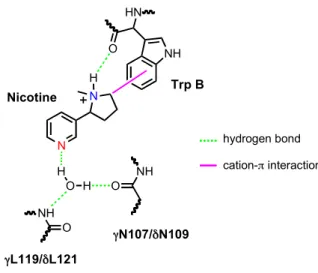
 Residues
 that
 Contribute
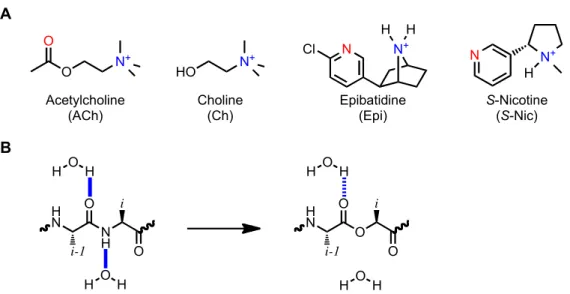
 to
 Binding
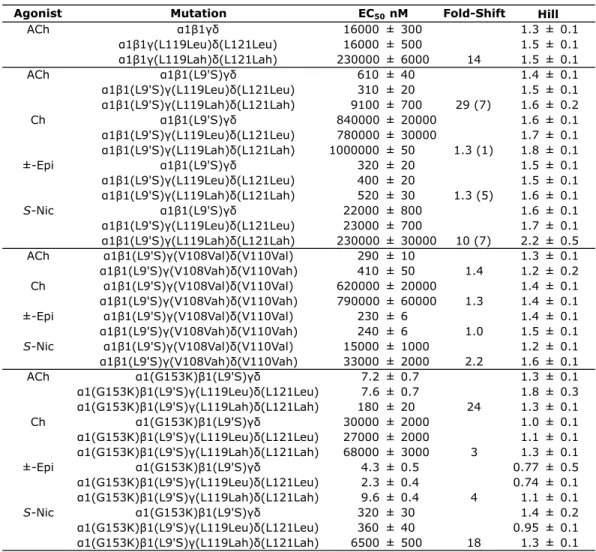
 of
 the
 Nicotinic
 Pharmacophore
 in
 the
 Muscle­Type
 Nicotinic
 Receptor

N/A
N/A
Protected

Academic year: 2024

Membagikan "CHAPTER
 3:
 Residues
 that
 Contribute
 to
 Binding
 of
 the
 Nicotinic
 Pharmacophore
 in
 the
 Muscle­Type
 Nicotinic
 Receptor"

Copied!
22
0
0

Teks penuh

(1)60. CHAPTER 3: Residues that Contribute to Binding of the Nicotinic Pharmacophore in the Muscle­Type Nicotinic Receptor∗ 3.1 ABSTRACT The agonist binding site of nicotinic acetylcholine receptors (nAChRs) spans an interface between two subunits of the pentameric receptor. The principal component is contributed by an α subunit, and it binds the cationic moiety of the nicotinic pharmacophore. The other part of the pharmacophore – a hydrogen bond acceptor – has recently been shown to bind to the complementary, non-α, subunit. Studies of the neuronal (CNS) receptor α4β2 show that the backbone NH of Leu119 is the donor to the acceptor on the agonist, an interaction presaged by studies of the structurally homologous acetylcholine binding proteins (AChBP). The AChBP structures further suggested that the hydrogen bond to Leu119 was mediated by a water molecule, and that a second hydrogen bonding interaction occurs to the backbone CO of Asn107, also on the complementary subunit. Here we provide new insights into the nature of the interactions between the hydrogen bond acceptor of nicotinic agonists and the backbone features of the complementary subunit. We find that, like the neuronal receptor, the nAChR of the neuromuscular junction (muscle-type) shows a strong interaction with Leu119 (γL119/δL121 in muscletype receptor numbering) for both ACh and nicotine. However, we find no evidence for a functionally significant interaction with Asn107 (γN107/δN109). Surprisingly, the potent nicotine analog epibatidine does not make a functionally important hydrogen bond to. This work was done in collaboration with Laurel A. German, a high school student from Polytechnic School. ∗. (2) 61 either γL119/δL121 nor γN107/δN109. In addition, a mutation that has been shown to profoundly affect interactions to the principal component of the agonist binding site of the muscle-type receptor, Gly153Lys, has no impact on interactions involving the complementary subunit. 3.2 INTRODUCTION Nicotinic acetylcholine receptors (nAChRs) are ligand-gated ion channels that propagate neurotransmission in the central and peripheral nervous systems and are activated by the neurotransmitter acetylcholine and also by nicotine.1-3 The nAChRs are members of a superfamily of ligand-gated ion channels called the Cys-loop (or pentameric) receptors, which also includes receptors for the neurotransmitters γ-aminobutyric acid (GABAA and GABAC), glycine (GlyR) and serotonin (5-HT3).. The family is implicated in an. assortment of neurological disorders including Alzheimer’s disease, Parkinson’s disease, schizophrenia, and depression, and are also essential for learning, memory and sensory perception.4, 5 nAChRs are pentamers, composed of five subunits arranged symmetrically around a central ion-conducting pore.1-3 There are 16 mammalian genes that encode 16 homologous but functionally distinct nAChR subunits (α1-α7, α9, α10, β1-β4, γ, δ, ε). From various combinations of these subunits, >20 active nAChR subtypes have been established. Of the various nAChR subtypes, the heteropentameric α12β1γδ is the most studied, owing to its precise subunit stoichiometry and abundance in the electric organ of eels and rays, which facilitated many early studies of nAChRs.1 In humans, this subtype is expressed post-synaptically at neuromuscular junctions of the peripheral nervous system and is therefore referred to as the ‘muscle-type’ receptor. Other nAChRs mediate. (3) 62 synaptic transmission between nerve cells in the central nervous system and autonomic ganglia and are collectively referred to as “neuronal” subtypes. These include α4β2, which is strongly implicated in nicotine addiction6-9 and is the target of the recently developed smoking cessation drug Chantix® (varenicline).6 The nicotinic pharmacophore is one of the longest-known, best-studied pharmacophores, and it is comprised of a cationic nitrogen and a hydrogen bond acceptor.10,. 11. Agonists bind at subunit interfaces,1-3 and a combination of structure-. function studies12-16 and structural studies of the acetylcholine binding proteins (AChBP),17-22 which share considerable sequence homology with the ligand binding domain of the nAChR, have mapped binding interactions of the pharmacophore onto these interfaces. The α subunits contribute the principal component of the agonist binding site, which binds to the cationic end of agonists. This binding site is well-characterized (Figure 3.1), consisting of a cation-π interaction to one of several conserved aromatic residues and a hydrogen bond from the N+H of the drug to a backbone carbonyl (except in the case of ACh, which cannot serve as a hydrogen bond donor).13-16 HN O. NH. H. Trp B. N. Nicotine. hydrogen bond. N H. NH O H. cation-# interaction. O. NH O. !N107/"N109. !L119/"L121. Figure 3.1. Depiction of binding interactions of the nicotinic pharmacophore as predicted by AChBP structures.18, 20 Residue numbering is for the muscle-type receptor. TrpB is from the principal subunit (α1).. (4) 63 The complementary component of the agonist binding site is formed by non-α subunits, and recent work has shown that it makes a hydrogen bonding interaction to the hydrogen bond acceptor of agonists. Crystal structures of AChBPs with several drugs bound produced a model in which two backbone residues – the NH of Leu119 and the CO of Asn107 – coordinate a water molecule, which in turn hydrogen bonds to the hydrogen bond acceptor of agonists (Figure 1.3).18,. 20. Recent studies of the neuronal. α4β2 receptor confirmed that the NH of Leu119 of the β2 subunit does hydrogen bond to the pyridine N of nicotine and to the carbonyl O of ACh.12 Note that the pharmacology of the muscle-type receptor is quite distinct from neuronal receptors such as α4β2, most importantly in the fact that nicotine is quite potent at the neuronal receptor15 but not at the receptors of the neuromuscular junction.13 This distinction allows smokers to become addicted to nicotine without adverse peripheral effects.15 We have shown that binding interactions in the principal component of the agonist binding site strongly differentiate the interaction of nicotine with the two receptor subtypes. ACh, nicotine15 and epibatidine (See Chapter 4) each form strong cation-π interactions in α4β2, but only ACh and epibatidine make the cation-π interaction in the muscle-type receptor.13. Similarly, the hydrogen bond to the backbone CO of the. principal subunit is less sensitive to mutation in the muscle-type receptor than in the α4β2 subtype.13, 15 The present work focuses on the complementary component of the agonist binding site of the muscle-type nAChR. We wished to know whether the hydrogen bond to the NH of Leu119 was important for agonist binding in the muscle-type receptor, as it is in α4β2. We also sought to determine a role for the backbone CO of Asn107. An. (5) 64 important residue in distinguishing the pharmacology of the muscle-type from α4β2 is at site 153 of the α subunit, where the α1G153K mutation in the muscle-type substantially alters interactions in the principal component of the agonist binding site, thereby greatly increasing nicotine affinity.15,. 23. We wished to determine whether this mutation also. impacts the agonist binding interactions to the complementary component of the agonist binding site. Using unnatural amino acid mutagenesis and mutant cycle analysis we find that the hydrogen bond to Leu119 (γL119/δL121 in muscle-type receptor numbering) is active in the muscle-type receptor as seen previously in the neuronal α4β2 subtype. However, we find no interaction with the backbone CO of N107 (γN107/δN109). Interestingly, the close nicotine homologue epibatidine shows no hydrogen bonding interaction to either residue in the complementary subunit. Finally, we find that the α1G153K mutation that profoundly affects binding interactions in the principal subunit has no effect on binding interactions involving the complementary subunit. 3.3 RESULTS 3.3.1 General Strategy Potential hydrogen bonds to a protein backbone can be probed by replacing the residue that contributes the backbone NH with its α-hydroxy acid analog.24-27 This mutation eliminates a hydrogen bond donor by replacing the backbone NH with an O (Figure 3.2B). In addition, the α-hydroxy substitution attenuates the hydrogen bonding ability of the i-1 carbonyl by converting it to an ester carbonyl. It is well-established that carbonyls of esters are much poorer hydrogen bond acceptors than those of amides. Interestingly, in many studies, both quantitative and qualitative, it has been shown that the two effects. (6) 65 associated with backbone ester incorporation – removal of the NH hydrogen bond donor and attenuation of the CO hydrogen bond acceptor – can have similar energetic consequences.12, 24-31 Thus, incorporation of an α-hydroxy acid can probe the hydrogen bonding ability of the associated amide NH and amide carbonyl and, if either are important for agonist binding, the appropriate backbone ester mutation should have an impact on agonist potency. Backbone ester mutations can be efficiently incorporated sitespecifically into nAChRs expressed in Xenopus oocytes by nonsense suppression methodology.12, 28, 30, 31 A. H. O N+. O. HO. Acetylcholine (ACh). B H H N. O. H. i N H. Epibatidine (Epi). O. H N O. H. H N+. N+. N H. H. O. N. Choline (Ch). H. i-1. N+. Cl. O. S-Nicotine (S-Nic). H O. i O O. i-1 H. O. H. Figure 3.2. Agonists and unnatural amino acids used in this study. (A) Agonists used in this study with pharmacophore highlighted: the positively charged nitrogen is shown in blue and the hydrogen bond acceptor is shown in red. (B) Illustration of amide-to-ester mutation. Introduction of an α-hydroxy acid in place of an amino acid eliminates the hydrogen bond donor (backbone NH) of the i residue and attenuates the hydrogen bond accepting ability of the i-1 carbonyl.. These studies use EC50, the effective agonist concentration needed to reach a halfmaximal response, as a readout of the functional impact of each mutation. EC50 is a composite measure that is influenced by agonist binding and also by channel gating (pore. (7) 66 opening). We do not distinguish these mechanisms here, but we feel that for studies of comparative pharmacology, EC50 is an acceptable metric. In the α4β2 receptor, removal of the backbone NH of the residue analogous to γL119/δL121 had a measurable impact on receptor function, but that alone does not establish a hydrogen bond to the agonist. As such, we used double mutant cycle analysis to verify the interaction between ACh and the backbone NH of the analogous γL119/δL121 residue.12 Mutant cycle analysis is the standard method to determine whether two mutations are energetically coupled.32 EC50-based mutant cycle analysis has been used to probe interactions in Cys-loop receptors by many labs, including our own.12, 28, 30, 31, 33-35. It is also standard practice to convert the coupling coefficient (Ω) obtained. from a mutant cycle analysis into a free energy by the equation ΔΔG° = −RTln(Ω), where Ω = [EC50(WT) * EC50(double mutant)] / [EC50(mutant 1) * EC50(mutant 2)].32 In these experiments, we are using the backbone ester mutation as the first mutation and choline (an analog of ACh that lacks the hydrogen bond accepting acetyl) as the second, thus removing or attenuating both the hydrogen bond donor and acceptor of the presumed interaction. A coupling energy of greater than 1 kcal/mol is generally regarded as compelling evidence in support of the interaction being probed. In our previous experiments with the α4β2 subtype, we also performed a mutant cycle analysis with the nicotine analog S-N-methyl-2-phenylpyrrolidine (S-MPP).12 In this structure, the pyridyl ring of nicotine is replaced with a phenyl ring, thus removing the hydrogen bond-accepting pyridine N. This is certainly a much more subtle probe than the ACh/Ch comparison. However, given the low potency of nicotine at the muscle-type. (8) 67 receptor, it is not surprising that S-MPP is a very poor agonist that cannot be studied due to channel block at the concentrations needed to observe dose-response relationships. These studies use the known L9’S mutation in the M2 transmembrane region of the β1 subunit (where 9’ is ninth amino acid from the cytoplasmic end of the M2 transmembrane α-helix).36,. 37. This mutation is introduced to generically increase the. sensitivity of the protein to agonists, and it results in a systematic ~40-fold decrease in EC50. Given that the 9’ position is ~60 Å away from the agonist binding site, this mutation is expected to primarily effect gating and not agonist binding. The backbone ester mutation was performed at γL119/δL121 in the absence and presence of the L9’S background mutation and gave similar shifts in EC50 for ACh (Table 3.1), suggesting that the L9’S mutation does not have a substantial influence on agonist binding to this residue. The agonist concentrations that were required to obtain a dose-response relation for epibatidine, nicotine and choline in the absence of the L9’S mutation were in the range of channel block, so all comparisons are done using this mutation. An analogous mutation was also used in the studies with α4β2.12. (9) 68 Table 3.1. EC50 and Hill coefficient (± standard error of the mean) values for mutations made to α12β1γδ. The fold-shift is the ratio of the nonsense suppression EC50 values of the ester mutant over the natural amino acid. Fold-shifts previously reported for experiments12 with α4β2 are given in parentheses. Mutations identified as “Leu” and “Val” represent recovery of the wild-type receptor by nonsense suppression. Agonist ACh. ACh. Ch. ±-Epi. S-Nic. ACh Ch ±-Epi S-Nic ACh. Ch. ±-Epi. S-Nic. Mutation EC50 nM Fold-Shift Hill !1"1#$ 16000 ± 300 1.3 ± 0.1 !1"1#(L119Leu)$(L121Leu) 16000 ± 500 1.5 ± 0.1 !1"1#(L119Lah)$(L121Lah) 230000 ± 6000 14 1.5 ± 0.1 !1"1(L9'S)#$ 610 ± 40 1.4 ± 0.1 !1"1(L9'S)#(L119Leu)$(L121Leu) 310 ± 20 1.5 ± 0.1 !1"1(L9'S)#(L119Lah)$(L121Lah) 9100 ± 700 29 (7) 1.6 ± 0.2 !1"1(L9'S)#$ 840000 ± 20000 1.6 ± 0.1 !1"1(L9'S)#(L119Leu)$(L121Leu) 780000 ± 30000 1.7 ± 0.1 !1"1(L9'S)#(L119Lah)$(L121Lah) 1000000 ± 50 1.3 (1) 1.8 ± 0.1 !1"1(L9'S)#$ 320 ± 20 1.5 ± 0.1 !1"1(L9'S)#(L119Leu)$(L121Leu) 400 ± 20 1.5 ± 0.1 !1"1(L9'S)#(L119Lah)$(L121Lah) 520 ± 30 1.3 (5) 1.6 ± 0.1 !1"1(L9'S)#$ 22000 ± 800 1.6 ± 0.1 !1"1(L9'S)#(L119Leu)$(L121Leu) 23000 ± 700 1.7 ± 0.1 !1"1(L9'S)#(L119Lah)$(L121Lah) 230000 ± 30000 10 (7) 2.2 ± 0.5 !1"1(L9'S)#(V108Val)$(V110Val) 290 ± 10 1.3 ± 0.1 !1"1(L9'S)#(V108Vah)$(V110Vah) 410 ± 50 1.4 1.2 ± 0.2 !1"1(L9'S)#(V108Val)$(V110Val) 620000 ± 20000 1.4 ± 0.1 !1"1(L9'S)#(V108Vah)$(V110Vah) 790000 ± 60000 1.3 1.4 ± 0.1 !1"1(L9'S)#(V108Val)$(V110Val) 230 ± 6 1.4 ± 0.1 !1"1(L9'S)#(V108Vah)$(V110Vah) 240 ± 6 1.0 1.5 ± 0.1 !1"1(L9'S)#(V108Val)$(V110Val) 15000 ± 1000 1.2 ± 0.1 !1"1(L9'S)#(V108Vah)$(V110Vah) 33000 ± 2000 2.2 1.6 ± 0.1 !1(G153K)"1(L9'S)#$ 7.2 ± 0.7 1.3 ± 0.1 !1(G153K)"1(L9'S)#(L119Leu)$(L121Leu) 7.6 ± 0.7 1.8 ± 0.3 !1(G153K)"1(L9'S)#(L119Lah)$(L121Lah) 180 ± 20 24 1.3 ± 0.1 !1(G153K)"1(L9'S)#$ 30000 ± 2000 1.0 ± 0.1 !1(G153K)"1(L9'S)#(L119Leu)$(L121Leu) 27000 ± 2000 1.1 ± 0.1 !1(G153K)"1(L9'S)#(L119Lah)$(L121Lah) 68000 ± 3000 3 1.3 ± 0.1 !1(G153K)"1(L9'S)#$ 4.3 ± 0.5 0.77 ± 0.5 !1(G153K)"1(L9'S)#(L119Leu)$(L121Leu) 2.3 ± 0.4 0.74 ± 0.1 !1(G153K)"1(L9'S)#(L119Lah)$(L121Lah) 9.6 ± 0.4 4 1.1 ± 0.1 !1(G153K)"1(L9'S)#$ 320 ± 30 1.4 ± 0.2 !1(G153K)"1(L9'S)#(L119Leu)$(L121Leu) 360 ± 40 0.95 ± 0.1 !1(G153K)"1(L9'S)#(L119Lah)$(L121Lah) 6500 ± 500 18 1.3 ± 0.1. 3.3.2 Mutagenesis studies of γL119/δL121 To probe for the presumed hydrogen bond to the backbone NH of γL119/δL121 in the muscle-type nAChR, the leucine was replaced with its α-hydroxy acid analog (leucine, αhydroxy; Lah). ACh and nicotine showed substantial increases in EC50, confirming that the backbone NH is important for receptor activation by these agonists (Table 3.1). We have performed similar backbone mutations at locations throughout the nAChRs to probe for various hydrogen bonds and typically see informative, but modest increases in EC50. (10) of ~5−20-fold.. 12, 28, 31. 69 The 29-fold increase in EC50 seen for ACh is among the largest. responses we have seen for a backbone ester mutation. It is also much larger than the 7fold increase that was seen for the equivalent mutation in the α4β2 receptor. The responsiveness of nicotine to the backbone ester mutation was also interesting, given its lack of participation in the cation-π interaction in the muscle-type receptor.13 The agonist epibatidine, however, was unresponsive to backbone ester mutation, in contrast to the 5fold increase in EC50 seen in the α4β2 receptor for the analogous mutation. As expected, choline was unresponsive to the backbone mutation, giving no shift in EC50 upon incorporation of the α-hydroxy acid.. Mutant cycle analysis between. γL119Lah/δL121Lah and ACh/choline gave a large energetic coupling of 1.9 kcal/mol (Table 3.2 and Figure 3.3), which is nearly double the value seen for analogous mutations in the α4β2 receptor. Table 3.2. Comparison of coupling coefficients (Ω) and coupling energies (ΔΔG°) for double mutant cycles. Corresponding values obtained from experiments with α4β212 are given in parentheses. Agonist ACh/Ch ACh/Ch ACh/Ch. Mutant ! ""G° (kcal/mol) !1"1(L9'S)#(L119Lah)$(L121Lah) 0.044 (0.16) 1.9 (1.1) !1"1(L9'S)#(V108Vah)$(V110Vah) 0.90 0.061 !1(G153K)"1(L9'S)#(L119Lah)$(L121Lah) 0.11 1.3. (11) 70. HN. HN O N+ Acetylcholine. O. NH N+. Trp B. O. NH. Choline. Trp B. HO. O. EC50 = 0.31 µM. EC50 = 780 µM. NH. NH. O. O. !L119/"L121. !L119/"L121. # = (0.31 * 1000) / (9.1 * 780) = 0.044 $$Go = -RTln(#) = 1.9 kcal/mol HN. HN O N+ Acetylcholine. O. O. NH. Trp B. N+ Choline. HO. NH. Trp B. O. EC50 = 9.1 µM O O. !L119/"L121. EC50 = 1,000 µM O O. !L119/"L121. Figure 3.3. Double mutant cycle analysis for ACh and choline on wild-type and α1β1(L9’S)γ(L119Lah)/δ(L121Lah) mutant receptors.. 3.3.3 Mutagenesis studies of the backbone CO of γN107/δN109 The second hydrogen bond predicted by the AChBP structures is to the backbone CO of γN107/δN109.. Like γL119/δL121, this residue is thought to coordinate the water. molecule that hydrogen bonds to the pyridine nitrogen of nicotine. To probe for a hydrogen bond to this backbone CO, the i+1 residue, γV108/δV110, is replaced with its α-hydroxy acid analog (valine, α-hydroxy; Vah). As discussed above, this converts a backbone amide to a backbone ester and in doing so places an electron-withdrawing O. (12) 71 next to the backbone CO in question, thereby attenuating the hydrogen bond accepting ability of this moiety (Figure 3.2B). Early efforts to probe the CO of the residue analogous to γN107/δN109 in the α4β2 receptor gave inconsistent results that led us to question whether we could reliably control the stoichiometry of the mutant receptor (See Chapter 2). Since the muscle-type receptor has just one possible stoichiometry (α12β1γδ), we anticipated that comparable experiments would experience fewer complications, and, indeed, nonsense suppression studies at γV108/δV110 gave functional mutant receptors. However, ACh, nicotine, epibatidine and choline were all unresponsive to the backbone ester mutation (Table 3.1). A mutant cycle analysis between γV108Vah/δV110Vah and ACh/choline gives simple additivity (Ω = 0.90), indicating no energetic coupling (ΔΔG° = 0.061 kcal/mol) (Table 3.2). These data are inconsistent with the second hydrogen bond predicted by the AChBP structures and strongly suggest that γN107/δN109 does not play a significant functional role in the nAChRs. 3.3.4 Impact of the a1G153K mutation We have shown previously that introduction of a single mutation in the α1 subunit of the muscle-type receptor, α1G153K, has dramatic effects on the EC50 for nicotine, and that the increased potency of nicotine is, at least in part, a consequence of an enhanced cationπ interaction to nicotine in the mutant muscle-type receptor.15 The α1G153 residue is located just four residues from the cation-π binding residue, TrpB, and is a Lys in the high affinity α4β2 subtype, but a Gly in the muscle-type receptor and also in other low affinity subtypes like the α7 homopentamer. It is proposed that when a Lys (or any residue other than Gly) is present at this position, a backbone hydrogen bond is formed. (13) 72 between the protein segment containing α1G153 “loop B” and another protein segment “loop C,” which, in turn, shapes the agonist binding site in such a way that favors formation of the cation-π interaction to nicotine.23 Molecular dynamics simulations suggest that this interaction is discouraged when a Gly is present at this position.23 In the present study we find that the α1G153K mutation generically increases agonist affinity for the muscle-type receptor by 30−100-fold (Table 3.1). However, this mutation had little effect on the magnitudes of EC50 fold-shifts seen for ACh or choline in response to backbone mutation at γL119/δL121. Similarly, mutant cycle analysis of γL119Lah/δL121Lah and ACh/choline with the α1G153K mutation gave a coupling energy that was comparable to the value seen in the absence of the mutation (Table 3.2) A small increase in the fold-shift in EC50 was seen for nicotine and epibatidine, suggesting that the α1G153K mutation may have moderate effects on agonist binding to the γL119/δL121 residue for these agonists. 3.4 DISCUSSION In recent years, the well-studied nicotinic pharmacophore has been mapped onto specific binding interactions in the nAChR. The cationic N binds to the principal component of the agonist binding site in the α subunit, and the hydrogen bond acceptor binds to the complementary, non-α subunit. Guided by structures of AChBP,18,. 20. backbone. mutagenesis and mutant cycle analysis studies established a hydrogen bond between the pharmacophore acceptor (pyridine N of nicotine; carbonyl O of ACh) and the backbone NH of β2Leu119 in the α4β2 neuronal nAChR (analogous to the γL119/δL121 residue in the muscle-type receptor).12 In the present work, we evaluate binding interactions to the. (14) 73 hydrogen bond acceptor of the pharmacophore in the pharmacologically distinct muscletype nAChR. The AChBP structures actually predict that the hydrogen bond to the hydrogen bond acceptor is mediated by a water molecule that hydrogen bonds to both the backbone NH of γL119/δL121 and the backbone CO of another residue in the complementary subunit, γN107/δN109. The backbone ester strategy employed here allows us to probe both components of the hydrogen bond system. ACh and nicotine both show a strong hydrogen bonding interaction with the backbone NH of γL119/δL121 in the muscle-type receptor. Nicotine shows very poor potency at the wild-type muscle receptor, and so we were surprised to find that nicotine is very sensitive to the backbone ester mutation at γL119/δL121, more sensitive than it is to mutation of the corresponding residue in α4β2, where nicotine is a very potent agonist. Backbone mutation at γL119/δL121 also impacted ACh potency much more in the muscle-type receptor than in the α4β2 receptor. This may suggest that this hydrogen bond is stronger in the muscle-type receptor, and it is possible that ACh and nicotine sit more closely to this residue in the muscle-type receptor than they do in the α4β2 subtype. For nicotine, this is consistent with the fact that it does not make a cation-π interaction to TrpB in the muscle-type receptor,13 but does in α4β2.15 Given the strong interaction between nicotine and γL119/δL121, it is quite surprising that epibatidine is unresponsive to mutation at this site in the muscle-type receptor. Also unlike nicotine, epibatidine does make the cation-π interaction to TrpB in this receptor.13 This suggests that perhaps epibatidine binds closer to TrpB than nicotine, and thus further from γL119/δL121.. Despite the fact that they are very similar. (15) 74 structurally, it is clear that epibatidine and nicotine display differential binding preferences in the muscle-type nAChR. We find that all agonists tested were unaffected by backbone mutation at γV108/δV110 in the muscle-type receptor, ruling out a functional role for a hydrogen bond to the backbone CO of γN107/δN109. Note that efforts to study this mutation in α4β2 were not successful for technical reasons, and so this is the first evaluation of this potential binding interaction. As noted above, many studies have shown that this type of backbone mutation can strongly impact the strength of a hydrogen bond to a backbone carbonyl. For example, when using this strategy to probe the hydrogen bond from the N+H of agonists to the CO of TrpB in α4β2, the ester mutation caused increases in EC50 from 9-fold to 27-fold. Also, similar mutations have been shown to have significant impacts on the stabilities of both α-helices and β-sheets.31, 38, 39 As such, our current data strongly suggest that γN107/δN109 does not play a significant role in agonist binding. Our results thus find support for one, but not the other, of the two water-mediated hydrogen bonds predicted by the AChBP structures. Note that for either backbone ester mutation, the proposed water molecule could remain after mutation (coordinated by the backbone component that is not mutated), and so it was possible that neither mutation would have a large effect. However, this is not the case, as the 29-fold shift with ACh seen for the γL119Lah/δL121Lah mutation is quite large for this type of perturbation. Furthermore, there is a fundamental distinction between the two hydrogen bond interactions seen in AChBP. The backbone NH of γL119/δL121 can hydrogen bond directly to the hydrogen bond acceptor of agonists; the backbone CO of γN107/δN109 can only do so through an intermediary water. Perhaps this distinction rationalizes the. (16) 75 differing ways the two putative hydrogen bonds respond to our probes, including the possibility that the key water molecule seen in AChBP is not present in the nAChR. The backbone NH of γL119/δL121 would then interact directly with the hydrogen bond acceptor of agonists. Earlier studies have shown that the identity of the residue at position 153 of the α subunit strongly impacts receptor function.23 An α1G153K in the muscle-type receptor greatly increases nicotine potency, and it does so by facilitating a strong cation-π interaction to TrpB that is absent in the wild-type receptor.15 We have now found that the α1G153K mutation does not have a substantial impact on the γL119/δL121 interaction. This is perhaps not surprising, given that the α1G153 residue is located in the principal component of the agonist binding site, while γL119/δL121 lies across the subunit interface in the complementary component of the binding site. In summary, we have shown that ACh and nicotine both engage in a hydrogen bond to the complementary subunit residue γL119/δL121 in the muscle-type nAChR, but the nicotine analog epibatidine does not. In the α4β2 receptor all three agonists engage in this interaction, but the sensitivity of ACh and nicotine to backbone ester mutation at this residue is less than what is seen in the muscle-type receptor. We have also shown that the backbone CO of γN107/δN109, which is predicted by AChBP structures to participate in a water-mediated hydrogen bond with γL119/δL121, is not important for agonistmediated activation of the muscle-type receptor. Introduction of the α1G153K mutation has only marginal effects on the γL119/δL121 hydrogen bond. Taken together, these data provide a clearer picture of the agonist binding mechanisms of the muscle-type nAChR. (17) 76 and highlight subtle variations in the mechanisms used by different receptor subtypes, which could offer new insight into the design of subtype-selective therapies.. 3.5 EXPERIMENTAL SECTION Mutagenesis. Nonsense suppression was performed using techniques described previously40 on mouse muscle embryonic nAChR (α12β1γδ) cDNA in the pAMV vector. For nonsense suppression experiments, a TAG (for mutation at γV108/δV110) or TGA stop codon (for mutation at γL119/δL121) was introduced at the site of interest by the standard Stratagene QuickChange protocol and verified through sequencing. The β1 subunit contains a background mutation in the transmembrane M2 helix (β1L9’S) that is known to lower whole-cell EC50 values.36,. 37. The α1 subunit contains a hemagglutinin. epitope in the M3-M4 cytoplasmic loop that does not alter EC50 values in control experiments.. cDNA was linearized with the restriction enzyme NotI and mRNA was. prepared by in vitro transcription using the mMessage Machine T7 kit (Ambion). Stage V-VI Xenopus laevis oocytes were injected with mRNA in a 10:1:1:1 or 1:1:5:5 ratio of α1:β1:γ:δ for wild-type/conventional or nonsense suppression experiments, respectively. α-Hydroxy acids and amino acids were appended to the dinucleotide dCA and enzymatically ligated to the truncated 74-nucleotide amber suppressor tRNA THG73 or opal suppressor tRNA TQOpS’ as previously described.40 For wild-type or conventional experiments, 1-2 ng of mRNA was injected per oocyte in a single 75 nL injection. For nonsense suppression experiments, each cell was injected with 75 nL of a 1:1 mixture of mRNA (20-25 ng of total mRNA) and tRNA (10-25 ng). Amino acids bearing a 6-nitroveratryloxycarbonyl protecting group were deprotected prior to injection. (18) 77 via irradiation with a 500 W Hg/Xe arc lamp, filtered with WG-334 and UG-11 filters prior to injection. Oocytes were incubated at 18 °C for 16-20 or 24-48 hrs after injection for the wild-type/conventional or nonsense suppression experiments, respectively. Wildtype recovery control experiments (injection of tRNA appended to the natural amino acid) were preformed to evaluate the fidelity of the nonsense suppression experiments. Additional controls, injections of mRNA only and mRNA with 76-mer THG73, were also performed and gave minimal currents in electrophysiology experiments (~100 nA or less for controls compared to >>2 µA for nonsense suppression experiments). Electrophysiology. Two-electrode voltage clamp electrophysiology was used to measure the functional effects of each mutation. Electrophysiology recordings were performed after injection and incubation as described above using the OpusXpress 6000A instrument (Axon Instruments) at a holding potential of −60 mV. The running buffer was a Ca2+ free ND96 solution (96 mM NaCl, 2 mM KCl, 1 mM MgCl2, and 5 mM HEPES, pH 7.5). Agonist doses in Ca2+-free ND96 were applied for 15 s followed by a 116 s wash with the running buffer. Dose-response data were obtained for ≥8 agonist concentrations on ≥8 cells. Dose response relations were fit to the Hill equation to obtain EC50 and Hill coefficient values, which are reported as averages ± standard error of the fit. A detailed error analysis of nonsense suppression experiments shows that data are reproducible to ±50% in EC50.41. (19) 78 3.6 ACKNOWLEDGEMENTS This work was supported by the NIH (NS 34407; NS 11756) and the California TobaccoRelated Disease Research Program of the University of California, grant number 16RT0160.. (20) 79 3.7 REFERENCES 1. 2. 3. 4. 5. 6.. 7. 8.. 9. 10. 11. 12.. 13. 14.. Corringer, P. J.; Le Novere, N.; Changeux, J. P., Nicotinic receptors at the amino acid level. Annu. Rev. Pharmacol. Toxicol. 2000, 40, 431-58. Karlin, A., Emerging structure of the nicotinic acetylcholine receptors. Nat. Rev. Neurosci. 2002, 3, (2), 102-14. Grutter, T.; Changeux, J. P., Nicotinic receptors in wonderland. Trends Biochem. Sci. 2001, 26, (8), 459-63. Jensen, A. A.; Frolund, B.; Liljefors, T.; Krogsgaard-Larsen, P., Neuronal nicotinic acetylcholine receptors: structural revelations, target identifications, and therapeutic inspirations. J. Med. Chem. 2005, 48, (15), 4705-45. Romanelli, M. N.; Gratteri, P.; Guandalini, L.; Martini, E.; Bonaccini, C.; Gualtieri, F., Central nicotinic receptors: structure, function, ligands, and therapeutic potential. ChemMedChem 2007, 2, (6), 746-67. Coe, J. W.; Brooks, P. R.; Vetelino, M. G.; Wirtz, M. C.; Arnold, E. P.; Huang, J.; Sands, S. B.; Davis, T. I.; Lebel, L. A.; Fox, C. B.; Shrikhande, A.; Heym, J. H.; Schaeffer, E.; Rollema, H.; Lu, Y.; Mansbach, R. S.; Chambers, L. K.; Rovetti, C. C.; Schulz, D. W.; Tingley, F. D., 3rd; O'Neill, B. T., Varenicline: an alpha4beta2 nicotinic receptor partial agonist for smoking cessation. J. Med. Chem. 2005, 48, (10), 3474-7. Mansvelder, H. D.; Keath, J. R.; McGehee, D. S., Synaptic mechanisms underlie nicotine-induced excitability of brain reward areas. Neuron 2002, 33, (6), 905-19. Nashmi, R.; Xiao, C.; Deshpande, P.; McKinney, S.; Grady, S. R.; Whiteaker, P.; Huang, Q.; McClure-Begley, T.; Lindstrom, J. M.; Labarca, C.; Collins, A. C.; Marks, M. J.; Lester, H. A., Chronic nicotine cell specifically upregulates functional alpha4 nicotinic receptors: basis for both tolerance in midbrain and enhanced long-term potentiation in perforant path. J. Neurosci. 2007, 27, (31), 8202-18. Tapper, A.; McKinney, S.; Nashmi, R.; Schwarz, J.; Deshpande, P.; Labarca, C.; Whiteaker, P.; Collins, A.; Lester, H., Nicotine activation of alpha4 receptors: sufficient for reward, tolerance and sensitization. Science 2004, 306, 1029-1032. Beers, W. H.; Reich, E., Structure and activity of acetylcholine. Nature 1970, 228, (5275), 917-22. Glennon, R. A.; Dukat, M.; Liao, L., Musings on alpha4beta2 nicotinic acetylcholine (nACh) receptor pharmacophore models. Curr. Top. Med. Chem. 2004, 4, (6), 631-44. Blum, A. P.; Lester, H. A.; Dougherty, D. A., Nicotinic pharmacophore: the pyridine N of nicotine and carbonyl of acetylcholine hydrogen bond across a subunit interface to a backbone NH. Proc. Natl. Acad. Sci. USA 2010, 107, (30), 13206-11. Cashin, A. L.; Petersson, E. J.; Lester, H. A.; Dougherty, D. A., Using physical chemistry to differentiate nicotinic from cholinergic agonists at the nicotinic acetylcholine receptor. J. Am. Chem. Soc. 2005, 127, (1), 350-356. Puskar, N. L.; Xiu, X.; Lester, H. A.; Dougherty, D. A., two neuronal nicotinic acetylcholine receptors, alpha4beta4 and alpha7, show differential agonist binding modes. J. Biol. Chem. 2011, 286, (16), 14618-27.. (21) 15. 16. 17. 18. 19. 20.. 21. 22.. 23.. 24.. 25. 26. 27. 28.. 80 Xiu, X.; Puskar, N. L.; Shanata, J. A.; Lester, H. A.; Dougherty, D. A., Nicotine binding to brain receptors requires a strong cation-π interaction. Nature 2009, 458, (7237), 534-7. Zhong, W.; Gallivan, J.; Zhang, Y.; Li, L.; Lester, H.; Dougherty, D., From ab initio quantum mechanics to molecular neurobiology: A cation-π binding site in the nicotinic receptor. Proc. Natl. Acad. Sci. USA 1998, 95, 12088-12093. Brejc, K.; van Dijk, W. J.; Klaassen, R. V.; Schuurmans, M.; van Der Oost, J.; Smit, A. B.; Sixma, T. K., Crystal structure of an ACh-binding protein reveals the ligand-binding domain of nicotinic receptors. Nature 2001, 411, (6835), 269-76. Celie, P.; van Rossum-Fikkert, S.; Van Dyke, W.; Brejc, K.; Smit, A.; Sixma, T., Nicotine and carbamylcholine binding to nicotinic acetylcholine receptors as studied in AChBP crystal structures. Neuron 2004, 41, 907-914. Hansen, S. B.; Sulzenbacher, G.; Huxford, T.; Marchot, P.; Bourne, Y.; Taylor, P., Structural characterization of agonist and antagonist-bound acetylcholinebinding protein from Aplysia californica. J. Mol. Neurosci. 2006, 30, (1-2), 101-2. Hansen, S. B.; Sulzenbacher, G.; Huxford, T.; Marchot, P.; Taylor, P.; Bourne, Y., Structures of Aplysia AChBP complexes with nicotinic agonists and antagonists reveal distinctive binding interfaces and conformations. EMBO J. 2005, 24, (20), 3635-46. Rucktooa, P.; Smit, A. B.; Sixma, T. K., Insight in nAChR subtype selectivity from AChBP crystal structures. Biochem. Pharmacol. 2009, 78, (7), 777-87. Taylor, P.; Talley, T. T.; Radic, Z.; Hansen, S. B.; Hibbs, R. E.; Shi, J., Structureguided drug design: conferring selectivity among neuronal nicotinic receptor and acetylcholine-binding protein subtypes. Biochem. Pharmacol. 2007, 74, (8), 116471. Grutter, T.; Prado de Carvalho, L.; Le Novere, N.; Corringer, P. J.; Edelstein, S.; Changeux, J. P., An H-bond between two residues from different loops of the acetylcholine binding site contributes to the activation mechanism of nicotinic receptors. Embo J. 2003, 22, (9), 1990-2003. Deechongkit, S.; Dawson, P. E.; Kelly, J. W., Toward assessing the positiondependent contributions of backbone hydrogen bonding to beta-sheet folding thermodynamics employing amide-to-ester perturbations. J. Am. Chem. Soc. 2004, 126, (51), 16762-71. Deechongkit, S.; Nguyen, H.; Powers, E. T.; Dawson, P. E.; Gruebele, M.; Kelly, J. W., Context-dependent contributions of backbone hydrogen bonding to betasheet folding energetics. Nature 2004, 430, (6995), 101-5. England, P. M.; Zhang, Y. N.; Dougherty, D. A.; Lester, H. A., Backbone mutations in transmembrane domains of a ligand-gated ion channel: Implications for the mechanism of gating. Cell 1999, 96, (1), 89-98. Koh, J. T.; Cornish, V. W.; Schultz, P. G., An experimental approach to evaluating the role of backbone interactions in proteins using unnatural amino acid mutagenesis. Biochemistry 1997, 36, 11314-11322. Blum, A. P.; Gleitsman, K. R.; Lester, H. A.; Dougherty, D. A., Evidence for an extended hydrogen bond network in the binding site of the nicotinic receptor: concerning the role of the vicinal disulfide of the alpha1 subunit. J. Biol. Chem. 2011.. (22) 29. 30. 31. 32. 33. 34. 35. 36. 37. 38. 39. 40. 41.. 81 England, P. M.; Lester, H. A.; Dougherty, D. A., Mapping disulfide connectivity using backbone ester hydrolysis. Biochemistry 1999, 38, (43), 14409-14415. Gleitsman, K. R.; Kedrowski, S. M. A.; Lester, H. A.; Dougherty, D. A., An Intersubunit hydrogen bond in the nicotinic acetylcholine receptor that contributes to channel gating. J. Biol. Chem. 2008, 283, (51), 35638-35643. Gleitsman, K. R.; Lester, H. A.; Dougherty, D. A., Probing the role of backbone hydrogen bonding in a critical beta sheet of the extracellular domain of a cys-loop receptor. Chembiochem 2009, 10, (8), 1385-91. Horovitz, A., Double-mutant cycles: a powerful tool for analyzing protein structure and function. Fold Des. 1996, 1, (6), R121-6. Kash, T. L.; Jenkins, A.; Kelley, J. C.; Trudell, J. R.; Harrison, N. L., Coupling of agonist binding to channel gating in the GABAA receptor. Nature 2003, 421, (6920), 272-5. Price, K. L.; Millen, K. S.; Lummis, S. C., Transducing agonist binding to channel gating involves different interactions in 5-HT3 and GABAC receptors. J. Biol. Chem. 2007, 282, (35), 25623-30. Venkatachalan, S. P.; Czajkowski, C., A conserved salt bridge critical for GABAA receptor function and loop C dynamics. Proc. Natl. Acad. Sci. USA 2008, 105, (36), 13604-9. Filatov, G. N.; White, M. M., The role of conserved leucines in the M2 domain of the acetylcholine receptor in channel gating. Mol. Pharmacol. 1995, 48, (3), 37984. Labarca, C.; Nowak, M. W.; Zhang, H.; Tang, L.; Deshpande, P.; Lester, H. A., Channel gating governed symmetrically by conserved leucine residues in the M2 domain of nicotinic receptors. Nature 1995, 376, (6540), 514-6. Deechongkit, S.; Nguyen, H.; Jager, M.; Powers, E. T.; Gruebele, M.; Kelly, J. W., Beta-sheet folding mechanisms from perturbation energetics. Curr. Opin. Struct. Biol. 2006, 16, (1), 94-101. Jager, M.; Deechongkit, S.; Koepf, E. K.; Nguyen, H.; Gao, J.; Powers, E. T.; Gruebele, M.; Kelly, J. W., Understanding the mechanism of beta-sheet folding from a chemical and biological perspective. Biopolymers 2008, 90, (6), 751-8. Nowak, M. W.; Gallivan, J. P.; Silverman, S. K.; Labarca, C. G.; Dougherty, D. A.; Lester, H. A., In vivo incorporation of unnatural amino acids into ion channels in a Xenopus oocyte expression system. Methods Enzymol. 1998, 293, 504-529. Torrice, M. M., Chemical-scale studies of the nicotinic and muscarinic acetylcholine receptors. Ph.D. Thesis. California Institute of Technology, Pasadena, CA, 2009.. (23)

Gambar

Figure  3.1.  Depiction  of  binding  interactions  of  the  nicotinic  pharmacophore  as  predicted  by  AChBP  structures
Figure  3.2.  Agonists  and  unnatural  amino  acids  used  in  this  study.  (A)  Agonists  used  in  this  study with pharmacophore highlighted: the positively charged nitrogen is shown in blue and the  hydrogen bond acceptor is shown in red
Table 3.1. EC 50  and Hill coefficient (± standard error of the mean) values for mutations made to  α1 2 β1γδ
Figure  3.3.  Double  mutant  cycle  analysis  for  ACh  and  choline  on  wild-type  and  α1β1(L9’S)γ(L119Lah)/δ(L121Lah) mutant receptors

Referensi

Dokumen terkait