China's "shengnü" - or "left behind women" - are a group of highly educated, single, urban women whom the Chinese government has targeted in a campaign of intimidation aimed at pressuring these women to abandon their careers or education. to marry and produce children for the "improvement" of the state. Before the 2007 creation of the "women left behind" campaign, someone somewhere in the Chinese government became aware of a terrible problem: even if every woman got married, there would still be millions of men who could not find a wife, thus threatens the harmony of society. Outside of the articles, the daily discussion and other non-print materials help perpetuate the idea that the shengnü is a societal problem that every citizen—the shengnü himself—is inclined to solve.
However, among the countless articles against shengnü, several voices have declared through blogs and other social media posts, "I am shengnü!" The existence of such proclamations should be an indication of little resistance to the "female remains phenomenon" campaign and the Chinese government's aggressiveness towards gender norms; but most of these bloggers wear the shengnü label as a mark of shame. Since the term "other women" was coined, much has been written both about the Chinese shengnü - who they are, why they are single, what they must do to get married, etc., and about gender norms for men and women in the 21st century. . The only published book on the “leftover women phenomenon” is Leta Hong Fincher Leftover Women: The Resurgence of Gender Inequality in China.17 Fincher describes in detail the origin of the term “shengnü,” how Chinese women were left out of one of the greatest economic opportunities in Chinese history through housing market and the current state of domestic violence and women's rights in mainland China.
Although there are several blogs and posts written by self-proclaimed shengnü, most of these women are not proud of the title "shengnü". The media-broadcast “female remnant phenomenon” campaign is very effective in portraying shengnü outside of established gender roles; a counter-narrative of anti-shengnü discourse exists, where women are proud of their achievements, but after nearly a decade since the term "shengnü" was coined, these voices have not had much influence in society and the term remains very negative.
CHANGING MARRIAGE PATTERNS IN URBAN CHINA AND THE
Niida says that “the new marriage law enacted in May 1950 is based on a philosophy that denies the old Chinese marriage system, the nature of which can be inferred from the expression: 'noodles are not a dish; nor are women considered human beings.'"27 Niida goes on to argue that "through successive stages of development, marriage reform in China during the revolutionary period was directed toward a consistent, basic goal—upholding the principle of free marriage, monogamy, equal the rights of men and women and the denial of feudalistic and patriarchal marriage practices focused on the interests of the family, husbands and men - such as bigamy, concubinage, child marriages and marriages in human trafficking. 28. Before the new marriage law of 1950, women were treated as property, like noodles, and some went so far as to interpret that a one-year-old girl was worth one "shih" of grain and her value increased by one "koku ". per year when she was growing up.29 Traditional Confucian values further underestimated the value of a woman, as "a husband is 'heaven' for a wife, as a wife was rooted in the fate of a peasant whose wife could not afford to leave her husband, regardless of how badly she would be treated because she had no hope of living alone.”30 The new marriage law had a profound effect on the lives of Chinese women. According to Mao Zedong's slogan "women hold half the sky", the mid-twentieth century saw positive growth for women in China, where women actively participated in politics and strengthened the state.
An increasing average age at first union indicates that women are waiting longer to marry. The fluctuation of the age at first marriage (where some years the average age is higher or lower), is related to changes in the social structure of society (moving away from or towards traditional marriage customs) and in the labor market (increase or decrease in - counseling).
THE STATE MEDIA PORTRAYAL OF SHENGNÜ
In China's "leftover women phenomenon," the campaign is an effort to inform the public of the existence of single, highly educated women and to encourage those who know a shengnü to take it upon themselves to encourage her to marry quickly and produce a child. McQuail explains that "the message a campaign sends must be unambiguous and relevant to its audience, reinforcing existing opinions to achieve success," where the most effective campaigns rely on spreading information, as opposed to campaigns that seek to "change attitudes or opinions". "56 The campaign "The Phenomenon of the Leftover Women" is informative in nature, but this is done with the aim of changing the attitude and opinions of the viewers by providing information that is seemingly indisputable. Uniformity and repetition of the message of the "leftover women phenomenon" are essential to the campaign; to.
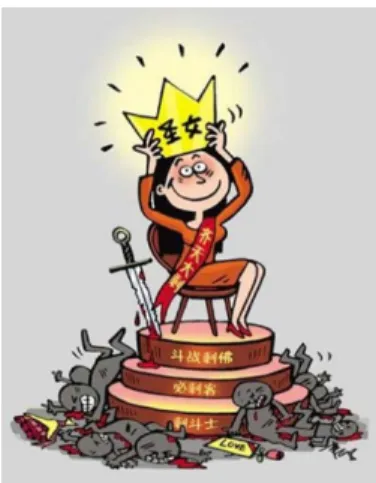
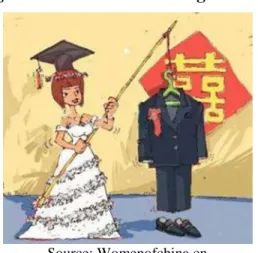
The second media used in the "remaining women phenomenon" campaign is that of the recurring images used in shengnü articles, since certain cartoon images of the shengnü have a wider reach on the Internet than the articles. On August 31, 2009, the All China Women's Federation's English website published an article titled "The Single Urban Woman Conundrum" that discussed the definition of China's shengnü and the six different classifications. The next category is 28- to 30-year-old women, or "those who must prevail," bi sheng ke, a play on the Chinese name for Pizza Hut.
The last category, 35 and older, is called the "remaining women's master class." The term, qi tian da sheng, plays on the name of an ancient Chinese legend, the Monkey King. Some articles claim to "help" shengnu find love when in reality these articles indicate that happiness will only come when individual goals are lowered and desires are cast aside (along with a healthy dose of self-help transformations). In an article published in April 2012, titled "The Surprising State of China's Leftover Ladies."
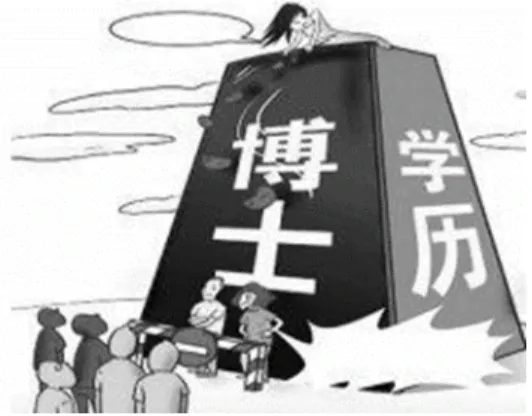
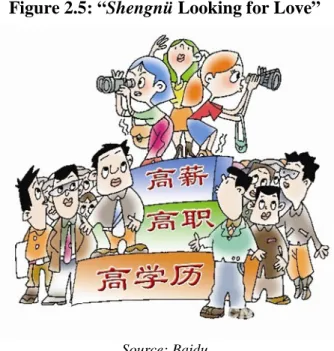
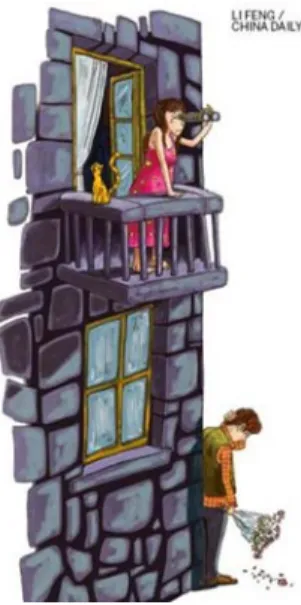
ACWF articles make the public deeply concerned about this aspect of her personal life (though usually not in a sympathetic way) and think that they can solve her "problems" for her - which "problems" have been created by changing social structures. If shengnü only looked down (or by lowering her standards for a suitor),. The last image, Figure 2.5, is similar to the first, as the women on top of the pedestal are looking for love "in all the wrong places." Women with binoculars looking for a suitor on a pedestal.
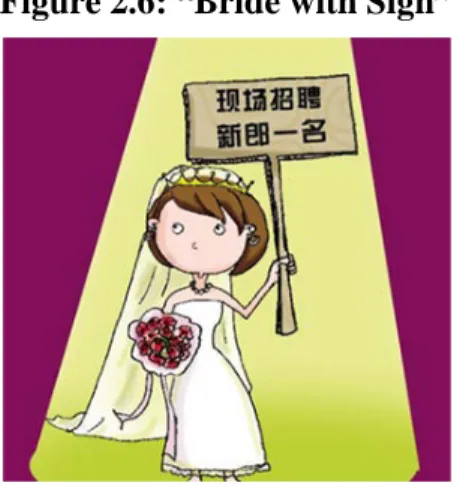
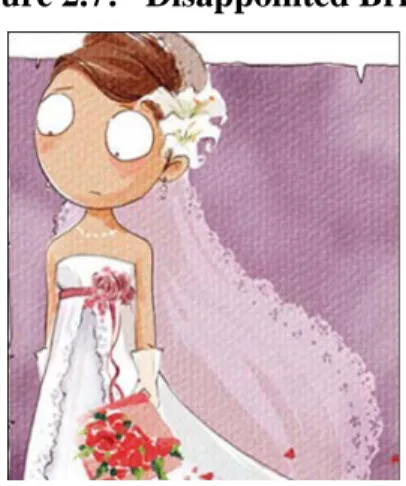
In figure 2.6, the bride is holding a sign that says "This scene is to give public notice of vacancies to be filled, ie the groom's name." The groomless bride stands under a spotlight, hoping to draw attention to herself and show that she is ready for love, her expression hesitant, possibly anxious. The role of these articles and images in portraying the shengnü is helpful in the campaign, but it is of concern to the shengnü itself.
WHAT THE ‘LEFTOVERS’ HAVE TO SAY
In fact, a higher percentage of women (28%) get more than 50 percent of their news from social media sources than men (25%) ... Women connect more for social reasons than men. 92 “The Female/Male Digital Divide,” The Nielsen Company, accessed March 2, 2015, http://www.nielsen.com/us/en/insights/news/2014/the-female-male-digital-divide. html. When the media says "the shengnü is too materialistic and picky and that's why she can't find a husband," the shengnü explains that her pickiness is fair and legitimate and that she has worked too hard in life to be careless in the choosing a partner that is suitable for her and family.
Both of these choices make something clear to the reader – the blame is not to be placed on the shengnü, as you can see many marrying foreigners, but the blame must be placed on the Chinese men themselves. Despite the ACWF's 'state feminist' moniker, it is not simply a federation that forms a monolithic bloc that does not provide women with room for agency.106 Advocates for increased women's rights in mainland China are usually an extension of ACWF controlled by the government. still. While there is almost no information available on the women's groups that specifically emerged from the 2007 "remaining women" campaign, other women's groups have attempted to form and prominent women's rights activists have gathered about pressing issues like more public services for women and domestic violence. the laws.
However, this small force fighting for the improvement of women's rights is constantly suppressed by the increasingly anti-NGO, anti-activism government led by Xi Jinping. One day after International Women's Day 2015, five of China's leading women's rights activists were detained, just days after an initial detention of ten other women's rights activists. Instead of working within an NGO, many women's rights activists choose to act alone or in small, core groups of activists.
Xi Jinping has not only cracked down on NGOs and women's rights activists, but NGOs in general, making it harder for groups to volunteer or provide services in areas across the country. It seems that Xi Jinping is not only demonstrating his aggressive stance on women's rights, but also on rural education. These proud shengnü women are brave and are a wonderful example of everyday women fighting for women's rights, but their presence is heavily weighted by that of the media.
What started in 2007 as a way to gain insight into a group of women who did not follow the usual Chinese lifestyle, the "leftover women phenomenon" has turned into something bigger and more negative than one person or one women's rights protest can solve. Although few women respond to the shengnü label on their personal blogs, the media vastly outsmarts these women, while the government continually censors women's rights activists.