The GSMAC 2017 conference, organized by the Griffiths School of Management and IT within the Emanuel University of Oradea, explores the topic of civil society as an engine for economic and social well-being. The current global climate has produced many social problems that require creative solutions. The Role of the Civil Sector in Contribution to Social Welfare and Formation of Active Citizenship argues the importance of civil society in creating social welfare by producing services and jobs.
Green Loyalty and Its Antecedents
Such people resist change and do not pursue the welfare of society, as they reject everything related to sustainability and green products (Collins et al. 2007). Membership of strong reference groups can lead to a change in consumers' opinions and attitudes, as they can search, prefer or buy green products with increased agency (Varshneya et al. 2017).
Green Consciousness of Consumer Generations
Therefore, the problems and ideals of their friends and acquaintances are also their own problems and ideals (Bucic et al.2012). Concerned about their own future, they are willing to accept environmentally friendly products/articles and pay a higher price (Lu et al.2013).
Methodology of Research
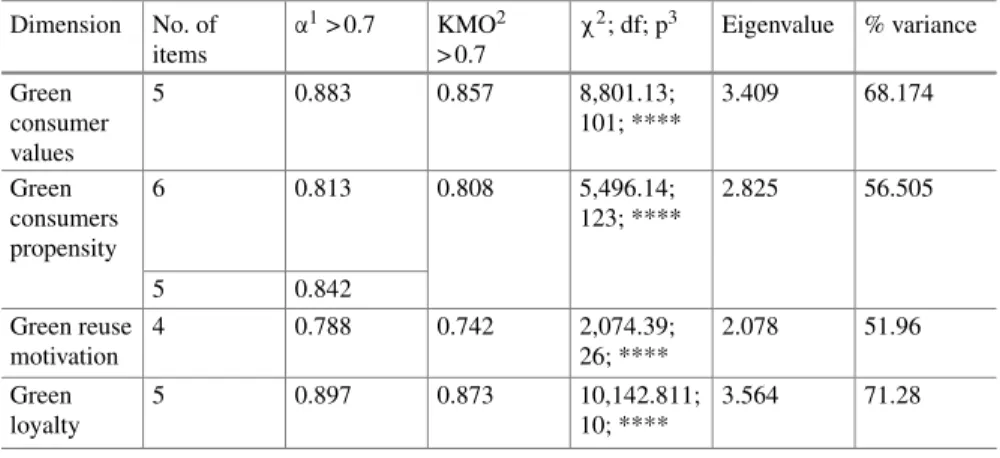
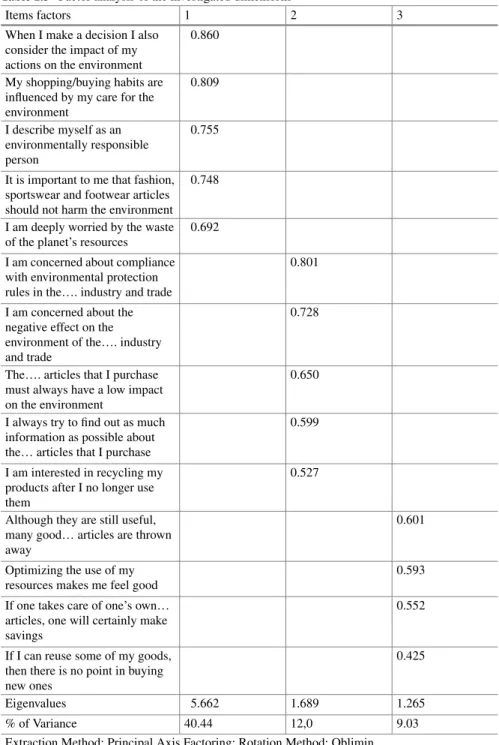
Due to the high internal consistency of the dimensions of green consumer orientation (green consumer values, green consumer propensity and green recycling motivation), these were integrated into a factor analysis (Walsh and Beatty2007). A relatively small number of consumers (168 people – 4.9% of the sample) allocated over 61% of their net disposable income to the purchase of various food and non-food sustainable products.

Research Findings
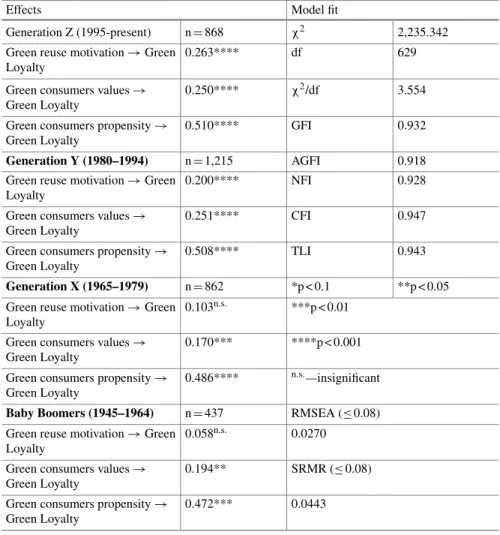
On the other hand, green values contributed less to building green loyalty for Gen Xers and Baby Boomers (0.194**). However, it has been noted that for the two generations, green values contributed to strengthening and/or building loyal behavior towards the retail formats that manage to achieve "green" status and those that adopt a "green" strategy or implement appropriate measures to reduce the consumption of resources worldwide.
Conclusions
This is probably because they grew up in a time when less emphasis was placed on sustainability, social responsibility, environmental protection, reduction in the consumption of packaged and raw materials, etc., as other research studies also confirm (Namkung and Soocheong (Shawn) 2014) . By repeating the purchase, confidence will develop in the products and create a positive image of them.
A Life Stage Analysis of Consumer Loyalty Profile: Comparing Generation X and Millennial Consumers.Journal of Consumer Marketing https://doi.org/10.1108/. Seeing the world through GREEN-tinted glasses: Green consumption values and responses to environmentally friendly products.Journal of Consumer Psychology https://doi.org/10.1016/j.jcps.
Linking Business with Civil Society
The Bridging Role of CSR
- Introduction
- The Relation Between CSR, Business Community, and Civil Society
- Managers’ Involvement in CSR Activities: Values, Organizational Culture and Management Style
- Methodological Framework
- Analysis and Discussion
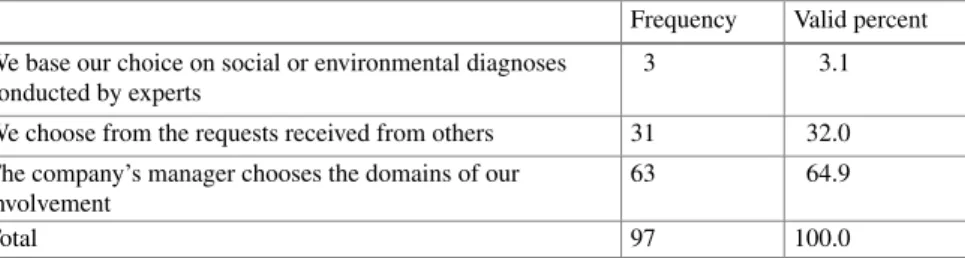
- What Companies Do Regarding Social Responsibility Actions
- What Managers Say about the Role of Business in the Community
- The Relation Between What Managers Say and What Companies Do
- Conclusions
Setting new agendas: Critical perspectives on corporate social responsibility in developing countries. International affairs. Evolution and Implementation: A Study of Values, Business Ethics and Corporate Social Responsibility. Journal of Business Ethics.
Comparative Study Regarding Organizational Culture: Nonprofit
Introduction
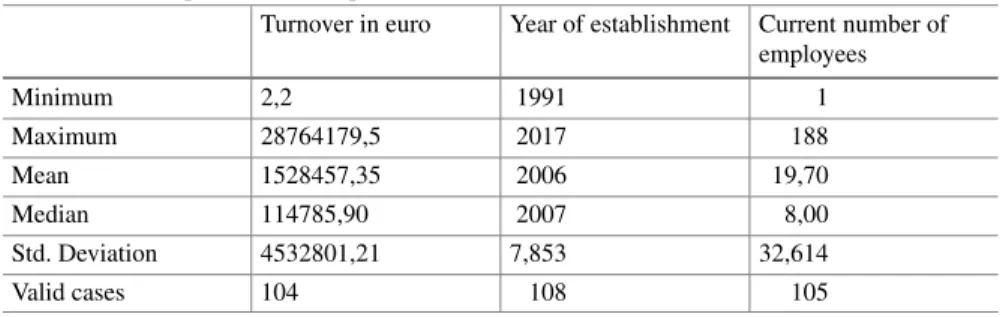
At European level, the social economy represents 10% of existing businesses (Barna 2014) and employs more than 14.5 million people, almost 6.5%. The present study analyzes the differences between a social economy organization and a profit-oriented entity from an organizational culture perspective.
A Theoretical Background for Organizational Culture
Organizational culture is created by the people in organizations who represent the members' routines, their way of making things work. There are several factors involved in the emergence of organizational culture, such as (Hintea 2007): company culture, traditions and successful behaviors, the nature of organizational activities and the immediate environment, founding members and crisis.
Comparative Study Regarding Organizational Culture
Therefore, organizational culture is part of the informal side of an organization that contains values, beliefs and behavioral models that are formed over time and that are transferred to the new members. Regarding the transmission of organizational culture, there are several ways such as the stories, organizational rituals, symbols, language, myths, heroes, norms to be followed or statement of principles (Hintea2007; Ojo2009).
Nonprofit Organization and Profit-Oriented Organization
- Research Methodology
- Organizational Culture: Actual Versus Preferred
- Organizational Culture and Innovation
- Conclusions
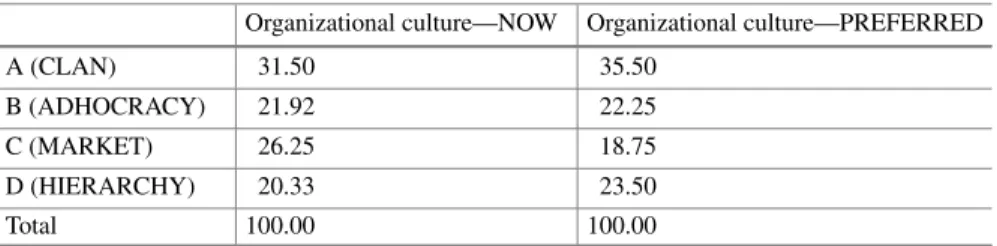
The general image of the organizational culture in the profit-oriented organization is presented in Chart 3.1. The general image of the organizational culture in the non-profit organization is summarized in Chart 3.2.
Investigating the Different Roles of the Factors Affecting Ethically
Introduction
Based on an empirical study in the context of Romania, this paper examines the importance of the factors influencing ethically questionable consumer behavior. The paper examines the different roles of factors influencing ethically questionable behavior in the context of Romanian consumers. An important finding of the study is that context can change the importance of the influencing factors of ethically questionable behavior.
Literature Review
- Consumer Ethically Questionable Behaviour
- Theory Development and Hypotheses
- Research Methodology
- Data Collection and Sample
- Measurements
- Findings
H2 The social norm associated with performing an ethically questionable behavior is positively related to consumers' behavioral intention. H3 Perceived behavioral control is positively related to consumers' intention regarding questionable ethical consumption behavior. Taken separately, perceived behavioral control and perceived unfairness are differently related to consumers' intention regarding ethically questionable consumption behavior.
Conclusions
- Implications for Researchers and Business
- Limitations and Future Research
Investigating software piracy in Jordan: An extension of the theory of reasoned action. Journal of Business Ethics. Consumer ethics: A study of the ethical beliefs of the final consumer. Journal of Business Research. Theory of planned behavior and ethics theory in digital piracy: An integrated model.Journal of Business Ethics.
Politicized Economy and Its Effects on Business Sustainability: A Case Study on
Business Sustainability and Socio-Political Environment
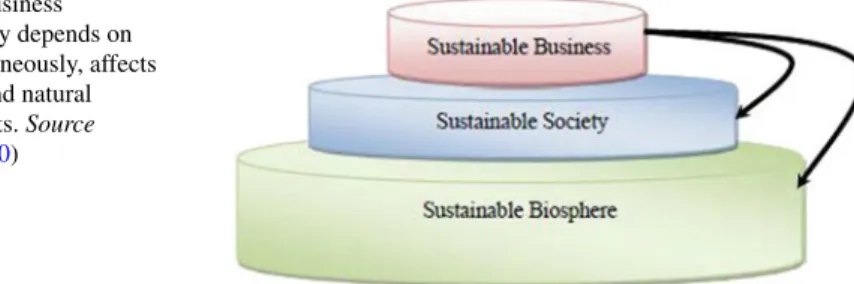
This hierarchy implies that the organizational performance on which the firm's sustainability depends is determined by higher ranking relationships that shape the organization's activity. The EU and Great Britain are now focused on the Brexit phenomenon, and governments in the region are also uncertain about the Trump administration's positions. In the following, we will review some of the signs of the politicization of Romanian society and the potential impact on local and corporate sustainability.
Detectable Signs Toward a Politicized Romanian Society and Their Impact on Business Sustainability
- The Main Modalities of Political Influence on Justice and the Negative Effects of Such an Influence
- The Main Modalities of Political Influence on the Economy and the Negative Effects of Such an Influence
According to the information included in an official interpellation addressed to the Ministry of Education in the fall of the year 2016 by Valerian Vreme (a deputy of Bacau district), in the already mentioned district (Bacau), there has never been a contest for the selection of a school principal for more than 8 years (idem). After the Romanian Revolution from 1989, the majority of the post-communist journalists involved in the daily media are actually remnants of the communist regime (Stan and Vancea2015). The National Bank plays an important role in the financial stability of the country's economy.
Conclusions
Sustenabilitatea companiilor: este organizația de învățare cu un pas înainte? Cluj-Napoca: Ed. Preluat la 15 martie 2017, de la https://sites.google.com/site/bussustlo/. 2010. Sistemul de învățământ din România: O privire de ansamblu asupra modului în care comunismul a afectat aspectele și programele actuale. Universitatea Liberty. Preluat 24 martie 2017 de pe http://www.gandul.info/financiar/harta-banilor-din-romania-cat-da-si-cat-primeste-inapoi-de-la-bugetul-de-stat-judetul- dvs.-9444892. Recuperat 12 martie 2017, http://www.romaniacurata.ro/candidatii-cu-functii-in-administratia-regimului-comunist-citeste-cum-s-au-descurcat-in-cariera-antedecembrista-cei-care- azi-vreau-votul-tau/. 2013. Justiție de tranziție și societate civilă în Balcani Springer.
Developing a Culture of Service Utilizing the Civil Society in Romania: Needs
- Introduction
- Hospitality as a Relationship
- Failures of Hospitality Services
- The Hospitality Industry in Romania
- Conclusions
Hospitality is a relationship between individuals who assume the role of host or the role of guest. This lack of foreign visitors as a competitive measure is reflected in the classification produced by the World Economic Forum as part of the World Travel and Tourism Competitiveness Report. Travel and Tourism Competitiveness Index 2011: Assessing post-crisis industry drivers. Travel and Tourism Competitiveness Report 2011: Beyond the Fall.
Semiotics and the Entrepreneurial Creation’s Myths
What is Creation?
Thus, a semiotic complementary to the divine is outlined, in which may manifest possible co-authors of the primal universal creation, entities that present a capacity to choose wholly or partially independently of the all-significant consciousness of the all-creating power. Included in the category of "artificial" (human) semiotics, creation manifested at this level, permitted through the privileges granted by the all-significant conscience, fits into a series of boundaries created by the same laws of the universe as the "artificial" (human) constructions cannot be overcome. Koestler is the result of a process both intellectual and emotional, but also a field of manifestation of ideas that varies according to the individual endowment of the creator.
On the Matter of Creation and the Requirements for
Such a definition of creation also presupposes the presence of a pre-existing script, which is due to an all-creating force that generates causal-natural determinations (the laws of the universe). Understanding the fact that creativity is manifested at all cosmic levels (Diaconu 2011), Mircea Eliade sensed the fact that the yardstick for understanding the "show of creation", the reflection of the "divine semiotics" into the "artificial semiotics". human), is the one that will provide a yardstick for the creative genius Homo sapiens (St˘anciulescu1995). Creation, as a typical human process, is a characteristic, a capacity or a function of some special abilities that man can possess, in general, and of his imagination in particular (Diaconu2011).
Animating” the Entrepreneurial Creation
Entrepreneurial Creation, Reflex of Divine Creation
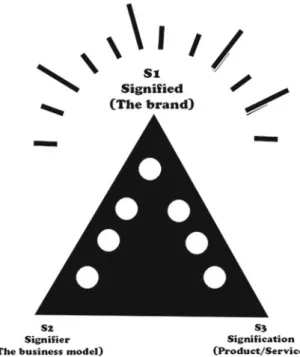
In accordance with archaic beliefs, human creation in general (therefore the entrepreneur is no exception) is a reflex of divine creation (Philip, n.a.). Authentic entrepreneurial creation, based on the purest form of creation (innovation/divine inspiration) and requiring the creation of a competitive advantage by taking over the previous character of the entrepreneurial effort. The act of creating an enterprise can also be analyzed from the perspective of the parameters determined by the phenomenological hexagon of creativity (St˘anciulescu1995) (see Figure 7.5).
Conclusions
Preluat 9 februarie 2017, de pe http://online.reghinulnostru.ro/articole/reportaj/peste-4-milioane-de-instrumente-produse-la-reghin.html. Preluat 9 februarie 2017, de pe http://jurnalul.ro/campaniile-jurnalul/romania-la-sosea/romania-la-sosea-imperiul-artizanatului-16292.html. Recuperat 8 februarie 2017, de pe http://www.romanialibera.ro/economie/business/businessul-da-dependente Schimbări dramatice în energia mondială – Era combustibililor fosili se apropie de sfârșit.
The Role of the Civil Sector
- Introduction
- The Concept of Civil and Non-profit Organizations in Hungary
- The Role of Civil Sector in Shaping Active Citizens
- The Engagement Forms of Civil Organizations Responsible for Society
- Fundraising and Largition, Support, Assistance
- Providing Services, the Production of Public Goods
- Employment, Job Creation
- The Gratification of Cultural and Leisure Time Demands
- Community-Building,
- Active Engagement in Settlement—and Regional Development
- Involvement in the Decision Preparation Work of the Local Government, Civil Control
- Own Research
- Conclusions
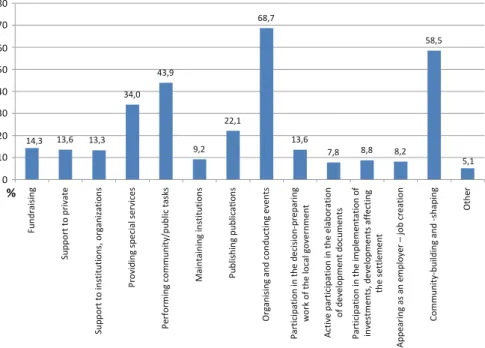
Nowadays, this definition is often confused with the definition of the non-profit organizations, which can be a wrong approach in Hungary. During our research it was proven that the establishment of civil organizations takes place along diverse dimensions; some of the organizations focus on more goals and concentrate on more fields. A lower rate of the organizations (about one tenth of them) perform the provided services within institutional frameworks.
Quo Vadis Romanian Marketing: The Future and Contribution of the
Romanian Community
- Introduction
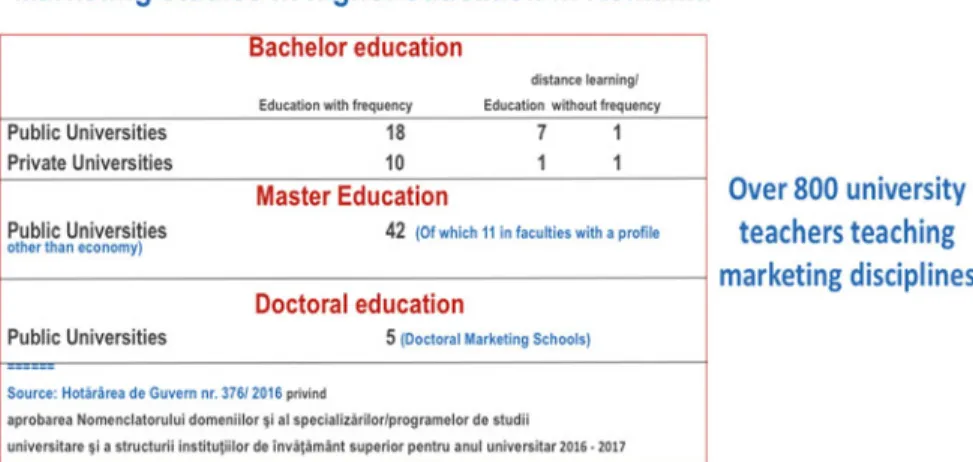
- What is the State of the Art of the Romanian Marketing?
- What to Do? Directions in Romanian Marketing Research
- What Would Fundamental Research Should Romanian Marketing Undertake?
- Directions in Marketing Applied Research
Another key objective of the applied research is the change of vision of the marketing action. For the Romanian economy, the marketing research must meet this requirement of the theory-practice interpenetration. Customer involvement: The construct, antecedents and consequences. Journal of the Academy of Marketing Science (published electronically June 11).
Online Research and Learning Environment to Facilitate the
Elaboration of Bachelor’s/Master’s Theses in Multidisciplinary Teams
- Introduction
- Requirements for a Research and Learning Environment
- Possible Structure of an Online Research and Learning Environment
- Dedicated Web Pages
- Functionalities
- Conclusions
A possible structure of an online platform integrated into an online research and learning environment is presented in Figure 10.2. Legal Issues: Activities in an online research and learning environment must be legal. It is a very good way to spread the success of an online research and learning environment.
Global Governance and the Role of
Non-state Actors in Improving the Social and Economic Development of Growing
Using a Global Public Health Framework on Violence Prevention
- Introduction
- Violence: What Is It?
- The Public Health Approach to Violence Prevention
- The Ecologic Model of Violence
- Current State of Violence Worldwide
- Violence, Economic Development, and Health
- Non-state Actors and Global Governance
- Non-state Actors and Violence Prevention
- Non-state Actors and Global Governance: More to Be Done
- Recommendations: Non-state Actors and Violence Prevention
- Data Collection (National, State, Local, and Individual Levels)
- Develop Safe and Stable and Nurturing Relationships Between Children and Their Parents and Caregivers
- Develop Life Skills in Children and Adolescents (Individual, Family, and Community Levels)
- Reduce the Availability of the Harmful Use of Alcohol (Global, Societal, and Community Levels)
- Reduce Access to Guns and Knives (Global, National, Community, and Family Levels)
- Promote Gender Equality to Prevent Violence Against Women (Global, National, Community, and
- Change Cultural and Social Norms that Support Violence (National, Community, and Family Levels)
- Identify Victims and Have Strong Care and Support Programs (National, Community, Family, Individual
- Conclusions
The factors that influence the increase in the rate of violence occur at all levels of the ecological model of violence, including the global one. The ecological model of violence shows that the risk and perpetration of violence occur at all levels. The public health approach and the ecological model of violence are very useful tools to help strategize violence prevention efforts.

Romanian Hospitality Degree Graduates
Perceptions and Attitudes Among Industry Professionals
- Introduction
- Employees Training as a System to Improve Customer Service
- Training for the Right Competencies and with the Appropriate Impact
- The Training Needs of Romanian Hospitality Industry
- Conclusions
The question when assessing the training needs of the tourism and hospitality industry is understanding the viability of employability. An experience that is often independent of the institution of study or training facility. Ultimately, the 'employability rate' may be a factor of the education students receive to prepare them for on-the-job training.