Nell L. Tharpe, MS, CNM, CRNFA Midwife Publications, Inc.
East Boothbay, Maine
Adjunct Faculty
Midwifery Institute
Philadelphia University
Philadelphia, Pennsylvania
Substantial discounts on bulk quantities of Jones and Bartlett’s publications are available to corporations, professional associations, and other qualified organizations. For details and specific discount informa- tion, contact the special sales department at Jones and Bartlett via the above contact information, or send an email to [email protected].
Copyright © 2006 by Jones and Bartlett Publishers, Inc.
All rights reserved. No part of the material protected by this copyright may be reproduced or utilized in any form, electronic or mechanical, including photocopying, recording, or by any information storage and retrieval system, without written permission from the copyright owner.
ISBN-13: 978-0-7637-3822-8 ISBN-10: 0-7637-3822-0
Library of Congress Cataloging-in-Publication Data Tharpe, Nell, 1956-
Clinical practice guidelines for midwifery and women's health / Nell L.
Tharpe. — 2006–2009 ed.
p. ; cm.
Includes bibliographical references and index.
ISBN 0-7637-3822-0 (pbk. : alk. paper)
1. Midwifery—Standards. 2. Maternity nursing—Standards. 3. Gynecologic nursing--Standards. I. Title.
[DNLM: 1. Midwifery. 2. Genital Diseases, Female. 3. Pregnancy Complications. 4. Women's Health. WQ 165 T367c 2006]
RG950.T476 2006 618.2—dc22
2005031570 0045
Production Credits
Acquisitions Editor: Kevin Sullivan Production Director: Amy Rose Associate Editor: Amy Sibley
Production Editor: Carolyn F. Rogers Marketing Manager: Emily Ekle
Manufacturing and Inventory Coordinator: Amy Bacus Composition: Paw Print Media
Cover Design: Timothy Dziewit
Cover Illustration: isa maria, Copyright © Nell Tharpe. Used with permission.
Printing and Binding: Courier Stoughton Cover Printing: Courier Stoughton Printed in the United States of America 11 10 09 08 07 10 9 8 7 6 5 4 3 2
Special thanks go to the midwives I have had the pleasure to know and work with, the educators who have guided my growth, and my colleagues from all walks of life who have mentored me.
v
Preface xi
Chapter 1 Exemplary Midwifery Practice 1
Women First 3
How to Use This Book 3
The Purpose of Clinical Practice Guidelines 4
Documenting Midwifery Care 5
Developing a Collaborative Practice Network 5
Health Care As a Continuum 7
Cultural Diversity 8
Developmental Considerations 8
Risk Management 9
Summary 11
References 11
Chapter 2 Documentation of Midwifery and Women’s Health Care 13
Standards for Documentation 14
Documentation as Communication: Skills and Techniques 14
Evaluation and Management Criteria 19
Documentation as Risk Management 19
Documenting Culturally Competent Care 20
Informed Consent 20
Components of Common Medical Records 21
Summary 28
References 28
Chapter 3 Care of the Woman During Pregnancy 29
Diagnosis of Pregnancy 30
Initial Evaluation of the Pregnant Woman 32
Care of the Pregnant Woman with Edema 44
Care of the Pregnant Woman with Epistaxis 46
Care of the Pregnant Woman with Heartburn 47
Care of the Pregnant Woman with Hemorrhoids 48
Care of the Pregnant Woman with Insomnia 49
Care of the Pregnant Woman with Leg Cramps 51 Care of the Pregnant Woman with Nausea and Vomiting 52
Care of the Pregnant Woman with Pica 54
Care of the Pregnant Woman with Round Ligament Pain 55 Care of the Pregnant Woman with Varicose Veins 57
References 58
Chapter 4 Care of the Pregnant Woman with Prenatal Variations 61 Care of the Pregnant Woman with Iron Deficiency Anemia 62 Care of the Pregnant Woman with Fetal Demise 64 Care of the Pregnant Woman Exposed to Fifth’s Disease 66 Care of the Pregnant Woman with Gestational Diabetes 68
Care of the Pregnant Woman with Hepatitis 72
Care of the Pregnant Woman with Herpes Simplex Virus 74 Care of the Pregnant Woman who is HIV Positive 76
Inadequate Weight Gain 79
Hypertensive Disorders in Pregnancy 81
Pruritic Urticarial Papules and Plaques of Pregnancy (PUPPP) 86
Care of the Woman who is Rh Negative 88
Size–Date Discrepancy 90
Toxoplasmosis 93
Urinary Tract Infection in Pregnancy 95
First Trimester Vaginal Bleeding 98
Bibliography 101
References 102
Care of the Woman in First-Stage Labor 109
Care of the Woman in Second-Stage Labor 113
Care of the Woman in Third-Stage Labor 116
Amnioinfusion 120
Assisting with Cesarean Section 122
Caring for the Woman Undergoing Cesarean Birth 125 Caring for the Woman with Umbilical Cord Prolapse 128 Care of the Woman with Failure to Progress in Labor 130
Care of the Woman with Group B Strep 133
Care of the Woman undergoing Induction or Augmentation
of Labor 136
Care of the Woman with Meconium-Stained Amniotic Fluid 139 Caring for the Woman with Multiple Pregnancy 142 Caring for the Woman with a Nonvertex Presentation 146 Caring for the Woman with Postpartum Hemorrhage 150
Postterm Pregnancy 153
Caring for the Woman with Pregnancy-Induced Hypertension
in Labor 156
Care of the Woman with Preterm Labor 159
Care of the Woman with Prolonged Latent Phase Labor 163 Care of the Woman with Premature Rupture of the Membranes 165
Care of the Woman with Shoulder Dystocia 169
Care of the Woman Undergoing Vacuum-Assisted Birth 172 Care of the Woman During Vaginal Birth After Cesarean 174
References 177
Chapter 6 Care of the Mother and Baby After Birth 181
Postpartum Care, Week 1 181
Postpartum Care, Weeks 1–6 184
Postpartum Depression 187
Endometritis 190
Hemorrhoids 193
Mastitis 195
References 213
Bibliography 214
Chapter 7 Care of the Woman with Reproductive Health Needs:
Care of the Well Woman 215
The Well-Woman Exam 216
Preconception Evaluation 220
Smoking Cessation 222
Fertility Awareness 225
Barrier Methods of Birth Control 227
Emergency Contraception 229
Hormonal Contraceptives: Pills, Patches, Rings, and Injections 232
The Intrauterine Device 236
Norplant Contraceptive Implant 239
Unplanned Pregnancy 241
Caring for Women as They Age 245
Hormone Replacement Therapy 249
Screening for Osteoporosis 253
Evaluation and Treatment of Women with
Perimenopausal Symptoms 256
References 259
Bibliography 261
Chapter 8 Care of the Woman with Reproductive Health Needs:
Reproductive Health Problems 263
Abnormal Mammogram 263
Abnormal Pap Smear 266
Amenorrhea 270
Bacterial Vaginosis 272
Breast Mass 275
Chlamydia 278
Colposcopy 281
Endometrial Biopsy 290
Evaluation of Postmenopausal Bleeding 292
Endometriosis 295
Fibroid Uterus 297
Gonorrhea 300
Human Immunodeficiency Virus 303
Hepatitis 307
Human Papillomavirus 310
Herpes Simplex Virus 313
Genital Candidiasis 316
Nipple Discharge 318
Pediculosis 321
Pelvic Pain, Acute 323
Pelvic Pain, Chronic 325
Pelvic Inflammatory Disease 328
Premenstrual Syndrome 331
Syphilis 334
References 337
Bibliography 339
Chapter 9 Primary Care in Women’s Health 341
Care of the Woman with Cardiovascular Problems 341 Care of the Woman with Dermatologic Disorders 346 Care of the Woman with Endocrine Disorders 352 Care of the Woman with Gastrointestinal Disorders 357 Care of the Woman with Mental Health Disorders 361 Care of the Woman with Musculoskeletal Problems 367 Care of the Woman with Respiratory Disorders 370 Care of the Woman with Urinary Tract Problems 375 References 380
Bibliography 381
Appendix: Calcium, Magnesium, and Iron Food Lists 382
Index 383
xi
Disclaimer
The Clinical Practice Guidelines for Midwifery & Women’s Healthprovided here repre- sent a compilation of current practices that includes evidence-based, traditional, and empiric care from a wide variety of sources. The Clinical Practice Guidelines for Mid- wifery & Women’s Healthare used voluntarily and assume that the practicing women’s health professional will temper them with sound clinical judgment, knowledge of patient or client preferences, national and local standards, and attention to sound risk management principles.
The Clinical Practice Guidelines for Midwifery & Women’s Healthare not all-inclusive, and there may be additional safe and reasonable practices that are not included. By accepting the Clinical Practice Guidelines for Midwifery & Women’s Health, midwives and other women’s health professionals are not restricted to their exclusive use.
Both the American College of Nurse-Midwives (ACNM) and the Midwives Alliance of North America (MANA) recommend that midwives utilize written policies and/or practice guidelines. The Clinical Practice Guidelines for Midwifery & Women’s Healthhave grown out of a need for a concise reference guide to meet that recommendation.
The Clinical Practice Guidelines for Midwifery & Women’s Healthreflect current practice, and provide support and guidance for day-to-day clinical practice with diverse populations.
Regional differences in practice styles occur; therefore, the guidelines are broadly based and designed to reflect current practice and literature as much as possible.
The Clinical Practice Guidelines for Midwifery & Women’s Healthare designed to be kept where you practice: a copy in your exam room(s), one copy for your birth setting, and another by the phone at home. These guidelines may be customized further with dated and initialed written additions, deletions, use of a highlighter, and so on. This is a working prac- tice tool that should reflect your practice.
Midwives are blessed with a passion for their work. It is their patience and perseverance, which a laboring woman so appreciates, that has helped midwifery to grow. It is my hope that this book will make your professional practice simpler and more rewarding. This text is updated every three years. Comments and suggestions are always appreciated, with refer- ences and resources whenever possible.
This book is written for all the midwives, wherever they practice, and the women, chil- dren, and families that they care for.
Etiology of Intellectual and Developmental Disabilities 1
1
Exemplary Midwifery Practice
E
xemplary midwifery practice is woman oriented and focuses on excellence in the processes of providing care, improving maternal and child health and profession- alism as a means of promoting the midwifery model of care.Exemplary midwifery practice, according to Kennedy (2000), encompasses several key concepts. These concepts include the basic philosophy of midwifery and its active expression through the individual midwife’s clinical practice. Each midwife’s philosophy of care is reflected in her choice and use of healing modali- ties, the quality of her caring for and about women, and her support for midwifery as a profession. The midwife’s underlying philosophy is brought to life through her clinical practice and professional involvement in midwifery. Throughout this book the driving philosophy is that of the American College of Nurse-Midwives.
Optimal midwifery care occurs when the midwife is able to support the physi- ologic processes of birth and well-woman care, while at the same time remaining vigilant for the unexpected (Kennedy, 2000). Remaining attuned to small details that might subtly indicate a significant change in maternal, fetal, or the well- woman’s status provides the midwife with the opportunity for early identification of problems and prompt initiation of treatment geared toward improving out- comes. Midwifery encourages care that is individualized for each woman and each birth. Patience with the birth process is a hallmark of midwifery care. Midwives’
compassionate and attentive care reinforces women’s belief in their ability to give birth and care for themselves. By utilizing interventions and technology only when necessary, midwives bridge the chasm between medicine and traditional healing.
Exemplary midwives demonstrate professional integrity, honesty, compassion, and understanding. They are able to communicate effectively, remain open- minded and flexible, and are able to provide care in a nonjudgmental manner.
When these attributes are coupled with excellent clinical skills they result in atten- tive and thorough assessments, excellent screening and preventive health coun- seling processes, and patience with the process of labor and birth.
Finally, midwives provide personalized care that is tailored to the individual and her present circumstances. Regardless of clinical practice setting or educational background, midwives endeavor to create an environment that engenders mutual
respect and focuses primarily on meeting the needs of the woman, or mother and family. Recognition of individual variation is tempered by a thorough grounding in both normal and pathologic processes. This broad scope provides the midwife with a clear view of the continuum of health and allows more accurate assessment and personaliza- tion of care.
The midwife whose ideal is to provide exem- plary midwifery care must actively create a balance between her professional life as a midwife and the needs and demands of her personal life.Time off to refresh and rejuvenate is as necessary to quality practice as is ongoing professional education.
Personal relationships nourish the midwife and provide emotional sustenance. Each midwife must Box 1-1 Philosophy of the American College of Nurse-Midwives
We, the midwives of the American College of Nurse-Midwives, affirm the power and strength of women and the importance of their health in the well-being of families, communities, and nations. We believe in the basic human rights of all persons, recognizing that women often incur an undue burden of risk when these rights are violated.
We believe every person has a right to:
• Equitable, ethical, and accessible quality health care that promotes healing and health
• Health care that respects human dignity, individuality, and diversity among groups
• Complete and accurate information to make informed health care decisions
• Self-determination and active participation in health care decisions
• Involvement of a woman’s designated family members, to the extent desired, in all health care experiences
We believe the best model of health care for a woman and her family:
• Promotes a continuous and compassionate partnership
• Acknowledges a person’s life experiences and knowledge
• Includes individualized methods of care and healing guided by the best evidence available
• Involves therapeutic use of human presence and skillful communication We honor the normalcy of women’s life cycle events. We believe in:
• Watchful waiting and nonintervention in normal processes
• Appropriate use of interventions and technology for current or potential health problems
• Consultation, collaboration, and referral with other members of the health care team as needed to provide optimal health care
We affirm that midwifery care incorporates these qualities and that women’s health care needs are well served through midwifery care.
Finally, we value formal education, lifelong individual learning, and the development and application of research to guide ethical and competent midwifery practice. These beliefs and values provide the foundation for
commitment to individual and collective leadership at the community, state, national, and international level to improve the health of women and their families worldwide (American College of Nurse-Midwives [ACNM], 2004).
remain attentive to her own needs in order to bring her best to midwifery.
Midwives strive to provide exemplary midwifery and women’s health care. This demands the devel- opment of excellent clinical skills and the determi- nation and persistence to couple them with sound clinical judgment. Each midwife is called upon, time and again, to make critical decisions and to act upon them in a way that is appropriate for the set- ting in which she practices, yet she must demon- strate respect and honor for the uniqueness of each woman and family in her care.
Women First
Midwifery and women’s health is first and foremost about caring for women. Every woman deserves to receive care that is safe, satisfying, and fosters her ability to care for herself. Such care, to be effective, must address women’s own cultural and develop- mental needs. As midwives care for women in our country’s diverse communities, the ability to listen, and to integrate women’s concerns into the care pro- vided, is essential.The goal should be to provide care that meets the woman’s expressed needs, is directed by the woman, and is not limited by the midwife’s personal or professional philosophy of care.
Midwives and other women’s health profes- sionals practice within a health care system that is increasingly complex. Health care can be viewed as a continuum that ranges from alternative health practices, through holistic and general medical care, to highly specialized medical care. Often women do not have a frame of reference that allows them to formulate questions about the issues that concern them. Many clients may need guidance to obtain necessary health care. Women look to their care provider to provide direction that is consistent with their perceived needs and internal beliefs.
Teasing out the health concerns that are important to women requires skill in active listening, sensi- tivity to cultural issues, and knowledge of common health practices, procedures, and preferences.
Meeting women’s health needs requires consid- ering all options for care or treatment and necessi- tates a broad-based and well-grounded network of collaborative relationships.
How to Use This Book
To provide optimum women’s health care in today’s busy environment the use of a systematic approach to organization is essential. This type of approach is central to providing care that is com- prehensive and is least likely to result in clients
“slipping through the cracks.”
Clinical Practice Guidelines for Midwifery &
Women’s Health utilizes a format that is recognized throughout the health care continuum. By using this consistent format these guidelines foster a sys- tematic and reliable mechanism for client assess- ment, problem identification, and treatment or referral. Clear identification of documentation essentials and practice pitfalls act as reminders to the busy professional. While the term midwife is used frequently throughout this book, the content and recommendations are equally relevant for other women’s health professionals.
How to Use This Book 3
Icon Key
Documentation
Consult or Referral
Cultural Awareness
Risk Management
Symbols are used to indicate key areas that require particular attention. The purpose of the symbols is to heighten awareness, stimulate critical thinking in areas that are potentially problematic, and ensure comprehensive record keeping and communication. Safe midwifery and women’s health practice includes not only providing quality care to the women we serve, but also practicing in a manner that protects the midwife from undue risk, whether it be from infectious disease, fear of persecution, or professional liability.
Documentation of care is the basic building block that supports midwifery practice.
Documentation skills allow the midwife or other women’s health professional to review the care pro- vided at a later date.
Collaborative practice connects midwives to additional health professionals who provide ongoing or specialty care that is not within the midwife’s scope of practice. Women’s health care forms a continuum that extends from home birth and alternative care, through general medical and community-based medicine and midwifery, to high-tech tertiary care and specialty services.
Cultural awareness is essential for quality care of women in our multicultural world. We need to consider each woman as an individual who exists, not in our practice settings, but in her own corner of the world. Cultural influences may affect birth choices, birth control methods, sexual orienta- tion, self-care preferences, and more. Cultural aware- ness includes consideration of the client’s race, religion, ethnic heritage, age, generation, geographic factors, and cultural mores.
Risk management includes the thoughtful consideration of factors that potentially increase risk to the mother or baby, the well woman, or to the midwife providing care. Identification of risk factors is the first step in reducing their poten- tial impact on midwifery practice. Risk management as applied to midwifery practice includes careful
documentation of care provided. Integral compo- nents of the midwifery risk management plan include active listening to each woman as an indi- vidual, clearly stated expectations for your role as a midwife, and the woman’s role when receiving care.
Evidence-based practice is the catchword of the day. Goode (2000) offers a multidisciplinary prac- tice model that addresses nine key factors to con- sider when evaluating current research for clinical application:
• Pathophysiology
• Retrospective or concurrent record review
• Risk management data
• Local, national, and international standards
• Infection control data
• Patient or client preferences
• Clinical expertise
• Benchmarking data
• Cost effectiveness analysis
By integrating all of these factors into the evalu- ation of current research the midwife can validate her or his clinical decision making using an evi- dence-based practice model that also fits the mid- wifery model of care. Clinical expertise comes with time and attention to practice.The new practitioner or novice must maintain a heightened awareness of her or his limitations in order to set safe boundaries for practice.
The Purpose of Clinical Practice Guidelines
Clinical practice guidelines are used to direct and define parameters for care. This may be influenced by the accepted standards of the midwife’s or women’s health provider’s professional organiza- tion(s). State laws, both statutes and regulations, may affect the scope of practice, as may hospital bylaws, birth center rules and regulations, health insurance contracts, and liability insurance policies.
Each individual midwife must define her or his scope of practice based on philosophy of midwifery practice, educational preparation, experience, skill level, and the individual practice setting. A midwife’s scope of practice may vary from one practice location to another and may change throughout her career.
Each client who comes to a midwife for care has the right to information regarding the midwife’s scope of practice, usual practice location(s), and provisions for access to medical or obstetrical care should this become necessary. Development of working relationships with area health care providers can be a valuable asset in fostering conti- nuity of care.
Documenting Midwifery Care
If documentation is the key to validating quality care, then documentation skills are essential to midwifery practice. Careful and com- plete documentation serves as your legal record of events that have occurred. Standardizing the docu- mentation format can free the midwife up to con- centrate on the content of the documentation or note.
Optimally, records should provide the reader with a clear view of the client’s presentation, the midwife’s evaluation process, and the implementa- tion and results of treatment or recommendations.
Meticulous documentation also allows other pro- fessionals to follow the course of care provided and gain insight into the client’s response. Client health records are an essential communication tool in a group practice and during consultation or referral.
For those midwives or students who seek to improve documentation skills, additional recom- mendations for documentation are addressed in detail in Chapter 2.
Developing a Collaborative Practice Network
Midwives do not practice in isolation. Every midwife, regardless of practice location, needs a network of contacts to help provide ongoing care and services. The collaborative prac- tice model allows for a wide variety of professional relationships that range from informal to highly structured arrangements.
Collaborative practice means that a working rela- tionship is formed between the attending midwife and the physician or other health care provider.
Midwives function as an integral part of the health care system. Not all services are appropriate for all women. Midwives have a responsibility to provide access to services as indicated by the individual woman’s health, preferences, and the midwife’s scope of practice. The primary goal of the collabo- rative relationship is accessing the best care for each client as needed.
The American College of Nurse-Midwives (ACNM) joint statement with the American College of Obstetricians and Gynecologists (ACOG) clearly states: “When obstetrician-gyne- cologists and certified nurse-midwives/certified midwives collaborate, they should concur on a clear mechanism for consultation, collaboration, and referral based on the individual needs of the patient” (ACNM, 2002).
Consultation or Referral?
Consultations and referrals provide for continuity of care when problems develop or when additional expertise is required. Consultations may range from informal conversations to problem-oriented evaluation of the client by the consultant. When midwives consult with OB/GYN physicians they need to remember that the physician practices a different specialty and may not have a similar approach to the problem as the midwife.
Development of professional relationships with physicians and other health care providers in your
Developing a Collaborative Practice Network 5
area begins with you. Make arrangements to meet and introduce yourself. Show consideration of the provider’s schedule; for example, arrange a breakfast meeting or offer to bring lunch to the office. Make good eye contact, shake hands firmly, and present yourself as a competent, skilled, professional col- league. Your goal is to initiate a relationship, so that when you have a client who needs care, your credi- bility has been established. It is not required that you agree on philosophy of care or management styles, but it is important that you establish a good working relationship. It is also good practice to nurture your relationship with the office staff, for those times you may need them to interrupt during office hours.
Determining in advance what type of consult is indicated will affect what information you will pro- vide. Present the consultation request in terms that direct the care you are seeking for your client. If you do not provide this direction, the physician will likely manage your client as she or he would her or his usual patients
The American Medical Association Evaluation and Management Services Guidelines states “A consultation is a type of service provided by a physician whose opinion or advice regarding evalu- ation and/or management of a specific problem is requested by another physician or other appro- priate source” (AMA, 2004).
Forms of consultation that the midwife may use include the following types.
Informational“Just letting you know that Mrs. B is here in labor. She is a G3, P2002 at term, and is at 5 cms after one hour of labor. I expect an uneventful birth shortly.” In this instance you have already established a professional relationship with a defined collaborating individual that includes notification in specific circumstances or as indi- cated according to your professional judgment.
This may also include proactive consultation to provide information when there is potential for an emergency that may require additional support or expertise.
Request for Information or Opinion “Ms. K has atypical glandular cells on her most recent Pap smear. I’ve never seen this before.What do you rec- ommend for her follow-up?” In this instance you are looking for information to guide your client’s care when you have reached the limits of your scope of practice or when you work in a collabora- tive practice setting where you tailor the care you provide to both the client and the practice setting.
Request for Evaluation“I’m sending Mrs. S to you for evaluation of her enlarged uterus. She is a 47-year-old G2, P2002, who has had severe men- orrhagia for the past five months. Her pelvic ultra- sound is consistent with large uterine fibroids. We have discussed potential treatments, and she is interested in exploring endometrial ablation to treat her menorrhagia.” In this instance the client has a problem that requires evaluation and treatment that is not within your scope of practice. Clearly stating previous discussions, client preferences, and your expectations for care can influence the care pro- vided to the client. The expectation is that the client will return to you for care once the problem has resolved or been treated.
Transfer of Care “Mrs. R. has cervical cancer. I am transferring her to you for care of this problem.”
In this instance the client has a problem that neces- sitates ongoing physician management. Transfer of care means that the client is released from mid- wifery care, and the consultant is expected to assume responsibility for her medical care.
Emergency “Ms. P. has a postpartum hemor- rhage. I believe she has retained placental parts.
Her EBL is currently at 1000 ml. Please come to L
& D immediately.” In this instance the nature of the problem requires immediate action on the part of the consultant. Expectations for immediate physi- cian evaluation of a client must be clearly stated.
For those midwives who practice in the out-of- hospital setting, calling the OB/GYN or pediatri- cian on-call may be preferable to simply calling 911
or the emergency room. If you have an established working relationship, a direct admission to the maternity unit may be possible.
Other Collaborative Practice Relationships Primary care providers commonly care for mid- wifery clients in the event of a general medical problem such as hypertension, diabetes, or heart dis- ease. Although some midwives have expanded their practice to include primary care services, this is often limited to treatment of acute conditions such as back pain, upper respiratory infections, and the like.
Every practitioner caring for women, regardless of their scope of practice, should develop a network of care providers that may include physicians, chi- ropractors, naturopaths, acupuncturists, dieticians, mental health professionals, social service per- sonnel, clergy, support and self-help groups, local emergency services, homeless shelters, addiction centers, and so on.This network provides the mech- anism by which midwives may address the varied needs of the women who come to them for care.
Key to providing woman-oriented care is to con- nect women with the services they require and may not know how to access. This may include a combi- nation of mainstream medical care, alternative or complementary modalities, and nonmedical serv- ices. The role of the midwife is to listen to women, clarify their needs, and facilitate meeting those needs in a caring and nonjudgmental manner.Your individual philosophy of midwifery care should direct, but not drive, the care you provide.
Clear discussion of the parameters of midwifery practice, the practice location(s), practice limitations or boundaries required by collaborative relationships, practice agreements, and clinical options of mid- wifery care (including privileges) goes a long way toward evaluating whether a particular midwifery practice is appropriate for the individual client.
Women may come from settings where there is very limited access or availability of health care and accept whatever care is provided. Other women may have a strong need to direct their health care
and mandate their active participation in all health- related decisions. Most women fall somewhere between these two examples.
Health Care As a Continuum
Health care can be thought of as a continuum that runs from alternative or self-care to general medical care to specialty and technologically sophisticated care. One example of this concept is the continuum of birth locations; they range from the client’s home to freestanding or hospital based-birth centers, to small community hospitals and larger community hospitals, and finally to regional perinatal referral centers.
In an ideal world clients would be able to move back and forth along the continuum as best met their needs. From within a supportive health care system and environment, clients would have access to the full range of services and providers necessary for their care, including true collaborative practice based on meeting the needs of the client. Few health care professionals practice in such an ideal setting. No matter where we stand ourselves on the continuum, it remains imperative that we understand the range of services that are available for our clients.
The women who come to us for care, our clients, do not live in the health care world, and their aware- ness of what services are available may be influenced by issues of access, impact of advertising, social and cultural beliefs, the experiences of their friends or relatives, and the ever-present television and movie world. Unless we have an idea of the options out there, we will be less able to listen and hear what women are saying to us and less able to address their concerns in language they can understand.
Clients who are oriented toward alternative care may be influenced toward medical care, when nec- essary, in a trusting relationship with their midwife or health care provider. Clients who are comfortable and familiar with highly interventive care may be influenced toward self-care and noninterventionist care when it is recommended in an environment of trust and ready access to medical care if necessary.
Health Care As a Continuum 7
Midwifery care is traditionally based on providing care that begins from noninterventionist care and includes interventions only as necessary or indi- cated. Deciding what interventions are “necessary”
and when they are “indicated” defines our individual practice as midwives.
Cultural Diversity
The world is fast becoming an international society. No matter where we practice, it is likely that each of us will provide care to women who come from different countries or cultures from our- selves or from locations other than where we obtained our basic midwifery education and training.
Awareness and sensitivity to cultural practices and beliefs can enhance client satisfaction and build a trusting professional relationship. Cultural diversity encompasses a wide range of reference points, which may include social and emotional development, age, race, religion, sexual orientation, ethnic heritage, country of origin, geographic location, and cultural beliefs and mores. Becoming culturally competent involves a certain level of interest, inquiry, and aware- ness of cultural differences.
Cultural differences may be considered cross- cultural, meaning the midwife and the client come from different ethnic or racial backgrounds, or they may be intercultural, where the midwife and the client come from similar ethnic or social back- grounds but have developed disparate views and beliefs, especially with regard to health care. An example of this is the home birth midwife whose client reveals that she wants access to pharmaco- logical pain relief for labor, or a hospital-based midwife whose client calls following a surrepti- tiously planned home birth.
Cultural competence requires that the midwife remains open-minded, an active listener, and evalu- ates each woman’s needs in light of the practice set- ting. Access to culturally competent interpreters to translate language, social customs, and mores related to women’s health care can be extremely helpful. A
minimum standard requires that language inter- preters be available. Literal translation, however, may not always provide correct or accurate informa- tion about women’s needs. Individualizing care involves taking into account the woman’s chronolog- ical age, developmental stage, emotional develop- ment, sexual orientation and preferences, culture, and other social factors.
Developmental Considerations
Attention to developmental changes throughout a woman’s life is essential to address the concerns that are most pressing to her. The needs of adolescent women are very different from those of women of childbearing age, as are those of the woman who is past menopause—even when they each present for the same type of visit. Midwives who frequently care for the medically underserved should remember that the effects of poverty, abuse, or marginal nutrition may impact a woman’s developmental growth.
Adolescents Young women in their teens may present at various developmental stages based on age, emotional development, ethnicity, and other social and cultural factors. Compliance is fre- quently an issue as authority is challenged and the young woman seeks to explore the boundaries and limits put upon her.
Older Women After the childbearing years have passed, women often have a change of focus from reproductive health care to concerns surrounding general health and the fear of illness, disability, and death.Women may regress into dependence as they age, or they may continue to be as independent or dependent as they were previously.
The Mentally Challenged Such women may require coordination of specialized services in order to be provided appropriate reproductive health care.
Intimate exams may require sedation or anesthesia to avoid emotional trauma, especially in the mentally challenged woman with a history of sexual violence.
The Physically Challenged Physically handi- capped women may or may not have develop- mental delays depending on the cause of the physical challenge. Individual assessment is neces- sary to determine the client’s developmental level and provide developmentally appropriate services.
Examinations may be made more challenging by physical limitations, and ample time should be scheduled to allow for this.
Immigrant and RefugeeWomen may have cul- turally mediated variations in development, which may make interpretation of developmental stages more challenging. Accessing resources to learn about cultural variations may aid in appropriate client assessment.
Socioeconomic Challenges Any of various socioeconomic challenges may impact the rate and progression of a woman’s physical, emotional, and social development. Remaining nonjudgmental offers the optimum opportunity to determine how best to identify each individual’s unique needs and provide or direct women to the services that might best meet those needs.
Risk Management
Risk management is a dynamic process that evaluates and improves how care is pro- vided on a day-to-day basis. This section will attempt to identify ways to safeguard your practice while providing quality care in our litigious society.
Risk management means identifying and managing the potential risk to each woman we care for, every unborn and newborn infant, ourselves as midwives, and each of the other health professionals that become involved in the care of the women and fam- ilies we serve (National Association for Healthcare Quality [NAHQ], 1998).
The process of providing care can be broken into several discrete components that occur fol- lowing a client or situational assessment (American Academy of Family Physicians, 2004):
• Identification of conditions that may increase client risk or potential risk (working diagnosis)
• Potential for significant adverse effects directly related to the actual or potential risk (assess- ment of risk related to diagnosis)
• Potential impact of the adverse effects on the client and the provider (client- and midwife- specific hazard analysis)
• Management of risk (midwifery plan of care and provider risk management strategy)
Risk to the Client
Quantification of risk to clients is nearly impossible.
Even with the surge in the number of double-blind, case-controlled studies in women’s health, it is not possible to reliably identify which women are in fact at risk for which problems. New data is contin- ually being compiled about risks associated with race, ethnicity, genetics, lifestyle, behaviors, and other factors.
By keeping abreast of new data and incorpo- rating it into the midwife’s knowledge base, she can provide information to clients that helps identify health care decisions and choices that are appro- priate for them. Frank discussions about the relative risk of options for care should include the potential for unexpected outcomes, the unpredictability of individual response, and the impact and impor- tance of self-determination.
Risk to the Unborn and Newborn
If calculating risk to the client who we can see and test and talk with is difficult, quantifying risk to the unborn, and by extension to the newborn, is virtu- ally impossible. However, pregnant women look to their midwives as skilled professionals with the ability to identify potential problems and take cor- rective action to safeguard their babes in the womb.
How information is presented during pregnancy and women’s health care visits may influence the
Risk Management 9
client’s attitude about her body, the safety of birth, the ability of the health care system to meet her and her baby’s needs, and her ability to parent. Risk should be addressed in a realistic fashion that is supportive of women and birth and does not under- mine traditional, alternative, or mainstream medical providers. We can foster the concept that women’s bodies and birth work while still addressing the fact that there are no guarantees of perfect outcomes and that access to basic and advanced medical serv- ices is an option we are fortunate to have.
Risk to the Midwife
Each midwife needs to determine what is included in her own individual scope of practice regardless of what the professional organizations may include in their stated definitions of scope of practice. Not every midwife provides every service. A scope of practice is a dynamic entity, one that changes with experience, practice location, fatigue, staffing, dis- tance to specialty care, and so on. Each midwife must manage individual professional risk by con- stantly assessing the scope of her or his midwifery practice and whether it meets the midwife’s needs as well as those of the community served.
Identification of a woman with risk factors may impact midwifery management of risk in a number of respects: it may result in a transfer of care, a con- sultation, or continued independent management of the woman’s care. It depends on the midwife’s expertise and self-determined scope of practice, state laws regarding midwifery practice, and the midwife’s comfort level with the level of risk involved in caring for the particular risk factor in this individual, health care setting, community, and legal climate.
Standards of practice define the expected knowl- edge and behaviors of the midwife according to her education, certification, and licensure status.
Midwives are held accountable to national, state, and local standards. Each midwife should maintain familiarity with the professional standards, state
laws, and rules that govern her midwifery practice.
Professional standards are defined by the Ameri- can College of Nurse-Midwifery, the Midwives Alliance of North America, and the International Confederation of Midwives. Each of them requires knowledge of the following:
• Midwifery practice standards and recommendations
• Pathophysiology of commonly encountered conditions
• Indications for and access to medical consultation
The Risk Management Plan
The term risk managementhas acquired a negative connotation in recent years, as many liability insur- ance companies use this term to identify risk fac- tors that may indicate an increased likelihood for a less than optimal outcome or chance of litigation. A comprehensive and realistic midwifery practice risk management plan demonstrates to the liability insurance carrier that the midwife seeks to provide care that is consistent with best practice, is cog- nizant of the risk involved in her profession, and has taken reasonable steps to limit that risk. This has been shown to contribute to the willingness on the part of the insurer to continue or extend liability insurance coverage to midwives.
A risk management plan is a helpful way to organize essential information about the various components needed to identify and manage risk in midwifery practice. The midwifery risk manage- ment plan should include practice policies and pro- cedures that address topics such as the following (Greenwald, 2004):
• Written practice description
• Philosophy of practice
• Location(s) of practice
• Practice guidelines and standards
• The role and scope of practice for each midwife
• Medical record documentation standards
• Documentation forms that reflect care provided
• Informed consent purpose and process
• Client autonomy in decision making
• Provisions for coverage
• Indications for consultation or referral
• Collaborative practice relationships
• Plan for transfer of care or client when indicated
• Requirements for continuing education
• Education required to expand scope of practice
• Peer review and outcomes-based evaluation of care
• Client or practice-related complaints or concerns
• Licensing and professional practice issues as legally defined by state or professional organization
• Malpractice claims procedures
Midwives vary tremendously in the amount of risk they are willing to live with on a day-to-day basis. Some may prefer to work in settings where there is a physician available at all times, while others may practice in isolated settings where the nearest physician is miles away. Increased midwife autonomy may be associated with increased mid- wife risk, as can practicing in a setting that is antag- onistic to midwives, regardless of their legal status.
Summary
Defining one’s personal philosophy of midwifery care and expressing it in practice is one of the joys
of midwifery. What constitutes “best care” for women, mothers, and infants is best determined individually, with standards of care used as a guide along the way. Clinical judgment is the heart and soul of midwifery care. A mindful approach practice reduces client and midwife risk, improves outcomes, and fosters collaborative relationships.This provides the opportunity for the exemplary midwife to rest better at night and continue a career for decades.
References
American Academy of Family Physicians. (2004). Risk management and medical liability.Retrieved December, 2004, from http://www.aafp.org/x16535.xml
American College of Nurse-Midwives [ACNM]. (2002).
Joint statement with the American College of Obstetricians and Gynecologists. Retrieved December, 2004, from http://www.midwife.org/education/cfm?id=215 ACNM. (2004). Philosophy of the American College of
Nurse-Midwives. Retrieved December, 2004, from http://www.midwife.org/display.cfm?id=132 American Medical Association [AMA]. (2004).Current
procedural terminology(p. 14). Chicago: Author.
Goode, C. (2000). What constitutes the “evidence” in evidence-based practice? Applied Nursing Research, 13, 222–225.
Greenwald, L. (Ed.). (2004). Perspectives on clinical risk management.Boston: Risk Management Publications, ProMutual Group.
Kennedy, H. P. (2000). A model of exemplary midwifery practice: Results of a Delphi study. Journal of Midwifery & Women’s Health,45, 4–19.
National Association for Healthcare Quality (NAHQ).
(1998). Guide to quality management (pp. 44–45).
Glenview, IL: Author.
References 11
This page intentionally left blank
Etiology of Intellectual and Developmental Disabilities 13
2
Documentation of Midwifery and Women’s Health Care
D
ocumentation of midwifery care should reflect the essence of midwifery:woman-oriented care focused on excellence in the processes of providing care with attentiveness to outcomes.
As professionals, midwives are continually working toward the goal of educating both clients and colleagues about how midwifery is different from medicine and nursing. Midwives strive to ensure that the difference is reflected in both midwifery education programs and the clinical experiences of those learning midwifery.
Midwifery encompasses the belief that birth is essentially normal, that women have the right to be listened to and heard, and that birth and well-woman care are important events in the lives of women.
As a profession that seemingly demonstrates many of the same behaviors as obstetrics and gynecology, we need to not only demonstrate but also document how midwifery differs from obstetrics and gynecology. Although the behaviors that a midwife, a physician, a nurse-practitioner, or a physician’s assistant demonstrate when providing women’s health care may be similar, the origins, attitudes, and per- ception of the care may be radically different. If midwives truly provide woman- oriented care with a focus on excellence in the processes of providing care and attentiveness to outcomes, this should clearly be reflected in each client’s medical record.
This chapter explores the process of documentation from several points of view:
• Documentation as an essential communication tool; a method of recording events and findings for future reference that follows accepted standards
• Documentation using current procedural terminology (CPT) evaluation and management criteria (E/M); a method of documentation developed by the American Medical Association that reflects the complexity and level of care provided in order to meet current reimbursement criteria
• Documentation as a means of demonstrating application of risk management and collabora- tive practice processes
• Documentation as a reflection of the midwifery model of care; whether or how events are recorded accurately reflects the philosophy and standards of the practice of midwifery
Thoughtful documentation can demonstrate inherent differences between the midwifery and medical models of providing women’s health care.
This in turn supports outcomes-based research that demonstrates improved outcomes for clients cared for by midwives. The recommendations included in this chapter should be used as a general guideline when documenting midwifery care.
Standards for Documentation
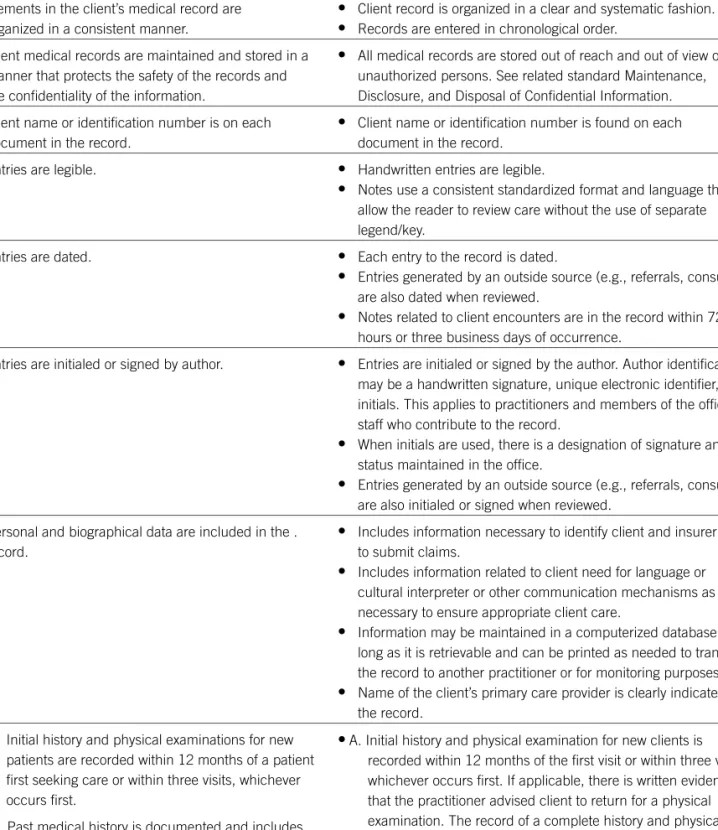
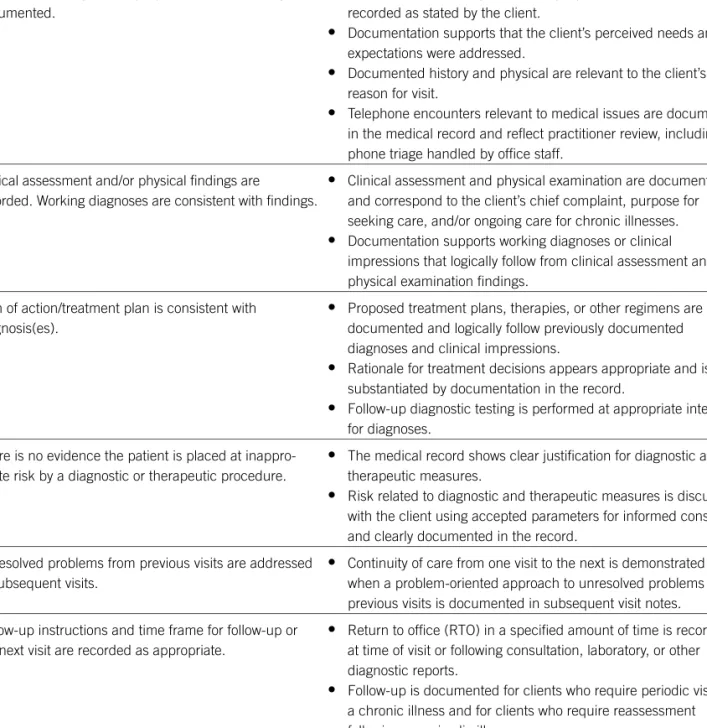
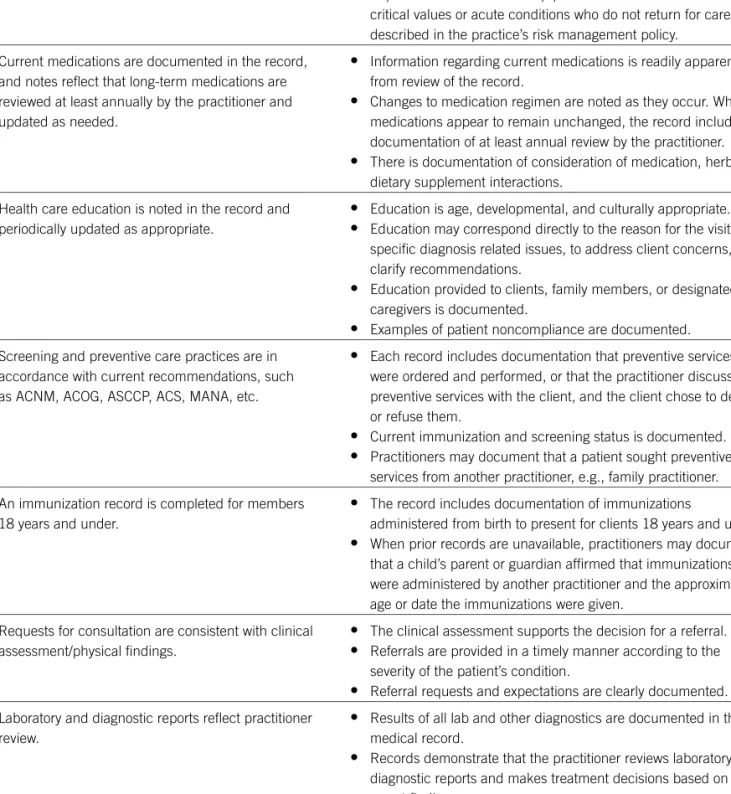
Client record document standards have been developed that allow use of the client’s medical record to foster communication between profes- sionals, verify services provided for billing and reimbursement purposes, and allow scrutiny of care provided for quality and appropriateness. To objectively evaluate medical record content, stan- dardized criteria have been developed that are rel- evant to specific objectives (Johnson, 2001). Each organization that utilizes the medical record has set detailed criteria for evaluation of the content, which is based on their needs.
Documentation as Communication:
Skills and Techniques
Thorough documentation provides midwives and other health care professionals with a clear view of each woman’s individual presentation, concerns, and preferences for care. The client record also serves as a means of following the midwife’s thought processes regarding development of the working diagnosis and ongoing plans for continued client care. Clear, concise documentation is the key
to validating quality care, and it is an integral part of any risk management program.
Each note should provide essential information that could potentially guide another health care professional in the event of a transfer of care, such as might occur following problem-oriented referral, transfer to physician care for a high-risk condition, or simple cross-coverage arrangements between midwives.
In the event of legal action, the client’s medical record should ideally provide a clear picture of the client presentation, concerns, and response to care or treatment. The record should identify the mid- wife’s evaluation process, working diagnoses, antic- ipatory thinking, and planning for diagnosis and treatment. The plan for follow-up care and evalua- tion along with the parameters for initiation of col- laborative practice should be noted when indicated or applicable.
Both ACNM and MANA offer minimum data sets (MDS) that can be used as a tool to evaluate the adequacy of standardized client record forms used in midwifery practice. These minimum data sets have been developed to provide a tool for col- lecting data about the care midwives provide.
Midwives seeking to improve their documentation skills may also use the MDS as a self-evaluation instrument by performing retrospective chart or medical record audits to determine form or docu- mentation weaknesses and areas for improvement.
Thorough and complete documentation can often be brief and to the point. It is rarely necessary to pro- vide lengthy notes. Notes may be handwritten, typed, entered into a computer data collection system, or dictated and transcribed. They may be written on a form that provides a preset format, such as a labor flow sheet, or written on a blank sheet of paper such as a progress note. Notes should reflect pertinent findings and the critical thinking that occurs during the care of each client. All notes should have, at a minimum, the following information:
• Client identification: Name, date of birth, and medical record number where applicable
• Date of service: Date and time are necessary for time-sensitive situations such as labor care or during newborn resuscitation
• Reason for encounter: This is often described in the client’s own words, e.g., “It burns when I pee,” or as a simple statement, such as “Onset of labor.”
• Client history: This includes an expansion of the reason for the encounter, commonly known as the “chief complaint” (CC) and the history of present illness (HPI). The history includes all relevant history and subjective information pro- vided by the client or family, including, as applicable, the review of systems (ROS), past history, family, and social history.
• Objective findings: This may include the results of the physical exam, mental status evaluation, and/or lab work, ultrasound, or other testing as indicated by the history and physical.
• Clinical impression: This is also known as the
“assessment” or “working diagnosis,” and may include several differential diagnoses under consideration pending lab or testing results.
This may be documented as “primary symp- toms,” or “conditions,” with differential diag- noses listed to validate testing and communicate anticipatory thinking.
• Midwifery plan of care: The plan of care may be subdivided into several categories, but essentially, it should outline all diagnostic and therapeutic measures initiated at the visit, along with further actions that are anticipated based on potential results and specific needs of the client.
To be consistent with the conventions followed during clinical assessment and documentation, each guideline in the Clinical Practice Guidelines for Midwifery & Women’s Healthis structured using this standardized system of organization. Expansion of information that could potentially be obtained during client assessment and care is provided below.
Client History:
Components of the History to Consider
The history is obtained through chart review and client or family interview. It is commonly divided into several history types: the comprehensive health history, the interval history, and the problem-ori- ented or event-specific history. The comprehensive health history can be further subdivided into the client’s past medical and surgical history, social his- tory, and family medical history. These subtypes of the history can be again subdivided to allow for focus on specific areas of concern such as the men- strual history, obstetrical history, or genetic history.
The review of systems (ROS) is a review of the major body systems with the client to determine the presence or absence of signs and symptoms of dis- ease.The comprehensive review of systems includes the following categories: constitutional symptoms;
eyes, ears, nose, mouth and throat; skin; respiratory;
cardiac; gastrointestinal; genitourinary; muscu- loskeletal; endocrine; lymphatic/hematologic;
immunologic/allergic; psychiatric; and neurologic systems (American Medical Association [AMA], 2004, p. 3).
Identifying which components of the history to pursue is a skill that can assist the midwife in effi- ciently identifying problems or concerns and devel- oping a working list of differential diagnoses.
Components of the history that are included in the client interview should be documented, including, when applicable, the client’s attitude, affect, or emotional state. The skilled diagnostician is an active listener who can discern which client responses are pertinent and use directed inquiry to elicit further information.
Physical Examination: Components of the Physical Exam to Consider
Every body system has both general and specific elements that may be evaluated during the phys- ical examination. Thorough evaluation of the area(s) of concern is an integral part of client or Documentation as Communication: Skills and Techniques 15
patient evaluation. Components that are included during the physical exam are based on the nature of the presenting problem and the midwife’s scope of practice.
While many midwives primarily care for women during the childbearing year, others provide com- prehensive women’s health care that includes eval- uation and treatment of gynecologic and/or primary care problems and conditions.
Documentation of the physical exam is most frequently organized in a head-to-toe fashion.
Following a consistent format allows for system- atic client evaluation, documentation of results, and review of information. Terms used should be standard medical terms that describe the pres- ence or absence of findings in an objective manner consistent with the anatomic area under evaluation. “Normal” is not an objective finding, as the range of normal varies widely from client to client.
Standard terminology should be used whenever possible to identify areas of note, e.g., right lower quadrant (RLQ), periumbilical, substernal. Left (L) and right (R) should be clearly identified whenever applicable. Instruments and tests used during the physical exam should be identified when necessary to describe the technique used for evalu- ation, for example: “A speculum was inserted in the vagina to expose the cervix” or alternatively,
“Speculum exam demonstrated….”
The language should be clear, descriptive, and indicate clinical findings and any unusual client response to the exam. Notes should reflect critical thinking during the exam, such as “The left breast was noted to have an irregular fixed mass in the upper outer quadrant, into the axillary tail. The mass was approximately 2 x 3 cms, with bluish dis- coloration over the area, which may represent increased vascularity. The mass was firm but not hard; however, it was accompanied by palpable axillary lymph nodes. The clinical picture is highly suspicious for breast cancer in spite of a negative mammogram last week.”
Clinical Impression:
Differential Diagnoses to Consider
The clinical impression may be more familiar as the assessment, or the diagnostic impression. This should be a brief summary of the working diagnoses or description of presenting symptoms. These may be presented in a numbered running list from most to least important.
The clinical impression is also used for coding purposes and, while useful to document the clini- cian’s thinking, “rule-out” is not acceptable for coding purposes, although it may be used as a way of clarifying diagnostic testing recommendations to confirm a specific differential diagnosis under consideration.
The clinical impression should identify what you believe is going on with the client based on the client history, physical examination, and any testing performed on-site. The clinical impression and dif- ferential diagnosis will then direct further evalua- tion and testing, the follow-up plan, and need for consultation or referral. The plan should be consis- tent with the differential diagnoses noted.
Examples of differential diagnoses includes:
1. Preventive health visit, no other symptoms (NOS)
2. Urinary burning, urgency, and frequency 3. Pregnancy, 10 weeks gestation by LMP 4. Breast mass, L
5. Pregnancy, at 12 weeks with RLQ pain.
Rule out:
a. Appendicitis b. Ectopic pregnancy c. Ovarian cyst
Diagnostic Testing: Diagnostic Tests and Procedures to Consider
Diagnostic testing includes any tests or procedures performed to elicit additional information to accu-
rately diagnose a problem, or evaluate an ongoing treatment plan.
Testing should be documented in a brief, straight- forward manner with additional explanations neces- sary only in unusual situations. Testing is often documented as a numbered running list, but should be clear enough that tests ordered can be clearly identified by other health care professionals. One area where this can be confusing is when panelsare ordered, which are often not consistent from facility to facility. For example, PIH labs (pregnancy induced hypertension or pre-eclampsia panel) may include different arrays of tests at different locations.
This becomes especially important when a transfer of care is necessary and test results are pending.
Test results should be clearly documented in an easy to find location, especially when they pertain to ongoing care of a problem. Test results come under the heading of Objective Findingswhen you are writing or dictating a note. Anticipatory thinking regarding potential diagnostic test results should be documented in the record to allow conti- nuity of care should the clinician who requested testing be unavailable to provide continued care.
Providing Treatment:
Therapeutic Measures to Consider
Therapeutic measures include the administration, ordering, or prescription of medications or treat- ments. Documentation of medications should include the medication name, indication for use, dosage, timing, and route of administration. When off-label medication use is prescribed, it should be documented as such, and should include documen- tation of relevant discussions with the client regarding clinician recommendations for off-label medication use and informed consent for such use.
Other treatments, such as physical therapy or respiratory therapy treatments, should be docu- mented as ordered, including the indication for the treatment. For example: “Incentive spirometry TID post-op to prevent pulmonary atelectasis.”
Providing Treatment:
Alternative Measures to Consider
Alternative treatment measures include comple- mentary and alternative therapies such as acupunc- ture, acupressure, homeopathy, herbal remedies, massage, and so forth. When possible, cite sources for suggested measures. Include client instructions and discussion regarding alternative, traditional, and empiric treatments.
Lack of randomized controlled trials may limit use of alternative measures in some practices, while in other practices these time-honored methods of caring for women may be used on a regular and fre- quent basis. Ethical practice requires discussion of known risks and benefits of all therapeutic meas- ures and thorough documentation of the same. For example: “Client inquired about use of castor oil to stimulate labor at 41 1/7 weeks. The FHR was reac- tive today, cervix is soft and 1 cm. We discussed her options: expectant care, herbal or homeopathic remedies to stimulate cervical change, and the parameters for use of cervical ripening medica- tions, or induction of labor. She was advised she may use 2–4 oz of Castor oil PO. (see JNM, Vol.
XX, pp. xx). She was instructed to call with the onset of labor or…”
Providing Support:
Education and Support Measures to Consider
Client education is an integral part of most mid- wifery practices and as such should be clearly doc- umented. Use of standardized client education materials can make documentation simpler and less time consuming. A simple reference to a brochure will suffice in this instance, such as “Client was given the Bleeding in Early Pregnancy handout, with instructions to call if bleeding should persist or worsen.”
A master file should be kept of regularly used client education materials so the midwife may refer back as needed to see what materials were used during a specific time period. Documentation Documentation as Communication: Skills and Techniques 17
should indicate whether education and support measures were provided verbally or in writing.
Written instructions or recommendations allow the client to refer back to them after the visit, and refresh her memory about what happened at the visit. Many practices use duplicate forms to docu- ment client education with a copy of the form retained in the client’s medical record.
Support may also include coordination of care that is recommended, such as scheduling of diag- nostic testing appointments and coordination of referrals. While review of diagnostic test results and clinical planning based on those results comes under the heading of follow-up, client notification of results that includes information about test results, options for care, and a com- passionate listening ear comes under support and education.
Follow-up Care:
Follow-up Measures to Consider
Follow-up includes the actual process of documen- tation of all care that has been provided, including anticipatory thinking and recommendations for future care. This allows other clinicians to have a clear impression of the client visit, care provided, and anticipated potential next steps in ongoing care of this individual.
Instructions for when a client should return for care, or when follow-up care is anticipated, are key elements in the clear documentation of the mid- wifery plan of care. Clients must know what is expected of them in order to comply with recom- mendations for care. Follow-up may include returning for a scheduled visit, such as a prenatal visit, or it may be that the midwife is going to con- tact the client following test results, such as after a mammogram performed on a client with a suspi- cious breast mass.
When there is any deviation from normal or expected findings, a clear plan for follow-up should be documented. In the example above of a woman
with a breast mass, the documentation might include the date that results were received, discus- sion with the client about options for care, plan for referral to a breast specialist, the date and time of the specialist appointment, documentation of the consult including records transferred to the spe- cialist, and a mechanism to follow-up to verify client compliance.
For midwives who provide comprehensive women’s health care, a follow-up file may be neces- sary to track clients and their problems. In this instance, documentation in the client record that the follow-up file has been utilized can help with tracking. A follow-up file may be a calendar, a cross-referenced index card file, or a software pro- gram that automatically generates reminders, iden- tifies no-shows, and provides a comprehensive record of problems and follow-up contacts.
Tracking of clients with unresolved problems is an integral part of any midwifery practice risk man- agement plan.
Collaborative Practice:
Consider Consultation or Referral
Every request for consultation or referral should be clearly documented. Documentation should include the name and specialty of the provider, how the con- tact was made (e.g., phone, letter, or directly by the client), as well as the indication for the consult or referral and the expected type of care. Written con- sultation or referral requests include a brief history of the problem, essential information about the client, the type of service the client is being referred for, and expectations regarding care. A copy of the request is maintained in the client medical record.
Including information about scheduled consult or referral appointments is often helpful when fol- lowing up on problems.
When a consult is obtained the consultant’s opinion must be documented. If the consultant provides this service via telephone, the midwife must document the content of the consultation, the