WHO consolidated guidelines on tuberculosis Module 5: Management of tuberculosis in children and adolescents
WHO consolidated guidelines on tuberculosis
Module 5: Management
of tuberculosis in children
and adolescents
WHO consolidated guidelines on tuberculosis
Module 5: Management
of tuberculosis in children
and adolescents
WHO consolidated guidelines on tuberculosis. Module 5: management of tuberculosis in children and adolescents ISBN 978–92–4-004676–4 (electronic version)
ISBN 978–92–4-004677–1 (print version)
© World Health Organization 2022
Some rights reserved. This work is available under the Creative Commons Attribution-NonCommercial-ShareAlike 3.0 IGO licence (CC BY-NC-SA 3.0 IGO; https://creativecommons.org/licenses/by-nc-sa/3.0/igo).
Under the terms of this licence, you may copy, redistribute and adapt the work for non-commercial purposes, provided the work is appropriately cited, as indicated below. In any use of this work, there should be no suggestion that WHO endorses any specific organization, products or services. The use of the WHO logo is not permitted. If you adapt the work, then you must license your work under the same or equivalent Creative Commons licence. If you create a translation of this work, you should add the following disclaimer along with the suggested citation: “This translation was not created by the World Health Organization (WHO). WHO is not responsible for the content or accuracy of this translation. The original English edition shall be the binding and authentic edition”.
Any mediation relating to disputes arising under the licence shall be conducted in accordance with the mediation rules of the World Intellectual Property Organization (http://www.wipo.int/amc/en/mediation/rules/).
Suggested citation. WHO consolidated guidelines on tuberculosis. Module 5: management of tuberculosis in children and adolescents.
Geneva: World Health Organization; 2022. Licence: CC BY-NC-SA 3.0 IGO.
Cataloguing-in-Publication (CIP) data. CIP data are available at http://apps.who.int/iris.
Sales, rights and licensing. To purchase WHO publications, see http://apps.who.int/bookorders. To submit requests for commercial use and queries on rights and licensing, see https://www.who.int/copyright.
Third-party materials. If you wish to reuse material from this work that is attributed to a third party, such as tables, figures or images, it is your responsibility to determine whether permission is needed for that reuse and to obtain permission from the copyright holder. The risk of claims resulting from infringement of any third-party-owned component in the work rests solely with the user.
General disclaimers. The designations employed and the presentation of the material in this publication do not imply the expression of any opinion whatsoever on the part of WHO concerning the legal status of any country, territory, city or area or of its authorities, or concerning the delimitation of its frontiers or boundaries. Dotted and dashed lines on maps represent approximate border lines for which there may not yet be full agreement.
The mention of specific companies or of certain manufacturers’ products does not imply that they are endorsed or recommended by WHO in preference to others of a similar nature that are not mentioned. Errors and omissions excepted, the names of proprietary products are distinguished by initial capital letters.
All reasonable precautions have been taken by WHO to verify the information contained in this publication. However, the published
Contents
Acknowledgements v
Abbreviations ix
Definitions xi
Executive summary xvii
1. Introduction 1
1.1. Background 1
1.2. Rationale for the development of the 2022 consolidated guidelines 2
1.3. Objectives of the 2022 consolidated guidelines 2
1.4. Target audience 2
1.5. WHO recommendations relevant to the management of TB in children and adolescents 2
1.6. Scope of the guideline update 3
1.7. Publication, dissemination, evaluation and expiry 6
1.8. Document structure 6
2. TB screening and contact investigation 9
3. Prevention of TB 11
4. Diagnostic approaches for TB in children and adolescents 17
4.1. The use of the Xpert MTB/RIF Ultra assay in gastric aspirate and stool specimens for
the diagnosis of pulmonary TB and rifampicin resistance 18
4.2. Treatment decision algorithms for the diagnosis of pulmonary TB in children aged
below 10 years of age 22
iii
4.3. Consolidated recommendations on TB diagnostics and diagnostic approaches relevant
to children and adolescents 26
5. Treatment of TB disease in children and adolescents 31
5.1. Treatment shortening in children and adolescents with non-severe TB 32 5.2. Treatment regimens for TB meningitis in children and adolescents 37 5.3. Treatment of multi-drug and rifampicin resistant TB in children 41 5.4. Consolidated recommendations on TB treatment for children and adolescents 53
6. Models of TB care for case detection and provision of TPT in children and
adolescents 57
6.1. Decentralized and family-centred, integrated models of care to deliver child and
adolescent TB services 58
6.2. Consolidated recommendations on models of TB care relevant to children and
adolescents 63
7. Special situations 65
8. Research priorities 69
9. References 73
Annex 1. WHO recommendations incorporated in the guidelines on the
management of TB in children and adolescents 81
Annex 2. Supplementary table 83
Web annexes:
Web annex 1: Methods and Expert Panels
https://apps.who.int/iris/bitstream/handle/10665/352507/9789240046788-eng.pdf Web annex 2: GRADE Summary of Findings Tables
https://apps.who.int/iris/bitstream/handle/10665/352508/9789240046795-eng.pdf Web annex 3: GRADE Evidence to Decision Tables
https://apps.who.int/iris/bitstream/handle/10665/352509/9789240046801-eng.pdf Web annex 4: Summaries of unpublished data
https://apps.who.int/iris/bitstream/handle/10665/352510/9789240046818-eng.pdf Web annex 5: Overview of consolidated WHO recommendations
https://apps.who.int/iris/bitstream/handle/10665/352512/9789240046825-eng.pdf
Acknowledgements v
Acknowledgements
The production and writing of the WHO consolidated guidelines on tuberculosis. Module 5: management of tuberculosis in children and adolescents, 2022 was coordinated by Sabine Verkuijl, Annemieke Brands, Kerri Viney and Tiziana Masini, under the guidance of Farai Mavhunga, head of the TB Vulnerable Populations, Communities and Comorbidities unit and the overall direction of Tereza Kasaeva, Director of the World Health Organization (WHO) Global Tuberculosis (TB) Programme. Colleagues from the Prevention, Diagnosis, Treatment, Care and Innovation Unit, Global TB Programme, WHO, under the leadership of Matteo Zignol, also contributed to these guidelines. The WHO Global Tuberculosis Programme gratefully acknowledges the contribution of all experts involved in the development of these guidelines.1
Guideline Development Group
The Guideline Development Group (GDG) was composed of Susan Abdel-Rahman (Children’s Mercy Research Institute, United States of America (United States)), Deepak Agrawal (Aarogyam Paediatrics Hospital, India), Shakil Ahmed (Dhaka Medical College, Bangladesh), Elie Akl (American University of Beirut and Center for Systematic Reviews of Health Policy and Systems Research, Lebanon), Valentina Aksenova (Research Institute of Phthisiopulmonology of the First M.I. Sechenov Moscow State Medical University, Russian Federation), Farhana Amanullah (Indus Hospital, Pakistan), Grace Bolie (National TB Programme, Democratic Republic of the Congo), Chishala Chabala (University Teaching Hospital, Zambia), Gunta Dravniece (PATH, Ukraine), Connie Erkens (KNCV Tuberculosis Foundation, Netherlands), Betina Mendez Alcântara Gabardo (Clinical Hospital Federal University of Paraná, Brazil), Stephen Graham (University of Melbourne, Australia), Patrik Hummel (Friederich-Alexander University, Germany), Amir M. Khan (Association for Social Development, Pakistan), Margaret Nasil Kal (National TB Programme, Papua New Guinea), Tamara Kredo (South African Cochrane Centre, South African Medical Research Council, South Africa), Susan Maloney (Centers for Disease Control and Prevention, United States), Anna Mandalakas (Baylor College of Medicine; Texas Children’s Hospital, United States), Sushant Mane (Grant Government Medical College and Sir J.J. Group of Hospitals, India), Lindsay McKenna (Treatment Action Group, United States), Imran Pambudi (National TB Programme, Indonesia), Phan Huu Phuc (National Paediatric Hospital, Vietnam), Moorine Sekadde (National TB and Leprosy Programme, Uganda), Kathryn Snow (University of Melbourne, Australia) and Sabira Tahseen (National TB Reference Laboratory, Pakistan).
Elie Akl, Farhana Amanullah, Stephen Graham and Tamara Kredo co-chaired the GDG meeting.
External Review Group
The external reviewers for these guidelines were Martina Casenghi (Elizabeth Glaser Pediatric AIDS Foundation, Switzerland), Anthony Enimil (Komfo Anokye Teaching Hospital, Ghana), Malgorzata Grzemska (former WHO staff member, Poland), Catherine Hewison (Médecins Sans Frontières, France), Devan Jaganath (University of California San Francisco, United States), Kobto Ghislain Koura (The International Union Against TB and Lung Disease, France), Celia Martínez de Cuellar (Hospital de Clínicas, Universidad Nacional de Asunción, Paraguay), Ya Diul Mukadi (United States Agency for
1 For more information about the areas of expertise, the gender and geographical distribution of participants as well as declarations of interests and the management of potential conflicts for members of the GDG and External Review Group, see Web annex 1.
International Development (USAID), United States), Rahab Mwaniki (Kenya Aids NGOs Consortium (KANCO), Kenya), Marc Nicol (University of Western Australia, Australia), Elizabeth Maleche Obimbo (University of Nairobi, Kenya), Peter Owiti (Wote Youth Development Project, Kenya), Nyan Win Phyo (Civil Society Taskforce; World Vision, Thailand), Ramatoulaye Sall (Independent Consultant, Senegal), Rina Triasih (Universitas Gadyah Mada, Indonesia) and Eric Wobudeya (Mulago National Referral Hospital, Uganda; Makerere University – Johns Hopkins University (MU-JHU) Research Collaboration, Uganda).
Evidence reviewers
The following persons contributed to the reviews and summarized evidence for the guidelines using the Population, Intervention, Comparator and Outcomes (PICO) framework (see section 1.3 for more information about the PICO questions).
PICO question 1 (TB screening in children): Bryan Vonasek (Baylor College of Medicine, United States; University of Wisconsin, United States); Tara Ness, Alexander W Kay, Anna Mandalakas (Baylor College of Medicine, United States); Yemisi Takwoingi (University of Birmingham, United Kingdom of Great Britain and Northern Ireland (United Kingdom)); Susan S van Wyk (Stellenbosch University, South Africa); Laura Ouellette (Texas Medical Center Library, United States); Ben J Marais (Marie Bashir Institute for Infectious Diseases; University of Sydney, Australia); Karen R Steingart (Liverpool School of Tropical Medicine, United Kingdom).
PICO question 2a (Integrated treatment decision algorithms to diagnose pulmonary TB): Ted Cohen and Kenneth S Gunasekera (Yale School of Public Health, United States); James A Seddon (Imperial College London, United Kingdom; Stellenbosch University, South Africa).
PICO question 2b (Use of Xpert Ultra in gastric aspirate or stool to diagnose pulmonary TB and rifampicin resistance): Alexander W Kay and Tara Ness (Baylor College of Medicine, United States);
Yemisi Takwoingi (University of Birmingham, United Kingdom), Karen R Steingart (Liverpool School of Tropical Medicine, United Kingdom).
PICO question 3 (Treatment shortening in children and adolescents with non-severe drug-susceptible TB): Anna Turkova, Genevieve H Wills, Louise Choo, Krissy LeBeau, Margaret J Thomason, Angela M Crook, Diana M Gibb (University College London, United Kingdom); Chishala Chabala (University Teaching Hospital, Zambia), Helen McIlleron (University of Cape Town, South Africa), Paul Revill, James Love-Koh (University of York, United Kingdom), Graeme Hoddinott (Stellenbosch University, South Africa), Hayley Jones (University of Bristol, United Kingdom).
PICO question 4a and 4b (Use of bedaquiline and delamanid in children with MDR/RR-TB, aged below 6 years (bedaquiline) and below 3 years (delamanid)): Pharmacokinetic (PK) and safety analysis:
Susan M. Abdel-Rahman (Children’s Mercy Research Institute, United States); Paediatric drug-resistant (DR)-TB individual patient dataset (IPD): Anthony Garcia-Prats (Stellenbosch University, South Africa;
University of Wisconsin, United States); Vivian Cox, Rory Dunbar, Tina Sachs, Jessica Workman, Rose Brown, Anneke C. Hesseling (Stellenbosch University, South Africa); Maria Garcia-Cremades, Kendra Radtke, Alexander Floren, Rada Savic (University of California San Francisco, United States), Tamara Kredo, Funeka Bango (South African Medical Research Council, South Africa).
PICO question 5 (Treatment of TB meningitis in children and adolescents): Giorgia Sulis (McGill University, Canada), Gamuchirai Tavaziva, Andrea Benedetti and Faiz Ahmad Khan (McGill University, Canada), Geneviève Gore (McGill University, Canada), Regan Solomons and Ronald van Toorn (Stellenbosch University, South Africa), Stephanie Thee (Charité-Universitätsmedizin Berlin, Germany), Jeremy Day (University of Oxford, United Kingdom), Silvia S Chiang (Alpert Medical School of Brown
Acknowledgements vii
and Development (IRD) Global, Singapore), Daria Szkwarko (Brown University, United States), Courtney Yuen (Harvard Medical School, United States).
Background question 1 (Socioeconomic impact of TB on affected families): Salla Atkins (Karolinska Institutet, Sweden; Tampere University, Finland), Kristi Sidney-Annerstedt and Knut Lönnroth (Karolinska Institutet, Sweden), Lauri Heimo, Maria Ribas Closa (Tampere University, Finland), Lieve Vanleeuw (South African Medical Research Council, South Africa), Peter Wambi (Uganda Tuberculosis Implementation Research Consortium, Uganda), Louisa Chenciner (Royal Free London NHS Foundation Trust, United Kingdom), Uzochukwu Egere (Liverpool School of Tropical Medicine, United Kingdom), Daniel J Carter and Delia Boccia (London School of Hygiene and Tropical Medicine, United Kingdom), Tom Wingfield (Liverpool School of Tropical Medicine, United Kingdom; Liverpool University Hospital NHS Foundation Trust, United Kingdom; Karolinska Institutet, Sweden). (Patient cost surveys): Nobuyuki Nishikiori (WHO, Switzerland).
Background question 2 (Engaging adolescents with TB, or at risk of TB, in their care): Silvia S.
Chiang (Alpert Medical School of Brown University, United States; Rhode Island Hospital, United States), Patricia Moscibrodzki (London School of Hygiene and Tropical Medicine, United Kingdom), Leslie A Enane (Indiana University School of Medicine, United States). Contributors: Margaux Amara, Meredith B Brooks, Virginia Byron, Jennifer Furin (Harvard Medical School, United States), Sarah Bernays (University of Sydney, Australia; London School of Hygiene and Tropical Medicine, United Kingdom), Yaroslava Bondarenko (Bogomolets National Medical University, Ukraine), Márcia Cortez Bellotti de Oliveria (Universidade Federal do Rio de Janeiro, Brazil), Andrea T. Cruz (Baylor College of Medicine, United States), Hernán Del Castillo Barrientos (Instituto Nacional de Salud del Niño-Breña, Peru), Anthony Enimil (Kwame Nkrumah University of Science and Technology, Ghana; Komfo Anokye Teaching Hospital, Ghana), Vivian Faith (Network of TB Champions in Kenya, Kenya), Gabriella Ferlazzo (Médecins Sans Frontières, South Africa), Rashida Abbas Ferrand (Rhode Island Hospital, United States;
Biomedical Research and Training Institute, Zimbabwe), Graeme Hoddinott (Stellenbosch University, South Africa), Petros Isaakidis (Médecins Sans Frontières, South Africa), Evgenia Karayeva (Brown School of Public Health, United States), Katharina Kranzer (Rhode Island Hospital, United States;
Biomedical Research and Training Institute, Zimbabwe), Homa Mansoor (Médecins Sans Frontières, India), Ben J Marais (Marie Bashir Institute for Infectious Diseases; University of Sydney, Australia), Lily Meyersohn (Rhode Island Hospital, United States), Victoria Oliva Rapoport (Alpert Medical School of Brown University, United States), Erika Mohr-Holland (Médecins Sans Frontières, South Africa), Anh Phuong Nguyen (TB Patients Community of Vietnam, Hanoi, Vietnam), Joshua Ochieng Oliyo (Committee of African Youth Advisors, Kenya), Clemax Couto Sant’Anna (Universidade Federal do Rio de Janeiro, Brazil), Saning’o Saruni (Haydom Lutheran Hospital, Tanzania), Susan M Sawyer (Royal Children’s Hospital and Murdoch Children’s Research Institute, Australia; University of Melbourne, Australia), H. Simon Schaaf (Stellenbosch University, South Africa), James A Seddon (Imperial College London, United Kingdom; Stellenbosch University, South Africa), Sangeeta Sharma (National Institute of Tuberculosis and Respiratory Diseases, India), Alena Skrahina (The Republican Research and Practica Centre for Pulmonology and TB, Belarus), Jeffrey R Starke (Baylor College of Medicine, United States), Tania A Thomas (University of Virginia, United States), Rina Triasih (Universitas Gadjah Mada and Dr Sardjito Hospital, Indonesia), Bazarragchaa Tsogt (Mongolian Tuberculosis Coalition, Mongolia), Henry Welch (Baylor College of Medicine, United States; The University of Papua New Guinea, Papua New Guinea), Olga Zvonareva (Maastricht University, the Netherlands).
Evidence reviewers for contextual factors: Olivier Marcy (Université de Bordeaux, France); Maryline Bonnet and Manon Lounnas (Institut de Recherche pour le Développement, France), Eric Wobudeya (Mulago National Referral Hospital, Uganda; Makerere University – Johns Hopkins University (MU-JHU) Research Collaboration, Uganda); Pamela Nabeta (FIND, Switzerland), Claudia M Denkinger and Mary Gaeddert (University of Heidelberg, Germany); Sushant Mukherjee, Mario JP Songane, Jean- François Lemaire and Martina Casenghi (Elizabeth Glaser Pediatric AIDS Foundation, Switzerland);
Nyashadzaishe Mafirakureva and Peter J Dodd (University of Sheffield, United Kingdom); Nancy Medley and Melissa Taylor (Liverpool School of Tropical Medicine, United Kingdom), Susanna S van Wyk
(Stellenbosch University, South Africa), Sandy Oliver (University College London, United Kingdom; and University of Johannesburg, South Africa), Joanna Orne-Gliemann (Université de Bordeaux, France).
WHO Steering Group
The WHO guidelines Steering Group comprised Annabel Baddeley, Lice Gonzalez Angulo, Ernesto Jaramillo, Avinash Kanchar, Charalambos Sismanidis (WHO Global Tuberculosis Programme); Martina Penazzato (WHO Global HIV, Hepatitis and Sexually Transmitted Infections Programme); Bernadette Cappello, Lorenzo Moja (WHO Department of Health Products, Policy and Standards); Marie Valentin (WHO Department of Regulation and Prequalification); Corinne Simone Collette Merle (WHO Special Programme for Research and Training in Tropical Diseases); Valentina Baltag, Wilson Milton Were (WHO Department of Maternal, Newborn, Child & Adolescent Health & Ageing); Lina Mahy (WHO Department of Nutrition and Food Safety); Chiara Servili (WHO Department of Mental Health and Substance Use); Sarah Rylance (WHO Department of Non Communicable Diseases Management);
Ogtay Gozalov (WHO Regional Office for Europe); Mukta Sharma (WHO Regional Office for South- East Asia); Kyung Hyun Oh (WHO Regional Office for the Western Pacific Region); Pedro Avedillo (Pan American Health Organization); Kenza Bennani, Martin van den Boom (WHO Regional Office for the Eastern Mediterranean Region); André Ndongosieme (WHO Regional Office for Africa).
Other contributors
Pete Dodd (Sheffield University, United Kingdom), Anneke Hesseling (Stellenbosch University, South Africa), Oliver Marcy (University of Bordeaux, France), Nicole Salazar-Austin (Johns Hopkins University, United States), James Seddon (Imperial College London, England) served as technical resource persons during the GDG meeting.
The following persons participated as observers during the GDG meeting: Draurio Barreira Cravo Neto (Unitaid, Switzerland), Charlotte Colvin (USAID, United States), Anne Detjen (UNICEF, United States), Thomas Gradel (Unitaid, Switzerland), Brian Kaiser (Stop TB Partnership Global Drug Facility, Switzerland), Michael McCaul (Stellenbosch University, South Africa), Lawrence Mbuagbaw (St Joseph’s Healthcare, Canada), Celeste Naude (Stellenbosch University, South Africa), Oxana Rucsineanu (TB Community Advisory Board), Anna Scardigli (Global Fund to Fight AIDS, Tuberculosis and Malaria, Switzerland), Cherise Scott (Unitaid).
The Global Tuberculosis Programme also thanks the WHO Guidelines Review Committee for their review and approval of the guidelines.
Funder
This update was funded by grants provided to WHO by Unitaid and the United States Agency for International Development.
Abbreviations ix
Abbreviations
AIDS acquired immunodeficiency syndrome
ANC antenatal care
ART antiretroviral treatment BCG bacille Calmette-Guérin
C(A)LHIV children (and adolescents) living with HIV infection
CHW community health worker
CXR chest X-ray or chest radiography DR-TB drug-resistant tuberculosis DS-TB drug-susceptible tuberculosis DST drug susceptibility testing
DTG dolutegravir
E ethambutol
EPTB extrapulmonary TB
Eto ethionamide
FDC fixed-dose combination (medicines) GDF Stop TB Partnership Global Drug Facility
GDG Guideline Development Group
GRADE Grading of Recommendations Assessment, Development and Evaluation GUV germicidal ultraviolet
H isoniazid
HEPA high-efficiency particulate air
HIV human immunodeficiency virus
KSP Knowledge Sharing Platform
iCCM integrated community case management IGRA interferon-gamma release assay
IMCI integrated management of childhood illness IPD individual patient data (or dataset)
IPT isoniazid preventive therapy
LAMP loop-mediated isothermal amplification LF-LAM lateral flow lipoarabinomannan assay
LPA line-probe assay
M moxifloxacin
MDR-TB multidrug-resistant tuberculosis NAATs nucleic acid amplification tests
NPA nasopharyngeal aspirate
NRTIs nucleoside reverse transcriptase inhibitors NTLP National TB and Leprosy Control Programme NTP National Tuberculosis Programme
OSF optimized sucrose flotation
PHC primary health care
PICO Population, Intervention, Comparator and Outcomes
PK pharmacokinetic(s)
PTB pulmonary tuberculosis
R rifampicin
RAL raltegravir
RR-TB rifampicin-resistant tuberculosis
SAGE Strategic Advisory Group of Experts on Immunisation SAM severe acute malnutrition
SDGs Sustainable Development Goals SL-LPA second-line line-probe assay
SOS simple one step (stool processing method) SPK stool processing kit
TB tuberculosis
TBM tuberculous meningitis
TPT TB preventive treatment TST tuberculin skin test
UNGA United Nations General Assembly
US FDA United States Food and Drug Administration WHO World Health Organization
XDR-TB extensively drug-resistant tuberculosis
Z pyrazinamide
Definitions xi
Definitions
Unless otherwise specified, the terms defined here apply as used in this document. They may have different meanings in other contexts.
Active (tuberculosis) case-finding: Provider-initiated screening and testing in communities by mobile teams, often using mobile X-ray and rapid molecular tests. The term is sometimes used synonymously with “systematic screening”.
Adherence: Extent to which a person’s behaviour (e.g. taking medicines, following a particular diet, changing lifestyle) corresponds with agreed recommendations from a health care provider.
Advanced HIV disease: For adolescents and children aged 5 years and over, this is defined as a CD4 cell count below 200 cells/mm3 or a WHO clinical stage 3 or 4 event at presentation for care.
All children aged under 5 years living with HIV should be considered as having advanced disease at presentation.
Adverse event: Any untoward medical occurrence that may present in a person with TB during treatment with a pharmaceutical product but that does not necessarily have a causal relationship with the treatment.
Age groups: Unless stated otherwise in the text, the following definitions apply to the terms used in this document:
• Infant: aged under 1 year (12 months).
• Child: aged under 10 years.
– Young child: aged under 5 years.
• Adolescent: aged 10–19 years (inclusive).
– Young adolescent: aged 10–14 years.
– Older adolescent: aged 15–19 years.
• Adult: aged 20 years or over.
Background HIV and tuberculosis drug resistance prevalence: Settings with high HIV prevalence are defined as those in which the HIV prevalence is 1% or higher among adult pregnant women, or 5% or higher among people with TB. WHO does not intend to establish thresholds for low, moderate or high levels of prevalence of isoniazid resistance. National TB programmes will establish definitions for their own countries.
Bacteriologically confirmed tuberculosis: TB diagnosed in a biological specimen by a WHO- approved rapid test such as Xpert® MTB/RIF or LF-LAM, smear microscopy or culture.
Contact: Any person exposed to a person with TB.
Contact investigation: Systematic identification of people, including children and adolescents, with previously undiagnosed TB disease and TB infection among the contacts of an index TB patient in the household and in comparable settings in which transmission occurs. It consists of identification, clinical evaluation and/or testing and provision of appropriate TB treatment (for people with confirmed TB) or TB preventive treatment (for people without TB disease).
Decentralization: Depending on the standard in the research settings used for the comparator, this includes provision of, access to or capacity for child and adolescent TB services at a lower level of
the health system than the lowest level where this is currently routinely provided. In most settings, decentralization applies to the district hospital (first referral level hospital) level and/or primary health care level and/or community level. Interventions for decentralization include capacity-building of various cadres of health care workers, expanding access to diagnostic services, ensuring availability of TB medicines for children and adolescents, and follow-up of children and adolescents with TB or on TB preventive treatment.
Differentiated HIV service delivery model: Person-centred approach to simplify provision of HIV services across the cascade in ways that better serve the needs of people living with HIV and reduce unnecessary burdens on the health system.
Drug susceptibility testing (DST): In vitro testing using either molecular genotypic techniques to detect resistance-conferring mutations, or phenotypic methods to determine susceptibility to a medicine.2
Extensive (or advanced) pulmonary tuberculosis disease: Presence of bilateral cavitary disease or extensive parenchymal damage on chest radiography (CXR). In children aged under 15 years, advanced disease is usually defined by the presence of cavities or bilateral disease on CXR.
Extensively drug-resistant tuberculosis (XDR-TB):3
• Pre-XDR-TB: TB caused by Mycobacterium tuberculosis strains that fulfil the definition of multidrug- resistant TB (MDR-TB) or rifampicin-resistant TB (RR-TB) and that are also resistant to any fluoroquinolone.4
• XDR-TB: TB caused by M. tuberculosis strains that fulfil the definition of MDR/RR-TB and that are also resistant to any fluoroquinolone and at least one additional Group A medicine.5
Extrapulmonary tuberculosis (EPTB) (classification): Any bacteriologically confirmed or clinically diagnosed case of TB involving organs other than the lungs (e.g. pleura, peripheral lymph nodes, abdomen, genitourinary tract, skin, joints and bones, meninges).6
Family-centred, integrated care: Family-centred models of care refer to interventions selected on the basis of the needs, values and preferences of the child or adolescent and their family or caregiver. This can include health education, communication, material or psychological support. Integrated services refer to approaches to strengthen collaboration, coordination, integration and harmonization of child and adolescent TB services with other child health-related programmes and services. This can include integration of models of care for TB screening, prevention, diagnosis and treatment with other existing service delivery platforms for maternal and child health (e.g. antenatal care, integrated community case management, integrated management of childhood illnesses) and other related services (e.g.
HIV, nutrition, immunization). Other examples include evaluation of children and adolescents with common comorbidities (e.g. meningitis, malnutrition, pneumonia, chronic lung disease, diabetes, HIV) for TB and community health strategies integrating child and adolescent TB awareness, education, screening, prevention and case-finding into training and service delivery activities.
2 Implementing tuberculosis diagnostics: a policy framework. Geneva: World Health Organization; 2015 (https://apps.who.int/iris/
handle/10665/162712, accessed 11 March 2022).
3 Meeting report of the WHO expert consultation on the definition of extensively drug-resistant tuberculosis, 27–29 October 2020.
Geneva: World Health Organization; 2021 (https://www.who.int/publications/i/item/meeting-report-of-the-who-expert-consultation- on-the-definition-of-extensively-drug-resistant-tuberculosis, accessed 11 March 2022).
4 The fluoroquinolones include levofloxacin and moxifloxacin as currently recommended by WHO for inclusion in shorter and longer regimens.
Definitions xiii
Grading of Recommendations Assessment, Development and Evaluation (GRADE): System for rating quality of evidence and strength of recommendations. This approach is explicit, comprehensive, transparent and pragmatic.7
High tuberculosis transmission setting: Setting with a high frequency of people with undetected or undiagnosed TB disease, or where people with infectious TB are present and there is a high risk of TB transmission. People with TB are most infectious when they are untreated or inadequately treated. Spread is increased by aerosol-generating procedures and by the presence of highly susceptible people.
Household contact: Person who shared the same enclosed living space as the index case for one or more nights or for frequent or extended daytime periods during the 3 months before the start of current treatment.
Index case (index patient) of tuberculosis: Initially identified person of any age with new or recurrent TB in a specific household or other comparable setting in which others may have been exposed. An index case is the person on which a contact investigation is centred but is not necessarily the source case.
Inpatient health care setting: Health care facility where people are admitted and assigned a bed while undergoing diagnosis and receiving treatment and care, for at least one overnight stay.
Integrated treatment decision algorithm: Flowchart allocating evidence-based scores to microbiological, clinical and radiological features that allow clinicians to make decisions regarding starting TB treatment in children.
Interferon-gamma release assay (IGRA): Blood test used to test for Mycobacterium tuberculosis infection by measuring the body’s immune response to TB bacteria.
Multidrug-resistant tuberculosis (MDR-TB): TB caused by Mycobacterium tuberculosis strains that are resistant to at least both rifampicin and isoniazid.
New case: Newly registered episode of TB in a person who has never been treated for TB or has taken TB medicines for less than 1 month.
Non-severe pulmonary tuberculosis for the purpose of determining treatment duration for drug-susceptible tuberculosis: Intrathoracic lymph node TB without airway obstruction;
uncomplicated TB pleural effusion or paucibacillary, non-cavitary disease confined to one lobe of the lungs and without a miliary pattern.
Number needed to screen: Number of people who need to undergo screening in order to diagnose one person with TB disease.
Operational research or implementation research: In the context of this document, applied research that aims to develop the critical evidence base that informs the effective, sustained and embedded adoption of interventions within a health system to improve health or patient outcomes.
Such research deals with the knowledge gap between efficacy, effectiveness and current practice to produce the greatest gains in disease control.8 Operational research also provides decision-makers with information to enable them to improve the performance of their health programmes.9
7 GRADE is a transparent framework for developing and presenting summaries of evidence. It provides a systematic approach for making clinical and public health practice recommendations. Guyatt GH, Oxman AD, Vist GE, et al. GRADE: an emerging consensus on rating quality of evidence and strength of recommendations. BMJ. 2008;336:924.
8 Guide to operational research in programs supported by the Global Fund. Geneva: Global Fund to Fight AIDS, Tuberculosis and Malaria;
2007 (https://www.who.int/hiv/pub/operational/or_guide_gf.pdf, accessed 11 March 2022).
9 Expanding capacity for operations research in reproductive health: summary report of a consultative meeting. Geneva: World Health Organization; 2003 (https://apps.who.int/iris/bitstream/handle/10665/67936/WHO_RHR_02.18.pdf?sequence=1&isAllowed=y, accessed 11 March 2022).
Outpatient health care setting: Health care facility where people are undergoing diagnosis and receiving treatment and care but are not admitted for overnight stays (e.g. ambulatory clinic, dispensary).
Passive case-finding: Patient-initiated pathway to TB diagnosis involving a person with TB disease who experiences symptoms that they recognize as serious; the person having access to and seeking care, and presenting spontaneously at an appropriate health facility; a health worker correctly assessing that the person fulfils the criteria for presumptive TB; and successful use of a diagnostic algorithm with sufficient sensitivity and specificity to diagnose TB.
People who use drugs: People who engage in the harmful or hazardous use of psychoactive substances that could impact negatively on their health, social life, resources or legal situation.
Presumptive tuberculosis: Person who presents with symptoms or signs suggestive of TB.
Previously treated: People who have previously received 1 month or more of TB medicines. Previously treated people may have been treated with a first-line regimen for drug-susceptible TB or a second- line regimen for drug-resistant forms.
Programmatic management of tuberculosis preventive treatment: All coordinated activities by public and private health caregivers and the community aimed at scaling up TB preventive treatment to people who need it.
Pulmonary tuberculosis (PTB) (classification): Any bacteriologically confirmed or clinically diagnosed case of TB involving the lung parenchyma or the tracheobronchial tree, including tuberculous intrathoracic lymphadenopathy (mediastinal and/or hilar), without radiographic abnormalities in the lungs.10 Miliary TB is classified as PTB because there are lesions in the lungs. A person with both PTB and extrapulmonary TB should be classified as having PTB.
Rifampicin-resistant tuberculosis (RR-TB): TB caused by Mycobacterium tuberculosis strains resistant to rifampicin. These strains may be susceptible or resistant to isoniazid (i.e. MDR-TB) or resistant to other first-line or second-line TB medicines. In these guidelines and elsewhere, MDR-TB and RR-TB cases are often grouped together as MDR/RR-TB and are eligible for treatment with an MDR-TB regimen.
Rifampicin-susceptible, isoniazid-resistant tuberculosis: TB caused by Mycobacterium tuberculosis strains resistant to isoniazid and susceptible to rifampicin.
Serious adverse event: Adverse event that can lead to death or a life-threatening experience, to hospitalization or prolongation of hospitalization, to persistent or significant disability, or to a congenital anomaly. Serious adverse events that do not immediately result in one of these outcomes but that require an intervention to prevent such an outcome from happening are included. Serious adverse events may require a drastic intervention, such as termination of the medicine suspected of having caused the event.
Severe acute malnutrition: Presence of oedema of both feet or severe wasting (weight-for-height/
length less than −3 standard deviations/Z-scores or mid-upper arm circumference less than 115 mm).11 Severe extrapulmonary tuberculosis: Presence of miliary (disseminated) TB or TB meningitis.
In children and young adolescents aged under 15 years, extrapulmonary forms of disease other than lymphadenopathy (peripheral nodes or isolated mediastinal mass without compression) are considered to be severe.
Definitions xv
Severe pneumonia: Cough or difficulty in breathing plus at least one of the following:
• central cyanosis or oxygen saturation <90% on pulse oximetry;
• severe respiratory distress (e.g. grunting, nasal flaring, very severe chest indrawing);
• signs of pneumonia with a general danger sign (inability to breastfeed or drink, persistent vomiting, lethargy or unconscious, convulsions, stridor in a calm child, severe malnutrition).8
Source case: Person with TB disease who infected others in a new setting. This could be the index patient or another person who was not identified.
Systematic screening for tuberculosis disease: Systematic identification of people at risk for TB disease in a predetermined target group by assessing symptoms and using tests, examinations or other procedures that can be applied rapidly. For those who screen positive, the diagnosis needs to be established by one or several diagnostic tests and additional clinical assessments. This term is sometimes used interchangeably with “active tuberculosis case-finding”. It should be distinguished from testing for TB infection (with a TB skin test or interferon-gamma release assay).
Treatment outcomes and relapse: Categories for treatment outcomes used in this document and the term “relapse” were applied according to the definitions agreed for use by TB programmes, unless otherwise specified.12,13
Tuberculin skin test (TST): Intradermal injection of a combination of mycobacterial antigens that elicit an immune response (delayed-type hypersensitivity), represented by induration, which can be measured in millimetres. TST is used to diagnose TB infection.
Tuberculosis (TB): Disease state due to Mycobacterium tuberculosis. In this document, it is commonly referred to as “TB disease” to distinguish it from “TB infection”.
Tuberculosis infection: State of persistent immune response to stimulation by Mycobacterium tuberculosis antigens with no evidence of clinically manifest TB disease. This is referred to as “TB infection” as distinct from “TB disease”. There is no gold standard test for direct identification of M.
tuberculosis infection in humans. Most infected people have no signs or symptoms of TB but are at risk for TB disease. The term “latent TB infection” has been replaced by the term “TB infection”.
Tuberculosis preventive treatment (TPT): Treatment offered to people considered at risk of TB disease to reduce that risk. Also referred to as “treatment of TB infection” or “TB preventive therapy”.
Underweight: Among adolescents, this usually refers to a body mass index below 18.5. Among children aged under 10 years, it usually refers to a weight-for-age Z-score below −2 standard deviations.
12 Definitions and reporting framework for tuberculosis – 2013 revision. Geneva: World Health Organization; 2013 (WHO/ HTM/TB/2013.2;
http://apps.who.int/iris/bitstream/10665/79199/1/9789241505345_eng.pdf, accessed 11 March 2022).
13 Meeting report of the WHO expert consultation on drug-resistant tuberculosis treatment outcome definitions, 17–19 November 2020.
Geneva: World Health Organization; 2021 (https://apps.who.int/iris/rest/bitstreams/1336957/retrieve, accessed 11 March 2022).
Executive summary xvii
Executive summary
Introduction
Children and young adolescents (aged below 15 years) represent about 11% of all people with tuberculosis (TB) globally. This means that 1.1 million children become ill with TB every year, almost half of them below five years of age. National TB programmes (NTPs) only notify less than half of these children, meaning that there is a large case detection gap (1). The reasons for this gap include challenges with specimen collection and bacteriological confirmation of TB in young children, due to the paucibacillary nature of TB disease in this age group and the lack of highly sensitive point-of- care tests. In 2020, the COVID-19 pandemic had an additional negative impact on TB notifications in children. In addition to the case detection gap, only one third of child contacts below five years of age eligible for TB preventive treatment (TPT) received it in 2020. Young children are at higher risk of developing TB disease, including severe forms of TB, after TB infection, and the majority do so within a few months following exposure and infection (2, 3). In addition to children and young adolescents, over half a million older adolescents (aged 15–19 years) are estimated to develop TB every year (4).
The United Nations Sustainable Development Goal (SDGs) (5) and the World Health Organization (WHO) End TB Strategy (6) include targets to reduce TB incidence by 80% and TB deaths by 90% to be achieved by the year 2030, relative to baseline levels in 2015. In addition, to accelerate progress towards these global targets, the Resolution adopted by the United Nations General Assembly at the High-Level Meeting on the fight against tuberculosis in September 2018 commits to diagnosing and treating 40 million people with TB (including 3.5 million children), and 1.5 million people with drug- resistant TB (DR-TB) (including 115 000 children) by 2022. It also commits to providing at least 30 million people (including 4 million child contacts under five years of age), 20 million other household contacts (including children aged five years and above) and 6 million people living with HIV (including children) with TPT by 2022 (7).
Rationale
To support countries in preventing and managing TB in children and adolescents, WHO’s Global Tuberculosis Programme published the WHO Guidance for national tuberculosis programmes on the management of tuberculosis in children (second edition) in 2014 (8). Since the publication of the second edition, new evidence related to diagnostic approaches for TB, treatment for drug-susceptible TB, DR-TB and TB meningitis, as well as models of care relevant to children and adolescents has become available. The WHO consolidated guidelines on tuberculosis. Module 5: management of tuberculosis in children and adolescents (2022) is a consolidated guideline of new and existing recommendations (see annex 1), and replaces the 2014 guidance. It complements existing WHO guidelines on the management of TB, recognizing the unique characteristics and needs of these groups, as well as those of their parents, caregivers and families. The guidelines are complemented by the WHO operational handbook on tuberculosis. Module 5: Management of tuberculosis in children and adolescents, which provides guidance on how to implement the recommendations in the guidelines.
Objectives
The objectives of the 2022 consolidated guidelines are: to provide policy-makers and implementing partners with evidence-based recommendations on the cascade of care for children and adolescents;
to support the implementation of activities to prevent TB among children and adolescents at risk;
to improve TB case detection and treatment outcomes in children and adolescents with TB using effective models of care; and to contribute to reductions in TB related morbidity and mortality in children and adolescents in line with global targets including those in the SDGs (5), the WHO End TB Strategy (6) and the Political declaration of the UN General Assembly High-Level Meeting on the fight against tuberculosis (7).
Target audience
The target audience for these consolidated guidelines consists primarily of NTPs, primary health care (PHC) programmes, maternal and child health programmes, national AIDS programmes (or their equivalents in health ministries) and other health policy-makers. They also target generalist and specialist paediatricians, clinicians and health practitioners working on TB, HIV and/or infectious diseases in public and private sectors, the educational sector, nongovernmental, civil society and community-based organizations, as well as technical and implementing partners.
Recommendations on the management of TB in children and adolescents
A WHO convened Guideline Development Group (GDG) meeting held in 2021 led to eight new recommendations on the management of TB in children and adolescents (Table 1). A summary of the recommendations consolidated in this guideline are listed in Table 2 below.
A summary of all new and consolidated recommendations can be found in web annex 5.
Table 1: New recommendations in the WHO consolidated guidelines on tuberculosis.
Module 5: management of tuberculosis in children and adolescents, 2022
Diagnostic approaches
1 In children with signs and symptoms of pulmonary TB, Xpert Ultra should be used as the initial diagnostic test for TB and detection of rifampicin resistance on sputum, nasopharyngeal aspirate, gastric aspirate or stool, rather than smear microscopy/culture and phenotypic drug susceptibility testing (DST).
(UPDATED: strong recommendation, moderate certainty of evidence for test accuracy in stool and gastric aspirate; low certainty of evidence for test accuracy in sputum; very low certainty of evidence for test accuracy in nasopharyngeal aspirate)
2 In children with presumptive pulmonary TB attending health care facilities, integrated treatment decision algorithms may be used to diagnose pulmonary TB.
(NEW: interim, conditional recommendation, very low certainty of evidence) Treatment regimens
3 In children and adolescents between 3 months and 16 years of age with non-severe TB (without suspicion or evidence of multidrug- or rifampicin-resistant TB (MDR/RR-TB), a
Executive summary xix
4 In children with MDR/RR-TB aged below 6 years, an all-oral treatment regimen containing bedaquiline may be used.
(NEW: conditional recommendation, very low certainty of evidence)14
5 In children with MDR/RR-TB aged below 3 years delamanid may be used as part of longer regimens.
(NEW: conditional recommendation, very low certainty of evidence)15
6 In children and adolescents with bacteriologically confirmed or clinically diagnosed TB meningitis (without suspicion or evidence of MDR/RR-TB), a 6-month intensive regimen (6HRZEto) may be used as an alternative option to the 12-month regimen (2HRZE/10HR).
(NEW: conditional recommendation, very low certainty of evidence) Models of TB care
7 In high TB burden settings, decentralized TB services may be used in children and adolescents with signs and symptoms of TB and/or in those exposed to TB.
(NEW: conditional recommendation, very low certainty of evidence)
8 Family-centred, integrated services in addition to standard TB services may be used in children and adolescents with signs and symptoms of TB and/or those exposed to TB.
(NEW: conditional recommendation, very low certainty of evidence)
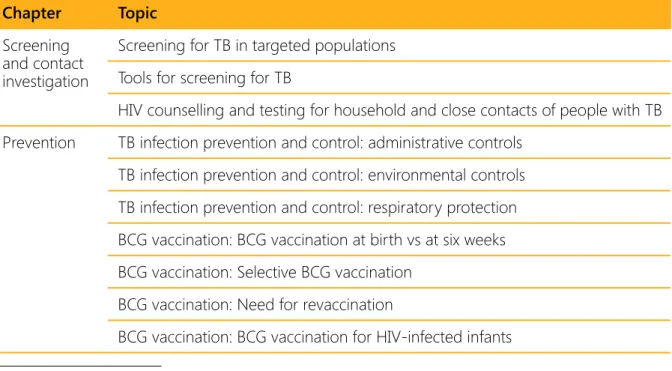
Table 2: Recommendations in the WHO consolidated guidelines on tuberculosis. Module 5:
management of tuberculosis in children and adolescents, 2022, by chapter and topic
Chapter Topic Screening
and contact investigation
Screening for TB in targeted populations Tools for screening for TB
HIV counselling and testing for household and close contacts of people with TB Prevention TB infection prevention and control: administrative controls
TB infection prevention and control: environmental controls TB infection prevention and control: respiratory protection BCG vaccination: BCG vaccination at birth vs at six weeks BCG vaccination: Selective BCG vaccination
BCG vaccination: Need for revaccination
BCG vaccination: BCG vaccination for HIV-infected infants
14 This recommendation applies to and complements the 2020 WHO recommendations on shorter and longer regimens that contain bedaquiline: A shorter all-oral bedaquiline-containing regimen of 9–12 months duration is recommended in eligible patients with confirmed multidrug- or rifampicin-resistant tuberculosis (MDR/RR-TB) who have not been exposed to treatment with second-line TB medicines used in this regimen for more than one month, and in whom resistance to fluoroquinolones has been excluded (Conditional recommendation, very low certainty in the evidence); bedaquiline should be included in longer multidrug-resistant TB (MDR-TB) regimens for patients aged 18 years or more (Strong recommendation, moderate certainty in the estimates of effect); bedaquiline may also be included in longer MDR-TB regimens for patients aged 6–17 years; (Conditional recommendation, very low certainty in the estimates of effect) (9).
15 This recommendation complements the 2020 WHO recommendation on longer regimens that contain delamanid: Delamanid may be included in the treatment of MDR/RR-TB patients aged 3 years or more on longer regimens (Conditional recommendation, moderate certainty in the estimates of effect) (9).
TB preventive treatment: Identifying populations for TB infection testing and TB preventive treatment – People living with HIV
TB preventive treatment: Identifying populations for TB infection testing and TB preventive treatment – Household contacts (regardless of HIV status)
TB preventive treatment: Identifying populations for TB infection testing and TB preventive treatment – Other people at risk
TB preventive treatment: Algorithms to rule out TB disease TB preventive treatment: Testing for TB infection
TB preventive treatment: TB preventive treatment options Diagnostic
approaches Use of commercial serodiagnostics
Xpert MTB/RIF and Xpert Ultra as initial tests in adults and children with signs and symptoms of pulmonary TB
Xpert MTB/RIF and Xpert Ultra as initial tests in adolescents and children with signs and symptoms of extrapulmonary TB
Xpert MTB/RIF and Xpert Ultra repeated testing in children and adolescents with signs and symptoms of pulmonary TB
Xpert MTB/RIF and Xpert Ultra as initial tests for pulmonary TB in adults in the general population either with signs and symptoms of TB or chest radiography with lung abnormalities or both
Truenat MTB, MTB Plus and Truenat MTB-RIF Dx in adults and children with signs and symptoms of pulmonary TB
Moderate complexity automated nucleic acid amplification tests (NAATs) for detection of TB and resistance to rifampicin and isoniazid
Loop-mediated isothermal amplification
Lateral flow urine lipoarabinomannan (LF-LAM) assay
Low complexity NAATs for detection of resistance to isoniazid and second-line TB agents
First-line line-probe assay (LPAs)
Second-line line-probe assays (SL-LPAs)
High complexity reverse hybridization-based NAATs for detection of pyrazinamide resistance
Executive summary xxi
Treatment Treatment of severe forms of pulmonary TB in children Treatment of infants aged 0–3 months with TB
Treatment of osteoarticular TB in children
Use of thrice weekly dosing and fixed dose combination tablets Use of corticosteroids in TB meningitis
A 4-month treatment regimen composed of isoniazid, rifapentine, moxifloxacin and pyrazinamide for treatment of drug-susceptible pulmonary TB
Regimen for rifampicin-susceptible and isoniazid-resistant TB
Shorter all-oral bedaquiline-containing regimen for multidrug- or rifampicin- resistant TB (MDR/RR-TB)
Longer regimens for MDR/RR-TB
The bedaquiline, pretomanid and linezolid (BPaL) regimen for MDR-TB with additional fluoroquinolone resistance
Monitoring patient response to MDR-TB treatment using culture Models of TB
care Health education and counselling Treatment adherence interventions Treatment administration options
Ambulatory care for persons with MDR-TB
Decentralized model of care for persons with MDR-TB Special
situations Routine HIV testing for persons with presumptive and diagnosed TB
Co-trimoxazole prophylaxis for infants, children and adolescents living with HIV General recommendations on eligibility for ART
Timing of ART for children and adolescents with TB First-line ART regimens
Second-line ART regimens
Management of severe acute malnutrition (SAM) Management of moderate undernutrition Contact investigation
Based on these guidelines, tools to support implementation have been developed, including new integrated treatment decision algorithms and an updated table on dosing of second-line TB medicines.
In accordance with the process for updating WHO guidelines, a systematic and continuous process of identifying and bridging evidence gaps following guideline dissemination will be employed. If new evidence that could potentially impact the current evidence base for any of the recommendations is identified, it will be reviewed with a view to updating the recommendation. WHO welcomes suggestions regarding additional questions for inclusion in future updates of the guideline.16
16 The WHO Global Tuberculosis Programme can be contacted at [email protected].
Main changes to the 2014 guidance in the 2022 update
The 2014 WHO Guidance for national tuberculosis programmes on the management of tuberculosis in children (second edition) (8) included 28 recommendations on the management of TB in children. The 2022 consolidated guidelines incorporate: recommendations from the 2014 guidelines that remain valid (mainly topics that remain key components of high-quality TB care for which no new evidence was assessed), relevant recommendations that have since been published in other WHO guidelines, and new recommendations published in 2022. A summary of the changes to the 2014 guidance is provided in the supplementary table in annex 2. Also, the focus of the 2022 consolidated guidelines is on children and adolescents aged 0–19 years, whereas the previous guidelines focused on children and to a lesser extent, younger adolescents (aged 10–14 years).
1. Introduction 1
1. Introduction
1.1. Background
Children and young adolescents (aged below 15 years) represent about 11% of all people with TB globally. This means that close to 1.1 million children become ill with TB every year, almost half of them below five years of age. National TB programmes (NTPs) only notify less than half of these children, meaning that there is a large case detection gap (1). The reasons for this gap include challenges with specimen collection and bacteriological confirmation of TB in young children, due to the paucibacillary nature of TB disease in this age group and the lack of highly sensitive point-of-care tests (10). In 2020, the COVID-19 pandemic had an additional negative impact on TB notifications in children, with a 24%
decrease in notifications compared to 2019 (in comparison, notifications in people aged 15 years and above decreased by 18%). In addition to the case detection gap, only one third of child contacts below five years of age eligible for TB preventive treatment (TPT) actually received it in 2020 (1).
Young children are at higher risk of developing TB disease, including severe forms of TB, than older age groups, after TB infection, and the majority do so within a few months following exposure and infection (2, 3). In addition to children and young adolescents, over half a million older adolescents (15–19 years) are estimated to develop TB every year (4).
The United Nations Sustainable Development Goal (SDGs) (5) and the World Health Organization (WHO) End TB Strategy (6) include targets to reduce TB incidence by 80% and TB deaths by 90%
to be achieved by the year 2030, relative to baseline levels in 2015. In addition, the Resolution adopted by the United Nations General Assembly (UNGA) at the High-Level Meeting on the fight against tuberculosis in September 2018 commits to diagnosing and treating 40 million people with TB (including 3.5 million children), and 1.5 million people with DR-TB (including 115 000 children) by 2022. It also commits to providing at least 30 million people (including 4 million child contacts under five years of age), 20 million other household contacts (including children over the age of five years) and 6 million people living with HIV (including children) with TPT by 2022 (7).
To support countries in preventing and managing TB in children and adolescents, WHO’s Global Tuberculosis Programme published the WHO Guidance for national tuberculosis programmes on the management of tuberculosis in children (second edition) in 2014. Since these guidelines were published, new recommendations and guidance on the management of TB have been published in WHO guidelines and other policy documents on TB prevention, screening, diagnosis, treatment, management and models of care. Many of these recommendations are also applicable to children and adolescents. In addition, new evidence related to the management of TB in children and adolescents became available to WHO in 2021. Some of these data were received in response to a specific request from WHO for data on the management of TB in children and adolescents, issued as an Expression of Interest in July 2020,17 which was developed in consultation with the core team of the Child and Adolescent TB Working group.18 Data from a randomized controlled trial on treatment shortening for children with non-severe TB were made available to the WHO in 2021. Therefore, in 2021, the WHO convened a Guideline Development Group (GDG) to review new evidence on the management of TB in children and adolescents. This guideline update includes new recommendations that were
17 WHO public call for data on the management of TB in children and adolescents. 24 July 2020. WHO [website] (https://www.who.int/
news-room/articles-detail/who-public-call-for-data-on-the-management-of-tb-in-children-and-adolescents, accessed 20 January 2022).
18 Child and Adolescent TB Working Group (https://www.stoptb.org/wg/dots_expansion/childhoodtb/, accessed 20 January 2022).
issued at the GDG meeting in May-June 2021 as well as current recommendations from other WHO guidelines that are relevant to the management of TB in children and adolescents (including those that are in the previous guidelines on the management of TB in children that have been validated).
This update consolidates all recommendations in one guideline.
1.2. Rationale for the development of the 2022 consolidated guidelines
Since the publication of the WHO Guidance for national tuberculosis programmes on the management of tuberculosis in children (second edition) (2014) (8), there have been numerous studies, including reviews, randomized controlled trials, observational studies, pharmacokinetic (PK) and pharmacodynamic studies, qualitative research and cost-effectiveness research, which have evaluated the impact of various interventions. These are related to diagnostic approaches for TB, treatment for drug-susceptible TB (DS-TB), drug-resistant TB (DR-TB) and TB meningitis (TBM), as well as models of TB care, relevant to children and adolescents. Therefore, it was timely to review this new evidence and to update the recommendations from 2014. Other recommendations in the 2014 guidance were reviewed for their continued relevance. It was agreed that the new guidelines should be consolidated, bringing together new recommendations as well as existing recommendations with relevance to children and adolescents.
1.3. Objectives of the 2022 consolidated guidelines
The objectives of the 2022 consolidated guidelines on the management of TB in children and adolescents are to:
1. provide policy-makers and implementing partners with evidence-based recommendations on the entire cascade of care for children and adolescents to support the implementation of activities to prevent TB among children and adolescents at risk, and to improve TB case detection and treatment outcomes in children and adolescents with TB, using effective models of care; and 2. contribute to reductions in TB-related morbidity and mortality in children and adolescents in
line with global targets including those in the SDGs (5), the End TB Strategy (6) and the Political declaration of the UN General Assembly High-Level Meeting on the fight against tuberculosis (7).
1.4. Target audience
The target audience for these consolidated guidelines consists primarily of NTPs, primary health care (PHC) programmes, maternal and child health programmes, national AIDS programmes (or their equivalents in health ministries) and other health policy-makers. They also target generalist and specialist paediatricians, clinicians and health practitioners working on TB, HIV and/or infectious diseases in public and private sectors, the educational sector, nongovernmental, civil society and community-based organizations, as well as technical and implementing partners.
1.5. WHO recommendations relevant to the management of TB in children and adolescents
The 2022 consolidated guidelines represent a significant update compared to the previous guidelines issued in 2014. They include: (i) new recommendations based on the review of newly available
1. Introduction 3
the 2014 guidance that remain unchanged. These latter recommendations cover key components of high-quality TB care for which a review of the evidence was either not done (such as HIV testing for persons with presumptive TB and TB disease), or for which no new evidence was available. A summary of the changes to the 2014 guidance is provided in the supplementary table in annex 2.
The full details of the new recommendations, including evidence and justification, subgroup and implementation considerations and monitoring and evaluation, are provided in this guideline. Other WHO recommendations relevant to the management of TB in children and adolescents have been consolidated in tables in the relevant chapters. It is important to note that the original wording of the recommendations based on the source guidelines has been included. In some source guidelines, age groups have been defined differently compared to the 2022 consolidated guidelines on the management of TB in children and adolescents, and the adult age group may include adolescents aged 15 years and above. Where this is the case, it has been indicated in the tables. Users of this guideline update are advised to refer to the original guideline for full information related to the recommendation. In addition, all WHO recommendations on TB are now included in the WHO TB Knowledge Sharing Platform (KSP)19 which can be searched by population (e.g. children or people living with HIV) or by topic (e.g. diagnosis or treatment). Refer to section 1.7 for further details.
For ease of reference, a full overview of all new and consolidated recommendations is included in web annex 5.
1.6. Scope of the guideline update
The population of interest in these guidelines is children and adolescents, defined as:
• A child is a person under 10 years of age.
• An adolescent is a person 10–19 years of age (inclusive).
The pathway of TB infection and disease in an individual child or adolescent, and the interface with and retention across sequential stages of care (termed the ‘cascade of care’) was used as the analytic framework during the scoping process for this guideline update (Figure 1) (10). This pathway involves multiple steps from exposure to a person with an infectious form of TB, leading to subsequent TB infection and, for some, progression to TB disease. Each of the steps in the cascade of care requires evidence-based interventions to reduce TB transmission, prevent TB, enable early and accurate diagnosis of TB and optimize treatment outcomes for children with drug-susceptible or DR-TB.
In addition, child-, adolescent- and family-friendly services are needed to optimize access to high quality care.
19 WHO TB Knowledge Sharing Platform (https://extranet.who.int/tbknowledge)
Figure 1: Cascade of care in children and adolescents exposed to and with TB, with broad topics of PICO questions with corresponding numbers as per section 1.3.1
Un/misdiagnosed
Susceptible
Preventive treatment Diseased
Did NOT access health
care system
Feeling ill Diagnosed Treated
Accessed health care system Exposed
Accessed health care system
Infected
Treatment of DS-TB, DR-TB and TBM (PICO 3, 4a and 4b, and 5)
Screening in health care facilities (PICO 1)
Diagnostic approaches (PICO 2 a and b)
Models of Care TB case detection and TB prevention (PICO 6 a and b)
Source: Roadmap towards ending TB in children and adolescents. Second edition. Geneva: World Health Organization; 2018.
DS/DR-TB: drug-susceptible/drug-resistant TB; TBM: TB meningitis.
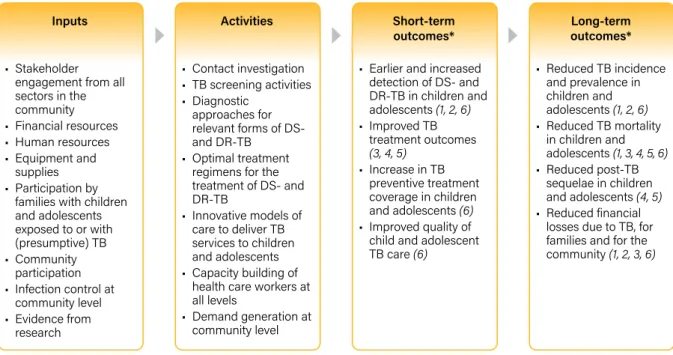
Based on this understanding of the cascade of TB care in children and adolescents, the potential contribution of interventions targeting different steps in this cascade is summarized in the following logic model (which was the model used to frame these guidelines) with the potential contribution of the evidence to short-term and long-term outcomes (Figure 2).
Figure 2: The logic model used for the guidelines on the management of TB in children and adolescents
Inputs
• Stakeholder engagement from all sectors in the community
• Financial resources
• Human resources
• Equipment and supplies
• Participation by families with children and adolescents exposed to or with (presumptive) TB
• Community participation
• Infection control at community level
• Evidence from
Activities
• Contact investigation
• TB screening activities
• Diagnostic approaches for relevant forms of DS- and DR-TB
• Optimal treatment regimens for the treatment of DS- and DR-TB
• Innovative models of care to deliver TB services to children and adolescents
• Capacity building of health care workers at all levels
• Demand generation at
Short-term outcomes*
• Earlier and increased detection of DS- and DR-TB in children and adolescents (1, 2, 6)
• Improved TB treatment outcomes (3, 4, 5)
• Increase in TB preventive treatment coverage in children and adolescents (6)
• Improved quality of child and adolescent TB care (6)
Long-term outcomes*
• Reduced TB incidence and prevalence in children and adolescents (1, 2, 6)
• Reduced TB mortality in children and adolescents (1, 3, 4, 5, 6)
• Reduced post-TB sequelae in children and adolescents (4, 5)
• Reduced financial losses due to TB