I would like to thank all members of CPBC for their patience and love during my studies, as well as their willingness to be active participants in the research project. I especially want to thank Pastors Kurt Robinson and Kirk Booth for their time, counsel and help. I want to thank Pastor Justin Duran and Tina Mitchell as well for their faithful participation on the expert panel.
First, I would like to thank Robert Cheong for his willingness to supervise my work and guide me through the process.
INTRODUCTION
Anyabwile, The Life of God in the Soul of the Church: The Root and Fruit of Spiritual Fellowship (Fearn, Scotland: Christian Focus. As a Reformed, Southern Baptist Church, most members recognize their prescribed role in the life of the body. Many CPBC members continue to live as if they are indispensable rather than essential to the unity of the Church.
Craig Van Gelder believes this relational unity is essential to the mission of the church. Kistemaker, Exposition of the First Epistle to the Corinthians, New Testament Commentary (Grand Rapids: Baker. Corinthian church - an authentic community where individual members use their specific gifts for the good of the whole.
Second, growing collectively in "the knowledge of the Son of God" (v. 13) is not separate from a believer's faith. Any practice or doctrine that minimizes fellowship works against God's plan for His church—the revelation of His glory to the world through the fellowship of the saints. The interdependent nature of the church (1 Corinthians 12), as well as the gifts God has given to build up and mature His church (Ephesians 4).
The love of a believer for his wife and children was reflected in the life of the church. In The Life of God in the Soul of the Church, Thabiti Anyabwile rejects this “privatized religion”. But the culture's fear of commitment has also become a major problem within the church.
It means unashamedly expecting members to participate in the life of the body and a. True communities strive to live in the power of the gospel and daily presence of the cross. Every believer who is set apart by God and lives with the Holy Spirit is equipped and expected to get involved in the life of the church.
Member Assessment
Those who participated 90 percent or more had an average score of 4.38, compared to 4.11 for those who participated infrequently or not at all. The results show that those who faithfully participated in both morning prayer services and Wednesday evening small groups had a better "attitude" toward the community than those who did not. Additional data revealed that 100 percent of participants identified God's Word as their sole authority over their faith and life.
But this affirmation of the authority of God's Word and frequent exposure to it does not translate into practical fellowship. Less than 30 percent of those questioned stated that they meet at least once a week with another member outside of regular church gatherings. Also, approximately half of the respondents charged that they did not have another member in their home or were not in another member's home in the previous two months.
Personal discipleship, serving one another, and practicing hospitality are all clearly taught in God's Word and are essential to authentic community. To assert the authority of God's Word and yet not practice these common teachings reveals (1) a lack of understanding, or (2) a lack of submission, or both. The statement, "it is my responsibility to intervene when a member leaves meetings," received an average score of 3.86.
Although not in the 1-2.99 range of "disagreement," after years of learning about shared care, the elders thought the score would be higher. This relatively neutral response in relational satisfaction corresponds to a score of 3.83 for question 71: "I feel a strong sense of community in my local church." Both statements indicate the need for a larger community.
Develop an Eight-Week Curriculum
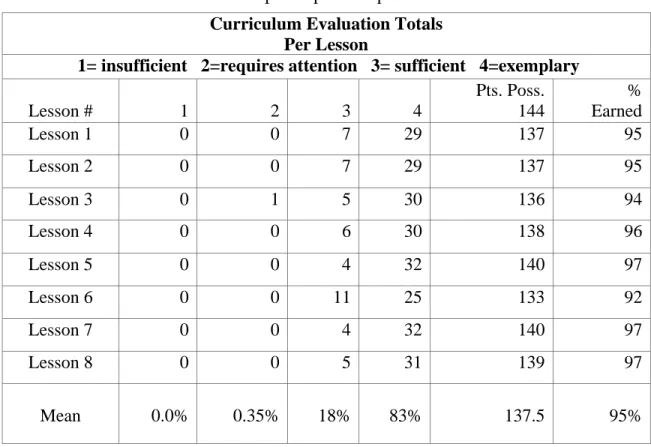
Second, a minimum of 90 percent of the evaluation criteria completed by the expert panel had to meet or exceed the "adequate" level. The average per lesson score was 137.5, achieving a 95 percent average for all eight lessons.8 With these two matrices achieved, objective 2 was successfully achieved.
Increasing Understanding and Practice
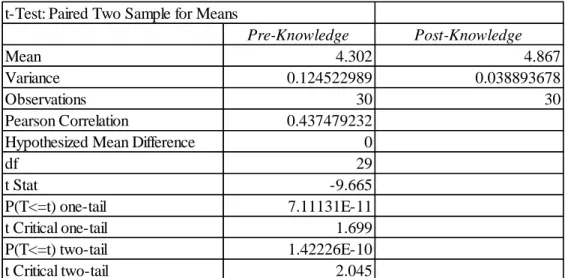
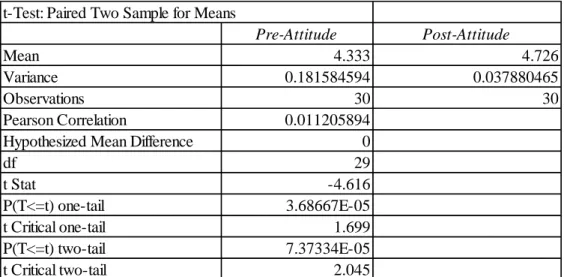
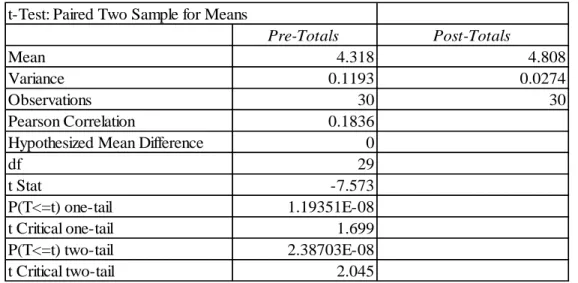
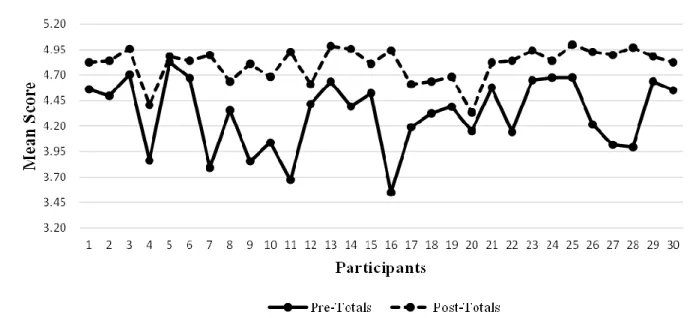
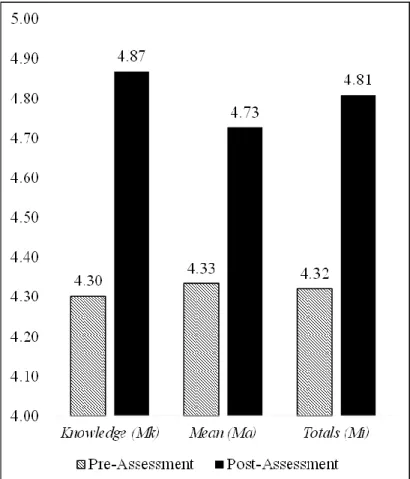
Paired t-tests calculated mean participant survey scores in an adult Sunday school class before and after the community teaching series. Dependent samples t-tests showed a positive, statistically significant difference in all three categories, so the null hypothesis can be rejected.14 Examination of the means showed that participants had higher mean scores after the community teaching series (Mk = 4.87 , Ma = 4.73, Mt = 4.81) than before the training series (Mk = 4.30, Ma = 4.33, Mt = 4.32).15. Given the objective nature of the statements, I hoped that the knowledge-based part of the survey would produce a statistically significant result.
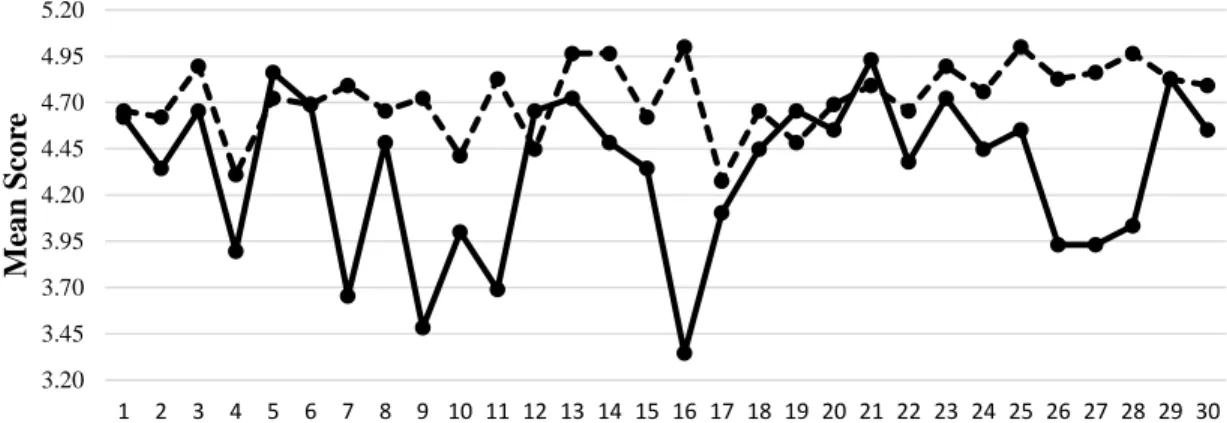
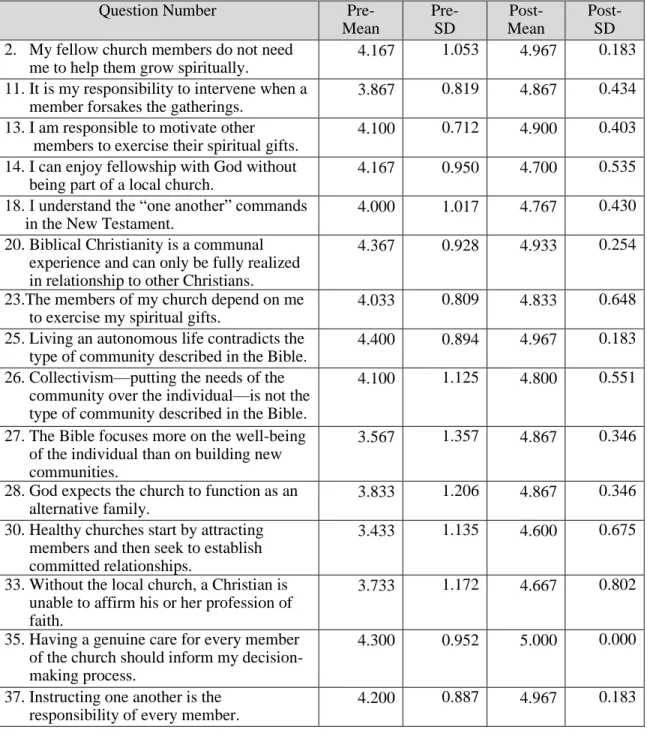
By examining the means and standard deviations for responses with significant positive shifts (typically an increase of 13 percent or more between mean scores), I was able to identify specific aspects of teaching that had the greatest impact on participants.16 For example, question 11—“This is my . Rather than viewing mediation as merely a pastoral or diaconal duty, members now understand it to be the responsibility of the whole church. The Bible focuses more on the well-being of the individual than on building the new.
In response to statement 35 - "having a genuine care for each member of the church should inform my decision-making process" - respondents went from 4.3 to a perfect 5.0, reducing the standard deviation from 0.952 to 0.00.19 has. This positive response to decision making as a family is a step in the right direction. It is the hope of the elders that covenant members bring important life decisions before the church for prayer, consideration and advice. What the elders want to encourage is family consideration—understanding that important decisions made by one member of the family affect the entire family.
God, family, church, others”—achieved a recalibrated mean of 4.50 in the post-survey and a standard deviation decrease of 0.50.22 The Western church has long trumpeted this individualized, relational paradigm. However, it is my hope that as members begin to practice what they have learned in the months and years ahead, relationship satisfaction, accountability, and that deep sense of community will become the normative experience for members at CPBC.
Practicing the Mutuality Commands
I didn't expect the average members' community experience at CPBC to change in eight weeks. Of the 23 participants who completed the survey in small groups, 96.7 percent answered “true” to the 11 community affirmative statements.29 The verbal feedback also matched the true/false data. This increased love for the Church was expressed in the following ways: 65 percent expressed greater love for other members and a greater desire to be in their presence; 35 percent said practicing each other's commands increased their awareness that everyone is struggling and, as a result, forced them to be more compassionate; and 30 percent said they want to be more transparent and intimate with other members.
When asked to identify "one or two of the mutual commands you need members to serve you most," 29 percent indicated encouragement and comfort, 26 percent said they spoke the truth with love, and 17 percent said they did encouraged each other.33 These numbers reveal an interesting dilemma. Moving forward, this tension will need to be addressed and taught more deeply by elders. Based on the Word of God, the project raised the biblical community to its rightful place by filling a knowledge gap in the church.
For example, addressing relational priorities and the impact of decision-making on church unity, some members are now considering major life decisions as members of the CPBC family. Second, the curriculum was deliberately systematized, diversified, and then synchronized with small group practices. At the end of the eight weeks, members had a greater love for each other and, in turn, a greater love for God and the community at CPBC.
For example, when choosing reciprocity commands for small groups, I tried to select commands that I thought CPBC members needed to work on the most and could be practiced in a small group setting. For example, the command to “bear with one another,” while essential to a healthy community, is not best expressed in a small group setting.
Would Do Differently
COMMUNAL KNOWLEDGE – Please give your opinion regarding the statements below using the following five-point scale, with 1 being “Strongly Disagree”
God has always planned to reveal the power of the gospel through the intimacy of. The Bible teaches that every church member is vital to the flourishing of the church. The Bible focuses more on the welfare of the individual than on building new communities.
The story of the gospel is best told through the story of healthy churches.
COMMUNAL ATTITUDES – Please give your opinion regarding the statements below using the following 5-point scale, with 1 being “Strongly Disagree” and
One of the greatest gifts I can give my church is to express my need for help. DIRECTIONS: In light of the past eight weeks, respond to the following statements with either a "True" or a "False." If your answer is not binary, answer with what is common. Spending time practicing each other's assignments in my small group gave me the confidence to practice them more often on my own.
Hearing the struggles of others in my small group made me see that I was not alone. Identify one or two of the orders of reciprocity that you most need members to serve you. Collectivism—putting the needs of the community above the individual—is not the type of community described in the Bible.
A genuine concern for each member of the church should inform my decision-making process. God's life in the soul of the Church: the root and fruit of spiritual communion. Kreider, Alan The Patient Fermentation of the Early Church: The Incredible Rise of Christianity in the Roman Empire.
Systematic review of the Hawthorne effect: New concepts are needed to study research participation effects." Journal of Clinical Epidemiology 67, no. This research project taught about and provided opportunities for the purpose and practice of authentic community to the members at Cambrian Park Baptist Church in San Jose, California.