Adopting management control systems through CSR strategic integration and investigating its impact on company
performance: evidence from Indonesia
Esti Dwi Rinawiyanti, Xueli Huang and Sharif As-Saber
Abstract
Purpose–This paper aims to investigate the extent to which the management control systems (MCS) adoption in corporate social responsibility (CSR) integration into business strategy has an impact on companies’ performance.
Design/methodology/approach–Using a sample of 435 Indonesian manufacturing companies, partial least squares structural equation modelling was used to investigate the impact of CSR strategic integration on companies’ performance based on the contingency and stakeholder theories.
Findings – The findings reveal CSR strategic integration has a positive and significant impact on companies’ performance, including employee, operating and financial performance and the company size can positively moderate the impact of this integration on both its operating and financial performance.
Practical implications–The findings can encourage managers to adopt MCS by undertaking CSR at the strategic level, resulting in superior performance, both socially and financially.
Social implications–Employee performance and operating performance can significantly mediate the effect of strategic integration on financial performance.
Originality/value–The paper suggests that adopting MCS through CSR strategic integration could improve company performance socially and financially. This is the very first study on this issue from an Indonesian perspective.
Keywords Manufacturing, Emerging countries, CSR integration, Strategic level Paper typeResearch paper
1. Introduction
The World Business Council for Sustainable Development defines corporate social responsibility (CSR) as a continuous business agreement to adopt ethical behaviour and to promote sustainable economic development, and simultaneously to enhance the quality of life of employees, their families, the local community, as well as the wider society (Moir, 2001). Although CSR in developing countries is emerging in management studies (Jamali and Karam, 2018), substantial information about the CSR contribution and its key performance measures in developing countries should be explored (Branco and Rodrigues, 2006;Crifoet al., 2016).
As the world’s fourth most populous nation with more than 267 million population, Indonesia has the largest economy in Southeast Asia (Worldbank, 2020). As one of the biggest developing country, Indonesia has been trying to implement CSR for almost two decades (Ridho, 2018). The Public Interest and Research Advocacy (PIRAC) survey in 2001 showed that CSR funds in Indonesia were $11.5m from 180 organizations endorsing 279 CSR
Esti Dwi Rinawiyanti is based at the School of Management, RMIT University, Melbourne, Australia and Department of Industrial Engineering, Faculty of Engineering, University of Surabaya, Surabaya, Indonesia.
Xueli Huang and Sharif As-Saber are both based at the School of Management, RMIT University, Melbourne, Australia.
Received 23 April 2020 Revised 5 August 2020 22 September 2020 12 October 2020 Accepted 18 October 2020 The first author (EDR) would like to acknowledge the financial support of the Indonesian Endowment Fund for Education (LPDP), Ministry of Finance, in collaboration with the Directorate General of Higher Education (DIKTI), Ministry of Research, Technology and Higher Education, Republic of Indonesia, under Beasiswa Unggulan Dosen Indonesia- Luar Negeri (BUDI-LN) Batch I 2016.
activities (PIRAC, 2002). That study highlighted the lack of a comprehensively legal instrument to regulate CSR and foster CSR activities. The Indonesian government has addressed this issue with the release of Law No. 40 2007 on Limited Liability Companies.
Under this law, companies with activities related to natural resources are obliged to practice CSR and disclose their CSR activities (Ridho, 2018;Waagstein, 2011).
In practice, most Indonesian companies undertake CSR only at the level of charitable activities and corporate philanthropy (Josephet al., 2016;Maulamin, 2017;Razafindrambinina and Sabran, 2014). This phenomenon indicates that we need a greater understanding of how Indonesian companies control CSR implementation when they are expected to comply with regulations while, at the same time, undertaking beneficial activities for their business and community.
Several authors argue that CSR needs to be connected and integrated into business strategy to enhance companies’ social and financial performance (Dey and Sircar, 2012;
Galbreath, 2006;Ganescu, 2012;Hasanet al., 2018;Porter and Kramer, 2011). However, a common problem with the planning and implementation of CSR appears to be the lack of alignment with business strategy (Ranganet al., 2012), and CSR remains separated from the mainstream business strategy (Katsoulakos and Katsoulacos, 2007).
Management controls can be defined as the systems, rules, practices, values and other activities management put in place to direct employee behaviour (Malmi and Brown, 2008, p. 290). Over the years, the concept of management control systems (MCS) has changed from one that emphasizes providing more structured, financially quantifiable information to support strategic decision-making to one that covers a much broader range of information (Chenhall, 2003). MCS is essential for fostering CSR implementation, but there is little research on the role of MCS in the strategic formulation, implementation and integration of CSR (Arjalie`s and Mundy, 2013;Hosoda and Suzuki, 2015;Laguiret al., 2019).
With collected data from 435 Indonesian manufacturing companies, this paper aims to investigate how companies adopt MCS by integrating CSR into business strategies and to examine the impact of this integration on company performance. Using partial least squares structural equation modelling (PLS-SEM) for data analysis, the findings show that CSR strategic integration plays a fundamental role in achieving better performance, on employee and operating performance. More precisely, the findings offer new understandings of the mechanisms which mediate CSR and financial performance, as an employee and operating performance can mediate the effect of strategic integration on financial performance. The results also suggest that the company size can moderate the impact of CSR integration on operating and financial performance.
The findings of this paper make significant theoretical and practical contributions. From a theoretical perspective, this paper develops a conceptual framework by combining CSR integration and its effect on company performance based on the strategy-context-performance relationship according to the contingency and stakeholder theories. From a practical perspective, the findings could increase the understanding of businesses about diverse CSR activities and inspire these businesses to manage and control CSR integration into their business strategies.
This paper is organized as follows. Following a brief literature review of the management control system (MCS) and CSR in Section 2, a theoretical framework and hypotheses are presented in Section 3. The methodology is then discussed in Section 4, followed by the findings in Section 5 and discussion in Section 6. Section 7 provides the conclusion, limitations and suggestions for future studies.
2. Literature review
2.1 Management control systems
MCS is the “formal, information-based routines and procedures managers use to maintain or alter patterns in organizational activities” (Simons, 1995, p. 5). To investigate how
organizations leverage their MCS to execute business strategies,Simons (1995)developed the lever of control (LOC) framework which contains four key systems as follows:
1. Belief systems are “the explicit set of organizational definitions that senior managers communicate formally and reinforce systematically to provide basic values, purpose and direction for the organization” (p. 34). Managers use them to encourage organizational change and initiate new strategies or values;
2. Boundaries systems are defined by a specific set of organizational definitions and parameters, typically expressed in negative or limited terms that assist managers in their efforts to define risks that must be avoided when the goals of the company are to be met. Boundary systems ensure compliance with legislation, define strategic goals and control risks (Laguiret al., 2019);
3. Diagnostic systems exist when top managers delegate the system’s activity to lower- level managers and rely on others to tell him when his attention to the system was needed. Top managers use diagnostic systems to evaluate performance with goals to detect important anomalies and deviations from plans; and
4. Interactive control systems are formal mechanisms used by managers in handling strategic uncertainties and finding opportunities. Interactive control systems occur when top managers use the system to involve themselves in subordinate decisions on a regular basis (Simons, 1991).
This LOC framework can be used as an analytical tool for evaluating how managers use MCS to overcome strategic uncertainty (Simons, 1995). The full capacity of the LOC is realized when combined to facilitate the implementation and achievement of the strategic goals of an organization (Arjalie`s and Mundy, 2013).
2.2 Corporate social responsibility integration
CSR signifies “the integration of an enterprise’s social, environmental, ethical and philanthropic responsibilities towards society into its operations, processes and core business strategy in cooperation with relevant stakeholders” (Rasche et al., 2017, p. 6).
CSR emphasizes that companies should bear their social and environmental responsibilities, even more so than legislation compliance and individual liability demand (Blowfield and Frynas, 2005). Accordingly, CSR cannot be separated from corporate strategy and should be managed strategically in the context of what the company tries to obtain at the company’s business strategy level (Busaya et al., 2009). When companies recognize the need for CSR activities to be integrated into business strategies, they must develop a strategic framework that makes CSR an integral part of the business model (Shital, 2014). Companies, then, formulate a comprehensive set of policies, practices and programmes and integrate them into the business operations and decision-making processes throughout the company (Ofori and Hinson, 2007).
2.3 The linkages between management control systems and corporate social responsibility
Some studies have investigated the relationship between CSR and MCS, mostly based on Simons’ LOC framework. Gond et al. (2012) examined the role MCS plays in incorporating sustainability into an organization’s strategy. Building on diagnostic systems and interactive systems, they defined eight organizational configurations that represent the different uses, as well as their sustainability control system (SCS) and MCS integration modes.Arjalie`s and Mundy (2013) expanded the use of Simons’ LOC framework. They explored how managers combine diagnostic and interactive systems to balance top-down and bottom-up strategies while simultaneously identifying opportunities and managing risks with beliefs and boundaries systems. They explained how organizations use their MCS to
convey CSR’s vision and objectives, combine planned and evolving strategies, recommend appropriate CSR activities and monitor CSR performance. Their findings inspired the way that companies integrate MCS and CSR and the activities involved in its integration.
Likewise, based on four of Simons’ LOC framework,Albertini (2019)proposed a conceptual framework, which described how companies can enhance stakeholder integration capability, shared vision capability, organizational learning capability and continuous innovation capability. Furthermore, Laguir et al. (2019) examined how organizations implement and manage CSR activities through MCS by taking into account the Simons’
LOC framework. They found that belief systems play a critical role in transmitting CSR culture to employees which could further improve their awareness of their company’s CSR culture.
3. Theoretical framework and hypotheses development
3.1 Adopting management control systems in corporate social responsibility integration at the strategic level
CSR can be strategically integrated by triggering, maintaining and sharing a set of dominant core values (Marques-Mendes and Santos, 2016). This integration is carried out through the inclusion of social responsibility objectives in the business strategy (Ganescu, 2012) at the strategic level, and thus directed by top management. This integration also reflects how companies engage CSR in their management systems in practice (Engert et al., 2016;Werre, 2003). As tools for strategy implementation (Simons, 1991), MCS plays a fundamental role in ensuring the integration of environmental and social activities into the strategic plans and goals of an organization (Gondet al., 2012).
Based on these reasons, we propose a model that describes the use of MCS at the top level of the company, building on Simons’ LOC framework and CSR integration at the strategic level. We consider that three dimensions of CSR strategic integration are crucial to companies’ performance and elaborate on our considerations as follows.
3.1.1 Aligning corporate social responsibility with the company’s strategy.Companies can work with their formal belief systems, the first element ofSimons (1995)and apply it to their CSR activities for the improvement of their organization’s performance (Laguiret al., 2019).
In this dimension, companies introduce CSR activities for employees by generating mission statements and creating a CSR shared vision (Albertini, 2019;Arjalie`s and Mundy, 2013;
Laguiret al., 2019;Shital, 2014;Tanimoto, 2019). Embedding CSR in the company’s vision and mission is a critical step in integrating CSR into business strategy (Dey and Sircar, 2012) because this step can reflect CSR’s actual importance to the company’s mission (Burke and Logsdon, 1996) and will guide all subsequent decision-making in the implementation process (Ooiet al., 2017).
In addition, diagnostic systems can also be used by analysing CSR activities, determining how close companies have achieved strategic goals and providing feedback to influential stakeholders on the results of their CSR activities (Laguir et al., 2019). Companies can establish CSR as one of their long-term goals (Werre, 2003), define objectives on social and environmental issues, provide a proper mechanism to evaluate the results of the objectives and apply this mechanism throughout all areas of business (Bernal-Conesaet al., 2017).
3.1.2 Gaining top management’s support.Aligning business strategy with CSR principles requires the support and encouragement of senior managers (Lindgreen et al., 2011).
Without support from top management, CSR programmes would be difficult to devise and enforce (Mahmoudet al., 2017). In this dimension, boundary systems can be adopted to enforce CSR activities by employees (Laguir et al., 2019). Moreover, companies can apply interactive control systems by providing interaction between top managers and subordinates to promote organizational learning and new strategic initiatives implementation (Gondet al., 2012). Companies organize CSR efforts and establish a CSR
steering committee with formal and periodic meetings with top management to discuss CSR as a key topic (Laguiret al., 2019;Werre, 2003). Mentoring and coaching are also provided to improve decision-making skills that integrate CSR requirements in options evaluation (Werre, 2003). These activities can ensure that the company remains responsive to CSR issues (Bernal-Conesaet al., 2017).
3.1.3 Developing effective communication.CSR communication, as part of organizations’
belief systems, helps companies convey the alignment of the CSR strategy with external objectives to their employees, thereby creating a cohesive programme for their CSR strategy (Arjalie`s and Mundy, 2013;Laguiret al., 2019). Interactive systems are evident in the use of communication processes, which allow top managers, employees and external stakeholders to share information and ideas (Arjalie`s and Mundy, 2013). Internal communication with internal stakeholders can be conducted through newsletters, intranet, e-mail, seminars, presentations and folders (Arjalie`s and Mundy, 2013;Engertet al., 2016;
Maonet al., 2009). Communication with external stakeholders can use official documents such as annual reports, corporate brochures, the company website and online postings (Arjalie`s and Mundy, 2013;Galbreath, 2006;Maonet al., 2009;Reverteet al., 2016).
Overall, CSR strategic integration follows all aspects of Simons’ LOC framework. The first dimension, aligning CSR with the company’s strategy, encompasses belief systems and diagnostic systems, while the second dimension involves boundary systems and interactive systems. The third dimension, developing effective communication, covers belief systems and interactive systems.
Relations between MCS and organizational objectives are very clear, as the primary objective of MCS is to evaluate progress towards the desired ends of the organization (Chenhall, 2003). Non-financial measures are an increasingly useful feature of MCS and can be used to fix some of the perceived shortcomings in financial measures and to identify performance drivers (Malmi and Brown, 2008).
On the other hand, CSR involves measuring the financial, social and environmental impact of the company, taking steps to enhance it in line with stakeholder requirements and reporting on appropriate measurements (Katsoulakos and Katsoulacos, 2007). Prior studies argue that the integration of CSR into business strategy can enhance company performance both in social (non-financial) and financial terms (Galbreath, 2006;Porter and Kramer, 2011). Therefore, we suggest:
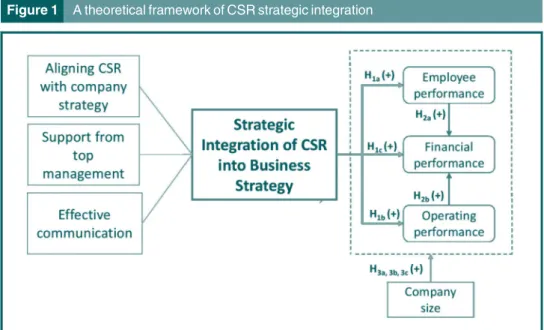
H1. CSR strategic integration has a positive impact on company performance, including (H1a) employee performance, (H1b) operating performance and (H1c) financial performance.
3.2 The mediating role of companies’ social performance on the relationship between integration and financial performance
Stakeholder theory argues that companies have responsibilities not only towards shareholders but also towards stakeholders as groups and individuals who can influence or are influenced by the achievement of companies’ goals (Freeman, 2010). Internal stakeholders include the owners, managers and employees of a company who reside inside the boundaries of the company, while the external stakeholders cover the suppliers, customers, communities and government (Freeman, 2010). In addition to their essential role in attaining the companies’
objectives, stakeholders are also a vital driving factor for companies to implement MCS and CSR (Gondet al., 2012;Laguiret al., 2019;Zhuet al., 2016).
Several authors highlight the necessity to take into account stakeholders’ concerns and objectives from a long-term perspective (Bhattacharyya, 2010; Maon et al., 2009). By fulfilling stakeholders’ needs, the company can gain their support, which, in turn, leads to better levels of performance (Clarkson, 1995). Prior studies argue that there is a positive
relationship between social and economic performance (Bernal-Conesaet al., 2017;Lee, 2008). Thus, we suggest:
H2. The relationship between CSR strategic integration and financial performance of an organization is mediated by (H2a) employee performance and (H2b) operating performance.
3.3 The moderating role of company size on the relationship between the integration and companies’ performance
The contingency theory suggests that “organizational effectiveness results from fitting characteristics of the organization such as its structure to contingencies that reflect the situation of the organization” (Donaldson, 2001, p. 1). A contingency is “any variable that moderates the effect of an organizational characteristic on organizational performance”
(Donaldson, 2001, p. 7). A different contingency is a size, which determines the structure that is required. Organizational size reflects how many people are working in the organization and is also an internal organizational characteristic (Donaldson, 2001). Some authors argue that larger companies are likely to have more resources to use in their CSR and this may affect the companies’ performance (Chen and Wang, 2010;Wang and Berens, 2015). Therefore, we suggest:
H3. Company size moderates the impact of CSR strategic integration on (H3a) employee performance, (H3b) operating performance and (H3c) financial performance.
Figure 1 displays a theoretical framework of CSR strategic integration and company performance.
4. Methodology
4.1 Population and sample
Approximately 64.29% of the manufacturing industries or 2.8 million manufacturers are in Java (Agustinus, 2017). Nationally, Java contributed significantly to the Indonesian manufacturing industry, with over 70% of Indonesia’s gross domestic product (BPS, 2017).
Therefore, this paper took a sample of manufacturing companies in Java with organizations as the unit analysis. The sample study involved 33 groups of the Indonesian Standard
Figure 1 A theoretical framework of CSR strategic integration
Industrial Classification and included three company sizes according to the Indonesian Central Bureau of Statistics’ classifications, namely, small (5–19 employees), medium (20–99 employees) and large (more than 100 employees).
4.2 Key variables and their measurements
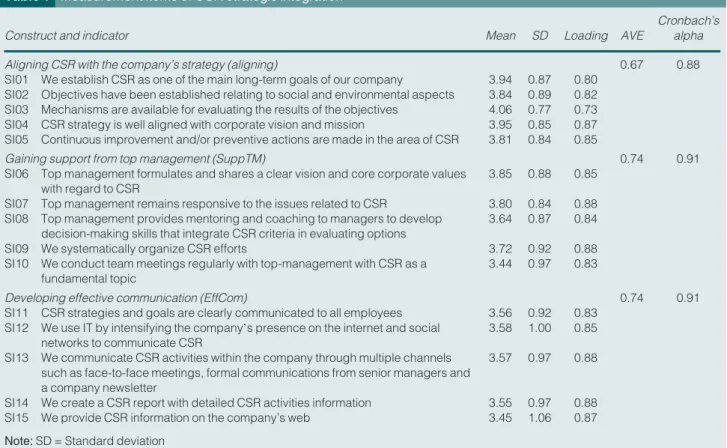
4.2.1 Strategic integration. Table 1 displays the measurement items of CSR strategic integration, borrowed from previous MCS studies such as Arjalie`s and Mundy (2013), Albertini (2019)andLaguiret al. (2019)and CSR studies, for example,Asifet al.(2013), Bernal-Conesaet al. (2017), Busaya et al. (2009), Maon et al. (2009), Ofori and Hinson (2007), Reverte et al. (2016), Shital (2014) and Werre (2003). Some items were slightly modified to make them more relevant to the Indonesian context. Using a 5-point scale (from 1 = strongly disagree to 5 = strongly agree), respondents were asked to indicate how they agreed or disagreed with each statement relating to CSR strategic integration practices.
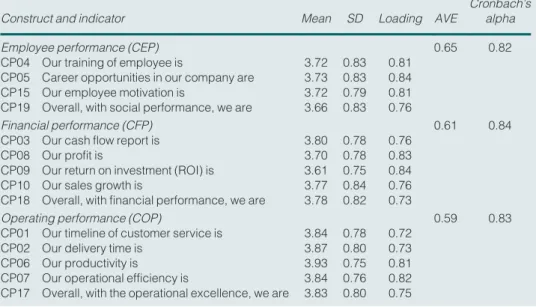
4.2.2 Company performance. There is a lack of published financial reports from the surveyed Indonesian manufacturing companies and their reluctance to reveal information concerning mainly financial performance. Consequently, subjective measures that rely on respondents’ perceptions become a viable alternative (Kim et al., 2004). The items for performance measurement were adopted from both manufacturing and CSR literature (Chi, 2015;Dess and Robinson, 1984;Gallardo-Vazquez and Sanchez-Hernandez, 2014;Ping- Ju Wu et al., 2015; Reverte et al., 2016). Table 2 displays 14 variables of company performance measured using a 5-point scale (from 1 = much worse/much lower/much longer to 5 = much better/much higher/much shorter and from 1 = very dissatisfied to 5 = very satisfied). Respondents were asked to rate their company’s financial performance relative to their competitors (Wall et al., 2004) over the most recent three-year period (Arjalie`s and Mundy, 2013).
Table 1 Measurement items of CSR strategic integration
Construct and indicator Mean SD Loading AVE
Cronbach’s alpha
Aligning CSR with the company’s strategy (aligning) 0.67 0.88
SI01 We establish CSR as one of the main long-term goals of our company 3.94 0.87 0.80 SI02 Objectives have been established relating to social and environmental aspects 3.84 0.89 0.82 SI03 Mechanisms are available for evaluating the results of the objectives 4.06 0.77 0.73 SI04 CSR strategy is well aligned with corporate vision and mission 3.95 0.85 0.87 SI05 Continuous improvement and/or preventive actions are made in the area of CSR 3.81 0.84 0.85
Gaining support from top management (SuppTM) 0.74 0.91
SI06 Top management formulates and shares a clear vision and core corporate values with regard to CSR
3.85 0.88 0.85 SI07 Top management remains responsive to the issues related to CSR 3.80 0.84 0.88 SI08 Top management provides mentoring and coaching to managers to develop
decision-making skills that integrate CSR criteria in evaluating options
3.64 0.87 0.84
SI09 We systematically organize CSR efforts 3.72 0.92 0.88
SI10 We conduct team meetings regularly with top-management with CSR as a fundamental topic
3.44 0.97 0.83
Developing effective communication (EffCom) 0.74 0.91
SI11 CSR strategies and goals are clearly communicated to all employees 3.56 0.92 0.83 SI12 We use IT by intensifying the company’s presence on the internet and social
networks to communicate CSR
3.58 1.00 0.85 SI13 We communicate CSR activities within the company through multiple channels
such as face-to-face meetings, formal communications from senior managers and a company newsletter
3.57 0.97 0.88
SI14 We create a CSR report with detailed CSR activities information 3.55 0.97 0.88
SI15 We provide CSR information on the company’s web 3.45 1.06 0.87
Note:SD = Standard deviation
4.3 Data collection
The survey was administered through the post, e-mail and personal delivery (Creswell, 2014;
Lovelocket al., 1976) as the self-completion method (Hairet al., 2011). The questionnaires were addressed to the executives or managers of companies, including chief executive officers (CEOs), directors and senior managers, as they are considered to have a comprehensive view of company strategy and practices and would be suitably competent to fill in the questionnaire.
Primary data was collected by distributing questionnaires to 1,055 manufacturing companies in Java and 514 questionnaires were returned. After data screening, 435 responses remained in the sample with the final response rate of 41.23%.
Due to the use of self-reported instruments for data collection, the respondent who provided the independent and dependent variable measurement was the same person (Podsakoff et al., 2003), indicating that the data was likely to be susceptible to common method bias (Lindell and Whitney, 2001). Thus, common method bias was reduced through methodological design and adopting a statistical analysis (Podsakoff et al., 2003). The survey was developed for methodological design through pre-tests, including expert-pre-test with four academics and respondent-driven pre-tests with 10 manufacturing executives, to obtain the measurements from different sources (Podsakoffet al., 2012). These steps ensured the survey questions were clear, concise and specific to the manufacturing industry in the Indonesian context. Because preserving respondents’ privacy can minimize common method bias (Podsakoffet al., 2003), the cover letter specifically stated that neither the company nor personal information could be identified individually. For statistical analysis, Harman’s one factor (or single factor) test (Podsakoff et al., 2003) was conducted through an un-rotated principal component analysis (PCA) using IBM SPSS 25. By inputting the 40 measured variables used in the model, the result generated seven factors, together accounting for 64.09% of the total variance. The highest portion of the variance explained by a single factor was 34.90%, less than 50%. This result indicated that common method bias was not a critical issue in this paper.
5. Findings
5.1 Descriptive statistics
The mean and standard deviation of the variables measuring CSR strategic integration are displayed inTable 1. Most respondents are sufficiently aware of CSR strategic integration
Table 2 Measurement items of company performances
Construct and indicator Mean SD Loading AVE
Cronbach’s alpha
Employee performance (CEP) 0.65 0.82
CP04 Our training of employee is 3.72 0.83 0.81
CP05 Career opportunities in our company are 3.73 0.83 0.84
CP15 Our employee motivation is 3.72 0.79 0.81
CP19 Overall, with social performance, we are 3.66 0.83 0.76
Financial performance (CFP) 0.61 0.84
CP03 Our cash flow report is 3.80 0.78 0.76
CP08 Our profit is 3.70 0.78 0.83
CP09 Our return on investment (ROI) is 3.61 0.75 0.84
CP10 Our sales growth is 3.77 0.84 0.76
CP18 Overall, with financial performance, we are 3.78 0.82 0.73
Operating performance (COP) 0.59 0.83
CP01 Our timeline of customer service is 3.84 0.78 0.72
CP02 Our delivery time is 3.87 0.80 0.73
CP06 Our productivity is 3.93 0.75 0.81
CP07 Our operational efficiency is 3.84 0.76 0.82
CP17 Overall, with the operational excellence, we are 3.83 0.80 0.75
with mean values in the range from 3.45 to 4.06. Table 2 presents the variables for evaluating company performance, suggesting that almost all variables of company performance have a high mean between 3.61 and 3.93.
Regarding the respondents’ profiles, the surveyed data show that most of the respondents hold a high position in their companies: top management position (owner, CEO or director) (23.4%) and managerial positions (57.8%). The rest of the respondents (18.8%) are team leaders and others. More than one-third of respondents (38.6%) have over 10 years of working experience and 23.4% have working experience from 6 to 10 years. As there are a substantial proportion of the respondents (37.9%) with less than five years of working experience in their current companies, we ran a further statistical analysis and conducted t- tests on 14 key variables between this group and others in the sample. The results show that a majority of respondents (61%) have held a managerial position and there is no statistical difference in the key variables between this group of the respondents and others. As such, we believe that these respondents are able to answer questions due to their managerial positions in the company.
Respondents’ ages are predominantly above 40 years (51.5%), 26% less than 30 years and 22.5% between 30 and 40 years. Most respondents are well-educated and hold a bachelor’s degree (64.1%) and a postgraduate certificate (21%). With reference to respondents with diplomas (6.9%) and high school certificates (8%), our further analyses showed that a total of 88.9% are owners of small and medium-sized enterprises (SMEs) or hold managerial positions in their company. Moreover, an overwhelming majority (82.7%) of the respondents in this group have more than five years’ experience in their organization.
We also conducted t-tests in several key variables between this group of respondents and other groups. No statistical significance was identified. Thus, lack of knowledge capacity in answering the questions is less a concern due to the managerial position held and working experience.
Concerning the characteristics of respondents’ companies, in total, the five major products of respondents’ companies are food and beverage (26.4%), chemicals and chemical products (11%), fabricated metal products (9.7%), rubber and plastic products (8%) and textiles (6.7%). Three of those five products, i.e. food and beverage, chemicals and chemical products and textiles contributed the most to the achievement of the export value of the manufacturing industry in 2019 (Kemenperin, 2020). The rest of the main products include other manufacturing industries such as paper (5.7%) automotive (5.5%), machinery and electrical equipment (4.6%) and others (22.4%). Accordingly, the sample is representative of the population of the manufacturing industry, in particular in Java.
Most respondents’ companies (68.3%) are large companies with more than 100 employees, while 21.6% are medium companies and 10.1% are small companies. Most respondents’
companies (49.2%) have been in operation between 21 and 50 years, followed by 32%
between five to 20 years. In total, 12% of respondents companies have run their business for more than 50 years and only 6.8% have been operating for less than five years. Almost three-quarters (74.5%) of respondents companies are in East Java, while 18.8% of them are in West Java and Jakarta and the rest of 6.7% is in Central Java and Yogyakarta.
5.2 Partial least squares structural equation modelling analysis
This paper aims to predict and explain the primary target constructs and to identify the relevant antecedent constructs; thus, PLS-SEM was considered appropriate (Sarstedtet al., 2017). To improve model parsimony (Hair et al., 2017) and make the model easier to understand by reducing the number of relationships in the structural model (Hair et al., 2018), this paper adopted a reflective-formative Type II hierarchical component model with a formative higher-order construct (HOC) of CSR strategic integration (CSI), representing a more general construct of reflective lower-order constructs (LOC) (Hair et al., 2018).
Tables 1 and 2 present the operationalization of constructs. The measurement and structural model was assessed by running the PLS-SEM algorithm and a bootstrapping with 5,000 bootstrap samples and 500 observations in the original data with “no significant changes” option (Hairet al., 2017).
5.2.1 Assessment of measurement model.As summarized inTables 1and2, all indicators have significant loadings above 0.70. All reflective constructs have Cronbach’s alpha above 0.7 and AVE values more than 0.5 (Hairet al., 2017).
The heterotrait-monotrait ratio of correlations (HTMT) was used to assess discriminant validity (Henseler et al., 2015). The results indicated that HTMT values are significantly different and lower from 1 (Hairet al., 2018).
Regarding the assessment of formative indicators, Table 3 shows three significant and meaningful coefficient paths (0.33, 0.38 and 0.36), suggesting an equivalent weight for developing the HOC CSI (Hairet al., 2018). The VIF values are below 5, indicating no critical collinearity issues among the LOCs of HOC (Hairet al., 2017).
To sum up, the assessments of the reflective and formative measurement model have been achieved satisfactorily. The results suggest that the seven constructs used (six LOCs and one HOC) were reliable and valid in the context of this paper.
5.2.2 Assessment of structural model. No significant levels of collinearity are detected among the indicators and the constructs. In terms of the coefficient of determination, CFP has the most significant effect (R2= 0.62). CEP has a medium-to-large effect (R2= 0.39), while COP is the smallest predictor (R2 = 0.19). Regarding the effect size, CSI has a substantial effect on CEP (f2= 0.65) and a medium effect on COP (f2= 0.23), whereas CSI has no effect on CFP (f2= 0.00). The resulting cross-validated redundancy Q2values are between 0.10 and 0.62, indicating that CSI has a medium predictive relevance for CEP, CFP and COP. The standardized root mean square residual value (SRMR) for the structural model was 0.08, suggesting a good model fit (Hairet al., 2017).
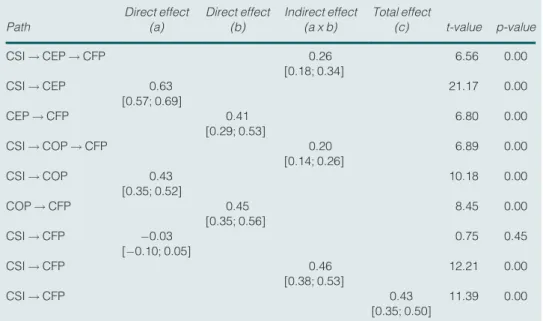
Table 4displays direct effects, indirect effects and total effects of the relationship between CSR strategic integration and company performance. There are two positive and significant direct effects: CSI!CEP (0.63) and CSI!COP (0.43).
Because there is an indirect effect caused by the mediation effect from CEP and COP in the relationship between CSI and CFP, the total effects which refer to the sum of direct and indirect effects should be calculated (Hairet al., 2017). As shown inTable 4, CSI!CFP has a negative and insignificant direct effect (0.03), but its total effect is stronger, positive and significant (0.43). Thus, the mediating effects are indirect-only (full) mediation type, suggesting that the effect of CSI ! CFP is completely transmitted with the help of the mediator variables; this is, CEP and COP (Hairet al., 2017;Nitzlet al., 2016).
5.3 Multi-group analysis based on company size
Multi-group analysis (MGA) was conducted to examine the moderator effect of company size. Prior to MGA, data groups were generated (Matthews, 2017) by splitting up the data set into two groups: small and medium enterprises (SMEs) (138 respondents) and large companies (297 respondents). Following the measurement invariance of composite models
Table 3 Indicator validity of formative measurements
First-order constructs VIF value Paths Path coefficient t-value p-value
Aligning 3.28 Aligning!CSI 0.33 [0.32; 0.35] 43.37 0.00
EffCom 3.31 EffCom!CSI 0.36 [0.35; 0.38] 52.44 0.00
SuppTM 4.65 SuppTM!CSI 0.38 [0.36; 0.39] 57.08 0.00
(MICOM) procedure (Henseleret al., 2016), MGA was run with the results inTable 5(Hairet al., 2018), showing that total effects in large companies are greater than in SMEs. More specifically, the significant differences rely on CSI!COP (0.32), followed by CSI!CFP (0.25).
6. Discussion
The empirical evidence provides support for the conceptualization of the integration as a HOC consisting of the three correlated LOCs: aligning with the company’s strategy, gaining support from top management and developing effective communication. The results reveal that such integration has a significant impact on employee performance (b = 0.63,t= 21.28,p<0.05) and on operating performance (b = 0.43,t= 10.18,p<0.05), which supportH1aandH1b, respectively. The results also show that strategic integration has a significant total effect on financial performance (b = 0.43,t= 11.39,p<0.05), supportingH1c.
This paper can provide empirical evidence that strategic integration gives a positive impact on companies’ performance socially and financially. More precisely, the results also show that CSR strategic integration has the strongest direct effect on employee performance measured by employee training, career opportunity, employee motivation and overall social performance. It confirms the argument that employees who are satisfied with the company’s commitment to CSR are more likely to be more positive, more loyal and more productive than those who work for less committed employers (Dey and Sircar, 2012; Sun and Yu, 2015).
Table 4 Direct effect, indirect effect and the total effect of CSR strategic integration Path
Direct effect (a)
Direct effect (b)
Indirect effect (a x b)
Total effect
(c) t-value p-value
CSI!CEP!CFP 0.26
[0.18; 0.34]
6.56 0.00
CSI!CEP 0.63
[0.57; 0.69]
21.17 0.00
CEP!CFP 0.41
[0.29; 0.53]
6.80 0.00
CSI!COP!CFP 0.20
[0.14; 0.26]
6.89 0.00
CSI!COP 0.43
[0.35; 0.52]
10.18 0.00
COP!CFP 0.45
[0.35; 0.56]
8.45 0.00
CSI!CFP 0.03
[0.10; 0.05]
0.75 0.45
CSI!CFP 0.46
[0.38; 0.53]
12.21 0.00
CSI!CFP 0.43
[0.35; 0.50]
11.39 0.00
Notes:p < 0.05 (two-tailed t-test for significance testing above 1.96). The values in brackets represent the 95% bias-corrected and accelerated confidence interval of the path coefficients obtained by running the bootstrapping routine with 5,000 samples in SmartPLS (Hairet al., 2017)
Table 5 MGA of company size in CSR strategic integration Path
Total effects original (large companies)
Total effects original (SME)
Total effects-diff (large-SME)
p-value (large vs SME)
CSI!CEP 0.66 0.54 0.12 0.11
CSI!CFP 0.50 0.25 0.25 0.00
CSI!COP 0.54 0.22 0.32 0.00
It is essential to note that there is also an indirect effect on financial performance (CFP) caused by mediation. The findings reveal that CSR strategic integration-financial performance relationships can be mediated by employee performance (indirect effect = 0.26,t= 6.56,p< 0.05) and by operating performance (indirect effect = 0.20,t= 6.89, p<0.05), supportingH2aandH2b, respectively. Interestingly, employee performance has the greatest mediation effect. High employee performance may indicate that employees are sufficiently and appropriately trained, are offered a good career path in their companies and are strongly motivated in their workplaces. These benefits are conducive to improved efficiencies and working productivity, and thus may enhance performance levels. Therefore, the current findings expand on previous studies on the mechanism of the CSR-CFP relationship by combining the mediating effects of employee and operating performance along the path from CSR integration to financial performance.
Furthermore, the findings of this study reveal that company size moderates the impact of strategic integration on operating performance (total effect difference = 0.32,p<0.05) and on financial performance (total effect difference = 0.25,p<0.05), supportingH3bandH3c.
These findings suggest that large companies have better company performance as a result of strategic integration compared to small and medium companies. Thus, the findings support the argument that there is a significant relationship between company size and CSR (Araset al., 2010). Larger companies may have stronger motives for engaging in CSR activities and can handle the complicated and rapid implementation of CSR engagement strategies better because they are more familiar with diverse operations (Tanget al., 2012).
In addition, large companies can produce better financial performance than smaller companies due to their access to resources and by achieving economies of scale (Chtourou and Triki, 2017).
7. Conclusions and limitations
This paper has developed and evaluated a model, which depicts the relationship between MCS adoption through CSR strategic integration and company performance. The results show that CSR strategic integration has a significant effect on employee, operating and financial performance. More importantly, the results offer new insights into how non-financial performance (employee and operating performance) mediates the effect of strategic integration on financial performance. The findings also suggest that maintaining good relationships with major stakeholders tends to lead to increased financial returns for these stakeholders because valuable intangible assets can be developed in companies that can be a source of competitive advantage (Chtourou and Triki, 2017).
This paper enriches the literature of MCS and CSR by integrating the stakeholder theory and contingency theory that allows a better understanding of how CSR can be integrated into business strategy and how such integration impacts the organization’s performance. It also provides empirical evidence that stakeholder relationships should be considered in evaluating the effects of CSR integration on financial performance mediated by employee performance and operating performance. Moreover, it also enhances our understanding of the possible impacts the CSR integration has on company performance while influenced by the organizational-specific contextual issues such as the company size.
The findings can encourage manufacturing companies in Indonesia and other developing countries to implement CSR more effectively. Rather than performing CSR separately from the company’s strategy or temporarily through philanthropic activities, these companies should integrate CSR into their business strategy and efficiently manage and control it to continue to gain advantages and benefits in their social and financial performance from such integration.
Nonetheless, the findings in this paper come with some limitations. Firstly, this paper relied on the information provided by each of the respondents as a single informant in their respective companies. Future research could overcome this shortcoming by involving
multi-informants such as combining surveys of employees to obtain a better insight into business activities. Secondly, this paper focuses on a single industrial field, the manufacturing sector and uses one region, Java. Future research may overcome this limitation by covering more than one industrial sector and one geographic region, for example, by combining the services sector both within and outside of Java. Thirdly, this paper used cross-sectional data and did not use multiple timeframes, which could be valuable for assessing the direction of the relationship between CSR integration and company performance. However, this research offers a basis for a future longitudinal study incorporating multiple timeframes to understand the trend and direction of such a relationship.
References
Agustinus, M. (2017), “99% Industri pengolahan di RI berskala kecil”, available at:https://finance.detik.
com/industri/d-3485556/99-industri-pengolahan-di-ri-berskala-kecil(accessed 2 February 2018).
Albertini, E. (2019), “The contribution of management control systems to environmental capabilities”, Journal of Business Ethics, Vol. 159 No. 4, pp. 1163-1180.
Aras, G., Aybars, A. and Kutlu, O. (2010), “Managing corporate performance. Investigating the relationship between corporate social responsibility and financial performance in emerging markets”, International Journal of Productivity and Performance Management, Vol. 59 No. 3, pp. 229-254.
Arjalie`s, D.L. and Mundy, J. (2013), “The use of management control systems to manage CSR strategy: a levers of control perspective”,Management Accounting Research, Vol. 24 No. 4, pp. 284-300.
Asif, M., Searcy, C., Zutshi, A. and Fissher, O.A.M. (2013), “An integrated management systems approach to corporate sustainability”,Journal of Cleaner Production, Vol. 56, pp. 7-17.
Bernal-Conesa, J.A., de Nieves Nieto, C. and Briones-Pen˜alver, A.J. (2017), “CSR strategy in technology companies: its influence on performance, competitiveness and sustainability”, Corporate Social Responsibility and Environmental Management, Vol. 24 No. 2, pp. 96-107.
Bhattacharyya, S.S. (2010), “Exploring the concept of strategic corporate social responsibility for an integrated perspective”,European Business Review, Vol. 22 No. 1, pp. 82-101.
Blowfield, M. and Frynas, J.G. (2005), “Setting new agendas: critical perspectives on corporate social responsibility in the developing world”,International Affairs, Vol. 81 No. 3, pp. 499-513.
BPS (2017), “Direktori industri manufaktur (2017)”, available at:www.bps.go.id/publication/(2017)/11/22/
9f0f42186e09ba761482e405/direktori-industri-manufaktur-(2017).html(accessed 22 November 2018).
Branco, M.C. and Rodrigues, L.L. (2006), “Corporate social responsibility and resource-based perspectives”,Journal of Business Ethics, Vol. 69 No. 2, pp. 111-132.
Burke, L. and Logsdon, J.M. (1996), “How corporate social responsibility pays off”,Long Range Planning, Vol. 29 No. 4, pp. 495-502.
Busaya, V., Kalayanee, K. and Gary, N.M. (2009), “CSR activities in award-winning Thai companies”, Social Responsibility Journal, Vol. 5 No. 2, pp. 178-199.
Chen, Y. and Wang, LL. (2010), “Non-market strategy and firm performance: the empirical study of listed companies in China”,(2010) International Conference on Management and Service Science, 24-26 Aug.
(2010), pp. 1-4.
Chenhall, R.H. (2003), “Management control systems design within its organizational context: findings from contingency-based research and directions for the future”,Accounting Organizations and Society, Vol. 28 Nos 2/3, pp. 127-168.
Chi, T. (2015), “Business contingency, strategy formation, and firm performance: an empirical study of Chinese apparel SMEs”,Administrative Sciences, Vol. 5 No. 2, pp. 27-45.
Chtourou, H. and Triki, M. (2017), “Commitment in corporate social responsibility and financial performance: a study in the Tunisian context”,Social Responsibility Journal, Vol. 13 No. 2, pp. 370-389.
Clarkson, M.B.E. (1995), “A stakeholder framework for analyzing and evaluating corporate social performance”,Academy of Management Review, Vol. 20 No. 1, p. 92.
Creswell, J.W. (2014), Research Design: qualitative, Quantitative, and Mixed Methods Approaches, 4th ed., SAGE Publications, Thousand Oaks, CA.
Crifo, P., Diaye, M.A. and Pekovic, S. (2016), “CSR related management practices and firm performance:
an empirical analysis of the quantity–quality trade-off on French data”,International Journal of Production Economics, Vol. 171 No. 3, pp. 405-416.
Dess, G.G. and Robinson, R.B. (1984), “Measuring organizational performance in the absence of objective measures: the case of the privately-held firm and conglomerate business unit”, Strategic Management Journal, Vol. 5 No. 3, pp. 265-273.
Dey, M. and Sircar, S. (2012), “Integrating corporate social responsibility initiatives with business strategy: a study of some Indian companies”,IUP Journal of Corporate Governance, Vol. 11 No. 1, pp. 36-51.
Donaldson, L. (2001),The Contingency Theory of Organizations, SAGE Publications.
Engert, S., Rauter, R. and Baumgartner, R.J. (2016), “Exploring the integration of corporate sustainability into strategic management: a literature review”,Journal of Cleaner Production, Vol. 112, pp. 2833-2850.
Freeman, R.E. (2010),Strategic Management: A Stakeholder Approach, Cambridge University Press, New York, NY.
Galbreath, J. (2006), “Corporate social responsibility strategy: strategic options, global considerations”, Corporate Governance: The International Journal of Business in Society, Vol. 6 No. 2, pp. 175-187.
Gallardo-Vazquez, D. and Sanchez-Hernandez, M.I. (2014), “Measuring corporate social responsibility for competitive success at a regional level”,Journal of Cleaner Production, Vol. 72, pp. 14-22.
Ganescu, M.C. (2012), “Corporate social responsibility, a strategy to create and consolidate sustainable businesses”,Theoretical and Applied EcoNomics, Vol. 11 No. 576, pp. 91-106.
Gond, J.P., Grubnic, S., Herzig, C. and Moon, J. (2012), “Configuring management control systems:
theorizing the integration of strategy and sustainability”,Management Accounting Research, Vol. 23 No. 3, pp. 205-223.
Hair, J., Hult, G., Ringle, C.M. and Sarstedt, M. (2017),A Primer on Partial Least Squares Structural Equation Modeling (PLS-SEM), 2nd ed., Sage, Los Angeles.
Hair, J., Sarstedt, M., Ringle, C.M. and Gudergan, S.P. (2018),Advanced Issues in Partial Least Squares Structural Equation Modeling, Sage Publications.
Hasan, I., Kobeissi, N., Liu, L. and Wang, H. (2018), “Corporate social responsibility and firm financial performance: the mediating role of productivity”,Journal of Business Ethics, Vol. 149 No. 3, pp. 671-688.
Henseler, J., Ringle, C.M. and Sarstedt, M. (2015), “A new criterion for assessing discriminant validity in variance-based structural equation modeling”,Journal of the Academy of Marketing Science, Vol. 43 No. 1, pp. 115-135.
Henseler, J., Ringle, C.M. and Sarstedt, M. (2016), “Testing measurement invariance of composites using partial least squares”,International Marketing Review, Vol. 33 No. 3, pp. 405-431.
Hosoda, M. and Suzuki, K. (2015), “Using management control systems to implement CSR activities: an empirical analysis of 12 Japanese companies”,Business Strategy and the Environment, Vol. 24 No. 7, pp. 628-642.
Jamali, D. and Karam, C. (2018), “Corporate social responsibility in developing countries as an emerging field of study”,International Journal of Management Reviews, Vol. 20 No. 1, pp. 32-61.
Joseph, C., Gunawan, J., Sawani, Y., Rahmat, M., Avelind Noyem, J. and Darus, F. (2016), “A comparative study of anti-corruption practice disclosure among Malaysian and Indonesian corporate social responsibility (CSR) best practice companies”,Journal of Cleaner Production, Vol. 112, pp. 2896-2906.
Katsoulakos, T.K. and Katsoulacos, Y. (2007), “Integrating corporate responsibility principles and stakeholder approaches into mainstream strategy: a stakeholder-oriented and integrative strategic management framework”,Corporate Governance: The International Journal of Business in Society, Vol. 7 No. 4, pp. 355-369.
Kemenperin (2020), “Industri pengolahan jadi andalan ekspor nasional”, available at:https://kemenperin.
go.id/artikel/21409/Industri-Pengolahan-Jadi-Andalan-Ekspor-Nasional(accessed 7 April 2020).
Kim, E., Nam, D-I. and Stimpert, J.L. (2004), “Testing the applicability of Porter”s generic strategies in the digital age: a study of Korean cyber malls”,Journal of Business Strategies, Vol. 21 No. 1, pp. 19-45.
Laguir, L., Laguir, I. and Tchemeni, E. (2019), “Implementing CSR activities through management control systems”,Accounting, Auditing & Accountability Journal, Vol. 32 No. 2, pp. 531-555.
Lee, M.D.P. (2008), “A review of the theories of corporate social responsibility: its eVolutionary path and the road ahead”,International Journal of Management Reviews, Vol. 10 No. 1, pp. 53-73.
Lindell, M.K. and Whitney, D.J. (2001), “Accounting for common method variance in cross-selectional research designs”,Journal of Applied Psychology, Vol. 86 No. 1, pp. 114-121.
Lindgreen, A., Swaen, V., Harness, D. and Hoffmann, M. (2011), “The role of ‘high potentials’ in integrating and implementing corporate social responsibility”,Journal of Business Ethics, Vol. 99 No. S1, pp. 73-91.
Lovelock, C.H., Stiff, R., Cullwick, D. and Kaufman, I.M. (1976), “An evaluation of the effectiveness of drop-off questionnaire delivery”,Journal of Marketing Research (JMR), Vol. 13 No. 4, pp. 358-364.
Mahmoud, M.A., Blankson, C. and Hinson, R.E. (2017), “Market orientation and corporate social responsibility: towards an integrated conceptual framework”,International Journal of Corporate Social Responsibility, Vol. 2 No. 1, p. 9.
Malmi, T. and Brown, D.A. (2008), “Management control systems as a package – opportunities, challenges and research directions”,Management Accounting Research, Vol. 19 No. 4, pp. 287-300.
Maon, F., Lindgreen, A. and Swaen, V. (2009), “Designing and implementing corporate social responsibility: an integrative framework grounded in theory and practice”,Journal of Business Ethics, Vol. 87 No. S1, pp. 71-89.
Marques-Mendes, A. and Santos, M.J. (2016), “Strategic CSR: an integrative model for analysis”,Social Responsibility Journal, Vol. 12 No. 2, pp. 363-381.
Matthews, L. (2017), “Applying multigroup analysis in PLS-SEM: a step-by-step process”, in Latan, H.
and Noonan, R. (Eds),Partial Least Squares Path Modeling: Basic Concepts, Methodological Issues and Applications, Springer International Publishing, Cham, pp. 219-243.
Maulamin, T. (2017), “The implementation of corporate social responsibility (CSR) in Indonesia: a case study approach”,European Journal of Research in Social Science, Vol. 5 No. 1, pp. 70-81.
Moir, L. (2001), “What do we mean by corporate social responsibility?”,Corporate Governance: The International Journal of Business in Society, Vol. 1 No. 2, pp. 16-22.
Nitzl, C., Roldan, J.L. and Cepeda, G. (2016), “Mediation analysis in partial least squares path modeling:
helping researchers discuss more sophisticated models”,Industrial Management & Data Systems, Vol. 116 No. 9, pp. 1849-1864.
Ofori, D.F. and Hinson, R.E. (2007), “Corporate social responsibility (CSR) perspectives of leading firms in Ghana”,Corporate Governance: The International Journal of Business in Society, Vol. 7 No. 2, pp. 178-193.
Ooi, S.K., Amran, A. and Yeap, J.A.L. (2017), “Defining and measuring strategic CSR: a formative construct”,Global Business and Management Research, Vol. 9 No. 4s, pp. 250-265.
Ping-Ju Wu, S., Straub, D.W. and Liang, T.P. (2015), “How information technology governance mechanism and strategic alignment influence organizational performance: insights from a matched survey of business and IT managers”,MIS Quarterly, Vol. 39 No. 2, pp. 497-A497.
PIRAC (2002), “Investing in ourselves: giving and fundraising in Indonesia”, available at:www.issuelab.org/
resource/investing-in-ourselves-giving-and-fund-raising-in-indonesia.html(accessed 6 February 2018).
Podsakoff, P.M., MacKenzie, S.B. and Podsakoff, N.P. (2012), “Sources of method bias in social science research and recommendations on how to control it”,Annual Review of Psychology, Vol. 63 No. 1, pp. 539-569.
Podsakoff, P.M., MacKenzie, S.B., Jeong-Yeon, L. and Podsakoff, N.P. (2003), “Common method biases in behavioral research: a critical review of the literature and recommended remedies”,Journal of Applied Psychology, Vol. 88 No. 5, p. 879.
Porter, M. and Kramer, M. (2011), “Creating shared value”,Harvard Business Review, Vol. 89 Nos 1/2, pp. 62-77.
Rangan, K., Chase, L.A. and Karim, S. (2012), “Why every company needs a CSR strategy and how to build it”, working paper, Harvard Business School, April 5.
Rasche, A., Morsing, M. and Moon, J. (2017),Corporate Social Responsibility: strategy, Communication, Governance, Cambridge University Press, Cambridge.
Razafindrambinina, D. and Sabran, A. (2014), “The impact of strategic corporate social responsibility on operating performance: an investigation using data envelopment analysis in Indonesia”, Journal of Business Studies Quarterly, Vol. 6 No. 1, pp. 68-78.
Reverte, C., Gomez-Melero, E. and Cegarra-Navarro, J.G. (2016), “The influence of corporate social responsibility practices on organizational performance: evidence from eco-responsible Spanish firms”, Journal of Cleaner Production, Vol. 112, pp. 2870-2884.
Ridho, T.K. (2018), “The development of CSR implementation in Indonesia and its impact on company’s financial and non-financial ferformance”,International Conference on Islamic Finance, Economics and Business (ICIFEB), pp. 324-334.
Sarstedt, M., Ringle, C.M. and Hair, J.F. (2017), “Partial least squares structural equation modeling”, in Christian Homburg, M.K. and Vomberg, A. (Eds),Handbook of Market Research, Springer International Publishing AG, pp. 1-41.
Shital, J. (2014), “Intertwining CSR with strategy – the way ahead”, Corporate Governance: The International Journal of Business in Society, Vol. 14 No. 2, pp. 211-219.
Simons, R. (1991), “Strategic orientation and top management attention to control systems”,Strategic Management Journal, Vol. 12 No. 1, p. 49.
Simons, R. (1995),Levers of Control: How Managers Use Innovative Control Systems to Drive Strategic Renewal, Harvard Business School Press, Boston.
Sun, L. and Yu, T.R. (2015), “The impact of corporate social responsibility on employee performance and cost”,Review of Accounting and Finance, Vol. 14 No. 3, pp. 262-284.
Tang, Z., Hull, C.E. and Rothenberg, S. (2012), “How corporate social responsibility engagement strategy moderates the CSR–financial performance relationship”, Journal of Management Studies, Vol. 49 No. 7, pp. 1274-1303.
Tanimoto, K. (2019), “Do multi-stakeholder initiatives make for better CSR?”,Corporate Governance: The International Journal of Business in Society, Vol. 19 No. 4, pp. 704-716.
Waagstein, P.R. (2011), “The mandatory corporate social responsibility in Indonesia: problems and implications”,Journal of Business Ethics, Vol. 98 No. 3, pp. 455-466.
Wall, T.D., Michie, J., Patterson, M., Wood, S.J., Sheehan, M., Clegg, C.W. and West, M. (2004), “On the validity of subjective measures of company performance”,Personnel Psychology, Vol. 57 No. 1, pp. 95-118.
Wang, Y. and Berens, G. (2015), “The impact of four types of corporate social performance on reputation and financial performance”,Journal of Business Ethics, Vol. 131 No. 2, pp. 337-359.
Werre, M. (2003), “Implementing corporate responsibility: the chiquita case”,Journal of Business Ethics, Vol. 44 Nos 2/3, pp. 247-260.
Worldbank (2020), “Indonesia overview”, available at:www.worldbank.org/en/country/indonesia/overview (accessed 7 April 2020).
Zhu, Q., Liu, J. and Lai, K-h. (2016), “Corporate social responsibility practices and performance improvement among Chinese national state-owned enterprises”, International Journal of Production Economics, Vol. 171, pp. 417-426.
Further reading
Hair, J., Celsi, M., Money, A.H., Samouel, P. and Page, M.J. (2011),Essentials of Business Research Methods, 2nd ed., M.E. Sharpe, New York, NY.
Corresponding author
Esti Dwi Rinawiyanti can be contacted at:[email protected]
For instructions on how to order reprints of this article, please visit our website:
www.emeraldgrouppublishing.com/licensing/reprints.htm
Or contact us for further details:[email protected]
Guest editorial
Integrated reporting and changes in management control systems in large Japanese companies
Management control system for corporate social responsibility implementation – a stakeholder perspective
Integrating management control systems, mindfulness and sustainability: an occupational health and safety perspective
Corporate board for innovative managerial control: implications of corporate governance deviance perspective
Adopting management control systems through CSR strategic integration and investigating its impact on company performance: evidence from Indonesia
The integration of sustainability and externalities into the “corporate DNA”: a practice-oriented approach
The impact of audit committee attributes on the quality and quantity of environmental, social and governance
On the linkage between CEOs’ statements and CSR reporting: an analysis of visuals and verbal texts
Contextual and corporate governance effects on carbon accounting and carbon performance in emerging economies
Enter Journal Title, ISSN or Publisher Name
日本語版を表示する 查看简体中文版本 查看繁體中文版本
Просмотр версии на русском языке