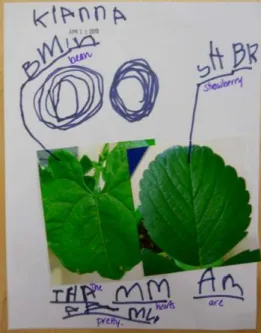
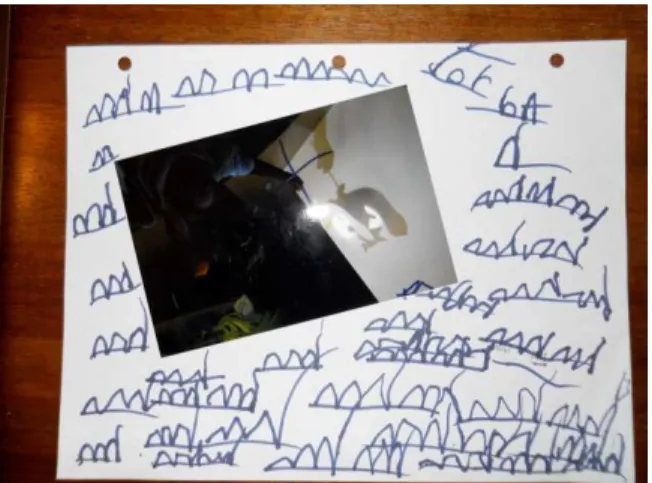
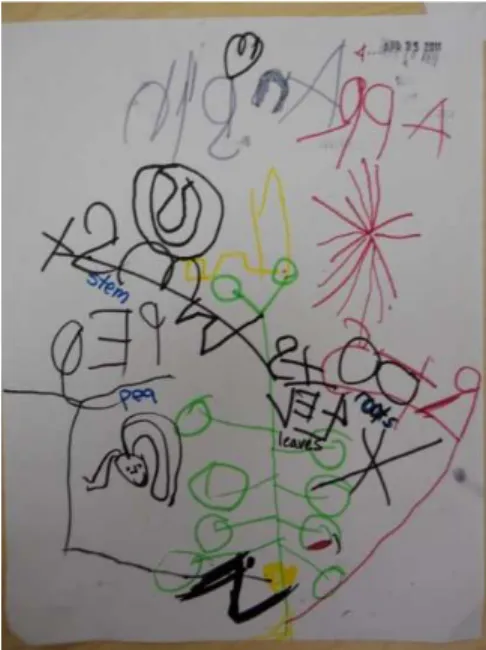
The informational texts and science journals acted as aids and mediated the activities of the children. At the beginning of the study, the average age of the children was 5 years and 1 month (n = 61 months). Each week, all the children participated in a small group guided inquiry activity (see Appendix C: Lesson Plans).
The majority of children could identify when scale in a. As with the other questions, 12% of the children also mentioned semantically accurate features in the photo (Response category 4F). Twenty-four percent of the children did not know how to respond to the question.
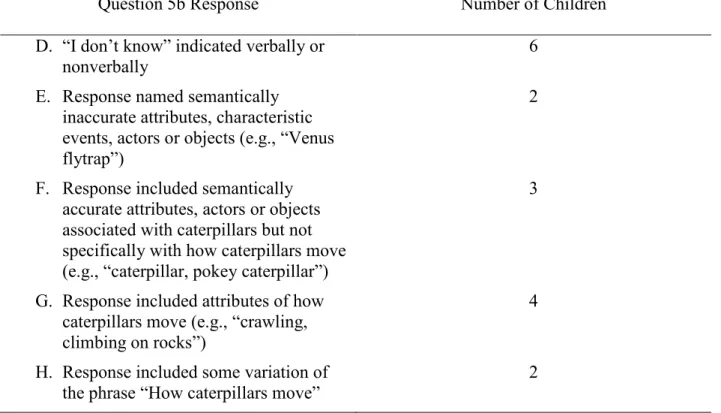
Seventy-one percent of children were unable to generate an answer to this question (Response Category 5A). Sixty-five percent of the children were able to identify that the caterpillar was underground (Response Category 6G). Twelve percent of the children were able to name the actual attributes of the caterpillar.
Three of the children responded specifically to the author's intention to teach about caterpillars (response categories 7R and 7S). Only 18% of the children (response category L) were able to provide a specific, potentially accurate label for the diagram. Few of the children were able to conventionally discuss the author's intention in using genre features.
None of the children could use the term head when identifying the feature. Second, some children were able to respond to the way the genre features functioned in the text. These explanations often led to eliciting the children's conceptual or genre features.
In this section, I focus on the acceptance of children's productions of journals with informative text features. Therefore, I conclude with a discussion of the strong role adult writing played in the children's journals. Adult writing or adult writing played a key role in the acceptance of children's approaches in scientific journals.
In the next chapter of this report, I provide an in-depth analysis of children's science journals.
Identification of Focal Children
In this analysis, I examined the new ways young writers used text structures in their scholarly journals. Informational texts (eg scientific journals) contain distinct visual elements that mark them as members of a genre. In the analysis, I describe the new patterns of drawing and photography use in scientific journals.
The data I used for this part of the analysis consisted of diary entries from a focus group of children. Haley and DeCosta did not produce journal entries in two weeks, so I chose alternate entries from the other weeks. An external evaluator collected this data at the beginning of the school year as part of the ELLS project.
In the name writing task, children were asked to write their names on two different occasions. The raters measured the completeness of the children's names, determining whether they could produce a signature in which all letters of their names were written in a recognizable form. In the photo labeling task, the children were shown a photo of themselves engaged in an activity and then asked to write a caption for the photo.
Three features of the photo label task were scored: the congruence between the content of the photo and the message, the deliberate use of print and the shape of the marks. Using the results from these two tasks on the WriteStart! I ranked all participants by conventional form levels and then divided them into groups exhibiting low, moderate, and high levels of conventionality. The children who showed lower levels of conventional form used letter-like forms or personal scripts.
Children who used moderate levels of conventional form used a mixture of conventional letters and letter-like forms with no letter/sound correspondence. Children who used higher levels of conventional form used conventional letters with varying degrees of letter-sound correspondence. I chose the focal children because they most consistently demonstrated low, moderate, or high levels of convention in both tasks.
Analysis of Focal Children’s Science Journals
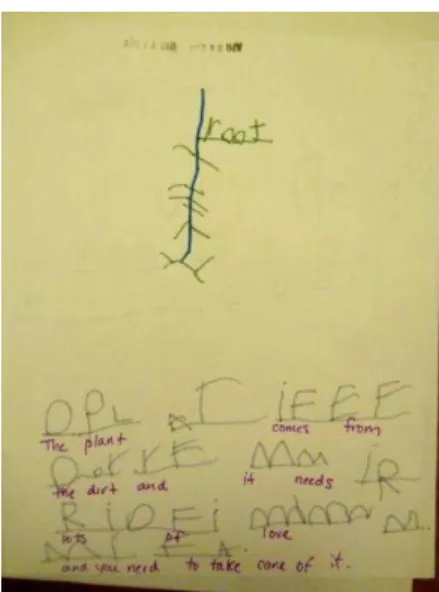
Rowe & Neitzel, 2008) while writing the assessment, I coded the captions and labels in the children's journal entries. I describe patterns for the genre structures of the children's messages and the use of tags and captions to accompany the visual elements of the genre in their diaries. However, most children used words or phrases and sayings when structuring their messages.
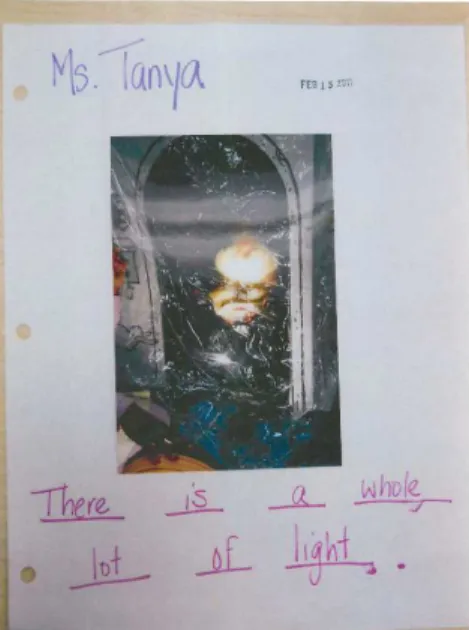
For the second 2 weeks of the unit, I showed the children demonstrations of using photos in journals. For the remaining entries, children either turned the photograph into a diagram by labeling certain features (n = 9) or created a diagram with labels and included a caption (n = 11). Most often (n = 9), however, children provided a message that described a feature that was obvious or visible in the photograph, or named a characteristic event related to the subject of the photograph.
In the light unit, the children used the enlarged photo of the tulip in their entries. When writing captions for photo diagrams, children most often provided a message that mentioned a feature of the photo (n = 8) or a characteristic event related to the subject of the photo (n = 1). When creating photo diagrams with captions, almost all children (n = 10) used a label and provided a message for that label that accurately located and identified a feature in the picture.
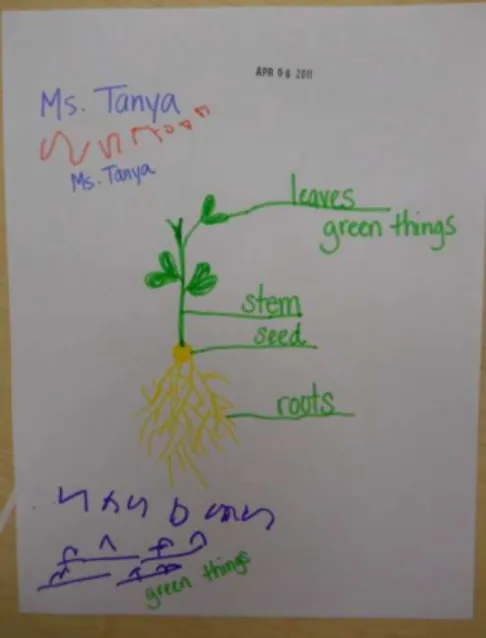
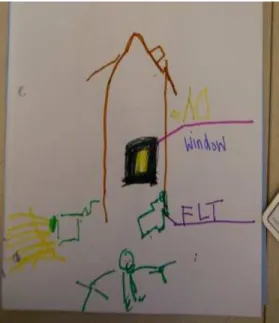
In the remaining entries, the children either created a diagram by adding one or more labels (n = 9) or created a diagram with a label (n = 9). In this question, I coded the children's answers only once for a semantic match between the message and the drawing (see Table 26) and once for the type of message (see Table 27). The majority of the children who wrote captions to accompany their drawings either provided messages that.
In addition, all children were able to create a message for a label that accurately located and identified a feature in the drawing. However, none of the children accepted subsequent invitations to use scale in their own drawn diagrams. Despite multiple demonstrations of using enlarged drawings in diaries, none of the children made such a drawing in their diaries.