
2 Private Profit, Public Risk: Institutional Antecedents to the Modern Military Procurement System in the Armament Program for. In light of these chapters, the old (and still widely accepted) view of how "the war brought the economy out of the Depression" must be abandoned. Friedberg's extended argument that despite the ferocious demands made by the MICC on the U.S.
In the Shadow of the Garrison State: America's Antistatism and Cold War Grand Strategy.
Regime Uncertainty: Why the Great Depression Lasted So Long and Why
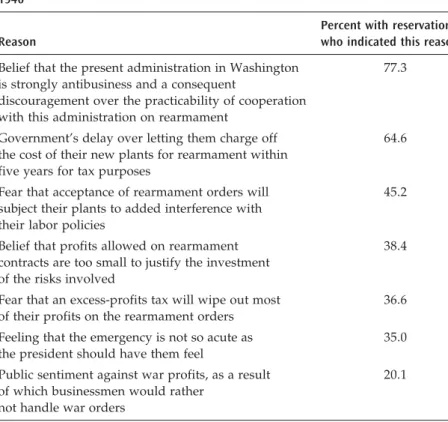
My hypothesis complements my earlier argument that the Great Escape did not occur until after the end of the war. These responses provide extraordinary testimony to the fears of business leaders on the eve of war. 1993) Private Profit, Public Risk: Institutional Antecedents of the Modern Military Procurement System in the 1940- Armament Program.
1946) The United States at War: Development and Administration of the War Program by the Federal Government.

Private Profit, Public Risk: Institutional Antecedents of the Modern Military
By the end of the war, the War Department had certified almost $5 billion, the Navy ca. By the end of the war, however, DPC had invested more than $7 billion in the industry. Patterson's testimony also mentioned another consequential factor for the distribution of war business.
Colonel Rutherford, Secretary of the War Resources Board, served before the war in the Army Planning Branch (Blum, 1962). Furthermore, the most widely accepted explanation of the events of the war years cannot withstand critical scrutiny. During the war, the government drew the equivalent of 22 percent of its pre-war workforce into the armed forces.
29–32 for a detailed statement of the physical quantities of various munitions produced during the war. Cambridge: Bowes and Bowes, p. 1952) Long-term changes in the national income of the United States of America since 1870. Income & Wealth of the United States: Trends and Structure, edited by Simon Kuznets.
Wartime Socialization of Investment
A Reassessment of U.S. Capital Formation in the 1940s
It is an estimate of the market value at a particular date of a particular business plan. Clearly the big gorilla of the government's wartime investment program was the purchase of equipment (column 7 of table 4.1 shows this fact directly as a cumulative net investment of $84.8 billion in equipment over the same years) . In addition to causing unsustainable distortions in the sectoral and industrial composition of the capital stock, the government's wartime investment program also caused distortions in the locational distribution of the capital stock (McLaughlin, 1943, pp. 110-13).
Matters are even worse with regard to the deflation of permanent munitions, which, as we have seen, accounted for a large part of the government's wartime investment, according to NIPA. Matters may not be so desperate with regard to the deflation of the government's wartime expenditure on industrial plant and equipment, especially the GOPO stocks created during the war and partly sold to private owners in the early years after the war. Although this sector undoubtedly played a central role in the production of munitions, it accounted for less than one-third of the total pre-war economy, the other two-thirds taking a very short cut indeed due to the government's war investment programme.
World War II's Battle of the Potomac." Such conflicts arose in relation to price controls, taxation, material allocations, rationing and numerous other matters. Items among those treated during the deactivation of the Huntsville Arsenal in the late 1940s; see http://www.redstone.army.mil/history/studies/. Some of the ammunition produced during the war must also have been used in military training and in the Korean War during the post-1945 decade.
In The Cambridge Economic History of the United States, geredigeer deur Stanley L. New York: Cambridge University Press, pp. New York: Holmes & Meier, pp. 1946) The United States at War: Development and Administration of the War Program deur die Federale Regering.

From Central Planning to the Market
The American Transition, 1945–47
Further, is it likely that when the vast majority of soldiers returned to the civilian workforce—about 9 million in the year after V-J Day—. Recall that the orthodox story of the postwar transition places great weight on drawing on accumulated liquid assets to finance consumers. The most serious flaw in this part of the orthodox story is that individuals did not actually reduce their liquid assets after the war.
How did consumers finance their increase in spending during the post-war economic recovery? The potential for a reduction in personal savings (personal savings relative to disposable personal income) was enormous after V-J Day. After saving at much higher rates than they would have chosen without the wartime restrictions, households quickly reduced their savings rate when the war ended.
The revival of the post-war private economy was supported by an investment boom as well as an increase in consumer spending. Firms could finance their increased investment spending, in part, because, unlike individuals, they unloaded some of the government securities they had purchased during the war. However, Lacey has written: “Truman and his fellow fair traders were generally reconciled to the existing structure of the economy.
University and audience at the annual meeting of the Society for Economic and Business History in 1998. The strengthening of the armed forces, mostly through conscription, is fully (and then partly) responsible for the reduction in unemployment.

The Cold War Economy: Opportunity Costs, Ideology, and the Politics of Crisis
An increase in G-M's share of GNP can occur at the expense of P's share, G-NM's share, or both. As a stylized description of Cold War stocks, the following approximates the truth: P stock = 80 percent;. Given the main trends, one can continue to ask whether increases in the G-M share during military mobilizations occurred at the expense of the G-NM share or the P share.
In the early 1950s, the choice of production concept significantly changed the description of the business cycle (Figure 6-5). We can conclude that with the establishment of a full-fledged Cold War regime, real defense spending almost tripled. This staggering sum is equivalent to the entire GNP of the United States in the two-year period 1977-1978.
The problem of lingering skepticism was inherent in the distance of the subject from their immediate experience. The Cold War era witnessed a new connection of military activity with the political economy of the United States. The increase in the military portion of GNP during the Korean War and the Vietnam War came entirely at the expense of the private portion.
More definitive documentation and analysis of the claimed link between public opinion and defense spending appears in the essay by Higgs and Kilduff (1993). Meier for The Independent Institute, p. 1975) Historical Statistics of the United States, Colonial Times to 1970.

Hard Coals Make Bad Law: Congressional Parochialism versus National Defense
The congressmen had influence on the administration, and they realized that its management of the defense program could be turned to the advantage of the shrinking anthracite coal industry. In May 1961, an all-stakes meeting in Washington was organized by congressmen with constituents in the coal region. Lampert, and other senior Department of Defense (DoD) and military officials.
Together they covered virtually all the coal fields still being worked (Congressional Directory, 1962, pp. 139-41). In these two positions, he boasted, he was "identified with three-fourths of the entire federal budget. Serving his thirteenth term, McDade was the senior member of the Pennsylvania delegation.
But Congress did accept part of the proposal, the pork barrel part: it called for greater use of coal at bases in the continental United States. Ultimately, Specter's amendment was enacted as section 9099 of the 1987 Defense Appropriations Act, passed in October 1986. For a clever test of the influence of ideology on defense voting in the Senate, see Nelson and Silberberg (1987).
For a presentation of the safety risk argument for coal-fired plants, see the remarks of David G. For the Army's refutation of the arguments, see Military Facilities: Conversion to District Heat in Germany (1987, pp. 3, 24–5).
Airplanes the Pentagon Didn’t Want, but Congress Did
The porcupine's habits can be observed, for example, in the history of the A-7. Such a tripartite coalition is aptly described by political scientists as an "iron triangle." The Texas delegation is one of the largest and most cohesive in Congress. The purity of the coalition's motives was put to the test in the House of Representatives in July 1981.
Congressional micromanagement of the defense program, increasing since the early 1970s, grew in the 1980s. The significant shifts in the political landscape associated with the Vietnam War and the Watergate scandal fueled the growth of micromanagement. This kind of congressional involvement in the details of the defense budget doesn't just contribute to spending.
Although most of the micromanaging takes place in the Armed Services Committees and the Defense Appropriations Subcommittees, activity on the floor of the House and Senate has also escalated. The story of the A-10, another subsonic attack aircraft, resembles the story of the A-7 in important ways. Of course, people with a stake in the continued production of the A-10 fought to keep it going.
While the administration's budget shifts and the Air Force's gamesmanship contributed to the debacle, certain members of Congress deserve much of the blame. However, the pig hawks had demanded a price for their agreement: a total of $300 million, previously appropriated but not spent, for the T-46 was reallocated to Navy aircraft programs - the EA-6B, the A-6, and the E-2C - all business of the Grumman Corporation on Long Island.