ISSN 2087-7013
Determinant of Qard: Evidence from Indonesian Islamic Rural Banks
Yeny Fitriyani¹*, Mussollini Sinsuat Lidasan²
1 Department of Sharia Economics, STAI Syubbanul Wathon, Magelang, Indonesia,
2 Al Qalam Institute for Islamic Identities and Dialogue in Southeast Asia, Ateneo De Davao University, Davao, Philipines
Submitted: 13 April 2023; Revised: 15 September 2023; Accepted: 21 September 2023
Abstract
This study was conducted to offer an assessment of the qard factors, concerning Indonesian Islamic Rural Banks. To conduct this analysis, data from Indonesian Rural Banks and macroeconomic panels were used. In addition, an approximated generalized method of the moment was also used to report qard determinants from 2012-2022. The results showed that Return on Assets (ROA), Bank Operational Costs to Operating Income (BOPO), and inflation negatively impacted the distribution of qard, while Non-Performing Financing (NPF) variable indicated a positive and significant impact. Valuable recommendations were formulated by comprehending the interplay between profitability ratios and macroeconomic conditions. These recommendations informed the development of products within the context of BPRS and Sharia banking, contributing to rural economic growth through qard financing. This study developed BPRS and Sharia banking products to increase rural economic growth. Qard financing served as an essential resource for individuals who did not meet the eligibility criteria of conventional banks. The adoption and expansion also promoted financial inclusion for marginalized communities.
Keywords: generalized method of moments, Indonesian Islamic rural banks, qard financing
* Corresponding author
Muqtasid 14 (2), 2023: 93-114 http://muqtasid.iainsalatiga.ac.id DOI:http://dx.doi.org/10.18326/muqtasid.v14i2.93-114
INTRODUCTION
Qard is a collaborative instrument commonly used in the form of agreements.
This arrangement is rooted in the transfer of property ownership, which can be reciprocally exchanged (Abidin & Kaharuddin, 2021). Mukhibad and Setiawan (2020) stated that Islamic banks conducted the distribution of qard to improve welfare, reduce poverty, and protect the environment. As an Islamic bank facility, the distribution allows customers to access the provision of funds to make loans. The transactions and distribution represent a supplementary financial product designed to cater to customers in need of funds for a relatively brief period, with the expectation of repaying at a predetermined time (Adnan et al., 2020). Instead of loans, qard can be provided based on agreements (Hassan, 2014) and Sharia financial institutions do not necessitate the collateral. Qard improves socio-economic concerns (Hassan et al., 2021) and social welfare, educates lenders, and benefits borrowers (Saprida et al., 2020). According to Firmansyah (2016b), Yeubun et al. (2021), and Wijayanti et al. (2022), Islamic banks can finance MSMEs using qard financing. The rural banks show the rise of Islamic finance for the society and MSMEs, stimulating economic growth (Mardhiyaturrositaningsih, 2022; Suseno & Fitriyani, 2018)
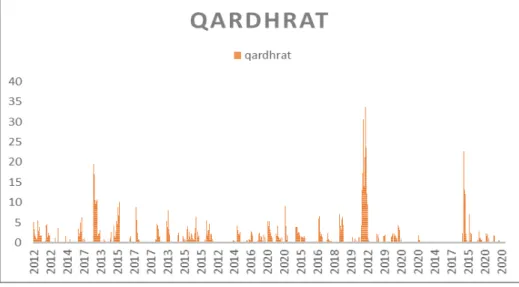
Figure 1 reports the fluctuating qard funding statistics of 164 Indonesian Islamic Rural Banks, as reported by the Financial Services Authority (OJK), spanning 2012 to 2020. The quantity of Indonesian Islamic Rural Banks may influence the qard finance capabilities of a bank. Due to the extensive resources and comprehensive geographic coverage, larger banks can provide qard finance to a more significant number of customers. The allocation is subject to the influence of several internal and external factors within the framework of Islamic organizations. The internal components contain various financial ratios, such as bank size, profitability ratios, efficiency ratios, capital ratios, effectiveness ratios for fund allocation, non- performing financing rates, and liquidity ratios. In Islamic banking, it is important to consider many external elements, namely macroeconomic indices such as inflation and GDP.
Figure 1. Qard Financing of BPRS 2012-2020
Several studies have shown that qard influences the performance of Islamic financial institutions (Zamore et al., 2019), unlike Salem (2015), Demsetz et al., (2011), Farooq (2011), Panda and Leepsa (2017). The distribution of funds creates mutual relationships between Islamic banks, MSMEs, and communities.
These banks increased customer numbers (Arifin & Busriadi, 2020), MSMEs stimulated community economies (Triyowati & Masnita, 2015), productive business development, and short-term finance sufficiency (Ascarya, 2020). According to Mumtaz and Mahardika (2021), qard products impact the profitability of Islamic banks due to the interrelationship and this is consistent with Puspasari and Mawardi (2015) and Kholidah (2019).
Several studies related to the profitability of Islamic banking have been carried out. According to Afkar (2017), Agustina and Hilmania (2021), Oktaviani et al. (2022), and Sari (2021), qard financing has no effect on profitability in banking.
Kholidah (2019), Mumtaz and Mahardika, (2021), also Puspasari and Mawardi (2015) stated that the variable affected bank profitability. Furthermore, qard financing impacted increasing banking customers, as stated by Hannanong and Aris (2018), and Mukhibad et al., (2019). Yeubun et al. (2021); and Triyowati and Masnita (2015) showed that the variable also affected MSME income.
Even though qard finance adheres to the same basic Islamic principles, Islamic Rural Banks (Baitul Maal wat Tamwil, BPRS) and fully fledged Shariah Banks in Indonesia may differ in how they are used and how much they cover (Al-
Banna & Nurdany, 2021). There are differences in their operational scope, areas of concentration, and resource capacities. Islamic rural banks are more neighborhood- focused and frequently provide smaller-scale, immediate services to meet the requirements of their communities. Shariah Banks, on the other hand, serves a more varied customer base and has a more significant national and occasionally worldwide reach. They provide a more comprehensive range of services, including business finance and larger-scale projects (Nugraheni & Muhammad, 2023; Sadr, 2014)
Study on the distribution of funds has been carried out by many parties. The analyses based on tracing historical studies are classified into empirical, normative, and qard studies during Covid-19 pandemic. Nawaz (2018), Muneer and Khan (2019), Mukhibad et al (2019), Muneer and Khan (2022), and Selim et al. (2022) conducted empirical qard analysis. Meanwhile, normative qard studies were carried out by Farooq (2011), Bhuiyan et al (2012), Ismal (2013), Hassanat and Al tarawneh (2015), Saqib et al (2015), Abdullah (2015), Ebrahim and Sheikh (2016), Kholvadia (2017), Sadr (2017), Selim (2019), Selim and Hassan (2020), Selim (2021), Çakır and Abu-Sarhan (2021), and Aderemi and Ishak (2023). Iskandar et al. (2020), Iskandar et al. (2021), and Rabbani et al. (2021) investigated the pandemic.
The findings on the distribution of qard funds and their relationship with profitability ratios should exhibit greater consistency. Qard, as interest-free loans, can serve as a valuable tool for Sharia-compliant banks to instill trust in potential customers who recognize its advantages. However, the distribution of social funds does not necessarily lead to an increase in financing or enhanced profitability (Mukhibad et al., 2019). Despite the benefits, qard financing is not extensively used due to its low return on investment and lack of net profit value (Tripp, 2016).
Hamidi and Worthington (2018) and Parewangi and Iskandar (2020) stated that qard achieved social responsibility promises because of inconsistencies between the original role and application in Sharia institutions. Therefore, there should be more clarity between the lofty goals and the application in Islamic banking.
Qards are crucial to Islamic banking, but studies on the distribution in Sharia Rural Banks (BPRS) are limited. Due to its proximity to residential areas, BPRS analysis is essential. There are 164 BPRS establishments in numerous locations with different market characteristics. Considering the previous difficulties, more studies are needed to determine qard factors, particularly in BPRS. This study focuses on the qard (loan) funds distribution by regional Islamic banks (BPRS) within Indonesia.
While most existing research is based on international or commercial Islamic banks, this study utilizes data from regional banks to analyze local characteristics and impacts. The research uses a large sample targeting specific regions within a country.
This provides an opportunity to understand the distribution of qard funds and their impacts more intricately.
This study investigates qard funding allocation, and the distribution determinants using BPRS data. Furthermore, it differs from earlier analyses that rely on Sharia commercial bank data and uses a large sample of provinces in a country.
The results analyze the effects of internal and external factors on Indonesian Islamic rural banks’ qard fund allocation. Therefore, this investigation can shed new light on improving the distribution of qard funds by Islamic rural banks in Indonesia.
Hypothesis
Bank size affects financing distribution (Firmansyah, 2016), depending on the asset worth. According to Muhammad (2019), assets are resources formerly controlled by Islamic entities to gain economic benefits through banking. Therefore, the hypotheses are:
H1: The size of the bank has a positive effect on the distribution of qard.
Operational ROA and bank profitability are positively correlated. Loan guarantees, monitoring, and control are necessary to preserve loan quality. These measures reduce agency problems and moral hazard (Panjawa et al., 2017; and Oktaviani & Pangestuti, 2012), hence the hypotheses are:
H2: There is a positive relationship between ROA and qard financing
BOPO (Operating Costs and Operating Income) is an Islamic bank’s efficiency measure that compares operational expenses to revenue (Blankson et al., 2022; Hanafi et al., 2022). Islamic banks also incur administrative and distribution costs. Qard finance does not have yield expenses but must be controlled by Islamic banks. Therefore, Islamic bank efficiency is not directly tied to qard financing and the hypotheses are:
H3: There is a positive relationship between BOPO and qard financing
High CAR means financial resources to offset hazardous funding. Husaeni (2017) claimed that the capital adequacy ratio did not alter funding distribution.
However, Ali and Miftahurrohman, (2016) were not in agreement. Several empirical
studies suggested that bank capital enhanced financing distribution (Muhammad et al. 2020; Havidz & Setiawan, 2015), and the hypotheses are:
H4: EQTA has a positive influence on qard financing
Higher FDRs indicate more bank financing, hence more power is expected (Panjawa et al., 2017; Suhel et al., 2022). Low FDR may indicate excess liquidity and the need to fund banking activities with the deposit base. Islamic institutions with high fund provision effectiveness ratios have more funds for qard financing.
Therefore, banks may efficiently use their funds to provide qard loans to clients and the hypotheses are:
H5: FDR has a Positive influence on qard Financing
To tackle funding problems, Islamic banks must regulate risk and diversify to low-risk financing. NPF’s negative connection in qard financing limits Islamic banks to low-risk enterprises (Halim & Buana, 2021). Therefore, Islamic banks can use the fund to avoid issues and the study’s hypotheses are:
H6: NPF has a negative effect on qard financing
The inflation rate is calculated by comparing current to past prices and the Consumer Price Index measures inflation. The CPI component is the average price change of a household’s goods and the changes indicate inflation or deflation.
Furthermore, changes in commodities and services prices affect consumption patterns and funding distribution. Since money is needed to initiate a purchase, Qard finance can assist the community in coping with growing prices and the hypotheses are:
H7: Inflation has a negative effect on the distribution of qard financing
GDP on prevailing and mild prices shows movements and annual economic growth, respectively. In this study, economic growth per province is measured by Gross Regional Domestic Product (GDP) at modest constant prices. The development aids financial inclusion, which has been reported through economic policies and poverty alleviation (Suseno & Fitriyani, 2018). Hartarska et al. (2015) showed that lending increased rural economic growth. The relationship between economic growth and qard fund distribution warrants additional study and the hypotheses are:
H8: GRDP has a positive effect on the distribution of qard financing
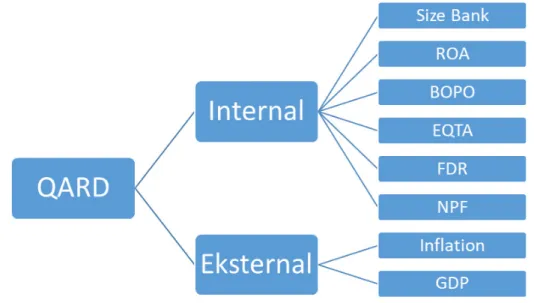
This study identifies the elements that impact the quality of finance at BPRS and the conceptual framework is shown in the diagram below:
Figure 2. Conceptual Framework
METHOD
This study used a quantitative design to determine qard in rural banks. The approach provided valuable insights, explained events more quantitatively, and created generalizations (Creswell, 2009). Rural bank qard was measured quantitatively and the analysis used Indonesian Islamic rural bank samples from 2012-2022. The data were sourced from www.ojk.go.id, the financial services authority’s website.
Furthermore, bank-level financial ratios were calculated using the comprehensive balance sheet and income statement data. Provincial-level data sets such as GDP growth and inflation from the central statistics agency (www.bps.go.id) were also investigated. These data sources provided panel data on 164 Islamic rural banks in 19 Indonesian provinces, yielding 991 observations after winsorizing extreme values and the result was handled with Stata 17.0.
This study used the dependent and the independent variable. The dependent variable was qard distribution, measured as the ratio of qard receivables to total financing multiplied by 100. Meanwhile, the independent variables were grouped into bank-level control, macroeconomic, and dummy control. Bank-level control variables consisted of bank size (LRTA), profitability (ROA and BOPO), capital ratio
(EQTA), effectiveness ratio of provision of funds (FDR), non-performing financing ratio (NPF), and liquidity ratio (LATA). Furthermore, the macroeconomic control variables were inflation and GRDP. The data used in this study were from 2010- 2022, even though only 2012-2020 met GMM analysis standards. The data were grouped using a dummy year and the variable was assigned a value of 1 from 2012 to 2022 and 0 for all other years. The province dummy variable was defined as having a value of 1 for each province in Indonesia and 0 for others.
The table below provides explanations for the operational definitions of variables:
Table 1. Description of Variables
Variable Name Variable Descriptions Sources
DEPENDENT VARIABLE
Lag Qard The Ratio of qard to total financing (qard) Fin. Reports INDEPENDENT VARIABLES
Bank variables
Size Aset Ratio of total assets to Indonesian Islamic rural
banks assets (LRTA) Fin. Reports
Return on Asset Ratio of net profit to toal assets (ROA) Fin. Reports BOPO Ratio of Operational Costs on Operational
Revenues (BOPO) Fin. Reports
Capital adequacy ratio Ratio of equity to total assets (CAR) Fin. Reports Financing to deposit ratio ratio between the banks total financing and total
deposits (FDR) Fin. Reports
Non performing financing GrossNPFtotal (NPF) Fin. Reports
Lagged liquidity Liquid assets over total assets (LATA) Fin. Reports Macroeconomic variables
Real GDP growth Percentage change of real gross domestic product
(GRDP) BPS
Inflation Percentage change of consumer price index
(INFL) BPS
Dummy variables
Dummy year 1 when the year is 2012-2022, 0 otherwise -
Dummy province 1 for each province; 0 otherwise -
This study uses dynamic panel data regression with GMM estimation.
Dynamic panel data controls reverse causality from qard to NPF and other independent variables (Anderson & Hsiao, 1982). Furthermore, this estimation uses the GMM system because the variables are interrelated (Arellano & Bover, 1995) and the concept consists of a one-step and two-step system. This study used a two-
step GMM system because it was more robustly tested, efficient, and powerful in dealing with symptoms of heteroscedasticity and autocorrelation. The following is the equation model and the stages of analysis performed:
Y(n)it = α+ β1LRTA1it+ β2ROA2it + β3BOPO3it + β4EQTA4it+ β5FDR5it + β6NPF6it +β7LATA7it + β8PDRB8it + β9INFL9it + β10D10it + eit ...(1) Y denotes the dependent variable, namely qard and LRTA, ROA, BOPO, EQTA, FDR, NPF, LATA, GRDP, and INFL, indicating an independent variable. D describes the dummy control variable vector, and ℇ denotes the error term. Meanwhile, the subscripts i and t represent the i-bank name and the t-time, respectively. The analysis begins with descriptive statistics, multicollinearity, hypothesis, instrument validity, and autocorrelation tests.
Hypothesis testing uses the GMM method, which produces unbiased, consistent, and efficient parameter estimators (Blundell & Bond, 1998). As a general estimation method, the method is expected to overcome the shortcomings of other estimations, such as OLS. The instrument validity consisted of the Hansen and Sargan tests of over-identification restrictions, which analyzed the validity of the null hypothesis. Meanwhile, the failure to reject the null hypothesis supports the choice of instrument (Hansen, 1982; Sargan, 1958).
The autocorrelation test examines the null hypothesis that the error term on the difference belongs to the first order and is serially correlated. Failure to reject the null hypothesis of the second-order serial correlation implies that the original error terms are uncorrelated and the moment conditions are correctly defined since the value of AR(2) > 0.05 (Arellano & Bond, 1991). This study used the AR test (2) as an autocorrelation test to determine the consistency of the estimates obtained.
RESULT AND DISCUSSION Empirical Results
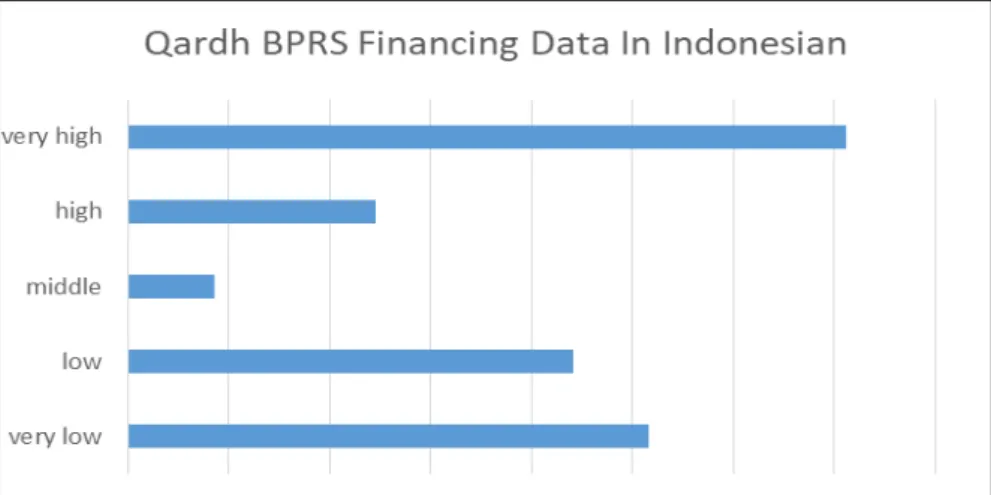
The intervals generated from Indonesian Islamic Rural Banks’ 2012-2022 qard expenditure study are as follows:
Figure 3. The Percentage Interval for Qard Distribution
The interval chart showed that 164 Indonesian Islamic Rural Banks distributed qard. The distribution percentages were 35.58%, 12.27%, 4.29%, 22.09%, and 25.77% for highly high, high, moderate, low, and deficient frequencies, respectively.
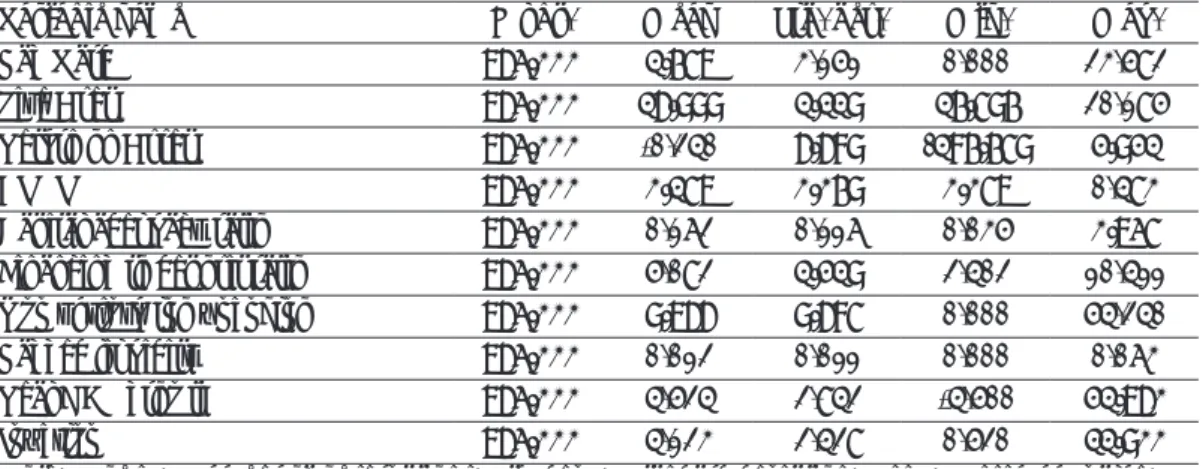
Table 2. Descriptive Statistics
Variable name N obs. Mean Std. dev. Min. Max.
Lag Qard 763.000 1.457 3.151 0.000 23.582
Size Aset 763.000 16.999 1.119 14.594 20.185
Return on Asset 763.000 -0.240 6.689 -184.459 2.921
BOPO 763.000 0.157 0.049 0.057 0.483
Capital adequacy ratio 763.000 0.162 0.116 0.035 0.735
Financing to deposit ratio 763.000 5.082 1.219 2.402 10.411
Non performing financing 763.000 9.766 9.685 0.000 54.240
Lagged liquidity 763.000 0.012 0.011 0.000 0.063
Real GDP growth 763.000 4.524 2.842 -4.500 21.760
Inflation 763.000 4.123 2.428 0.520 11.900
Note: N obs. = Number of observations; Std. dev. = Standard deviation; Min. = Minimum value;
Max = Maximum value.
Table 2 shows the maximum qard financing value and the mean are 23.582 and 1.457, respectively. This study shows that Islamic Rural Banks uphold mutual aid to assist needy people in line with Saprida et al. (Saprida et al., 2020). Furthermore, these banks provide lenders and borrowers with valuable insights and benefits.
Table 3. Multicollinearity Diagnostics
QARD LRTA ROA BOPO EQTA FDR NPF LATA GGDP INFL
QARD 1.000
LRTA 0.037 1.000
ROA -0.106 0.080 1.000
BOPO -0.023 -0.442 -0.006 1.000
CAR -0.058 -0.231 0.025 -0.093 1.000
FDR 0.054 0.306 -0.033 -0.489 -0.066 1.000
NPF -0.010 -0.247 -0.026 0.409 0.081 -0.013 1.000
LATA 0.164 -0.241 0.019 0.169 -0.061 -0.154 0.058 1.000
GDP 0.018 -0.139 0.091 0.049 0.079 -0.138 0.013 0.041 1.000
INFL 0.035 -0.156 0.033 0.152 0.112 -0.161 0.008 0.134 0.368 1.000 Note: Qard = Qard Financing; LRTA = size assets; ROA = return on assets; BOPO= Operational Costs on Operational Revenues; CAR = Capital adequacy ratio; FDR = Financing to deposit ratio; NPF = Non- performing financing; LATA = Lagged liquidity; GDP = Real GDP growth; INFL = Inflation.
Table 3 shows that the correlation coefficients from each variable are below 0.8 and the study is suitable for further analysis due to the absence of multicollinearitys.
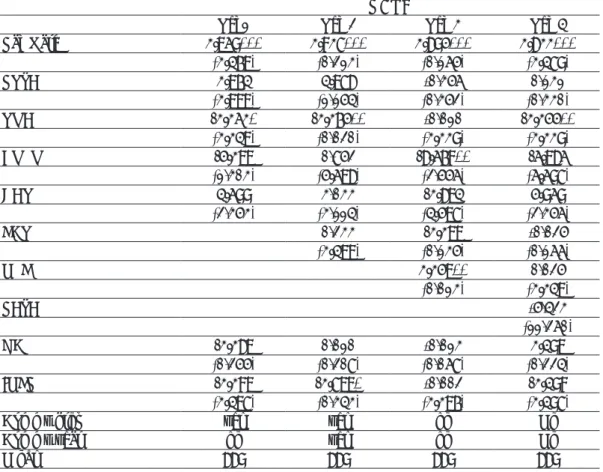
Table 4. Qard Regression with GMM
Reg1 Reg 2 QARD Reg 3 Reg 4
Lag Qard 0.739*** 0.805*** 0.692*** 0.600***
(0.147) (0.213) (0.165) (0.159)
LRTA 0.741 1.756 -0.356 0.131
(0.777) (1.154) (0.352) (0.330)
ROA -0.030* -0.042** -0.010 -0.022**
(0.017) (0.020) (0.009) (0.009)
BOPO -2.077 0.852 -6.348** -3.763
(1.303) (2.376) (2.556) (3.395)
CAR 1.399 3.033 -0.671 2.939
(2.353) (3.114) (1.275) (2.356)
FDR 0.233 -0.077 -0.025
(0.177) (0.135) (0.166)
NPF 0.027** 0.025
(0.013) (0.017)
LATA -5.423
(11.260)
GDP -0.067 0.010 -0.013 0.197
(0.255) (0.208) (0.068) (0.224)
INFL -0.087 -0.577* -0.002 -0.198
(0.175) (0.343) (0.074) (0.195)
Dummy prov yes yes no No
Dummy year no yes no No
N obs 669 669 669 669
Reg1 Reg 2 QARD Reg 3 Reg 4
N bank 94 94 94 94
N instrument 58 52 90 52
AR(2) Test (p-value) 0.596 0.503 0.688 0.971
Hansen Test (p-value) 0.833 0.993 0.680 0.982
Note: Qard as an independent variable, is measured as the ratio of qard financing to total financing.
Each regression includes a constant, province dummies and year dummies. The values reported for each variable are coefficients and heteroskedasticity-autocorrelation-robust standard errors. *, **
and *** denotes significance at the 10, 5 and 1 percent level.
Table 4 provides the dynamic panel data analysis of BPRS Qard fund distribution determinants. The first regression includes a constant, dependent variable lag, five bank-level control factors, two macroeconomic variables, a province dummy, and a year dummy. The other bank-level variables are introduced in regressions two through four, while the lag range consists of one to nine to keep the number of instruments less than panels (Roodman, 2009). The GMM estimation results show that all regression estimators match validity and autocorrelation assumptions. Furthermore, the regression estimators pass the Hansen test when the model fails to reject the null hypothesis and the probability values are above 0.05. Therefore, this study’s instrument is valid and since the Arellano-Bond test AR(2) value is more extensive than 0.05, the regression estimators are unaffected by autocorrelation symptoms.
The GMM regression estimates in columns 1, 2, and 4 show a statistically significant link between ROA and qard. The study does not support the second hypothesis and the value of 0.017, 0.020, and 0.009 show that a 1% increase in ROA decreases qard distribution by 1.7%, 2%, and 0.9%. In this situation, the financial institution lends money to a client with the expectation of return without interest or gains. Due to a negative association between ROA and qard financing, banks that provide more financing have lower ROA. Meanwhile, qard financing does not provide interest or profit share for banks. The ability to generate profits from assets may be affected when a bank’s proportion in the financing portfolio is low and needs to be adequately offset by other robust sources of income, such as fee-based income.
Even though ROA may have a negative association in the near term, qard distribution can have long-term benefits, such as improved reputation, client loyalty, and Sharia banking’s social and financial inclusion goals.
BOPO negatively influences column 3 qard with a coefficient of 2.556 unlike ROA. The qard distribution falls by 25.5% when BOPO increases by 1%, hence the
study does not support the third hypothesis. A high BOPO ratio indicates that the bank’s operational expenses are disproportionate to its operating income, reducing operational efficiency. This may affect the willingness to give qard financing, which generates no revenue.
The NPF positively affected the qard in column 3, with a coefficient value of 0.013. Therefore, when the NPF increases by 1%, the qard distribution increases by 1.3%, hence the sixth hypothesis is supported. A rise in the non-performing finance (NPF) ratio, which measures the proportion of non-performing financing to total financing, is connected with a decrease in qard financing. Due to increasing credit risk, banks may be more cautious when offering loans like qard, which are riskier than other financial products.
Inflation drastically reduces the macroeconomic variable qard distribution of 0.34. Therefore, 1% inflation reduces distribution by 3.4%, hence the seventh hypothesis is not supported. The inverse link shows that inflation usually decreases qard financing. The principal value of interest-free loans depreciates due to inflation, decreasing its appeal to banks. The current study is speculative, and the results depend on many aspects, such as bank management practices and market conditions.
This study examined qard distribution factors of Islamic Rural Bank and the second, third, sixth, and seventh hypotheses rejected Ho. Therefore, ROA and BOPO profitability ratios negatively affected qard distribution. The average ROA, BOPO, and qard are -0.240, 0.157, and 1.457, and the analysis confirmed Mumtaz and Mahardika (2021), Kholidah (2019), also Puspasari and Mawardi (2015) findings. Afkar (2017), Agustina and Hilmania (2021), Oktaviani et al. (2022), also Sari (2021) found that qard financing did not affect banking profitability. ROA and BOPO variables negatively impacted qard distribution since the second and third hypotheses rejected Ho.
NPF had a negative impact on qard distribution and the sixth hypothesis rejected Ho. Furthermore, suitable client qard financing reduced NPF and Muhammad et al. (2020) found that the the variable was affected by ROA, CAR, and bank size.
This study covered NPF factors broadly and Inflation validated the sixth hypothesis, which rejected Ho. Selim and Hassan (2019) found that monetary policy enhanced output and real sector growth, restoring full employment since macroeconomic inflation is affected by qard.
The first, fourth, fifth, and sixth hypotheses indicated that the results failed to reject Ho, and the variable size, CAR, FDR, and GDRP did not affect qard distribution.
CONCLUSION
In conclusion, this study was conducted to explore Islamic Rural Bank qard distribution factors. The results showed that ROA, BOPO, and inflation negatively impacted qard distribution, while NPF positively and significantly affected the variable. Furthermore, a total of three internal and one external variable were considered to improve financial institutions, specifically Sharia banks. Decisions were also conducted by understanding profitability ratios and macroeconomic conditions affecting qard financing distribution. This result was used to develop BPRS and Sharia banking products to increase rural economic growth. Qard financing adoption and development also improved financial inclusion for disadvantaged communities.
Implementation Strategies based on the research findings, it is possible to develop policy suggestions for the government and Islamic financial institutions to optimize the distribution of qard funds for supporting MSMEs. This will help maximize the efficiency and social impact of qard funds. Implement education and awareness programs about the benefits and potential of qard funds among local communities and MSMEs. It can increase the demand for Islamic financial products and improve financial inclusion. Develop risk management strategies and assess long-term sustainability during the distribution of qard funds. It ensures that qard funds can continuously positively impact the local economy. Facilitate cooperation and partnerships between local governments, Islamic financial institutions, and MSMEs to enhance the distribution and utilization of qard funds. It offers a practical approach to addressing complex socio-economic issues.
This research explores how Islamic finance can contribute to regional economic development and improve social welfare, providing significant insights.
The research findings are crucial for policy-making and developing Islamic financial practices. In Indonesia, the Financial Services Authority (OJK) regulates both BPRS and Shariah Banks, guaranteeing their compliance with Islamic banking principles and preserving the stability of the financial system. In order to improve financial inclusion and economic development within the framework of Islamic finance, the OJK is also essential in helping both kinds of institutions expand and develop.
BIBLIOGRAPHY
Abdullah, M. (2015). Analysing the Moral Aspect of Qard: A Shariah Perspective.
International Journal of Islamic and Middle Eastern Finance and Management, 8(2), 171 – 184. https://doi.org/10.1108/IMEFM-11-2013-0116.
Abidin, & Kaharuddin. (2021). Analysis of Syariah Credit Card from Islamic Economic Perspective: Evidence from BNI Bank in Indonesia. Academy of Strategic Management Journal, 20(Special Issue 4), 1-11.
Aderemi, A. M. R., & Ishak, M. S. I. (2023). Qard Hasan as a Feasible Islamic Financial Instrument for Crowdfunding: its Potential and Possible Application for Financing Micro-enterprises in Malaysia. Qualitative Research in Financial Markets, 15(1), 58–76. https://doi.org/10.1108/QRFM-08-2021-0145.
Afkar, T. (2017). Influence Analysis of Mudharabah Financing and Qardh Financing to the Profitability of Islamic Banking in Indonesia. AJIE - Asian Journal of Innovation and Entrepreneurship, 2(3), 340-351.
Agustina, I. L., & Hilmania, R. (2021). Does Istishna and Qardh Financing Affect Profitability?. Turkish Journal of Computer and Mathematics Education, 12(8), 607-611.
Al-Banna, H., & Nurdany, A. (2021). Sustainability of Islamic Rural Banks: A Social Qardh Financing Approach. Global Review of Islamic Economics and Business, 9(2), 87–95. https://doi.org/10.14421/grieb.2021.092-08.
Ali, H., & Miftahurrohman. (2016). Determinan yang Mempengaruhi Pembiayaan Murabahah Pada Perbankan Syariah di Indonesia. Esensi: Jurnal Bisnis dan Manajemen, 6(1), 31–44. https://doi.org/10.15408/ess.v6i1.3119.
Anderson, T. W., & Hsiao, C. (1982). Formulation and Estimation of Dynamic Models Using Panel Data. Journal of Econometrics, 18(1), 47–82. https://
doi.org/10.1016/0304-4076(82)90095-1.
Arellano, M., & Bond, S. (1991). Some tests of Specification for Panel Data: Monte Carlo Evidence and An Application to Employment Equations. The Review of Economic Studies, 58(2), 277–297. https://doi.org/10.2307/2297968.
Arellano, M., & Bover, O. (1995). Another Look at the Instrumental Variable Estimation of Error-components Models. Journal of Econometrics, 68(1), 29–51. https://doi.org/10.1016/0304-4076(94)01642-D.
Arifin, R., & Busriadi. (2020). Analysis of Customer Preference Factors for Qardh and Murabahah Products at Bank BRI Syariah of Bungo Regency. Al-Falah : Journal of Islamic Economics, 5(1), 52-73. https://doi.org/10.29240/alfalah.
v5i1.1492.
Ascarya. (2020). The Role of Integrated Islamic Commercial and Social Finance in Times of Covid-19 Outbreak. Presented in Webinar Puskas BAZNAS.
Conference: TAZKIA Webinar Series 2020.
Bhuiyan, A. B., Siwar, C., Islam, A., & Rashid, M. (2012). The Approaches of Islamic and Conventional Microfinancing for Poverty Alleviation and Sustainable Livelihood. American Journal of Applied Sciences, 9(9), 1385–1389. https://
doi.org/10.3844/ajassp.2012.1385.1389.
Blankson, N., Anarfo, E. B., Amewu, G., & Doabil, L. (2022). Examining the Determinants of Bank Efficiency in Transition: Empirical Evidence from Ghana. Heliyon, 8(8), e10156. https://doi.org/10.1016/j.heliyon.2022.e10156.
Blundell, R., & Bond, S. (1998). Initial Conditions and Moment Restrictions in Dynamic Panel Data Models. Journal of Econometrics, 87(1), 115–143.
https://doi.org/10.1016/S0304-4076(98)00009-8.
Çakır, A., & Abu-Sarhan, A. (2021). The Waqf of Qard Al-Hasan, Risks it May Encounter and Their Solutions (A Theoretical Study in Fiqh). An-Najah University Journal for Research - B (Humanities), 35(12), 1951-1986. https://
doi.org/10.35552/0247-035-012-002.
Demsetz, R. S., Saidenberg, M. R., & Strahan, P. E. (2011). Agency Problems and Risk Taking At Banks. Federal Reserve Bank of New York, Research Paper No. 9709, 1-34. https://doi.org/10.2139/ssrn.943507.
Ebrahim, M. S., & Sheikh, M. (2016). Debt Instruments in Islamic Finance: A Critique.
Arab Law Quarterly, 30(2), 185–198. https://doi.org/10.1163/15730255- 12341317.
Farooq, M. O. (2011). Qarḍ Ḥasan, Wadīah/Amānah and Bank Deposits: Applications and Misapplications of Some Concepts in Islamic Banking. Arab Law Quarterly, 25(2), 115–146. https://doi.org/10.1163/157302511X553985.
Firmansyah, E. A. (2016). Islamic Banks Concern with the Poor and Micro Businesses:
An Evaluation on their Al Qard Hasan (Beautiful Loan). International Conference of Integrated Microfinance Management, 181–187. https://doi.
org/10.2991/imm-16.2016.28.
Halim, S., & Buana, M. T. L. (2021). The Non Performed Financing Effect on Financing and Control Strategy and Handling of Sharia Commercial Banks.
Journal of Islamic Economics and Social Science (JIESS), 2(2), 98-113.
https://doi.org/10.22441/jiess.2021.v2i2.004.
Hamidi, M. L., & Worthington, A. C. (2018). Islamic Social Banking: The Way Forward. Jurnal Ekonomi Malaysia, 52(1), 179–190. https://doi.org/10.17576/
jem-2018-5201-15.
Hanafi, R., Rohman, A., & Sutapa, S. (2022). Islamic Bank Resilience: Financial and Sharia Performance During Covid-19 Pandemic in Indonesia. Muqtasid:
Jurnal Ekonomi dan Perbankan Syariah, 13(1), 18–30. https://doi.
org/10.18326/muqtasid.v13i1.18-30.
Hannanong, I., & Aris, A. (2018). Al-Qardh Al-Hasan: Soft and Benevolent Loan Pada Bank Islam. Diktum: Jurnal Syariah dan Hukum, 16(2), 171-182.
https://doi.org/10.35905/diktum.v16i2.617.
Hansen, L. P. (1982). Large Sample Properties of Generalized Method of Moments Estimators. Econometrica, 50(4), 1029–1054.
Hartarska, V., Nadolnyak, D., & Shen, X. (2015). Agricultural Credit and Economic Growth in Rural Areas. Agricultural Finance Review, 75(3), 302–312. https://
doi.org/10.1108/AFR-04-2015-0018.
Hassan, A. (2014). The Challenge in Poverty Alleviation: Role of Islamic Microfinance and Social Capital. Humanomics, 30(1), 76–90. https://doi.
org/10.1108/H-10-2013-0068.
Hassan, M. K., Muneeza, A., & Sarea, A. M. (2021). COVID-19 and Islamic Social Finance. London: Routledge.
Hassanat, A. B., & Al Tarawneh, G. A. (2015). Gambling-free Lottery, A New Islamic Lending Ticket. Journal of Islamic Accounting and Business Research, 6(1), 42-54. https://doi.org/10.1108/JIABR-05-2013-0013.
Havidz, S. A. H., & Setiawan, C. (2015). Bank Efficiency and Non-Performing Financing (NPF) in the Indonesian Islamic Banks. Asian Journal of Economic Modelling, 3(3), 61–79. https://doi.org/10.18488/journal.8/2015.3.3/8.3.61.79.
Husaeni, U. A. (2017). Determinan Pembiayaan Pada Bank Pembiayaan Rakyat
Syariah di Indonesia. Esensi: Jurnal Bisnis dan Manajemen, 7(1), 49–62.
https://doi.org/10.15408/ess.v7i1.4542.
Iskandar, A., Possumah, B. T., & Aqbar, K. (2020). Peran Ekonomi dan Keuangan Sosial Islam saat pandemi Covid 19. Salam: Jurnal Sosial dan Budaya Syar-I, 7(7), 625–638. https://doi.org/10.15408/sjsbs.v7i7.15544.
Iskandar, A., Possumah, B. T., & Aqbar, K. (2021). Global Covid-19: What Islamic Economic and Finance can do? Indonesia Experience. International Journal of Islamic Business Ethics, 6(2), 119-134. https://doi.org/10.30659/
ijibe.6.2.119-134.
Ismal, R. (2013). The Islamic Gracious Monetary Instruments: A Theoretical Approach. Journal of Economic and Administrative Sciences, 29(1), 63–80.
https://doi.org/10.1108/10264111311319231.
Kholidah, H. (2019). The Effect of Social Performance to the Profitability of Islamic Banks. The International Journal of Applied Business, 2(2), 58-68. https://
doi.org/10.20473/tijab.v2.i2.2018.58-68.
Kholvadia, F. (2017). Islamic Banking in South Africa Form Over Substance?.
Meditari Accountancy Research, 25(1), 65-81. https://doi.org/10.1108/
MEDAR-02-2016-0030.
Mardhiyaturrositaningsih. (2022). The Impact of The Covid-19 Pandemic on the Financial Performance of Islamic Rural Banks in Central Java. Muqtasid:
Jurnal Ekonomi dan Perbankan Syariah, 13(1), 63–76. https://doi.
org/10.18326/muqtasid.v13i1.63-76.
Muhammad, R. (2019). Akutansi Keuangan Syariah: Konsep dan Implementasi PSAK Syariah (3rd ed.). P3EI Press Yogyakrata.
Muhammad, R., Suluki, A., & Nugraheni, P. (2020). Internal Factors and Non- performing Financing in Indonesian Islamic Rural banks. Cogent Business and Management, 7(1), 1-12. https://doi.org/10.1080/23311975.2020.18235 83.
Muhd Adnan, N. I., Mohd Kashim, M. I. A., Endut, W. A., Ismail, S., Abd. Khafidz, H., Furqani, H., Ab Rahman, Z., Mohd Noor, A. Y., & Zakaria, M. B. (2020).
Zakat Distribution through Micro Financing: Hukm (Islamic Ruling) and Form of Aqad (Contract). Journal of Critical Reviews, 7(5), 1032–1038.
https://doi.org/10.31838/jcr.07.05.208.
Mukhibad, H., Anisykurlillah, I., Nurkhin, A., & Jayanto, P. Y. (2019). Can Social Performance Improve Financial Performance and Increase Customers’
Trust? International Journal of Financial Research, 10(4), 37-45. https://doi.
org/10.5430/ijfr.v10n4p37.
Mukhibad, H., & Setiawan, D. (2020). Could Risk, Corporate Governance, and Corporate Ethics Enhance Social Performance? Evidence from Islamic Banks in Indonesia. Indian Journal of Finance, 14(4), 24-38. https://doi.
org/10.17010/ijf/2020/v14i4/151706.
Mumtaz, N., & Mahardika, D. P. K. (2021). Pengaruh Pembiayaan Mudharabah, Musyarakah, Murabahah, dan Qardh terhadap Profitabilitas pada BUS di Indonesia Periode 2015-2019. Maro: Jurnal Ekonomi Syariah dan Bisnis, 4(2), 9–17. https://doi.org/10.31949/maro.v4i2.1367.
Muneer, F., & Khan, F. (2019). Qard-Al-Hassan as A Tool For Poverty Alleviation:
A Case of Fael Khair Waqf Program in Bangladesh. Journal of Islamic Monetary Economics and Finance, 5(4), 829–848. https://doi.org/10.21098/
jimf.v5i4.1100.
Muneer, F., & Khan, F. (2022). Impact of Qard-al-Hasan (Interest-free Loan) Program in Reducing Multidimensional Poverty: An Evidence from the Southwest Bangladesh. International Journal of Islamic and Middle Eastern Finance and Management, 15(6), 1072–1087. https://doi.org/10.1108/
IMEFM-03-2021-0101.
Nawaz, T. (2018). Lifting the Lid on Financial Inclusion: Evidence from Emerging Economies. International Journal of Financial Studies, 6(2), 1-8. https://doi.
org/10.3390/ijfs6020059.
Nugraheni, P., & Muhammad, R. (2023). The Optimisation of Qardhul Hasan Management in Islamic Banking: Enhancing its Role in Empowering the Community. Journal of Enterprising Communities: People and Places in the Global Economy, Vol & No ahead of Print. https://doi.org/10.1108/JEC-08- 2022-0113.
Oktaviani, I. N., Alaidrus, S., & Siswanto, S. (2022). The Influence of Qard and Zakat on Profitability of Islamic Banks in Indonesia. Indonesian Interdisciplinary Journal of Sharia Economics, 5(1), 63–73. https://doi.org/10.31538/iijse.
v5i1.1968.
Oktaviani, & Pangestuti, I. R. D. (2012). Pengaruh DPK, ROA, CAR, NPL dan Jumlah SBI terhadap Penyaluran Kredit Perbankan (Studi pada Bank Umum Go Public di Indonesia Periode 2008-2011). Diponegoro Journal of Management, 1(2), 430–438.
Panda, B., & Leepsa, N. M. (2017). Agency Theory: Review of Theory and Evidence on Problems and Perspectives. Indian Journal of Corporate Governance, 10(1), 74–95. https://doi.org/10.1177/0974686217701467.
Panjawa, J. L., Kurniawan, M. L. A., & El Hasanah, L. L. N. (2017). Analisis Determinan Kinerja Bank Pembiayaan Rakyat Syariah di Indonesia (Pendekatan Direct Error Correction Model). Jurnal Ekonomi & Keuangan Islam, 3(2), 65–72. https://doi.org/10.20885/jeki.vol3.iss2.art2.
Parewangi, A. M. A., & Iskandar, A. (2020). The Nexus of Islamic Finance and Poverty. Hitotsubashi Journal of Economics, 61(2), 111–139. https://doi.
org/10.15057/hje.2020006.
Puspasari, R., & Mawardi, I. (2015). Pengaruh Kinerja Sosial terhadap Profitabilitas Bank Syariah. Jurnal Ekonomi Syariah Teori dan Terapan, 1(7), 456-468.
https://doi.org/10.20473/vol1iss20147pp456-468.
Rabbani, M. R., Bashar, A., Nawaz, N., Karim, S., Ali, M. A. M., Rahiman, H. U., &
Alam, M. S. (2021). Exploring the Role of Islamic Fintech in Combating the Aftershocks of Covid-19: The Open Social Innovation of the Islamic Financial System. Journal of Open Innovation: Technology, Market, and Complexity, 7(2), 1-19. https://doi.org/10.3390/joitmc7020136.
Roodman, D. (2009). How to do xtabond2: An Introduction to Difference and System GMM in Stata. Stata Journal, 9(1), 86–136. https://doi.
org/10.1177/1536867x0900900106.
Sadr, S. K. (2014). Qarḍ Ḥasan Financing in Islamic Banks. ISRA International Journal of Islamic Finance, 6(2), 7-20. https://doi.org/10.12816/0019261.
Sadr, S. K. (2017). The Optimum Size of Rotating Qarḍ Hasan Savings and Credit Associations. ISRA International Journal of Islamic Finance, 9(1), 15–26.
https://doi.org/10.1108/IJIF-07-2017-003.
Saleem, M. Y. (2015). The Contract of Loan (Al-Qard). In Islamic Commercial Law.
John Wiley & Sons Singapore.
Saprida., Choiriyah., & Melis. (2020). Accounts Payable (Qardh) in Islamic Law. Salam: Jurnal Sosial dan Budaya Syar-I, 7(4), 325-334. https://doi.
org/10.15408/sjsbs.v7i4.15168.
Saqib, L., Zafar, M. A., Khan, K., Roberts, K. W., & Zafar, A. M. (2015). Local Agricultural Financing and Islamic Banks: is Qard-al-Hassan a Possible Solution? Journal of Islamic Accounting and Business Research, 6(1), 122- 147. https://doi.org/10.1108/JIABR-04-2012-0018.
Sargan, J. D. (1958). The Estimation of Economic Relationships using Instrumental Variables. Econometrica, 26(3), 393–415.
Sari, C. M. (2021). Pengaruh Corporate Social Responsibility terhadap Laba Bank Syariah. An-Nisbah: Jurnal Perbankan Syariah, 2(1), 34–67. https://doi.
org/10.51339/nisbah.v2i1.219.
Selim, M. (2019). The Effectiveness of Qard-al-Hasan (Interest Free Loan) as A Tool of Monetary Policy. International Journal of Islamic and Middle Eastern Finance and Management, 12(1), 130-151. https://doi.org/10.1108/
IMEFM-07-2017-0187.
Selim, M. (2021). Opening Qard Hasan Accounts As Sources and Uses of Funds and its Effects on the Market Share of Islamic Banks. International Conference on Sustainable Islamic Business and Finance, 75 – 78. https://doi.org/10.1109/
IEEECONF53626.2021.9686353.
Selim, M., & Hassan, M. K. (2019). Interest-free Monetary Policy and its Impact on Inflation and Unemployment Rates. ISRA International Journal of Islamic Finance, 11(1), 46–61. https://doi.org/10.1108/IJIF-06-2018-0065.
Selim, M., & Hassan, M. K. (2020). Qard-al-Hasan-based Monetary Policy and the Role of the Central Bank as the Lender of Last Resort. Journal of Islamic Accounting and Business Research, 11(2), 326–345. https://doi.org/10.1108/
JIABR-12-2017-0190.
Selim, M., Rabbani, M. R., & Bashar, A. (2022). Qard Hasan based Cooperative Model for Home Financing and its Effects in Home Ownership and Real Estate Development. International Conference on Sustainable Islamic Business and Finance, 48-52. https://doi.org/10.1109/SIBF56821.2022.9940024.
Suhel, S., Bashir, A., Asngari, I., & Hamidi, I. (2022). What are the Determinants Affecting the Financing Risk in Indonesian Sharia Rural Banks?. Muqtasid:
Jurnal Ekonomi dan Perbankan Syariah, 13(2), 143–159. https://doi.
org/10.18326/muqtasid.v13i2.143-159.
Suseno, P., & Fitriyani, Y. (2018). Role of Islamic Finance Development to Financial Inclusion: Empirical Study in Islamic Banking Countries. Jurnal Ekonomi &
Keuangan Islam, 4(1), 1–8. https://doi.org/10.20885/jeki.vol4.iss1.art1.
Tripp, C. (2016). Islam dan Moral Economy: The Challenge of Capitalism. Cambridge University Press.
Triyowati, H., & Masnita, Y. (2015). The Role of Financial Inclusion Movement for Development of Micro and Small Enterprises (MSES), Entrepreneurship and Poverty Alleviation. International Journal of Technical Research and Applications, 4(1) 71-76.
Wijayanti, F. M., Putra, P. A. A., & Hadiyanto, R. (2022). Tinjauan Fikih Muamalah terhadap Pembiayaan Akad Qardh di Bank Wakaf Mikro Barokah Pesantren Al-Masthuriyah Sukabumi. Bandung Conference Series: Sharia Economic Law, 2(1). https://doi.org/10.29313/bcssel.v2i1.360
Yeubun, S. F., Firdaus, M. A., & Affandy, F. F. (2021). The Efforts of Sharia Micro Financial Institutions in Increasing Community Income (Case Study of Bank Wakaf Mikro Honai Sejahtera Papua). Al-Arbah: Journal of Islamic Finance and Banking, 3(1), 83–98. https://doi.org/10.21580/al-arbah.2021.3.1.8065.
Zamore, S., Beisland, L. A., & Mersland, R. (2019). Geographic Diversification and Credit Risk in Microfinance. Journal of Banking and Finance, 109, 105665.
https://doi.org/10.1016/j.jbankfin.2019.105665.