EARLY POTTERY IN THE TROPICS OF PANAMA (CA. 4,500-3,200 B.P.):
PRODUCTION PROCESSES, CIRCULATION, AND DIAGENESIS
by
FUMIE IIZUKA
__________________________
Copyright © FUMIE IIZUKA 2013 A Dissertation Submitted to the Faculty of the
SCHOOL OF ANTHROPOLOGY
In Partial Fulfillment of the Requirements For the Degree of
DOCTOR OF PHILOSOPHY
In the Graduate College
THE UNIVERSITY OF ARIZONA
2013
THE UNIVERSITY OF ARIZONA GRADUATE COLLEGE
As members of the Dissertation Committee, we certify that we have read the dissertation prepared by FUMIE IIZUKA, titled EARLY POTTERY IN THE TROPICS OF
PANAMA (CA. 4,500-3,200 B.P.): PRODUCTION PROCESSES, CIRCULATION, AND DIAGENESIS and recommend that it be accepted as fulfilling the dissertation requirement for the Degree of Doctor of Philosophy.
_______________________________________________________________________ Date: 11/14/12 MICHAEL B. SCHIFFER
_______________________________________________________________________ Date: 11/14/12 MARK S. ALDENDERFER
_______________________________________________________________________ Date: 11/14/12 DAVID KILLICK
_______________________________________________________________________ Date: 11/14/12 PAMELA B. VANDIVER
_______________________________________________________________________ Date:
Final approval and acceptance of this dissertation is contingent uponthe candidate’s submission of the final copies of the dissertation to the Graduate College.
I hereby certify that I have read this dissertation prepared under my direction and recommend that it be accepted as fulfilling the dissertation requirement.
________________________________________________ Date: 11/14/2012 Dissertation Director: MICHAEL B. SCHIFFER
________________________________________________ Date: 11/14/2012 Dissertation Director: MARK S. ALDENDERFER
STATEMENT BY AUTHOR
This dissertation has been submitted in partial fulfillment of the requirements for an advanced degree at the University of Arizona and is deposited in the University Library to be made available to borrowers under rules of the Library.
Brief quotations from this dissertation are allowable without special permission, provided that an accurate acknowledgement of the source is made. Requests for
permission for extended quotation from or reproduction of this manuscript in whole or in part may be granted by the copyright holder.
SIGNED: Fumie Iizuka
ACKNOWLEDGMENTS
I must express my sincere gratitude to two individuals who have guided me to accomplish this goal. To my mother, Kazue Iizuka: you have stayed close with our family in Japan, but have always accepted me to pursue my curiosities in the United States and in Latin America. You have encouraged and pushed me to open doors and see the world, when I was discouraged and wondered if turning back was an option. I have learned so much from your non-exaggerating and insightful socio-cultural and historical
interpretations that you have made based on books and newspapers you read. To my father, Tadao Iizuka: opportunities I have had in life have allowed me to meet a few extraordinary individuals who are creative and explosively productive. You are, without a doubt, one of them. Thank you for the continuous inspiration. My dissertation would not have been possible without each of you contributing in a unique way and providing support.
To my co-chair, Mark Aldenderfer: you have allowed me to run around and pursue what I wanted and you have had the instinctive sense about when to jump in to help. You have provided the maximum intellectual freedom and straightforward support.
Also to my co-chair, Michael Schiffer: I am finally starting to grasp the heart of your intricate behavioral archaeological theory which you started to form as a graduate student and with which you continue to create new avenues. Thank you for your critical feedback on my use of the life history approach in my dissertation.
To David Killick and Pamela Vandiver, my committee members: you have helped me develop ceramic analytical skills and given me opportunities for experiments and research funds. I have worked hard on the dissertation trying to reach closer to your high standards and amazing discovery skills. I have done my best, but am not close yet. I will carry on with these goals for my future projects.
Richard Cooke and Hector Neff have been of significant help. Richard Cooke facilitated my field and laboratory work at the Smithsonian Tropical Research Institute (STRI) and provided critical intellectual feedback through my dissertation research in Panama. Hector Neff funded, allowed me to use, and provided instructions for not only TOF-LA-ICP-MS but also various other instruments atthe Institute for Integrated Research in Materials, Environments, and Society, at California State University, Long Beach (IIRMES-CSULB).
Joan Leigh, my former landlord in Tucson, and now close friend, has proofread and given feedback on countless paper and proposal drafts. She has also been my best English teacher. I have learned so much from her progressive and open mindset and have been impressed with her care for animals and plants.
Indispensable intellectual and technical support was given by Lesley Frame, Randy Haas, Sachiko Sakai, Richard George, Carlos Mayo, Sara Moron, Diego Ramírez, Willy Bong, and Nikki Strong. In the field and the laboratory, I owe Aureliano Valenicia and Alexandra Lara Kraudy for their help and decisions. Julia Mayo also supported through the El Caño project.Robin Zenger has studied, proofread my dissertation drafts, and celebrated with me in Panama and in Tucson.
Thanks to many faculty, staff, and students at the School of Anthropology (SoA).
John Olsen has always been helpful and encouraging. Daniela Triadan provided
conceptual assistance on ceramic circulation. Ann Samuelson was instrumental. Satoshi Abe, Shane Miller, Esther Echenique, Liye Xie, and Juan Manual Palomo have provided insights both at school and off time.Several former students from the National Science Foundation, Integrative Graduate Education and Research Traineeship (NSF-IGERT) program gave assistance.
Bruce Kaiser taught me the use of portable x-ray fluorescence. Rory McFadden, Camilo Montes, Agustín Cardona, Natalia Hoyos, César Silva, Manuel Paez, and Carlos Jaramillo at STRI provided geological information, rock samples, equipments, and fieldwork support. Enako Hosoda, Takato Maekawa, Fernando Bustamante, and Adam Berrey assisted me during fieldwork. Anthony Ranere, John Griggs, Irene Holst, and Stewart Redwood gave important help with research. I also thank Abel del Valle, Conrado Tapia, Karina Ballesteros and her family, and the people of the fishing village living near the Monagrillo shell midden. Orensio Kempes, along with Alexandra Lara Kraudy, provided me with a place to live and laughs. Ian Cooke Tapia entertained with his novels and art work and Ana and Ilicena Cooke Tapia provided good food. Chris Johnson assisted the dissertation formatting.
I have made wonderful friends in the Tucson neighborhood. First, Antonio José da Silva and Ed Gervasoni, shared delicious food and intellectual communication.
Jennifer Bowman and her family and Claire and Bernadette Brown brought enjoyment to my life. Rigoberto Valverde has become a special friend to me; he introduced me to artistic and non-school life in Tucson and helped me during the dissertation writing phase.
To my grandmother, Matsu Iizuka, the most energetic woman I know, thank you for living and seeing me graduate and all the unconditional support you have given. My aunts, uncles, and cousins, I am grateful for your hospitality. Thiphasone Phimviengkham, Pbo Santivong, and Ubonrat and Sirirat Siripattrawan, my friends, assisted my pursuit. I appreciate Mioko Kaji, Mikiko Takahashi, Yuko Iwasaki, Manika Nagare, Megumi Kiuchi, Miyuki Sanjo, and Saori Tamura in Japan for your long-term friendship. Kiyoko Sadoya, my professor, who passed away too soon, thank you. Finally, I want to provide a comment to my sister, Yoko Baba Iizuka, and my brother, Kohei Iizuka: please let my niece and nephews pursue what they wish to do in life; I believe that they will be able to choose and accomplish their own goals.
Financial assistance was given by the following programs and institutes:
Predoctoral Fellowship and Visiting Student Award from the Smithsonian Institution, NSF-IIRMES grant at IIRMES-CSULB, Sigma Xi Grant-in-Aid of Research, Claude Albritton Jr. Award of the Geological Society of America, and material analysis grant from the Smithsonian Museum Conservation Institute; NSF-IGERT, Riecker Grants, Emil Haury Education Fund, William and Nancy Sullivan Scholarships, and William Shirley Fulton Scholarship, Opportunities Development Fund, Traditions, Transitions, and Treasurers Fund, Louie and Frances-Fera Schiffer Scholarship, of SoA, the
University of Arizona (UA); SBSRI Dissertation Grant from the Social and Behavioral Research Institute, Tinker Graduate Student Grant from the Center for Latin American Studies, and GPSC Travel Grant at UA.
TABLE OF CONTENTS
ABSTRACT... 12
CHAPTER 1: INTRODUCTION... 14
CHAPTER 2: PRESENT STUDY... 19
REFERENCES... 25
APPENDIX A PRODUCTION AND TRANS-CORDILLERAN DISTRIBUTION: PROVENANCE STUDY OF THE FIRST POTTERY OF PANAMA (~4500-3200 14C yr BP) ... 29
1. Abstract ... 29
2. Introduction... 30
2.1. Pottery Sourcing and Residential Mobility... 30
3. Archaeological context ... 32
3.1. Pottery Descriptions... 33
3.2. Indicators of Coastal Habitation and Pottery Production ... 34
3.3. Signatures of Transcordilleran Pottery Distribution ... 35
4. Geological setting ... 36
4.1. Azuero: Intrusive [TE-RIQ, TK-LM], Volcanic [K-VE], and Sedimentary [K-CHAo, TO-PE, TOE-TO] Units... 36
4.2. Cordillera: Volcanic [TPLM-Y, TPLM-Yen, TPL-VA, TM-CA, TM-CAtu, TM-SP] Units... 38
5. Methods... 43
5.1. Ceramic Samples ... 43
5.2. Clayey Sediment Collection and Analyses ... 44
5.3. Ceramic Petrography ... 45
5.4. Clayey Sediment and Sand Petrography... 45
5.5. TOF-LA-ICP-MS... 45
5.6. P-XRF ... 47
5.7. Statistical Analysis... 47
6. Results ... 49
6.1. Pottery Petrography and Provenance ... 49
6.2. Pottery TOF-LA-ICP-MS and Provenance... 53
6.3. Pottery P-XRF and Groups ... 54
6.4. Raw Clayey Sediment Property Test ... 55
6.5. Raw Clayey Soil and Sand Petrography ... 55
6.6. Raw Clayey Sediment Geochemistry and Pottery ... 56
TABLE OF CONTENTS - Continued
7. Discussion... 57
7.1. Petrography and Geochemistry: Combined Provenance Interpretation ... 57
7.2. Timing of Azuero Production, Degree of Sedentism, and Trans- Cordilleran Distribution ... 59
8. Conclusions... 64
9. References ... 65
Appendix A.1. Raw material collection locations, raw material types, and clay property test results... 137
Appendix A.2. Petrographic data of pottery and raw material thin sections ... 154
Appendix A.3. Results of provenance analysis by petrography, TOF-LA-ICP-MS, and P-XRF ... 410
APPENDIX B: INFERRING PRODUCER’S INTENDED FUNCTIONS: MONAGRILLO POTTERY LIFE HISTORY STUDIES (~4500-3200 B.P.) ... 421
1. Abstract... 421
2. Introduction... 422
3. Archaeological context... 423
3.1. The Late Preceramic Period (~7000-4500 B.P.)... 424
3.2. The Early Ceramics period (~4500-3200 B.P.) ... 426
3.3. Previous early pottery descriptions... 428
3.4. Selected sites and samples ... 430
4. Technological theory... 431
4.1. Technological theory ... 431
4.2. Behavioral life history approach... 433
4.3. Performance characteristics ... 436
5. Methodology ... 443
5.1. Pottery sourcing ... 443
5.2. Temper ... 443
5.3. Pottery manufacturing techniques ... 444
5.4. Vessel forms and thickness... 446
5.5. Surface Decoration ... 446
5.6. Firing temperatures ... 446
6. Results ... 448
6.1. Clays and Temper ... 448
6.2. Manufacturing technique ... 451
6.3. Vessel forms and thickness... 451
TABLE OF CONTENTS - Continued
6.4. Surface decoration ... 452
6.5. Firing temperatures ... 453
7. Discussion... 455
7.1. Intended functions... 455
7.2. Shared tradition/social constraints ... 465
8. Conclusions... 466
9. References ... 470
Appendix B.1. Results of analyses of vessel thickness, surface treatments, forms, temper, manufacturing techniques, and firing temperatures... 498
APPENDIX C POST-DEPOSITIONAL ALTERATION OF POTTERY (~4500-250014C yr BP) FROM THE HUMID TROPICS OF PANAMA, IDENTIFIED VIA TOF-LA-ICP-MS, PETROGRAPHY, AND µ-XRF ... 805
1. Abstract... 805
2. Introduction... 806
3. Previous research and site background ... 808
4. Archaeological sites... 811
5. Geology and geochemistry ... 812
6. Materials and methods ... 813
6.1. TOF-LA-ICP-MS... 814
6.2. X-ray fluorescence ... 815
6.3. Petrographic Study... 815
6.4. Micro-X-ray Fluorescence ... 815
7. Results ... 817
7.1. Compositional Groups and Diagenetic Elements from TOF-LA-ICP-MS .... 817
7.3. Results of petrographic examination ... 819
7.4. Provenancing results from three methods... 819
7.5. Secondary Minerals Found in Pottery Pores in Thin Sections ... 819
7.6. Elemental Distributional Maps Using µ-XRF ... 820
8. Discussion... 825
9. Conclusions... 830
10. References ... 832
Appendix C.1. Data obtained for the post-depositional alteration study of Early Ceramic sherds ... 861
LIST OF FIGURES
Figure 1: Geological map of central Panama with sites containing
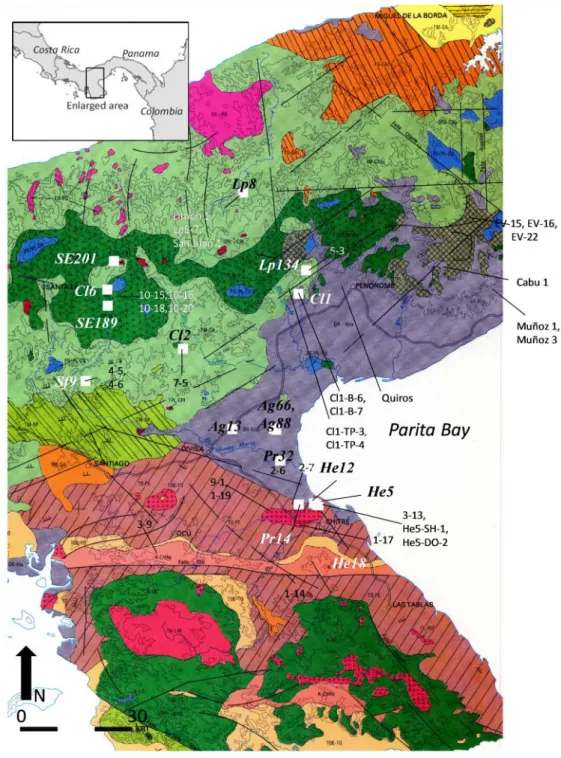
Monagrillo pottery. Legends for the geological map of Panama... 71
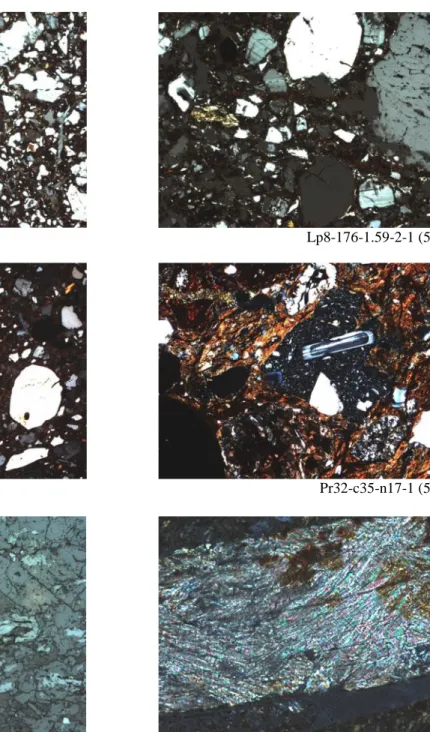
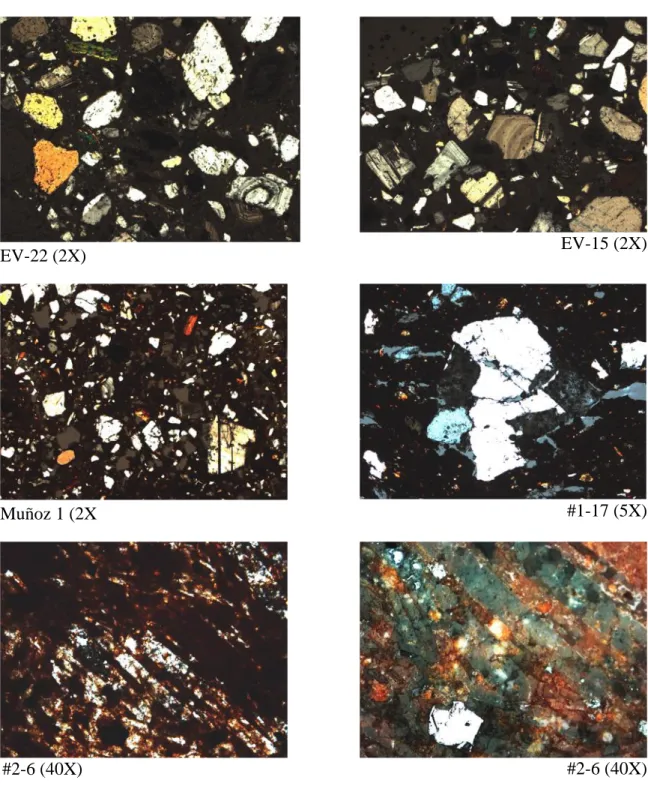
Figure 2. Photos of minerals and rocks in ceramic thin sections. ... 72
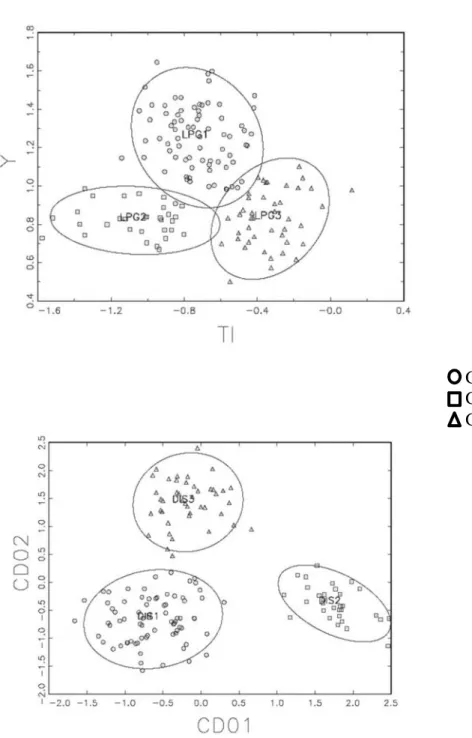
Figure 3. Statistical analytical results based on data obtained with TOF-LA-ICP-MS... 73
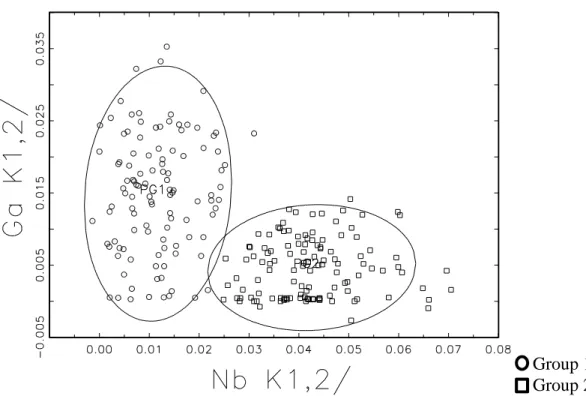
Figure 4. Bivariate plot of semi-quantitative compositional data, energy intensity-based net peak areas, of Ga and Nb obtained via P-XRF. ... 74
Figure 5. Geological map of central Panama with Monagrillo sites and the collection locations of raw materials made into thin sections. ... 75
Figure 6. Petrography of potential raw materials. ... 76
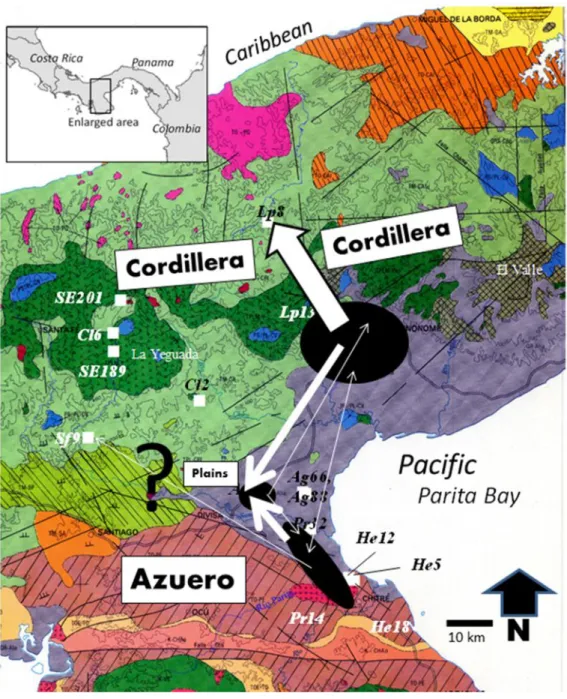
Figure 7. Geological map of central Panama with the reconstructed ceramic production and distribution patterns. ... 77
Figure 8. Map of Monagrillo sites... 482
Figure 9. Images from xeroradiography (above) and drawing (below) of a Monagrillo sherd (Cl1-45-13)... 483
Figure 10. The thickest part of rim, body, and base walls (in mm) compared by sites.. 484
Figure 11. Rim, body, and base thickness average (mm) comparisons by source types... 485
Figure 12. Comparisons of percentages of decorative sherds at major sites... 485
Figure 13. Examples of microstructural images of refired sherds obtained with field emission SEM-EDS... 486
Figure 14. The transect of central Panama adopted from Griggs (2005) and modified. ... 487
Figure 15. Geological map of Panama with Monagrillo sites. ... 839
Figure 16. Bivariate plots of data obtained via TOF-LA-ICP-MS... 840
Figure 17. Comparisons of concentrations of elements of sherd paste matrix and raw sediments... 840
Figure 18. A bivariate plot of data Zr-normalized data, obtained via P-XRF... 841
Figure 19. Photos of secondary minerals found in pottery pores. ... 842
Figure 20. Elemental maps obtained via ARTAX µ -XRF - Cl1-44-F10. ... 843
Figure 21. Elemental maps obtained via ARTAX µ-XRF - Cl1-45-F2. ... 844
Figure 22. Elemental maps obtained via ARTAX µ -XRF - Ag13-8-U1-F3... 845
Figure 23. Elemental maps obtained via ARTAX µ -XRF - Cl1-3-F14. ... 846
Figure 24. Elemental maps obtained via ARTAX µ -XRF - Cl1-44-F8. ... 847
Figure 25. Elemental maps obtained via ARTAX µ-XRF - Pr32-C35-N20-2... 848
Figure 26. Elemental maps obtained via ARTAX µ -XRF - He5-70-F1. ... 849
LIST OF TABLES
Table 1. Radiocarbon ages of the Early Ceramic sites studied in this project. ... 78 Table 2. Pottery petrography: inclusions % and rock type variability (A)
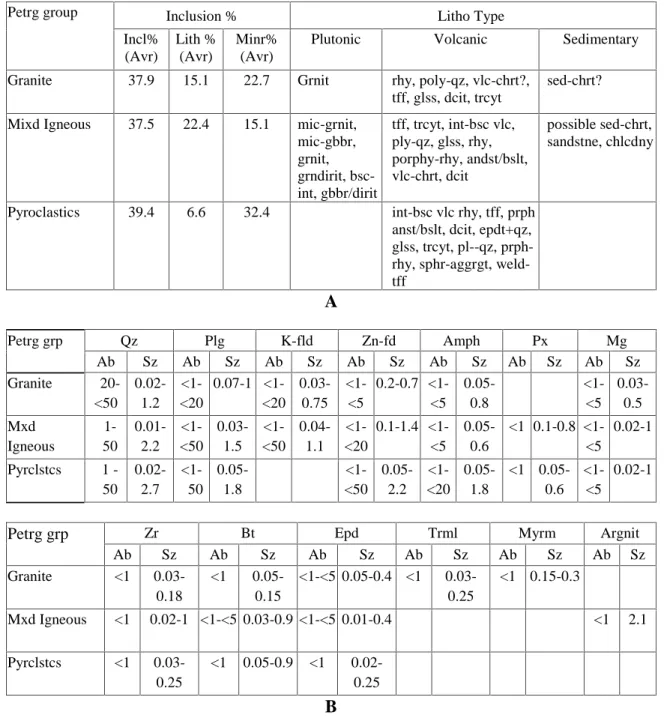
and pottery mineral abundance (%) ranges and size (mm) ranges (B). ... 79 Table 3. Quantitative compositional data of pottery clay matrix obtained
via TOF-LA-ICP-MS for the elements Li, Be, Na, Mg, Al, Si, and P. ... 83 Table 4. Quantitative compositional data of pottery clay matrix obtained
via TOF-LA-ICP-MS for the elements S, K, Ca, Sc, Ti, V, and Cr. ... 87 Table 5. Quantitative compositional data of pottery clay matrix obtained
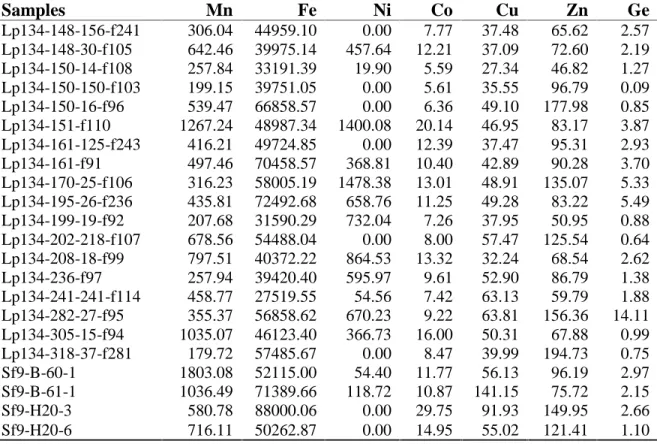
via TOF-LA-ICP-MS for the elements Mn, Fe, Ni, Co, Cu, Zn, and Ge. ... 91 Table 6. Quantitative compositional data of pottery clay matrix obtained
via TOF-LA-ICP-MS for the elements As, Rb, Sr, Y, Zr, Nb, and Mo. ... 95 Table 7. Quantitative compositional data of pottery clay matrix obtained
via TOF-LA-ICP-MS for the elements Ag, Cd, Sn, Sb, Cs, Ba, and La. ... 99 Table 8. Quantitative compositional data of pottery clay matrix obtained
via TOF-LA-ICP-MS for the elements Ce, Pr, Nd, Sm, Eu, Gd, and Tb. .... 103 Table 9. Quantitative compositional data of pottery clay matrix obtained
via TOF-LA-ICP-MS forDy, Ho, Er, Tm, Yb, Lu, and Hf... 107 Table 10. Quantitative compositional data of pottery clay matrix obtained
via TOF-LA-ICP-MS for the elements Ta, W, Tl, Pb, Bi, Th, and U. ... 111 Table 11. Semi-quantitative compositional data obtained via P-XRF for
Fe K1, 2; Co K1, 2; Ni K1, 2; Cu K1, 2; and Zn K1, 2 ... 118 Table 12. Semi-quantitative compositional data obtained via P-XRF for
Ga K1, 2; Ge K1, 2; As K1, 2;Se K1, 2; and Br K1, 2. ... 125 Table 13. Semi-quantitative compositional data obtained via P-XRF, for
Rb K1, 2; Y K1, 2; Zr K1, 2; and Nb K1, 2... 132 Table 14. Petrographic data of raw materials: Raw clayey soil
inclusion % and lithic type variability. ... 133 Table 15. Petrographic data of raw materials: Raw clayey soil petrography
by source types and its mineralogical abundance % and
size ranges (mm). ... 133 Table 16. Petrographic data of raw materials: Raw sand sample lithics
and mineral ratios and rock fragment type variability ... 134 Table 17. Petrographic data of raw materials: Raw sand inclusions
abundance % and size ranges (mm)... 134 Table 18. Sherds that were assigned to Azuero and Cordillera from
petrography, LA-ICP-MS, and P-XRF. ... 135
LIST OF TABLES - Continued
Table 19. Sourcing results from samples analyzed using petrography
and geochemical methods LA-ICP-MS, and P-XRF... 136
Table 20. Sourcing results from samples analyzed using a combination of petrographic and one geochemical method, TOF-LA-ICP-MS or P-XRF... 136
Table 21. Radiocarbon chronology of the Early Ceramic sites studied... 488
Table 22. Occupational history, elevation, location, size, number of occupants, and the environmental condition of Mongrillo sites studied for this project... 489
Table 23. Petrographic data: pottery inclusions... 490
Table 24. Petrographic data: raw clayey soil inclusions. ... 491
Table 25. Petrographic data: raw sand inclusions... 491
Table 26. Petrographic data: average inclusion percent and lithic and mineral percent in pottery compared by source types grouped by three analytical methods. ... 492
Table 27. Petrographic data: average inclusion percent and lithic and mineral percent in pottery grouped by site where sherds were excavated. ... 493
Table 28. Results from studies of manufacturing techniques. ... 494
Table 29. Vessel thickness, diameter, and form comparisons by site... 495
Table 30. Wall thickness measured by source types... 496
Table 31. Comparisons of decorative sherds by site... 496
Table 32. Firing temperature estimates by site. ... 497
Table 33. Firing temperature estimates by source. ... 497
Table 34. Thin section data with secondary mineral growth in pottery pores. ... 860
ABSTRACT
Despite the traditional association of the first pottery with food production and sedentism, case studies show that hunter gatherers with different degrees of sedentism commonly adopted ceramics. Monagrillo ware (~4500-3200 B.P.) of central Panama, among the earliest in Central America, was made by egalitarian slash and burn farmers, cultivating domesticated seed and root crops. People occupied inland rockshelters and coastal shell middens. However, their degree of sedentism is debated. It is unclear
whether they were sedentary both in the inland and on the coast and exchanged resources or whether inland people visited the coast during the driest months. Their pottery
functions are not well understood either. I provenanced and studied the production processes and diagenesis of Monagrillo pottery through a combination of the life history approach and archaeometric methods. I assessed the degree of sedentism of Monagrillo people, inferred vessel functions producers may have expected, and identified diagenesis that may affect analytical results. My study showed that pottery was produced and used in the foothills and on the coast of the seasonally dry Pacific side of Panama and also was probably made in the Pacific plains, suggesting that people may have been fairly
sedentary in those areas around Parita Bay. Vessels produced in the Pacific foothills and on the coast were transported to a Pacific plains site. Pacific foothills wares were also transported to the perennially wet Caribbean slopes, where the production may have been difficult due to the precipitation. According to technical choices made, I infer that potters in the Pacific foothills may have opted for designs that were useful and dependable for cooking. Producers of the Pacific foothills also secondarily weighted the performance
characteristics of impact resistance and resistance to weathering for the use and transportation of vessels in rugged terrain as well as the consumption in the wet
Caribbean slopes. Pacific coastal producers, on the other hand, produced the vessels for cooking-related attributes, but not transportation. The terrain in the Pacific coast is fairly flat and impact resistance did not need to be prioritized. The Pacific plains site, where vessels were transported both from the Pacific foothills and the coast, also had the highest number of decorated sherds; this suggested that the site may have been used for group gathering, feasting, and exchange. All producers shared the same slab and lump
manufacturing techniques; this indicated that ease of manufacture and expediency were important as well as that Monagrillo vessel producers were related. Different diagenetic patterns were found in ceramics excavated from the Caribbean zone and the Pacific coast;
this allowed differentiating petrographic and geochemistry of raw materials and changes that occurred post-depositionally. The diagenetic study helped better source pottery. My work contributes to knowledge about pottery origins and degrees of sedentism, technical choices made to reach functional needs, and climatic impact on production and post- depositional changes.
CHAPTER 1: INTRODUCTION
This chapter serves as an introduction to the problems and their contexts of the three journal articles I have written for this dissertation presented as Appendices A, B, and C. These appendices can be read independently, but they are inter-related. My research topic is the relationship of the origins of ceramics to sedentarization processes.
My case study is Monagrillo ceramics (~4500-3200 B.P.) of Panama. The study focused on production processes, circulation patterns, and diagenesis.
Two major questions were pursued: (1) how sedentary were Monagrillo pottery producers?; (2) what were the intended vessel functions? These questions were posed and investigated in Appendices A and B. In order to answer question one, I needed to identify the production zones and circulation patterns. This required the provenancing of
Monagrillo vessels. In order to answer question two, I studied the production processes.
To minimize possible errors in the pottery provenancing and the study of production processes, I identified post-depositionally formed minerals and adsorbed or leached elements. This latter study is presented in Appendix C.
The sourcing results from Appendix A helped to form the basis for Appendix B and further the understanding of Appendix C. The identification of production zones allowed intended functions to be differentiated by production zones and sites where pottery was found. Diagenesis was better understood when possible factors of post- depositional alterations were compared by paste sources and by burial environments. I incorporated analytical methods used in archaeometry to better answer the two
anthropological questions and I used the behavioral life history approach as the overarching technological theory.
The problems in Appendix A are the outgrowth of a long-standing archaeological and anthropological debate. In the early twentieth century, V. Gordon Childe (1951) proposed a hypothesis, the ‘Neolithic Revolution,’ relating pottery origins to the
beginnings of food production and sedentism. This marked a dramatic transition from a hunter-gatherer economy, laying the foundation for the later appearance of complex societies. In the Middle East where complex societies emerged early, pottery vessels were first produced in a sedentary farming context (Budja 2009; Vandiver 1987, 1988). This has influenced archaeologists to havelong held onto the ‘Neolithic Revolution’ concept (e.g., Jordan and Zvelebil 2009:33; Sassaman 1993:1). However, recent studies are challenging this notion.
From early ceramics case studies done both in the Old and the New Worlds (Boaretto et al. 2009; Oyuela-Caycedo and Bonzani 2005; Sassaman 1993; Wu et al.
2012; Zedeño 2002), there is evidence of hunter gatherers adopting ceramic technology.
These hunting and gathering groups are inferred to have had different degrees of
residential mobility. Their levels of use of floral and faunal resources, and the possibility of the existence of early forms of domesticates are debated (e.g., Boaretto et al. 2009).
There is also variability in the social contexts in which the adoptions occurred.
Similarly, the origins of pottery are studied in the context of sedentarization processes: the gradual change that occurred beginning around the time of the onset of the Holocene, including food production, population growth, sedentary life, and social
complexity. These processes altered human society that had consisted of small, egalitarian mobile groups that subsisted on foraging during the late Pleistocene. The causes, timing, and order of sedentarization processes are debated and pottery seems to be among the major signatures of increased degrees of sedentism. Therefore, the
assessment of the timing of the adoption of pottery and degree of sedentism needs to be investigated further with case studies.
Monagrillo pottery was adopted by egalitarian slash-and-burn farmers (Cooke 2005; Cooke and Ranere 1992; Piperno and Pearsall 1998); however, the degree of residential mobility/sedentism remains uncertain. My assessment of the degree of residential mobility of the first pottery-producers in Panama thus contributes to answering the larger archaeological question.
In Appendix A, the specific problem related to the degree of residential mobility I needed to solve was the assessment of whether (1) people were living in the residential bases in the interior rockshelters, farming nearby, and were engaged in coastal activities during the driest months or (2) whether they were living both on the coast and in the interior rockshtelters and farming close to their habitational areas (e.g., Cooke 1984;
Cooke and Ranere 1984; Griggs 2005; Hansell 1979; Peres 2001). I tested this by focusing on the comparisons of paleoenvironmental data and midden stratigraphic data associated with a radiocarbon chronology with the appearance of pottery having local geochemical and petrographic signatures. This is noteworthy, since the earliest use of middens occurred when the area was on an active shoreline (Hansell 1979; Ranere and Hansell 1978; Willey and McGimsey 1954) and the middens were uninhabitable. Locally
produced pottery found in this context could be treated as an indicator of possible sedentariness on the coast.
In Appendix B, technological theory from behavioral archaeology (Schiffer 1995, 2011) combined with archaeometric methods is used to infer artifact producers’ decision- making processes, during artifact production, that help to meet the functional
requirements of the final product. The study of production steps to identify technical choices allows archaeologists to infer the performance characteristics of vessels. By evaluating the likely performance characteristics, inferences can be made about possible intended functions. Behavioralists (Schiffer 1995, 2011; Schiffer and Skibo 1997; Skibo 2012) suggest taking the life history approach to reconstruct each production step. The evaluation of production steps allows the detection of weighted performance
characteristics which contributes to important evidence for inferring functions.
The life history of an artifact includes post-depositional formation processes. As such, it is necessary to investigate these processes in order to minimize analytical errors in reconstructing the systemic context (Schiffer 1995). Therefore, in presenting Appendix A and B on sourcing and production processes, I drew upon the findings of a diagenetic analysis, which allowed me to eliminate the major mineralogical and geochemical factors.
The diagenetic signatures found in Azuero shell middens and Pacific foothills and plains as well as the Caribban foothills, presented in Appendix C, were useful in understanding the climatic differences between the two environmental zones. And thus I was enabled to reconstruct the systemic context of the ceramics. Studies in Appendix C allowed
distinction of the technical steps based on production zones and pottery depositional areas
(archaeological sites) layinga foundation for inferring and comparing producers’
technical choices and site-based vessel functions in Appendix B.
As explained in this chapter, although the dissertation consists of stand-alone articles in each appendix, the reconstruction of the life history of Monagrillo ceramics was based on inferences developed in the two other appendices. Therefore, the
dissertation is a work having inter-related articles presented in Appendices A, B, and C.
CHAPTER 2: PRESENT STUDY
This chapter further presents methods, results, and conclusions and significant findings as well as limitations in each of the appended articles in this dissertation. In Appendix A, the use of optical petrographic analyses supported by geochemical analyses, time-of-flight laser ablation inductively coupled plasma mass spectrometry (TOF-LA- ICP-MS) and portable x-ray fluorescence (P-XRF), were effective in the provenancing study. They were conducted on both sherds and raw material samples.
In the case of the He5 (Monagrillo) shell midden, pottery produced using granitic clayey soils indicating local production, was found throughout the sequence. This
combined with studies of Monagrillo pottery from the Pacific plains, foothills, and the Caribbean slopes suggested that the Pacific foothills, by Parita Bay, and the northeastern Azuero coast, were the two major production zones. The Pacific plains site had vessels from the Pacific foothills and the Azuero coast, and possible local wares with signatures of mixed raw materials from the foothills and the coast. Caribbean slope pottery was transported from the Pacific foothills.
This finding suggested the possibility that people on the coast were relatively sedentary. A supporting argument came from labor organization (Hansell 1979; Young 1971). To produce pottery, slash-and-burn farmers have only about three months during the driest period of the year which are not interrupted by activities related to agriculture (e.g., Hansell 1979). Therefore, it would not have been easy for the Pacific foothills inhabitants to spend the time producing their own wares in the interior while also visiting
the coast, and to make additional vessels when they engaged in coastal resource procurement.
The overall sourcing results based on thin section and geochemical ceramic analyses were compatible; however, the provenancing results are constrained by the limited sample size. Especially, raw clayey soil samples examined with thin sections from the Caribbean foothills were limited. In addition, anthropologically, assessing the degree of residential mobility requires integration of multiple lines of evidence such as fish spawning seasons and shell growth rings (e.g., Hansell 1979), fruiting season of flora, sourcing of faunal materials, and stone tools. Results from Appendix A are based only on the pottery analysis and therefore should be considered provisional.
In Appendix B, temper identification was done using the data obtained during the petrographic sourcing study. I compared the overall inclusion percentage and quickly weathering minerals, such as plagioclase, of sourced raw clayey soils and sand and pottery. Further tests showed that the pottery tended to have denser and fresher inclusions than raw clayey sediments, indicating that when necessary, temper was added to pottery.
Inferences about manufacturing techniques were based on visual and xeroradiographic analytical methods in Vandiver (1987, 1988) and the analysis of pottery thin sections.
Manufacturing technique analysis showed that there was little variability between
production zones. In addition, thickness measurements indicated that vessels produced in the Pacific foothills were thinner than those from Azuero. However, there were no interpretable patterns of variability of vessel forms and sizes by sites; clearly there is a need for further investigation. Counts of decorated sherd compared to non-decorative
sherds suggested that decorative sherds were uncommon at all sites but Ag13
(Aguadulce), a Pacific plains site, which has much higher relative frequency than other sites. Pottery produced in the foothills tended to be higher fired. Firing temperature study using SEM-EDS suggested that more samples fell in the range of ~850°C and ~950°C.
Azuero wares were fired at lower temperatures, between ~650°C and ~700°C.
From the literature on technical steps and performance characteristics of ceramics (Rice 1987; Schiffer 1990; Skibo et al. 1989; Shepard 1954; Skibo 2012; Tite et al. 2001;
West 1992), I inferred the following for Pacific foothills vessels: densely tempered with pyroclastics sand or having such natural inclusions, thin walled, relatively high fired vessels with somewhat open bowls, and closed jars were useful for mainly cooking;
however, they were also resistant to impact and weathering. Both short- and long- distance transport from the rugged terrain of the foothills, and sometimes to the
Caribbean zone, required sturdy vessels. On the other hand, densely tempered with sand, porous vessels with somewhat open bowls to closed jars, produced in Azuero, were used for cooking, for which they appear to be well suited. Their low fired characteristics show that the vessels were not sturdy. The central Panamanian Azuero to Pacific plains sites have an elevation below 100 m; compared to Cordilleran ceramic circulation,
transportability was not a prioritized performance characteristic. A Pacific plains site that has pottery, perhaps some produced in situ, and also brought from the Pacific foothills and Azuero coast has a higher percent of decorative sherds. It could be inferred that this site had a special function, possibly a gathering location for two communities. However, the confirmation of this inference requires more investigation of this site and research of
excavated non-ceramic materials. Community members of the Pacific foothills and Azuero could have been interacting, as suggested by the sharing of conservative manufacturing techniques (Arnold 1985; Gosselain 1998; Reina and Hill 1978).
In Appendix C, sherds with flat surfaces that were used to produce thin sections were used for geochemical analysis of wall sections using µ-X-ray Fluorescence (µ-XRF) following the sourcing results from Appendix A. Optical petrography was used to
identify secondary minerals formed post-depositionally. Thin sections of sherds analyzed with µ-XRF were carefully examined via optical petrography in order to determine which grains overlap with the diagenetic chemical alteration; this is shown in the µ-XRF
chemical map. The results demonstrate that Ba, Pb, S, and Sr that tended to co-occur on the walls of sherds with Ba-high bulk elemental composition, were excavated from rock shelters in the Pacific foothills. It is likely that the burial environment is a significant factor for this diagenesis, but the precise cause of the diagenesis is unknown.
The petrographic thin section study suggested that whereas secondary calcites are present in pores of sherds from the coastal shell middens and the Pacific plains
rockshelters, secondary gibbsites are found in the rockshelter on the Caribbean slope.
Secondary minerals in thin sections showed the seasonality of the depositional
environment. The calcite was found in the hot and seasonally wet climate in the burial environment rich in calcite, and nearly perennially wet Caribbean slope has gibbsite that is the indicator of the extreme weathering conditions under hot and humid climate.
Overall, local climate and the burial environment induced the post-depositional alterations.
Secondary calcite found in Azuero and Pacific plains sherds would have formed during seasonal wet and dry cycles in the area; gibbsite formed in the Caribbean zone because it is the aluminum hydroxide that forms due to high degrees of weathering. This climatic effect allowed me to infer that the relatively high-fired Pacific Cordilleran ceramics had the intended performance characteristic of not only the impact resistance but also the resistance to weathering for use in the high precipitation zones.
The vessel’s intended functions were inferred from studies of the production steps.
However, the samples sizes of some analytical procedures were too small to yield definitive results (e.g., scanning electron microscopy energy dispersive spectroscopy for firing temperatures (SEM-EDS)). Petrographic Type 1, vessels with granitic inclusions identified in Appendix A, from He5, had lower porosity than Type 2 vessels, with mixed igneous inclusions, produced in Azuero. However, insufficient firing temperature
analysis via SEM-EDS was done on this petrographic type and so it requires further investigation. The relatedness and interaction among ceramic producers of the Pacific foothills and Azuero based on the similarity of manufacturing techniques along with the possible special function of the Ag13 site are inferences based on current ethnographic cases (Arnold 1985; Gosselain 1998; Reina and Hill 1978) and, for example, information from chronicles from much later time period (Carvajal 2010). Therefore, the conclusions are weaker than the inferences of intended functions based on technical choices
correlating with climate, topography, and vessel circulation patterns of the production zone.
In this dissertation research, I was able to demonstrate that Monagrillo people were fairly sedentary, and intended that Monagrillo vessels be used for cooking.
Additionally, producers altered the technical choices depending on the precipitation level and the ruggedness of the terrain where the vessels were used and transported.
REFERENCES Arnold, Dean
1985 Ceramic Theory and Cultural Process. Cambridge University Press, Cambridge.
Boaretto, Elisabetta, Xiaohong Wu, Jiarong Yuan, Ofer Bar-Yosef, Vikki Chu, Yan Pan, Kexin Liu, david Cohen, Tianlong Jiao, Shuicheng Li, Haibun Gu, Paul Goldberg, and Steve Weiner
2009 Radiocarbon Dating of Charcoal and Bone Collagen Associated with Early Pottery at Yuchanyan Cave, Hunan Province China. Proceedings of the National Academy of Science 106(24):9595-9600
Budja, Mihael
2009 From Ceramic Figurines to Vessels. In The Diepsersal of Pottery Among Prehistoric Eurasian Hunter-Gatherers, edited by Peter Jordan and Marek Zvelebil, pp. 499-525. Left Coast Press, Walnut Creek.
Carvajal Contreras, Diana Rocio
2010 Fishing, Curing and Smoking Fish at Cueva de los Vampiros: A Contextual and Archaeofaunal Evaluation of a Purported Pre-Columbian Fishing Camp Near Parita Bay (Panama, Central Pacific). Ph.D. dissertation, University of Calgary, Alberta. Library and Archives Canada, Ottawa.
Childe, V. Gordon
1951 Man Makes Himself. Mentor, New York.
Cooke, Richard
1984 Archaeological Research in Central and Eastern Panama: A Review of Some Problems. In The Archaeology of Lower Central America, pp. 263-202.
University of New Mexico Press, Albuquerque.
2005 Prehistory of Native Americans on the Central American Land Bridge:
Colonization, Dispersal, and Divergence. Journal of Archaeological Research 13(2):129-187.
Cooke, Richard and Anthony J. Ranere
1984 The " Proyecto Santa Maria": A Multidisciplinary Analysis of Prehistoric Adaptations to a Tropical Watershed in Panama. In Recent Developments in Isthmian Archaeology, edited by F. Lange, pp. 3-30. British Archaeological Reports, International Series 212, Oxford.
1992 The Origins of Wealth and Hierarchy in the Central Region of Panama, with Observations on its Relevance to the Phylogeny of Chibchan-Speaking Politics
in Panama and Elsewhere. In Wealth and Hierarchy in the Intermediate Area, edited by F. W. Lange, pp. 243-316. Dumbarton Oaks, Washington, D.C.
Gosselain, Olivier P.
1998 Social and Technical Identity in a Clay Crystal Ball. In The Archaeology of Social Boundaries, edited by Miriam T. Stark, pp.78-106. Smithsonian Institution Press, Washington.
Griggs, John
2005 The Archaeology of Central Caribbean Panama. Unpublished Ph.D.
dissertation, Department of Anthropology, The University of Texas at Austin.
Hansell, Patricia
1979 Shell Analysis: A Case Study from Central Pacific Panama. Unpublished Master’s thesis, Department of Anthropology, Temple University.
Jordan, Peter and Marek Zvellebil
2009 Ex Oriente Lux: The Prehistory of Hunter-Gatherer Ceramic Dispersals. In Ceramics Before Farminng: The Diepsersal of Pottery Among Prehistoric Eurasian Hunter-Gatherers, edited by Peter Jordan and Marek Zvelebil, pp.
33-89. Left Coast Press, Walnut Creek.
Oyuela-Caycedo, Augusto and Renée M. Bonzani
2005 San Jacinto I: A Historical Ecological Approach to an Archaic Site in Colombia. The University of Alabama Press.
Peres, Tanya M.
2001 Coastal Subsistence and Settlement in the Early Ceramic: A
Zooarchaeological Study from Central Pacific Panama. Ph.D. dissertation, University of Florida. University Microfilms, Ann Arbor.
Piperno, Dolores R. and Deborah M. Pearsall
1998 The Origins of Agriculture in the Lowland Neotropics. Academic Press, San Diego.
Ranere, Anthony J. and Patricia Hansell
1978 Early Subsistence Patterns Along the Pacific Coast of Central Panama. In Prehistoric Coastal Adaptations, edited by B. Stark and B. Voorhies, pp. 43-59.
Academic Press, New York.
Reina, R. E., and R. M. Hill II
1978 The Traditional Pottery of Guatemala. University of Texas Press, Austin.
Rice, Prudence
1987 Pottery Analysis: A Source Book. The University of Chicago Press, Chicago.
Sassaman, Kenneth E.
1993 Early Pottery in the Southeast: Tradition and Innovation in Cooking Technology. University of Albama Press, Tuscaloosa.
Schiffer, Michael B.
1990 The Influence of Surface Treatment on Heating Effectiveness of Ceramic Vessels. Journal of Archaeological Science 17:373-381.
1995 Behavioral Archaeology: First Principles. University of Utah Press, Salt Lake City.
2011 Studying Technological Change. The University of Utah Press, Salt Lake City.
Schiffer, Michael B. and James M. Skibo
1997 The Explanation of Artifact Variability. American Antiquity 62(1):27-50.
Shepard, Anna O.
1954 Ceramics for the Archaeologist. Carnegie Institution of Washington, Washington D.C.
Skibo, James M.
2012 Understanding Pottery Function. Springer Press, New York.
Skibo, James M., Michael B. Schiffer, and Kenneth C. Reid
1989 Organic-Tempered Pottery: An Experimental Study. American Antiquity 54(1):122-146.
Tite, M.S., V. Kilkoglou, and G. Vekinis
2001 Review Article: Strength, Toughness and Thermal Shock Resistance of Ancient Ceramics, and Their Influence on Technological Choice.
Archaeometry 43(3):301-324.
Vandiver, Pamela
1987 Sequential Slab Construction; A Conservative Southwest Asiatic Ceramic Tradition, ca. 7000-3000 B.C. Paléorient, Année 13(2):9-35.
1988 The Implications of Variation in Ceramic Technology: The Forming of Neolithic Storage Vessel in China and the Near East. Archeomaterials 2:139- 174.
West, Steven M.
1992 Temper, Thermal Shock and Cooking Pots: A Study of Tempering Materials and Their Physical Significance in Prehistoric and Traditional Cooking Pottery.
Unpublished M.A. thesis, Department of Materials Science and Engineering, The University of Arizona, Tucson.
Willey, Gordon R. and C.R. McGimsey III
1954 The Monagrillo Culture of Panama. Papers of the Peabody Museum of Archaeology and Ethnology 49(2). Harvard University Press, Cambridge, Massachusetts.
Wu, Xiaohong, Chi Zhang, Paul Goldberg, David Cohen, Yan Pan, Trina Arpin, and Ofer Bar-Yosef
2012 Early Pottery at 20,000 Years ago in Xianrendong Cave, China, Science 336:1696-1700.
Young, P. D.
1971 Ngawbe: Tradition and Change among the Western Guayamí of Panama., Illinois Studies in Anthropological, No. 7. University of Illinois Press, Urbana.
Zedeño, M. Nieves
2002 Neolithic Ceramic Production in the Eastern Sahara of Egypt. In Holocene Settlement of the Egyptian Sahara: the Pottery of Nabta Playa, edited by Kit Nelson and Associates, pp. 51-64. Kluwer Academic, New York.
APPENDIX A
PRODUCTION AND TRANS-CORDILLERAN DISTRIBUTION: PROVENANCE STUDY OF THE FIRST POTTERY OF PANAMA
(~4500-3200 14C yr BP)
(To be submitted to Geoarchaeology)
1. Abstract
Panama’s first pottery,Monagrillo (~4500-320014C yr BP), is found in shell middens of the northeastern Azuero Peninsula, rock shelters in the Pacific plains and foothills, and the Caribbean slopes of central Panama. Archaeologists inferred the degree of sedentism during this time through paleobotanical, zoological, material cultural remains, and settlement patterns. However, it is uncertain whether people who occupied rock shelters and farmed nearby during the rainy season visited the coast during the dry season, or if sedentary farmers in the cordilleran foothills and the Azuero coast
exchanged local resources. This project provenances Monagrillo ceramics in order to assess the degree of producer sedentism. The assessment identified locally produced and transported wares. Optical petrography, time-of-flight laser ablation inductively coupled plasma mass spectrometry (TOF-LA-ICP-MS), and portable x-ray fluorescence (P-XRF) were adopted to source the pottery. The result suggested that people produced ceramics both in the Azuero and the Pacific cordilleran foothills, and possibly, the Pacific plains. A large number of the Azuero and the Pacific Cordillera-produced vessels were also found at the Pacific plains site. However, ceramics from the Caribbean slopes were produced in the Pacific cordilleran slopes. It was concluded that people were sedentary in the Pacific foothills and on the Azuero coast. Pottery was often transported from both the Azuero
coast and the Pacific foothills to the Pacific plains. Vessels were not made in the Caribbean foothills but were transported there from the Pacific foothills.
2. Introduction
2.1. Pottery Sourcing and Residential Mobility
The emergence of pottery has often been associated with sedentism and
agriculture; however, increasingly, studies suggest that the first pottery emerged in the context of hunting and gathering economies, and of some pastoral lifeways with varied degrees of residential mobility. Monagrillo pottery (~4500-320014C yr BP) (radiocarbon dates obtained in association with this pottery fall into this range (e.g., Cooke, 2005)) of central Panama is among the oldest in Central America (Cooke, 1995). This pottery was first described by Willey and McGimsey (1954) at shellmiddens of the northeastern Azuero coast (hereafter, Azuero). Monagrillo sherd-bearing sites were later discovered in rock shelters on the Pacific plains (Ranere & Hansell, 1978) and in the Pacific foothills (Bird & Cooke, 1978), and Caribbean slopes (Griggs, 2005) of the isthmus proper (hereafter, Cordillera) (Figure 1). The pottery emerged thousands of years after people began cultivation. By the Monagrillo period, the slash-and-burn agricultural practices of the regional population had led to the cutting, drying, and burning of considerable areas of tropical forest (Cooke, 2005; Piperno & Pearsall, 1998; Piperno, 2006). People
cultivated food plants including maize, manioc, squash, and sweet potatoes (Dickau 2005, 2010; Dickau, Ranere & Cooke 2007; Piperno & Pearsall 1998). Although calories were heavily consumed from domesticated crops (Dickau 2005), people also engaged in hunting and gathering, and on the Parita Bay coast, intensive fishing and shellfish
collecting (Carvajal 2010; Cooke, 1995; Cooke & Jímenez, 2004, 2008; Cooke & Ranere, 1992; Hansell, 1979; Peres, 2001). Archaeologists have identified sites and reconstructed subsistence practices, but have long debated the degree of residential mobility. They have discussed whether (1) seasonally residentially mobile people who lived in the Pacific foothills rockshelters and farmed nearby during the rainy season visited the northeastern Azuero coastal shell middens during the dry season, where they engaged in fishing and shellfish collection, or (2) whether sedentary farmers who occupied the Pacific foothills and plains, and the Azuero coast exchanged local resources (Cooke, 1984, 1995; Cooke
& Ranere, 1984; Griggs, 2005; Hansell, 1979; Peres, 2001; Piperno, Bush, & Colinvaux, 1991; Piperno et al. 1985; Piperno & Pearsall 1998). Further issues of residential mobility and material circulation concern (1) whether people engaged in trans-cordilleran
transportation of resources, between the Pacific and the Caribbean areas, by the Late Preceramic (~7000-450014C yr BP), and (2) whether there were intense agricultural land pressure and land degradation due to population growth and farming on the Pacific slope, which spilt the population toward the Pacific coast and the Caribbean slope (Griggs, 2005).
Using pottery, archaeologists have made inferences about the economy during this time, hypothesizing that (1) Monagrillo pottery is the first attempt at production, with expedient and shoddy technique, made with locally available clays at each site (Cooke, 2005; Cooke & Ranere, 1992); this would imply that non-sedentary people who were the experimental first potters had low-energy-invested pottery that was produced quickly and used in situ; and (2) the Caribbean slope pottery shows stylistic and technological
similarity to the Pacific foothills ceramics (Griggs, 2005: 359-360), which indicates either a transcordilleran transfer of production knowledge or the transportation of the vessels themselves. The objective of this project is to better infer the degree of residential mobility through sourcing Monagrillo pottery and examinining its production and
circulation patterns.
Pottery sourcing to identify locally produced ware can potentially determine whether, during the Early Ceramic period, (1) people produced pottery in the Pacific foothills and transported vessels to the Azuero coast; (2) Pacific foothills and the Azuero coastal occupants both made pottery in situ and occasionally transported vessels between these zones; and (3) people were using local raw materials to produce pottery on the Caribbean slopes, or whether pottery was produced on the Pacific side and was transported to the Caribbean side, or vice versa.
3. Archaeological context
Some archaeologists divide the Panamanian Early Ceramic Period into two sub- periods, the Early Ceramic A, with Monagrillo pottery (~4500-320014C yr BP), and Early Ceramic B (~3200-250014C yr BP), with Sarigua ware (Cooke, 1995, 2005; Peres, 2001). Others consider the Early Ceramics as one time period (~4500-250014C yr BP) (Cooke, 2005; Dickau, 2005), in which, toward the end of the Monagrillo period, additional vessel forms and associated decorations were added to pottery produced with the same paste recipe (Cooke, 1995). This paper concentrates on the study of Monagrillo pottery.
This ware is known from the following sites by type and environmental zones (Bird & Cooke, 1978; Cooke, 1995; Griggs, 2005; Sánchez Herrera, 2007; Willey &
McGimsey, 1954) (Figure 1). (1) Shell middens on the northeastern Azuero or Parita Bay coast: He5 (Monagrillo), Pr14 (La Mula-Sarigua), He12, He18, Pr32/He15 (Zapotal), Ag66, and Ag88, (2) Rock shelter on the Pacific plains: Ag13 (Aguadulce), (3) Rock shelters in the Pacific foothills: Cl1 (Cueva de los Ladrones), Lp134 (Cebollal), Cl2 (Corona), and Sf9 (Carabalí), (4) Rock shelters in the Pacific Cordillera: SE201 (Río Cobre) and SE189 (los Santanas), (5) Rock shelter on the Caribbean slopes: Lp8 (Calaveras). One additional site, Cl6 (Vaca de Monte), a rock shelter in the Pacific Cordillera previously considered Monagrillo needs further investigation. Carbonized residue on one of the Monagrillo-like ceramics from the Cl6 (Vaca de Monte) from the Pacific cordillera has been dated by Iizuka (2009) to be right before and around the transition to the Colonial period, cal yr AD 1417-1515(2σ)(AA83424).
3.1. Pottery Descriptions
Monagrillo ceramics have no appendages, handles, or feet; vessel forms include open bowls, and somewhat closed jars without necks, with the orifice diameter ranging between 19 and 29 cm at He5 and 7 and 54 cm at Cl1 (Iizuka, 2013). Average vessel body thickness, measured on thinnest and thickest areas of sherds, ranges between 7.8 to 8.6 mm at He5 and 6 to 6.5 mm at Cl1, fired with mixed reduction and oxidation
atmosphere, and moh scale averaging about 3 at He5 and about 2-3 at Cl1 tested on the paste clay matrix (Iizuka, 2013; Iizuka & Vandiver, 2006; Willey & McGimsey, 1954:58). Decorations include red slip (or paint, but a limited number of thin sections
showed birefringent, hematite-rich slip), incision, and punctation but are rare, He5 with 3.2% and Cl1 with 3.5% (Iizuka, 2013). Vessels have both natural and, possibly added, sand inclusions. The Monagrillo vessels are not distinct enough to conduct provenance studies with visual typology. Petrographic and geochemical comparisons of paste are required.
Vessels of Sarigua are thinner, 5 mm on average, and have greater form variability including bowls with out-flared and recurved rims (Willey & McGimsey, 1954). This type has a paste similar to Monagrillo but, in general, is not as dense (Cooke, 2005; Willey & McGimsey, 1954). Pottery with surface decorations (incised, appliqué, stemmed, punctated, and striated) accounts for about 50% of total wares (approximate calculation from Willey & McGimsey 194:107-110). Sánchez Herrera (2007) suggests that Incised and Appliqué pottery found at Lp134 (Figure 1) is contemporaneous with the Sarigua vessels; radiocarbon dates were not obtained there.
3.2. Indicators of Coastal Habitation and Pottery Production
For the objective of this research, it is important to have chronological control of sites from which pottery was excavated, especially at shell middens, because the use of middens was sporadic and such places were uninhabitable when located at the shoreline.
The sporadic occupation occurred between ~2400-2000 cal yr BC or ~4400-370014C yr BP (Cooke, 1984, 1995; Peres 2001) at He5, and ~4000-350014C yr BP at Pr32 (Peres, 2001). If pottery from the bottom layers at this time period indicates in situ production, it will provide evidence that people were producing pottery while they lived and farmed on the coast near the shellfish collecting location, somewhat away from the shoreline. More
conservatively, this can also indicate that people resided there during the dry season producing pottery while they engaged in coastal activities.
If the sourcing evidence suggests that the pottery was produced on the coast only during the major occupation of the shell middens, between ~2000 and1500 cal yr BC (Cooke, 1995), or between ~3700 - 295014C yr BP at He5 (Peres, 2001), and between
~3500 and 290014C yr BP at Pr32 (Peres, 2001:122-123), it could mean that the vessels were made at or near the shell midden either by the seasonally mobile Cordilleran foothills inhabitants, or by semi-permanent coastal inhabitants.
If there is a signature of local pottery from the time after the habitational use of the shell midden by the Monagrillo people, at He5, between ~1500 and ~1050 cal yr BC (Cooke, 1995), it would also mean that occupants were bringing pottery from nearby to the shell midden, suggesting a certain level of sedentism on the Azuero coast. The chronological control at Pr32 is less precise compared to He5, therefore, the context of He5 will be emphasized. These hypotheses should be tested by comparing identified ceramic sources and excavation levels from which samples were taken.
3.3. Signatures of Transcordilleran Pottery Distribution
If the vessels were produced on the Azuero or in the Pacific foothills and
transported to the Caribbean site, petrographic and geochemical signatures of the Azuero or the Pacific foothills should be found at the Caribbean site. If the transportation was the other way round, the Caribbean signatures should be found on the Pacific side. If the Caribbean slope potters imitated the Pacific wares, local Caribbeans slope signatures should be obtained.
4. Geological setting
In order to source this pottery, heterogeneous geology is required. Central Panamanian geology, where Monagrillo sites are found, is characterized by two distinct zones: the isthmus proper (in this paper, Cordillera) with Cordillera Central mainly consisting of recent volcanic units, and the older Azuero Peninsula with plutonic,
volcanic, and sedimentary units. This petrological and geochemical variation makes this a promising location for provenance studies. He5 and Pr14 are located by the mouth of the Parita River and receive sediments from the geological units of the interior Azuero via the Parita River. The remaining sites (Pr32, Ag13, Sf9, Cl1, Lp134, and Lp8) and major rivers running nearby them are situated within the Central Cordilleran geological units although we must note that Ag13 and Pr32 are located on the alluvial unit (Figure 1).
Therefore, this section describes the petrography and geochemistry of those geological units that potentially include the source materials of ceramics found at these sites.
4.1. Azuero: Intrusive [TE-RIQ, TK-LM], Volcanic [K-VE], and Sedimentary [K-CHAo, TO-PE, TOE-TO] Units
Azuero Petrography and Geochemistry
Recent geological studies on the Azuero Peninsula (Buchs et al., 2011; Montes et al., 2012) have been focused on the description of the tectonic evolution of the
Panamanian volcanic arc; however, detailed mineralogy and mineral chemistry of the rocks in the study area are not yet well understood.
In general terms, Azuero geology consists of sequences of Eocene to Oligocene (?) forearc sediments overlaying the volcanic/plutonic Azuero Marginal complex (Buchs et al., 2011, 32).
The Azuero Marginal complex that relates to possible Monagrillo pottery sources are K-VE, TK-LM, and TE-RIQ (Azuero Arc) and K-CHAo and TOE-TO (Ocú
Formation) (Buchs et al. 2011:34) in Figure 1. The volcanic complex consists of volcanic rocks (K-VE) of the Upper Cretaceous to Middle Eocene (~71-40 Ma), including basalt, andesite, trachybasalt, trachyandesite, and dacite lavas, typically having intergranular to porphyritic textures (e.g., phenocrysts of clinopyroxene, plagioclase, olivine). Major phenocrysts in lavas are zoned plagioclase, alkali-feldspar, greenish clinopyroxene, amphibole, and quartz. Intrusive units (TK-LM and TE-RIQ ~68-71 Ma) range between silicic to mafic composition including gabbros, diorites, quartz monozonites,
granodiorites, and granites with constituent minerals such as plagioclase, clinopyroxene, amphibole, biotite, titanomagnetite, quartz, and alkali-feldspar (Buchs et al., 2010, 2011;
Lissinna, 2005:60). Large amphibole and zircon are often part of differentiated intrusives (Buchs et a.l,. 2011:21). In Buchs et al. (2010, 2011), the intrusives of TE-RIQ are also associated with lava flows equivalent to K-VE presented in the map (Figure 1). The sedimentary unit, the Ocú Formation (K-CHAo and TOE-TO in Figure 1), occurs along the fault zone of the northern Azuero Peninsula (Buchs et al., 2011: 35). This is a sedimentary unit with pelagic and hemipelagic limestone consisting of gray micritic limestone to a greenish dark gray colored tuffaceous limestone with a detrital component including quartz, amphibole, pumice, and zoned feldspars (Buchs et al., 2011:35). The limestone includes Campanian-Maastrichtian planktic foraminifera (del Guidice and Recchi, 1969 in Buchs et al., 2011:35).
On the other hand, the forearc sediments consist of turbidites and shallow marine limestones (Buchs et al., 2011:33). The Pesé Formation (TO-PE) (Figure 1) is described as part of “Late Eocene or? Early Eocene to Miocene Forearc sediments” of Tonosí Formation by Buchs et al. (2011:33). The Tonosí Formation is subdivided into lower and upper units. The lower unit (Late Eocene or younger) contains conglomerate, coarse sandstone, and shallow marine limestone. Clinopyroxene in the lower unit sandstones have augite chemistry (Krawinkel et al., 1999). The lower unit can also include monocrystalline plagioclase with oscillatory zoning (Krawinkel et al., 1999:37). The upper unit (Late Oligocene and Miocene) has deeper, marine interbedded sandstone, siltstone, shale and calcarenite (e.g., turbidites) (Buchs et al., 2011, 37; Krawinkel et al., 1999:150). Clinopyroxenes in sandstones of the upper units are augite and diopside (Krawinkel et al., 1999:159). The detrital component includes basaltic fragment, chert, alkali feldspar, clinopyroxene, hornblende, and opaque oxides.
4.2. Cordillera: Volcanic [TPLM-Y, TPLM-Yen, TPL-VA, TM-CA, TM-CAtu, TM-SP]
Units
El Valle (TPL-VA) and La Yeguada (TPLM-Y, TPLM-Yen) units (Figure 1) have a similar geological history. Their middle Miocene to Quaternary volcanic units overlie the regional basement (21-71 M.a. (Hoernle et al., 2002 in Hidalgo et al., 2011)).
Quaternary volcanic units have adakitic-like signatures (Defant et al., 1991a, b; Hidalgo 2007; Hidalgo et al., 2011) (e.g., pronounced depletion of heavy rare earth elements (HEE)) and are presented in detail in geological literature.
El Valle and La Yeguada volcanoes had two roughly contemporary pulses of volcanic activity. In El Valle, andesitic and dacitic lavas erupted during Miocene (~10 to
~5 M.a.) and dacitic lavas and pyroclastics extruded during Quaternary (109±7 k.a. -
>~31.8 k.a.) (de Boar et al., 1988:278; Defant et al., 1991a; Hidalgo 2007; Hidalgo et al., 2011; Lissina, 2005). In La Yeguada, major eruptions occurred between the Miocene (~13 and 7.5 Ma), extruding basalts, basaltic andesites, and andesites to rhyolites, and the Quaternary (<2.5 Ma), dacites (Defant et al., 1991b; Knutsen, 2010). The two major pulses of volcanisms are called the ‘old’ and ‘young’ groups (Defant et al., 1991a, b) and the terms will be adopted here. In this section, a summary of the old and the young petrographic and geochemical information will be given.
El Valle and La Yeguada Petrography
In El Valle, Llano Tigre (5138±3 - 10190±0.037 k.a.) andesite (some have trachytic textures) of the ‘old group,’ are porphyritic (major phenocrysts: plagioclase, clinopyroxene, orthopyroxene, titanomagnetite) with groundmass containing glass (Defant et al., 1991a; Hidalgo et al., 2011). Most plagioclase phenocrysts display complex zoning and are embayed or resorbed, and have anhedral to euhedral shapes.
Clinopyroxene and orthopyroxene are common. Pyroxenes are mainly calc-alkaline except for some pigeonite (Defant et al., 1991a:316). Amphibole phenocrysts are only present in the ‘young group.’ This group consists of Domes unit (109±7 k.a.) and Iguana unit (56±14 - 85±20 k.a.) (Hidalgo, 2007; Hidalgo et al., 2011). These units have
porphyritic dacitic lava (major phenocrysts: amphibole and plagioclase). Domes unit dacites are crystalline and hypocrystalline and are dominated by phenocrysts of (1) plagioclase (abundance 15-17%, 0.5-3.5 mm) with discontinuous zoning or with nucleation on resorbed quartz and amphiboles, or that contains amphibole in cores, (2)
amphibole (4-6%, 0.2-0.22 mm) having orthopyroxene or ghost crystals in cores or with opaque rims, (3) quartz (2-5%, 1.0-4.0 mm) which can appear embayed, (4) biotite (1-2%, 0.1-0.2 mm), (5) Fe-Ti oxides (<1%, 0.2-0.5 mm) (titanomagnetite in Defant et al., 1991) and (6) sphene (<1%, 0.1-0.3 mm) (Hidalgo, 2007; Hidalgo et al., 2011). The Iguana unit dacites have crystallinity and the phenocrysts are dominated by plagioclase (commonly zoned) (17-26%, 0.1-4.5 mm), and zoned amphibole (3-6%, 0.3-2.5 mm), and there are some Fe-Ti oxides (titanomagnetite in Defant et al., 1991) and sphene (<1%, 0.1-0.4 mm) (Hidalgo et al, 2011). Lastly, the El Hato dacitic unit (>~31.8 k.a.) of the ‘young group’
has angular pumice fragments but rocks are observed to be mineralogically similar to the Dome and Iguana units.
In a major difference between groups: clinopyroxenes are present onlyin the ‘old group’ and amphiboles are contained only in the ‘young group;’ plagioclase phenocrysts in the old group are richer in anorthite compositions.
In the La Yeguada volcanic complex, volcanic rocks are porphyritic (Defant et al., 1991b, 1119). The ‘old group’ consists of (1) Upper Miocene Cañazas containing lavas and tuffs to Pliocene La Yeguada Formation with ignimbrites, breccias, and tuffs (~10.53-14.70 Ma.) and it is intruded by basaltic and andesitic Los Pozos dikes (12.17 Ma.), (2) Mano de Pelon rhyodacitic pyroclastic deposit, (3) El Satro rhyolitic pyroclastic flow (Ar/Ar: 11.26 Ma, K/Ar: 9.73 Ma), and (4) andesitic unit (7.15 Ma) (Defant et al., 1991b, 1105). Major phenocrysts from this ‘old group’ are plagioclase (with complex zoning with embayed, resorbed, anhedral to euhedral forms), clinopyroxene (with embayment and resorption, euhedral to subhedral shapes, lamellar twinning and rare
oscillatory zoning, mainly augite and scant pigeonite composition), Fe-Ti oxides (ulvöspinel-magnetite [e.g., titanomagnetite] and few ilmenite-hematite, euhedral to subhedral, can appear within pyroxene) , ± olivine, and ± orthopyroxene (bronzites or hypersthenes) (Defant et al., 1991b,1119). There are few amphiboles in the ‘old group.’
The ‘young group’ contains (1) dacitic domes of the central caldera (4.47 Ma), (2) Cerro Esquinado dacitic dome (1.38 Ma), and (3) Media Luna lava flow (Ar/Ar: 32,000 ± 15,000, K/Ar: 0.52 Ma, < 0.1 Ma) (Defant et al., 1991b; Knutsen,2010). The ‘young group’ has phenocrysts of plagioclase, amphibole (pargasite, pargasitic hornblende, ferroan pargasitic hornblende, edenitic hornblende, and edenite), Fe-Ti oxide
(titanomagnetite, lower Ti than the ‘old group’), quartz, ±biotite, and minor apatite and zircon. The difference between the ‘old’ and the ‘young’ groups is that only the ‘old group’ contains pyroxene and olivine.
El Valle and La Yeguada Geochemistry
In El Valle, both the ‘old’ and ‘young’ groups have the calc-alkaline
characteristics with high large-ion lithophile element (LILE )/high-field strength element (HFSE) ratios (LILE enrichment and HFSE depletion) and low TiO2(Defant et al., 1991a; Hidalgo, 2011:10). The ‘young group,’ compared to the ‘old group,’ has
significantly higher Sr but is depleted in other incompatible elements such as Ba, Zr, Nb, and Ni and has higher K2O, Sr, Th, and U (Defant et al., 1991a:313). In the ‘young group,’
compared to other Central American ignimbrites, HFSE is extremely depleted, especially of heavy rare earth elements (HREE). Additionally LILE (e.g., Ba, Rb, Pb) are lower except for Sr (>600 ppm) (Hidalgo et al., 2011). Also, in comparisons to other Central
American ignimbrites, the El Valle ‘young group’ has low Y, high Sr, higher Sr/Y, Dy/Yb and low La/Yb and K2O/ Na2O ratios and depleted HREE, having the adakitic signatures. For La Yeguada, the old group has low-K basalts to andesites but high-K dacites.
The young group is higher in Al2O3, Na2O, and Sr but lower in TiO2, K2O, Zr, and Rb compared to the old group (Defant et al., 1991b:1117). Both old and the young group have ‘calc-alkaline’ characteristics exhibitinghigh LILE/HFSE ratios, low TiO2 concentrations and without the iron enrichment trends (Defant et al., 1991b:1117-1118).
Incompatible elements (e.g., Nb, Zr, Rb, Ba, Th, U, and K) and LREE in the old group increase but Sr, Eu, Ti, and P decrease from basaltic to rhyolites (increasing SiO2)
(Defant et al. 1991b: 1128). In the ‘young group,’ adakites have enrichedU relative to Th and U and Th relative to HREE and has low HREE and Y and high Sr/Y and La/Yb ratios (Defant et al. 1991b:1128, 1131).
Other Codilleran Volcanic Units (TM-SP, TM-CA, TM-SA)
The Middle to Late Eocene Arc (34-40 Ma) (TM-SP) has subduction-related rocks with calc alkaline affinities (Lissina, 2005:72). Cañazas group (TM-CA), the Miocene arc, is dated to 17.5±0.6 Ma and contains basaltic to andesitic lavas and tuffs (Kesler et al., 1977 in Lissinna, 2005: 51). Oligocene to Miocene (TM-SA, TM-CA) rocks west of the La Yeguada volcanic complex are basaltic to basaltic andesite with phenocrysts of olivine, plagioclase, clinopyroxene and the contemporary rocks east of La Yeguada have basaltic andesites to dacites with phenocrysts of plagioclase clinopyroxene, amphibole and minor amounts of biotite, orthopyroxene, and titanomagnetite (Lissina,