Educator Perceptions and Experiences of Social Emotional
Learning in the Upper School
Mentorship Block At Currey Ingram Academy
Leslie Coker Fowler
Capstone Report - December 2020
2
Table of Contents
Executive Summary……… 3
Introduction………..6
Conceptual Framework………...9
Methods……….9
Findings………14
Discussion……….23
Recommendations………...25
Conclusions………..29
Limitations and Future Research………..30
References………31
Appendices………...36
3
Executive Summary
During the 2018-2019 school year, Currey Ingram Academy Upper School implemented a program called RULER, or Recognizing emotions in others, Understanding emotions, Labeling emotions, Expressing emotions, and Regulating emotions. The first year of implementation was with faculty only and the first full year of implementation for students was the 2019-20.
Developed by Yale University scientists and purported to improve emotional intelligence, the program lists the five key skills above as important in building emotional intelligence in students. Additionally, there are benefits for educators and administrators. The creators of
RULER believe when implemented correctly and consistently, there is a marked improvement in leader and teacher effectiveness and retention, less anxiety and stress and more quality
relationship building (Hagelskamp, 2013), (Martinez, 2016).
The upper school administrators and teachers worked collaboratively to develop a plan for implementation of RULER, specifically tailored for the high school students. The plan included assigning mentor teachers for small groups of students and developing a block schedule to accommodate the instructional time necessary for the new curriculum. Mentor teachers were asked to use RULER and were given freedom in how they taught, adjusted, and assessed the lessons. Research suggests that a social emotional learning curriculum has the potential to positively affect students’ academic progress and peer relationships (Brackett, 2016). Social emotional learning programming focuses on developing skills such as recognizing emotions of self and others, regulating one’s own emotions, respecting others, resolving conflicts peacefully and communicating effectively (Dymnicki, 2013). Findings from the current literature on social emotional learning programs shows when implemented appropriately in K-12 school systems, there are significant positive effects for students and educators (Durlak et al, 2011).
The purpose of this research study was to examine the phenomenon of mentorship as well as how the RULER curriculum is utilized within the mentorship block at Currey Ingram Academy.
I sought to understand how the implementation of a specific block of time devoted to teaching social emotional learning to upper students in grades 9-12 contributes to a positive relationship between teachers and students as well as the views the teachers have about the mentoring experience.
Key Findings
Research Question 1. How does the mentoring block contribute to building teacher-student relationships and social emotional learning?
Finding 1.1: Trusting Teacher-Student Partnerships Are Built Through Individualized Care and Support
Finding 1.2: Social-Emotional Learning Is Accomplished Through Guidance in Planning, Self- Advocacy, and Emotion Regulation
4
Research Question 2. What are the perceptions and experiences of teachers surrounding the mentorship block?
Finding 2.1 Relationship-Building Allows Teachers to Assess Students’ Individual Support Needs
Finding 2.2 The Flexibility of the RULER Curriculum Allows Teachers to Meet Students’
Individual Support Needs
Research Question 3. What opportunities and challenges exist with the implementation of the mentoring block?
Finding 3.1: The Opportunity to Address Teachers’ Challenges in Structuring the Mentoring Block
Finding 3.2: The Opportunity to Address the Challenge of Strain on Teachers through Adjustments to Mentoring Group Composition
Recommendations
1) Training in Mentoring. Mentor training is important to the success of any mentoring program (MENTOR, 2015). In addressing the need for mentor training that is not solely focused on a SEL program, an initial workshop should be conducted with all mentor teachers. The workshop could be presented in two or more afternoon sessions so that the instructional time is not sacrificed, possibly on Wednesdays when students are dismissed early. The selection of presenters of workshops is important to the overall success of the training. It may be prudent to solicit an expert from Vanderbilt University Peabody College, especially given its close ties and relationships between Vanderbilt and Currey Ingram Academy (CIA). The interactional nature of these workshops, together with opportunities for attendees to contribute to the discussions based on their unique experience could benefit the mentor teachers at CIA.The proposed workshop would serve to enhance the current
mentorship block concept by augmenting teachers’ mentoring skills and introducing group goal setting in mentoring. This would complement the teaching excellence policy of CIA and fit in with the mission of the school that states their instruction is evidence based for all students.
2) Restructure Mentorship Block: Mentee Groups The flexibility needed in structuring mentee groups may pose a challenge since CIA has a small student corps and may have to be grouped based on their developmental stage and needs. Instituting flexibility in the grouping of mentees should also be considered so students can learn to manage their emotions and preferences yet realize that they cannot always change groups without good reason.
However, self-advocacy should be encouraged when appropriate. Similarly, students requiring more support during the mentorship block should be encouraged to become less dependent on teacher support. Therefore, teachers should develop instructional competencies such as scaffolding to assist students.Development of instructional competencies can be addressed by Upper School administration selecting appropriate and ongoing professional
5
development opportunities for teachers. Alternatively, CIA could arrange for an education specialist to provide tailor-made sessions to the faculty on this topic.
3) Restructure Mentorship Block: Schedule. Alternatively, and if feasible, the schedule could be changed to include a class that focuses solely on teaching the RULER curriculum to implement the Social Emotional Learning program. Thus, instead of four thirty- minute sessions per week that a mentor teacher could use the curriculum, there would be a seminar style class for all upper school grade levels devoted to teaching RULER . The upper school already has great flexibility in scheduling, offers multiple elective and explore courses and could likely implement this schedule change with ease. Of note, the upper school currently operates on a block schedule system as well. Evidence in the literature suggests that when implementation integrity is followed, a program can still be successful. In fact, evidence exists that responding or adapting curriculum to fit a specific context is as important as its implementation which is essentially what teachers were already doing with the mentorship block in 2019-2020. Paul LeMahieu (2011) states “What we need is less fidelity of
implementation (do exactly what they say to do) and more integrity of implementation (do what matters most and works best while accommodating local needs and circumstances).
This idea of integrity in implementation allows for programmatic expression in a manner that remains true to essential empirically warranted ideas while being responsive to varied
conditions and contexts.” CIA consistently adapts to the needs of its students and what is best for them as learners, so this recommendation fits their mission.
4) Create a Professional Learning Community. Mentor teachers’ need for ongoing professional development, training and support can be met with instituting a mentorship professional learning community (PLC) which could meet on a regular and ongoing basis (e.g., once a month or every three months). Teachers may find this forum useful to discuss challenges encountered during mentoring blocks and for planning mentoring blocks. In addition, ongoing professional development can be targeted to prevent stagnation and
stereotypical approaches to mentoring of students. The mentorship PLC will serve to provide peer support to mentor teachers which will mitigate teacher feelings of isolation regarding their mentoring role. In the 1990s, the National Mentoring Partnership was established (https://www.mentoring.org/). The mission of this group, called MENTOR, states "Our mission is to fuel the quantity and quality of mentoring relationships for America's young people and to close the mentoring gap." This group maintains a national database of youth mentoring programs. MENTOR has established a partnership with the University of
Massachusetts through which mentoring research is done to further knowledge on mentoring youth. Their publication The Chronicle of Evidence-Based Mentoring, provides research findings and serves as a conversational forum for mentors. CIA could participate in MENTOR to further teachers' knowledge of mentorship and receive ongoing development through the e-journal.
6 Introduction
Organizational Context
Currey Ingram Academy (CIA) is an independent boarding and day school whose mission is to offer unique evidence-based instruction and curriculum that empowers students with learning differences. The school is college preparatory, touts a 100% college acceptance rate and utilizes individualized instruction for every student in the form of Individualized Learning Plans (ILPs).
There are approximately three hundred students enrolled at CIA in kindergarten through twelfth grade. Class sizes are small with a teacher-student ratio of 10:1 at the largest. The school is situated on an eighty-three-acre campus in Brentwood, Tennessee, a suburb of Nashville. There are three divisions, lower, middle, and upper school, with forty teachers, that compose CIA. The school receives no governmental funding and relies on tuition, donations, and grants to operate.
CIA, formerly the Westminster School of Nashville, has been operating since 1968 (Curreyingram.org, 2020).
In 2016, CIA upper school leadership began exploring social emotional learning programs, as well as the literature surrounding social emotional learning curriculum, possible methods of implementation, and the evidence from the social emotional learning research. Several
frameworks exist for use in the K-12 environment. RULER, or Recognizing emotions in others, Understanding emotions, Labeling emotions, Expressing emotions, and Regulating emotions, was identified as one of the programs of interest and a possible fit (Appendix A & B).
Developed by Yale University scientists and purported to improve emotional intelligence, the program lists five key skills important in building emotional intelligence in students.
Additionally, there are benefits for educators and administrators. The creators of RULER believe when implemented correctly and consistently, there is a marked improvement in leader and teacher effectiveness and retention, less anxiety and stress and more quality relationship building (Hagelskamp, 2013), (Martinez, 2016). Overall, “RULER is an approach to social and emotional learning that teaches emotional intelligence to people of all ages, with the goal of creating a healthier, more equitable, innovative, and compassionate society (Yale RULER Approach Website, 2020). In fact, “There is powerful evidence that social emotional learning, if scaled, could dramatically improve student achievement in schools and a lifetime of outcomes for children that would strengthen education, the economy, and our communities” (Bridgeland, 2013).
In 2017 and 2018, the upper school head, who had researched social emotional learning programs, was trained on site at Yale in the use of the RULER framework. Subsequently, the upper school administrators and leaders were trained in RULER the spring of 2018 at Yale on the program. These individuals returned to CIA as trainers and leaders of the program for other school faculty. The first year of implementation was with faculty only, which for the upper school was in the 2018-19 school year. The first full year of implementation for students was the 2019-20 school year.
The upper school administrators worked collaboratively with division heads to map a plan for implementation of the social emotional learning curriculum, specifically tailored for the high school students. The plan included assigning mentor teachers for small groups of students and developing a block schedule to accommodate the instructional time necessary for the new
7
curriculum. Mentor teachers were asked to use the RULER curriculum and were given freedom in how they taught, adjusted, and assessed the lessons. Research suggests that social emotional learning curriculum has the potential to positively affect students’ academic progress and peer relationships (Brackett, 2016). Social emotional learning programming focuses on developing skills such as recognizing emotions of self and others, regulating one’s own emotions, respecting others, resolving conflicts peacefully and communicating effectively (Dymnicki, 2013). Findings from the current literature on social emotional learning programs shows when implemented appropriately in K-12 school systems, there are significant positive effects for students and educators and the quality of classroom organization, and instructional support is improved (Durlak et al, 2011, Hagelskamp, 2013).
Thus, a mentoring block was inserted into the upper school schedule, it occurs four days a week on Monday, Tuesday, Thursday, and Friday and is thirty minutes in duration. The 2019-2020 academic schedule changed from the previous year where one thirty-minute block per week was employed. During the mentoring block, teachers encourage students to seek assistance with issues they are facing, help devise organization strategies, construct emails to content area teachers requesting clarification and set personal and academic goals. Additionally, the RULER curriculum lessons are utilized during this block of designated mentoring time. The school website states that “Each student is assigned a faculty mentor who they meet with four times per week. Mentors serve as role models, advocates, and motivators whose presence and counsel serves to encourage students to reach their full potential. Research shows that mentoring is a powerful tool that can have a positive impact on a student’s academic, social and personal development” (DuBois et al, 2002).
Research questions
The purpose of this research study is to examine the phenomenon of mentorship as well as how the RULER curriculum is utilized within the mentorship block at Currey Ingram Academy. I seek to understand how the implementation of a specific block of time devoted to mentoring and teaching social emotional learning upper to students in grades 9-12 contributes to a positive relationship between teachers and students as well as the view the teachers have about the mentoring experience. Specifically, the three main questions I will answer are as follows:
1) How does the mentorship block contribute to building teacher-student relationships and social emotional learning?
2) What are the perceptions and experiences of teachers and surrounding the mentorship block and the RULER curriculum?
3) What opportunities and challenges exist with the implementation of the mentorship block?
Social Emotional Learning
The importance of a social emotional curriculum and its effects on students cannot be overstated.
There are numerous studies that suggest there are significant positive effects on student’s mental health, social awareness, and academics (Brackett, 2016, Cramer, 2016, Durlak, 2011, Payton,
8
2008). Mahoney et al (2018) conducted a meta-analysis from 213 school-based studies and found two major findings:
“Compared to control students, students participating in SEL programs showed significantly more positive outcomes with respect to enhanced SEL skills, attitudes, positive social behavior, and academic performance, and significantly lower levels of conduct problems and emotional distress. The higher academic performance of SEL program participants translated into an 11 percentile-point gain in achievement, suggesting that SEL programs tend to bolster, rather than detract from, students’
academic success.”
The topic of social emotional learning has become more prevalent in the literature and the lessons it teaches is sought after by educators, parents, and the community. However, there is a paucity of literature surrounding the specific experiences and perceptions of educators and administrators who mainly serve students with learning differences and have implemented a similar type of curriculum in this setting and region (Marchesi et al, 2012). This group of individuals, administrators, teachers, and students at CIA, have unique and powerful insights to share. Additionally, the literature is clear about the need for social emotional learning, yet there is a lack of evidence surrounding how to implement this curriculum in specific contexts, like CIA, a small independent school that focuses on learning differences.
Social emotional learning has been “strongly linked to moral, cognitive, and spiritual
development as well academic success” (Smith, 2012). This phenomenon persists with culturally and linguistically diverse groups as well (Cramer, 2016). Besides doing better academically, students who acquire and use social emotional learning skills have significant positive effects and are more likely to get along well with others, be better prepared for life, and be more likely to give back to their communities than those students who have not had exposure and training in social emotional learning skills (DePaoli, 2018, Mahoney et al, 2018). Children who develop positive social emotional learning skills as students also have the potential for carrying the acquired knowledge into college and the workforce, as adults (Durlak et al, 2011, Lechner, 2017). There has been an increasing awareness among educators, parents, and the general public that social emotional learning is a useful and needed skill set for the workplace. In a 2006 study conducted by The Partnership for 21st Century Skills, four hundred human resource professionals were asked to list the top twenty skills they looked for in employees. The top five cited for high school graduates were as follows: professionalism, collaboration, oral communication, social responsibility and reading comprehension (Castner-Lotto, 2006). This report spurred a public call for action and a greater sense of urgency for creation and implementation of social emotional learning curriculum to prepare our youth for success in the workforce and life.
9 Conceptual Framework
The gap between evidence (science) and practice (implementation) remains an issue for K-12 educators and administrators. Evidence based research is slow to be applied in school settings for a variety of reasons such as lack of resources, lack of support, insufficient knowledge, poor consistency or even apathy (Farley-Ripple, 2018). Implementation science, the study of integration of research into practice, can be utilized as a framework for measuring the fidelity and success of educational initiatives and programs. Flaspohler et al. (2008) and Active Implementation Framework (AIF) (Fixsen et al., 2013, Metz & Bartley, 2015) highlight the importance of infrastructure as being essential to effective implementation of targeted programs.
AIF emphasizes the need for “feedback loops” such as the Plan-Do-Study-Act cycle (Deming, 1986, Shewhart, 1931)as a means to achieve success at a system or organizational level.
Implementation science literature is clear, stating successful and sustainable implementation is a process and is accomplished in stages and with clear “common features” (Damschroder, Aron, Keith, Kirsh, Alexander, & Lowery, 2009, Durlak & DuPre, 2008, Meyers, Durlak, &
Wandersman, 2012). The capacity to initiate and install a program of study, like RULER, within the mentoring block requires knowledge, planning, infrastructure, and motivation.
Methods
To explore implementation of the mentoring block, I utilized interviews, observations, and a survey of eleven participating mentor teachers. Prior to collecting data or having discussions with teachers about my research project, goals, and questions, I gained permission from Dr. Jane Hannah, the head of the upper school, who emailed mentor teachers asking for volunteers
(Appendix C) and created a schedule for me to visit CIA. Participation in the study was
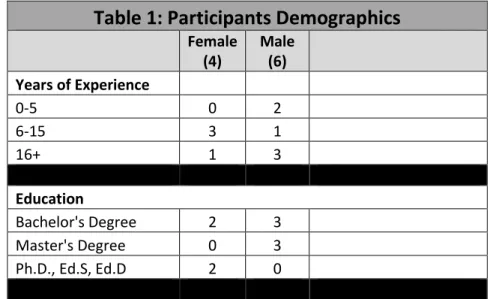
voluntary. In order to obtain a comprehensive view of structure, functions, and interactions in the mentorship block within the upper school at CIA, a variety of data collection methods were utilized and are as follows: mentorship block classroom observation (Appendix D), semi- structured interviews (Appendix E), and an electronic survey created and deployed using REDCap (Appendix F). My target population of study was upper school teachers who serve as mentors. There are fifteen mentor teachers in the upper school. My goal was to speak with and survey each of them, record conversations and insights when appropriate and permitted, observe each teachers’ mentor session once and send an anonymous survey to the group in order to glean any uncovered or sensitive thoughts and comments mentors were not comfortable speaking aloud. During December 2019 and January of 2020, ten of the fifteen teachers allowed me to interview them, eleven permitted me to observe their mentorship classroom and ten answered the REDCap survey (see Table 1 for survey respondents demographic information). Overall, a core group of eleven mentor teachers, of fifteen teachers in the upper school, participated in at least two forms of data collection. Data collected was stored on a secure laptop and within the REDCap database (Harris et al., 2009).
10 Table 1
Participant Demographics-REDCap N=10
Table 1: Participants Demographics
Female (4)
Male (6) Years of Experience
0-5 0 2
6-15 3 1
16+ 1 3
Education
Bachelor's Degree 2 3
Master's Degree 0 3
Ph.D., Ed.S, Ed.D 2 0
Data were collected through one-to-one interviews with teachers and researcher observations.
Observations included a qualitative component consisting of open-ended fields to enter observations related to four general topics related to emotional support (i.e., positive climate, negative climate, teacher sensitivity, and regard for adolescent perspectives) and a quantitative component consisting of Likert-like items for rating specific factors associated with the same four emotional support headings. The observation tool was adapted from the CLASS
(Classroom Assessment Scoring System) framework developed by Hamre et al. (2012).
Quantitative data from closed-ended observation items were compiled in an Excel spreadsheet and analyzed using descriptive statistics. The 15 items were scored on a seven-level scale, with 1 indicating the lowest level of emotional support and seven indicating the highest level of emotional support. Items 12 through 15, under the heading ‘negative climate,’ were scored on a reverse scale, with lower scores for negative climate corresponding to higher scores for
emotional support. The lowest possible score across the 15 items was 15 points, indicating that the teacher was providing the lowest level of emotional support. The highest possible score across the 15 items was 105, indicating that the teacher was providing the highest level of emotional support.
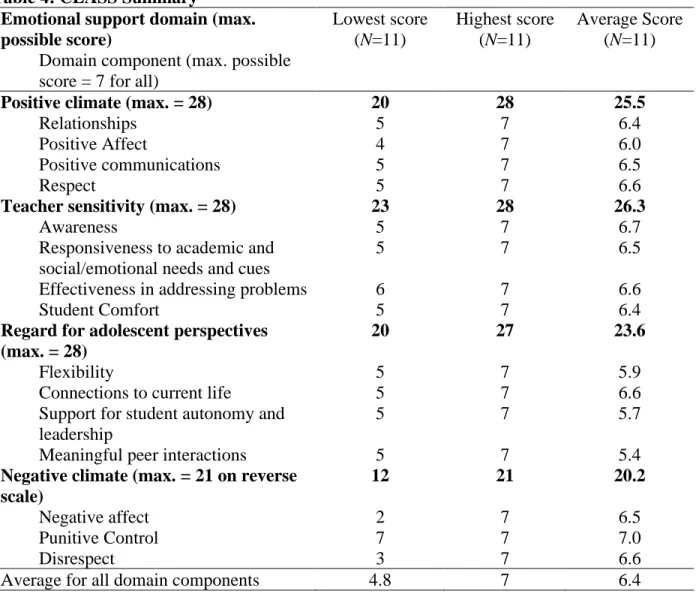
On average, participants provided a very high level of emotional support (6.4 out of 7) to their students across all four domains. The domain in which average scores across the 11 observation participants were lowest was ‘regard for adolescent perspectives,’ although scores still indicated that participants on average provided a high level of emotional support across all four
components of this domain. The highest average score across the 11 observation participants was in the domain ‘teacher sensitivity,’ indicating that this was the domain in which participants were strongest, on average, at providing emotional support to their students.
11
Qualitative data from individual teachers’ interviews, open-ended observation notes and open- ended survey responses were transcribed and imported into NVivo 12 computer-assisted qualitative data analysis software for inductive, thematic analysis. The six-step procedure recommended by Braun and Clarke (2006) was used. The first step of the analysis involved rereading the transcripts of the interviews and open-ended observation notes in full to regain familiarity with them. In the second step, the data were coded. Coding involved assigning excerpts from the transcripts that expressed a meaning relevant to answering a research question to a node in NVivo. When different excerpts expressed similar, relevant meanings, they were assigned to the same node. Each node represented a code. The codes were labeled with a short phrase to describe the data assigned to them. A total of 166 transcript excerpts were grouped into 26 codes. Table 2 is a list of the codes that emerged during the second step of the analysis.
Table 2
Data Analysis Codes
Code (listed alphabetically) n of participants
contributing (N=11)
n of transcript excerpts included
Assessing individual student needs 1 1
Building relationships with peers 5 5
Continuity of connections through years 3 3
Curriculum connects to student needs 7 17
Dedicated time for personal and academic guidance 8 25
Differentiating classroom and mentoring relationships 6 9
Finding time to meet with each individual student 1 1
Flexible nature of curriculum both strength and challenge
2 3
Having a book-end structure 1 1
Importance of consistency of contact 5 5
Importance of listening and trust 6 8
Managing a larger student group 1 1
Mentor goals and obligations 4 6
Mentor maintaining consistency 1 1
Mentorship block has a three-fold purpose 4 10
More can be done with executive functioning skills 1 1
Navigating student personality conflicts 3 4
Observing gender differences and student needs 2 2
Office hours and building student responsibility 6 8
12 Perceptions of planning and teaching with RULER curriculum
3 6
Positive perceptions of program changes 5 6
Reflecting on training and PD 3 3
RULER curriculum builds SEL skills 7 13
Self-advocacy and preparation for life beyond high school
4 6
Stress management and executive functioning 4 10
Success through flexibility and teacher reflexivity 6 11 In the third step of the analysis, the data were themed by grouping codes that had similar meanings or that had meanings that converged on an overarching theme. The 26 codes were grouped into six major themes in this step by clustering the nodes that represented them under parent nodes, which represented the themes. The fourth step of the analysis involved reviewing and refining the themes to ensure they accurately represented patterns in participants’ responses.
In the fifth step, the themes were named and defined. The sixth step consisted of creating the following presentation of the findings. Table 3 indicates how the codes from the second step of the analysis were grouped to form the major themes developed and finalized in the third through fifth steps.
Table 3
Data Analysis Themes and Codes Theme/Finding
Code grouped to form theme (listed alphabetically)
n of participants contributing
(N=11)
n of transcript excerpts included Theme 1/Finding 1.1: Trusting teacher-student
partnerships are built through individualized care and support
11 52
Building relationships with peers
Continuity of connections through years Dedicated time for personal and academic guidance
Differentiating classroom and mentoring relationships
Importance of listening and trust
Observing gender differences and student needs Theme 2/Finding 1.2: Social-emotional learning is accomplished through guidance in planning, self- advocacy, and emotion regulation
11 53
13 Mentorship block has a three-fold purpose Office hours and building student responsibility Perceptions of planning and teaching with RULER curriculum
RULER curriculum builds SEL skills
Self-advocacy and preparation for life beyond high school
Stress management and executive functioning Theme 3/Finding 2.1 Relationship-building allows teachers to assess students’ individual support needs
11 20
Importance of consistency of contact Mentor goals and obligations
Positive perceptions of program changes Reflecting on training and PD
Theme 4/Finding 2.2 The flexibility of the RULER curriculum allows teachers to meet students’
individual support needs
11 28
Curriculum connects to student needs
Success through flexibility and teacher reflexivity Theme 5/Finding 3.1: The opportunity to address teachers’ challenges in structuring the mentoring block
4 5
Finding time to meet with each individual student Flexible nature of curriculum both strength and challenge
Having a book-end structure
More can be done with executive functioning skills
Theme 6/ Finding 3.2: The opportunity to address the challenge of strain on teachers through
adjustments to mentoring group composition
6 7
Assessing individual student needs Managing a larger student group Mentor maintaining consistency
Navigating student personality conflicts
14
The presentation of the organization analysis, data, and evidence is listed by research question.
The discussion of answers to each research question is grouped by finding. For each finding, evidence is provided with direct quotations from the interviews, observation notes, and survey responses.
Findings
Research Question 1. How does the mentoring block contribute to building teacher-student relationships and social emotional learning?
Finding 1.1: Trusting Teacher-Student Partnerships Are Built Through Individualized Care and Support
Trusting teacher-student partnerships were built and maintained during the mentoring block.
Teachers built trust by learning and caring about each student’s social, emotional, and academic needs, and by using the time to offer students individualized guidance and support to meet those needs. This finding reinforces the idea of bottom up implementation of the RULER program.
The administration of CIA gave some authority to teachers to modify or change the program lessons to suit their context and this is a motivating factor that increases their will to use the curriculum when appropriate (Rowan, 1990). So, teachers were not forced to use RULER lessons in a prescribed way or even during all mentorship block classes. Instead, they were given leeway to gauge whether they could use the mentoring block time period to build rapport, have informal conversations or encourage students using a modified framework of a RULER theme or concept.
When students perceived that their mentors were invested in promoting their best interests, they reciprocated with trust and respect for the mentor. This finding was consistent with previous research on implementation science indicating that the capacity to initiate a program of study like RULER (i.e., Recognizing emotions in others, Understanding emotions, Labeling emotions, Expressing emotions, and Regulating emotions) within a mentoring block requires motivation on the part of the teacher (Damschroder, Aron, Keith, Kirsh, Alexander, & Lowery, 2009; Durlak &
DuPre, 2008; Meyers, Durlak, & Wandersman, 2012). In this study, teachers’ responses
indicated that they were strongly motivated to provide and communicate care and support to their mentees. When asked if the block was structured to facilitate meaningful conversations with their mentees, teachers 100% agreed or strongly agreed.
The mentorship block is structured to facilitate constructive conversations with my mentees female male
Strongly Agree 3 5 80%
Agree 1 1 20%
In an interview response, one teacher expressed the purpose of using the mentoring block to communicate sincere care for students and their needs, “I want [students] to know that I care, and that I want them to succeed and to be comfortable to be able to talk to me about anything that could influence their lives positively or negatively.” Another teacher reported that the student- centered nature of the mentoring relationship was based in part on needs assessments conducted
15
through informal questioning and observations during the mentoring block: “In mentoring, it’s trying to figure out, ‘How am I going to best serve you and your needs? As your mentor, what can I do to help you? How am I going to partner with you?’”
Participants’ expressions of individualized concern were also documented during researcher observations. One teacher was observed following up with a student about a health concern reported during a previous mentoring block, asking, “Did you go to the doctor? I was worried about you.” The student responded that his father, a pediatrician, had examined him. Another teacher was observed providing encouragement to students during the mentoring block while extending an offer of support. The teacher encouraged the mentees by stating, “You guys have all shown that you can do [well on the upcoming midterms].” The teacher then offered support by stating: “As your mentor, I want to check in with you. How are you feeling? Maybe we can share what’s coming up, like map it, so I can help you think about it. I want you to have a plan.”
One of the supports teachers provided during the mentoring block was individualized
encouragement and feedback. In an interview response, one teacher reported that support in the form of positive feedback during the mentoring block made students more receptive to support in the form of constructive criticism,
“The more that I can see [my students’] strengths, they gain confidence, they trust me. The feedback I’m giving them is positive. They’re going to be more open. Then, when I do have more constructive kinds of feedback to give them, they’re a little more willing to listen, because they know I’m on their side. They know I see the good things in them.”
A different teacher reported that positive feedback was the primary support their students needed during the mentoring block, “My group this year is very driven. They don’t really need a lot of support from me. They do need someone to give them information, and to give them love and appreciation.”
Teachers also built relationships with their mentees during the mentoring block by facilitating fun activities to promote bonding and trust. One teacher cited examples of such activities, “We do fun things. I let them get their phone out. We’ve done little dances. It’s just to build that relationship, that more personal relationship you have with [mentees]. We’ve taken goofy pictures together.”
The relationship teachers built with students during the mentoring block was personal, but teachers distinguished it both from the teacher-student relationship in the classroom and from informal friendship. One teacher described the mentoring relationship as differing from friendship because the teacher maintained an asymmetrical authority, “This isn’t a friendship.
This is more of a guiding, while maintaining that boundary of I’m still your teacher, I’m still the authority.” Another participant distinguished the mentoring relationship from the relationship teachers had with students in the classroom by suggesting that the mentoring relationship involved more input from the student, while the classroom relationship was more exclusively top-down, “In the classroom it’s more hierarchical, versus in mentorship more partnership.”
The trusting teacher-student partnerships built during the mentoring block through individualized care and support also differed from teacher-student relationships in the classroom because they
16
had a different purpose. While the teacher’s relationship to students in the classroom was a medium for subject-matter instruction, the purpose of cultivating the mentoring relationship was to establish trust as a basis for fostering students’ growth across all developmental domains, as one teacher stated in an interview response, “When you develop that rapport with students, it’s just much easier to share information with them and then to help them develop and grow, because you have that relationship.” The same teacher added that a personal relationship based on trust made students more receptive to guidance, “I think trust is a big part of that [mentoring]
relationship. [Students are] more inherently willing to listen and understand and trust you and trust the things that you have to say.”
Table 4 displays the CLASS data as a summary of scores from eleven teachers within each of the four emotional support domains. In general, teachers provided a positive classroom climate, were sensitive and aware of students’ needs and were flexible and supportive of the adolescent
perspective.
Table 4: CLASS Summary
Emotional support domain (max.
possible score)
Domain component (max. possible score = 7 for all)
Lowest score (N=11)
Highest score (N=11)
Average Score (N=11)
Positive climate (max. = 28) 20 28 25.5
Relationships 5 7 6.4
Positive Affect 4 7 6.0
Positive communications 5 7 6.5
Respect 5 7 6.6
Teacher sensitivity (max. = 28) 23 28 26.3
Awareness 5 7 6.7
Responsiveness to academic and social/emotional needs and cues
5 7 6.5
Effectiveness in addressing problems 6 7 6.6
Student Comfort 5 7 6.4
Regard for adolescent perspectives (max. = 28)
20 27 23.6
Flexibility 5 7 5.9
Connections to current life 5 7 6.6
Support for student autonomy and leadership
5 7 5.7
Meaningful peer interactions 5 7 5.4
Negative climate (max. = 21 on reverse scale)
12 21 20.2
Negative affect 2 7 6.5
Punitive Control 7 7 7.0
Disrespect 3 7 6.6
Average for all domain components 4.8 7 6.4
17
Finding 1.2: Social-Emotional Learning Is Accomplished Through Guidance in Planning, Self-Advocacy, and Emotion Regulation
Participants used the mentoring block to build social emotional learning by providing their mentees with guidance on planning, self-advocacy, and emotion regulation. Researchers have found that social emotional learning curriculum has the potential to positively affect students’
academic progress and peer relationships (Brackett, 2016). Social emotional learning
programming is focused on developing skills such as recognizing emotions of self and others, regulating one’s own emotions, respecting others, resolving conflicts peacefully, and
communicating effectively (Dymnicki, 2013). Findings from the literature have indicated when social emotional programs are implemented appropriately in K-12 school systems, there are significant, positive effects for students and educators (Durlak et al, 2011). Additionally, it should be noted that the implementation of the RULER program in CIA’s context followed the idea of implementation integrity which accounts for “programmatic expression in a manner that remains true to essential empirically warranted ideas while being responsive to varied conditions and contexts” (LeMahieu, 2011). CIA’s administration allowed mentors to find their own
balance of teaching RULER lessons and providing supports that fit the context of their individual classroom. Therefore, the organizational capacity at CIA is strongly suited to support mentor teachers to navigate implementation of RULER. This capacity considers the school’s history, leadership structure and open lines of communication that aligns with CIA’s vision and mission (Tichnor-Wagner, 2018). Finding 1.2 in this study was aligned with previous research on
implementation science, which indicated the capacity to initiate a program of study like RULER within a mentoring block requires knowledge and planning on the part of the teacher
(Damschroder, Aron, Keith, Kirsh, Alexander, & Lowery, 2009; Durlak & DuPre, 2008; Meyers, Durlak, & Wandersman, 2012). Within the findings of this study, teachers reported their
knowledge of social emotional learning and their delivery of that knowledge to students through planned, structured lessons were critical for success of social emotional learning curriculum.
When asked via REDCap survey, 100% of participants responded that they are adequately prepared to serve as mentors. Likewise, 100% of the teachers reported they know what is expected of them during the mentorship block as well.
I am adequately prepared to serve as a mentor to my mentees Female Male
Strongly Agree 3 3 60%
Agree 1 3 40%
I understand what is expected of me during mentorship block
Strongly Agree 3 4 50%
Agree 1 2 50 %
One teacher stated in an interview response that one purpose of the mentoring block was to,
“Teach necessary skills and strategies that maybe [students] don’t get in the classroom.” In a questionnaire response, another teacher described the mentoring block as a time to foster social emotional learning through discussions of, “Topics like anxiety, multitasking strategies, bullying, appropriate relationships, alcohol/drugs, etc.,” and by using the thirty minute block of time, “To
18
help monitor students’ school performance so no one is falling behind or doing poorly in their classes,” and, “To work on strategies to assist in executive functioning.”
To assist in planning, teachers assessed student needs by inquiring about academic progress and engaging students in reviewing their grades and scores through the MyCIA portal, which holds their academic records. One teacher was observed during the mentoring block instructing students to access their grades through the school’s network to identify classes in which they might need support, with the teacher telling the mentees, “Everyone, log in to My CIA. Look for your lowest grade first and let me know who that teacher is. Click hide/show, click on that. If it still doesn’t work, tell me . . . If you have a grade under 80, I’m going to encourage you to visit with the teacher for office hours.” A different teacher reported in an interview response that during the mentoring block, individual students were asked questions such as, “I’m seeing that you’re maybe struggling on this grade here. What’s going on in that class? Do I need to reach out to that teacher?”
When teachers had assessed a student’s academic needs, they sometimes assisted the students, not by intervening directly, but by coaching the student in appropriate self-advocacy skills. One teacher was observed during the mentoring block instructing a student to speak to the teacher of a class in which the student needed support, saying, “I think you need to check in with [the content instructor] about the debate, sounds like you might need some clarity.” The mentoring teacher then signed the student up for a meeting with the content area teacher and walked the student to the other teacher’s room. Another teacher stated during an interview that building students’ self-advocacy skills was a conscious goal of mentoring block activities, so students would know how to obtain the supports they needed when they left CIA and entered college,
“[Students] struggle with self-advocacy. That’s one thing that we really pride ourselves at doing, is building that, so when they go off to college, they have no problem telling their instructors,
‘This is my learning difference, and this is what I need.’”
Participants reported that they applied RULER during the mentoring block to assist students with executive functioning. One teacher expressed in an interview response the reason why
supporting social emotional learning by using RULER during the mentoring block was a high priority, “A lot of our kids, they don’t know how to express their feelings, or they don’t even know that they’re having those feelings. They may just be a jumbled mess inside.” Some teachers used the mentoring block to deliver planned lessons to their mentees that emphasized different aspects of RULER and delivered knowledge of strategies for maintaining executive functioning. In a questionnaire response, one teacher stated RULER is used to support social emotional learning during the mentoring block, “It allows students to practice ways to regulate emotions and stress, which can facilitate better success at school.”
One teacher was observed conducting a planned exercise to assist students in labeling and
expressing emotions, saying to the mentees, “Think about where you are in our mood meter, high energy, high pleasantness, cheerful.” The teacher showed the mentees the mood meter
(Appendix A) and the zones for each quadrant, saying, “Blue, low energy. Sometimes we feel this way if we are feeling down. Today, I think I’m cheerful and focused today, that’s how I feel. High energy, high pleasantness.” Another teacher was observed giving examples of emotion regulation strategies to students during the mentoring block, “We have a problem. We recognize we have a mad or sad feeling. What can you do? Think of something relaxing.
19
Positive self-talk. Positive reappraisal, reframing the situation so we put it in a more positive light. You can distract yourself. Talking to a friend to get your mind off it. Physical space, like get away for a minute.”
One teacher reported in an interview response that mentees were led through exercises to support executive functioning when triggers were encountered, stating, “[Students] had to circle the values that are most important to them and underline them and then think about how they wanted people to see them, what they want to achieve in relationships or in their life, and then what their best self looks like.” After students defined their values and worked toward defining their conception of their best self, the mentor led them through an exercise in which they engaged with a trigger through art and then activated the conception of the best self as an emotion regulation strategy, “We did artwork about what triggers us, and then we have to stop and see our best self. We recognize what happens to our bodies when we are triggered, and then we stop.” (Appendix B)
Research Question 2. What are the perceptions and experiences of teachers surrounding the mentorship block?
Two findings emerged during analysis to answer the question of how teachers perceive and experience the mentorship block. Finding 2.1 indicated that relationship-building allows
teachers to assess students’ individual support needs. Finding 2.2 indicated that the flexibility of the RULER curriculum allows teachers to meet students’ individual support needs. The
following subsections are discussions of these findings.
Finding 2.1 Relationship-Building Allows Teachers to Assess Students’ Individual Support Needs
From the REDCap survey and teacher interviews, data showed that the eleven participants expressed positive perceptions of the mentorship block. They favorably compared the
mentorship program during the 2019-2020 academic year, during which a thirty minute block of time was dedicated to mentoring on four days each week, to the program during the 2018-2019 academic year, during which one thirty minute block of time was allocated to mentoring per week. Participants expressed that meeting with mentees four times per week enabled them to build strong relationships with students.
One teacher stated in an interview response that having a consistent mentor and a dedicated block of time to meet almost daily provided students with a sense of stability and also a
perception that they always had a starting point, the mentor and the mentoring block, when they needed support, “You can maintain that relationship of seeing them every day. They know this is part of their routine . . . the mentor is that consistent staple, and they know they can go to that person for any question.” Another participant expressed a positive perception of the allocation of four mentoring blocks per week in stating, “I really like that we spend four days a week touching base with our mentees. I feel like I have a bigger impact than, say, last year, where it was just one day that I saw them.” The participant said meeting with students frequently was important because, “[Students] get to know you a little better. I think that’s important. I think it makes a lasting impact on students of this age when they develop a strong bond with a successful adult.”
20
A mentoring block schedule that enabled teachers to get to know students on a personal basis was beneficial in part because it created a level of comfort that facilitated discussion of
potentially sensitive topics, as one teacher stated, “Last year, we had mentoring much less, and I didn’t get that relationship piece. It felt uncomfortable trying to bridge into some of these more difficult concepts when we didn’t have that time to develop that relationship.” A second benefit of a mentoring schedule that enabled teachers to build close relationships with students was teachers were better able to observe, assess, and meet the needs of their mentees. One teacher reported getting to know students through the mentorship block allowed for recognition of deviations from usual moods and behaviors, “I had a student that was having a bad day. I was able to read that in that person. This was in the mentoring setting, and I said, ‘Are you okay?
You don’t seem like yourself. You seem stressed.’” Another teacher reported assessing the needs of familiar students allowed for full advantage to be taken of the flexibility of the mentorship, “I try to read the room. Is this a day where they need a gentle push on their academics, or is this a day where they need to relax? Mentoring is a versatile space in which either can happen.” As one teacher stated, the instruction and guidance provided during the mentoring block was often tailored to meet students’ individual support needs, on the basis of the teacher’s familiarity with the mentees, “It's very important to know where [students are] at when they come in. Is this the right day to do RULER, or is this the day to just hear about their
weekend?”
Finding 2.2 The Flexibility of the RULER Curriculum Allows Teachers to Meet Students’
Individual Support Needs
Teachers spoke favorably of the RULER curriculum and particularly of the flexibility of the instruction, which allowed teachers to adapt preplanned lessons to meet the individual support needs of specific students. Participants expressed positive perceptions of the flexibility of the mentoring program, in which they exercised broad discretion in deciding which supports and instructions to offer their mentees each day. One teacher stated, “We all have our own personalities and ways of connecting to the kids. The way we’ve got it set up, there’s a lot of teacher discretion. We can shape it in a way that is genuine and authentic.”
When teachers decided a RULER lesson would be the most beneficial way to use the mentoring block, the lessons were flexible enough to be tailored to students’ specific needs, as one teacher stated, “Within a lesson, you can pick certain activities to use . . . The teacher, depending on the students, can pick and choose what to do. Sometimes, too, things come up that we need time to talk about.” Picking and choosing which lesson elements to present to students could be based on the mentor’s assessment of students’ needs, as well as on the mentors’ assessment of students’
readiness to assimilate the material, another teacher stated, “There's some things [in RULER] I don't think the students would get or they're not ready for . . . I just omit things and add things that I think might work better.” Mentor teachers reported that the mentorship block was a valuable use of time, with 9 of 10 respondents strongly agreeing or agreeing. One distinction to note in the chart below is when mentor teachers were asked about alternative uses for the block.
Of 10 mentors, 7 believe the time devoted to the block is useful while 3 chose to be neutral in their opinion, neither agreeing nor disagreeing.
21
The mentorship block is valuable use of instructional time female male
Strongly Agree 2 5 70%
Agree 1 1 20%
Neutral 1 0 10%
Time devoted to the mentorship block would be better used in other ways.
Strongly Disagree 1 3 40%
Disagree 1 2 30%
Neutral 2 1 30%
Research Question 3. What opportunities and challenges exist with the implementation of the mentoring block?
Two findings emerged during analysis to answer the third research question. Finding 3.1 indicated that there are opportunities to address the challenge of putting mentoring time to optimal use through additional structure and support for mentors. Finding 3.2 indicated that there is an opportunity to address the challenges of mentor strain and wasting of mentoring time by optimizing group compositions. The literature suggests that certain conditions within a context should be present for successful implementation of a prescribed program or at least to what extent a program is implemented. These include will, capacity, motivation, knowledge, and commitment. Therefore, if will of mentor teachers exists to implement the RULER program, it is essential that capacity also be present. Capacity in this finding is a time component i.e.. Planning time, ongoing support (Tichnor-Wagner, 2018). Competing demands for time in a mentor
teachers schedule was noted in Finding 3.1.
Finding 3.1: The Opportunity to Address Teachers’ Challenges in Structuring the Mentoring Block
Participants described the flexibility of the mentoring program as beneficial in enabling them to meet students’ individual support needs, but when they were asked to discuss the challenges they experienced as mentors, five of them reported that they found it challenging to put the two
weekly hours of mentoring time to productive use. One teacher acknowledged that the flexibility of the mentorship was beneficial for students but challenging for teachers:
The biggest challenge is also, perhaps, one of the biggest strengths, which is just the flexibility of it. There's a lot of oil in this machine. In years past, it was completely unstructured, which was challenging. The curriculum was implemented in part to remove that anxiety around what to do during this time. Teachers felt uncertain as to how to approach it. The curriculum provides a structure. It's there, but what we do on any given day is ultimately up to us. That can be challenging.
Participants did not want to eliminate flexibility through rigid structuring of the
mentoring block, but they offered four suggestions for ways in which teachers could be assisted in consistency using the time in ways that benefitted students. One teacher suggested in a survey
22
response that teachers could use mentoring blocks more productively if they had more dedicated planning time to customize lessons and activities, stating that mentors would benefit from:
“More planning time to go along with the responsibility, info on how to adjust it to meet needs of higher-need students (customizing it to specific students/groups).” Another teacher suggested in a questionnaire response that additional guidance for mentors would help them to optimize their use of the mentoring block: “The school counselor could provide activities/lessons that mentors could use with the students.”
One teacher suggested that the way in which mentoring time is allocated during the school day can make the time easier or harder for teachers to use, and that a bookend structure with mentoring at the beginning and the end of the day would help teachers focus the time on immediate support needs: “It would be nice to have mentoring for 10 minutes at the start of the day to look at the day's schedule, what they will need for each class, and then again at the end of the day to make a to-do list of homework and prioritize their time after school.” Another teacher suggested that frequent mentoring time was more beneficial toward the beginning of the year, when mentors and mentees were focused on building relationships, but that phasing out some of the unstructured mentoring blocks in favor of a more academic focus later in the academic year might be appropriate: “It is a lot of time that we meet. Toward the beginning, you need that time to develop that relationship, [but] I think maybe toward the end of the semester, we could
sacrifice bit of mentorship time for more academic office hour time.”
Finding 3.2: The Opportunity to Address the Challenge of Strain on Teachers through Adjustments to Mentoring Group Composition
Participants reported two challenges associated with the composition of mentees assigned to them. The first challenge was that two or more students who could not work productively together were sometimes assigned to the same group, with the result that mentoring was frequently disrupted by student-to-student conflicts. The second challenge arose when all students in a mentoring group required a high level of support from the mentor, with the result that the mentor experienced stress and fatigue. Participants suggested that there were
opportunities to address these challenges through greater attention to the composition of each mentor’s group of mentees.
One teacher said of the effect of incompatible student personalities on the productivity of the mentorship: “One of my groups didn't get along very well. That was, by far, the least productive year in terms of what students got out of mentoring because they were always bickering with one another.” Another teacher said the primary challenge of the mentorship was, “Just the particular mix of students. There's a conflict with a couple of them at times. Then they can be friends, and then there's conflict another day.” To address this challenge, a teacher suggested that mentors should take the initiative in reporting incompatible students to administration in order to have one or more students reassigned: “Maybe you get one or two students that just can’t stand each other. At that point, you would go to admin and say, ‘This isn’t working for us.’” However, when student-to-student conflicts were manageable, another teacher stated, the cooperation and bonding in the mentoring group often resolved the tension in the relationships: “Over the course of the semester, I do see that they’re more comfortable with each other. They’re more
comfortable sharing things that they feel. I’ve heard them encouraging one another more. They are forming their little friendships.”
23
The composition of the mentoring group could also raise challenges for teachers when there was not a balance between higher-needs and lower-needs students. One teacher stated: “Some
students need a lot of support, and some need little support. If you’re constantly getting a mentor group every year that needs a lot of support, you can feel exhausted.” Another teacher described an experience of working with a grouped composed entirely of higher-needs students: “My first year, I had a group that all had lots of missing assignments, and they needed me to crack the whip on them and say, ‘Okay, we’re writing this down, we’re meeting with this teacher.’ I had to do a lot. It’s nice to have a balanced group.” A teacher suggested that the problem of
imbalanced mentoring group compositions could be addressed by taking the opportunity to consider student needs and mentor capabilities when assigning students, or “Just thinking about the way they group the kids. We rearranged my group a little bit trying to figure out—they were like, ‘Let's put some kids together who might have a different set of needs.”
Discussion
Mentor teachers report positive feelings about mentoring block, and they found the relationship building during this time allows them to understand the students and their needs better. This deeper understanding gives them the opportunity to provide meaningful learning opportunities pertaining to SEL. Mentor teachers have the freedom to structure SEL lessons according to the needs of the students which allows them to decide which learning opportunities should be presented without having to follow a rigid prescribed sequence. The current organization of SEL lessons offers teachers’ discretion regarding the nature of the mentorship classes including completing engaging activities. Flexibility enables the teachers to provide activities that they perceive the students may need most, including fun activities that further serve to build the teacher-student relationship.
Mentor teachers noted some challenges revolving around the structure of the mentoring block, specifically the SEL portion. Although the discretion to decide on the sequence and nature of the classes was beneficial, some participants noted this as a challenge, citing it was still another lesson to prepare. Being flexible regarding the classes benefitted the students but complicated the situation for teachers. Additionally, there is the level of support needed by some students which means they may require more support than others. The varying levels of support needed can complicate the mentoring block for teachers. It is possible that all the students in a mentorship block could require a significant amount of support which makes it harder for teachers to manage the class. In some instances, the composition of students within a classroom were incompatible.
Although it is a learning opportunity for students to develop resilience, it serves to complicate management of the mentoring block. In some cases, the teachers believed students should be separated for the purposes of the better implementation of the SEL program. This situation triggered a suggestion that teachers should be able to manage the composition of the mentorship block groups to ease the instructional challenges during the blocks especially if there are students who do not get along with one another.
Takeaways
From the interviews, observation data and questionnaire, some general takeaways emerged.
CIA’s context is important to note again, as it speaks to the varying nature of approaches used by
24
teachers. The school’s small class size and total upper school size allows for building bonds and positive connections between mentors and mentees that may not be as easily built into a larger school’s schedule. Generally, and evidenced by the data collected, teachers and students enjoyed the mentorship block and relationships that the scheduled time-period cultivated. The
observations and interactions were mainly positive (See Table 4 above), although, some challenges were mentioned and discussed.
The mentorship block also offered a chance for mentees to establish a rapport with mentors in a non-academic sense, outside of the traditional classroom stereotype. For example, during one interview a mentor teacher explained her mentoring role, specifically during the block, as differing from the typical teacher-student relationship. She stated:
“I also teach them in health, so I know a lot about their lives. It’s always interesting finding the balance because there’s no other relationship like a teacher/student
relationship. You have friendships, but this isn’t a friendship. That’s why I like the word mentor because that’s why you’re doing it. Advising is a little bit different, it is like giving advice. This is more of a guiding—yeah. It is a friendship while maintaining that boundary of I’m still your teacher, I’m still the authority—"
Another teacher had similar things to say about building relationships with students as a mentor.
“I think one of my gifts as a human is just building quality relationships. To me this is one of the most rewarding parts of my job is that I actually am allowed to do that, encouraged to do that. I have designated people who are the administration says, ‘Build this relationship with these students.’ To me I feel very comfortable with it. I feel like I’m good at it. I feel like I’m able to—because of that relationship, I’m able to help students meet needs that maybe they wouldn’t if they didn’t have a mentor.”
Building relationships and making connections was an area of focus for teachers in the mentorship block. Mentors mention using students’ current needs to determine lesson content and the use of the RULER curriculum for the day or week. Use of specific lessons were dependent on what is going on in the mentees’ lives, whether school related or personally, as well as who they are as learners and people. Although the teachers used the RULER program to guide SEL instruction, they were also entuned to the needs and mood of the mentee group and the possibility that a different approach may be warranted.
“I tend to cut some of the curriculum because it’s built for a larger group. It’s like, In your big group, discuss this, and then in a smaller group, discuss this. I try to pick and choose the parts of it that I think most directly apply to my girls.”
Another teacher noted:
It’s just you have to have the right environment of small sizes, so that you can really help the whole student, not just—it’s not just about academics. ‘Cause if they’re struggling with depression, you kind of have to—that comes first…” The same teacher stated: “One of the things I like about RULER, so some of the other things that we’ve done in
mentoring have been a little bit less structured… the fact that I can just open a document in the morning, and look through the lesson, and say, “This is what will work for my
25
group. This will not for work my group,” is just perfect. I can make it longer. I can make it shorter. I can tweak it however I want to meet the needs of the students that I’m currently with.”
Managing students in an informal setting such as a mentoring block can be challenging for some mentors and the needs for ongoing support for some students can look different in a grade level, or because of the composition of a class. Mixed into this challenge is evidence of some
incompatibilities between students which can be disruptive and interfere with the mentorship block time.
For example, a mentor noted:
“As far as difficulties, just the mix of students I have. I've walked by other mentoring classes and it's so quiet and there's only four of them. It's like they're just easy. Just the particular mix, I think, of students. High energy. There's a conflict with a couple of them, at times though. Then they can be friends and then there's conflict another day. They come in with a high amount of energy. It's a class where there's no homework. There's no grades. There's no assessments. They think, "We can just relax in it." It does need to be a time of calming down, but they don't calm down. That there's some difficulty there.”
Likewise, one teacher stated:
“The other challenge can be some students need a lot of support, and some need little support. If you’re constantly getting a mentor group every year that needs a lot of support, you can feel exhausted, or that it’s unfair.” As well as, “…then if you get a group that maybe doesn’t quite jive very well, that can be a challenge as well…maybe you get one or two students that just can’t stand each other.”
Recommendations
From observations, survey data collection and interviews regarding the mentorship block at CIA and teachers’ perceptions and experiences surrounding it , the following recommendations were abstracted: (1) some mentor teachers would benefit from initial or additional training on
mentoring, (2) restructure mentee groups based on (a) support needs and (b) personality
compatibility (3) create a true mentorship block with complete implementation of RULER as the curriculum is intended to be utilized by developing a seminar type class per grade level (4) mentor teachers should receive ongoing support and professional development in mentoring,
1) Training in Mentoring. Mentor training is important to the success of any mentoring program (MENTOR, 2015). In addressing the need for mentor training that is not solely focused on a SEL program, an initial workshop should be conducted with all mentor teachers. The workshop could be presented in two or more afternoon sessions so that the instructional time is not sacrificed, possibly on Wednesdays when students are dismissed early. The selection of presenters of workshops is important to the overall success of the training. It may be prudent to solicit an expert from Vanderbilt University Peabody College, especially given its close ties and relationships between Vanderbilt and Currey Ingram Academy. The interactional nature of these workshops, together with opportunities for