19
C H A P T E R 2
GOVERNMENT AGENCIES THAT IMPACT THE
HOSPITALITY INDUSTRY
2.1 FEDERAL REGULATORY AND ADMINISTRATIVE AGENCIES
Internal Revenue Service (IRS)Occupational Safety and Health Administration (OSHA) Environmental Protection Agency (EPA)
Food and Drug Administration (FDA)
Equal Employment Opportunity Commission (EEOC) Bureau of Alcohol, Tobacco, Firearms and Explosives (ATF) Department of Labor (DOL)
Department of Justice (DOJ)
U.S. Citizenship and Immigration Services (USCIS)
2.2 STATE REGULATORY AND ADMINISTRATIVE AGENCIES
Employment Security AgencyAlcoholic Beverage Commission (ABC) Treasury Department/Controller Attorney General
Public Health Department Department of Transportation
2.3 LOCAL REGULATORY AND ADMINISTRATIVE AGENCIES
Health and SanitationBuilding and Zoning Courts and Garnishment Historical Preservation Fire Department Law Enforcement Tax Assessor/Collector
“ TRISHA SANGUS HERE, how can I help you?” Trisha asked as she picked up the telephone in her kitchen. It was a Saturday, one of her days off.
Lance Dani, front office supervisor at the hotel, was on the other end of the line. “Ms. Sangus, I’m really sorry to call you at home, but we have a problem at the front desk. It’s Coach Keedy from Northern University. He’s ready to check out.”
Trisha liked Coach Keedy. His team competed against the local university twice a year, and Trisha considered herself fortunate to have acquired his business. Despite the fact that he brought a large number of energetic college students to her hotel each time he arrived, the students were generally well mannered and caused no difficulty. She certainly welcomed the weekend business they brought to town. Coach Keedy’s team had lost the night before, and she knew when that happened, he would take it hard. It tended to be a bit unpleasant for everyone the next day.
“What seems to be the problem?” Trisha inquired.
“Well,” Lance replied excitedly, “the coach is refusing to pay his entire bill. He says that, as a nonprofit organization, his college is tax-exempt, and he won’t pay the sales tax or the local occupancy tax on his rooms. He’s very upset. I asked him for a tax-exemption certificate, but he doesn’t have any documentation proving his tax-exempt status. He said any fool would know a college is tax-exempt.
Those were his exact words.”
I was afraid this might happen, thought Trisha.
In the past, her hotel had billed Coach Keedy’s school directly for any room charges incurred when the team stayed at the hotel. However, the school recently changed its billing policy. Now, the coaches
were expected to pay a team’s hotel bill out of their own pockets, then seek reimbursement from the school. While she was sure that the new policy had some financial merit for the school, it was a change that Trisha felt had some distinct operational disad- vantages, and this was one of them. When the hotel controller’s office billed the school directly, the complex issue of taxation was handled smoothly.
The accountants for both the hotel and the school knew the intricacies of tax-exempt status. Dealing with customers across the front desk was another matter.
“How does he want to pay for the charges?” asked Trisha.
“With a personal check,” replied Lance. “But he asked me to find a copy of the school’s federal tax-exemption document.”
Trisha knew that the college where Coach Keedy worked had submitted a federal identification number authorizing a tax exemption. The hotel controller’s office had the document on file.
“Okay,” said Trisha, “we know the coach rep- resents a tax-exempt institution, and we do have his federal ID number on file, but by law, we’re not allowed to deduct the tax if he pays with a personal check. Charge him the tax, just as the regulations require us to do. Explain that you talked to me, and I authorized it. If he wants a further explanation, call me back and I will talk to him and explain why. I also think it would be a good idea for you and me to get together tomorrow to review federal tax-exemption status, state taxes, and local option taxes, such as the occupancy tax. I think I can clear up some misun- derstandings you seem to have. Remember, call me back if you have more trouble. See you tomorrow.”
“Okay, Ms. Sangus, goodbye,” Lance replied as he
2.4 REGULATORY INTERACTION AND OVERSIGHT IMPACTING TRAVEL AND TOURISM
U.S. Government Agencies International Organizations
2.5 MANAGING CONFLICTING REGULATIONS 2.6 RESPONDING TO AN INQUIRY
2.7 MONITORING REGULATORY CHANGE
Federal Regulatory and Administrative Agencies 21
2.1 FEDERAL REGULATORY AND ADMINISTRATIVE AGENCIES
The hospitality industry is regulated by a variety of federal, state, and local govern- mental entities. Hospitality managers must interact with these agencies in a variety of different ways, and observe all applicable procedures and regulations established by government. Managers must fi ll out forms and paperwork, obtain operating licenses, maintain their property to specifi ed codes and standards, provide a safe working environment, and open up their facilities for periodic inspection. The purpose of this chapter is to help you understand the scope of the regulatory process and be able to respond to questions from these regulatory agencies in a way that is both legally cor- rect and sound from a business perspective.
With thousands of federal, state, and local agencies, departments, offices, and individuals regulating business today, it is simply not possible for a hospitality man- ager to be knowledgeable about all the requirements that may apply to his or her operation. It is possible, however, to take these four actions:
1. Be aware of the major entities responsible for regulation.
2. Understand how to resolve confl icting regulations.
3. Be aware of the process for responding to an inquiry or complaint from a regulatory entity.
4. Stay abreast of changes in regulations that affect your segment of the industry.
Internal Revenue Service (IRS)
The Internal Revenue Service (www.irs.gov) is a division of the United States Department of Treasury. The stated mission of the IRS is to “Provide America’s taxpayers top-quality service by helping them understand and meet their tax responsibilities, and by applying the tax law with integrity and fairness to all.”
Although it is unlikely that the agency responsible for collecting taxes will be popular in any country, the right of the IRS to charge an individual with a criminal act makes it deserving of a manager’s thoughtful attention.
In the hospitality industry, managers perform two separate roles when inter- acting with the IRS. A manager is both a taxpayer to the federal government
slowly hung up the telephone and stepped out of his office to explain the situation to the coach. Lance had a pretty good idea that, despite his best efforts, the
coach would still want to talk to his boss. He also had a good idea that tomorrow’s meeting with Ms. Sangus would be one in which note taking would be required.
1. How federal governmental agencies are involved in regulating the hospitality industry.
2. How to analyze the various roles of state governmental agencies that regulate the hospitality industry.
3. How to identify local governmental agencies involved in regulating the hospitality industry.
4. How to recognize those national and international agencies and departments charged with monitoring and regulating the travel industry.
5. How to manage confl icting regulations.
6. How to properly respond to an offi cial inquiry or complaint from a regulatory entity.
7. How to keep abreast of regulatory changes.
IN THIS CHAPTER, YOU WILL LEARN:
(by paying income tax on the profits of a business) and a tax collector for the federal government (by withholding individual employee taxes on income). The IRS requires businesses to:
䊏 File quarterly income tax returns and make payments on the profits earned from business operations (Form 941). Taxes must be filed on or before the last day of the month following the end of each calendar quarter.
䊏 File an Income and Tax Statement with the Social Security Administration on or before the last day of February (Form W-3).
䊏 Withhold income taxes from the wages of all employees (as specified in Circu- lar E). Withheld employee taxes are deposited with the IRS at regular intervals (Form 8109). Employee withholding taxes must be paid in one of three ways:
1. Quarterly, if the total amount of withheld tax for the period is less than $500;
2. Once a month, if the total amount of withheld tax is between $500 and
$3,000; or
3. Within three working days of a payroll issuance, if the withheld amount is greater than $3,000.
䊏 Report all employee income earned as tips (Form 8027), and withhold taxes on the tipped income.
䊏 Record the value of meals charged to employees when the meals are consid- ered a portion of an employee’s income.
䊏 Record all payments to independent contractors, and file any forms listing those payments (Forms 1096 and 1099).
䊏 Furnish a record of withheld taxes to all employees on or before January 31 (Form W-2) and maintain copies of this record for four years.
The IRS ensures that businesses pay their taxes through periodic examinations of their financial accounts and tax records. These examinations are called audits. A hos- pitality manager must respond if the IRS notifies him or her of a forthcoming audit.
The manager should also consult a certified public accountant (CPA) or an attorney that specializes in tax audits as soon as possible to ensure that the appropriate docu- ments are prepared and in order.
It would be an oversimplification to state that federal tax laws are complex—they are hugely complex. As a hospitality manager, you may be responsible for submitting or filing the taxes owed by a business, so it is important that you understand the role that you play in ensuring your company’s compliance with federal tax laws.
For example, the IRS considers tips and gratuities given to employees by guests of the business as taxable income. As such, this income must be reported to the IRS, and taxes, if due, must be paid on that income. In addition, employers are responsible for assisting the IRS in this reporting process by collecting tip-reporting forms from employees and forwarding the information to the IRS.
Figure 2.1 is a copy of IRS Publication 531. This publication explains the regula- tions related to an employee’s reporting of tipped income. It is a good example of the instructions the IRS gives an individual taxpayer. Note that the IRS explains what is required and how the requirements can be met.
Just as employees have specific responsibilities for reporting tipped income, the employer also has responsibilities imposed by the IRS. For a complete list of a busi- ness’s tax responsibilities, and to obtain copies of various tax forms, visit the IRS website at www.irs.ustreas.gov and look up employment taxes in the Business tab.
Search the Web 2.1 will guide you as you examine these requirements.
Federal Regulatory and Administrative Agencies 23
Figure 2.1 Reporting tip income.
Search the Web 2.1
Go online to www.irs.gov.
1. Select: Forms and Publications.
2. Select: Publication Number.
3. Select: Publication 15: Circular E, Employers Tax Guide.
Read the portion of Publication 15 that refers to an employer’s responsibilities related to the reporting of tip income by employers.
Occupational Safety and
Health Administration (OSHA)
OSHA (www.osha.gov) is an agency in the Department of Labor. It was created in 1970 after the passage of the Occupation Safety and Health Act. The purpose of the act was “to assure, so far as possible, every working man and woman in the nation safe and healthful working conditions.” Despite criticism from many in business, OSHA has taken an aggressive role in protecting workers’ rights.
All businesses, including hospitality operations, must comply with the extensive safety practices, equipment specifications, and employee communication procedures mandated by OSHA. Specifically, businesses are required to:
䊏 Provide a safe workplace for employees by maintaining facilities and provid- ing protective clothing, in accordance with OSHA safety and health standards (these standards will vary for different types of workplace environments).
䊏 Purchase equipment that meets OSHA specifications of health and safety.
䊏 Establish safety checklists and training programs for employees, especially for those who will operate equipment that may cause injury.
䊏 Report to OSHA within 48 hours any workplace accidents that result in a fatality or require the hospitalization of five or more employees.
䊏 Maintain a record of work-related injuries or illnesses (OSHA 200 Log), and file that record once a year. Employers are also required to post an annual summary of the prior year’s injuries and illnesses.
䊏 Schedule at least one employee trained in first aid on each work shift.
䊏 Display OSHA notices on employee rights and safety in appropriate lan- guages, in places where the notices can be easily read.
䊏 Provide all employees with access to information on any toxic or harmful substances used in the workplace, and keep records certifying that employ- ees have reviewed the information.
䊏 Offer hepatitis B vaccinations for employees who may have come into con- tact with blood or body fluids.
OSHA monitors workplace safety with a large staff of inspectors called compli- ance officers. Compliance officers visit workplaces during regular business hours and perform unannounced inspections to ensure that employers are operating in compli- ance with all OSHA health and safety regulations. In addition, compliance officers are required to investigate any complaints of unsafe business practices. Figure 2.2 is an
Figure 2.2 OSHA inspection provisions.
Federal Regulatory and Administrative Agencies 25 excerpt of the Occupational Health and Safety Act that gives the agency authority to
enter a business to investigate worker safety.
Hospitality managers have the right to accompany OSHA compliance officers during an inspection, and managers should make it a point of doing so, for two rea- sons. First, the manager may be able to answer questions or clarify procedures for the compliance officer; and second, the manager should know what transpired dur- ing the inspection. Afterward, the manager should discuss the results of the inspec- tion with the compliance officer and request a copy of any inspection reports filed.
Generally, inspections are not announced, although the compliance officer must state a specific reason for the inspection.
The penalties for violating OSHA regulations can be severe and costly.
Figure 2.3 details the penalties OSHA can assess against a business. Because of the stringent penalties for noncompliance, it is important that hospitality managers ensure that their workplace is safe. As stressed in this book several times, the best way to avoid accidents, lawsuits, and penalties is to adopt a philosophy of preventa- tive management. Where worker safety is concerned, this may be as simple as provid- ing information or as complex as developing an employee-training program.
One example of the type of information OSHA requires to be posted or provided is the material safety data sheet (MSDS). An MSDS is a manufacturer’s statement
Figure 2.3 OSHA penalties for noncompliance.
CARLOS MAGANA WAS A Spanish-speaking custodian working in a health- care facility kitchen. Bert LaColle was the new food and beverage director.
Mr. LaColle instructed Mr. Magana to clean the grout between the red quarry kitchen tile with a powerful cleaner that Mr. LaColle had purchased from a chemical cleaning supply vendor. Mr. LaColle, who did not speak Spanish, demonstrated to Mr. Magana how he should pour the chemical directly from the bottle to the grout, then brush the grout with a wire brush until it was white.
Because the cleaner was so strong, and because Mr. Magana did not wear protective gloves, his hands were seriously irritated by the chemicals in the cleaner. In an effort to lessen the irritation to his hands, Mr. Magana decided to dilute the chemical. He added water to the bottle of cleaner, not realizing that the addition of water would cause toxic fumes. Mr. Magana inhaled the fumes while he continued cleaning, and later suffered serious lung damage as a result.
Mr. LaColle was subsequently contacted by OSHA, which cited and fi ned the facility for an MSDS violation. Mr. LaColle maintained that MSDS statements, including the one for the cleaner in question, were in fact available for inspection by employees.
1. Did the facility fulfill its obligation to provide a safe working environment for Mr. Magana?
2. What should Mr. LaColle have done to avoid an OSHA violation?
ANALYZE THE SITUATION 2.1
Figure 2.3 (Continued)
Federal Regulatory and Administrative Agencies 27 detailing the potential hazards and proper methods of using a chemical or toxic
substance. The MSDS is intended to inform workers about the hazards of the mat- erials they work with so that they can protect themselves and respond to emergency situations. The law states that employees must have access to MSDSs and be assisted in reading and understanding them. OSHA inspectors are responsible for ensuring that MSDSs are placed in areas accessible to workers.
An OSHA Hazard Communication provides a guide for what a standard MSDS should include:1
䊏 The material’s identity—including its chemical and common names 䊏 Hazardous ingredients (even in parts as small as 1 percent)
䊏 Cancer-causing ingredients (even in parts as small as 0.1 percent)
䊏 A list of physical and chemical hazards (stability, reactivity) and characteris- tics (flammable, explosive, corrosive, etc.)
䊏 A list of health hazards, including:
䊏 Acute effects, such as burns or unconsciousness, which occur immedi- ately; and chronic effects such as allergic sensitization, skin problems, or respiratory disease, which build up over a period of time
䊏 If the material is a known carcinogen
䊏 Limits to which a worker can be exposed, specific target organs likely to sustain damage, and medical problems that can be aggravated by exposure
䊏 Precautions and safety equipment and emergency and first aid procedures 䊏 Specific firefighting information
䊏 Precautions for safe handling and use, including personal hygiene
䊏 The identity of the organization responsible for creating the MSDS, date of issue, and emergency phone number
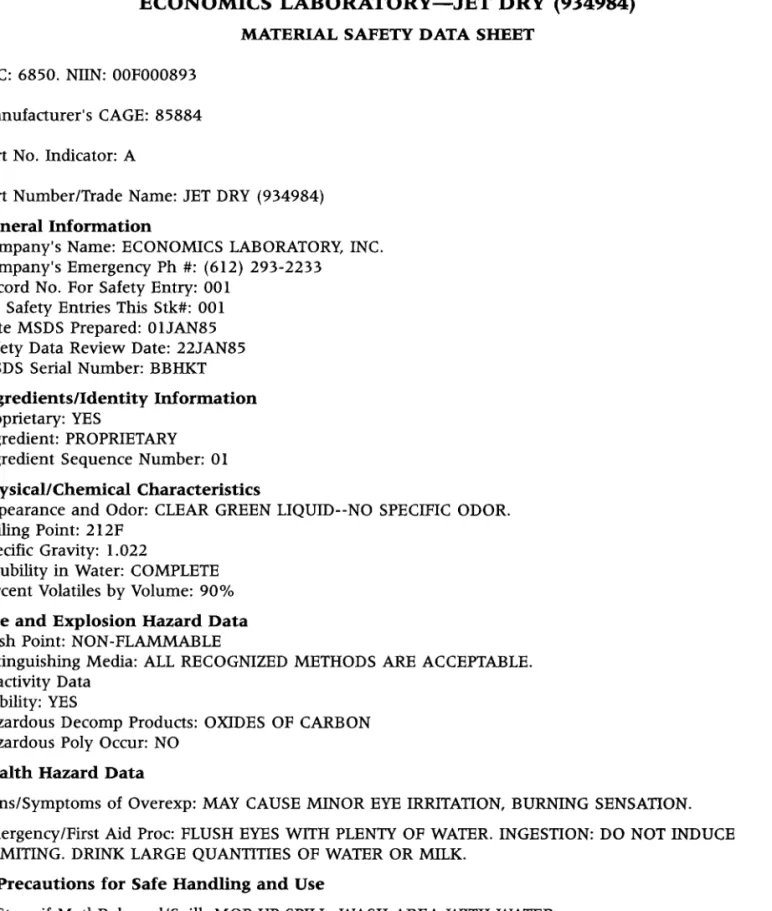
Figure 2.4 is an excerpt example of an MSDS. The specific product detailed is Jet Dry, a trademarked item distributed by Economics Laboratories for use in com- mercial dishwashers. The point here is that all hospitality managers must be aware of the sometimes very specific requirements that federal agencies place on them. The requirements can be numerous, and they change frequently. One way to stay current with your obligations as an operator is to log on to OSHA’s website (www.osha.gov) and click on What’s New.
Environmental Protection Agency (EPA)
The EPA (www.epa.gov) is an independent agency of the federal government.
Established in 1970, the EPA’s mission is to “permit coordinated and effective gov- ernment action on behalf of the environment.”2 In the hospitality industry, the EPA serves as a regulator of pesticides, as well as water and air pollution. Care must be taken when discharging waste, particularly toxic waste such as pesticides or clean- ing chemicals from laundry areas. In 1996, new amendments were added to the Safe Drinking Water Act of 1974, which is a federal law that empowers the EPA to set stan- dards for drinking water quality and to oversee the states, towns, and water suppliers that implement and enforce those standards. The EPA also monitors indoor air-quality issues (such as smoking in commercial buildings).
Many EPA directives are carried out or implemented by state and local govern- ments, such as state recycling laws and municipal ordinances for trash disposal. Thus,
1 OSHA, Inspection Procedures for the Hazard Communication Standard, OSHA CPL 02-02-038 [CPL 2-2.38D], March 20, 1998, Appendix D, “Guide for Reviewing MSDS Completeness,”
www.osha.gov/pls/oshaweb/owadisp.show_document?p_table=DIRECTIVES&p_id=1551.
2 U.S. Environmental Protection Agency, Environmental Merit Awards 2011, www.epa.gov/
region1/ra/ema/pdfs/EMA2011_Program.pdf, p. 9. Accessed July 5, 2011.
Figure 2.4 An MSDS for Jet Dry.
Federal Regulatory and Administrative Agencies 29 while you, as a hospitality manager, may have little contact with the federal agency, it
is important to be fully aware of your state and local laws in these areas.
Food and Drug Administration (FDA)
The FDA (www.fda.gov) plays an important role in the hospitality industry. It is responsible for ensuring the proper labeling of food and the safety of food. As a food- service manager, you will encounter the work of the FDA whenever you purchase food that has a mandatory FDA nutrition label. In addition, the FDA’s Model Food Service Sanitation Ordinance is used by many state and community health depart- ments as a basis for their own foodservice inspection programs. You can fi nd the 2009 FDA Ordinance online at:
䊏 www.fda.gov/Food/FoodSafety/RetailFoodProtection/FoodCode/
FoodCode2009/
Or, if you wish to view a state-adopted Food Service Sanitation Ordinance, you can view the ordinance recently adopted by Montgomery County at:
䊏 www.montgomeryco.com/health/Environmental%20Health/
Food%20Service%20Sanitation%20Ordinance.pdf
Foodservice operators also need to be aware of the FDA’s precise definitions gov- erning the use of nutritional and health-related terms. A restaurant that prints phrases such as “low-calorie,” “light,” or “cholesterol-free” in their menus must make sure that the recipes for those dishes meet the FDA’s requirements for those statements.
These and other menu-labeling requirements will be discussed more fully in Chapter 12, “Your Responsibilities When Serving Food and Beverages.”
Equal Employment Opportunity Commission (EEOC)
The Equal Employment Opportunity Commission was established by Title VII of the Civil Rights Act of 1964 and went into effect on July 2, 1965. Essentially, this agency enforces laws against discrimination in employment. Figure 2.5 lists the specifi c laws that are enforced by the EEOC. The following general areas fall under the jurisdiction of the EEOC:
䊏 Sexual harassment 䊏 Race/color discrimination 䊏 Age discrimination
䊏 National origin discrimination 䊏 Pregnancy discrimination
Figure 2.5 Laws enforced by the Equal Employment Opportunity Commission.
䊏 Religious discrimination
䊏 Portions of the Americans with Disabilities Act
Some of these areas will be discussed in detail in Chapter 8, “Legally Managing Employees.” The impact of the EEOC on the daily tasks of the hospitality manager is obvious. Consider, for example, the hotel manager who seeks to schedule a Christian to work on Christmas Day. The hotel is, of course, open. The question that might arise is whether the needs of the manager, who must staff the hotel, should take precedence over those of the worker, who desires a day off on the basis of his or her religious convictions.
Title VII of the Civil Rights Act of 1964 prohibits employers from discriminating against individuals because of their religious beliefs when hiring and firing. The act also requires employers to reasonably accommodate the religious practices of an employee or prospective employee, unless doing so would create an undue hard- ship upon the employer. Flexible scheduling, voluntary substitutions or swaps, job reassignments, and lateral transfers are examples of accommodating an employee’s religious beliefs. The question of whether a manager could “reasonably” accommo- date the request of a Christian worker to be off on Christmas Day is complex. The point to be remembered, however, is that managers are not free to act in any manner they desire, but the federal government, through the requirements of the EEOC, also plays a role in the actions of management.
The EEOC also investigates complaints by employees who think they have been discriminated against. Businesses that are found to have discriminated against employees can be ordered to compensate the employee(s) for damages, such as lost wages, attorney fees, and punitive damages.
Bureau of Alcohol, Tobacco, Firearms and Explosives (ATF)
The Bureau of Alcohol, Tobacco, Firearms and Explosives (www.atf.gov) is responsi- ble for enforcing all federal laws and regulations governing the manufacture and sale of alcohol, tobacco, fi rearms, and explosives; as well as for investigating incidents of arson. Formerly, the entire ATF was housed within the U.S. Department of Treasury, just as the IRS is, because it enforces the payment of federal taxes on the production of alcohol and the sale of alcoholic beverages. However, on January 24, 2003, pursu- ant to the creation of the Department of Homeland Security, the law enforcement functions of the ATF were transferred to the Department of Justice and the tax and trade functions of the ATF stayed with the Treasury Department under the newly cre- ated Alcohol and Tobacco Tax and Trade Bureau (www.ttb.gov).
Hospitality managers will interact with the ATF in the following ways:
䊏 Retail sellers of alcohol—including bars, restaurants, and hotels—must pay a special federal liquor tax each year (IRS Form 11, Special Tax Return).
They will receive a Special Tax Stamp showing proof the tax was paid and must keep this stamp on the premises, available for inspection.
䊏 Alcohol vendors are not permitted to mix cocktails in advance of a sale and may not reuse emptied liquor bottles to store mixed cocktails.
䊏 Operators must keep records, invoices, and receipts of all alcohol purchased.
䊏 Operators must properly dispose of empty liquor bottles and may not reuse or sell them.
In its publication “P-5170.2, Federal Liquor Laws and Regulations for Retail Dealers,” published in 1995, the ATF specifically dictates the way liquor retail- ers should handle empty liquor bottles. An excerpt from P-5170.2 is presented in
Federal Regulatory and Administrative Agencies 31
Figure 2.6. Note the severe penalties assessed against businesses that do not comply with this regulation. The ATF enforces these regulations with its own officers, who conduct inspections during an operation’s regular hours of business. Additional information on the regulations covering the sale of alcohol is included in Chapter 12,
“Your Responsibilities When Serving Food and Beverages.”
Department of Labor (DOL)
The U.S. Department of Labor (www.dol.gov) was established in 1913 to “fos- ter, promote, and develop the welfare of the wage earners of the United States, to improve their working conditions, and to advance their opportunities for profi table employment.”3
Today, the department is charged with preparing the U.S. workforce for new and better jobs, and for ensuring the adequacy of America’s workplaces. It is responsible for the administration and enforcement of more than 180 federal laws, which govern the protection of workers’ wages, health and safety, employment, and pension rights;
equal employment opportunity; job training; unemployment insurance and workers’
compensation programs; collective bargaining; and collecting, analyzing, and pub- lishing labor and economic statistics. Following is a brief description of some of the principal federal labor-related regulations most commonly applicable to hospitality businesses.
3 U.S. Department of Labor, “The Organic Act of the Department of Labor,” March 4, 1913, www.dol.gov/oasam/programs/history/organact.htm. Accessed July 2011.
Figure 2.6 Refi lling, reusing, and disposing of liquor bottles.
Wage and Hours
The Fair Labor Standards Act (FLSA) prescribes standards for wages and overtime pay, which affect most private and public employment. The act is administered by the Wage and Hour Division of the Employment Standards Administration. It requires employers to pay covered employees the federal minimum wage and overtime of one-and-one-half times the regular wage. It restricts the hours that children under 16 can work and forbids their employment in certain jobs deemed too dangerous.
This agency also establishes guidelines for tip credits, meal credits, and uniform purchases. In Chapter 8, “Legally Managing Employees,” we will look at specifi c provisions of the FLSA that hospitality managers must keep in mind.
Pensions and Welfare Benefi ts
The Employee Retirement Income Security Act (ERISA) of 1974 regulates employ- ers who offer pension or welfare benefi t plans for their employees. This area of the Labor Department is also responsible for reporting requirements for the continua- tion of health-care provisions, required under the Comprehensive Omnibus Budget Reconciliation Act of 1985 (COBRA).
Plant Closings and Layoffs
These types of occurrences may be subject to the Worker Adjustment and Retraining Notifi cation Act (WARN). WARN protects employees by requiring early warning of impending layoffs or plant closings. WARN is administered by a special division of the Department of Labor.
Employee Polygraph Protection Act
This law, enacted in 1988, bars most employers under most circumstances from using lie detectors on employees or prospective employees. However, the law does permit employers to request that an employee undertake such a test in connection with any ongoing investigation into an incident that resulted in loss to the employer. Results of the lie detector test are not to be shared with anyone except the examiner, the employer, or those so ordered by the courts.
Family and Medical Leave Act
This law, the FMLA, requires employers with 50 or more employees to grant up to 12 weeks of unpaid, job-related leave to eligible employees for the birth or adoption of a child, or for the serious illness of the employee or a family member. These provisions and others that relate to hiring and managing employees are discussed in Chapter 7,
“Legally Selecting Employees,” and Chapter 8, “Legally Managing Employees.”
It is important to note that other federal agencies besides the Department of Labor also enforce laws and regulations that affect employers. As discussed earlier in this chapter, laws that ensure nondiscrimination in employment are generally enforced by the Equal Employment Opportunity Commission. The Taft-Hartley Act, which regulates a wide range of unionization issues, is enforced by the National Labor Relations Board.
Department of Justice (DOJ)
In the United States, the Department of Justice (www.usdoj.gov) is headed by the U.S. attorney general. Although the position of attorney general has existed since the founding of the republic, it was not until 1870 that a separate Department
State Regulatory and Administrative Agencies 33 of Justice was created, bringing together under the authority of the attorney
general the activities of U.S. attorneys, U.S. marshals, and others. The Justice Department investigates and prosecutes federal crimes, represents the United States of America in court, manages the federal prisons, and enforces the nation’s immigra- tion laws.
The Department of Justice also enforces Title III of the Americans with Disabilities Act (ADA), which states that hospitality operations must remove barriers that can restrict access or the full enjoyment of amenities by people with disabilities. The requirements for complying with this section of the ADA are discussed in Chapter 10,
“Your Responsibilities as a Hospitality Operator to Guests.”
U.S. Citizenship and Immigration Services (USCIS)
Most hospitality managers will interact with the U.S. Citizenship and Immigration Service through its regulation of illegal immigrants. Formerly, these duties were handled by the Immigration and Naturalization Service (INS) under the purview of the Department of Justice, but on March 1, 2003, pursuant to the Homeland Security Act, the INS was dismantled and separated into three component agencies under the Department of Homeland Security. These agencies are the Immigration and Customs Enforcement (ICE), Customs and Border Protection (CBP), which handle immigration enforcement and border security, and the U.S. Citizenship and Immigration Service (USCIS), which handles the administration of benefi t applica- tions. These agencies are important to keep in mind when hiring employees because hospitality managers are required to secure identifi cation documents from all those they hire. This is mandated so that jobs will be given only to those legally able to secure them. The precise method of verifying employment eligibility will be dis- cussed in Chapter 7, “Legally Selecting Employees.” Penalties for noncompliance in this area can be severe, so it is a good idea to stay well versed in the applicable regulations.
As you have already noticed, in response to the unfortunate incidents occur- ring on September 11, 2001, the federal government made sweeping changes to many agencies, combining a number of them under the Department of Homeland Security umbrella. This agency is discussed more thoroughly in Chapter 13, “Legal Responsibilities in Travel and Tourism.”
2.2 STATE REGULATORY AND ADMINISTRATIVE AGENCIES
Just as the federal government plays a regulatory role in the hospitality industry, so too do the various state agencies. It is important to understand that the states serve both complementary and distinct regulatory roles. The roles are complementary in that they support and amplify efforts undertaken at the federal level, but they are distinct in that they regulate some areas in which they have sole responsibility. Let’s take a brief look at some of the state entities that play a signifi cant regulatory role in the hospitality industry. The administrative structure or specifi c entity name may vary by state, but the regulatory process will be similar.
It is important to note that state and/or local regulations may affect the actions of hospitality managers more often than federal regulations. Codes and ordinances established at the state or local level can often be very strict, and may require invest- ment in equipment or to pay extra diligence in the operation of a facility. The penalties for violating these laws can be just as severe as those at the federal level.
Employment Security Agency
Each state regulates employment and employee/employer relationships within its borders. Generally, items such as worker-related unemployment benefi ts, worker safety issues, and injury compensation will fall to the state entity charged with regu- lating the workplace. In addition, in most states, this entity will also be responsible for areas such as providing employment assistance to both employees and employers.
Consider the case of Virgil Bollinger. The hotel where Virgil works is purchased by a new owner, who states that Virgil’s sales manager position is no longer needed.
In Virgil’s state, an employer’s account is not charged for unemployment benefits if an employee is let go as a result of staff reductions. However, Virgil believes that his employment has been terminated for other reasons, none of which relate to his work performance. It would be the role of the Employment Security Agency to determine to which, if any, unemployment compensation benefits Virgil is entitled.
Workers’ compensation is an area of great concern to most hospitality managers.
Worker injuries are expensive, in terms of both money and disruption to the work- place. As a hospitality manager, it is important for you to know and follow the state regulations related to workplace safety, and the method for properly documenting and reporting any work-related injury. In each state, worker safety will usually be monitored by a workers’ compensation agency, commission, or subdivision of the employment security agency.
Alcoholic Beverage Commission (ABC)
Although the sale of alcohol is not a requirement for a foodservice or lodging opera- tion, many facilities do offer them for their guests’ enjoyment. The nature of alcohol and its consumption, however, subjects the hospitality manager to intense regulation.
Generally, this regulation takes place at both the state and local levels. A state’s alco- holic beverage commission (ABC) will be responsible for the following areas of control:
䊏 License issuing
䊏 Permitted hours of sales
䊏 Advertising and promotion policies 䊏 Methods of operation
䊏 Reporting of sales for tax purposes 䊏 Revocation of licenses
As a hospitality manager, failure to abide by the regulations required to sell alco- holic beverages lawfully may subject you to criminal prosecution, as well as a civil proceeding (an administrative hearing) before the regulatory body of your state’s ABC.
In addition, the enactment of dram shop act legislation could make a hospitality man- ager, or the business itself, liable to guests or third parties and their families should significant violations of the alcohol service regulations result in injury to an intoxi- cated guest, or to persons harmed by an individual who was illegally served. Simply put, providers of alcoholic beverages can be held responsible for the acts of their intoxicated patrons if those patrons were illegally served. Specific techniques related to the proper selling of alcoholic beverages will be fully discussed in Chapter 12,
“Your Responsibilities When Serving Food and Beverages.”
States are very careful when granting licenses to sell liquor, and they are generally very aggressive in revoking the licenses of operations that fail to adhere to the state’s required procedures for selling alcohol. In most states, license revocation can be the result of any of the following:
䊏 Frequent incidents of fighting, disorderly conduct, or generally creating a public nuisance
䊏 Allowing prostitution or solicitation on the premises LEGALESE
Unemployment benefi ts:
A benefi t paid to an employee who involuntarily loses his or her employment without just cause.
LEGALESE
Workers’ compensation:
A benefi t paid to an employee who suffers a work-related injury or illness.
LEGALESE
Dram shop acts: Legislation, passed in a variety of forms and in many states, that imposes liability for the acts of others on those who serve alcohol negligently, recklessly, or illegally.
State Regulatory and Administrative Agencies 35 䊏 Drug and narcotic sales or use
䊏 Illegal adult entertainment, such as outlawed forms of nude dancing 䊏 Failure to maintain required records
䊏 Sale of alcohol to minors
Hospitality operators are also responsible for reporting all sales of alcohol to their state’s alcoholic beverage commission (ABC). The ABC will perform random audits to determine the accuracy of the information received. Other enforcement tools used by the ABC are to conduct unannounced inspections of the premises where alcohol is sold and/or to intentionally send minors into an establishment to test whether the operator will serve them.
TRIXIE MITCHELL MANAGED THE Dusty Cellar, a bar near a college campus. She was active in her business community and served on the college’s Presidential Advisory Board for Responsible Drinking.
All servers and bartenders in her facility were required to undergo a mandatory four-hour alcohol service training program before they began their employment and to take a required refresher course each year.
Each server was certifi ed in responsible alcohol service by the national offi ce of Ms. Mitchell’s hospitality trade association.
On a busy Friday night during the fall football season, one of Ms.
Mitchell’s servers approached a table with four female patrons. Since all appeared to be near 21 years old, but well under the 35-year-old limit Ms. Mitchell had established for a mandatory identifi cation (ID) check, the server asked to see a picture ID from each guest.
The server checked each guest’s ID—verifying the age, hair color, general likeness, and absence of alterations to the ID card—and then requested—in a practice unique to Dusty’s—the mandatory recitation by each patron of the birthday and address printed on the ID. Since all four guests passed their ID checks, the server served the patrons. Each guest had three glasses of wine over a period of 90 minutes.
The next day, Ms. Mitchell was contacted by the state ABC and an attorney for the parents of a teenager whose car was involved in an accident with one of the four patrons served the prior night. It had been established that one of the patrons, whose ID had been professionally altered, was 20 years old, not 21. This patron was involved in the auto accident after she left the bar and drove back to her dorm room. The ABC began an investigation into the sale of alcohol to minors, while the attorney scheduled an appointment with Ms. Mitchell’s attorney to discuss a settlement based on the potential liability arising from the dram shop act legislation enacted in Ms. Mitchell’s state.
1. Did Ms. Mitchell break the law by serving alcohol to an underage student?
2. Are Ms. Mitchell and her business liable for the acts of the under- age drinking if her state has enacted dram shop legislation?
ANALYZE THE SITUATION 2.2
Treasury Department/Controller
A state’s treasury department is responsible for the collection of taxes levied by that state. For those in the hospitality industry, this can include liquor taxes, sales taxes, occupancy taxes, as well as a wide array of use taxes.
An excellent example of the diversity displayed by the various states in regard to taxation is the document in Figure 2.7, published in 1997 by the Iowa State University purchasing department for its employees. It demonstrates the importance of a thor- ough understanding of the laws regarding taxation in the state where you will manage a hospitality facility.
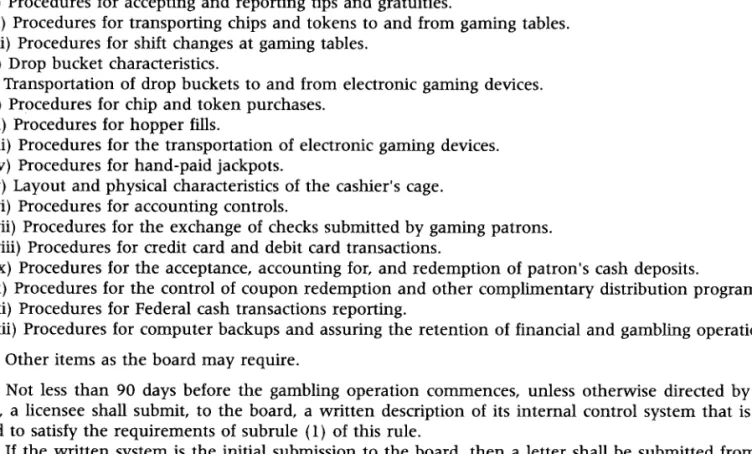
A relatively recent development in the United States has caused an expansion of duties for many state treasury departments. In addition to the collection of taxes, these departments or agencies are often responsible for the regulation of their state’s lottery and gaming operations. As this segment of the hospitality industry expands, so too will the regulatory efforts of the various state treasury departments. Typical areas of gaming and lottery regulation by treasury departments include licensing, lottery ticket sales, winnings disbursement, and casino operations. Figure 2.8 is an excellent example of the procedures that treasury regulators can mandate in the operation of gaming facilities. In this document, the Michigan Treasury Department identifies some of the written procedures for money handling that must be filed with the depart- ment prior to the granting of a casino license.
Attorney General
The state’s attorney general is the chief legal offi cer of the state. In Chapter 3,
“Hospitality Operating Structures,” you will learn that one responsibility of the attor- ney general’s offi ce is to specify the franchise information required for disclosure in
Figure 2.7 Tax-exempt notice.
State Regulatory and Administrative Agencies 37 that state. If, for example, an entrepreneur were interested in purchasing a franchise,
the attorney general’s offi ce would regulate the franchisor and franchisee relationship.
Public Health Department
The public health department is generally responsible for the inspection and licens- ing of facilities that serve food. This department may be self-standing, but it is often associated with or housed in a state department of agriculture.
Figure 2.8 Lottery control.
Hospitality operators must comply with a variety of health codes and regulations that govern many aspects of their business. The most common areas of state health regulation include the following:
䊏 Standards for the cleanliness of food, and proper procedures for storing, handling, preparing, and serving food
䊏 Standards for the storage and handling of food supplies 䊏 Mandated health procedures for employees working with food
䊏 Standards for the proper care and washing of food equipment, utensils, and glasses
䊏 Standards for the proper care and washing of hotel bedding and towels, and specified quantities to be furnished to guests
䊏 Standards for the supply and use of water for guest use (faucets, showers, swimming pools) as well as for cleaning and dishwashing
䊏 Standards for water and sewage discharge 䊏 Display of procedures for helping choking victims 䊏 Regulations for smoking in public places
Figure 2.8 (Continued)
Local Regulatory and Administrative Agencies 39 Penalties for violating state health ordinances vary widely. Sometimes it is a fine,
but in other cases, an operation could be shut down entirely. In minor cases, if an operator can correct the violation within a specified time frame, no penalty will be imposed. And, at the end of that time period, the inspector will come back to verify that the appropriate corrections have been made.
Some state or local health departments occasionally furnish a list of health vio- lators to local newspapers or television stations, which could result in unwanted negative publicity for a hospitality operator. This is an added incentive for man- agers to make sure they are always in compliance with state and local health ordinances.
Department of Transportation
The states’ departments of transportation are responsible for a variety of areas that directly impact hospitality managers. Too often, regulators are viewed only as inspec- tors, rather than allies. This should not be the case. Consider the situation of a restau- rant owner who operates a facility on a busy street in a midsized town. The street itself is maintained by the state highway department. During lunchtime, the restaurant’s guests have a hard time turning into the restaurant parking lot from the opposite side of the street, because traffi c is so heavy that there are few breaks in the traffi c stream.
The speed limit on the street is relatively high, so the crossing can be dangerous. This manager should approach the state department of transportation with the problem, in an effort to fashion a solution. It may well be that traffi c patterns are so heavy that a reduced speed limit or even a turn lane could be justifi ed. Typically, departments of transportation are also responsible for regulating driveways, exits and approaches, and traffi c signage, including billboards on highways.
2.3 LOCAL REGULATORY AND ADMINISTRATIVE AGENCIES
Much of the regulatory process you will face as a hospitality manager will take place at the local level. This is a positive situation because it allows local inspectors to personally get to know both you and your facility.
Health and Sanitation
Often, the health and sanitation department is responsible for the local inspection and licensing of facilities that serve food and beverages. Local inspectors may check for compliance with state health and sanitation codes, as well as municipal ordinances.
Additional duties may include the mandatory certifi cation of foodservice workers and managers, issuing and revoking licenses, establishing standards for restroom facili- ties, and certifying a safe water supply.
Building and Zoning
Building and zoning departments issue building permits, and inspect the build- ing prior to, during, and after any construction. They regulate both new building construction and additions or renovations. Standards for lighting, ventilation, rest- rooms, elevators, and public corridors and entryways may be established by state or local agencies. (In addition, your insurance company may have its own require- ments for lighting levels and ventilation systems.) Local zoning ordinances may also regulate outside land use, such as parking spaces and permits for sidewalk or
patio dining. Local inspectors will make sure that facilities are in compliance with all state and local building codes.
In addition, these departments often regulate the type of businesses that can be located in specified areas. This regulation is called zoning, and though this pro- cess can be contentious, it is generally accepted as necessary for the greater good of communities. Most hospitality professionals would agree, for example, that a bar or nightclub should not be operated in a building adjacent to a school or church.
Zoning officials regulate land use in ways that can benefit hospitality managers, for example, by prohibiting negative businesses from locating next to land reserved for restaurants, hotels, and other commercial use. Imagine your concern, for example, if you were to learn that a private landfill operator had just purchased the vacant lot next to your four-star restaurant and was to begin accepting deposits in 30 days!
In addition to their role in regulating the placement and construction of businesses, local building and zoning officials are typically responsible for the construction and placement of signs outside a business. The regulations controlling the size of, number of, and construction materials required for signs can be quite extensive. Figure 2.9 is an example of a local sign ordinance that you might encounter as a hospitality manager. Note, in particular, the specificity of information required by the business prior to the granting of a sign permit.
Figure 2.9 Sign permit ordinance.
Local Regulatory and Administrative Agencies 41 Inspectors randomly visit businesses to ensure compliance with building and
safety codes. Violators can be fined, and if guests or employees injure themselves as a result of a violation, it may result in a lawsuit.
Courts and Garnishment
In most communities, some agency of the court, sometimes called a “friend” of the court, will have the responsibility of assisting creditors in securing payment for legally owed debts. These debts can include a variety of court-ordered payments, such as child-support payments. In cases like these, a hospitality manager may be ordered by the court to garnish an employee’s wages.
Historical Preservation
In some communities, historical buildings, their use, and renovation may be regu- lated by an agency charged with historical preservation. If you manage a hospitality facility in a historic building, city zone, or community, you might face regulation from the governmental entity charged with preserving the historical integrity of your facil- ity. This might limit the types of alterations or improvements you may make to your facility, or require you to maintain your property in a manner that is consistent with the historical nature of the area.
Fire Department
The local fi re department is a critical part of the safety net that hospitality managers offer their guests. Whether it is for a hotel or restaurant, dependable fi re safety depart- ments can assist a manager in limiting potential liability through careful adherence to all local fi re codes and procedures. Fire departments will normally conduct rou- tine facility inspections, assist local building departments in reviewing plans for new or renovated buildings, ensure that emergency lighting and sprinklers are installed and maintained properly, and offer fi re safety training for managers and employees.
As a hospitality manager, it is important to know your local fi re codes and to make sure that your operation always includes the required number of fi re extinguishers, smoke detectors, sprinklers, fans and ventilation ducts, emergency lights, and emer- gency exit signs. This equipment should be tested periodically to make sure that it is in good working order. The National Fire Protection Association has established national standards for ventilation systems and automatic fi re protection systems in commercial kitchens. Insurance companies also have regulations that will determine the type and amount of fi re protection equipment you will need for your operation.
Another important role of the fire department is to regulate the number of individu- als who are allowed in a particular space at a given time. For example, it would be the fire department that would determine the maximum number of patrons who could be in a hotel ballroom at one time. The capacity of bars, nightclubs, dining rooms, and sleep- ing rooms are all examples of areas regulated by the local fire department. You have probably noticed signs that indicate the maximum number of people who can safely be in a public space. Often, local laws require these signs to be prominently displayed.
Law Enforcement
Although local police do not generally serve a regulatory role for business, some communities do have local laws or codes that are enforced by the police department, in a city, or by the sheriff’s department in a more rural community. As we have seen,
LEGALESE
Garnish: A court-ordered method of debt collection in which a portion of a person’s salary is paid to a creditor.
liquor laws, for example, are sometimes enforced by the local police. Other areas of interaction may be parking enforcement and the removal of disorderly guests.
Tax Assessor/Collector
Local municipalities obtain a signifi cant portion of their tax revenues from busi- nesses. These taxes may be levied on the basis of property value, sales revenue, or a combination of both. The tax assessor or collector is responsible for the prompt collection and recording of these taxes.
Increasingly, communities are looking to the hospitality industry as a vehicle for raising tax revenue. One such source of tax revenue is the local occupancy, or bed, tax. Essentially, the occupancy tax is a tax on the sale of hotel rooms. It typically will range from 1 to 15 percent of gross room revenue. This tax may be assessed at the state level, local level, or both. In any case, there are typically few waivers for the tax, and its collection is aggressively enforced by the taxing entity.
2.4 REGULATORY INTERACTION AND OVERSIGHT IMPACTING
TRAVEL AND TOURISM
The travel industry is heavily regulated, and because it is so large and diverse, the number of groups and organizations responsible for the legal oversight of travel activ- ities is considerable. From the perspective of the hospitality manager, some of the most signifi cant of these include governmental agencies, both at the federal and state levels, and nongovernmental groups that operate internationally to coordinate travel policies, which are discussed later in this section.
U.S. Government Agencies
You have been introduced to federal agencies that have responsibility for regulation and oversight in the hospitality industry. In the following subsections, you will learn about other federal agencies involved in regulation and policy development for the travel industry. The list is long and represents the most signifi cant of the federal groups responsible for monitoring travel activities, but it is not exhaustive. In fact, travel-related activities impact nearly every federal agency. The agencies and depart- ments identifi ed here will, however, give some indication of the many ways in which travel professionals interact with the federal government in the course of their mana- gerial duties. In addition to federal monitoring and control, states, counties, and local governments may all have agencies, departments, and code enforcement profession- als that combine to provide additional regulatory oversight.
Federal Trade Commission (FTC)
The Federal Trade Commission is charged with ensuring that the nation’s markets are free of restrictions that could potentially harm consumers. In addition, it works to ensure that competition among fi rms is fair and results in the availability of lower prices and better goods and services. A further role of the FTC is the dissemination of information that consumers can use to make better purchase decisions. To ensure the smooth operation of the free market system, the FTC enforces federal consumer protection laws that prevent fraud, deception, and unfair business practices. The commission also enforces federal antitrust laws that prohibit anticompetitive mergers and other business practices that restrict competition and could harm consumers.
With regard to the travel industry, the FTC has increasingly devoted its attention to protecting consumers by investigating false, misleading, or deceptive advertising,
Regulatory Interaction and Oversight Impacting Travel and Tourism 43 telemarketing fraud, and Internet scams. Although the FTC does not seek to resolve
individual consumer problems, it does use information from individual complaints to investigate fraud and initiate law enforcement actions. The FTC also enters Internet, telemarketing, identity theft, and other fraud-related complaints into the Consumer Sentinel, an online database available for use by civil and criminal law enforcement agencies worldwide.
Centers for Disease Control and Prevention (CDC)
The Centers for Disease Control and Prevention (CDC) is the major federal agency operating to protect the health and safety of individuals at home and abroad, as well as to provide information to enhance health decisions. The CDC, located in Atlanta, Georgia, is an agency of the Federal Department of Health and Human Services. Its offi cial mission is to promote health and quality of life by preventing and controlling disease, injury, and disability.
Becoming seriously ill or having a major accident while traveling, especially in a country where the traveler does not speak the local language, is one of many tour- ists’ greatest fears. Travelers may also face health risks of which they are unaware because they simply do not know about travel-related threats to their health and safety in places they have not previously visited. In many cases, some of these threats could be avoided or minimized if the traveler were aware of them. The CDC makes available, on a region-by-region basis, information about health and safety risks for travelers worldwide. In addition, this information includes recommendations for addressing or minimizing these travel-related threats to health and safety.
Search the Web 2.2
One of the most popular services offered by the CDC is its“Travelers’ Health” information. It is available online and seeks to inform travelers about the health risks they may encounter when traveling in various parts of the world. To view a sample of the information provided, go to wwwnc.cdc.gov/travel. Under the
“Destinations” tab, select a region to fi nd out about the health risks you might encounter in an area of the world you would someday like to visit.
Department of Commerce
The U.S. Department of Commerce is dedicated to the improvement of business, including tourism. It houses the Census Bureau (www.census.gov), which col- lects economic data on the hotel and restaurant industries, as well as other service businesses. It also houses the United States Travel and Tourism Administration (www.tinet.ita.doc.gov), which was established by the National Tourism Policy Act of 1981. This agency gathers statistics on travel activity and promotes tourism. On February 20, 2003, the Omnibus Appropriation Act for FY 2003 became law. Included in this appropriation was Section 210, which authorized the U.S. Department of Commerce to award grants and make lump-sum payments in support of an interna- tional advertising and promotional campaign to encourage individuals to travel to the United States. The Omnibus Appropriation Act both authorized and appropriated
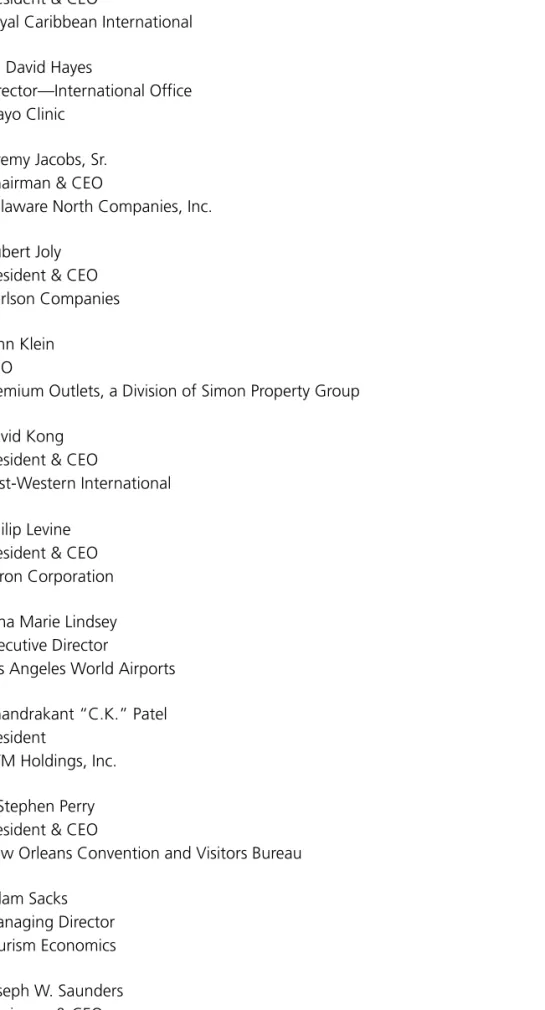
$50 million for this campaign, which is, of course, widely supported by those in the travel industry. The Department of Commerce is advised by its Travel and Tourism Promotion Advisory Board (see Figure 2.10), which includes some of the travel industry’s most notable businesspeople.
Figure 2.10 Department of Commerce Travel & Tourism Advisory Board.
Rossi Ralenkotter President & CEO
Las Vegas Convention and Visitors Authority Dawn Drew
Founder & CEO The M.O.S.T.E., Inc.
Holly Agra President
Chicago’s First Lady Cruises Richard Anderson
CEO
Delta Air Lines, Inc.
José Andrés
President & Co-Founder ThinkFoodGroup Sheila Armstrong Executive Director
U.S. Cultural and Heritage Tourism Marketing Council Helane Becker
Senior Vice President Dahlman Rose & Company Nich Calderazzo
Vice President Sales and Marketing RMP Travel
Todd Davidson CEO
Oregon Tourism Commission Maryann Ferenc
Founder, President & CEO Mise en Place, Inc.
Chuck Floyd
COO—North America Hyatt Hotels Corporation Sam Gilliland
Chairman & CEO Sabre Holdings
Regulatory Interaction and Oversight Impacting Travel and Tourism 45
Adam Goldstein President & CEO
Royal Caribbean International Dr. David Hayes
Director—International Office Mayo Clinic
Jeremy Jacobs, Sr.
Chairman & CEO
Delaware North Companies, Inc.
Hubert Joly President & CEO Carlson Companies John Klein
CEO
Premium Outlets, a Division of Simon Property Group David Kong
President & CEO
Best-Western International Philip Levine
President & CEO Baron Corporation Gina Marie Lindsey Executive Director
Los Angeles World Airports Chandrakant “C.K.” Patel President
BVM Holdings, Inc.
J. Stephen Perry President & CEO
New Orleans Convention and Visitors Bureau Adam Sacks
Managing Director Tourism Economics Joseph W. Saunders Chairman & CEO Visa, Inc.
Figure 2.10 (Continued)
AN ELDERLY COUPLE FROM Canada, traveling in Central/South America, goes on a shopping trip to a local produce market, where the couple buys and consumes some locally grown fruit. Upon returning that evening to the international hotel in the area, which you manage, the husband falls ill and his wife calls your front desk seeking assistance.
1. What is the likely cause of the man’s illness?
2. Based on what you know about reasonable care for guests, what action would you expect your management team to take relative to the man’s illness?
3. What would your position be if your hotel was later sued by the couple, claiming you had failed to warn them of local health risks?
ANALYZE THE SITUATION 2.3
Douglas Shifflet Chairman & CEO D.K. Shifflet & Associates Ronald Solimon
President & CEO
Indian Pueblo Cultural Center, Inc. and Indian Pueblos Marketing, Inc.
John Sprouls CEO
Universal Orlando Resort Executive Vice President Universal Parks and Resorts Greg Stubblefield
Exeuctive Vice President & CSO Enterprise Holdings
Perry John P. Tenorio Managing Director
Marianas Visitors Authority George Zimmermann Vice President
Travel Michigan at the Michigan Economic Development Corporation Figure 2.10 (Continued)
Regulatory Interaction and Oversight Impacting Travel and Tourism 47
4 National Park Service, “Organic Act of 1916,” www.nps.gov/grba/parkmgmt/organic- act-of-1916.htm. Last updated August 23, 2010. Accessed July 5, 2011.
Search the Web 2.3
The National Park Service is in the tourism business. To view its website, where visitors can book tours, go to www.nps.gov/fi ndapark/index.htm.
It is also possible to fi nd information about national parks and nearby communities at www.nationalparkreservations.com.
Department of the Interior (DOI)
In 1849, Congress passed a bill to create the Department of the Interior. Over the course of its history, the DOI has played a changing role in its mission of managing the country’s internal affairs. As a result, it has had, at various times, responsibility for the construction of the national capital’s water system, the colonization of freed slaves in Haiti, exploration of the western wilderness, oversight of the District of Columbia jail, regulation of territorial governments, management of hospitals and universities, management of public parks, and the basic responsibilities for Native Americans, public lands, patents, and pensions. In one way or another, all of these roles had to do with the internal development of the nation or the welfare of Americans.
In 1916, President Woodrow Wilson signed legislation creating the National Park Service. The act assigned to the new bureau the 14 national parks and 21 national monuments then under the DOI and directed it “to conserve the scenery and the natural and historic objects and the wildlife therein and to provide for the enjoyment of the same in such manner and by such means as will leave them unim- paired for the enjoyment of future generations.”4 The national monuments, generally smaller than the parks, included prehistoric Native American ruins, geologic features, and other sites of natural and cultural significance reserved by presidential proc- lamations under the Antiquities Act of 1906. Today, this agency sets policy for the National Park Service, which includes some the country’s most significant tourism destinations.
Department of State
The executive branch and Congress have constitutional responsibilities for U.S. for- eign policy. Within the executive branch, the Department of State is the lead U.S.
foreign affairs agency, and the secretary of state is the president’s principal foreign policy adviser. The Department of State advances U.S. objectives and interests in shaping a safer and freer world through its primary role in developing and implementing the president’s foreign policy. The State Department also supports the foreign affairs activities of other U.S. government entities, including the Department of Commerce. In addition, it provides a variety of important services to U.S. citizens traveling abroad, including the issuing of passports and providing travel warnings.
Figure 2.11 is an example of the type of warning developed by the Department of State and is available to those traveling internationally.
Figure 2.11 U.S. State Department travel warning for Afghanistan.
Travel Warning
U.S. DEPARTMENT OF STATE Bureau of Consular Affairs Afghanistan
March 08, 2011
The Department of State warns U.S. citizens against travel to Afghanistan. The security threat to all U.S. citizens in Afghanistan remains critical. This supersedes the Travel Warning for Afghanistan issued August 13, 2010, to remind U.S. citizens of ongoing security risks, including kidnapping and insurgent attacks.
No part of Afghanistan should be considered immune from violence, and the potential exists throughout the country for hostile acts, either targeted or random, against U.S. and other Western nationals at any time. Remnants of the former Taliban regime and the al-Qa’ida terrorist network, as well as other groups hos- tile to International Security Assistance Force (ISAF) military operations, remain active. There is an ongoing threat to kidnap and assassinate U.S. citizens and Non-Governmental Organization (NGO) workers throughout the country. Afghan authorities have a limited ability to maintain order and ensure the security of Afghan citizens and foreign visitors. Travel in all areas of Afghanistan is unsafe due to military combat operations, landmines, banditry, armed rivalry between political and tribal groups, and the possibility of terrorist attacks, including attacks using vehicular or other improvised explosive devices (IEDs). The security environment remains volatile and unpredictable.
In August 2010 a group of doctors, nurses, and medical practitioners, including six U.S. citizens, was shot and killed near their vehicles in Badakhshan province as they completed a medical aid visit to remote areas in nearby Nuristan province.
Also in Badakhshan province in spring 2010, a group of U.S. citizen missionaries who were alleged to be proselytizing in the area encountered hostility and required evacuation from the area by the Ministry of Interior and the U.S. Embassy.
In Kandahar, the assassination campaign against government officials, their associates, or anyone notably linked to the government, continues. The number of attacks throughout the south and southeastern areas of the country is growing as a result of insurgent and drug-related activity, and no part of Afghanistan is immune from violence.
Kabul is also considered at high risk for militant attacks, including rocket attacks, vehicle borne IEDs, and suicide bombings. Five United Nations (UN) work- ers were killed during an attack on a UN guesthouse in Kabul in October 2009.
More than 20 attacks were reported in Kabul over the past year, although many additional attacks were thwarted by Afghan and coalition forces. Recent incidents include the bombing of a Kabul supermarket popular with Westerners and an attack on the Kabul City Center complex, which includes a hotel frequented by foreign visitors. Insurgents have also targeted the offices, convoys, and individual implementing partners of the U.S. Agency for International Development.
The attack against a Kandahar guesthouse on April 15, 2010, along with the UN attack mentioned above, highlights the growing threat against guesthouses.
Buildings or compounds that lack robust security measures in comparison to neigh- boring facilities may be viewed as targets of opportunity by insurgents.
The Kabul-Jalalabad Road (commonly called Jalalabad Road) and the Kabul to Bagram Road are highly restricted for Embassy employees and, if the security situ- ation warrants, sometimes prohibited completely.
Riots and incidents of civil disturbance can and do occur, often without warn- ing. U.S. citizens should avoid rallies and demonstrations; even demonstrations intended to be peaceful can turn confrontational and escalate into violence.
Regulatory Interaction and Oversight Impacting Travel and Tourism 49
Search the Web 2.4
An important service provided by the Department of State is that of issuing travel advisories and warnings to Americans planning to travel outside the United States. Travelers can access these warnings at travel.state.gov/travel/cis_pa_tw/tw/tw_1764.html.Ambushes, robberies, and violent crime remain a problem. U.S. citizens involved in property or business disputes — a common legal problem in Afghanistan — have reported that their adversaries in the disputes have threatened their lives.
U.S. citizens who find themselves in such situations should not assume that either local law enforcement or the U.S. Embassy will be able to assist them. From time to time, depending on current security conditions, the U.S. Embassy places areas frequented by foreigners off limits to its personnel. Potential target areas include key national or international government establishments, international organi- zations and other locations wi