1
GATE:
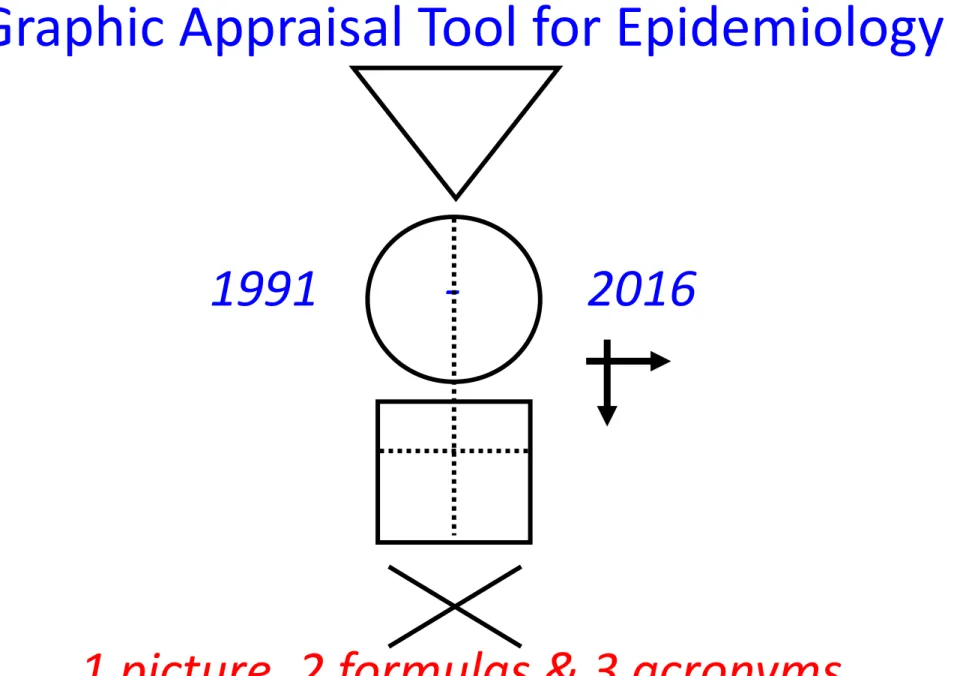
Graphic Appraisal Tool for Epidemiology
1991 - 2016
1 picture, 2 formulas & 3 acronyms 2
GATE:
Graphic Appraisal Tool for Epidemiology Graphic Architectural Tool for Epidemiology
Graphic Approach To Epidemiology
making epidemiology accessible
3
4th year medical students 1991
Jerry Morris
numerator
denominator epidemiology =
In: Uses of Epidemiology 1977 5
Medical Student Pub crawl
Dear sir
I have just read what you said in the sunday paper From this I can only conclude that you are some sort of fuckwit
How dare you describe good food like butter as poisonous
How long have you been in this country?
I bet you are one of the auckland wankers that drive around with thier lights on
presentation outline
GATE is a framework for:
1. study design 2. study analysis 3. study error
4. practicing EBM
1 picture, 2 formulas & 3 acronyms 10
GATE: a framework for study design 1 picture
12
every epidemiological study can be hung on the GATE frame
1 picture, 2 formulas & 3 acronyms
cohort of British doctors
non-smokers smokers
lung cancer events counted
yes no
followed for 10 years
smoking status allocated by measurement (observation)
cohort / longitudinal / follow-up study
13
1 picture: GATE frame
1 picture, 2 formulas & 3 acronyms
British doctors
placebo aspirin
MI
yes
no 5 years
randomly allocated to aspirin or placebo
14
1st acronym: PECOT
Participants
Comparison Exposure
Outcomes
Time P
E C
O
T
randomised controlled trial
1 picture, 2 formulas & 3 acronyms
middle-aged Americans
‘normal’ weight overweight
diabetes status measured in all
participants
yes no
body mass index measured
cross-sectional (prevalence) study
15
P
E C
O
T
middle-aged American women
breast cancer
mammogram negative
yes no
receive mammogram screening test
diagnostic test (prediction) study
mammogram positive
16
P
E C
O T
middle-aged American women
mammogram test
no breast cancer
positive negative
Gold Standard
diagnostic (test accuracy) study
breast cancer
17
P
E C
O T
non-smokers smokers
lung cancer yes no
smoking status measured
case-control study
18
P
E C
O
T cases
controls
(all nested in virtual cohort studies)
$10,000
GATE: a framework for study analysis:
1st formula: occurrence = outcomes ÷ population
21
the numbers in epidemiological studies can be hung on the GATE frame
1 picture, 2 formulas & 3 acronyms
British doctors
non-smokers smokers
Lung cancer
yes
no 10 years
smoking status measured
22
1st formula: occurrence of outcomes =
number of outcomes ÷ number in population/group
Participant Population
Comparison Group Exposure Group
Outcomes
Time
P
EG CG
O
T
a b
British doctors
non-smokers smokers
Lung cancer
yes
no 10 years
smoking status measured
23
Population
Comparison Group Exposure Group
Outcomes
Time
P
EG CG
O
T
Exposure Group Occurrence (EGO) = a÷EG
= number of outcomes (a) ÷ number in exposed population (EG)
a b
British doctors
placebo aspirin
MI
yes
no 5 years
randomly allocated
24
Population
Comparison Group Exposure Group
Outcomes
Time
P
EG CG
O
T
a b
Comparison Group Occurrence (CGO) = b÷CG
= number of outcomes (b) ÷ number in comparison population (CG)
yes no
25
E
pidemiology =N
umerator ÷D
enominatorParticipant Population
Comparison Group Exposure Group
Outcomes Time
P
EG
D
O
a
N
Tmiddle-aged American women
breast cancer
mammogram negative receive mammogram screening test
mammogram positive
British doctors
non-smokers smokers
Lung cancer yes
no
10 years smoking status measured
26
the goal of all epidemiological studies is to calculate EGO and CGO
P
EG CG
O T
a b
EGO:
Occurrence (risk) of cancer in smokers
CGO:
Occurrence of cancer in non-
smokers
Middle-aged Americans
Low BMI High BMI
EGO:
Average blood glucose in EG
high low
Body Mass Index (BMI) measured
27
P
EG CG
O CGO:
Average blood glucose in CG
Middle-aged Americans
Low BMI High BMI
blood glucose high low
Body Mass Index (BMI) measured
cross-sectional study with numerical
measures 28
P
E C
O
T
Middle-aged American women
mammogram
no Breast cancer
positive negative
Gold Standard
Breast cancer
29
P
E C
O T
EGO:
likelihood of a positive mammogram if breast
cancer
CGO:
likelihood of a positive mammogram if no
breast cancer
• EGO ÷ CGO = Relative Risk (RR)
• EGO – CGO = Risk Difference (RD)
its all about EGO and CGO
measures of occurrence: risk; rate; likelihood; probability;
average; incidence; prevalence 30
1st formula:
occurrence = outcomes ÷ population
GATE: framework for nonrandom error 2nd acronym: RAMBOMAN
32
Recruitment Allocation Maintenance
Blind
Objective
Measurements ANalyses
1 picture, 2 formulas & 3 acronyms
R
AMBOMANRecruitment of participants
‘who are the findings applicable to?’
P P
Study setting
Eligible population
33
recruitment process
EG CG
O T
RCT: allocated by randomisation (e.g to drugs)
EG CG
O T
Cohort: allocated by
measurement (e.g. smoking)
R
A
MBOMAN: ‘were participants well Allocated to exposure & comparison groups?’EG & CG similar at baseline?
was Allocation to EG & CG successful?
34
E & C measures accurate?
RA
M
BOMANEG CG
O T
‘were Participants well Maintained in the groups they were allocated to?’
P
completeness of follow-up compliance
contamination co-interventions
35
RAM
B
OM
ANEG CG
O
T
‘were outcomes well Measured?’
were they measured Blind to whether participant was in EG or CG ?
P
36
RAMB
OM
ANEG CG
O
T
‘were outcomes well Measured?’
were they measured Objectively?
P
37
RAMBOM
AN
EGC CGC
O
T
P
38
EGA CGA
a b
‘were the ANalyses done well?’
If RCT were Intention To Treat (ITT) analyses done?
RAMBOM
AN
EG CG
O
T
‘were the ANalyses done well?’
P
adjustment for baseline differences / confounding?
39
GATE: random error: 2nd formula:
random error = 95% confidence interval
40
There is about a 95% chance that the true value in the underlying population lies within the 95% CI (assuming no non-random error)
EGO ± 95% CI CGO ± 95% CI
1 picture, 2 formulas & 3 acronyms
sample from a population
GATE: a framework for error in
systematic reviews & meta-analyses:
3rd acronym: FAITH
1 picture, 2 formulas & 3 acronyms 41
study sources
studies appraised & allocated:
included excluded
studies summarised
& pooled if
homogeneous
systematic review: a study of studies
studies screened
42
study sources
studies appraised & allocated:
included excluded
studies summarised
& pooled if
homogeneous studies screened
critical appraisal of SR: FAITH
Find
Appraise Include Total
Heterogeneity?
1 picture, 2 formulas & 3 acronyms
43
GATE: framework for the 4 steps of EBP
45
the steps of Evidence Based Practice (EBP):
1. Ask
2. Acquire 3. Appraise
4. Apply & Act
46
yes no
47
1. Participants
3. Comparison 2. Exposure
4. Outcomes
5. Time
P
E C
O
T
EBP Step 1: ASK - turn your question into a focused 5-part PECOT question
EBP Step 2: ACQUIRE the evidence – use PECOT to help choose search terms
48
yes no
Participants
Comparison Exposure
Outcomes
Time
P
E C
O
T
P
E C
O T
P E C O T
Recruitment Allocation
Maintenance blind
objective
Measurements ANalyses
49
EBP Step 3: APPRAISE the evidence – with the picture, acronyms & formulas
Occurrence = outcomes ÷ population Random error = 95% Confidence Interval
APPLY the evidence by AMALGAMATING the relevant information & making an evidence-
based decision:’ the X-factor
© 50
51
epidemiological evidence
patient’s clinical circumstances
system features values &
preferences
X-factor: making evidence-based decisions
Practitioner eXpertise: ‘putting it all together’ - the art of practice
economic legal political person
family community practitioner
Clinical expertise in the era of evidence-based medicine and patient choice. EBM 2002;736-8 (March/April) 52
GATE critically appraised topic (CATs) forms
download from bottom of the 2015 web page at:
www.epiq.co.nz
GATE CAT – 4-sheet workbook (in Excel) sheet 1: GATE-Ask & Acquire
54
55
GATE CAT – 3-sheet workbook (in Excel) sheet 2: GATE-Appraise (with calculator)
56
GATE CAT – 3-sheet workbook (in Excel) sheet 3: GATE-Apply
57
GATE CAT : GATE-Appraise
(with print versions of GATE frame, calculator & text)
60