Gusau International Journal of Management and Social Sciences
(GIJMSS)
Volume 7, No.3
October, 2024
ii Gusau International Journal of Management and Social Sciences, Vol.7, No.3, October, 2024, ISSN(p): 2735-9026, ISSN(e): 2787-0383
© Gusau International Journal of Management and Social Sciences, 2024
ISSN (Print): 2735-9026 ISSN (Online): 2787-0383
All Rights Reserved
Apart from any fair dealing for the purpose of research, private study, criticism or review, as permitted under the Copyright, Designs and Patents Act of Nigeria, this publication may not be reproduced, stored in any form, or by means, except with the prior permission in writing of the Faculty of Management and Social Sciences, Federal University Gusau or in the case of reprographic reproduction, in accordance with the terms of licenses issued by the Copyright Licensing Agency;
enquires concerning reproduction outside those terms should be sent to the following address:
Published by:
Faculty of Management and Social Sciences Federal University Gusau
P.M.B. 1001
Gusau, Zamfara State Nigeria
Email: [email protected], [email protected] Journal Website: www.gijmss.com.ng
AJOL Website: https://www.ajol.info/index.php/gijmss
Printed by:
Ahmadu Bello University Press Limited, Zaria, Kaduna State, Nigeria.
Tel.: 08065949711.
E-mail: [email protected] [email protected] [email protected] Website: www.abupress.com.ng
Gusau International Journal of Management and Social Sciences, Vol.7, No.3, October, 2024, ISSN(p): 2735-9026, ISSN(e): 2787-0383 iii ABOUT THE JOURNAL
Gusau International Journal of Management and Social sciences (GIJMSS) is a biannual (October and April) academic journal published by the Faculty of Management and Social Sciences, Federal University Gusau. The Journal welcomes contributions from the diverse fields of management and social sciences. The mission of the journal is to publish high quality papers from all over the world and make GIJMSS a high ranked journal.
GIJMSS adheres to a rigorous double-blind reviewing policy and all submissions are evaluated initially by the editorial Board and only those papers that meet the scientific and editorial standards of the journal, and fit within its aims and scope will be subjected to blind review. The Editorial Board reserves the right to modify for clarity papers adjudged acceptable for publication. Manuscripts subjected to rigorous blind peers review, and those that are accepted are published in the following issue of the journal.
Guidelines for Submission
Contributions should be in English only.
Manuscripts should be prepared according to American Psychological Association (APA) 7th Edition, Referencing style
The manuscript must be typed using double space on A4 size sheets
Manuscript should not exceed 15 pages in length
Only original manuscripts, written in English language, are considered. In a covering letter, the author(s) should state that the manuscript is not being simultaneously submitted elsewhere and that the findings reported in the manuscript have not been published previously
Submitted manuscripts will be subjected to plagiarism checks by the Editorial Board, and those found to be above 25% plagiarism level will not be considered for blind review and will be returned to the contributors
Abstract should be between 100-200 words typed on a separate page
There should be Keywords of at least five to six under the abstract
Articles accepted become the copyright of Gusau International Journal of Management and Social Sciences
Authors however, will be held responsible in case, copyright of others are violated
Electronic copy of the manuscripts (in MS Word) should be submitted as an attachment to the email address: [email protected] and copy to [email protected]
iv Gusau International Journal of Management and Social Sciences, Vol.7, No.3, October, 2024, ISSN(p): 2735-9026, ISSN(e): 2787-0383
Manuscripts must be accompanied with a non-refundable assessment fee of
₦ 5,000. Upon acceptance, a publication fee of ₦ 30,000 is expected.
Payments are to be made to:
Account Name: Gusau International Journal of Management and Social Sciences
Account Number: 0065189903 BANK: Sterling Bank
Gusau International Journal of Management and Social Sciences, Vol.7, No.3, October, 2024, ISSN(p): 2735-9026, ISSN(e): 2787-0383 v EDITORIAL BOARD
Dr. Bashir Umar Faruk: Editor-in-Chief
Department of Economics, Federal University Gusau, Zamfara State, Nigeria Prof. Dejo Abdulrahman: Member
Department of Sociology, Usmanu Danfodio University, Sokoto, Nigeria Prof. Nasiru M. Yauri: Member
Department of Business Administration, Usmanu Danfodiyo University, Sokoto, Nigeria
Prof. Yahaya A. Zakari: Member
Department of Economics, Usmanu Danfodio University, Sokoto, Nigeria Prof. Garba B. Muhammad: Member
Department of Political Science, Usmanu Danfodio University, Sokoto, Nigeria Prof. B. B. Kasim: Member
Department of Public Administration, Usmanu Danfodio University, Sokoto, Nigeria
Prof. Musa Yelwa Abubakar: Member
Department of Accounting, Usmanu Danfodio University, Sokoto, Nigeria Prof. Femi Rufus Tinuola: Member
Department of Sociology, Federal University Gusau, Zamfara State, Nigeria Prof. Bawa Ahmed Abdul-Qadir: Member
Department of Business Administration, Federal University Gusau, Zamfara State, Nigeria
Dr. Yusuf Alhaji Hashim: Business Editor
Department of Business Administration, Federal University Gusau, Zamfara State, Nigeria
vi Gusau International Journal of Management and Social Sciences, Vol.7, No.3, October, 2024, ISSN(p): 2735-9026, ISSN(e): 2787-0383
EDITORIAL ADVISORY BOARD Prof. R. Ayo Dunmoye
Department of Political Science, Federal University Gusau, Zamfara-Nigeria Prof. Jimi O. Adesina
Archie Mafeje Research Institute, College of Graduate Studies, University of South Africa
Prof. K. Awotokun
Department of Public Administration, University of Ife Prof. Ahmad Martahda Muhammad
School of Government, College of Law, Government and International Studies, Universite of Utara Malaysia
Prof. R. Onah
Department of Public Administration and Local Government, University of Nigeria Nsukka
Prof. Tukur Garba
Department of Economics, Usmanu Danfodio University Sokoto Prof. Yusuf Adamu
Department of Geography, Bayero University, Kano, Nigeria Associate Prof. Muhammad Imdadul Haque
Department of Economics, Aligarth Muslim University, India
Gusau International Journal of Management and Social Sciences, Vol.7, No.3, October, 2024, ISSN(p): 2735-9026, ISSN(e): 2787-0383 vii CONTENTS
Effect of Green Accounting on Organizational Financial Performances of Listed Companies in Nigeria
Olayemi O. AYOOLA-AKINJOBI
1
Firm Specific Dimensions and Stock Price of Listed Financial Service Firms in Nigeria
Ibrahim, L., Okpananchi, J., Agbi E. Samuel & Lateef O. Mustapha
20
Effects of Survival Strategies on the Success of Entrepreneurial Activities amid Banditry and Kidnapping in Gusau Metropolis, Zamfara State
Mulikat FolaShade Usman1 and Lubabatu Musa Anka2
47
Service Provider Empathy and Responsiveness for Customer Satisfaction in the Telecommunications Sector
1Adedoyin, S.A. Ph.D & 2Igbinedion Airenvbahahie
62
Usage Occasions on Customer Patronage among Fashion Firms in Port Harcourt
1Chukwu Godswill Chinedu, 2Newman Godwill Evans & 3Ikalama Awongo Theophilus
83
Assessing the Drivers and Inhibitors of Entrepreneurial Growth in North Western Nigeria: A Study of Zamfara Metropolis
Mulikat FolaShade Usman1 and Lubabatu Musa Anka2
109
Absorptive Capacity and Organisational Performance: An Empirical Study of a Public Organisation in Delta State, Nigeria
Uzoma Heman Ononye Ph.D.
125
Effect of Health Expenditure on Health Outcomes in Sub-Saharan
1Ahmed Abdulraheem Adebowale, and 2Idowu Daniel Onisanwa
152
Salient Foreign Policy implications of Nigeria’s Role in Regional Integration and Peacekeeping in Africa
Ejiroghene Augustine OGHUVBU
176
viii Gusau International Journal of Management and Social Sciences, Vol.7, No.3, October, 2024, ISSN(p): 2735-9026, ISSN(e): 2787-0383
Niger Delta Women Adaptive Measures against Oil Spillage: Interventions
& Effectiveness Victoria N. Azu Ph.D
192
Outcomes of Teenage Pregnancy in Selected Rural Communities of Akwa Ibom State
1ESSET, Dorcas Mark & ABRAHAM, Ubong Evans Ph.D
214
A Conceptual Review of the Knowledge and Perceptions of Female Secondary School Students towards Obstetric Fistula in Nigeria
Idayat Bolanle Oluwafemi & Ahmad Kainuwa, Ph.D
237
Effects of Non-Verbal Communication in Apparels: Opinion Survey of Adult Public Perception of the Secret Language of Jeans in Asaba Urban Delta, Nigeria
J. N. Odedede
256
A Review of Climate Change, Fodder Degradation and Access Deprivation as Drivers of Farmer - Herders’ Conflict, Unsustainable Livestock Production and Insecurity in North-Western Nigeria
1Rabi’u Tukur, 2Ismail Muhammed, 1Mohammed Mohammed Sani and 1Ali Danladi Abdulkadir
272
The Impact of Digital Banking on Financial Inclusion in Nigeria (2000- 2022)
1OLUSANYA, Samuel Olumuyiwa & 2EUCHARIA Chibuzo Ume
295
Gusau International Journal of Management and Social Sciences, Vol.7, No.3, October, 2024, ISSN(p): 2735-9026, ISSN(e): 2787-0383 1 Effect of Green Accounting on Organizational Financial
Performances of Listed Companies in Nigeria Olayemi O. AYOOLA-AKINJOBI
Department of Accounting, College of Management Sciences, Joseph Ayo Babalola University, Ikeji-arakeji Osun state. Nigeria
Email: [email protected] DOI: https://doi.org/10.57233/gijmss.v7i3.01 Abstract
Businesses depend on the environment to function and prosper economically. The growth in industrialization has resulted in environmental pollution and increased land use that harmed the natural environment, leading to extinction of some animals and plants. The environmental impact of the organizations made various stakeholders to canvass for green accounting. This study aimed at examined the effect of green accounting on financial performances of listed companies in Nigeria Group exchange (NXG) between the period 2013-2023 using expo facto research design.
Secondary data of the selected organization were downloaded from the NXG websites. The dependent variable was financial performances proxy with earnings per share, while independent variable was green accounting. Using robust regression analysis, the study discovered that green accounting had negative and significant effect on earnings per share; implying that ₦1 increase in green accounting would reduce earnings per share by ₦36. Green accounting also had positive and significant impact on return on equity. This implied that organization expenses on protecting the environment increased which had short time negative effect on the earnings per share, but in the long run increase return on equity. The study recommended that companies should conduct environmental audits on a regular basis to evaluate their compliance with regulations, this would reduce the avoidable cost like compliance cost, restoration cost and it would improve earnings per share.
Keywords: Green accounting, financial performances, Earnings per share, Sustainability cost, restoration cost
1.0 Introduction
Firms are becoming increasingly interested in environmental accountability issues due to pressure from stakeholders like financial institutions, the government, socially conscious investors, and community lobby groups (Shektar, 2018). By disclosing green information, a corporation meets the information demands of its stakeholders and establishes a foundation for communication with them. Green reporting alters how the public perceives the business, assists important stakeholders in determining if the company is a good corporate citizen.
Accounting for environmental costs enables businesses to accurately analyze the environmental impact of their operations. It reveals expenses that would have
Effect of Green Accounting on Organizational Financial Performances of Listed Companies in Nigeria
2 Gusau International Journal of Management and Social Sciences, Vol.7, No.3, October, 2024, ISSN(p): 2735-9026, ISSN(e): 2787-0383
been concealed under the traditional cost accounting methodology (Benlemlih, Shaukat, Qiu, & Trojanowski, 2016). Green accounting is, therefore, necessary in order to fully assess business performance and the development of shareholder value while integrating economic, environmental, and social concerns into corporate behavior in order to preserve resources for future generations.
The term "green accounting" was first used in the 1980s by Professor Peter Wood, an economist. Environmental accounting is another name for green accounting, other names for it include integrated accounting and resource accounting (Sadiku, 2021). It is a useful tool for balancing the benefits and drawbacks of activities in light of their potential effects on the environment.
Green accounting was developed as a way to gauge a level of income that may be retained without decreasing the supply of natural resources (Adula Harif &
Natasha, 2024). Environmental accounting, according to Lawal (2016), involves making sure that corporate accounting systems and reporting are in agreement with the environmental costs that the organization is incurring.
It is vital to incorporate environmental costs into the accounting system in order to control and manage environmental costs as well as enhance the reporting entity's reputation. Iliemena (2020) states that disregarding environmental accounting regulations may lead to increased fines and penalties for environmental violations. It becomes clear that urgent attention is required to the problems of managing, restoring, and maximizing natural safety. To create, evaluate, and disseminate data on these crucial concerns and to act as a database for planning and making ecologically responsible decisions, an extensive overhaul of environmental accounting is required.
Organizations' careless actions toward the environment have had a negative influence, contributing to issues like global warming, climate change, natural disasters, water, air, and soil pollution (Utomo et al., 2020). Organizations frequently overlook the possibility that the actions they engaged in deplete natural resources and contaminate the environment (Varsha & Kalpaja, 2018). According to Porchelvi (2019), businesses are more focused on productive capital than the impact of production on the environment; which resulted in environmental problems like inadequate vegetation, land degradation, acid rain, water pollution, respiratory illnesses, airborne illnesses etc. (Odewole, 2017). Companies have faced pressure to cut pollution as a result of societal expectations and attitudes
Olayemi O. AYOOLA-AKINJOBI
Gusau International Journal of Management and Social Sciences, Vol.7, No.3, October, 2024, ISSN(p): 2735-9026, ISSN(e): 2787-0383 3 that they should limit their own carbon emissions. Polluting firms occasionally resisted giving in to social, political, and governmental forces. Even when confronted with overwhelming proof to the contrary, a number of businesses have continued to deny guilt for pollution. Other businesses acknowledge their mistakes and promise to take decisive action, but they do nothing. Due to dearth of literature regarding environmental accounting practices and financial performances in developing countries especially in Nigeria; more studies are needed to establish the effect of green accounting practices on financial performances of organizations. This study aims at examining the effect of green accounting on organizational financial performances in Nigeria.
2.0 Literature review 2.1 Conceptual review Organization performances
A company's ability to earn money and employ assets from its principal mode of business is measured subjectively by its financial performance. It serves as an overall gauge of a company's financial health over a specific time frame.
Earnings per share (EPS)
Earnings are superior global measure of firm periodic performance than other accounting data (Pawel, 2014). It can be used as a performance measure of the company's year-round financial health and to predict how the business will develop in the next months. When predicting future performances, financial analysts concentrate mostly on it. The accuracy of the EPS forecast is regarded to be a key aspect in market prediction since investors make important investment choices on EPS (Rajakumar & Shanthi, 2014).
The market price of a company's stock is frequently influenced by its earnings per share, but the relationship is rarely the other way around because a company's earnings per share is calculated by dividing its earnings by the total number of outstanding shares. A corporation with high earnings per share might see a rise in the price of its stock on the market; a higher stock price might make investors think favorably of the company's goods, leading to stronger demand, more sales, and eventually higher profitability. Poor earnings per share might also lead to lower stock prices, which would reduce customer confidence, lead to fewer sales, and eventually result in worse earnings per share, although these linkages are circular rather than linear (Islam, Khan, Obaidullah, & Alam, 2011).
Effect of Green Accounting on Organizational Financial Performances of Listed Companies in Nigeria
4 Gusau International Journal of Management and Social Sciences, Vol.7, No.3, October, 2024, ISSN(p): 2735-9026, ISSN(e): 2787-0383
Return on equity
This ratio measures the overall performance of an entity; it shows the earning power of investors’ book value, often used in comparing two or more entities in an industry. A high return on equity is an indication that an entity accepts a strong investment opportunity and employs effective expense management. Return on equity is net profit after tax and preference dividend scaled by the number of shares.
Green accounting
Ilemona and Nwite (2020) define green accounting as a collection of strategies and guidelines used by the management of entities to give information about the physical flows, expenses, and anticipated benefits that drive the accomplishment of various environmental conservation activities. It includes the identification, measurement, and allocation of environmental costs, and the integration of these costs into a business, and encompasses how such information is communicated to the companies' stakeholders. In order to provide environmentally sound management and administrative systems, green accounting reveals the extent to which a business or organization has a positive or negative impact on the environment and quality of life; making the organization to showcase their corporate social responsibility, environmental cost reporting, and sustainable governance (Yeasin, 2021). Endiana (2020) posits that increased stakeholder trust leads to increased social trust and maximum business profitability. This study proxy green accounting with restoration cost, sustainability cost, compliance cost, and preservation cost.
Restoration costs
They are expenditures incurred in restoring a contaminated region to its pre- impact state. It is very crucial in determining how profitable a company is, especially in sectors where environmental effects are substantial. These expenses can affect profitability both immediately and over time and can also improve stakeholder relations and reduced regulatory risks.
Sustainability cost
Environmental sustainability costs are incurred to prevent the depletion of natural resources and the threat to the ability of future generations to achieve their basic requirements. Examples of such costs are expenditures incurred on converting warehouses, factories, and offices to renewable energy sources or reducing the usage of single-use plastics during production. Responsibly engaging with the
Olayemi O. AYOOLA-AKINJOBI
Gusau International Journal of Management and Social Sciences, Vol.7, No.3, October, 2024, ISSN(p): 2735-9026, ISSN(e): 2787-0383 5 world is the practice of environmental sustainability. It aims to improve human well-being without placing an excessive burden on the planet's ecosystems that support life. It entails achieving equilibrium between the natural environment and consumerist human culture. Costs associated with environmental sustainability are centered on those expended to meet the needs of both present and future generations.
Compliance Cost
Environmental compliance cost is defined as any fee or expenditure of any kind required to make organizations conform to all current environmental laws. It refers to any significant out-of-pocket costs, fines, penalties, fees, or expenses incurred specifically to satisfy an Environmental Agency's requirement of compliance with all applicable local, state, and federal laws and regulations relating to the presence of any hazardous substances produced by the organizations.
Preservation costs
They are expenses incurred on reducing the impact of operations on the environment in order to preserve it. According to Martensson and Westerberg (2016), environmental issues such as pollution, spills, rising energy consumption, and greenhouse gas emissions have led many social and economic actors to believe that business operations are to blame for these situations. As a result, society is especially curious to know that organizations have substantial environmental preservation commitments. Making information on social and environmental impacts available to stakeholders is one strategy organizations have adopted to tackle this predicament and build a positive reputation.
Expenditures associated with environmental protection can be incurred by businesses, governments, or individuals, and include costs associated with prevention, disposal, planning, control, shifting activities, and damage restoration.
2.2 Empirical review
Using an ex-post facto study approach, Egedegu, Ombu, and Etale (2024) examined the relationship between environmental accounting and the financial performance of Conoil in Nigeria. Regression analysis was used to extract secondary data from yearly reports that were obtained from the Nigerian Exchange Group (NXG) between 2008 and 2022. They found that the expenses associated with environmental restoration significantly reduce return on assets (ROA). Ahmed (2023) examined how the Baghdad Soft Drinks Company's
Effect of Green Accounting on Organizational Financial Performances of Listed Companies in Nigeria
6 Gusau International Journal of Management and Social Sciences, Vol.7, No.3, October, 2024, ISSN(p): 2735-9026, ISSN(e): 2787-0383
sustainable performance was impacted by the expense of green accounting. Using SPSS, the data from the 2022 financial statements was analyzed. The findings indicated a strong, positive, significant correlation and effect between the independent and dependent variables, and they suggested that the reports should disclose the social and environmental costs as well as the triple bottom line model's indicators separately in the reports and financial statements. Eze (2021) extracts data from the annual reports of 40 manufacturing businesses listed on the Nigerian Stock Exchange for the years 2010 to 2019 in order to investigate the impact of green accounting reporting on the financial performance of manufacturing enterprises in Nigeria using an ex post facto research approach. He employed the environmental disclosure index as the dependent variable and ROA, ROE, and share price as the independent variables. He found that the return on equity and return on assets were positively and considerably affected by green accounting disclosure.
Researchers Uniamikogbo and Ifeanyichukwu (2021) looked at the connection between the financial performance of forty Nigerian manufacturing companies and environmental accounting disclosure. The convenience sampling method was applied in conjunction with the secondary data source. The content analysis disclosure index and corporate annual reports for the 2010–2019 fiscal years were obtained from the sampled manufacturing businesses listed on the Nigerian Stock Exchange. Research using the panel data regression approach showed that the share price, return on equity, and return on asset of Nigerian industrial enterprises were significantly impacted by environmental accounting disclosures.
2.3 Theoretical framework Legitimacy Theory
Legitimacy theory was originated by Lindbolm in 1994. According to him, it is a situation in which a corporation's values align with those of the broader social system of which it is a part. According to Juhmani (2014), legitimacy refers to the commonly accepted notion or assumption that an entity's actions are preferred, trustworthy, or appropriate within a certain socially created system of norms, values, and beliefs. In addition to making every effort to create harmony between the social principles associated with or implied by their operations and the conventions of proper conduct in the larger social system of which they are a part.
Organizations always make sure that they function within the laws and standards of the communities in which they reside (Deegan, Rankin, & Voght, 2000). And
Olayemi O. AYOOLA-AKINJOBI
Gusau International Journal of Management and Social Sciences, Vol.7, No.3, October, 2024, ISSN(p): 2735-9026, ISSN(e): 2787-0383 7 also made attempt to establish congruence between the social values associated with or implied by their activities and the norms of acceptable behavior in the larger social system of which they are part. The theory postulates that when organizational values and societal values are balanced, a social contract is created between the organization and the society.
When social expectations of an organization's behavior diverge from actual action, the legitimacy of the organization is always in jeopardy. If society is not satisfied that an organization is operating responsibly in a legal and acceptable manner, then the issue of legitimacy will arise and may occasionally result in the seizure of operations, which ultimately terminates the contract. This could have an impact on the future existence of the company (Deegan & Ranking, 1997).
According to Ghazali (2007), the theory also lends credence to the notion that when a business has an adverse effect on the environment, the public may choose to denounce the enterprise as unfriendly to the environment, forgo buying its goods, or call for government intervention. In order to address this, the organization takes a number of actions, including speaking with the parties involved. Companies try to strike a balance between society ideals and corporate principles (Milne & Patten, 2002).
A drawback of the legitimacy theory is that it focuses more on the justifications for corporate information disclosure and pays less attention to the methods, justifications, and differences in environmental policies amongst organizations.
Despite, the critics of this theory, it is sufficient for this study as underpinning theory because it serves as a useful tool for elucidating the motivations behind organizations' environmental reporting in Nigeria.
3.0 Methodology
Ex-post facto research methodology was used in this study since the data and the events being studied had already happened. This research targeted the manufacturing and oil and gas sectors that were listed on the Nigerian Exchange Group (NXG). The financial statements for the chosen listed firms on the Nigerian Exchange Group (NXG) that could be downloaded through their websites were the source of secondary data used in this study for the years 2013–
2023. The dependent variable is organization financial performances proxy by earnings per share while the independent variable is green accounting proxy by sustainability cost, preservation cost, compliance cost while the control variable is firm size proxy by log of assets.
Effect of Green Accounting on Organizational Financial Performances of Listed Companies in Nigeria
8 Gusau International Journal of Management and Social Sciences, Vol.7, No.3, October, 2024, ISSN(p): 2735-9026, ISSN(e): 2787-0383
Table 1 Measurement of variables
Variables Proxy
Dependent variable Financial performances
Earnings per share Profit after tax divided by the number of ordinary shareholders
Independent variables
Environmental Restoration cost (restcost) All costs incurred in restoring the environment to its previous state
Environmental sustainability cost (sustcost) Total cost incurred on planting trees, and social responsibility costs
Environmental compliance cost (compcost) All legal costs relating to environment Environmental Preservation cost (prescost) All costs incurred in preserving the
environment Control variable
Firm size Log of total assets
Model Specification Y =f(X)
Y= financial performances= (EPS, ROE)
X= Green accounting= (restcost, sustcost, compcost, prescost) Therefore,
LogEPSit= α + β1logrestcostit + β2logsustcostit + β3logcompcostit, + β4logprescostit
+ β5logfirmsizeit+ eit ---1
LogROEit = α + β1logrestcostit + β2logsustcostit + β3logcompcostit, + β4logprescostit + β5logfirmsizeit+ eit ---2
Where:
EPS= Earnings per share ROE= Return on equity Restcost = Restoration cost Sustcost =sustainability cost Compcost = Compliance cost Prescost= Preservation cost eit = error term
α = Constant term
β1- β5 = Parameters estimated i = Firms t = Time periods
Olayemi O. AYOOLA-AKINJOBI
Gusau International Journal of Management and Social Sciences, Vol.7, No.3, October, 2024, ISSN(p): 2735-9026, ISSN(e): 2787-0383 9 A-priori expectation
The a-priori expectation is that each model parameter is expected have positive effect on the dependent variables (financial performances). β1...β5 > 0 signifies that the presence of green accounting result in an increase in organization financial performance.
4.0 Result and Discussions Table 2 Descriptive statistics
ROE EPS COMPCOST PRESCOSTRESTCOSTSUSTCOSTFIRMSIZE
Mean 1.2524 6.4393 2.3676 2.4066 2.5198 2.9334 3.6537 Median 0.2938 0.6500 2.3212 2.5114 2.4414 2.7599 3.7105 Maximum 12.0027 85.9000 3.6579 3.2949 3.8782 4.3967 4.396 Minimum -4.0000 -84.8700 1.3495 0.6021 1.3495 1.7401 3.0154 Std. Dev. 1.5045 17.3978 0.4053 0.4905 0.5322 0.6825 0.3260 Skewness 1.4185 0.9693 1.1493 -0.8626 0.5012 0.3051 0.2789 Kurtosis 10.1262 10.6408 4.7887 3.9759 2.69752 2.1444 2.0506 Jarque-Bera 2206.158 2330.241 318.1164 147.3465 41.11771 41.41561 45.47911 Probability 0.0000 0.0000 0.0000 0.0000 0.0000 0.0000 0.0000 Sum 1127.159 5795.285 2130.807 2165.963 2267.832 2640.028 3288.301 Sum Sq. Dev. 2035.024 272114.0 147.6689 216.3058 254.6386 418.7823 95.5421
Observations 900 900 900 900 900 900 900
Source: Author computation (2024)
In other to understand the effect of green accounting on financial performances of organization, table 2 showed the descriptive statistics for the variables used.
Earnings per share (EPS) has a mean of 6.44, and median of 0.65 with standard deviation of 17.40 which shows a wide dispersion of variability from the mean, which suggest possibility of extreme value on the dataset; usage of robust regression analysis will eliminate the possibility of any outliner in the dataset. The maximum value was ₦85.9m and the minimum value -₦84.9m; this range signifies diverse performance outcomes among the sampled companies, reflecting potential impacts of green accounting on financial performances. The Skewness
Effect of Green Accounting on Organizational Financial Performances of Listed Companies in Nigeria
10 Gusau International Journal of Management and Social Sciences, Vol.7, No.3, October, 2024, ISSN(p): 2735-9026, ISSN(e): 2787-0383
was 0.96 and Kurtosis of 10.64. The kurtosis was 10.64 showing the distribution is peaked or leptokurtic relative to the normal and skewness is 0.97 implies that the distribution has a long-right tail.
Return on equity (ROE) has a mean of 1.25, and median of 0.29 with standard deviation of 1.51, the maximum value was 12 and the minimum value -4 showing variation on the return on equity of the sampled companies. The Skewness was 1.41 and Kurtosis of 10.13 indicating that the distribution has along right tail and leptokurtic relative to the normal. The Jargue-Bera probability for all the variables were less than 0.05 resulting in the rejection of the null hypothesis; it implies that the dataset was not normally distributed, hence the need for transformation of dataset.
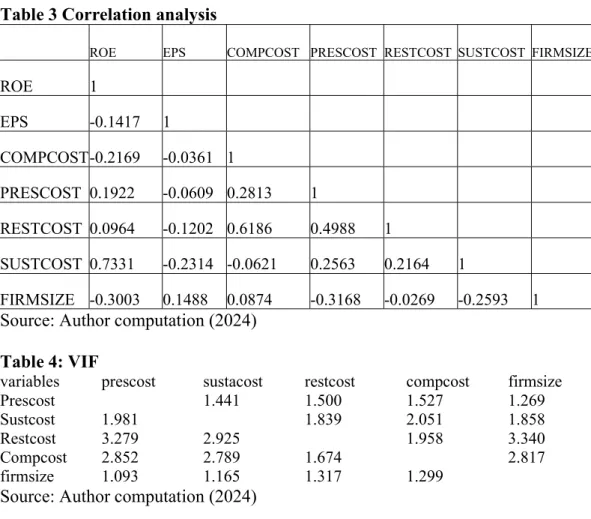
Table 3 Correlation analysis
ROE EPS COMPCOST PRESCOST RESTCOST SUSTCOST FIRMSIZE
ROE 1
EPS -0.1417 1
COMPCOST-0.2169 -0.0361 1
PRESCOST 0.1922 -0.0609 0.2813 1
RESTCOST 0.0964 -0.1202 0.6186 0.4988 1
SUSTCOST 0.7331 -0.2314 -0.0621 0.2563 0.2164 1
FIRMSIZE -0.3003 0.1488 0.0874 -0.3168 -0.0269 -0.2593 1 Source: Author computation (2024)
Table 4: VIF
variables prescost sustacost restcost compcost firmsize
Prescost 1.441 1.500 1.527 1.269
Sustcost 1.981 1.839 2.051 1.858
Restcost 3.279 2.925 1.958 3.340
Compcost 2.852 2.789 1.674 2.817
firmsize 1.093 1.165 1.317 1.299
Source: Author computation (2024)
Olayemi O. AYOOLA-AKINJOBI
Gusau International Journal of Management and Social Sciences, Vol.7, No.3, October, 2024, ISSN(p): 2735-9026, ISSN(e): 2787-0383 11 From table 3, the highest correlation value was 0.73 between return on equity and sustainability cost. Emory (1982) noted that values more than 0.80 can be problematic, while Hussain, Islam, and Andrew (2006) indicated that multi collinearity may be a source of concern when the correlation between variables is 0.9 and higher. Thus, the conclusion that there was no issue of high correlation among the variables which would have been an indication of a problem of multicollinearity. Also, the range of the variance inflation factor VIF computed using SPSS was between 1.269 and 3.340 indicating there were no severe multi- collinearity problems.
Regression analysis
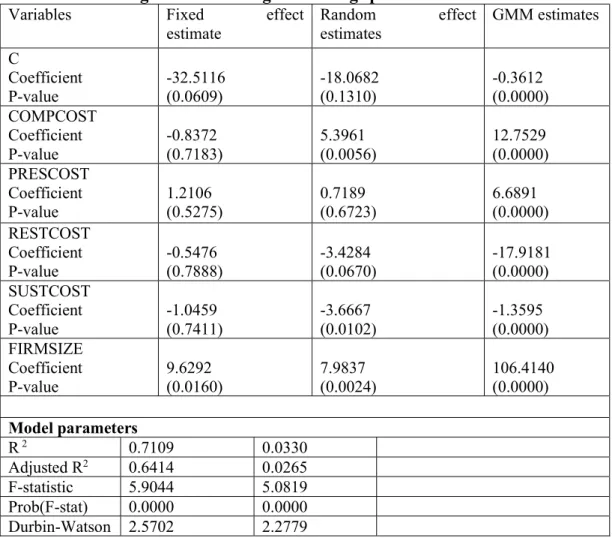
Table 5 Effect of green accounting on earnings per share
Variables Fixed effect
estimate
Random effect estimates
GMM estimates C
Coefficient P-value
-32.5116 (0.0609)
-18.0682 (0.1310)
-0.3612 (0.0000) COMPCOST
Coefficient P-value
-0.8372 (0.7183)
5.3961 (0.0056)
12.7529 (0.0000) PRESCOST
Coefficient P-value
1.2106 (0.5275)
0.7189 (0.6723)
6.6891 (0.0000) RESTCOST
Coefficient
P-value -0.5476
(0.7888) -3.4284
(0.0670) -17.9181
(0.0000) SUSTCOST
Coefficient P-value
-1.0459 (0.7411)
-3.6667 (0.0102)
-1.3595 (0.0000) FIRMSIZE
Coefficient P-value
9.6292 (0.0160)
7.9837 (0.0024)
106.4140 (0.0000) Model parameters
R 2 0.7109 0.0330
Adjusted R2 0.6414 0.0265
F-statistic 5.9044 5.0819
Prob(F-stat) 0.0000 0.0000 Durbin-Watson 2.5702 2.2779
Effect of Green Accounting on Organizational Financial Performances of Listed Companies in Nigeria
12 Gusau International Journal of Management and Social Sciences, Vol.7, No.3, October, 2024, ISSN(p): 2735-9026, ISSN(e): 2787-0383
Model diagnostics
Hausman test 0.0012
Instrument Rank
38
j-statistics 80.2991
Prob-j-stat 0.0000
AR(1)
AR(2) 0.9968
Source: Author computation (2024)
Based on the outcome of finding displayed on table 5, the fixed effects model is preferred above the random effects model as revealed by Hausman test with p- value (0.0012). The fixed effects model includes endogeneity problem; to eliminate the possible endogeneity the study used GMM approach developed by Arellano and Bond (1991).
From the individual independent variable statics shown in table 5, compliance cost is positively and significantly related with earnings per share. This is expressed in terms of a positive coefficient of 12.7529 and p-value 0.0000, which is less than 0.05, thus indicating a significant relationship suggesting that ₦1 increase in compliance cost would increase earnings per share by ₦13 when other variables are held constant. Similarly, there is a significant positive relationship between preservation cost and earnings per share with coefficient 6.6891 and p- value of 0.0000 less than critical value of 0.05. The result showed that ₦1 increase in preservation costs would increase earnings per share by ₦ 6.689 when other variables are held constant.
However, restoration cost (restcost) is significantly and negatively related with the earnings per share. This is expressed in terms of a negative coefficient of - 17.9181 and p-value 0.0000, which is less than 0.05, thus indicating a significant relationship suggesting that an ₦1 increase in restoration cost reduced earnings per share by ₦17. Also, there is a significant negative relationship between sustainability cost (sustcost) and earnings per share with coefficient -1.3595 and p-value of 0.0000 less than critical value of 0.05. The result showed that ₦1 increase in the sustainability costs reduced earnings per share by ₦1.36 when other variables are held constant. The overall model has R2 of 0.7109 and adjusted R2 of 0.6414, indicates that about 71% of the dependent variable (EPS) was
Olayemi O. AYOOLA-AKINJOBI
Gusau International Journal of Management and Social Sciences, Vol.7, No.3, October, 2024, ISSN(p): 2735-9026, ISSN(e): 2787-0383 13 explained by all the independent variables plus the control variable. The Durbin Watson is 2.5702 indicated the absence of autocorrelation among the successive values of the residual’s variables in the model and implied that the model has a good fit and could be employed for interpretation.
The F statistics 5.9044 shows the overall significance of the variables used in the model, with probability of 0.0000 which is less than 0.05 indicating that the overall regression is statistically significant, hence the null hypothesis is rejected, thus the relationship between green accounting and organizational financial performances significant. The GMM estimation regression result of the relationship between green accounting and organizational financial performances showed that the estimated coefficient -0.3612 of the regression has parameters with a negative sign; which align with the fixed estimates results, thus a ₦1 increase in green accounting reduced earnings per share by ₦36. The J-statistics tests (80.2991) with p-values 0.0000 below 0.10, implied that failure to accept the null hypothesis. The AR (2) 0.9968 means that a null hypothesis of no second- order serial correlation could not be rejected. Effort made by organizations to comply with environmental regulations and laws resulted in additional costs, because firms have to invest in more environmentally friendly equipment’s or cleanser to reduce the environmental impacts of the factory activities thus resulting in the reduction in earnings per share. This finding was supported by Ezeagba (2017).
Effect of Green Accounting on Organizational Financial Performances of Listed Companies in Nigeria
14 Gusau International Journal of Management and Social Sciences, Vol.7, No.3, October, 2024, ISSN(p): 2735-9026, ISSN(e): 2787-0383
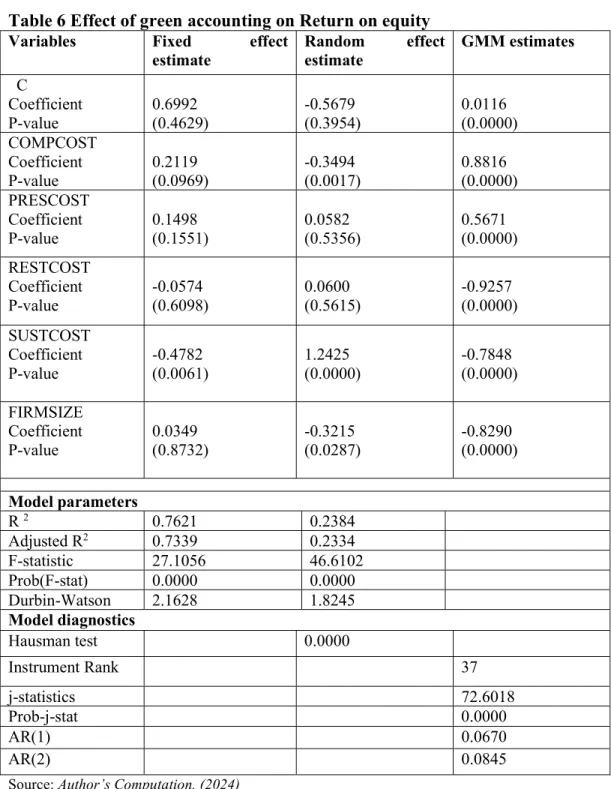
Table 6 Effect of green accounting on Return on equity Variables Fixed effect
estimate
Random effect estimate
GMM estimates C
Coefficient P-value
0.6992 (0.4629)
-0.5679 (0.3954)
0.0116 (0.0000) COMPCOST
Coefficient P-value
0.2119 (0.0969)
-0.3494 (0.0017)
0.8816 (0.0000) PRESCOST
Coefficient P-value
0.1498 (0.1551)
0.0582 (0.5356)
0.5671 (0.0000) RESTCOST
Coefficient P-value
-0.0574 (0.6098)
0.0600 (0.5615)
-0.9257 (0.0000) SUSTCOST
Coefficient P-value
-0.4782 (0.0061)
1.2425 (0.0000)
-0.7848 (0.0000) FIRMSIZE
Coefficient P-value
0.0349 (0.8732)
-0.3215 (0.0287)
-0.8290 (0.0000) Model parameters
R 2 0.7621 0.2384
Adjusted R2 0.7339 0.2334
F-statistic 27.1056 46.6102
Prob(F-stat) 0.0000 0.0000
Durbin-Watson 2.1628 1.8245
Model diagnostics
Hausman test 0.0000
Instrument Rank 37
j-statistics 72.6018
Prob-j-stat 0.0000
AR(1) 0.0670
AR(2) 0.0845
Source: Author’s Computation, (2024)
Olayemi O. AYOOLA-AKINJOBI
Gusau International Journal of Management and Social Sciences, Vol.7, No.3, October, 2024, ISSN(p): 2735-9026, ISSN(e): 2787-0383 15 Table 6 shows the regression analysis used to assess the effect of green accounting on return on equity. The Hausman specification test carried out to know which model is more appropriate for the study preferred the fixed effect model with the p-value of 0.0000 less than 0.05. The study also used GMM estimation to overcome endogeneity problem of fixed estimates.
The individual output revealed the effect of compliance cost on return on equity with coefficient 0.8816 and P-value 0.0000 is positive and significant, implying that a percentage increase in compliance cost would increase return on equity by 88%. Also, the effect of preservation cost on ROE (with coefficient 0.5671 and P- value 0.0000) is positive and significant implying that a percentage increase in preservation cost would increase return on equity by 57%.
However, sustainability cost with coefficient -0.7848 and P-value 0.0000 is lower than critical value of 0.05; thus, we concluded that the effect on ROE is negative and significant. Also, the restoration cost with coefficient -0.9257 and P-value 0.000 lower than critical value of 0.05 is negative and significant; a percentage increase in sustainability cost result in decrease in return on equity by 78%; and a percentage increase in restoration cost result in decrease in return on equity by 92%.
The coefficient of determination (R2) is 0.7621, adjusted R2 is 0.7339 indicated that 76% changes in dependent variable (return on equity) can be explained by the independent variables, while the remaining 24% is explained by other variables not captured in the model but captured by the error term. The Durbin Watson was within the acceptable range 2.1628 which signifies the absence of autocorrelation among the successive values of the variables in the model indicating that the regression model is a good fit.
The F-statistics 27.1056 shows the overall significance of the variables used in the model, with probability of 0.0000 which is less than 0.05 indicating that the overall regression is statistically significant, hence the null hypothesis is rejected, thus the relationship between green accounting and return on equity is positive and significant. The GMM estimation regression result of the relationship between green accounting and return on equity showed that the estimated coefficient 0.0116 of the regression has parameters with a positive sign; this corroborates the result given by fixed estimates, thus a percentage increase in green accounting would result in 1.16% increase in return on equity. The outcome
Effect of Green Accounting on Organizational Financial Performances of Listed Companies in Nigeria
16 Gusau International Journal of Management and Social Sciences, Vol.7, No.3, October, 2024, ISSN(p): 2735-9026, ISSN(e): 2787-0383
of this study was supported by the findings of Eze (2021) who discovered that green accounting positively and significantly influence return on equity.
The J-statistics test for over-identifying restrictions and the Arellano-Bond test for autocorrelation error were examined; the J-statistics tests (72.6018) yield all p- values 0.000 below 0.10, implied that failure to accept the null hypothesis. The AR (1) 0.0670 tests indicate that the residuals in first differences are correlated as expected, while the AR (2) 0.0845 means that a null hypothesis of no second- order serial correlation could not be rejected. Therefore, all results of the GMM model are valid. The study concluded that a company that practice green accounting send a positive signal to potential investors who may be interested in the organization, and thus resulted in more investment and higher return.
Moreover, it has been observed and anticipated that societies are always alert and concerned about the impact of firms’ business activities; hence, reporting on the environmental impacts of their operations increase’s public positive perceptions about firms, which favourably affect their performance.
5.0 Conclusion and Recommendations
Green accounting had negative and significant effect on earnings per share;
implying that ₦1 increase in green accounting would reduce earnings per share by
₦36, but had positive and significant impact on return on equity. This implied that green accounting reduced the earnings per share of stakeholders for short term due to additional cost incurred in complying with various regulations and ensuring that company is friendly with the environment, but it invariably increases the return on equity in the long run because investors interest are attracted for more investment.
In order to promote green technologies and cleaner production methods and foster an environmentally friendly environment, the study suggested that governments should educate businesses on the importance of implementing corporate environmental policies (such as green tax policies). To promote openness, respond to issues, and increase confidence in environmental management procedures, the corporations should increase their interaction with stakeholders, such as regional communities and environmental organizations. Similarly, companies ought to conduct environmental audits on a regular basis in order to evaluate their compliance with environmental regulations and identify areas where they may enhance their environmental performance.
Olayemi O. AYOOLA-AKINJOBI
Gusau International Journal of Management and Social Sciences, Vol.7, No.3, October, 2024, ISSN(p): 2735-9026, ISSN(e): 2787-0383 17 References
Adula Harif & Natasha P (2024). A Review on Green Accounting Practices and Sustainable Financial Performance, Journal of Business Management and
Information Systems, 11, 82- 88. DOI:
https://doi.org/10.48001/jbmis.2024.si1015
Ahmed (2023). Analysis of green accounting cost and its effect on sustainable performance: an applied study. Business Excellence and Management, 13(4), 20-30
Benlemlih, M., Shaukat, A., Qiu, Y., & Trojanowski, G. (2016). Environmental and social disclosures and firm risk. Journal of Business Ethics, 1-14.
Egedegu E.T., Ombu E., & Etale L.M. (2024) Environmental Accounting and Financial Performance of Conoil Plc in Nigeria, European Journal of Accounting, Auditing and Finance Research, 12 (4), 16-32
Emory, E. 1982. Business Research Methods. Homewood, IL: Irwin
Endiana, N. L (2020). The Effect of Green Accounting on Corporate Sustainability and Financial Performance. Journal of Asian Finance Economics and Business, 7
Deegan, C., Rankin, M., & Voght, P. (2000) Firms disclosure reactions to social incidents: Australian evidence. Accounting Forum 24(1), 101- 130.
Deegan, C. & Ranking, M. (1997). The materiality of environmental information to users of annual reports. Accounting, Auditing and Accountability Journal 10(4), 562-583
Eze, E. (2021). Green accounting reporting and financial performance of manufacturing firms in Nigeria. American Journal of Humanities and Social Sciences Research (AJHSSR) 5 (7), 179- 187
Ezeagba, C.E., John-Akamelu C. R. & Umeoduagu, C. (2017). Environmental accounting disclosures and financial performance: A study of selected food and beverage companies in Nigeria(2006-2015).International Journal of Academic Research in Business and Social Sciences 7(9), 162–174
Ghazali, N.A.M. (2007). Ownership structure and corporate social responsibility disclosure: Some Malaysian evidence. Corporate Governance, 7(3), 251- 266.
Hossain, M., Islan K. & Andrew J. (2006) Corporate Social and Environmental Disclosure in Developing Countries: Evidence from Bangladesh.
Proceeding of the Asian Pacific Conference on International Accenting Issues Hawaii October.
Effect of Green Accounting on Organizational Financial Performances of Listed Companies in Nigeria
18 Gusau International Journal of Management and Social Sciences, Vol.7, No.3, October, 2024, ISSN(p): 2735-9026, ISSN(e): 2787-0383
Iliemena, R. O. (2020). Environmental accounting practices and corporate performance: Study of listed oil and gas companies in Nigeria. European Journal of Business and Management, 12, (22). www.iiste.org
Islam, M. A., Khan, M. A., Obaidullah, A. Z. M., & Alam, M. S. (2011). Effect of entrepreneur and firm characteristics on the business success of Small and Medium Enterprises (SMEs) in Bangladesh. International Journal of Business and Management, 6 (3), 289– 299
Juhmani, O. (2014). Determinants of corporate social and environmental disclosure on websites: The Case of Bahrain, Universal Journal of Accounting and Finance, 2 (4), 77-87
Lawal, B. A. (2016). Effect of environmental accounting on the quality of accounting disclosures of shipping line in Nigeria (Unpublished Doctoral dissertation). University of Agriculture and Technology, Jomo Kenyatta, Kenya
Martensson, K., & Westerberg, K. (2016). Corporate environmental strategies towards sustainable development. Business Strategy and the Environment, 25(1), 1 – 9. https//doi.org.10.1002/bsc.1852
Milne, M. & Patten, D. (2002). Securing organizational legitimacy: An experimental decision case examining the impact of environmental disclosures. Accounting, Auditing and Accountability Journal, 15(3), 372 – 405
Muhaiminul Islam, N. R (2022). Green Accounting Practices in Financial & Non- financial Sectors and Its Applicability in Bangladesh. International Journal of Advances in Engineering and Management (4), 1444-1459
Pawel, B. (2014). Do analysts disclose cash flow forecasts with earnings estimates when earnings quality is low? Journal of Business Finance & Accounting, 41(3-4), 401–434.
Rajakumar, I. M. P. & Shanthi, V. (2014). Forecasting earnings per share for companies in IT sector using Markov process model. Journal of Theoretical and Applied Information Technology, 59(2), 135- 147 Sadiku, T. J (2021). Green accounting: A Primer. International Journal of
Scientific Advances, (2)
Shetkar, S. S. (2018). Environmental accounting and ethical practices: an empirical study of selected business enterprises in Goa (Unpublished doctoral thesis). Goa University
Uniamikogbo, E., & Ifeanyichukwu, A.P. (2021). Environmental accounting disclosure and financial performance of manufacturing firms in Nigeria.
Journal of Economics and International Business Management, 9(2), 71 – 9
Olayemi O. AYOOLA-AKINJOBI
Gusau International Journal of Management and Social Sciences, Vol.7, No.3, October, 2024, ISSN(p): 2735-9026, ISSN(e): 2787-0383 19 Yeasin,H.M.(2021).Green Accounting.
https://www.researchgate.net/publication/35076042