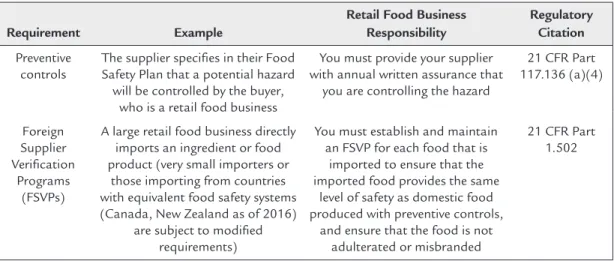
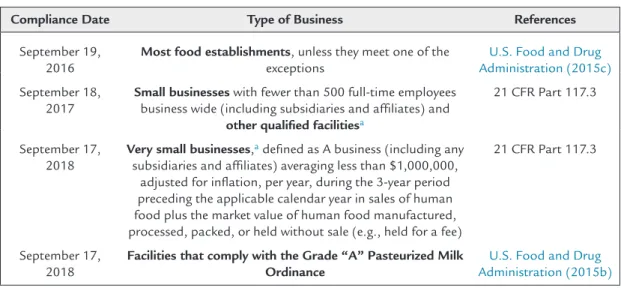
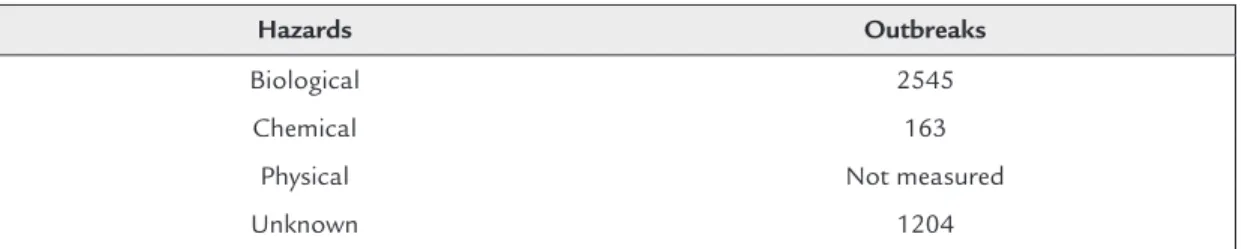
Hazard analysis and risk-based preventive controls also represent valuable tools for the retail food business to ensure food safety in their supply chain. These resources include the Food Safety Modernization Act (FSMA) regulations themselves, official industry comments (and FDA responses) to the proposed rules, other FDA information sources (FAQs, webinars, presentations), and guidance documents (some of which are still still is) included. in draft form at the time of this publication).
Making the Case
Because the facility was several years old, the food safety lead asked if any changes had been made to the facility or cleanroom since the original construction. The candy was produced and shipped to QSR retail chains for the new frozen dairy dessert rollout.
Human Food Manufacturing Can Create Risk for a Retail Food Business
Preventive controls could have been implemented that would have significantly reduced the risk and stopped this outcome. Preventive controls in the supply chain, which could include obtaining assurances that the supplier's ingredients do not contain undeclared allergens.
A Focus on High-Risk Food Manufacturing to Reduce Risk to Retail
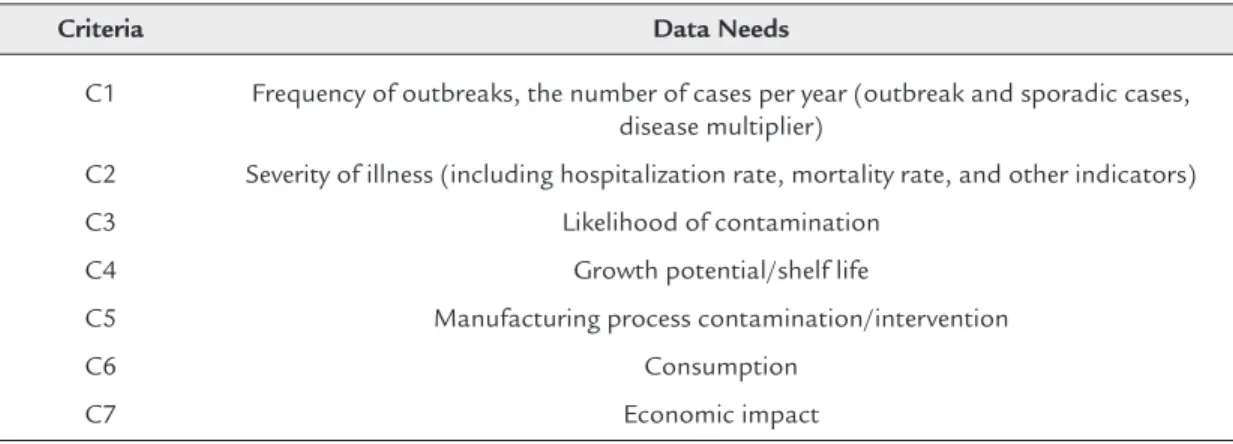
The probable or known severity, including health and economic impacts, of a foodborne illness attributed to a specific food. The CDC annually reports the actual number of foodborne illnesses, injuries, and deaths from food products based on local, state, and federal outbreak investigations (Centers for Disease Control and Prevention, 2016a), with approximately 1 in 6 (or 48 million) people who become ill each year from contaminated food (Centers for Disease Control and Prevention, 2011).
Retail Food Businesses Have a Role in the Prevention of Foodborne
Retail Food Businesses Need to Know and Leverage the Government’s
It also requires retail food businesses to know how to gather information about hazards and the best methods to prevent them. The FDA must continue to study, publish, and update the food industry about HRF so that the industry can develop preventive controls appropriate for these foods.
How to Use This Book for Supply Chain Food Safety Management
Have you considered whether your suppliers could use sanitary controls as preventive controls? Have you determined whether preventive controls can be implemented in the supply chain before ingredients and products are brought into your suppliers' manufacturing facilities.
The Era of the Food Safety Modernization Act and Hazard Analysis
- Preventive Controls Rule for Human Food
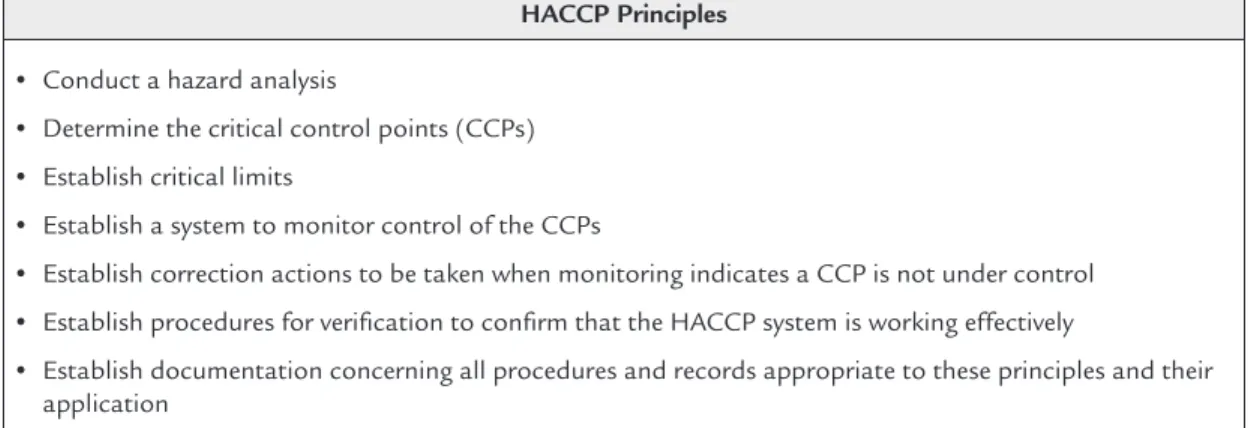
- Hazard Analysis and Critical Control Point is Foundational to Preventive
- What is the Food Safety Plan?
- Written Hazard Analysis (21 CFR Part 117.130)
- Written Preventive Controls (21 CFR Part 117.135)
- Written Supply-Chain Program (21 CFR Part 117.405)
- Written Recall Plan (21 CFR Part 117.139)
- Written Procedures for Monitoring the Implementation of the Preventive
- Written Corrective Action Procedures (21 CFR Part 117.150)
- Written Verification Procedures (21 CFR Part 117.155)
- Who is Responsible for the Food Safety Plan?
- How Will FDA Implement Preventive Controls Under the Food Safety
An example of a food safety plan can be found in the public version of the Food Safety Preventive Controls Alliance (FSPCA) Preventive Controls for Human Food Participant Manual, which is available online for free (Food Safety Preventive Controls Alliance, 2016). The Era of the Food Safety Modernization and Hazard Analysis Act 29 2.4.7 Written verification procedures (21 CFR Part 117.155).
What Potential Food Ingredient Hazards Occur in Human Food
Defining a Hazard and Its Significance in Food Manufacturing
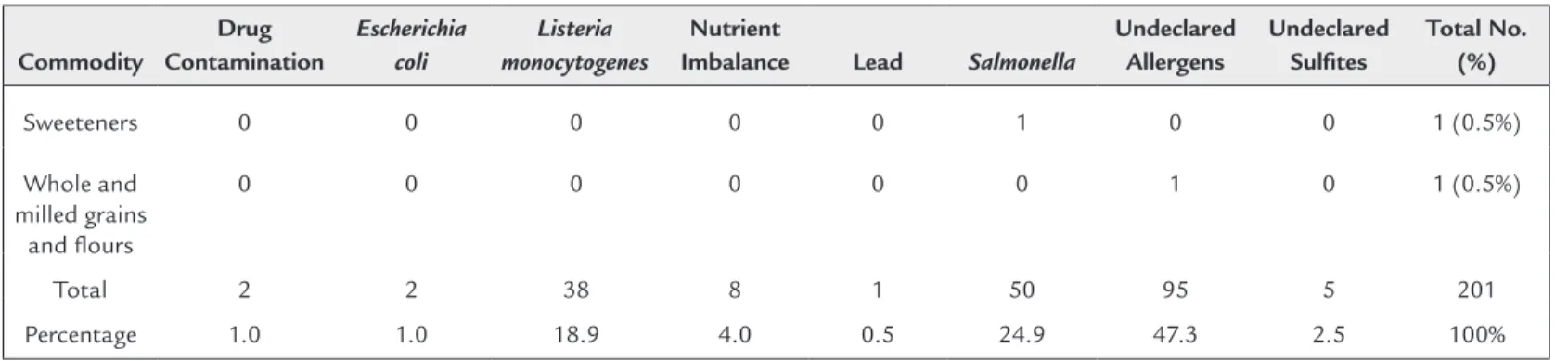
Adapted from CDC surveillance of foodborne illness outbreaks in the United States 2009–2013 annual reports. Many risks associated with specific foods are recognized due to the number of foodborne illness outbreaks and the severity of the resulting illness.
Food Ingredient–Hazard Pairs
- Animal Feed and Environment (Hazards Introduced Internal to
- Meat and Meat Products (Hazards Introduced External to
- Milk and Dairy
- Poultry and Eggs
- Seafood
- Fruits, Vegetables, and Herbs
- Coffee and Cocoa
- Cereal-Based Ingredients
- Edible Nuts, Oilseeds, and Legumes
- Oils and Fats
What are the known dangers associated with these ingredients. list each food ingredient-hazard pair). Many of the foodborne illness outbreaks associated with chocolate stem from Salmonella associated with dried cocoa powder.

New Hazards in Food Manufacturing
53 The best place to review and confirm potential ingredient-related hazards in human food is in Appendix 1 of FDA's Draft Guide for Industry: Hazard Analysis and Risk-Based Preventive Controls for Human Food (Food and Drug Administration, 2016). This information will then enable the hazard analysis of each product (Chapter 5) so that the preventive control measures needed to manage all potential hazards of each product can be defined (Chapter 6).
What and Where Are Potential Process and Facility-Related
Process and Facility-Related Hazards
It is important to discuss the differences between a food ingredient hazard and a process and facility related hazard. Both food ingredients and process and facility-related hazards can be caused by the same biological, chemical or physical hazards.
Process/Facility–Hazard Pairs
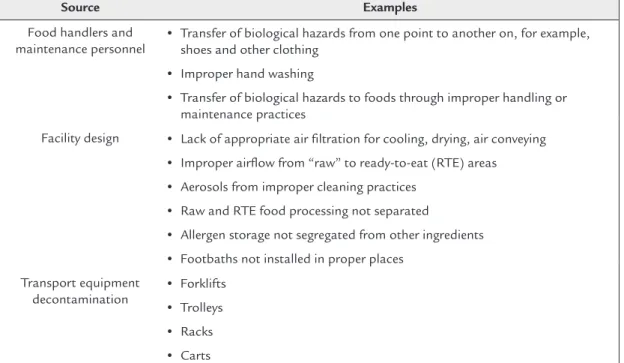
Potential process and facility-related hazards 59 that can develop niches in drains, HVAC systems, floors, and in adjacent processing equipment, then become an environmental processing hazard and can contaminate other products over time (as was the case in the peanut products outbreak discussed above). Many ingredient-related hazards can become process- and facility-related hazards (Table 4.1) due to poor facility design, improper equipment use, and personnel errors in that facility (Table 4.2).
Biological Process and Facility-Related Hazards
In considering process and facility hazards, you must also consider all other biological, chemical, and physical hazards associated with ingredients from other raw materials that will be used in the same facility as potential process hazards. that may contaminate your product during processing. Also, pathogens may already be resistant to chemicals used for general food contact surface hygiene (eg, norovirus is resistant to most chemical disinfectants and must be disinfected using EPA-registered chemicals that are effective against most types of non-enveloped viruses, see Nigel et al.
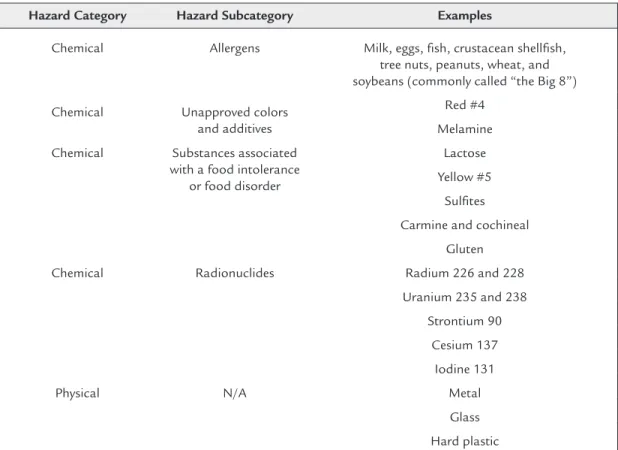
Chemical Process and Facility-Related Hazards
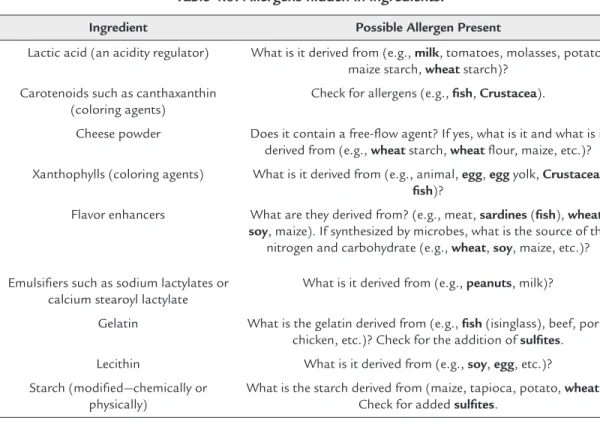
Unexplained allergens in food remain a significant cause of food recalls in the United States. These eight foods cause more than 90% of food allergies in people in the United States (Food and Drug Administration, 2010).
Physical Process and Facility-Related Hazards
Radium can be a process hazard risk if water from one of these areas is used in a food manufacturing facility. More importantly, although radiological hazards from radium in food are rare, this discussion demonstrates how one must consider the risk (eg where water comes from and its safety) for all process and facility-related chemical hazards in human food manufacturing.
Defining the Environment Where Hazards Occur and Their Significance
• What cleaning and sanitation SOPs will be used in each area and with which chemicals. These ingredients will also become potential process and facility hazards for your finished product.
Where to Find the Current Science and Best Practices on Process and
The FDA has additional resources to help industry identify which product defects are process- and facility-related hazards through the FDA's Compliance Policy Guides (CPGs). As technology improves, the FDA may review and change the action levels for defects on this list.
Conclusions
Form 483 (Inspection Observations) for Sunland, Inc., Portals, NM. http://www.FDA.gov/downloads/AboutFDA/CentersOffices/OfficeofGlobalRegulatoryOperationsandPolicy/. Draft Guidance for Industry: Hazard Analysis and Risk-Based Preventive Controls for Human Food. http://www.fda.gov/Food/GuidanceRegulation/GuidanceDocuments.
Hazard Analysis in a Human Food Manufacturing
- Case Study Illustrating the Importance of Hazard Analyses
- Preparing for a Hazard Analysis
- A Plan for the Food Safety of Each Product
- The Hazard Analysis Process
- List Each Process Step and Ingredients Used
- Define and List Potential Ingredient and Process and Facility-Related
- Evaluate Which Potential Hazards Require a Preventive Control
- Additional Factors That FDA Requires in the Evaluation of Potential
- Keeping the Hazard Analysis Current
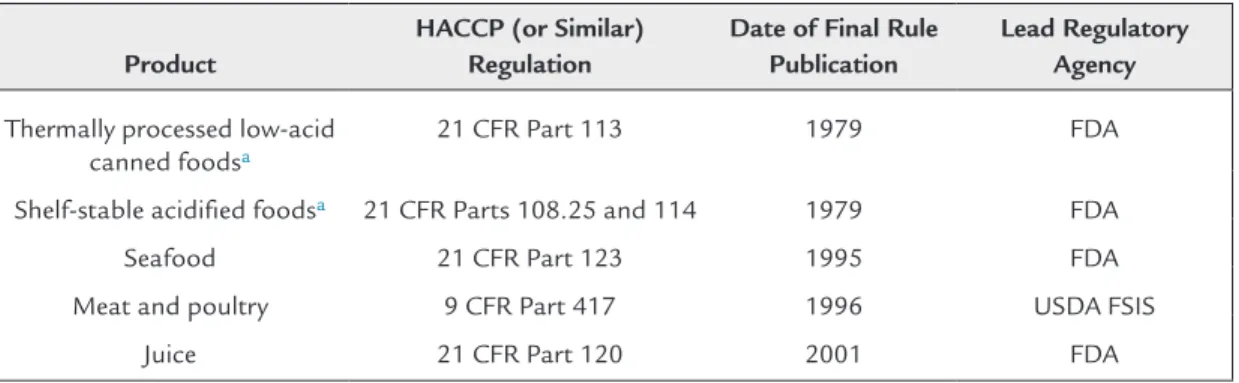
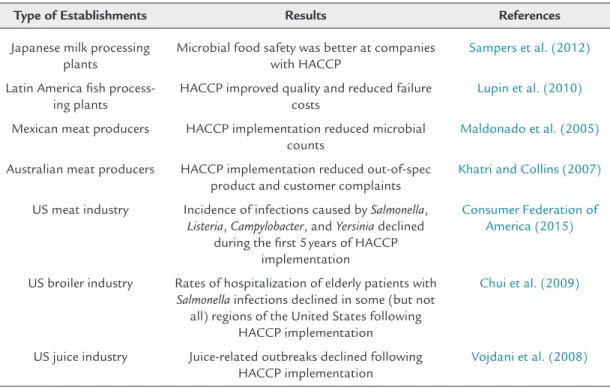
Taking a step back, let's consider how hazard analysis fits into a food safety plan. A key part of the hazard analysis is to determine whether the potential hazard in the food is already under preventive control.

Preventive Controls ��������������������������������������������������������������������������99
What Are Preventive Controls?
However, the FDA goes further in the preventive control regulations and defines additional preventive controls in addition to the preventive control of the processes that are the foundation of HACCP. The preventive controls regulations define six different types of preventive controls (21 CFR part 117.135(c)), as shown in the figure.
Process Preventive Controls
- Linking Process Preventive Controls With Hazards in the
- Critical Control Points and Critical Limits
Which process preventive controls can be used for some of the identified hazards that require preventive control (Fig. 6.3). The critical limit may be the internal temperature of the cake during baking required to ensure that the Salmonella hazard will be eliminated.
Food Allergen Preventive Controls
A flow chart summarizing preventive food allergen controls that can be used to ensure proper labeling is shown in the figure. The food safety team at Completely Cookies has determined that these food allergen risks (and likely others as well) are significant hazards that require preventive food allergen controls.
Sanitation Preventive Controls
The preventive sanitation controls that are part of the FSP for Completely Cookies Double Chocolate Cookie Dough are shown in Fig. Environmental monitoring (discussed in detail in Chapter 9) is a verification method (a topic to be discussed in Chapter 8) for preventive hygiene. controls that deal with pathogens.
Supply-Chain Preventive Controls
The flour supplier will heat treat the flour; the certificate of analysis for each batch received will be reviewed. Supply Chain Control: The salt supplier will test these chemicals; the certificate of analysis for each batch received will be reviewed.
Recall Plan
Defined roles and responsibilities of people involved in the recall • Draft recall notices and forms. Retail food businesses should ensure that they also have a recall program/plan that enables them to promptly contact each of their retail food service and sales businesses that have purchased a recalled product and notify them of the recall and required actions (e.g. .list product on site, remove from sale and destroy).
Other Controls
Recalled foods should also be included in the plan (U.S. Food and Drug Administration, 2016a). In addition, if a supplier issues a recall of an ingredient/product that retail establishments use as an ingredient in their finished products, it is important that individual retail establishments are made aware of the recall as soon as possible so that the ingredient/product and all other products made with the recalled ingredient/products may be diverted to prevent service/sale to customers.
How to Identify Appropriate Preventive Controls?
Again, it is important to note that the precise categorization of preventive controls is not as important as that the appropriate preventive control is associated with each identified hazard that needs it.
Conclusions
Current good manufacturing practice, hazard analysis and risk-based preventive controls for human foods; Final rule.
Validation of Preventive Controls �����������������������������������������������������121
- How Does a Food Processor Validate a Preventive
- Obtaining Objective Evidence That Supports the Use of a
- Who Conducts Validation Activities?
- Documentation of Validation
- Validation Strategy Considerations
- Validation of a Preventive Control for Multiple Products
- Timing of Validation
- Validation Examples
- Validation of Heat Treatment of Flour to Inactivate Salmonella
- Validation of Metal Detection to Identify Metal Fragments From
- Summary and Conclusions
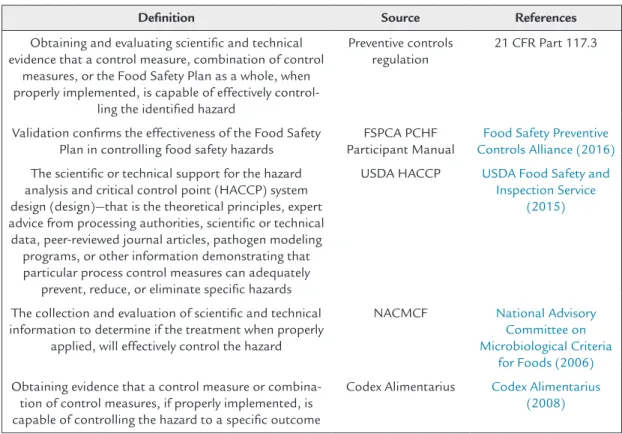
Any validation work used to support a preventive control must be included or referenced in the Food Safety Plan. If an internal study or a contracted challenge study was used for validation, a copy of the validation study report must be included in the Food Safety Plan.
Implementation and Management of Preventive Controls
- Monitoring
- Verification
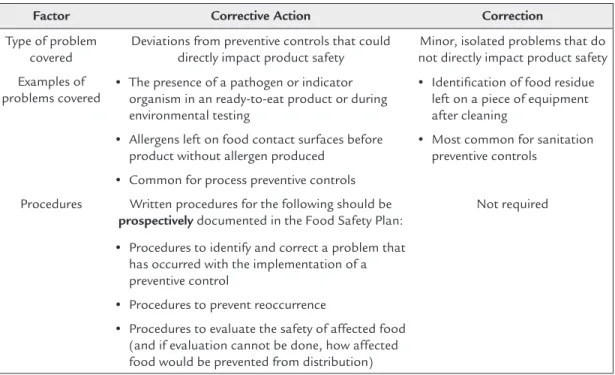
- Corrective Actions and Corrections
- Documentation and Records
- Food Safety Plan Records
- Implementation Records
- Gaining Access to Supplier’s Preventive Controls Documentation
- Reanalysis of Food Safety Plan
The Food Safety Plan must be kept on site (or available electronically on site). The Food Safety Plan describes in detail the hazards identified in the hazard analysis.
Environmental Monitoring to Prevent Facility-Related Hazards �����������153
Reviewing Hazards and Environments That May Contribute to
A large number of biohazards (including bacterial, viral, parasitic and fungal pathogens and the toxins they can produce) can remain in the environment. Resident pathogens can persist in a facility for years and can contaminate foods produced in the facility, potentially leading to outbreaks of foodborne illness.
Conditions That Favor Introduction of Biological Hazards Into
Generally, food processing follows a processing stream where raw ingredients such as flour, sugar, eggs, etc. Normally enter a food processing facility via raw ingredients, packaging, personnel, pests and outdoor environments (leaky roofs).
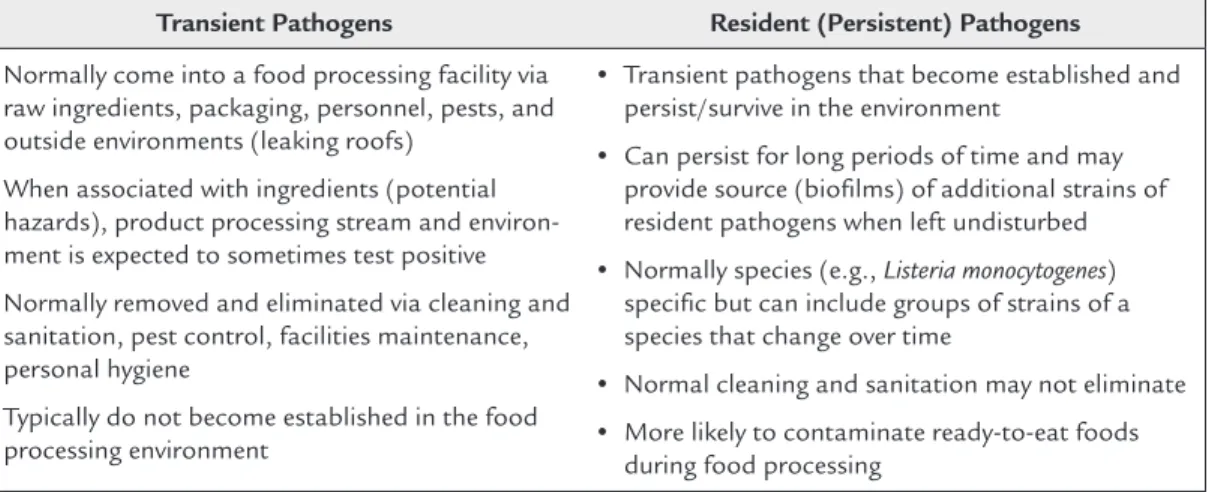
How Resident Pathogens Contaminate Food During Processing
Ingredients used to make food products are associated with known pathogens (discussed in Chapter 3). Food products are made with RTE ingredients into an RTE product (eg mixing dried fruit, nuts and honey into food bars) without further processing or "killing" steps.
Facility Design and Operations to Reduce Resident Pathogens and
What cleaning and sanitation standard operating procedures (SOPs) will be used in each area and what chemicals will be used in those procedures. What implements, tools, transport vehicles and equipment will be used in each area and what maintenance of the equipment is required, which may cause process hazards in the food.
Monitoring Facility Processing Environments to Prevent Resident
The timing and frequency of sample collection and testing should be sufficient to determine whether Listeria and other pathogen control measures are effective. Includes allergen testing where appropriate using in-house sampling and testing or laboratory-assisted testing.
Follow-Up Sampling and Corrective Activities When an Environmental
Documentation of sampling sites and test results will be critical to targeting appropriate corrective actions to eliminate resident pathogens and also to ensure appropriate regulatory compliance including holding products prior to distribution or recalling a product if any probable pathogenic contamination of a product (eg, Zone 1 test positive for L. monocytogenes). Each FCS is LS Positive (third positive for growth-promoting foods, fourth positive for non-growth-promoting foods).
Regulatory Knowledge and Interactions for Retail Buyers in the
- Regulatory Information Sources
- By the Book: Rules, Regulations, Guidance Documents
- Beyond the Book: Interpretation
- How FDA Knows Who Your Suppliers Are: Food Facility Registration
- Inspections/Audits
- Overview
- When Do Inspections Occur?
- Who Will Conduct Inspections?
- Auditing and Assessing How Prepared Your Supplier Is for
- Communications With Auditors and Inspectors
- Summary and Conclusions
- Selected Web Resources
Maybe you're getting gluten-free chocolate peanut butter cookies in the same deliveries you get the cookies. This chapter will provide additional information to help retail buyers (who may not be directly subject to FSMA and PCHF) understand what their suppliers must do in the FSMA era.