Teodor LEUCA, Professor, University of Oradea; Scientists’ Academy of Romania; Academy of Technical Sciences of Romania Andrei MARINESCU, Professor, University of Craiova; Romanian Academy of Technical Sciences. Radu MUNTEANU, Professor, Technical University of Cluj-Napoca; Academy of Technical Sciences of Romania (Vice-President) Florin Teodor TĂNĂSESCU, Professor, Romanian Electrotechnical Committee (CER) (President); Romanian Academy of Technical Sciences (Vice President); Academy of Sciences of Moldova (honorary member). Horia Leonard ANDREI, Professor, "Valahia" University of Târgoviște Jozef BALOGH, Professor, Technical University of Košice, Slovakia.
George BEREZNAI, professor, University of Ontario, Institute of Technology (UOIT), Canada Mihail CECLAN, professor, UPB. Amit CHAUDHRY, PhD, University of Panjab (UIET), Chandigarh, Indien Roman CIMBALA, professor, Technical University of Košice, Slovakiet Grigore DANCIU, professor, UPB. Jaroslav DŽMURA, professor, Tekniske Universitet i Košice, Slovakiet Vasile DOBREF, professor, "Mircea cel Bătrân" National Academy of Constanța Istvan FARKAS, professor, "Szent Istvan" Universitetet i Gödöllö, Ungarn Adina Magda FLOREA, professor, UPB.
Nicolae JULA, Profesor, Academia Tehnică Militară București Hans-Georg KOGLMAYR, Profesor, Universitatea din Pforzheim, Germania Iosif LINGVAY, Dr., INCDIE ICPE-CA. Simona MICLĂUȘ, Profesor, Academia Armatei Terestre „Nicolae Balcescu” Sibiu Etienne MILENT, Profesor, Universitatea din Lille, Franța. Luminița Georgeta POPESCU, profesor, Universitatea „Constantin Brâncusi” Târgul Jiu Mihai Octavian POPESCU, profesor, UPB.
Nicolae VASILE, profesor, Univerza "Valahia" v Târgoviște; Akademija tehničnih znanosti Romunije dr. Bogdan Dumitru VĂRĂTICEANU, Icpe SA.
Cites per document Year Value Cites per document Year Value
Cites Year Value Self Cites 2012 0
Evolution of the number of total citations per document and external citations per document (i.e. journal self-citations removed) received by a journal's published documents during the three previous years. External citations are calculated by subtracting the number of self-citations from the total number of citations received by the journal's documents. International collaboration is responsible for the articles produced by researchers from various countries.
The graph shows the proportion of a journal's documents signed by researchers from more than one country; it includes more than one country address. Not every article in a journal is considered primary research and therefore "citable"; this graph shows the ratio of a journal's articles including substantial research (research articles, conference papers and reviews) in three year windows vs.
Documents Year Value Non-citable documents 2012 0
Leave a comment
Users of Scimago Journal & Country Rank have the opportunity to dialogue through comments related to a specific journal. For topics for special articles, maintain dialogue through the usual channels with your editor.
EEA - Electrotehnica, Electronica, Automatica
SJR is a measure of the scholarly influence of journals that takes into account both the number of citations a journal receives and the importance or prestige of the journals from which such citations come. It measures the scientific influence of the average article in a journal. It expresses how central an average article is to the global scientific discussion. This indicator counts the number of citations received by documents from a journal and divides it by the total number of documents published in that journal. The graph shows the evolution of the average number of times that documents published in a journal in the past two, three and four years have been cited in the current year.
Evolution of the total number of journal citations and self-citations received by a journal's published papers during the three previous years. Journal Self-citation is defined as the number of citations from a journal citing an article to articles published in the same journal. Dear Dib Djael, thank you very much for your comment. We recommend that you refer to the author instructions/submission guidelines on the journal website.
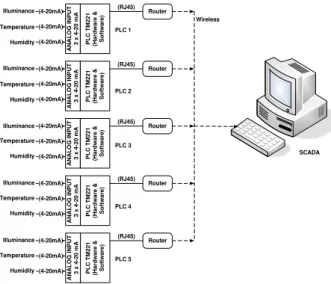
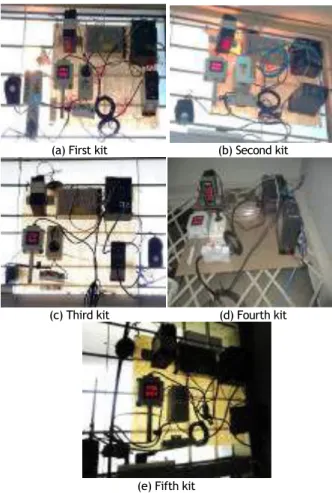
The purpose is to have a forum in which general doubts about journal publication procedures, experiences and other issues arising from the publication of papers are resolved. CiteScore counts the citations received in - articles, reviews, conference papers, book chapters, and data papers published in - , and divides this by the number of publications published in . Each assembly consisted of illuminance, temperature and humidity sensors equipped with a 4-20mA transmitter each.
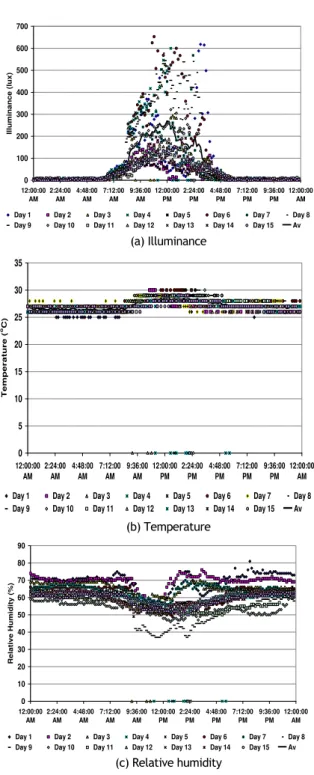
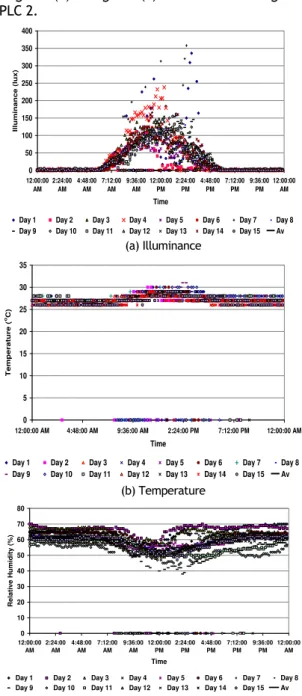
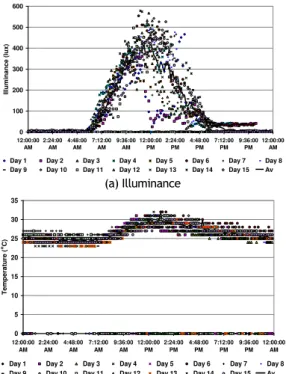
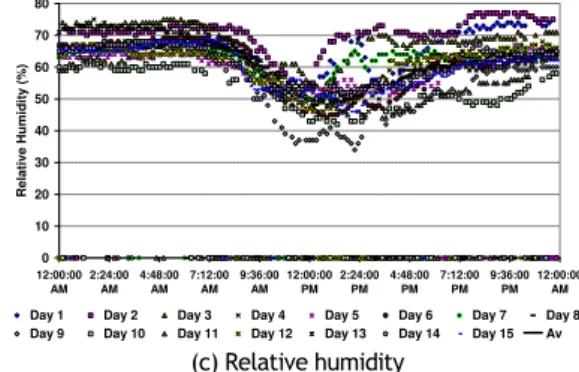
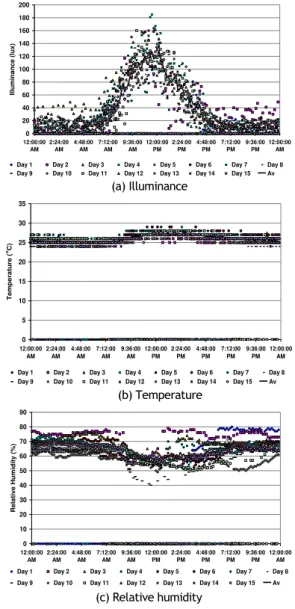
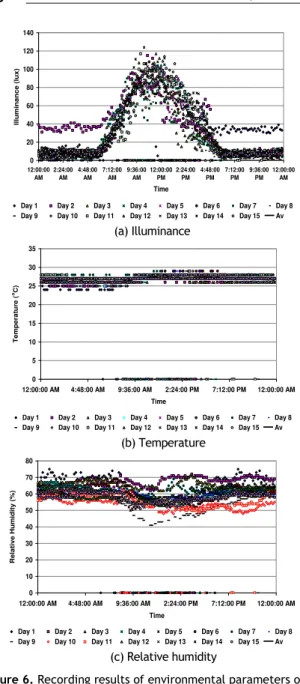
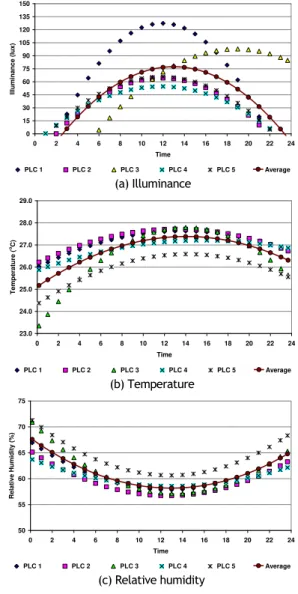
Average temperatures and relative humidity began to rise and fall between 6:30 and 8:40 am. The illuminance and temperature modeling convex upwards, as indicated by the negative quadratic time constants. In contrast, the relative humidity modeling is convex downward, which is significantly indicated by the positive quadratic time constants.
This case was also reinforced by the absolute numbers of correlation coefficients between illuminance, temperature and humidity that were above 0.9. The parameter signals of the third PLC were the most different from the others because the temperature and illuminance on the fourth floor were very high. Keywords: humidity, illuminance, SCADA, temperature, wireless To cite this article: WALUYO, WIDURA A., "SCADA Based Wireless Online Monitoring Assessment of Building Rooms on Illuminance, Temperature, and Humidity", in Electrotehnica, Electronica, Automatica (EEA ), 2019, vol.
SCADA based Wireless Online Monitoring Assessment of Building Rooms on Illuminance, Temperature and Humidity
- Introduction
- Materials and Methods
- Results and Discussion
- Conclusions
- Bibliographic References
Meanwhile, PLC4 and PLC5 were installed in the second building (building 18) on the second and third floors respectively. The IP addresses and SSID communications were unique on the networks and the monitoring devices. This equation was used as the modeling of the behavior of the lighting, temperature and relative humidity up to the time in twenty four hours.
Meanwhile, high relative humidity occurred on the second, third and first days, which were 24, 25 and 23 January 2018. The maximum temperature was 29 oC, namely on the seventh, sixth, eighth, ninth, tenth and eleventh days. The maximum temperature of 29 oC occurred on the fourth, sixth and eighth days, i.e. 26, 28 and 30 January 2018, respectively, which somewhat corresponded to the illumination that occurred on the fourth and sixth days.
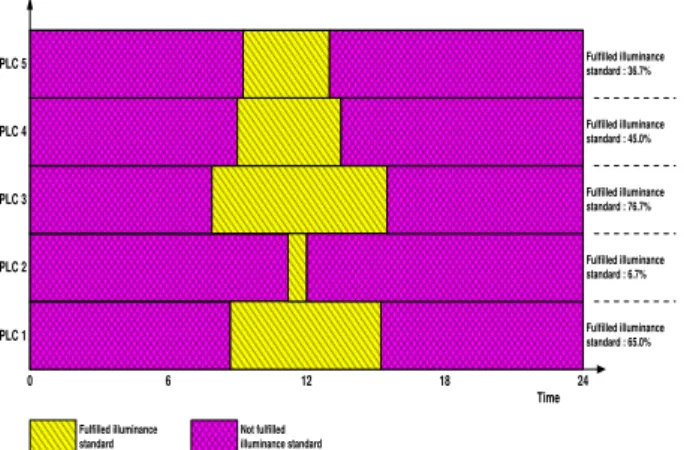
According to the Decree of the Minister of Health of the Republic of Indonesia, number on environmental health requirements of offices and industry, the minimum illumination in a work room is 100 lux [79], [80]. This case is caused by the fact that the sensors are placed in the corners of the room, under the ceilings. Thus, to get the real lighting in the workplace tables, the registration results should be multiplied by the ratios of the corrective approach.
Nevertheless, according to the Decree of the Minister of Health of the Republic of Indonesia number 1405 of 2002, on the environmental health requirements of offices and industries, the room air temperatures and relative humidity are 18o-30oC and 65 %-95 % respectively [ 86 ]. Based on the survey results and above standards, the temperatures and the relative humidity were almost in the ranges of 25-30 oC and 50 %-80 % respectively. Figure 10(a) shows the modeling map of the illumination as a function of time, where the curves swelled drastically upwards.
Figure 10(b) shows the temperature modeling plot, where the curves swelled slightly upwards so that the illuminance variations were low. On the other hand, the modeling by the average mathematical models could be expressed as a function of time. Furthermore, equation (4) represents the convex curve of the relative humidity down to the bottom, as indicated by the small positive constant of the squared time variable.
20]Amin, R., Teli, D., James, P., Bourikas, L., The influence of a student's 'home climate' on room temperature and the use of indoor climate controls in modern residential buildings, Energy and Buildings pp 30] Ozel, M., Effect of indoor design temperature on heating and cooling transmission loads, Journal of Building Engineering 7, 2016, pp.