
During his time in the "Paras" he spent 6 months in Belize where he was trained in the art of jungle warfare. In 2009, he was one of the final 30 candidates in the Canadian Space Agency's Astronaut Recruitment Campaign.
Human Factors
The Dirty Dozen
Errors and Accidents
The SHEL Model
Summary
But language wasn't the only human factor deficiency at the time, as evidenced by an accident similar to that of Eastern Airlines. The controller responded by instructing Pan Am as follows: “The third, sir; one two Three; third, third".
Introduction
Fatigue Physiology
Current Regulations
Countermeasures
Ultra-Long-Range Flights
Sleep and Sleep Deprivation
Summary
Leger, D.: The Cost of Sleep-Related Accidents: A Report for the National Commission on Sleep Disorders Research. Blagrove, M., Alexander, C., Horne, J.A.: The effects of chronic sleep reduction on the performance of cognitive tasks sensitive to sleep deprivation.
Incapacitation Scenario
Lines of Defense
Occupational Hazards
Exercise
Cardiovascular Health
Diet
Mental Health
The IMSAFE Checklist
Summary
5 List some of the psychological risks of flying 5 List the items on the IMSAFE checklist. Of all the countless occupational health risks that pilots face, back pain (.fig. 3.4) is one of the most prevalent.
Introduction
Eye Physiology
Vision Modes
Factors Affecting Vision
Aviation Illusions
Vision Issues and Medical Certification
Summary
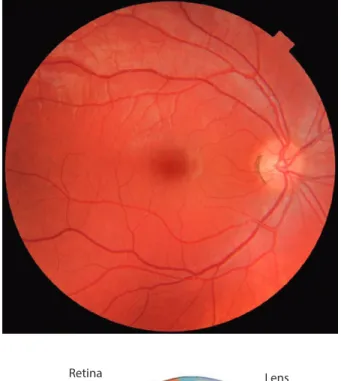
After completing this chapter you should be able to 5 describe the basic anatomy of the eye. It is because of the limitations of human vision that pilots are prone to illusions and have trouble flying at night. The lens focuses light onto the surface of the retina, the inner layer of the eyeball.
The region of sharpest vision - the macula - is located in the center of the retina, where. In fact, in the center of the macula, a depression called the fovea contains only cones. This feature (Fig. 4.3), which is located in the center of the macula, contains a high concentration of cones, but no rods.
One of the first senses affected by lack of oxygen is our sight. Before looking at how these signals can be interrupted to produce illusions, it is important to become familiar with the structure of the vestibular system. In addition to being convincing, such a situation can cause vertigo, due to which the pilot quickly becomes disoriented and loses control of the aircraft.
Introduction
Slow Onset Hypoxia
Rapid Decompression
Summary
The pilot may notice signs such as nausea, headache, euphoria, dizziness, confusion, difficulty concentrating, loss of sensation. Over-the-counter medications can cause cells to not use oxygen efficiently, making a pilot less resistant to altitude. In this case, the pilot will load his body with +Gz and the cardiovascular system must compensate for this.
Blood carries oxygen, and if the brain does not receive enough blood, the pilot will lose consciousness. Going back to the pull-out example we just mentioned, the pilot will begin to suffer certain symptoms of increasing G as his or her cardiovascular system desperately tries to compensate. Naturally, when a pilot G-LOCs, they lose control of the aircraft and the G's decrease rapidly, meaning the pilot will begin to recover.
Once the instructors are satisfied that the pilots are competent for the AGSM, the pilots will be ready to fly at a rapid start rate (ROR) of at least 3G per second. In ROR, the centrifuge accelerates from idle at 1.4G to 7G in less than 2 seconds, so the pilot must be ready. At 7G, the Gs are held for 15 seconds to allow the pilot to show his AGSM to the instructors.
Introduction
Factors Affecting Information Processing
Use of Over-the-Counter and Prescription Drugs
5 Describe how the movement of the endolymph fluid affects the sensation of pitch, roll, and yaw. The movement of the fluid in the ducts causes these hair cells to bend and transmit a nerve impulse along the vestibular nerves to the brain. When a pilot begins a climb, begins to roll, or even makes the aircraft yaw, the endolymph fluid begins to move in the opposite direction of the motion.
The vestibular system is connected to the brain's visual centers and affects the movement of a pilot's eyes. The following are exercises to demonstrate the movement of the endolymph fluid in the semicircular and otolithic organs. This occurs when there is simultaneous stimulation of two semicircular canals accompanied by movement of the head in another plane.
This linear acceleration is sensed by the otolith organs and is perceived as upward or nose-up motion of the aircraft. In this case, the pilot simply maintains control of the aircraft until it hits the ground. The VOR sends information from the semicircular canals via the vestibular nerve, the brainstem nuclei and the vestibular projection to the nuclei of the three eye muscles (three-neuron arc, oculomotor crus) (Masao [12]).
Introduction
Accident Analysis
Standardization
Assertiveness in Communication
Summary
5 Describe some of the factors that compromise effective communication 5 Describe two accidents caused by ineffective communication. 5 Briefly explain the rationale behind the ICAO Language Proficiency Requirements 5 List three features of LPR and explain how they improve communication 5 Explain what is meant by the phrase "Power Distance". To illustrate the consequences of failed communication, it is instructive to examine some of the more prominent accidents that have been caused by this particular human factor.
This was confirmation to ATC that the 182 crew was aware of the Cessna's location. The ultimate outcome of the language barrier was the collision of the two planes and the loss of 349 passengers and crew. Furthermore, despite the commonality of the language and the high level of language proficiency required, barriers to effective communication still exist.
Now that we are armed with the basics of the communication process, we can put this into practice and see what happens in the cockpit and control tower. Now that we have covered some issues of pilot-to-pilot communication, it is instructive to consider some shortcomings of the communication process between ATC (Fig. 7.3) and the cockpit [8]. This is because command of the English language can be affected by variables such as dialects, accents and/or simple misinterpretations.
Training
Summary
One of the most successful airlines in the United States saw the benefits of operating all aircraft of the same type – the Boeing 737 (.Fig. 8.2). Captains had to incorporate the input of their fellow flight crew members into their decision-making, which was quite a change from the usual pattern of "The captain is in charge - don't ask the captain". The captain is the leader of the flight crew, appointed by the airline to be "in charge".
This negative gradient occurs when the captain designated as the flight crew chief is not the hands-on leader. The machismo that once defined "the real stuff" is no longer a desirable trait in commercial aviation - at least not in such high doses. The first is the cognitive component: the idea or knowledge about the object of the relationship.
Second, there is the affective component: the feelings one has about the object of the attitude. In the hallways of modern universities, such as Embry-Riddle Aeronautical University in Daytona Beach, FL, some of the latest training equipment is already in use by students (Fig. 8.8). EUROCONTROL European Organization for Aviation Safety: Proceedings of the Second EUROCONTROL Human Factors Workshop: Teamwork in Air Traffic Services.
Introduction
Electronic Flight Display
Multifunction Displays
Synthetic Vision System
Enhanced Vision System
Warning And Advisory
Summary
For the most part, a large part of the data is presented in graphical format, which enables the pilot to process complex information quickly. An example would be the glide slope indicator - the pilot does not need this when the aircraft is cruising at 35,000 feet, so the GSI is redundant in the cruise phase of the flight. This instrument, which usually sits in the center of the console, provides the pilot with pitch and roll information.
This display provides the pilot with the aircraft's roll rate, current track (path over the ground), current heading, and magnetic heading. 5 If the aircraft is flying over a mountain (or the terrain is rapidly decreasing), the pilot will hear the "Terrain" warning. The RA provides the pilot with information about the vertical speed the aircraft must fly to avoid other aircraft.
One of the advantages of a HUD system is the increased situational awareness (SA) provided to the pilot. For GA pilots flying instrument approaches, the biggest advantage is being able to "see" the runway while still in the clouds. 5 An overhead unit that projects images onto a transparent screen in front of the pilot.
Introduction
CBT in Aviation
Virtual Reality
Augmented Reality
Summary
5 Explain how progress is assessed in the CBT process 5 Explain what is meant by "side circumstances of recruitment". In the discussion of human factors so far, the common element in most accidents has been the human. Therefore, human factors specialists have sought to find better ways to instruct pilots in hopes of reducing the accident rate.
In the CBT scheme of assessment, these circumstances occur when a pilot's experience exceeds the entry level requirements set out in the selection process. In these VLEs, the student can participate in the learning task with a sense of presence in a way that is not possible in formal education. VR can provide new experiences that enhance learning, but exactly how is it used in the world of aviation.
In the real world the inspections are limited, but in the VR world it is possible to conjure up any scenario imaginable. For example, no company would intentionally damage an airplane just to teach its staff how to detect a certain problem, but in the immersive world of VR, this is.. well, easy. VR is a growing trend for destination experiences and we wanted to help inspire our passengers while they were in the sky.
