Volume 8 Number 3 Article 3
12-31-2018
INDONESIA’S UPSTREAM PETROLEUM GOVERNANCE REFORM:
INDONESIA’S UPSTREAM PETROLEUM GOVERNANCE REFORM:
WHICH MODEL IS CONSTITUTIONAL ENOUGH?
WHICH MODEL IS CONSTITUTIONAL ENOUGH?
Afghania Dwiesta
University of Aberdeen School of Law, United Kingdom, [email protected]
Follow this and additional works at: https://scholarhub.ui.ac.id/ilrev Part of the Constitutional Law Commons
Recommended Citation Recommended Citation
Dwiesta, Afghania (2018) "INDONESIA’S UPSTREAM PETROLEUM GOVERNANCE REFORM: WHICH MODEL IS CONSTITUTIONAL ENOUGH?," Indonesia Law Review: Vol. 8 : No. 3 , Article 3.
DOI: 10.15742/ilrev.v8n3.511
Available at: https://scholarhub.ui.ac.id/ilrev/vol8/iss3/3
This Article is brought to you for free and open access by the Faculty of Law at UI Scholars Hub. It has been accepted for inclusion in Indonesia Law Review by an authorized editor of UI Scholars Hub.
INDONESIA’S UPSTREAM PETROLEUM GOVERNANCE REFORM:
WHICH MODEL IS CONSTITUTIONAL ENOUGH?
Afghania Dwiesta
* University of Aberdeen School of Law, United Kingdom Article Info
Received : 09/08/2016 | Received in revised form : 18/08/2017 | Accepted : 1/02/2018 Corresponding author’s e-mail : [email protected]
Abstract
The Indonesian Constitutional Court abruptly annulled provisions regarding the function of BP Migas as state representative in managing upstream oil and gas operations in Indonesia, declaring it unconstitutional.
Apparently, the Court was convinced that exercising absolute state control over hydrocarbon operations would give the utmost benefit to the people. This research argues that in achieving such goals, a state must be able to create strong administrative infrastructure and regulatory regime capable of controlling and supervising hydrocarbon operations in accordance with both national and international oil fields. Using a comparative study method with secondary data collection, this research observes Norway’s, Mexico’s, Malaysia’s, and Russia’s experiences as its underlying methodology. It examines the Court’s interpretation of “control” and
“ownership” over hydrocarbon operations and provides possible solutions for the most effective and suitable institutional design for BP Migas’ replacement. Finally, it concludes that to fulfill the constitutional mandate, the government’s ability to manage oil and gas sector depends on how much it is willing to consistently: (i) implement good corporate governance among related stakeholders so as to lessen political interference in the decision-making process; and (ii) maintain the balance of ex ante procedures and the post ante monitoring system in the adopted institutional model.
Keywords: BP Migas, unconstitutional, state control, NOC
Abstrak
Mahkamah Konstitusi Republik Indonesia secara tiba-tiba membatalkan ketentuan-ketentuan mengenai fungsi BP Migas sebagai perwakilan negara dalam mengelola kegiatan hulu migas di Indonesia dan menyatakan BP Migas inkonstitusional. Mahkamah Konstitusi teryakini bahwa dengan melaksanakan kontrol penuh terhadap operasi-operasi migas akan memberikan manfaat yang sebesar-besarnya bagi kehidupan rakyat. Penelitian ini akan membuktikan bahwa untuk mencapai tujuan tersebut, sebuah negara harus mampu menciptakan infrastruktur administratif dan rezim perundang-undangan yang kuat untuk mengendalikan dan mengawasi operasi-operasi migas sesuai dengan praktik-praktik migas nasional dan internasional. Dengan menggunakan data-data sekunder yang diambil untuk studi perbandingan, penelitian ini mengamati pengalaman-pengalaman dari beberapa negara seperti Norwegia, Mexico, Malaysia dan Rusia sebagai dasar metodologi penelitian. Penelitian ini menguji interpretasi Mahkamah Konstitusi atas
‘kontrol’ dan ‘kepemilikan’ operasi-operasi migas dan memberikan solusi untuk menentukan model institusi yang paling efektifdan cocok sebagai pengganti BP Migas. Akhirnya, penelitian ini berkesimpulan bahwa untuk memenuhi mandat konstitusi, kemampuan pemerintah untuk mengelola sektor migas bergantung pada keinginan mereka untuk: (i) mengimplementasi good corporate governance diantara para pemegang kepentingan, mengurangi campur tangan politik dalam proses pengambilan keputusan; dan (ii) memelihara keseimbangan prosedur-prosedur ex ante dan sistem pengawasan post ante.
Kata Kunci: BP Migas, tidak konstitusional, kendali pemerintah, perusahaan minyak nasional
I. INTRODUCTION
The discussion of sovereignty over natural resources traces back to the end of the Second World War and is currently acknowledged in both public international law and most national legal systems as recognizing the public ownership of natural resources.1 Considering the nature of the resources, which are deposited in the subsoil of a country, states are free to decide whether they are owned by the state or by individual landowners.2 This concept later developed into an issue, which treated natural resources as property rights where their protection is stipulated under many states’ constitutions.3 It makes this area of law fall under the jurisdiction of administrative law because its principles pertain to the balancing of public interests with individual citizen’s rights.4
Indonesia is one example of a state whose constitution guarantees the protection of natural resources by granting the state full ownership over natural resources to be utilized for the people’s best interests.5 However, over time, the government’s interpretation of the terms “ownership” and “control” over natural resources have developed and changed, creating some obstacles in its actual practice of governance toward achieving this constitutional goal.
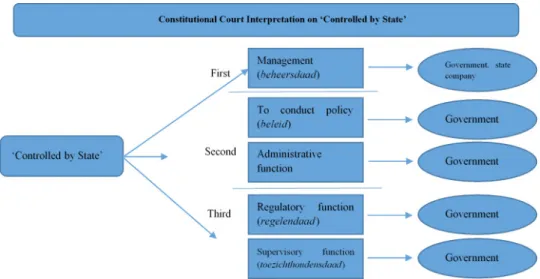
In the Indonesian oil and gas industry, these obstacles can be seen in the annulment of BP Migas’ provision under Law No. 22 Year 2001 on Oil and Gas. This resulted in BP Migas’ dissolution by Constitutional Court Decision No. 36/PUU-X/2012 (“the Decision”) as the State’s representative in relation to its capacity: (i) to enter into Production Sharing Contracts (PSCs) with National Oil Companies (NOCs) and International Oil Companies (IOCs); as well as (ii) to manage and monitor all upstream operations within the country.6 The Court’s legal consideration stated that the organizational structure of BP Migas, which was a BHMN,7 did not fulfill the Court’s interpretation of “state controlled” elements over petroleum operations. The Court believed such an organizational structure did not allow the State to directly exercise its Constitutional authority. Consequently, it not only degraded the power of the State, but it also prevented the State from exercising its power for the maximum welfare of the people.8 The Court was implicitly building on the assumption that absolute direct control over petroleum resources is the main ingredient of Indonesian oil and gas governance that guarantees the maximum benefit for the people. Unfortunately, this notion does not work this way, as is evident from our study of several other countries’
experiences.
1 Carmen Otero García-Castrillón, “Reflections on the Law Applicable to International Oil Contracts,”
Journal of World Energy Law & Business 6, no. 2 (2013): 129.
2 Anita Rønne, “Public and Private Rights to Natural Resources and Differences in Their Protection?”
in Property and The Law in Energy and Natural Resources eds. Aileen McHarg, Barry Burton, Adrian Brad- brook, and Lee Golden, (Oxford: Oxford University Press, 2010), p. 64.
3 The Basic Law of Governance 1992 (KSA); The Petroleum Act of Iran 1987 (IRI); The Constitution of Kuwait 1962 (SK); The Oil and Gas Act 1998 (PNG); The Constitution of the Federal Republic of Nigeria 1999 (FRN).
4 Rønne, “Public and Private Rights”
5 The 1945 Constitution of the Republic of Indonesia, Art. 33.
6 Indonesia, Undang-Undang tentang Minyak dan Gas Bumi (Law regarding Oil and Gas), UU No. 22 Tahun 2001, LN No. 136 Tahun 2001 (Law No. 22 Year 2001, SG No. 136 Year 2001), art. 44 (3).
7 Badan Hukum Milik Negara (State-Owned Legal Entity)
8 Mirza Karim, “A Controversial Decision of the Constitutional Court on the Indonesian Oil and Gas Law,” Jurnal of World Energy Law & Business 6, no. 3 (2013): 260.
As a consequence of the annulment, president Yudhoyono issued a presidential decree transferring the performance of duties, functions, and organization of BP Migas9 to the MoEMR.10 The same presidential decree also guarantees that the existing PSCs signed between BP Migas and its partners would remain in effect until legally terminated.11 Later, in the next presidential decree, the MoEMR transferred the performance of the duties and functions, as well as all employees of BP Migas to an interim institution known as SKK Migas12 to remain in effect until the new oil and gas law replacing the Law No. 22 year 2001 on Oil and Gas enters into force.13
Even though the issuance of the decrees and the establishment of SKK Migas by the MoEMR to take over all of BP Migas’ duties created no turmoil and were still manageable in the short-term period, the decision nonetheless created uncertainty for investors in Indonesia’s upstream oil and gas industry over the longer term.14 This was especially true in areas such as: (i) cost recovery, approval of Work Programme
& Budget , approvals of Plan of Development and hydrocarbon sales, where BP Migas’
function is central to the system; and (ii) future disposal and acquisition processes involving Indonesian oil and gas interests, which may cause delay and uncertainty, as BP Migas held a key role in approving data disclosures and transfer approvals.15
Having been triggered by the Decision, this research: (i) critically examines the Court’s interpretation of “state control” and “ownership” over hydrocarbons in relation to the principles of property and sovereignty over natural resources; and (ii) provides the best possible solution for the most effective institutional design for Indonesia that is suitable for its constitutional mandate. Hence, this study focuses on NOCs’ performance as the State’s representative to conduct and manage hydrocarbon operations related to state control and the effectiveness of the oil and gas sector. It is further illustrated using comparative studies of the oil and governance sector in several sample countries.
To limit the scope of the analysis and sample, the analysis is limited to oil exporter countries that have adopted the separation of regulatory and commercial functions (i.e., Norway and Mexico) and those that have adopted the regulatory concentration in the NOC in jurisdictions where petroleum resources belong to the State (i.e., Malaysia
9 Badan Pelaksana Kegiatan Usaha Hulu Minyak dan Gas Bumi (Executive Body of Upstream Oil and Gas Business Activities)
10Ministry of Energy and Mineral Resources
11 Indonesia, Peraturan Presiden Republik Indonesia tentang Pengalihan Pelaksanaan Tugas dan Fungsi Kegiatan Usaha Hulu Minyak Bumi (Presidential Regulation regarding the Transfer of Duties and Functions of Upstream Oil and Gas Business Activities), Perpres No. 95 Tahun 2012, LN No. 226 Tahun 2012 (Presidential Regulation No. 95 Year 2012, SG No. 226 Year 2012), art. 1.
12 Satuan Kerja Khusus Pelaksana Kegiatan Usaha Hulu Minyak dan Gas Bumi (Special Task Force for Upstream Oil and Gas Business Activities)
13 Presiden Republik Indonesia, Peraturan Presiden Republik Indonesia tentang Penyelenggaraan Pengelolan Kegiatan Usaha Hulu Minyak dan Gas Bumi (Presidential Decree regarding the Implementation of Management of Upstream Oil and Gas Business Activities), Perpres No. 9 Tahun 2013, LN No. 24 Tahun 2013 (Presidential Decree No. 9Year 2013, SG No. 24 Year 2013), art. 2 (1).
14 Latham & Watkins Finance Department, ‘The Dissolution of BPMigas – Impact and Consequences’
(Client Alert, 6 December 2012) < https://www.lw.com/thoughtLeadership/dissolution-of-BPMIGAS> ac- cessed 4 July 2016
15 Herbert Smith and Freehils, “Indonesian Court Decision Casts Uncertainty over Legal Basis of Indo- Herbert Smith and Freehils, “Indonesian Court Decision Casts Uncertainty over Legal Basis of Indo-Herbert Smith and Freehils, “Indonesian Court Decision Casts Uncertainty over Legal Basis of Indo- nesian Oil and Gas Sector” http://www.herbertsmithfreehills.com/-/media/Files/ebulletins/121114%20
%20Indonesian%20Court%20decision%20casts%20uncertainty%20over%20legal%20basis%20of%20 Indonesian%20oil%20%20gas%20sector.htm, accessed 4 July 2016.
and Russia). This ensures that the countries acknowledging private ownership of landowners over a country’s resources are excluded from the discussion.
The approach to this research began with a question relating to the government’s choice of an effective oil and gas governance institution model suitable to Indonesia’s constitutional mandate. Specifically, this research addresses the question of how to efficiently increase national production without undermining state participation in hydrocarbon operations. This research argues that to receive the utmost benefit form hydrocarbon operations for the interests of the people, a State must create a strong administrative infrastructure and a regulatory regime capable of controlling and supervising hydrocarbon operations in accordance with national and international oil field practices.
The analysis of the application in Indonesia’s case shows that there is a strong likelihood that the Court’s ruling, which stated that BP Migas did not bring the greatest benefit to the people due to inefficiency and abuse of power, was not a constitutional issue. It was likely affected by: (i) the degree of political interference and institutional capacity; and (ii) the government’s approach, which utilized NOC’s performance in carrying out the operations, which will be discussed in the following chapter.
To justify our thesis, this research is structured into three main parts. First, it briefly describes the concept of property and sovereignty over natural resources in hydrocarbon operations under international law. Second, it provides a comparative study from sample countries in the context of optimization of hydrocarbon value in relation to their institutional governance. Third, it elaborates on the concept and the comparative study in its application to Indonesia’s case of oil and governance prior to and after the issuance of the Decision.
This research utilizes a comparative study of secondary data collection as the underlying methodology, drawing together similarities and differences between oil and gas governance models in Norway, Mexico, Malaysia, and Russia. Subsequently, documentary and literary review are analyzed using a functional approach; this approach is a fundamental tool for comparative analysis and will help us to attain conclusive results of the government’s choice to implement an effective oil and gas governance institution model in Indonesia.16
II. THE CONCEPT OF PROPERTY AND PRINCIPLE OF SOVEREIGNTY OVER NATURAL RESOURCES IN HYDROCARBON OPERATIONS A. Natural Resources as Property
The discussion of the relationship between the concept of property and the principle of sovereignty over natural resources begins by defining natural resources as “supplies drawn from natural wealth, which may be either renewable or non- renewable and, which can be used to satisfy the needs of human beings and other living species.”17 From this definition, we can infer that natural resources contain an element of “natural wealth,” and that we are referring to those components of nature from which natural resources can be extracted or that can serve as the basis of economic
16 Konrad Zweigert and Hein Kotz, An Introduction to Comparative Law (Oxford: Clarendon Press, 1998), p. 34.
17 Nico Schrijver, Sovereignty over Natural Resources: Balancing Rights and Duties (Cambridge: Cam- bridge University Press, 1997), p. 19.
activities.18 Arguably, this definition creates economic value and a tendency to create a genesis for the growing resurgence of global interest in questions of ownership over such commodities, not only for the State and its people, but also for international private entities.
Historically, scholars describe ownership using various definitions. One correlates the concept of ownership by referring to it as the rights inherited by an individual.
Ownership is normally defined negatively as the right to dispose of property factually and legally in all respects insofar as limitations do not apply by way of agreement, legislation, or general legal principles.19 This is supported by Waldron’s view that
“ownership expresses the abstract of an object of being correlated with the name of an individual.”20 Meanwhile, others correlate the concept of ownership as having a bundle of rights that allow one person or entity to exercise control over a property.
Blackstone confirms the latter theory by providing that ownership is “that sole and despotic dominium which one claims and exercises over the external things of the world, in total exclusion of any other individual in the universe.”21 Honoré’s comprehensive definition of “ownership” is supported by his conception of the idea as
“a bundle of separate, but related rights, which include: (i) the rights of possession; (ii) management; (iii) discretion to use; (iv) the income and the capital; and (v) security and transmissibility of interest.”22
Therefore, it can be argued that ownership connotes a complete and total right over a property and that it consists of a bundle of rights that allow the owner to exercise control over a thing.23 An owner is anyone who has dominion over property, including the right to protect and defend such possession against the intrusion or trespass of others, and the right to dispose of a thing as one pleases, provided that the rights of others are not thereby infringed or laws violated.24 The application of the concept is hence inseparable from control of the owner toward the thing in question, meaning that an owner has individual sovereignty over it.
In the context of natural resources law, the concept of property as having embedded individual rights has developed into a more flexible and collective utilization of resources with the State as the key actor in the management of natural resources.25 The emergence of conflicted interests based on the scarcity of natural resources utilized by society has motivated the shifting of protection of private rights under property law into the domain of public administrative law, where the resources become public property and may be owned by the state.26 This is how the State can justify exercising
18 Ibid.
19 Rønne, “Public and Private Rights,” p. 62.
20 Yinka Omorogbe and Peter Oniemola, “Property Rights in Oil and Gas under Domanial Regimes”
in Property and The Law in Energy and Natural Resources eds. Aileen McHarg, Barry Burton, Adrian Brad- brook, and Lee Golden, (Oxford: Oxford University Press, 2010), p. 116.
21 William Blackstone, Commentaries on the Law of England (Oxford: Clarendon Press, 1979), p. 2.
22 Alison Clarke and Paul Kohler, Property Law: Commentary and Materials (Cambridge: Cambridge University Press, 2005), p. 40.
23 Omorogbe and Oniemola, “Property Rights in Oil and Gas,” p. 117.
24 Ibid.
25 Aileen McHarg, Barry Burton, Adrian Bradbrook, and Lee Golden, ‘Property and the Law in Energy and Natural Resources’ in Property and The Law in Energy and Natural Resources edited by Aileen McHarg, Barry Burton, Adrian Bradbrook, and Lee Golden, (Oxford: Oxford University Press, 2010), p. 1.
26 Jonnette Watson Hamilton and Nigel Bankes, “Different Views of the Cathedral: The Literature on Property Law Theory” in Property and The Law in Energy and Natural Resources edited by Aileen McHarg, Barry Burton, Adrian Bradbrook, and Lee Golden, (Oxford: Oxford University Press, 2010), p. 39.
its sovereignty over its resources and initiating the development of the principle of permanent sovereignty over natural resources under international law.
B. The Principle of Permanent Sovereignty over Natural Resources: from National Law to International Law
The historical trend in the nineteenth century and the early part of the twentieth century shows a tendency by companies charged with exploration and production of natural resources to exercise rights that amount to unlimited sovereignty over the resources and areas in question through concession.27 Such concession consisted of three elements: first, a state act; second, rights of ownership of the resources vested in the concessionaire; and third, the ultimate reversion of ownership to the state at the end of the period fixed for the concession.28
Later, host states became more aware of the economic contribution of natural resources, especially oil and gas, both on a national and global scale. This commodity was not only seen as the world’s foremost source of conventional energy, but it was also most profitable based on the sizable revenues accrued from petroleum industry activities.29 From this rationale, it is safe to say that most resource-rich states started to realize that petroleum was valued not only as an internationally traded commodity but also as a source of power.30 Subsequently, this led the states further into safeguarding their natural resources from foreign entities.
In turn, the question of ownership developed into a long debate within the international forum.31 This international discussion has been ongoing for more than twenty years, ranging from 21 December 1952 by the General Assembly Resolution No. 626 until 12 December 1974 by the General Assembly Resolution No. 3281.
Essentially, they recognized the exercise of states’ sovereignty over natural resources in the interest of the State’s national development and of the well-being of the State’s people.32 These resolutions contributed significantly to the rise of what developing nations regard as the principle of permanent sovereignty over natural resources.
Consequently, taking of foreign property as the new international legal standard to serve states’ national interests is justified.33 Eventually, we see a definite trend shifting from traditional concepts of individual rights protection toward host state ownership of natural resources.34
There are two more crucial downside and upside consequences that arise from these resolutions for the oil and gas industry’s future development. First, it resulted in an emerging trend of large-scale nationalization and expropriation of oil companies in
27 Saudi Arabia v Arabian American Oil Company (ARAMCO), International Law Review 27 No. 156: 117.
28 Rosalyn Higgins, “Natural Resources in the Case Law of the International Court,” in International Law and Sustainable Development, edited by Alan Boyle and David Freestone, (Oxford: Oxford University Press, 1999), p. 88.
29 Omorogbe and Oniemola, “Property Rights in Oil and Gas,” p.122.
30 Quoted in C E Merriam Jr., History of the Theory of Sovereignty Since Rousseau (New Jersey: Batoche Books, 2001), p. 12.
31 Bernard Taverne, Petroleum, Industry and Governments: A Study of the Involvement of Industry and Governments in the Production and Use of Petroleum, 2nd ed. (New York: Wolters Kluwer 2008), p. 129.
32 See UNGA Res 626 (VII) (21 December 1952); UNGA Res 1803 (XVII) (14 December 1962); UNGA Res 2158 (XXI) (6 December 1966); and UNGA Res 3281 (XXIX) (12 December 1974).
33 Omorogbe and Oniemola, “Property Rights in Oil and Gas,” p. 124.
34 Yinka Omorogbe, Oil and Gas Law in Nigeria: Simplified Series (Michigan: Malthouse Press Limited 2003), p. 37.
the 1970s.35 Even though it was justified that States may be “sovereign” and endowed with “sovereign rights” where its people may be entitled to “self-determination,” this did not mean that either are above the law or inherently immune from duties.36 It should be noted that those resolutions also entailed the recognized obligation of host states to pay appropriate compensation in accordance with international law standards.37 Assuming that a host state undertakes this measure, it highly likely to be faced with a long and expensive legal process, making petroleum operations more costly and less efficient.38
Second, the upside effect of these resolutions later stimulated the creation of alternative legal arrangements for petroleum development, structured not only to enable host states to retain ownership of the resources in the ground (in situ) within their national boundaries, but also allowing oil companies to conduct petroleum operations in the country.39 This alternative legal arrangement later became known as PSC, and it successfully imposed greater demands on governments wishing to control the industry, while at the same time continuing to introduce foreign investors through the NOC’s involvement with the states and the foreign investors.40
The main purpose of this arrangement was to emphasize state participation in petroleum activities by contractually allocating the rights for exploration, production, and development of petroleum operations in host states’ territories without violating compensation rules under international law. As the consequence of allowing oil companies into a host state’s petroleum operations, it is arguable that state sovereignty could no longer be described as “permanent” or “inalienable.”41 This is covered in the following chapter in the discussion on the management of these allocated rights.
Further discussion of PSC is outside the scope of this study and subject to separate research.
C. State Participation in Hydrocarbon Operations
This research argues that the correlation between the concept of ownership and the principle of permanent sovereignty over natural resources lies in the ability of a sovereign state to accord itself certain rights, including the right of ownership and the control of petroleum resources.42 There is a notable relationship between the concept of “owning” and “controlling” (or having rights over) petroleum resources: control is part of an ownership. Ownership rights automatically grant the owner control over petroleum resources, while exercising control over resources does not necessarily preclude ownership over such resources. The UK petroleum regime provides an example. It contains a dichotomy whereby the government may legitimately claim to have expropriated onshore petroleum through a licensing regime, asserting only
35 Thomas W Waelde, “International Energy Investment,” Energy Law Journal 17 (1996): 191.
36 See Joseph Raz, The Concept of a Legal System: An Introduction to the Theory of a Legal System (Ox- ford: Clarendon Press, 1978), p. 43 and Herbert Lionel Adolphus Hart, The Concept of Law (Oxford: Claren- don Press, 1992), p.18.
37 Karol N Gess, “Permanent Sovereignty over Natural Resources: An Analytical Review of the United Nations Declaration and its Genesis,” International and Competition Law Quarterly Vol. 13, 1964: p. 448.
38 UNGA Res 3281(XXIX) 12 December 1974, Art 2 (c).
39 Omorogbe and Oniemola, “Property Rights in Oil and Gas,” p. 124.
40 Tengku Nathan Machmud, The Indonesian Production Sharing Contract: An Investor’s Perspective (The Netherlands: Kluwer Law International, 2000), p. 19.
41 Bernard Taverne, An Introduction to The Regulation of the Petroleum Industry: Laws, Contracts and Conventions (The Netherlands: Graham & Trotman/Martinus Nijhoff, 1994), p. 227.
42 Omorogbe and Oniemola, “Property Rights in Oil and Gas,” p. 117.
limited property rights to it, but exclusive rights over reserves in the continental shelf.43
As such, it can be argued that the state’s legal basis for asserting ownership of, or rights over petroleum in situ depends on the geographic area; that is, whether:
(i) they belong to the land owner (based on individual right, adopted by the United States of America); or (ii) they belong to the state where the resources are located (also known as domanial regime, adopted by the vast majority of jurisdictions aside from the USA). As a sovereign entity, a state can determine whether the ownership of petroleum lies within its jurisdiction by considering several ideological factors. Some states adhere to the political history of the people, while others follow the provision of the state’s law of the state. This sovereignty is often recognized in the national constitution.44 Typically, state control over the sector is significant and activities in this area are considered to be in the public interest.45 However, geographical delimitation of territorial sovereignty to determine petroleum ownership and guidelines for its exploitation is a complex public international legal issue and beyond the scope of this research.46 This research specifically focuses on discussing oil and gas ownership under domanial regimes.
Under domanial regimes, the debate did not arise from the ownership of petroleum in situ because it was vested with the state. It was more likely to have come from the consideration of the point at which the sovereign state divested its ownership of petroleum, or created or transferred certain property interests in petroleum. That is, when petroleum has been discovered and evacuated from the land or has been produced, the title may shift, depending on the provision of the law or the arrangement reached by the state and oil producing companies.47 Such consideration initiated three important distinctions of rights in petroleum operations: (i) mineral rights (the rights that deal with the ownership of the minerals in the ground); (ii) mining rights (the rights to bring the minerals to the surface); and (iii) economic rights (rights of the minerals once they have been mined).48
The purpose of this allocation of rights is to include the government in participating in petroleum operations. Participation may be a way of providing the state with more insight into oil and gas activities and making coordination and economic optimization possible.49 Simply put, this measure is understood as one way for a state to exercise control and participate in the management of the operations alongside foreign private entities. Consequently, a state participant must have the same rights and obligations as the license holders or parties of the PSCs.50
Considering a state as an abstract entity, a basic petroleum law is needed to provide the government with some authority to conduct and participate in the operations.51 The objectives of petroleum legislation are: (i) to determine the ownership of
43 Marc Hammerson, Upstream Oil and Gas: Cases, Materials and Commentary (United Kingdom: Globe Law and Business, 2011), p.35.
44 Kim Talus, ‘National Constitution’ in Eduardo G Pereira (ed), The Encyclopaedia of Oil and Gas Law Volume One: Upstream (United Kingdom: Globe Law and Business, 2014), p. 209.
45 Ibid.
46 Hammerson, Upstream Oil and Gas, p.36.
47 Ibid, p. 118.
48 Machmud, The Indonesian Production Sharing Contract, p. 37.
49 Rønne, “Public and Private Rights,” p. 69.
50 Ibid.
51 Bernard Taverne, Petroleum, Industry and Governments: An Introduction to Petroleum Regulation, Economics and Government Policies (The Netherlands: Kluwer Law International, 2000), p. 142.
petroleum before and after its extraction from the reservoir; (ii) to regulate the conduct of petroleum operations; and (iii) to determine (in conjunction with fiscal legislation) the sharing of the petroleum revenues and income between the state and the licensee or contractor.52 To achieve the intended goals, a government must design and adopt two important instruments in cooperation with the legislature: (i) sector- specific regulation (special petroleum laws, regulations and model production sharing contracts or model licenses); and (ii) administrative infrastructure (specialized ministry, a petroleum directorate, one or more state oil enterprises, a state supervision entity), which is capable of implementing and carrying the responsibility arising from the adopted petroleum policy and legal regime.53
Traditionally, state participation may be implemented either through the establishment of: (i) SOCs or NOCs; or (ii) the state in the share capital of a (joint venture) company.54 Either way, the company will exercise the commercial management and operation of petroleum rights and assets belonging thereto or used by the state on behalf of the state55 through delegated legislation that establishes a principal-agent relationship and authorizes the company to conduct oil and gas business activities.56
Quoting Bowstead, agency is:57
“[…] the fiduciary relationship which exists between two persons, one of whom expressly or impliedly consents that the other should act on his behalf so as to affect his relations with third parties and the other of whom similarly consents so to act or so acts.”
In oil and gas activities, an SOC or NOC (as an agent) represents the state (as a principal) and is subject to the state’s control for dealing with a third party in many ways, from negotiating, transmitting, or receiving information to entering into contracts for the state.58 When an SOC or NOC enters into oil and gas contracts (i.e., production sharing contracts, risk sharing contracts, etc.) with IOC on behalf of the state, a direct contractual relationship is created between the state and IOC by the act of SOC or NOC as the agent. This implies a further consequence: both parties are in equal position and are obligated to honor the arrangements they agreed to under the terms of the contracts. Therefore, it can be argued that under a principal-agency relationship, an SOC or NOC represents the state in conducting certain oil and gas business activities, and any violation of its provisions by any party under any contract are open to litigation in the future. Their relationship is simply limited as to contractual basis, not in the form of reducing the state’s sovereignty over their properties.
Throughout the history of the extractive petroleum industry, the establishment of SOCs or NOCs marked the traditional model of petroleum governance acquired by a state. It was deemed a form of government intervention in the economy as justification for the government to exercise its sovereignty over natural resources.59 Notably, its
52 Ibid, p. 137.
53 Ibid, p. 132.
54 Bernard Taverne, Co-Operative Agreements in the Extractive Petroleum Industry (The Netherlands:
Kluwer International, 1996), p.108.
55 Ibid, p. 101.
56 Gerard Henry Louis Fridman, Fridman’s Law of Agency, 7th ed., (United Kingdom: Butterworths, 1996), p. 217.
57 William Bowstead and F M B Reynolds, Bowstead and Reynolds on Agency, 16th ed., (London: Sweet
& Maxwell, 1996), Article 1, 1.
58 Paul J Dalley, “A Theory of Agency Law,” University of Pittsburgh Law Review 72 (2010): 500.
59 Silvana Tordo, Brandon S Tracy and Noora Arfaa, “National Oil Companies and Value Creation”
establishment created a vehicle for national development with various tasks, including but not limited to collecting rents, providing jobs, investing in other governmental activities not necessarily related to oil and gas, and subsidizing domestic demand for oil products.60 Thus, NOCs have dual obligations in conducting their activities: (i) to respond to government goals; and (ii) to pursue profit maximization.61
Some NOCs serve regulatory functions in the oil sector (i.e., Angola’s Sonangol);
some become broader development agencies (i.e., Venezuela’s PDVSA); and some play the role of administrative vehicles for state participation in oil (i.e., Nigeria’s NNPC); but very few hold pure hydrocarbon operating functions.62 Of course, state intervention in oil and gas operations varies in different parts of the world, assuming it is essential in providing the people with the utmost benefit from its resources. Mari Pangestu, an Indonesian economist, supports this idea, stating that “the rise and fall of interventionist policies appear to have a direct correlation with the resources available to the government.”63 Albeit the fact that, in carrying out their obligations, NOCs are often exposed to political pressures affecting their decision-making in hydrocarbon operations management. Arguably, NOC governance is left with two difficult choices to fulfill state development goals: whether NOC will be utilized to fulfill short-term goals (i.e., political interests of the current ruling government) or for long-term goals (i.e., maintaining its sustainability of growth while fulfilling public needs in the future).
Ideally, recent literature illustrates two possible approaches to achieve the longer term goals, i.e.,: (i) applying ex ante procedures to approve or mandate NOC decisions (contract partners, employee salaries, etc.); and (ii) ex post monitoring to track those decisions (audits, investigations, price signals).64 States use ex ante procedures to dictate NOC decision making and thereby overcome the differing incentives of the agent in the principal-agent relationship.65 Meanwhile they use post ante monitoring to reduce some of the information asymmetries inherent in the principal-agent relationship.66
A major reorganization of hydrocarbon operations management was pioneered by Norwegian through the separation of regulatory and business function in the NOC, later known as the “Norwegian Model” or “separation of function model.” The basic concept of this model was marked by the distinction between the role of the state as owner and as resource manager.67 This approach has inspired admiration and imitation as the canonical model of good bureaucratic design for a hydrocarbon sector.68 Al-Kasim, the founder of this model, suggested “the ‘Norwegian Model’ will
http://siteresources.worldbank.org/INTOGMC/Resources/9780821388310.pdf, accessed on 8 June 2016.
60 Machmud, The Indonesian Production Sharing Contract, p. 28.
61 Peter A Nolan and Mark C Thurber, “On The State’s Choice of Oil Company: Risk Management and The Frontier of the Petroleum Industry,” https://pesd.fsi.stanford.edu/sites/default/files/WP_99,_Nolan_
Thurber,_Risk_and_the_Oil_Industry,_10_December_2010.pdf, accessed on 8 June 2016.
62 Ibid.
63 Mari Pangestu, Economic Reform, Deregulation and Privatisation: The Indonesian Experience (Jakar- ta: Center for Strategic International Studies, 1996), p. 96.
64 Hults, “Hybrid governance,” p. 67.
65 Ibid.
66 Ibid.
67 in Property and The Law in Energy and Natural Resources edited by Aileen McHarg, Barry Burton, Adrian Bradbrook, and Lee Golden, (Oxford: Oxford University Press, 2010), p. 163.
68 Mark C Thurber, David Hults and Patrick R P Heller, “The Limits of Institutional Design in Oil Sector Governance: Exporting the ‘Norwegian Model’,” (ISA Annual Convention, New Orleans, February 2010).
continue to be a source of inspiration to host nation and the experiences gained in looking for the right solutions will be useful to help identify tailor-made solutions.”69 Further analysis on this application of the so-called “Norwegian Model” will be discussed in the following sub-chapters.
The purpose of this separation of function was assumed to avoid conflict of interest and minimize political interference hindering the NOCs performance in hydrocarbon operations. However, whether or not there exists separation of function within the NOCs, it is still important to govern its performances based on its function as corporation (carrying commercial function), public administration (carrying regulatory function), and regulator (carrying policy and decision-making function).
III. THE OPTIMIZATION OF HYDROCARBON VALUE: COMPARATIVE STUDIES OF THE CONSIDERATIONS OF GOVERNANCE
A. Higher Levels of Institutional Quality and Less Political Interference by NOCs Enhance the Likelihood that the “Norwegian Model” will be Effective in Boosting Oil Sector Performance: Norway and Mexico
In theory, the “Norwegian Model” of petroleum sector governance will be effective assuming that a host country is consistent in maintaining “good corporate governance principle” in its bureaucratic and administrative functions among its government bodies. For this purpose, the term good governance includes “clarity of goals, roles and responsibilities.”70 The goal of the corporate governance system is to “resolve agency problems that occur between the principal and agents of company.”71
Based on partial observation of the Norwegian model, the theory of how the separation of functions model might improve oil sector performance was built on several claims,:72 (i) NOC may be able to focus more exclusively on its commercial activities, enhancing its operational performance and increasing the short or long- term financial return to the state; (ii) the creation of autonomous policies and regulatory bodies may improve the government’s ability to monitor and benchmark both the NOC and other players in the sector, thereby improving performance;
(iii) a potentially reduced conflict of interests, in which, for example, the NOC uses its regulatory and policy powers to privilege itself against its competitors over the revenue-generation goals of the state; and (iv) the state’s assertion of independent control over hydrocarbon policy and regulations may put it in a stronger position, preventing NOC from capturing other state institutions and keeping it from becoming a distorting and destabilizing “state within a state”. This sub-chapter analyzes the first temporal hypotheses mentioned above.
Norway’s national constitution does not explicitly oblige the state to control and manage its natural resources. Rather, its constitutional mandate is to maintain such resources on the basis of comprehensive long-term considerations for future
69 Farouk Al-Kasim, Managing Petroleum Resources: The ‘Norwegian Model’ in a Broad Perspective (Ox- ford: Oxford Institute for Energy Studies, 2006), p. 256.
70 Glada Lahn, et.al., ‘Report on Good Governance of the National Petroleum Sectort’ https://www.
chathamhouse.org/sites/files/chathamhouse/public/Research/Energy,%20Environment%20and%20 Development/gginterim_report.pdf, accessed 25 May 2016.
71 Miko Kamal, “Corporate Governance and State-Owned Enterprises: A Study of Indonesia’s Code of Corporate Governance,” Journal of International Commercial Law and Technology 5 (2010): 206.
72 Thurber, Hults, and Heller, “ The Limits of Institutional Design,” p. 5368.
generations.73 Notably, Norway’s policy in managing its oil and gas resources focuses on: (i) the view that petroleum revenues must be managed to improve the welfare of present and future Norwegian citizens; and (ii) to promote cooperation between domestic and international players, because its government believes the combination of both resources ensures the optimization of their petroleum resources for the future, rather than by excluding their participation or treating them as colonialists.74
The State’s involvement in Norway’s concessionary system is marked by the existence of two elements: (i) the licensing and regulatory authority; and (ii) acting as a direct license partner in most fields.75 In administering its petroleum resources, Norway is currently using three distinct government bodies: (i) a national oil company (NOC) engaged in commercial hydrocarbon operations; (ii) Ministry of Petroleum and Energy (“MPE”) to help set policy; and (iii) a regulatory body to provide oversight and technical expertise, known as the Norwegian Petroleum Directorate (“NPD”), which is subordinate to the Ministry of Petroleum and Energy.76 NPD is deemed an effective single authority framework for the management of petroleum resources, equipped with extensive sectorial expertise responsible for the exploration and production of petroleum within a coordinated regime.77
This separation of function design has provided Norway with several benefits: (i) a useful method of checks and balances; (ii) a minimized conflict of interests; and (iii) the freedom for Statoil, the NOC, to focus on commercial activities while other government agencies regulate oil operators, including Statoil itself. These benefits resulted from an institutional model that implemented a high level of bureaucratic capacity and intra-governmental checks and balances in exerting control over hydrocarbon policy and licensing on the Norwegian Continental Shelf (“NCS”).78 As a result, we can infer that Norway’s establishment of the NPD concurrently with Statoil gives it a strong political advantage by concentrating government competence in technical and mandatory matters, thus forming the third leg of the “Norwegian Model”.79
What is considered a “political advantage” for Norway can nonetheless present a challenge for applying the “Norwegian Model” in other countries. Regardless that this model was considered an ideal representation of an oil governance model, this institutional design becomes harmful if blindly applied in countries lacking certain kinds of institutional capacity in their oil governance reform.80 Such harm might be demonstrated by any of the following examples:81 (i) overly sweeping and unworkable reform initiatives might crowd out more incremental, substantive, and sustainable reform efforts that serve the interests of those who benefit from the status quo;
(ii) reform efforts that focus on creating more government bodies could further diffuse limited financial and human resources; (iii) such approaches could increase corruption opportunities by multiplying the points of engagement with government
73 The Constitution of Norwegia 1814 (KN), Article 112.
74 Tina Hunter, “Comparative Laws as an Instrument in Transnational Law: The Example of Petroleum Regulation”, Bond Law Review Vol. 21, 2009: 42.
75 Ivar Alvik, “Norway” in Upstream Law & Regulation: A Global Guide, edited by Eduardo G Pereira and Kim Talus, (London: Globe Law and Busines, 2013), p. 381.
76 Thurber, Hults, and Heller, “ The Limits of Institutional Design,” p. 4.
77 Hunter, “Comparative Laws,” p. 57.
78 Thurber, Hults, and Heller, “ The Limits of Institutional Design,” p. 5371.
79 Ibid.
80 Thurber, Hults, and Heller, “ The Limits of Institutional Design,” p. 6.
81 Ibid., p. 5376.
officials; and (iv) repeated failed efforts to reshuffle the deck chairs via a proliferation of institutions creates cynicism and built-in excuses for people who do not believe in the possibility of reform, which could actively impede positive developments.
In contrast to Norway’s experience, some fallacies in the application of this model occurred in Mexico. Even though Mexico established several government agencies to manage its petroleum operations (the Energy Secretariat; the National Hydrocarbon Commission (“CNH”); and the Energy Coordination Council), Mexico strictly limited the range of service contracts for hiring companies to extract petroleum resources to exercise its constitutional mandate. These limited contracts only allowed cash payments, which may not represent the value of the hydrocarbon production.82 This measure was taken to safeguard Mexico’s national interests by asserting national ownership and maintaining control of natural resources in the subsoil, thus eliminating any possible private claims on them.83
Two results consequently occur:84 (i) instead of protecting its wealth, the restricted types of service contracts allowed in Mexico until the 2008 reform were costly and inefficient because they incentivized service companies to drill as many wells as possible without being accountable for the output in terms of number of barrels, which created a decline in Mexican production and reserves; and (ii) the constitutional and legal provisions mandating Mexico and Pemex (the exclusive oil operator in the country) to maintain a staunch hold of the control and ownership of the resources by only hiring service contractors diminished the returns of a strategic industry. Because Pemex carried the entire operations risk, service companies were content to drill without producing. This marked an implementation of the Norwegian Model that was restricted to the state’s national interest instead of maintaining the sustainability of its NOC’s performances. This further sacrificed NOC’s exercise of its commercial decisions and strategies needed to develop the sector.
Indonesia introduced the Code of Good Corporate Governance issued by NCG in 2000. It has similar elements as other national codes in terms of general principles:
transparency, accountability, responsibility, independence, and fairness to improve institutional administrative functions.85 The Code was meant to solve the existing problems of Indonesian SOEs, including conflicting objectives and political interference that led to mismanagement problems that had nothing to do with government ownership.86 However, Kamal’s research highlights some evidence that: (i) the code has not provided clear separation principles for the social and business functions of SOEs; and (ii) there is an absence of principles discussing and eliminating political interference problems, leaving these two most serious problems in Indonesia’s SOEs, including Pertamina, unresolved.87
Conclusively, the clear distinction of separation of functions in the petroleum governance sector determines the quality of policy issuance in the sector. The gravity of political interferences through ex ante procedures and in exercising state control
82 Miriam Grunstein, “Mexico” in Upstream Law and Regulation: A Global Guide, edited by Eduardo G Pereira and Kim Talus, (London: Globe Law and Business, 2013), p. 255.
83 Ibid, p. 258.
84 Ibid, p. 256.
85 National Committee on Governance, ‘Indonesia’s Code of Good Corporate Governance’ http://www.
ecgi.org/codes/documents/indonesia_cg_2006_en.pdf, accessed 19 July 2017.
86 I Ketut Mardjana, “Ownership or Management Problems? A Case Study of Three Indonesian State Enterprises,” Bulletin of Indonesian Economic Studies 31, no. 1 (1995): 101.
87 Kamal, “Corporate Governance and State-Owned Enterprises,” p. 220.
needs to be adjusted to create flexibility for NOCs to conduct their operations. Yet, should the government lose its control to a large extent, everything may get to be out of control. Rest assured, without the implementation of a good governance principle and less political interference in the third leg of the oil and gas governance sector, both government agencies and the NOCs will be handcuffed in conducting their regulatory functions and commercial activities. As a result, no benefits will arise out of the separation of function in this sector. Assuming the code provides clear provisions in eliminating issues within the context of conflicting interests and political interference, the enforceability of such code is still questionable in practice because it is drafted as a soft law. One noteworthy point is that, it is designed to customize each institution’s needs in carrying out its activities, not use a “one-size-fits-all mechanism”. Hence, to ensure its enforceability, a post ante monitoring system is imperative for overseeing the code’s application.
B. NOC Performance is Positively Related to Monitoring-Heavy Oversight Systems and Negatively Related to Procedure-Heavy Systems: Malaysia and Russia.
For countries that have never attempted the separation of function model, NOCs hold both the regulatory and commercial functions while they are also under the obligation to achieve public objectives, i.e., energy subsidization and employment generation, etc.88 Therefore, NOCs need to be governed according to their functions of corporate governance, public administration, and regulation.89 One important hypothesis for NOCs to maintain their performance is that NOCs managed in monitoring-heavy systems perform better than those who are managed in procedure- heavy systems.
In his research, Hults suggests a strong link between ex ante procedures, the post ante system, and public agent performance.90 This is derived from Thompson & Jones and Vining & Weimer’s suggestion that procedure-heavy systems (ex ante procedures) may work better when state missions are unclear because rules limit an agent’s opportunity to profit from ambiguity and greater knowledge about its own activities.91 It is true to a certain extent that when objectives are vague, direct management of a public agent (itself a form of ex ante administration) may reduce the risk of that agent carrying out hidden actions (mismanagement, graft), creating more flexibility in terms of conducting hydrocarbon operations.92 Thus, procedure-heavy systems may reduce agent opportunities for waste.93 Nevertheless, this approach is vulnerable on these grounds: (i) it reduces efficiency because agents impose administrative costs;
it invites petty corruption over procedural compliance, and it limits a public agent’s
88 David R. Hults, “Hybrid governance: state management of national oil companies,” in Oil and Gov- David R. Hults, “Hybrid governance: state management of national oil companies,” in Oil and Gov-David R. Hults, “Hybrid governance: state management of national oil companies,” in Oil and Gov- ernance: State-Owned Enterprises and the World Energy Supply, eds. David G. Victor, David R. Hults, and Mark C. Thurber (Cambridge: Cambridge University Press, 2011), p. 71
89 Ibid, p. 70.
90 Ibid, p. 75.
91 See Fred Thompson and L R Jones, “Controllership in the Public Sector,” Journal of Policy Analysis and Management Vol. 5 No. 3, 1986: 547; and Aidan R Vining and David L Weimer, “Government Supply and Government Production Failure: A Framework Based on Constestability,” Journal of Public Policy Vol.
10, 1990:1.
92 Saul Estrin, “State Ownership, Corporate Governance and Privatisation,” in Corporate Governance, State-Owned Enterprises and Privatisation, edited by OECD,(Paris: OECD 1998), p. 11.
93 Hults, “Hybrid governance,” p. 75.
managerial discretion to internally motivate good work.94 Also, when it is not balanced with promising incentives, it makes the industry less attractive to potential investors.
To mitigate these challenges, Vining and Weimer propose the implementation of monitoring-heavy systems (post ante system) in the industry.95 One might argue that post ante monitoring of one agent carries administrative costs of its own,96 but Vining and Weimer confirm it functions more effectively when national missions are firm on the reason these systems measure mission achievement accurately.97 Hults also supported this theory, arguing that monitoring-heavy systems are constructive tools for NOC performance because they give principals the ability to monitor NOC performances and remedy them as needed using sanction powers.98
Several governance systems relying heavily on ex ante procedures and a mix of NOC oversight mechanisms, such as Gazprom, Russia’s state-owned company that dominates the Russian gas production sphere,99 tend to frequently impose a thicket of requirements, empower institutions to approve company decision-making in advance, and vest decision-making authority in the institutions themselves.100 Gazprom is an example of a regulatory capture phenomenon because it has become a useful and firmly controlled agent of the Kremlin, politically and economically, with its goal to re-establish Russia’s status as a great power.101 Disadvantages then resulted from this condition because Russia’s government sought greater revenue from the energy sector, while at the same time burdening Gazprom to carry out social and political goals, distracting the company from pursuing its commercial achievements.102
Furthermore, through Gazprom, legitimate Kremlin control over Russia’s petroleum sector gave rise to an unattractive investment climate where Gazprom remained a quasi-ministry regulating itself. Gazprom not only obtained a monopoly on oil and gas pipelines and gas exports, but also the legal right to be awarded certain exploration licenses without competition.103 To achieve these results, Gazprom used its political influence and technical knowledge to make the regulatory agency dependent on the company’s knowledge and advance the company’s priorities, hence obliterating internal and external competition for the benefit of the monopolist and political actors.104 This created an unfriendly investment climate for Russia because they were preventing competition in the sector. Subsequently, Russia’s heavy ex ante procedure approach indirectly resulted in inefficiency of Gazprom performances as well as a less resilient investment climate. Shall the GoI insist on exerting its control as strictly as the Kremlin does, it will only make the industry less appealing to investors and lead to a decreasing amount of production.
94 Ibid.
95 Vining and Weimer, “ Government Supply and Government Production Failure,” p. 1.
96 Jonathan R Macey, Corporate Governance: Promises Kept, Promises Broken (Princeton: Princeton Uni- versity Press, 2008), p. 58.
97 Vining and Weimer, “Government Supply and Government Production Failure,” p. 1.
98 Hults, “Hybrid governance,”p. 76.
99 Anna Ovcharova, “Russia” in Upstream Law and Regulation: A Global Guide, edited by Eduardo G Pereira and Kim Talus, (London: Globe Law and Business, 2013), p. 396-397.
100 Ibid, p. 80.
101 Nadejda Victor and Inna Sayfer, “Gazprom: The Struggle for Power” in Oil and Governance: State- owned Enterprises and the World Energy Supply, edited by David G Victor, David R Hults and Mark C Thurber, (Cambridge: Cambridge University Press, 2012), p. 665.
102 Ibid.
103 Ibid.
104 Ibid.
By contrast, NOCs operating in monitoring-heavy systems such as Malaysia’s Petronas are granted wide decision-making powers, but state institutions are empowered to review those decisions after reviewing the facts through professional- style audits and exposure to competition in upstream markets.105 Malaysia’s government established Petronas as a strong and independent hybrid entity playing both the role of regulator and operator, as well as representing a business-friendly face to preserve Malaysia’s attractiveness.106 To safeguard transparency in Petronas’
operations, the Malaysian government not only does audits, but also directs all funds flowing from the NOC into the government’s consolidated fund in a bid to ensure parliamentary oversight over executive spending.107
Petronas’ organization was inspired by Indonesia’s Pertamina before the enactment of the Oil and Gas Law 2001, when President Suharto was in power.
Ironically, even if the revoked Pertamina Law of 1971 granted an internal monitoring scheme through the Board of Government Commissioners and internal financial auditing,108 it did not prevent President Suharto from using Pertamina as his political vehicle. The claim of fund mismanagement in Pertamina registered by its founder and President Director, Dr. Ibnu Sutowo in 1976 was used as a cover up of President Suharto’s corruption scheme, which later resulted in a real management crisis in the NOC itself.109 Organizationally speaking, Pertamina failed to follow Petronas’ success.
What happened in Pertamina at that time showed an example of how the post ante system was not free from challenges. Internal state monitoring of NOC performance was deemed insufficient for several reasons:110 (i) it could not guarantee the credibility of the audit results because it left the possibility open for NOCs to lobby the government to maintain their domestic preferences, thereby depriving the states of the benefits of monitoring; (ii) state actors might resist greater monitoring because it could come at the expense of short-term rent extraction; and (iii) public audits of NOCs would reveal corruption that the state preferred to hide. Therefore, two proposals are provided to counter such challenges in monitoring procedures:
111 (i) a state could better monitor its NOC by allowing company shares to float on the stock exchange, but doing so would require the state to share NOC profits with private shareholders; or (ii) by imposing an external transparency scheme, including the EITI, which may bolster civil society or government accountability, but the effects on NOC performance would be highly case-dependent.112
Arguably, the assertion of balanced property rights, the principle of sovereignty over natural resources supported by well-enforced contracts, and a flexible investment climate as ex ante procedure will incentivize individuals to invest and carry out
105 Hults, “Hybrid governance,”p. 81.
106 Leslie Lopez, “Petronas: Reconciling Tensions Between Company and State” in Oil and Governance:
State-owned Enterprises and the World Energy Supply, edited by David G Victor, David R Hults and Mark C Thurber, (Cambridge: Cambridge University Press, 2012), p.814.
107 Ibid.
108 Indonesia, Undang-Undang tentang Perusahaan Pertambangan Minyak dan Gas Bumi Negara (Per- tamina) (Law regarding Oil and Natural Gas Mining Enterprise (Pertamina)), UU No. 8 Tahun 1971, LN No.
76 Tahun 1971 (Law No. 8 year 1971, SG No. 76 Year 1971), article 19 (4) and art. 29 (4).
109 Machmud, The Indonesian Production Sharing Contract, p. 67.
110 Hults, “Hybrid governance,”p. 89.
111 Ibid.
112 Natural Resource Governance Institute, ‘The Extractive Industries Transparency Initiative (EITI):
Using EITI to Promote Policy Reform,’ http://www.resourcegovernance.org/sites/default/files/nrgi_EITI.
pdf, accessed 4 July 2016.